54 Best Designs for Taper Haircuts: Simple, Sharp & Bold Ideas

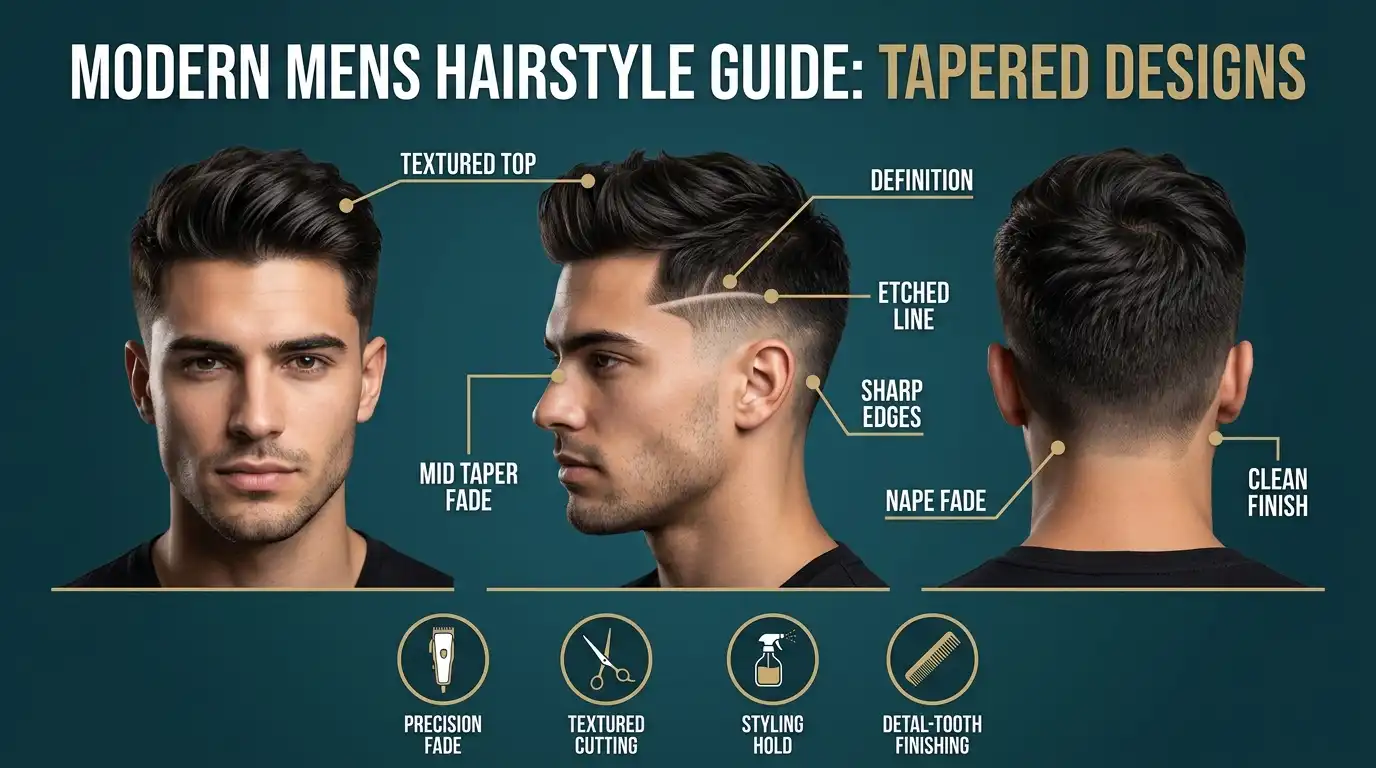
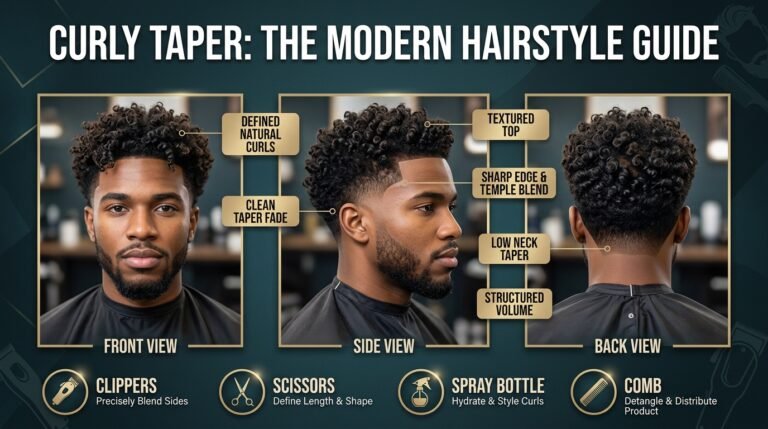
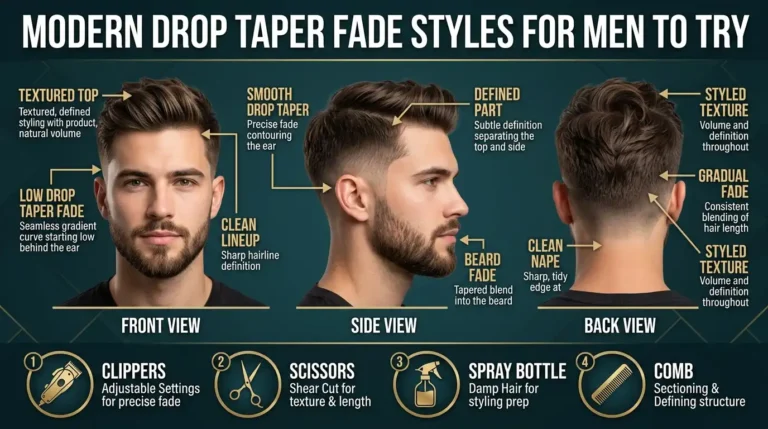
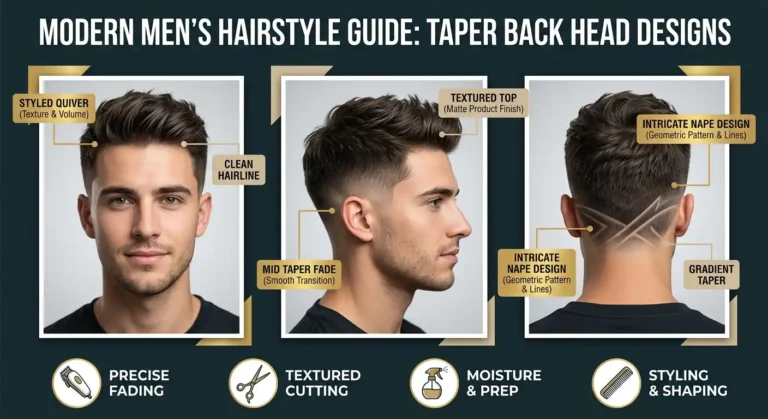
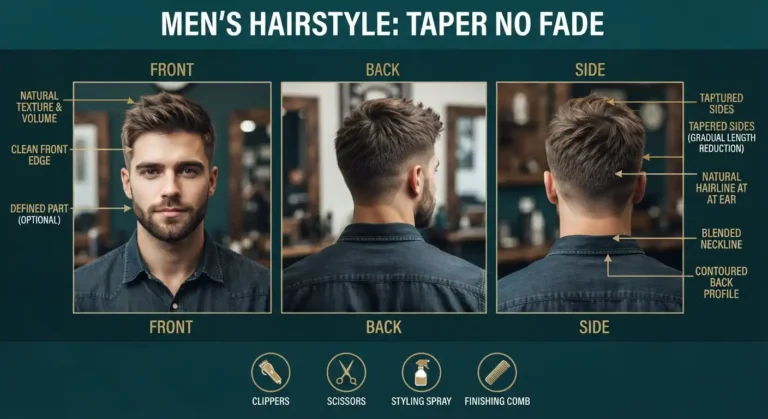
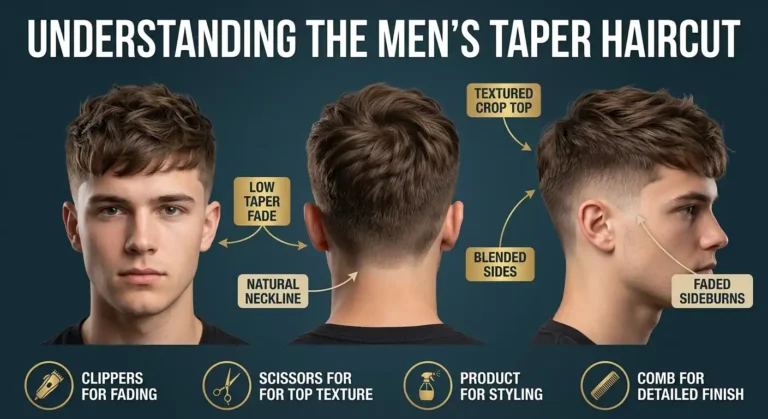
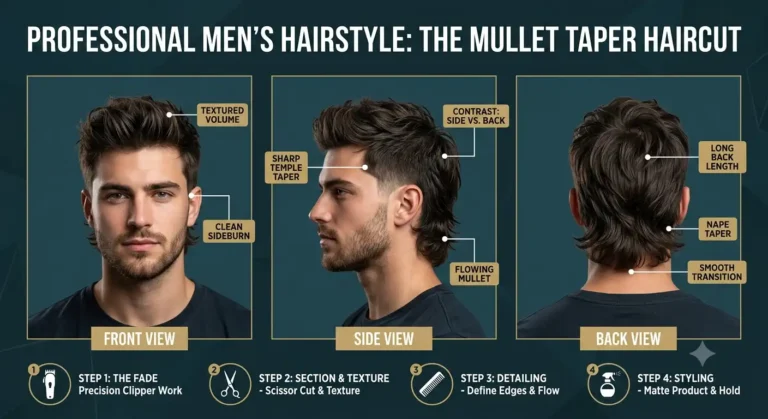
Designs for taper haircuts are lines, shapes or symbols carved into the short, tapered sides or back of the head. A taper leaves hair longer on top and trims it gradually shorter near the ears and neckline.
The barber then uses a trimmer, outliner or foil shaver to cut a pattern into that short area. Below you’ll find 54 ideas, plus barber scripts, guard sizes and upkeep tips.
Quick Key Takeaways: Top 5 Designs at a Glance
| Design | Difficulty | Best For | Barber Time |
| Single Hard Part Line (#1) | Easy | First-timers, office-friendly | Short |
| Curved Part Arc (#3) | Easy | Round and oval faces | Short |
| Diamond Pattern (#10) | Medium | Thick, dark hair | Medium |
| Side Wave Ripples (#19) | Medium | Wavy and curly hair | Medium |
| Initial Letter (#37) | Medium to hard | Personal, meaningful looks | Longer |
Simple Designs for Taper Haircuts (Clean Lines)
Simple designs for taper cuts suit anyone who wants a small accent, not a statement. They grow out gently and look neat at work, school or the gym.
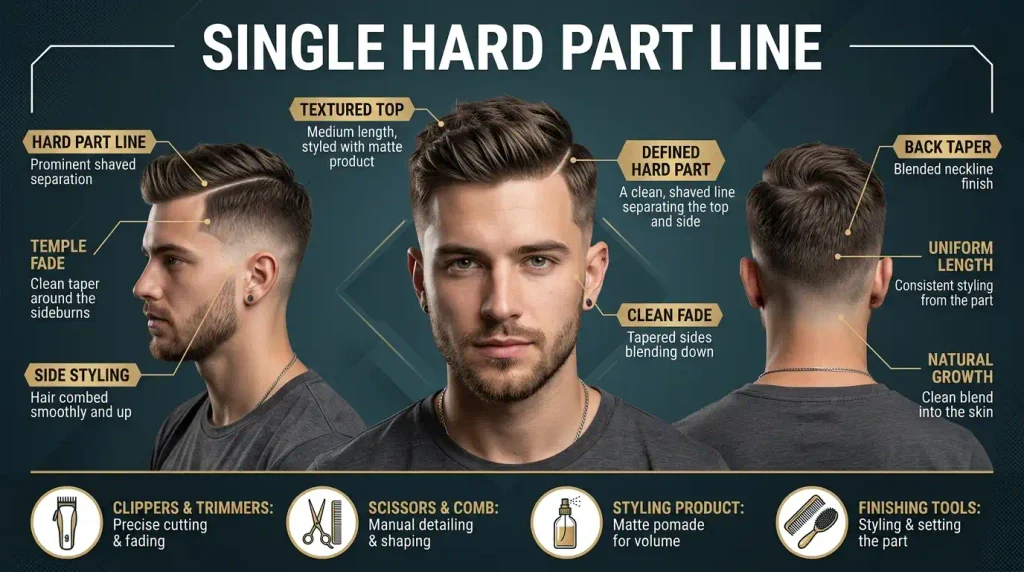
1. Single Hard Part Line
A hard part is one thin razor line above the temple. Keep the sides at a #2 or #3 so the line pops. Oval and square faces carry it best. Pair it with a light matte clay on top.
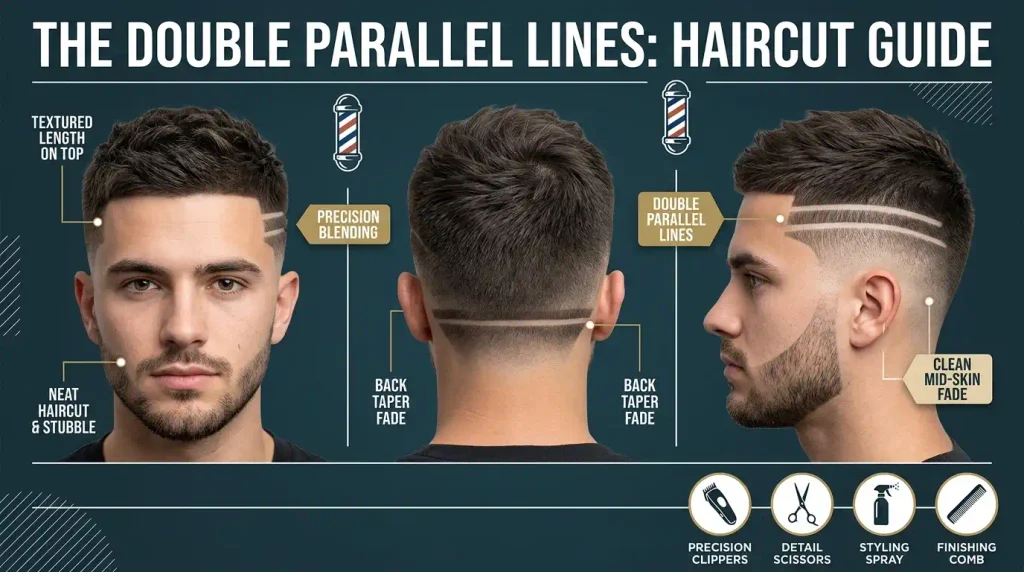
2. Double Parallel Lines
Two slim lines run side by side, roughly a finger-width apart. The gap between them should stay short, close to skin level. Long and oval faces look balanced with it. Finish the top with a bit of sea salt spray for texture.
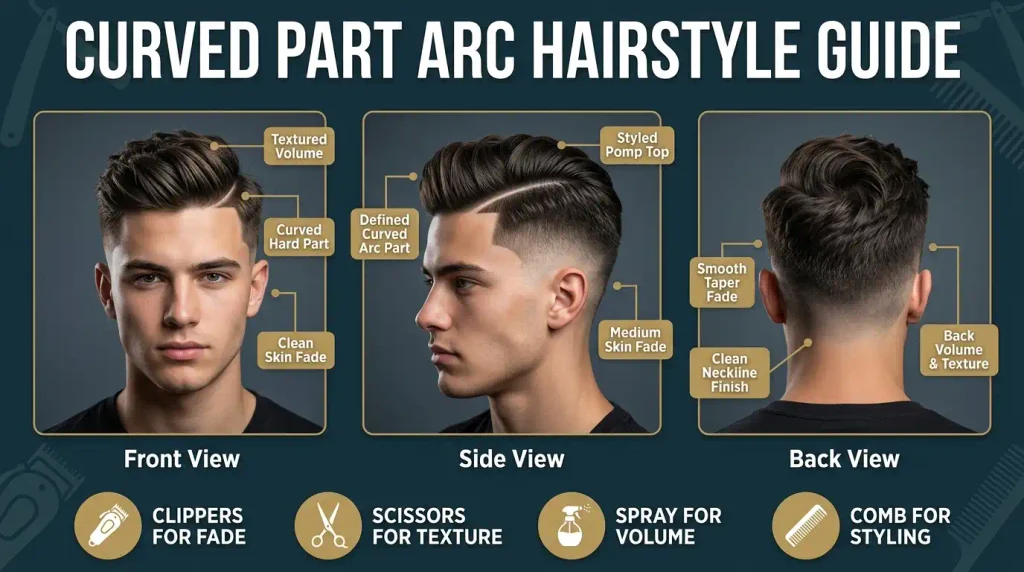
3. Curved Part Arc
Instead of a straight cut, the barber carves a soft arc that follows the head’s shape. It reads as gentle, not harsh. Round faces gain a little length from the curve. A flexible-hold paste keeps the top tidy.
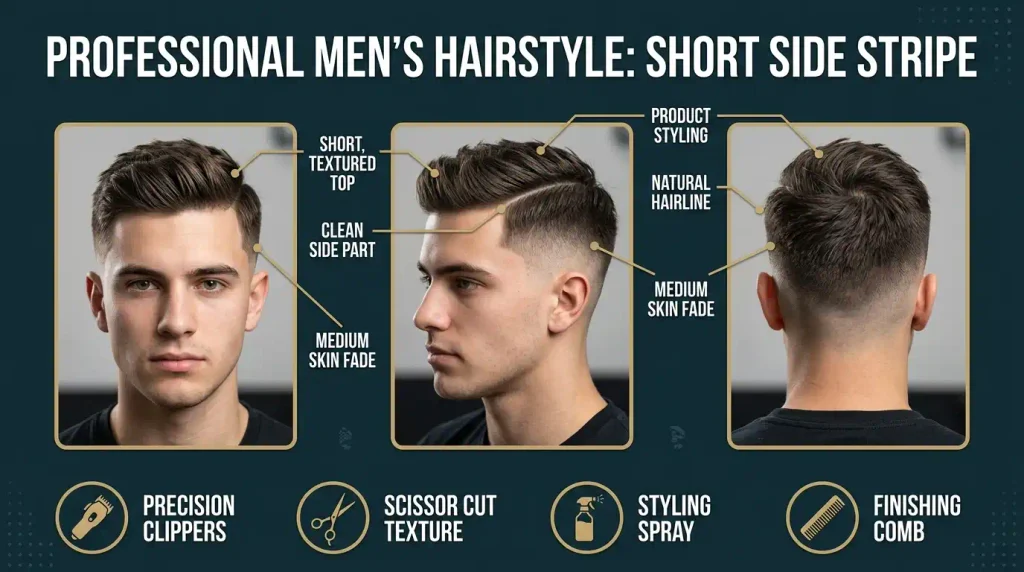
4. Short Side Stripe
Here a single short stripe sits just above the ear, about a thumb’s length. Start from a #1 or #2 side. It’s quick for the barber and easy to redo. Medium hair with a side part pairs well with it.
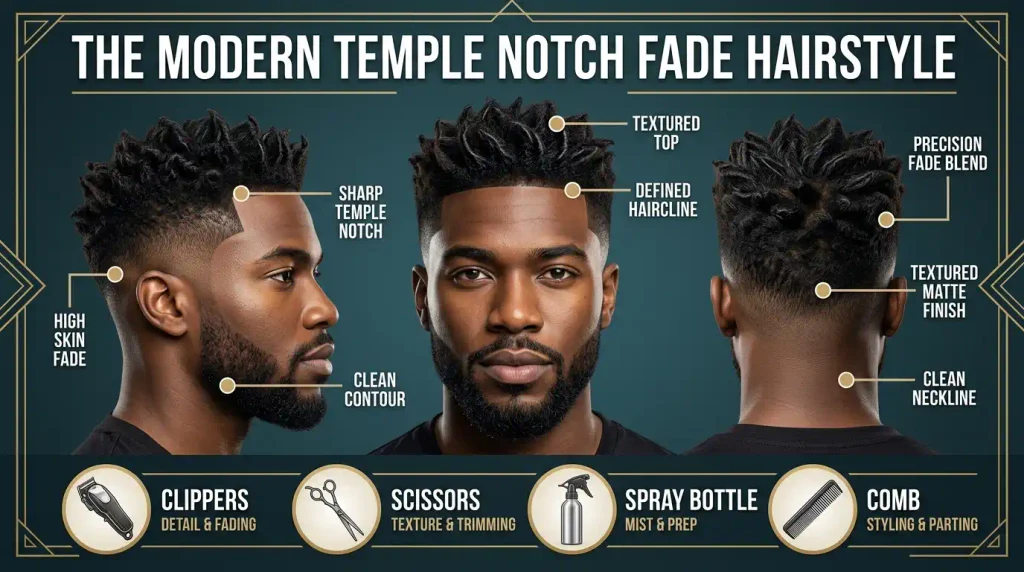
5. Temple Notch
A tiny square or half-circle gets nipped into the hairline at the temple. It’s subtle enough that coworkers may not spot it right away. Thin hairlines can look busy with it, so skip it there. A light cream keeps the top soft.
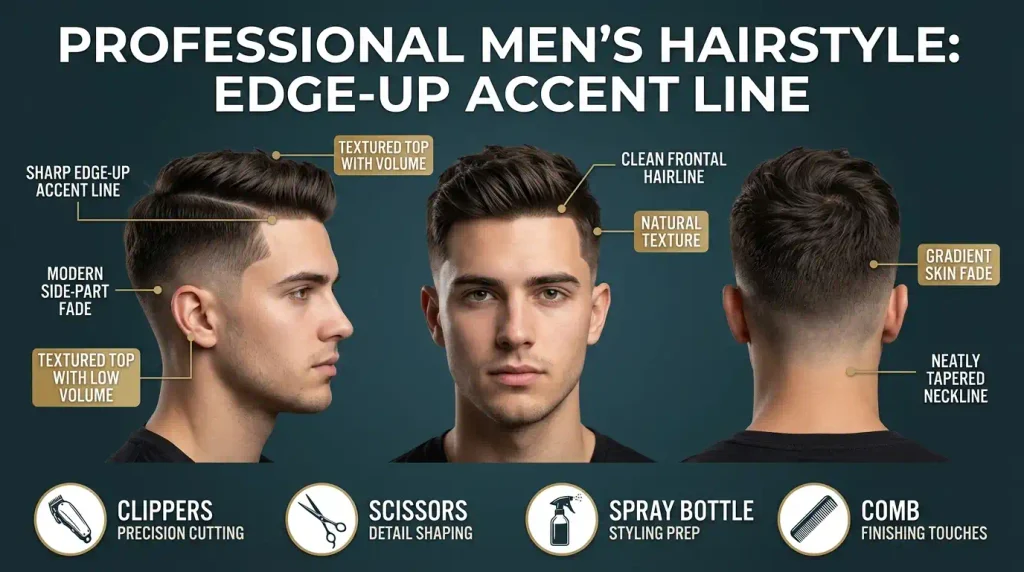
6. Edge-Up Accent Line
Ask the barber to leave a second, parallel line beside the normal line-up. It frames the face like a thin picture border. Square jaws look sharp with it. Keep the top short and textured with a dab of clay.
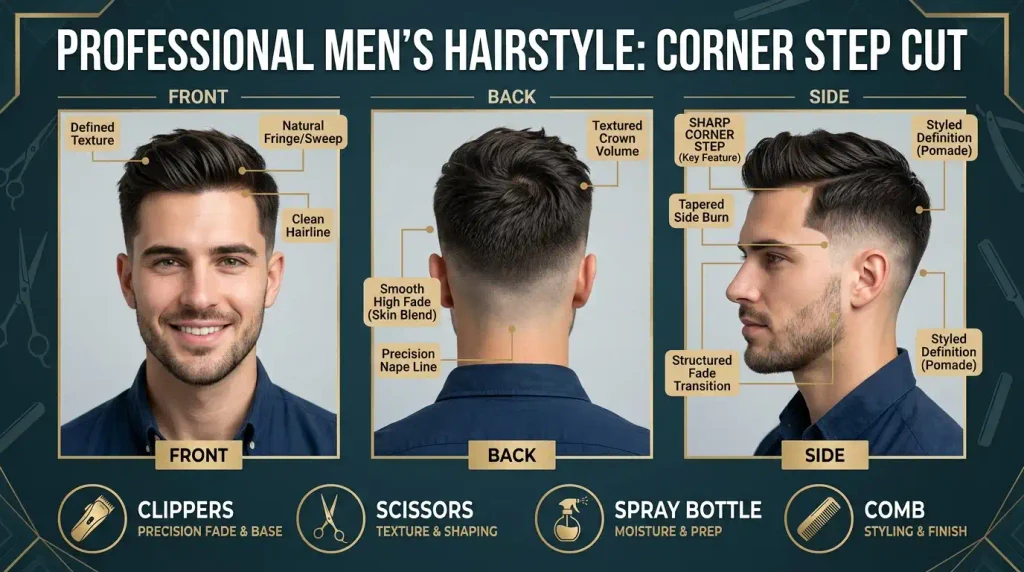
7. Corner Step Cut
The edge near the sideburn gets cut in two small steps, like a staircase. It adds shape without any symbols. Straight, fine hair shows it clearly. A #2 on the sides keeps the steps visible.
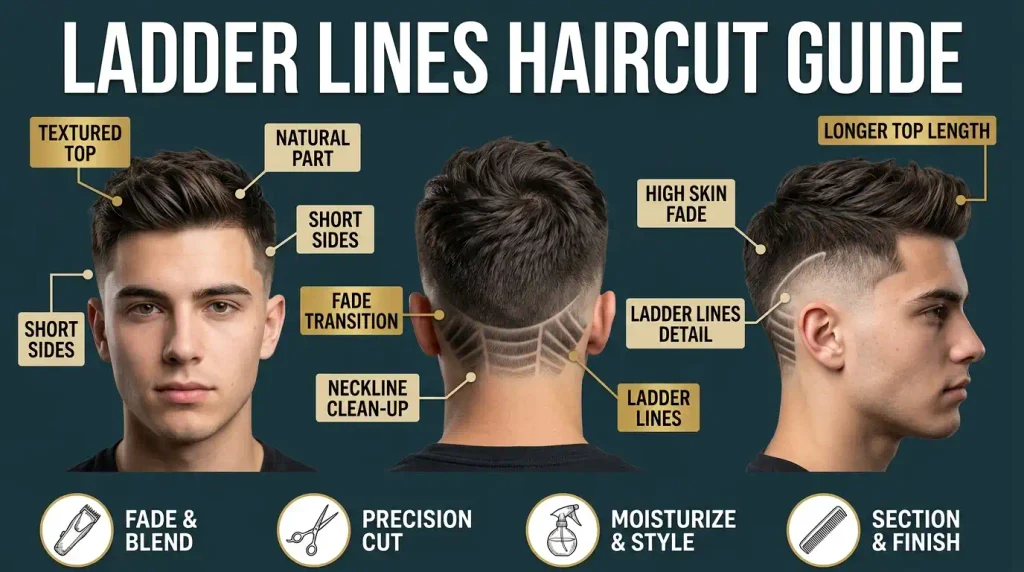
8. Ladder Lines
Three short horizontal lines stack above the ear, each slightly shorter than the last. They hint at motion and look good on a low taper. Curly tops balance them well. Use a curl cream to define the top.
9. Skinny Wave Line
A single flowing S-line runs along the side of the head. It takes steady hands, so pick a barber who does freehand work. Wavy hair echoes the curve nicely. A light sea salt spray adds texture on top.
If you want more ideas in this lane, our guide to a low taper design goes deeper.

Taper Fade Design Ideas: Geometric Patterns
Geometric patterns give a taper fade design clean angles and crisp contrast. They work best on dark, dense hair, where the skin shows clearly.
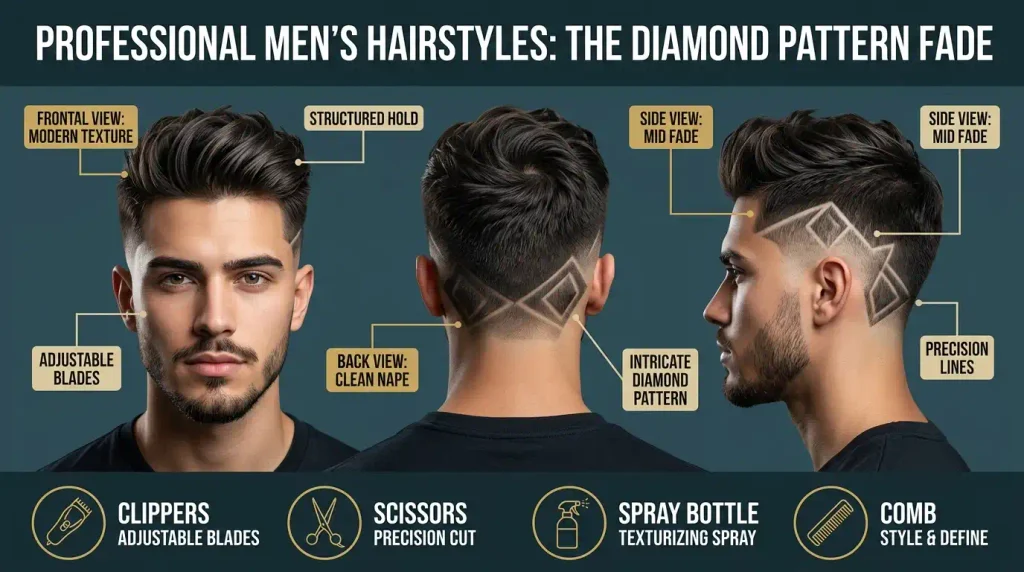
10. Diamond Pattern
Rows of small diamonds sit side by side along the temple. Each shape needs equal spacing, so the barber usually marks it first. Thick, dark hair shows it best. Style the top with matte clay for a modern contrast.
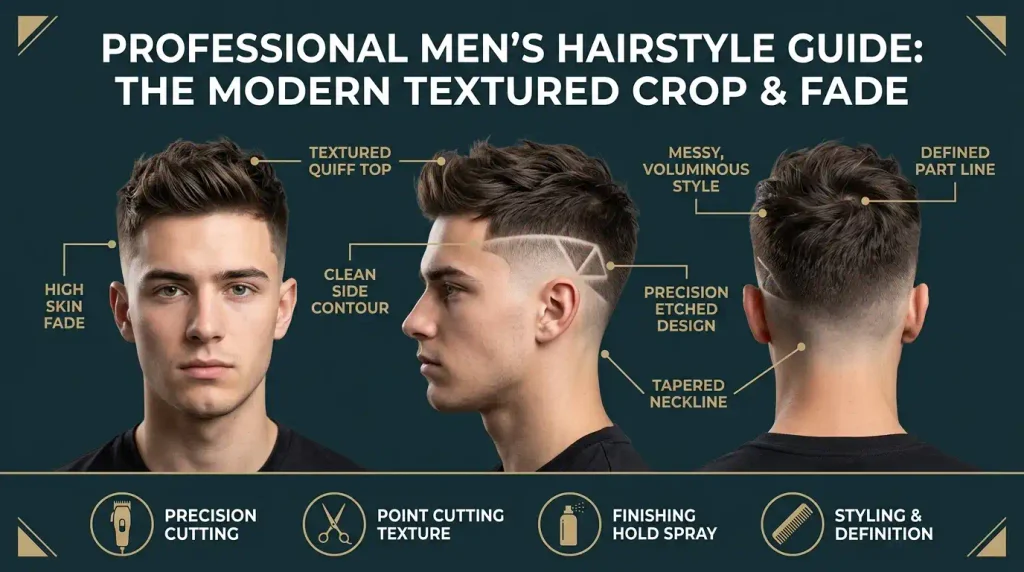
11. Triangle Trio
Three small triangles stack or sit side by side behind the ear. They feel sporty and sharp. Square and diamond faces suit the angles. A #1 base around the design keeps edges visible.
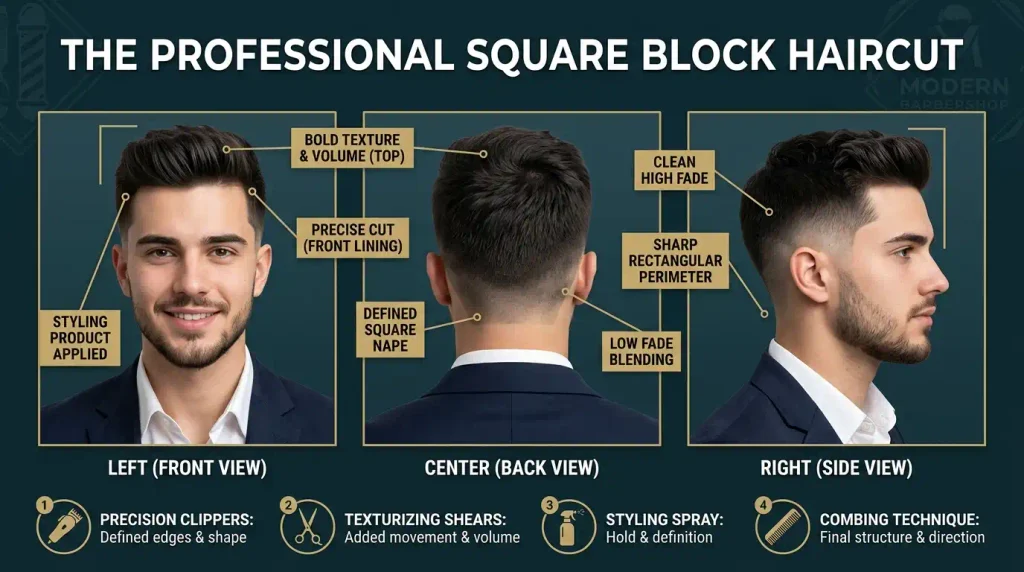
12. Square Block
One bold block, slightly bigger than a coin, is cleared to skin near the temple. It’s graphic and quick to cut. Oval faces handle it well. Keep the top textured and low-fuss with clay.
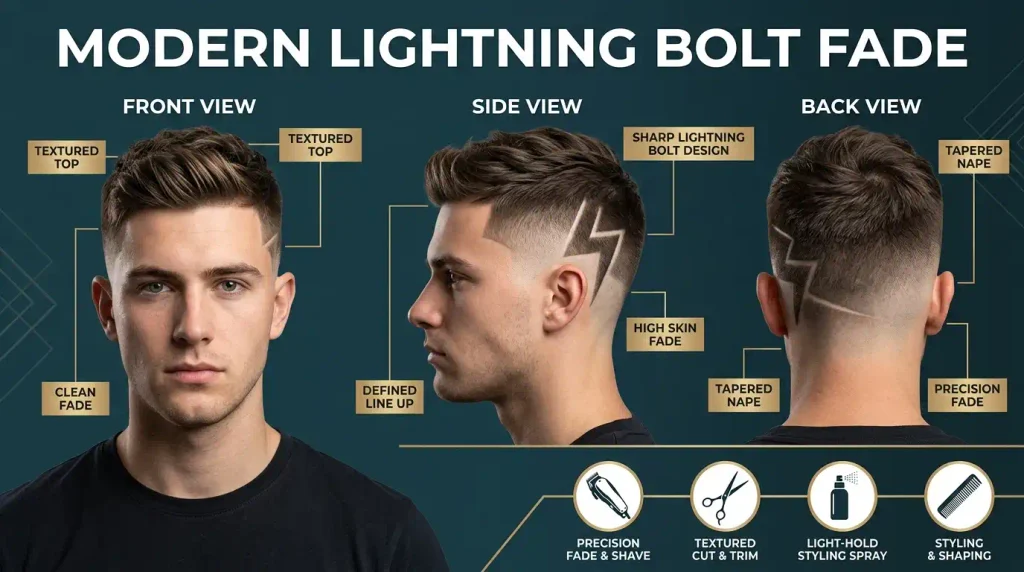
13. Lightning Bolt
A zigzag bolt cuts diagonally across the side. It brings energy and works on both short and medium tops. Round faces gain angles from it. Use a strong-hold paste to match the bold look.
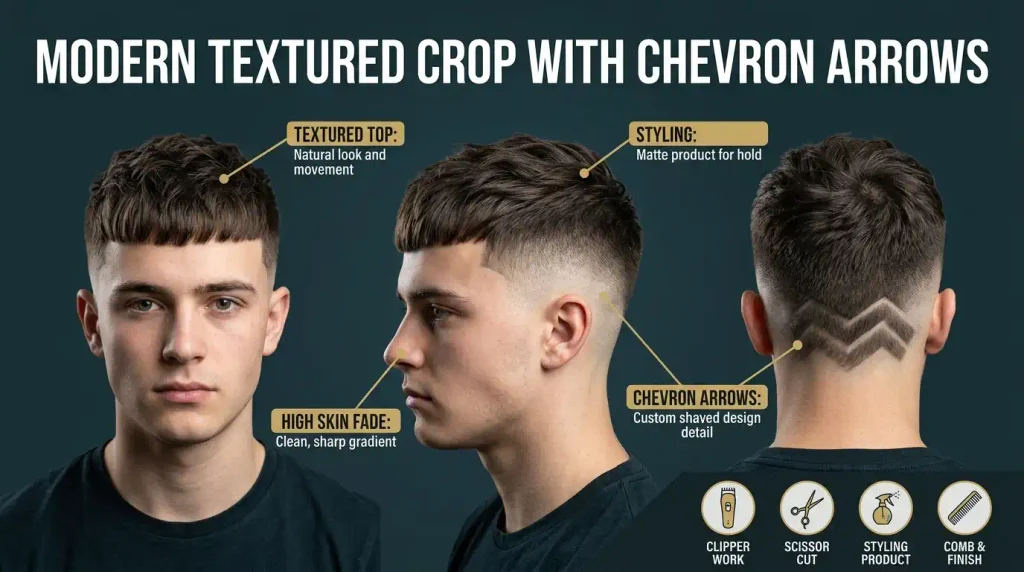
14. Chevron Arrows
Stacked V-shapes point upward like arrows. They draw the eye toward the top of the head, adding height. Round faces especially benefit. Keep sides near a #1 so the arrows stand out.
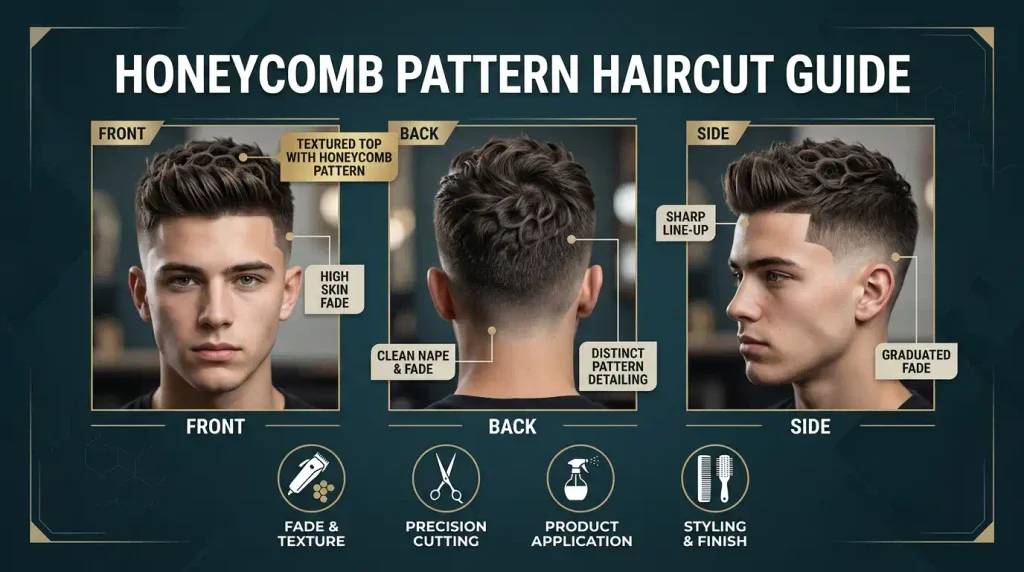
15. Honeycomb Pattern
Small hexagons tile together in a tight cluster. It’s detailed, so expect a longer appointment. Coarse hair holds the edges best. Finish the top with a dry-texture clay.
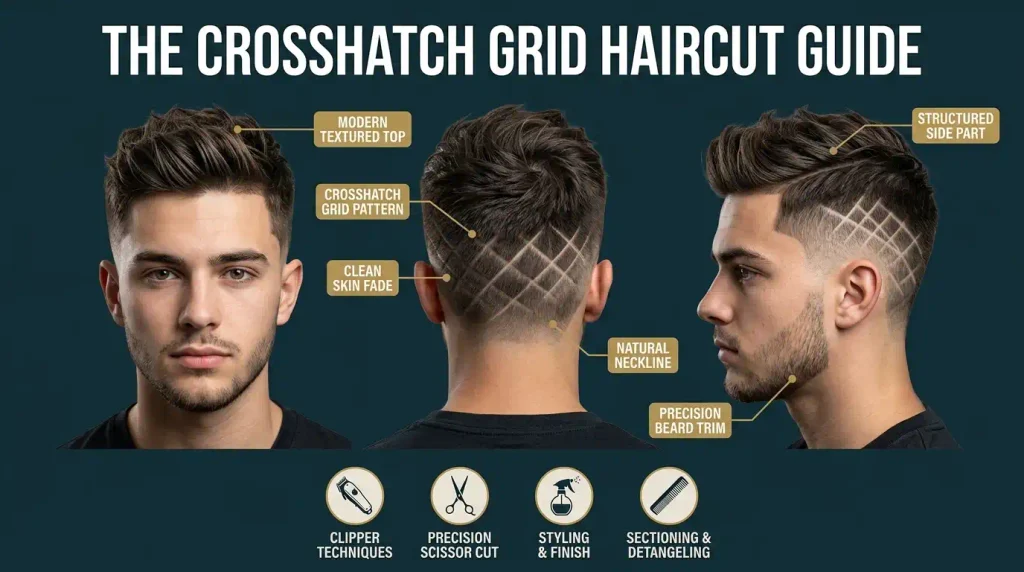
16. Crosshatch Grid
Thin crossing lines form a small grid above the ear. It looks technical and neat. Straight hair shows the lines clearly. Fine hair may blur the pattern after a week or two.
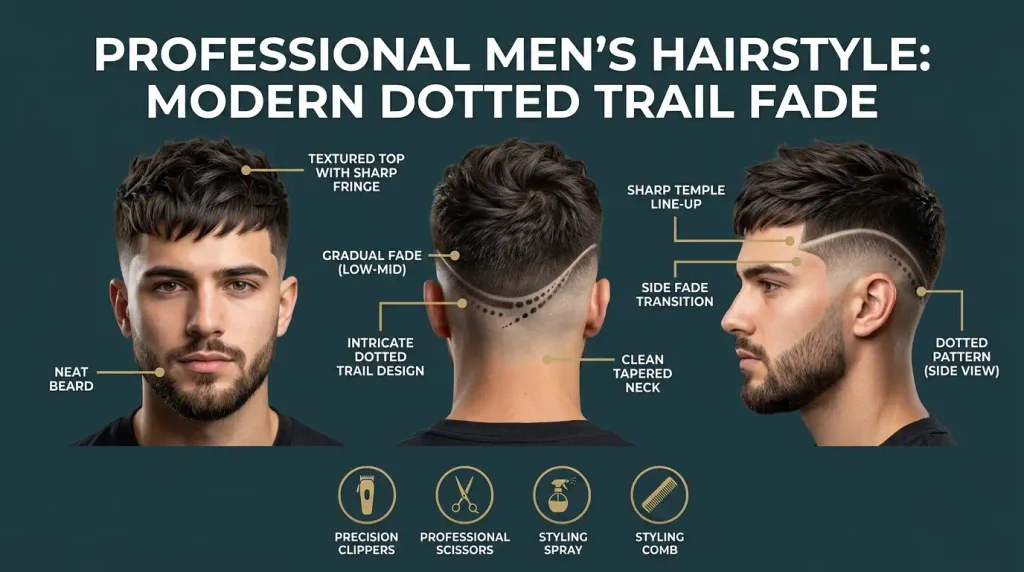
17. Dotted Trail
A row of tiny cleared dots follows a curve or straight line. It’s playful but subtle at a distance. Slim faces suit its lightness. A little cream on top keeps the look soft.
18. Ring Cutout
A skin-clear circle, outline or full, sits near the temple or behind the ear. It looks crisp on a low taper. Oval and long faces balance it well. Ask the barber to keep the curve smooth.
For more fade-and-taper context, see our guide to taper fade haircuts.

Low Taper with Design on Side
A low taper with design on side keeps the cut conservative and puts the art right where people look. Side taper designs are also easier to check in a mirror.
19. Side Wave Ripples
Two or three curved lines ripple along the side of the head, like water. They flow with wavy and curly tops. Start at a #2 and blend down toward skin. A curl cream defines the top.
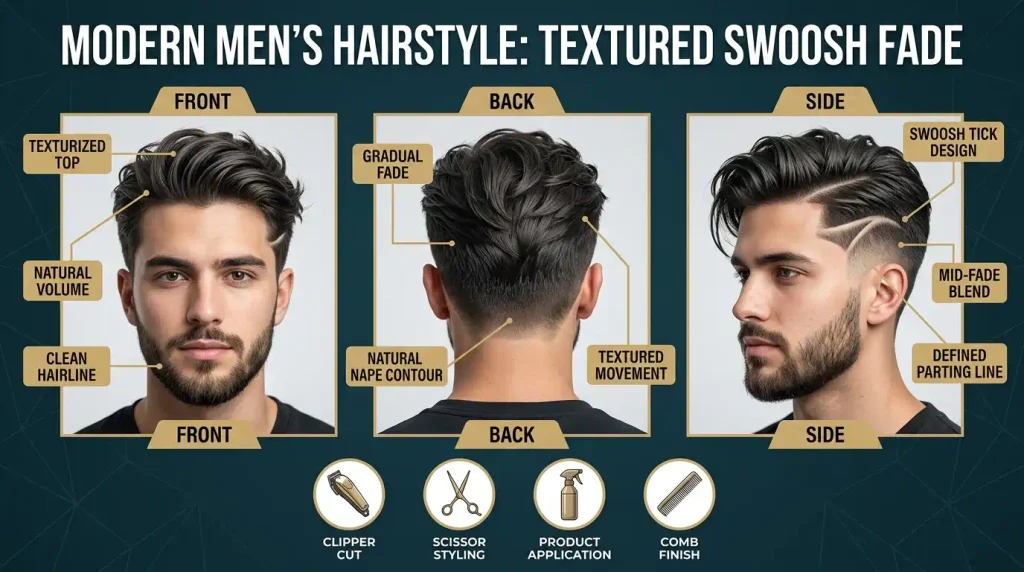
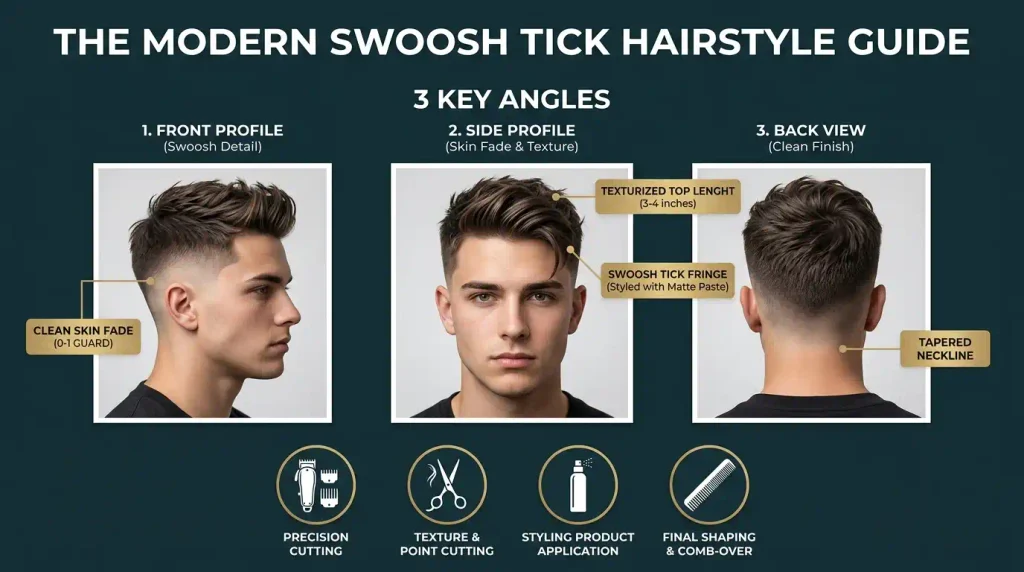
20. Swoosh Tick
A sleek, curved tick sweeps from the temple toward the ear. It looks athletic and clean. Oval and square faces suit it. Keep the top short and lightly textured with clay.
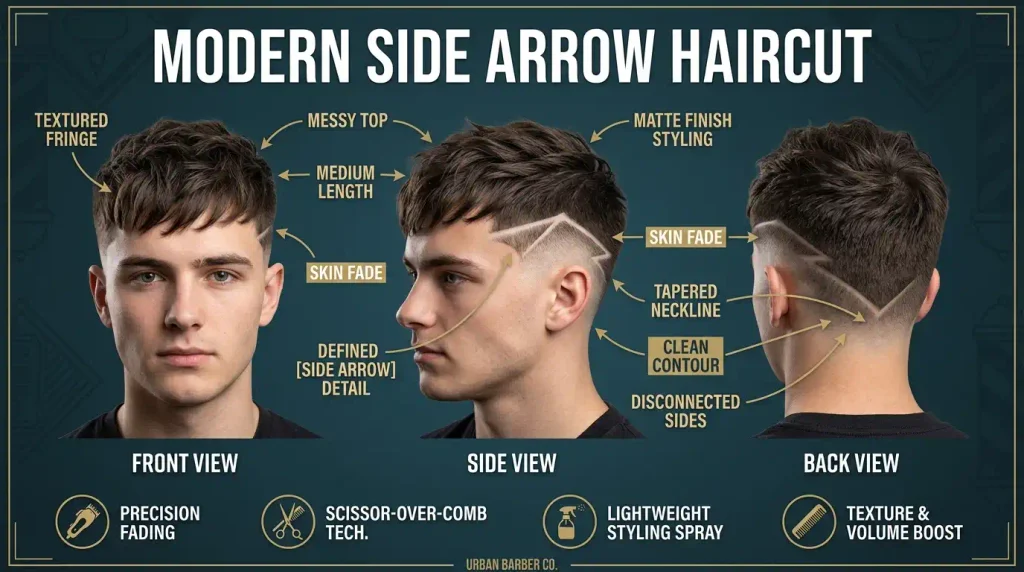
21. Side Arrow
A slim arrow points toward the front of the face, adding a sense of direction. It stays small and tidy. Medium hair on top balances it. Use a matte paste to keep the top natural.
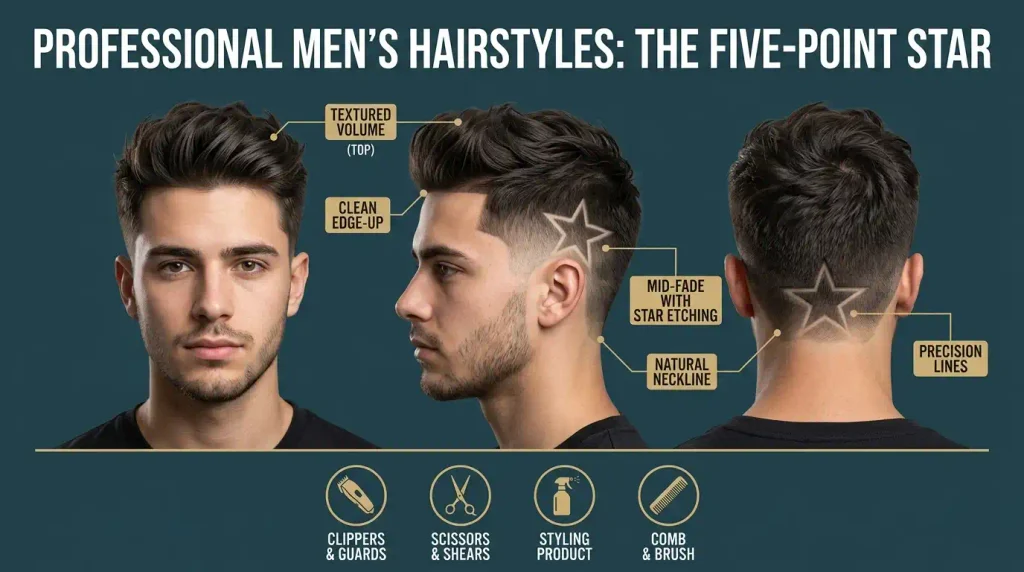
22. Five-Point Star
A small star sits above the ear, with sharp points and clean centers. It takes patient work around the edges. Thick hair holds the shape well. Hold the top in place with a light sea salt spray.
23. Flame Accent
A short flame shape licks upward from the sideburn. It adds heat without covering much space. Straight and wavy hair both work. Style the top with a strong-hold paste for drama.

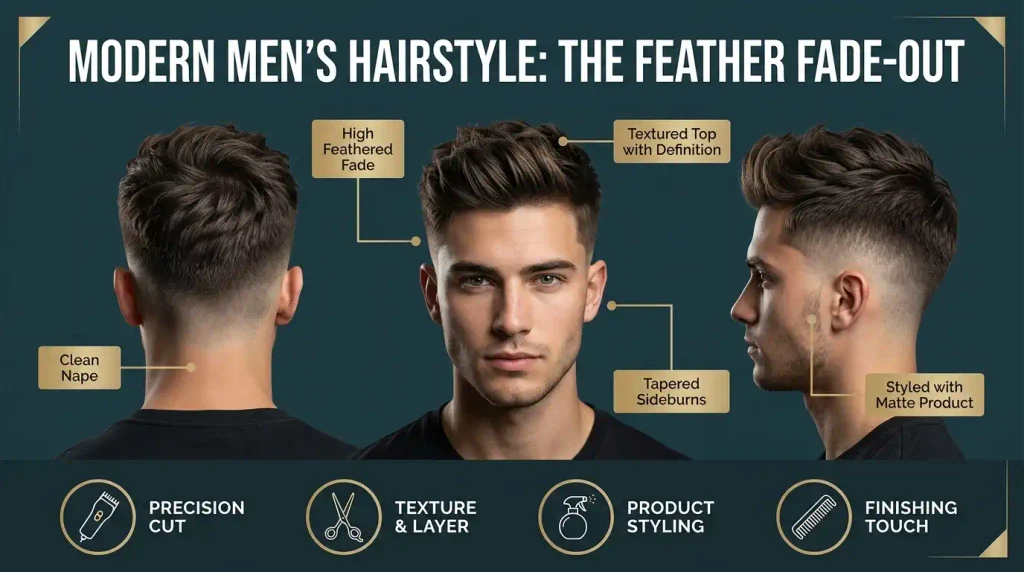
24. Feather Fade-Out
Soft, tapering lines fan out like feathers behind the ear. Instead of bold skin, the lines fade gently. Curly hair gives them a fluffy look. Add a cream to help the curls shine.
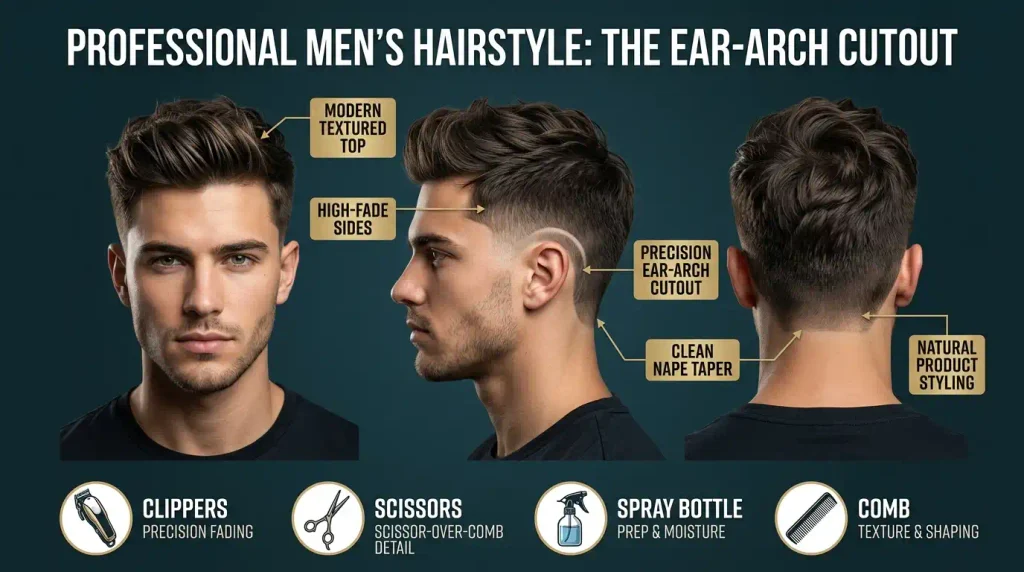
25. Ear-Arch Cutout
A smooth arch curves around the ear, almost like a frame. It cleans up the sideburn area. Long faces look slimmer with it. Use a light matte clay on a short top.
26. Razor Slash Trio
Three diagonal slashes sit on the side, each a little shorter. They look quick, edgy and sporty. Square faces handle the angles. Keep a #1 around them so the lines stay clear.

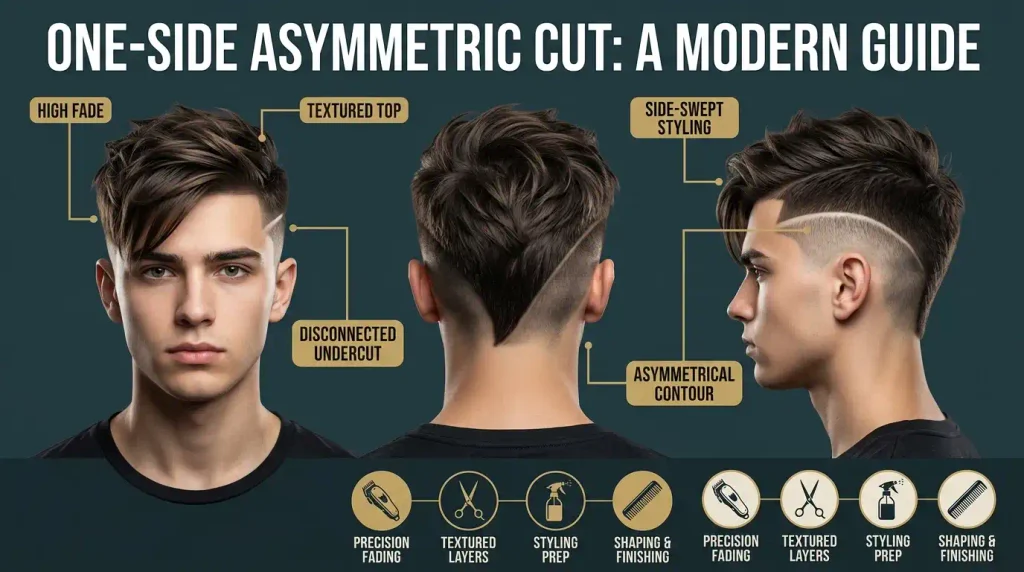
27. One-Side Asymmetric Cut
Only one side gets the design, and the other stays plain. That contrast looks bold but still balanced. Oval and diamond faces suit it. A matte clay on top keeps the focus on the side.
Want to see how side work connects to the whole cut? Read our guide to the low taper fade on the sides.
Taper with Design on the Back
A taper with design on the back stays private until you turn around. A low taper with design on back also keeps the front professional.
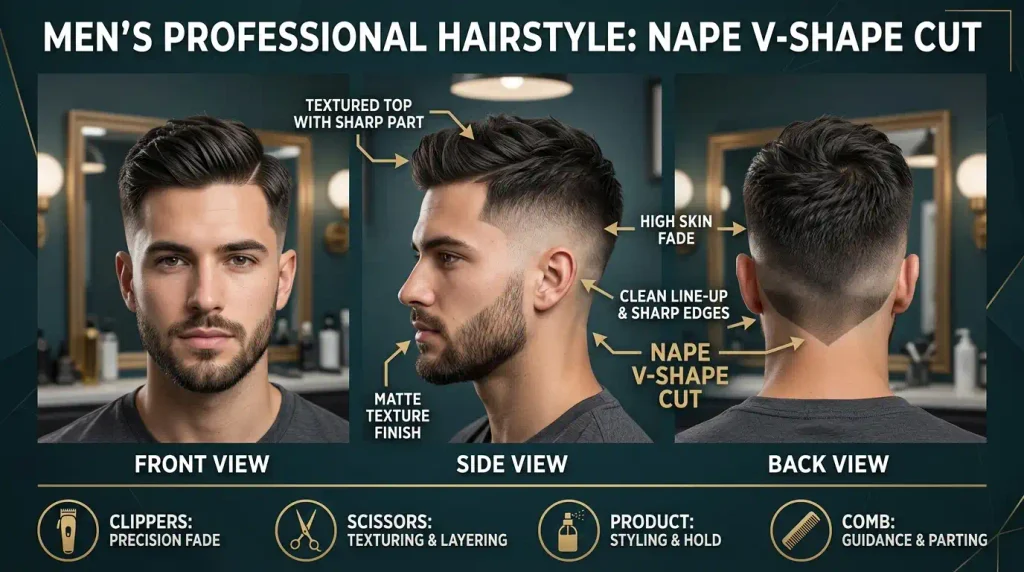
28. Nape V-Shape
A clean V points down the center of the neckline. It makes the nape look intentional. Ask for a #0 to #1 around it so the lines stay crisp. Short, tidy tops pair well with it.
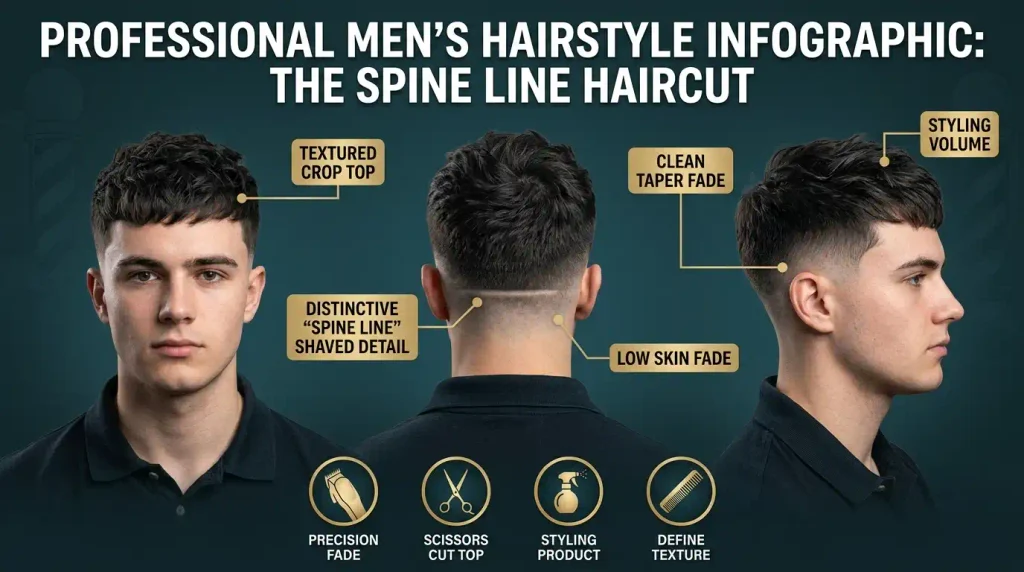
29. Spine Line
One thin vertical line runs straight down the middle of the back of the head. It’s easy to cut but must stay straight. Oval faces and short tops suit it. Keep the top neat with matte clay.
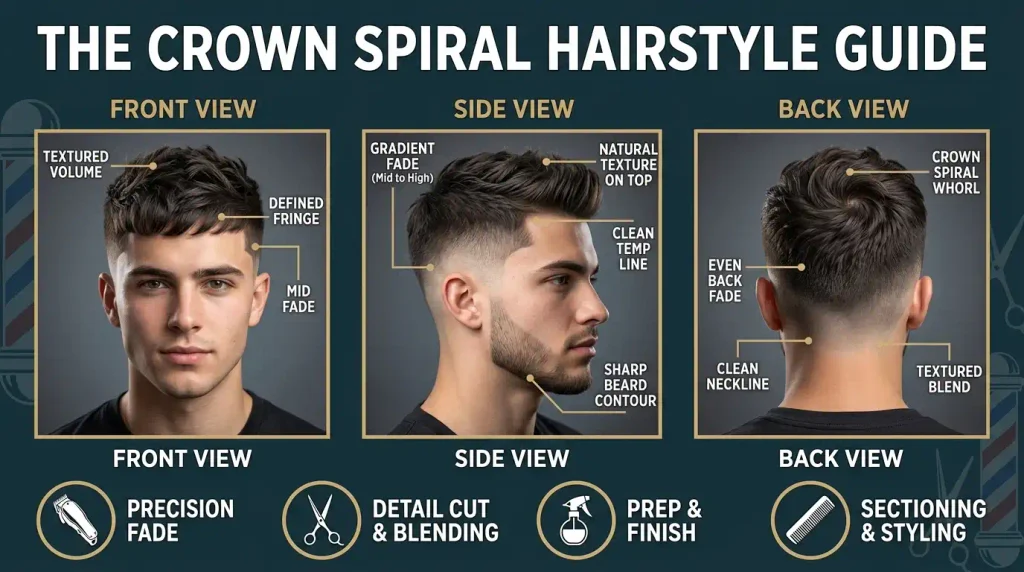
30. Crown Spiral
The natural hair swirl at the crown becomes a feature, with the barber trimming the spiral lines clearly. It works best when you have a visible cowlick. Medium tops hide it, so keep them short. A light paste works well.
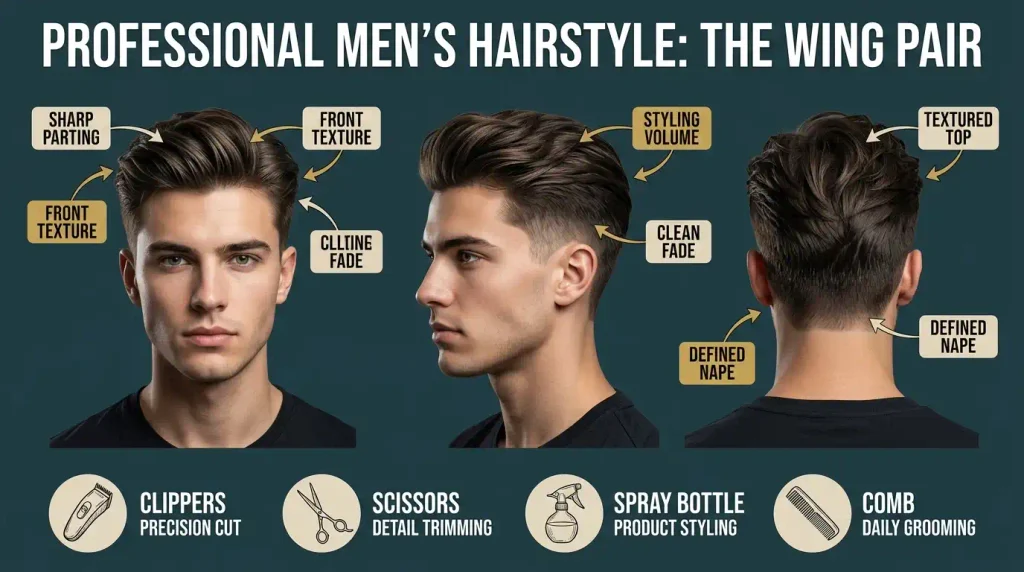
31. Wing Pair
Two feathered wings spread out on either side of the neckline. They look bold from behind. Thick hair holds the detail. Style the top with a strong paste to match the energy.
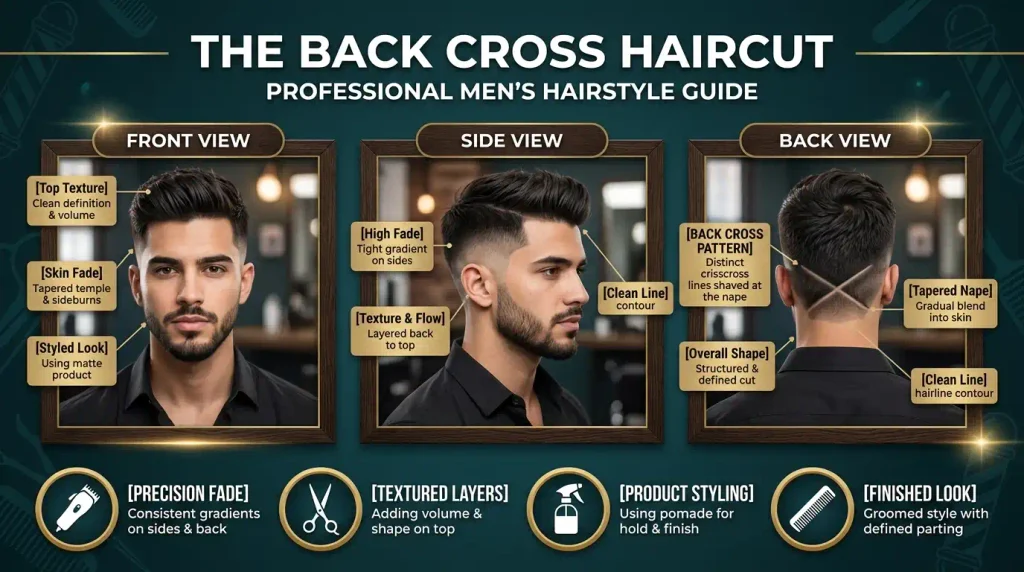
32. Back Cross
A small cross sits at the center of the back. Edges must be exact, so the barber often draws it first. It’s popular for personal meaning. Short tops keep the focus on it.
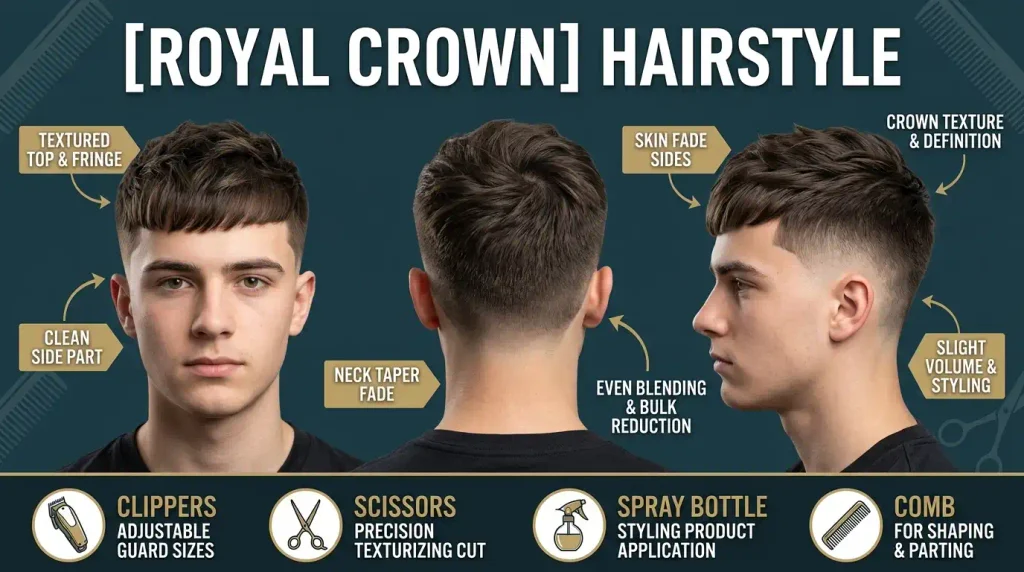
33. Royal Crown
A little crown outline rests above the nape. It’s detailed, so book extra time. Dense, dark hair shows it best. Keep sides near a #1 for contrast.
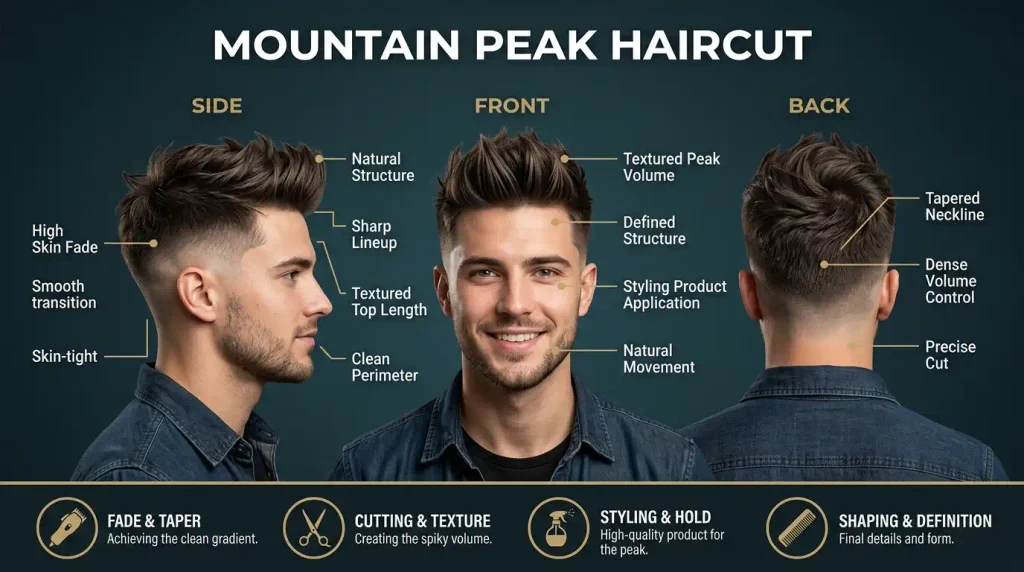
34. Mountain Peak
Jagged peaks rise from the neckline like a skyline of mountains. It adds shape without needing symbols. Straight hair shows it clearly. A touch of clay gives the top texture.
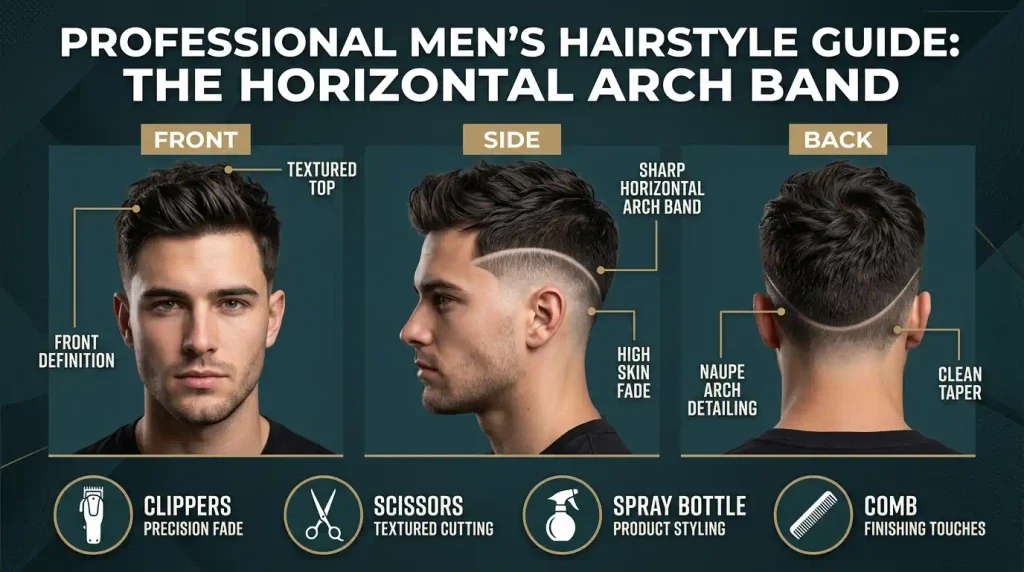
35. Horizontal Arch Band
A curved band wraps across the back, like a headband made from skin. It’s clean and graphic. Oval faces and longer tops balance it. Style with sea salt spray for movement.
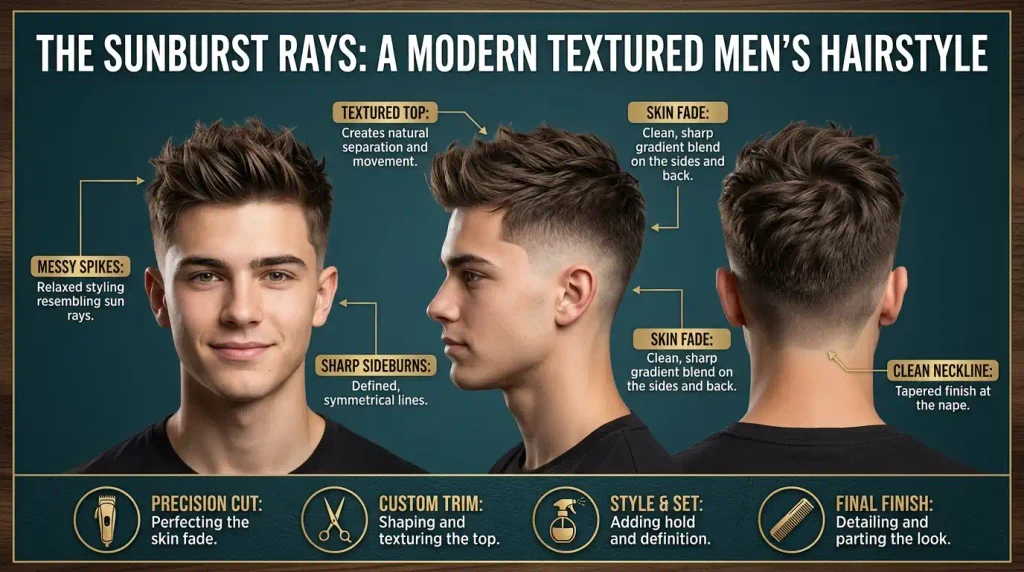
36. Sunburst Rays
Thin lines fan out from a center point, like sun rays. It’s one of the most eye-catching back designs. Thick, coarse hair holds each ray. A bold, textured top keeps the look balanced.
If your barber is working from the back view, our guide on taper back head designs shows how it all connects.
Letters, Numbers and Symbol Designs
A design haircut taper can carry meaning. Initials, dates and symbols turn a haircut into something personal.
37. Initial Letter
A single letter, like your first initial, gets cut into the side. Simple block letters hold up best. It suits any face shape. A #1 base keeps the letter easy to read.
38. Jersey Number
Your team number gets carved near the temple. It’s a favorite for athletes and fans. Keep the number short, one or two digits. A neat matte clay finish lets it stand out.
39. Birth Year
Two digits, like the last two of a birth year, sit behind the ear. It’s discreet but meaningful. Keep digits thick enough to survive a week of growth.
40. Roman Numeral
Roman numerals look clean because they are mostly straight lines. They work well for dates or ranks. Stay with short numerals so the pattern doesn’t get cramped. Oval faces suit it best.
41. Infinity Sign
A small sideways eight sits above the ear. Smooth curves are the key here. Thick hair holds the loops cleanly. Keep the top lightly textured with a cream.
42. Heart Outline
A simple heart outline, not filled in, keeps things neat. It’s sweet and small. Medium-length tops balance it. Ask the barber to keep the lines thin.
43. Music Note
One note or a short staff gets cut into the side. It shows personality without shouting. Wavy hair works well. A bit of sea salt spray adds a loose finish.
44. Anchor
An anchor outline is a classic. The straight shaft helps the barber keep it clean. Square and oval faces suit it. Keep the top short with matte clay.
45. Paw Print
A paw with four toes and a pad is friendly and easy to spot. It’s popular with pet owners. Keep the size small. Medium hair with a side part works well.
Freestyle Design Taper Ideas (Bold Statements)
A freestyle design taper has no template, so your barber’s skill matters most. Look at their portfolio first.
46. Abstract Swirl
Loose curved lines flow together without a fixed shape. Every cut turns out unique. Thick or curly hair adds depth. Use a defining cream on top.
47. Cracked Glass
Sharp, branching lines spread out like broken glass. It looks dramatic on short fades. Dark, coarse hair shows it clearly. A strong-hold paste matches the bold mood.
48. Barcode Lines
Thin vertical lines of different widths sit side by side. It’s modern and graphic. Straight lines are easier for newer barbers. Keep sides near a #1.
49. Heartbeat Pulse
A pulse line runs across the side, spiking and dipping. It looks lively and personal. Oval faces suit the movement. Style the top with matte clay.
50. City Skyline
Rectangles of different heights form a tiny skyline above the ear. It needs a steady hand and careful spacing. Square faces suit the blocky look. Short, textured tops help the pattern pop.
51. Spider Web
Fine lines radiate from a center and connect in arcs. It’s detailed and takes time. Dense hair holds the lines best. Book a longer appointment.
52. Scale Pattern
Overlapping half-circles repeat like fish or dragon scales. Even sizing matters. Thick hair holds the pattern. A light clay on top keeps the focus on the sides.
53. Optical Stripes
Bold stripes of varied width create a 3D feel. They can look dizzying in a good way. Straight hair shows them best. Keep the top simple so it doesn’t compete.
54. Moon Phase Trio
Three small moons in different phases sit in a row. It’s subtle, artistic and easy to read. Slim faces suit it. Pair with a soft cream or clay on top.
How to Ask Your Barber (Copy-Paste Script)
Walk in with a photo and this script:
“Hi, I’d like a low taper with a [design name] on the [side/back]. Please use a #2 on the sides, blending down to a #0 or #1 at the neckline. Leave about two to three inches on top. Keep the design thin and sharp. Could you sketch it first so I can check the placement?”
Add one of these, depending on your pick:
- Hard part or lines: “Please keep the line about half an inch above the temple.”
- Symbols or letters: “Please keep it small and use thick lines so it lasts.”
- Back designs: “Please center it and check it with a hand mirror.”
- Freestyle: “I trust your style, but nothing that goes above the temple line.”
Designs for Taper vs. Other Taper and Fade Options
| Option | Taper/Fade Height | Typical Guard Range | Best Face Shapes | Styling Difference |
| Taper with design | Low to mid | #0 to #3 | Oval, square, round | Art cut into short areas |
| Low taper fade | Low, near ears and neck | #0 to #2 | Most shapes | Subtle blend, no art |
| Mid taper fade | Mid-side | #0 to #3 | Oval, round | More contrast than low |
| High taper fade | High on the head | #0 to #4 | Square, oval | Bold, high contrast |
| Skin fade with design | Any, ending at skin | Skin to #2 | Oval, diamond | Sharpest pattern contrast |
| Classic scissor taper | Natural, no fade | Shears and comb | Long, oval | No skin, no art |
Not sure where the line between taper and fade falls? Our taper and fade difference guide breaks it down.
Why This Look Works and Who It Suits
A tapered cut with a design works because it’s flexible. The top can stay long or short, and the art adds personality without much upkeep. It suits office workers, students, athletes and creatives.
Coarse and curly hair holds design edges well. Fine or straight hair can look softer, so choose thicker lines. If your job is formal, go with a simple line or back design, since you can show it only when you want.
How to Style Your Taper with a Design
- Wash and towel-dry your hair until it’s slightly damp.
- Pick a product that matches your texture: clay for matte, cream for curls.
- Warm a small amount in your palms.
- Work it through the top from front to back.
- Shape with your fingers or a comb.
- Keep product off the shaved design so lines stay clean.
Step-by-Step Tutorial: How Barbers Cut Taper Designs
Tools needed: adjustable clippers, a detail trimmer or outliner, foil shaver, guards #0 to #4, a fine-tooth comb, shears, a straight razor for hard parts, a neck brush, a cape, a mirror and a white pencil for sketching.
- Clean, dry hair first. Sectioning and checking the head shape come first.
- Cut the base taper. Use clipper-over-comb or guards from #3 or #2 at the upper sides, down to #1 or #0 at the neckline.
- Blend the transition with point cutting or a lever to soften any lines.
- Pencil the design onto the skin or hair, and check it in a mirror.
- Outline with the trimmer, working slowly and with light strokes.
- Clear the inside with a foil shaver for a crisp finish.
- Check symmetry from several angles.
- Clean the neckline, brush off hair, then add aftercare balm.
Designs take real practice. Leave the back and complex shapes to a barber, and only try simple lines at home on sides you can see.
For a cleaner base taper, our how to do a taper fade guide is a good companion.
Best Styling Products for a Taper with a Design
- Matte clay: gives hold without shine. It’s best for short and medium tops.
- Sea salt spray: adds grit and texture to straight or fine hair.
- Curl cream: defines curls and fights frizz without weighing them down.
- Aftershave balm: soothes skin after fresh razor work.
Keep heavy products away from the design area, since residue can dull the lines.
Best Hair Types and Face Shapes
- Oval faces: nearly any design suits you.
- Round faces: choose upward-pointing shapes like chevrons and arcs.
- Square faces: soft curves balance a strong jaw.
- Long faces: keep sides fuller and designs low-profile.
- Coarse or curly hair: holds detail best.
- Fine or straight hair: go for thicker lines so the art doesn’t fade.
Barber Visits and At-Home Upkeep
Book a trim every two to three weeks for crisp lines, or every four weeks if you’re fine with a softer look. Between visits, brush the design gently and use a mild moisturizer. Never shave the design yourself unless you know the exact outline. For curls, check out our low taper fade curly hair guide.
Common Mistakes to Avoid
- Choosing a design that’s too big or too detailed for your hair type.
- Skipping a sketch before the barber starts cutting.
- Ignoring your hairline shape and head shape.
- Letting the design grow out too long before a touch-up.
- Using heavy, oily products on the shaved areas.
- Going to a barber with no design experience.
FAQ
What are the easiest designs for taper cuts?
Start with #1 Single Hard Part Line, #3 Curved Part Arc or #4 Short Side Stripe. They’re quick, thin and easy to grow out.
How long does a taper design last?
Most designs stay sharp for about two to three weeks. After that, hair growth softens the lines.
Can I get a design on thin or fine hair?
Yes, but thicker lines show better. Try #2 Double Parallel Lines or #12 Square Block.
Which design works for curly hair?
#19 Side Wave Ripples and #46 Abstract Swirl suit curls well since the pattern follows the natural flow.
Does a design damage my hair?
No. Designs are cut with trimmers or razors, so they don’t harm growth. Skin may feel sensitive for a day or two afterward.
Can I hide a design for work?
Back designs like #29 Spine Line or #34 Mountain Peak are easy to cover with a collar or longer top hair.
How much does a taper design cost?
Prices vary by barber and city. Simple lines usually cost less than intricate freestyle work, so ask before sitting down.
Can I add a design to any taper?
Mostly yes, but low and mid tapers give the most room. For the basics, see our guide on what’s a taper.
Conclusion
A good design turns a regular taper into a personal look. Start simple, bring a photo and trust a barber with strong freehand skills. Then book regular touch-ups to keep the lines sharp. If you want to explore related looks, try our guides on a low taper with design, a low taper fade with design in the back and textured taper cuts.
Related Posts
- Low Taper Design
- Low Taper with Design
- Taper Back Head Designs
- Low Taper Fade with Design in the Back
- Taper and Fade Difference
- How to Do a Taper Fade
Name: Ryan Cole
Role: Lead Grooming Editor, TaperHaircutGuide.com
Bio angle: Men’s grooming/style content researcher — 4+ years covering barbering trends, hairstyling terminology, and men’s style content for US audience. Cross-checks every guide with practicing barbers before publishing.