 TAPER
TAPERTaper Haircuts, Low Tapers & Fade Styles — Find the Right Cut
Taper Haircut Guide helps men compare taper haircuts, low taper fades, taper fade haircuts, mid and high tapers, textured styles, curly and straight-hair combinations, and modern barber cuts before the next appointment.
Use the guide by taper type, hair texture, top style, face shape, or haircut combination. You can also learn the barber terms that make it easier to explain exactly what you want.
Browse All GuidesWhat Is a Taper?START WITH THE CORE GUIDES
What Is a Taper?Basics Taper vs FadeComparison Taper Fade HaircutsStyles Low Taper CurlsCurly Hair Taper MenMen’s StylesWhat Is a Taper Haircut?
A taper haircut gradually reduces hair length as it approaches selected edges such as the temples, sideburns, and neckline. More length can remain on the sides and top, so the result is often softer than a broader fade. You may also see the same family described as a taper cut or tapered haircut, with low, mid, high, front, and drop variations.
A taper fade uses the same idea of graduated length but can take the shortest area closer to the skin. A low fade taper, skin taper fade, or short taper fade changes the level of contrast. The exact result depends on the starting height, clipper guards, blending technique, hair density, and the shape your barber builds on top.
The top is where the haircut becomes personal. A taper can be paired with low taper fringe, a textured top, middle part, side part, slick back, curly top, blowout, flow, crop, Edgar, mullet, comb over, or longer hair.
If you are deciding between a subtle outline and a stronger contrast, compare taper vs fade before choosing the guard or taper height.
Step-by-Step Taper Haircut Video Tutorial
Watch this detailed barber tutorial to see how a taper haircut is created step by step, from establishing the guidelines to blending the sides and finishing the style.

Tutorial by Dreclipperhands — watch on YouTube
Establish the Guidelines
Start by establishing the taper guidelines around the temples, sideburns, and neckline. Keep the placement controlled so the taper stays at the desired height.
Build the Blend
Use the appropriate clipper guards and blending techniques to gradually remove weight and create a smooth transition between lengths.
Refine the Taper
Work through the remaining dark areas and refine the transition. Clipper-over-comb techniques can help create a cleaner and more natural blend.
Finish the Style
Complete the haircut by refining the edges and applying styling product as needed. The final result should keep the taper clean while preserving the intended top shape.
Types of Tapers and Fades
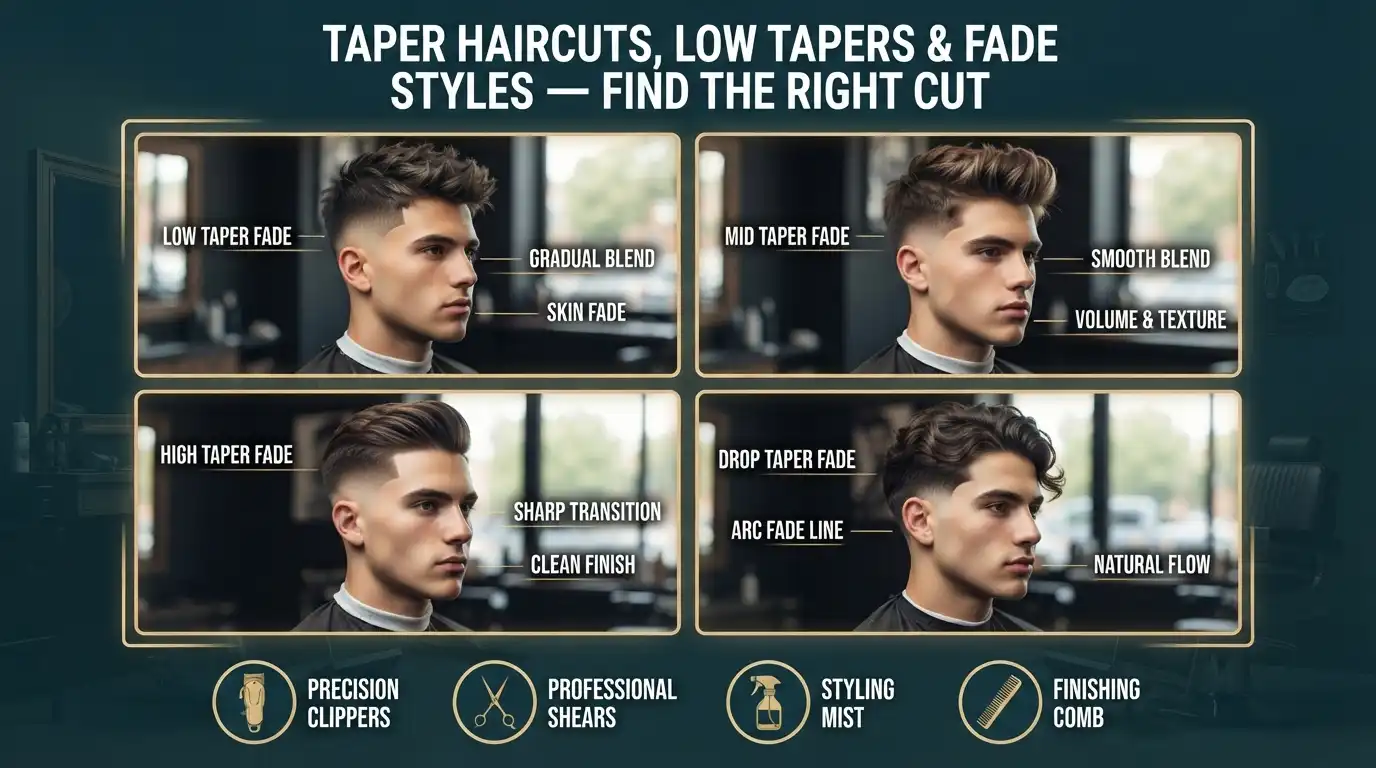
Low, mid, and high describe where the shorter transition begins. The best choice depends on the side shape you want and how much contrast you like.
Low Taper
The blend stays close to the natural edges around the temples, ears, and neckline. It preserves more side fullness and gives a soft grow-out. A low taper fade haircut adds more visible contrast while keeping the transition low.
Low Taper Guides →Mid Taper
A higher transition creates more visible structure while leaving many options on top, from textured hair to a side part. A mid taper haircut suits clients who want more definition than a low taper.
Mid Taper Guides →High Taper
The transition sits higher and creates stronger contrast. It can work well with longer tops, curls, and bold styling. Comparing a high taper vs low taper helps you decide how much side fullness to keep.
High Taper Guides →Skin & Bald
A skin or bald fade removes hair very close to the skin. It is sharper and exposes more scalp than a traditional taper. Compare skin fade vs taper if you want to choose between a stronger and softer finish.
Fade Guides →Taper vs Fade: What Changes?
| Feature | Taper | Taper Fade / Fade |
|---|---|---|
| Where it changes | Usually focused near edges | Can extend farther across sides and back |
| Side fullness | More natural fullness | More visible reduction |
| Contrast | Subtle to moderate | Moderate to high |
| Top styling | Very flexible | Very flexible |
| Grow-out | Often softer | Sharper blends can show growth sooner |
Taper Haircuts by Hair Type
The same taper can look completely different on straight, wavy, curly, coily, thick, or fine hair.
Curly Hair
Keep curl volume on top and clean the lower perimeter. Low taper curly hair, curly taper, curly taper fade, and longer curly combinations can all preserve the natural curl pattern.
Curly Taper Guides →Straight Hair
Straight hair works with low taper fade straight hair, fringe, crop, middle part, side part, slick back, comb over, fluffy texture, and longer taper styles.
Straight Hair Guides →Wavy Hair
Natural waves add movement to low taper fade wavy hair, textured tops, fringe, flow styles, and longer hair. Keep enough weight above the taper for the wave pattern to stay visible.
Wavy Hair Guides →Thick Hair
A taper can clean the lower sides while leaving useful density through the top. Texture and weight removal should match the desired shape.
Thick Hair Guides →Coily & Afro Hair
Low tapers can frame natural coils, afro shapes, waves, line-ups, and textured tops without taking away the main volume. They also suit many taper haircut choices for black men with curly or coily texture.
Coily Hair Guides →Fine & Thin Hair
A controlled taper can keep the sides tidy while avoiding excessive removal that makes the top appear thinner.
Fine Hair Guides →Popular Taper Haircut Combinations
The taper controls the outline. The top style gives the haircut its character.
Low Taper Fringe
Forward fringe with a low transition. It can be clean on straight hair, softer with waves, or more relaxed with curly and fluffy texture.
Explore Fringe →Textured Taper
Point-cut or naturally separated texture on top with tapered sides for a relaxed modern finish. A low taper textured top or textured taper fade keeps movement without making the sides too heavy.
Explore Texture →Middle Part
A central part and longer top create a softer silhouette while the taper keeps the sides controlled. A low taper middle part works best when the top has enough length to fall naturally.
Explore Middle Part →Mullet Taper
Shorter tapered sides with a longer back. The contrast between clean sides and length behind defines the look.
Explore Mullet →Slick Back
Longer hair is brushed backward while the taper cleans the temples and neckline. A low taper slick back keeps the profile understated.
Explore Slick Back →Blowout Taper
Volume and outward movement on top combined with a controlled taper around the lower sides and back. A low taper fade blowout keeps the lower outline neat while the top stays full.
Explore Blowout →Edgar Taper
A defined front shape with short tapered sides. A low taper Edgar keeps the front strong while the taper controls the sides.
Explore Edgar →Flow & Long Hair
Longer hair stays prominent while the taper gives the edges a cleaner finish. Low taper long hair and taper with long hair styles need enough length for natural movement.
Explore Long Styles →How to Ask for a Taper Haircut
Do not rely on the word “taper” alone. Tell your barber the height, amount of side fullness, top length, and finish you want. If you want a low taper fade, also explain where you want the shortest area to begin.
Choose the height
Say low, mid, or high. A low taper keeps the blend close to the natural edges.
Choose the shortest finish
Discuss whether you want a traditional taper, a closer taper fade, or a skin/bald finish.
Describe the top
Specify fringe, curls, texture, middle part, slick back, mullet, crop, or another shape.
Show a reference
Bring front, side, and back photos when possible. Your natural hairline and growth pattern still matter.
Useful script: “I want a low taper around the temples, sideburns, and neckline. Keep the taper low, preserve the fullness on the sides, and keep the top at the length needed for my chosen style. Blend it naturally into my existing hair and do not push my hairline back.”
Keeping a Taper Haircut Sharp
A common refresh window is roughly 2–4 weeks, depending on growth rate, taper height, and how crisp you want the edges. A low taper usually has a softer grow-out because more of the side structure remains.
The top does not always need a full haircut at every visit. If you are growing curls, waves, long hair, a flow, or a mullet, ask for an edge and taper cleanup while preserving the top shape.
At home, match your styling routine to your texture. Curl cream or a light leave-in can help define curls; sea salt spray can add movement to some straight or wavy hair; matte clay can add separation to short textured styles. Product choice should support the hair’s natural behavior rather than fight it.
Explore Detailed Haircut Guides
Low Taper in the Back
Explore neckline-focused taper shapes, styling choices, and barber considerations.
Low Taper Medium Hair
See how medium length changes the shape, movement, and styling options of a low taper.
Taper Fade Haircuts
A broad style reference for low, mid, high, textured, curly, and modern taper fade combinations.
Taper Men: Styles, Fades & Combos
A broad men’s reference covering taper variations and top-style combinations.
Mullet Taper Haircut
Learn how tapered sides work with the longer back and top of a modern mullet.
Frequently Asked Questions
Find Your Next Taper Style
Compare taper heights, hair textures, top styles, and barber-ready haircut guides.
Browse All Guides