Taper and Fade Difference: 7 Key Differences, Styles, and Barber Tips

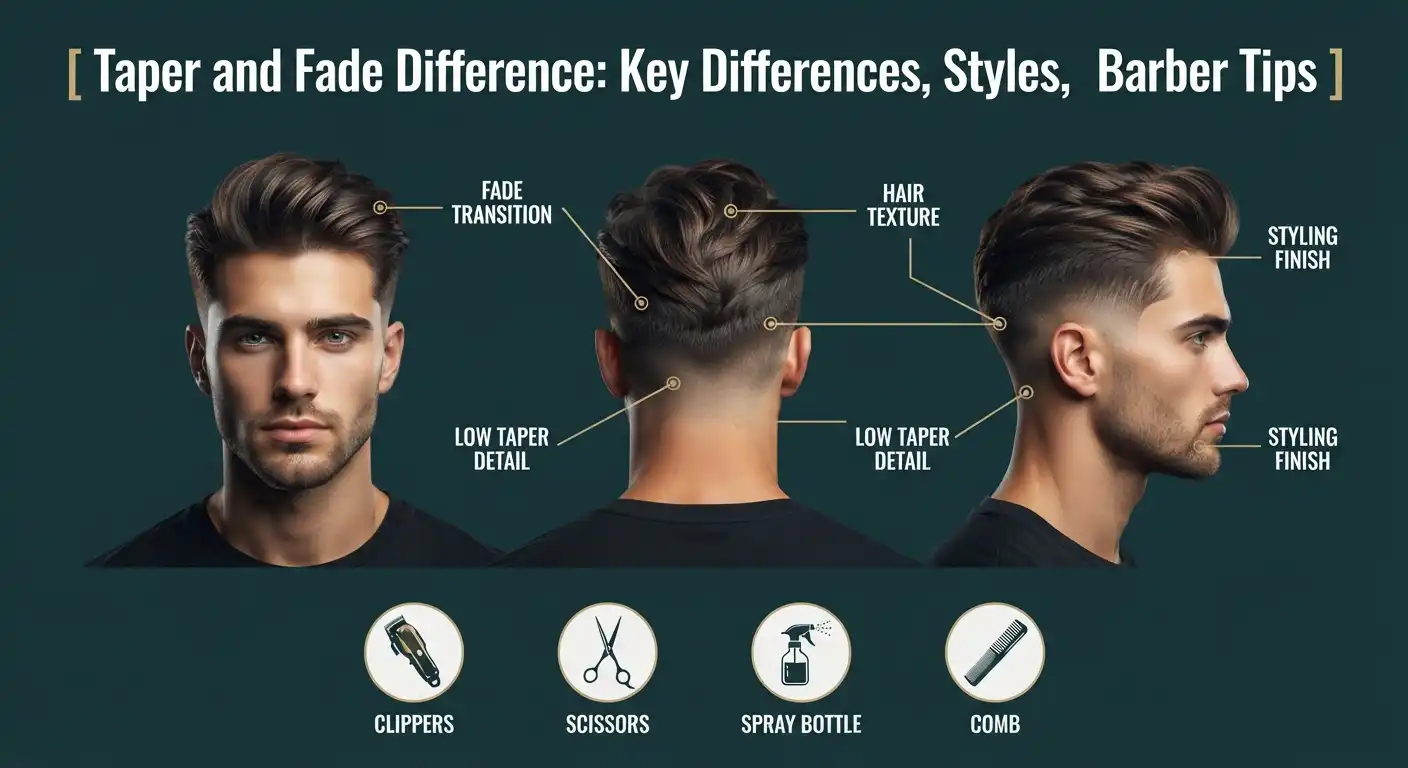
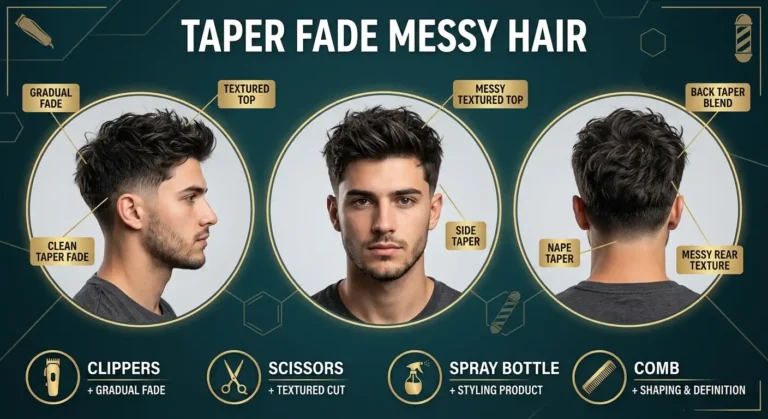
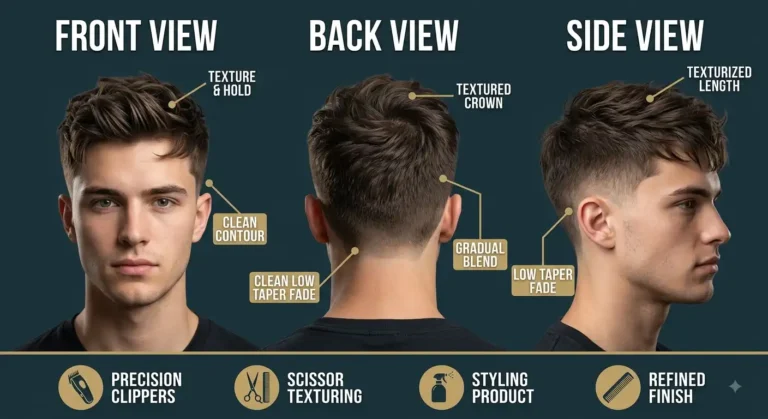
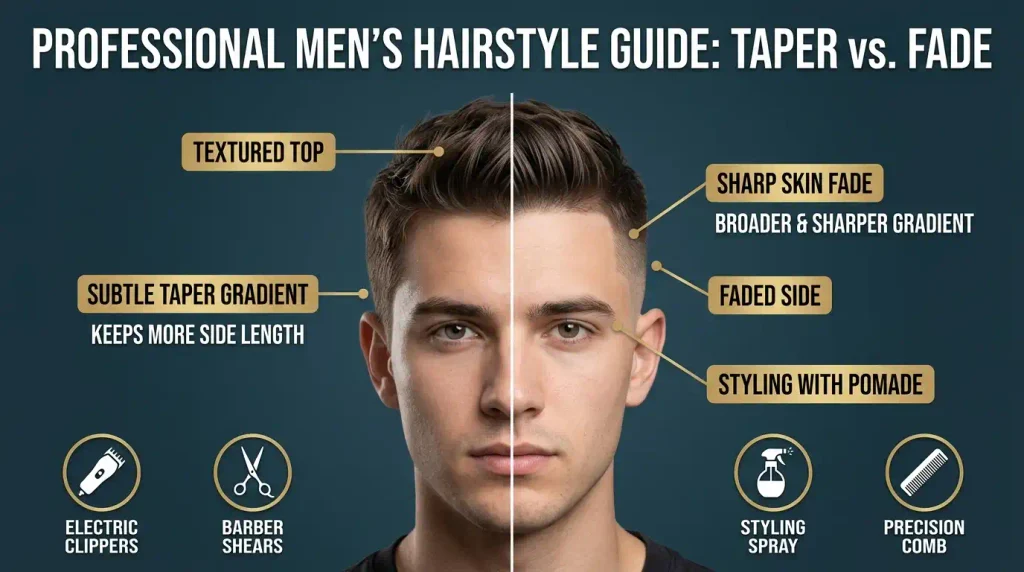
Understanding the taper and fade difference can help you choose the right haircut before sitting in the barber’s chair. Although both styles use gradual blending, they are not exactly the same. A taper usually keeps more hair around the sides and focuses on the sideburns, ears, and neckline. A fade generally removes more hair and blends the sides and back into shorter lengths, sometimes down to the skin.
The difference may look subtle in a barber’s terminology, but it can significantly change the overall appearance of your haircut. A taper often creates a natural, conservative, and flexible finish, while a fade usually gives a sharper, cleaner, and more noticeable contrast.
In this guide, you will learn the main differences between a taper and a fade, explore popular haircut variations, understand which style suits different hair types and face shapes, and discover how to explain your preferred haircut to a barber.
What Is the Difference Between a Taper and a Fade?
The main difference between a taper and a fade is the area of the haircut that is gradually shortened.
A taper gradually reduces hair around specific areas, usually the sideburns, ears, and neckline. Most of the hair on the sides remains relatively full. A fade, on the other hand, usually blends a larger section of the sides and back from longer hair into very short hair or even skin.
Quick Comparison:
| Feature | Taper | Fade |
|---|---|---|
| Main focus | Sideburns, ears, and neckline | Larger sections of the sides and back |
| Amount of hair removed | Less hair is removed | More hair is removed |
| Side length | More length is usually retained | Sides are generally much shorter |
| Skin exposure | Usually little or none | May expose the skin |
| Overall appearance | Natural and subtle | Sharp and high-contrast |
| Maintenance | Usually easier to grow out | Often needs more frequent upkeep |
| Best for | Classic, professional, and versatile styles | Modern, bold, and defined styles |
A taper is often a better choice when you want a clean haircut without making the sides look extremely short. A fade is more suitable when you want a stronger contrast between the hair on top and the sides.
What Is a Taper Haircut?
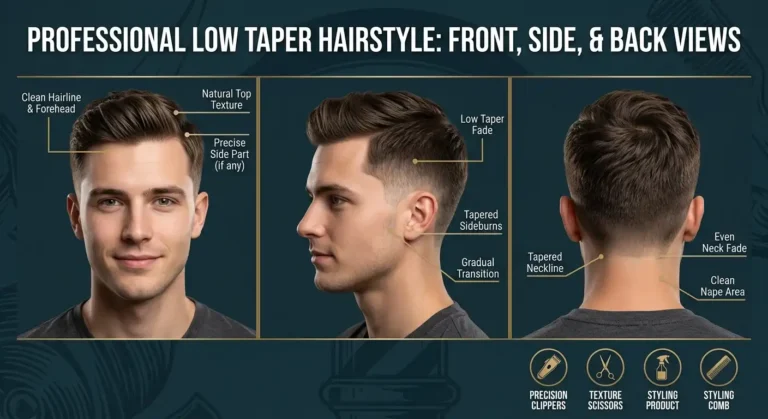
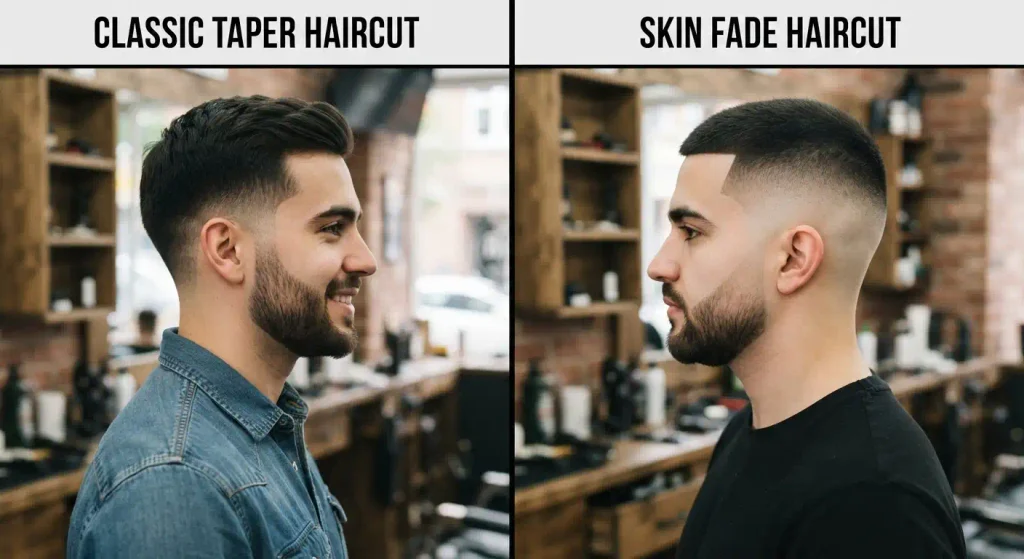
A taper haircut gradually shortens the hair around the sideburns, ears, and neckline. Unlike a full fade, a taper does not usually remove a large amount of hair from the entire side of the head.
The transition is subtle and natural. The hair may become shorter near the edges while remaining fuller above the ears and around the sides.
A taper is one of the most versatile haircut options because it works well with classic, modern, professional, and casual hairstyles.
Main Features of a Taper
- Hair gradually becomes shorter near the edges.
- More hair remains on the sides.
- The blend usually focuses on the sideburns and neckline.
- The finish is subtle rather than dramatic.
- It can work with short, medium, or longer hair on top.
- It is often easier to maintain than a skin fade.
A taper can be combined with many hairstyles, including a side part, textured crop, quiff, slick back, comb-over, and curly top.
What Is a Fade Haircut?
A fade haircut gradually blends the hair on the sides and back from longer lengths into very short hair. Depending on the type of fade, the shortest section may be close to the skin or completely shaved.
Unlike a taper, a fade usually covers a broader area. The blend can begin low near the ears, in the middle of the sides, or high near the temples.
Fades are popular because they create a clean, structured, and modern appearance. They also make the hair on top stand out more prominently.
Main Features of a Fade
- The blend covers more of the sides and back.
- The sides are usually shorter than with a taper.
- The transition is more visible.
- Some fades finish at skin level.
- The haircut creates stronger contrast.
- Regular maintenance is often required.
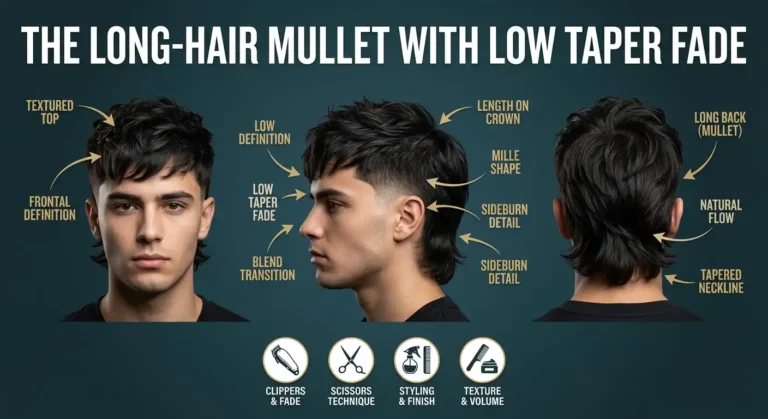
Fades can be paired with almost any hairstyle, including buzz cuts, pompadours, textured crops, French crops, curly tops, and longer hairstyles.
7 Key Taper and Fade Differences
1. Difference in the Area of the Blend
The first major difference is where the blending takes place.
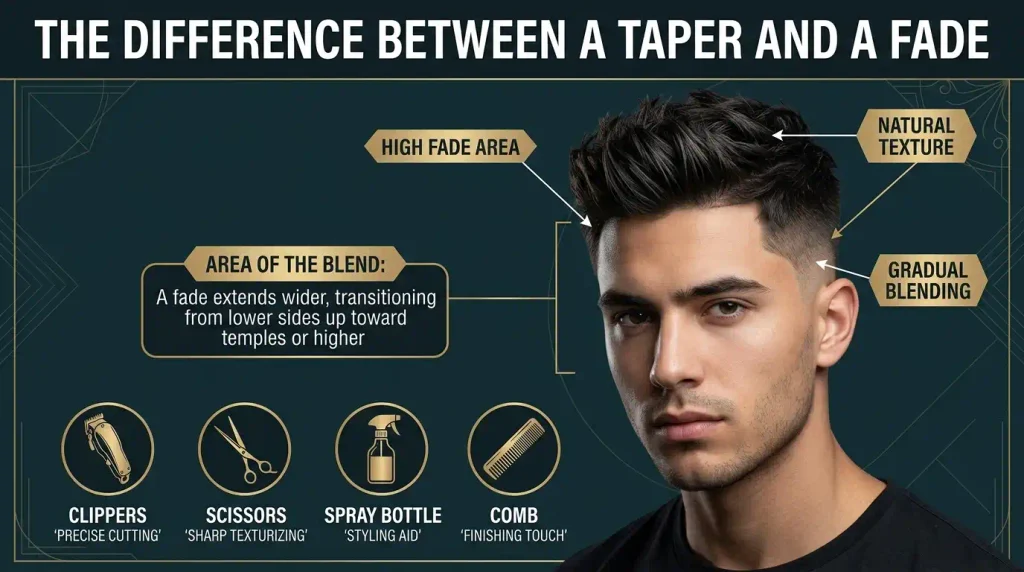
A taper usually affects the hair around the sideburns, ears, and neckline. The sides above these areas remain fuller. This gives the haircut a more natural appearance.
A fade usually blends a wider area of the sides and back. The transition may extend from the lower sides up toward the temples or even higher.
| Haircut | Main Blending Area |
|---|---|
| Classic taper | Sideburns and neckline |
| Low taper | Lower sideburns, ears, and neckline |
| Temple taper | Temple area and sideburns |
| Low fade | Lower sides and back |
| Mid fade | Middle section of the sides |
| High fade | Upper sides and temple area |
The wider blending area of a fade is what makes it look more dramatic than a traditional taper.
2. Difference in Hair Length
A taper generally leaves more hair on the sides. The hair becomes shorter only near the edges, while the upper sides retain some weight and volume.
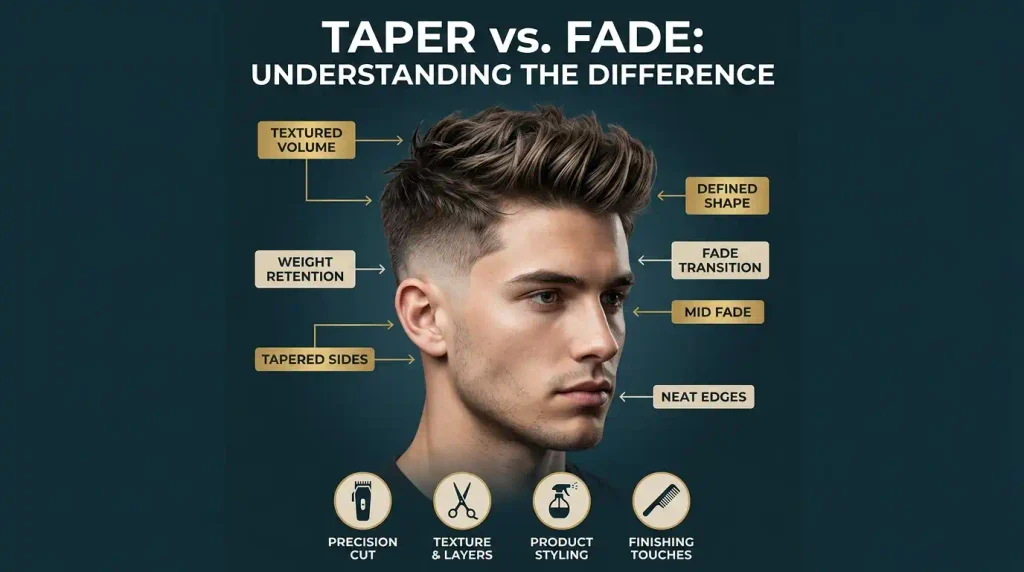
A fade removes more hair from the sides and back. The shortest portion can be very close to the skin, depending on whether you choose a low, mid, high, or skin fade.
This difference affects the overall shape of the haircut. A taper maintains a fuller silhouette, while a fade creates a tighter and more defined shape.
3. Difference in Skin Exposure
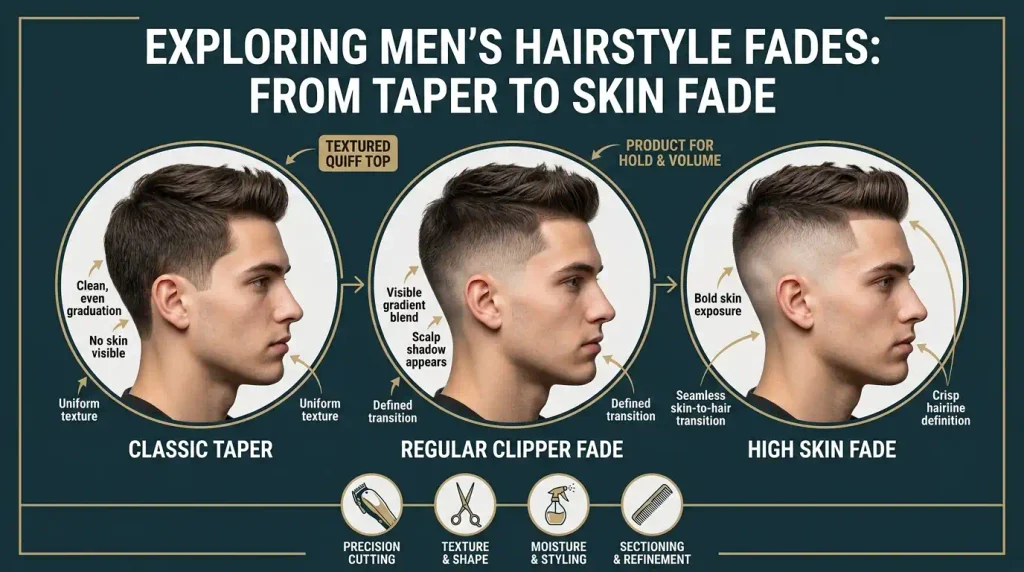
Not every fade is a skin fade. Some fades finish with a number 1 or number 2 clipper guard, leaving visible hair. Other fades gradually blend down to bare skin.
A traditional taper usually does not expose much skin. The shortest area around the sideburns or neckline may be closely trimmed, but it normally does not create a completely shaved effect.
| Style | Skin Exposure |
|---|---|
| Classic taper | Minimal |
| Low taper | Minimal to low |
| Low fade | Low to moderate |
| Mid fade | Moderate |
| High fade | Moderate to high |
| Skin fade | High, especially at the shortest area |
If you want a clean haircut without a shaved appearance, a taper or a low fade may be more suitable.
4. Difference in Overall Appearance
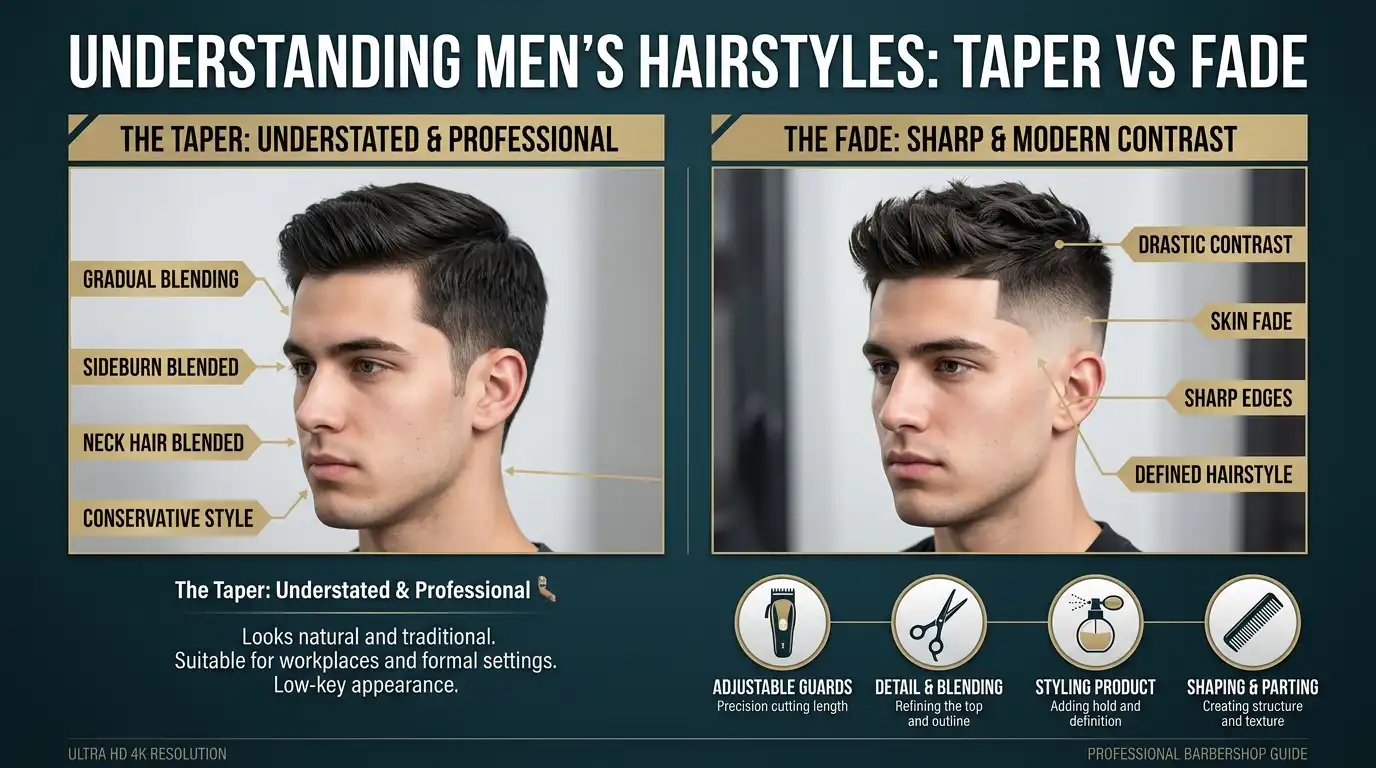
A taper usually looks understated, professional, and natural. It is suitable for workplaces, formal settings, school environments, and people who prefer a low-key hairstyle.
A fade creates a stronger visual contrast. It often looks sharper, more modern, and more noticeable. The short sides make the hairstyle on top appear more prominent.
| Appearance | Taper | Fade |
|---|---|---|
| Style impression | Classic and natural | Modern and defined |
| Contrast | Low to moderate | Moderate to high |
| Professional look | Very suitable | Suitable, depending on the fade |
| Visual impact | Subtle | Stronger |
The best choice depends on whether you prefer a natural transition or a bold contrast.
5. Difference in Maintenance
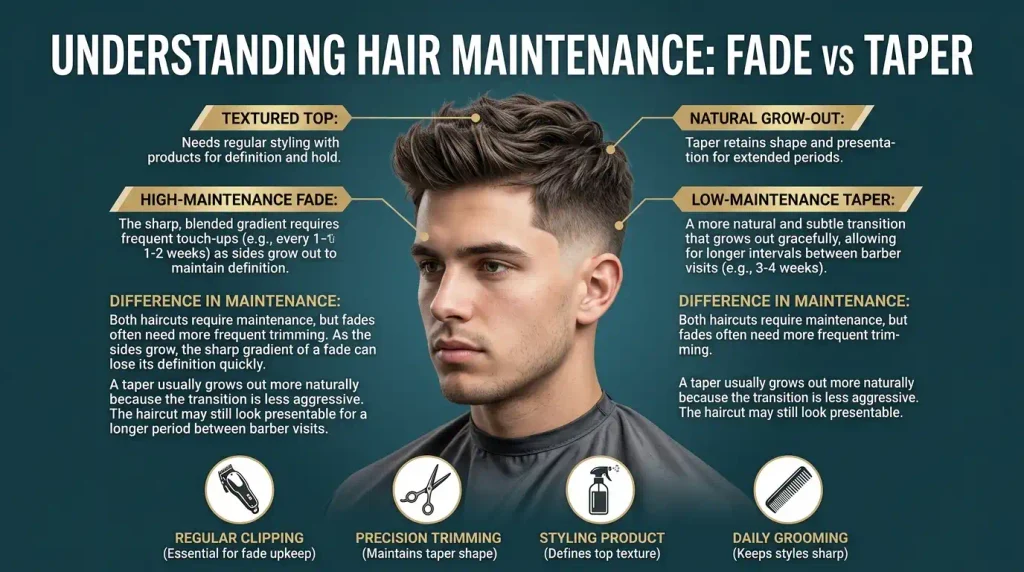
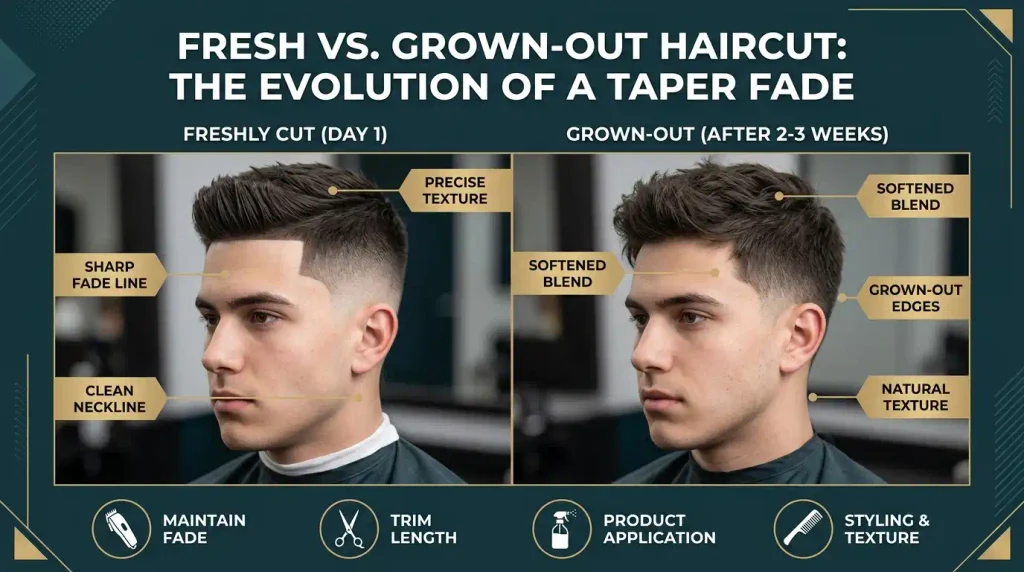
Both haircuts require maintenance, but fades often need more frequent trimming. As the sides grow, the sharp gradient of a fade can lose its definition quickly.
A taper usually grows out more naturally because the transition is less aggressive. The haircut may still look presentable for a longer period between barber visits.
| Haircut | Typical Maintenance Need |
|---|---|
| Classic taper | Low to moderate |
| Low taper | Moderate |
| Low fade | Moderate |
| Mid fade | Moderate to high |
| High fade | High |
| Skin fade | High |
The exact maintenance schedule depends on hair growth speed, hair texture, and how sharp you want the haircut to remain.
6. Difference in Styling Flexibility
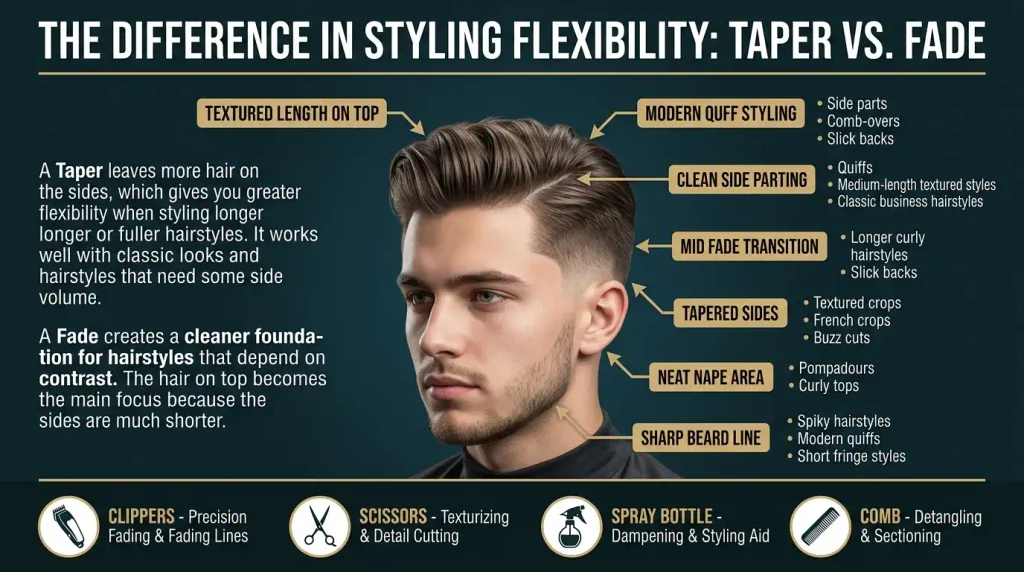
A taper leaves more hair on the sides, which gives you greater flexibility when styling longer or fuller hairstyles. It works well with classic looks and hairstyles that need some side volume.
A fade creates a cleaner foundation for hairstyles that depend on contrast. The hair on top becomes the main focus because the sides are much shorter.
A taper works well with:
- Side parts
- Comb-overs
- Slick backs
- Quiffs
- Medium-length textured styles
- Classic business hairstyles
- Longer curly hairstyles
A fade works well with:
- Textured crops
- French crops
- Buzz cuts
- Pompadours
- Curly tops
- Spiky hairstyles
- Modern quiffs
- Short fringe styles
7. Difference in Suitability for Personal Style
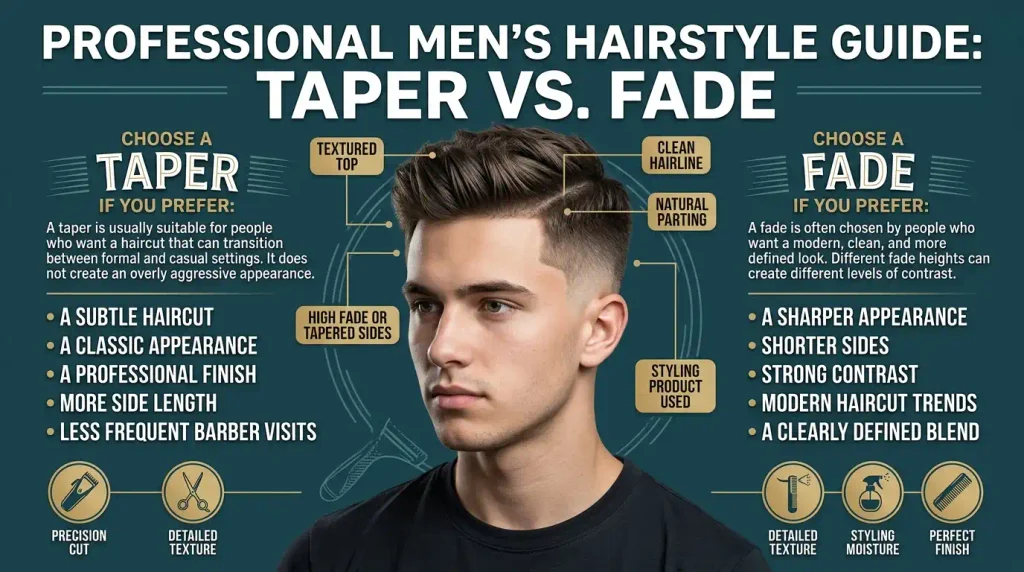
A taper is usually suitable for people who want a haircut that can transition between formal and casual settings. It does not create an overly aggressive appearance.
A fade is often chosen by people who want a modern, clean, and more defined look. Different fade heights can create different levels of contrast.
Choose a taper if you prefer:
- A subtle haircut
- A classic appearance
- A professional finish
- More side length
- Less frequent barber visits
Choose a fade if you prefer:
- A sharper appearance
- Shorter sides
- Strong contrast
- Modern haircut trends
- A clearly defined blend
Taper vs. Fade: Popular Haircut Types
Both taper and fade haircuts come in several variations. Understanding the main types can make it easier to choose the right style.
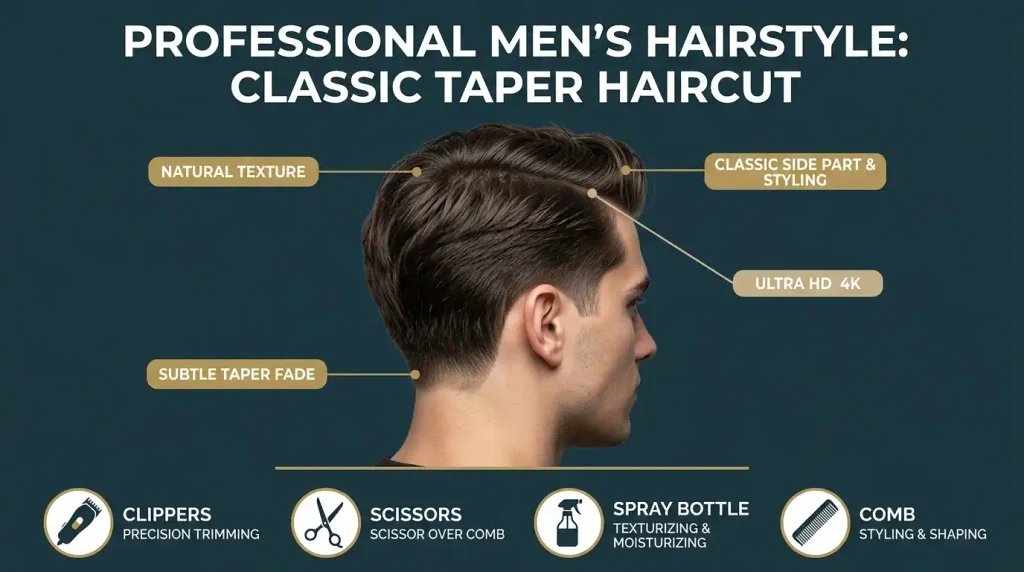
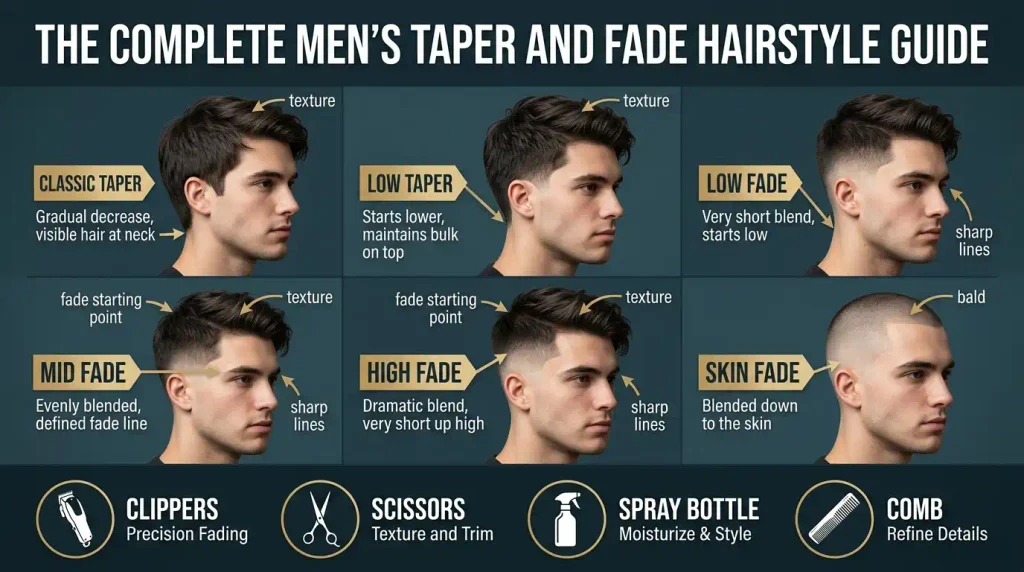
1. Classic Taper
A classic taper is one of the most traditional versions of the haircut. It gradually shortens the hair around the sideburns and neckline while leaving most of the sides relatively full.
This style is ideal for people who want a clean haircut without an obvious fade. It works particularly well with side parts, comb-overs, slick backs, and medium-length hairstyles.
Classic Taper Features
- Natural transition
- Fuller sides
- Clean sideburns
- Neat neckline
- Low contrast
- Professional appearance
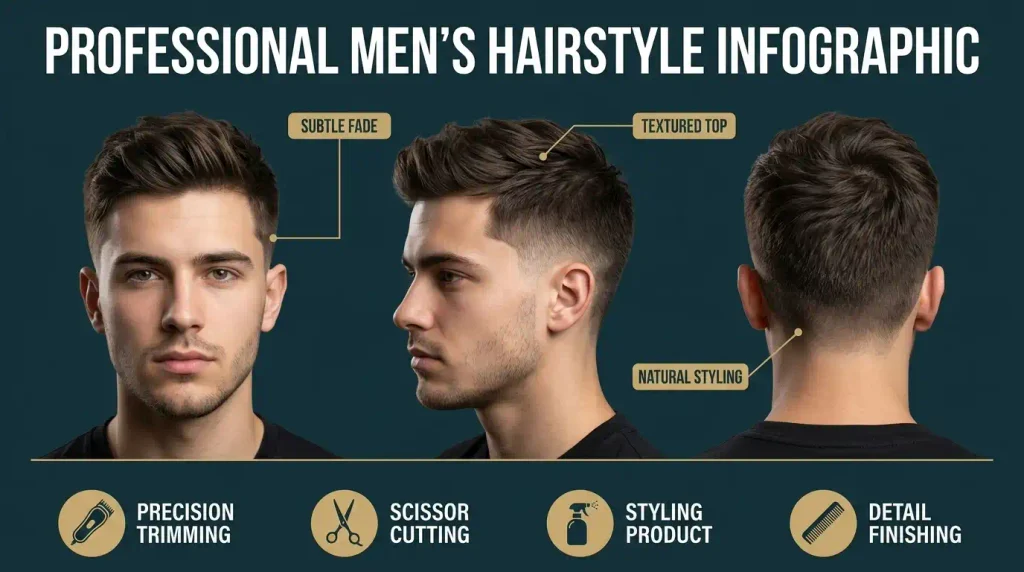
2. Low Taper
A low taper focuses on the hair closest to the ears, sideburns, and neckline. It creates a clean outline while keeping most of the side hair intact.
The low taper has become popular because it offers a modern touch without looking too extreme. It is a good choice for people who want a fresh haircut but do not want a full fade.
Low Taper Features
- Blend starts very low
- More hair remains on the sides
- Subtle contrast
- Clean edges
- Works with many hairstyles
- Easy to adapt to professional settings
A low taper is especially useful for people who want a neat haircut that still maintains natural volume.
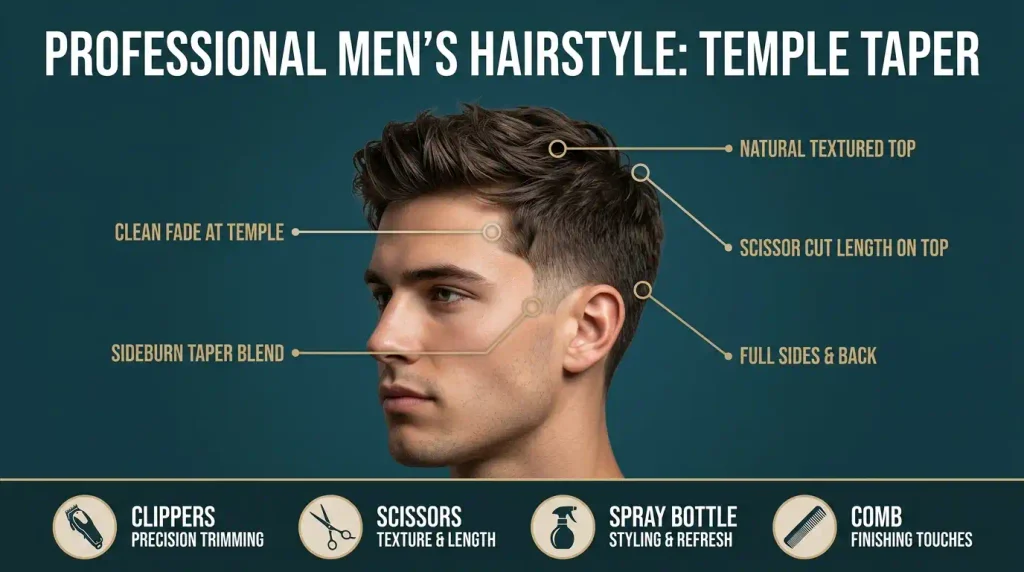
3. Temple Taper
A temple taper, also called a temp taper, focuses mainly on the temple area and sideburns. The blend is usually limited to a small section near the front sides of the head.
This style works well with curly, coily, wavy, and textured hair. It provides a clean outline while preserving the natural shape and volume of the hairstyle.
Temple Taper Features
- Blend around the temples
- Clean sideburn area
- More hair retained at the sides
- Works well with curly and textured hair
- Minimal overall hair removal
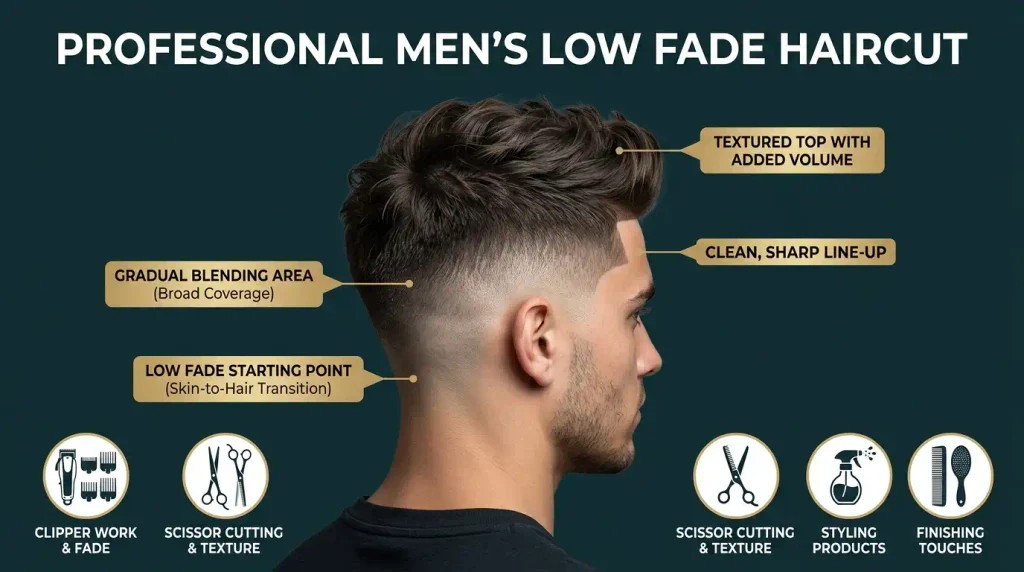
4. Low Fade
A low fade begins close to the ears and lower sides of the head. The blend gradually moves upward but remains below the middle of the sides.
Compared with a low taper, a low fade usually covers a wider area and creates a more visible transition. It can finish with a number 1, number 0, or skin-level blend.
Low Fade Features
- Blend begins low
- Covers more area than a taper
- Creates moderate contrast
- Works with short and medium hairstyles
- Can be subtle or sharp depending on the finish
A low fade is a good option for someone who wants the clean appearance of a fade without exposing too much scalp.
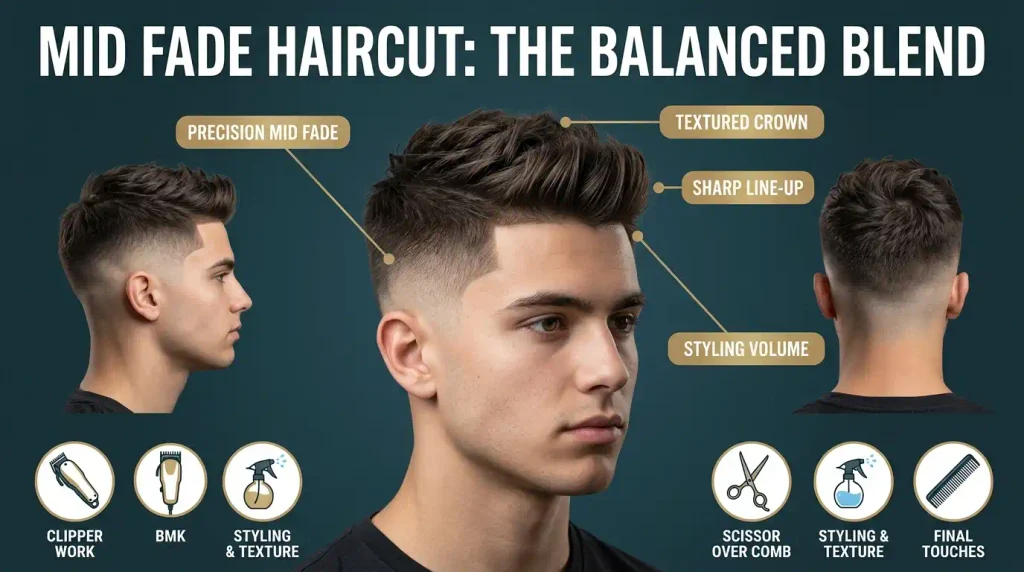
5. Mid Fade
A mid fade begins around the middle of the sides of the head. It creates a balanced appearance between a low fade and a high fade.
This haircut is popular because it offers noticeable contrast without removing too much hair from the upper sides. It works with textured crops, quiffs, curly tops, and short hairstyles.
Mid Fade Features
- Blend begins in the middle of the sides
- Balanced contrast
- More noticeable than a low fade
- Less extreme than a high fade
- Works with many face shapes
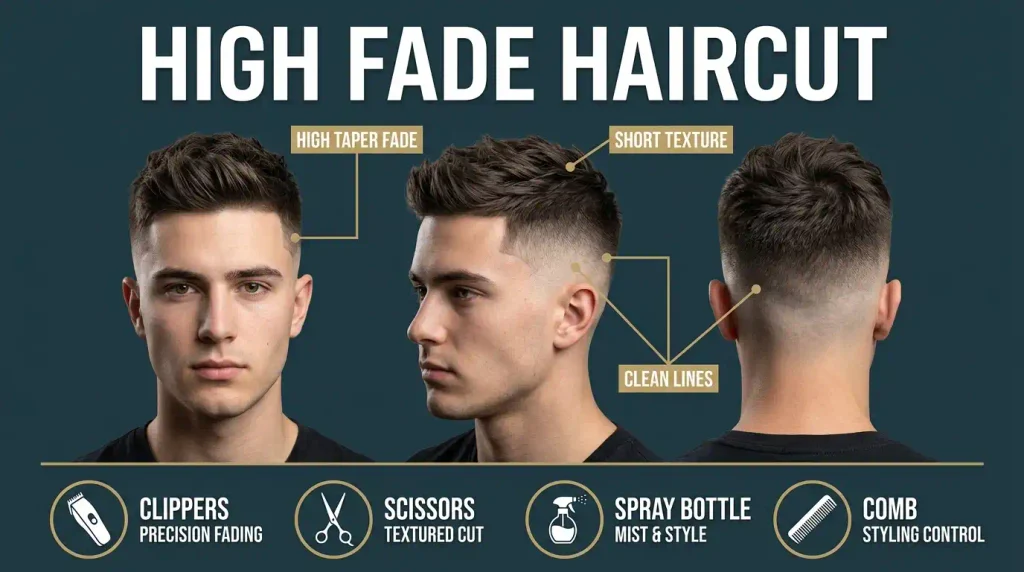
6. High Fade
A high fade begins near the upper sides of the head, often around the temples. It removes a significant amount of hair from the sides and creates a strong contrast with the hair on top.
High fades are often associated with modern, bold, and structured hairstyles. They can make the top appear fuller and more prominent.
High Fade Features
- Blend starts high
- Shorter sides
- Strong contrast
- Bold appearance
- Works well with short or textured hairstyles
A high fade may not be the best option for someone who wants to preserve side volume or prefers a conservative haircut.
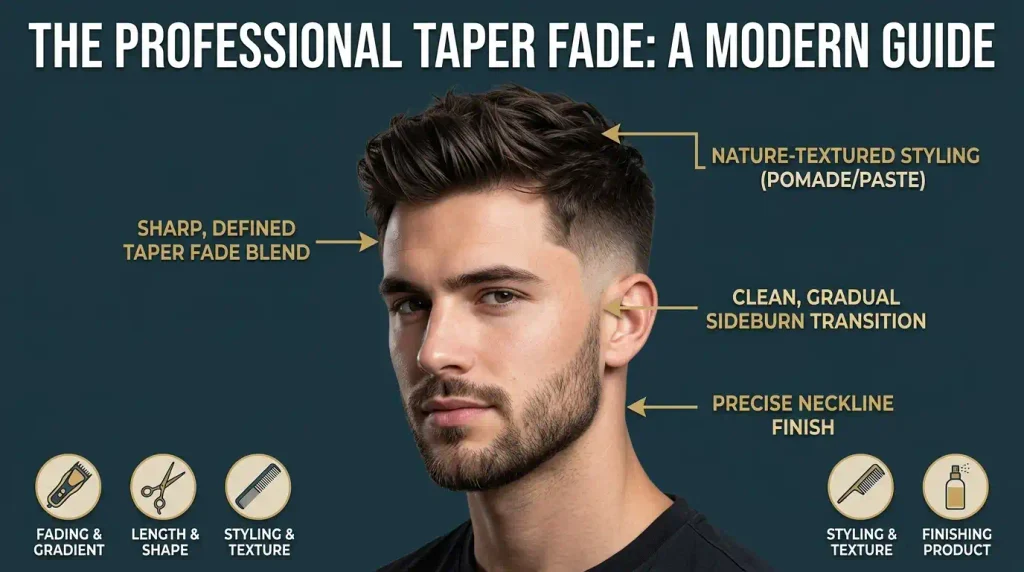
7. Taper Fade
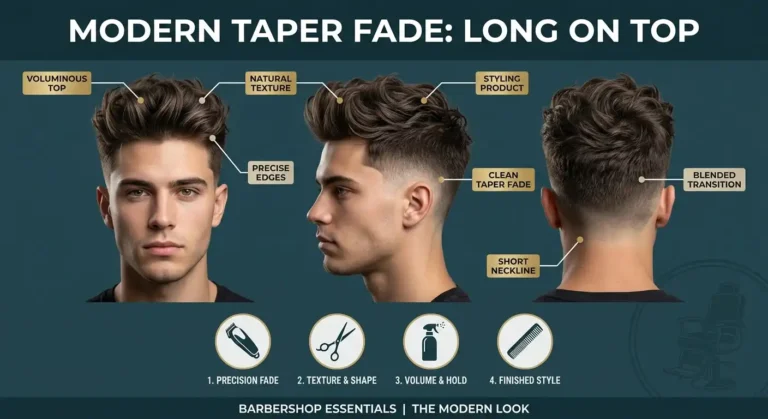
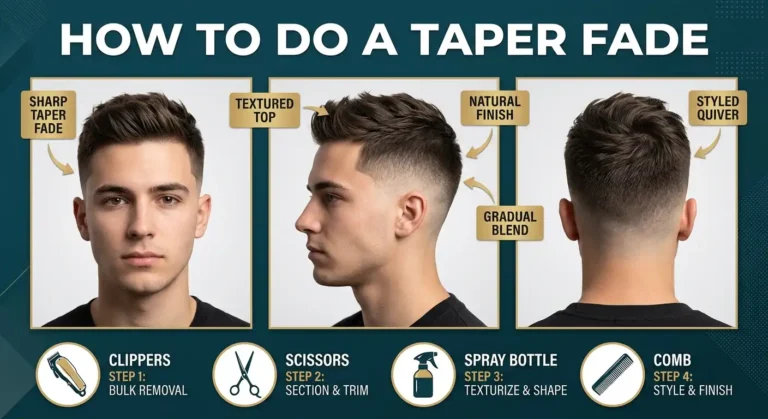
A taper fade combines elements of a taper and a fade. It usually creates a clean, gradual transition around the sideburns, ears, and neckline while giving the haircut a slightly sharper appearance.
The exact meaning of “taper fade” can vary between barbers and regions. Some barbers use the term to describe a low fade concentrated around the edges, while others use it for a haircut that has a more defined taper with a fade-like finish.
When asking for a taper fade, it is important to explain exactly how short you want the sides and where you want the blend to begin.
Taper vs. Fade: Which One Looks Better?
There is no universal answer because the better choice depends on your preferred appearance, hair type, face shape, lifestyle, and maintenance routine.
A taper often looks better for someone who prefers:
- A classic haircut
- A natural finish
- Fuller sides
- A professional appearance
- Less noticeable regrowth
A fade may be preferable for someone who wants:
- A modern haircut
- A sharper outline
- Shorter sides
- Strong contrast
- A more structured appearance
Instead of choosing only by the haircut’s name, consider how much hair you want to keep on the sides and how short you want the blend to be.
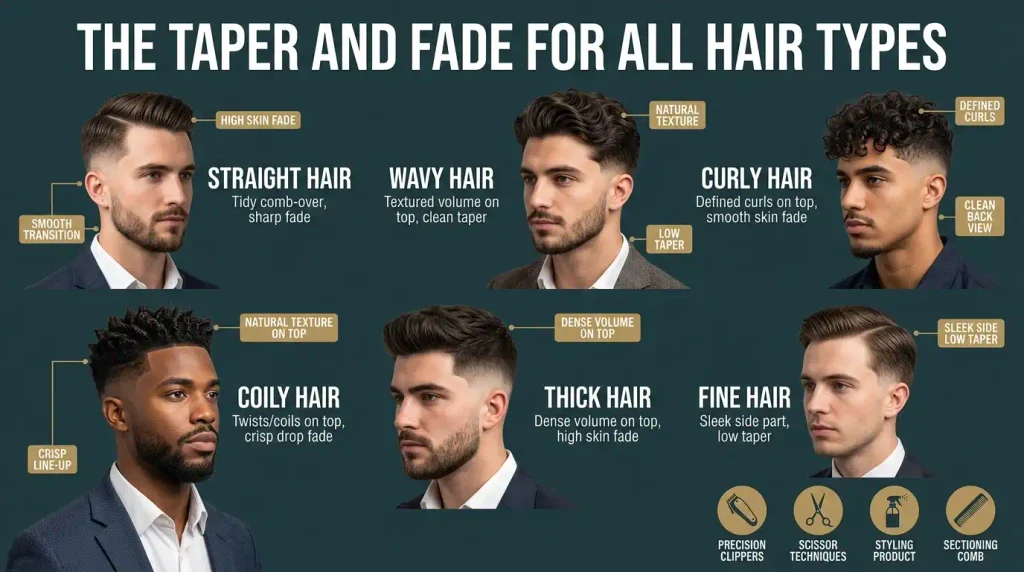
Taper or Fade for Different Hair Types
Hair texture can affect how a taper or fade looks. The same haircut may appear different on straight, wavy, curly, coily, thick, or fine hair.
Straight Hair
Straight hair shows the blend clearly because the hair usually lies flat against the head. A taper can create a classic appearance, while a fade can produce a sharp and clean contrast.
Recommended options:
- Classic taper
- Low taper
- Low fade
- Mid fade
- Side-part taper
Wavy Hair
Wavy hair adds natural movement and texture. A low taper or low fade can clean up the edges while preserving the waves on top.
Recommended options:
- Low taper
- Low fade
- Mid fade
- Textured taper
- Wavy crop with fade
Curly Hair
Curly hair often benefits from a clean outline around the temples and neckline. A temple taper can preserve the natural shape, while a fade can create a stronger contrast.
Recommended options:
- Temple taper
- Low taper
- Low fade
- Mid fade
- Curly top with fade
Coily or Afro-Textured Hair
A taper can preserve the natural fullness of coily hair while keeping the edges neat. A fade can create a more defined shape around the sides and back.
Recommended options:
- Temple taper
- Low taper
- Low fade
- High fade
- Tapered afro
Thick Hair
Thick hair can benefit from a fade because removing bulk from the sides creates a cleaner shape. A taper is better when you want to retain fullness.
Recommended options:
- Classic taper
- Low fade
- Mid fade
- High fade
- Textured crop with fade
Fine or Thin Hair
A very high or aggressive fade may make the scalp more visible. A low taper or low fade can create a cleaner appearance without exposing too much scalp.
Recommended options:
- Low taper
- Classic taper
- Low fade
- Scissor taper
- Textured top with subtle sides
Taper and Fade for Different Face Shapes
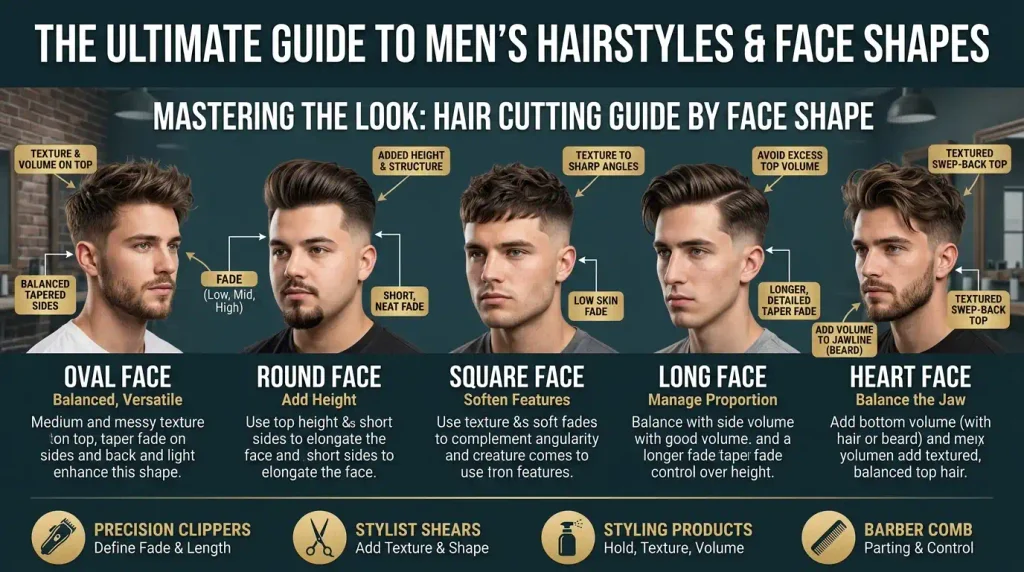
Your face shape can influence how a taper or fade balances your overall appearance. The haircut should work with your head shape, hairline, and preferred hairstyle.
Oval Face Shape
An oval face shape generally works with many haircut styles. Both tapers and fades can look balanced.
Suitable options:
- Classic taper
- Low taper
- Mid fade
- Textured crop
- Side part
Round Face Shape
A style with some height on top and shorter sides can create a more elongated appearance. A mid fade or high fade may provide more structure, while a low taper can offer a softer result.
Suitable options:
- Mid fade
- High fade
- Textured quiff
- Taper with volume
- Side-part fade
Square Face Shape
Square faces often work well with clean, structured haircuts. A taper can emphasize the natural shape, while a fade can make the haircut look sharper.
Suitable options:
- Classic taper
- Low fade
- Mid fade
- Buzz cut with fade
- Side part
Long Face Shape
A very high fade combined with excessive height on top may make a long face appear longer. A low taper or low fade with moderate volume can create a more balanced look.
Suitable options:
- Low taper
- Low fade
- Side-swept style
- Medium-length textured haircut
- Classic taper
Heart-Shaped Face
A softer taper or low fade can balance a wider forehead and narrower chin. Avoid creating excessive height if you want a more proportionate appearance.
Suitable options:
- Low taper
- Low fade
- Side-swept haircut
- Textured fringe
- Medium-length taper
Taper vs. Fade for Work, School, and Everyday Life
Your daily routine should also influence your haircut choice.
For Professional Workplaces
A classic taper or low taper is often a practical choice for formal workplaces. It looks neat without creating excessive contrast.
A low fade can also work in professional environments if the blend is clean and not overly dramatic.
For School or College
A low taper, temple taper, or low fade can provide a modern appearance while remaining relatively subtle. The best choice may depend on school grooming rules.
For Casual and Creative Styles
Mid fades, high fades, skin fades, and textured taper fades can create a stronger fashion-focused appearance. They work well with modern styling and expressive haircuts.
For Low-Maintenance Routines
A classic taper usually grows out more naturally. If you do not want to visit the barber frequently, a taper may be easier to manage.
Lifestyle Comparison
| Lifestyle | Suitable Option |
|---|---|
| Formal office | Classic taper or low taper |
| School or college | Low taper or low fade |
| Creative work | Mid fade or taper fade |
| Athletic lifestyle | Low, mid, or high fade |
| Traditional style | Classic taper |
| Low-maintenance routine | Classic taper |
| Bold modern look | High fade or skin fade |
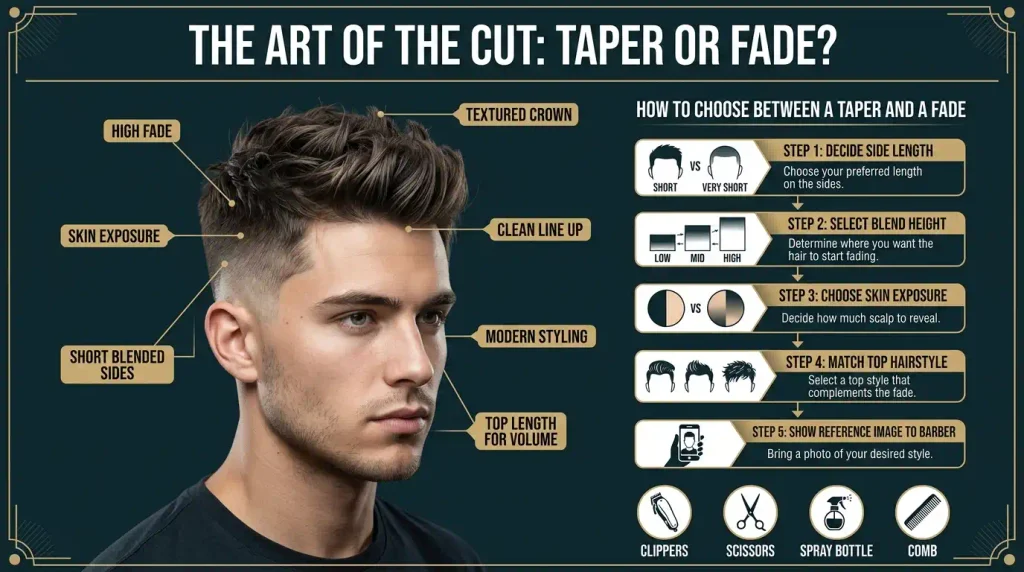
How to Choose Between a Taper and a Fade
Use the following questions before deciding:
1. How Short Do You Want the Sides?
If you want to keep more hair on the sides, choose a taper. If you want very short sides, consider a fade.
2. Do You Want to See Your Scalp?
If you prefer little or no scalp exposure, choose a classic taper or low taper. If you are comfortable with visible scalp, a skin fade may be suitable.
3. How Much Contrast Do You Want?
For subtle contrast, choose a taper or low fade. For stronger contrast, choose a mid fade, high fade, or skin fade.
4. How Often Can You Visit the Barber?
If you want a haircut that grows out naturally, a taper is often easier to maintain. A sharp fade may require more frequent touch-ups.
5. What Hairstyle Do You Want on Top?
Longer classic hairstyles often work well with a taper. Short, textured, and modern hairstyles often pair well with fades.
How to Explain Your Haircut to a Barber
Many haircut misunderstandings happen because customers use the word “fade” without explaining the desired length or height.
Instead of saying only:
“Give me a taper fade.”
Explain the following details:
- Where you want the blend to begin
- How short you want the sides
- Whether you want skin exposure
- How much length should remain on top
- What you want around the neckline
- Whether you want a natural or sharp finish
Barber Request for a Classic Taper
“I want a classic taper around the sideburns and neckline. Keep the sides relatively full and do not take the blend too high.”
Barber Request for a Low Taper
“Give me a low taper around the ears, sideburns, and neckline. Keep most of the side length and make the transition subtle.”
Barber Request for a Low Fade
“I want a low fade that starts just above the ears. Keep the blend low and do not take it too high on the sides.”
Barber Request for a Mid Fade
“Give me a mid fade that starts around the middle of the sides. I want a noticeable but balanced transition.”
Barber Request for a High Fade
“I want a high fade that starts near the temples. Keep the top longer and create a strong contrast with the sides.”
Image Placeholder 12: Barber Consultation
ImagePlaceholder:Arealisticbarberconsultationsceneshowingacustomerdiscussingtaperandfadeoptionswithabarber.Ahaircutreferenceimageormirrorshouldbevisible,andthefocusshouldbeoncommunicatingthedesiredblendheightandsidelength.Image Placeholder: A realistic barber consultation scene showing a customer discussing taper and fade options with a barber. A haircut reference image or mirror should be visible, and the focus should be on communicating the desired blend height and side length.
Step-by-Step: How to Decide on Your Haircut
Step 1: Identify Your Preferred Side Length
Decide whether you want full, medium, short, or nearly shaved sides.
- Full sides: Classic taper
- Moderately shortened sides: Low taper or low fade
- Short sides: Mid fade
- Very short sides: High fade or skin fade
Step 2: Choose the Blend Height
The blend height determines the overall appearance.
- Low blend: Subtle and conservative
- Mid blend: Balanced and noticeable
- High blend: Bold and modern
Step 3: Decide on the Finish
You can choose between:
- Scissor or clipper finish
- Number guard finish
- Close clipper finish
- Skin finish
- Natural neckline
- Blocked neckline
- Tapered neckline
Step 4: Match the Haircut With Your Top Style
Consider how the sides will work with the hair on top.
For example:
- Side part with classic taper
- Curly top with temple taper
- Textured crop with mid fade
- Pompadour with low fade
- Buzz cut with high fade
- Slick back with low taper
Step 5: Show a Reference Image
A reference image can help the barber understand your desired result. However, remember that the final appearance may vary according to your hair density, hairline, head shape, and texture.
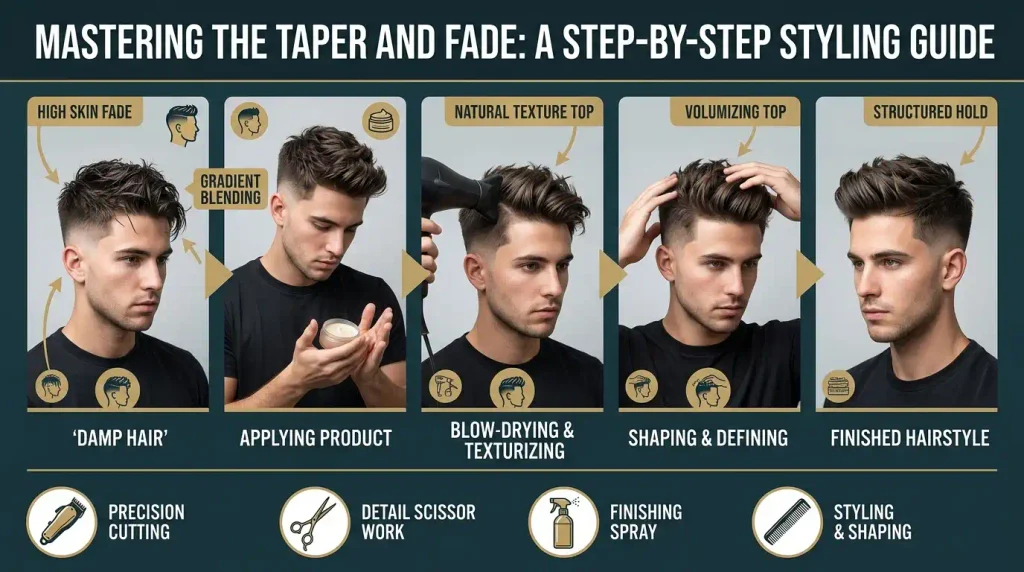
Styling Tips for Taper and Fade Haircuts
The styling method depends more on the hair on top than on the taper or fade itself.
For Short Hair
Use a lightweight styling cream, matte paste, or clay. Apply a small amount and shape the hair with your fingers.
For Medium-Length Hair
A blow dryer can help create volume and direction. Use a light pomade, styling cream, or matte paste depending on the desired finish.
For Curly Hair
Use a curl cream, leave-in conditioner, or light styling gel. Avoid brushing the curls excessively because it can create frizz.
For Thick Hair
A matte clay or strong styling paste can help control bulk and maintain structure.
For Fine Hair
Use lightweight products that add texture without making the hair look greasy or heavy.
Basic Styling Routine
- Wash or dampen the hair.
- Towel-dry gently.
- Apply a small amount of styling product.
- Shape the hair with your fingers or a comb.
- Use a blow dryer if additional volume is needed.
- Finish with a light hairspray if required.
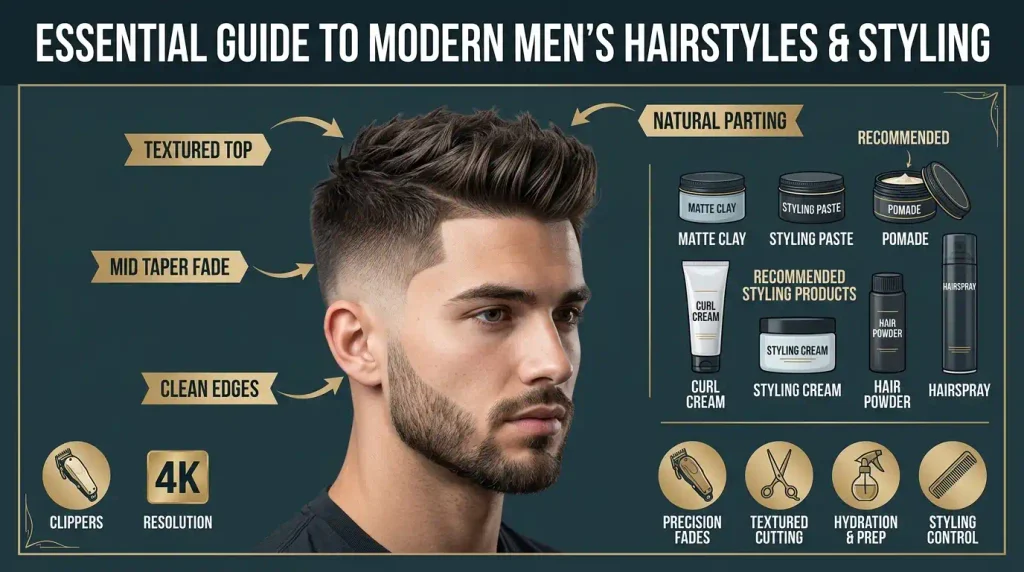
Products That Work With Taper and Fade Haircuts
The best product depends on your hair texture and the finish you want.
| Product | Best For | Finish |
|---|---|---|
| Matte clay | Thick and textured hair | Natural and matte |
| Styling paste | Medium-length hair | Flexible and natural |
| Pomade | Slick backs and side parts | Medium to high shine |
| Hair wax | Short textured styles | Flexible hold |
| Curl cream | Curly and wavy hair | Defined and soft |
| Styling cream | Natural everyday styles | Light and smooth |
| Hair powder | Fine hair | Volume and texture |
| Light hairspray | Finishing and hold | Flexible or firm |
Avoid using too much product. Excessive styling product can make the hair look greasy, heavy, or flat.
Common Mistakes When Choosing a Taper or Fade
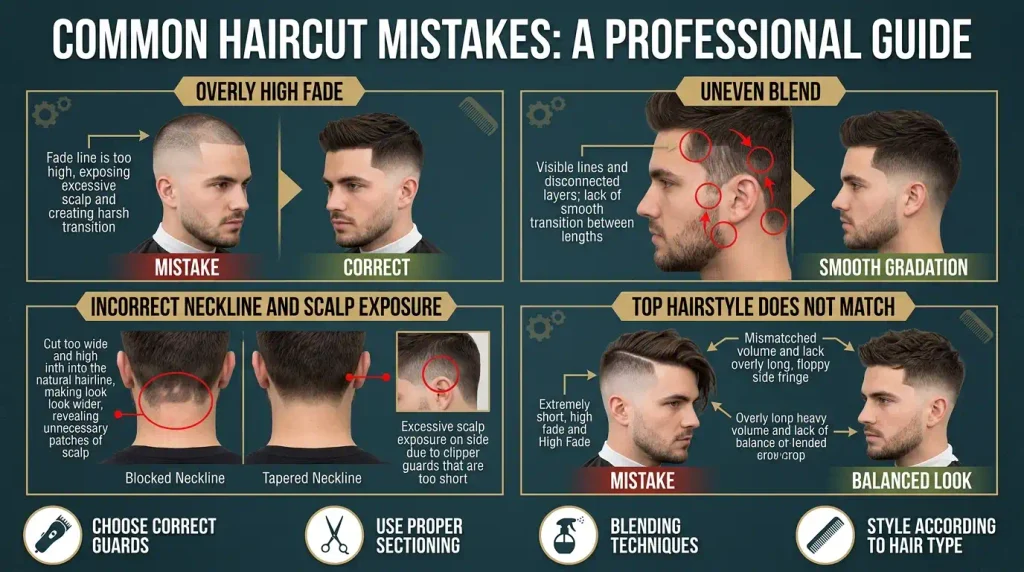
Mistake 1: Choosing a Haircut Only by Name
The terms “taper,” “fade,” and “taper fade” can mean slightly different things to different barbers. Always describe the desired result rather than relying on the name alone.
Mistake 2: Not Explaining the Blend Height
A low fade and a high fade can look completely different. Tell your barber whether you want the blend low, medium, or high.
Mistake 3: Requesting a Skin Fade Without Considering Regrowth
Skin fades can look very sharp when fresh, but the contrast becomes noticeable as the hair grows. Make sure you are comfortable with regular maintenance.
Mistake 4: Ignoring Hair Density
If your hair is fine or thinning, an aggressive fade may expose more scalp than expected. A low taper or subtle fade may create a more balanced appearance.
Mistake 5: Choosing a Style That Conflicts With Your Top Hair
The sides and top should work together. A high fade may not pair well with every long or classic hairstyle.
Mistake 6: Not Showing a Reference Image
Words can be interpreted differently. A clear reference image can help the barber understand the exact length, shape, and blend you want.
Mistake 7: Expecting the Same Result as the Reference
A haircut may look different because of your hair texture, hairline, head shape, density, and styling routine.
Maintenance Tips for Taper and Fade Haircuts
Taper Maintenance
A classic taper may remain presentable for several weeks because the transition is subtle. You can maintain the sideburns and neckline between full haircuts if necessary.
Fade Maintenance
A fade usually looks its sharpest during the first one or two weeks. Depending on how quickly your hair grows, you may need a touch-up every two to three weeks.
General Maintenance Tips
- Keep the neckline clean.
- Trim or shape the sideburns when needed.
- Use suitable styling products.
- Wash the hair according to your hair type.
- Avoid excessive heat styling.
- Visit your barber before the blend becomes uneven.
- Maintain the top hairstyle along with the sides.
| Haircut | Suggested Touch-Up Period |
|---|---|
| Classic taper | Every 3–5 weeks |
| Low taper | Every 2–4 weeks |
| Low fade | Every 2–3 weeks |
| Mid fade | Every 2–3 weeks |
| High fade | Every 1–2 weeks |
| Skin fade | Every 1–2 weeks |
These are general estimates. Your ideal schedule depends on hair growth speed and how precise you want the haircut to remain.
Frequently Asked Questions
Is a taper the same as a fade?
No. A taper usually shortens the hair around the sideburns, ears, and neckline while keeping more hair on the sides. A fade generally blends a larger area of the sides and back into shorter hair, sometimes down to the skin.
Which is more subtle, a taper or a fade?
A taper is usually more subtle because it retains more hair on the sides and focuses on smaller areas. A low fade can also be subtle, but it generally creates more contrast than a traditional taper.
Is a taper better than a fade for professional settings?
A classic taper or low taper is often a practical choice for professional settings because it creates a neat and natural appearance. A low fade may also work depending on workplace grooming standards.
Which haircut lasts longer, a taper or a fade?
A taper often grows out more naturally and may look acceptable for longer between haircuts. A fade can lose its sharp definition more quickly, especially when it is very short or finishes at skin level.
Can a taper reach the skin?
A traditional taper usually does not expose much skin, but some modern taper variations may use very short clippers around the edges. If you want a skin-level finish, explain this clearly to your barber.
Is a low taper the same as a low fade?
Not exactly. A low taper usually focuses on the sideburns, ears, and neckline. A low fade generally covers a wider area of the lower sides and back.
Which is better for curly hair, a taper or a fade?
Both can work well. A temple taper or low taper preserves more natural volume, while a fade creates stronger contrast and a sharper outline.
Which is better for thin hair?
A low taper or subtle low fade may be more suitable for thin hair because it avoids excessive scalp exposure. A high or skin fade may make thinning areas more visible.
How do I ask my barber for a taper?
You can say: “I want a taper around the sideburns and neckline. Keep the sides full and make the blend subtle.”
How do I ask my barber for a fade?
Specify the fade height and shortest length. For example: “I want a low fade that starts just above the ears and blends into a number 1. Do not take it too high.”
Final Verdict: Taper or Fade?
The taper and fade are both useful haircut styles, but they create different results.
A taper keeps more hair on the sides and focuses on creating a clean, natural transition around the sideburns, ears, and neckline. It is ideal for classic, professional, and low-maintenance styles.
A fade blends a larger area of the sides and back into shorter hair. It creates stronger contrast and is suitable for modern, sharp, and structured hairstyles.
Choose a taper if you prefer a subtle and versatile haircut. Choose a fade if you want shorter sides, stronger contrast, and a more defined appearance. If you are unsure, a low taper or low fade can provide a balanced starting point.
The most important thing is to communicate the desired blend height, side length, skin exposure, and top hairstyle clearly to your barber.
Name: Ryan Cole
Role: Lead Grooming Editor, TaperHaircutGuide.com
Bio angle: Men’s grooming/style content researcher — 4+ years covering barbering trends, hairstyling terminology, and men’s style content for US audience. Cross-checks every guide with practicing barbers before publishing.