Low Taper Fade With Design in the Back: 50 Best Ideas for Men

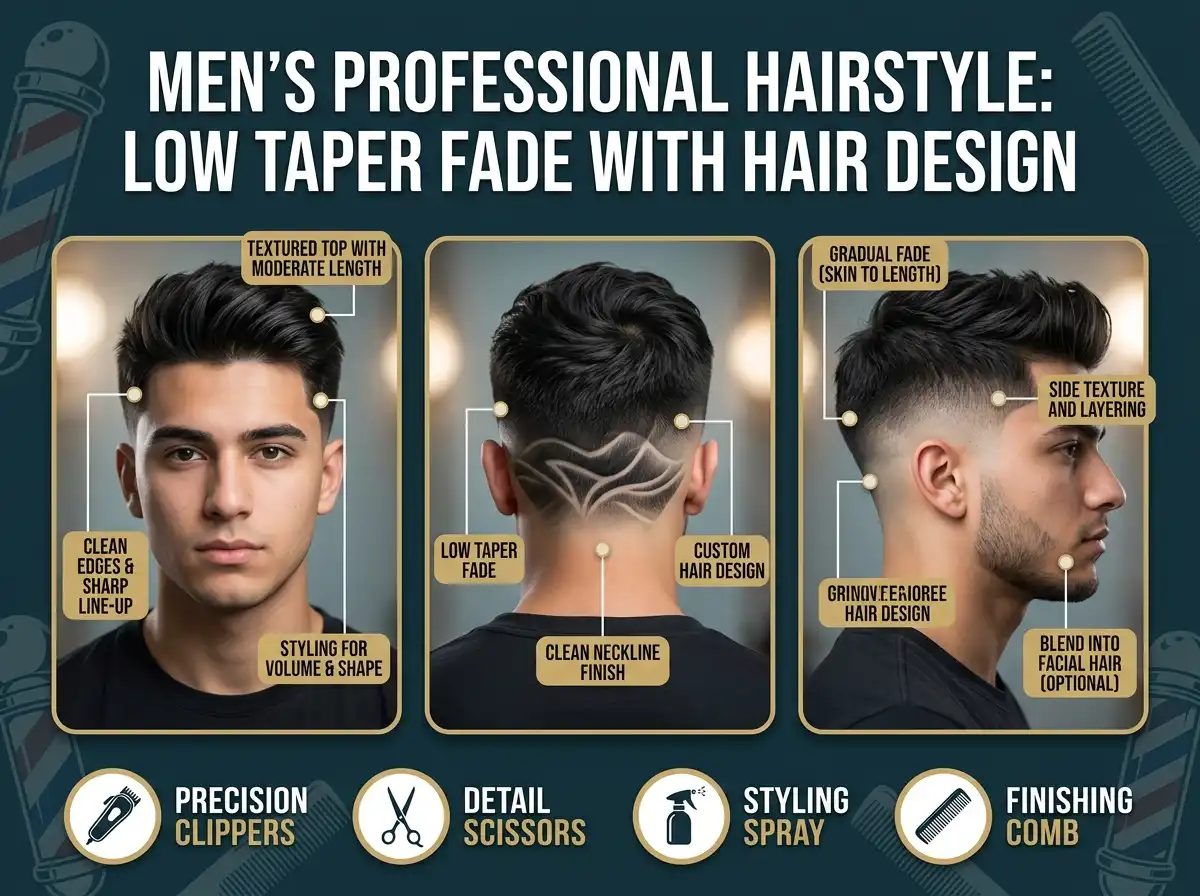
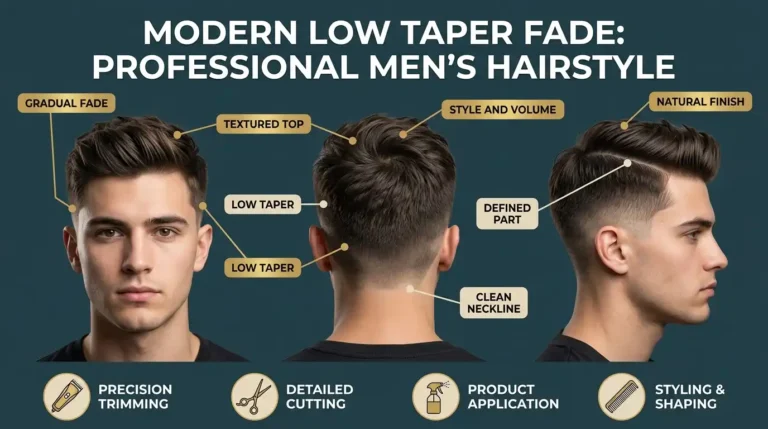
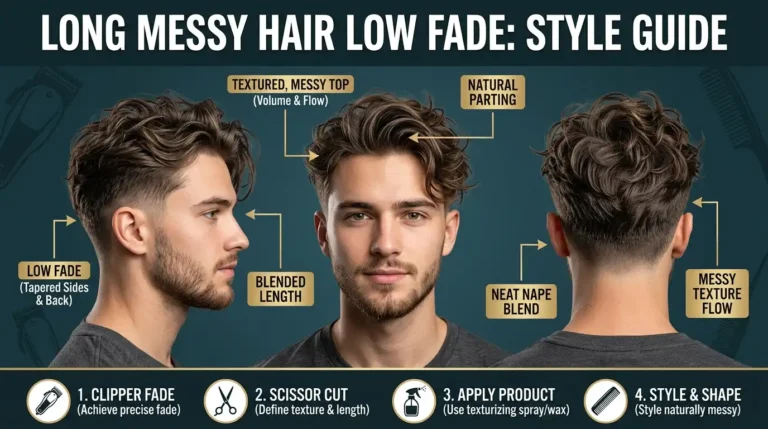
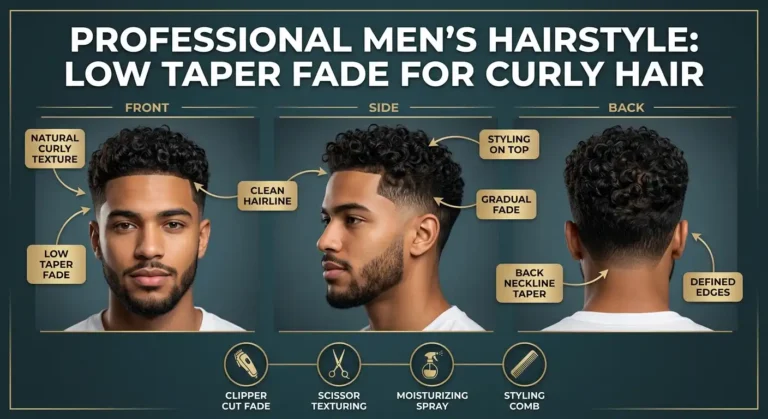
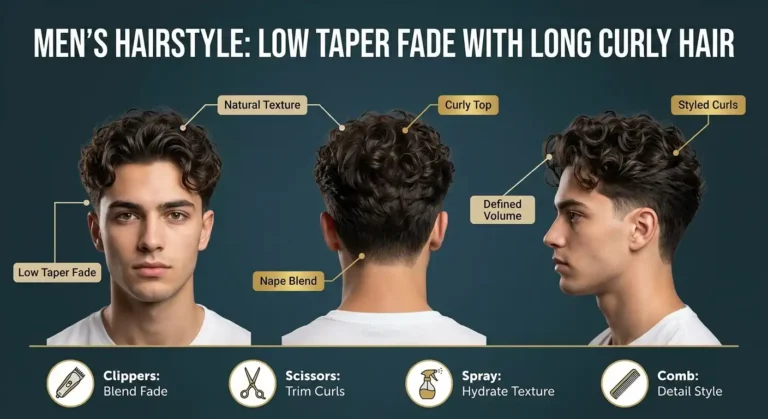
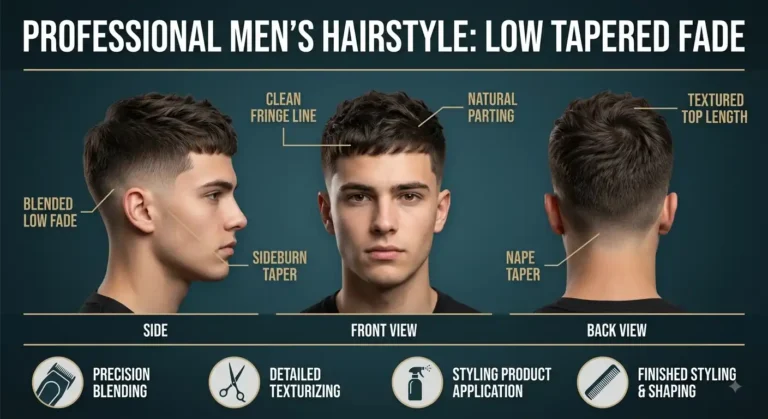
A low taper fade with design in the back combines a low taper around the ears and neckline with a shaved line, pattern, or custom shape at the back of the head. The taper keeps the haircut clean and controlled, while the back design adds personality without taking over the whole look.
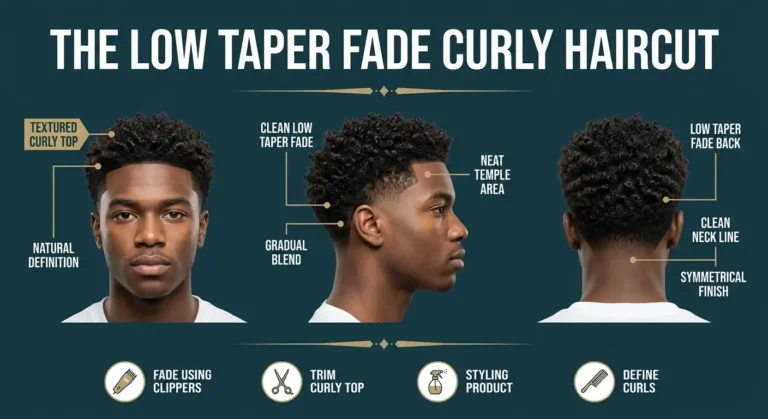
This style works with straight, wavy, curly, coily, and thick hair. The best design depends on your hair density, face shape, top length, and how bold you want the haircut to look.
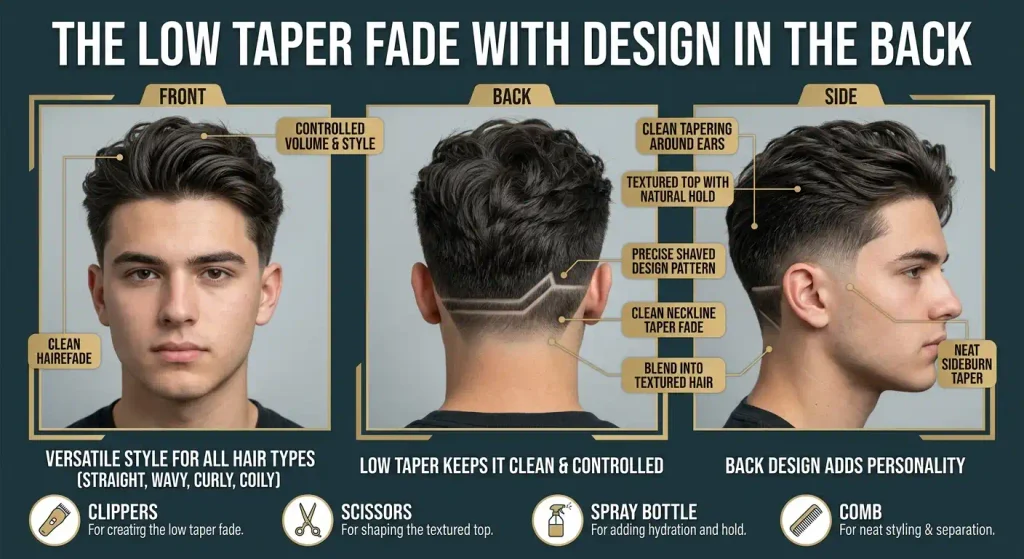
If you want ideas before visiting your barber, the 60 options below cover subtle lines, geometric shapes, curved patterns, textured-top combinations, and bold custom designs.
Quick Overview: 5 Styles Worth Considering
| Style | Look | Best Hair Type | Best For |
| Single Nape Line | Clean and minimal | All types | First-timers |
| Back Zigzag | Sharp and energetic | Thick, dark hair | Casual looks |
| Diamond Nape | Precise and geometric | Straight or wavy | Modern styling |
| Curved Wave Back | Soft and flowing | Wavy or curly | Natural texture |
| Freestyle Back Art | Unique and creative | Thick hair | Statement cuts |
How to Ask Your Barber about Low Taper Fade With Design in the Back
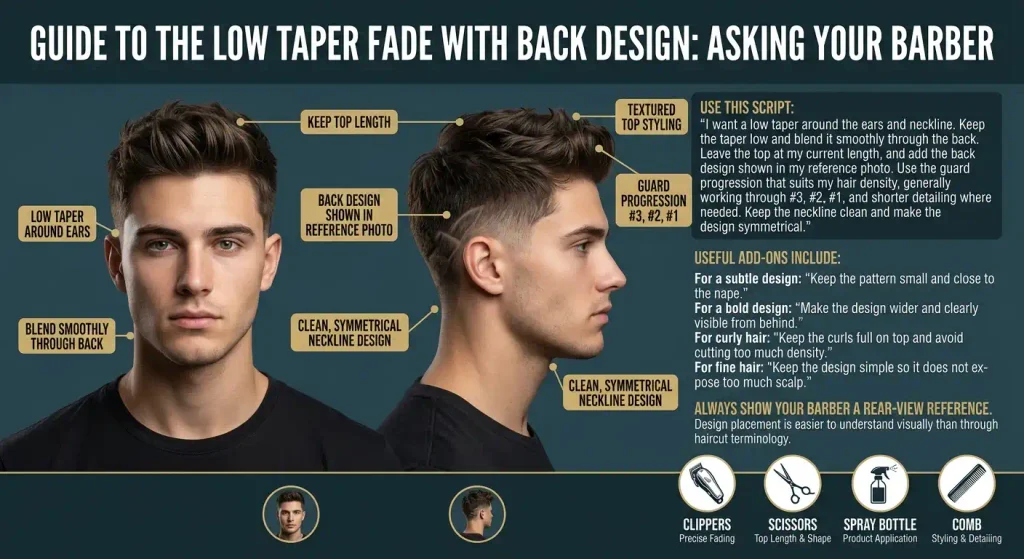
Use this copy-and-paste script:
“I want a low taper around the ears and neckline. Keep the taper low and blend it smoothly through the back. Leave the top at my current length, and add the back design shown in my reference photo. Use the guard progression that suits my hair density, generally working through #3, #2, #1, and shorter detailing where needed. Keep the neckline clean and make the design symmetrical.”
Useful add-ons include:
- For a subtle design: “Keep the pattern small and close to the nape.”
- For a bold design: “Make the design wider and clearly visible from behind.”
- For curly hair: “Keep the curls full on top and avoid cutting too much density.”
- For fine hair: “Keep the design simple so it does not expose too much scalp.”
Always show your barber a rear-view reference. Design placement is easier to understand visually than through haircut terminology.
60 Low Taper With Design in the Back Ideas
Clean Back & Nape Designs
These options focus directly on the nape. They work well when you want the design to be visible from behind without making the entire haircut feel aggressive.
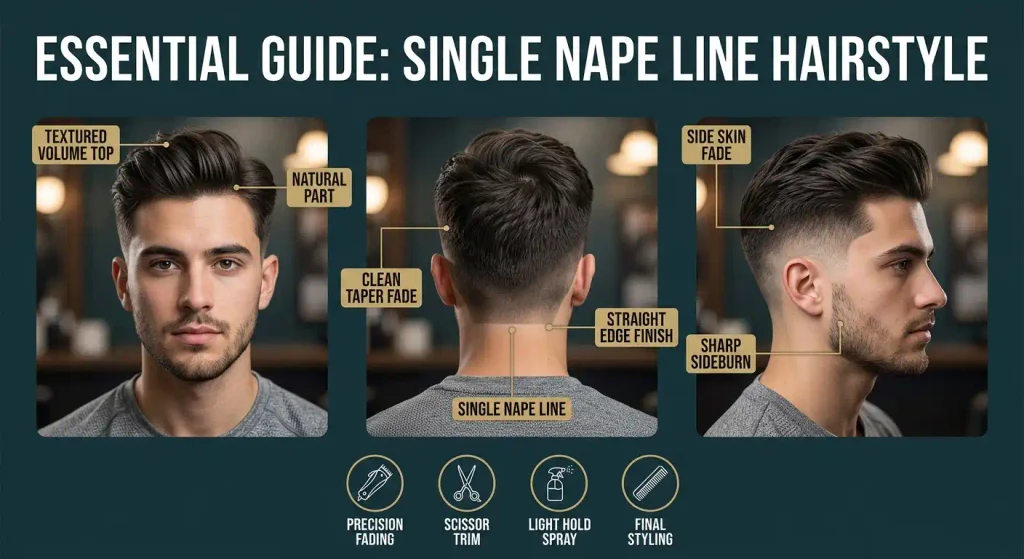
1. Single Nape Line
A single horizontal line gives the cleanest starting point for a back design. It works especially well with straight, wavy, or short curly hair because the simple shape does not compete with the texture.
Ask for a low taper using a #2 or #3 as the upper blending area, moving shorter toward the neckline. A trimmer can create the line after the fade is blended. Oval and square faces handle this easily, while a matte clay keeps the top controlled.
2. Double Nape Lines
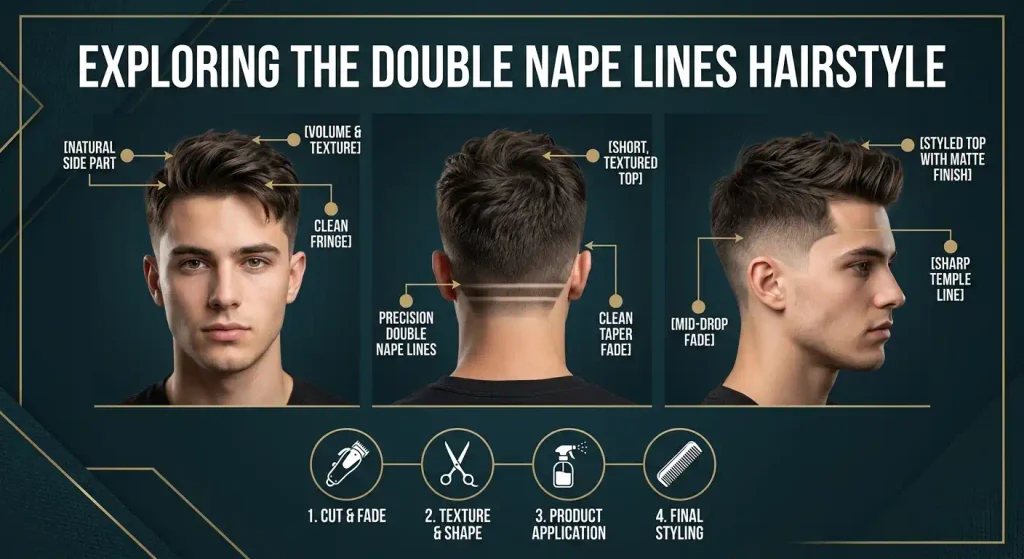
Two parallel lines add more detail while keeping the haircut balanced. The lines can sit close together above the neckline or follow the natural curve of the head. Straight and wavy hair make the spacing especially clear, while thicker curly hair gives the design stronger contrast.
Ask your barber to blend the taper first, then map both lines with a detailer. Keep the top textured rather than overly slick so the back remains the main feature.
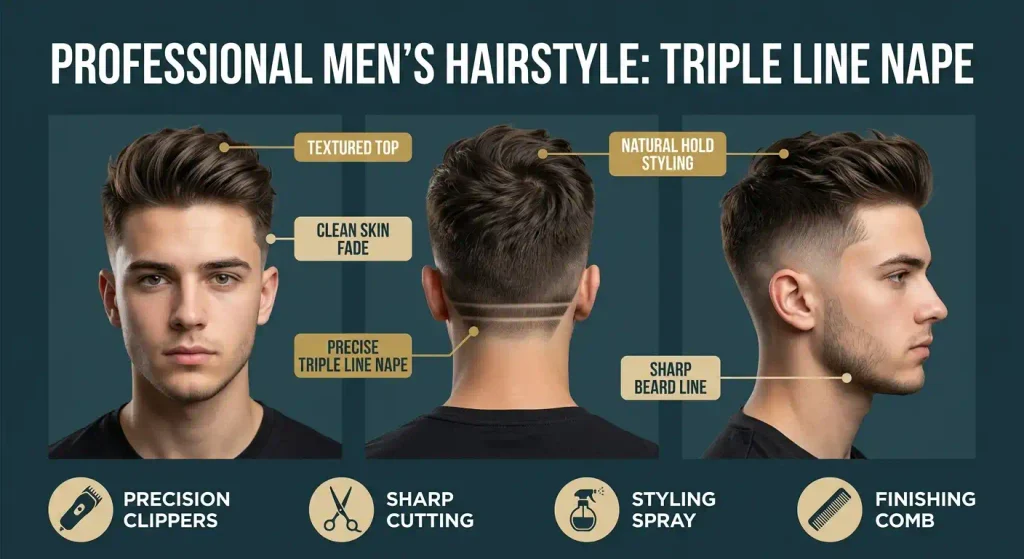
3. Triple Line Nape
Three narrow lines create a stronger graphic effect without requiring a complicated pattern. This works best when the top is relatively simple, such as a short crop, crew cut, or textured top. A #3-to-#0 taper can provide enough contrast for the lines to stand out.
The design suits thicker hair particularly well because the surrounding density frames the shaved details. Use matte clay or molding paste on top for a neat finish.
4. Centered Arrow
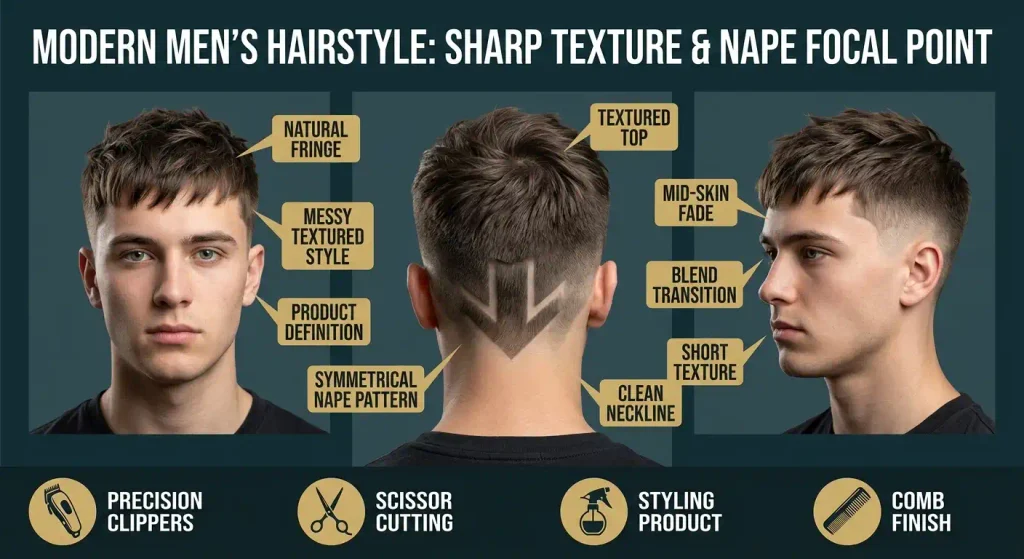
A downward-pointing arrow creates a clear focal point at the center of the nape. Its symmetrical shape works nicely with short straight hair and closely cropped textured styles. The barber can establish the taper with #3, #2, #1, and shorter finishing work before outlining the arrow with a trimmer.
Oval and square faces suit this structured design well. Keep the top natural and lightly textured so the back pattern does not feel disconnected.
5. V-Line Nape
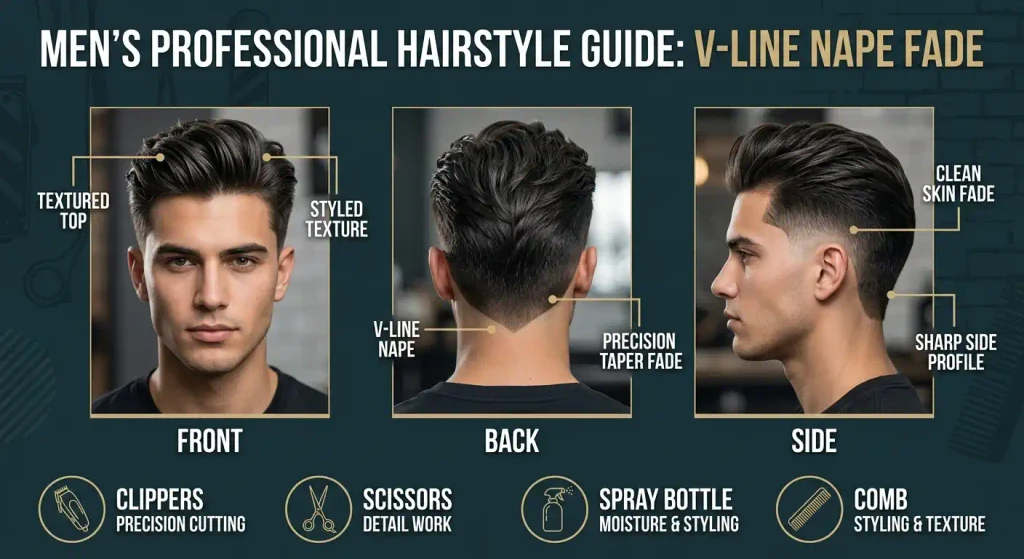
A V-shaped neckline creates a sharp center point without requiring a complicated shaved pattern. It is especially useful if you want a design that remains relatively understated. Straight and thick hair provide a strong outline, while curly hair can soften the overall effect.
Ask for the taper to stay low around the neckline and have the V carefully shaped after blending. A light styling cream or matte paste works well with this cleaner haircut.
6. Rounded Nape Line
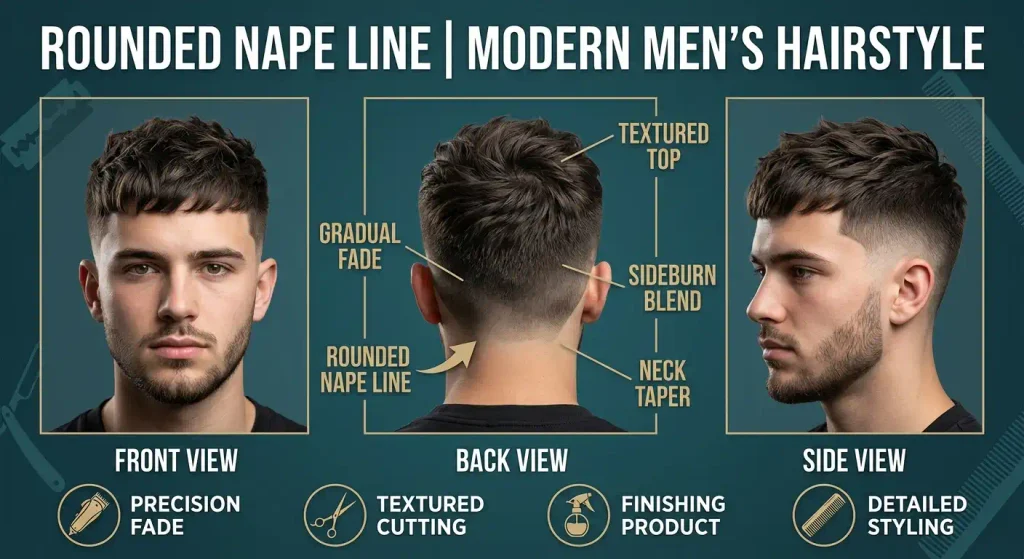
Instead of using hard angles, this variation follows the natural curve of the neckline. The result feels softer and more natural than a pointed V or geometric design. It suits oval and round faces because the curved shape does not add unnecessary visual width. A #3 or #2 upper section can transition into shorter taper work below.
Use a light cream on straight hair or curl cream on textured hair to keep the top natural.
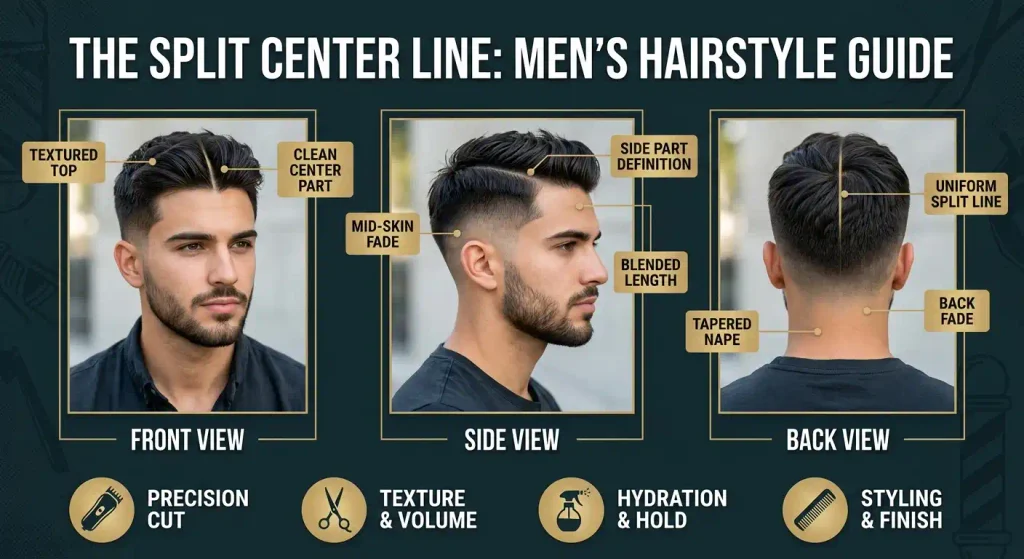
7. Split Center Line
A center line can be divided into two short sections, leaving a small gap at the middle of the nape. This creates a more modern interpretation of the classic single-line design. The style works particularly well with short straight or wavy hair where the spacing remains visible.
Ask the barber to keep both sections equal in length and height. Matte clay gives the top enough structure without creating unnecessary shine.
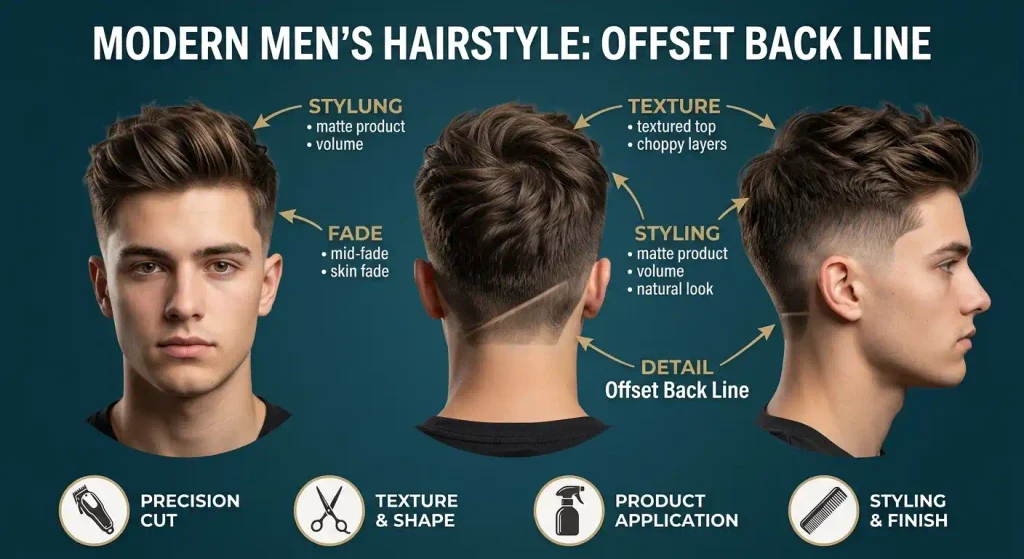
8. Offset Back Line
An offset line sits slightly to one side instead of directly in the center. That small change makes the haircut feel less symmetrical and more individual. It works best when the top has some movement, such as a messy crop or side-swept style.
The taper should remain low so the design does not dominate the head. Straight and wavy hair are easy to shape, while curly hair benefits from a slightly wider design.
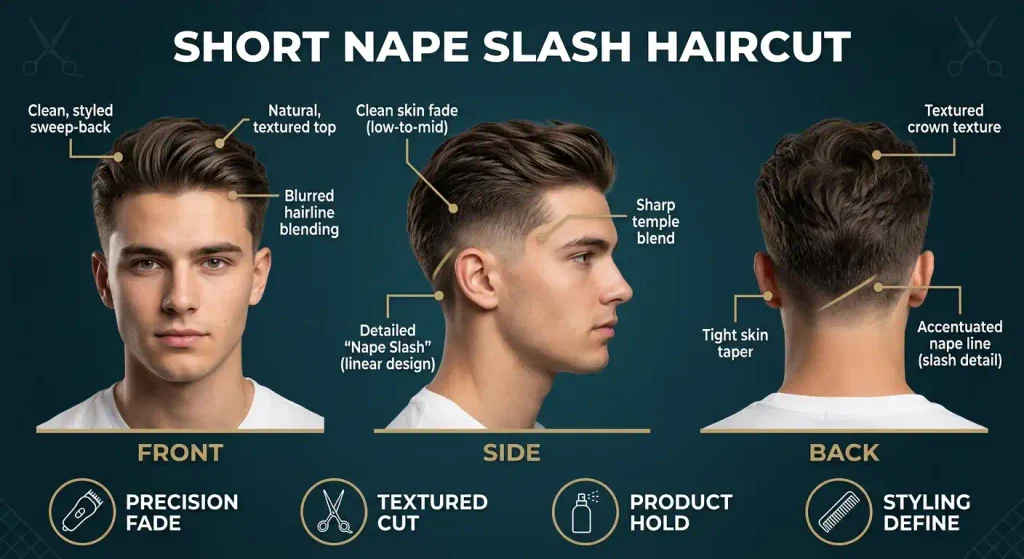
9. Short Nape Slash
A short diagonal slash is a simple way to introduce movement into the back. Unlike a horizontal line, it creates a directional effect that can make a short haircut look more energetic. The design works well with buzzed, cropped, or textured tops.
Ask for a low taper and a narrow diagonal mark placed above the neckline. A #1 or #2 surrounding area provides enough contrast without making the design look too deep.
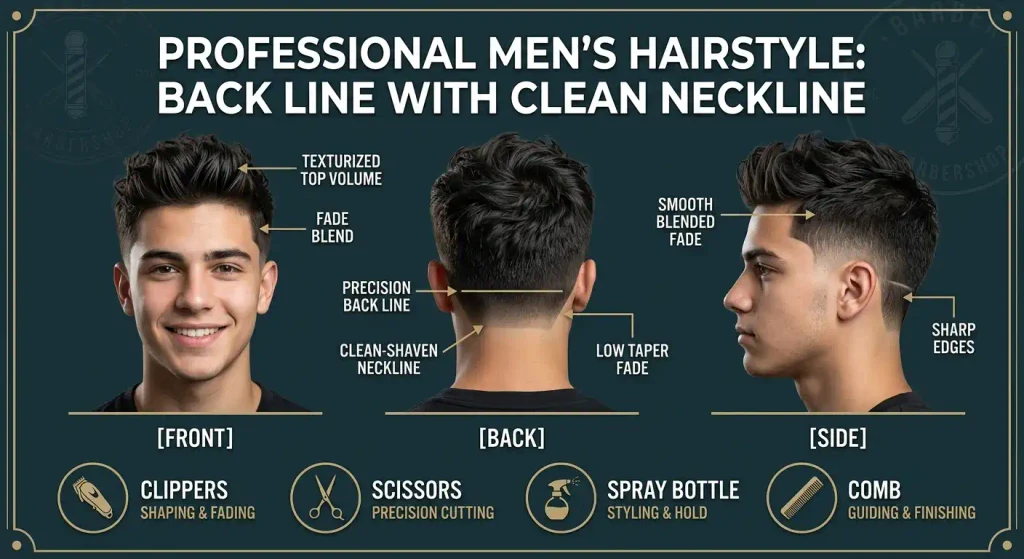
10. Back Line With Clean Neckline
Here the design and neckline work together rather than competing. A single shaved line sits above a neatly tapered neckline, creating two levels of detail. This is a strong choice for professional settings because the design remains controlled.
It suits nearly every hair texture. Ask for clipper-over-comb around the transition, then have the barber use a detailer for the line. Keep the top lightly styled with molding paste or matte clay.
Curved Taper Designs in the Back
Curved designs bring softer movement to the haircut. They are especially useful when you want the pattern to follow the natural shape of your head.
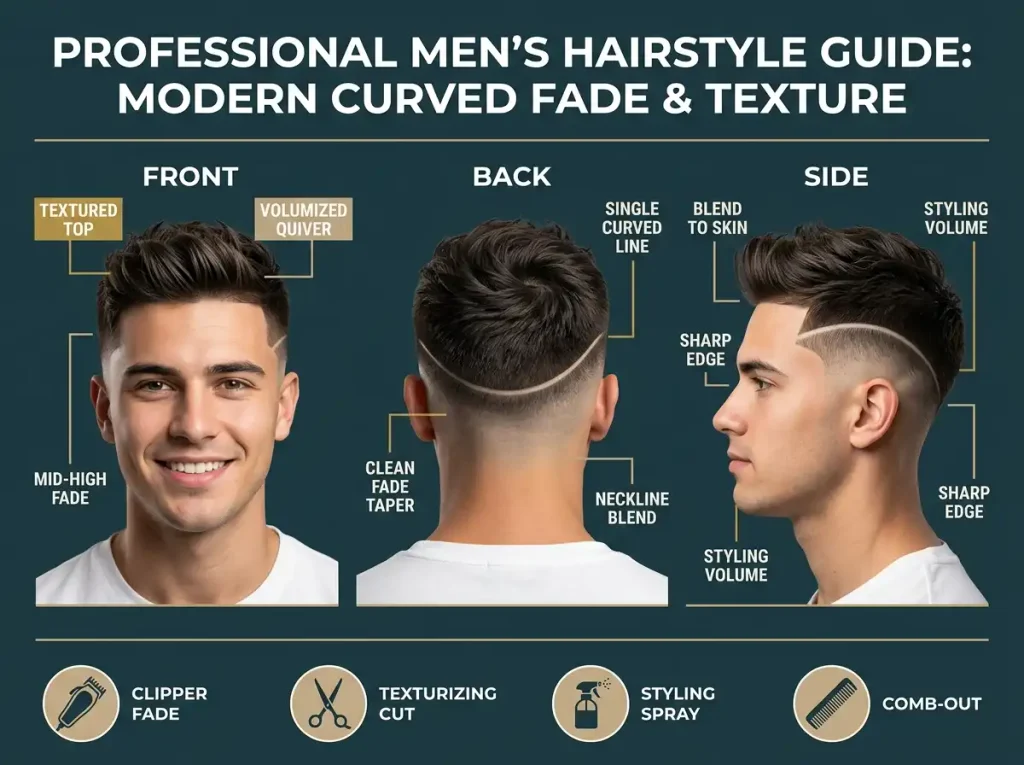
11. Single Curved Back Line
A single curved line follows the contour of the lower head rather than running straight across it. This makes the design feel more organic and works well with wavy or curly textures. Oval and round faces can benefit from the softer visual flow.
Ask for the taper to remain low and have the barber create the curve with a detailer after blending. Curl cream suits textured tops, while straight hair works with light paste.
12. Double Curved Lines
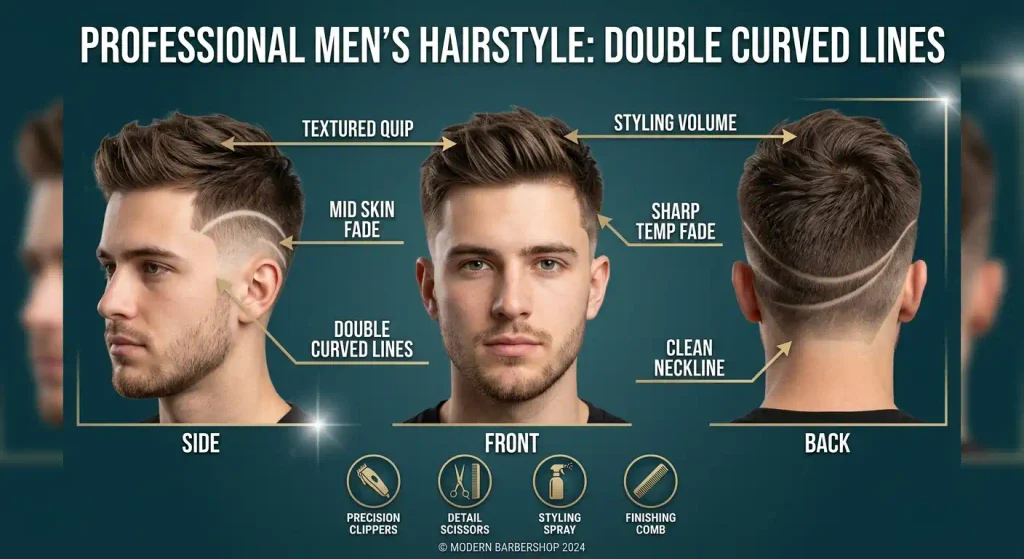
Two flowing lines create movement while keeping the design relatively simple. They can follow the same direction or gently separate as they move across the nape. Wavy and curly hair pair naturally with this approach.
The barber should maintain even spacing and avoid cutting too deeply into the surrounding fade. A #2 or #3 upper taper leaves enough density to frame the design. Use a light cream or sea salt spray on top.
13. Wave Back Design
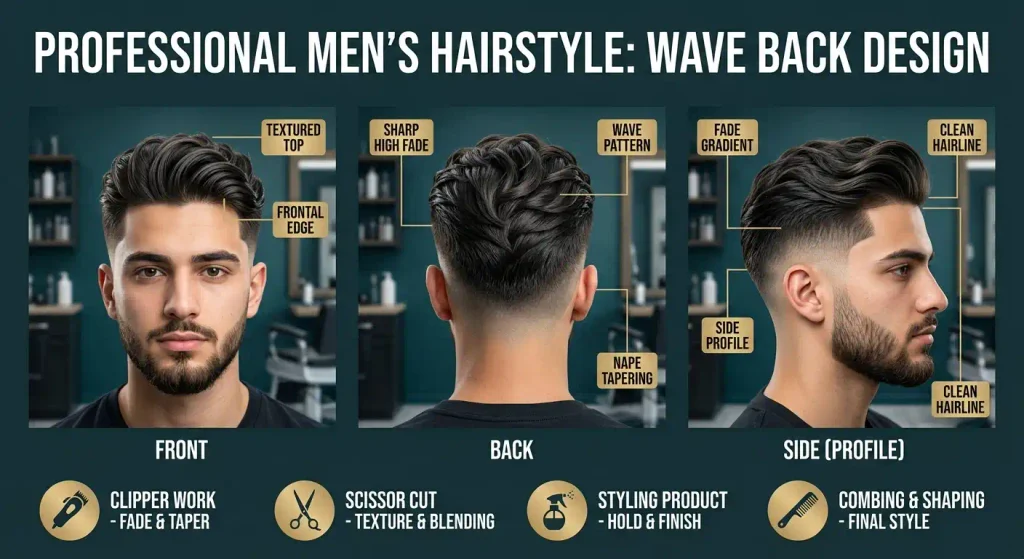
Wave shapes mimic the movement already found in naturally wavy or curly hair. Instead of using sharp corners, the pattern flows from one side of the nape toward the other.
This creates a softer appearance and can make a textured haircut feel more cohesive. Ask your barber to use a detailer for the curves after the taper is blended. Curl cream or a light leave-in product works well on top.
14. Double Wave Pattern
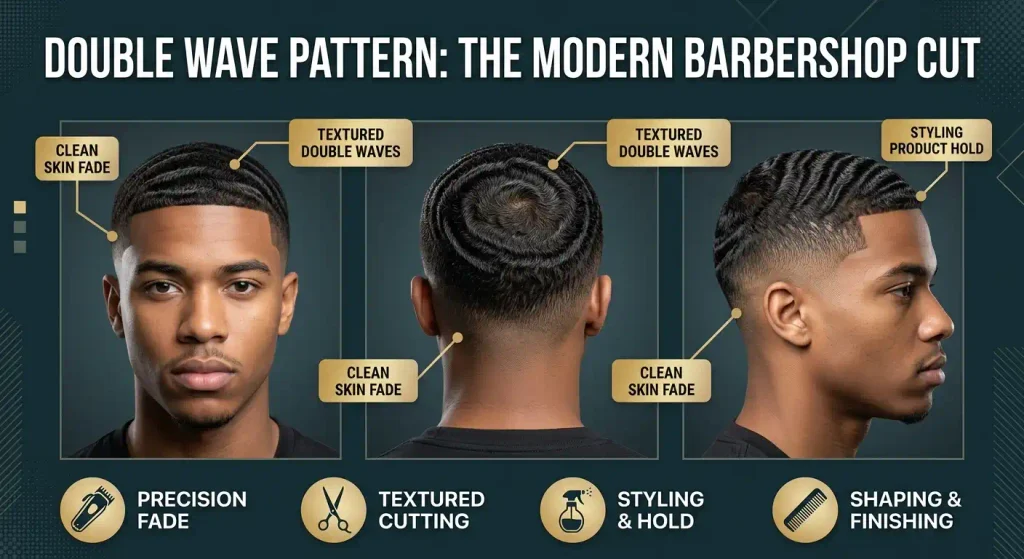
Two separate wave paths create more depth than a single curved line. The design looks especially strong against thick curly or wavy hair because natural texture adds contrast.
Keep the pattern low enough that it does not disappear into the longer top section. A skilled barber can use freehand detailing once the taper is complete. For styling, use curl cream for curls or sea salt spray for naturally wavy hair.
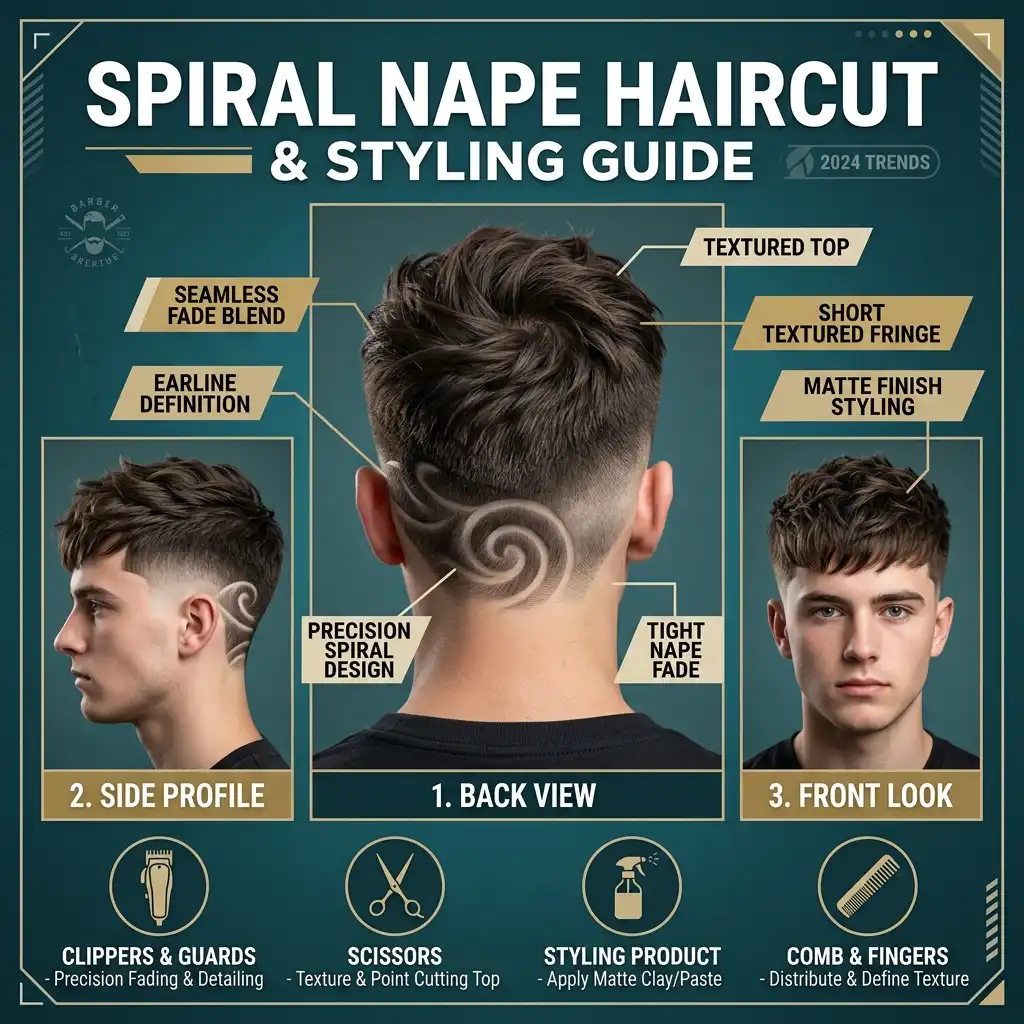
15. Spiral Nape
A spiral starts from a central point and curves outward, producing a distinctive circular movement. It is more advanced than a basic line, so barber skill matters. Close-cropped hair, thick curls, and dense straight hair can all provide a strong canvas.
The taper should stay controlled around the pattern so the spiral remains readable. Keep the top textured rather than heavily slicked, using matte clay or curl cream based on texture.
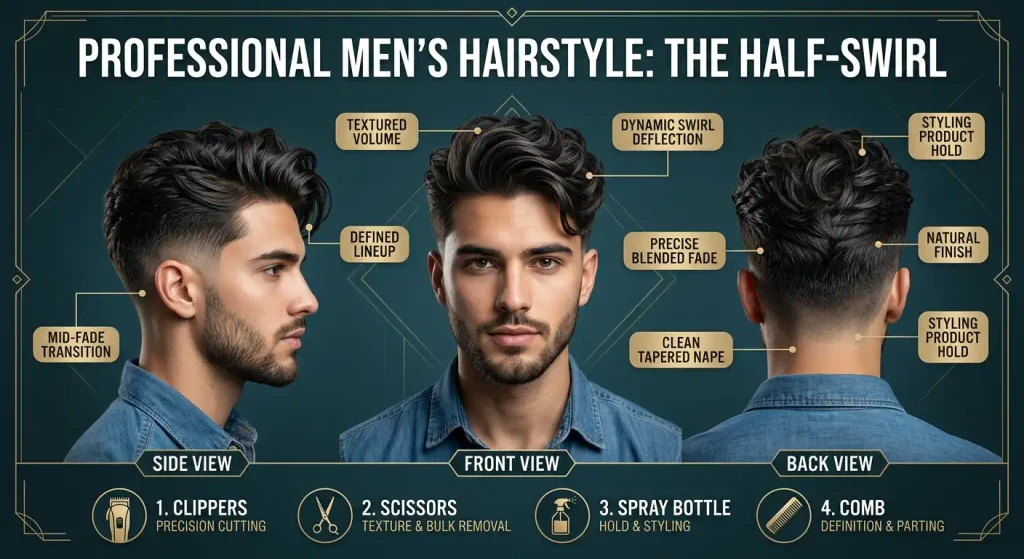
16. Half-Swirl
The half-swirl uses one broad curved movement rather than a complete spiral. This keeps the design simpler while still giving the back a custom look. It suits wavy and curly hair particularly well because the curve echoes natural movement.
Ask the barber to keep the swirl within the tapered zone. A #1 or shorter detailing area creates enough contrast. Sea salt spray works well for wavy tops.
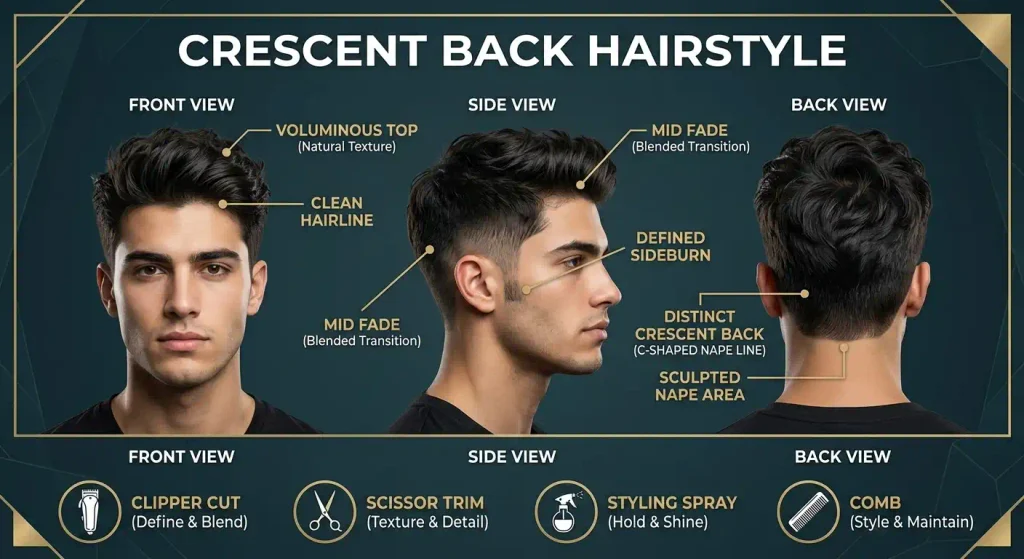
17. Crescent Back
A crescent-shaped line creates a soft, curved accent around the nape. It can be positioned slightly above the neckline so the natural taper remains visible underneath. This is a useful choice for someone who wants a design that feels stylish but not overly loud.
Oval, round, and heart-shaped faces can carry the softer curve. Use a light styling cream on straight hair or curl cream on textured hair.
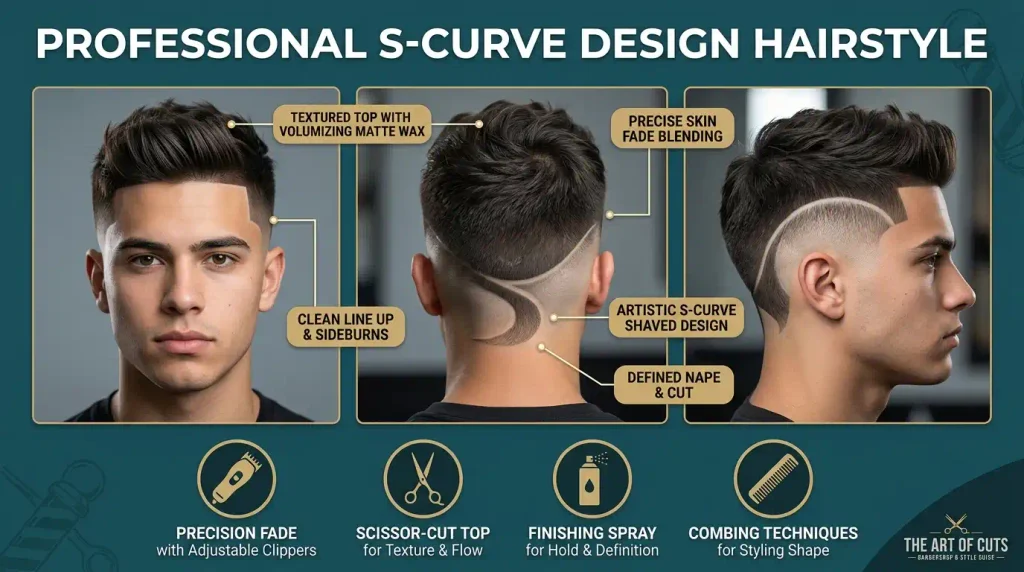
18. S-Curve Design
An S-shaped line creates two opposing curves that give the back a sense of motion. The design looks more artistic than a basic slash while staying less complex than freestyle artwork. It suits thick, wavy, and curly hair especially well.
Ask your barber to keep the curves smooth and evenly balanced. A low taper with #2 and #1 blending around the design gives the pattern enough contrast.
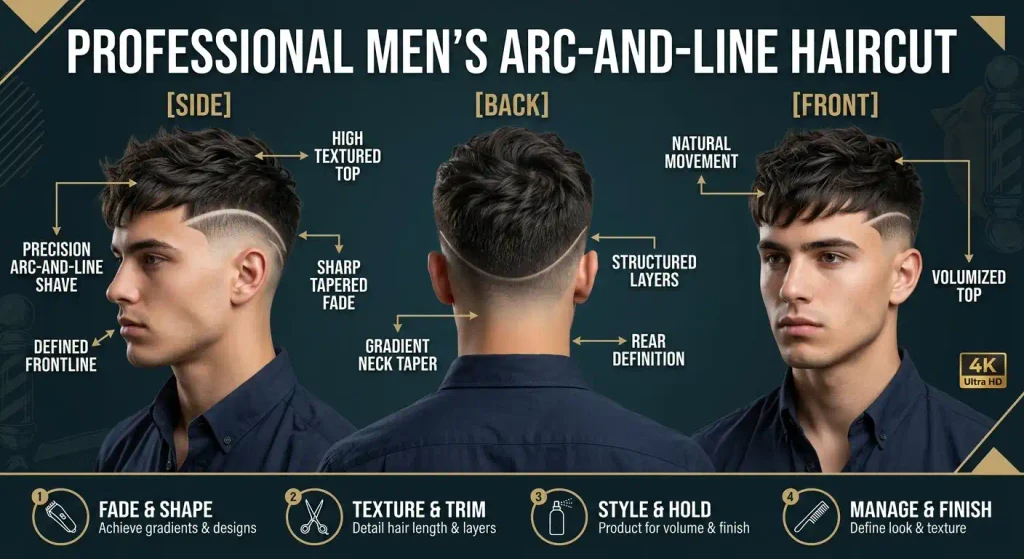
19. Arc-and-Line Design
This pattern combines one curved arc with a shorter straight line. The contrast between the two shapes makes the design look deliberate without becoming crowded. It works well on straight and wavy hair, while thick curls can make the shapes more pronounced.
Ask the barber to place the arc above the shorter line and keep both within the taper area. Matte paste provides a natural finish on top.
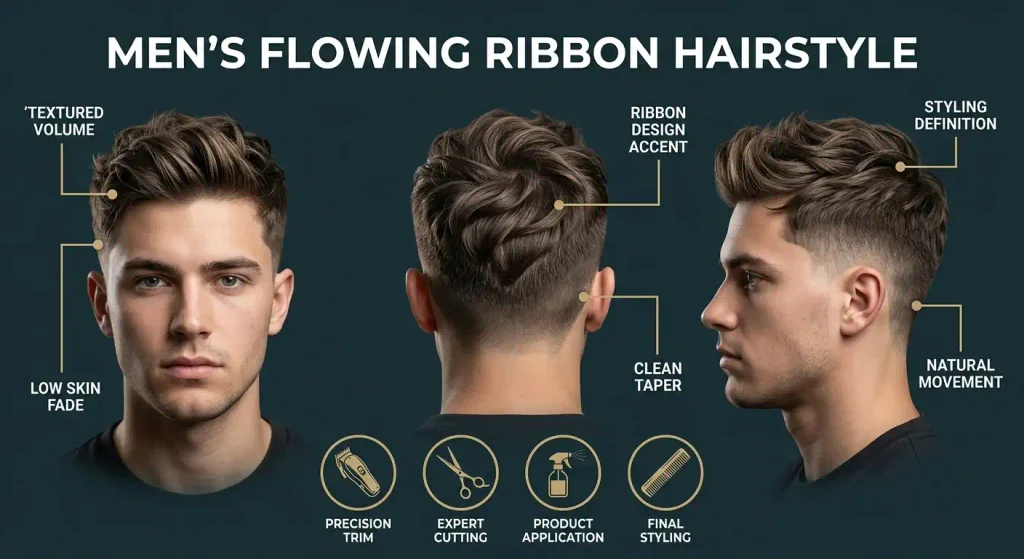
20. Flowing Ribbon Pattern
A ribbon-like curve can travel across part of the nape and then return toward the center. This gives the back a custom artistic feel without requiring a large pattern. It suits medium-to-thick hair with some natural texture.
Because the design has multiple curves, choose a barber with strong freehand skills. Keep the taper low and use a light styling product on top so the design remains the visual focus.
Subtle Low Taper With a Design in the Back
These options are designed for people who want a detail that is visible up close but still easy to wear at school, work, or formal settings.
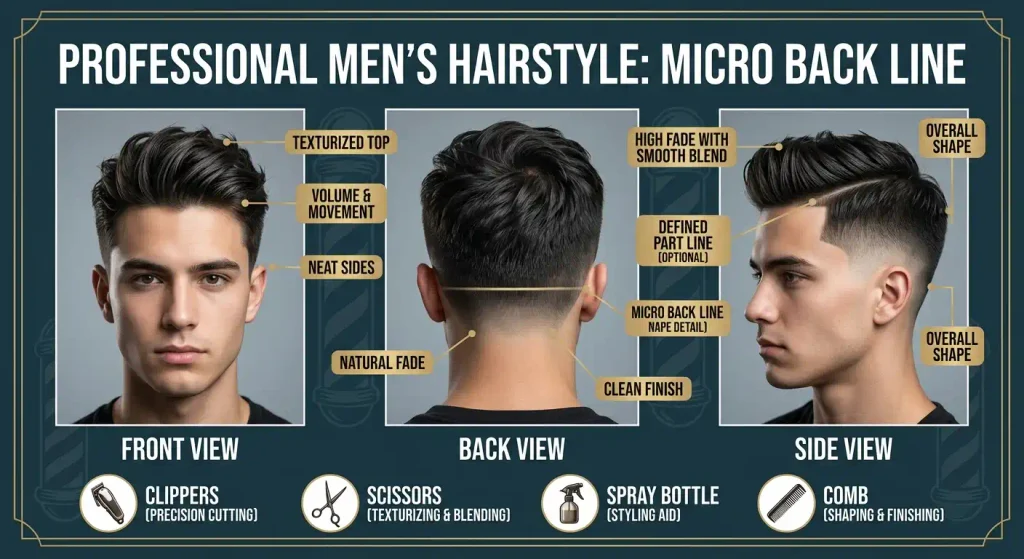
21. Micro Back Line
A very short line near the nape adds a small personal detail without changing the overall character of the haircut. It is one of the safest choices for a first design. Straight, wavy, curly, and coily hair can all work because the pattern is simple.
Ask for a low taper with the line kept narrow. A light cream or natural styling paste keeps the rest of the haircut polished.
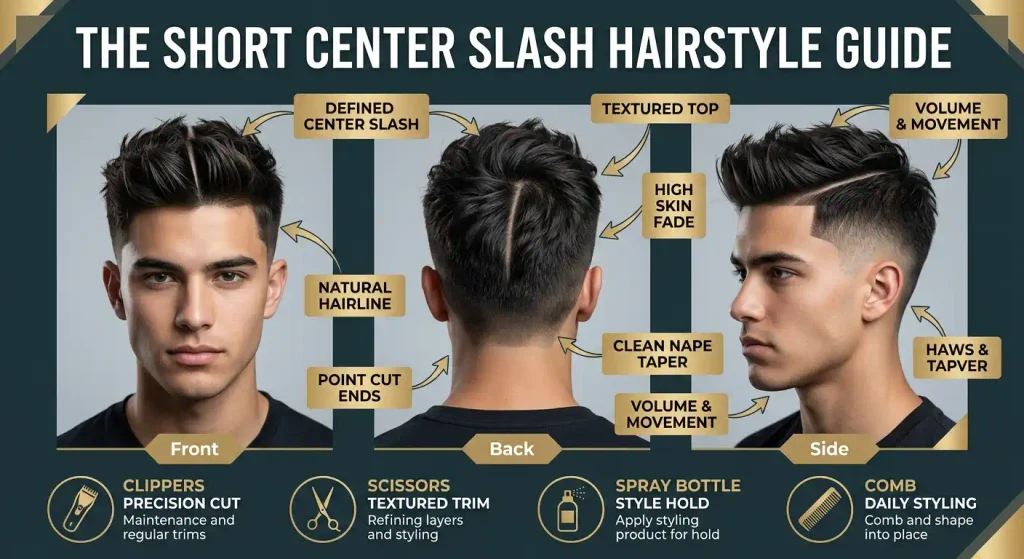
22. Short Center Slash
One short diagonal slash creates a subtle design that is easy to grow out. It works well with short crops, textured tops, and low-maintenance hairstyles. The barber should keep the slash above the neckline and inside the tapered zone.
A #2 or #1 surrounding blend gives enough contrast without exposing excessive scalp. This is a strong option for someone who wants a little edge without committing to a large pattern.
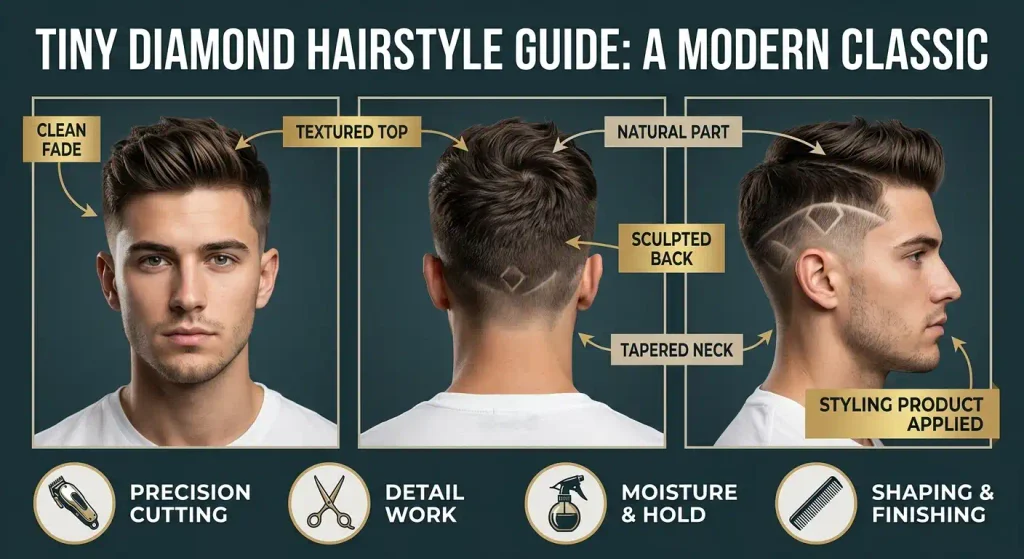
23. Tiny Diamond
A tiny diamond provides geometric detail while remaining discreet. It works especially well on straight or fine hair because the shape can be kept small and clean. Avoid making the design too large if your hair density is low.
Ask your barber to map the four corners before detailing. A low taper using gradual #3, #2, and #1 blending keeps the design connected to the haircut rather than appearing isolated.
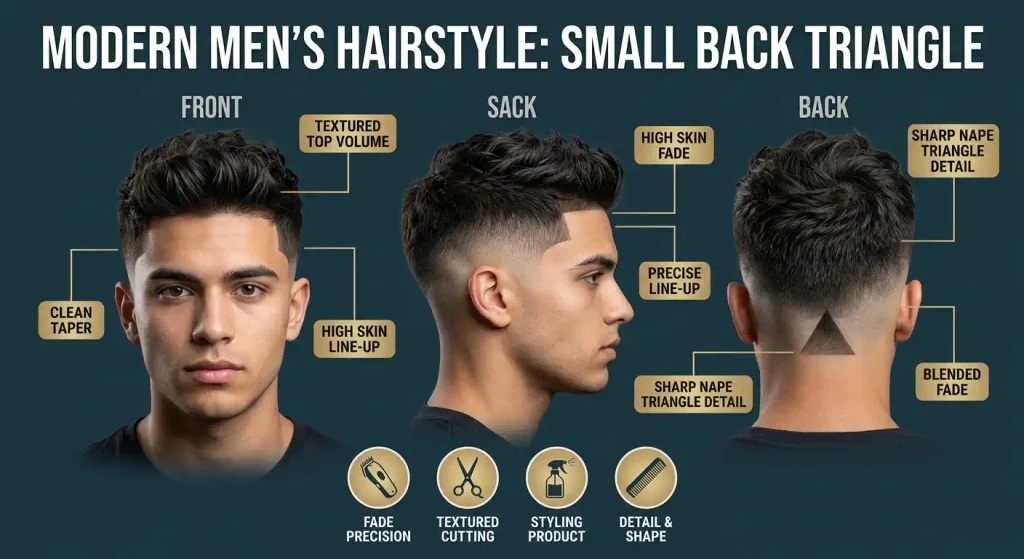
24. Small Back Triangle
A small triangle at the nape offers a simple geometric accent. It is less noticeable than a large symbol but still creates a clear shape when the haircut is fresh. This option suits short straight, wavy, and curly hair.
Keep the surrounding fade soft and low. The barber can use a detailer for the triangle after blending. Style the top with a light matte product to keep the overall look balanced.
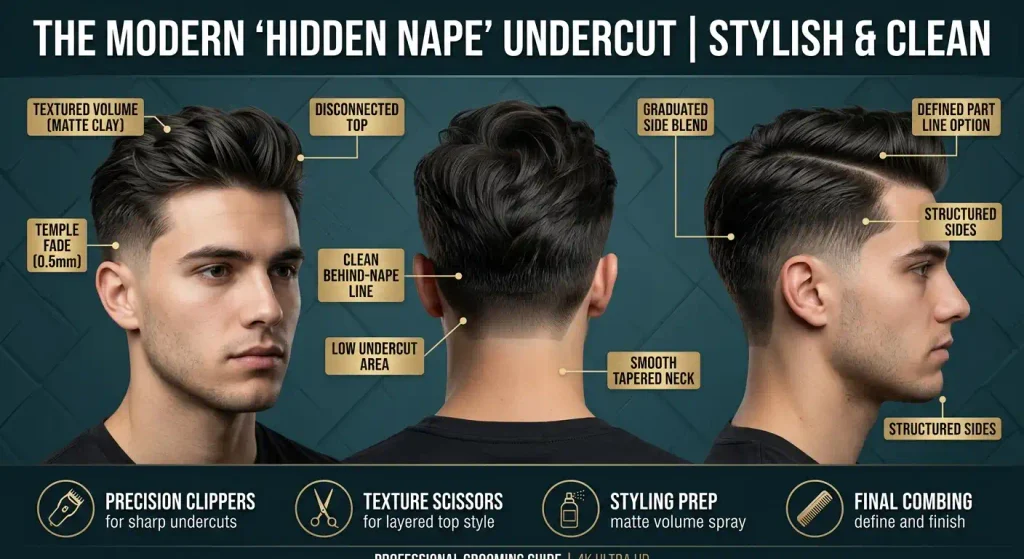
25. Hidden Behind-Nape Line
This design sits close to the lower edge of the taper, making it less visible from a normal front view. It is useful when you want personal detail without making the haircut look heavily designed. Nearly all hair types can carry it.
Ask for a narrow line that follows the natural nape shape. Keep the taper soft and use minimal product on top for an understated finish.
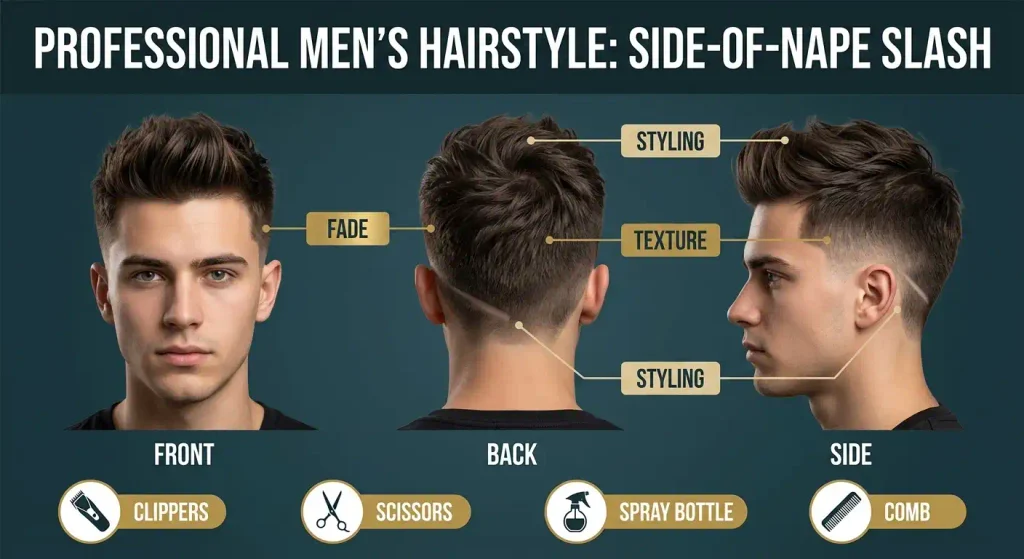
26. Side-of-Nape Slash
Rather than centering the design, place one short slash toward the left or right side of the nape. The asymmetry creates interest without adding multiple shapes. This works well with textured crops and slightly longer tops.
Ask the barber to match the slash with the natural direction of the taper. Straight and wavy hair show the angle clearly, while thick curls can support a slightly wider version.
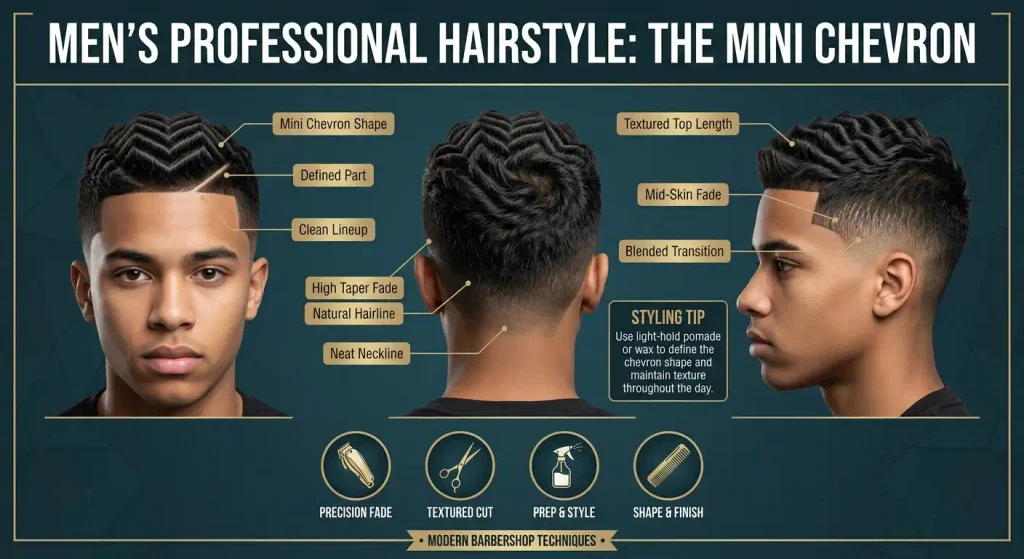
27. Mini Chevron
A very small chevron gives you the structure of an angled design without the boldness of a large pattern. It works well for clients who want something modern but controlled. Straight and wavy hair provide the clearest outline.
The barber should keep the points crisp and the surrounding taper low. A matte styling cream works well when the top needs gentle control without a heavy finish.
28. Tiny X
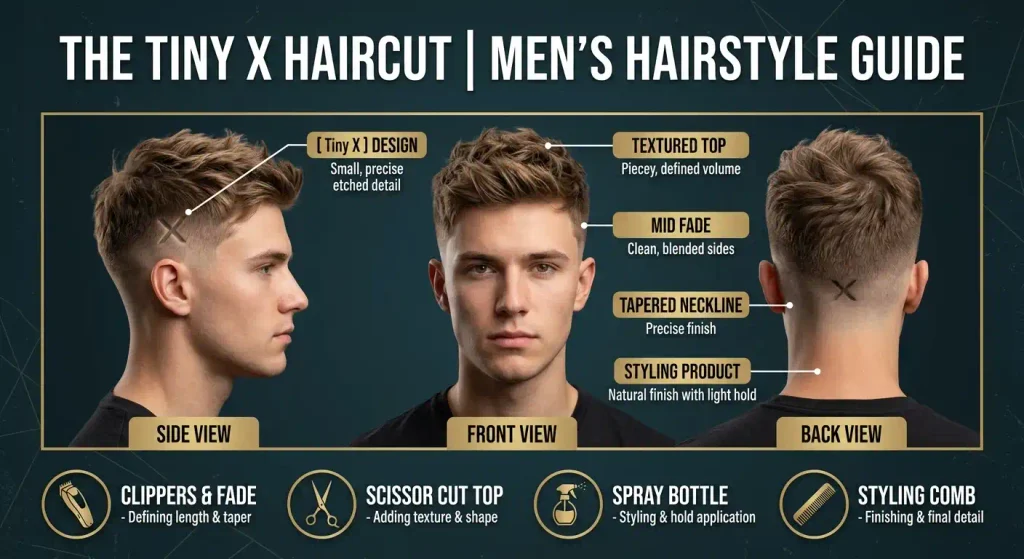
A tiny X at the lower nape creates a recognizable shape using only two lines. It is a good choice for a first-time design because it does not require a large shaved area. Fine, straight, or wavy hair can suit it particularly well.
Ask the barber to keep both lines equal in length and centered. Use light product on top so the haircut remains clean and natural.
29. Short Curved Mark
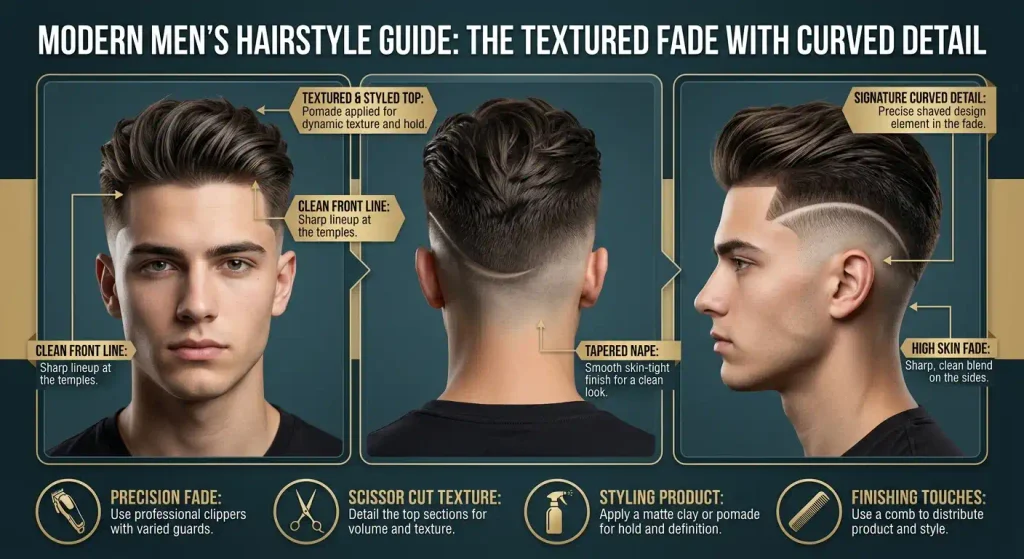
A small curved mark adds a softer detail than a straight slash. It works particularly well for round or oval faces because the curve follows the head rather than creating another hard angle. Wavy and curly hair make the design feel even more natural.
Ask for a low taper and one short curve above the neckline. Sea salt spray can add texture to wavy hair without making it stiff.
30. Discreet Back Accent
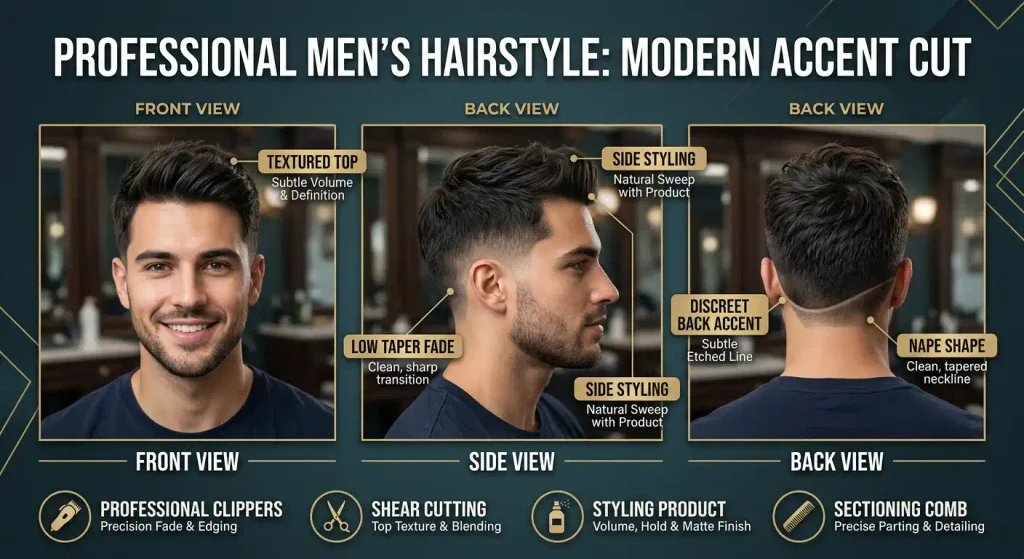
This variation uses one tiny symbol, line, or geometric mark placed within the lower taper. The idea is to make the design noticeable only when someone looks closely. It works across hair types and is useful for conservative workplaces.
Ask your barber to keep the pattern small and avoid cutting too deeply into the fade. A light cream or matte paste maintains a professional finish.
Hair-Texture and Top Combinations
The top haircut changes how the back design is perceived. These combinations pair the design with different textures and silhouettes.
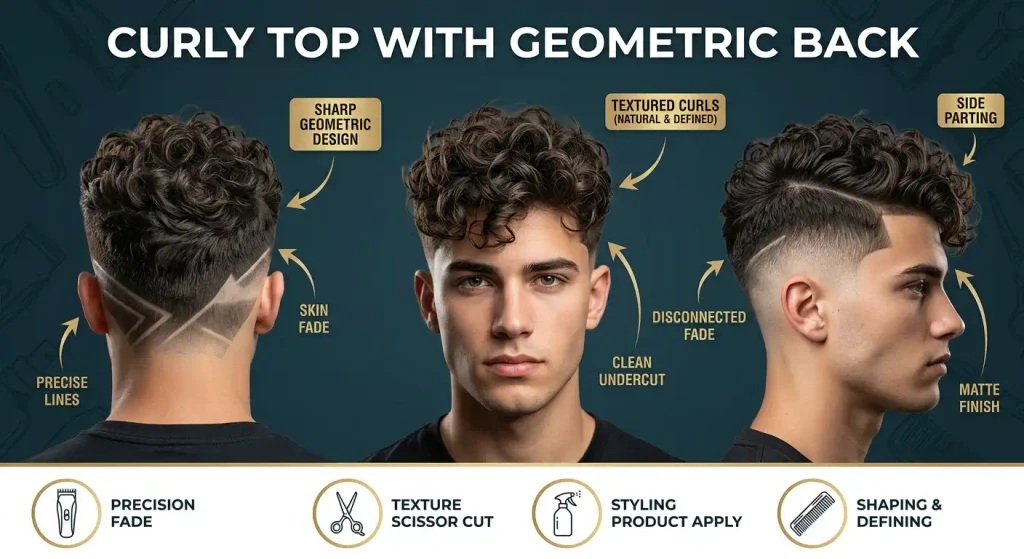
31. Curly Top With Geometric Back
A full curly top paired with a geometric nape design creates strong contrast between natural texture and precise barbering. This works best when the curls have enough density to frame the tapered area.
Ask for the taper to stay low and preserve the curl volume above it. The barber can use clipper-over-comb for controlled blending. Apply curl cream to the top and keep heavy product away from the fade.
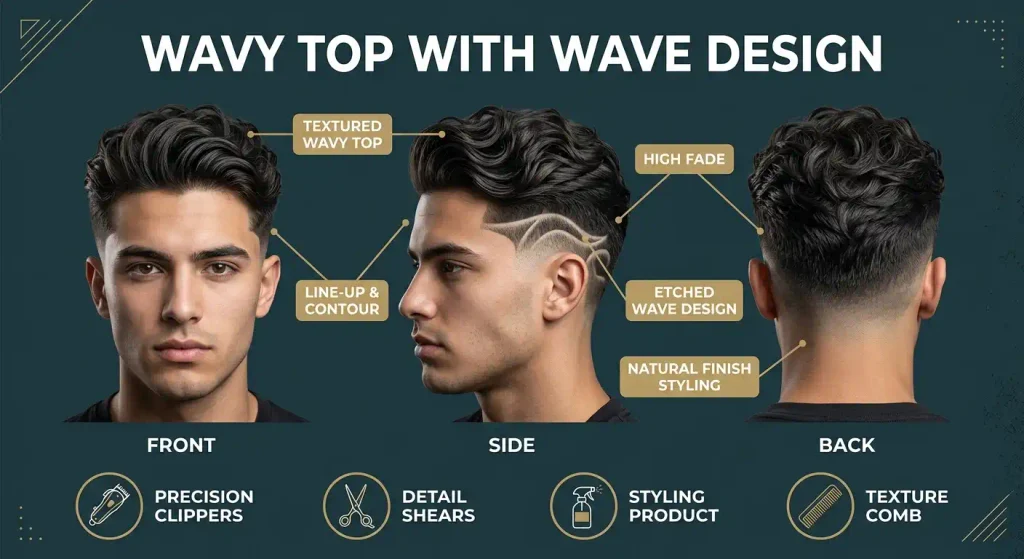
32. Wavy Top With Wave Design
Natural waves and a curved back design share the same flowing visual direction. Keep moderate length on top so the waves remain visible, then taper the lower sides and nape. A wave pattern can be etched into the back once the blend is finished.
Sea salt spray can enhance the top’s movement, while a small amount of matte paste can control flyaways without flattening the waves.
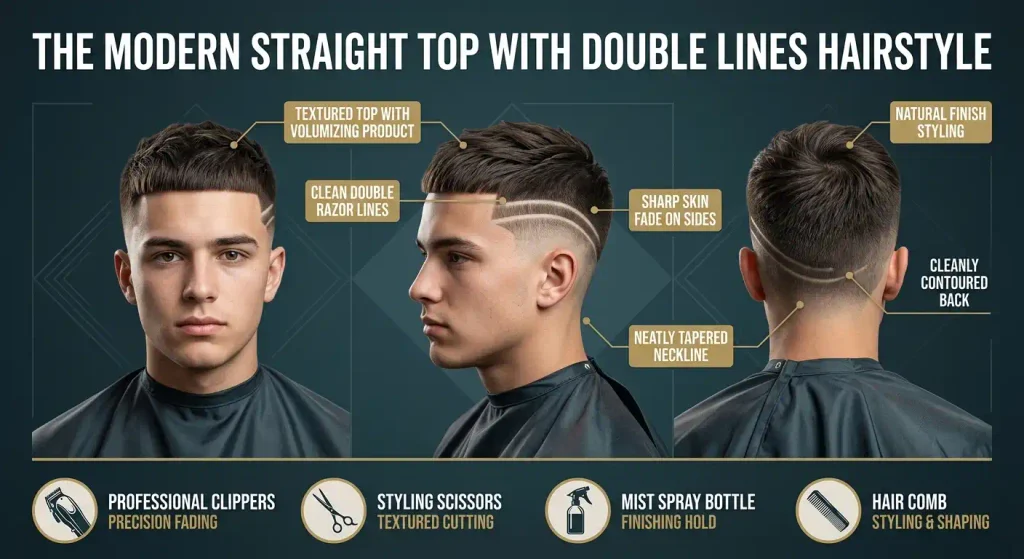
33. Straight Top With Double Lines
Straight hair makes shaved lines look particularly crisp. Pairing a clean top with two back lines creates a sharp but controlled haircut. Ask for a low taper with a smooth transition through #3, #2, and #1 guards, followed by shorter detailing.
A side-swept or lightly textured top prevents the haircut from looking too rigid. Matte clay adds structure while keeping the finish natural.
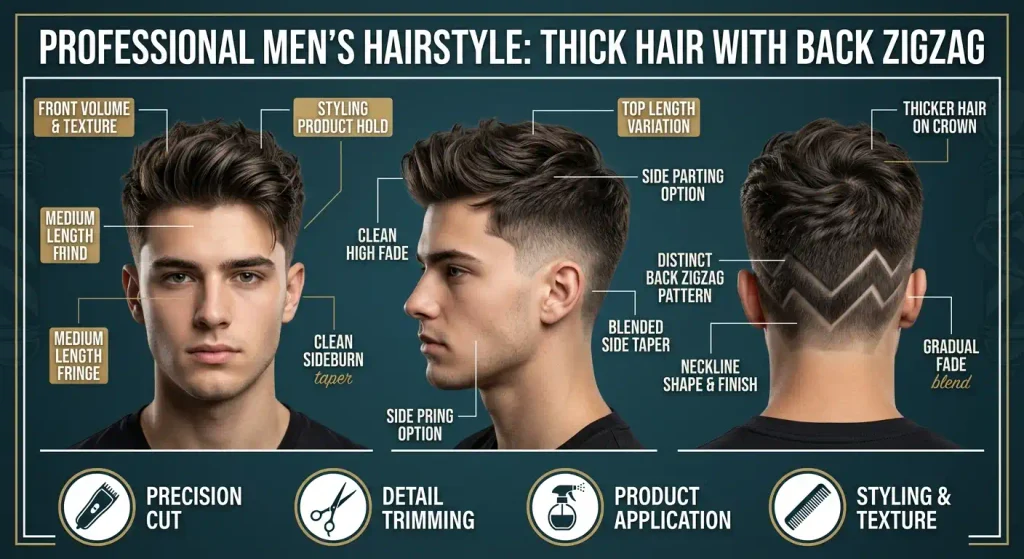
34. Thick Hair With Back Zigzag
Thick hair provides excellent contrast for a zigzag pattern. The dense top and sides frame the carved design and make the angles easier to see. This combination suits casual and streetwear looks.
Tell the barber to keep the taper low and use clipper-over-comb to remove bulk without pushing the blend too high. A matte clay or molding paste can add texture to the thick top.
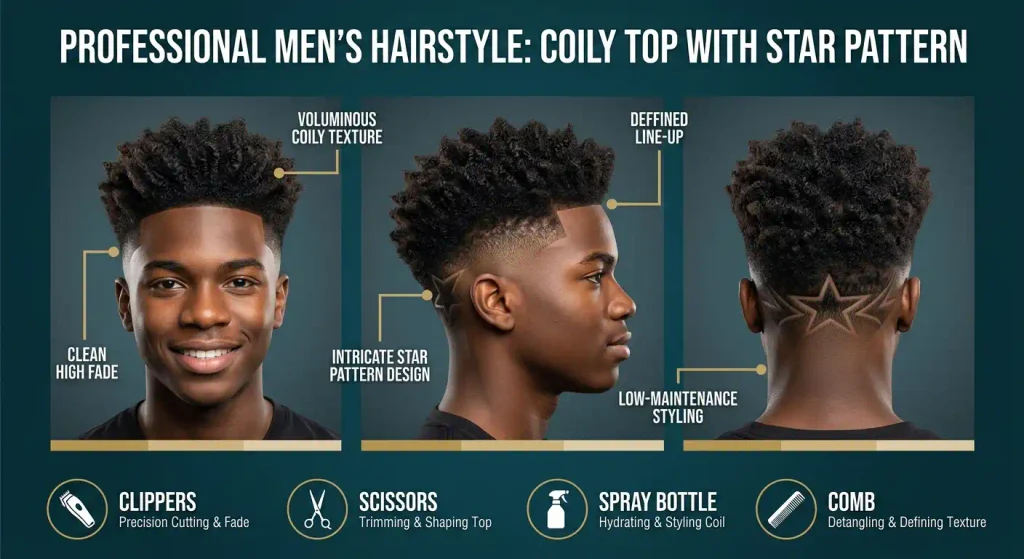
35. Coily Top With Star Pattern
A shaped coily top creates a strong frame for a centered star or starburst design. The natural density of coily hair makes the shaved pattern stand out clearly.
The barber should avoid removing too much bulk above the design. A low taper can transition through shorter guards toward the nape before the star is detailed. Use a suitable curl or leave-in product on top to preserve definition.
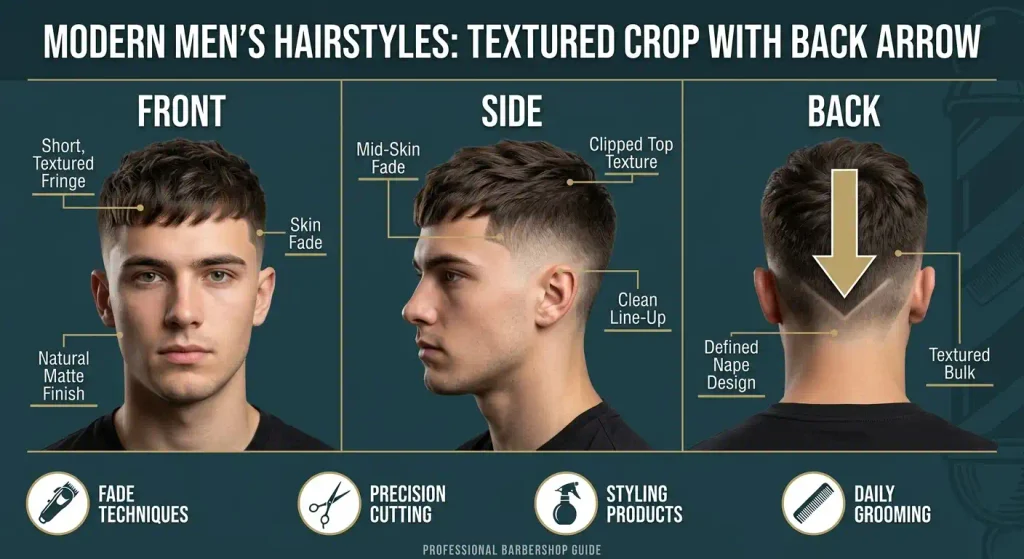
36. Textured Crop With Back Arrow
A short textured crop keeps the front and top simple while the arrow becomes the detail at the back. This balance prevents the haircut from becoming visually crowded. It works particularly well on straight, wavy, and slightly curly hair.
Ask for point cutting on top to create texture, with the taper kept low around the nape. Matte clay provides separation without adding shine.
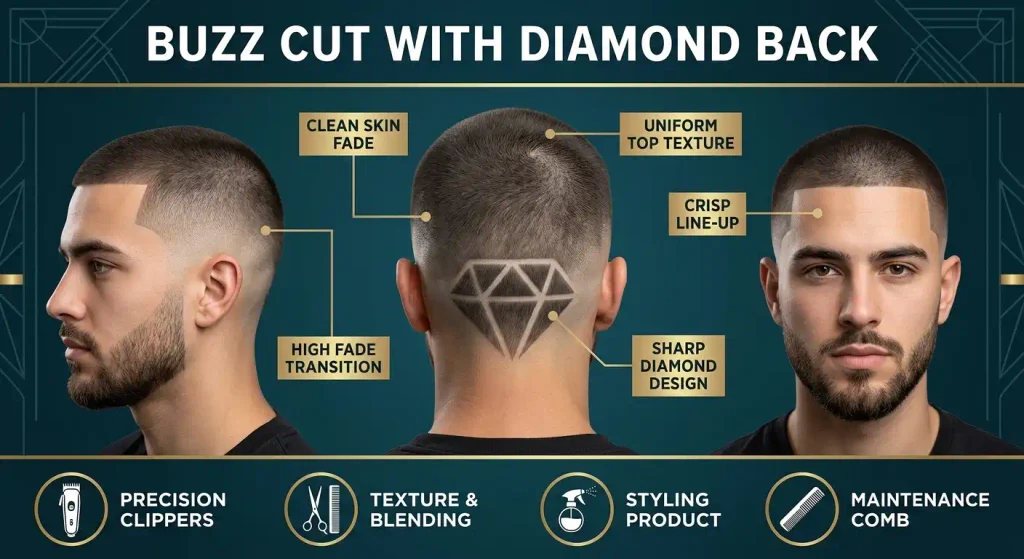
37. Buzz Cut With Diamond Back
A short buzz cut gives a very clean canvas for a diamond design. Because the top is already close, the back pattern becomes the main creative feature. The haircut suits thick and medium-density hair, especially when the design is kept proportional.
Ask your barber to establish an even #2 or #3 top before tapering the lower area. The design can then be etched with a detailer for crisp edges.
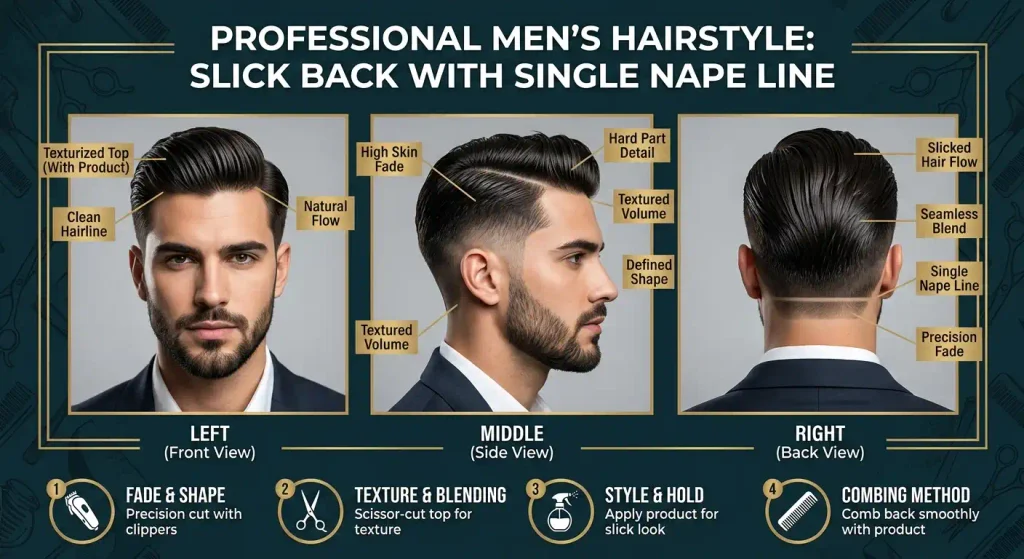
38. Slick Back With Single Nape Line
A longer slick-back top creates a classic contrast with a modern back detail. The low taper stays subtle around the ears and nape, while the single line adds a small contemporary touch. Straight and wavy hair are easiest to style this way.
Ask for enough top length to comb backward comfortably. A water-based pomade provides controlled hold, while a matte paste creates a less glossy version.
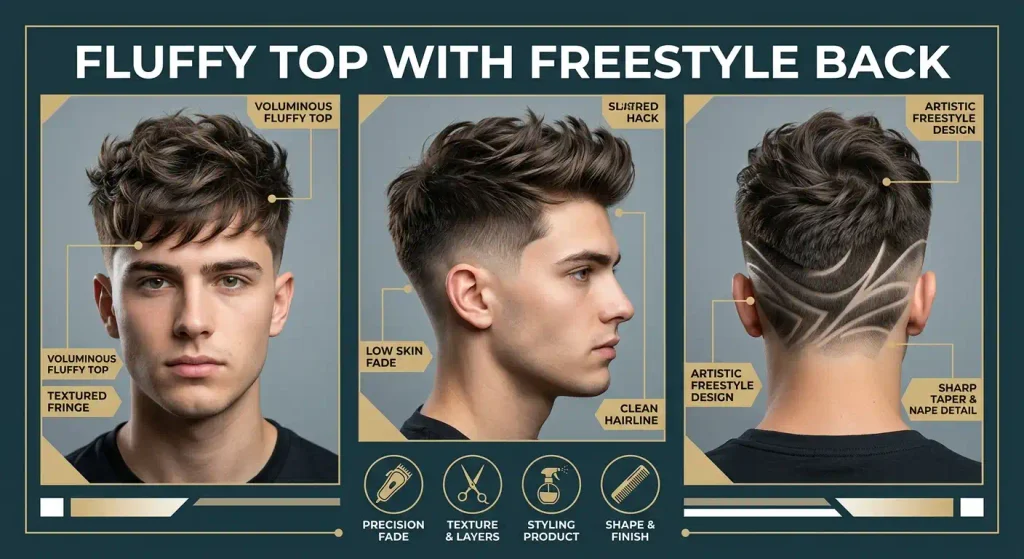
39. Fluffy Top With Freestyle Back
A fluffy, lifted top creates an interesting contrast against a controlled freestyle pattern at the nape. Thick straight or wavy hair is ideal because it can hold natural volume. Ask for texture through the top rather than removing too much bulk. T
he taper should remain low and clean. A lightweight styling cream or texture powder can add lift without making the top greasy or overly stiff.
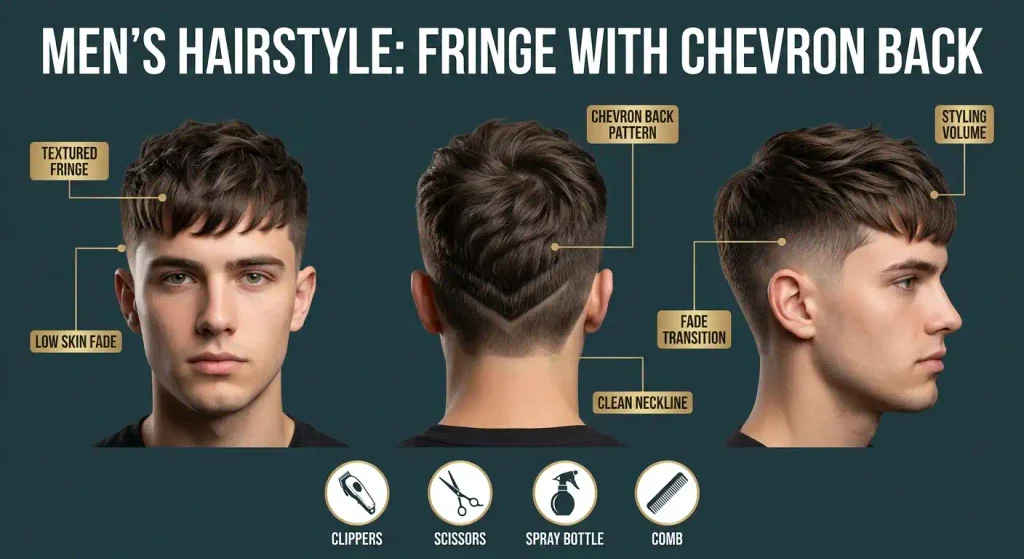
40. Fringe With Chevron Back
A textured fringe brings the visual weight forward while a chevron pattern gives the back a clean finishing detail. This combination works well with straight, wavy, and curly hair.
Ask for point cutting through the fringe and a low taper around the sides and nape. The chevron should remain proportional to the neckline. Matte clay or texture paste helps keep the fringe separated and natural.
Bold & Custom Taper Designs in the Back
These final options are for people who want the back of the haircut to become a major feature. Detailed designs require a barber with a proven portfolio.
41. Back Lightning Bolt
A lightning bolt uses sharp angles to create instant movement. It looks especially strong against dark, thick, or curly hair because the contrast makes the shape easy to see.
The barber should map the bolt before cutting it so both angles remain balanced. Keep the taper low around the nape and avoid taking the fade too high. Matte clay works well with the textured top.
42. Starburst Nape
A starburst begins from a central point and sends several lines outward. It is more demanding than a basic star because the spacing must remain balanced from every direction. Short, thick, or textured hair gives the design a strong frame.
Ask your barber for a clear rear-view reference and confirm their experience with detailed designs. Keep the top simple so the starburst remains the main visual element.
43. Large Geometric Back Art
Large geometric artwork can combine diamonds, triangles, lines, and angles into one connected pattern. This is best for thick hair with enough density around the design area.
The barber should map the design before using a detailer and should complete the taper first. A #3-to-#0 progression can provide the surrounding contrast. Keep the top moderately textured with matte clay or molding paste.
44. Symmetrical Tribal-Inspired Pattern
A symmetrical pattern made from flowing angles can create a bold back profile. The design should be adapted to the shape of the head rather than copied blindly from a photo. Thick straight, wavy, or curly hair works well.
Choose a barber who regularly creates freehand designs. The taper should remain low and clean, while the top can be styled with matte clay for a controlled finish.
45. Freestyle Back Art
Freestyle art gives the barber freedom to create a custom pattern based on your head shape and hair density. It can combine curves, lines, angles, and negative space.
This option is best for thick or dense hair because there is more room for contrast. Bring several reference photos and explain whether you prefer soft curves or sharp geometry. Keep the top simple to let the artwork dominate.
46. Initial Letter Design
A single initial carved into the lower back turns the haircut into a personal design. It works well when the letter is simple enough to remain readable as the hair grows. Straight and thick hair usually give the clearest result.
Ask the barber to center or offset the letter based on your neckline shape. Keep the taper low and style the top with matte paste or natural cream.
47. Number Design
A meaningful number can represent a jersey number, year, favorite number, or personal reference. Short numbers are easier to keep readable than complex strings. Thick hair gives the design stronger contrast, while straight hair makes the edges especially clear.
Ask the barber to map the numbers before detailing. Keep the surrounding taper smooth and low. A simple textured top prevents the design from feeling overloaded.
48. Symbol Back Design
A simple symbol can turn the nape into a personal signature. The best symbols have clear outlines and enough negative space to remain recognizable. Thick or dark hair usually gives the strongest contrast.
Bring a clean reference image and ask your barber whether the symbol should be simplified for the available space. A low taper with a #2-to-#0 transition can frame the design effectively.
49. Back Design With Beard Connection
For men with substantial facial hair, the haircut design can visually connect with the beard style through consistent angles and clean lines. The back design itself should remain proportional rather than becoming overly complex.
Oval and square faces often suit this coordinated approach. Ask your barber to taper the sideburns and beard naturally while keeping the nape design separate enough to remain clear. Use beard balm and matte hair product separately.
50. Custom Signature Pattern
A custom signature pattern is the most personalized option in the gallery. It can combine a line, curve, symbol, or geometric shape based on your head shape and preferred style.
Thick, dark hair gives the barber more freedom, but simpler designs can work on finer hair too. Bring multiple references and let the barber adapt the concept. Keep the low taper smooth so the custom artwork remains intentional rather than cluttered.
This Cut vs. Other Taper and Fade Options
| Style | Fade/Taper Height | Typical Guard Range | Best Face Shapes | Main Styling Difference |
| Low taper | Low around ears and nape | #3 to #0 | Oval, square, round | Soft and controlled |
| Mid taper | Higher around temples and sides | #3 to #0 | Oval, square | More visible contrast |
| High fade | High on sides | #2 to #0 | Oval, square | Stronger separation |
| Skin fade | Can sit low, mid, or high | Skin to #2/#3 | Most shapes with proper balance | Bare-skin finish |
| Burst fade | Around ear with rear curve | #3 to #0 | Oval, round | Rounded side profile |
| Low fade | Low side fade, broader than taper | #3 to #0 | Most shapes | More side removal |
| Low taper with back design | Low around ears and nape | #3 to #0 | Most shapes | Design becomes the detail |
Why Low Taper Fade With Design in the Back Style Works
The main strength is balance. The taper keeps the haircut neat around the ears and neckline, while the back design adds personality.
It also gives you control over how bold the result feels. A single line can remain subtle, while a geometric or freestyle pattern can become the main feature.
Because the design is usually placed low on the head, it can remain less noticeable from the front. That makes subtle versions easier to wear in school, work, or everyday settings.
Best Hair Types
Straight Hair
Straight hair gives designs a crisp outline. Geometric shapes, lines, diamonds, and arrows are especially easy to see.
Wavy Hair
Wavy hair works well with curved lines, wave patterns, and textured tops. Sea salt spray can enhance natural movement.
Curly Hair
Curly hair creates strong contrast against a clean taper. Simple geometric designs can look particularly sharp.
Coily Hair
Dense coily hair provides a strong canvas for detailed designs. Keep enough top density to maintain the natural shape.
Fine Hair
Fine hair needs a lighter approach. Avoid very large designs that expose too much scalp and choose narrow lines or small geometric shapes.
Best Face Shapes
Oval Face
Most versions work well. You have enough flexibility to choose simple or bold patterns.
Round Face
A little height or texture on top can balance the face. Curved or diagonal designs can also add visual direction.
Square Face
Sharp geometric patterns work naturally with a strong jawline. A clean taper keeps the result structured.
Long Face
Avoid excessive height on top. Keep the top controlled and let the back detail provide the visual interest.
Heart-Shaped Face
Softer curves and smaller designs usually create better balance than very large geometric artwork.
How to Style Low Taper Fade With Design in the Back Haircut
- Start with clean, towel-dried hair.
- Apply a small amount of product suited to your hair texture.
- Use your fingers for textured or curly styles.
- Use a comb when creating a slick-back or controlled side style.
- Blow-dry if you need extra volume or direction.
- Avoid spreading heavy product directly over the tapered design area.
- Check the back and neckline in a mirror before finishing.
Step-by-Step Barbering Tutorial: Low Taper Fade With Design in the Back
A professional barber will normally adjust the process to your hair density and desired result.
- Consultation: Confirm the taper height, top length, neckline, and exact design placement.
- Top preparation: Establish the desired top length with scissors or clippers.
- Bulk removal: A #3 or #2 guard can remove excess bulk around the sides and back.
- Initial taper: Work progressively shorter toward the ears and nape.
- Blending: Use #2, #1, and shorter guards as needed to soften the transition.
- Clipper-over-comb: Remove stubborn bulk while maintaining a controlled blend.
- Scissor-over-comb: Refine areas where scissors provide better control.
- Point cutting: Add texture to the top when the haircut calls for movement.
- Design mapping: Mark the planned pattern before carving it.
- Design detailing: Use a T-outliner or detailer for clean lines and shapes.
- Fine detailing: A straight razor may be used by experienced barbers for very sharp edges.
- Neckline finish: Choose a natural, tapered, rounded, or squared finish.
- Final check: Inspect the design from multiple angles and correct uneven spacing.
- Styling: Apply the appropriate product according to hair texture.
The important technical sequence is simple: blend the taper first, then create the design. Carving too early can make the design harder to judge against the finished fade.
Tools Required for the Low Taper Fade With Design in the Back
A professional setup may include:
- Adjustable clipper
- #0, #1, #2, and #3 guards
- #4 guard when extra length is needed
- T-outliner or detailer
- Barber scissors
- Comb
- Clipper-over-comb technique
- Scissor-over-comb technique
- Foil shaver for cleanup when appropriate
- Straight razor for fine detailing when professionally used
- Neck brush
- Styling product suited to the hair type
Best Styling Products: Matte Clay, Sea Salt Spray, and Curl Cream
Matte Clay
Matte clay is useful for straight or thick hair when you want texture and moderate control without a shiny finish. It works especially well with crops, messy tops, textured styles, and geometric back designs.
Sea Salt Spray
Sea salt spray can enhance natural movement in wavy hair. Apply it mainly to the top, then shape the hair with your fingers. Avoid using excessive product around the faded area.
Curl Cream
Curl cream is better suited to curly and coily textures. It helps define the natural pattern while keeping the top softer than a heavy gel or pomade.
Molding Paste
Molding paste offers flexible control for straight, wavy, and textured hair. It is useful when you want definition without a hard, glossy finish.
Water-Based Pomade
A water-based pomade works well for slick-backs, comb-overs, and polished tops. Use it when the hairstyle requires direction and hold rather than loose texture.
Maintenance Guide
A fresh design looks sharp because the lines contrast strongly with the surrounding hair. As regrowth appears, that contrast gradually decreases.
For most people, a 2–4 week trim window is realistic for keeping the taper controlled. Detailed shaved designs may need attention sooner if you want the pattern to remain very crisp.
Your hair growth rate, texture, and design complexity all affect how quickly the haircut loses definition.
At home, avoid trying to redraw the pattern unless you have real clipper experience. One uneven line can be difficult for a barber to correct without removing more hair.
Wash and condition according to your hair type, keep the top properly moisturized, and use styling products mainly where they are needed.
Common Mistakes to Avoid: Low Taper Fade With Design in the Back
Choosing a Design That Is Too Complex
A detailed pattern may look impressive in a photo but become difficult to maintain on your own hair.
Taking the Taper Too High
A low taper should remain low. If the fade climbs too far, the haircut can lose the softer profile you wanted.
Ignoring Hair Density
Fine hair may not support the same large design as thick hair. Ask your barber to scale the pattern to your density.
Copying a Photo Exactly
A design that looks good on another person’s head may not suit your head shape or hairline. Use the photo as a reference, not a rigid template.
Skipping the Reference Image
Words such as “sharp,” “small,” or “bold” can mean different things to different people. A rear-view image reduces confusion.
Using Too Much Product
Heavy gel or thick product can make the top stiff and distract from the clean taper.
Cutting the Design Before the Fade Is Finished
The surrounding fade changes the contrast. Finish the blend first, then carve the design.
Choosing an Inexperienced Barber
A simple design in skilled hands can look better than a complex design cut by someone without strong detailing experience.
FAQ: Low Taper Fade With Design in the Back
1. What is the best design for a first haircut?
A single nape line is usually the easiest starting point. It is simple, clean, and easier to grow out than a complex pattern.
2. Does a back design work with curly hair?
Yes. Curly and coily textures can create strong contrast against a clean taper. Geometric lines and simple patterns are especially effective.
3. Is the diamond nape design good for straight hair?
Yes. Straight hair makes the diamond’s corners and surrounding fade easy to see. Keep the shape proportional to the head.
4. Which design works best for a professional setting?
A micro back line, small triangle, short curved mark, or discreet nape accent is easier to keep conservative than a large freestyle design.
5. Can I combine a back design with an Edgar cut?
Yes. An Edgar’s structured fringe can contrast well with a geometric, zigzag, or freestyle back pattern. Keep the design proportional to the haircut.
6. How often should I maintain the haircut?
A 2–4 week trim window works for many people. Detailed designs may need earlier touch-ups if you want the lines to stay very sharp.
7. What is better for a round face: straight or curved designs?
Both can work, but curved or diagonal patterns can create a softer directional effect. More important is keeping the top balanced with the face.
8. Can a fine-haired man get a back design?
Yes, but smaller designs are usually safer. A narrow line, tiny diamond, or subtle geometric mark can add detail without exposing too much scalp.
Conclusion: Low Taper Fade With Design in the Back
The best version of this haircut is not necessarily the most complicated one. A clean low taper, well-scaled design, and suitable top length will usually look better than a crowded pattern.
For a first attempt, start with a single line, small geometric shape, or subtle curved detail. If you already know you want a stronger statement, explore zigzags, starbursts, geometric patterns, or custom freestyle artwork.
Most importantly, choose a barber who can blend the taper cleanly and create precise design work. Bring a rear-view reference, explain how bold you want the pattern, and ask the barber to adapt it to your hair density and head shape.
For more haircut inspiration, see our complete low taper fade guide.
Name: Ryan Cole
Role: Lead Grooming Editor, TaperHaircutGuide.com
Bio angle: Men’s grooming/style content researcher — 4+ years covering barbering trends, hairstyling terminology, and men’s style content for US audience. Cross-checks every guide with practicing barbers before publishing.