14 Sharp Taper No Fade Haircuts for a Cleaner, Softer Cut

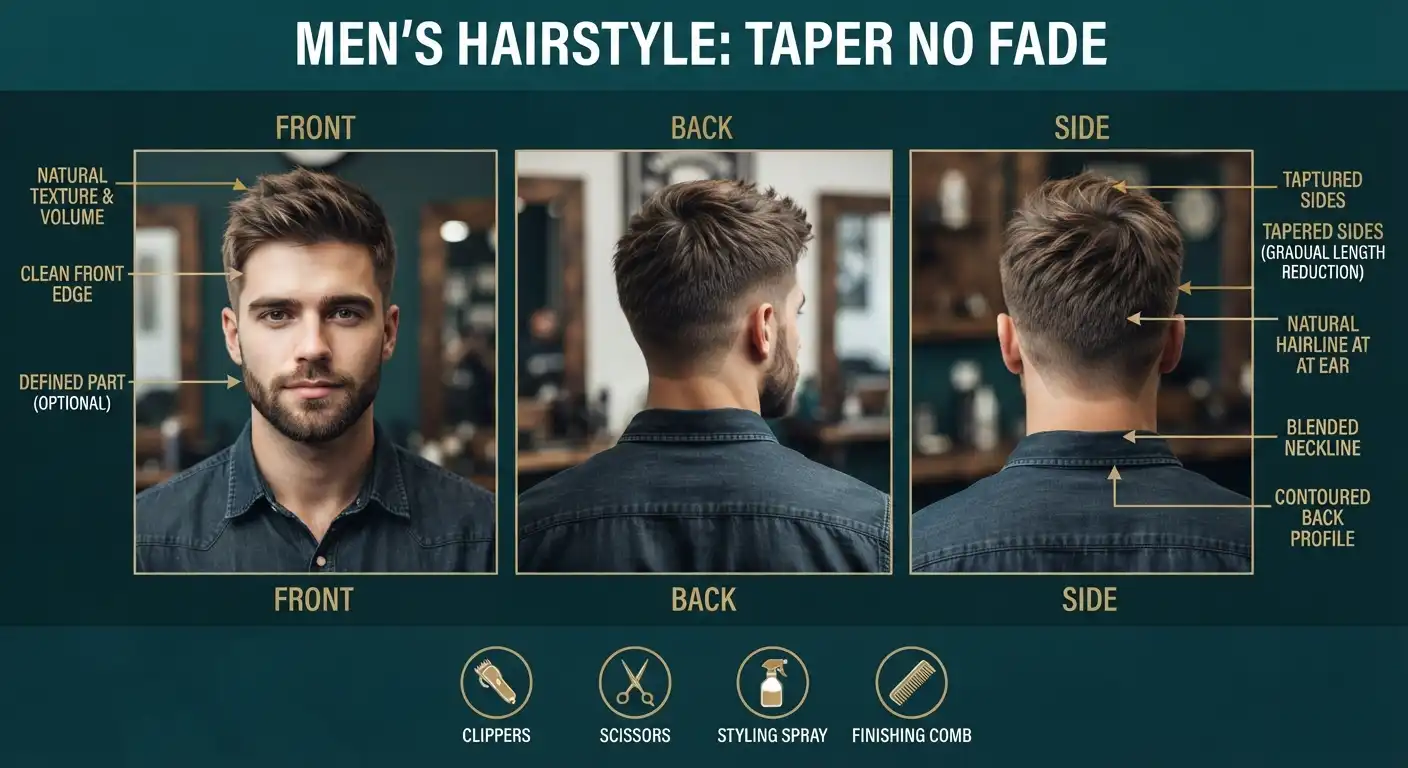
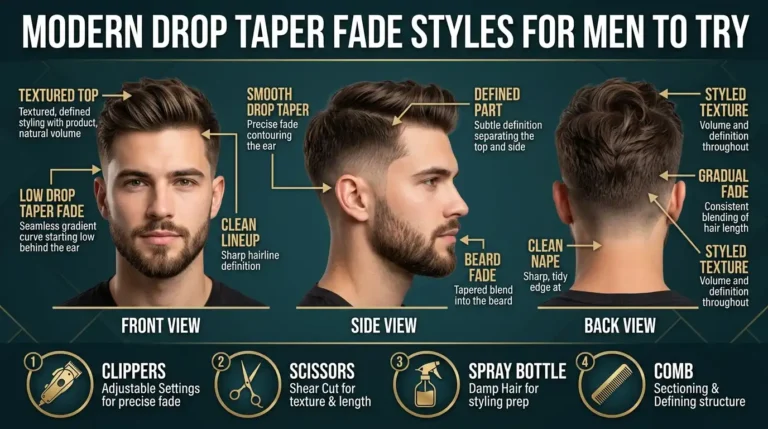
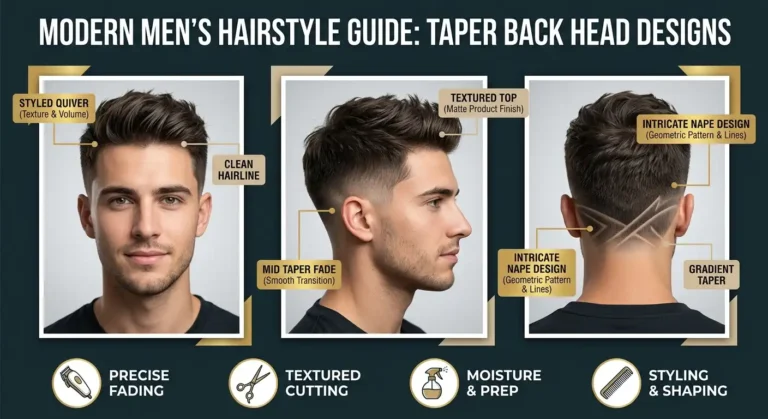
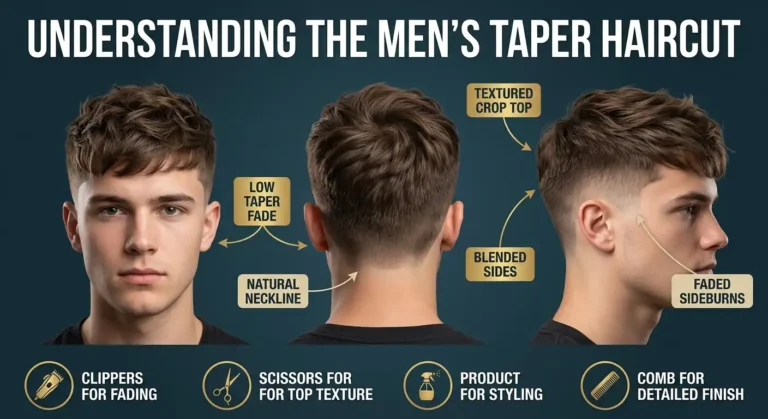
A taper no fade haircut keeps the sides blending gradually shorter without ever cutting down to bare skin. It skips the harsh contrast of a skin fade for a softer, more natural finish. This style suits guys who want a clean cut without looking like they just left boot camp.
If your fade needs a touch-up every ten days just to look right, this cut is worth a real look. It grows out slower, forgives a missed appointment, and still reads sharp in a work meeting or on a night out.
14 No Fade Haircut Ideas for a Clean Taper Look
These 14 ideas cover different hair types, face shapes, and lifestyles. Pick the one that fits your daily routine, then bring the name or a photo to your next appointment so your barber knows exactly what you want.
1. No-Fade Low Taper
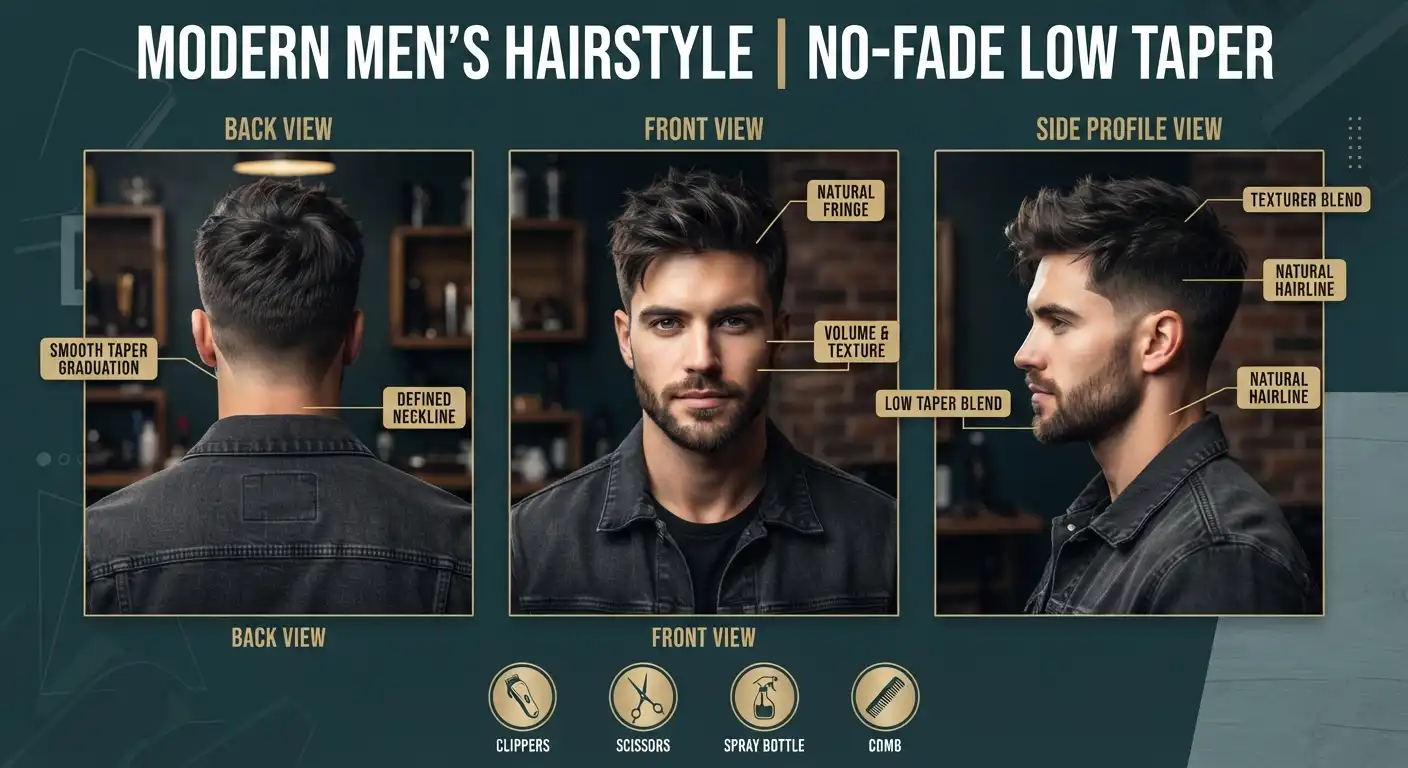
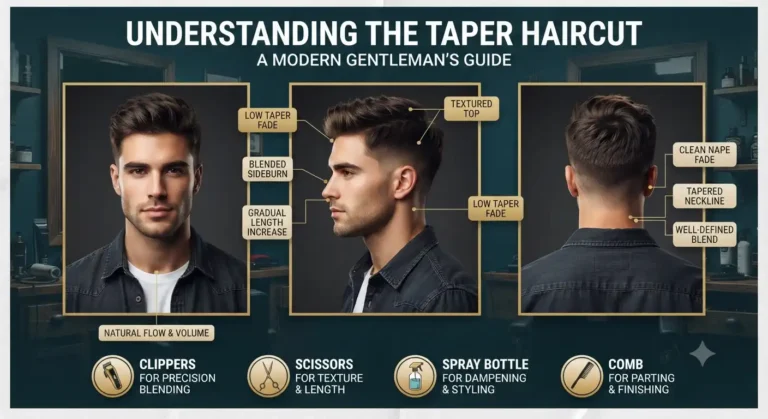
This is the safest version of the cut. The sides shorten gently from the ears down to the neckline, staying a guard length or two above the skin the whole way. It works for straight or wavy hair and suits round or square face shapes best. Style it with a light cream and you’re out the door in two minutes.
2. Mid Taper No Fade
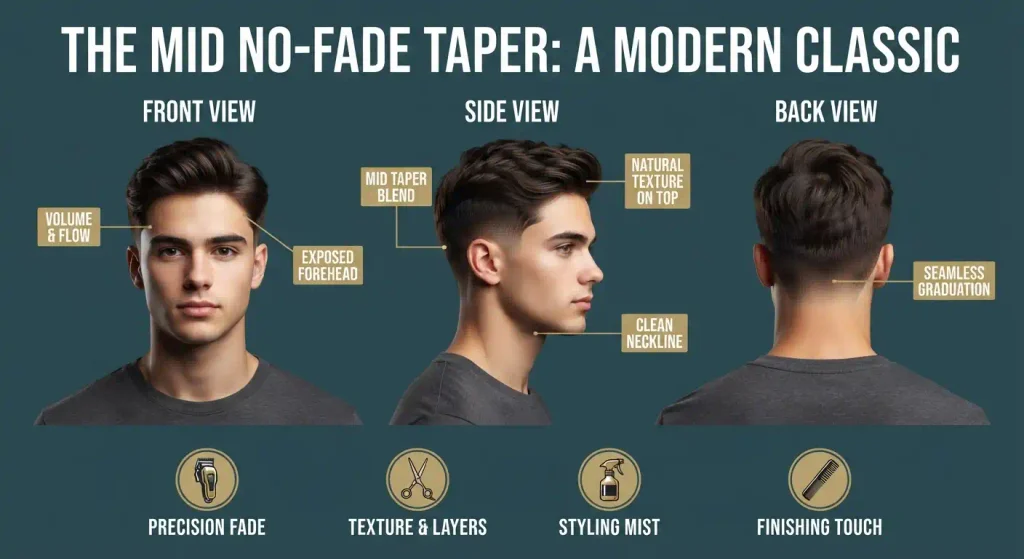
This version starts its blend around the middle of the head instead of the neckline, giving a bit more contrast than the low version without touching the skin. It flatters oval and heart-shaped faces and pairs well with thicker hair that needs some bulk removed. Ask for a guard #3 blending into a #1.5, never lower than that.
3. No-Fade High Taper
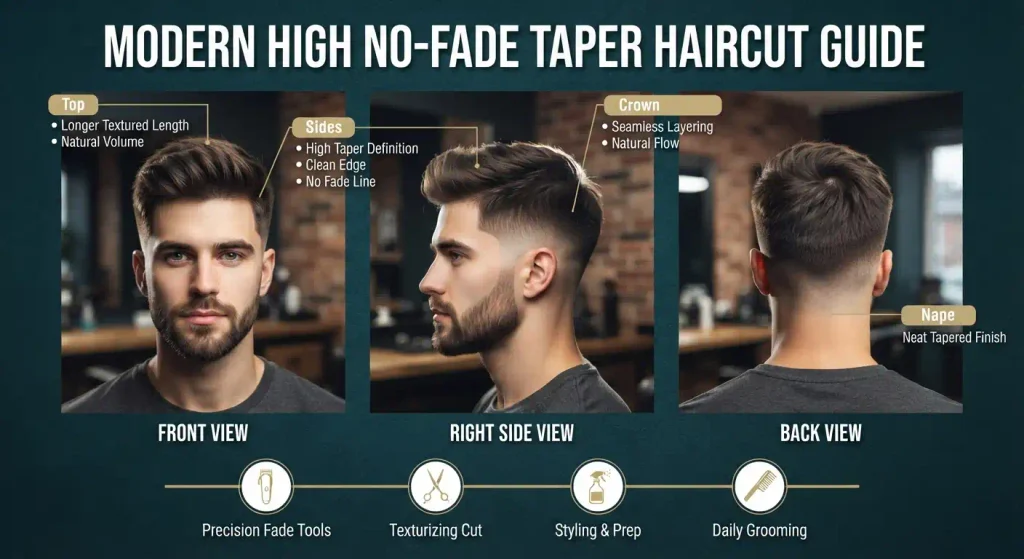
This one pushes the blend up near the temples for the boldest look in the no-fade family. It still avoids skin contact, so the finish reads sharp but never severe. Guys with long or diamond-shaped faces get the most balance from this height. A matte clay keeps the top textured without adding shine.
4. No-Fade Textured Crop
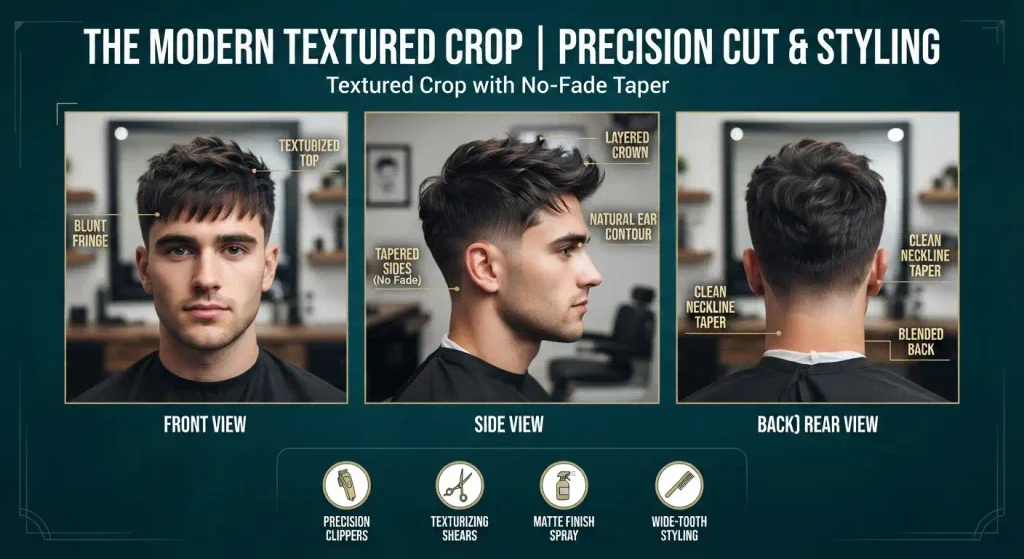
Short, choppy layers on top meet a smooth taper on the sides for a low-effort, high-impact look. It works especially well on thick, coarse hair that holds texture on its own without much product. Square and oval faces suit this one best. Scrunch in a texture paste while hair is still damp for definition that lasts all day.
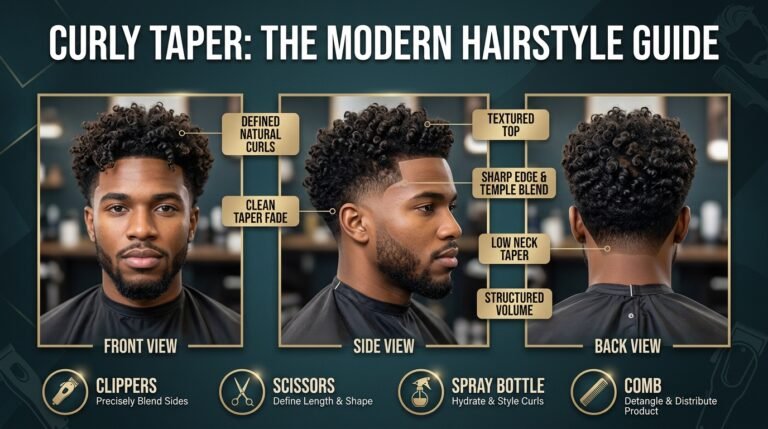
5. No-Fade Curly Top
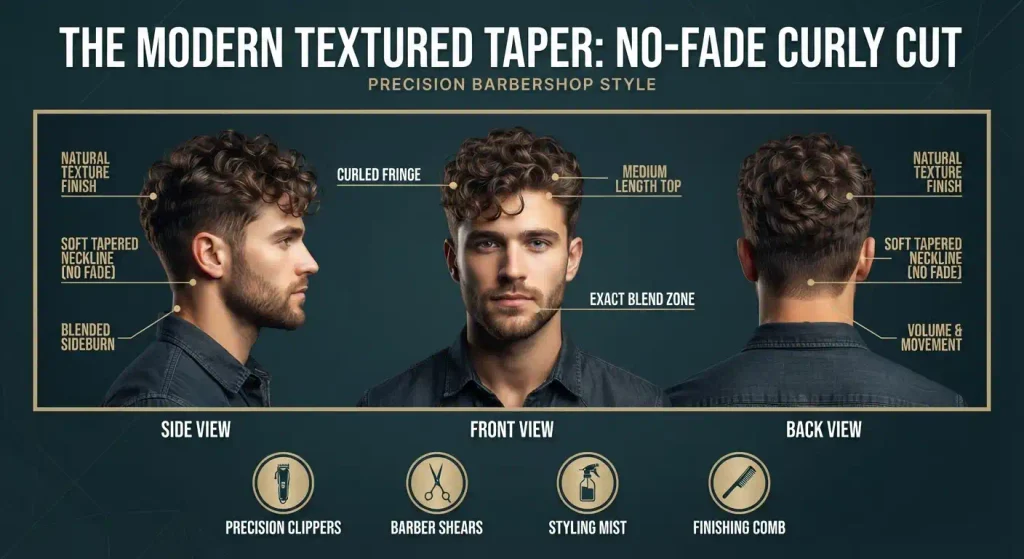
Curls stay full and bouncy on top while the sides taper down softly, no skin in sight anywhere. This cut respects a natural curl pattern instead of fighting it, which makes it a favorite for guys with type 3 or 4 hair. Round and oval faces both work well here. A curl cream applied to damp hair locks in shape without crunch.
6. No-Fade Slicked-Back
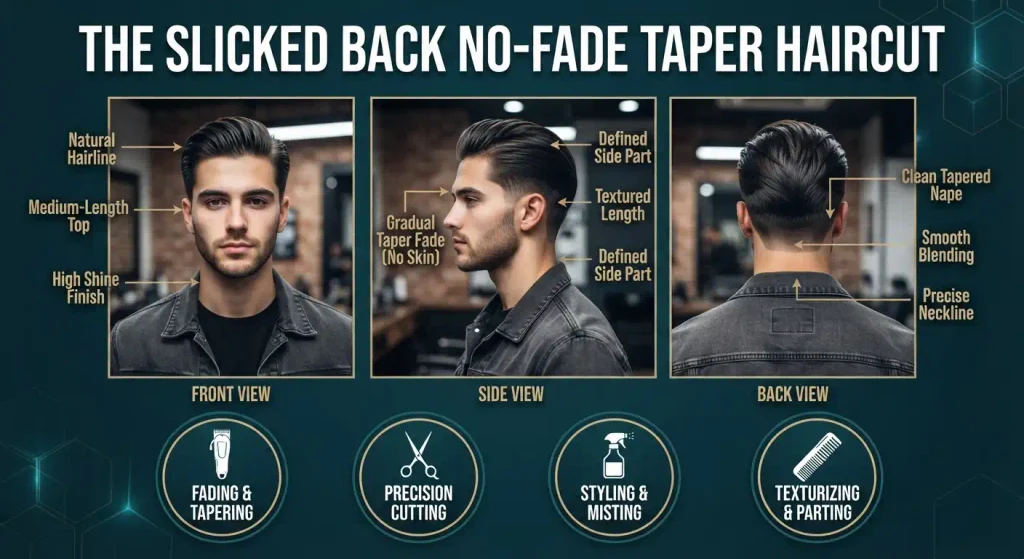
Longer hair on top gets combed straight back for a polished, old-school look, while the sides taper down without any hard line. This one leans dressy, so it’s a solid pick for office jobs or client meetings. Oval and square faces read cleanest with this style. A firm-hold pomade with a bit of shine is the classic finish here.
7. No-Fade Pompadour
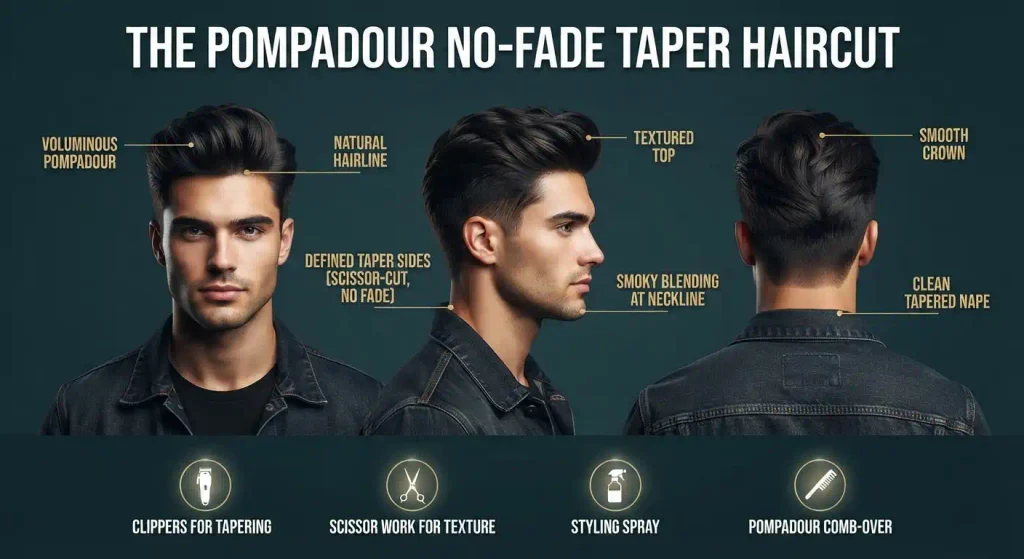
The front lifts up and back for height and volume, and the sides taper smoothly underneath without dropping to skin. It suits thick or medium-density hair that can hold a lift through the day. Round and heart-shaped faces get extra length and structure from the added height. Blow-dry the front upward first, then set it with a strong pomade.
8. No-Fade Comb-Over
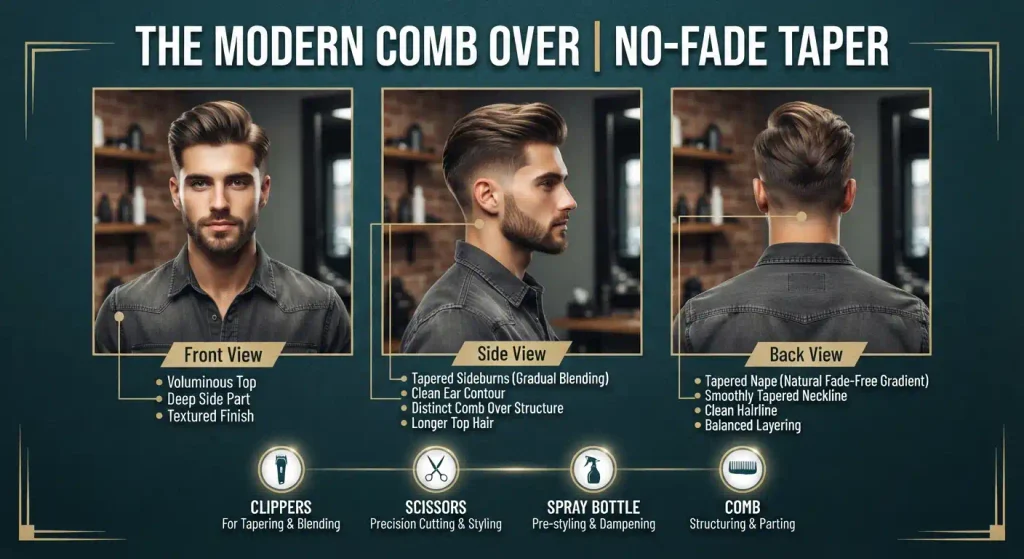
A side part guides longer top hair across the head, landing on a taper that blends gently instead of dropping sharply. This combination reads professional and works well for straight or slightly wavy hair. Oval and heart-shaped faces suit it particularly well. Use a light gel for hold with a natural sheen, not a high-shine finish.
9. No-Fade Mullet
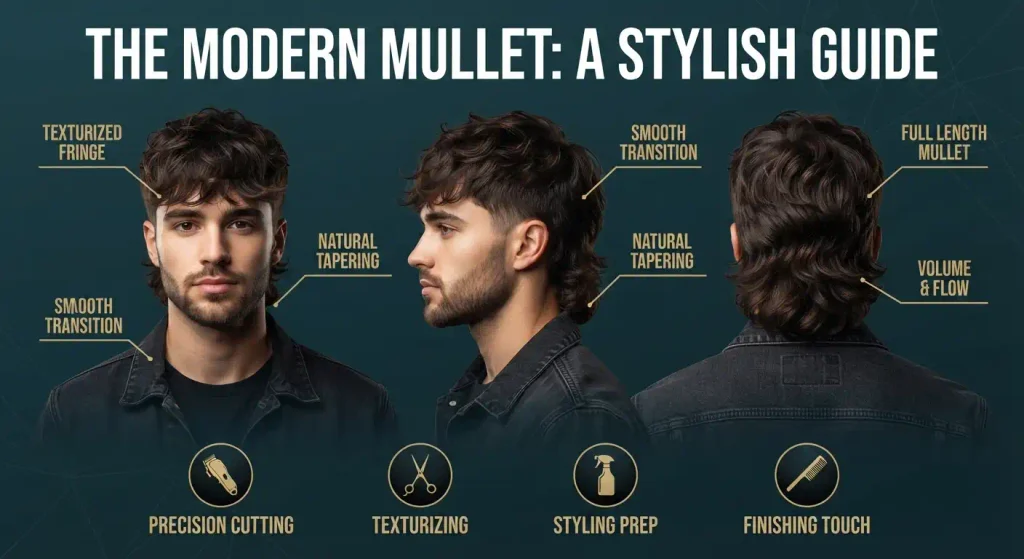
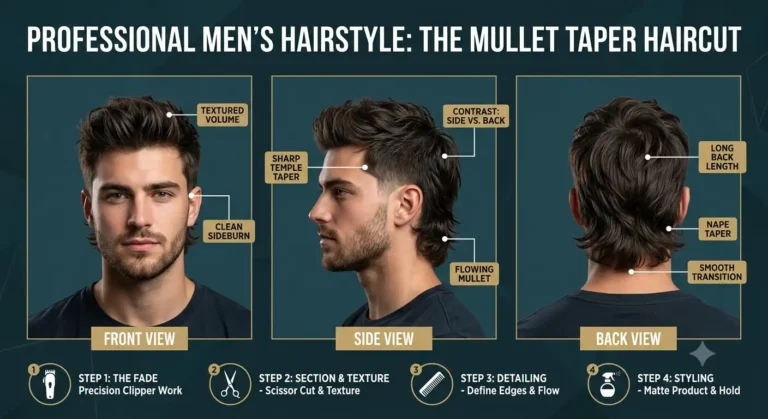
Length stays at the back and neck while the sides taper down smoothly, giving the mullet a cleaner, more wearable update. It works best on thick or wavy hair that holds shape on top without flattening. Square and oval faces balance out the extra length in back. Texture spray on top adds movement without weighing the hair down.
10. No-Fade Cut for Receding Hairlines
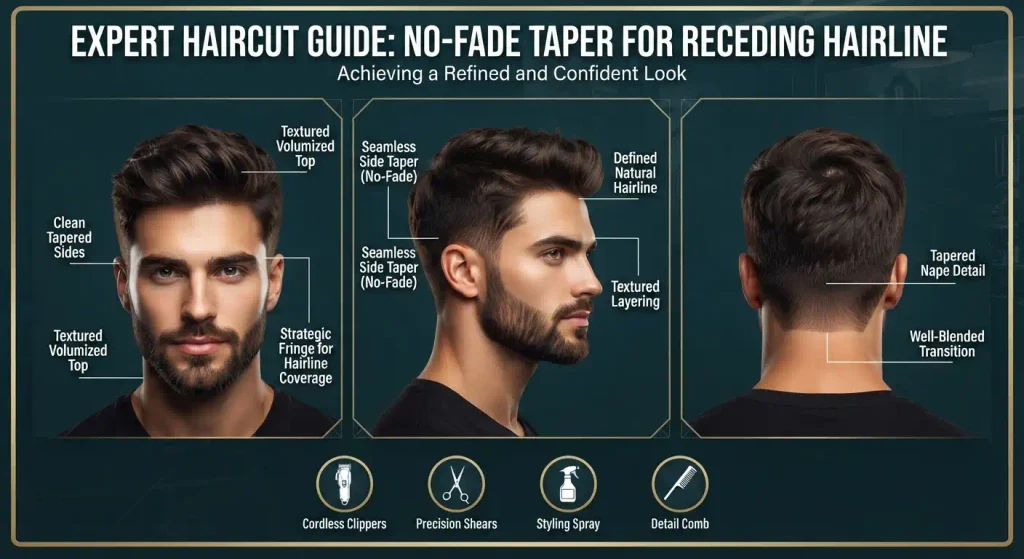
Keeping the sides at a soft taper instead of a skin fade draws less attention to a thinning hairline than a high-contrast cut does. Slightly longer length on top also helps cover early recession without looking obviously styled-over. This works across most face shapes since the goal is subtlety over drama. A matte fiber product adds density without grease.
11. No-Fade Cut for Thick Hair
Thick hair carries a lot of bulk, and a taper without a skin fade removes weight at the sides while keeping a soft, natural line all the way down. This avoids the “helmet” look that thick hair can fall into with longer styles. Square and round faces both get more shape from this trim. Thinning shears at the barber’s chair make a real difference here.
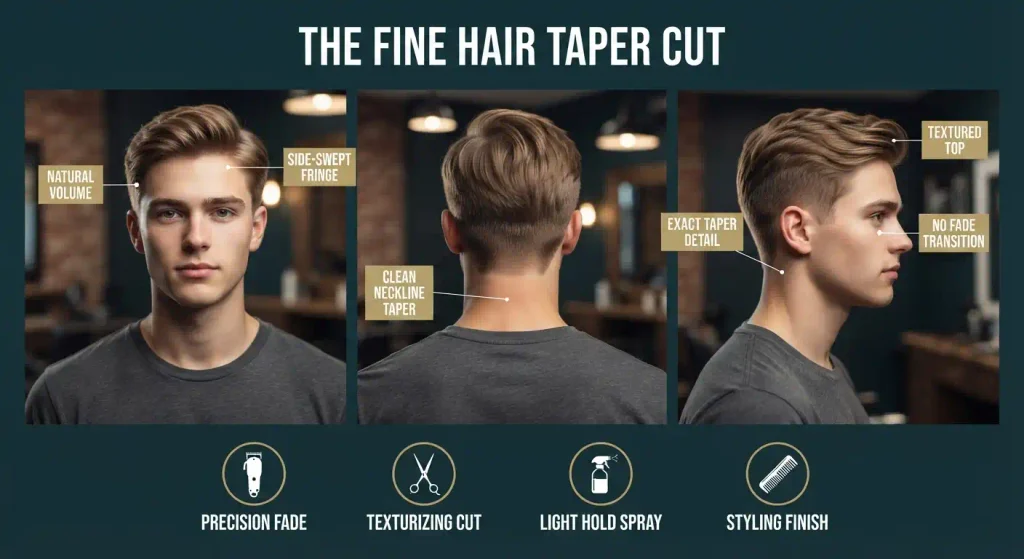
12. No-Fade Cut for Fine Hair
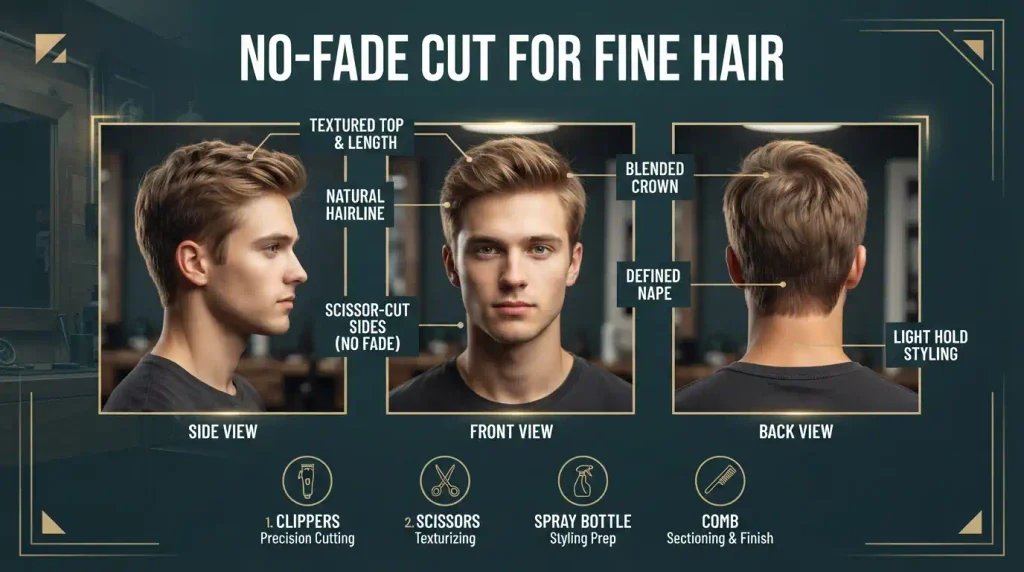
Fine or thin hair looks fuller when the taper stays soft instead of dropping into a sharp fade, since the eye has less contrast to notice thin spots. Keeping some length on top also helps create the illusion of density where it’s needed most. Oval and diamond faces suit this cut nicely. A lightweight sea salt spray adds texture without flattening the strands.
13. No-Fade Beard Pairing
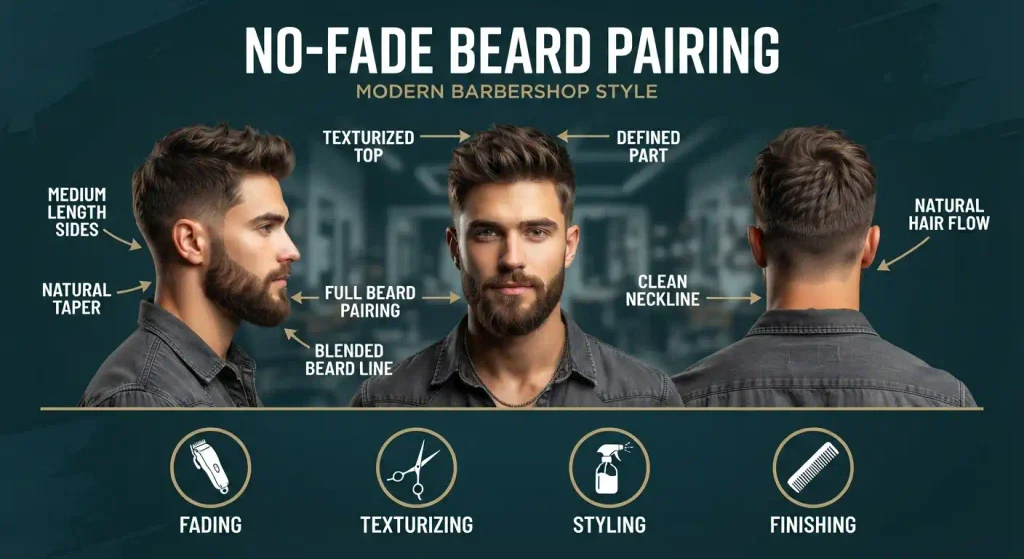
This version blends the taper into a full or medium beard instead of ending at bare skin, keeping the whole look connected and soft-edged. It suits guys who already grow a solid beard and want the haircut to match that vibe closely. Square and oval faces anchor this combination well. Regular beard trims keep the blend from looking patchy as both grow out together.
14. No-Fade Kids Cut
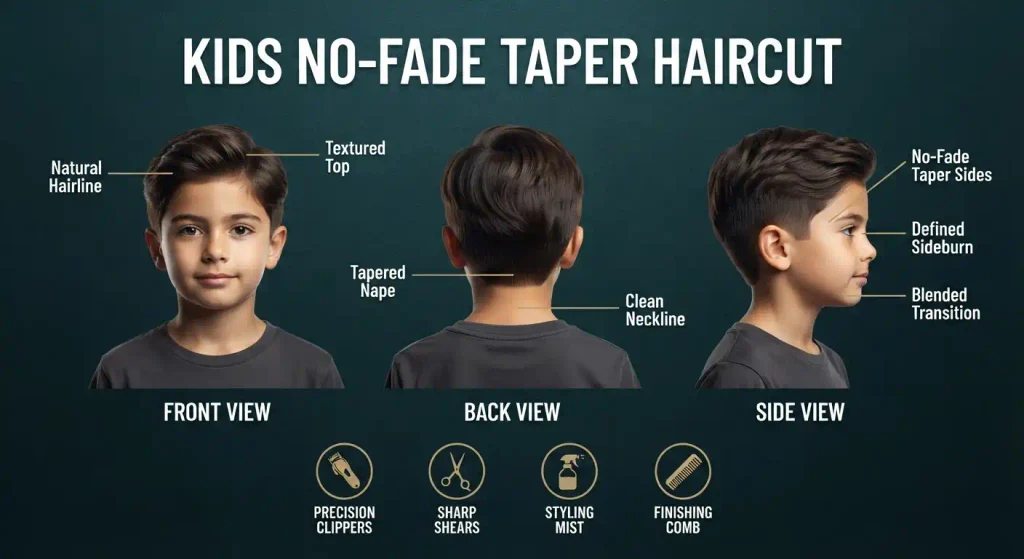
For younger boys or first proper haircuts, a soft taper avoids the sharp lines and shorter upkeep window a skin fade demands. It grows out evenly, which means fewer trips back to the barber during busy school weeks. This works for nearly any face shape at that age. A simple leave-in spray is usually all the styling a kid’s version needs.
This Cut vs. Other Taper and Fade Options
| Style | Blend Height | Guard Range | Best Face Shapes | Styling Difference |
| No-Fade Taper | Neckline to temple | #1.5–#4, never down to skin | Oval, square, round | Soft, gradual line; low daily upkeep |
| Low Taper Fade | Near the ears | #0–#2 fading to skin | Oval, heart, round | Sharper contrast right at the bottom edge |
| Mid Taper Fade | Mid-head | #0–#3 fading to skin | Diamond, oval | More visible blend line, needs frequent trims |
| High Taper Fade | Near the temples | #0–#4 fading to skin | Long, diamond | Boldest contrast, shortest regrowth window |
The core difference comes down to what happens at the skin. A fade always drops down to bare scalp somewhere on the head, usually with a guard #0 or #1 right before the skin. A no-fade taper never gets that low, so it grows out softer and forgives a missed barber appointment far better than any fade can.
That gap in maintenance is the real selling point. A skin fade starts looking rough after about two weeks as the line between skin and hair blurs unevenly. A soft taper just looks a little longer, not messy, which is why so many guys switch over once they’ve tried both.
Why Skip the Fade? Who This Style Suits
Guys with sensitive scalps often prefer this cut since clippers never touch the skin directly, which cuts down on razor bumps and irritation around the ears and neckline. It also suits workplaces with conservative dress codes, since a soft taper reads more traditional than a sharp fade to a lot of managers and clients.
Texture matters here too. Wavy and curly hair tends to hide the taper’s blend line naturally, so the transition looks even smoother than it does on straight, fine hair. Guys who travel a lot, deploy for work, or just can’t get to a barber every two weeks also benefit, since a no-fade taper simply looks like it’s growing out instead of looking unfinished or patchy.
Lifestyle plays a role as well. Athletes and gym regulars like the lower-maintenance regrowth window, since sweat and hats don’t expose a half-grown-out fade line the way they would with a sharp skin cut. Professionals in law, finance, or other client-facing roles lean on the cut’s clean but not severe finish, especially for daily meetings.
Age is a factor too, though not a strict rule. Younger guys tend to gravitate toward the higher, bolder versions, while older guys and those in more formal settings often prefer the low or mid taper for a subtler result.
How to Style a Taper With No Fade
- Wash and towel-dry. Start with clean hair towel-dried to about 70 percent, since fully wet hair makes it harder to judge how a styling product will actually set once it dries.
- Apply product to the top only. Work a small amount of cream, clay, or pomade through the top section, since the sides need little to no product with this cut and heavy product there just looks greasy.
- Blow-dry with direction. Use a comb or your fingers to guide the top hair the way you want it to sit, whether that’s back, forward, or lifted up for volume.
- Set the shape. Let the style cool or air-dry for a minute before touching it again, which helps the finish hold longer through a full day at work or out with friends.
- Check the sides. Run a comb lightly over the taper to smooth any stray hairs, since the soft blend shows flyaways more noticeably than a hard fade does.
Taper No Skin: How to Ask Your Barber for This Cut
Walking in with the right words saves you from walking out with an accidental skin fade. Use this as your base request:
“I’d like a taper on the sides that stays above the skin the whole time, no fade down to bare scalp anywhere. Keep it blending softly around a guard #2 to #3, and leave the top [your preferred length] so I can style it.”
A few add-ons depending on which version you want:
- For the mid or high no-fade taper: “Start the blend a bit higher, around the middle of my head, but still keep it off the skin completely.”
- For thick hair: “Use thinning shears on the sides to cut down the bulk, not clippers down to skin.”
- For a receding hairline: “Keep the taper soft near my hairline and don’t cut it too close, I want it to blend rather than draw attention to the recession.”
- For a beard pairing: “Blend the taper directly into my beard instead of stopping at bare skin near my ears.”
Bring a photo too, even a rough one from your phone. Barbers see a lot of fades every single day by default, so a reference picture makes sure “no fade” actually registers as no fade to whoever’s holding the clippers.
Step-by-Step Tutorial for This No-Fade Taper Cut
- Consultation. Your barber checks hair density, growth pattern, and face shape before picking a taper height and guard range that actually fits your head, not just what looks good in a photo.
- Clipper work on the sides. Using a guard rather than a bare blade, the barber works from the bottom up, blending length gradually instead of dropping to skin at any single point along the way.
- Blend with a comb. A comb-over-clipper technique smooths the transition between guard lengths so there’s no visible line or harsh step anywhere in the taper.
- Trim the top. Scissors or clippers over comb shape the top to the desired length and style, whether that’s short and textured or long enough to sweep back or forward.
- Detail the edges. The hairline, neckline, and area around the ears get cleaned up for a crisp outline, even though the taper itself stays soft and gradual.
- Style and check. The barber applies a small amount of product and checks the cut from multiple angles, front, side, and back, before you leave the chair.
Best Styling Products for This Look
- Matte clay: Good for textured tops that need hold without shine, especially on thick or coarse hair that tends to look greasy under heavier products.
- Light styling cream: Adds control and a natural finish for slicked-back or comb-over versions where you don’t want a stiff, crunchy result.
- Sea salt spray: Builds texture and light volume, useful for fine hair that needs a fuller look without any added weight.
- Pomade: Delivers shine and firm hold for dressier styles like the pompadour or slick-back version, ideal for all-day events.
- Curl cream: Defines curls without weighing them down, best applied to damp hair before drying to lock in shape.
Skip anything heavy or wax-based on fine hair, since it tends to flatten the top and undo the fuller look a no-fade taper is meant to give in the first place.
Common Mistakes to Avoid with This Cut
- Letting the barber go too close. Always confirm the guard number out loud before clippers touch your head, since “low” and “short” mean different things to different barbers.
- Skipping trims entirely. A no-fade taper needs less upkeep than a fade, but going months without a trim still lets the blend grow out unevenly and lose its shape.
- Using too much product. Overloading fine or thin hair with heavy pomade collapses the volume this cut relies on to look full instead of flat.
- Ignoring hair type. Curly and coily hair needs different clipper guards and techniques than straight hair does, so bring that up early during the consultation.
- Forgetting the beard blend. If you’re pairing this cut with facial hair, ask your barber to connect the two directly, or the taper can end up looking disconnected from the beard line.
- Not speaking up mid-cut. If the clippers feel like they’re going shorter than you asked, say something before the barber moves to the next section, not after the whole side is already done.
Best Hair Types and Face Shapes for a No Fade Haircut
Hair type:
- Straight and wavy hair take the softest, most seamless blend since there’s less texture to interrupt the line as it grows.
- Curly and coily hair naturally camouflage the taper’s transition, which makes touch-ups less urgent between barber visits.
- Thick hair benefits from thinning shears at the sides to remove bulk without going anywhere near the skin, avoiding a bulky, boxy look.
- Fine hair holds its fuller look longer with this taper than it would with a skin fade, since there’s less harsh contrast to expose thin areas.
Face shape:
- Oval and square faces suit nearly every version of this cut, from low to high taper, with very few restrictions.
- Round faces do best with a mid or high taper, which adds visual length and breaks up width at the sides.
- Long or diamond faces balance out with more width and volume on top, paired with a higher taper for structure.
- Heart-shaped faces look sharpest with a low to mid taper and some volume up front, which softens a pointed chin.
Maintenance and Upkeep
A no-fade taper typically holds its shape for four to six weeks before it needs a fresh trim, longer than most skin fades manage before they start looking rough. Book a touch-up every three to four weeks if you want the blend looking consistently crisp, or stretch it out to six weeks if you don’t mind a softer, more grown-out look in the meantime.
At home, a simple trim around the neckline with a beard trimmer can buy you an extra week or two between barber visits, especially if you’re comfortable cleaning up your own edges. Wash with a clarifying shampoo about once a week to keep product buildup from dulling the blend and making it look greasy rather than clean. Avoid heavy oils on the sides too, since they can make a soft taper look unkempt instead of intentional.
If you notice the blend starting to look uneven before your next scheduled visit, that’s usually a sign your hair grows faster in certain spots, and it’s worth mentioning that to your barber so they can adjust the guard sequence next time.
FAQ
What makes this cut different from a regular fade? A fade always drops down to bare skin somewhere on the head, while a no-fade taper stops at a guard length and never touches the scalp directly.
Is “no taper” the same thing as a no-fade taper? No. “No taper” usually means keeping one consistent length all over with no blending at all, while a no-fade taper still blends shorter at the sides, just without ever touching skin.
How is a mid taper different from a low taper here? The mid version (style 2 above) starts its blend higher up the head for more contrast, while the low version (style 1) keeps the blend close to the neckline for a subtler, quieter finish.
Does this style work with curly hair? Yes, and the curly top version (style 5) is one of the most popular picks for curly or coily hair since the texture hides the blend line naturally as it grows.
How often do I need a trim? Every three to six weeks, depending on how sharp you want the blend to stay and how fast your hair grows in.
Can I get this cut paired with a beard? Yes, the beard-paired version (style 13) connects the taper directly into the beard instead of ending at bare skin near the ears.
Is this cut appropriate for a job interview or office job? Yes, the slicked-back and comb-over versions (styles 6 and 8) both read as polished and professional in most workplaces.
Will my barber understand what I mean if I just say “no fade”? Most will, but bringing a reference photo and stating the guard number out loud removes any doubt before the clippers start.
Final Thoughts
A no-fade taper gives you a clean, sharp cut without the upkeep or scalp contact a skin fade demands. Whether you go low and subtle or high and bold, there’s a version here to match your hair type, face shape, and daily routine. Bring the barber phrasing above to your next appointment, and don’t be afraid to point to a photo if you want to be extra sure the blend stops well above the skin.
Name: Ryan Cole
Role: Lead Grooming Editor, TaperHaircutGuide.com
Bio angle: Men’s grooming/style content researcher — 4+ years covering barbering trends, hairstyling terminology, and men’s style content for US audience. Cross-checks every guide with practicing barbers before publishing.