43 Modern Drop Taper Fade Styles for Men to Try in 2026

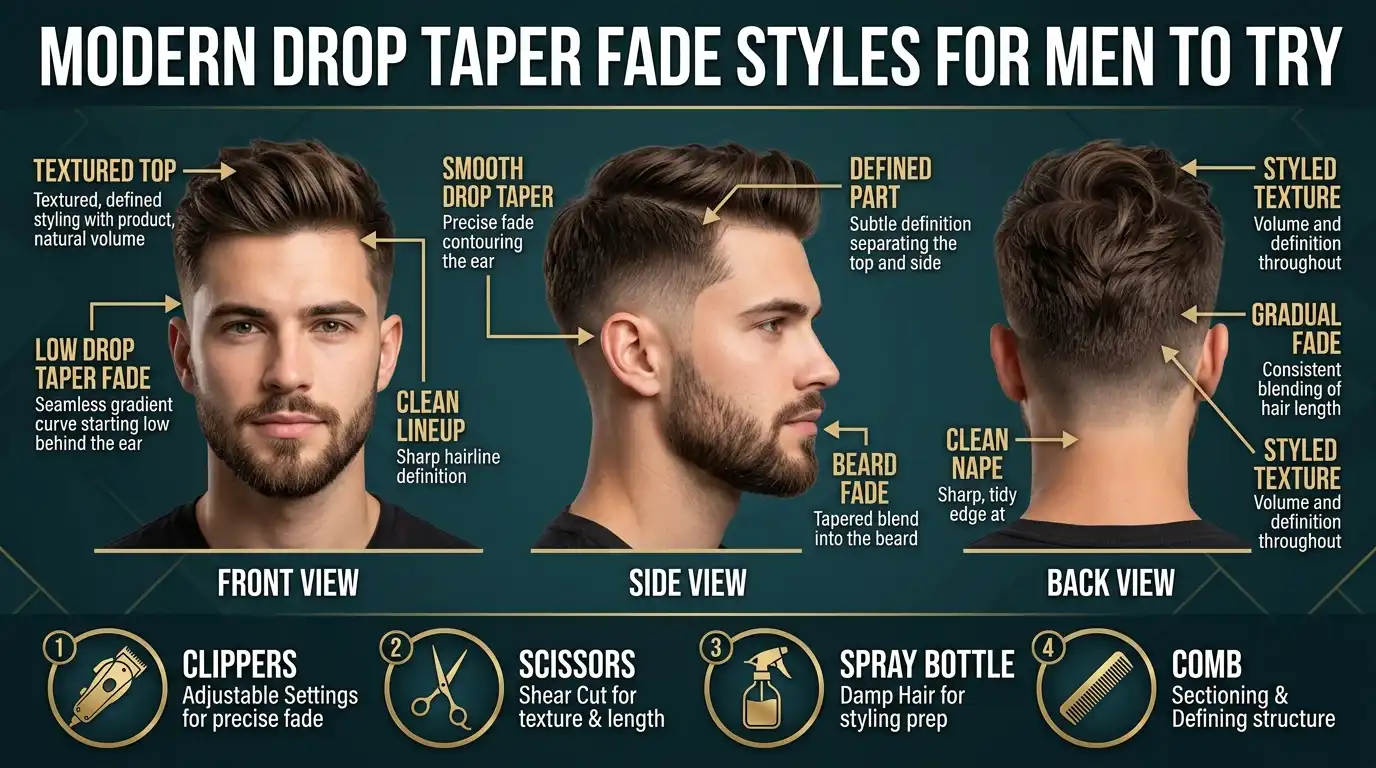
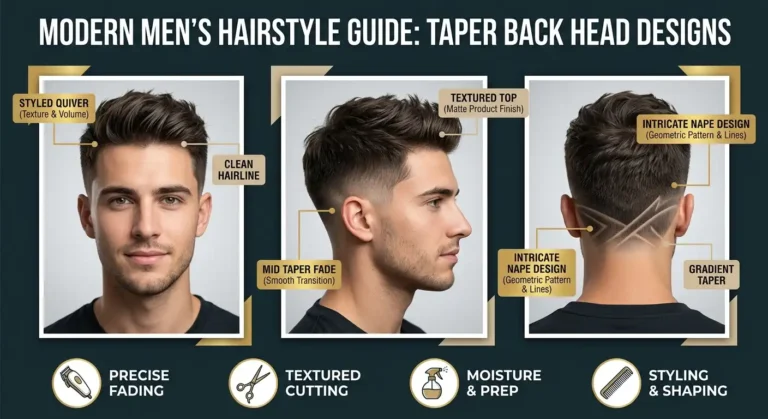
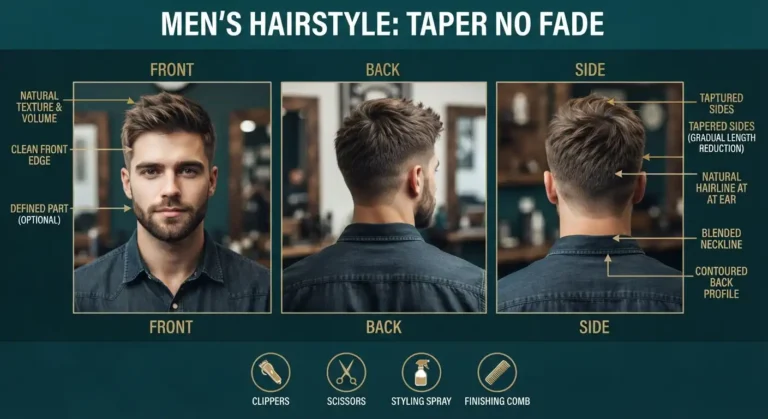
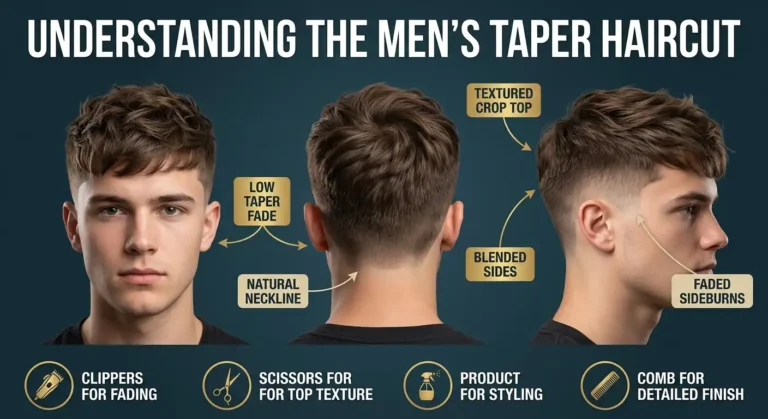
If you want a clean haircut with a curved shape around the back of the head, a drop taper is worth a look. It keeps the taper neat around the temples, ears, and neckline while the blend drops lower behind the ear. That small change gives the haircut a more shaped profile without making the whole cut look overly aggressive.
A drop taper combines a gradual taper with a curved drop behind the ears. The top can stay short, textured, curly, wavy, long, or neatly styled, so the same base cut can create many different looks.
43 Drop Taper Styles and Ideas
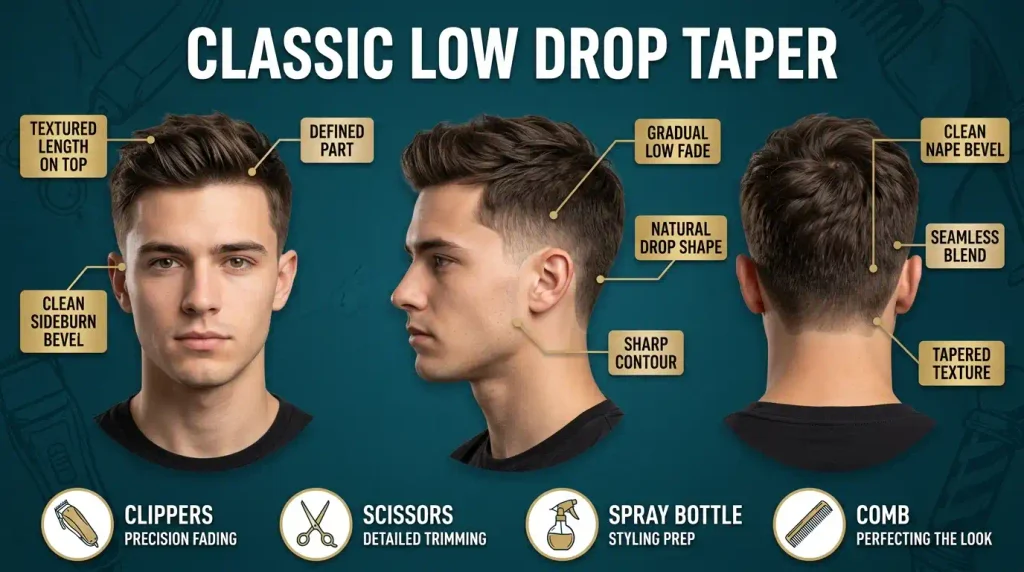
1. Classic Low Drop Taper
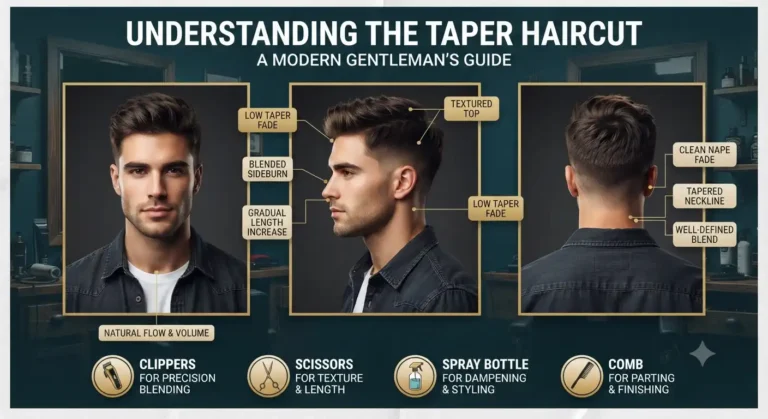
A classic low version keeps the taper close to the ears and neckline while allowing plenty of weight to remain higher on the sides. The curved drop adds shape without taking too much hair away. It suits straight, wavy, and moderately curly hair. Oval and square faces can carry the balanced outline especially well. Ask for a soft blend if you want the result to look natural as it grows out.
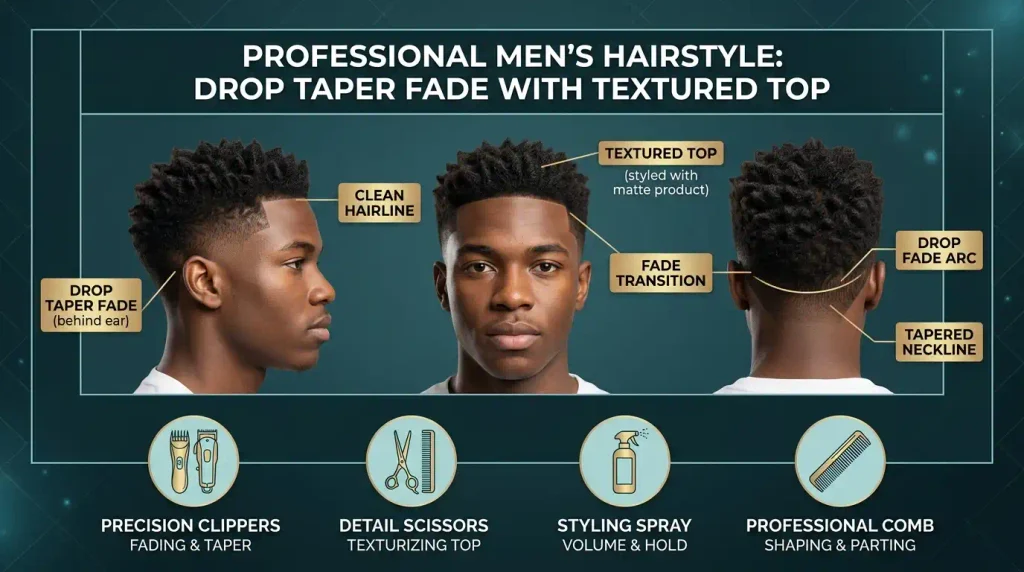
2. Drop Taper Fade with Textured Top
Adding texture on top creates a stronger contrast with the clean sides. The barber can leave enough length for fingers or scissors to create separation rather than a flat finish. Straight and thick hair benefits from this approach, while wavy hair can use its natural movement. A small amount of matte paste or clay can bring out the texture without making the top look heavy.
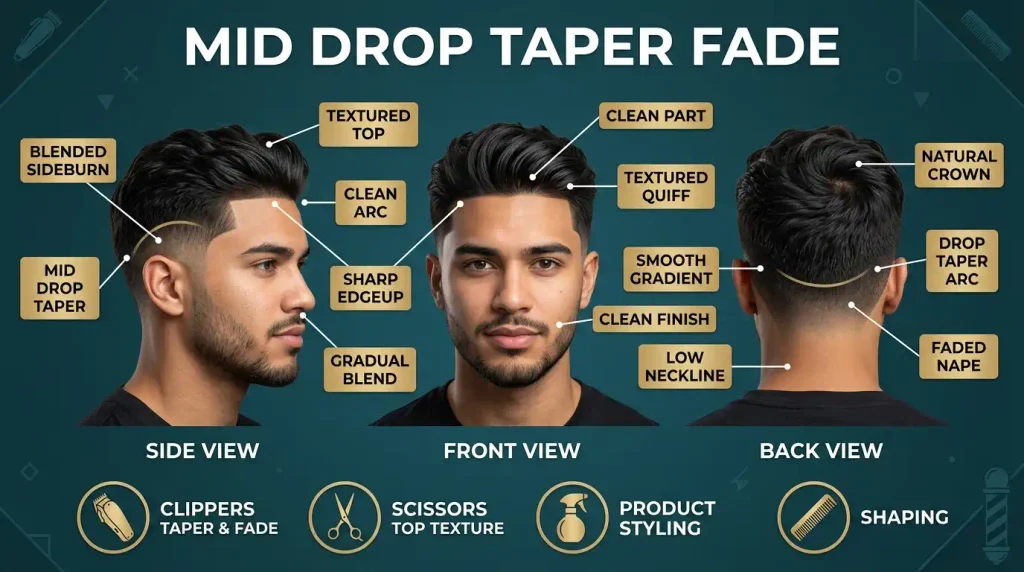
3. Mid Drop Taper Fade
A mid version brings the taper higher and gives the sides a more noticeable change in length. The drop behind the ears keeps the shape curved instead of creating a straight band around the head. It works well when you want more definition than a low taper but do not want the sides extremely tight. A textured crop, quiff, or short messy top can all work with this height.
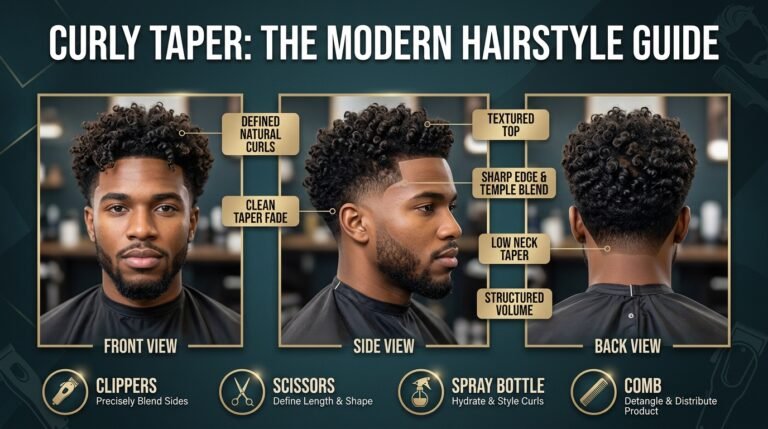
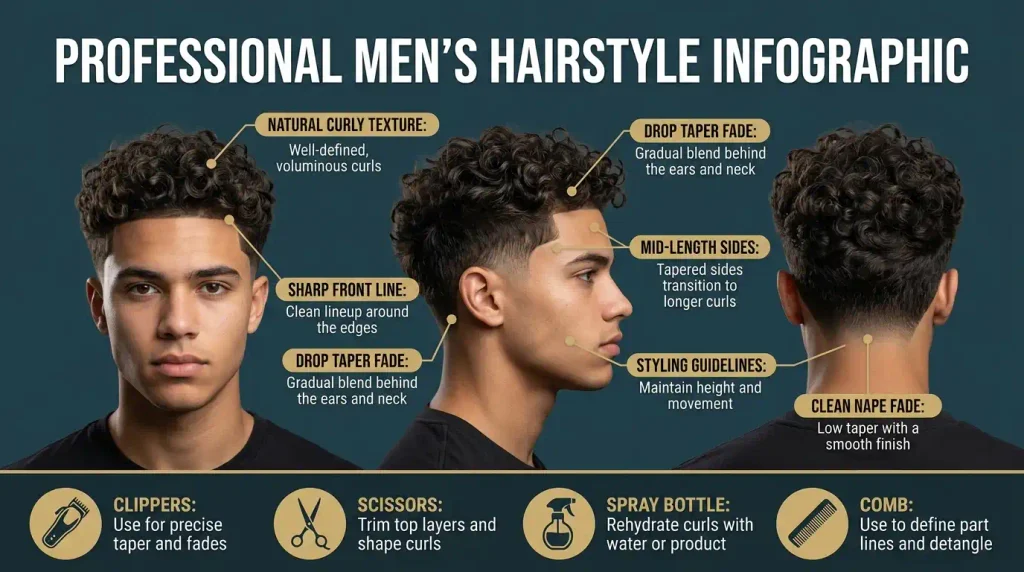
4. Drop Taper with Curly Top
Curly hair gives this cut plenty of natural character. The sides are cleaned up while the curls remain longer and fuller on top. Keeping the curl pattern intact prevents the haircut from looking too flat. Oval, round, and square faces can all work with this version when the top volume is adjusted to the person’s features. Use a curl cream or light leave-in product to control dryness and frizz.
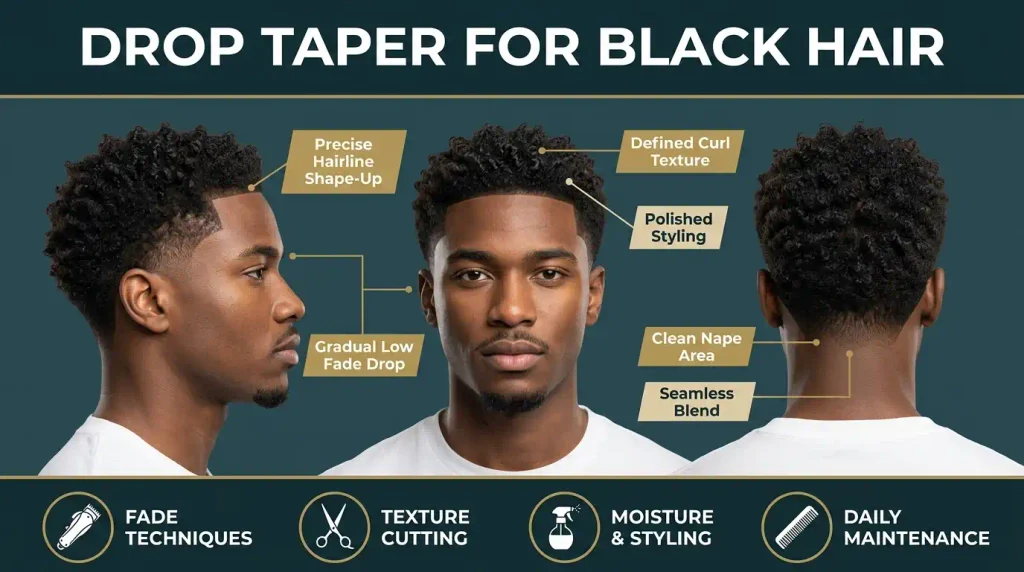
5. Drop Taper for Black Hair
Natural Black hair can pair especially well with a carefully shaped taper because the clean edges create a strong frame around curls, coils, waves, or textured tops. The barber can preserve the natural density while refining the temples and neckline. A clean lineup can be added if desired. Moisturizing the hair and avoiding excessive brushing of tightly coiled texture helps keep the finished look healthy.
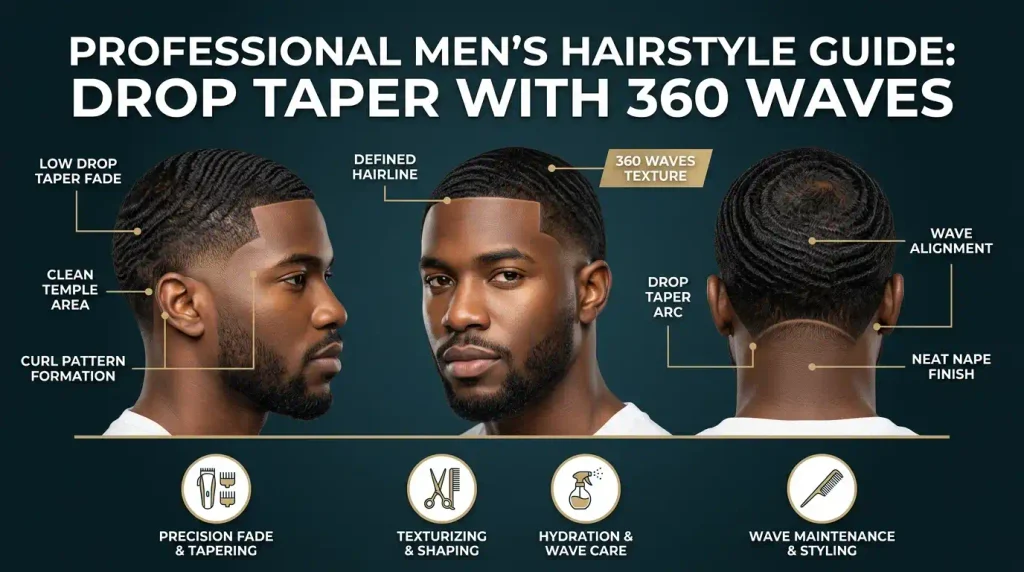
6. Drop Taper with 360 Waves
For men wearing waves, the taper provides a neat border without taking attention away from the wave pattern. The drop shape adds a subtle curve around the back, while the top remains long enough to maintain the wave pattern. Brush direction matters, so the haircut should work with the wave pattern you already have. A light styling product can help hold the pattern without leaving a greasy finish.
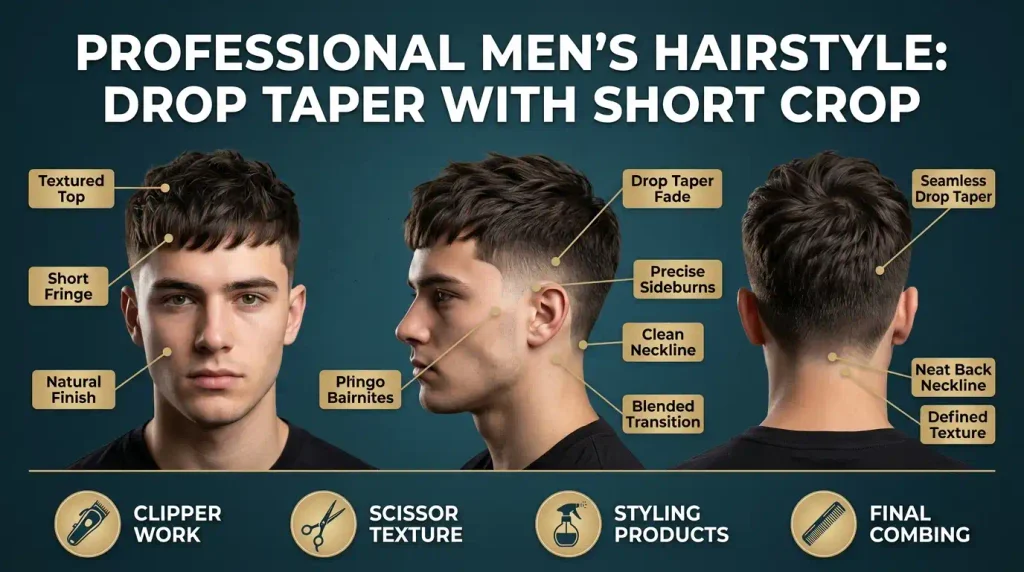
7. Drop Taper with Short Crop
A short crop makes the haircut easy to wear every day. The top stays compact while the sides and back receive the curved taper treatment. This is useful for men who want texture without spending much time styling. Straight or slightly wavy hair can be cut with a choppy top for extra movement. A small amount of matte paste is enough to separate the front and crown.
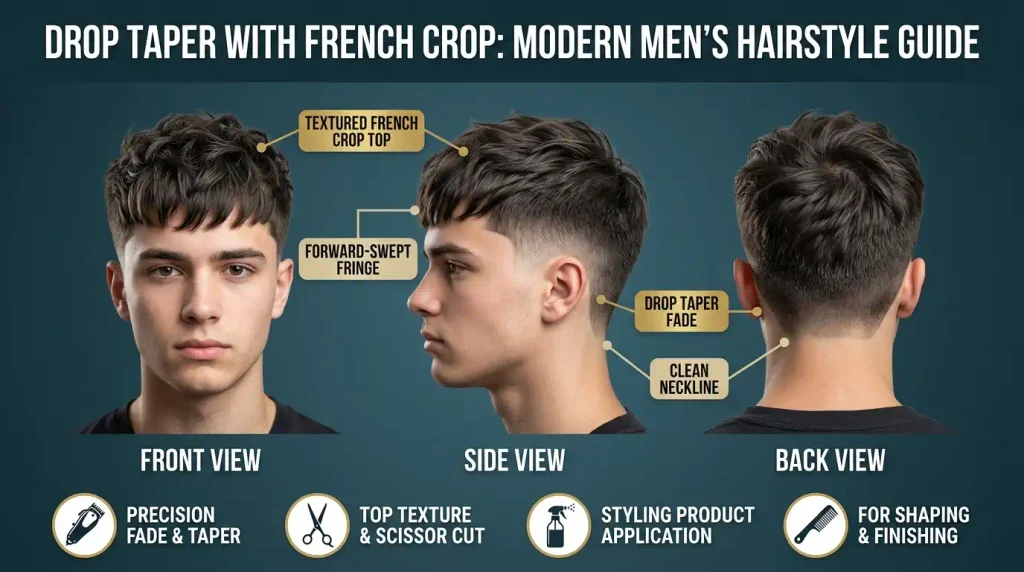
8. Drop Taper with French Crop
The French crop adds a defined forward fringe to the curved taper. Keeping the fringe short gives the face a structured appearance, while leaving some texture on top prevents the cut from looking too rigid. This combination can work well with straight or thick hair. If your forehead is a concern, the fringe can be adjusted rather than cut to one fixed length.
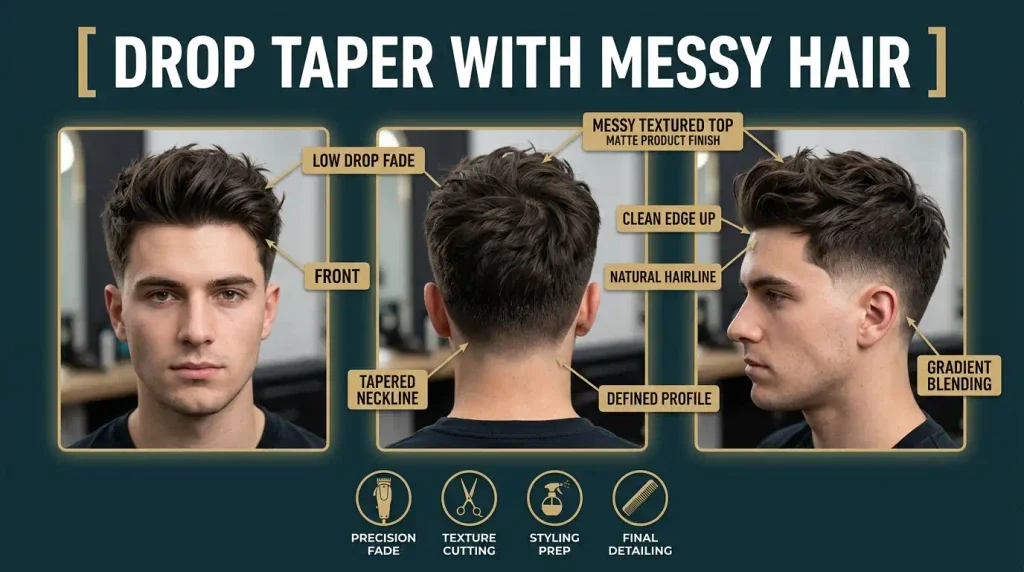
9. Drop Taper with Messy Hair
A messy top gives the clean taper a relaxed finish. Instead of creating a perfect part or polished shape, the top is cut with enough layers or texture to move naturally. This is a good option for thick, straight, or wavy hair. Work a small amount of matte product through dry or slightly damp hair, then use your fingers to create separation rather than a combed finish.
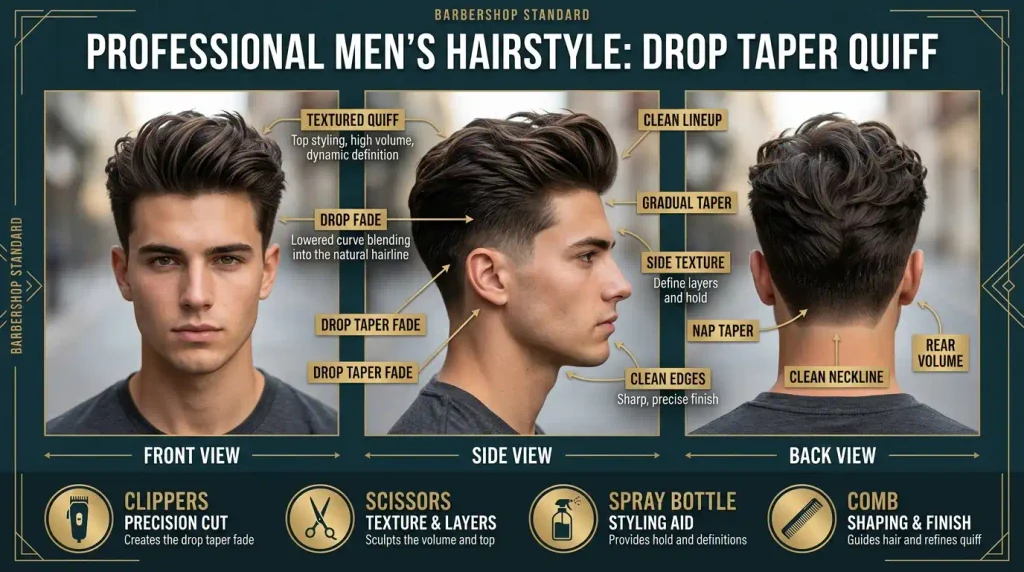
10. Drop Taper Quiff
The quiff adds height at the front while the drop taper keeps the sides controlled. It is a useful middle ground between a formal style and a casual textured haircut. Straight and wavy hair usually makes the lift easier to shape. Blow-dry the front upward and slightly backward, then use a flexible styling product so the quiff keeps movement instead of becoming stiff.
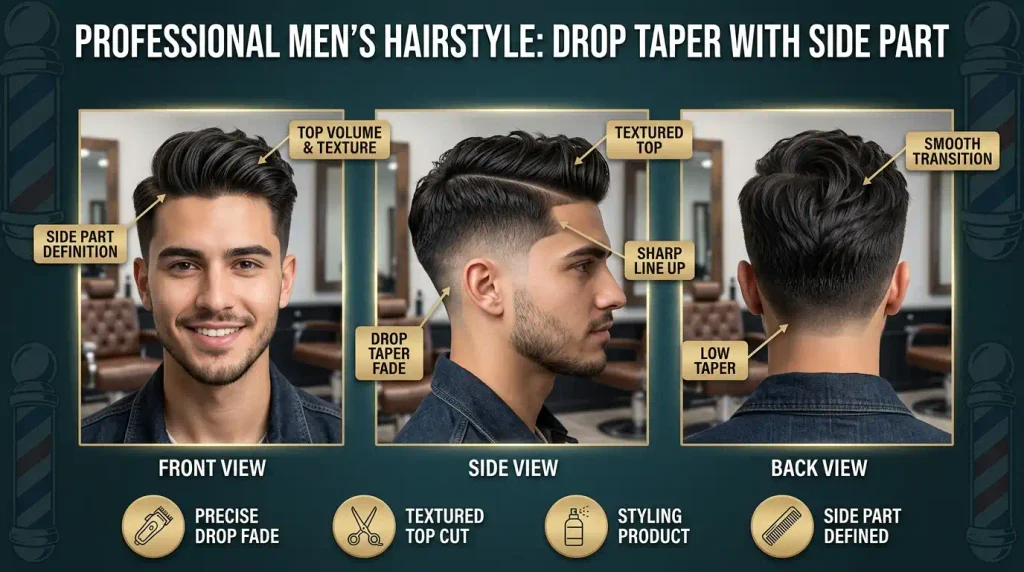
11. Drop Taper with Side Part
A side part gives the haircut a classic direction. The drop taper adds a modern detail around the sides and back without changing the professional feel of the top. Straight and wavy hair are especially easy to part, but thicker hair can also work with enough length. Ask your barber to keep the part natural unless you specifically want a shaved hard part.
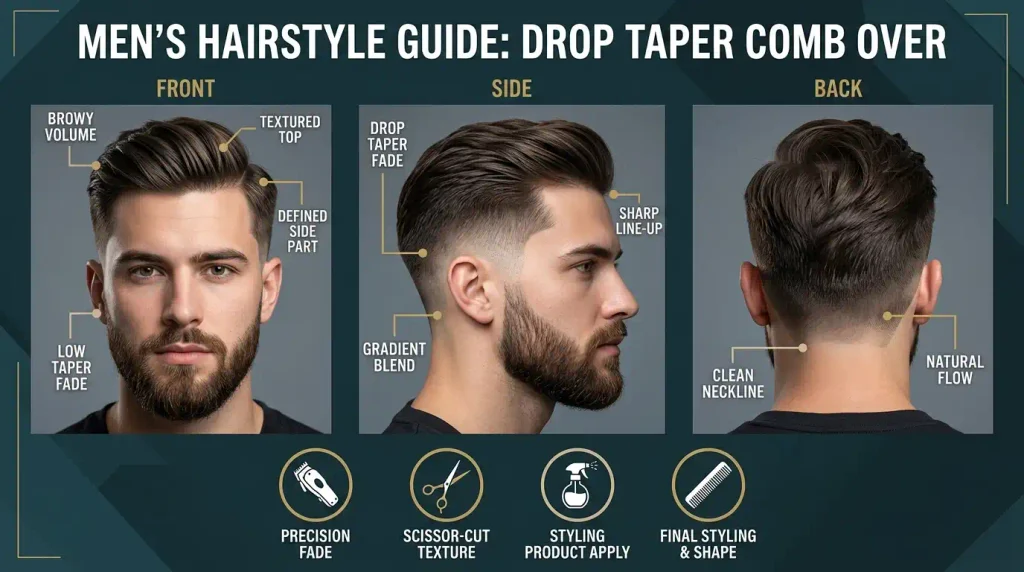
12. Drop Taper Comb Over
The comb over uses a longer top that is directed across the head. Unlike a very sharp formal version, this variation can be kept soft and textured for everyday wear. The curved taper creates a cleaner outline around the ears and back. It suits straight and wavy hair, while a lightweight cream or paste can help control the top without making it look oily.
13. Drop Taper Slick Back
A slick-back version leaves enough length on top to brush the hair toward the back. The curved taper keeps the lower part of the haircut neat and controlled. This combination works best when the top has enough density to move backward without exposing unwanted gaps. Use a comb for a polished finish or your fingers for a softer result.
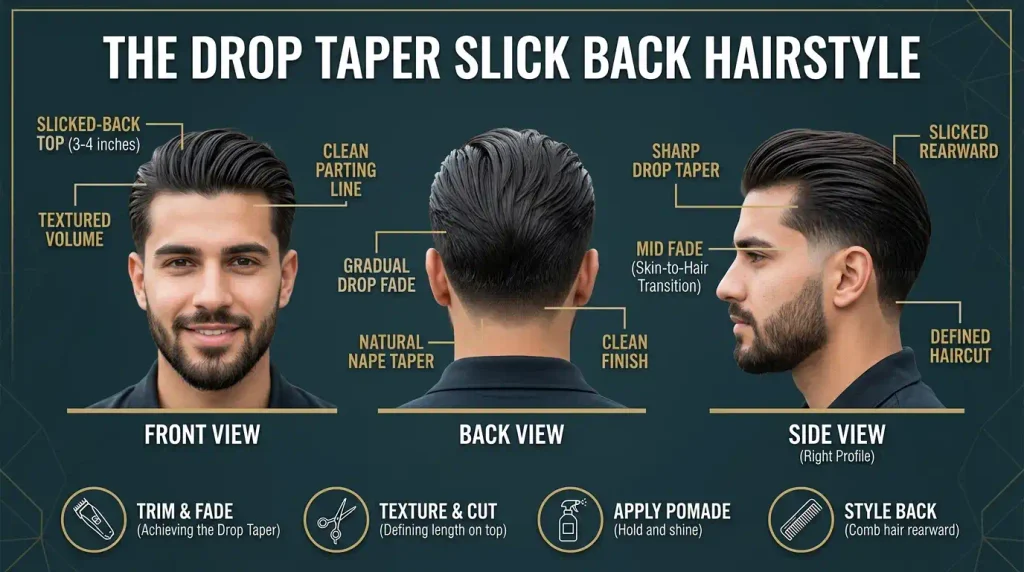
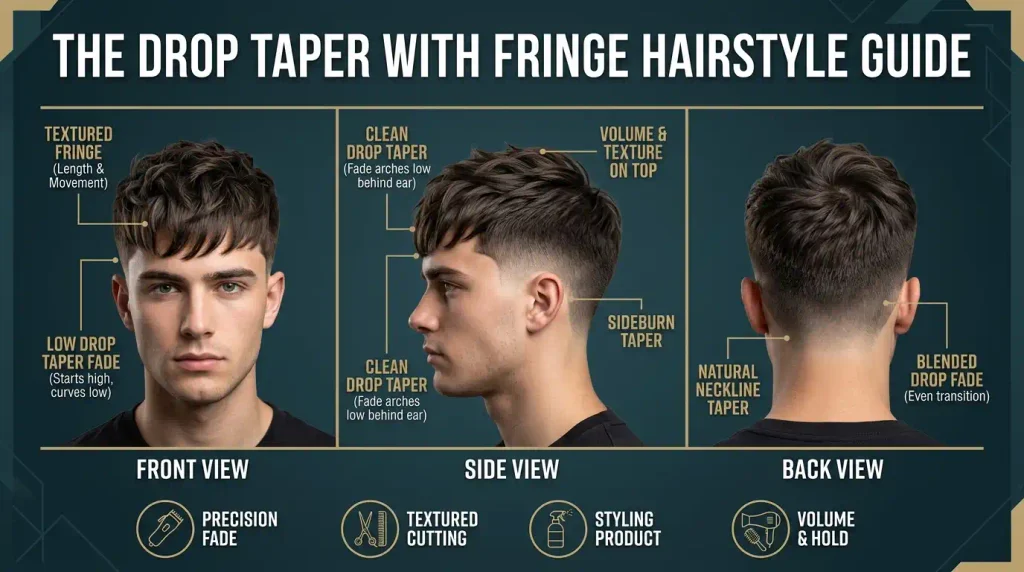
14. Drop Taper with Fringe
A longer fringe changes the balance of the haircut and can make the overall look more relaxed. The sides remain clean while the front falls toward the forehead. This works especially well with straight or wavy hair that naturally moves forward. Ask for enough length to test the fringe before committing to a very short cut, especially if your hair has a strong growth pattern.
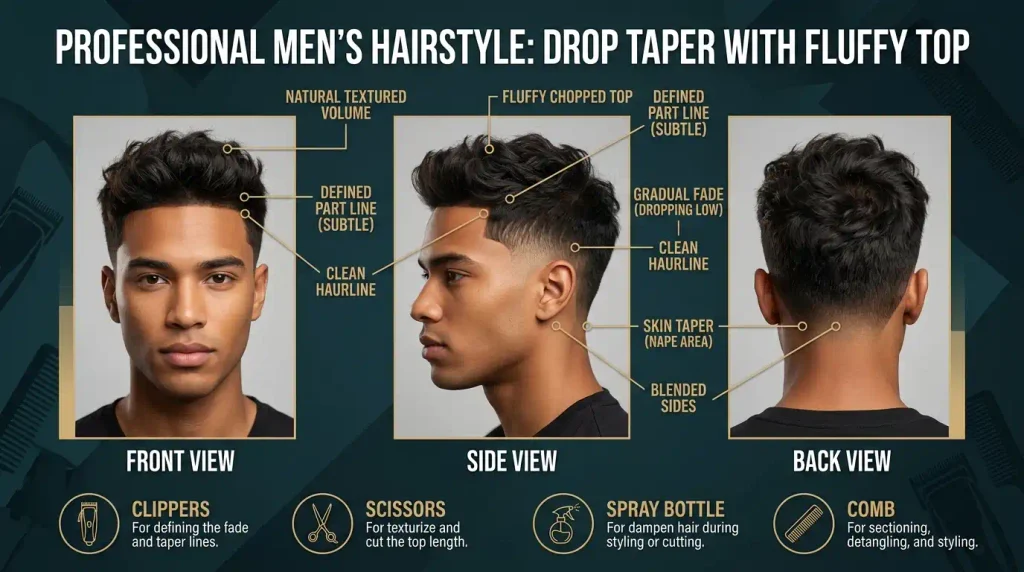
15. Drop Taper with Fluffy Top
A fluffy top keeps the hair full and soft instead of tightly sculpted. The contrast with the controlled sides makes the haircut look youthful and casual. Straight and wavy hair with natural volume can carry this shape well. A light mousse or texture spray can help build movement, while finger styling keeps the finish loose. Avoid heavy products if your hair becomes flat easily.
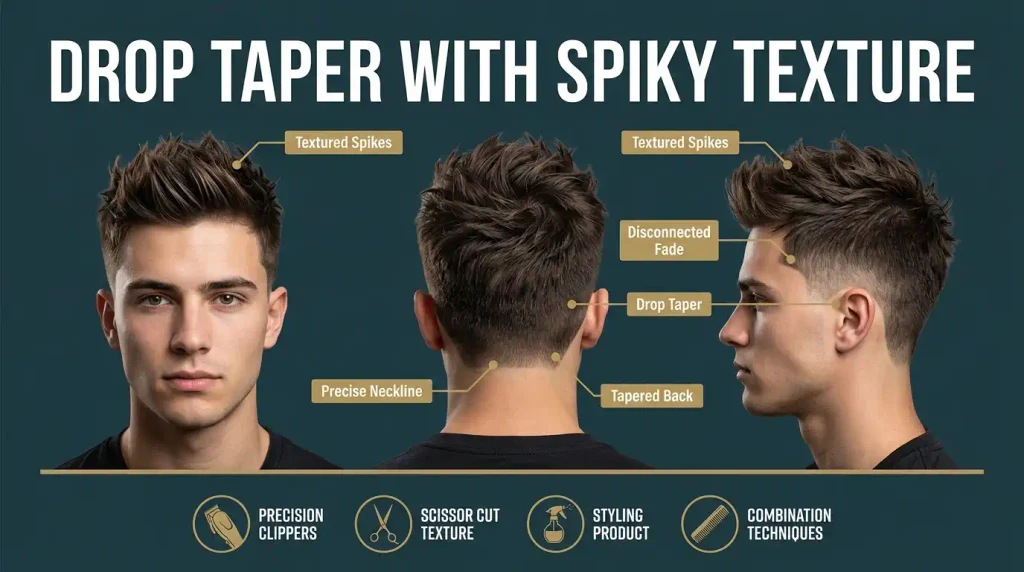
16. Drop Taper with Spiky Texture
Short spikes give the haircut a more energetic finish. The top should have enough texture to separate individual sections without becoming a rigid helmet shape. Thick straight hair is a strong match because it naturally holds direction. Use a matte clay or paste and pinch small sections into shape. Keep the taper soft if you want the spikes to remain the main feature.
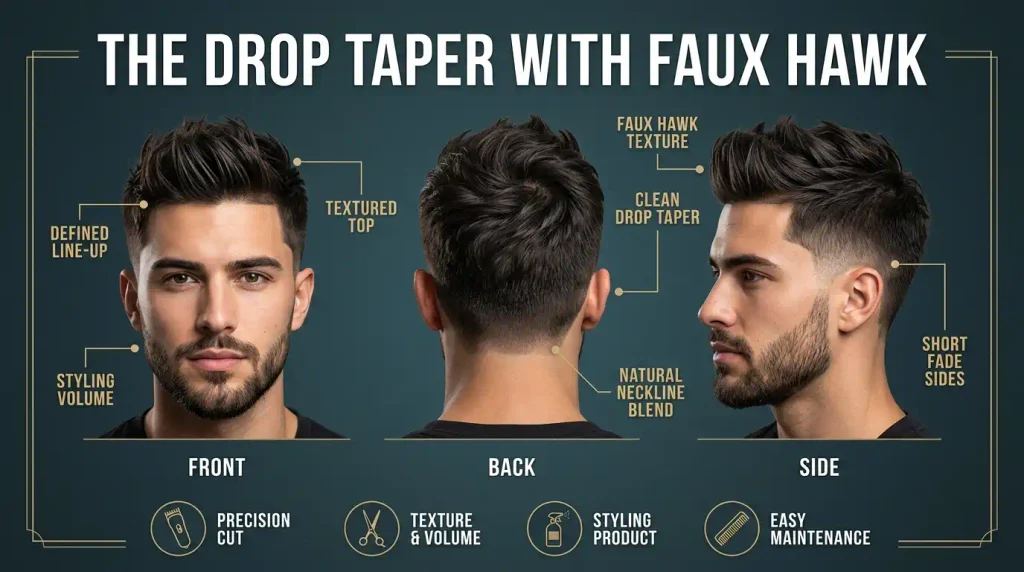
17. Drop Taper with Faux Hawk
A faux hawk creates a raised strip through the center of the top while keeping the sides shorter. The drop taper gives that shape a curved foundation and prevents the sides from looking too boxy. Thick, wavy, and curly hair can all support the style. Keep the center longer than the surrounding hair and use a firm but workable product for definition.
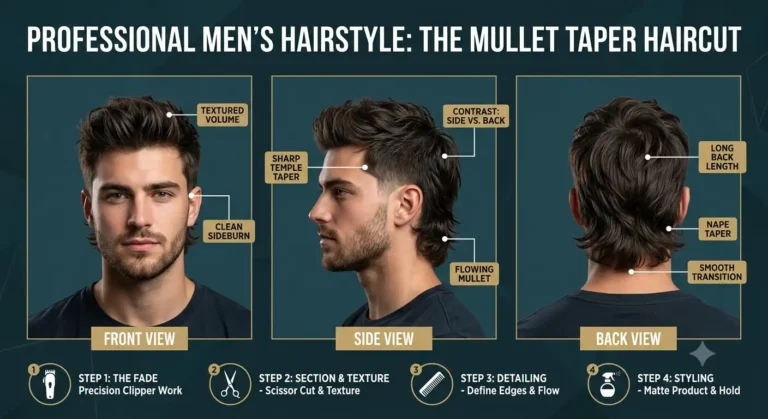
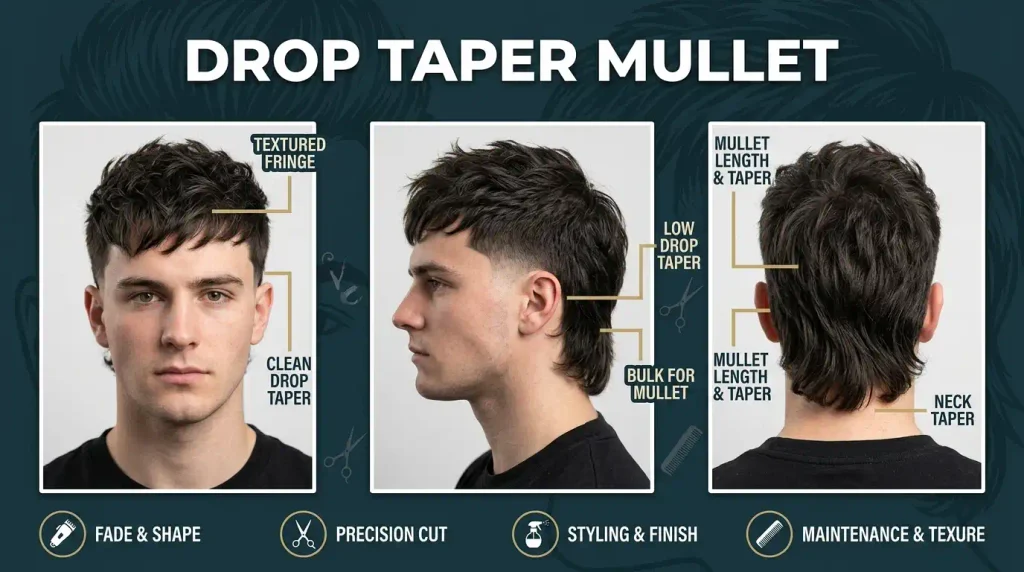
18. Drop Taper Mullet
The mullet keeps extra length at the back while the drop taper cleans the temples and sides. This makes the transition more controlled than a completely loose mullet. Wavy, curly, and straight hair can all work, depending on how much length you want behind the neck. Tell your barber exactly how much back length you want to keep because the result depends heavily on that detail.
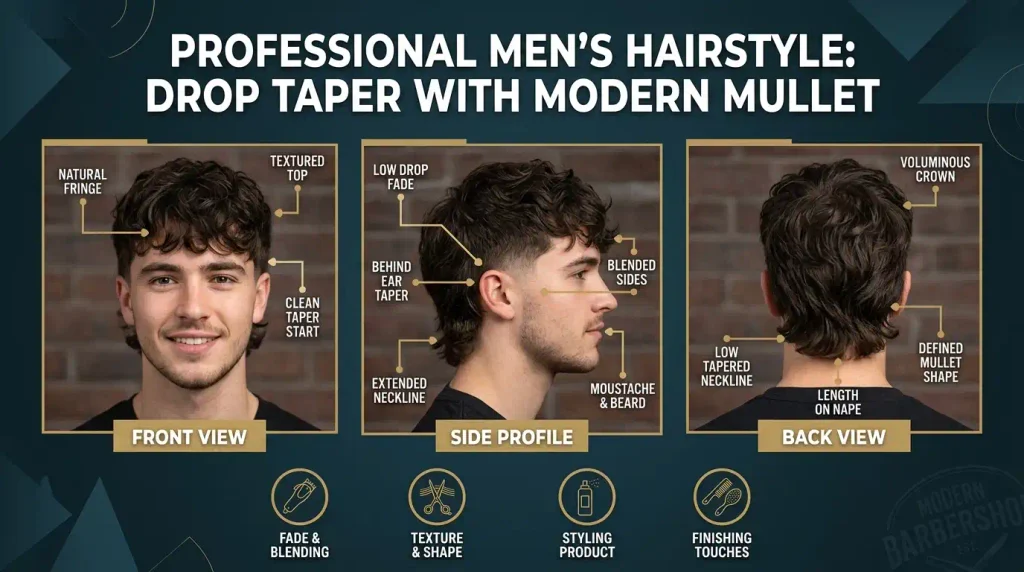
19. Drop Taper with Modern Mullet
A modern mullet usually uses a softer transition and more texture than a traditional version. The top can remain medium length while the back has visible flow. The curved taper helps shape the sides without removing the identity of the mullet. Wavy or curly hair gives this combination natural movement. Use a lightweight styling cream if you want the back to look soft rather than stiff.
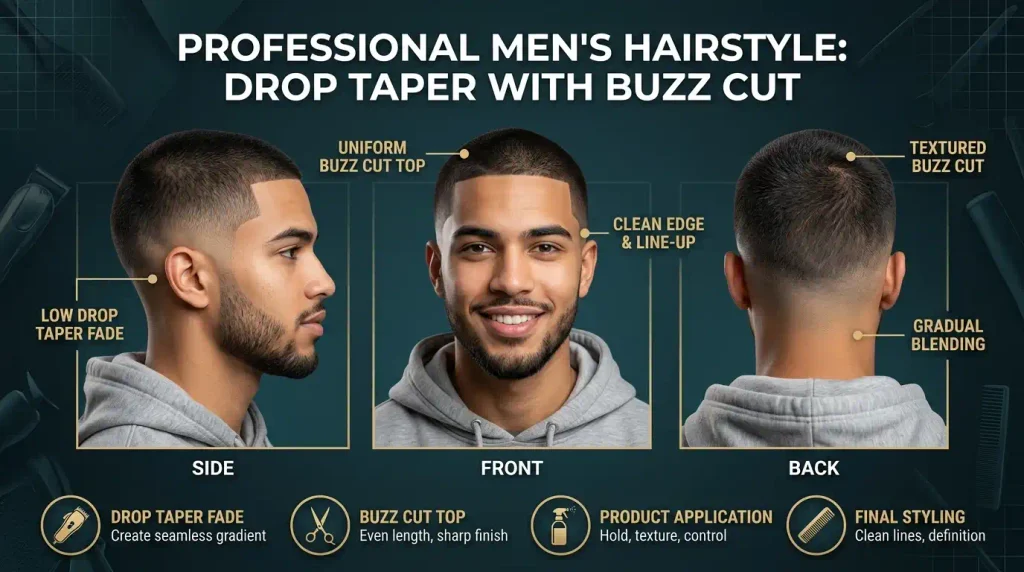
20. Drop Taper with Buzz Cut
A buzz cut makes the taper itself more visible because there is little length on top to distract from the side profile. This is a practical choice for men who want minimal styling. The drop shape gives a standard short cut more contour. It can work across many face shapes, but the barber should check the head shape and crown before choosing the exact length.
21. Drop Taper Crew Cut
The crew cut keeps the top short but gives slightly more length and shape than a buzz cut. That extra length allows the front to be brushed up or toward the side. The drop taper cleans the lower edges while preserving a classic silhouette. It is a practical choice for school, work, sports, and everyday wear. Matte paste can add light texture if needed.
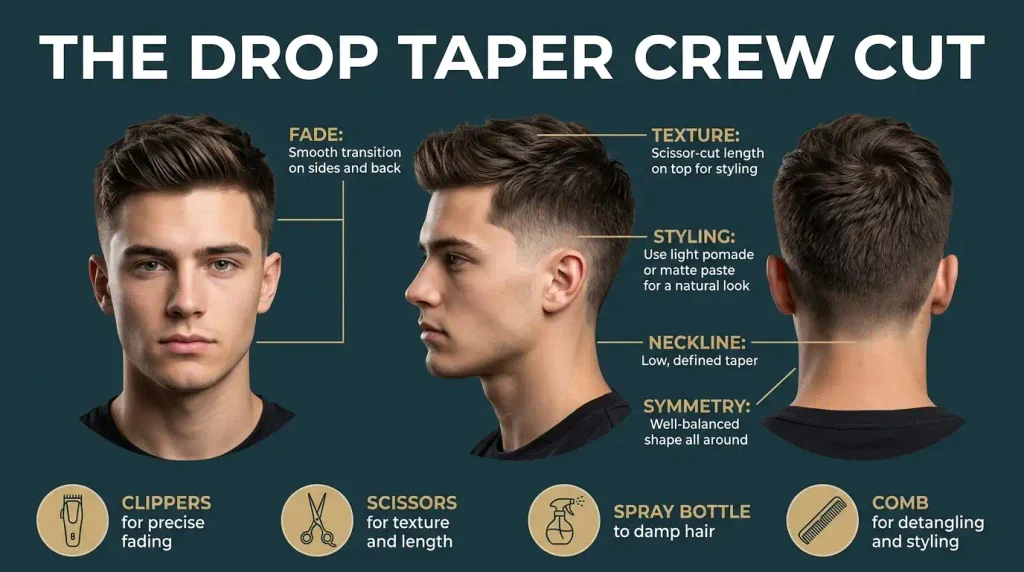
22. Drop Taper with Beard
Connecting the haircut with a beard creates a stronger frame around the face. The taper can transition into the sideburn area while the beard remains fuller below. This combination works particularly well when the beard and haircut have similar levels of neatness. Ask your barber to blend the sideburn carefully instead of creating a sudden change between scalp hair and facial hair.
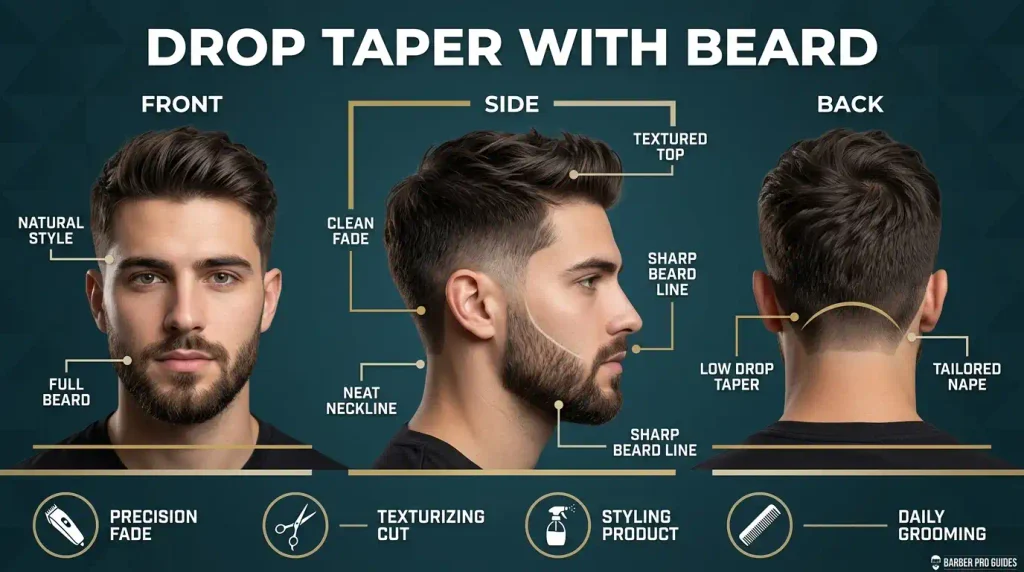
23. Drop Taper with Line Up
A sharp lineup makes the temples and forehead look more defined. When paired with a curved taper, the result combines straight edge work at the front with a rounded shape toward the back. This can work well with curly, coily, and wavy hair. If your natural hairline is uneven, ask for a conservative lineup rather than forcing a new shape.
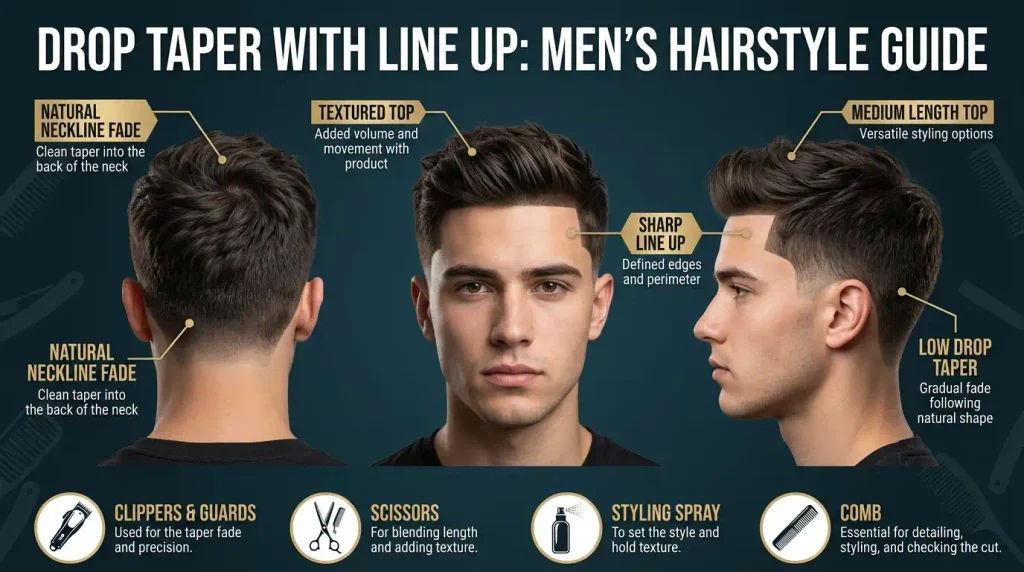
24. Drop Taper with Design
A small design can add personality without changing the whole haircut. A simple line behind the ear or near the taper can follow the curved shape of the cut. This option suits people who want a creative detail that can later grow out. Keep the design simple if you need a professional appearance. Bring a reference photo so your barber can match the placement.
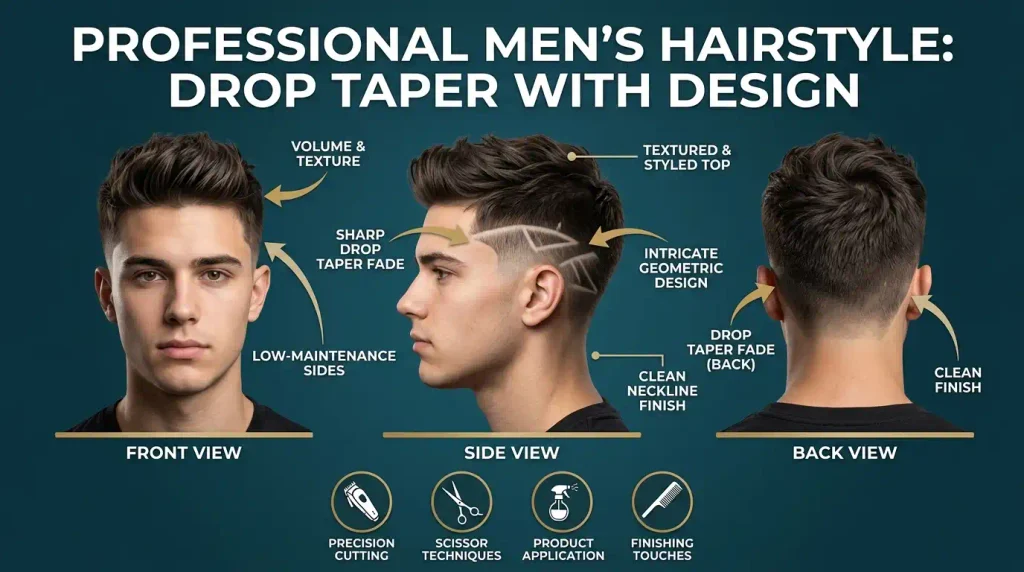
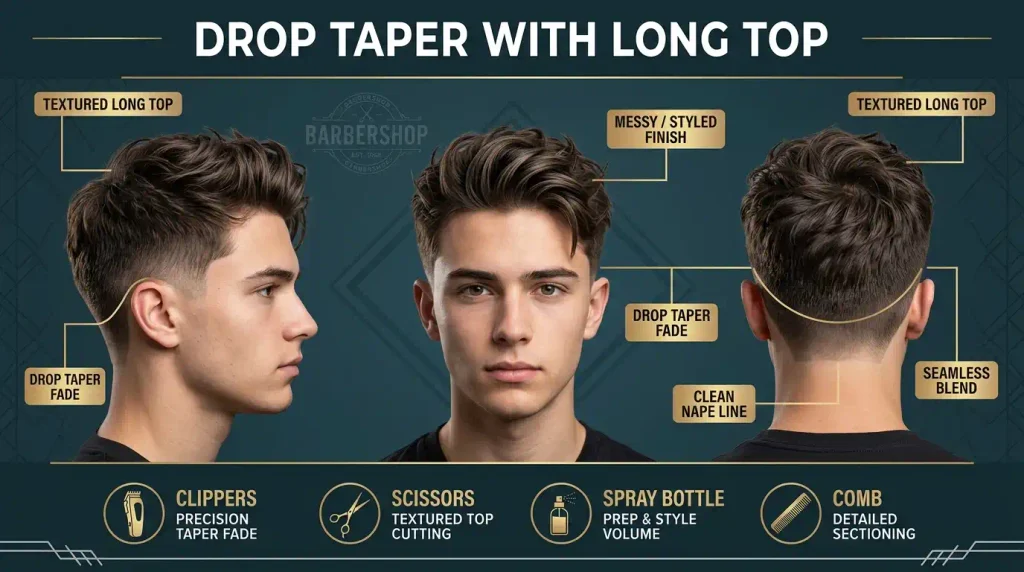
25. Drop Taper with Long Top
Keeping the top long creates a stronger contrast with the tapered sides. You can brush it backward, part it, leave it loose, or create a textured finish. Straight and wavy hair offer many styling choices, while curly hair can create a fuller silhouette. The barber should preserve enough length on top to support your preferred styling direction instead of cutting it shorter by default.
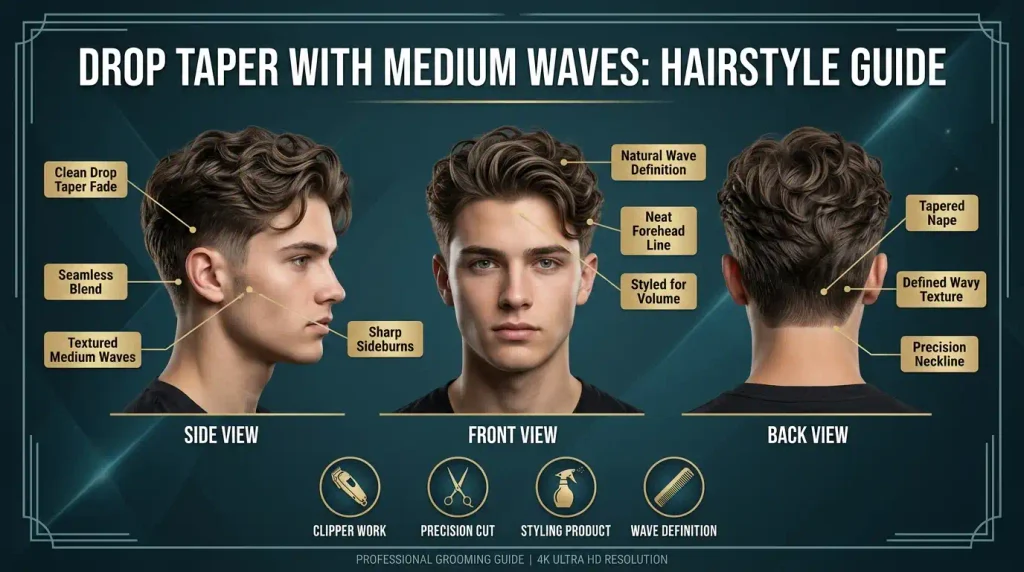
26. Drop Taper with Medium Waves
Medium-length waves give the haircut movement without requiring a very long top. The curved taper removes visual bulk around the ears and back while the waves remain the main focus. This works well for naturally wavy hair. A lightweight cream can enhance the pattern while keeping the finish soft. Avoid brushing the hair dry if doing so causes unwanted frizz.
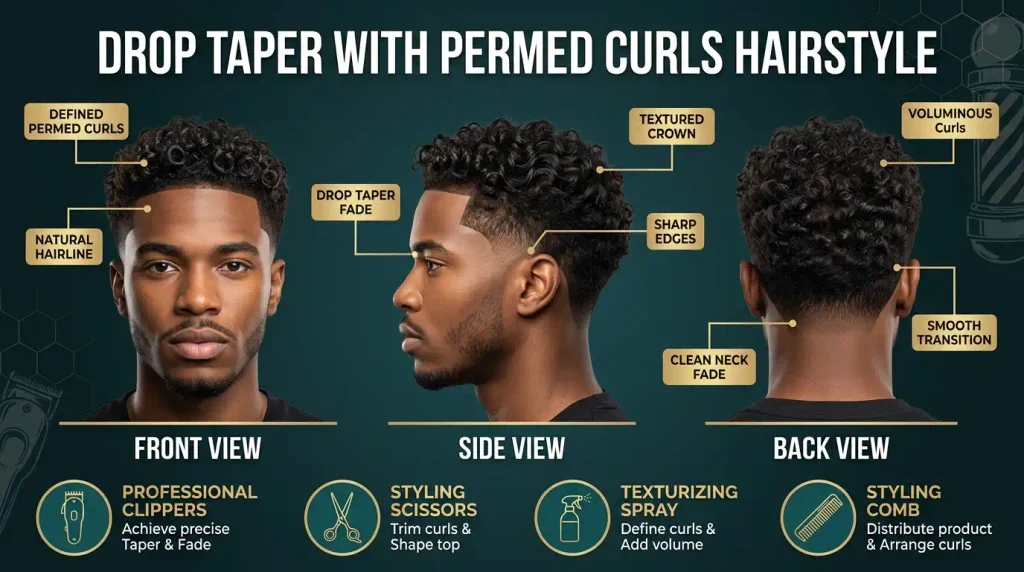
27. Drop Taper with Permed Curls
A perm can create curls or waves on hair that does not naturally have them. The taper keeps the sides controlled while the top carries the new texture. Because the top needs enough length for the curl pattern, the barber should coordinate the haircut with the desired curl size. Use products made for textured hair and avoid excessive heat when styling.
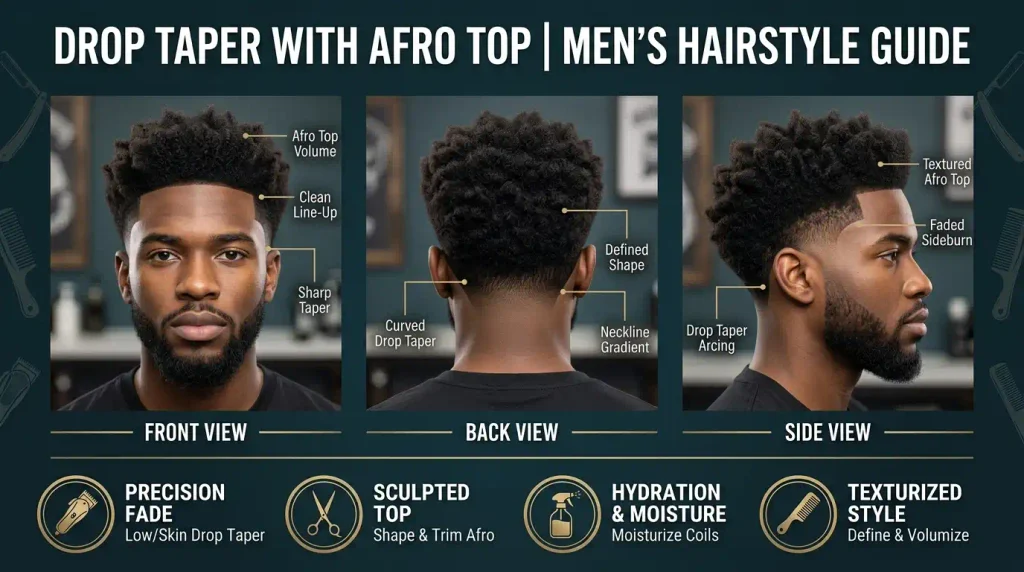
28. Drop Taper with Afro Top
A fuller afro top can be shaped above a clean curved taper. The key is to preserve the natural texture while controlling the area around the ears and neckline. This gives the haircut a strong silhouette without flattening the top. Coily and kinky textures can carry this look well. Moisture and gentle handling are important, especially when the hair is prone to dryness or breakage.
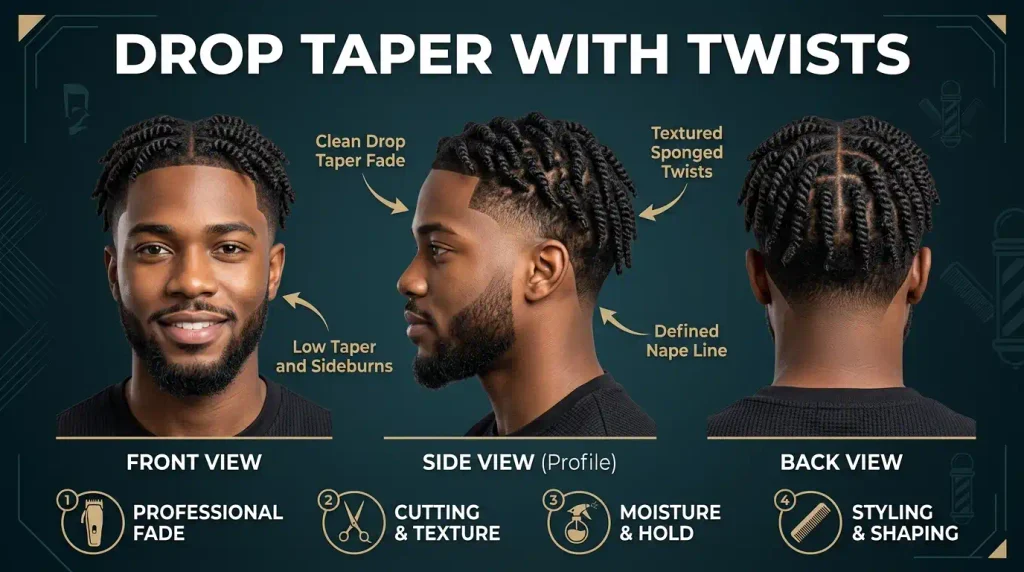
29. Drop Taper with Twists
Short or medium twists can sit above a clean drop taper for a strong contrast between texture and neat edges. The taper keeps the lower part of the haircut controlled while the twists create movement on top. The exact taper height can be adjusted based on how much side coverage you want. Keep the scalp and hair moisturized and avoid pulling the twists too tightly.
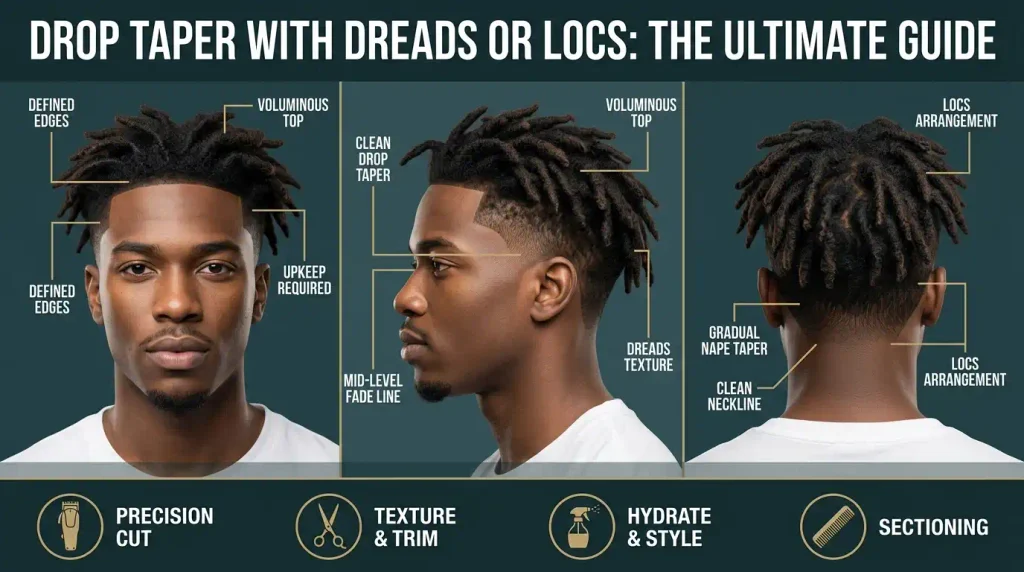
30. Drop Taper with Dreads or Locs
Locs can be combined with a tapered perimeter to create a clean outline while preserving length. The drop shape is especially useful when you want the sides and back to follow the head rather than creating a flat line. Longer locs can remain the main feature. Your barber should coordinate the taper with the current loc length and the way the locs fall around the neckline.
31. Drop Taper for Straight Hair
Straight hair makes the taper outline easy to see, so the blend needs to be smooth and balanced. A textured crop, side part, quiff, or slick-back top can all work. Fine straight hair may look better with a lighter taper and controlled top volume, while thick straight hair can support more texture. Choose the top based on how much daily styling you are willing to do.
32. Drop Taper for Thick Hair
Thick hair gives you many styling options, but it can also build too much weight around the sides. A drop taper helps reduce that weight near the ears and neckline while keeping the top full. Textured crops, quiffs, messy tops, and longer styles are all possible. Ask your barber whether internal weight removal is needed before simply asking for shorter sides.
33. Drop Taper for Fine Hair
Fine hair benefits from a cut that creates shape without removing too much density. Keeping the top moderately full can make the hair appear stronger, while a subtle taper cleans the edges. A textured crop or short side-swept style can work well. Avoid excessive thinning on the top. A lightweight styling powder or matte product may add body without weighing the hair down.
34. Drop Taper for Receding Hairlines
A taper can be adapted around a changing hairline, but it should not be used to hide every area by simply cutting everything shorter. A textured crop, side sweep, or slightly forward fringe may offer better coverage. Keep the front natural rather than creating an overly sharp artificial line. Tell your barber which areas you want to soften so the cut can be designed around your actual growth pattern.
35. Drop Taper for Round Faces
For a round face, the top can be given some height while the sides stay controlled. A quiff, textured top, or short faux hawk can create a more vertical silhouette. The drop itself adds a curved profile around the back. Avoid excessive width at the sides if your goal is a longer-looking face. Your barber can adjust the top and taper together rather than treating them as separate parts.
36. Drop Taper for Square Faces
Square faces already have strong angles, so a curved taper can add a softer element around the sides and back. You can keep the top textured or neatly styled depending on your preference. A short crop works for a low-maintenance finish, while a side part gives a more classic appearance. The main goal is to keep the taper blended instead of creating harsh blocks of short hair.
37. Drop Taper for Oval Faces
Oval faces can support many top styles, making this a good shape for experimenting with the haircut. You can choose a crop, quiff, side part, curls, waves, or longer top without needing to radically change the silhouette. The drop height becomes more about personal style than correction. If you want a conservative look, keep the taper low and the transition soft.
38. Drop Taper for Diamond Faces
A diamond face often has more width around the cheekbones and a narrower forehead and jaw. Keeping some controlled volume on top can balance the overall shape. A textured fringe or side-swept top can work particularly well. The taper should not remove so much around the temples that the upper face looks overly narrow. Ask for a gradual transition around the sides.
39. Drop Taper with Hard Part
A hard part creates a visible shaved line that separates the top from the side. Combined with a curved taper, it gives the haircut a sharper, more deliberate appearance. Straight and thick hair are easy to direct around the part. This style needs regular edge work because the part becomes less defined as it grows. If you want a softer grow-out, choose a natural side part instead.
40. Drop Taper with Clean Business Style
This version keeps the haircut polished enough for professional settings. The taper remains low or moderate, while the top is styled with a side part, comb-over, or neat brush-back. Avoid excessive designs or dramatic contrast if workplace rules are strict. A light cream or pomade can keep flyaways controlled. The goal is a clean outline with a restrained top rather than a high-fashion finish.
41. Drop Taper for Kids and Teens
A softer drop taper can be a practical choice for younger clients who want a modern haircut without an extreme fade. A short crop, textured top, curls, or simple fringe can sit above the taper. Keeping the blend moderate also gives parents more flexibility between appointments. The barber should work with the child’s natural hair pattern and avoid creating a hairline that looks overly sharp.
42. High-Contrast Drop Taper
A higher taper creates a stronger difference between the short sides and longer top. This is useful when you want the curved drop to become a major part of the haircut rather than a subtle detail. Thick or textured hair can carry the contrast well. Pair it with a quiff, curls, crop, or longer top. Ask your barber to show you where the transition will sit before cutting.
43. Natural Drop Taper with Soft Finish
This is the understated option for men who want the shape without an obvious fade effect. The taper stays soft around the temples, ears, and neckline, while the drop follows the head naturally. It works across straight, wavy, curly, and coily hair. Minimal product is needed. This version also makes sense if you want a haircut that remains presentable as the edges begin to grow out.
Drop Taper vs. Other Taper and Fade Options
The main difference is not only how short the sides become. The height of the taper, the curve behind the ear, and the amount of weight left on the sides all change the final shape. Use the table below as a starting point, then let your barber adjust the blend to your hair and head shape.
| Style | Typical Height | Common Guard Range* | Face Shapes | Styling Difference |
|---|---|---|---|---|
| Low Taper | Low | #0–#3 | Most shapes | Subtle and clean |
| Low Drop Taper | Low with curved drop | #0–#3 | Oval, round, square | Soft curve behind ear |
| Mid Taper Fade | Medium | #0–#3 | Oval, square, diamond | More visible side contrast |
| Mid Drop Taper | Medium with curved drop | #0–#3 | Most shapes | Balanced curve and contrast |
| High Taper Fade | High | #0–#2 | Oval, diamond | Stronger top-to-side contrast |
| Drop Fade | Low, mid, or high | Varies | Most shapes | More pronounced fade effect |
| Skin Fade | Low, mid, or high | Skin/zero at base | Depends on head shape | Very strong contrast |
| Classic Taper | Low to moderate | #2–#4+ | Most shapes | More weight retained |
*Guard numbers are general barbering references, not fixed specifications. The exact blend depends on hair density, texture, desired finish, and your barber’s technique.
Why This Style Works and Who It Suits
The appeal comes from the combination of a gradual taper and a curved shape. Instead of making the sides look like one straight band around the head, the drop follows the contour behind the ears.
That makes the haircut easy to customize. You can keep more weight for a conservative finish or create stronger contrast for a more noticeable look. The top can also change completely without changing the basic taper.
For Straight Hair
Straight hair shows the taper clearly. Crops, side parts, slick backs, and quiffs are easy options.
For Wavy Hair
Waves add natural movement. A medium or longer top can create a relaxed finish without heavy styling.
For Curly and Coily Hair
The taper cleans the perimeter while allowing natural texture to remain the focus. Avoid removing more top density than needed.
For Different Lifestyles
A low version can suit conservative workplaces, while a higher or more textured version can work for casual settings. Your daily styling routine should guide the top length.
How to Style It
- Start with clean, damp hair. Remove excess water with a towel without rough rubbing.
- Choose the direction. Decide whether you want the top forward, upward, backward, or to the side.
- Add the right product. Use a matte paste or clay for texture, cream for a softer finish, or pomade for more control.
- Use a blow dryer when needed. Direct the airflow in the same direction as your desired style.
- Shape with your fingers or a comb. Fingers create a relaxed finish, while a comb gives more structure.
- Check the sides and back. Make sure the top does not become wider than the taper unless that is the intended look.
How to Ask Your Barber for This Cut
Avoid saying only, “Give me a drop taper.” Different barbers may interpret the height and amount of contrast differently. Explain where you want the taper to start, how much length you want to keep, and how you want the top styled.
Basic Barber Request
“I want a drop taper with a gradual blend around the temples and neckline. Let the taper drop behind my ears instead of keeping the line straight across the back. Keep the top at the length shown in my reference photo and blend the sides naturally.”
Low Variation
“Keep the drop taper low and subtle. I want most of the side weight left in place, with the taper focused around the ears and neckline.”
Mid Variation
“Give me a mid drop taper with a clearer transition on the sides, but keep the curved drop behind the ears. Leave enough top length for my usual styling.”
Curly or Coily Variation
“Keep my natural curl or coil pattern on top. Clean the temples and neckline with a drop taper, but do not take too much density away from the sides or top.”
Professional Variation
“I want a soft, work-friendly drop taper. Keep the taper low, avoid an extreme skin finish, and leave enough length on top for a neat side part or natural brush-back.”
Step-by-Step Tutorial of the Drop Taper
- Assess the head shape. Look at the temples, ears, occipital area, crown, and neckline before deciding the taper height.
- Set the top length. The top should be established before the sides are taken too short.
- Mark the taper area. The barber determines where the blend begins around the temples and neckline.
- Create the drop shape. The blend is allowed to fall lower behind the ears rather than following a flat horizontal path.
- Blend progressively. Different clipper guards or lever positions are used to remove visible steps between lengths.
- Refine the edges. The temples and neckline are cleaned while keeping the natural shape of the hairline.
- Connect the top. The sides are blended into the top so there is no obvious shelf of weight.
- Texture the top. Scissor work or texturizing can be used when the chosen style needs movement.
- Style and inspect. The finished haircut should be checked from the front, side, and back because the drop is a key part of the profile.
Best Styling Products for a Drop Taper
- Matte clay: Useful for thick, textured, messy, and short styles that need firm control without a glossy finish.
- Matte paste: A good middle option when you want texture and flexible control.
- Styling cream: Better for soft, natural looks, waves, curls, and longer tops.
- Pomade: Useful for side parts, comb overs, slick backs, and polished styles.
- Curl cream: Helps define curls while keeping the natural texture visible.
- Light styling powder: Can add grip and volume to suitable short or fine hairstyles.
- Heat protectant: Worth using when regular blow-drying or other heat styling is part of your routine.
Common Mistakes to Avoid with a Drop Taper
- Choosing the wrong height: A high taper may be much more noticeable than you expected. Decide whether you want subtle or strong contrast first.
- Ignoring the drop shape: The curve behind the ear is part of the identity of the haircut. Make sure your barber understands where you want it to fall.
- Taking too much weight from the sides: This can make the top look disconnected from the lower haircut.
- Over-sharpening the hairline: A very artificial lineup may look less natural as it grows out.
- Using too much product: Heavy product can flatten textured hair and make fine hair appear thinner.
- Copying a photo without considering hair type: The same reference can look different on straight, wavy, curly, and coily hair.
- Forgetting the back view: A haircut can look good from the front but have an awkward transition at the occipital area.
- Removing too much curl or wave: Texture needs enough length and weight to keep its natural pattern.
Best Hair Types and Face Shapes
| Hair Type | Good Top Options | Key Tip |
|---|---|---|
| Straight | Crop, quiff, side part, slick back | Use texture to avoid a flat top |
| Wavy | Messy top, medium waves, quiff | Work with the natural wave direction |
| Curly | Curly top, crop, longer curls | Preserve curl density |
| Coily | Afro, coils, twists, short textured top | Protect moisture and natural shape |
| Fine | Short crop, side sweep, textured top | Avoid excessive thinning |
| Thick | Quiff, messy top, long top, faux hawk | Control unwanted side weight |
Face Shape Guide
- Oval: Most top styles can work, so focus on personal preference.
- Round: Moderate top height can add a more vertical appearance.
- Square: The curved taper can soften an otherwise angular outline.
- Diamond: Keep enough controlled volume near the upper sides and top.
- Oblong: Avoid excessive height if you want to keep the face visually balanced.
Maintenance and Upkeep
The cleaner you want the taper to look, the more often the edges need attention. A subtle version can usually tolerate more growth than a very sharp, high-contrast version.
Many men refresh a tapered haircut somewhere around every 2–4 weeks, depending on growth speed and how crisp they want the neckline and temples to remain. A longer natural finish can often be left for longer.
At home, wash according to your hair type rather than following a fixed daily schedule. Use conditioner when your hair needs extra moisture, especially with curls and coils. Keep the neckline and sideburn area clean, but avoid trying to recreate the barber’s blend with home clippers unless you know exactly what you are doing.
Frequently Asked Questions
What is a drop taper?
It is a taper haircut where the blend follows a curved path that drops lower behind the ears. The top can be styled in many ways, so the haircut can range from conservative to highly textured.
Is a drop taper the same as a drop fade?
Not always. “Drop” describes the curved shape, while “taper” describes the gradual reduction around areas such as the temples and neckline. A drop taper can therefore be softer than a skin-focused drop fade.
What is the difference between a low drop taper and a mid drop taper?
A low version keeps the taper closer to the ears and neckline, creating a more subtle result. A mid version moves the transition higher and creates more visible contrast on the sides.
Does a drop taper work with curly hair?
Yes. Curly hair can keep its natural volume on top while the taper cleans the perimeter. The barber should avoid removing unnecessary density from the curl pattern.
Is Style 18, the drop taper mullet, good for thick hair?
Yes. Thick hair can support the extra length needed for a mullet. The sides can be controlled with the taper while the back keeps its longer shape. The amount of length should match your preferred mullet silhouette.
Can Style 6, the drop taper with 360 waves, work with a low taper?
Yes. A low taper can keep the sides more conservative while allowing the wave pattern to remain the main feature. Tell your barber how much side weight you want to keep.
How often should I maintain this haircut?
Many people refresh the cut every 2–4 weeks, but the right schedule depends on how quickly your hair grows and how sharp you want the taper to remain.
What should I show my barber?
A clear reference photo from the front, side, and back is useful. Also explain the taper height, top length, fringe or part, and whether you want a natural or sharp hairline.
Conclusion
A drop taper gives you a useful balance between a clean perimeter and a more natural curved shape around the back of the head. The same foundation can support crops, curls, waves, quiffs, mullets, side parts, long tops, and low-maintenance cuts.
The best version depends on your hair texture, face shape, preferred top length, and how much maintenance you want. Before your next appointment, choose one of the 43 ideas above and show your barber a clear reference photo along with the variation you want.
Related reading: Explore our other men’s taper haircut guides for more haircut ideas, styling advice, and barber tips.
Name: Ryan Cole
Role: Lead Grooming Editor, TaperHaircutGuide.com
Bio angle: Men’s grooming/style content researcher — 4+ years covering barbering trends, hairstyling terminology, and men’s style content for US audience. Cross-checks every guide with practicing barbers before publishing.