The Ultimate Low Taper Fade for Curly Hair Lookbook (40 Ideas)

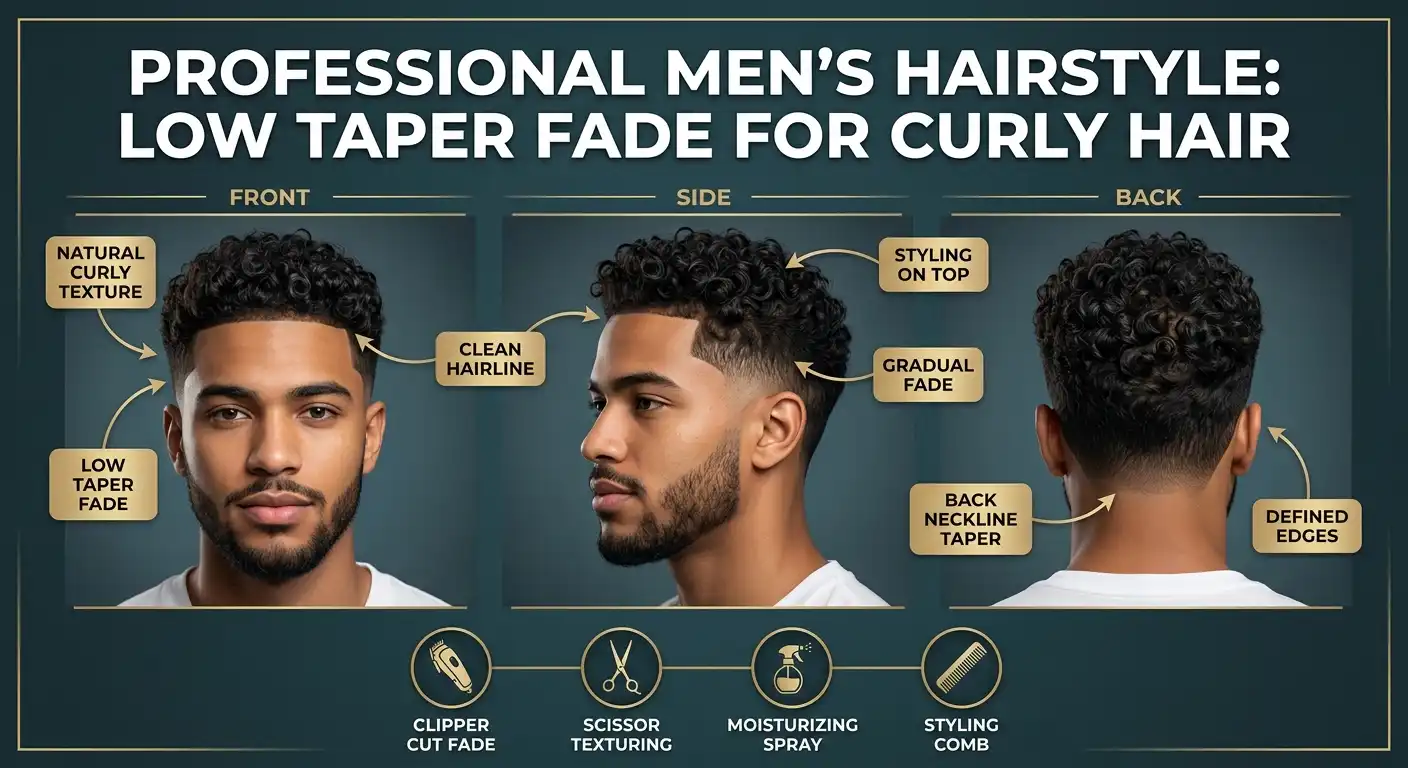
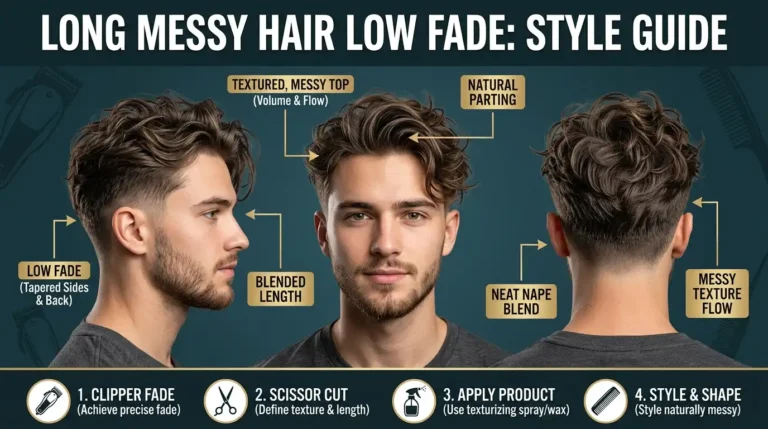
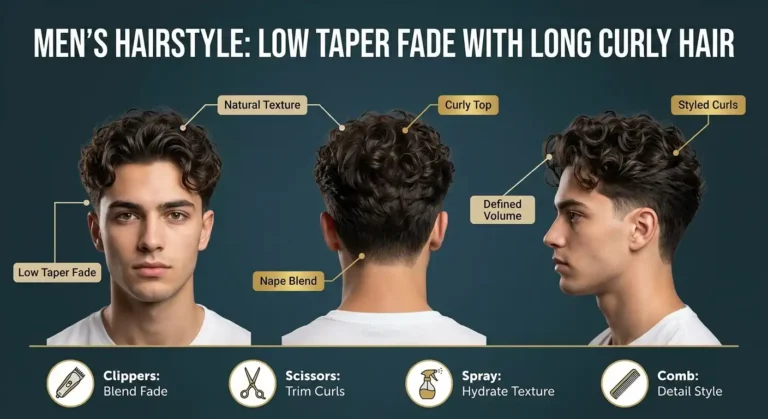
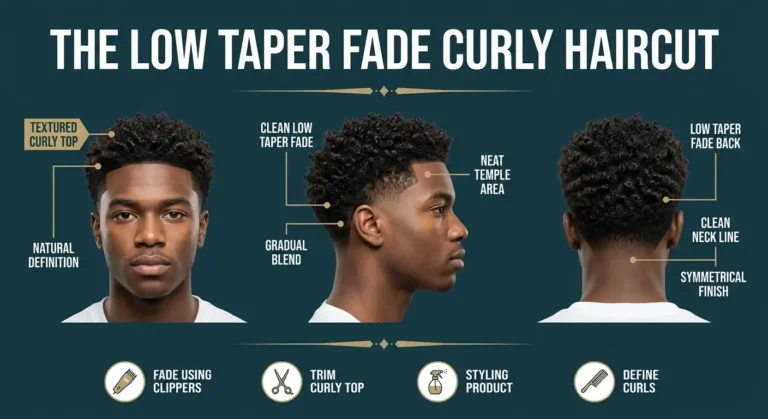
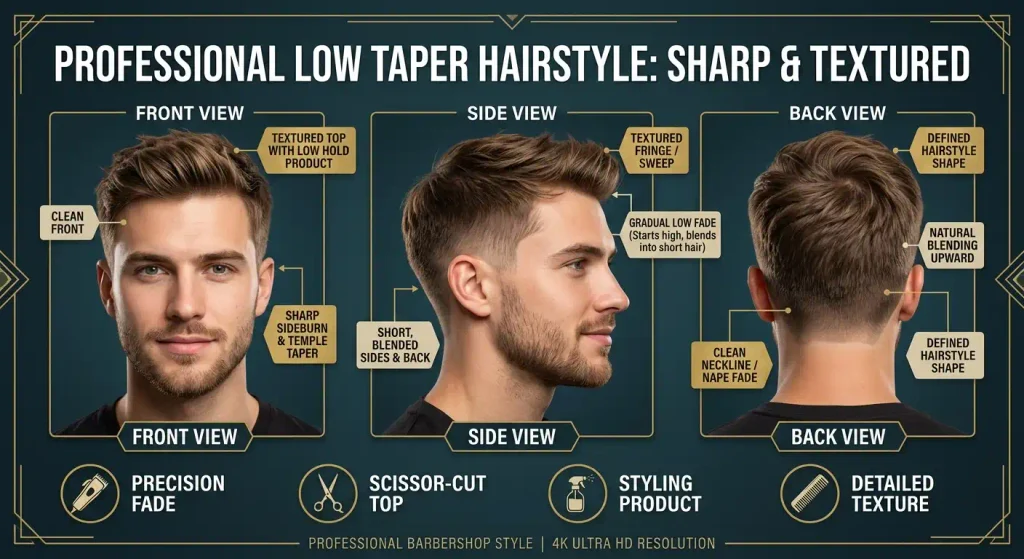
A low taper fade for curly hair is a haircut where the sides and back shrink slowly from the crown down to the skin near the ears and neckline, while the curls on top stay long enough to move and show texture. It works on almost every curl pattern, from loose waves to tight coils, and it keeps the head clean without hiding your natural shape.
Below you’ll find 40 real, distinct takes on this cut, sorted by curl type, face shape, styling method, and lifestyle — plus the exact words to use in the chair, a styling walkthrough, product picks, and answers to the questions people search most.
40 Low Taper Fade Ideas for Curly Hair
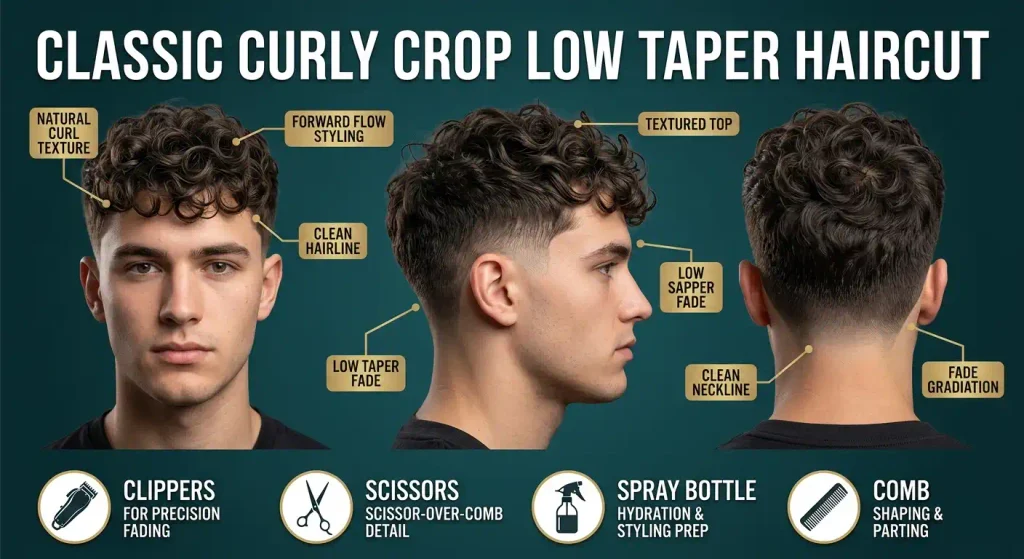
1. Classic Curly Crop
This is the everyday version most barbers cut first. The top sits around one to two inches, loose enough to bounce but short enough to skip heavy product. It suits 2B to 3A curls and rounder or oval faces best. Style it by scrunching a light curl cream into damp hair and letting it air-dry.
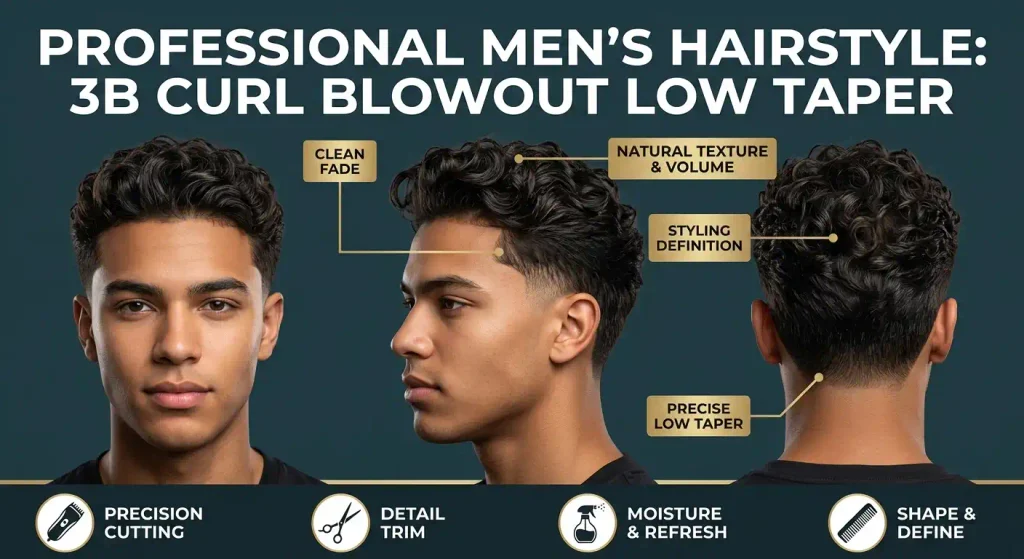
2. Springy 3B Blowout
Built for tighter 3B coils, this version uses a diffuser to lift the roots and add real height on top. The taper stays low and tight so the volume up top reads as intentional, not messy. Great for oval or long faces that can handle extra crown height.
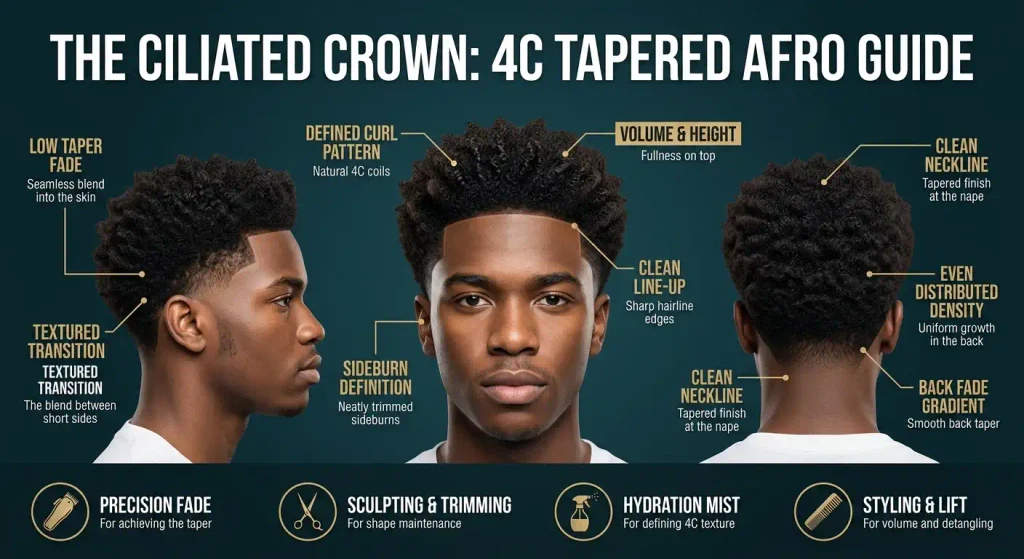
3. 4C Tapered Afro
Here the crown keeps a rounded, natural afro shape while the taper trims the perimeter into a clean line. It works with 4A to 4C texture and suits square or round faces that want a soft frame around the jaw. A wide-tooth pick keeps the shape even.
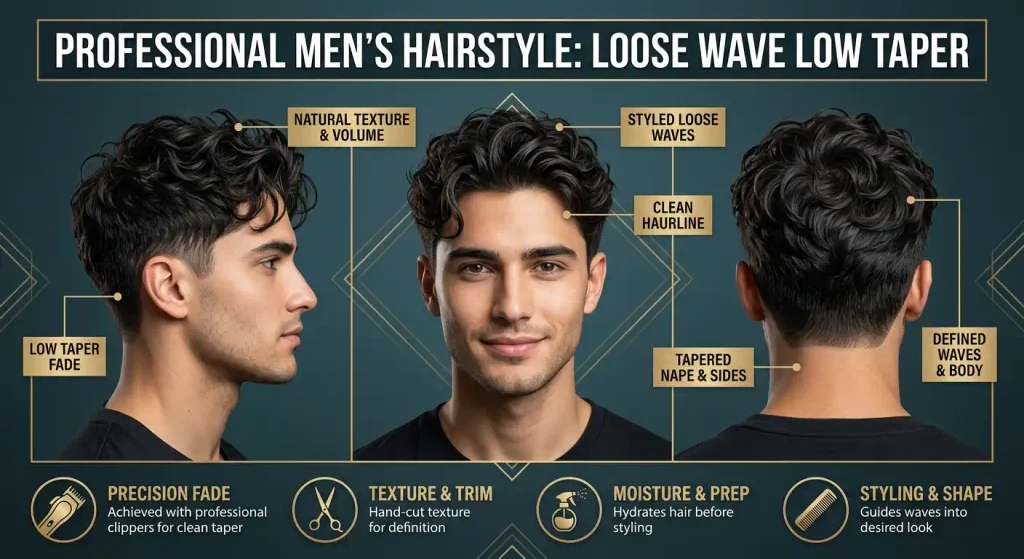
4. Loose Wave Low Taper
For 2A to 2C waves, this cut leans on natural shine instead of curl clumping. The top is left slightly longer at the front so the wave pattern can fall forward. It’s a low-effort option for guys who don’t want to fight their texture every morning.
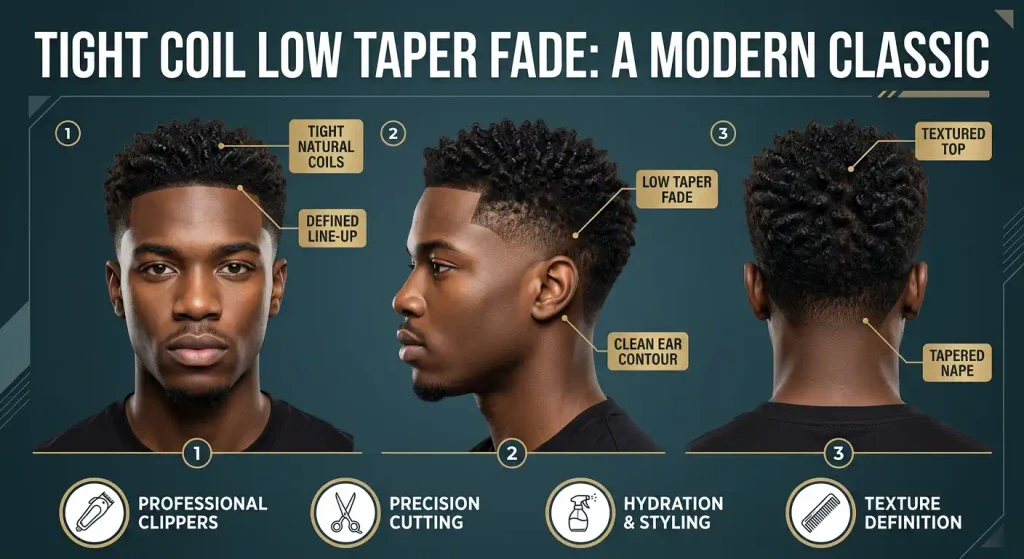
5. Tight Coil Low Taper
Tight, springy coils (3C to 4A) get trimmed into a rounded dome shape that keeps its form for days. The taper drops fast behind the ear, which makes the coil ball on top look bigger by contrast. Works especially well on square jawlines.
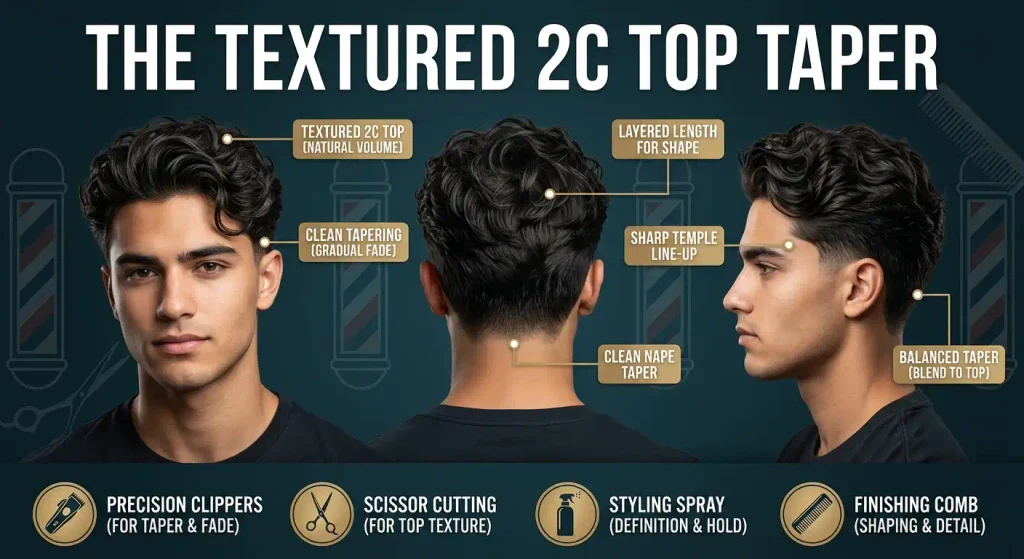
6. Textured 2C Top
This one keeps the crown short — under an inch — so the natural texture reads as a matte, piece-y finish rather than full curls. It’s a low-maintenance pick for fine 2C hair that goes limp under heavier products.
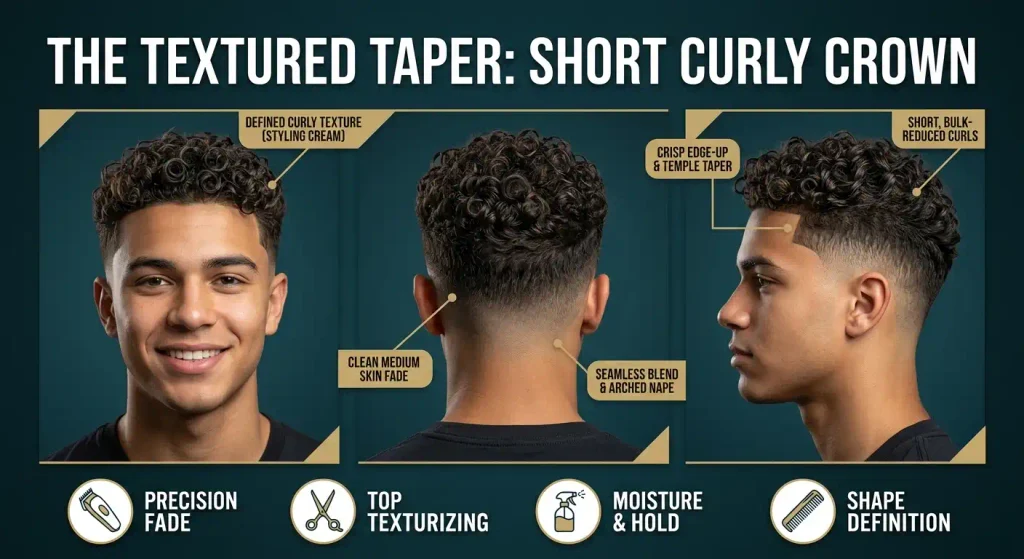
7. Short Curly Crown
For guys who want curls without much upkeep, the crown is trimmed down to a half-inch to an inch. Curls stay defined but never fall in the eyes. Pairs well with any face shape and needs almost no daily styling.
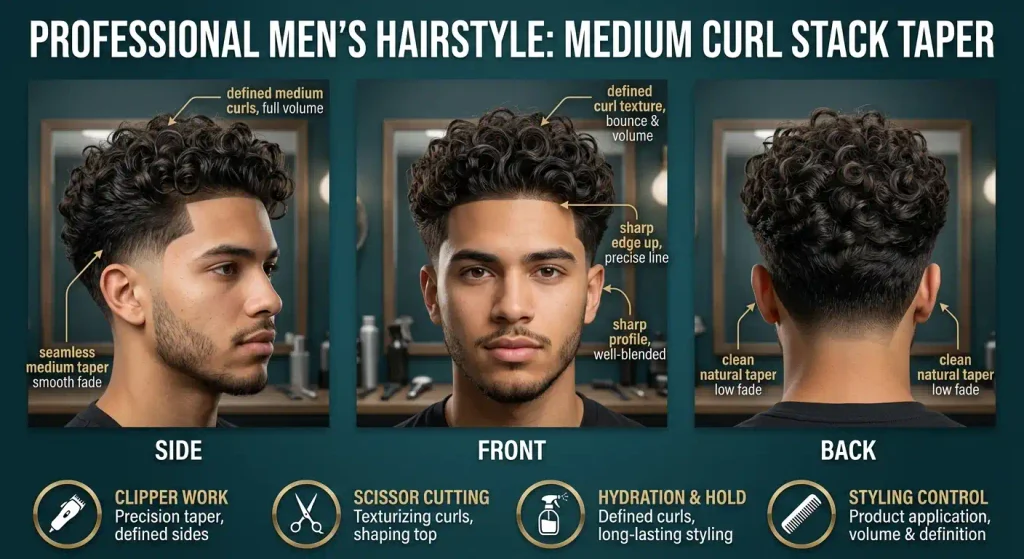
8. Medium Curl Stack
A middle-ground length, around two to three inches, that gives curls room to coil and stack on top of each other. This is the most requested length because it balances low upkeep with real curl definition.
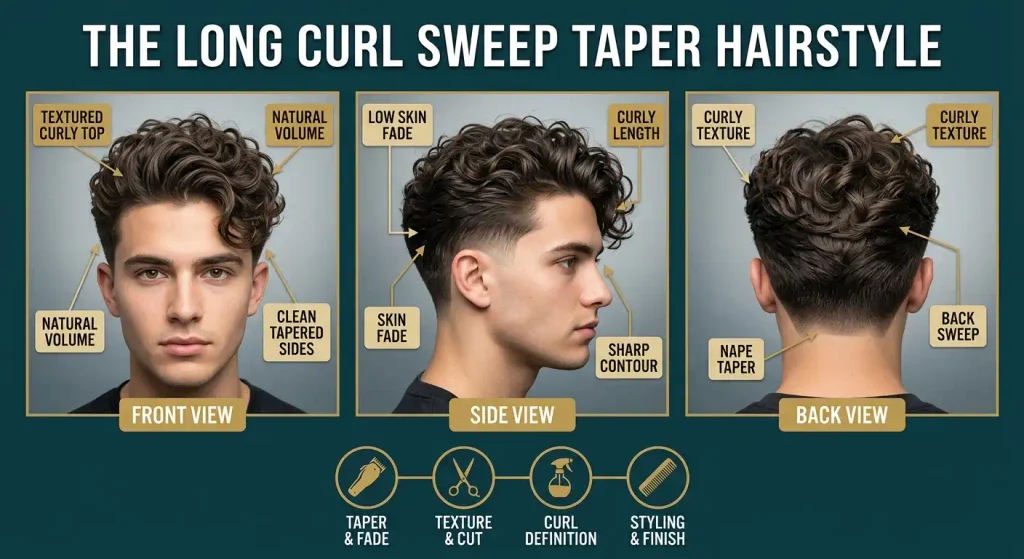
9. Long Curl Sweep
Curls are left at three-plus inches and swept back or to one side. This version needs a curl-defining gel and occasional diffusing, but it delivers the most dramatic contrast against the tapered sides. Best on oval or long face shapes.
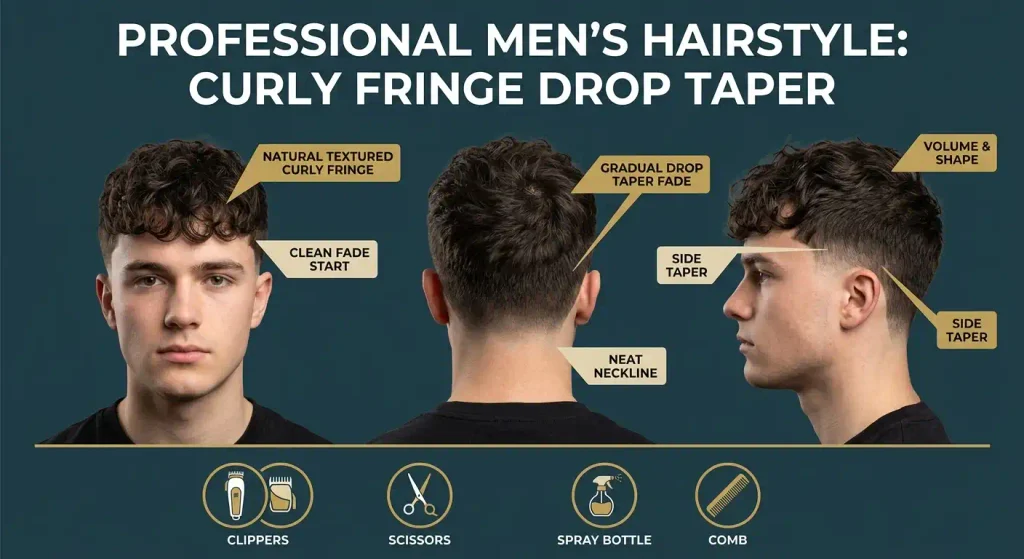
10. Curly Fringe Drop
A forward-falling section of curls sits across the forehead while the rest tapers back. The fringe is usually cut two to three inches longer than the crown so it drapes rather than stands up. Suits 2C to 3A texture best.
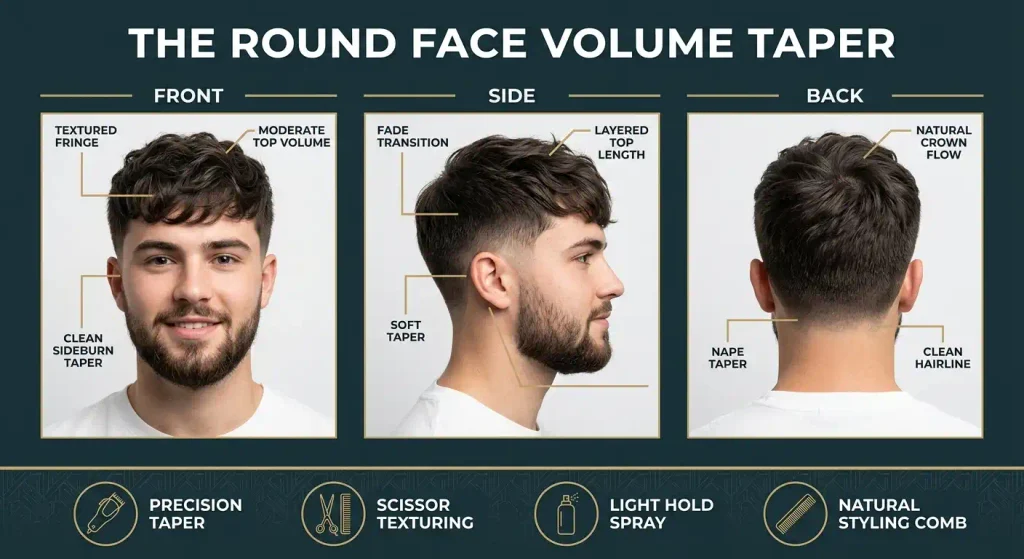
11. Round Face Volume Taper
Height is built up through the crown using a diffuser, which visually stretches a rounder face. The taper stays tight on the sides so the silhouette doesn’t add extra width. A strong pick for 3A to 3C curls.
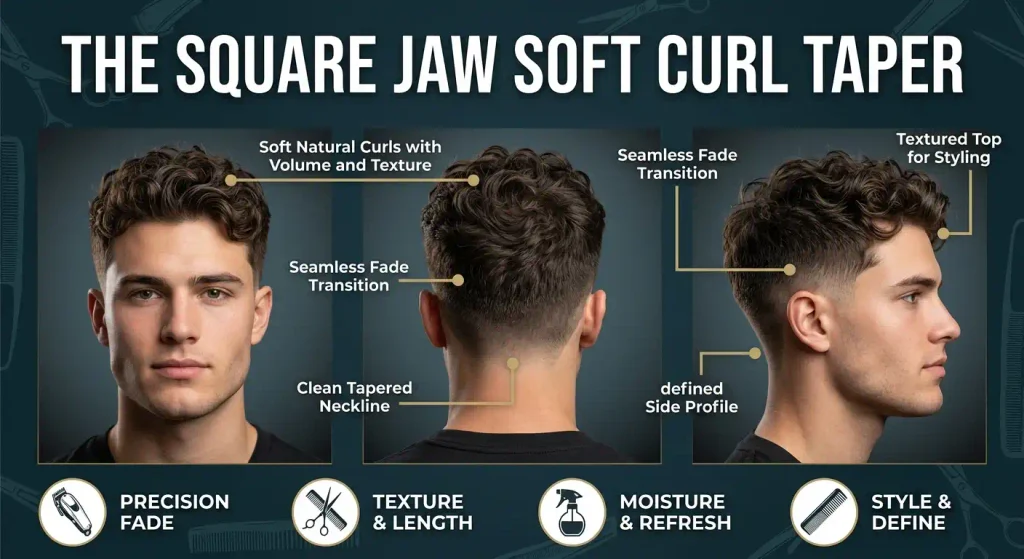
12. Square Jaw Soft Curl
Soft, loosely defined curls take the hard edge off a strong jawline. The taper is kept gradual rather than sharp so the whole look stays approachable instead of severe. Works well with 2B to 3A texture.
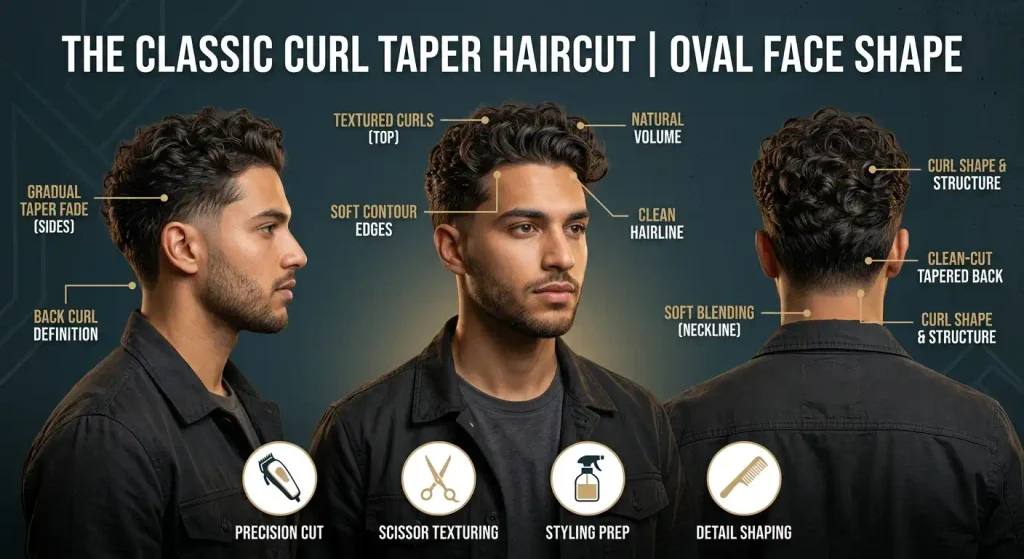
13. Oval Face Classic Curl
Oval faces can wear almost any length here, so this version sticks to a balanced medium top with a standard low taper. It’s the safest starting point if you’re not sure what to ask for yet.
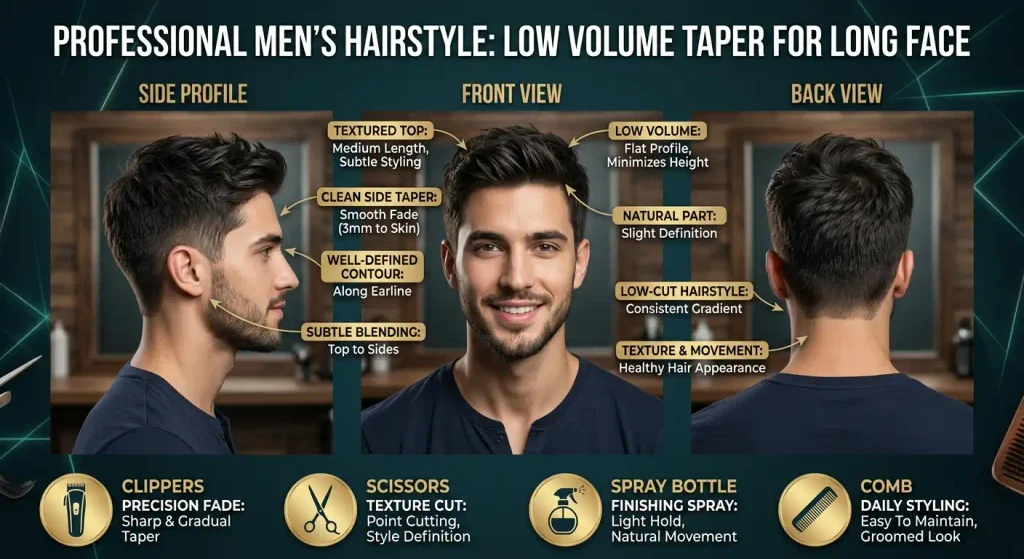
14. Long Face Low Volume Taper
Height is kept low and the top is styled wider than tall, which shortens the visual length of the face. Side-swept curls work better here than upward volume. Best suited to 2B to 3B texture.
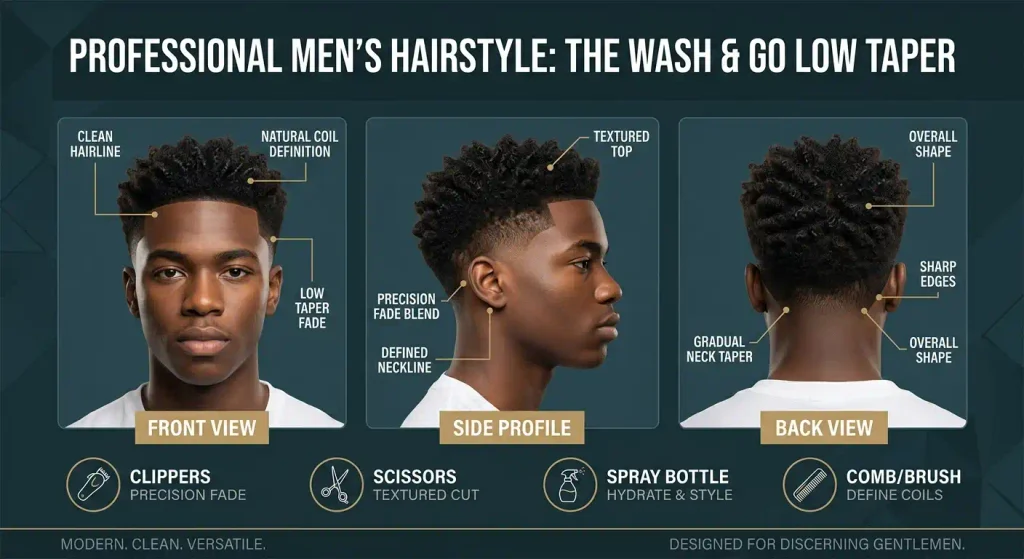
15. Wash-and-Go Taper
Cut specifically to work with a wash-and-go routine — no blow-drying, no diffusing, just curl cream and air-dry. The curls are trimmed slightly shorter than average so they hold shape without extra effort. A favorite for busy mornings.
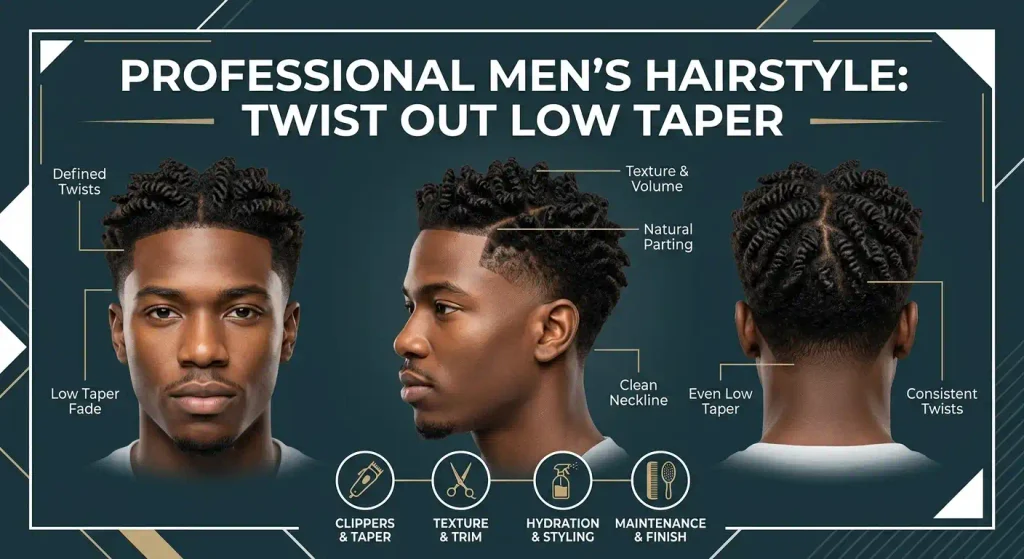
16. Twist-Out Low Taper
This cut is built around a twist-out routine, where damp hair is twisted overnight and unraveled the next day for a stretched, defined curl. It suits 3C to 4B texture and gives noticeably more length than a wash-and-go.
17. Finger Coil Low Taper
Small, individually shaped coils are set with fingers and a light gel, giving a neat, uniform curl pattern across the whole crown. It takes longer at home but holds its shape well between cuts. Best for 3B to 4A hair.
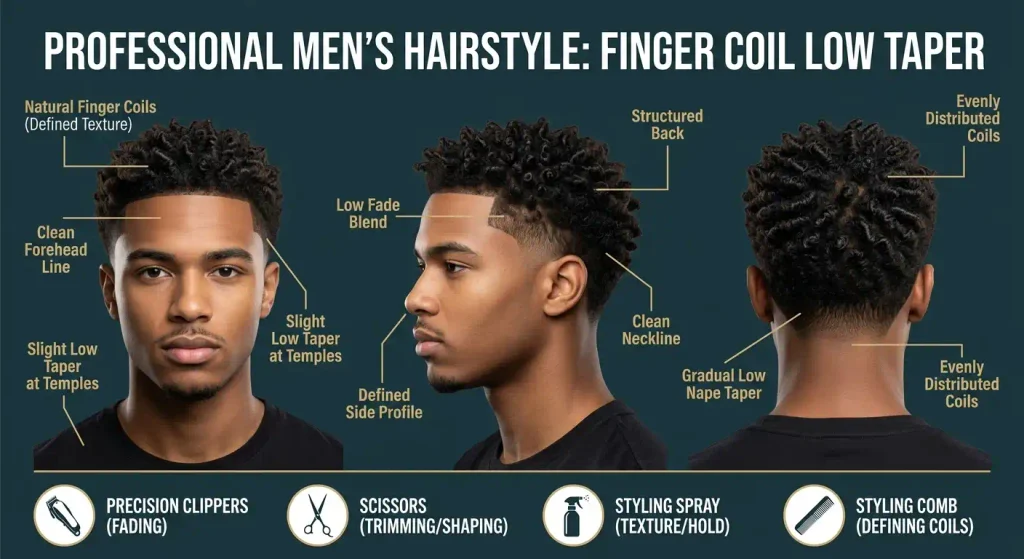
18. Pick-Out Afro Taper
The top is picked out into a soft, rounded afro shape rather than left in defined curls. This version relies on the taper doing most of the shaping work, since the crown is left more natural and less styled.
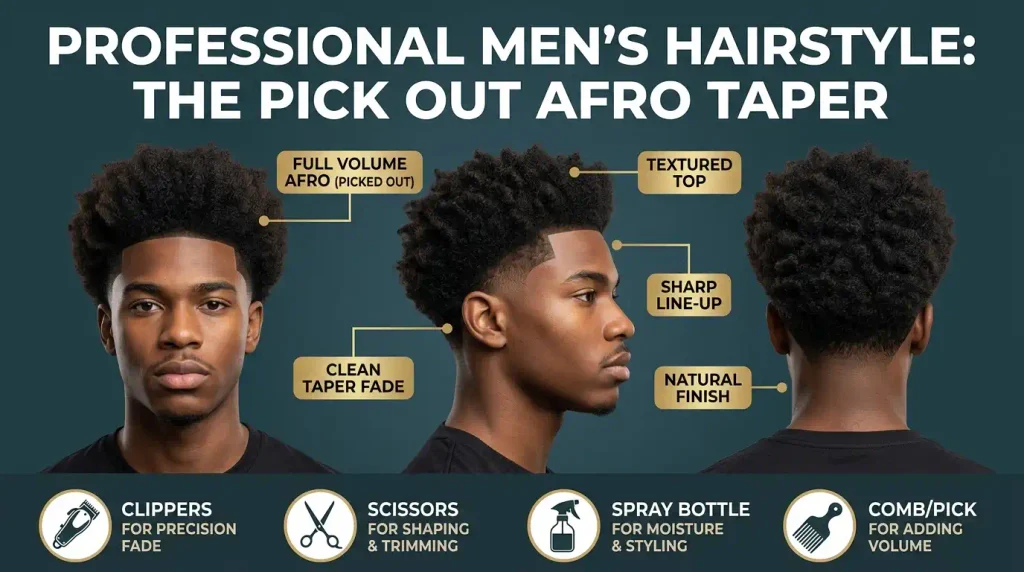
19. Blowout Curl Taper
A dedicated blowout technique stretches curls out and adds noticeable lift at the roots. It reads bigger and fuller than a standard curl top, and pairs best with a skin-low taper for maximum contrast.
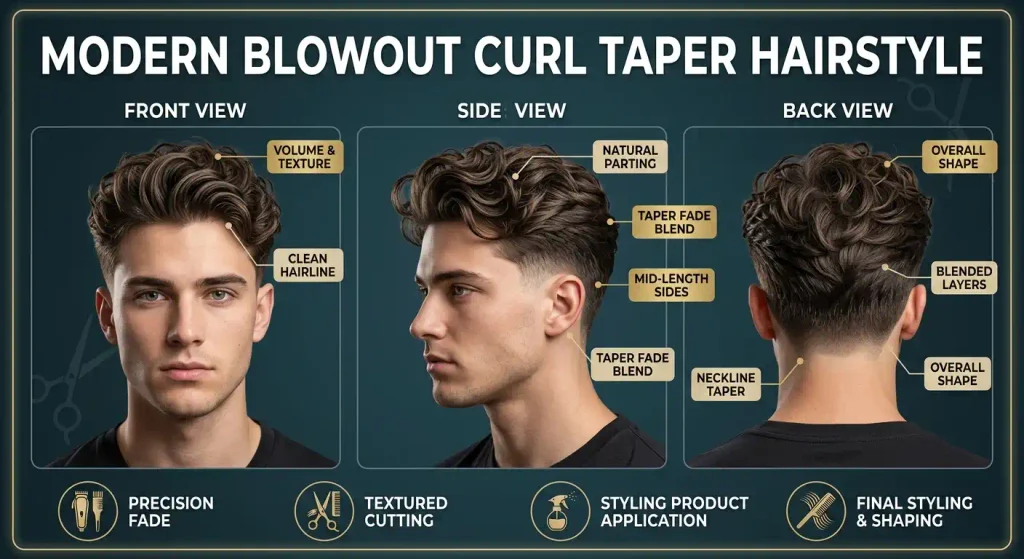
20. Sponge Curl Taper
A curl sponge is used to create tight, uniform coils on shorter hair, usually under an inch and a half. This is a go-to for guys growing out a fade who still want curl definition while it grows.
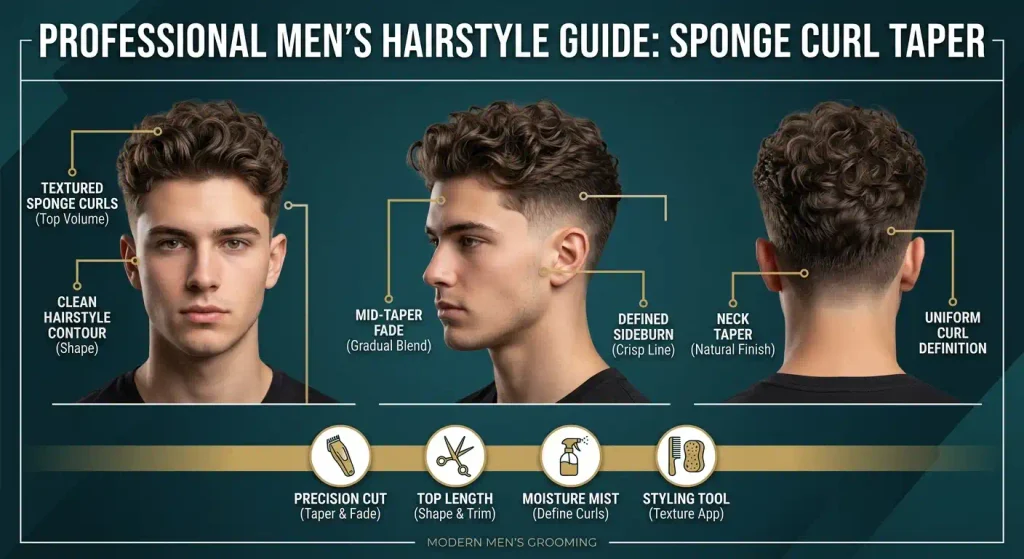
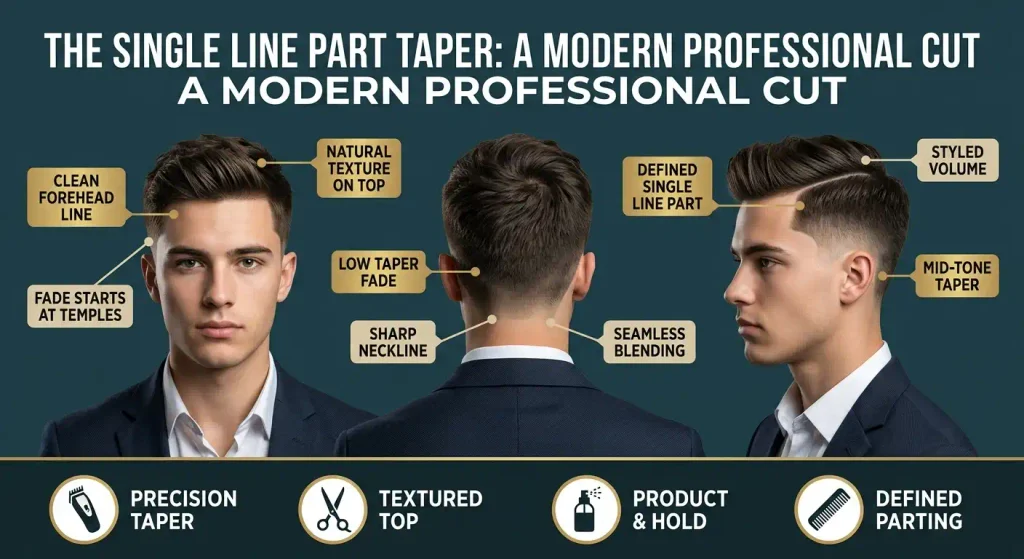
21. Single Line Part Taper
A single shaved part line runs through the side, giving the taper a sharper, more graphic edge. It grows out faster than the rest of the cut, so expect more frequent touch-ups if you want it crisp.
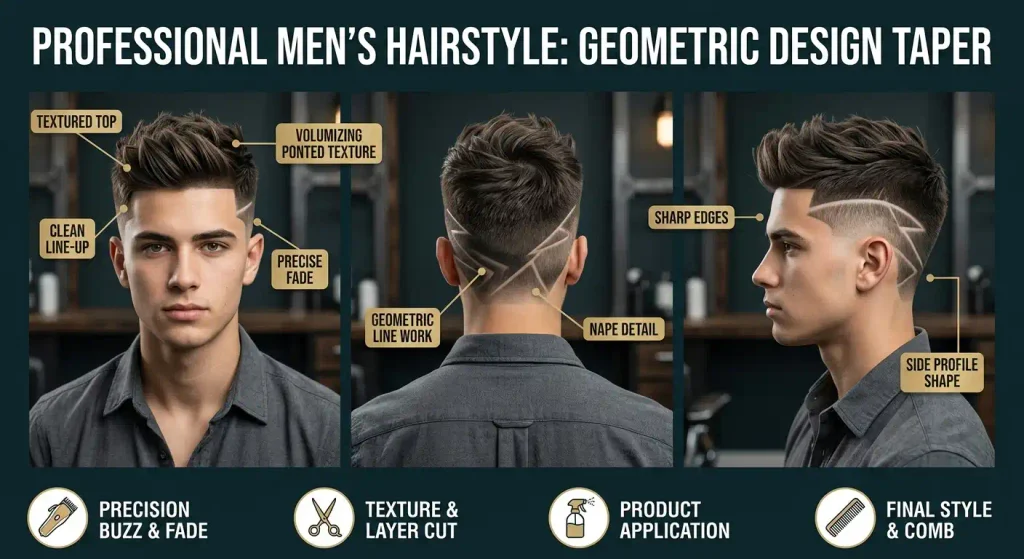
22. Geometric Design Taper
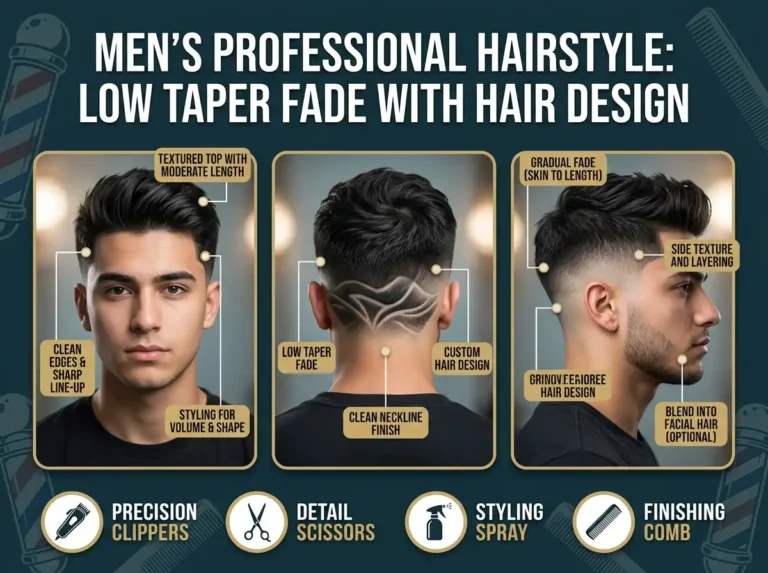
Lines, triangles, or zigzag shapes are carved into the tapered section behind the ear or at the temple. This works on any curl type since the design sits in the faded zone, not in the curls themselves.
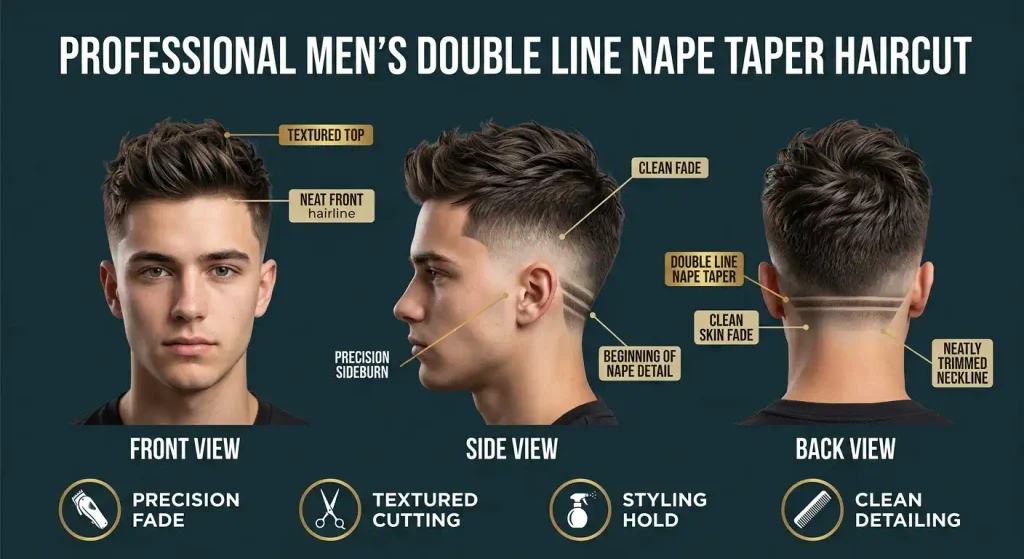
23. Double Line Nape Taper
Two clean parallel lines are cut low near the nape, giving the taper a subtle detail without competing with the curls up top. It’s a quieter alternative to a full design for guys who want just a little edge.
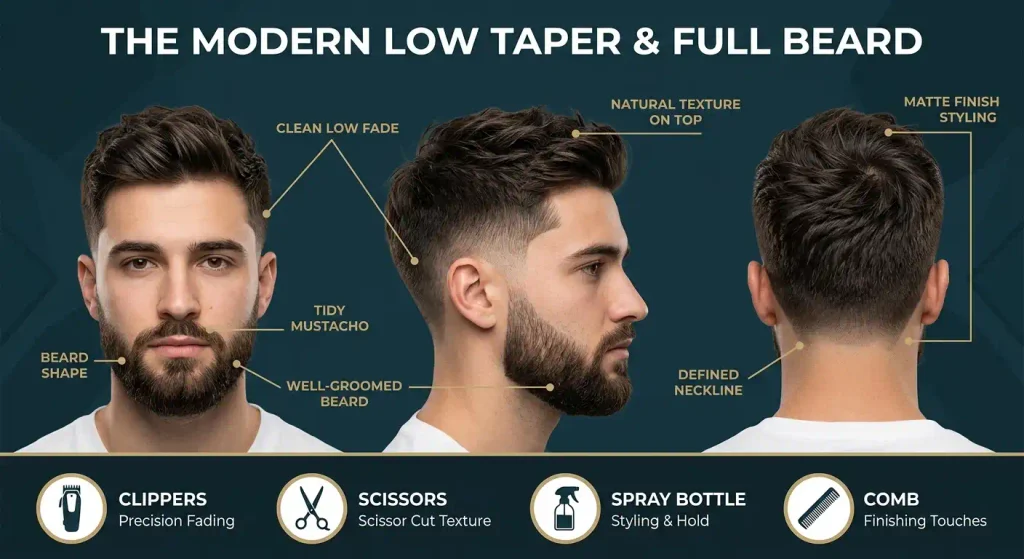
24. Low Taper with Full Beard
The taper is paired with a full, connected beard, and the fade usually blends directly into the beard line for a seamless finish. This combo works especially well with denser 3A to 3C curl patterns.
25. Low Taper with Light Stubble
A lighter, three-to-five-day stubble keeps the focus on the curls rather than the beard. The taper here is usually cut a touch higher so the whole look feels lighter and more casual.
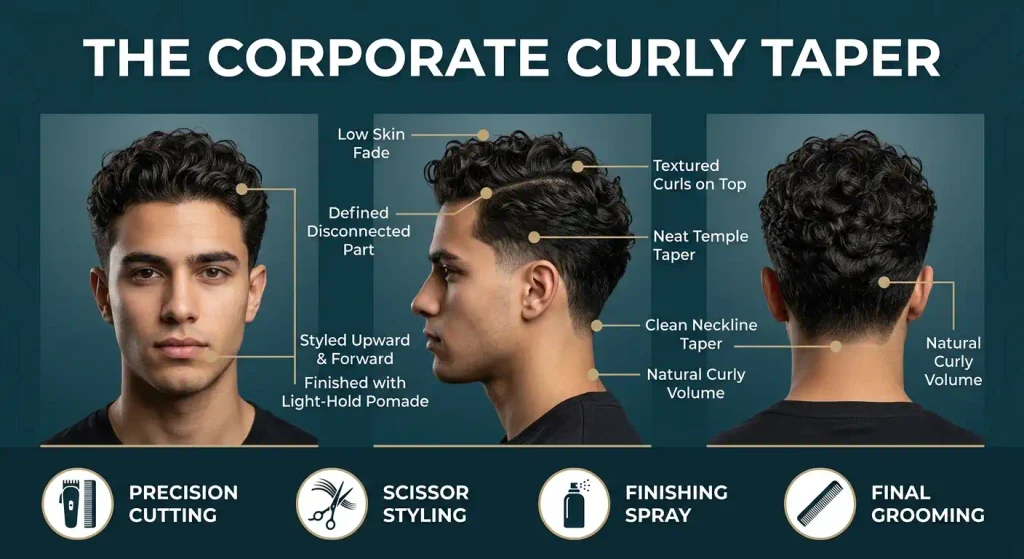
26. Corporate Curly Taper
Built for office settings, this version keeps the top around one to one-and-a-half inches with minimal shine product, so curls look neat rather than loud. The taper stays conservative and close to the head.
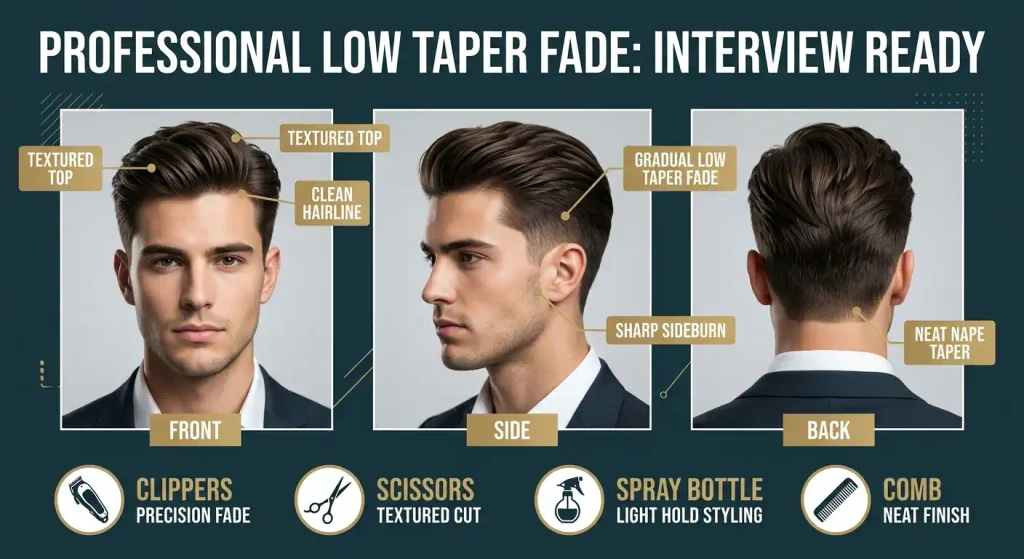
27. Interview-Ready Low Taper
A slightly shorter cousin of the corporate taper, trimmed close enough that it needs almost no product to look put-together. It’s a safe pick when you need low maintenance for a few weeks straight.
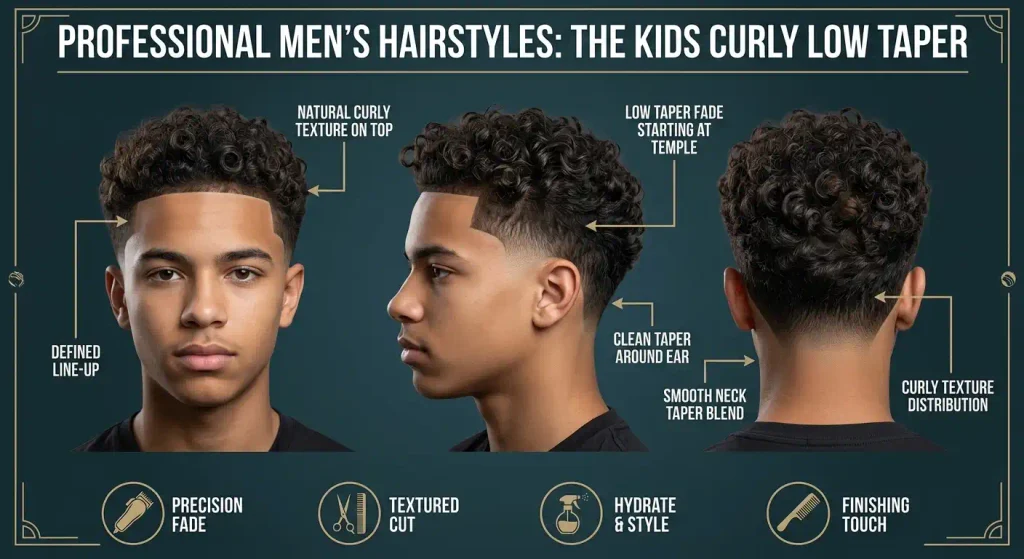
28. Kids Curly Low Taper
Cut shorter overall, around a half-inch to an inch on top, this version prioritizes ease of care for parents and durability between cuts. The taper itself stays gentle rather than skin-close for a softer look on younger faces.
29. Teen Low Taper Fade
A step up in length and styling from the kids’ version, this cut allows a bit more curl definition and can include a light design. It’s usually cut every three to four weeks to keep up with faster hair growth at this age.
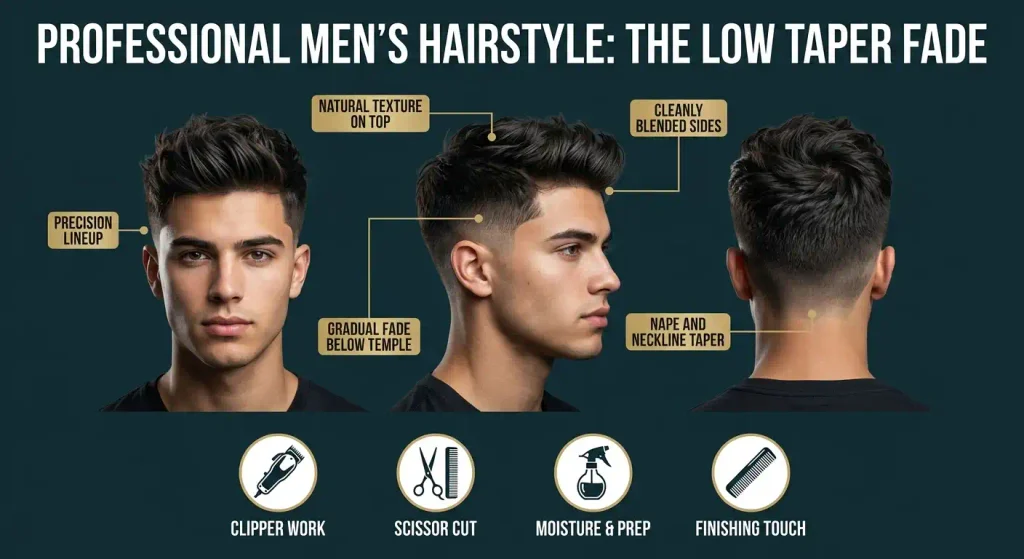
30. Receding Hairline Curl Taper
Curls are kept slightly shorter at the front hairline and fuller through the crown, which draws the eye upward and away from a receding line. The taper stays low so it doesn’t add extra height at the temples.
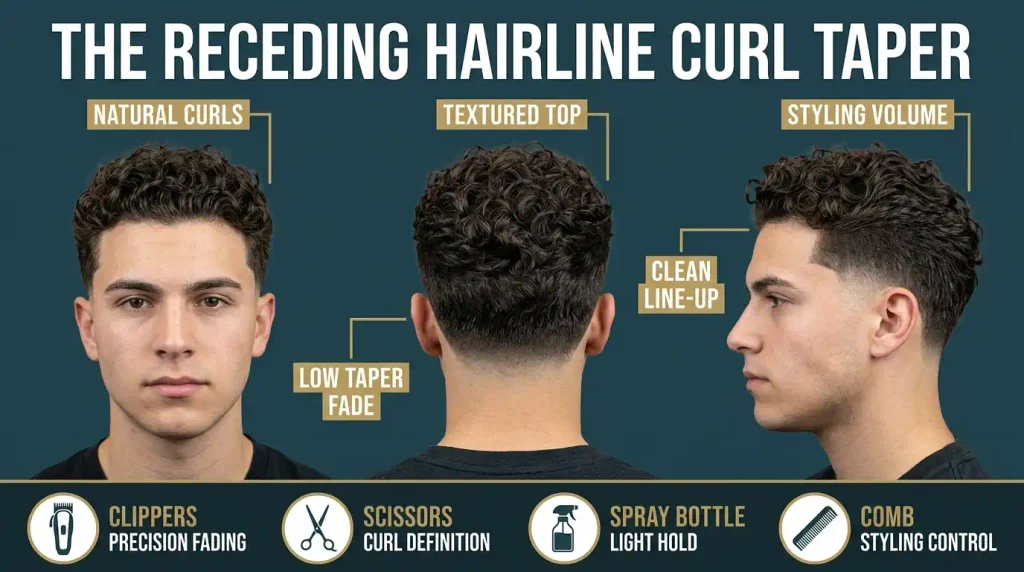
31. Thick Curl Low Taper
Thick, dense curls get extra taper height on the sides to balance out the volume on top, so the head doesn’t look bottom-heavy. Regular thinning at the crown keeps the weight manageable between visits.
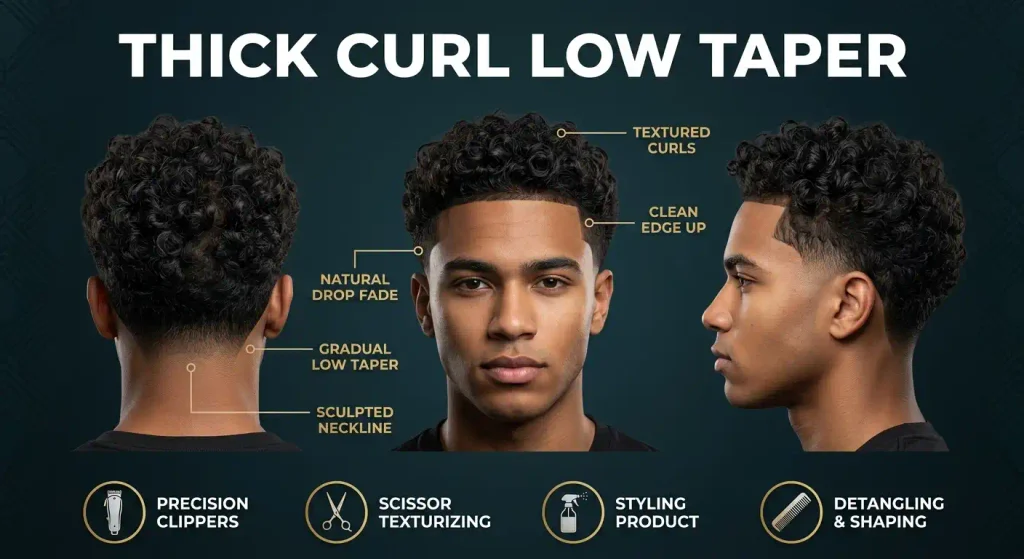
32. Fine Curl Low Taper
Fine curls are cut shorter than average, since too much length can make thin strands look flat and separated. A slightly higher taper adds the appearance of extra density without changing the curl pattern itself.
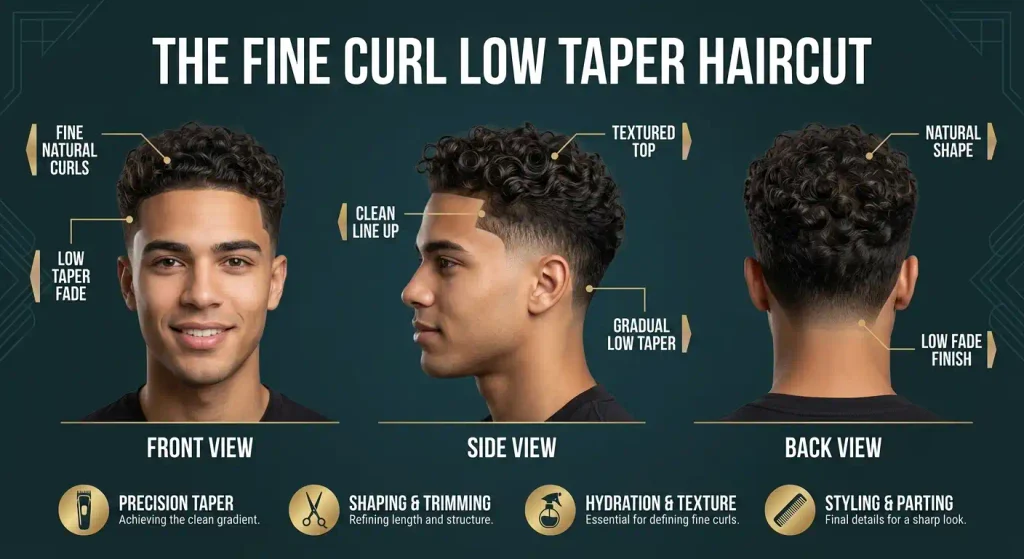
33. Color-Enhanced Curl Taper
A single shade lighter than natural, applied through the crown curls only, adds dimension without a drastic change. The taper stays natural-colored, which keeps upkeep focused on the top section alone.
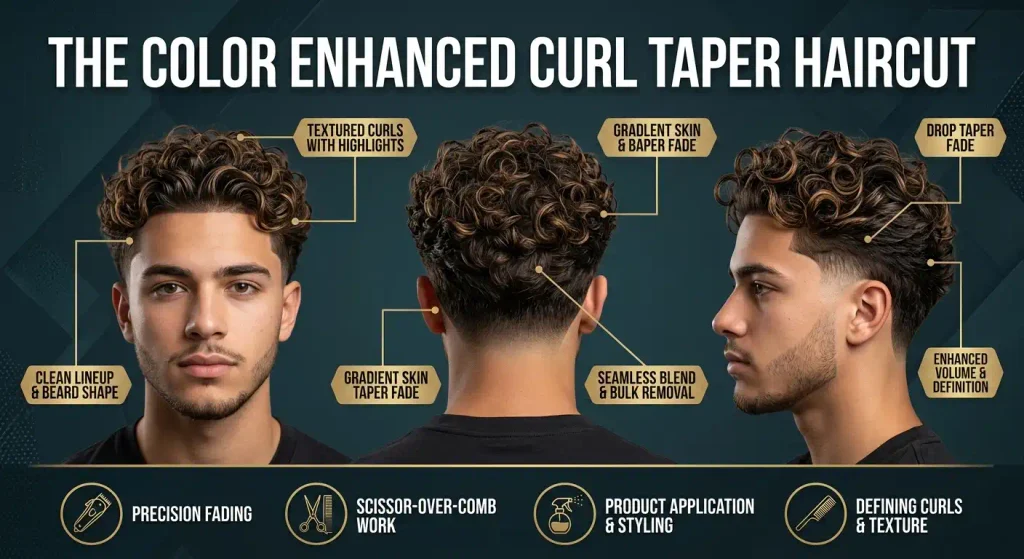
34. Highlighted Curl Taper
Fine, scattered highlights through the curls catch light and make individual coils stand out more. This version needs more upkeep than a plain color job, since regrowth shows faster on textured hair.
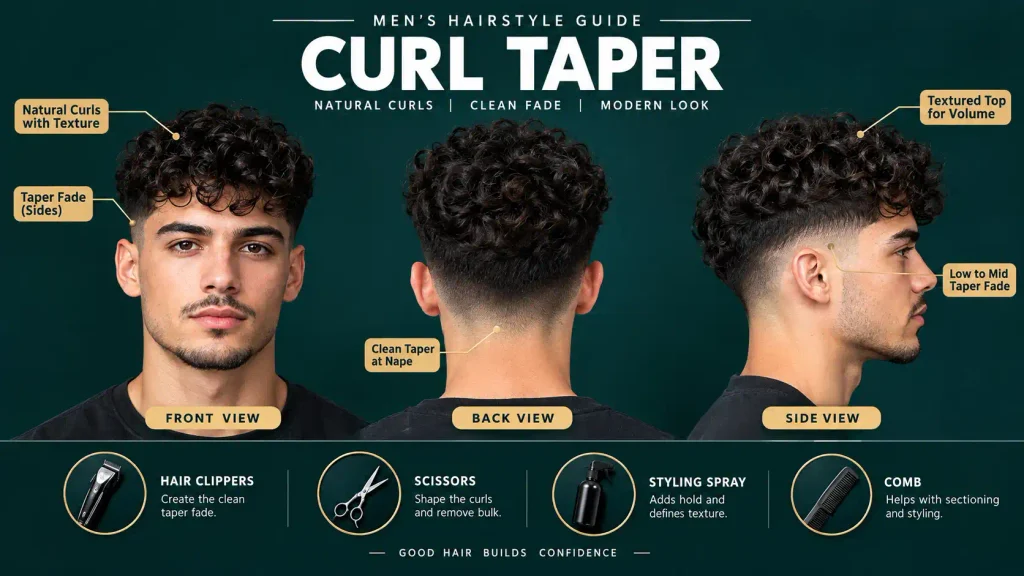
35. High-Volume Curl Crown
This is the boldest option on the list — maximum lift and width on top, usually achieved through diffusing plus a volumizing mousse. The taper is cut skin-close to create the sharpest possible contrast.
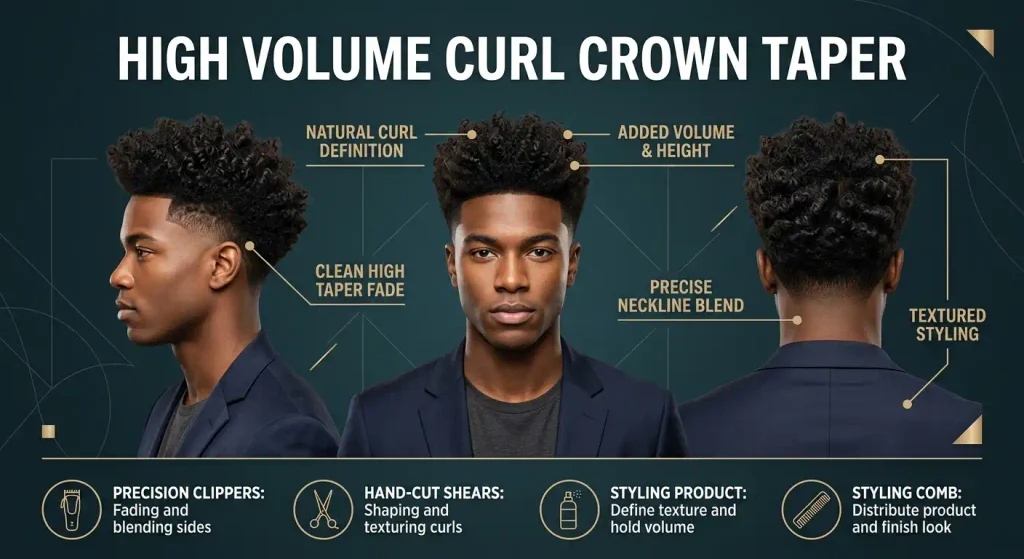
36. Wash-and-Wear Curl Taper
Similar to the wash-and-go but styled for slightly longer curls, this cut is trimmed so it looks intentional straight out of the shower with zero extra tools. It’s the lowest-effort option on this entire list.
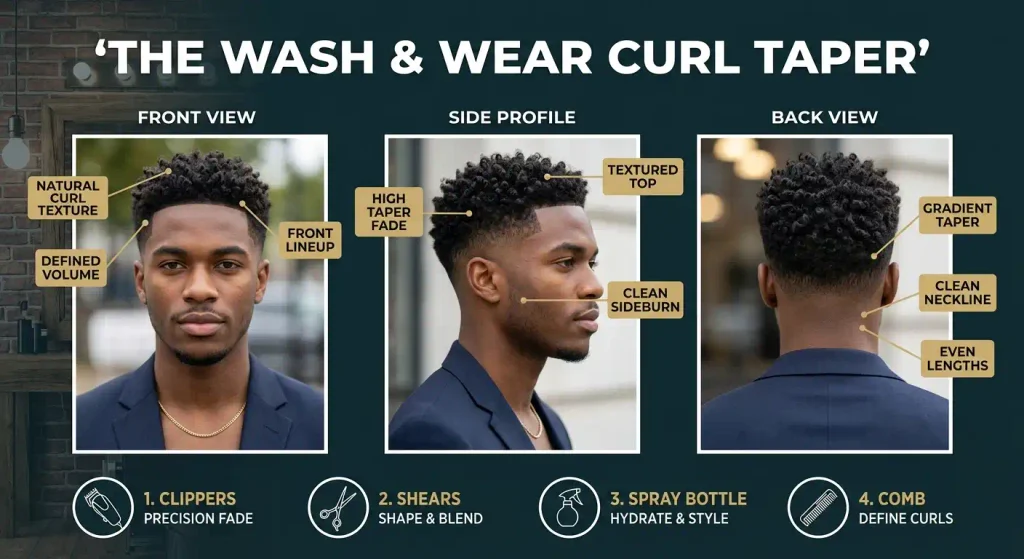
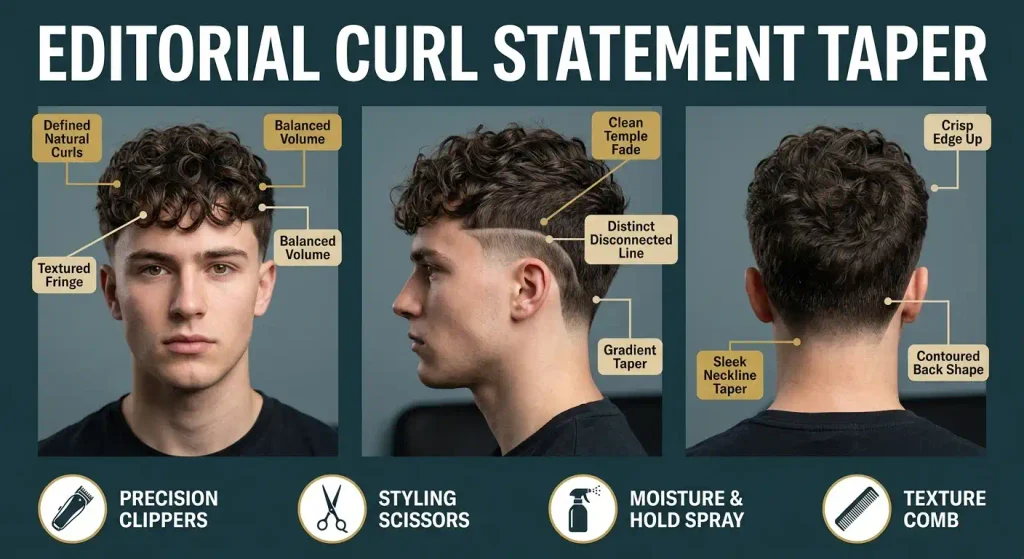
37. Editorial Curl Statement
Pushed further than an everyday cut, this style pairs dramatic top volume with a near-skin taper for a high-contrast, photo-ready look. It suits diamond and oval faces best and needs heavy mousse plus high-heat diffusing to hold.
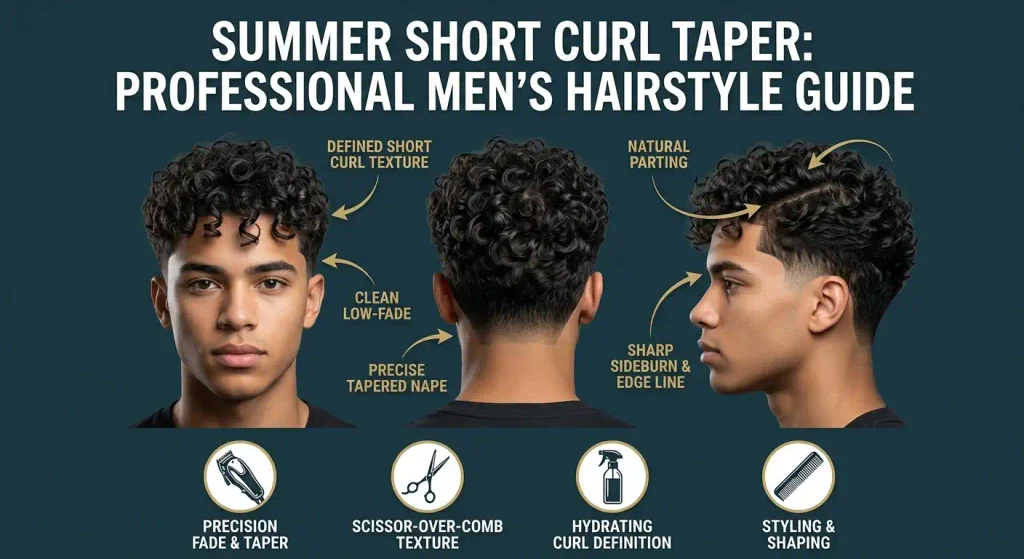
38. Summer Short Curl Taper
Trimmed shorter overall to handle heat and humidity, this version keeps curls close to the head so they hold shape even when the weather works against you. It’s a popular seasonal request in warmer months.
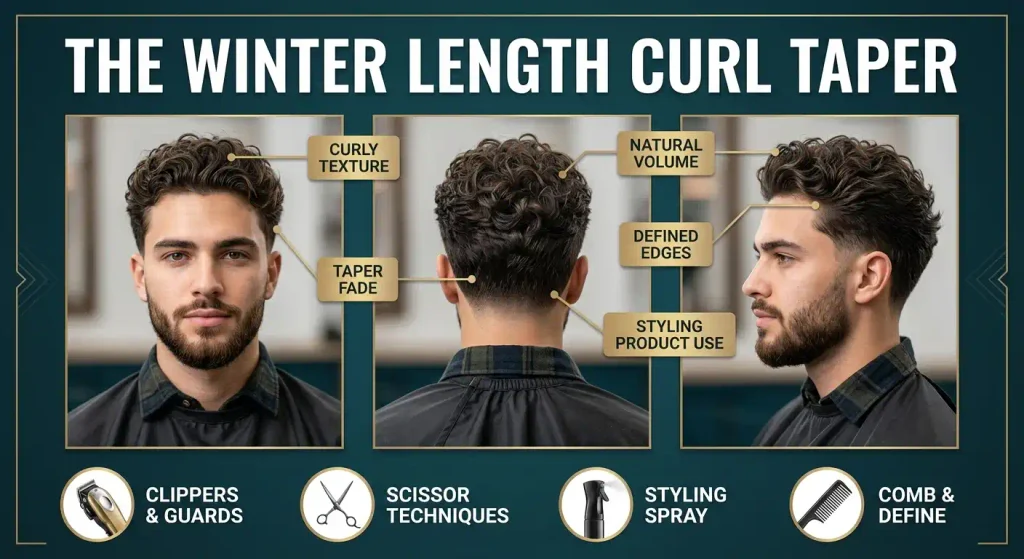
39. Winter Length Curl Taper
The opposite seasonal approach — a bit more length is kept on top going into colder months, since drier indoor air can make hair easier to manage at a longer length. The taper stays the same year-round.
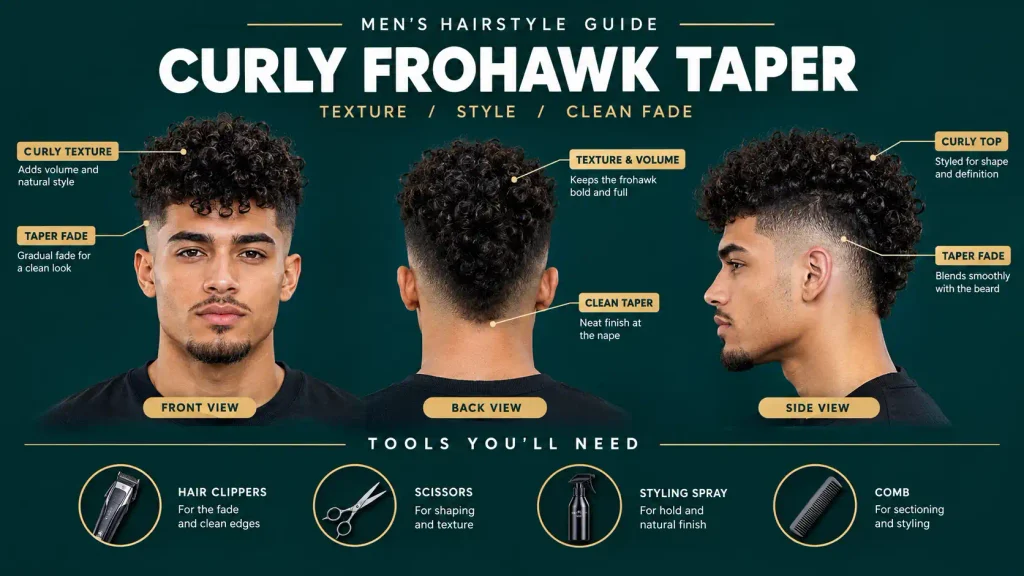
40. Curly Frohawk Taper
The center section is left fuller and longer while both sides taper down sharply, creating a soft mohawk-like shape without shaving anything. It’s an easy way to get a dramatically different look from the same base haircut.
This Style vs. Other Taper and Fade Options
| Style | Fade/Taper Height | Guard Range | Best Face Shapes | Styling Difference |
| Low taper (curly) | Starts just above the ear | Guard #2–4 blending to skin | Oval, round, square | Curls stay untouched on top; fade is subtle from a distance |
| Mid taper (curly) | Starts mid-way up the side | Guard #3–5 | Square, long | More visible contrast, still wearable in formal settings |
| High taper (curly) | Starts near the temple | Guard #4–6 | Round, oval | Boldest contrast; needs more frequent touch-ups |
| Low skin fade | Fades to bare skin near the ear | Guard #1–3 to skin | Any | Sharper edge than a low taper; less forgiving on regrowth |
| Curly crop (no fade) | No fade, just a trim | Scissor-over-comb | Oval, square | Softer transition; lowest-maintenance option overall |
Why This Style Works
A low taper fade for curly hair works because it removes bulk exactly where curls tend to look messiest — around the ears and neckline — while leaving the crown alone to do what curly hair does naturally. That means less daily fighting with your texture and a cleaner outline without a drastic change.
It also grows out more gracefully than a skin fade. Because the taper blends gradually instead of dropping straight to skin, you can usually stretch two or three extra days between barber visits before the line starts looking rough.
How to Style It
- Start with damp, not soaking, hair after a wash with a sulfate-free, curl-specific shampoo.
- Work a leave-in conditioner through with your fingers, focusing on the mid-lengths and ends.
- Apply a curl cream or gel in sections, scrunching upward rather than pulling down.
- Air-dry or diffuse on a low-to-medium heat setting, holding curls upward as you go.
- Once fully dry, break up any crunch with a small amount of oil rubbed between your palms.
How to Ask Your Barber for This Cut
Use this as your base script: “I’d like a low taper fade — keep the fade starting just above my ear, blend it down to the skin at the neckline, and don’t touch the curls on top. I want to keep my natural texture, just cleaned up around the edges.”
Add one of these depending on which style above caught your eye:
- For more volume (like #2 or #35): “Can you leave a bit more length through the crown so I have room to diffuse it up?”
- For a design (like #21 or #22): “I’d also like a single line shaved into the taper near my temple.”
- For a lower-maintenance version (like #7 or #15): “Keep the top shorter overall — I want something I can wash and go without much product.”
- For a beard pairing (like #24 or #25): “Can you blend the taper directly into my beard line so there’s no gap?”
Step-by-Step Tutorial of a Low Taper Fade for Curly Hair
- Consultation: The barber checks your curl pattern, growth direction, and how much length you want to keep on top before touching clippers.
- Sectioning: Hair is clipped or combed up out of the way so the sides and back can be worked on first.
- Guard work: Starting with a longer guard near the top of the taper zone, the barber works down toward the neckline, switching to shorter guards in stages.
- Blending: A blending shears or a clipper-over-comb technique smooths the transition points so there’s no visible line between guard lengths.
- Top trim: The crown curls are trimmed to the agreed length, usually with scissors or thinning shears to avoid flattening the curl pattern.
- Detailing: The hairline, sideburns, and neckline are cleaned up with a trimmer for sharp edges.
- Style and check: Product is applied so you can see the finished look, and the barber checks the blend from multiple angles before you leave the chair.
Best Styling Products for a Low Taper Fade Curly Hair Cut
- Sulfate-free curl shampoo: Cleans without stripping the natural oils curly hair depends on to stay defined.
- Leave-in conditioner: Adds slip and moisture before any styling product goes in, which cuts down on frizz.
- Curl cream or custard: The main styling step — defines curl clumps and controls flyaways without heavy crunch.
- Lightweight curl gel: Useful for extra hold on longer top lengths, especially before diffusing.
- Light finishing oil: A small amount rubbed through dry curls breaks up crunch and adds shine without weighing hair down.
- Diffuser attachment: Not a product, but essential for anyone chasing volume — it dries curls without disturbing their shape.
Common Mistakes to Avoid with a Low Taper Fade for Curly Hair
- Skipping the leave-in step. Curly hair loses moisture fast, and skipping this step is the number one cause of frizz after styling.
- Touching curls while they dry. Handling curls before they’ve fully set breaks up the curl pattern and creates flyaways.
- Going too long between trims. The taper grows out faster than the curls on top, so waiting too long makes the whole cut look uneven.
- Using too much product. Overloading curls with gel or cream can leave them stiff and crunchy instead of soft and defined.
- Not communicating curl type to the barber. Curl patterns respond differently to scissors versus clippers on top — mention your curl type before the cut starts.
- Choosing too high a taper for your face shape. A taper that starts too high can add unwanted width at the temples on rounder faces.
Best Hair Types and Face Shapes
This cut adapts well across curl types, but the details shift depending on what you’re working with:
- 2A–2C waves: Respond well to lower-effort styling, like a wash-and-go, since the wave pattern holds shape with minimal product.
- 3A–3B curls: The most versatile group here — these hold curl definition through diffusing, twist-outs, or a simple curl cream routine.
- 3C–4A coils: Tend to shrink more, so barbers usually cut slightly longer than the target finished length to account for shrinkage.
- 4B–4C coils: Work especially well with a rounded, picked-out shape, since this texture holds volume naturally without much styling effort.
By face shape, round and square faces generally do best with added crown height, while oval and long faces have the most flexibility to wear shorter, flatter top styles without it changing their proportions much.
Maintenance and Upkeep
Plan on a taper touch-up every two to four weeks, depending on how fast your hair grows and how sharp you want the line to stay. The curls on top can usually go longer between trims — six to eight weeks is typical unless you’re maintaining a shorter length like the wash-and-wear version.
At home, stick to a curl-specific shampoo once or twice a week, with a rinse-only or co-wash routine in between to avoid over-drying. Sleeping on a satin pillowcase or under a satin cap helps preserve curl definition overnight and cuts down on morning styling time.
FAQ
1. What’s the difference between a low taper and a low fade for curly hair? A low taper blends gradually and never quite reaches bare skin, while a low fade drops all the way to skin near the hairline. Curly hair tends to hide a taper’s softer transition better than a fade’s sharper one.
2. How short can curly hair be before a low taper fade doesn’t work? Even very short curls, like the Short Curly Crown (style #7), work fine with a low taper as long as there’s enough length on top to see the texture and enough taper below to create contrast.
3. Will a low taper fade work with 4C hair? Yes — the 4C Tapered Afro (style #3) and Pick-Out Afro Taper (style #18) are both built specifically around coilier textures, and this taper style is a common request for 4C clients.
4. How often do I need a touch-up? Most people need the taper redone every two to four weeks, though styles with designs or line work need more frequent visits to stay sharp.
5. Can I get a low taper fade with a receding hairline? Yes, and it can actually help — see the Receding Hairline Curl Taper above for a version built around keeping the front hairline area less prominent.
6. Does this cut work for kids? Yes, though barbers usually adjust the taper to be a little softer and less skin-close for younger clients, as shown in the Kids Curly Low Taper style.
7. What products do I need to maintain the curls between cuts? A sulfate-free shampoo, a leave-in conditioner, and a curl cream cover most of what you need day to day. A diffuser is optional but helpful if you want more volume.
8. Can I add a design to a low taper fade? Yes — line work and geometric patterns both sit well in the faded zone without disturbing the curls on top, though expect to visit the barber more often to keep the design crisp.
Conclusion
A low taper fade for curly hair gives you a clean, low-maintenance frame for your natural texture without forcing you to cut off the curls you’ve been growing out. Whether you want the barely-there height of the Interview-Ready Low Taper or the full drama of the Editorial Curl Statement, there’s a version here that fits your hair type, your face shape, and how much time you actually want to spend styling in the morning.
Bring a photo of the number that caught your eye, use the barber phrasing above, and you’ll walk out with a cut that actually matches what you asked for corte taper
Name: Ryan Cole
Role: Lead Grooming Editor, TaperHaircutGuide.com
Bio angle: Men’s grooming/style content researcher — 4+ years covering barbering trends, hairstyling terminology, and men’s style content for US audience. Cross-checks every guide with practicing barbers before publishing.