Low Taper White Guy: 40 Modern Cuts for White Men, Hair Types & Face Shapes

What Is a Low Taper White Guy Haircut?
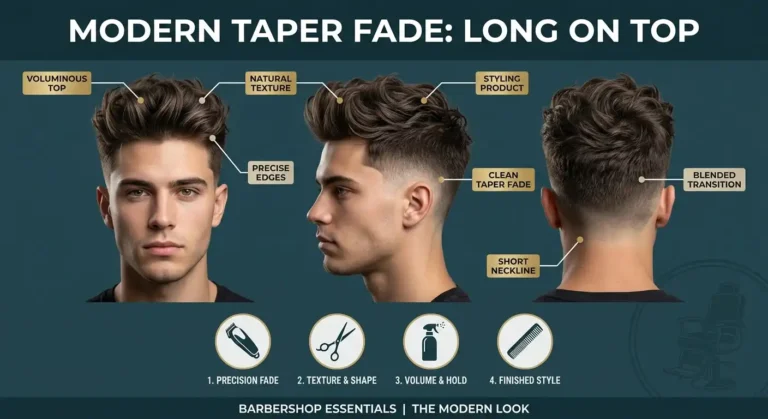
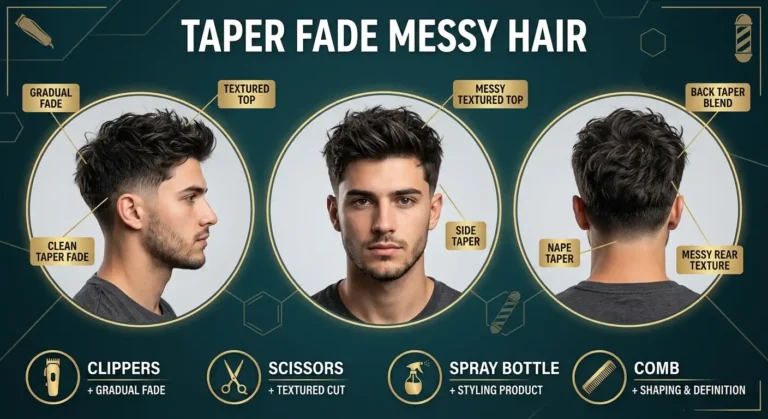
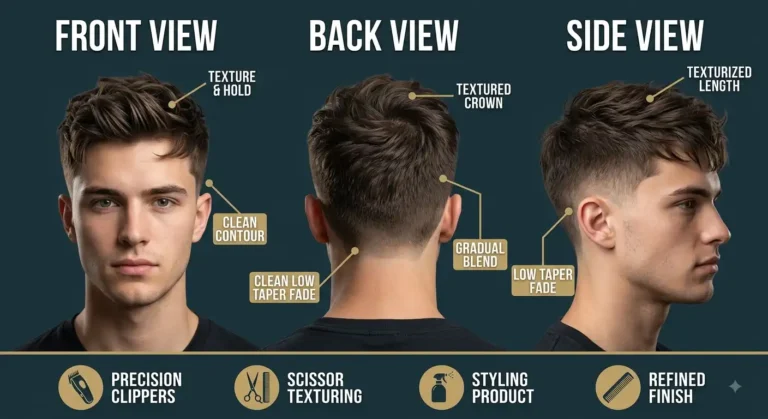
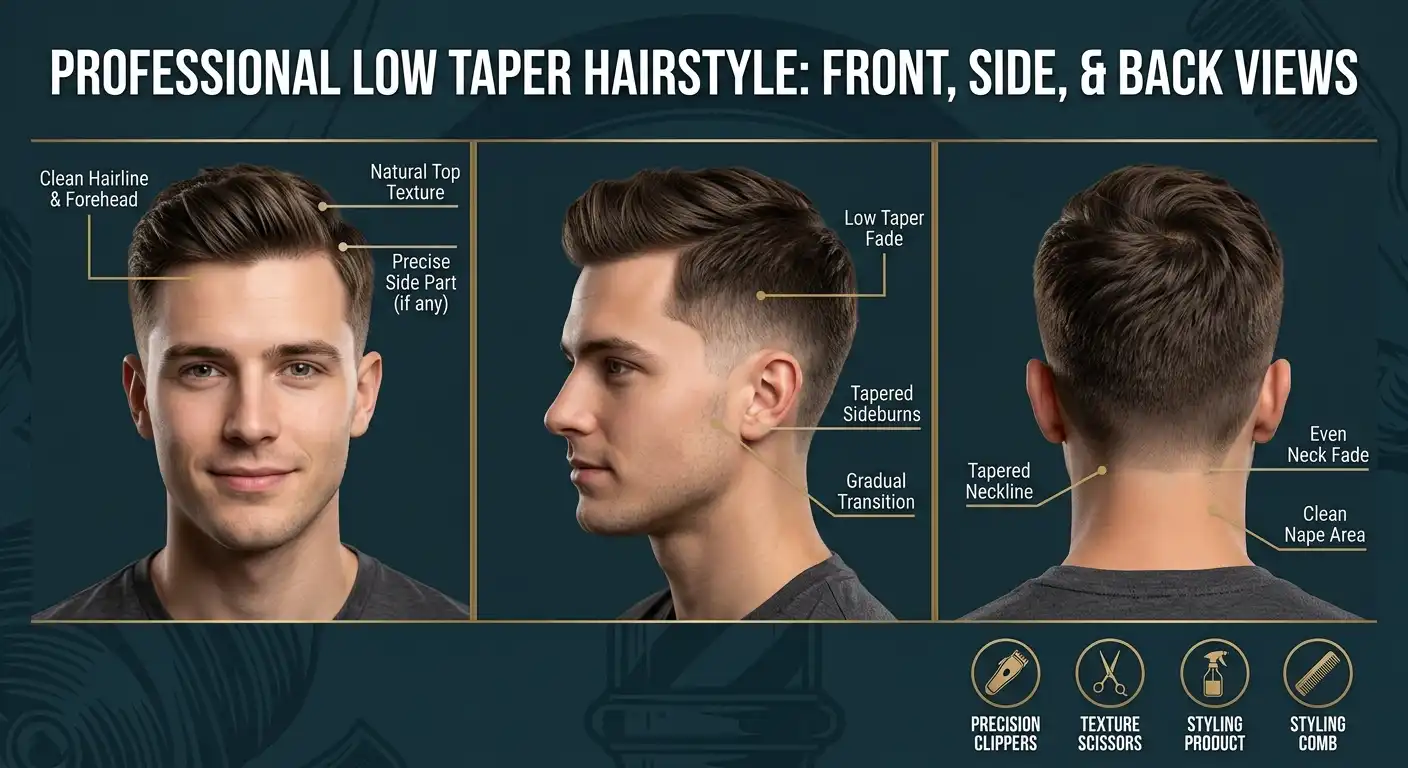
A low taper white guy haircut keeps most of the hair on the sides and back while gradually shortening the hair around the sideburns and neckline. The blend usually starts low, using guards such as #0, #1 and #2, then transitions smoothly into the longer hair above.
The result is cleaner than an untouched haircut without removing as much side volume as a traditional fade. It works particularly well with straight, wavy, thick, fine and naturally textured hair.
Quick Overview: 5 Strong Starting Styles
| Style | Best Hair Type | Face Shapes | Finish |
| Classic Low Taper + Textured Top | Straight/Wavy | Oval, Square | Matte |
| Low Taper + Fringe | Straight/Thick | Round, Oval | Natural |
| Low Taper + Side Part | Straight/Fine | Oval, Oblong | Polished |
| Low Taper + Messy Crop | Wavy/Thick | Square, Oval | Matte |
| Low Taper + Curly Top | Curly/Coily | Oval, Square | Natural |
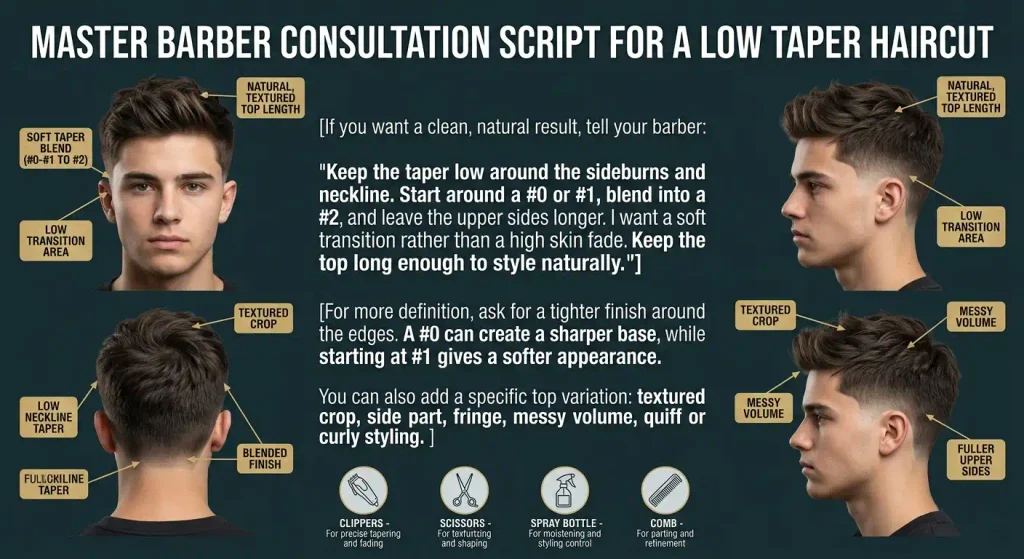
Master Barber Consultation Script
If you want a clean, natural result, tell your barber:
“Keep the taper low around the sideburns and neckline. Start around a #0 or #1, blend into a #2, and leave the upper sides longer. I want a soft transition rather than a high skin fade. Keep the top long enough to style naturally.”
For more definition, ask for a tighter finish around the edges. A #0 can create a sharper base, while starting at #1 gives a softer appearance.
You can also add a specific top variation: textured crop, side part, fringe, messy volume, quiff or curly styling.
1. Classic Low Taper & Clean Gradient Styles
A strong visual for this category would show a clean three-quarter haircut view with the low taper visible around the temple and neckline.
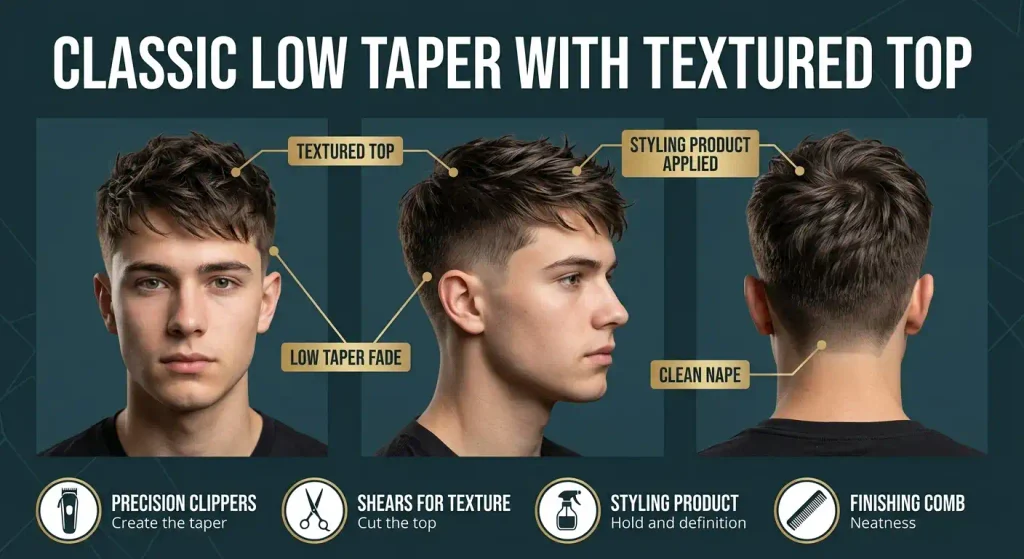
Classic Low Taper With Textured Top
This version keeps the sides controlled while leaving enough length on top for texture. A #0.5 or #1 around the lowest section can transition into a #2, with clipper-over-comb work higher up. Oval and square faces suit the balanced shape particularly well. Use a small amount of matte clay to separate the top without making the hair look greasy.
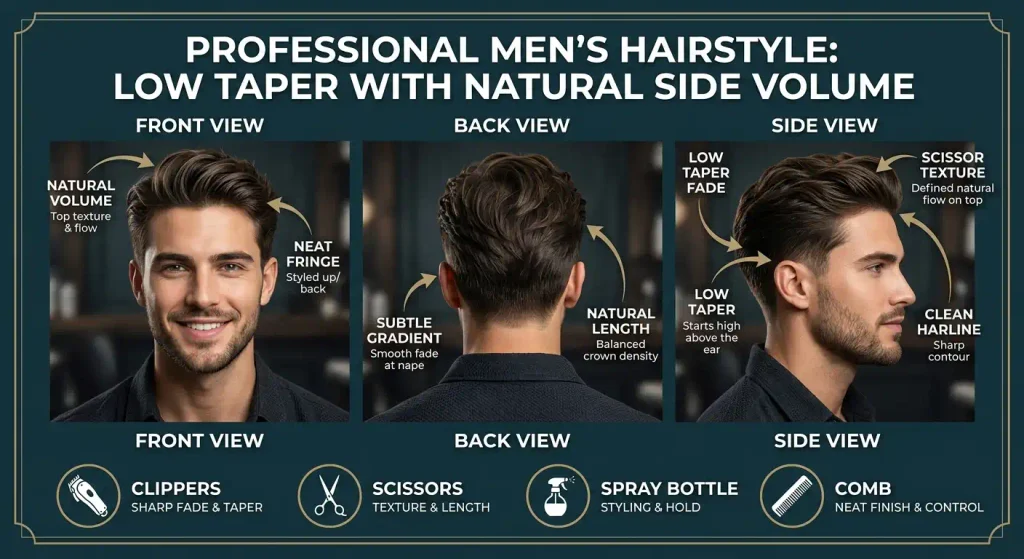
Low Taper With Natural Side Volume
For men who dislike extremely tight sides, this variation leaves more weight above the taper. Your barber can use a #1 around the base and gradually move toward #2 and #3 higher up. The extra volume works well with straight or slightly wavy hair. A lightweight styling cream keeps the shape controlled while preserving movement.
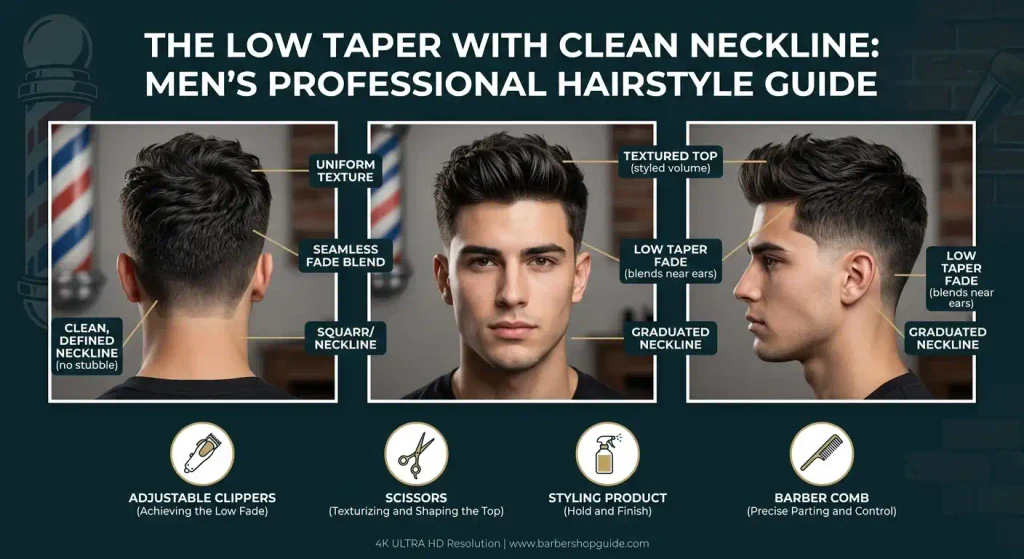
Low Taper With Clean Neckline
The haircut becomes noticeably sharper when the neckline is carefully detailed. Ask for a low taper beginning around the nape with a #0.5 or #1 and a gradual transition into the surrounding length. Square and oval faces benefit from the structured finish. A light matte paste works well for short-to-medium tops.
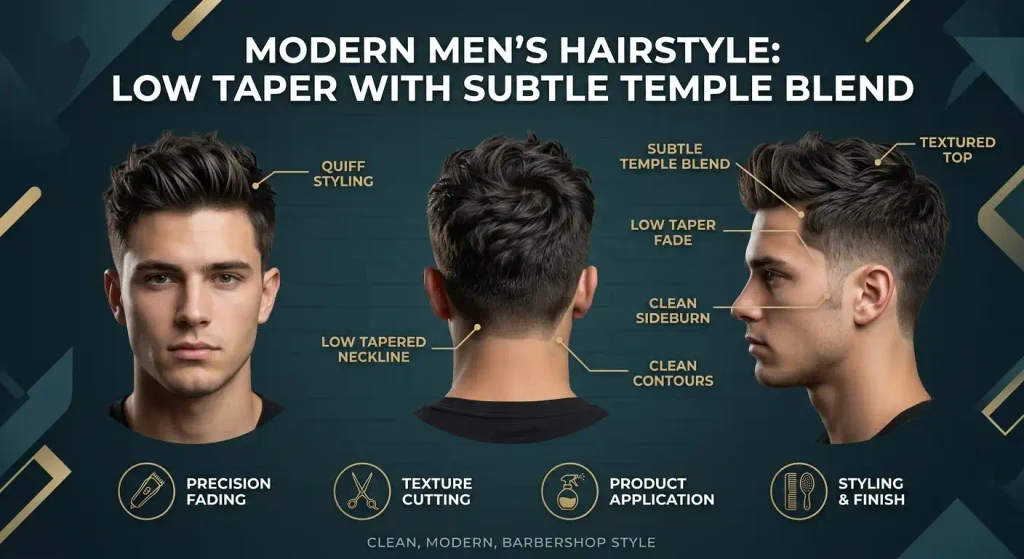
Low Taper With Subtle Temple Blend
This option focuses on the temples rather than creating a dramatic overall fade. The barber can use a #0.5 at the lowest point, then blend through #1 and #2 while keeping the upper sides relatively full. It suits straight and fine hair especially well. Use texture powder when you want to lift without adding visible shine.
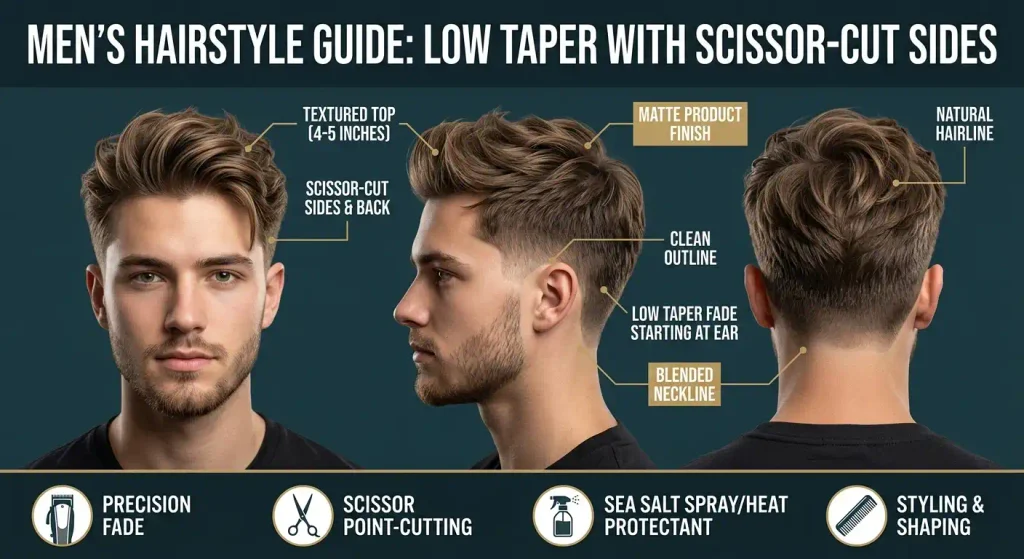
Low Taper With Scissor-Cut Sides
A scissor-over-comb approach can make the transition appear softer than an aggressively clipped side. The taper itself can begin with a #1 around the sideburn and neckline before connecting into scissor work. This shape is useful for oval, oblong and rectangular faces. Finish with a light styling cream for flexible control.
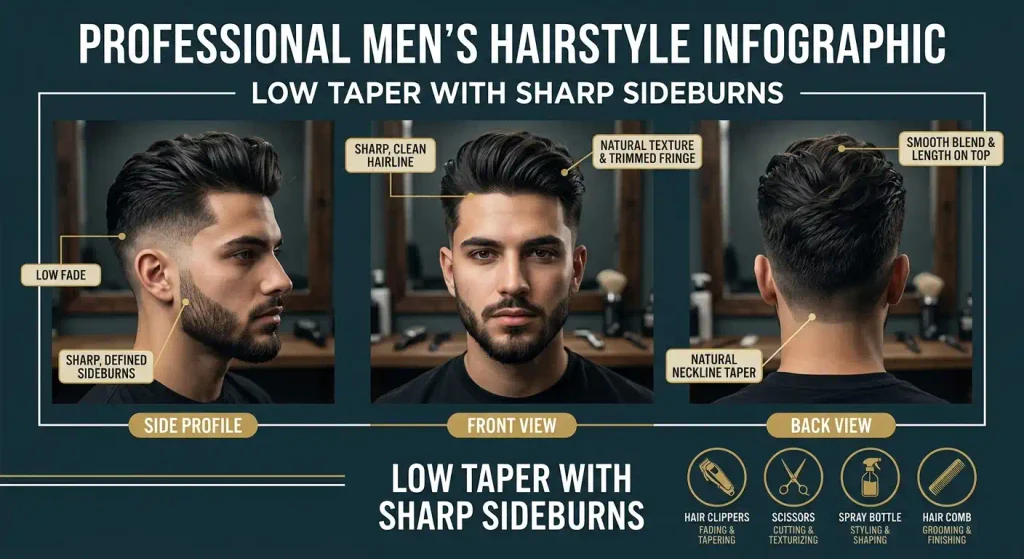
Low Taper With Sharp Sideburns
Short, defined sideburns can make a low taper look more deliberate. A barber can establish the base with a #0 or #1 and blend upward into the existing side length. This works particularly well with straight, thick hair and angular faces. Use matte clay sparingly so the edges remain the main visual feature.
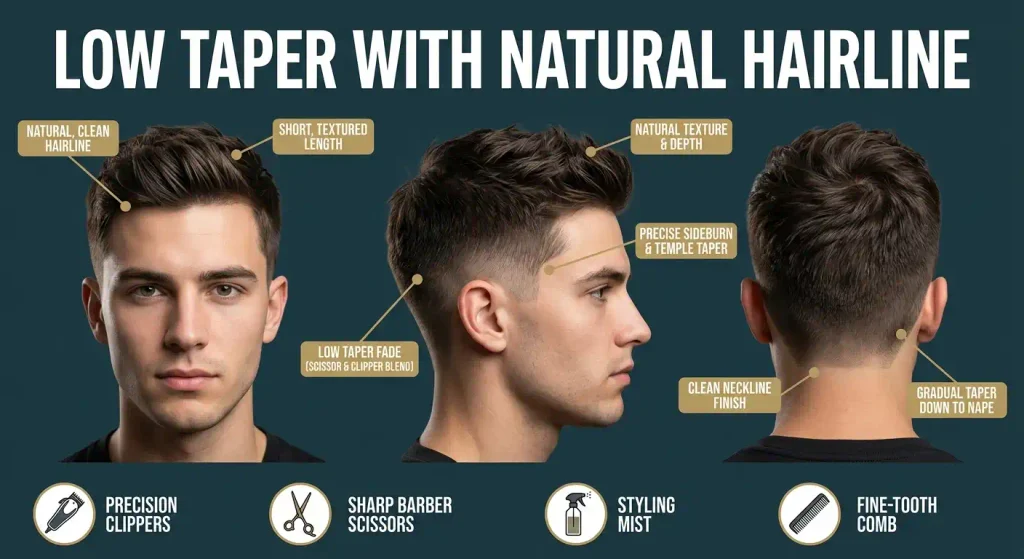
Low Taper With Natural Hairline
Instead of forcing a perfectly squared forehead, this variation follows the existing hairline. The barber concentrates the taper at the lower sides and nape while preserving natural proportions elsewhere. It can suit almost any face shape. A small amount of sea salt spray adds texture to straight or mildly wavy hair.
2. Fringe, Crop & Forward-Styled Looks
A strong visual for this category would show a front three-quarter crop with the fringe clearly separated from the low taper.
Low Taper With French Crop
A French crop combines a compact top with a short forward fringe. Keep the taper low with a #0.5 or #1 at the base, then blend toward #2 while leaving enough weight above. It can visually reduce forehead height and works well for oval or longer faces. Matte clay gives the fringe controlled separation.
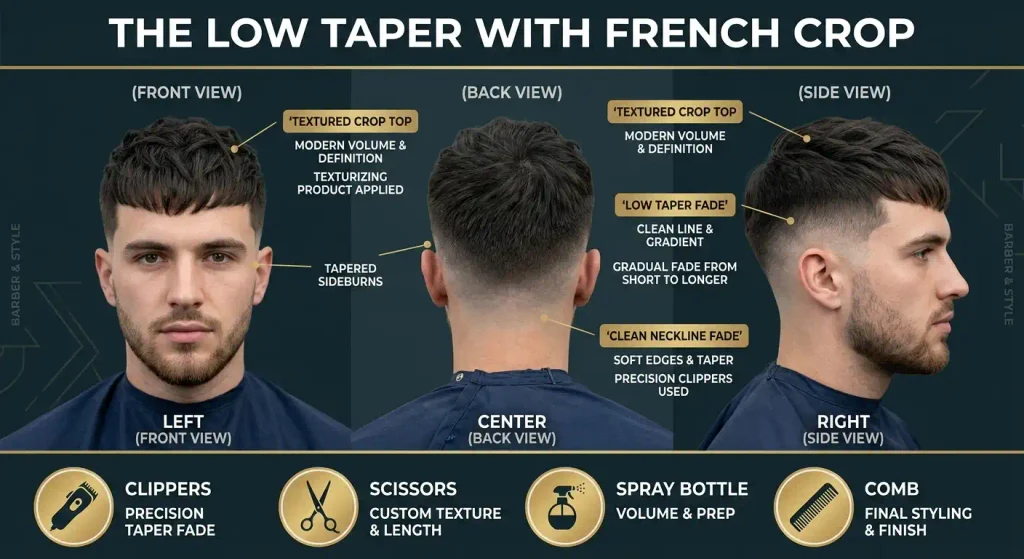
Low Taper With Textured Fringe
The textured fringe creates movement without requiring much length. Ask for point cutting through the top so the ends do not form a heavy block. A #1-to-#2 taper keeps the sides clean without overpowering the fringe. Straight and slightly wavy hair respond particularly well to a small amount of matte paste.
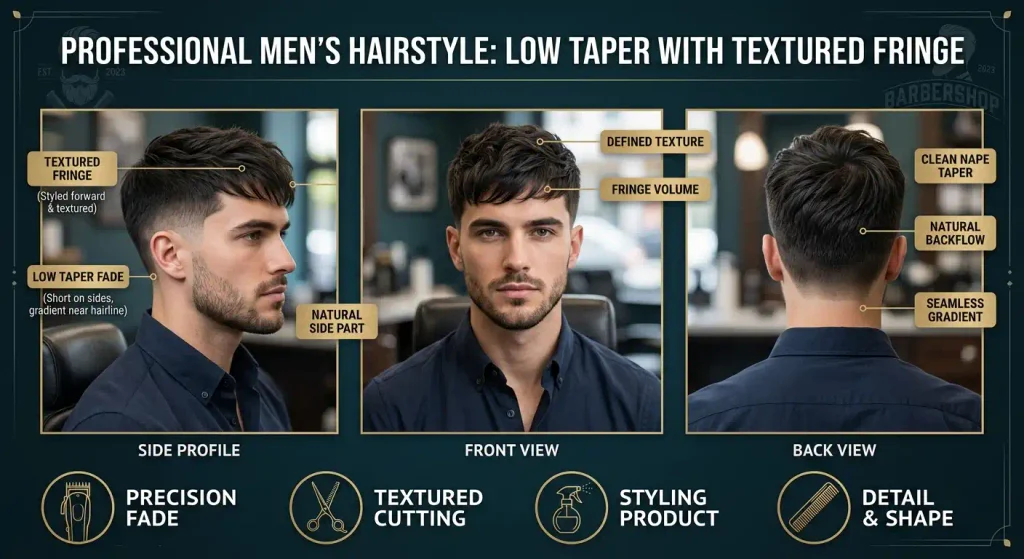
Low Taper With Caesar Top
A short Caesar-style top gives this haircut a compact, masculine outline. The barber can use a #0.5 or #1 near the taper and preserve consistent top length with controlled point cutting. It works especially well on oval, square and athletic-looking face shapes. Use matte clay or styling powder for separation.
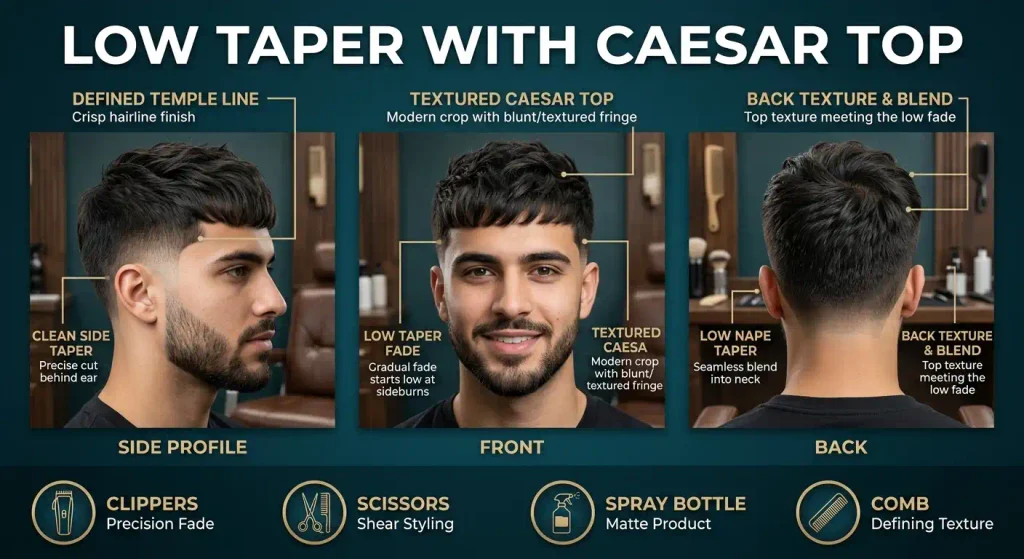
Low Taper With Messy Fringe
Messy forward styling makes the haircut feel less formal. Keep the taper low and avoid taking too much weight from the upper sides, then use point cutting to create irregular texture. This variation works with straight or wavy hair. Sea salt spray followed by a small amount of matte clay creates a natural finish.
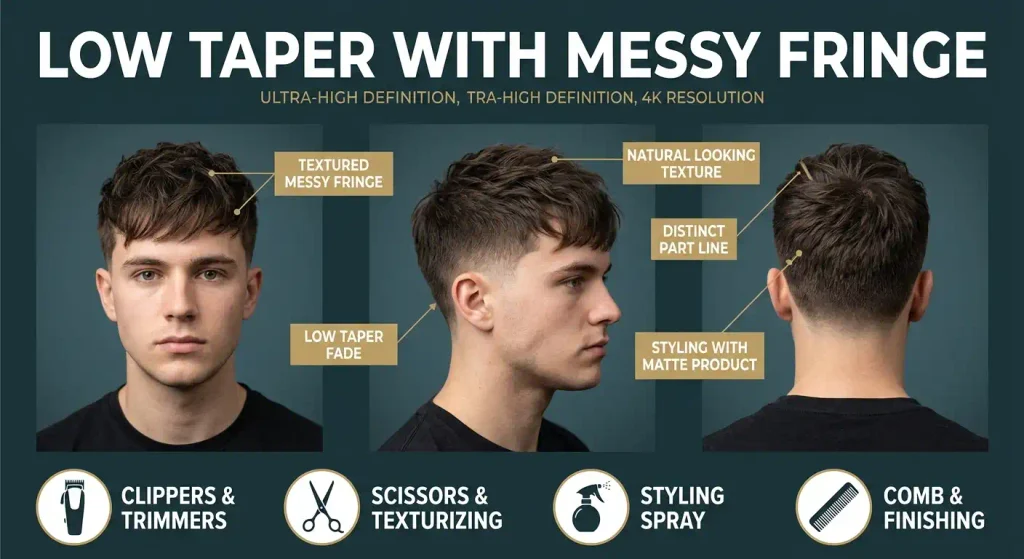
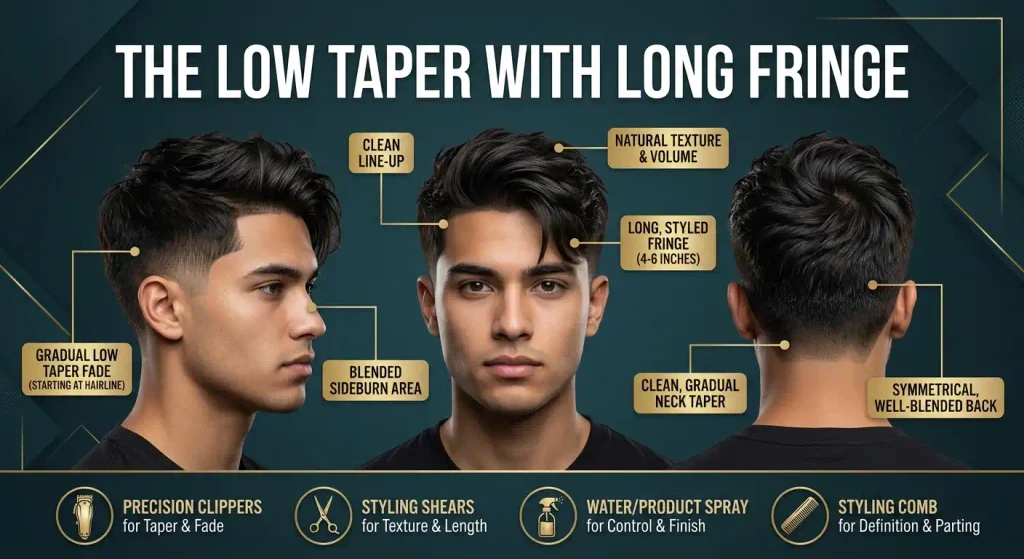
Low Taper With Long Fringe
A longer fringe gives more styling flexibility and can be swept slightly sideways rather than worn completely forward. The taper can begin around #1 while the upper sides remain substantially longer. It suits oval, round and heart-shaped faces depending on the direction of the fringe. Use lightweight styling cream for movement.
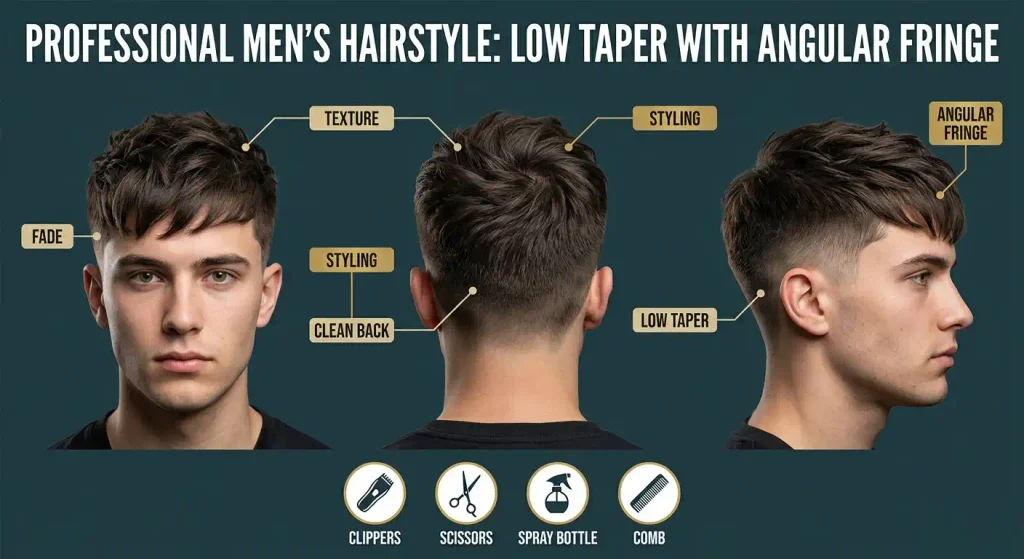
Low Taper With Angular Fringe
The angular fringe uses a slightly diagonal front edge to add visual direction. Your barber should preserve enough length to create the angle while keeping the taper concentrated around the lower sides. It works nicely with straight, thick hair and oval faces. Matte paste gives the fringe enough definition without excessive shine.
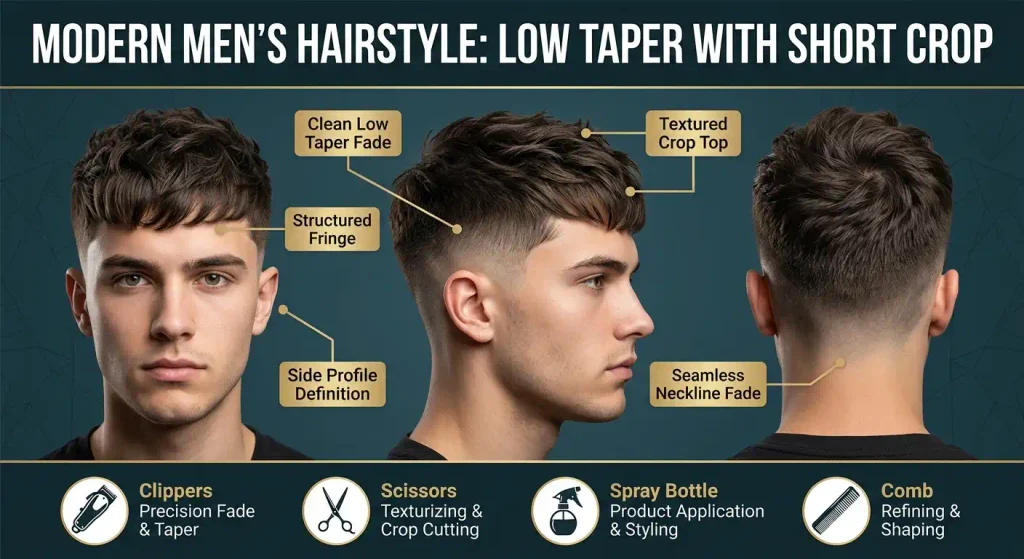
Low Taper With Short Crop
A short crop keeps maintenance simple while still benefiting from the cleaner taper around the ears and neckline. A #0.5-to-#2 progression creates the lower gradient, while the top receives subtle point cutting. This works across several face shapes. Texture powder is useful when the hair needs extra lift and separation.
3. Straight, Fine & Thick Hair Variations
A strong visual for this category would show three different top textures—fine straight, thick straight and naturally wavy—paired with the same low taper structure.
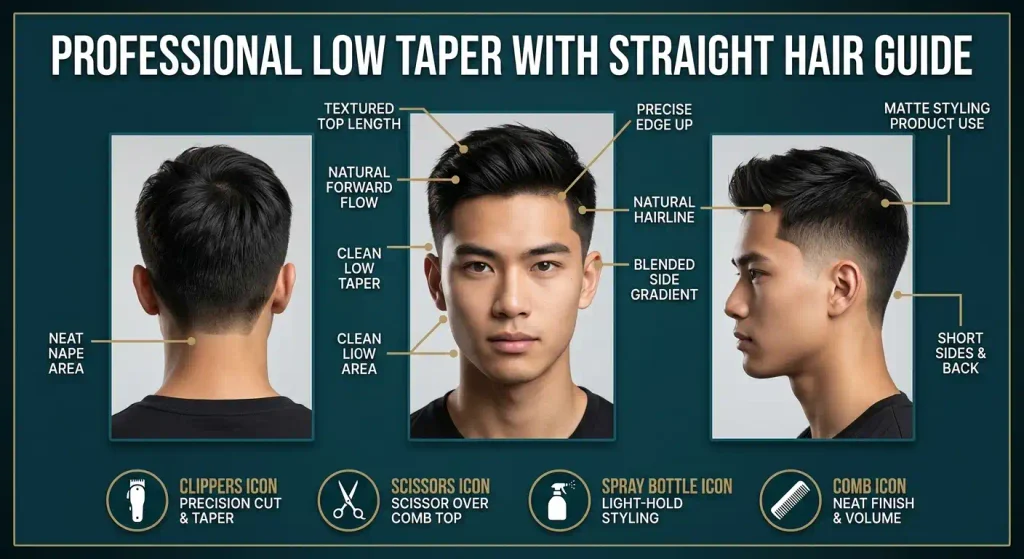
Low Taper With Straight Hair
Straight hair makes the taper transition easy to see, so blending quality matters. A #1 at the base moving through #2 can create a clean but understated gradient. Keep the top moderately long for texture and movement. Sea salt spray can add grip before finishing with a small amount of matte clay.
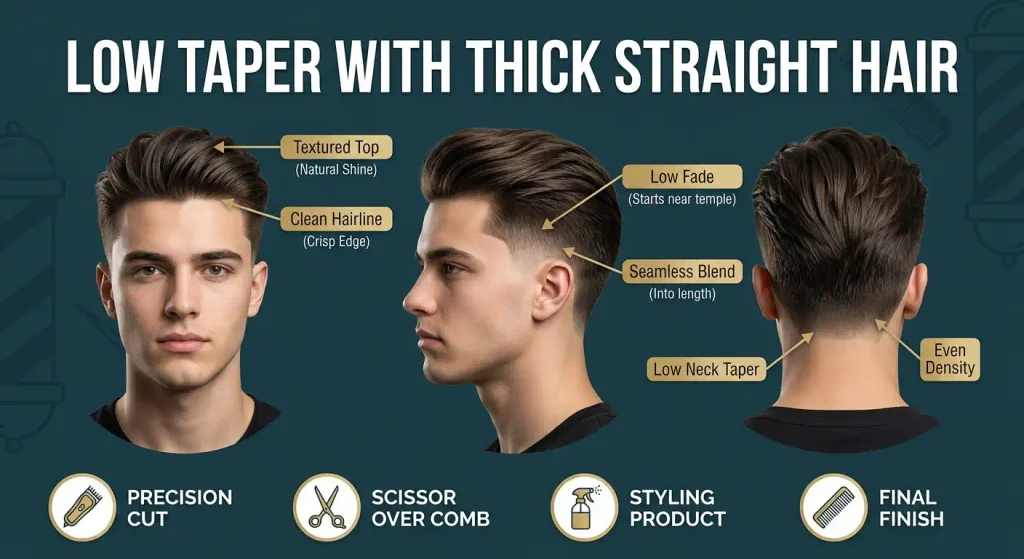
Low Taper With Thick Straight Hair
Thick hair benefits from removing weight above the taper rather than simply cutting the sides extremely short. Your barber can use clipper-over-comb and point cutting to control bulk. A #1 or #1.5 base provides contrast without creating an abrupt transition. Matte clay handles thick hair better than heavy shiny pomades for a modern finish.
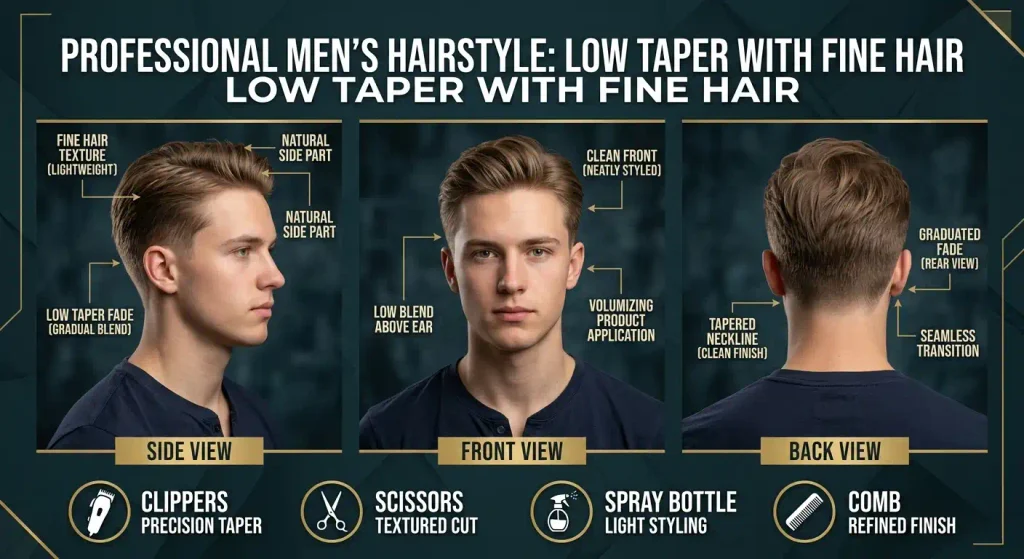
Low Taper With Fine Hair
Fine hair often looks fuller when the barber avoids removing too much weight. Keep the taper controlled around the edges and leave sufficient top length for volume. A #1-to-#2 transition can maintain a soft profile. Apply volumizing sea salt spray first, then use texture powder at the roots.
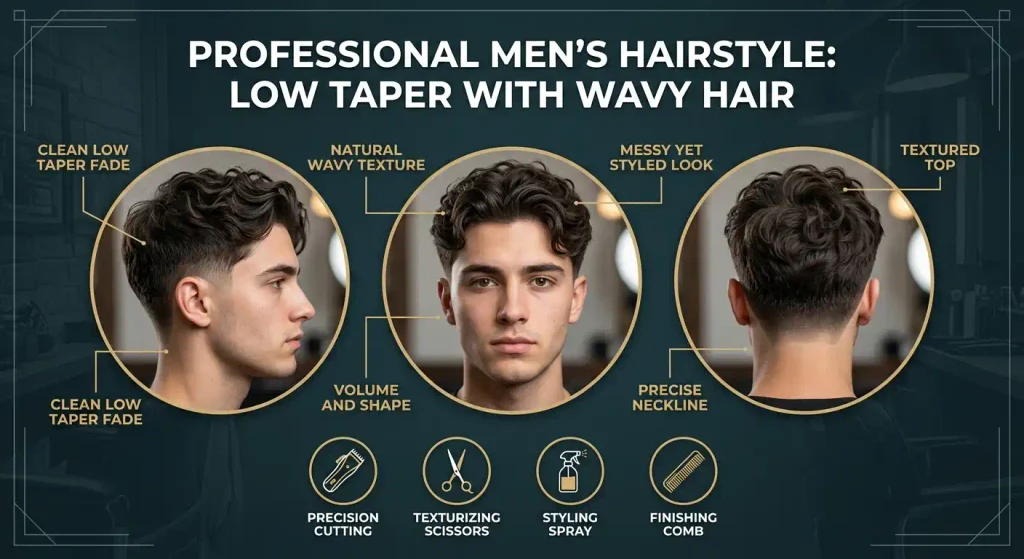
Low Taper With Wavy Hair
Wavy hair gives the top natural movement while the taper keeps the perimeter tidy. The barber should avoid over-thinning the wave pattern and can use scissors to shape the upper section. A #1 base blending into longer sides works well. Curl cream or lightweight styling cream can define the wave without stiffness.
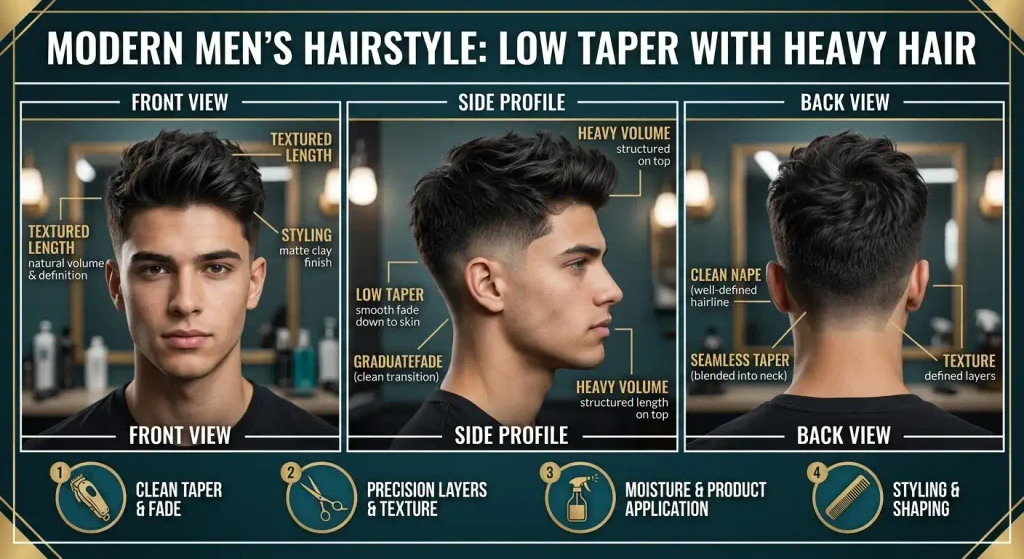
Low Taper With Heavy Hair
When hair is dense and difficult to control, the top needs strategic weight removal. Point cutting and clipper-over-comb can reduce bulk while maintaining a strong silhouette. Keep the taper low so the sides do not become overly narrow. Matte clay is useful for directing heavy hair while preserving a dry appearance.
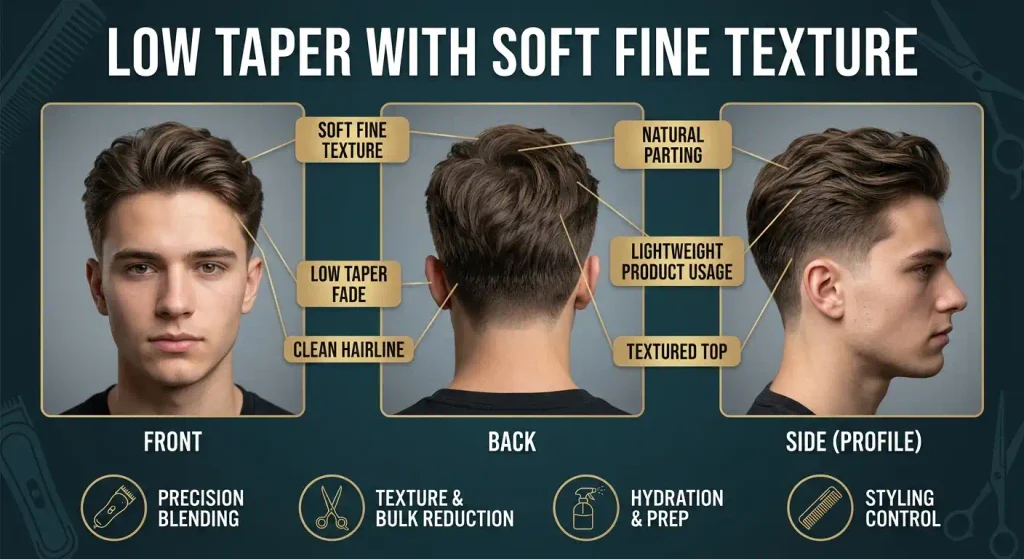
Low Taper With Soft Fine Texture
A softer texture looks better with a gradual transition rather than a harsh contrast. Start around #1 and blend upward carefully, leaving enough upper-side length to avoid exposing too much scalp. Oval and heart-shaped faces can carry this shape well. Use a lightweight cream or texture powder instead of heavy wax.
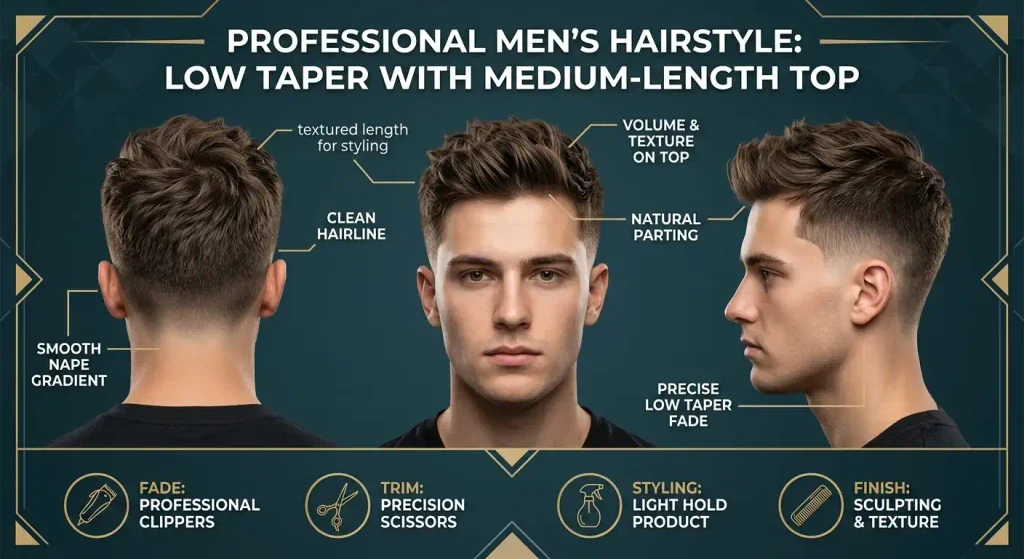
Low Taper With Medium-Length Top
Medium-length hair gives you multiple styling choices without changing the taper itself. Keep the lower perimeter around #1 and #2, then use scissors to shape the longer top. It works across straight and wavy textures. Sea salt spray provides grip, while matte paste controls flyaway during styling.
4. Curly, Textured & High-Movement Tops
A strong visual for this category would show the curl pattern from the front and the gradual taper around the temples and nape.
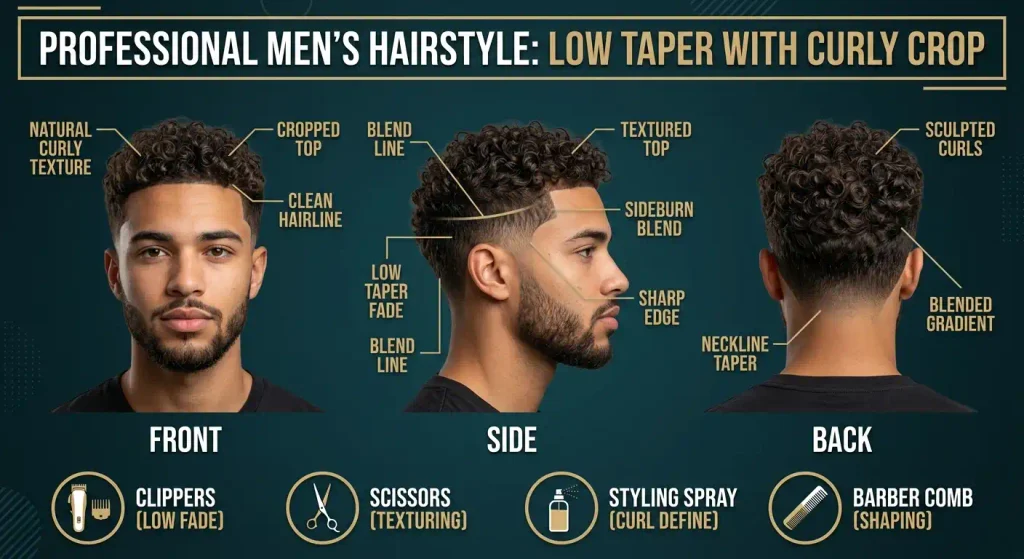
Low Taper With Curly Top
Curly hair creates strong contrast against a clean low taper. The barber should preserve the natural curl pattern instead of aggressively thinning the top. A #1 around the base can gradually transition upward without disturbing the curls. Apply curl cream to damp hair and let the curls dry naturally or with a diffuser.
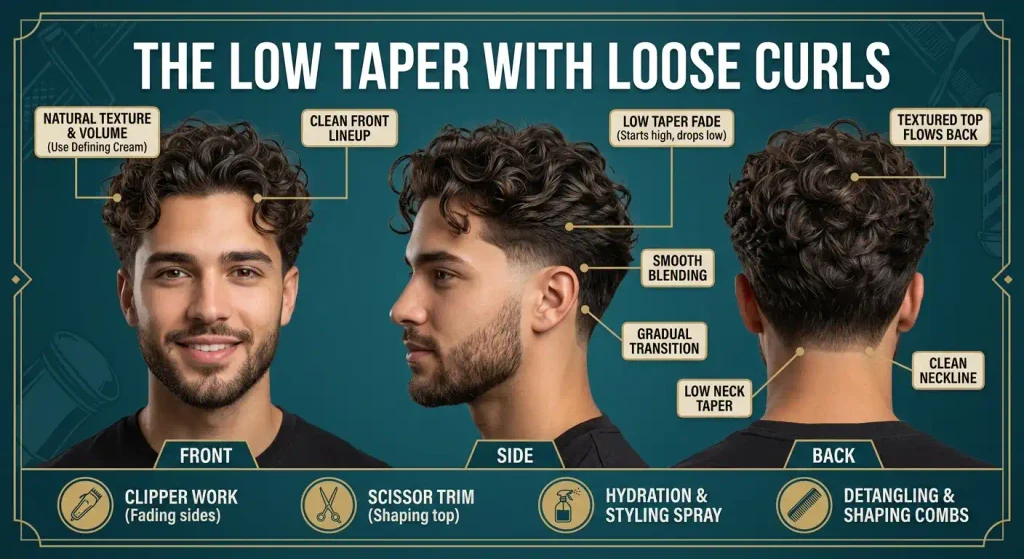
Low Taper With Loose Curls
Loose curls benefit from a softer taper because the texture already provides visual movement. Keep the lower edge neat while allowing the upper sides to blend naturally into the curls. A #1-to-#2 progression is a useful starting point. Curl cream followed by a small amount of matte styling product keeps definition without crunch.
Low Taper With Wavy Fringe
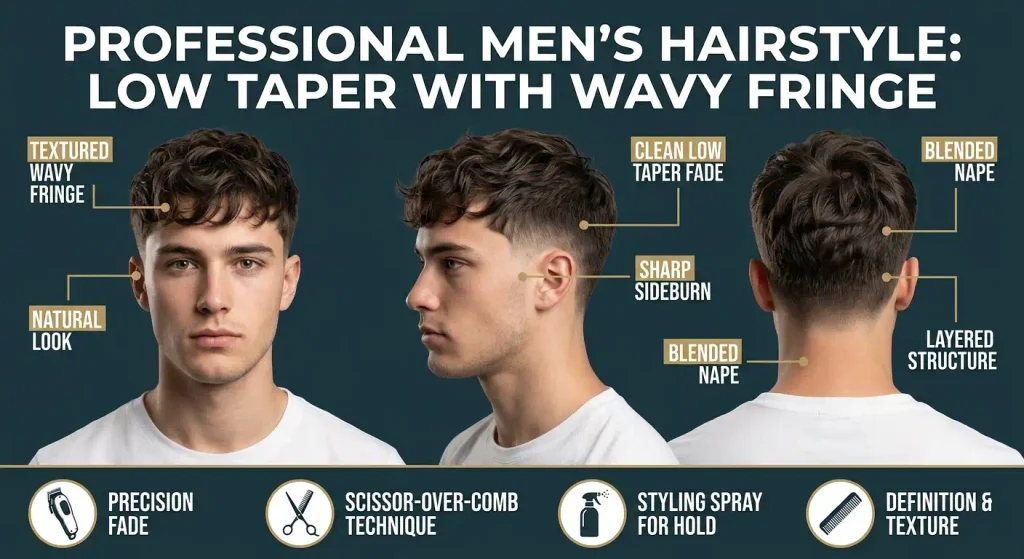
This variation combines a forward fringe with natural wave. Keep the taper low around the temples and neckline, while point cutting the top to prevent a heavy edge. It can work especially well with oval and square faces. Use sea salt spray to enhance natural movement and a tiny amount of cream for control.
Low Taper With Curly Crop
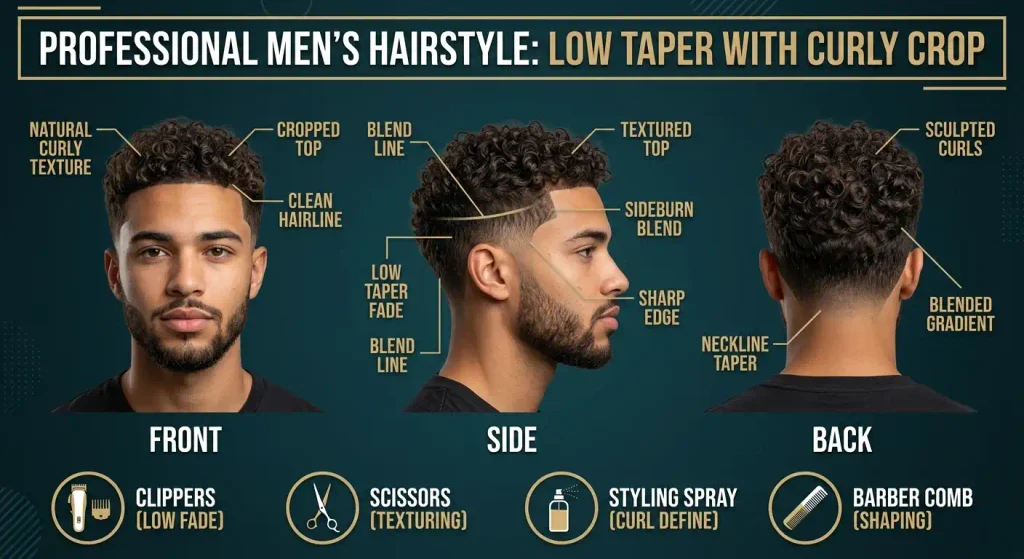
A curly crop keeps the top compact while allowing the curls to remain visible. The barber can create the perimeter with a #0.5 or #1 and blend carefully into the sides. Avoid excessive thinning, which can disrupt curl formation. A lightweight curl cream is usually enough for everyday styling.
Low Taper With Textured Waves
Natural waves become more noticeable when the sides are cleaned up without removing too much volume. Ask for a low taper and scissor-shaped top with selective point cutting. This combination suits oval, rectangular and square faces. Sea salt spray adds texture, while matte paste can be used only on the ends.
Low Taper With Defined Curls
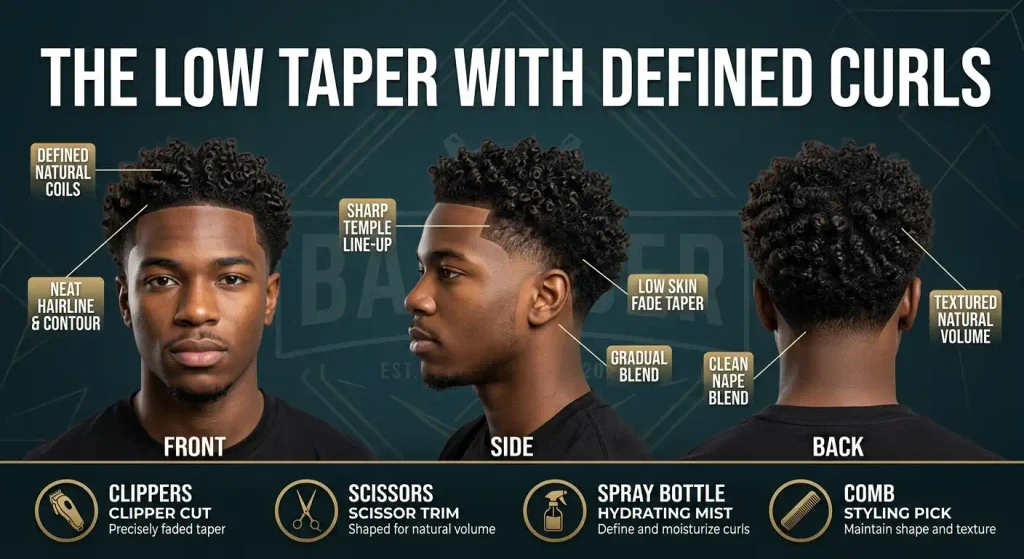
Defined curls need moisture and controlled shaping rather than aggressive cutting. Keep the taper close to the lower perimeter and allow the curl length to remain consistent above. This creates a clean frame around the face. Curl cream is the primary styling choice, with a small amount of matte paste for individual pieces if needed.
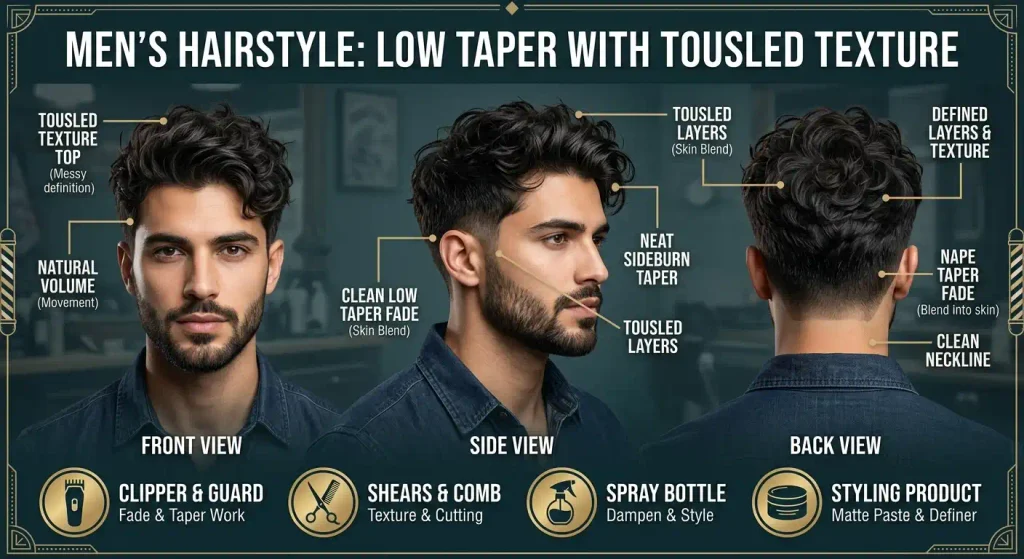
Low Taper With Tousled Texture
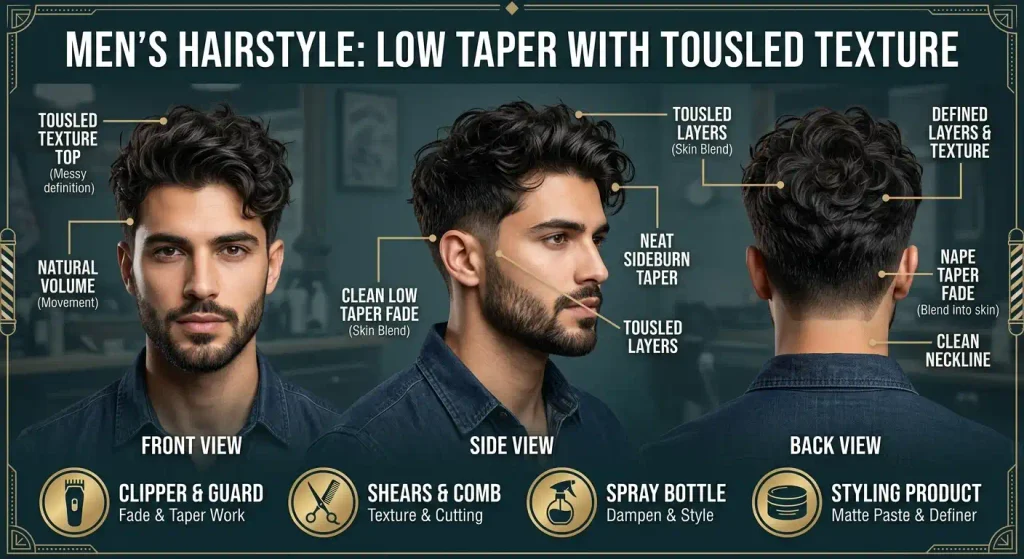
Tousled hair works when the top looks deliberately irregular rather than simply uncombed. Point cutting creates separation while a low #1-to-#2 taper keeps the lower sides tidy. This look suits oval and square faces particularly well. Work sea salt spray through damp hair, then finish with matte clay after drying.
5. Side Parts, Quiffs & Polished Hybrids
A strong visual for this category would show a clean side profile emphasizing the transition from the low taper into a styled side part or quiff.
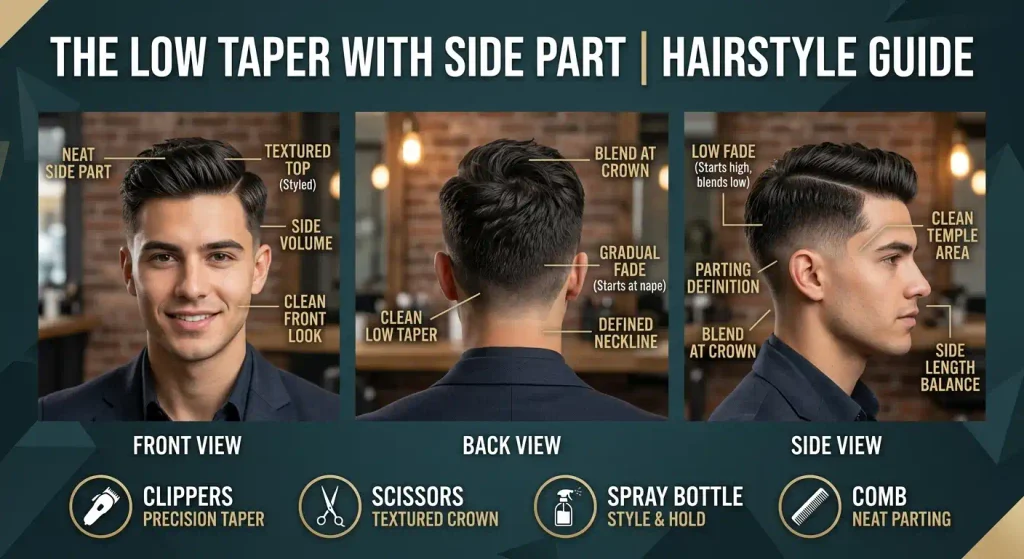
Low Taper With Side Part
The side part adds a traditional structure to a modern taper. Keep the taper low and use scissors or a subtle #1-to-#2 blend beneath the part. It works especially well with straight or moderately thick hair. A small amount of styling cream creates controlled separation without making the part look overly rigid.
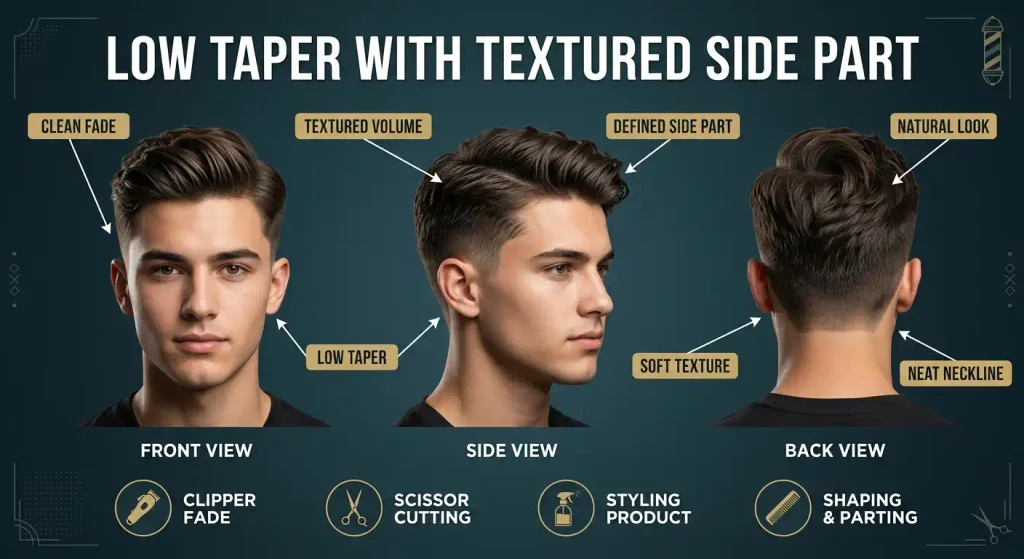
Low Taper With Textured Side Part
A textured side part feels less formal than a classic combed style. Leave enough length to move the top sideways, then use point cutting to create separation. The lower taper can begin around #1 and transition into the longer side section. Matte clay provides grip and keeps the finished style understated.
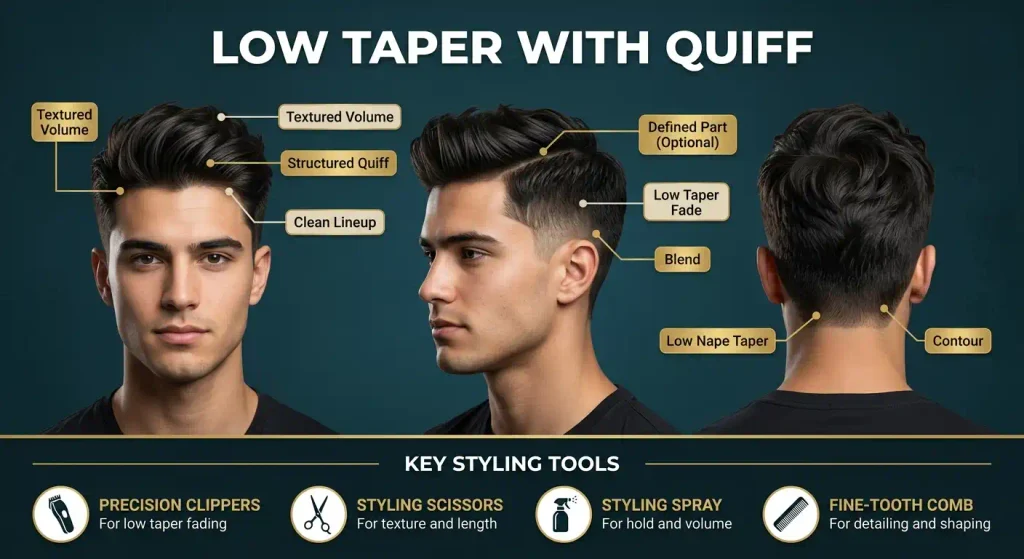
Low Taper With Quiff
A quiff adds height through the front while the low taper keeps the lower sides neat. The barber should preserve sufficient frontal length and remove excess bulk behind it. Oval and square faces usually pair naturally with this shape. Apply sea salt spray for pre-styling volume and finish with matte clay.
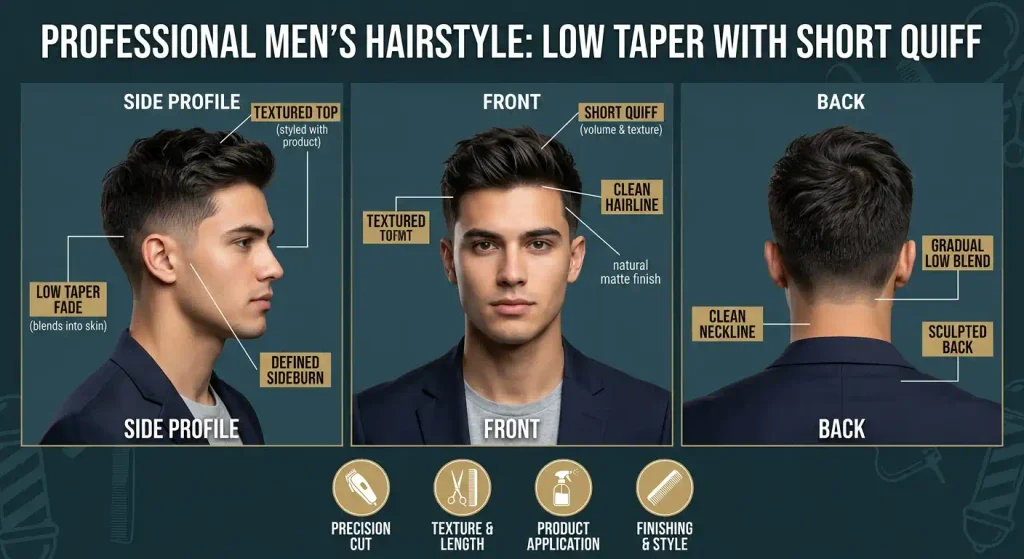
Low Taper With Short Quiff
The short quiff offers a more manageable alternative to a tall pompadour-style shape. A #1 or #1.5 taper creates a clean perimeter while the top receives light point cutting. It suits straight and thick hair particularly well. Use a matte paste and blow-dry the front upward for controlled lift.
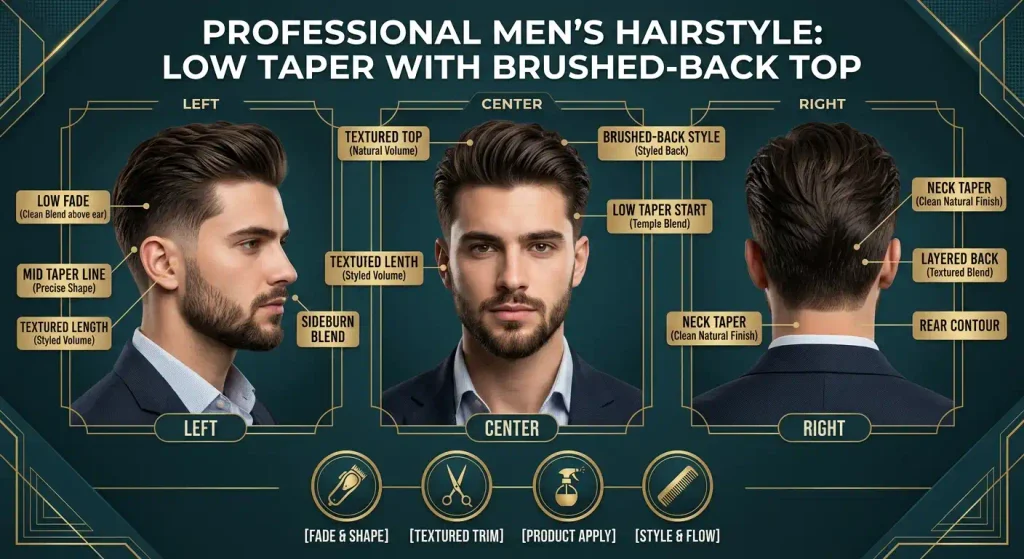
Low Taper With Brushed-Back Top
Brushing the top backward creates a clean line without requiring a high fade. Keep the lower taper subtle and leave the upper sides long enough to connect with the swept-back top. This works well with medium-density straight or wavy hair. A lightweight styling cream creates movement without the stiffness of strong gel.
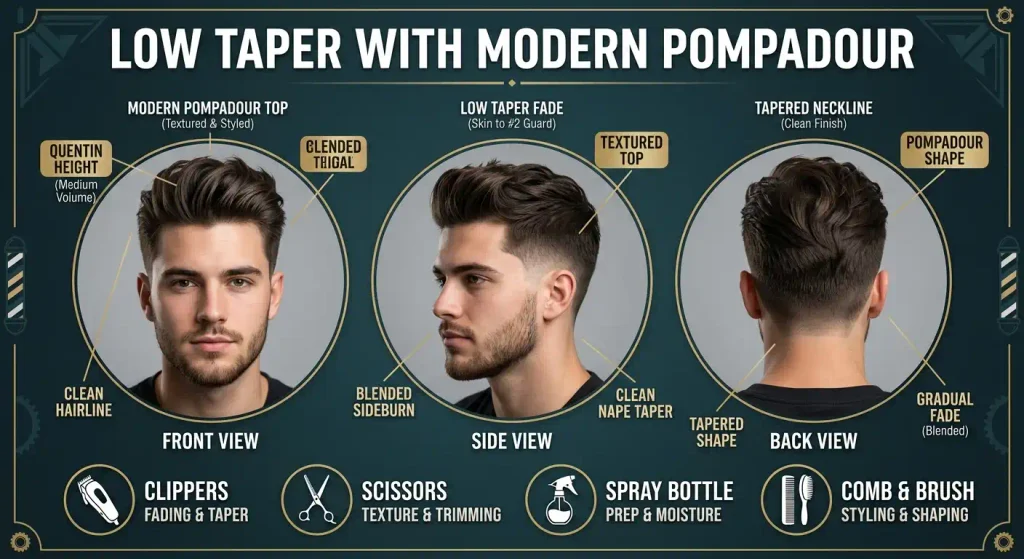
Low Taper With Modern Pompadour
The modern pompadour keeps volume at the front but avoids the exaggerated height of older versions. The taper should remain low so the top stays dominant. Blow-dry the front upward and backward before applying matte clay. This style suits oval and rectangular faces when the height is kept proportional.
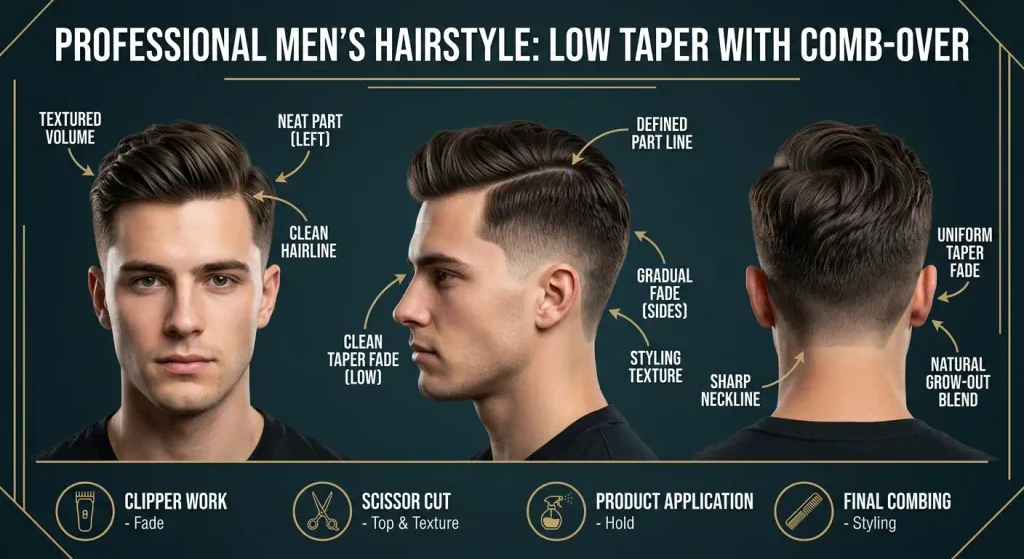
Low Taper With Comb-Over
A comb-over can be styled casually rather than tightly pressed into place. Preserve length on top and use a low #1-to-#2 taper to clean the lower sides. Fine and medium-density straight hair can benefit from the directional styling. A lightweight cream or matte paste provides enough control without flattening the top.
6. Modern Trend Hybrids & Individualized Looks
A strong visual for this category would show several modern combinations in one editorial-style collage, focusing on top shape and taper placement rather than repeating the same haircut angle.
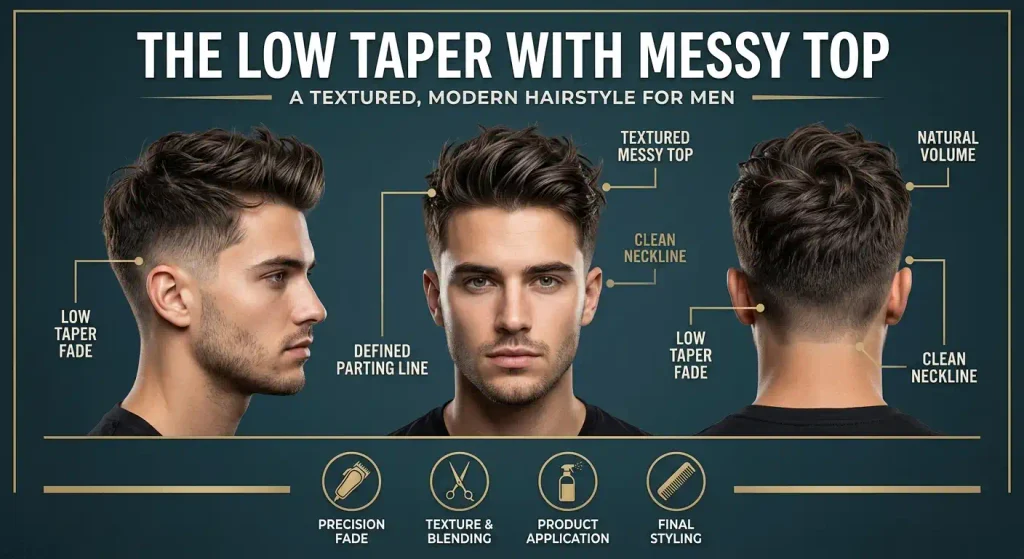
Low Taper With Messy Top
A messy top gives the haircut a relaxed finish while the taper keeps the perimeter sharp. The barber can remove small amounts of weight using point cutting instead of creating a rigid shape. It works across straight and wavy textures. Sea salt spray provides the base texture, followed by matte clay on the ends.
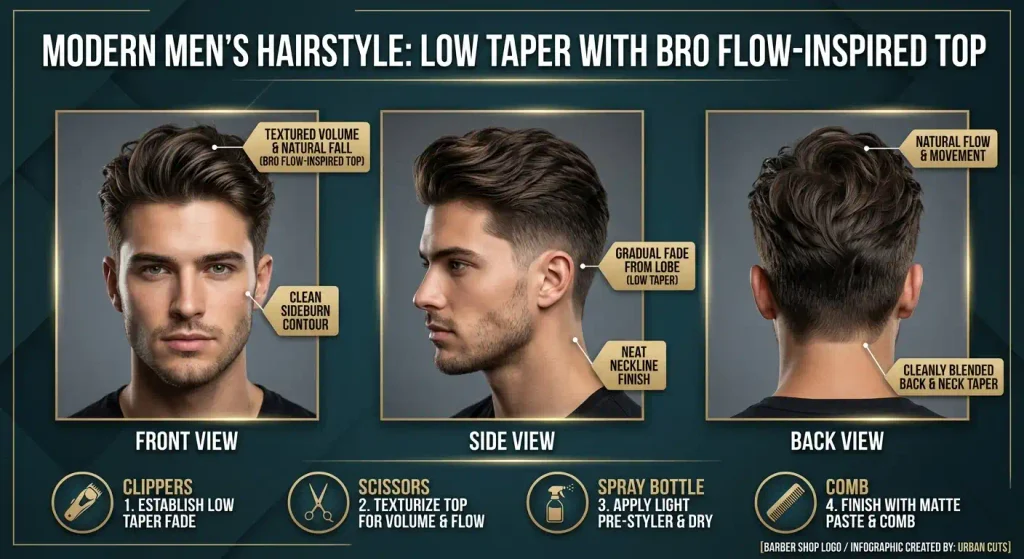
Low Taper With Bro Flow-Inspired Top
A longer flow-inspired top creates movement toward the back while the low taper provides cleaner edges. Keep enough length around the crown and upper sides for the hair to move naturally. This is particularly suitable for medium-to-thick wavy hair. Use lightweight styling cream rather than heavy wax to preserve movement.
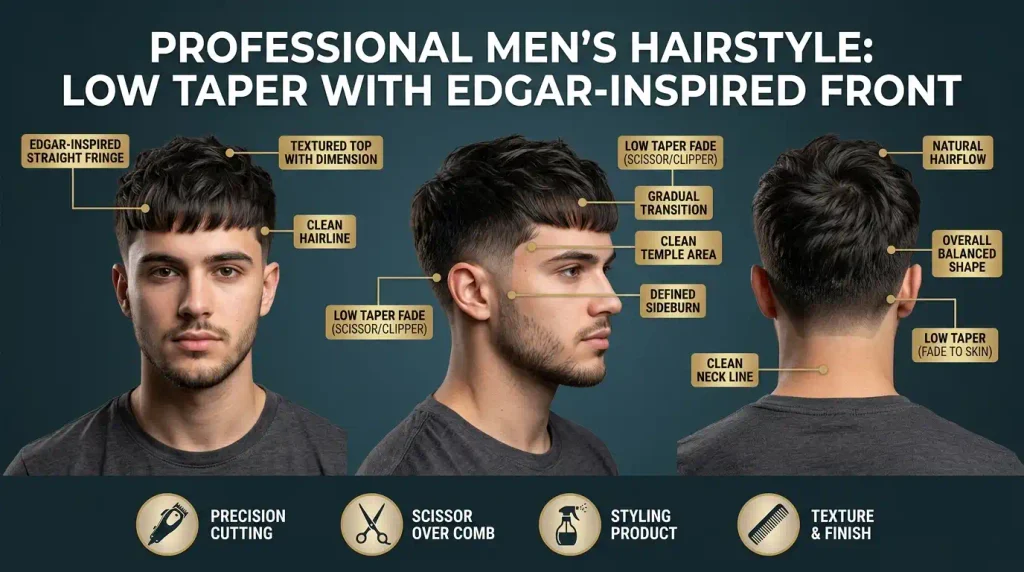
Low Taper With Edgar-Inspired Front
An Edgar-inspired version uses a stronger horizontal front while retaining the softer lower taper. The barber should establish the fringe carefully and avoid taking the taper too high. Straight, thick hair makes the geometry easiest to maintain. Matte clay or texture powder can reinforce the front without adding unwanted shine.
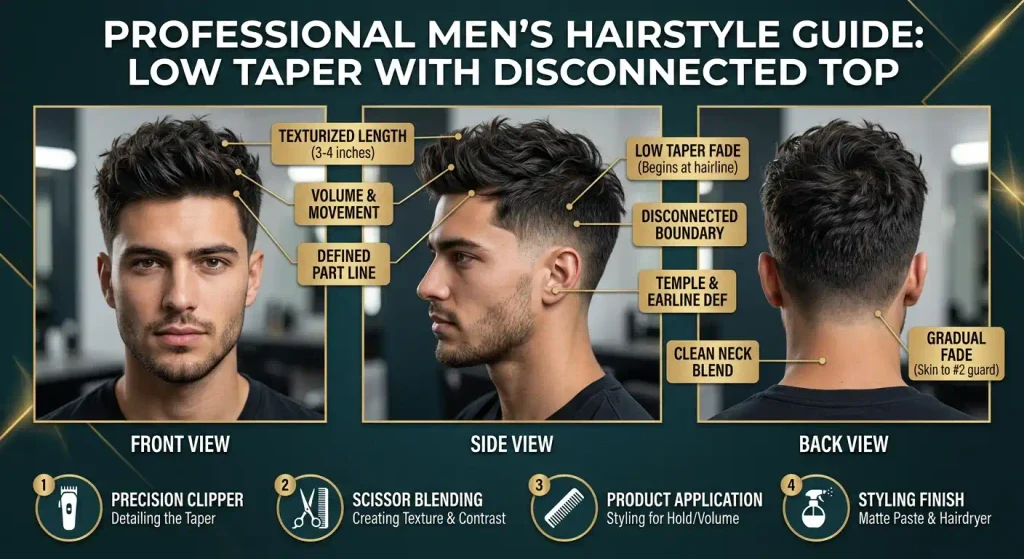
Low Taper With Disconnected Top
A subtle disconnection leaves noticeable length between the upper section and lower taper. This creates stronger contrast than a conventional blend, so the transition should be intentional. It works best when the top has enough density to support the shape. Matte clay is useful for emphasizing the separation.
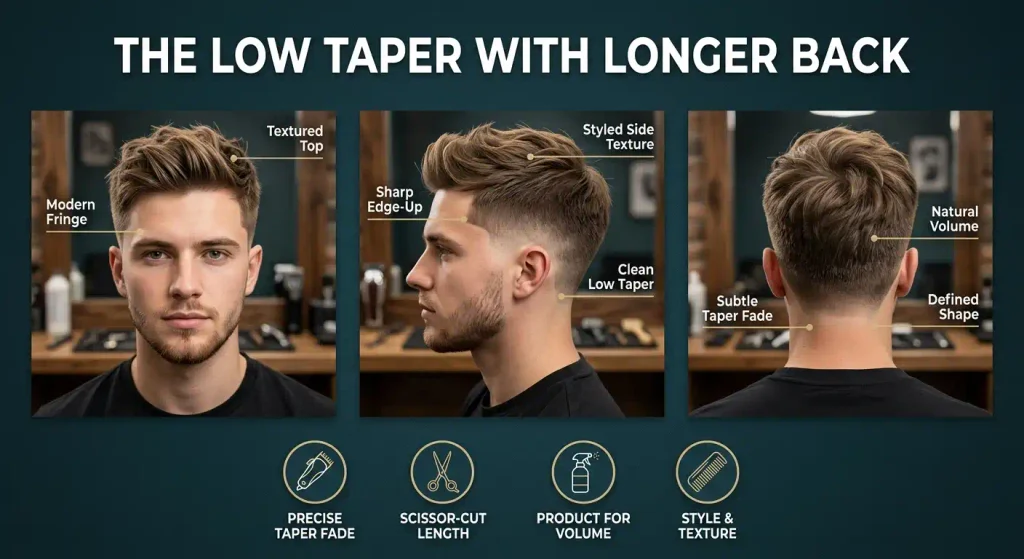
Low Taper With Longer Back
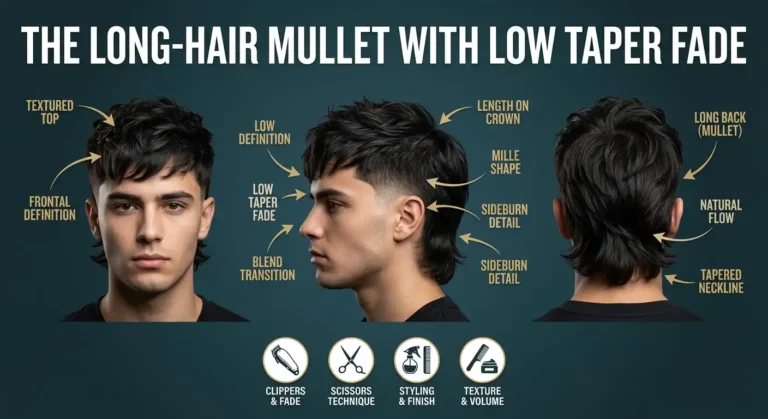
Keeping extra length toward the back gives the haircut a modern flow without turning the taper into a high fade. The barber should blend the lower neckline while preserving the longer upper-back section. Wavy or thick hair works especially well. Styling cream keeps the back controlled while maintaining natural movement.
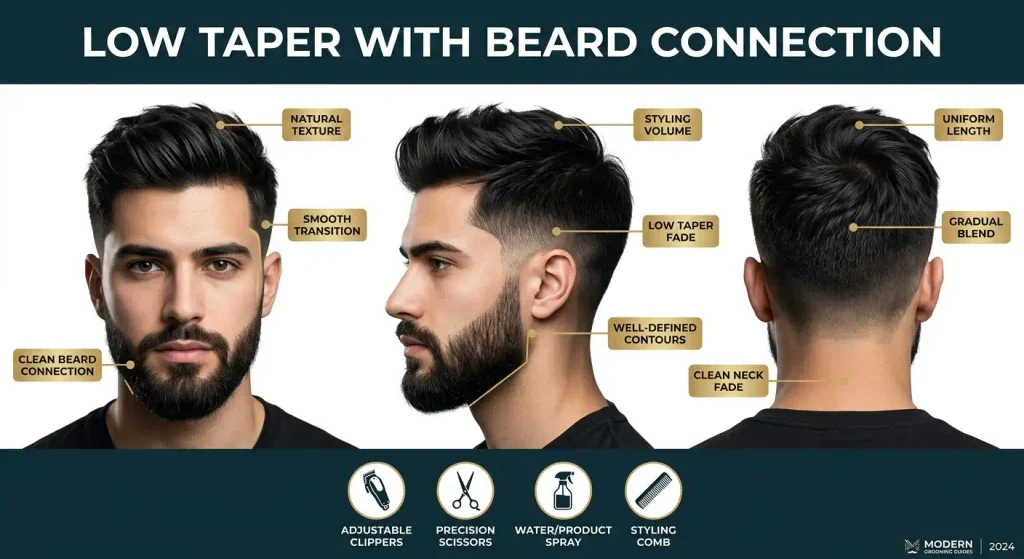
Low Taper With Beard Connection
A beard connection can visually extend the taper into the facial hair. The barber should carefully blend the sideburn area rather than creating a sudden jump between haircut and beard. The result works especially well with square or oval faces. Use a small amount of beard balm and matte hair product separately.
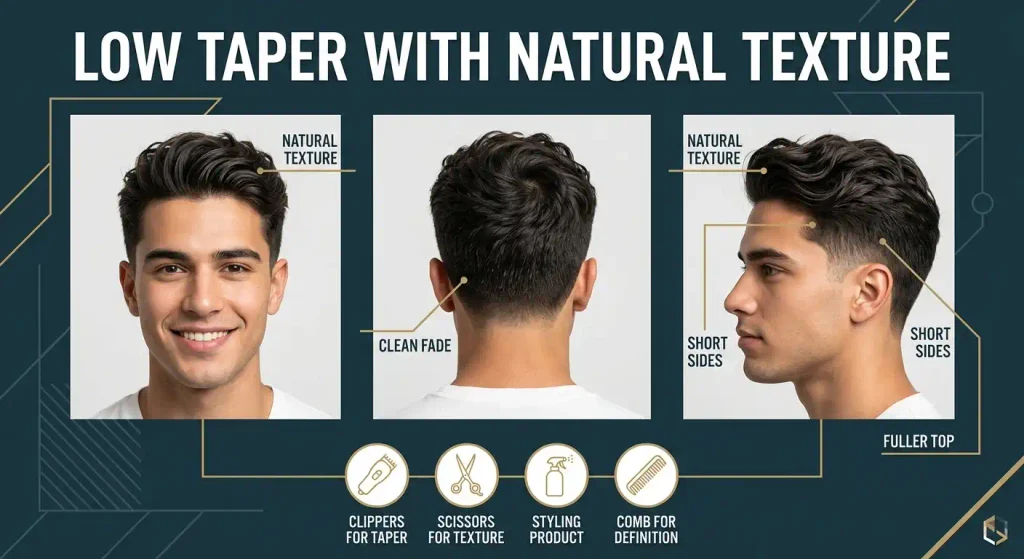
Low Taper With Natural Texture
Natural texture is often the most flexible approach because the haircut works with the hair rather than fighting it. Keep the taper low and let the barber shape the top according to its natural direction. Straight, wavy and curly textures can all use this method. Choose styling cream, curl cream or matte clay according to texture.
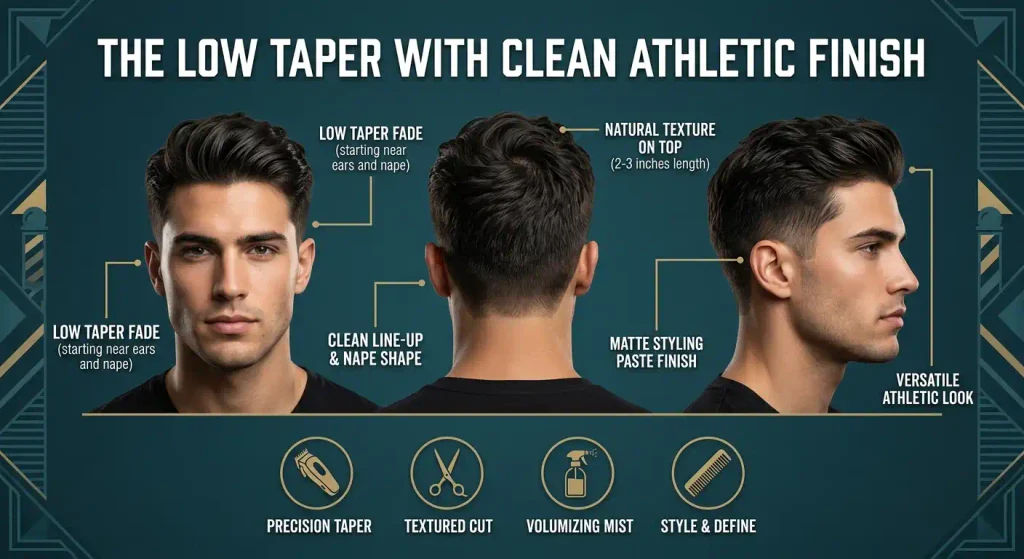
Low Taper With Clean Athletic Finish
A compact top and controlled sides create an easy athletic haircut. The taper can start around #0.5 or #1 and transition into #2 without removing excessive upper-side volume. It suits active lifestyles because styling takes little time. A small amount of matte paste or texture powder provides enough control for daily wear.
Fade vs. Taper: Which Structure Fits Your Haircut?
| Feature | Low Taper | Low Fade | Mid Fade | High Fade |
| Blend location | Very low | Low | Mid-side | High-side |
| Side volume | More | Moderate | Less | Least |
| Neckline | Tapered | Usually faded | Usually faded | Usually faded |
| Temple area | Subtle | More visible | Stronger | Strongest |
| Top contrast | Low | Moderate | High | Very high |
| Maintenance | Moderate | Moderate | Higher | Higher |
| Natural appearance | High | Moderate | Moderate | Lower |
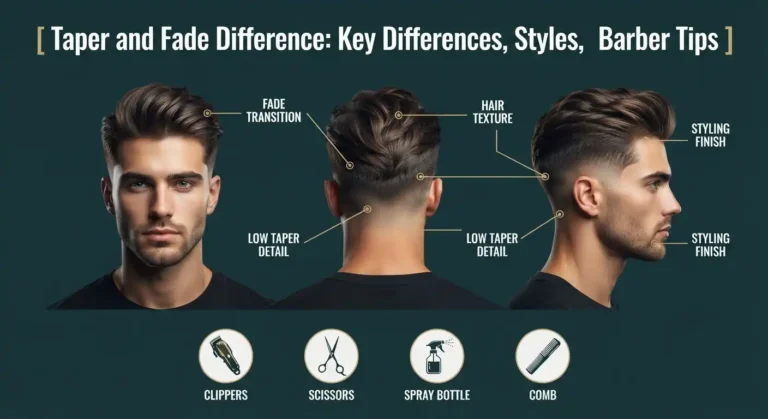
A taper is generally the more understated option because the shortest area is concentrated around specific perimeter zones.
A fade expands the graduated transition farther up the sides, creating more visible contrast between the top and lower sides.
Face Shape & Hair Texture Mapping Guide
Oval Face
Most taper variations can work with an oval face. Keep the top proportional rather than adding unnecessary height.
Square Face
A textured crop, side part or controlled quiff can complement a strong jawline. Avoid excessive width if you want a more streamlined outline.
Round Face
A little extra height on top can create a longer visual profile. Textured quiffs and forward-styled tops can both work when proportioned correctly.
Oblong Face
Avoid making the top excessively tall. Medium-length textured styles with moderate side volume can create better balance.
Heart-Shaped Face
A textured fringe or side-swept top can help distribute visual weight. Keeping some upper-side volume can also prevent the lower face from appearing overly narrow.
Straight Hair
Straight hair shows the taper transition clearly. Precision blending and controlled point cutting are especially important.
Wavy Hair
Work with the natural wave instead of flattening it. Sea salt spray or lightweight styling cream can enhance movement.
Thick Hair
Remove weight strategically with scissors and clipper-over-comb. Do not simply take the sides extremely short.
Fine Hair
Preserve density and avoid excessive thinning. Texture powder can create lift without weighing the hair down.
Curly Hair
Maintain the natural curl pattern. Curl cream generally provides better control than heavy wax or gel.
Styling Tutorial: Choosing the Right Product
Matte Clay
Matte clay provides grip and separation with little visible shine. It is particularly useful for thick, straight or textured hair where you want definition without a wet finish.
Start with a small amount, warm it between your palms and work it through dry hair. Add more only where additional control is needed.
Sea Salt Spray
Sea salt spray adds texture, grip and light volume. It works especially well before blow-drying straight or wavy hair.
Spray lightly onto damp hair, distribute evenly and shape with your fingers. Avoid oversaturating fine hair because too much product can make it feel dry or stiff.
Curl Cream
Curl cream is designed to enhance natural curl formation while adding moisture and reducing frizz. It is generally more suitable for curly and wavy textures than heavy matte products.
Apply a small amount to damp hair, scrunch the curls and allow them to dry naturally or use a diffuser on a low setting.
Step-by-Step Barbering Guide
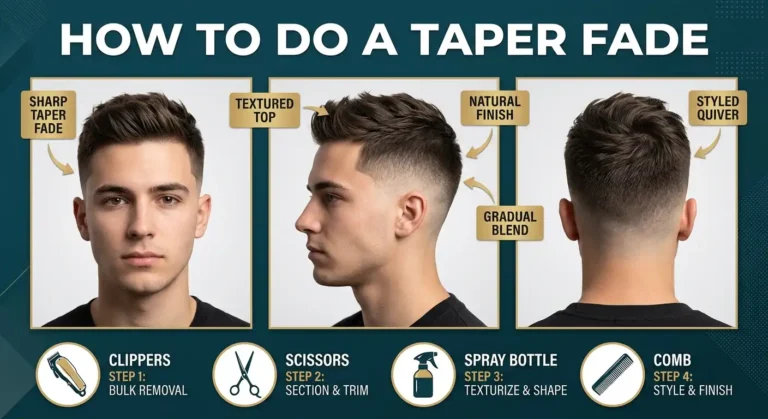
1. Establish the Taper Zone
The barber first identifies how low the taper should sit around the sideburns and neckline. Keeping this zone low preserves more side volume.
2. Create the Shortest Base
A #0, #0.5 or #1 can establish the shortest point depending on the desired finish. A #0 produces a tighter appearance, while #1 generally looks softer.
3. Build the Transition
The barber gradually moves through longer guards, commonly #1.5 and #2, while flicking the clipper away from the head. This reduces visible weight lines.
4. Refine With Clipper-Over-Comb
For thicker hair, clipper-over-comb removes bulk while preserving the overall silhouette. This is especially useful when the upper sides need to connect smoothly to the taper.
5. Shape the Top
The top can be cut with scissors according to the selected variation. Point cutting can create texture without making the ends look excessively blunt.
6. Detail the Hairline
The barber checks the temples, sideburns and neckline for symmetry. Natural hairlines should generally be respected rather than aggressively reshaped.
Maintenance: How Often Should You Get a Taper?
For most people, a 2–4 week maintenance cycle keeps the taper looking intentional.
A two-week visit suits men who want very crisp edges. Around three weeks provides a balance between sharpness and growth, while four weeks allows more natural growth before the next cleanup.
The exact schedule depends on hair growth speed, density and how precise you want the neckline and sideburns to remain.
Common Mistakes to Avoid
Taking the Taper Too High
A taper loses its subtle character when the blend climbs too far up the sides. Tell your barber clearly that you want the taper concentrated low.
Using Too Many Products
Heavy products can make textured hair look flat. Start with a small amount and add more only when necessary.
Ignoring Hair Density
Thick hair often needs weight removal, while fine hair needs weight preservation. The same cutting strategy should not be used for both.
Over-Thinning Curly Hair
Aggressive thinning can disturb the curl pattern and create uneven texture. Controlled shaping is usually a better approach.
Making the Hairline Too Artificial
A perfectly squared hairline can look harsh when it does not match the natural growth pattern. Discuss whether you want a natural or enhanced edge-up.
Neglecting the Neckline
Even a good taper can look untidy when the neckline grows out. Regular cleanup keeps the haircut looking intentional between full appointments.
Choosing a Style Without Considering the Top
The taper is only part of the haircut. The fringe, crown, texture and top length should all work with your face shape and natural hair direction.
FAQ
What is a low taper on a white guy?
It is a haircut where the taper is concentrated around the lower sideburns, temples and neckline while most of the side and top length remains intact. It can be paired with crops, fringes, side parts, curls, waves or longer textured tops.
Does a low taper work with straight white hair?
Yes. Straight hair can show a clean taper transition very clearly. The main focus should be on smooth blending and preserving enough top or side density for the desired shape.
What guard should I ask for on a low taper?
A common starting point is #0.5 or #1 at the lowest section, followed by longer guards such as #1.5 and #2. The exact guard depends on hair density, skin visibility and how tight you want the taper.
How often should I maintain a low taper?
Every 2–4 weeks is a practical range. Men who want very sharp edges may prefer closer two-week appointments, while others can comfortably wait around four weeks.
Can white men with curly hair get a low taper?
Yes. The taper can frame curly hair effectively while leaving the natural curl pattern on top. Curl cream is often more useful than heavy wax because it preserves movement and definition.
Is a low taper the same as a low fade?
No. A low taper normally concentrates the shortest area around the sideburns and neckline. A low fade generally carries the graduated transition farther around the sides of the head.
What should I tell my barber?
Tell your barber how low you want the taper, how much side volume you want to keep and what you want done on top. A useful starting request is: “Keep the taper low, start around a #0.5 or #1, blend into a #2, and leave the upper sides long enough to connect naturally.”
What product is best for a low taper hairstyle?
The best product depends on the top texture. Matte clay works well for thick or textured hair, sea salt spray adds grip and movement to straight or wavy hair, and curl cream is generally better for curly textures.
Final Takeaway
The appeal of this haircut comes from its flexibility: the taper can stay subtle while the top changes completely. Straight hair can be shaped into a crop or side part, waves can be enhanced with texture, and curls can remain natural while the perimeter stays clean.
For the best result, tell your barber exactly how low you want the taper, which guard should establish the base, how much side volume you want to keep, and how you normally style the top.
Name: Ryan Cole
Role: Lead Grooming Editor, TaperHaircutGuide.com
Bio angle: Men’s grooming/style content researcher — 4+ years covering barbering trends, hairstyling terminology, and men’s style content for US audience. Cross-checks every guide with practicing barbers before publishing.