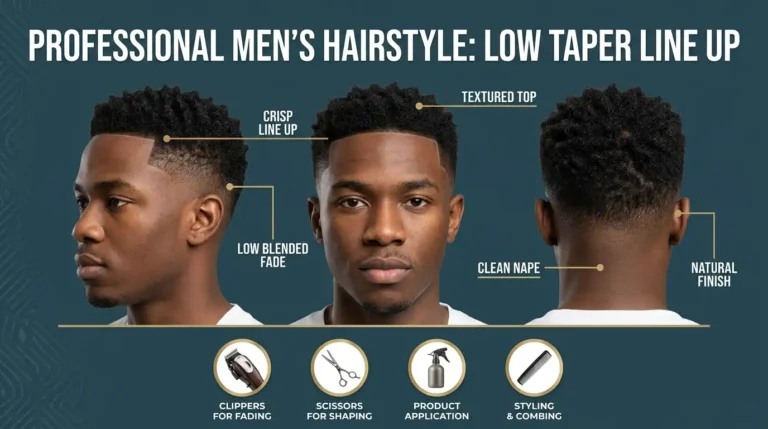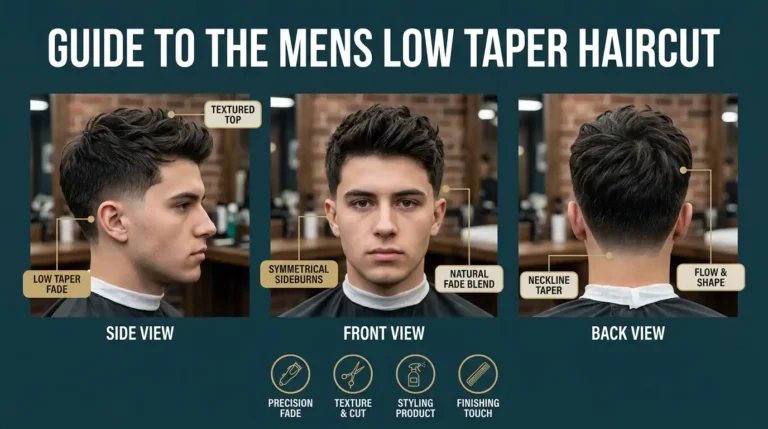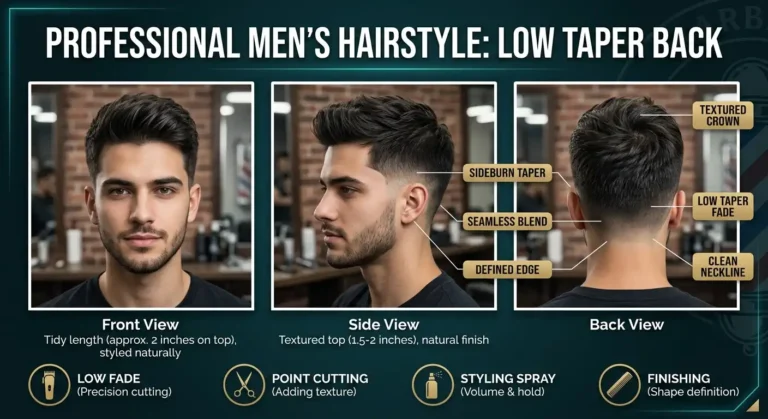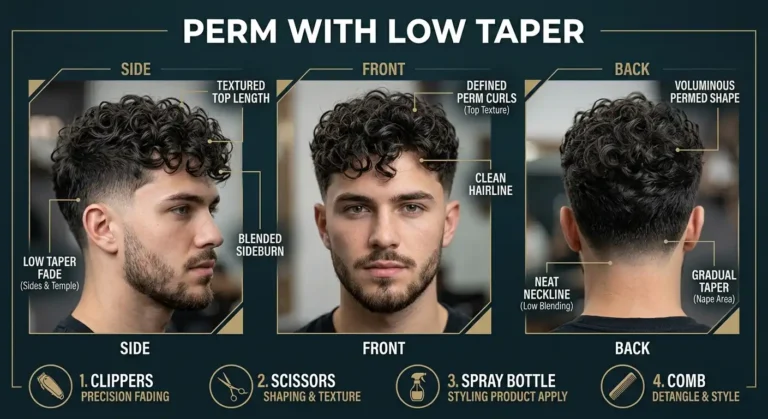
60 Haircut for Men Low Taper Ideas: Best Modern Styles

Introduction
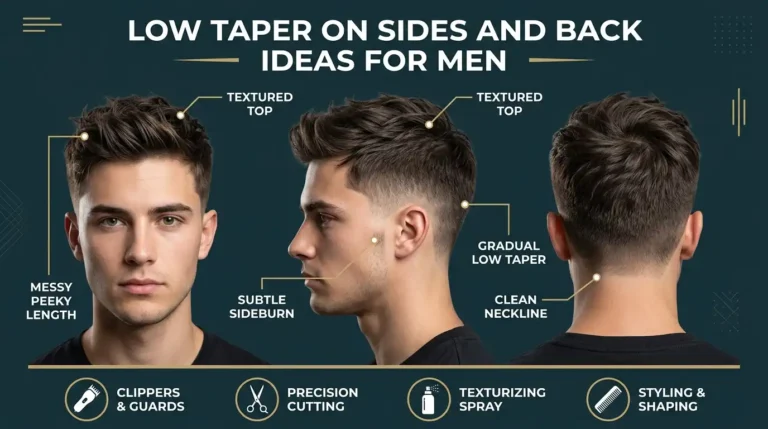
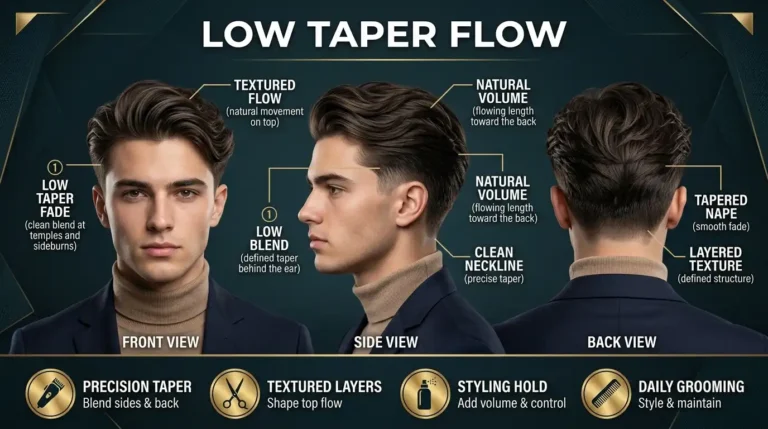
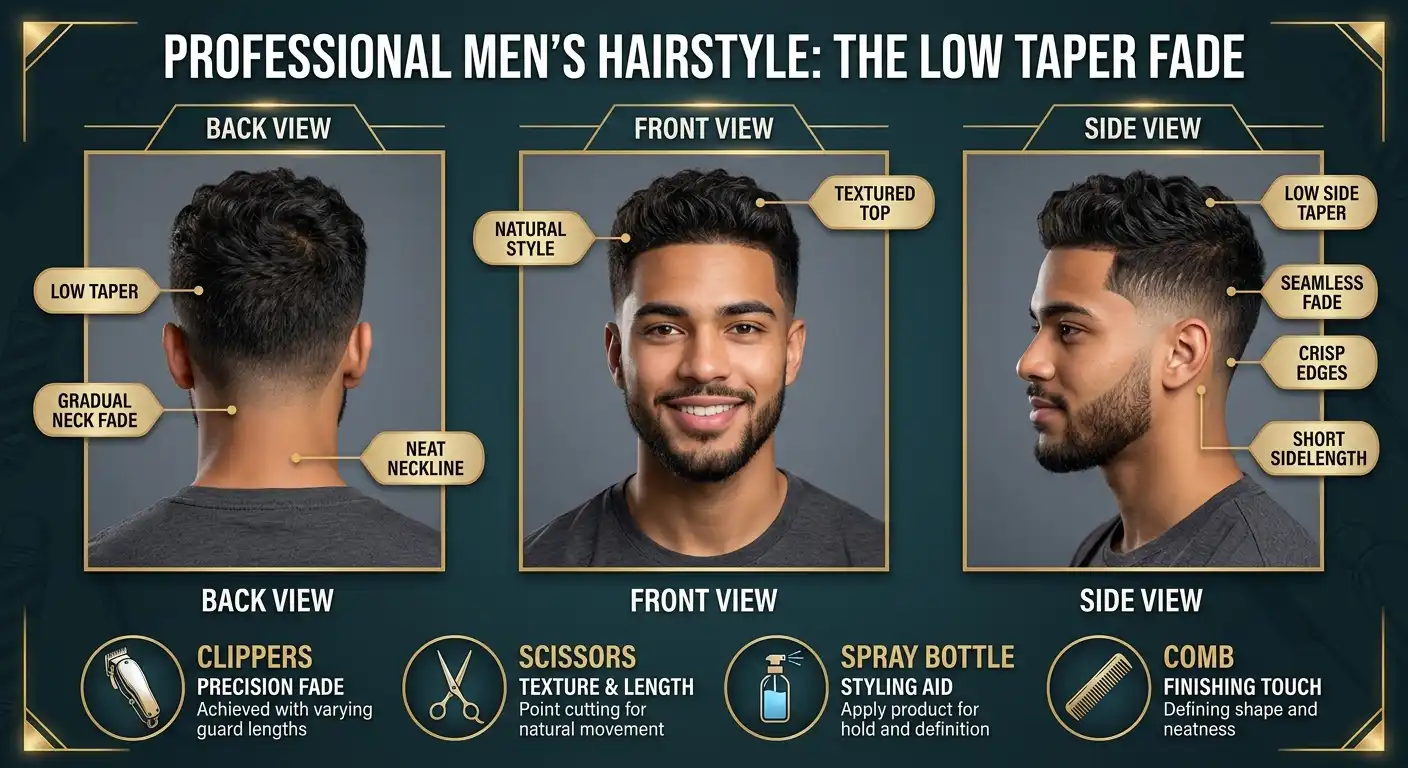
A haircut for men low taper gradually shortens the hair around the temples, sideburns, ears, and neckline while keeping more length on the upper sides and top. It creates a clean shape without forcing you to wear a high fade or very short haircut.
The best version depends on your hair type, face shape, preferred length, and daily routine. Explore these 60 styles to find a look that fits you, then use the barber instructions and care tips to get a result that works with your natural hair.
Quick Overview: 5 Styles Worth Considering
| Style | Best Hair Type | Best Face Shapes | Overall Look |
| Textured Crop | Straight, thick, wavy | Oval, round | Casual and modern |
| Classic Side Part | Straight, wavy | Oval, square | Neat and timeless |
| Curly Top | Curly, coily | Oval, square | Natural and full |
| Brush-Up | Straight, thick | Round, oval | Lifted and bold |
| Long Flow | Straight, wavy | Oval, oblong | Relaxed and soft |
60 Haircuts for Men with a Low Taper
Classic and Short Haircuts
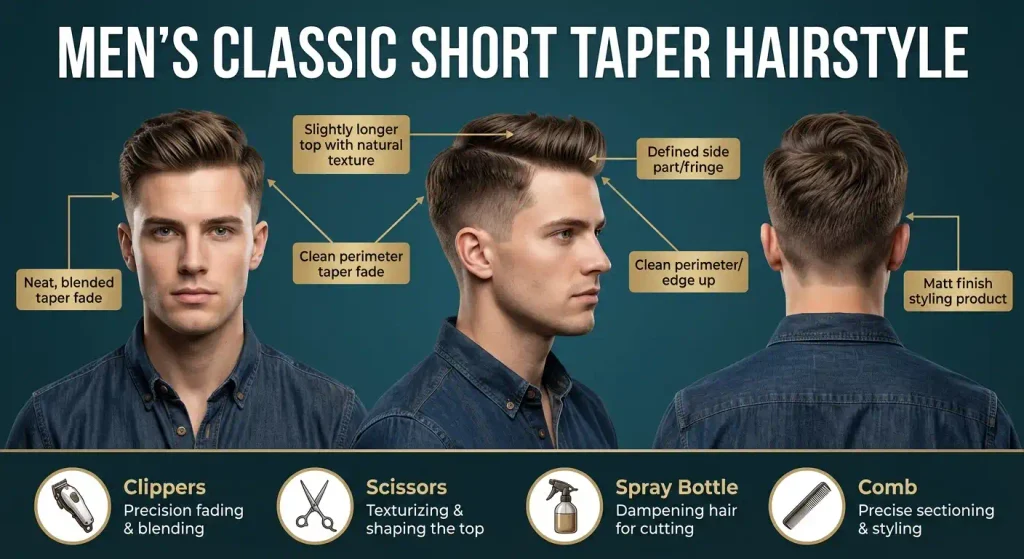
1. Classic Short Taper
This cut keeps the top short and the lower sides neatly blended. A #3 or #4 can retain weight above the taper, with shorter guards used near the ears. It suits straight and wavy hair and works well for oval or square faces. A little matte cream adds texture without making the hair look greasy.
2. Short Textured Crop
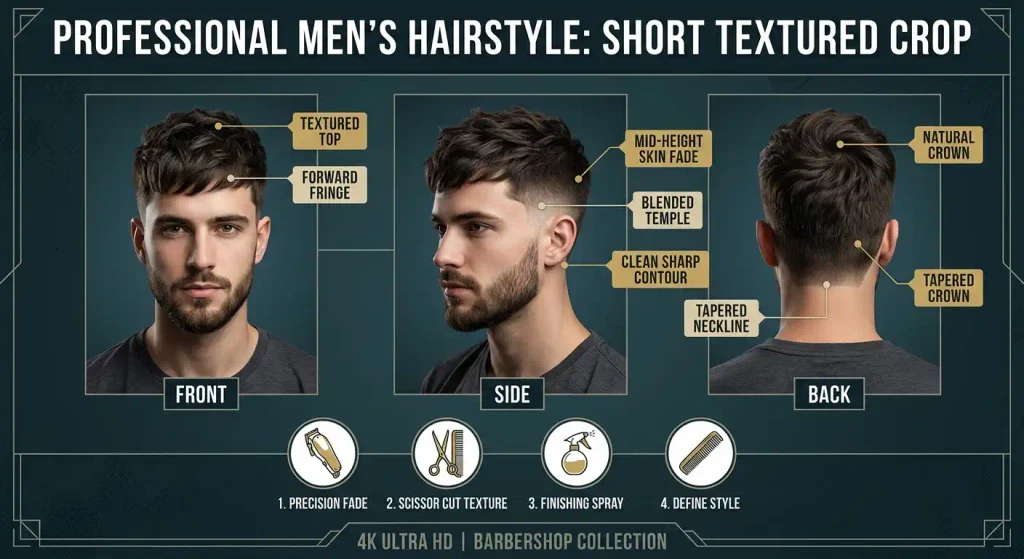
A short textured crop uses choppy layers to stop the top from looking flat. Ask your barber for point cutting and a low blend around the temples. Thick, straight, or wavy hair works well, especially for oval and round faces. Matte clay gives the top separation while keeping the finish natural.
3. Crew Cut with Low Taper
The crew cut keeps the top short, with a little extra length near the front. A low taper cleans the ears and neckline without taking the sides too high. This is a practical choice for busy routines and most hair textures. Oval and square faces suit its balanced shape, and it needs very little styling product.

4. Ivy League Taper
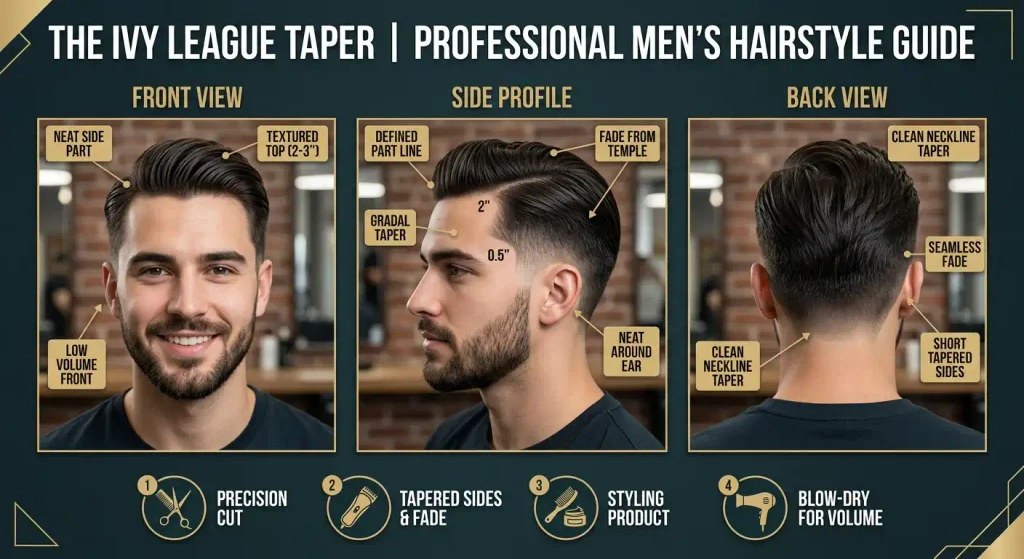
The Ivy League leaves enough top length for a small side sweep while keeping the overall shape neat. The taper should remain low, with the upper sides left fuller. Straight or slightly wavy hair is easiest to style. Oval and square faces suit the cut, while a light pomade adds a clean finish.
5. Caesar Cut
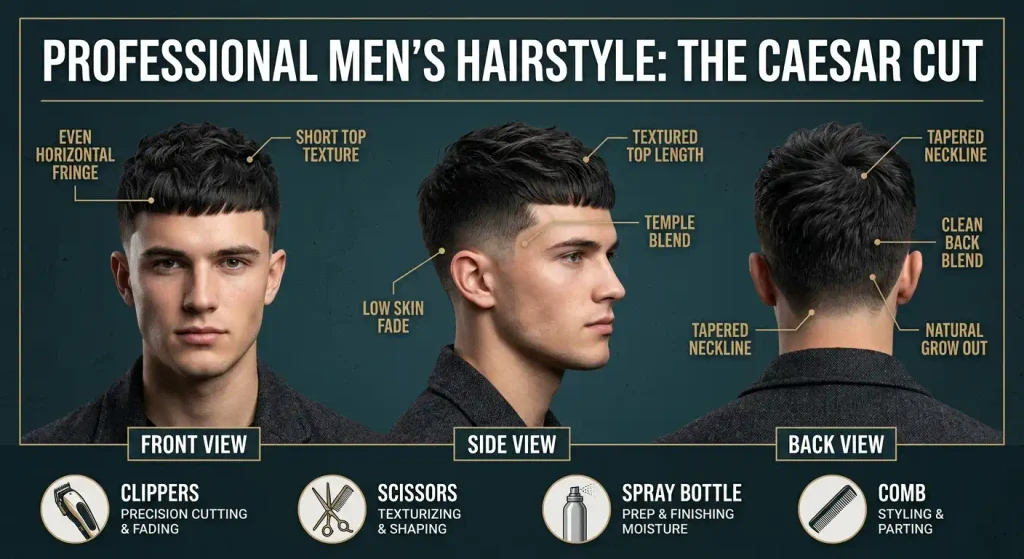
A Caesar has a short top brushed forward into a compact fringe. The low taper cleans the lower outline while the fringe gives the haircut its main shape. Straight, thick, or textured hair can work. Oval and square faces are good options. Use a small amount of matte paste to define the front without making it stiff.
6. Buzz Cut with Low Taper
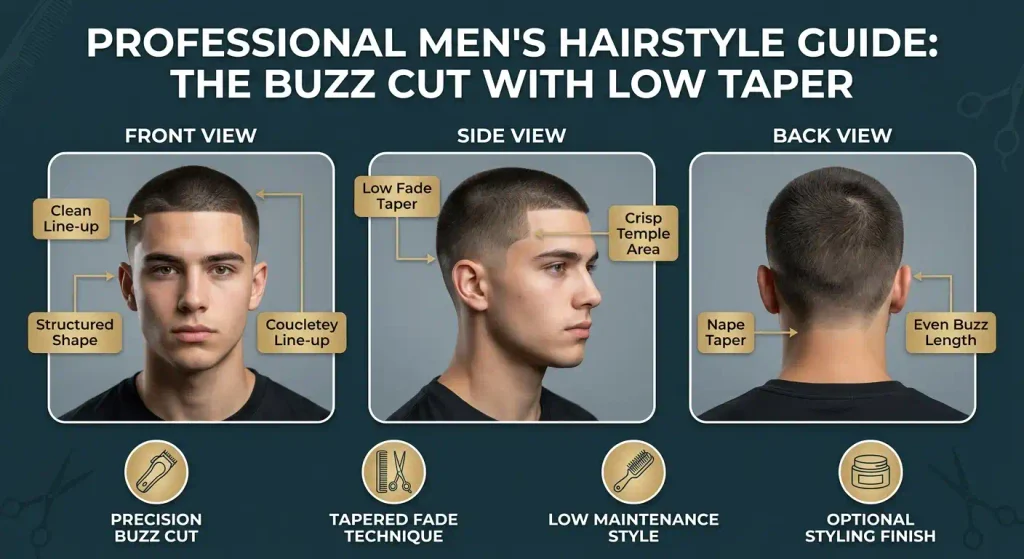
A buzz cut keeps the top short and simple, while the low taper gives the perimeter more detail. A #2, #3, or #4 may suit the top, depending on the desired coverage. It works with straight, wavy, curly, and coily hair. Oval and square faces often suit the clean shape, which needs little daily styling.
7. Short Side-Swept Hair
The top is cut long enough to move gently to one side, rather than being styled into a sharp part. A low taper keeps the outline tidy. Straight and wavy hair work well, especially on oval or oblong faces. Use lightweight cream to control flyaways while keeping the hair soft and flexible.

8. French Crop
The French crop features a defined forward fringe and a short, textured top. Keep the taper low to preserve weight around the upper sides. Straight or thick hair is easy to shape, while natural texture adds character. Oval and round faces can suit this cut. Matte paste helps separate the fringe without creating shine.

9. Short Slick Back
This variation directs the short top backward for a neat, controlled appearance. Leave enough length for the hair to follow the desired direction, then taper only the lower sides. Straight and medium-thick hair is easiest to manage. Oval and square faces suit the shape. Use light pomade or cream rather than a heavy product that flattens the top.
10. Short Spiky Taper
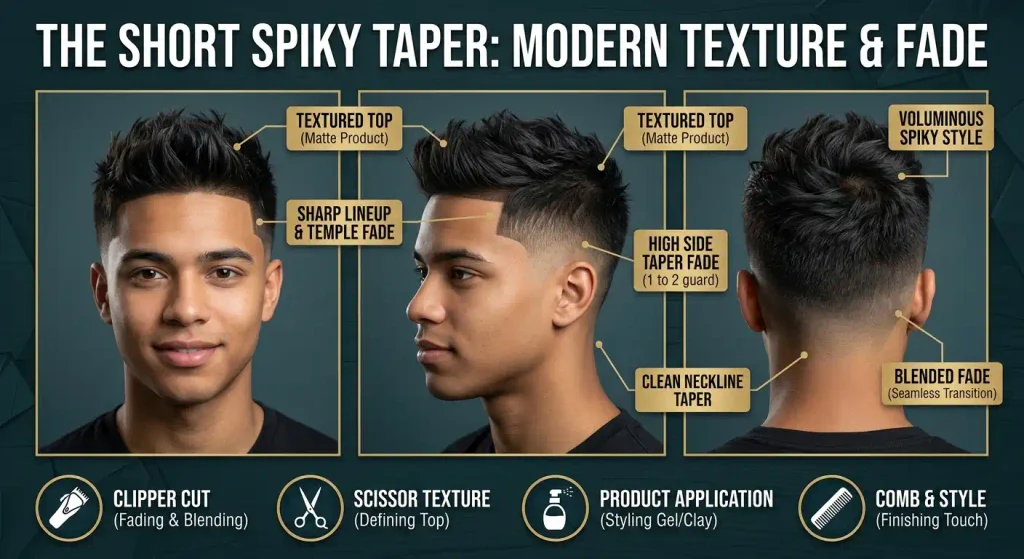
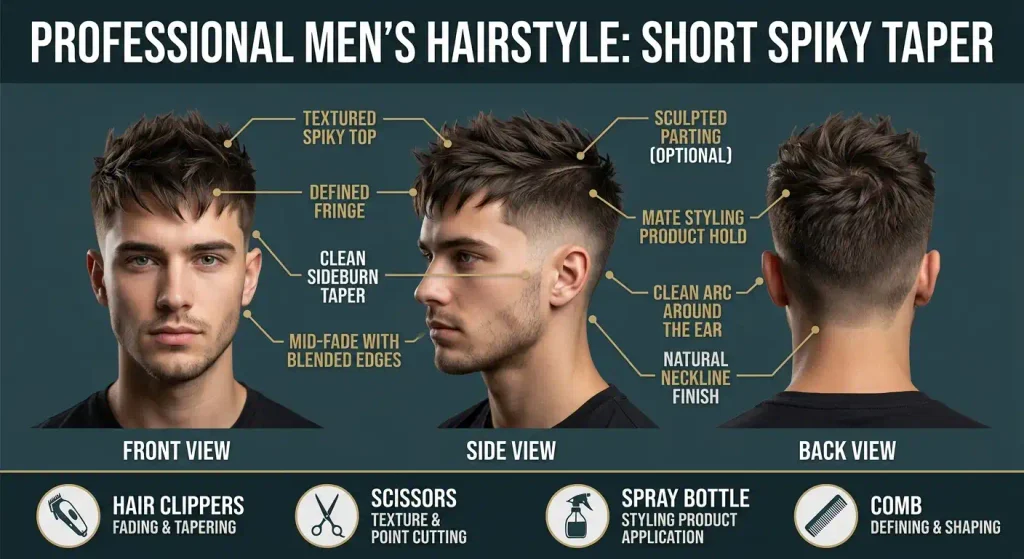
Short spikes add texture and direction without needing a long top. Your barber can use scissors and point cutting to create separated sections, then blend the sides low. Straight, thick hair generally holds the shape well. Oval and square faces suit the sharper look. A matte wax adds grip and keeps the spikes from looking wet.
Textured, Parted and Modern Styles
11. Classic Side Part
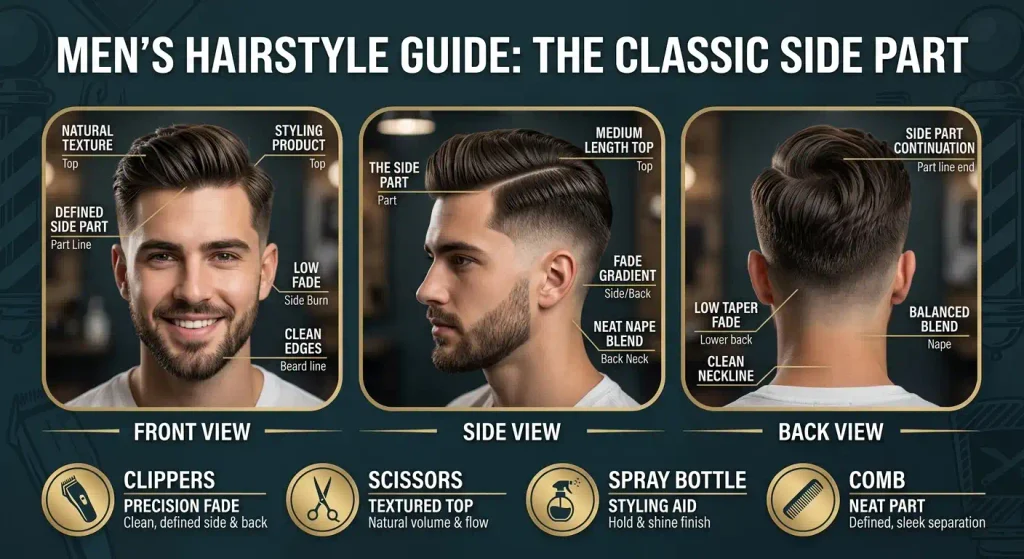
A defined side part gives the haircut a tidy, traditional shape. The low taper cleans around the ears while leaving enough side weight for a smooth transition. Straight or wavy hair is ideal, especially for oval and square faces. A light pomade creates definition, but styling cream gives a softer finish for everyday wear.
12. Comb-Over Taper
The comb-over directs the top across the head, with or without a visible part. Ask the barber to preserve enough length for the hair to lie naturally. Straight and wavy hair work best, and oval or square faces suit the balanced shape. A medium-hold product helps keep the hair in place without making it look stiff.

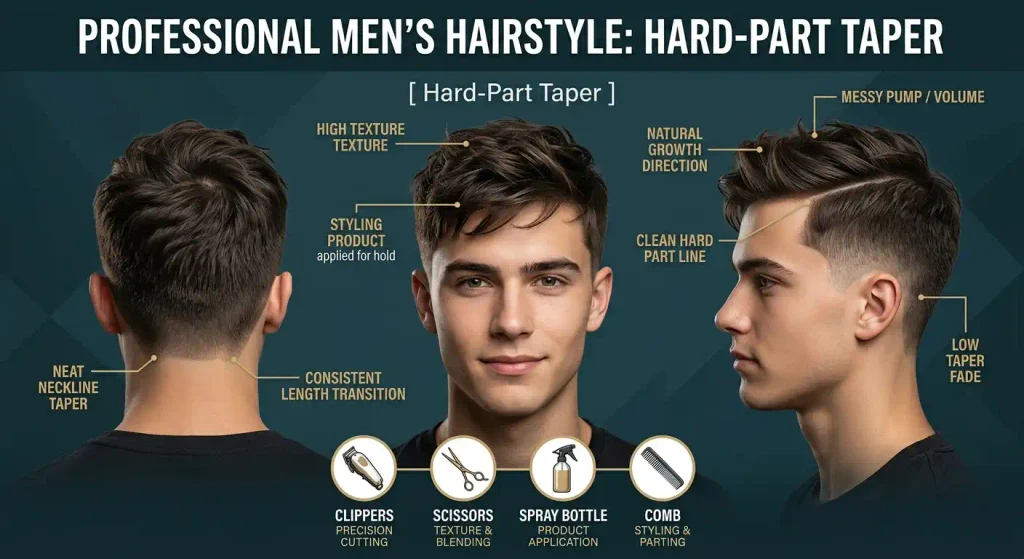
13. Hard-Part Taper
A hard part uses a closely shaved line to define where the hair separates. Because the line is bold, a low taper keeps the overall cut balanced. Straight or wavy hair is easiest to manage. Oval and square faces suit the structured finish. Ask the barber to place the part according to your natural growth pattern.
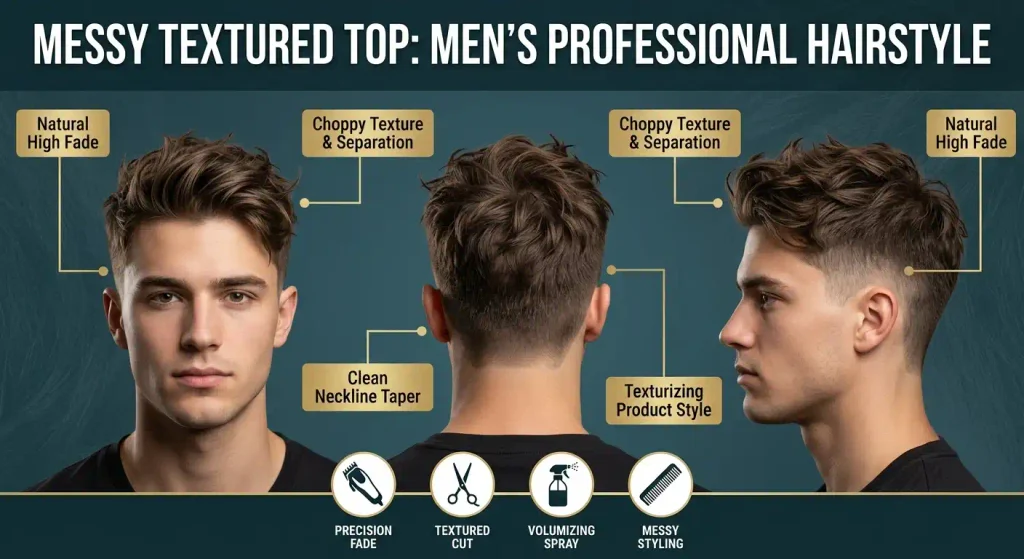
14. Messy Textured Top
This style uses uneven layers and natural movement rather than a neat, combed finish. Point cutting can create separation while the low taper keeps the edges clean. Thick or wavy hair works especially well. Oval and square faces are good matches. Work a small amount of matte clay through dry hair and shape it with your fingers.
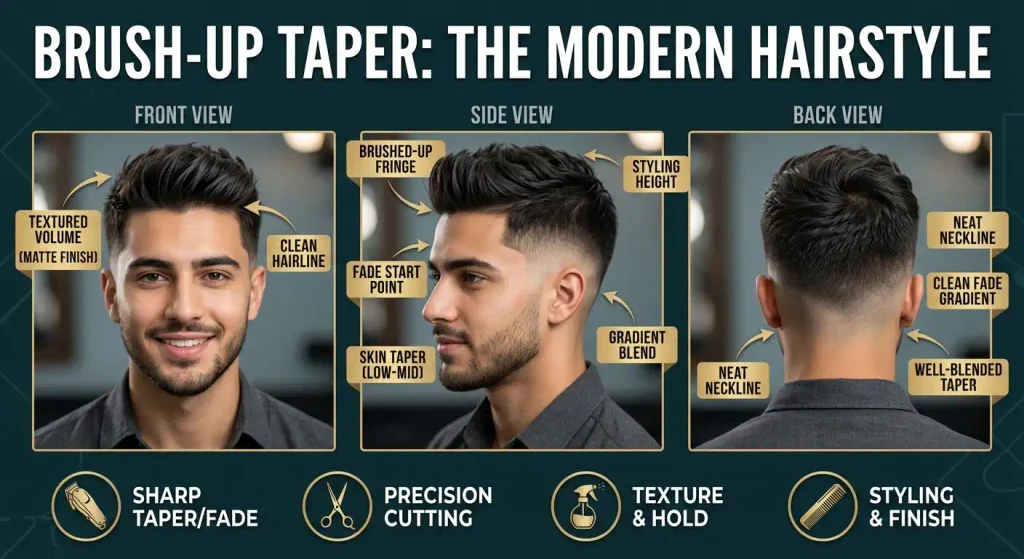
15. Brush-Up Taper
The brush-up directs the front upward to create visible height. Keep enough length on top for lift while the low taper controls the lower sides. Thick, straight, or wavy hair is a good fit. Round faces can benefit from the added height. Blow-dry the front upward and finish with a light matte product.
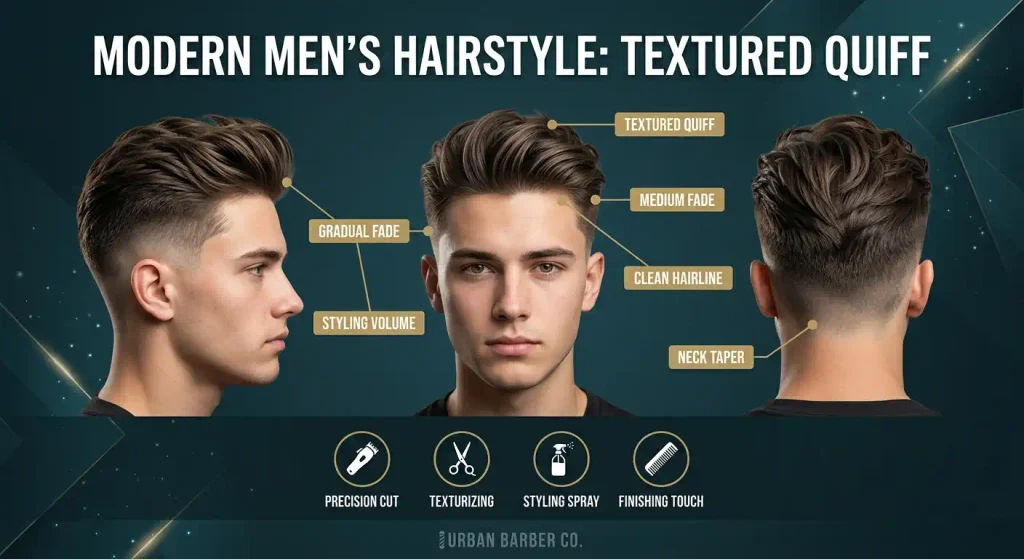
16. Textured Quiff
A textured quiff adds height at the front but keeps the top loose rather than perfectly sculpted. The taper should stay low so the upper sides retain balance. Thick or wavy hair works well, particularly on round or oval faces. Use a blow-dryer and matte clay to create lift, separation, and a flexible finish.
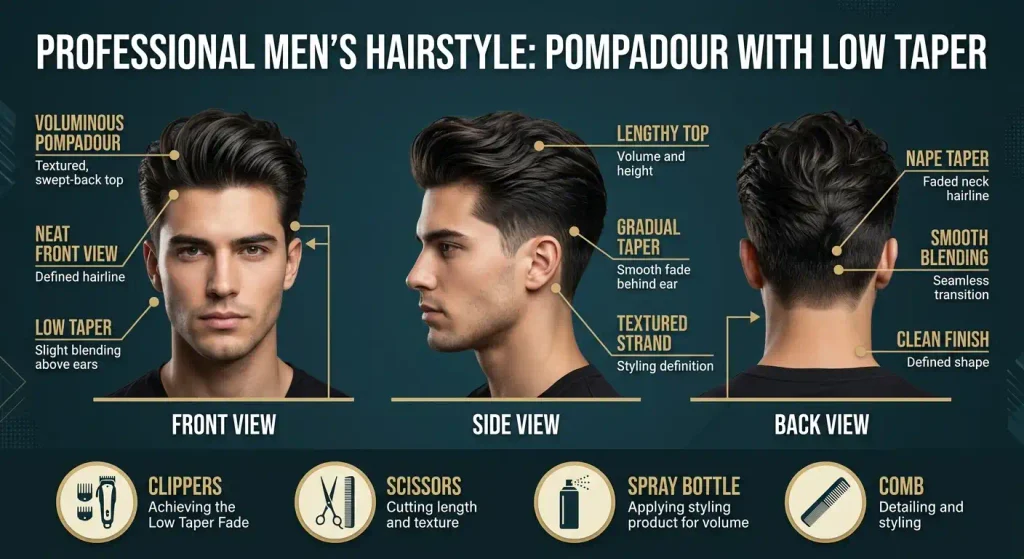
17. Pompadour with Low Taper
The pompadour uses a fuller front that sweeps upward and backward. It needs more top length and styling than a short crop, while the low taper keeps the lower sides neat. Thick, straight hair is easiest to shape. Oval and square faces suit the proportions. A round brush, blow-dryer, and firm-hold pomade help maintain volume.
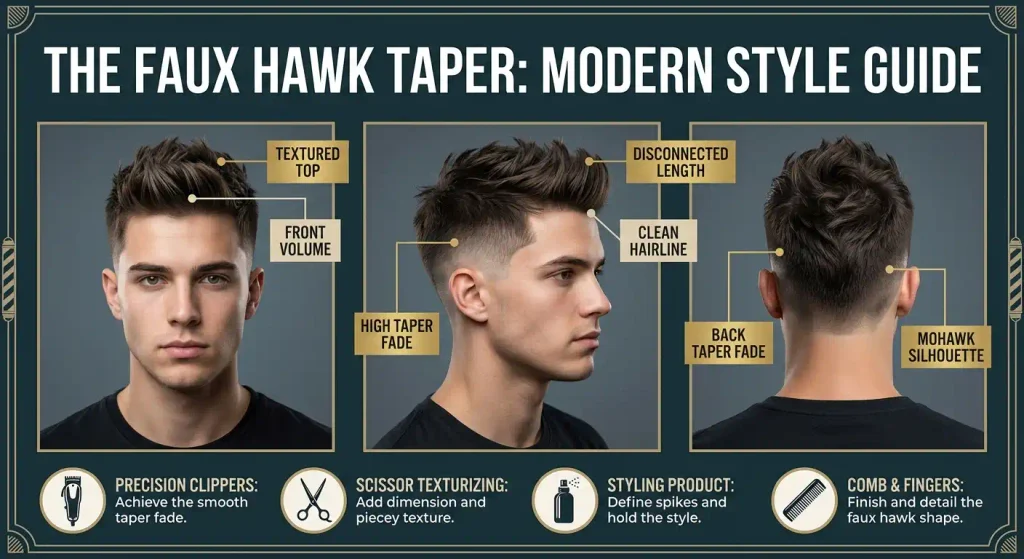
18. Faux Hawk Taper
The faux hawk brings the hair toward the center to create a raised ridge without shaving the sides into a dramatic mohawk. A low taper gives the outline a softer finish. Thick, wavy, or curly hair can work. Oval and square faces suit the strong direction. Use matte wax to define the center without making it look rigid.
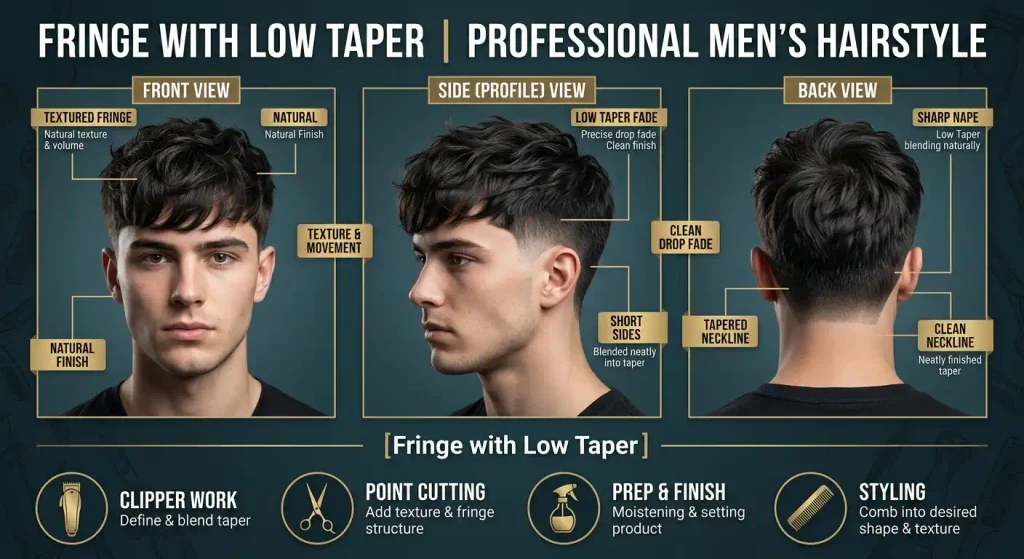
19. Fringe with Low Taper
A forward fringe adds weight near the forehead and gives the haircut a softer outline. Keep the taper low and the top long enough to fall naturally. Straight, wavy, and textured hair can work, particularly for oval or oblong faces. A light styling cream helps control the fringe while preserving movement.
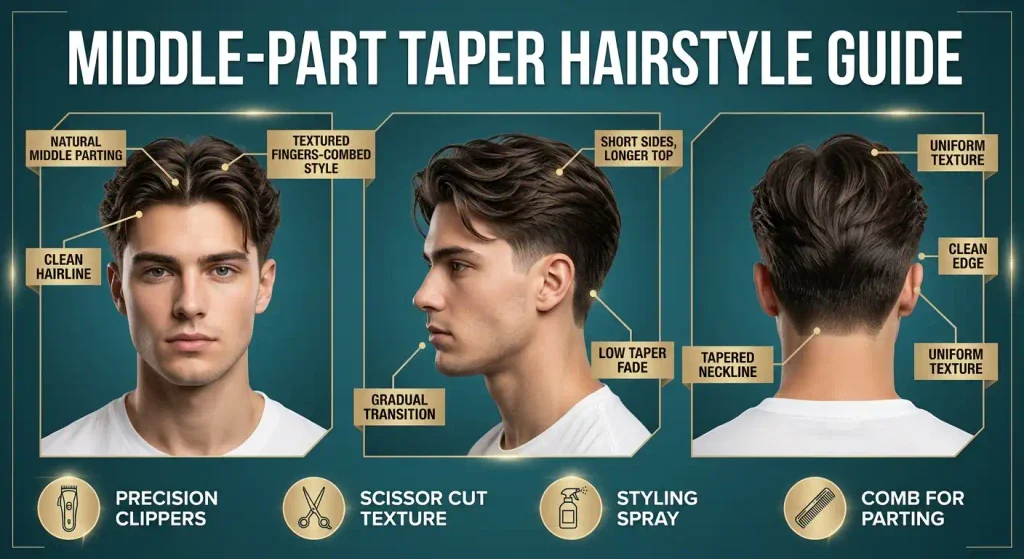
20. Middle-Part Taper
A middle part splits the top into two sections that fall toward each side of the face. The low taper keeps the perimeter clean without removing too much side length. Straight and wavy hair are good choices. Oval and heart-shaped faces often suit the framing effect. Use lightweight cream to control flyaways without flattening the part.
Straight, Wavy and Medium-Length Haircuts
21. Straight Hair with Low Taper
Straight hair makes the blend and outline easy to see, so the barber should avoid harsh steps between lengths. Keep the upper sides full and taper around the lower perimeter. Oval and square faces suit the clean shape. A little matte clay adds texture when the top looks flat, while a light cream keeps longer hair smooth.

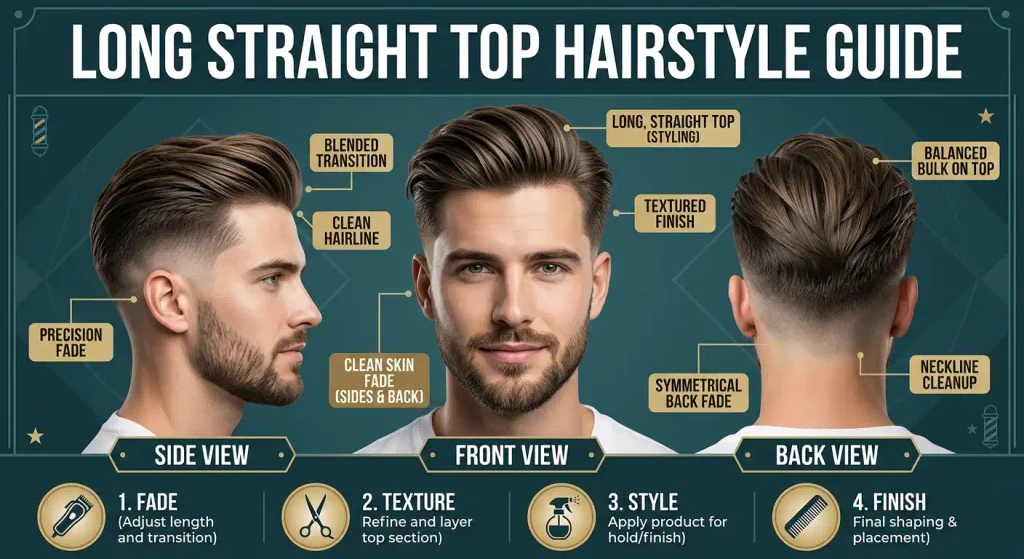
22. Long Straight Top
This version keeps the top noticeably longer than the sides and allows it to fall naturally or sweep backward. The low taper cleans the ears and neckline without cutting away the main length. Straight hair and oval or oblong faces work well. Use lightweight cream and ask your barber to preserve the top during maintenance visits.
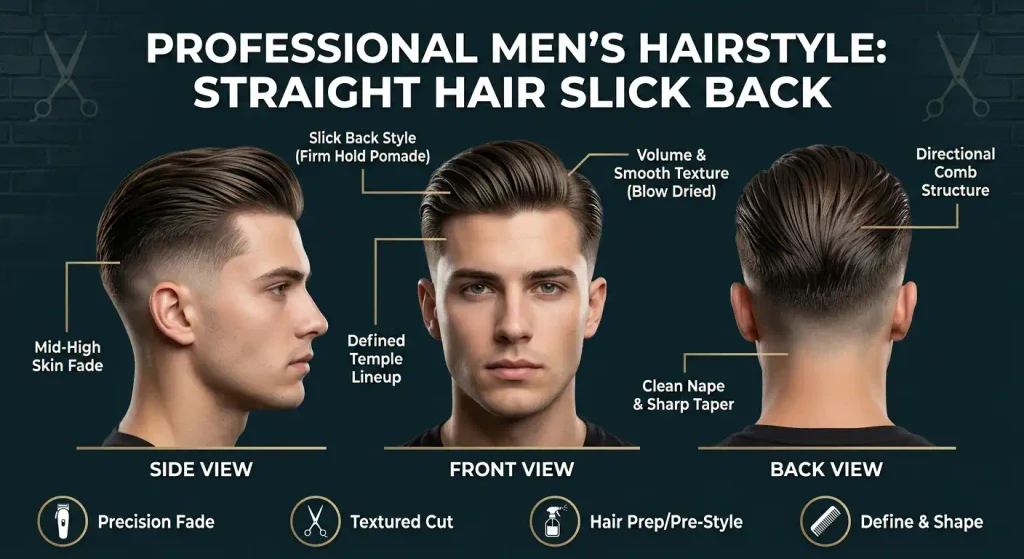
23. Straight Hair Slick Back
The slick back moves the top away from the forehead for a polished look. Keep the taper low to avoid making the sides look disconnected from the longer top. Straight, medium-to-thick hair is easiest to manage. Oval and square faces suit the shape. Pomade gives more shine, while matte cream creates a softer, less formal result.
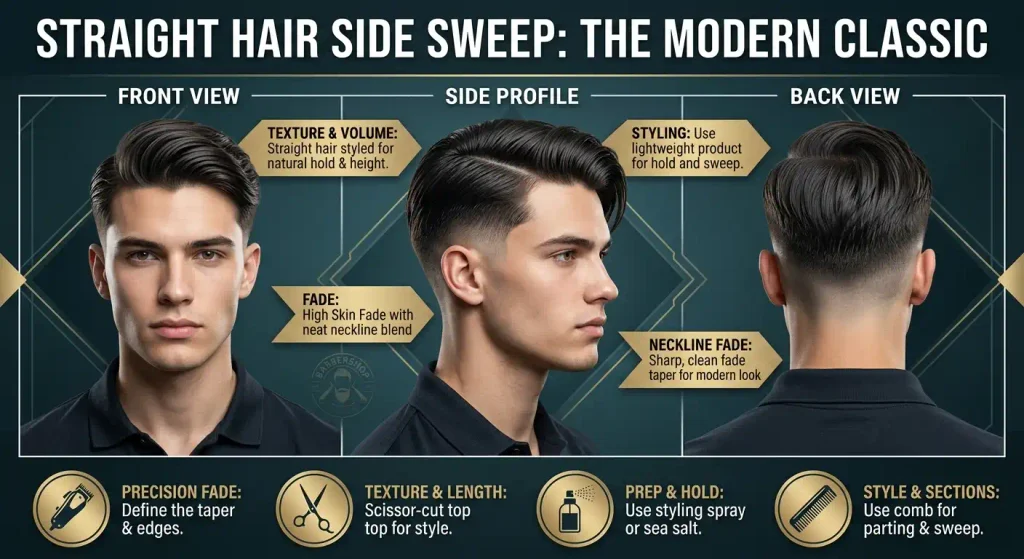
24. Straight Hair Side Sweep
A side sweep uses natural direction rather than a sharply carved part. The low taper keeps the edges neat, while the top retains enough length to move diagonally. Straight or fine-to-medium hair can work well. Oval and oblong faces suit the proportions. A lightweight styling cream adds control without weighing the hair down.
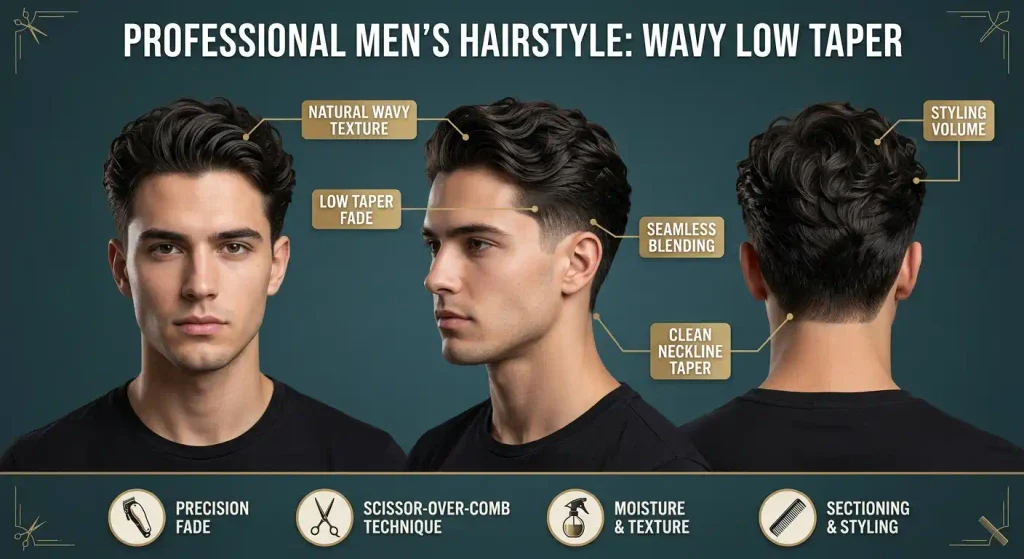
25. Wavy Low Taper
Natural waves give this cut movement while the low taper cleans the outline. The barber should preserve enough top weight to keep the wave pattern visible. Medium-density wavy hair is a good match, especially for oval and square faces. Sea salt spray can enhance texture, while curl cream helps control frizz when the waves feel dry.
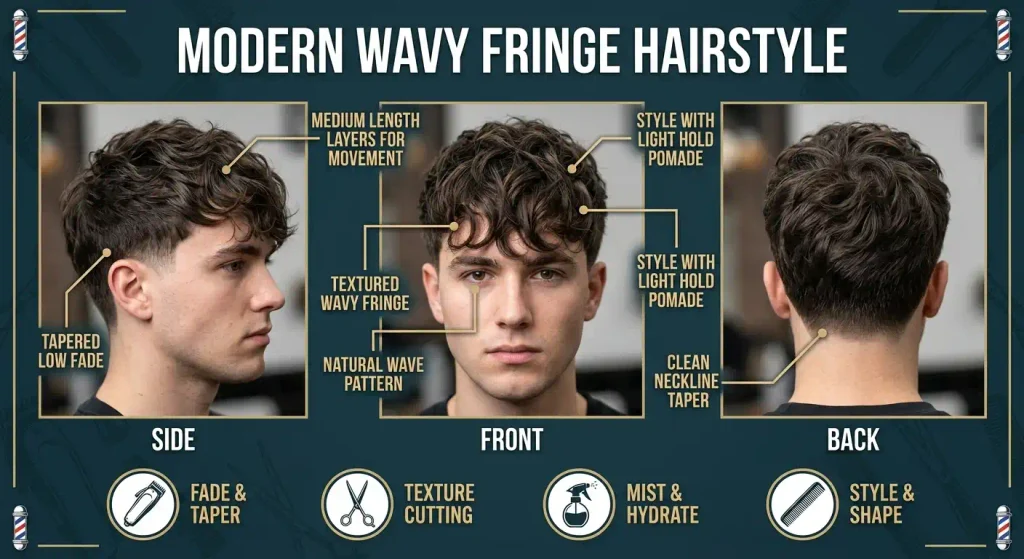
26. Wavy Fringe
This look brings the waves forward into a soft fringe. The low taper keeps the lower sides neat without competing with the texture. It works well for medium-length wavy hair and oval or round faces. Apply a little sea salt spray to damp hair and let the waves form naturally, using cream if more control is needed.
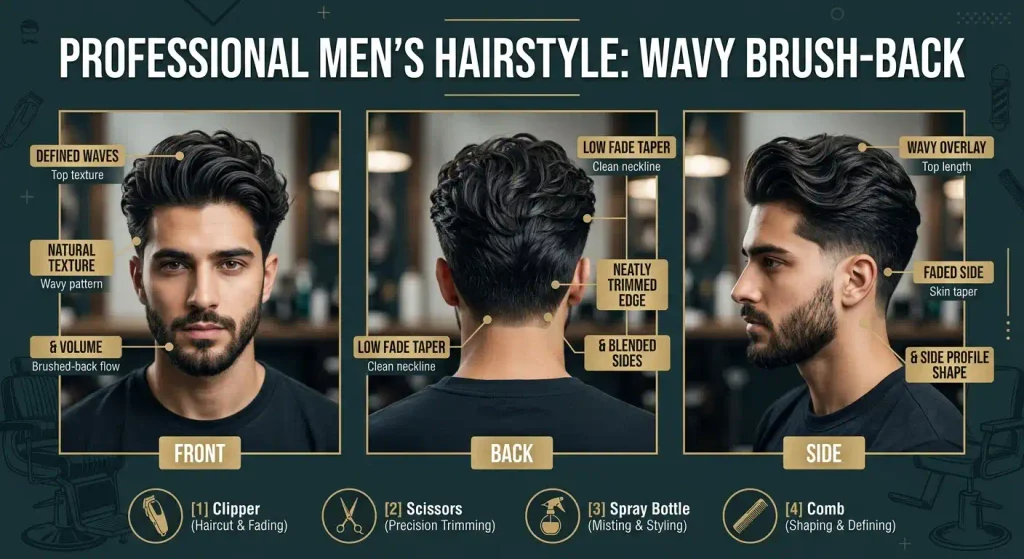
27. Wavy Brush-Back
The brush-back directs waves away from the forehead while allowing them to keep their natural bends. The low taper cleans the lower sides but leaves the upper hair connected. Medium-to-thick wavy hair is ideal. Oval and square faces work well. Use a lightweight styling cream and avoid heavy products that pull the waves flat.
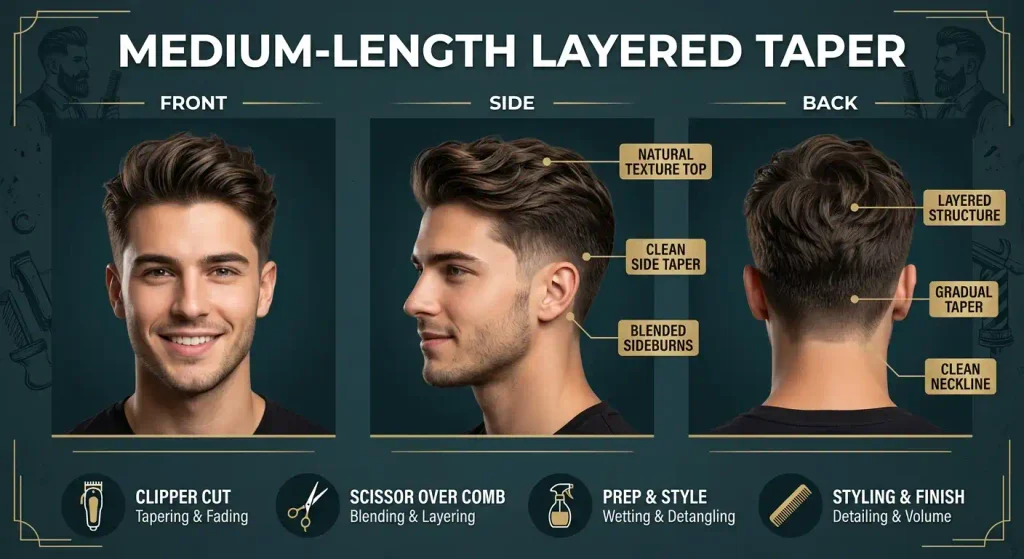
28. Medium-Length Layered Taper
Layers help medium-length hair move rather than sit as one heavy block. A low taper keeps the ears and neckline tidy while scissors shape the top and upper sides. Straight and wavy hair are both suitable. Oval and oblong faces can carry the longer outline. Use light cream to reduce flyaways and preserve movement.
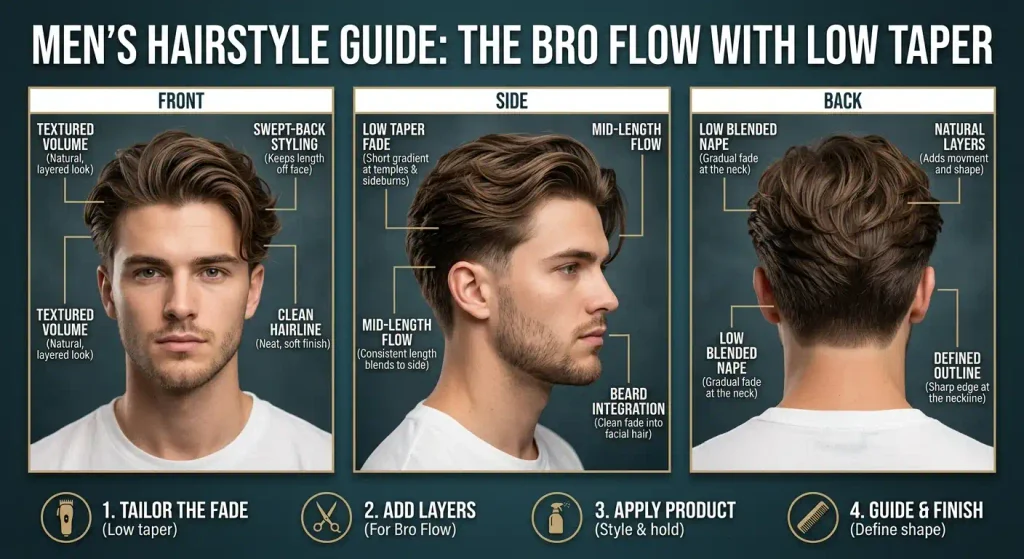
29. Bro Flow with Low Taper
The bro flow lets medium-to-long hair sweep back and toward the sides. The taper only cleans the lower perimeter, leaving the flowing shape intact. Wavy and straight hair can both work, especially with an oval face. Lightweight cream supports movement without adding too much weight. This cut needs enough length to fall naturally.
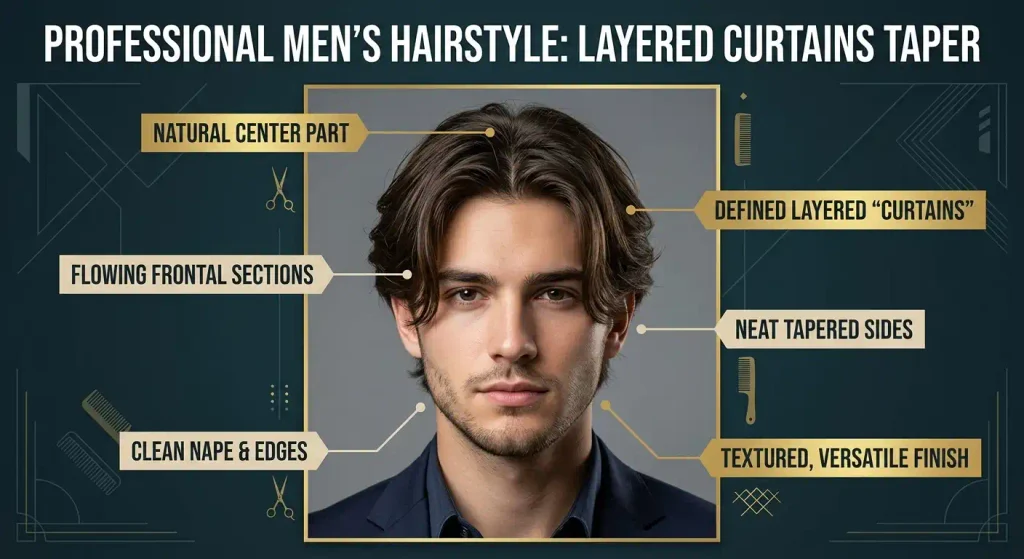
30. Layered Curtains Taper
Curtains create two front sections that frame the face, while the low taper cleans around the ears and nape. Straight and wavy hair are the easiest textures to manage. Oval and heart-shaped faces often suit the center framing. Use a light styling cream and follow the natural part instead of forcing the hair into an uncomfortable direction.
Curly, Coily and Natural-Texture Styles
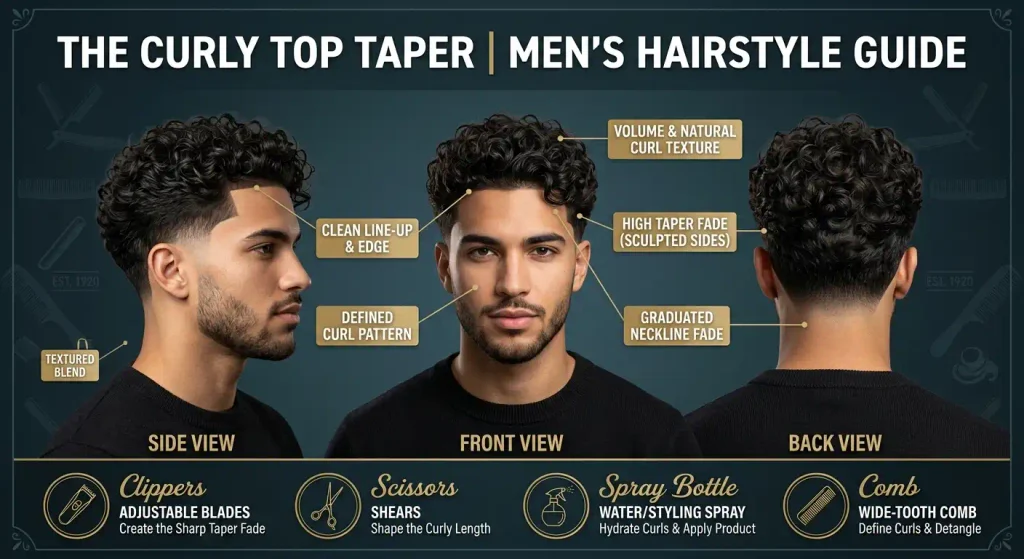
31. Curly Top Taper
A curly top keeps the natural curls full while the taper cleans the lower outline. The barber should work with the curl pattern and avoid taking too much weight from the top. Oval, round, and square faces can suit the shape. Curl cream helps define the curls and reduces frizz without making the hair feel stiff.
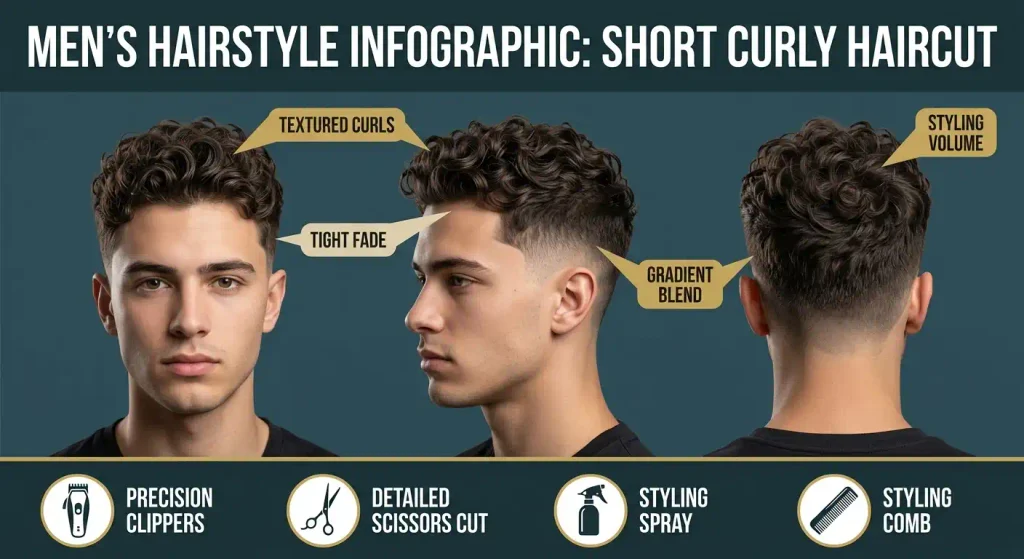
32. Short Curly Haircut
Short curls give the haircut a compact shape with clear texture. Keep the taper low and leave enough length for the curls to remain visible rather than turning the top into a uniform buzz. Dense curly hair works well. Oval and square faces suit the balanced outline. Use a small amount of curl cream or leave-in product.
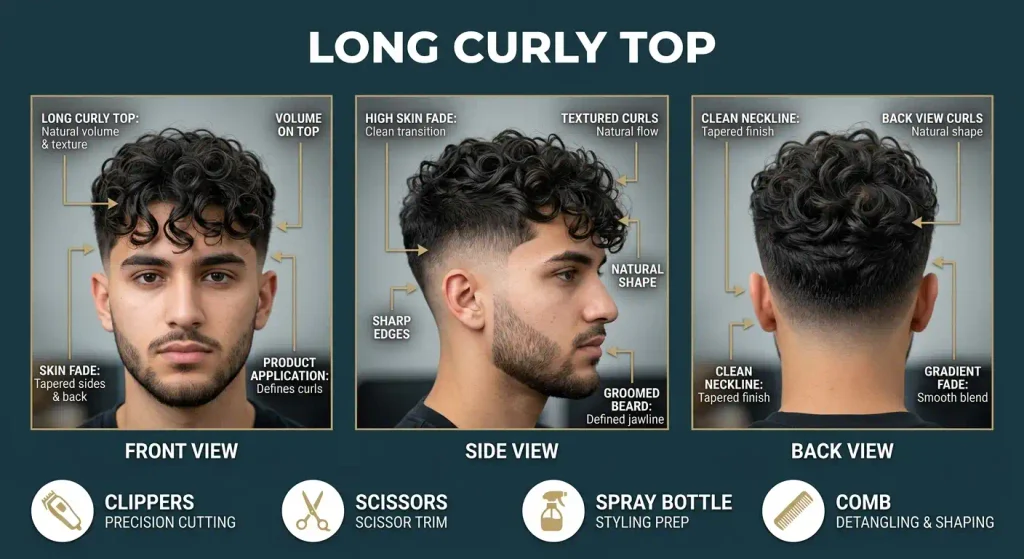
33. Long Curly Top
Longer curls create volume and a stronger contrast with the lower sides. The taper should remain close to the ears and neckline, leaving the top intact. This works well for dense curls and oval or round faces. Use leave-in conditioner and curl cream to keep the curls defined. Avoid brushing the hair dry if it causes frizz.
34. Coily Hair Taper
Coily hair creates a full, textured top with a clean lower perimeter. The barber must consider shrinkage and avoid cutting the top as if it were straight hair. Oval, square, and round faces can work with this shape. Use a moisturizing styling cream and keep the taper low enough to preserve the natural volume above it.
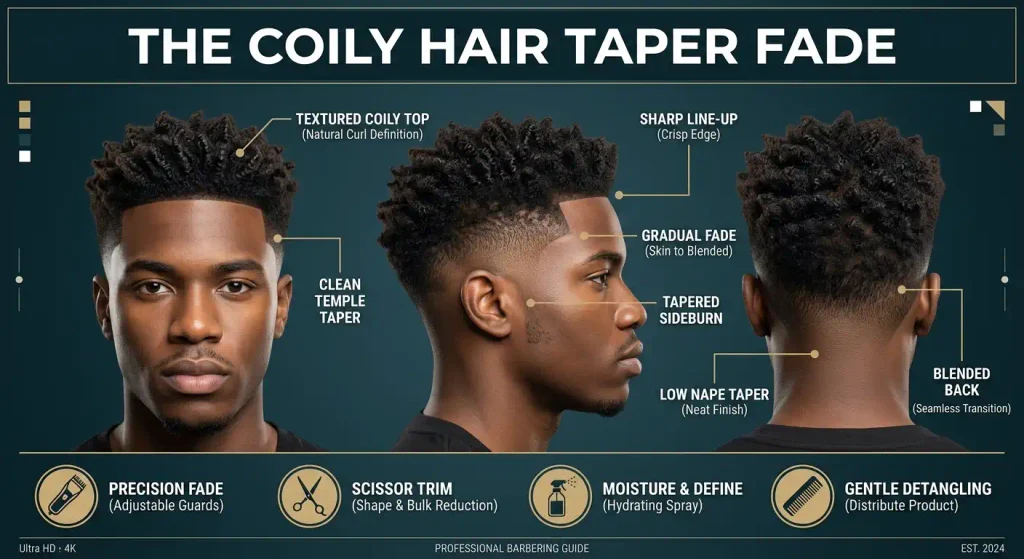
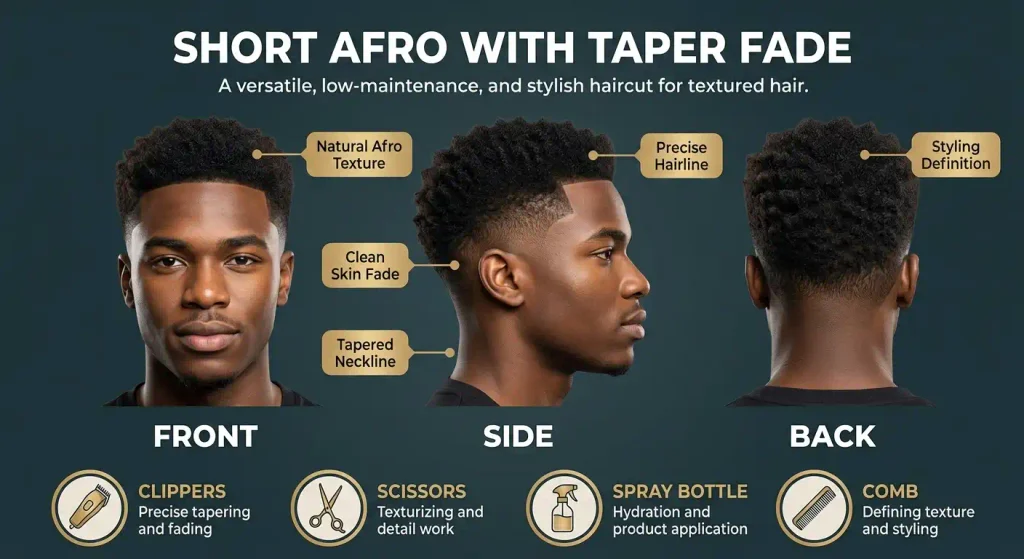
35. Short Afro with Taper
A short afro keeps the top rounded and full while the taper cleans the temples, sideburns, and neckline. Dense coily hair is a natural match. Oval and square faces can suit the shape, depending on the amount of width left at the sides. A moisturizing cream helps keep the hair flexible and comfortable.
36. High-Top with Low Taper
The high-top creates a more vertical shape, with the top cut into a defined, raised form. A low taper gives the lower outline a clean finish without taking the blend too high. Dense coily hair is best suited to this style. Oval and round faces can work well. A suitable styling cream helps maintain the top’s shape.
37. Defined Coils with Beard
Defined coils paired with a shaped beard create a strong, balanced look. The barber should taper the lower hairline and blend the sideburn into the beard as a separate step. Coily hair works naturally, while oval and square faces often suit the outline. Curl cream defines the top, and beard balm helps keep facial hair neat.
38. Twists with Low Taper
Twists keep the top textured and structured while the low taper cleans around the ears and neckline. This works best for coily hair that can hold the chosen twist style. The amount of top length depends on the desired twist size. Use a suitable twisting product and keep the scalp and hair moisturized rather than relying on heavy grease.
39. 360 Waves with Taper
The wave pattern is the main feature, while the taper sharpens the perimeter. Short, dense hair is usually the easiest starting point for developing 360 waves. Oval and square faces suit the compact look. Regular brushing and appropriate wave products are important, so this option takes more routine than a basic short taper.
40. Curly Fringe Taper
The curly fringe brings natural curls forward across the forehead while the low taper cleans the lower sides. It works well for loose-to-medium curls and oval or round faces. Keep enough length for the curls to form their own shape. Curl cream helps define the fringe, while a gentle drying method reduces unwanted frizz.
Long Hair, Flow and Pulled-Back Styles
41. Long Hair with Low Taper
Long hair can have a clean perimeter without losing the length that defines the style. Ask your barber to tidy the temples and neckline while leaving the top and upper sides alone. Straight, wavy, and curly hair can all work. Oval and oblong faces often suit the longer silhouette. Use leave-in conditioner to manage dryness and tangles.
42. Long Straight Flow
This style lets straight hair move backward or toward the sides while the low taper keeps the lower outline tidy. Preserve enough length above the ears to avoid a disconnected appearance. Oval and oblong faces work well. Lightweight cream can control flyaways, and a soft blow-dry helps guide the hair without making it stiff.
43. Long Wavy Flow
Long waves create a relaxed shape with natural movement. The low taper removes untidy hair around the ears and neckline while leaving the main length intact. Medium-to-thick wavy hair is a good match. Oval and square faces can carry the fuller silhouette. Sea salt spray enhances movement, while curl cream can help control frizz.
44. Brush-Back Flow
A brush-back flow moves longer hair away from the face without flattening it into a slick style. The low taper cleans the lower perimeter, while the upper sides remain full. Straight or wavy hair works well. Oval and square faces suit the backward direction. Use light cream and follow the natural growth pattern while drying.
45. Long Middle Part
The long middle part frames the face with two sections that fall to each side. The taper stays low, keeping the ears and neckline neat without removing the length. Straight and wavy hair are easy to shape. Oval and heart-shaped faces often suit this style. A lightweight cream reduces flyaways while keeping the part soft.
46. Man Bun with Taper
The man bun pulls long hair back into a gathered shape while the taper cleans the lower perimeter. Straight, wavy, and curly hair can work once sufficient length is available. Oval and oblong faces often suit the pulled-back shape. Use a soft hair tie to reduce tension, and keep the taper separate from any decision to cut the top shorter.
47. Top Knot with Low Taper
A top knot sits higher on the head than a typical bun, creating a more vertical silhouette. The low taper cleans the lower sides without cutting away the length needed to tie the hair. Straight and wavy textures are easiest, though curls can also work. A soft tie and light cream help control loose strands.
48. Long Fringe with Taper
A long fringe adds movement around the forehead while the taper keeps the edges clean. It can be worn forward, slightly to one side, or split into loose sections. Straight and wavy hair are suitable. Oval and oblong faces often work well with the framing effect. Use light cream so the fringe moves naturally.
49. Low Taper Mullet
The mullet keeps more length at the back while the front and sides remain controlled. The low taper cleans around the temples and sideburns without removing the rear length. Straight and wavy hair are easy to shape, and oval or diamond faces can suit the proportions. Use light styling cream to define the longer sections without making them stiff.
50. Shaggy Layers with Taper
Shaggy layers create a loose, slightly messy shape with movement around the crown and sides. The taper cleans only the lower perimeter, leaving the layered outline intact. Wavy or thick straight hair works well. Oval and oblong faces suit the longer texture. Use a light cream or sea salt spray to support movement without over-defining each section.
Modern Fade Combinations and Distinctive Finishes
51. Low Taper Fade with Textured Top
This combination pairs a gradual lower fade with a textured top. The barber can blend through #3, #2, and #1 as appropriate, adjusting the lever to soften the transition. Straight, thick, or wavy hair works well. Oval and square faces suit the balanced shape. Matte clay adds definition without excessive shine.
52. Low Taper Fade with Quiff
The quiff gives the front height and movement, while the low fade cleans the lower sides. Leave enough top length to lift the front without making the upper sides look too thin. Thick, straight, or wavy hair is a good fit. Round and oval faces can suit the added height. Use a blow-dryer and matte styling product.
53. Low Taper Fade Pompadour
The pompadour creates a fuller front that sweeps backward. A low fade gives the lower outline contrast, while the upper sides retain enough weight to support the top. Thick straight hair is easiest to shape. Oval and square faces work well. Use a round brush, blow-dryer, and pomade or styling cream to control the volume.
54. Low Taper Fade Faux Hawk
The faux hawk pushes the hair toward the center to form a raised ridge. The low fade keeps the lower perimeter clean without creating a high contrast up the sides. Thick, wavy, or curly hair can work. Oval and square faces suit the sharper shape. A matte wax helps separate the center and maintain flexible hold.
55. Low Taper with Line-Up
A line-up creates a defined front hairline and sharper corners, while the low taper cleans the temples and neckline. It works well with short crops, curls, waves, and coily hair. Oval and square faces can suit the geometric finish. Use a small amount of matte product on top, and ask your barber to keep the line natural.
56. Low Taper with Beard Blend
This variation connects the taper to a shaped beard for a smooth transition between head and facial hair. The barber should blend the sideburn and beard carefully rather than simply shortening the entire side. It works with most hair textures and suits many face shapes. Beard balm and a tidy neckline help maintain the finish.
57. Low Taper with Shaved Design
A small shaved line or geometric detail adds contrast around the tapered area. Keep the design simple if you want the haircut to remain wearable for work or school. Short straight, curly, and coily styles can all support it. Oval and square faces suit the stronger detail. Designs need more frequent cleanup than a plain taper.
58. Low Taper with Disconnected Top
The disconnected top keeps a clear difference between the longer upper section and the shorter lower sides. The barber should plan the transition carefully so it looks intentional rather than uneven. Straight or thick hair works well. Oval and square faces can suit the stronger shape. Matte clay adds texture to the top and keeps the contrast visible.
59. Low Taper with Soft Natural Hairline
This option avoids a very sharp line-up and keeps the front hairline close to its natural shape. The low taper cleans the edges without making the cut look overly carved. It works across straight, wavy, curly, and coily hair. Most face shapes can suit the softer finish. Use a light styling product and let the natural hairline remain the focus.
60. Low Taper with Medium-Length Textured Top
The medium-length top is shaped with scissors and point cutting to create movement and separation. The taper remains low, so the upper sides stay connected to the longer hair. Straight, wavy, and loose-curly textures work well. Oval, square, and oblong faces can suit the shape. Matte cream or clay helps define the texture without flattening it.
How to Ask Your Barber for This Cut
A clear request helps your barber understand where the taper should start, how much length should remain, and whether you want a natural or sharp finish.
Copy-and-Paste Barber Script
“I want a low taper around the temples, sideburns, ears, and neckline. Please keep the blend low and preserve the weight on my upper sides. Use guards such as #3 or #4 higher up and blend through #2 and #1 where needed. Please adjust the lever to soften any lines, and use clipper-over-comb if required. Keep the top at the length needed for this reference photo. I want a natural blend, not a high fade.”
Add the Detail That Matches Your Style
- For short hair: “Keep the top short but add texture with scissors or point cutting.”
- For curls: “Preserve my curl pattern and leave enough length for the curls to form.”
- For long hair: “Clean the taper only. Please do not shorten my top or upper sides.”
- For a skin finish: “I want the taper to blend down to the skin at the bottom.”
- For a natural finish: “Leave some visible hair at the shortest point rather than taking it to skin.”
Low Taper vs. Mid Taper Fade vs. Low Fade
The position of the blend changes the look. Guard numbers vary with hair density, the clipper model, the lever position, and the barber’s technique, so they should be treated as a starting point rather than a fixed formula.
| Cut | Where the Blend Sits | Common Guard Approach | Main Difference |
| Low Taper | Close to temples, ears, and neckline | Often #3/#2/#1, adjusted as needed | Subtle, natural outline |
| Mid Taper Fade | Higher around the temples and sides | Depends on the desired blend | More visible contrast |
| Low Fade Haircut | Lower sides, often across a wider area | May use #2 down to shorter guards | More of the side panel is blended |
| Low Skin Fade | Low on the sides, blending to skin | Finishes at skin | Stronger contrast at the bottom |
| Classic Taper | Mainly sideburns and neckline | Often leaves more side length | Conservative, softer finish |
| High Fade | Higher up the sides | Varies by desired finish | More exposed scalp and contrast |
Important: a taper and a fade are related but not identical terms. Some barbers use “taper fade” for a blend that reaches skin around the edges. Show a reference photo and explain whether you want visible hair at the bottom.
Why This Haircut Works for Different Men
Straight Hair
Straight hair shows the outline clearly. A low blend with enough weight above it can look neat without making the sides seem disconnected. Point cutting adds movement to a flat top.
Wavy Hair
Natural waves add texture and softness. Keep enough length on top to preserve the wave pattern, then use a light cream or sea salt spray for control.
Curly Hair
Curls create volume and shape without needing a complex cut. The barber should account for shrinkage and avoid thinning the top too much.
Coily Hair
Coily hair works well with short crops, afros, twists, waves, and fuller tops. The taper should follow the natural hairline and leave the top shaped to suit the curl pattern.
Fine Hair
Fine hair often benefits from a soft transition and enough coverage on top. Avoid heavy products that make the hair look flat; try lightweight cream or a small amount of matte clay.
Thick Hair
Thick hair gives the barber more room to shape texture and height. Point cutting and careful clipper-over-comb work can reduce bulk while preserving a natural outline.
Best Haircuts by Face Shape
- Oval: Most styles can work. Choose based on your hair texture and the level of styling you prefer.
- Square: Side parts, crops, crew cuts, and textured tops can support the strong jawline.
- Round: Brush-ups and quiffs add height. Avoid too much width at the sides if you want a longer visual shape.
- Oblong: Side-swept tops, curtains, and flow styles can help balance the length of the face. Avoid unnecessary height if you already have a long face.
- Heart-shaped: Middle parts and soft fringes can help balance a wider forehead and narrower chin.
- Diamond: Keep the top and side volume balanced. A softer transition may work better than an overly harsh outline.
Face shape is a guide, not a strict rule. Hair density, hairline, head shape, and personal preference matter just as much.
How to Style Your Haircut
- Start with clean hair. Towel-dry gently and remove excess water.
- Choose the right product. Use matte clay for texture, cream for light control, or curl cream for curls.
- Set the direction. Use your fingers, a comb, or a brush to guide the hair.
- Blow-dry if needed. Lift the front for a quiff or brush the hair back for a flow style.
- Apply a small amount of product. Spread it through the top rather than loading the roots.
- Check the outline. Make sure the sideburns and neckline look tidy without trying to cut into the taper yourself.
Barbering Tutorial: Tools and Technique
Tools Required
- Professional clippers with an adjustable lever
- #0, #1, #2, #3, and #4 guards
- Detail trimmer
- Barber scissors
- Comb
- Sectioning clips for longer hair
- Neck brush
- Blow-dryer and styling brush, if needed
Basic Cutting Process
- Discuss the desired finish. Confirm taper height, top length, side weight, and whether the bottom should retain hair or reach skin.
- Shape the top. Use scissors or suitable clipper work to create the requested length and direction.
- Establish the upper blend. A #3 or #4 may be used where more length should remain.
- Blend lower down. Work through shorter guards such as #2 and #1 as needed, using lever adjustments to soften lines.
- Use clipper-over-comb. This helps control bulk where the upper sides need a smooth connection to the top.
- Refine the edges. Clean the temples, sideburns, and neckline without taking the taper higher than agreed.
- Add texture. Point cutting can create movement in the top without removing too much length.
- Inspect the cut. Check both sides and the back, then style the hair to see how the blend looks when dry.
This is a barber’s technical guide, not a recommendation to try a complex fade on yourself. Blending uneven lengths is difficult without training and a clear view of the back of the head.
Best Styling Products
Matte Clay
Matte clay adds grip and texture with little shine. It suits crops, short textured tops, brush-ups, and quiffs. Use less on fine hair because heavier products can reduce volume.
Sea Salt Spray
Sea salt spray can bring out movement in wavy and flow styles. It may feel drying on some hair, so use a suitable conditioner if your hair becomes rough or dry.
Curl Cream
Curl cream helps curls stay defined and flexible. It suits curly tops, curly fringes, and longer curls when the product matches the hair’s moisture needs.
Styling Cream
Styling cream offers light control for side parts, curtains, brush-backs, and medium-length hair. It is useful when you want movement instead of a stiff finish.
Pomade
Pomade provides direction and control for slick backs, side parts, comb-overs, and pompadours. Choose the hold and shine level to match your preferred finish.
Maintenance and At-Home Care
When to Get a Trim
A practical starting point is every 2–4 weeks. If you want a crisp outline, book closer to the shorter end of that range. If you prefer a softer, grown-out look, you may be able to wait longer.
Preserve the Top While Cleaning the Taper
If you are growing your hair, tell the barber: “Please clean the taper and neckline, but leave the top and upper sides at their current length.”
Simple Home Care
- Wash and condition based on your hair and scalp needs.
- Use a comb or brush suited to your texture.
- Avoid trimming the blend at home unless you know how to use the guards and lever.
- Keep longer hair conditioned and detangled.
- Use heat protectant if you regularly blow-dry or use hot tools.
- Maintain beard and sideburn transitions if they connect to the haircut.
Common Mistakes to Avoid
Asking for a Fade Without Explaining the Height
“Fade” can mean different things to different clients and barbers. Say “low around the temples and neckline” and show a reference photo.
Taking the Sides Too High
A high blend removes more side weight and changes the entire shape. Confirm the height before the barber starts.
Using the Wrong Guard Instructions
A guard number does not guarantee the same result on every head. Hair density, lever position, and clipper technique all affect the blend.
Ignoring Your Natural Texture
Straight, wavy, curly, and coily hair behave differently. Ask the barber to shape the top for your natural texture instead of copying a photo without adjustments.
Using Too Much Product
Heavy products can flatten fine hair, make curls stiff, or leave a greasy finish. Start with a small amount and add more only if needed.
Forgetting Maintenance
The perimeter can lose its shape before the top needs cutting. Plan a cleanup based on how crisp you want the haircut to look.
Frequently Asked Questions
1. Is a low taper a good haircut for men?
Yes. It cleans the temples, sideburns, ears, and neckline while leaving more length above. It can be paired with short crops, side parts, curls, waves, and longer styles.
2. What is the best short haircut for men with a low taper?
A short textured crop, crew cut, or Caesar can be a good choice. The best option depends on your hair texture, hairline, face shape, and how much styling you want to do.
3. Is a low taper better than a mid taper fade?
Neither is always better. A low taper keeps more weight on the upper sides and creates a subtle outline, while a mid taper places the blend higher and creates more contrast.
4. Can I get a low taper with curly hair?
Yes. The curly top, short curly haircut, and curly fringe are useful options. The barber should preserve the natural curl pattern and account for shrinkage when choosing the top length.
5. How often should I maintain this haircut?
Every 2–4 weeks is a useful starting point. Your preferred sharpness, hair growth, and the difference between the top and sides determine how often you need a cleanup.
6. Which low taper style works well for a round face?
A brush-up or textured quiff can add height, while a short crop can work if the top is shaped to avoid extra width. The final choice should fit your hair density and preferred routine.
7. Can I keep long hair with a low taper?
Yes. Long flow, a middle part, a man bun, and a top knot can all be paired with a low taper. Ask the barber to clean the perimeter without cutting the length you are growing.
8. Does a low taper have to reach the skin?
No. A low taper can leave visible hair at the shortest point. A skin taper or skin fade reaches the skin, so tell your barber which finish you want.
Conclusion
A low taper gives men a clean outline while leaving room for many different top styles. You can choose a short crop for easy care, curls for natural texture, a side part for a neat finish, or longer flow for a relaxed look.
Choose a style that works with your hair and routine, then show your barber a clear reference and explain the taper height you want. For more ideas, explore our related men’s taper haircut guides on TaperHaircutGuide.com.
Name: Ryan Cole
Role: Lead Grooming Editor, TaperHaircutGuide.com
Bio angle: Men’s grooming/style content researcher — 4+ years covering barbering trends, hairstyling terminology, and men’s style content for US audience. Cross-checks every guide with practicing barbers before publishing.