32 Ultimate Low Taper Flow Ideas for Men: Modern Styles & Barber Guide

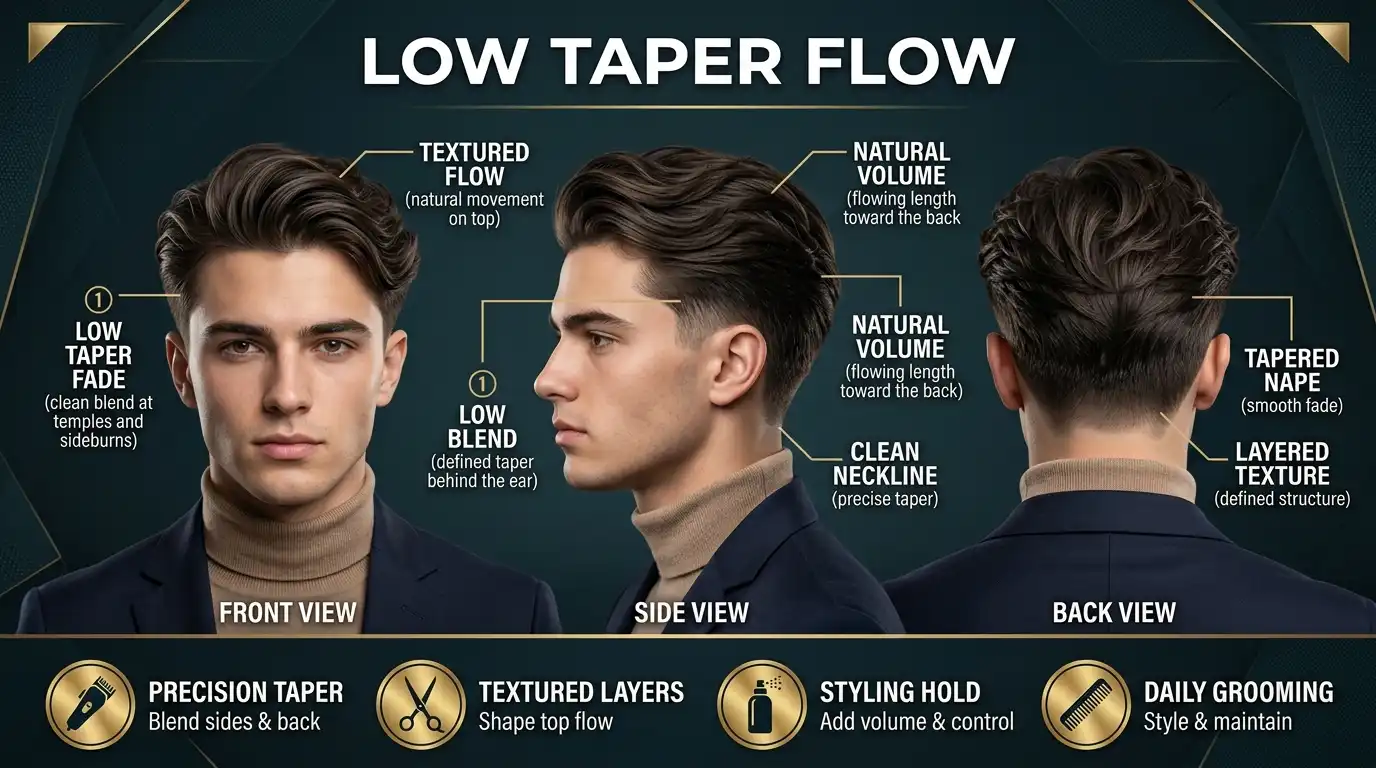
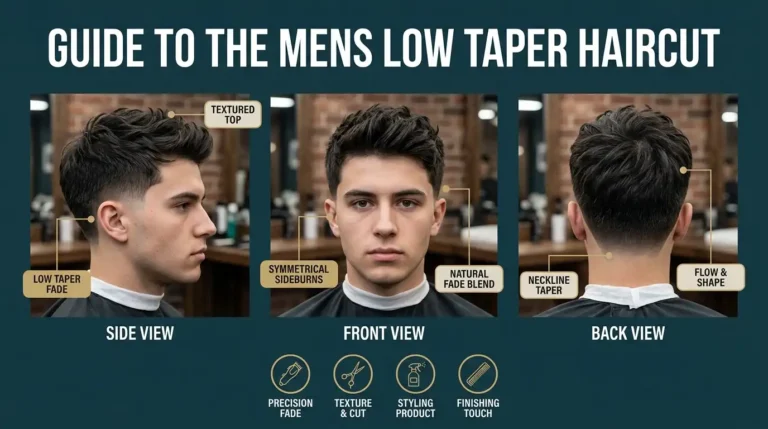
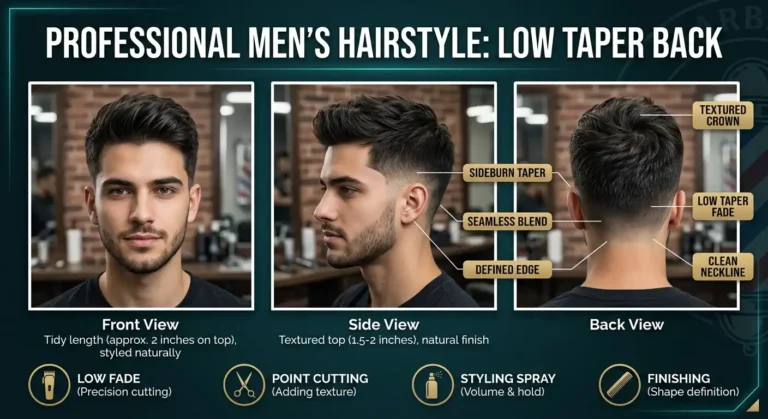
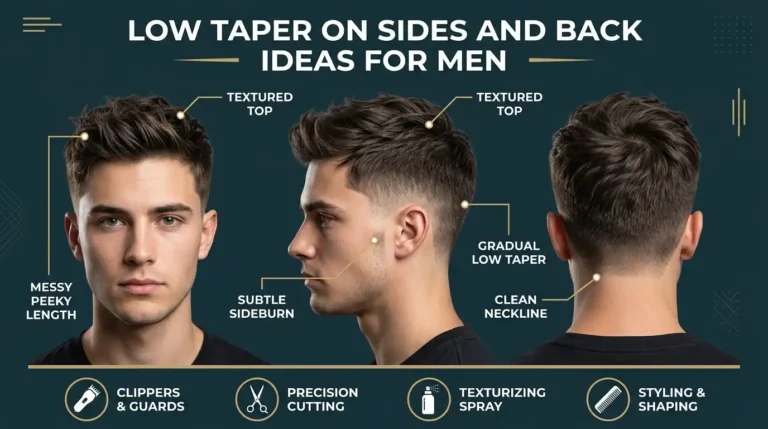
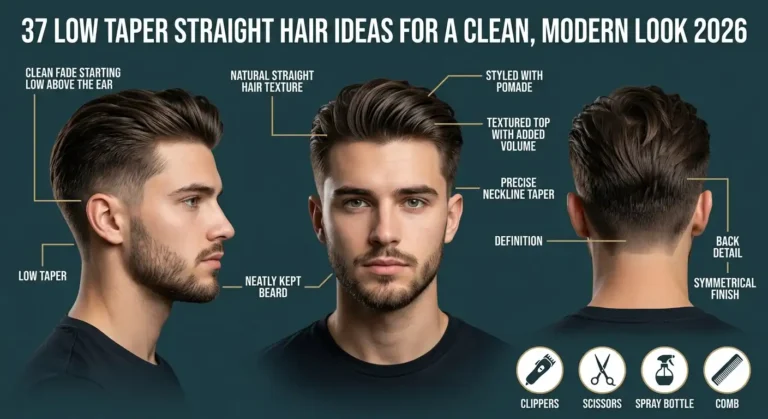
If you want a haircut that keeps natural movement while making the edges look clean, low taper flow is a strong choice. It combines longer, flowing hair with a subtle taper around the ears and neckline. The result feels relaxed, modern, and easy to adapt to straight, wavy, thick, or fine hair.
A gallery-led search like this is best served by distinct variations rather than one generic haircut description. Current search results include flow-and-taper galleries with 14 and 18 ideas, while broader flow galleries reach 25 styles.
32 Low Taper Flow With Styles
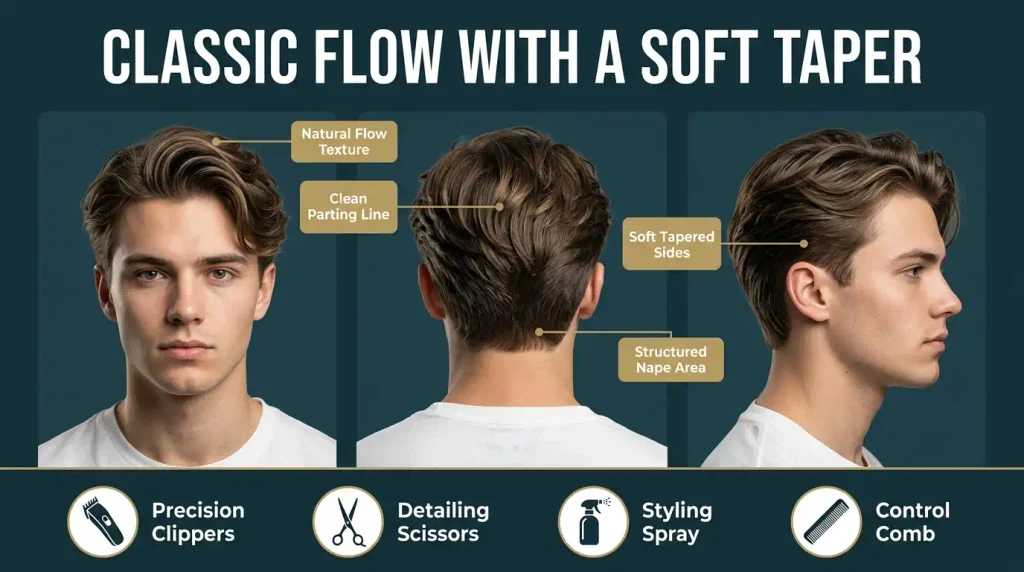
1. Classic Flow With a Soft Taper
The classic version keeps medium-length hair on top and through the sides, allowing the strands to move naturally backward. The taper stays low around the sideburns and neckline, so it cleans the outline without making the haircut look like a tight fade. Oval and square faces work especially well with this balanced shape. Straight or lightly wavy hair makes the flow easy to control. For styling, use a light cream and brush the hair back while damp.
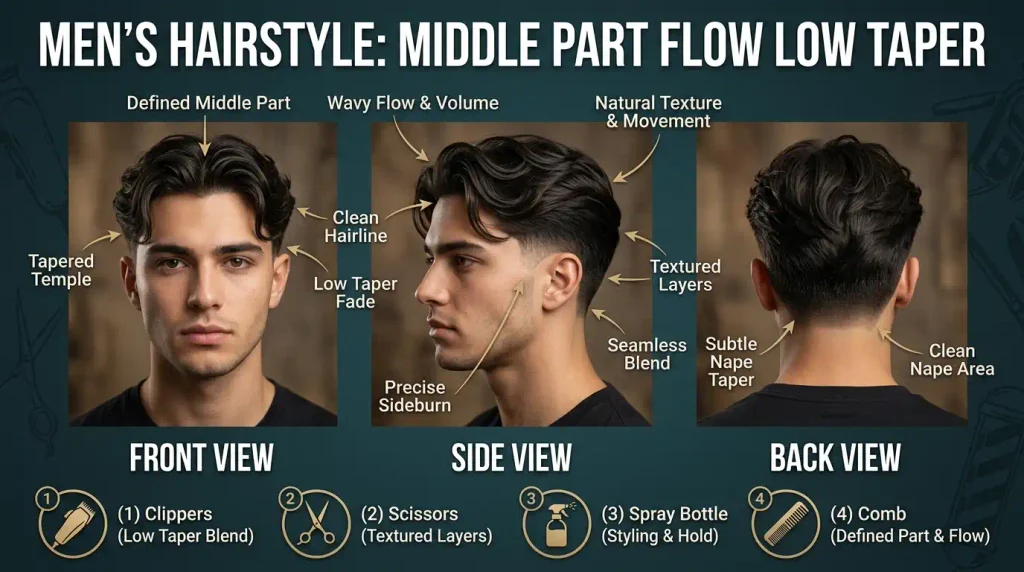
2. Middle Part Flow Low Taper
A center part changes the look completely. The hair opens from the middle and falls outward before moving toward the sides and back. Keep the taper narrow so the longer panels remain connected to the flow. This version suits oval, heart, and diamond faces because the curtain-like front can frame the cheeks. Straight to wavy hair gives the cleanest movement. Blow-dry away from the center part, then finish with a lightweight cream.
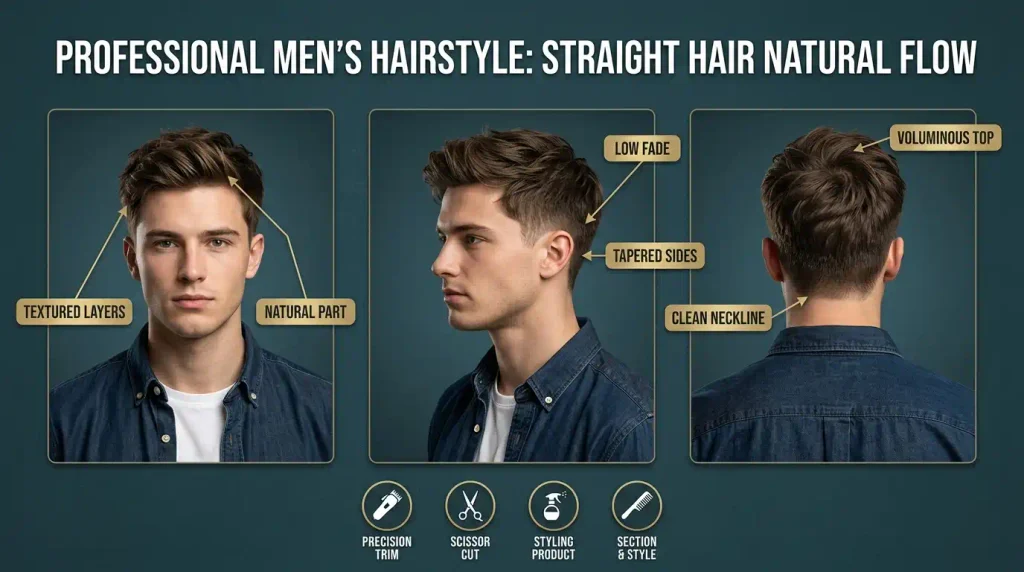
3. Straight Hair Natural Flow
With straight hair, every layer is easy to see, so the cut should focus on shape rather than excessive texture. Leave enough length around the sides for the hair to bend backward naturally. The low taper keeps the ears and neckline tidy while preserving the straight silhouette. This option suits oval and rectangular faces particularly well. A paddle brush and light styling cream can add direction without making the hair stiff or greasy.
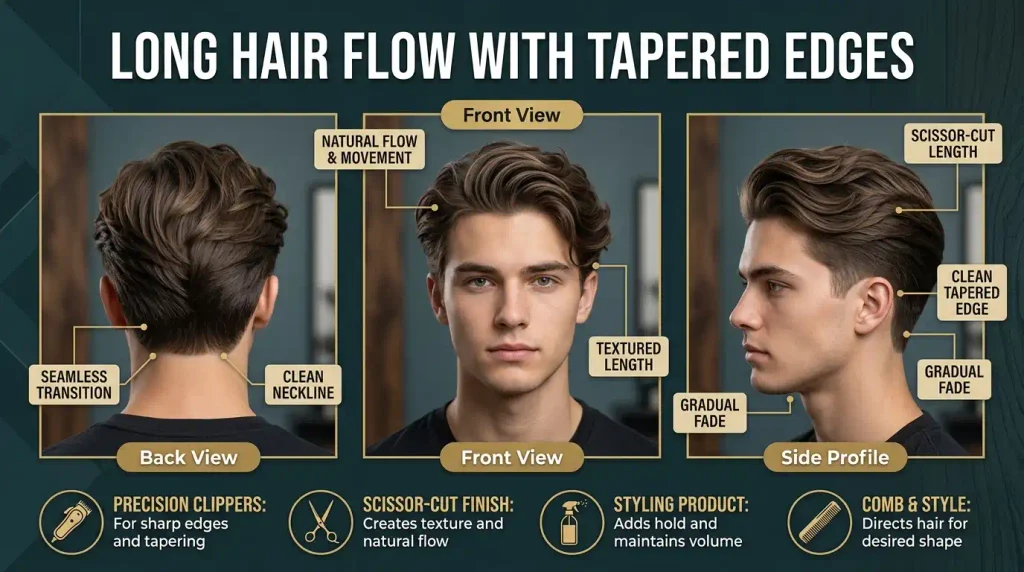
4. Long Hair Flow With Tapered Edges
Longer hair creates a softer and more dramatic version of the look. Keep the top, sides, and back connected, while the taper only cleans the lowest areas around the ears and neck. This works well for men growing their hair out who still want a polished perimeter. Thick and wavy hair can carry the length naturally. Use leave-in conditioner or a lightweight cream and avoid heavy products that flatten the movement.
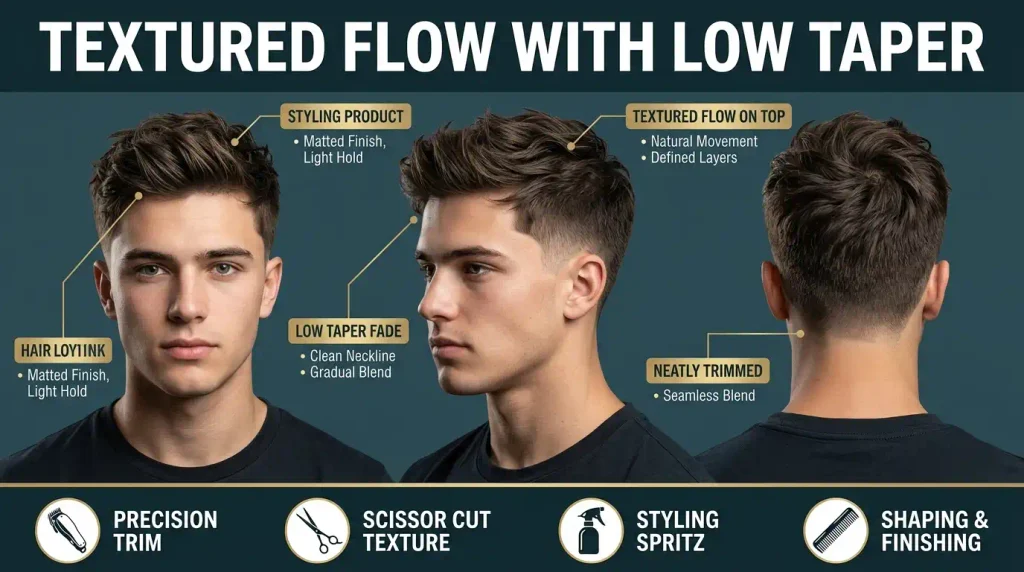
5. Textured Flow With Low Taper
Texture gives the haircut a more casual finish. Ask for subtle internal layering instead of taking large amounts of length from the outside. The taper remains low, creating a clean base beneath the textured top. This version is useful for thick or naturally wavy hair because layers can help the shape move instead of sitting like one heavy block. Apply a small amount of matte cream to damp hair and shape it with your fingers.
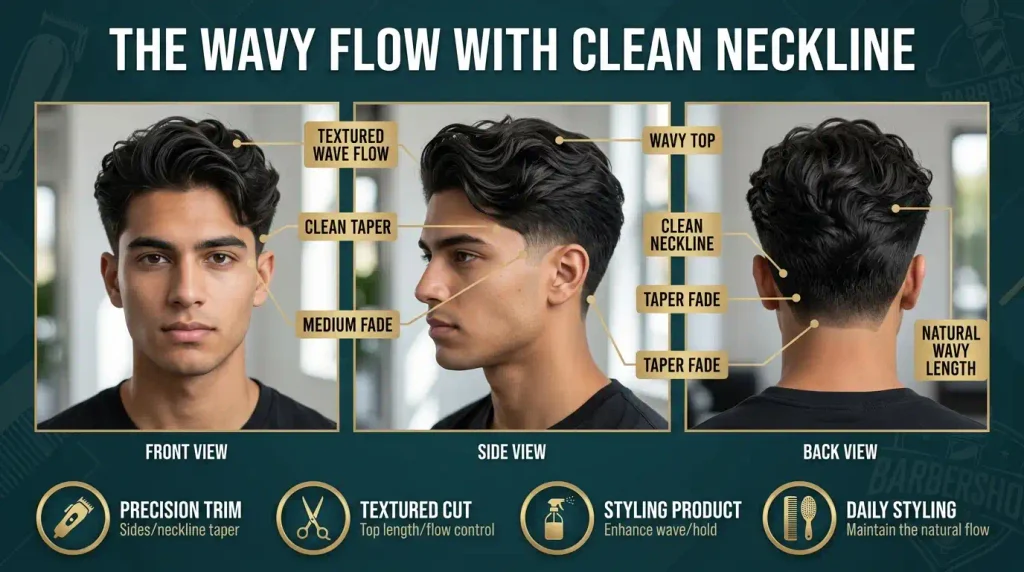
6. Wavy Flow With Clean Neckline
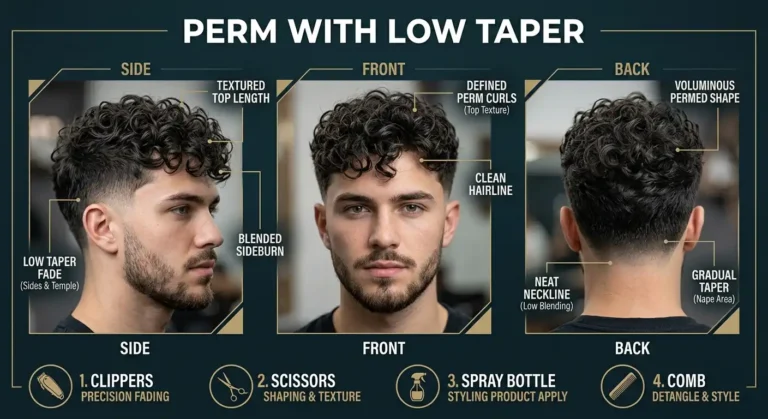
Natural waves add movement without much styling work. Keep the wave pattern intact through the top and sides, then use a restrained taper around the neckline. The contrast between soft waves and a clean lower edge makes the haircut look intentional. It suits oval, square, and longer faces. Work a lightweight curl cream through damp hair and let the waves settle naturally. Avoid brushing the hair heavily once the wave pattern has formed.
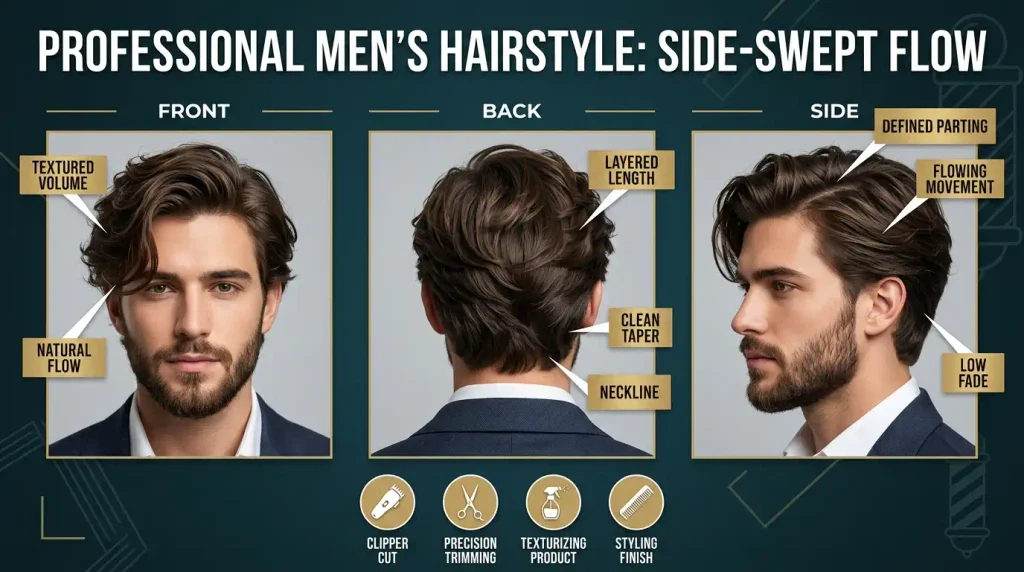
7. Side-Swept Flow
Instead of splitting the hair directly down the middle, sweep the front toward one side. This creates a classic shape while keeping the relaxed movement associated with flow hairstyles. The taper should remain low so the side-swept top still has enough weight to move. It can suit round and square faces because the diagonal direction adds visual length. A blow dryer and vent brush can establish the direction before applying a small amount of styling cream.
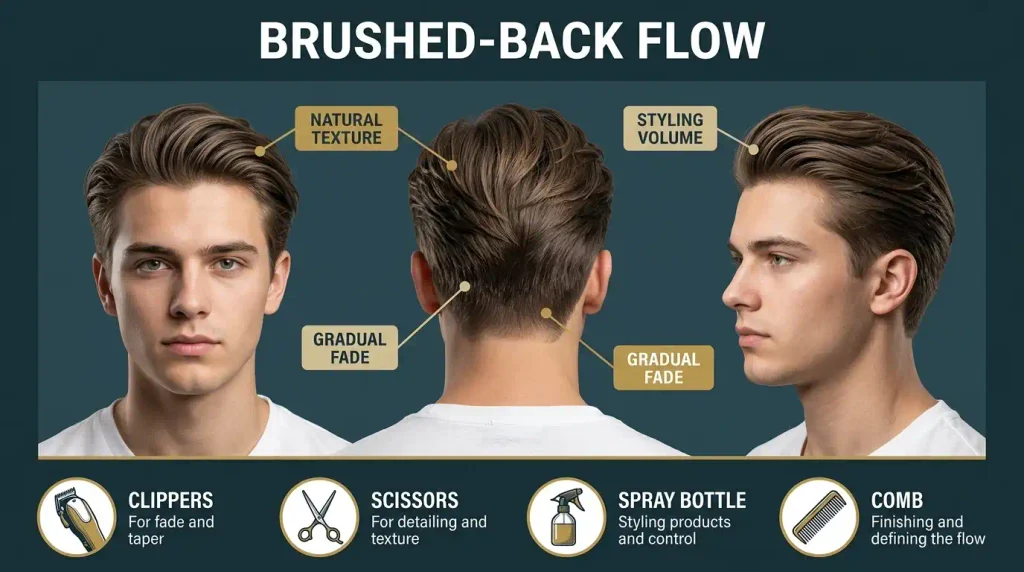
8. Brushed-Back Flow
The brushed-back version moves the entire front away from the face without creating a stiff slick-back. The top should remain soft and touchable, with enough length to travel toward the crown. Keep the taper subtle around the ears and neckline. This option works nicely for oval and rectangular faces. Straight or wavy hair can handle it well. Blow-dry backward using your fingers or a brush, then use a light matte product to control loose strands.
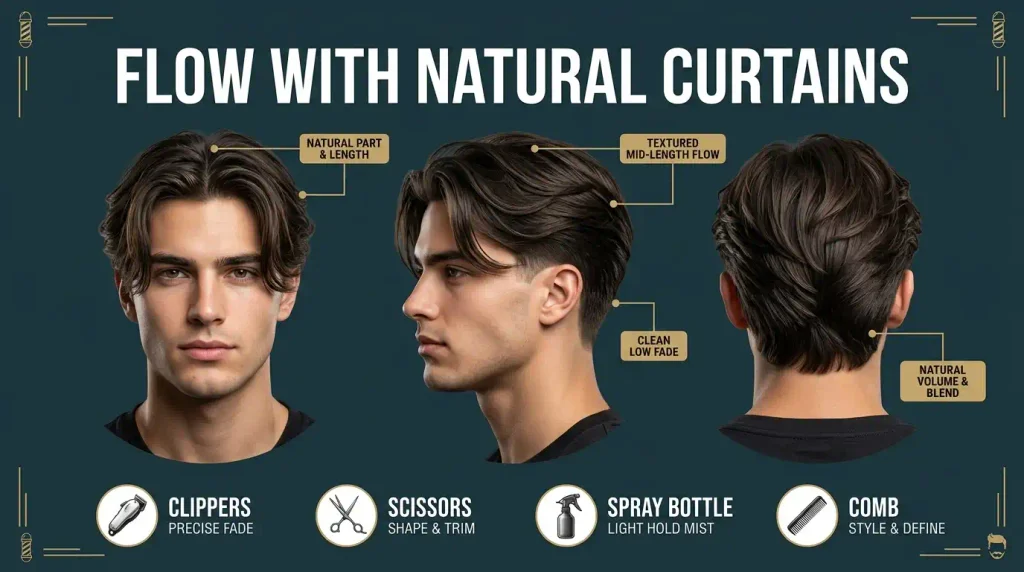
9. Flow With Natural Curtains
Natural curtains give the front a loose center opening while the rest of the hair flows backward. Unlike a sharp curtain cut, this version keeps the part soft and slightly imperfect. It works particularly well when the hair already wants to separate naturally. The taper should only tidy the lower edges. Oval, heart, and diamond faces can benefit from the framing effect. Use a lightweight cream and guide each side away from the center while drying.
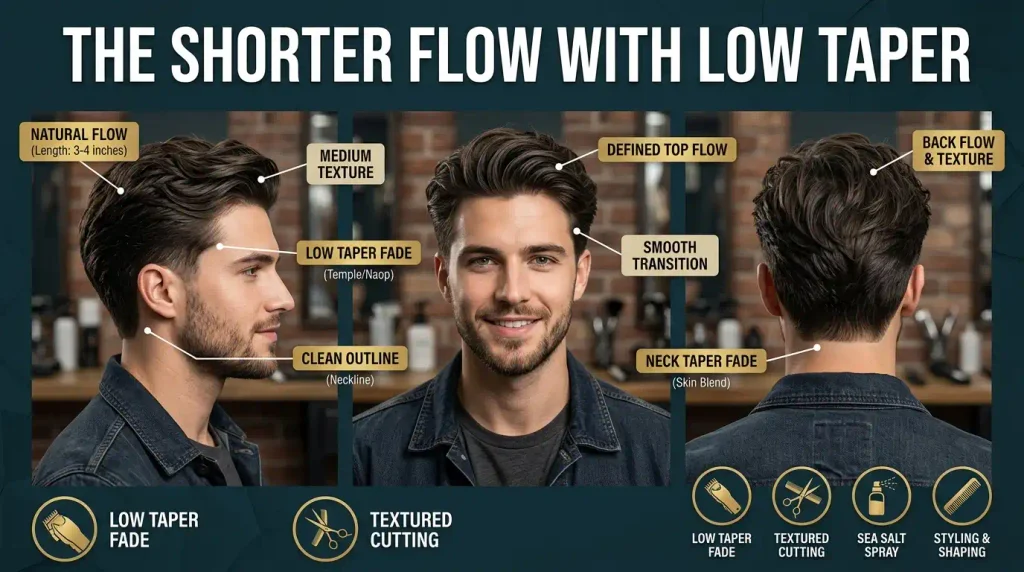
10. Shorter Flow With Low Taper
You do not need very long hair to create movement. A shorter flow keeps enough length on top for backward direction while trimming the overall silhouette closer to the head. This makes the style easier for men who want a lower-maintenance option. Straight and slightly wavy hair are especially easy to manage. It suits most face shapes when the front is adjusted to balance the forehead. Use a small amount of matte cream for separation.
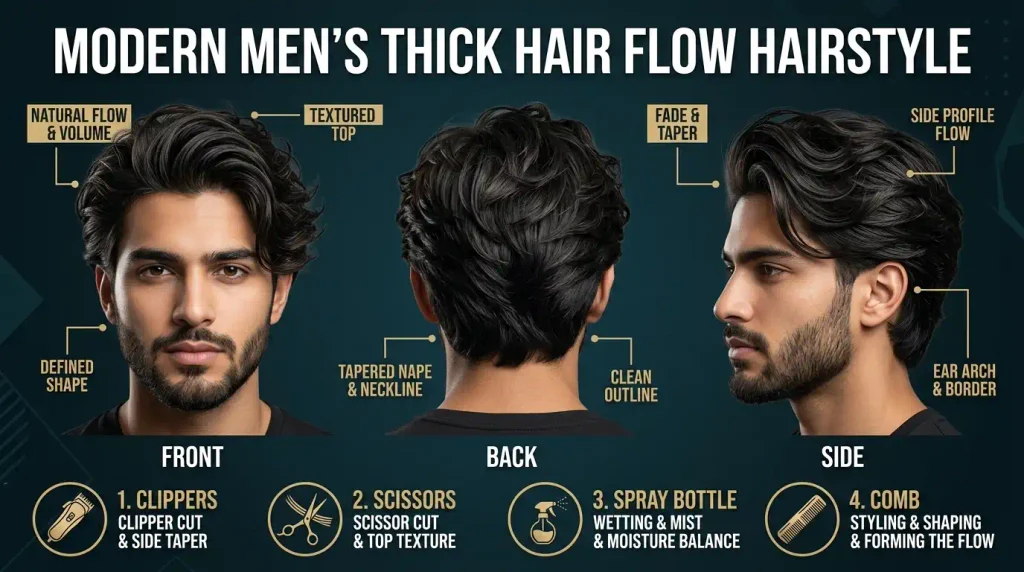
11. Thick Hair Flow
Thick hair can produce a full, strong flow, but too much weight can make the sides look bulky. Keep the outside length while removing some internal weight where needed. The low taper then cleans the perimeter without destroying the fullness above it. This option works well for square and oval faces. Ask the barber to control bulk with scissors rather than simply cutting the sides short. Style with a lightweight cream or paste.
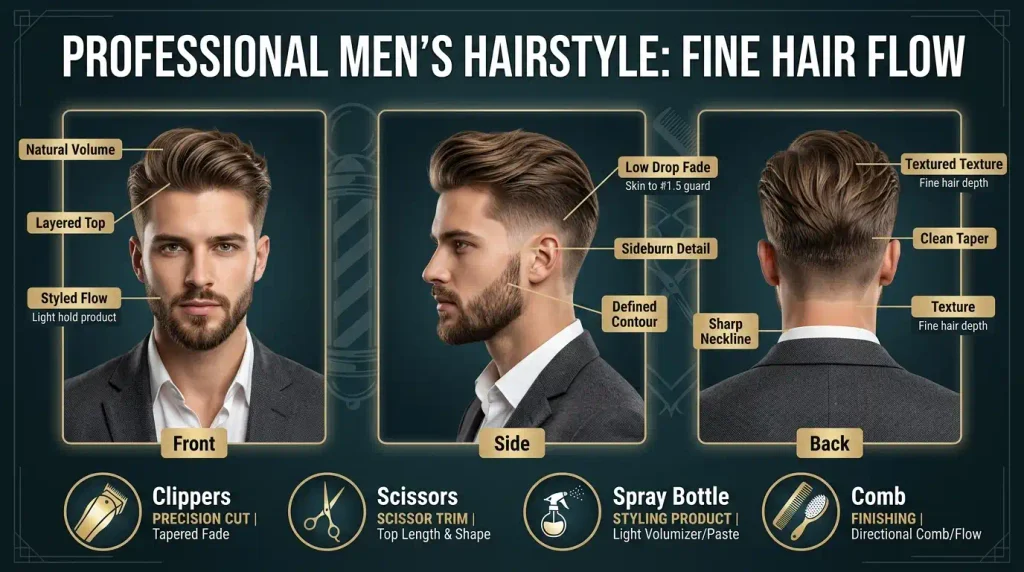
12. Fine Hair Flow
Fine hair benefits from a shape that creates movement without removing too much density. Keep the layers controlled and avoid excessive thinning. The low taper provides a clean edge while the longer top gives the appearance of more coverage. Oval and heart-shaped faces can work well with this approach. Blow-dry the roots in the direction you want them to sit, then use a lightweight volumizing product. Avoid heavy pomades that can make fine hair look flat.
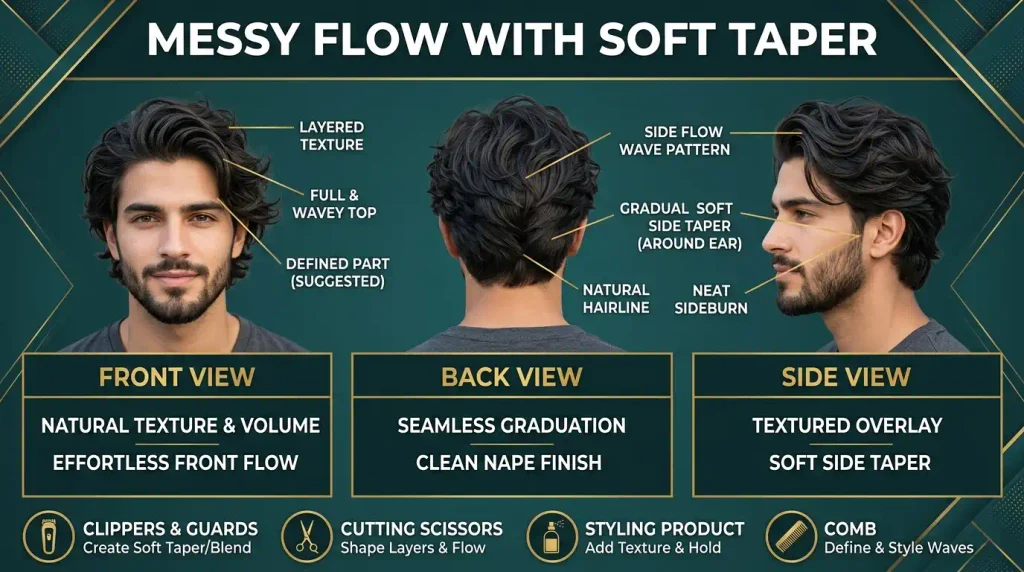
13. Messy Flow With Soft Taper
For a relaxed everyday look, let the hair move in different directions instead of forcing every strand into place. The taper remains neat, creating a useful contrast between controlled edges and a loose top. This style suits casual lifestyles and works especially well with naturally wavy or thick hair. Round and oval faces can handle the extra texture. Use matte cream or a light paste and finish by separating sections with your fingers.
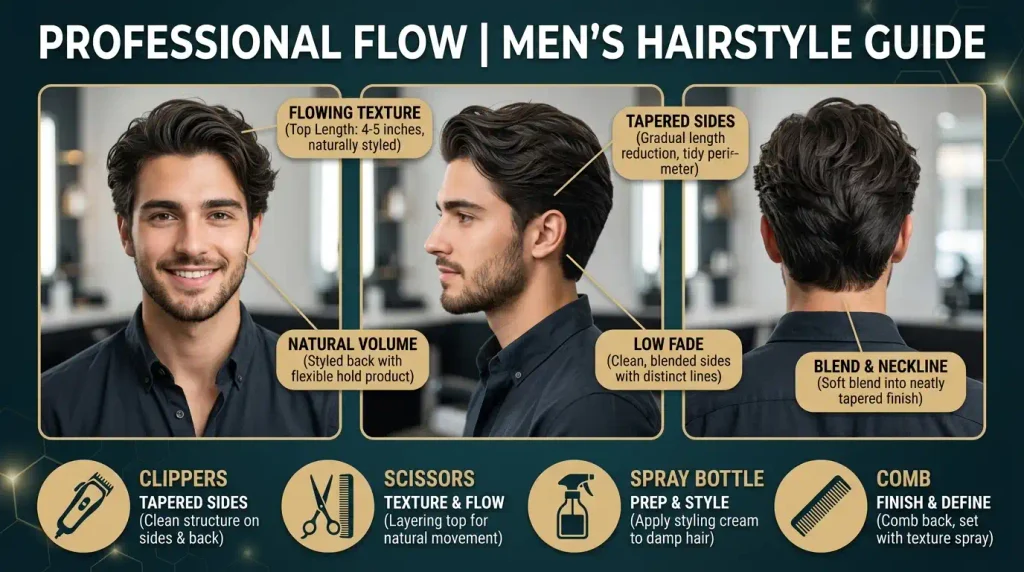
14. Professional Flow
A professional version uses cleaner layers and a more controlled finish. The front moves backward or slightly to the side, while the sides retain enough length to avoid an aggressive contrast. The taper around the ears and neck keeps the haircut office-friendly. Straight and medium-density hair are easy to style this way. Oval, square, and rectangular faces can all work. Use a small amount of low-shine cream and brush the hair into place.
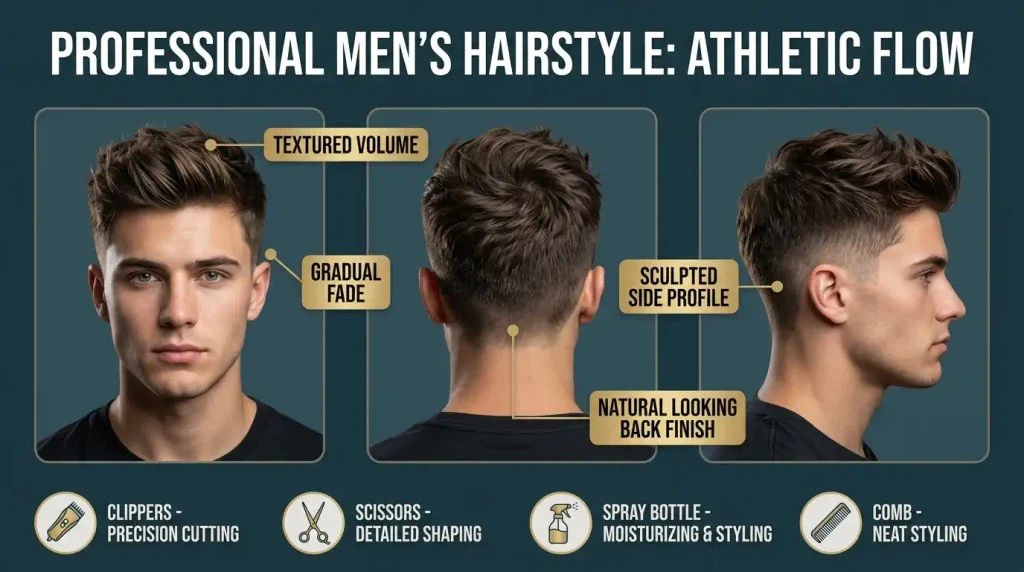
15. Athletic Flow
This variation keeps the top long enough to move but avoids excessive length around the ears. The low taper helps the haircut stay neat during active days without turning the whole style into a fade. It works well for straight and wavy hair with medium density. Oval and square faces are natural matches. A light styling cream is usually enough. If you exercise often, choose a product that rinses easily and avoid building up heavy wax.
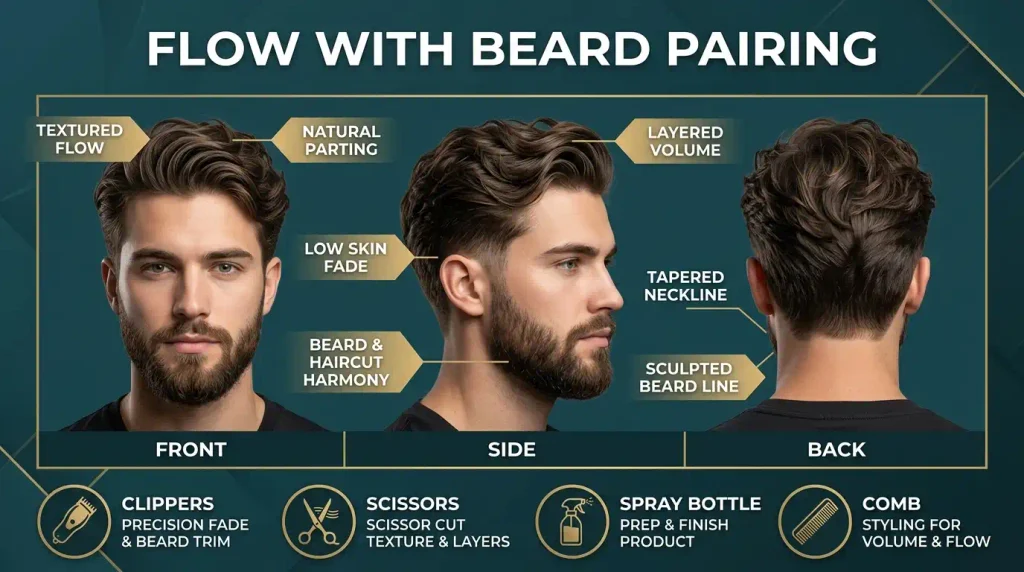
16. Flow With Beard Pairing
Adding a beard changes the balance of the haircut, so the taper can be kept especially clean around the sideburn area. The longer top creates movement above the face while the beard adds visual weight below it. This works particularly well with oval, square, and diamond faces. Straight, wavy, and thick hair can all carry the style. Keep the beard shape complementary rather than overly sharp, and use a light cream to keep the top flexible.
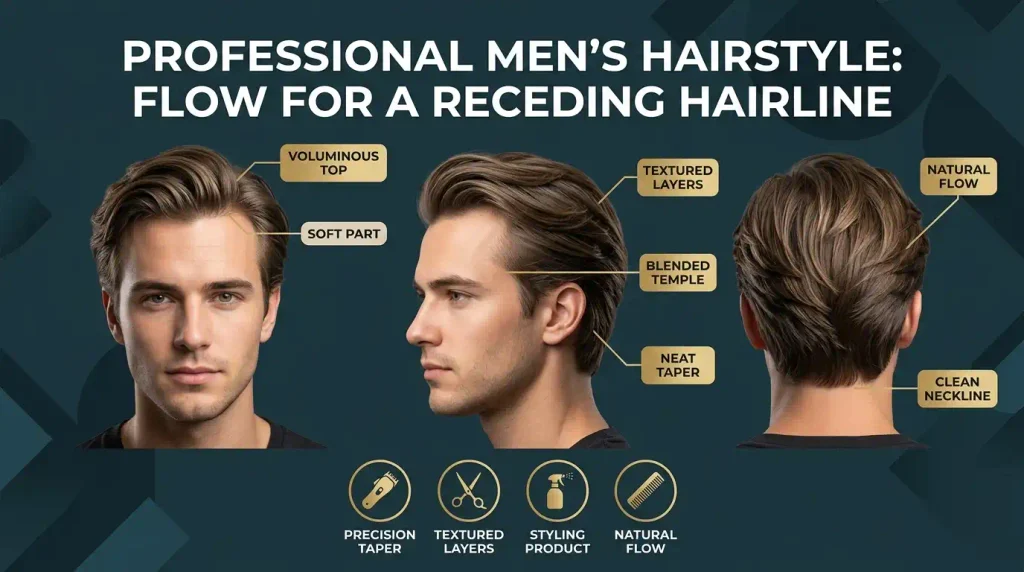
17. Flow for a Receding Hairline
A flow style can be adjusted around a changing hairline without forcing the front straight down. Keep the front long enough to move naturally toward the side or back, depending on the growth pattern. Avoid an overly high taper because it can remove useful density near the temples. This approach can work with straight or wavy hair. A side-swept direction often looks natural. Use a lightweight matte product rather than a shiny product that separates the strands.
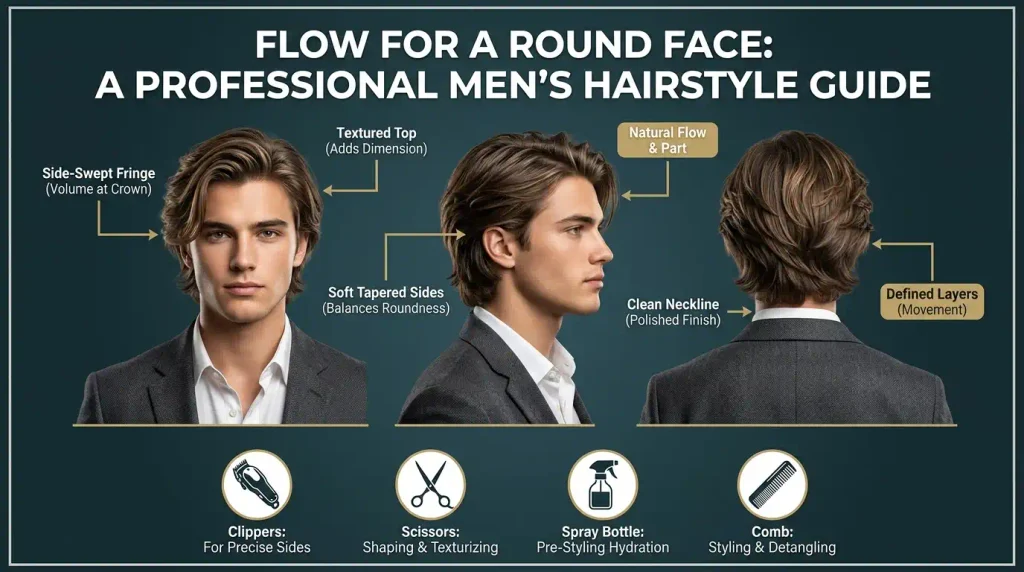
18. Flow for a Round Face
For a round face, the goal is usually to create some length and direction without making the sides excessively wide. A slightly taller top with a backward or diagonal flow can help create a longer visual shape. Keep the taper controlled and avoid excessive side volume. Straight, wavy, and thick hair can all work. Use a blow dryer to lift the roots slightly, then direct the hair backward with a light styling cream.
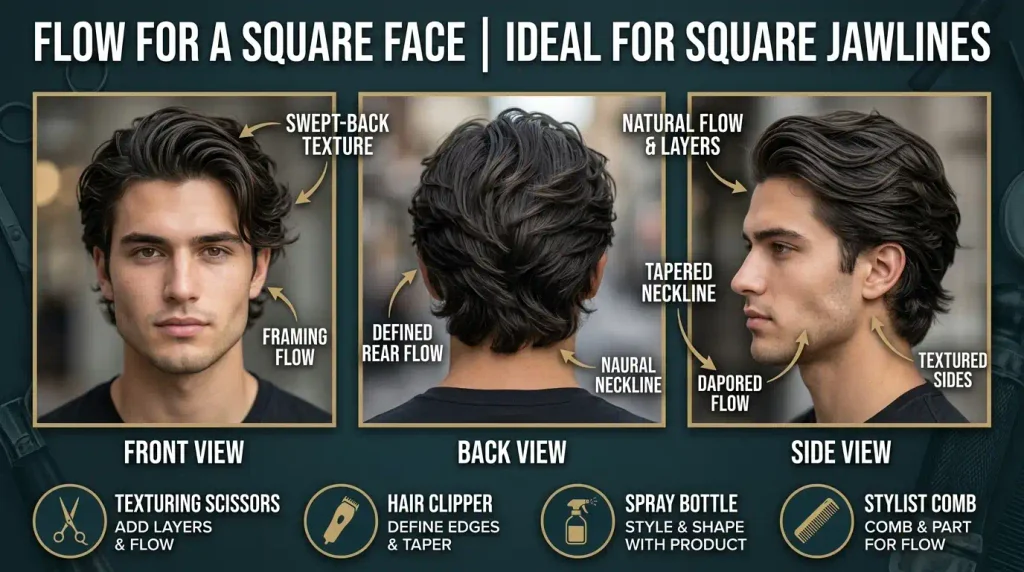
19. Flow for a Square Face
Square faces already have strong angles, so a softer flow can create useful contrast. Keep the top layered enough to move naturally while allowing the front to sweep backward or diagonally. The low taper keeps the lower outline neat without making the haircut overly harsh. Straight and wavy textures both suit this approach. Use a cream or soft paste rather than a hard gel. Finger styling gives the finish a more natural appearance.
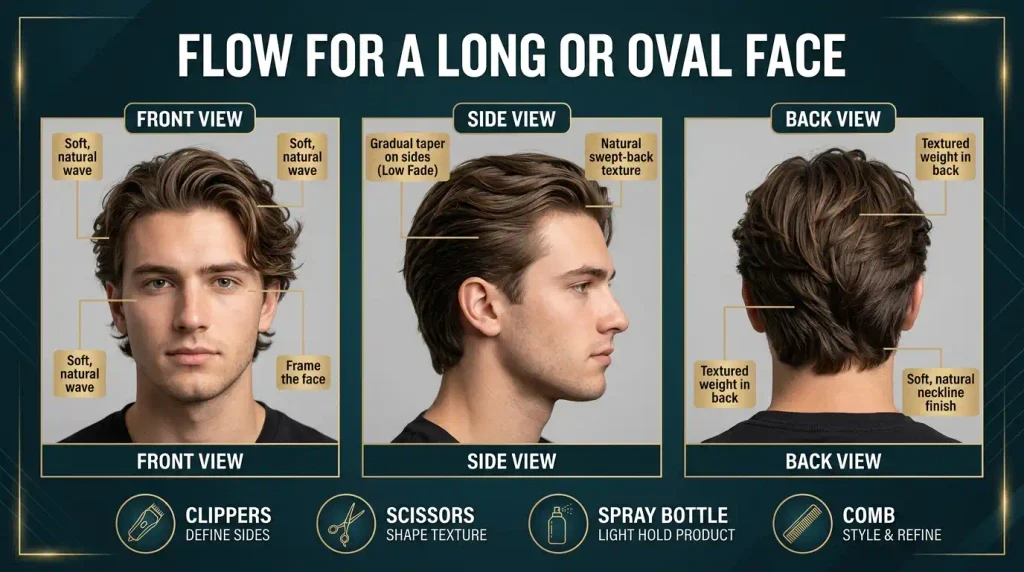
20. Flow for a Long or Oval Face
Longer faces often look balanced when the hairstyle creates width rather than excessive height. Keep some side length and let the flow move outward before turning backward. Avoid lifting the front too high. A low taper works well because it removes only lower bulk. Straight, wavy, and medium-thick hair can carry this shape. A paddle brush can help create width while blow-drying. Finish with a flexible cream that keeps the hair touchable.
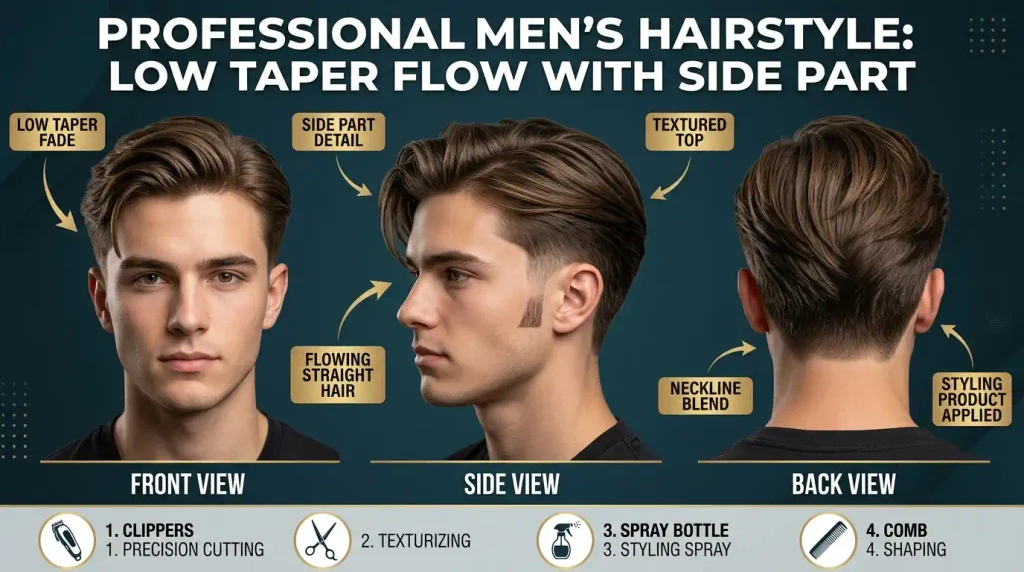
21. Low Taper Flow Straight Hair With Side Part
A side part gives straight hair a more structured direction while keeping the flow relaxed. The part should not look overly carved unless you specifically want a sharp finish. Leave the side panel long enough to connect with the moving top. The taper cleans around the ears and neckline. This style suits oval and rectangular faces especially well. Blow-dry from the part toward the opposite side, then add a small amount of matte paste.
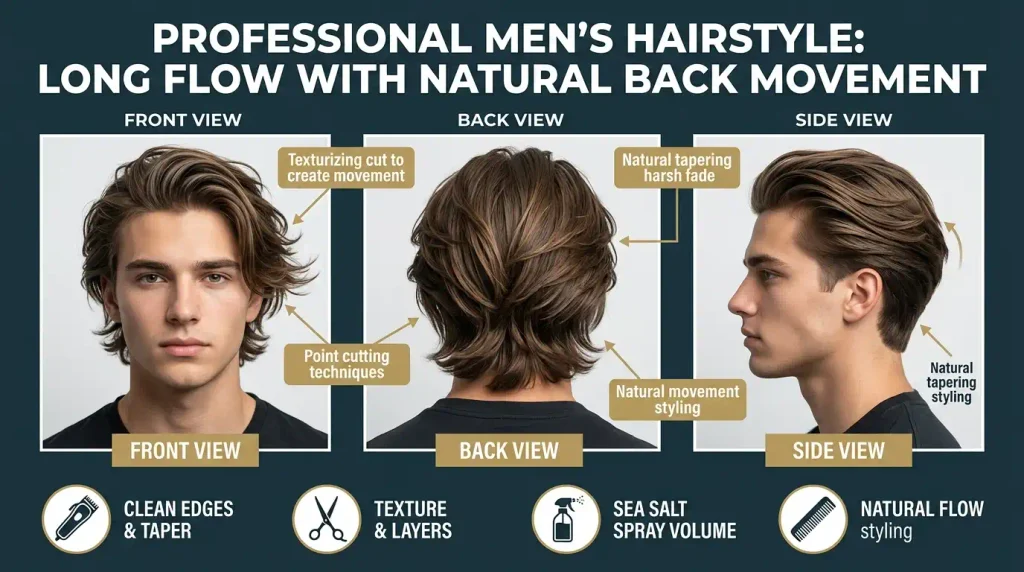
22. Long Flow With Natural Back Movement
This version is built around the back of the haircut. Keep enough length at the crown and rear so the hair can move backward rather than stopping suddenly. The low taper should remain limited to the perimeter. It is a strong option for men who are growing their hair longer but still want regular barber maintenance. Wavy and thick textures look especially natural. Use conditioner regularly and apply a light cream when styling.
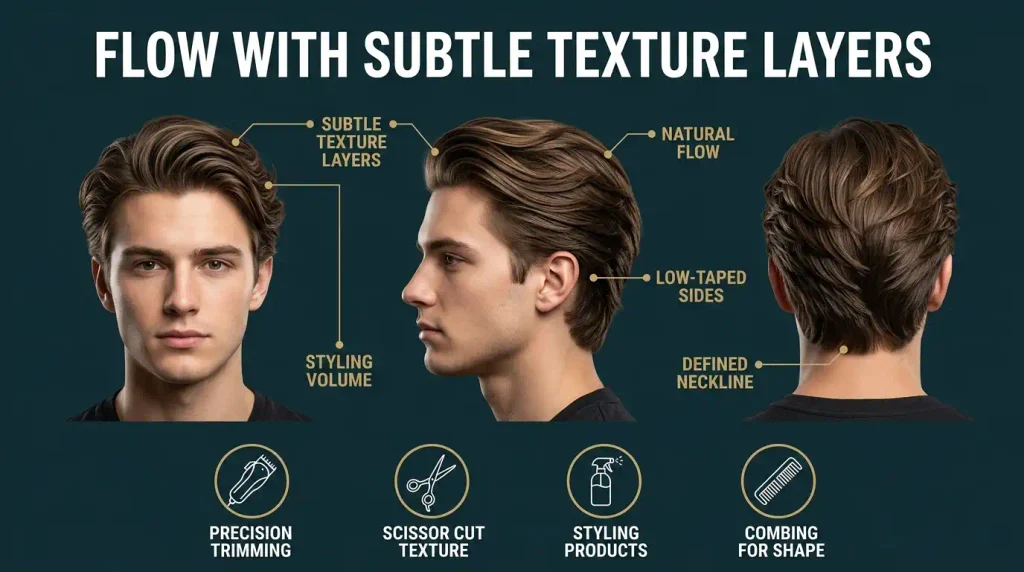
23. Flow With Subtle Texture Layers
Subtle layers can prevent medium-length hair from becoming heavy without creating a visibly choppy finish. The barber removes weight inside the shape while preserving the outside length. This creates movement through the top and sides. The low taper then gives the haircut a clean lower outline. Thick, medium, and wavy hair are good candidates. Ask for soft layers rather than aggressive thinning. Style with a lightweight paste and your fingers.
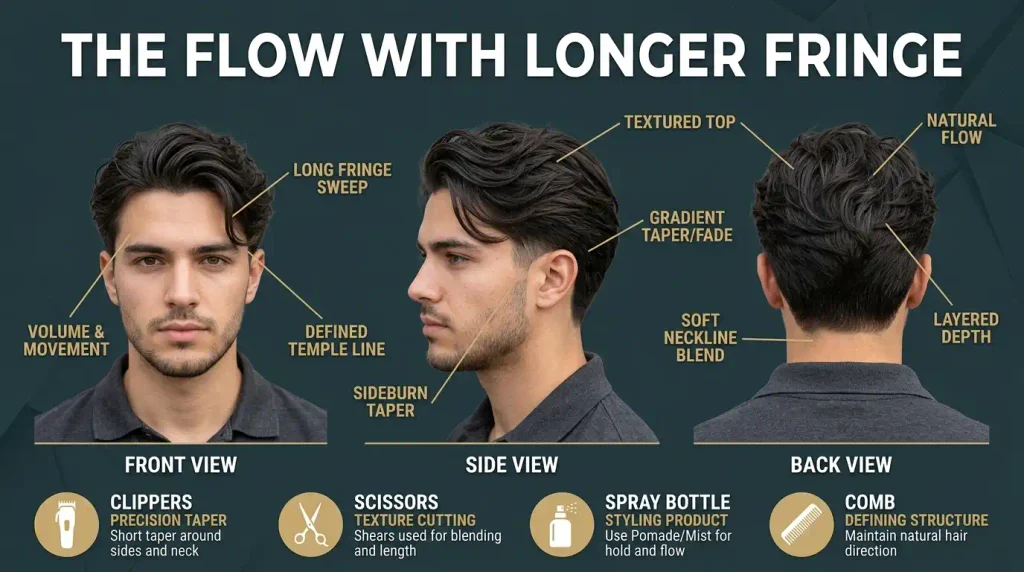
24. Flow With Longer Fringe
A longer fringe allows the front to remain more prominent before moving toward the sides. It can be worn forward, split slightly, or swept back depending on the day. Keep the taper low so the longer fringe remains the main feature. This option works well with straight and wavy hair. Heart and oval faces can benefit from the extra front framing. Blow-dry the fringe into the desired direction and finish with flexible cream.
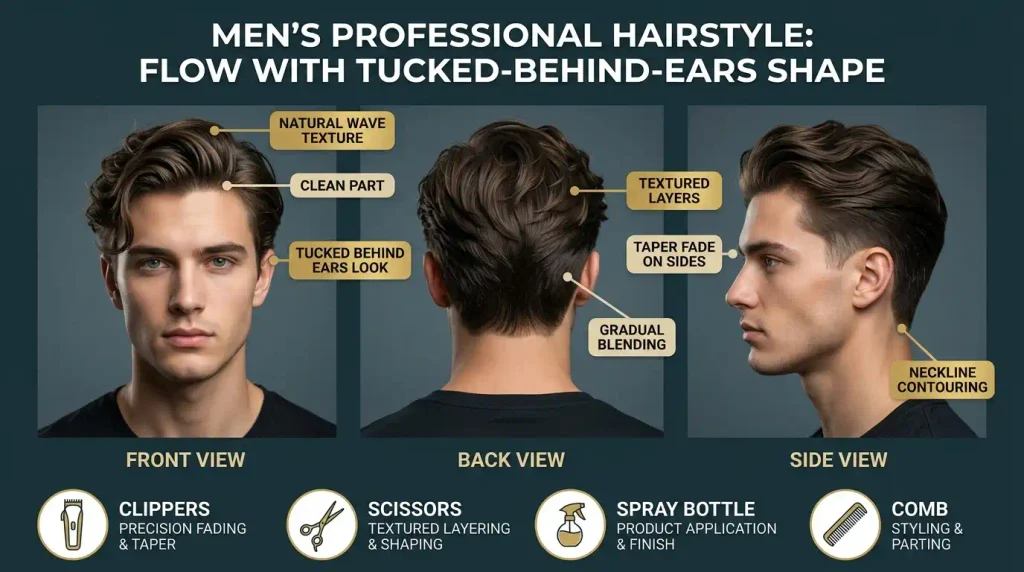
25. Flow With Tucked-Behind-Ears Shape
Letting the longer side sections tuck behind the ears creates a clean but relaxed silhouette. The taper prevents the area around the sideburns and neckline from becoming untidy while the longer sections remain intact. This look suits medium-to-long hair and works especially well with straight or wavy texture. Oval and rectangular faces are easy matches. Use a light cream and gently guide the side sections behind the ears while drying.
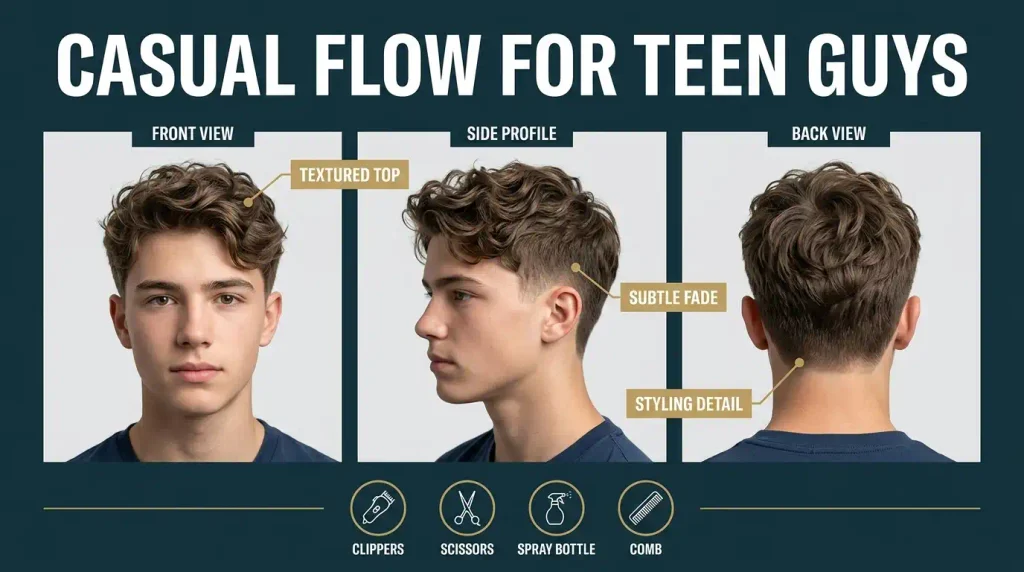
26. Casual Flow for Teen Guys
A younger version can stay simple, natural, and easy to maintain. Keep the top and sides long enough for movement, while the taper cleans the ears and neckline. Avoid overly sharp lines if a softer school-friendly finish is preferred. Straight, wavy, and thick hair can all work. Oval and round faces can be balanced with the right front direction. A light styling cream is enough for most mornings. Let the natural texture do some of the work.
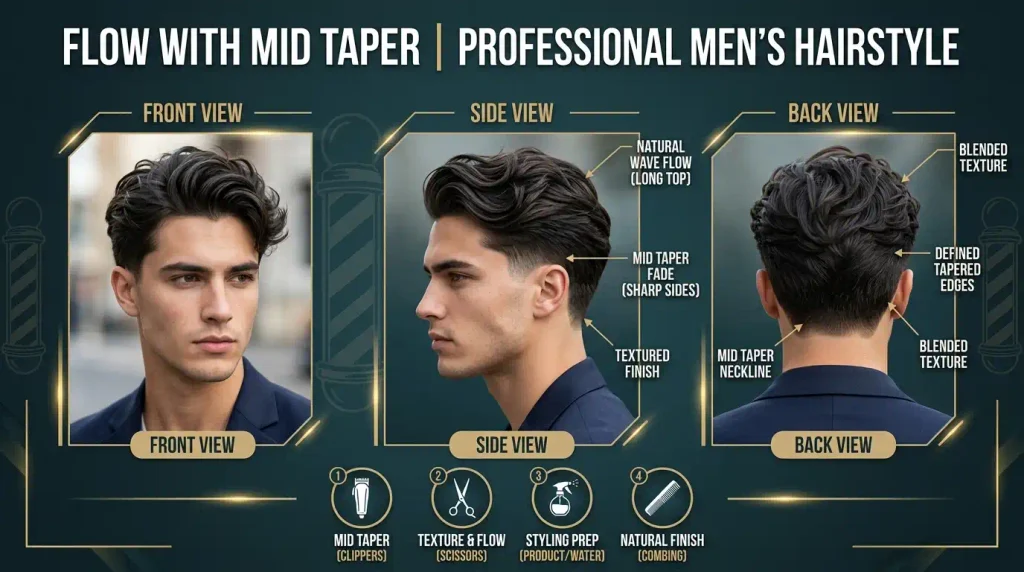
27. Flow With Mid Taper
A mid taper moves the transition higher than a traditional low taper, giving the sides more definition. The top still keeps the flowing shape, but the haircut has a stronger contrast around the temples and upper sides. This option can suit men who want a sharper silhouette without moving to a full fade. Straight and wavy hair work particularly well. Square and oval faces are strong matches. Use matte paste to keep the longer top controlled.
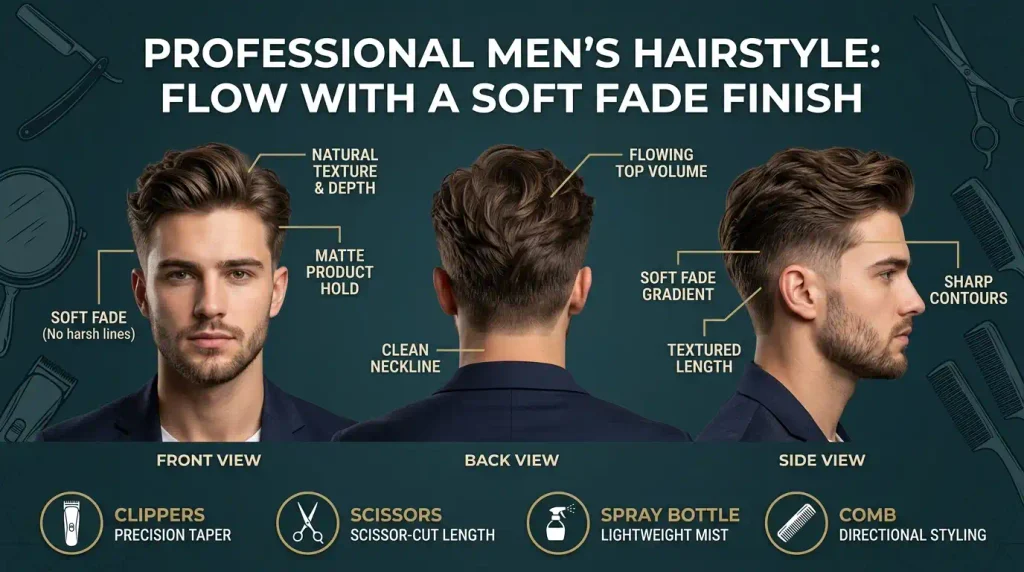
28. Flow With a Soft Fade Finish
This variation sits between a traditional taper and a more visible fade. The lower sides become cleaner while enough length remains above the transition to connect with the flow. It works for men who want more contrast than a subtle taper provides. Straight, wavy, and thick hair can carry the shape. Keep the top longer if you want the flow to remain the dominant feature. A flexible paste provides control without removing movement.
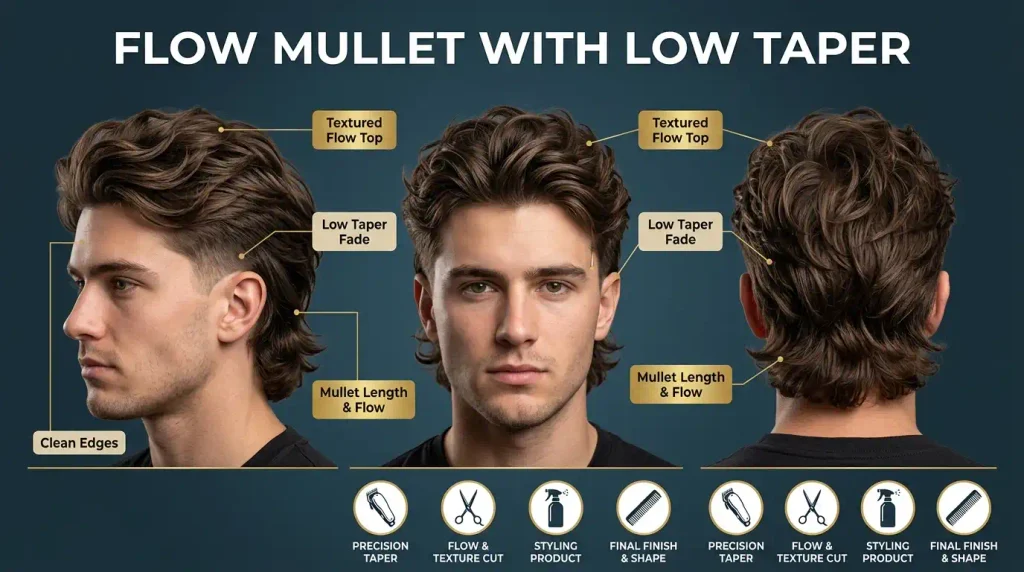
29. Flow Mullet With Low Taper
A flow mullet keeps additional length through the back while the front and sides remain more controlled. The low taper cleans around the ears and neckline without removing the defining rear length. This creates a noticeable but wearable shape. Thick and wavy hair can make the back look especially full. It suits oval and square faces well. Ask your barber to preserve the rear length and blend the transition rather than creating a disconnected shelf.
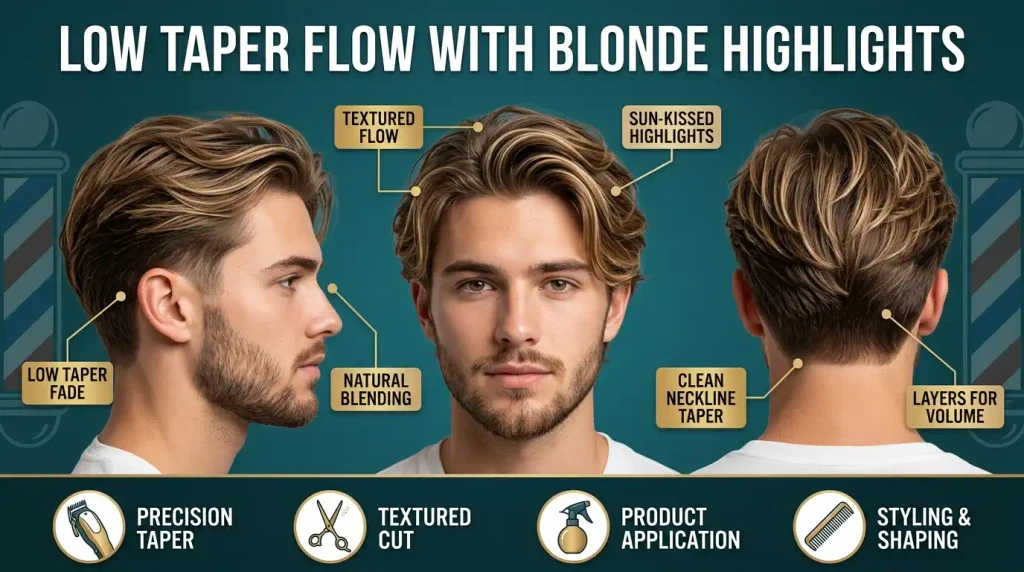
30. Low Taper Flow With Blonde Highlights
Color can emphasize the direction of a flowing haircut because lighter sections catch the light as the hair moves. Keep the cut itself simple, with medium or longer top length and a subtle taper at the edges. Straight or wavy hair can show the color contrast clearly. This works best when the highlights remain blended rather than forming hard stripes. Use a color-safe shampoo and a lightweight conditioner to protect softness.
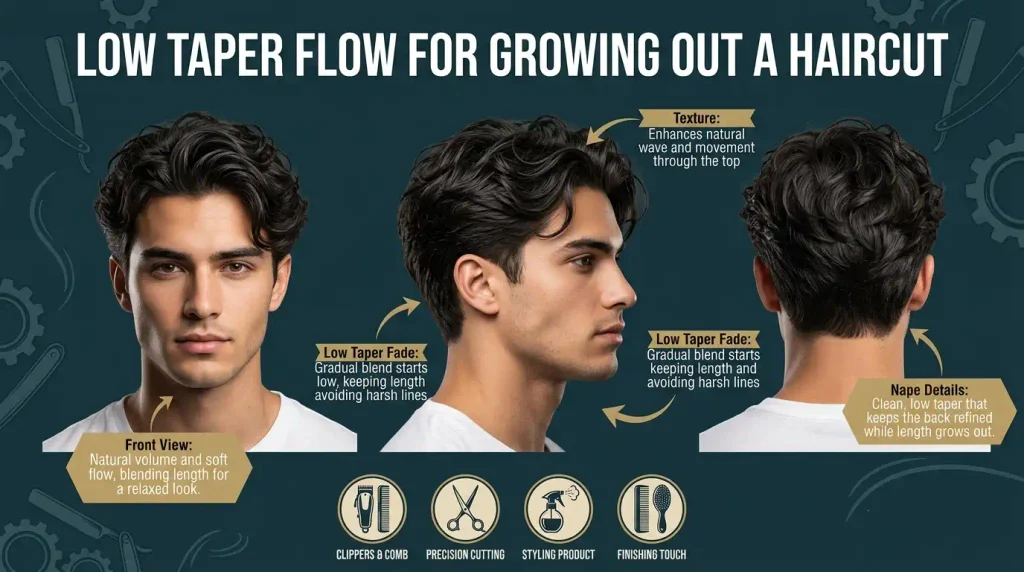
31. Low Taper Flow for Growing Out a Haircut
If you are moving from a shorter haircut toward longer hair, a low taper can make the awkward stage easier to manage. Keep adding length through the top and side panels while cleaning only the ears and neckline. This approach avoids repeatedly cutting away the progress you are trying to make. It suits most textures. Ask for shape maintenance rather than a major reduction. Regular conditioning will also help longer hair stay manageable.
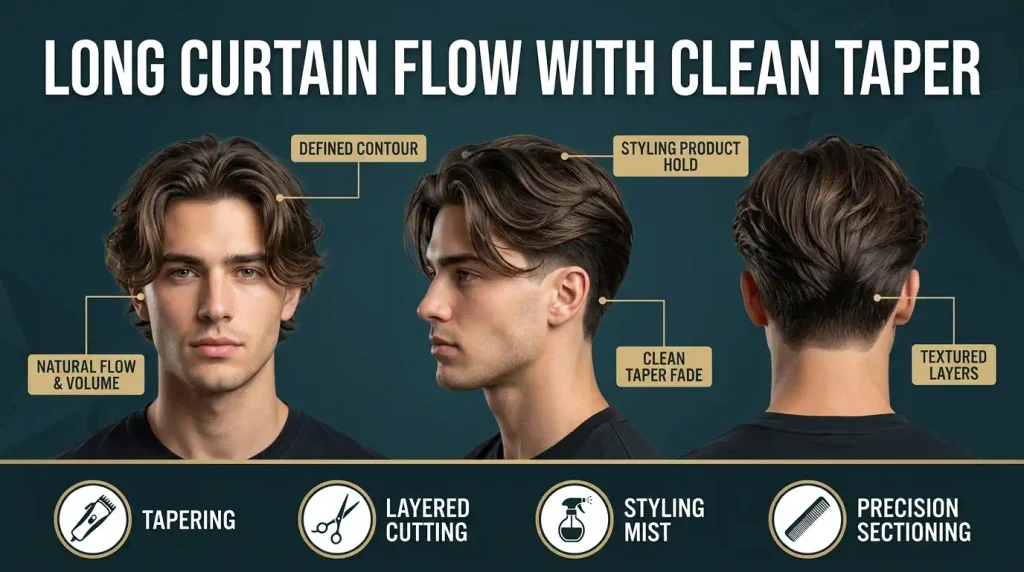
32. Long Curtain Flow With Clean Taper
The final variation combines a longer curtain front with a flowing back and a very restrained taper. The center opening frames the face, while the longer side sections move toward the rear. Keep the taper narrow so the haircut still feels like a long hairstyle rather than a fade. Straight and wavy hair are ideal starting points. Oval, heart, and diamond faces can work particularly well. Use a lightweight cream and blow-dry each curtain away from the center.
This Look vs. Other Taper and Fade Options
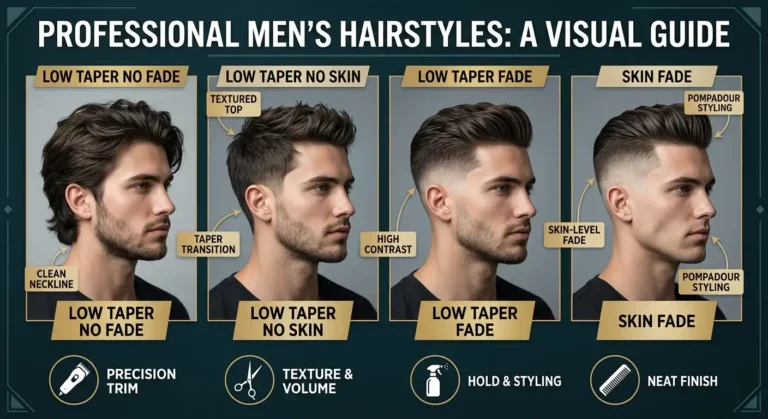
The main difference between these options is where the shorter transition sits and how much side weight remains. A low taper protects more of the natural flow, while a mid taper creates stronger separation.
| Haircut | Transition | Typical guard approach* | Overall effect | Often suits |
| Low taper | Very low around ears and neck | Low guards near edges, blended upward | Soft and natural | Oval, square, heart |
| Mid taper | Higher around temples/sides | Shorter section reaches higher | More defined | Oval, square, rectangle |
| High taper | High on sides | Shorter area rises higher | Strong contrast | Oval, diamond |
| Low fade | Low but more visible | Can reach very short/skin | Cleaner contrast | Most face shapes |
| Mid fade | Around mid-side area | Noticeable short-to-long transition | Sharper | Round, oval, square |
| Scissor flow | No clipper taper required | Scissor-shaped | Softest and fullest | Longer faces, natural textures |
*Guard choices vary by barber, hair density, and desired finish. A taper is not defined by one universal guard sequence.
Why This Style Works
The appeal comes from the contrast between movement on top and control around the perimeter. You get enough length to create a relaxed shape without allowing the ears and neckline to become visually heavy.
A low taper also gives you room to change the top. You can wear a middle part, side sweep, brushed-back finish, longer fringe, or even a growing-out flow while keeping the same basic perimeter.
The style also works across a wide range of textures. Straight hair gives a smooth, clean flow, while waves add natural movement. Thick hair can create a fuller silhouette, and fine hair can be shaped to look light rather than flat.
For men with busy routines, the cut can also be adapted to different styling levels. Some versions need only finger-combing and cream, while longer or more polished versions benefit from a blow dryer.
Low Taper Flow Male: Who Should Consider It?
This haircut is especially useful if you want:
- Longer hair without an unclean perimeter.
- A modern style that does not rely on a strong skin fade.
- Natural movement instead of stiff styling.
- A haircut that can transition into longer hair.
- Several styling options from the same basic cut.
- A shape that works with straight, wavy, or thick hair.
- A cleaner appearance around the ears and neckline.
Hair growth patterns still matter. A strong cowlick, very flat crown, or stubborn part can change how the finished style sits. Your barber can adjust the layers and direction around those areas.
Best Hair Types and Face Shapes
Straight Hair
Straight hair shows the shape clearly. Keep the layers controlled and use a lightweight product so the strands do not separate too much.
Wavy Hair
Waves naturally create the movement this haircut needs. Avoid brushing aggressively after the waves form, and use a light curl cream when extra definition is needed.
Thick Hair
Thick hair can produce excellent volume, but excess internal weight may make the sides look wide. Scissor work can remove bulk while preserving the outer length.
Fine Hair
Fine hair benefits from preserving density. Avoid excessive thinning and use a volumizing approach at the roots rather than loading the hair with heavy product.
Oval Face
Most versions work well because the face already has balanced proportions. You can choose between a center part, side sweep, or brushed-back finish.
Round Face
A little extra height and backward direction can visually lengthen the face. Avoid making the side panels excessively wide.
Square Face
Softer texture can balance stronger facial angles. A natural flow usually looks less rigid than a very sharp, high-contrast fade.
Heart Face
A curtain or longer fringe can add useful width around the forehead and cheeks. Keep the taper controlled rather than taking the sides too high.
Long Face
Keep some side fullness and avoid excessive height at the front. A wider, flatter flow can create better balance.
How to Style This Haircut
- Start with clean, damp hair.
Remove excess water with a towel without aggressively rubbing the hair. - Find your natural direction.
Decide whether you want a middle part, side part, backward flow, or loose sweep. - Apply a lightweight product.
Use styling cream for a soft finish, matte paste for more control, or a light mousse when extra body is needed. - Use a blow dryer if you need shape.
Direct the air in the same direction that you want the hair to flow. - Guide the sides backward.
Use your fingers for a relaxed finish or a brush for a cleaner result. - Keep the taper area natural.
Do not force product into the short perimeter. The clean edges should support the longer shape. - Finish with flexible control.
Add a small amount of product only where loose strands need attention.
The goal is movement, not a helmet-like finish. If the hair feels stiff, you have probably used too much product.
How to Ask Your Barber for This Cut
A useful starting script is:
“I want a medium-to-long flow on top and through the sides. Keep enough length for the hair to move naturally, and give me a low taper around the sideburns and neckline. Please keep the taper subtle and do not take the flow too high.”
Then add the detail that matches your preferred version.
For a Middle Part
“Keep enough length in front for a natural middle part, with soft layers that flow toward the sides.”
For Straight Hair
“My hair is straight, so keep the outer length and use light layering for movement. I do not want the sides cut too short.”
For Long Hair
“I am growing the hair longer. Keep the top, sides, and back connected and only clean the lower perimeter.”
For a Mid Taper
“Move the taper slightly higher around the sides, but keep the top long enough to flow naturally.”
Always show your barber a reference photo that has a similar hair texture and length. The words “flow” and “taper” can be interpreted differently, so a visual reference reduces confusion. A current barber guide also stresses that the exact shape depends heavily on how much length and side weight are preserved. (Fresh By Prince)
Step-by-Step Tutorial for This Look
Step 1: Build the Base
Start with enough length through the top and side panels. The flow depends on hair being long enough to move backward or outward.
Step 2: Shape the Top
Use scissors to establish the direction of the hair. The barber should work with the natural growth pattern instead of forcing every strand into one direction.
Step 3: Control Internal Weight
If the hair is thick, remove some internal bulk without destroying the outside length. Fine hair generally needs less internal removal.
Step 4: Create the Taper
The taper is concentrated around the sideburns, ears, and lower neckline. The transition should connect softly with the longer hair above it.
Step 5: Check the Side Profile
The side should not look disconnected. The longer hair needs to flow naturally into the cleaner lower perimeter.
Step 6: Establish the Part
Choose a center part, side part, or natural backward direction. Do not force a part that fights the growth pattern.
Step 7: Dry Into Shape
Use a blow dryer and your fingers or a brush to guide the hair. Direct the front and side sections toward their final position.
Step 8: Finish Lightly
Use a small amount of suitable styling product. Keep the finish flexible so the hair can still move.
Best Styling Products for This Flow
Lightweight Styling Cream
A styling cream is a good everyday choice when you want softness and movement. It works especially well for straight and wavy hair.
Matte Paste
Matte paste provides more control without creating the high shine associated with traditional pomades. It is useful for side-swept and brushed-back versions.
Sea Salt Spray
Sea salt spray can add texture and grip before blow-drying. Use it lightly, especially if your hair already feels dry.
Lightweight Mousse
Mousse can help fine or flat hair develop more body without the heavier feel of wax or clay.
Leave-In Conditioner
Longer hair benefits from softness and easier detangling. A lightweight leave-in can help the ends remain manageable while the hair grows.
Common Mistakes to Avoid
1. Taking the Taper Too High
A high transition can remove the side weight that makes a flow haircut look connected.
2. Cutting Too Much Length From the Sides
The side panels are part of the flow. Removing them can turn the haircut into a standard short-sided style.
3. Over-Thinning Thick Hair
Too much thinning can make the ends look weak or uneven. Ask for controlled bulk removal instead.
4. Using Too Much Product
Heavy product can flatten movement and make longer hair look greasy.
5. Ignoring the Natural Part
If your hair strongly wants to separate in one direction, forcing a different part may create daily styling problems.
6. Making the Front Too High
Extra height can make a long face look longer. Match the front shape to your facial proportions.
7. Treating Every Hair Type the Same
Straight, wavy, thick, and fine hair need different approaches. The same layering method will not produce the same result on every head.
8. Showing the Barber the Wrong Reference
A photo of very thick wavy hair is not always useful if your own hair is fine and straight. Choose a reference close to your actual texture and length.
Maintenance and Upkeep
The haircut does not need constant full reshaping. The main priority is keeping the taper and neckline clean while allowing the longer sections to grow naturally.
For a sharper perimeter, many men can schedule a cleanup around every 3–5 weeks, depending on how quickly their hair grows and how crisp they want the edges. Longer, softer versions can often be left for a longer interval before a full reshaping.
At home, use conditioner regularly if the hair is medium or long. Detangle gently, especially when the hair is wet. Avoid repeatedly using very hot air or aggressive brushing because both can make longer hair harder to manage.
If you are growing the haircut out, tell the barber that length retention is the priority. A cleanup should shape the hair rather than repeatedly resetting it to a shorter style.
Low Taper Haircut vs. Flow: What Is the Difference?
A low taper haircut describes the way the shorter perimeter is shaped. A flow describes the longer hair and its direction.
That means they are not competing haircut names. You can combine a low taper with a flow, middle part, longer fringe, brushed-back top, or even a mullet-inspired back.
The taper controls the edges. The flow controls the overall movement.
Frequently Asked Questions
1. What is a low taper flow?
It combines longer hair with natural movement and a subtle taper around the sideburns, ears, and neckline. The taper keeps the perimeter neat while most of the length remains intact.
2. Is this haircut good for straight hair?
Yes. Straight hair can create a smooth, clean flow because the direction of the hair is easy to see. Controlled layering and lightweight products can prevent the style from looking flat.
3. Can I get the middle part version with short hair?
You need enough length for the front sections to separate and move toward the sides. If the hair is too short, your barber may recommend growing it longer before creating the full curtain effect.
4. Which of the 32 styles works for long hair?
Styles such as #4 Long Hair Flow With Tapered Edges, #22 Long Flow With Natural Back Movement, and #32 Long Curtain Flow With Clean Taper are built around longer lengths.
5. Which style works best for thick hair?
#11 Thick Hair Flow is specifically designed around dense hair, while #23 Flow With Subtle Texture Layers can also work when internal weight needs better control.
6. Can I get a mid taper instead of a low taper?
Yes. #27 Flow With Mid Taper raises the transition and creates more visible contrast around the sides. It is useful if you want a sharper outline while keeping the longer top.
7. Is a low taper the same as a low fade?
Not always. A low taper usually concentrates the shorter transition around the sideburns and neckline, while a low fade can create a more noticeable short-to-long transition across the lower sides.
8. How often should I get this haircut trimmed?
The perimeter can often be cleaned every few weeks, while longer flow shapes may need a full reshaping less often. Your growth speed, desired sharpness, and target length should determine the schedule.
Final Thoughts
A good flow haircut is about movement, connection, and controlled edges. The taper should support the longer shape rather than overpower it.
Whether you prefer a middle part, straight-hair flow, longer back, textured finish, or a sharper mid-taper variation, the basic idea stays the same: preserve enough length for movement and keep the lower perimeter clean.
Before your appointment, choose one of the 32 variations above and show your barber a reference that matches your hair texture. Then explain how much length you want to keep. That combination gives the barber a much clearer target than simply asking for a “flow.”
For more men’s haircut inspiration and detailed taper guides, explore the related styles on your site.
Name: Ryan Cole
Role: Lead Grooming Editor, TaperHaircutGuide.com
Bio angle: Men’s grooming/style content researcher — 4+ years covering barbering trends, hairstyling terminology, and men’s style content for US audience. Cross-checks every guide with practicing barbers before publishing.