Low Taper No Fade 2026: Keep the Bulk, No Skin & Natural Sides

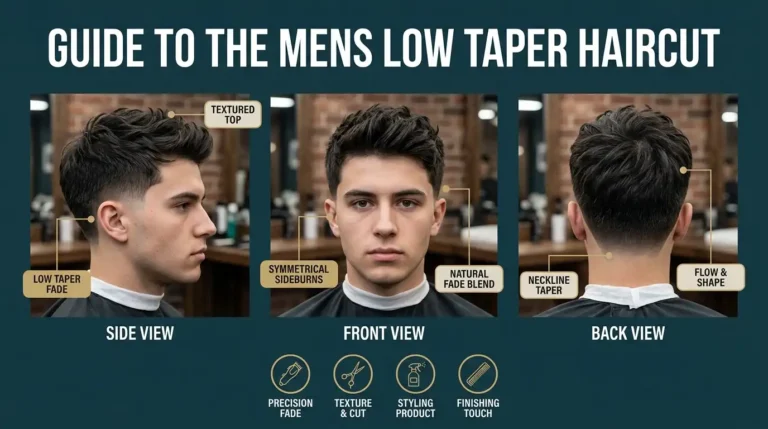
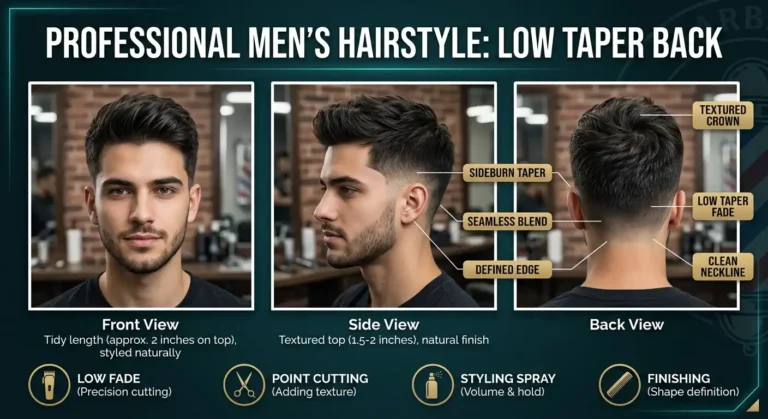
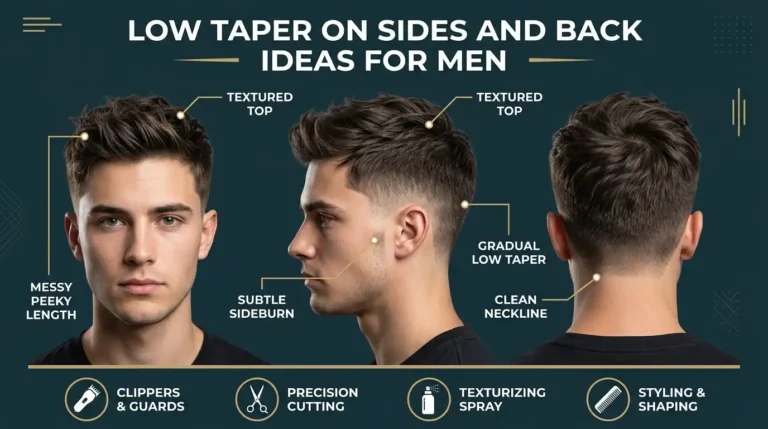
A low taper no fade is a clean, subtle haircut for men who want neat edges around the sideburns and neckline without turning the sides into a traditional fade. Instead of removing a large amount of hair from the sides, this style keeps more of your natural length and bulk.
It is a great option if you want a polished haircut but do not want exposed scalp, aggressively blended sides, or a dramatic fade. You can also customize the amount of bulk you keep depending on your hair type and preferred look.
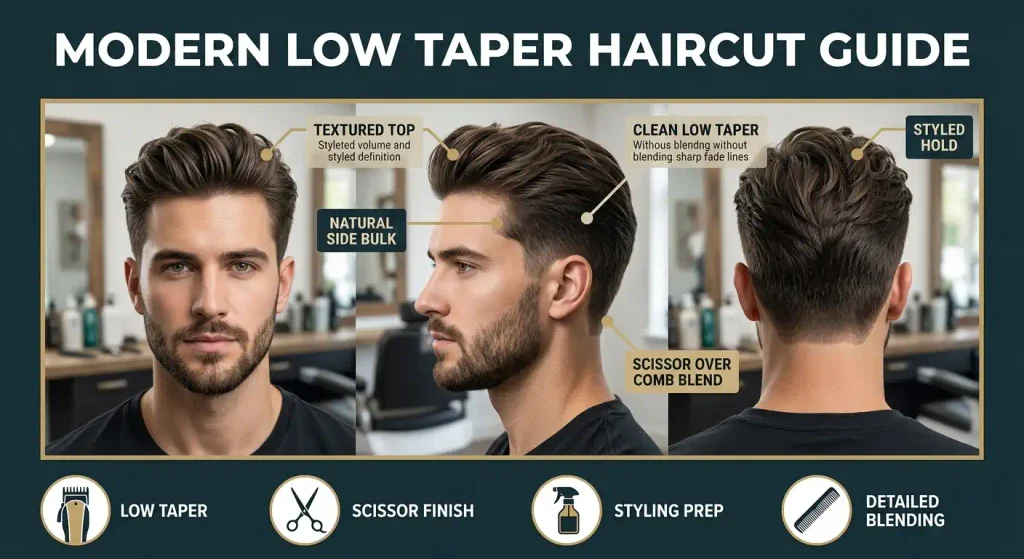
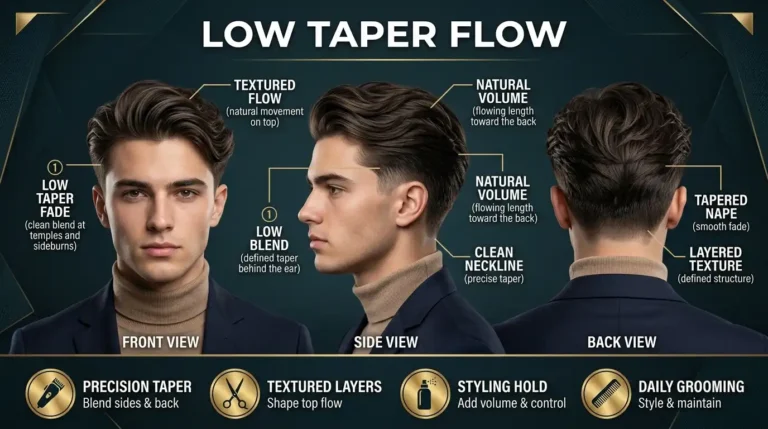
IMAGE: Low taper no fade haircut showing the front, side, and back with natural side bulk
The most important thing is to communicate clearly with your barber. Saying “low taper” alone may not be enough because barbers can interpret the amount of blending and bulk differently. If you specifically want no fade, no skin, or more bulk, say so before the haircut begins.
What Is a Low Taper No Fade?
A low taper no fade is a subtle taper concentrated around the lowest areas of the haircut, especially the sideburns and neckline. Most of the hair on the sides remains longer and fuller instead of being blended significantly upward.
The result is cleaner around the edges while preserving a natural silhouette. Unlike a traditional low fade, the transition does not usually extend as broadly up the sides.
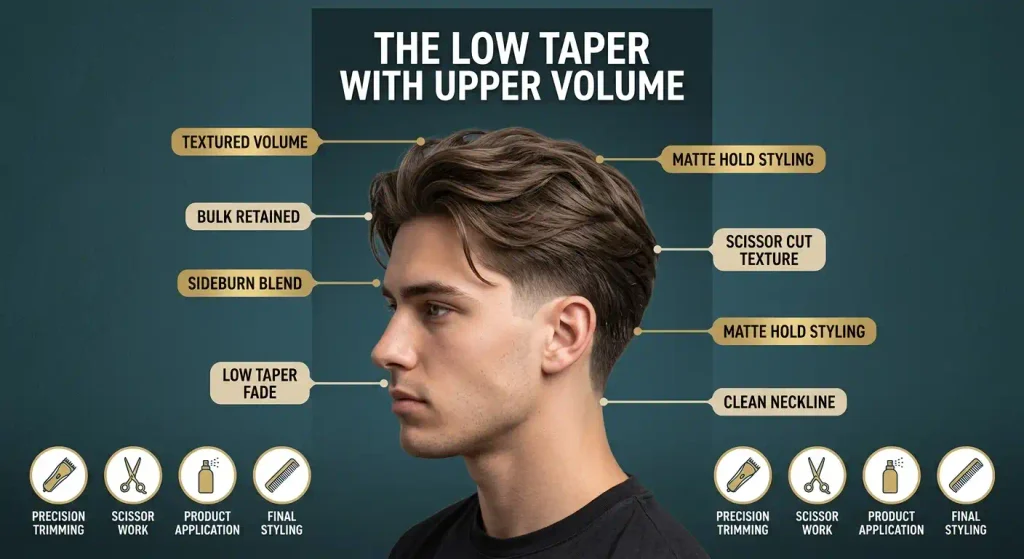
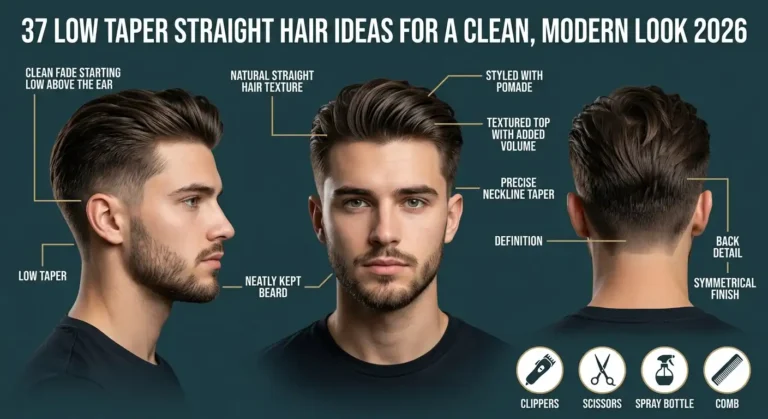
IMAGE: Annotated side profile showing the low taper area around the sideburn and neckline while the upper sides retain bulk
What “No Fade” Means
“No fade” generally means you do not want the sides gradually blended upward into a noticeably shorter area. The taper remains localized near the edges.
Because haircut terminology can vary between barbers, it is better to explain what you want rather than relying on the phrase alone.
For example, you can say:
“Keep the taper very low and leave the sides natural. I don’t want the sides faded up.”
What “No Skin” Means
Low taper no skin means you do not want the haircut taken down to a bald or skin-exposing finish.
A barber can create a subtle taper while leaving enough hair to prevent the scalp from becoming clearly visible. This gives the haircut a softer and more natural appearance.
If avoiding exposed scalp is important to you, specifically say “no skin” or “don’t take it to bald.”
What “Keep the Bulk” Means
When someone says leave the bulk, they usually mean keeping much of the natural length and fullness on the sides.
This is especially useful for men with thick, wavy, curly, or dense hair who want their hair shaped without making the sides look extremely short.
Low Taper No Fade vs Low Taper Fade
The two haircuts can look similar from a distance, but the amount of blending and side bulk can be noticeably different.
| Feature | Low Taper No Fade | Low Taper Fade |
| Side bulk | More | Less |
| Scalp visibility | Usually minimal | Can be greater |
| Transition | Very localized | More blended |
| Contrast | Low | Medium to high |
| Overall appearance | Natural | Sharper |
| Grow-out | Softer | More noticeable |
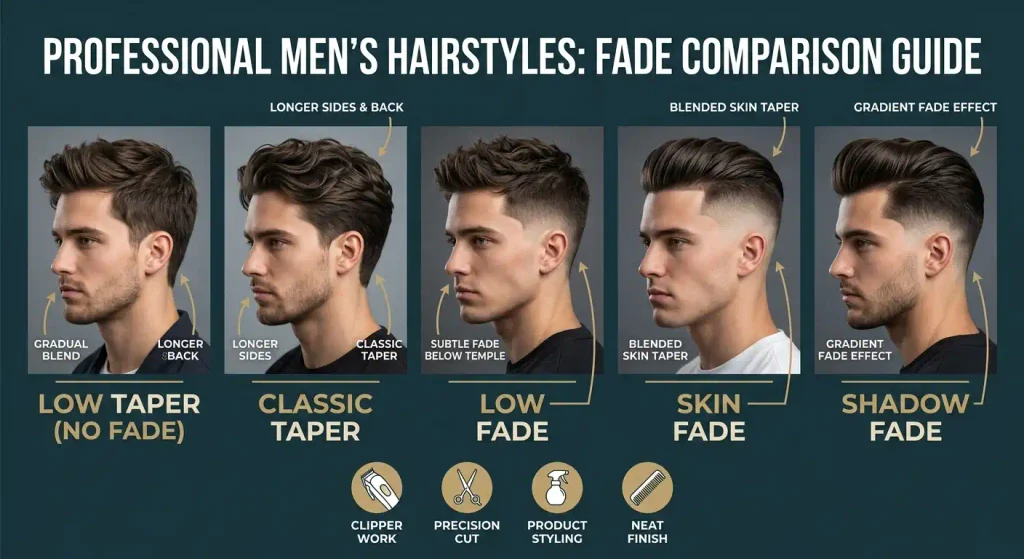
IMAGE: Split-screen comparison showing a low taper no fade on one side and a low taper fade on the other
A low taper no fade is generally better for someone who wants the sides to remain full and natural. A low taper fade is more suitable for someone who wants a stronger transition and cleaner contrast.
Which One Looks More Natural?
The no-fade version generally looks more natural because more hair remains on the sides.
It works particularly well when you want your haircut to look polished without making the sides appear heavily cut down.
Which One Has More Contrast?
A low taper fade usually creates more contrast because the sides are reduced more noticeably.
If you prefer a softer and less dramatic haircut, keeping more bulk can create a smoother transition between the sides and the top.
Which One Keeps More Hair on the Sides?
The low taper no fade normally keeps more side length.
That makes it a good choice for men who like fuller sides, are growing their hair, or simply dislike the tight appearance of a traditional fade.
Low Taper No Fade vs Low Taper No Skin
These terms are related, but they do not mean exactly the same thing.
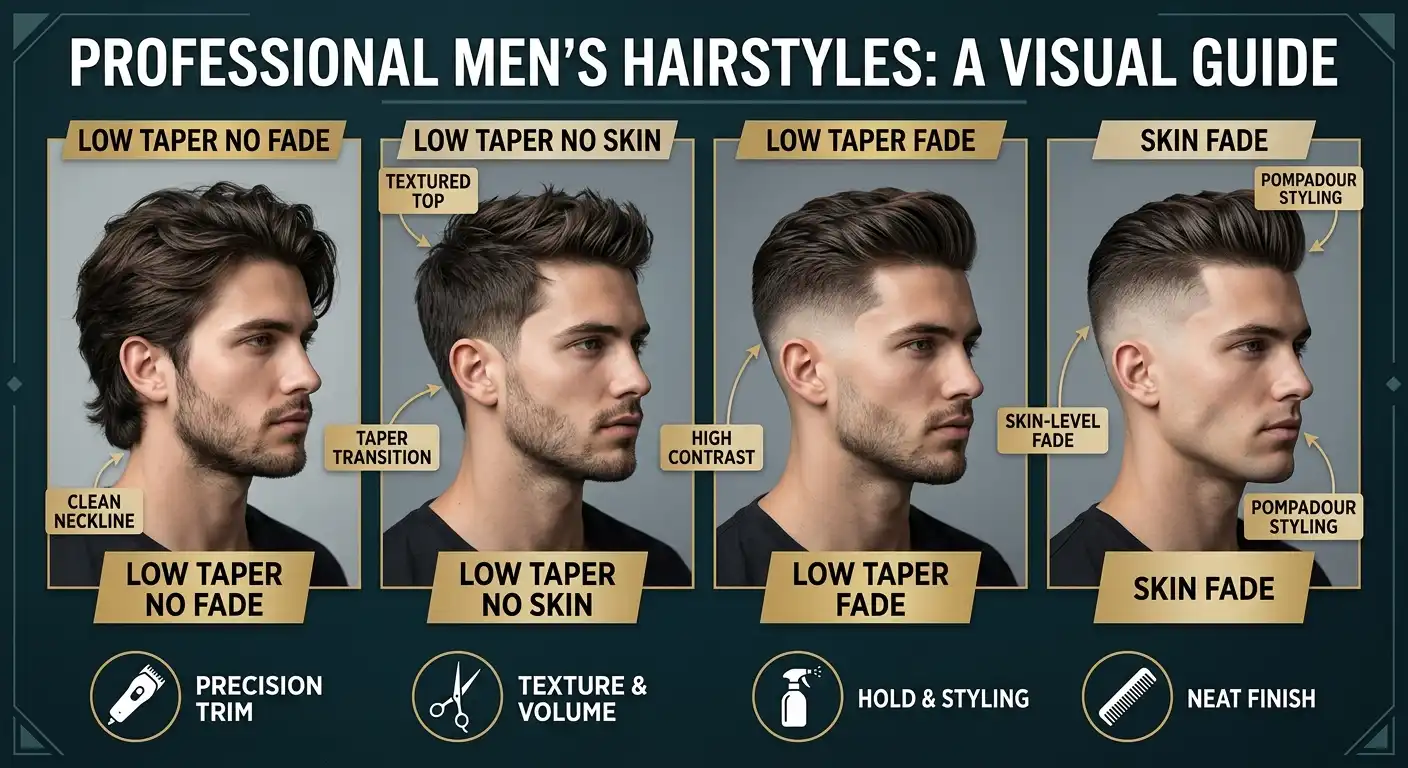
No fade describes how the hair is blended, while no skin describes how short the hair gets.
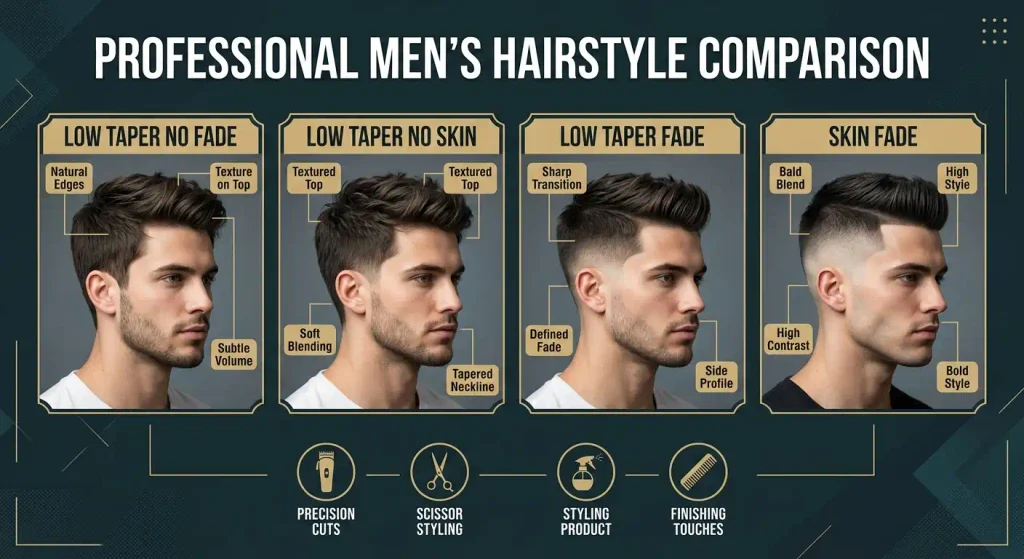
IMAGE: Four-panel comparison showing low taper no fade, low taper no skin, low taper fade, and skin fade
For example, you can ask for:
“A low taper with no skin and no fade. Keep the sides full.”
This communicates three important preferences:
- Keep the taper low.
- Do not expose the scalp.
- Do not remove too much of the side bulk.
If you only say “low taper,” your barber may still need clarification about how short you want the taper and how much fullness you want to retain.
Low Taper With Bulk vs Without Bulk
One of the biggest advantages of a low taper is that you can customize the amount of side bulk.
Some men want the sides to remain very full, while others want the barber to remove some weight without creating a traditional fade.
| Feature | Low Taper With Bulk | Low Taper Without Bulk |
| Side fullness | High | Medium to low |
| Appearance | Natural and fuller | Cleaner and controlled |
| Scalp exposure | Minimal | Minimal |
| Best for | Thick/full hair | Dense hair needing shape |
| Overall look | Softer | More defined |
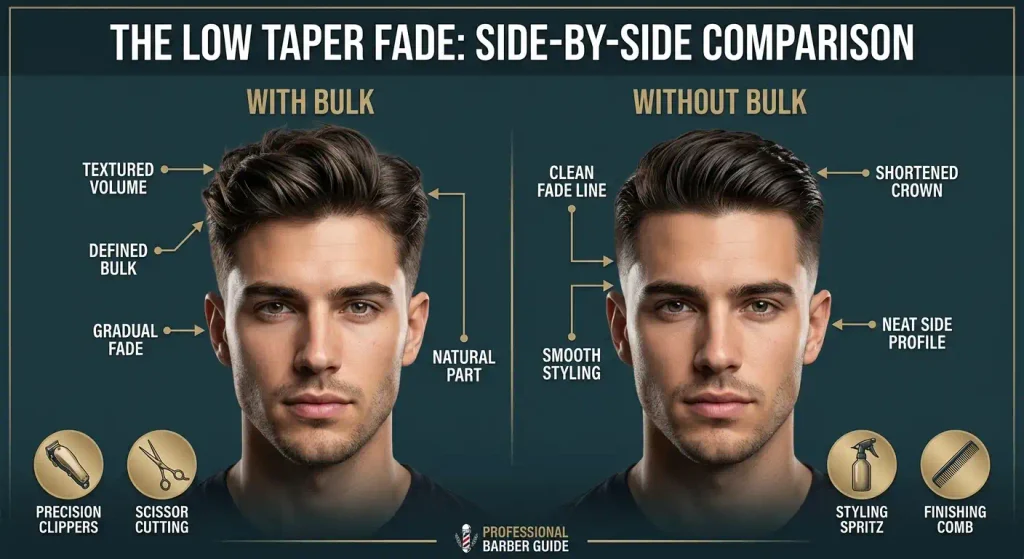
IMAGE: Side-by-side comparison of low taper with bulk and low taper without bulk
Low Taper With Bulk
A low taper with bulk keeps more hair on the sides and creates a fuller appearance.
This option is useful for men who want their haircut to retain a natural shape. It can also work well with textured hairstyles where the sides provide balance to the longer hair on top.
Low Taper Without Bulk
A low taper without bulk does not necessarily mean a skin fade.
Instead, the barber can reduce excess weight or thickness while still leaving enough length on the sides to maintain a natural appearance.
This is particularly useful if your hair becomes puffy or expands outward.
Low Taper Leave the Bulk
If you want the barber to preserve as much side fullness as possible, say:
“Give me a low taper around the sideburns and neckline, but leave the bulk on the sides.”
You can then specify whether you want the barber to remove only obvious excess weight or leave virtually all of the side length.
What Should You Tell Your Barber?
Clear communication is one of the most important parts of getting the exact low taper no fade you want.
A simple request is:
“I want a low taper around the sideburns and neckline. Don’t fade the sides up, don’t take it to skin, and keep most of my natural bulk on the sides.”
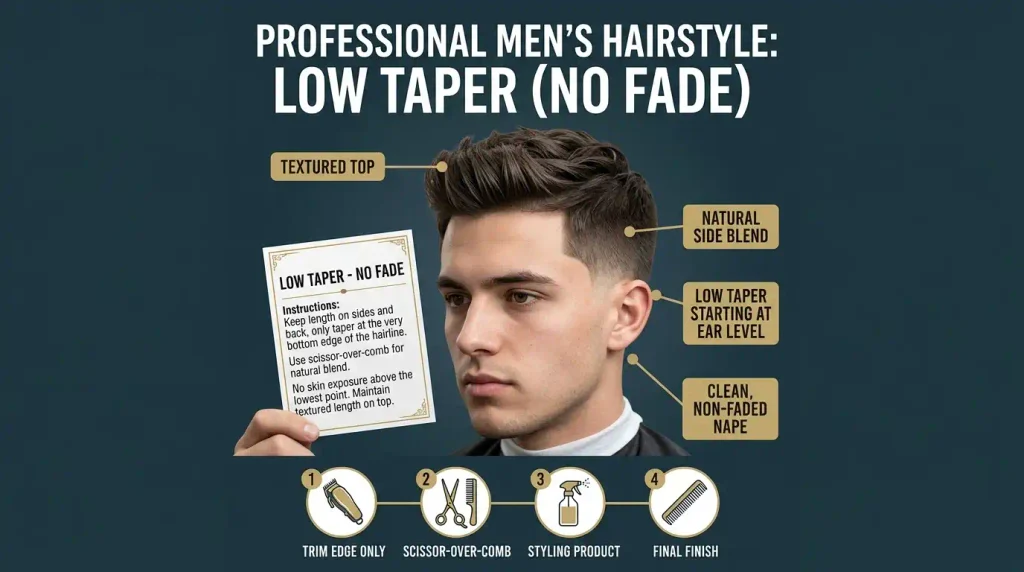
IMAGE: Barber instruction card showing the exact wording for a low taper no fade
If you have a reference photo, show it from multiple angles. A front image may not show your preferred side bulk or neckline shape.
If You Want Maximum Bulk
Tell your barber:
“Keep the sides as full as possible. I only want the sideburns and neckline cleaned up.”
This is ideal if you want a very natural result.
If You Want Some Bulk Removed
Try:
“Keep it as a low taper, but remove some of the extra weight from the sides. I don’t want a fade or skin.”
This gives the barber permission to control the volume without turning the haircut into a traditional fade.
If You Don’t Want Any Skin Showing
Be direct:
“I don’t want the taper taken to skin or bald. Keep some length throughout the taper.”
This is especially important if you have previously received a fade that was shorter than expected.
Best Low Taper No Fade Styles
A low taper no fade can work with many different hairstyles on top. The main difference is that the sides stay relatively natural while the edges are cleaned up.
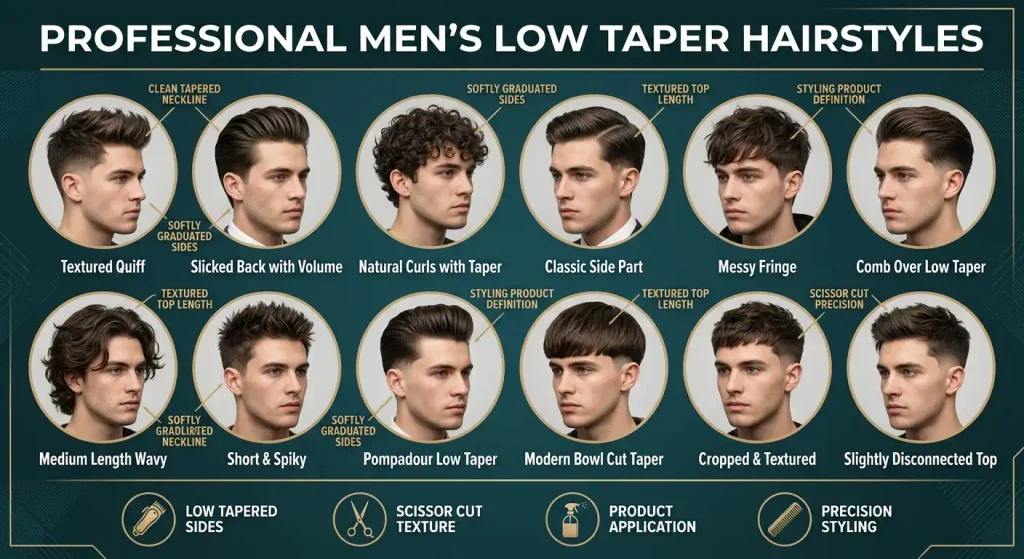
IMAGE: Gallery showing 12 low taper no fade hairstyle variations
Low Taper No Fade With Textured Hair
Textured hair adds movement and dimension while the low taper keeps the edges controlled.
This combination works especially well when you want a modern style without an overly sharp fade.
Low Taper No Fade With Fringe
A fringe gives the haircut a youthful and relaxed appearance.
Keep the taper subtle around the sideburns and neckline while allowing the fringe to remain the main feature.
Low Taper No Fade With Middle Part
A middle part can look balanced with fuller sides.
The low taper simply cleans the edges without taking away the natural shape around the temples.
Low Taper No Fade With Messy Hair
Messy hair pairs naturally with a no-fade taper because both create a relaxed appearance.
Leave enough side bulk to keep the haircut from looking overly tight.
Low Taper No Fade With Straight Hair
Straight hair can make the difference between the tapered edges and natural sides especially clear.
A subtle taper works well if you want a clean haircut without excessive blending.
Low Taper No Fade With Wavy Hair
Wavy hair benefits from retaining some natural volume.
Instead of removing too much bulk, the barber can shape the sides while keeping the waves visible.
Low Taper No Fade With Curly Hair
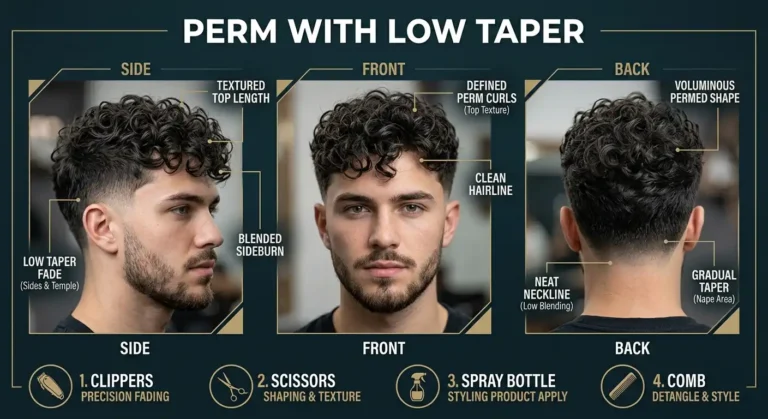
Curly hair can look excellent with a low taper because the edges become cleaner while the curls retain their natural fullness.
Avoid removing too much side volume if you want the curls to remain prominent.
Low Taper No Fade With Thick Hair
Thick hair is one of the best candidates for a low taper with bulk.
If the sides become too wide, ask the barber to remove some weight without creating a high fade.
Low Taper No Fade With Long Hair
Longer hair on top creates a stronger contrast with the clean sideburns and neckline.
The low taper provides structure while allowing the overall haircut to remain full.
Low Taper No Fade With Side Part
A side part creates a more traditional and professional appearance.
Keeping the sides fuller makes the style less aggressive than a conventional faded side part.
Low Taper No Fade With Quiff
A quiff adds height on top while the low taper controls the lowest parts of the haircut.
Keep enough side length to maintain balance between the top and sides.
Low Taper No Fade With Crew Cut
A crew cut with a subtle low taper is a practical option for men who want a short haircut without extremely tight sides.
It provides clean edges while maintaining a natural transition.
Low Taper No Fade for Different Hair Types
The ideal amount of bulk depends heavily on your natural hair texture and density.
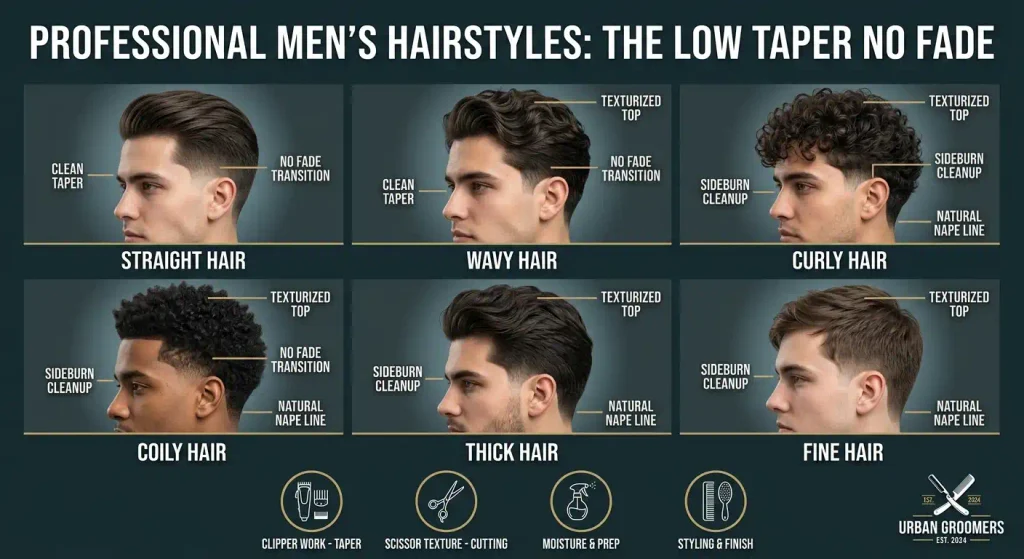
IMAGE: Six-panel comparison showing low taper no fade on straight, wavy, curly, coily, thick, and fine hair
Straight Hair
Straight hair usually lies closer to the head, so a subtle taper can clean the edges without requiring aggressive debulking.
Keep the sides longer if you want a classic, natural silhouette.
Wavy Hair
Wavy hair can expand outward as it grows.
A low taper can clean the sideburns and neckline while preserving enough length for the natural wave pattern.
Curly Hair
Curly hair often benefits from keeping its natural volume.
Ask for the taper to stay low and avoid removing too much bulk around the sides unless your curls become difficult to control.
Coily Hair
Coily hair can create substantial density around the sides.
A low taper can define the edges while leaving the main body of the hair intact.
Thick Hair
If you have thick hair, decide whether you want maximum bulk or controlled bulk.
Tell your barber exactly which one you prefer because “low taper” alone does not communicate how much weight should be removed.
Fine or Thin Hair
With fine hair, keeping additional side length can help maintain the appearance of coverage.
Avoid unnecessarily aggressive blending if your goal is a fuller-looking haircut.
Is a Low Taper No Fade Good for Your Face Shape?
Your face shape can help determine how much volume you should keep on the sides and top.
[IMAGE: Face-shape guide showing oval, round, square, diamond, heart, and oblong faces with low taper styling recommendations]
Oval Face
An oval face generally works with many variations.
You can experiment with more or less side bulk depending on your preferred style.
Round Face
A little additional height on top can help create a more elongated appearance.
Avoid excessive horizontal volume if you want the face to look less rounded.
Square Face
A square face naturally has strong angles.
A clean low taper can emphasize those features while fuller sides create a balanced, masculine appearance.
Diamond Face
Because diamond-shaped faces can have stronger cheekbone width, controlled side volume can help balance the overall proportions.
Heart Face
Keeping some fullness around the sides can help balance a narrower chin.
A low taper no fade can work particularly well when the top and sides are kept proportionate.
Oblong Face
Avoid creating excessive height if you already have a longer face shape.
Keeping some side bulk can help create a more balanced silhouette.
Low Taper No Fade vs Other Similar Haircuts
| Haircut | Side Length | Skin Exposure | Blend Level | Overall Look |
| Low Taper No Fade | High | Minimal | Very low | Natural |
| Low Taper Fade | Medium | Low to medium | Medium | Clean |
| Low Skin Fade | Low | High | High | Sharp |
| Low Taper No Skin | Medium/high | Minimal | Low | Soft |
| Classic Taper | Medium/high | Minimal | Low | Traditional |
| Temple Taper | Medium/high | Minimal | Low | Focused around temples |
| Low Fade | Medium/low | Possible | Medium/high | Defined |
| Shadow Fade | Low/medium | Limited | High | Blended |
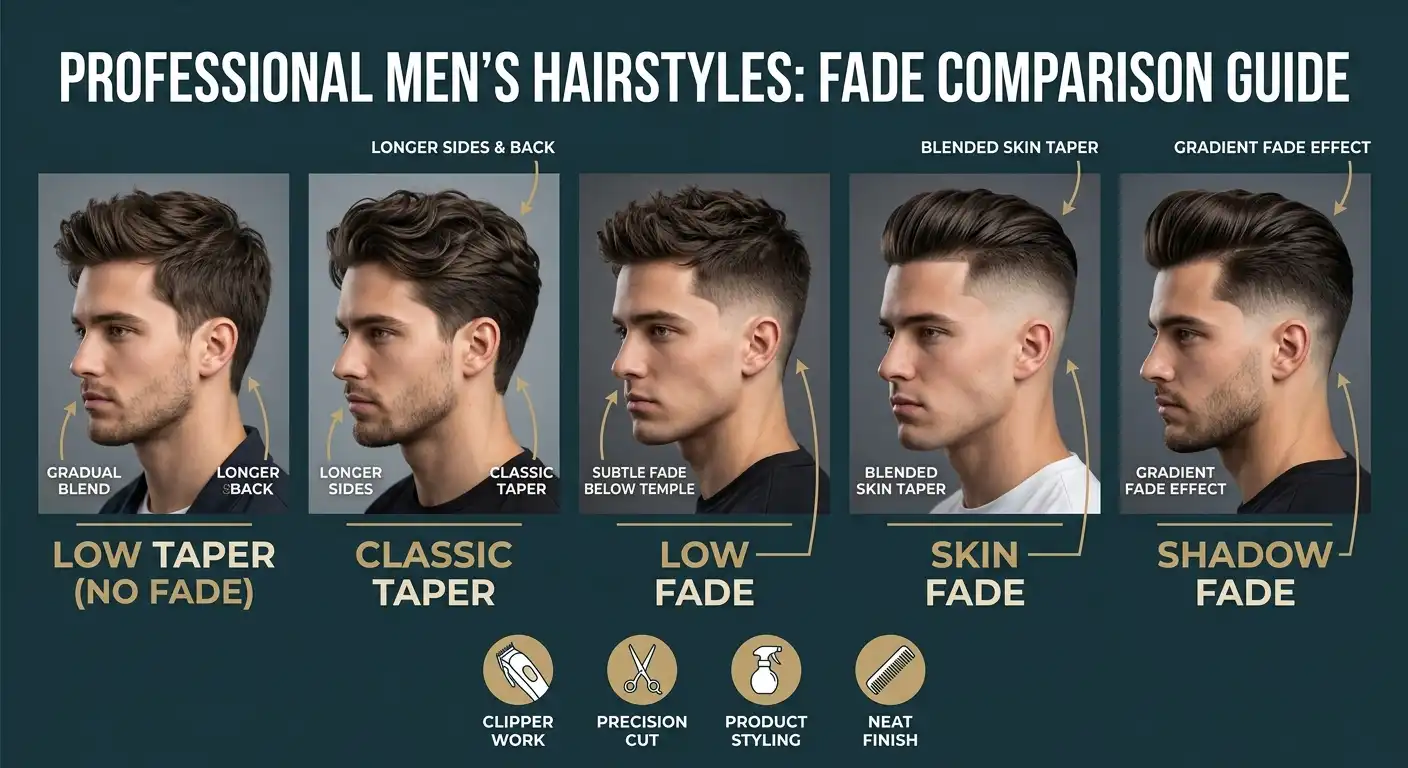
IMAGE: Visual comparison of low taper no fade, classic taper, low fade, skin fade, and shadow fade
The key difference is where the hair is reduced and how far the transition travels upward.
If your goal is to keep the sides natural, the low taper no fade or classic taper will generally be closer to what you want than a skin fade.
How to Get a Low Taper No Fade
Getting the right result starts before the clippers touch your hair.
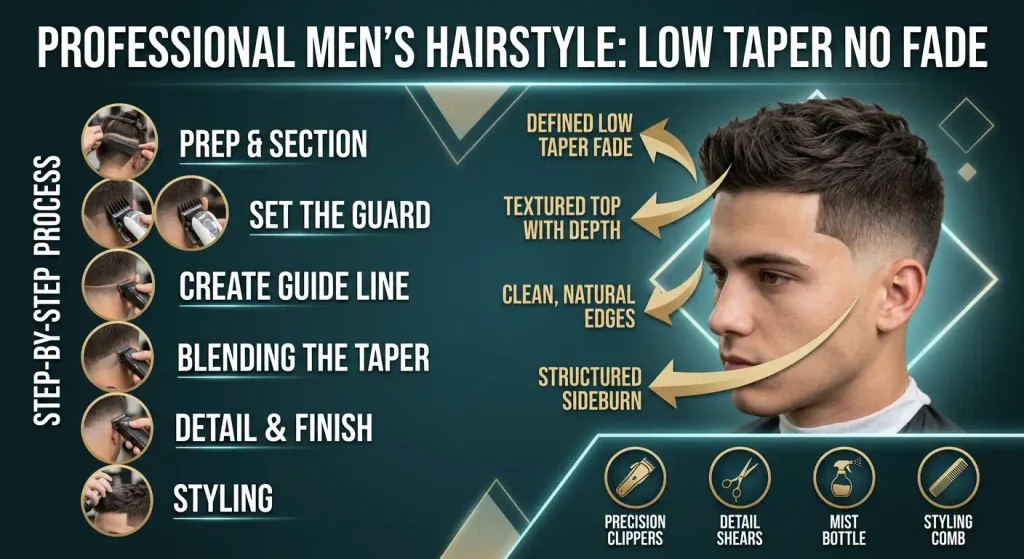
IMAGE: Step-by-step visual showing the process of creating a low taper no fade
Step 1 — Choose Your Side Bulk
Decide whether you want maximum, medium, or reduced bulk.
If you are unsure, it is usually better to communicate that you want the barber to preserve the sides rather than remove too much hair.
Step 2 — Choose the Taper Area
A typical low taper focuses on the sideburns and neckline.
You can ask your barber to keep the taper extremely low if you want most of the sides untouched.
Step 3 — Specify No Skin
If you do not want visible scalp, say so clearly.
Use wording such as:
“Please don’t take the taper to skin.”
Step 4 — Choose the Top Style
Decide what you want on top.
Options include a textured crop, messy style, fringe, middle part, side part, quiff, slick back, or crew cut.
Step 5 — Show Reference Photos
Bring photos showing the front, sides, and back.
The side view is particularly important because it communicates how much bulk you want to retain.
Step 6 — Confirm the Bulk
Before the sides are heavily cut, confirm the amount of hair you want to keep.
This is especially important if you have thick or curly hair and do not want the sides made too narrow.
How Much Bulk Should You Keep?
There is no single correct amount of bulk for a low taper no fade.
The right choice depends on your hair density, texture, head shape, and preferred appearance.
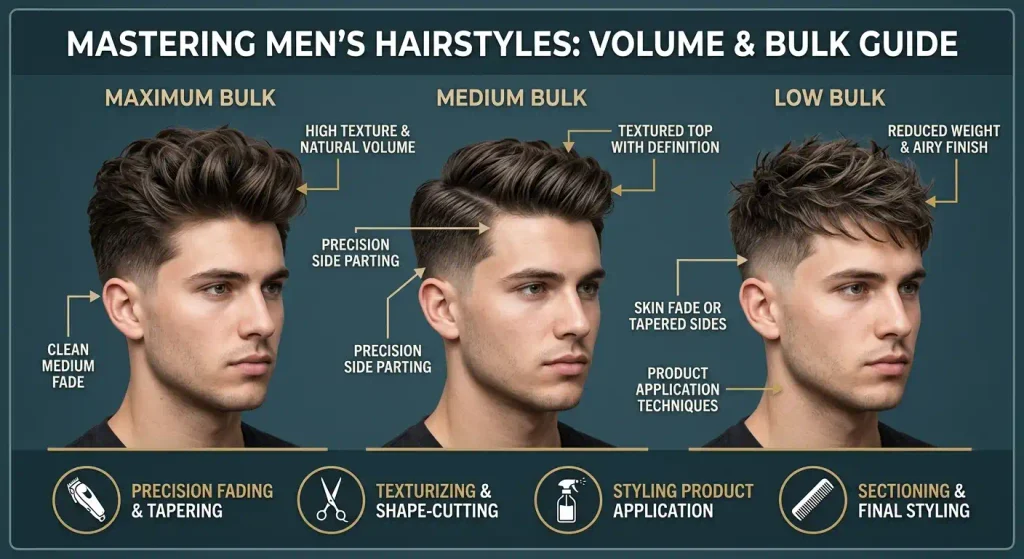
IMAGE: Three-stage visual showing maximum bulk, medium bulk, and low bulk
Maximum Bulk
Choose maximum bulk if you want the most natural appearance.
Only the sideburns and neckline are cleaned up while the main sides remain full.
Medium Bulk
Medium bulk provides a balance between natural fullness and controlled shape.
This can be a good option for thick hair that needs some weight removed.
Low Bulk
Low bulk creates a cleaner silhouette while still avoiding an aggressive skin fade.
It is useful if your hair expands significantly around the sides.
How to Maintain a Low Taper No Fade
A low taper no fade is relatively easy to maintain because the transition is subtle.
Keep the neckline and sideburns clean, and avoid allowing excessive growth to completely cover the tapered areas.
Your maintenance schedule depends on how quickly your hair grows and how sharp you want the edges to look.
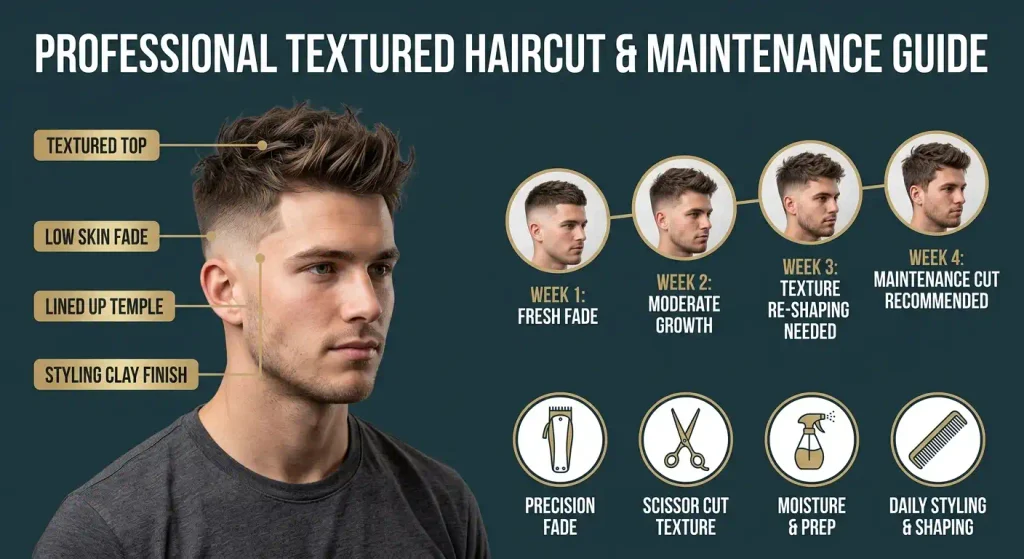
IMAGE: Maintenance timeline showing week 1 through week 4 growth
If you prefer a very crisp appearance, you may want more frequent edge cleanups. If you prefer a natural look, you can let the haircut grow out longer.
Common Mistakes to Avoid
Saying Only “Give Me a Low Taper”
This leaves too many details open to interpretation.
Specify whether you want no skin, no fade, maximum bulk, or reduced bulk.
Not Saying “No Skin”
If you strongly dislike scalp exposure, mention it before the barber starts.
Not Explaining Your Bulk Preference
“Keep the bulk” and “remove the bulk” can produce noticeably different results.
Showing Only One Angle
A front photograph cannot fully communicate your desired side and neckline shape.
Show multiple angles whenever possible.
Confusing a Low Taper With a Low Fade
The names sound similar, but the finished shapes can be different.
If you want the sides fuller, explain that you want the taper kept low rather than asking for a low fade.
Who Should Get a Low Taper No Fade?
A low taper no fade can be a strong choice for men who:
- Prefer natural-looking sides
- Dislike skin fades
- Want to retain side bulk
- Have thick, wavy, curly, or coily hair
- Want a professional haircut
- Are growing their hair longer
- Want clean edges without an aggressive fade
- Prefer a softer grow-out
It is particularly useful when you want your haircut to look intentional without making the sides extremely short.
Who Should Choose a Different Haircut?
A different haircut may be better if you specifically want:
- Strong contrast between the top and sides
- Exposed scalp
- Extremely tight sides
- A dramatic fade
- A bald or skin finish
- A very sharp modern fade appearance
In those cases, a low fade, skin fade, or another fade variation may better match your preferences.
Best Products for Styling a Low Taper No Fade
The right styling product depends on your hair texture and desired finish.
Matte Clay
A matte clay works well for textured and messy styles where you want definition without excessive shine.
Styling Cream
A lightweight styling cream can help control natural movement while keeping the hair soft.
Sea Salt Spray
Sea salt spray can add texture and volume to straight or wavy hair.
Lightweight Pomade
A lightweight pomade is useful for side parts, slick backs, and other controlled hairstyles.
The goal is to style the top without making the natural side bulk look heavy or greasy.
Low Taper No Fade Maintenance Timeline
| Time | What Usually Happens |
| Week 1 | Taper looks cleanest |
| Week 2 | Transition begins softening |
| Week 3 | Side and neckline growth becomes more noticeable |
| Week 4+ | Cleanup may be useful |
Hair growth varies from person to person, so this is only a general guide.
If you prefer a sharp outline, schedule a cleanup earlier. If you like a softer appearance, you can allow more growth.
Frequently Asked Questions
What is a low taper no fade?
A low taper no fade is a subtle haircut that tapers the hair around the sideburns and neckline while keeping most of the natural length and bulk on the sides. It avoids the broader blending associated with a traditional fade.
Is a low taper no fade the same as a low taper no skin?
Not exactly. “No fade” describes the blending approach, while “no skin” means the haircut does not expose the scalp through a bald or skin-level finish. You can request both at the same time.
Can you get a low taper without removing bulk?
Yes. Tell your barber that you want the taper kept low around the sideburns and neckline while leaving most of the natural bulk on the sides.
What does low taper leave the bulk mean?
It means keeping most of the natural length and fullness on the sides while only cleaning and tapering the edges around the sideburns and neckline.
Is a low taper with bulk good for thick hair?
Yes. A low taper with bulk can work especially well with thick hair. If the sides become too wide, your barber can remove some excess weight without turning the haircut into a skin fade.
What should I tell my barber for a low taper no fade?
Say, “I want a low taper around the sideburns and neckline, but don’t fade the sides up. Don’t take it to skin, and keep most of my natural bulk.”
Does a low taper no fade show skin?
It does not have to. If you specifically want no scalp exposure, tell your barber to avoid a skin or bald finish and leave enough length throughout the taper.
How long does a low taper no fade last?
The haircut can remain presentable for several weeks, but the exact timing depends on your hair growth rate and how sharp you want the taper and neckline to look.
Conclusion
A low taper no fade is a great choice if you want clean, controlled edges without the strong contrast of a traditional fade. It keeps more natural hair on the sides while giving the sideburns and neckline a neat, polished finish.
The key is to clearly tell your barber whether you want maximum bulk, medium bulk, or less bulk, and whether you want the taper to stay completely off the skin. Showing a reference photo can also help your barber understand the exact shape and amount of hair you want to keep.
If you want to explore another clean and versatile variation, check out our Low Taper Fade Guide to compare the traditional fade look with a more natural low taper no fade style.
Name: Ryan Cole
Role: Lead Grooming Editor, TaperHaircutGuide.com
Bio angle: Men’s grooming/style content researcher — 4+ years covering barbering trends, hairstyling terminology, and men’s style content for US audience. Cross-checks every guide with practicing barbers before publishing.