37 Low Taper Straight Hair Ideas for a Clean, Modern Look 2026

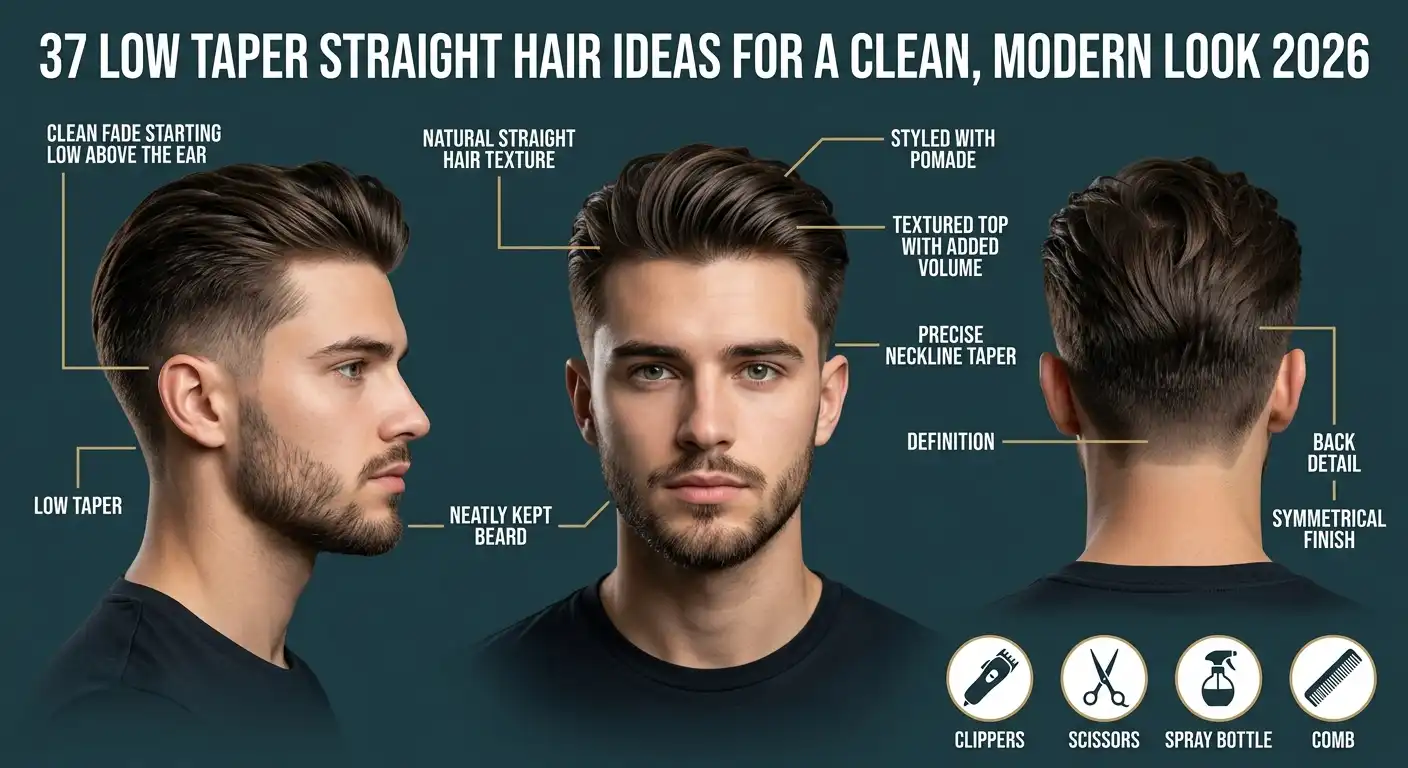
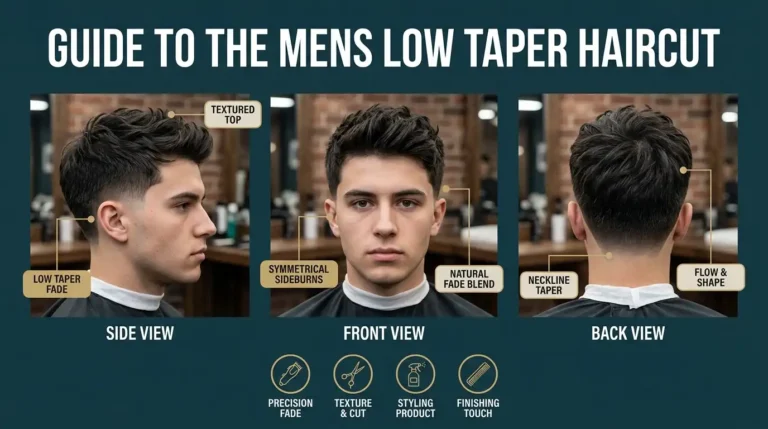
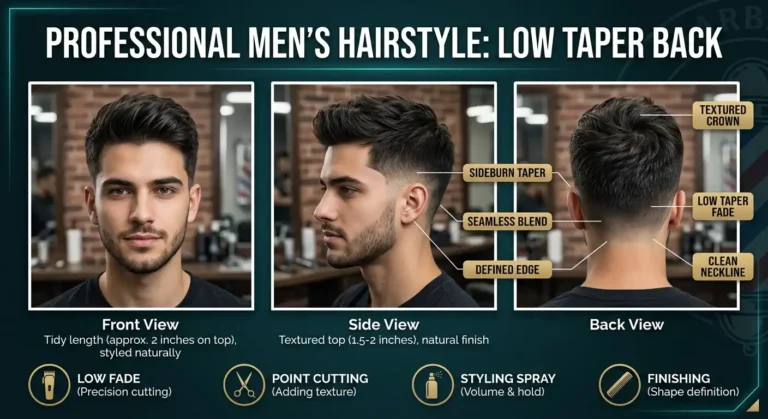
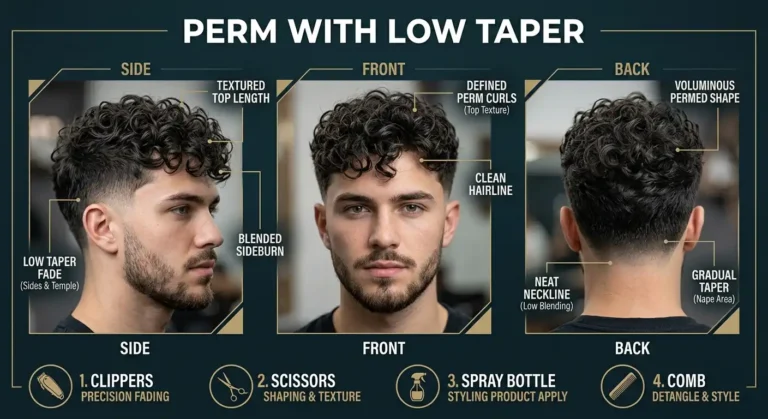
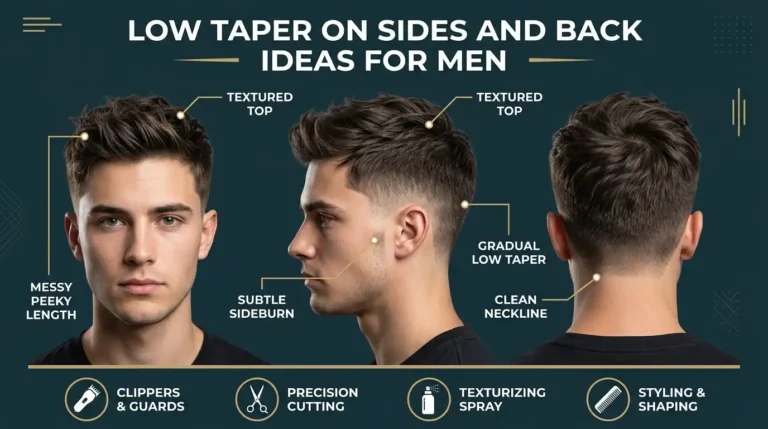
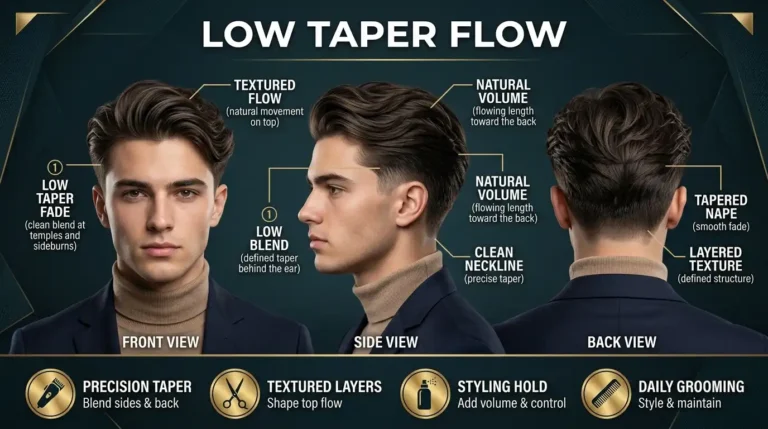
Straight hair gives you a clean base for many modern men’s haircuts. A low taper keeps the area around the ears, sideburns, and neckline neat while leaving more length on top. Low Taper Straight Hair works especially well when you want a sharp outline without taking too much hair away from the sides.
The best part is choice. You can wear the top short, textured, parted, brushed back, cropped, or left longer for more movement. Below are 37 distinct ideas, followed by barber tips, styling steps, product advice, maintenance, and face-shape guidance.
37 Low Taper Straight Hair Ideas
1. Classic Short Top Taper
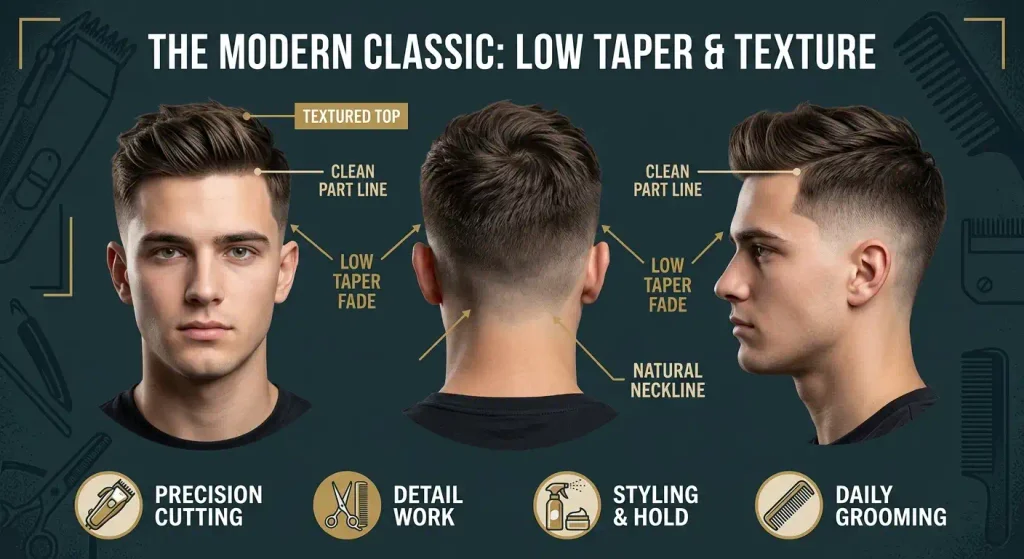
A short top keeps this haircut simple and easy to manage. The low taper cleans the sideburns and neckline while the top stays neat and natural. It suits oval, square, and rectangular faces especially well. Fine straight hair can benefit from a light matte product, while thick hair may need a little texture cutting. For a daily look, brush the top forward or slightly to the side rather than making it overly polished.
2. Side-Swept Straight Top
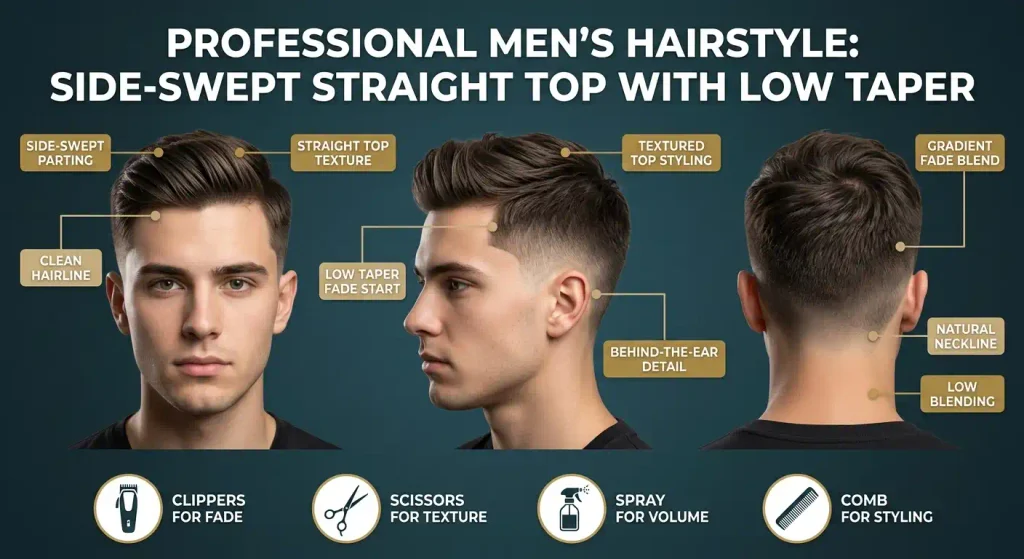
Here, the front is left longer so it can sweep naturally across the forehead. Straight hair makes the direction easy to control, giving the haircut a clean shape without much effort. This option works nicely for oval and heart-shaped faces because the side movement adds balance. Use a light styling cream or matte paste and guide the front sideways while the hair is still slightly damp.
3. Neat Comb Over
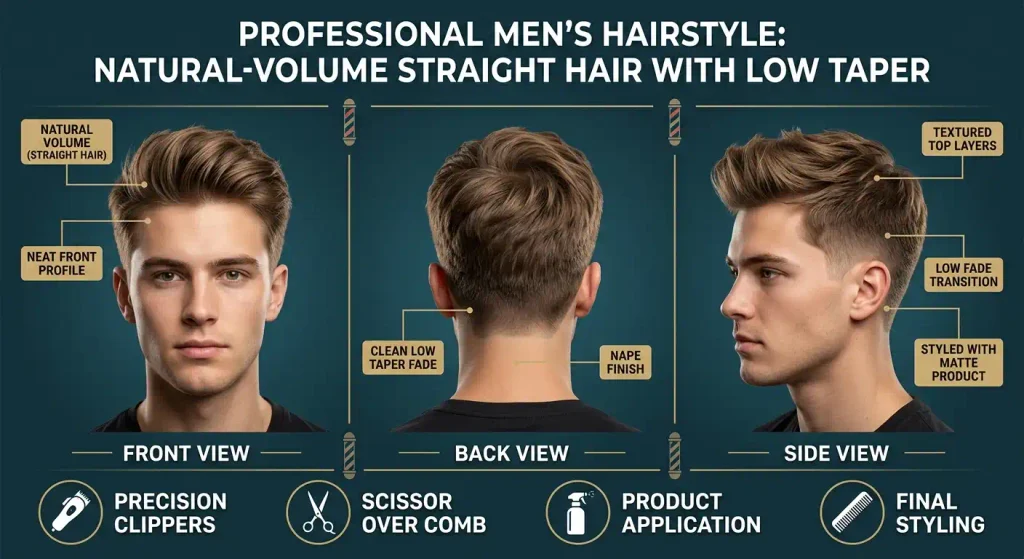
A soft comb over gives the haircut a more traditional finish. Ask your barber to leave enough length on top for a natural part instead of creating an extremely sharp line. It is a strong choice for work, school, or formal events. Fine hair can look fuller when the top is lifted slightly at the roots. A light pomade provides control without making straight strands look greasy.
4. Natural Volume Top
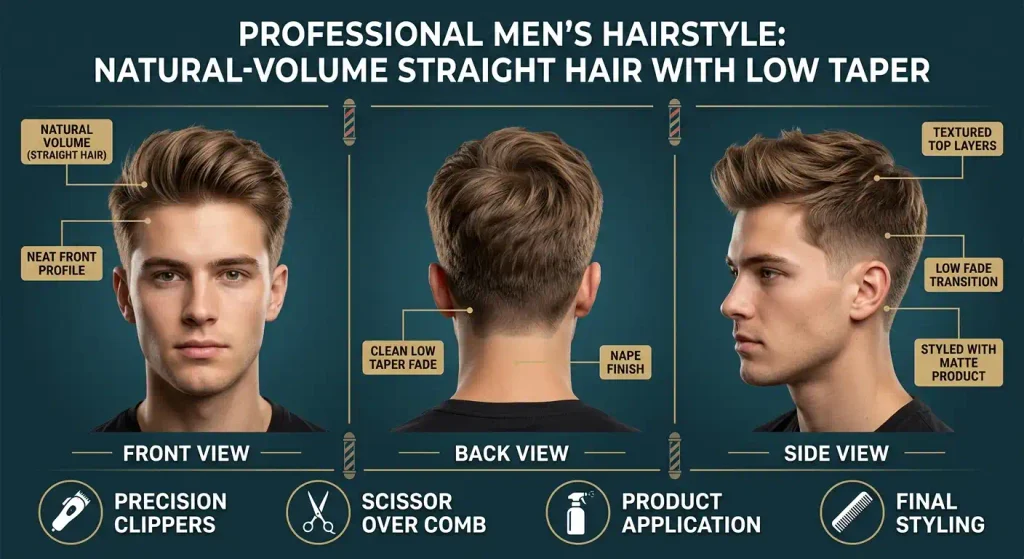
Some straight hair sits very flat, so the goal here is to create lift without making the haircut look artificial. The top should have enough length for a blow-dryer to add movement. This variation works well on fine or medium-density hair. Blow-dry upward from the roots, then finish with a small amount of lightweight matte product. Keep the sides close to their natural shape.
5. Soft Part Line
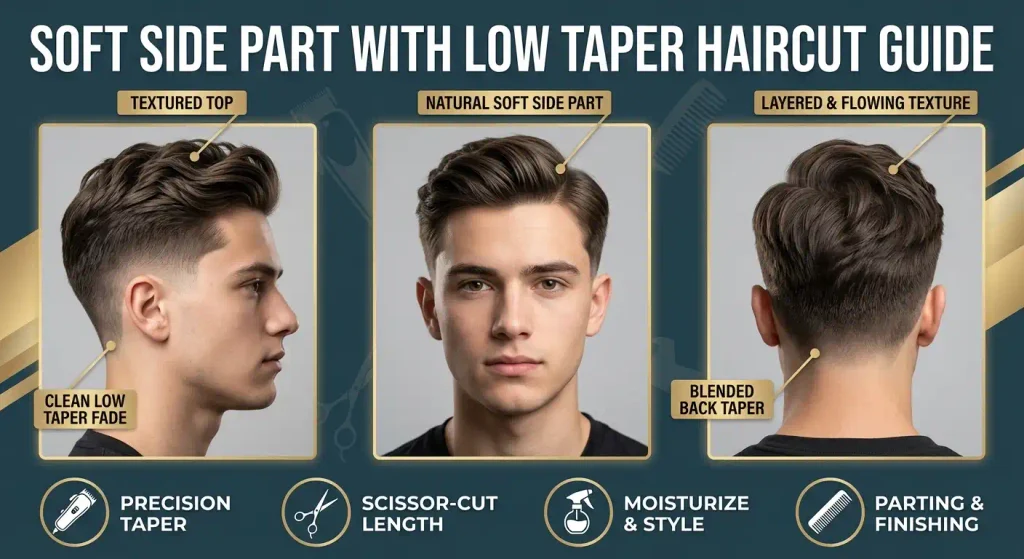
A soft part gives straight hair a clear direction while keeping the finish relaxed. Unlike a hard part, it does not depend on a shaved line, so the style can look more natural as it grows. This option suits professional settings and pairs well with a clean shave or short beard. Use a comb to establish the part, then smooth the top with light pomade.
6. Textured Straight Top
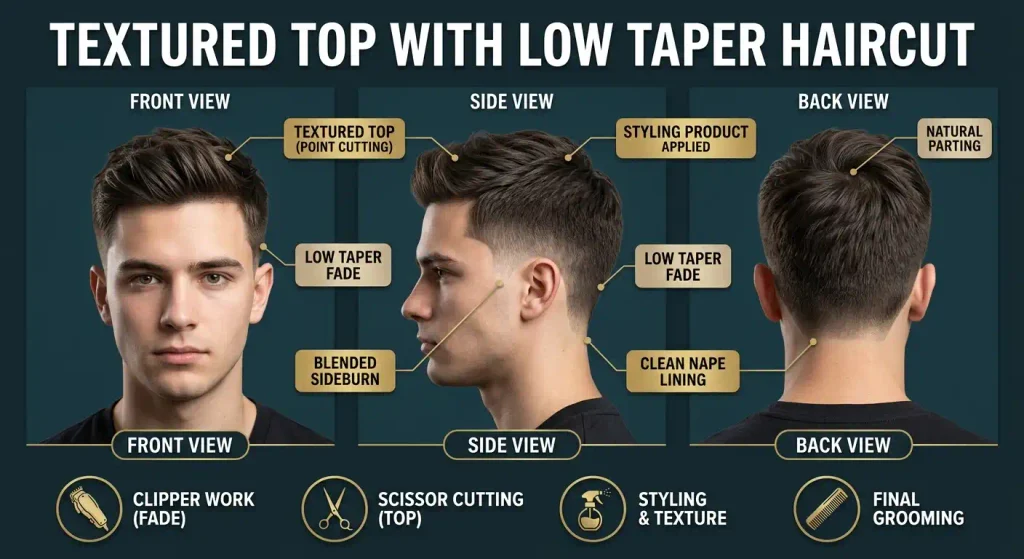
Straight hair can sometimes look too flat when every strand sits in the same direction. Light point-cut texture breaks that uniform shape and gives the top more movement. The taper remains clean and understated around the lower sides. This look is useful for medium or thick straight hair. Work a small amount of matte clay through dry hair and separate a few sections with your fingers.
7. Middle Part Flow
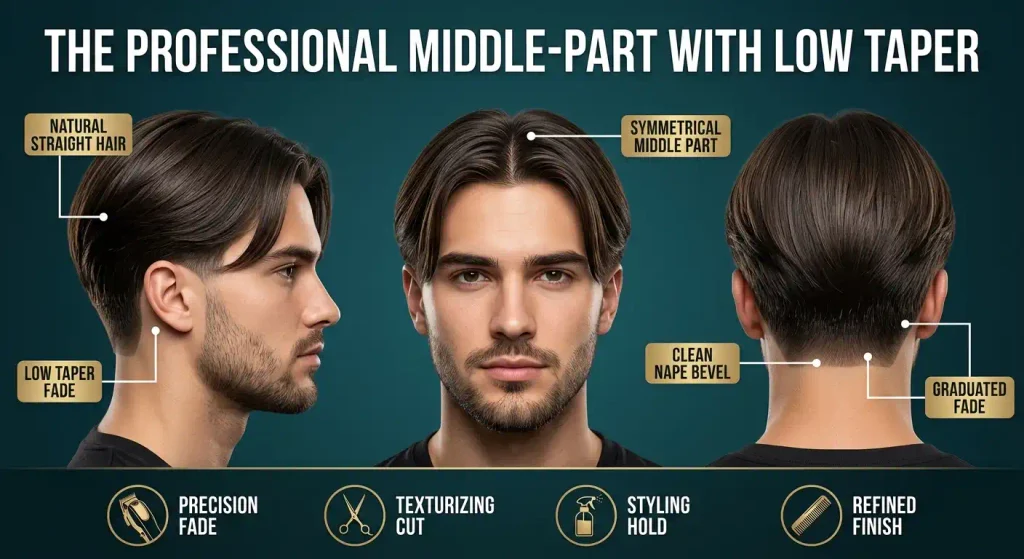
A middle part gives the haircut a softer, balanced appearance. Leave enough length around the front so both sides can fall naturally instead of forcing a short center split. It works especially well with oval, oblong, and heart-shaped faces. Straight hair makes the center part easy to maintain. Blow-dry the front away from the face and use a lightweight cream to reduce flyaways.
8. Straight Fringe
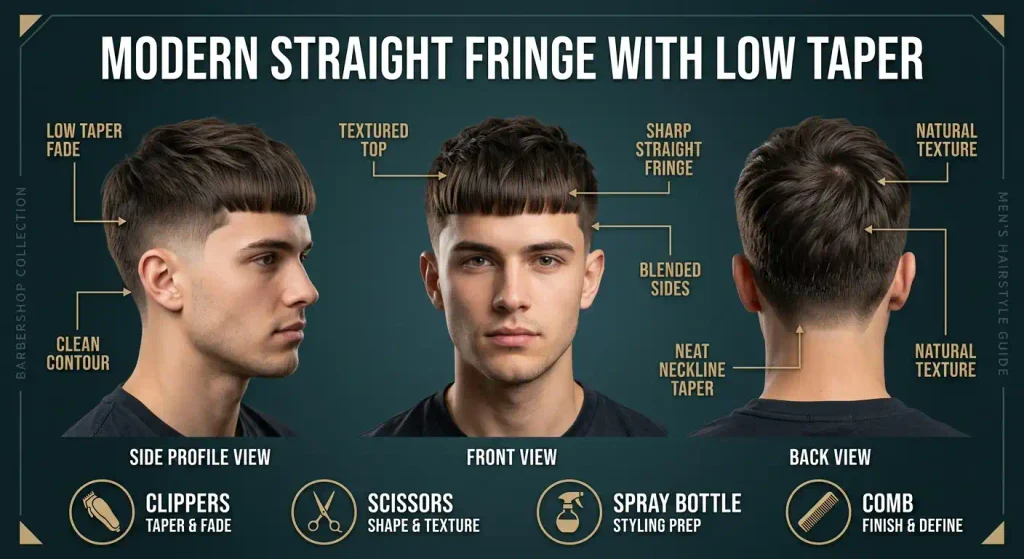
A straight fringe brings attention toward the eyes and forehead while the taper keeps the lower edges tidy. The fringe can be short and clean or slightly longer for a softer finish. This version can work well for longer face shapes because the forward fringe adds visual width. Avoid making the fringe too heavy if your hair is very thick. A small amount of matte paste keeps the ends controlled.
9. French Crop Finish
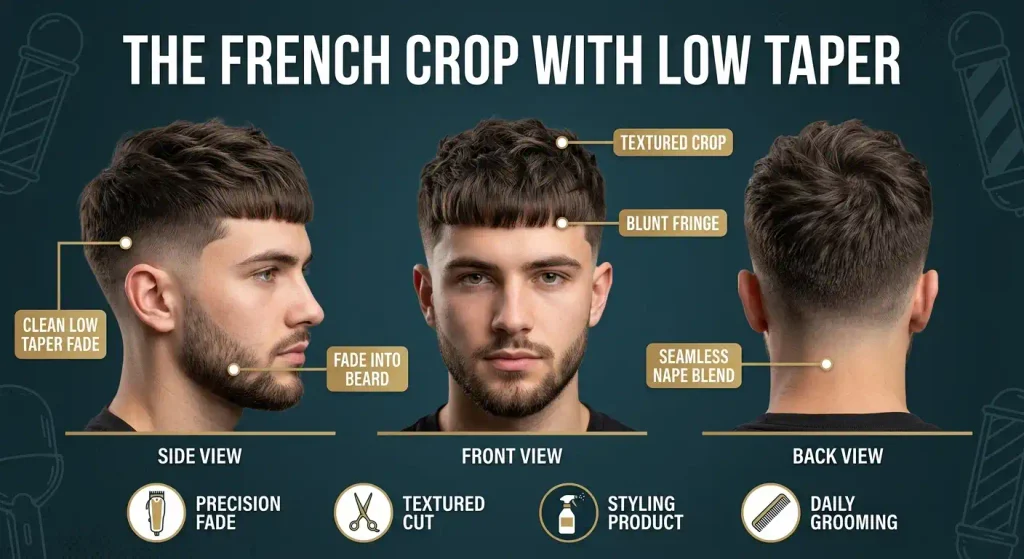
The French crop keeps the top relatively short and uses the fringe as the main feature. Straight hair gives the crop a crisp outline, while the low taper stops the sides from looking bulky. It is a practical option for men who do not want to spend much time styling. Ask for controlled texture on top and a short forward fringe. Matte clay can add separation without shine.
10. Caesar-Inspired Crop
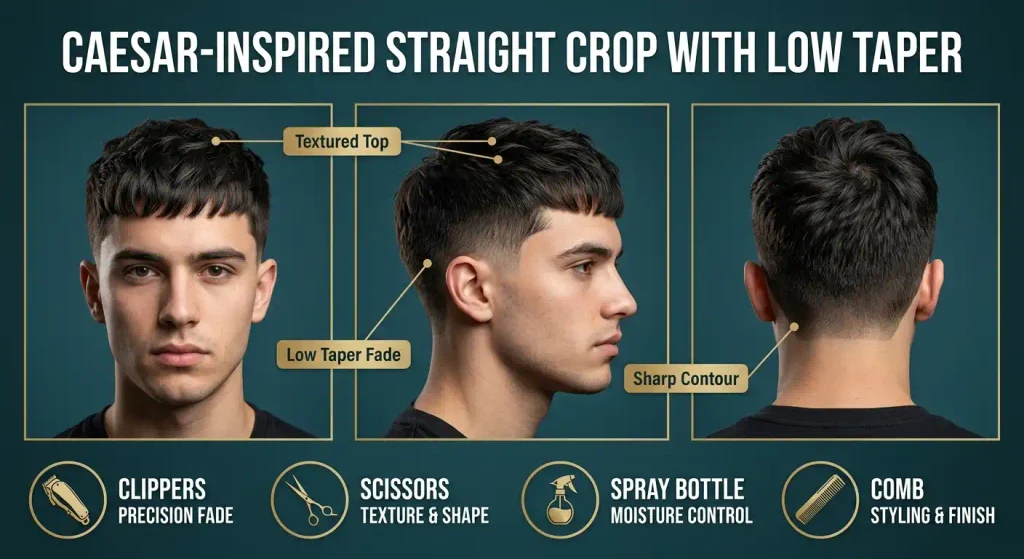
A short, forward Caesar-inspired top gives this haircut a strong and tidy shape. The fringe stays close to the forehead while the taper cleans the edges around the ears and neck. This works well for thick straight hair because the short top reduces excess weight. It can also suit active lifestyles where quick styling matters. Use a small amount of matte paste and brush the top forward.
11. Slick Back
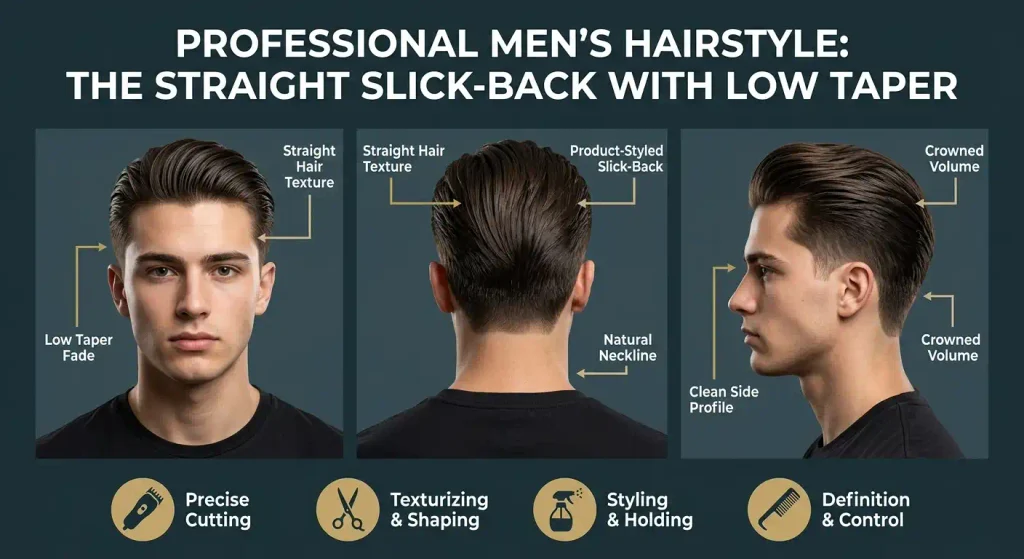
Longer straight hair on top can be brushed backward for a clean, mature finish. The low taper keeps the lower outline controlled without turning the haircut into a high fade. Oval and rectangular faces often suit this shape because the backward direction opens the face. Apply a light styling cream or pomade to damp hair, comb it back, and allow some natural texture instead of forcing every strand flat.
12. Modern Brush Back
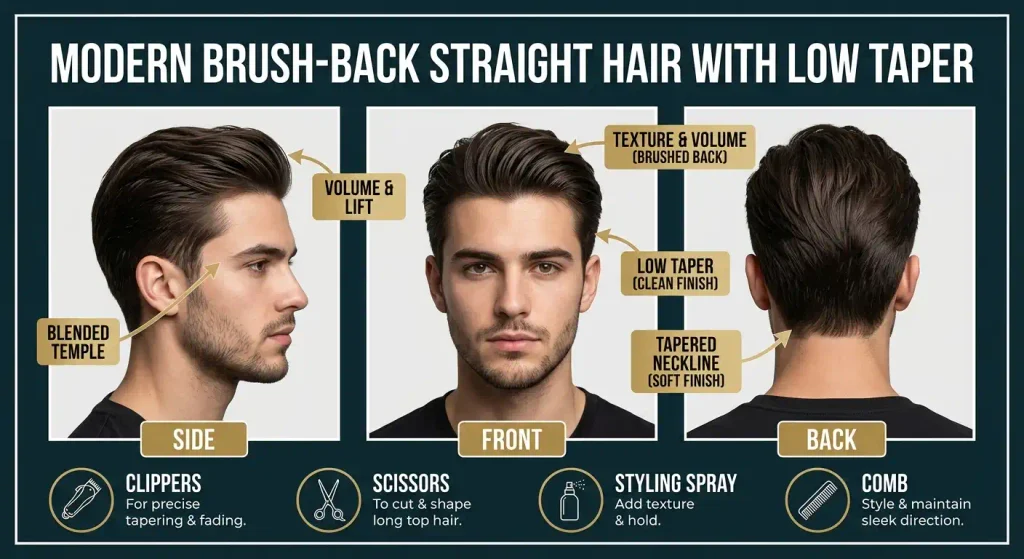
The brush back is less formal than a slick back because the hair keeps some natural separation. Leave enough length through the front and crown so the hair can move backward without collapsing. It is a useful choice for medium-density straight hair. Blow-dry backward while lifting the roots slightly, then use a lightweight matte product. This creates movement without the wet appearance of traditional pomade.
13. Straight Quiff
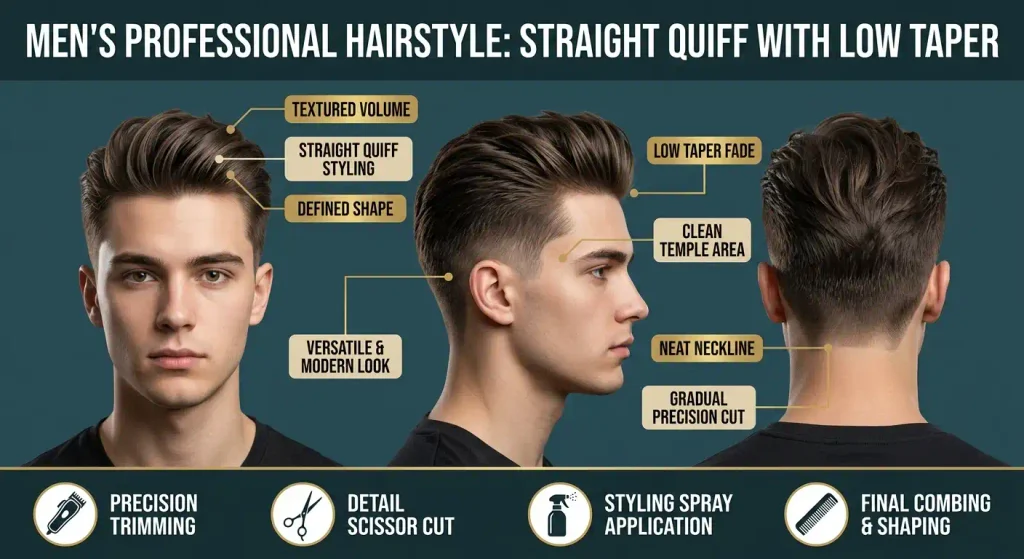
A quiff adds height at the front while the taper keeps the lower sides neat. Straight hair can make the quiff look clean and structured, but too much product may make it heavy. This variation suits oval and square faces especially well. Blow-dry the front upward and slightly backward before applying matte clay. Keep the sides controlled so the top remains the main feature.
14. Short Pompadour
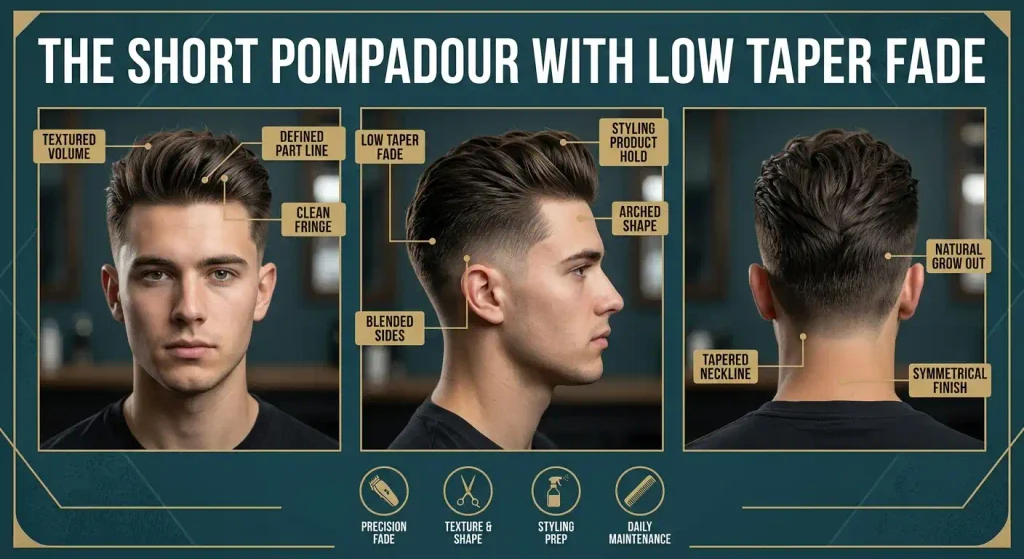
This version borrows the shape of a pompadour but keeps the height more practical. The front is lifted and directed backward while the sides remain tidy. Thick straight hair is naturally suited to this style because it can hold the shape without excessive product. Use a blow-dryer to build the front and finish with a firm but lightweight styling product. Keep the taper low for a balanced silhouette.
15. Long Top With Clean Edges
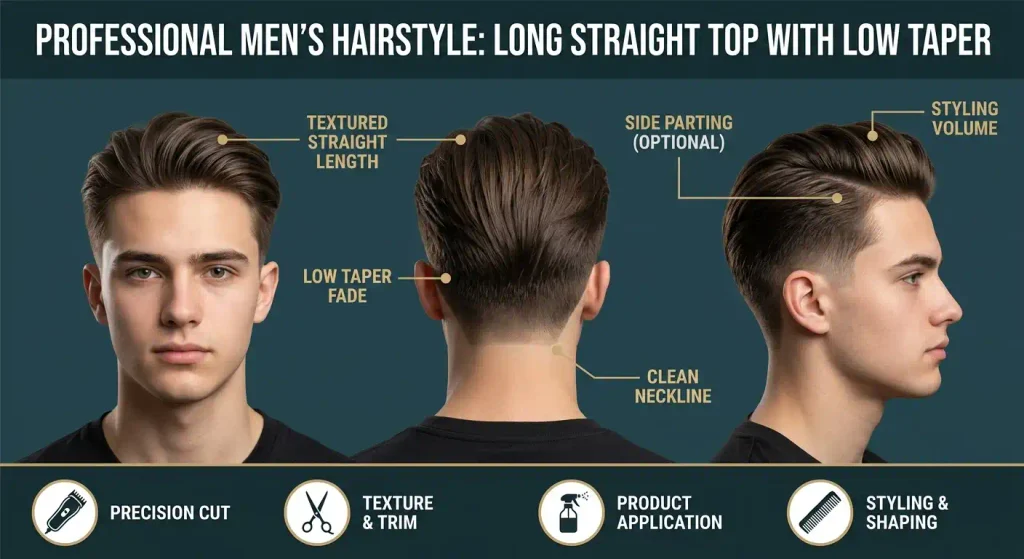
Keeping more length on top creates many styling choices without changing the taper itself. You can brush it back, part it, sweep it sideways, or let it fall naturally. This works best when the side length above the taper is blended into the longer top instead of creating a sudden shelf. Straight hair makes the shape easy to see. Use a light cream when you want natural movement.
16. Low Taper With Messy Texture
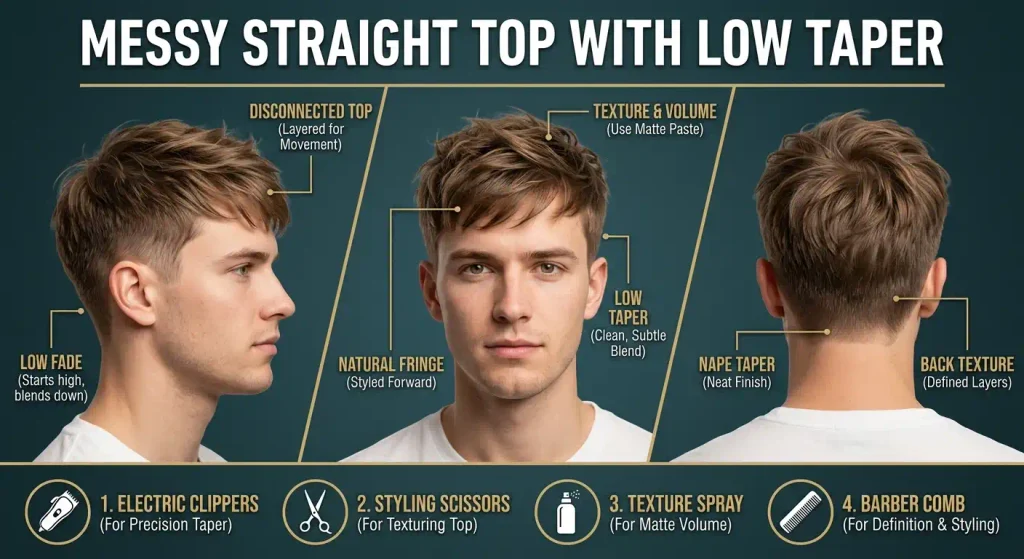
Messy straight hair works when the texture looks intentional rather than simply uncombed. Ask your barber for light texture through the top while keeping the front long enough to separate with your fingers. This creates a relaxed weekend look that still has a clean outline. Matte clay or texture paste works better than a shiny product. Twist or pinch a few sections instead of covering the entire top with product.
17. Brushed Forward Finish
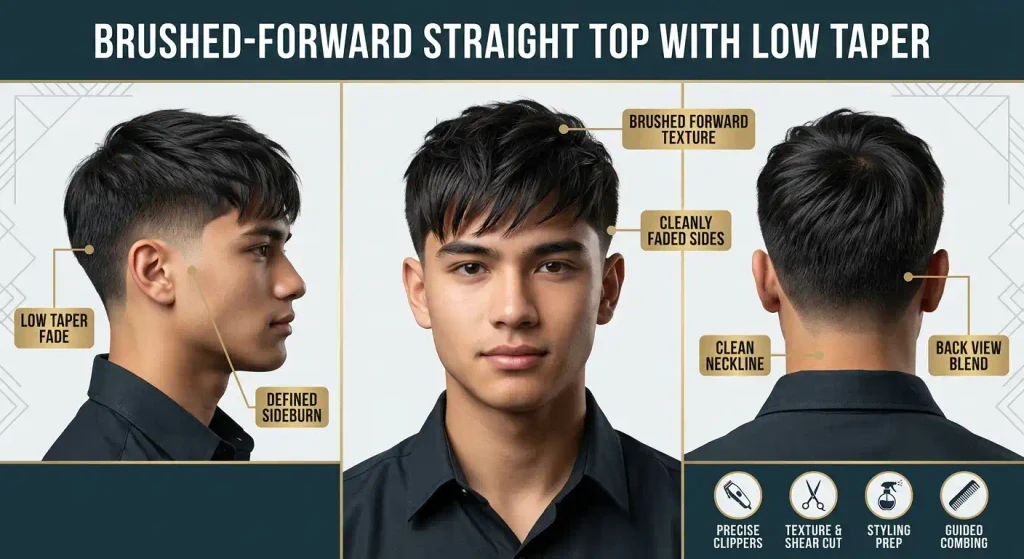
A forward-brushed top is one of the easiest ways to style straight hair. The front moves toward the forehead while the taper gives the haircut a cleaner edge. This variation suits round and oval faces because the controlled top adds structure without excessive height. Apply a small amount of matte cream and brush the hair forward. For a softer finish, use your fingers after the initial brush.
18. Ivy League Inspired
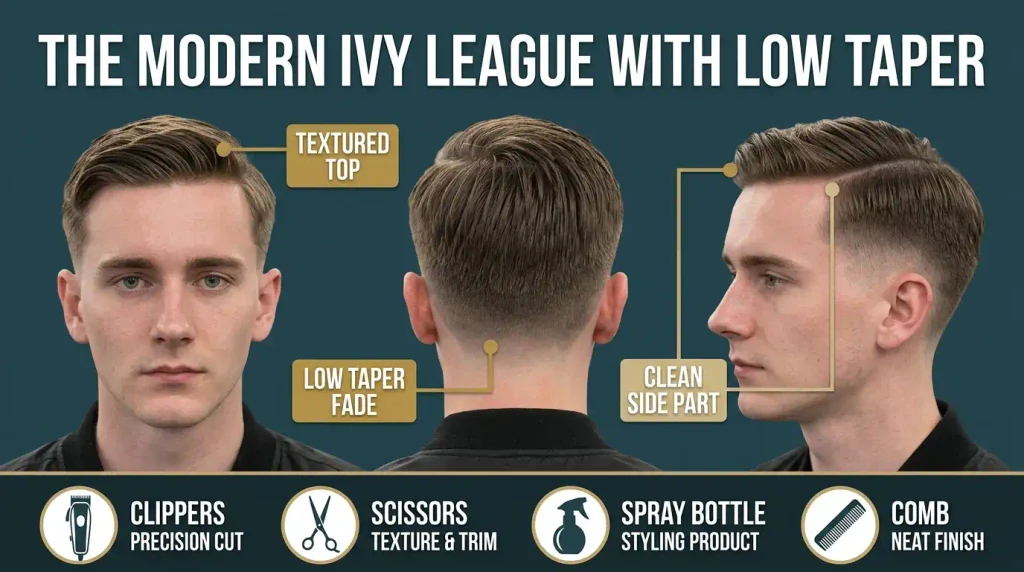
The Ivy League approach combines a short, polished top with enough length to create a slight part. Straight hair gives the style a neat finish, while the low taper keeps it modern. This is a strong option for professional environments or formal events. Ask your barber to keep the top structured but not overly short. A light pomade or styling cream can hold the part without making it stiff.
19. Business Side Part
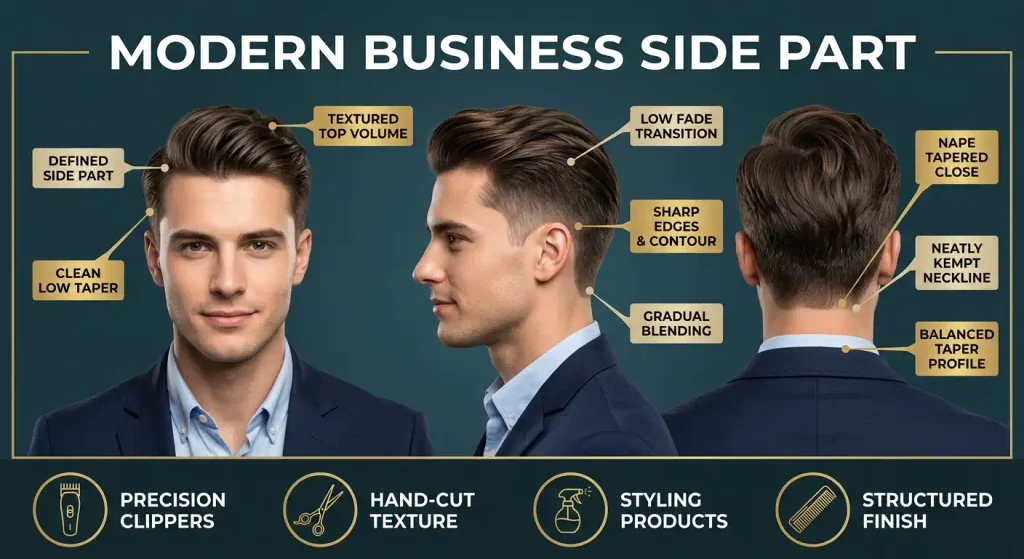
For a more conservative haircut, keep the top medium-short and build a natural side part. The low taper should remain subtle so the haircut does not look overly aggressive. Straight hair naturally supports the clean lines needed for this look. It works well with office clothing and can be styled quickly in the morning. Comb the top into place and finish with a small amount of low-shine product.
20. Disconnected Long Fringe
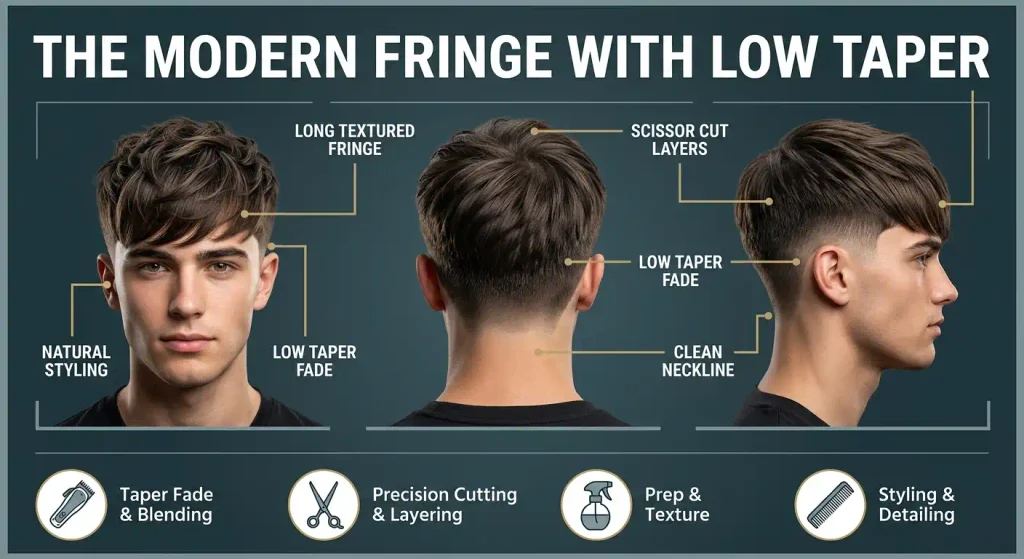
A longer fringe creates a stronger contrast between the front and the clean lower taper. Instead of cutting the front short, allow it to reach toward the eyebrows or slightly beyond, depending on your preference. This can suit longer faces because the fringe visually reduces forehead height. Use a light styling cream to control the direction. Keep the taper low so the haircut retains its soft character.
21. Side-Swept Fringe
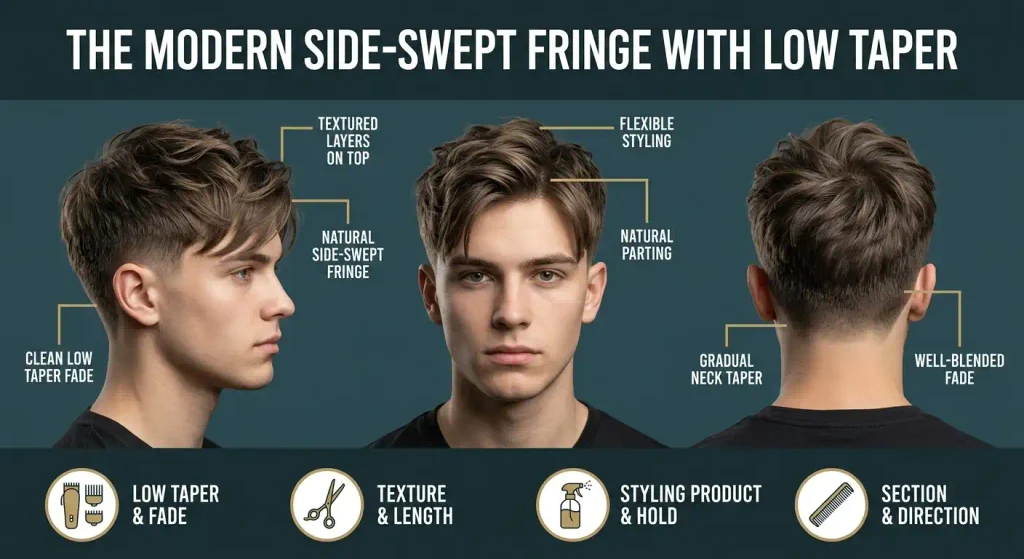
This variation combines the softness of a fringe with the structure of a side sweep. The front is left long enough to cross the forehead while the rest of the top follows the same direction. It can help soften sharper facial features and works well on medium-density straight hair. Blow-dry the fringe sideways, then use a small amount of matte paste to keep the ends separated.
22. Straight Hair Blowout
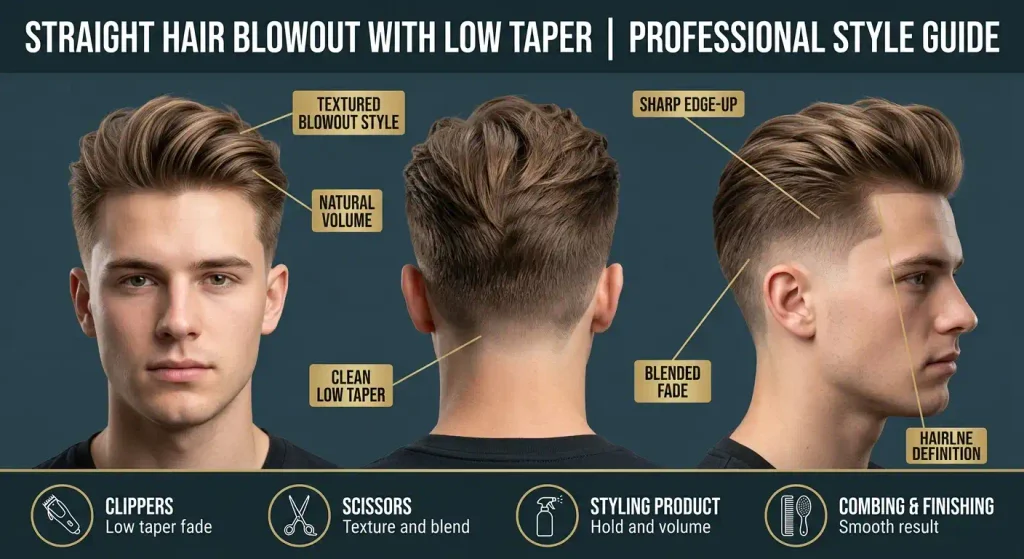
A blowout adds volume and outward movement while keeping the taper close to the ears and neckline. Straight hair responds well to blow-drying because the direction can be shaped easily. This version is best for men who enjoy a fuller, more noticeable top. Use a lightweight volumizing product before drying, then direct the airflow upward and outward. Finish with light hold rather than heavy wax.
23. Low Taper With Blonde Straight Top
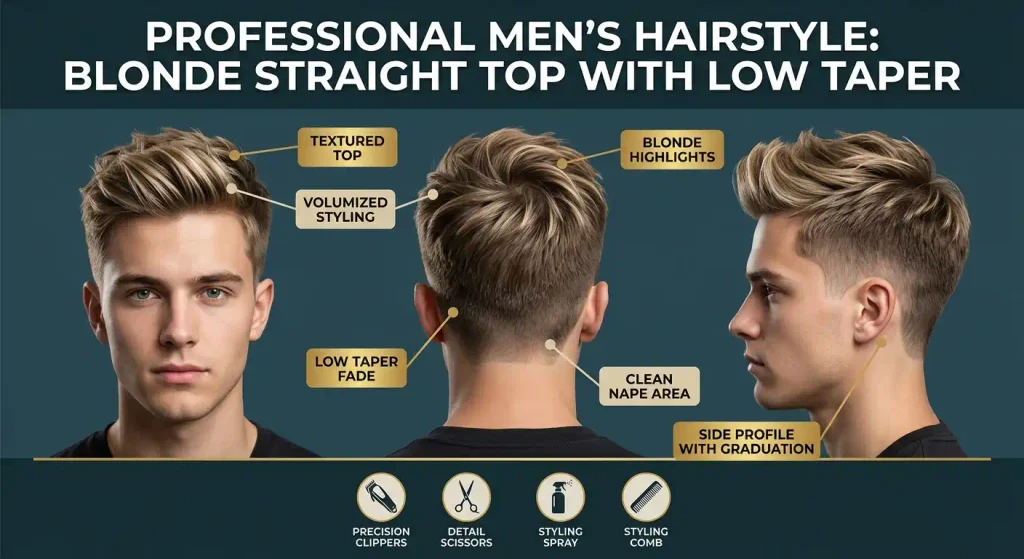
Color can make a simple taper look more distinctive without changing the haircut itself. A blonde or highlighted straight top creates extra visual contrast against the cleaner sides. The cut works with short, medium, or longer top lengths. Keep the styling simple so the color remains part of the look rather than becoming overwhelming. A lightweight cream or matte paste can provide control without covering the hair’s natural brightness.
24. Low Taper With Beard
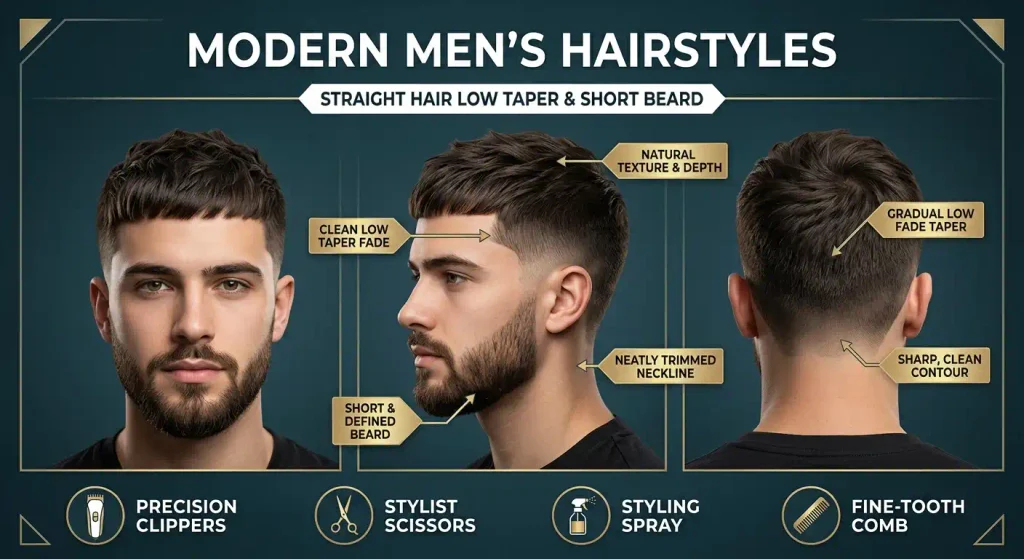
A beard creates another transition that can connect the haircut to the face. Keep the sideburn area blended carefully so the taper does not stop abruptly beside the beard. This option works particularly well with square, oval, and diamond-shaped faces. Ask your barber to connect the beard and sideburns naturally. Keep the top either side-swept or textured so the overall appearance stays balanced.
25. Fine Straight Hair Volume Cut
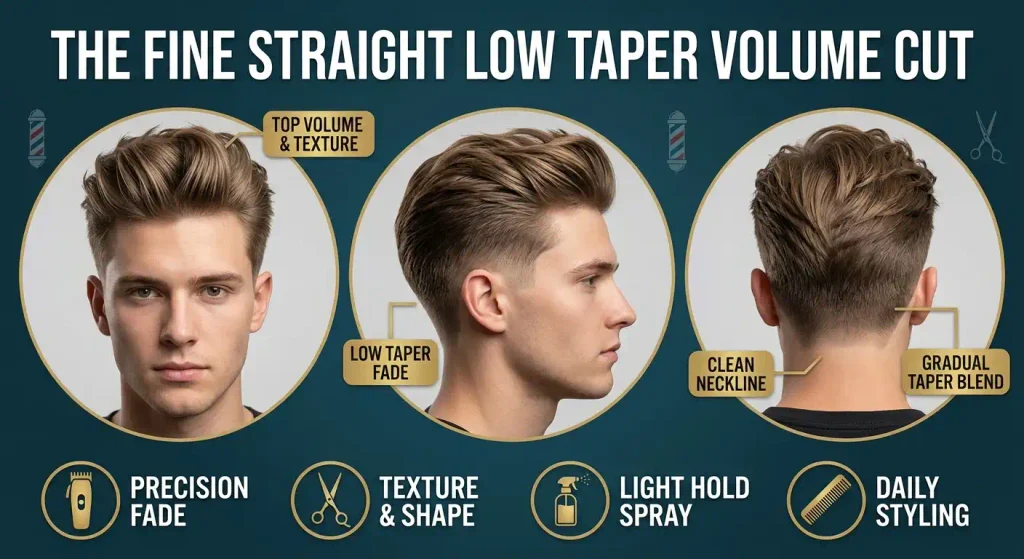
Fine straight hair benefits from keeping unnecessary weight off the sides while preserving useful length on top. The goal is not to make the top extremely long, but to give it enough structure for volume. A low taper provides contrast without removing too much around the head. Use a lightweight mousse or volumizing spray and blow-dry from the roots. Avoid heavy waxes that can flatten fine strands.
26. Thick Straight Hair Taper
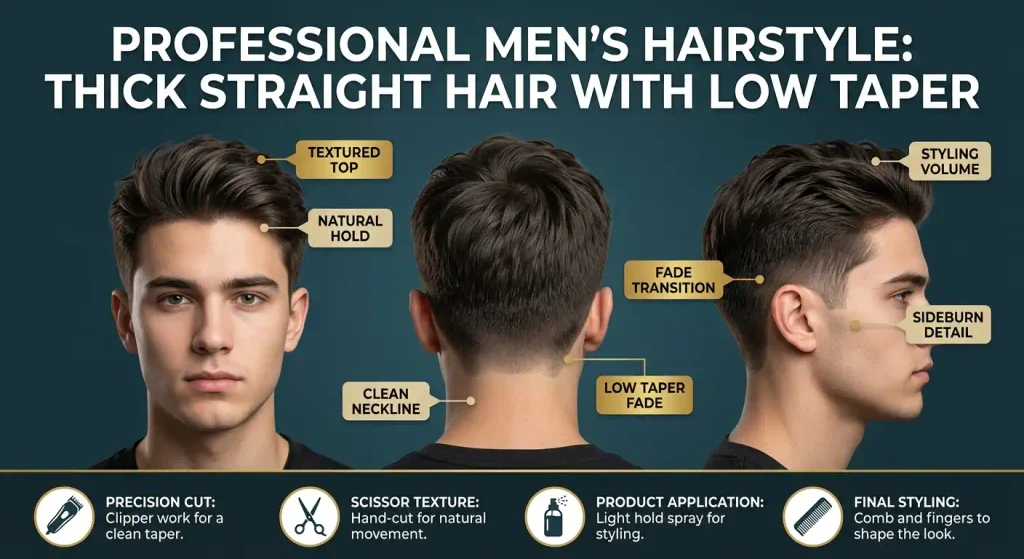
Thick straight hair can look bulky around the ears if the sides are left untouched. A low taper removes that excess weight while keeping the overall haircut full. Ask your barber for controlled internal texture rather than aggressively thinning the entire top. This gives the hair movement without making it look sparse. Style with matte clay or paste, concentrating product through the top rather than the sides.
27. Receding-Hairline Friendly Crop
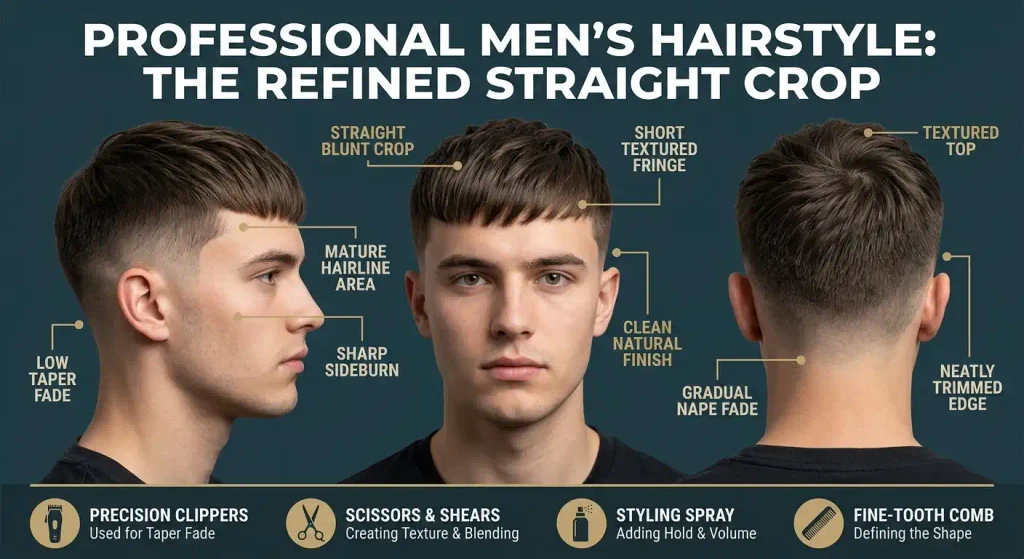
For a changing hairline, the goal should be balance rather than trying to hide every corner. A short textured top can reduce the contrast between the front and the rest of the haircut. The taper remains low so attention is not pulled too far toward the sides. Avoid a rigid comb-over if it makes the hairline more obvious. A matte texture product can keep the front natural and soft.
28. Teen-Friendly Straight Taper
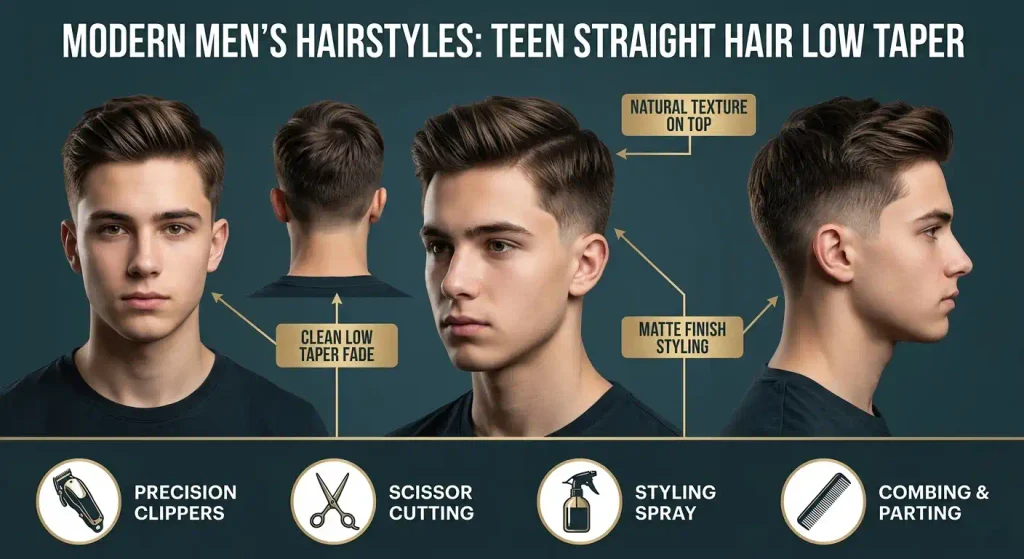
A clean taper with a simple top works well for teenagers who need a haircut that can handle school and weekends. Keep the taper conservative and let the top carry the personality. A textured crop, side sweep, or natural fringe can all work. Straight hair usually needs little product at this age. Finger styling with a light cream is enough for a relaxed finish.
29. Clean College Cut
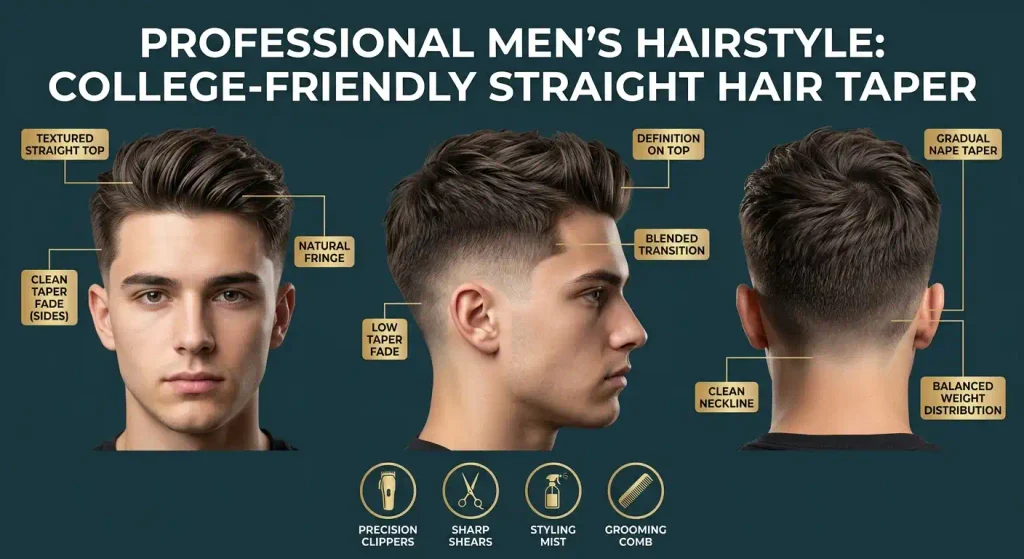
This version sits between a formal haircut and a trendy style. The sides remain clean, while the top has enough length for a side sweep, textured finish, or casual brush back. It suits students who want one haircut for classes, social events, and everyday wear. Keep the product light and avoid an overly shiny finish. A matte paste gives control while preserving a natural appearance.
30. Gentleman Taper With Natural Top
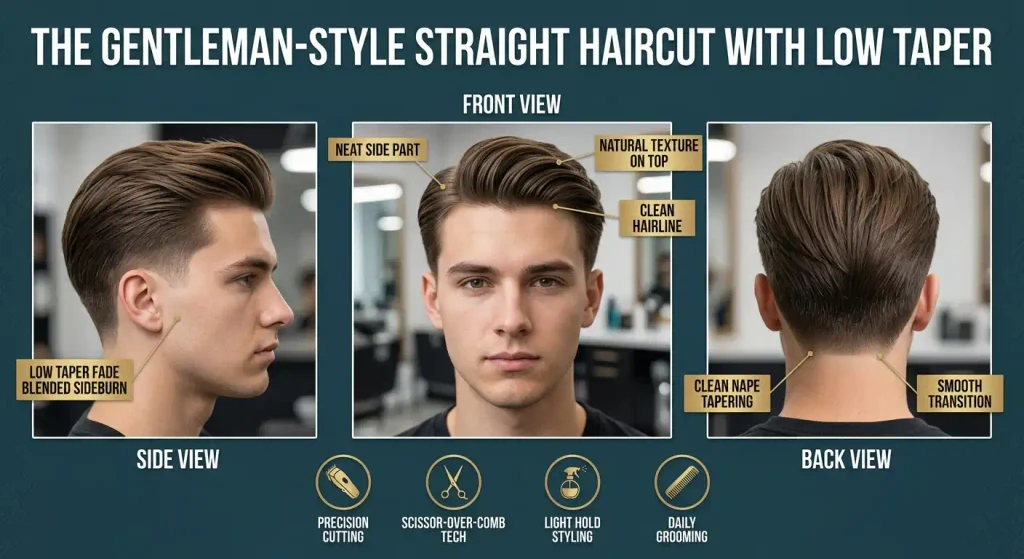
The gentleman version keeps everything controlled without looking too styled. The top follows its natural direction, the part remains soft, and the taper stays close to the lower edges. It is a dependable option for mature men and professional settings. Straight hair makes the shape easy to maintain. Use a light cream or low-shine pomade and comb the top into place without pressing it completely flat.
31. Angular Textured Top
This cut uses sharper sections through the top instead of a rounded or fully smooth finish. The barber can add controlled texture so straight strands separate into visible pieces. It suits square and diamond-shaped faces when the top is kept balanced with the jaw. Apply matte clay to dry hair and pinch small sections upward or sideways. The taper should remain clean but not climb too high.
32. Soft Curtain Top
Curtain-style hair can look more modern when paired with a subtle taper around the lower edges. Keep the center split soft and allow the front to fall naturally on both sides. Medium or longer straight hair works best here. This style suits oval, heart, and longer face shapes. Blow-dry the front away from the center, then use a lightweight cream to control flyaways without removing movement.
33. Straight Bro Flow Taper
A longer top and back can create a relaxed flow while the low taper keeps the ears and neckline cleaner. This is a good option for men who want to grow their hair without letting the outline become messy. Straight hair naturally shows the direction of the flow. Ask your barber to tidy the lower edges without taking too much length. Use a light leave-in or styling cream for control.
34. Short Spiky Texture
Straight hair can create sharp spikes when the top is kept short and textured. The key is controlled separation rather than stiff, uniform spikes. This variation works well for thick straight hair and casual settings. Ask your barber for texture through the top and a low taper around the edges. Apply a small amount of matte clay, then use your fingers to lift selected sections.
35. Natural No-Part Style
Some men prefer a haircut that does not require a fixed direction. This version keeps the top long enough to move naturally while the taper controls the lower outline. It is useful when you want to style your hair differently from day to day. Straight hair makes this flexibility easy. Apply a light cream, push the top into place with your fingers, and let the final shape remain relaxed.
36. Short Textured Caesar Fade-Taper Hybrid
This variation takes the forward shape of a Caesar and combines it with the softer edge of a low taper. The short top is easy to maintain, while the fringe gives the haircut a clear identity. It works particularly well with thick straight hair. Ask your barber for a short textured top and a low taper around the temples and neckline. Matte paste keeps the texture visible.
37. Long Side-Parted Flow
For maximum styling flexibility, leave the top and front noticeably longer and use a natural side part. The taper only cleans the lower edges, allowing the haircut to keep a fuller appearance. This works best for medium-to-thick straight hair with enough length to move. Blow-dry the front across and backward, then use a light cream. It can easily shift from casual to formal with a cleaner comb-through.
Low Taper Straight vs. Other Taper and Fade Options
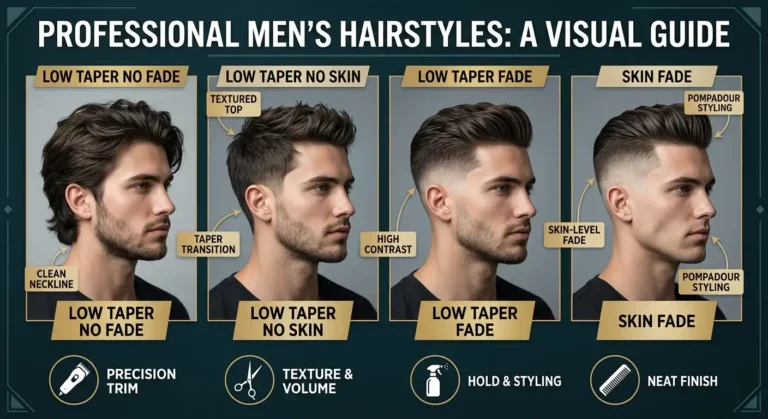
The main difference between these cuts is where the shortening happens and how much hair remains around the sides. A low taper keeps the transition concentrated around the sideburns and neckline, while a traditional fade can remove more hair higher up the sides. Current competitor guides make the same distinction, although exact guard choices vary by barber and head shape.
| Haircut | Taper/Fade Height | Common Guard Approach* | Best Face Shapes | Styling Difference |
| Low taper | Very low | Often blends from longer guards toward shorter edges | Oval, square, heart, diamond | Keeps more side fullness |
| Low fade | Low | Can move closer to skin | Oval, square, round | Stronger side contrast |
| Mid fade | Mid | Shortens higher on the head | Oval, square, round | More visible fade |
| High fade | High | Removes more side weight | Oval, round | Bold and high contrast |
| Temple taper | Temple-focused | Shortens mainly at temple | Oval, heart | Very subtle edge cleanup |
| Burst fade | Around ear | Rounded around ear | Oval, square | More distinctive silhouette |
| Classic taper | Low and gradual | Usually keeps more length | Most face shapes | Traditional and conservative |
*Guard selection is not a fixed formula. Your barber may adjust it based on hair density, head shape, and the finish you want.
Why a Low Taper Straight Hair Works
Straight hair shows shape clearly. That can be an advantage because the taper, top length, fringe, and part are easy to see.
It can also expose mistakes. Heavy sides, uneven lines, or a poorly blended transition may stand out more when the hair lies flat. That is why the top and lower outline should work together rather than being treated as separate areas.
A low taper gives straight hair a useful contrast: controlled edges below with more natural length above. Several current competitors also focus on this balance between clean sides and styling freedom on top.
Who Should Try This Style: Low Taper Straight Hair?
This haircut is a good match if you want:
- Clean edges without a very high fade
- Several ways to style the top
- A haircut that works at school or work
- A neat neckline and sideburn area
- More natural side fullness
- A modern haircut that can grow out without changing shape too quickly
It is also flexible across different hair densities. Fine hair usually benefits from controlled volume, while thick hair often benefits from removing excess weight through the top and sides.
Best Hair Types & Face Shapes: Low Taper Straight Hair
Fine Straight Hair
Keep enough length on top for volume but avoid heavy products. A textured top or soft side sweep can create more movement.
Thick Straight Hair
Ask for weight control through the top and sides. The taper helps prevent bulk around the ears.
Medium-Density Hair
Almost every variation can work. Choose based on your preferred styling time and face shape.
Oval Face
Most versions work well. You can choose a fringe, part, quiff, or longer flow without needing major correction.
Square Face
Textured tops, side parts, and natural volume can complement the strong jawline. Avoid making the sides too wide.
Round Face
A little height or controlled texture on top can add structure. Avoid overly heavy, rounded sides.
Oblong Face
A fringe or side-swept front can help balance a longer face. Extremely tall quiffs may add too much vertical length.
Heart Face
A soft fringe, middle part, or side-swept top can balance a wider forehead and narrower chin.
Diamond Face
Moderate volume and soft movement can work well. Avoid making the sides extremely tight if you need more balance around the cheekbones.
How to Style a Straight Low Taper
- Start with clean, slightly damp hair.
Do not soak the hair with water. You want enough moisture to shape it. - Choose a lightweight product.
Use mousse or volumizing spray for fine hair. Choose matte paste or clay when you need more texture. - Set the main direction.
Use your fingers or a comb to decide whether the hair goes forward, sideways, backward, or into a part. - Use a blow-dryer when you need volume.
Direct airflow from the roots toward the desired shape. A brush can help create more control. - Add product after drying.
Start with a small amount and add more only if necessary. - Finish with your fingers.
Separate the top and remove any sections that look too flat or stiff.
Straight hair usually does not need a large amount of product. Too much can make the hair look heavy and oily.
How to Ask Your Barber for Low Taper Straight Hair Cut
Use this simple script:
“I want a low taper around the sideburns and neckline. Keep the taper low and leave the sides above it fairly natural. I want enough length on top to style my straight hair. Please keep the blend clean and soft rather than taking the fade high.”
Then add the option that matches your preferred style:
- For a side part: “Leave enough length on top for a natural side part.”
- For a fringe: “Keep the front longer so I can wear it forward as a fringe.”
- For texture: “Add light texture through the top so my straight hair does not sit too flat.”
- For a longer style: “Keep the top and front longer and only clean the lower edges.”
Bring a reference photo whenever possible. A photo shows the barber the desired height, top length, and overall finish better than a haircut name alone.
Step by Step Tutorial of Low Taper Straight Hair
Step 1: Prepare the Hair
Wash or dampen the hair and comb it into its natural direction. This helps reveal the current length and growth pattern.
Step 2: Establish the Top Shape
Decide whether the final top will be a fringe, part, brush back, crop, or longer flow. The top shape should be chosen before the taper is finalized.
Step 3: Set the Low Taper Area
The taper should stay concentrated around the sideburns, ears, and neckline. The exact guard sequence depends on the barber and the desired finish.
Step 4: Blend the Transition
The barber gradually connects the shorter lower area with the longer hair above it. Straight hair makes this blend easy to see, so the transition should look smooth from different angles.
Step 5: Detail the Edges
Clean the neckline and sideburns without creating an unnecessarily harsh outline. The goal is a fresh edge that still suits the natural shape of the haircut.
Step 6: Texture the Top
If the hair looks too flat or heavy, controlled point cutting can create movement. Do not over-texture fine hair because it can make the top look thinner.
Step 7: Style the Finish
Use the appropriate product for the chosen variation. A matte finish generally keeps straight hair looking natural, while a light pomade can create a more polished result.
Best Styling Products for Low Taper Straight Hair
1. Matte Clay
A good choice for textured crops, messy tops, and short styles. It gives control without adding a strong shine.
2. Matte Paste
Paste is useful when you want flexible styling. It works especially well for side sweeps, natural parts, and medium-length tops.
3. Lightweight Styling Cream
Cream works well when the goal is control rather than heavy hold. It is useful for longer flow styles and natural finishes.
4. Volumizing Mousse
Fine straight hair can benefit from a lightweight volumizing product before blow-drying. It helps create lift without the heaviness of wax.
5. Light Pomade
Pomade suits polished side parts, comb overs, and slicker styles. Choose a lighter formula if your hair becomes oily or flat easily.
Common Mistakes to Avoid : Low Taper Straight Hair
1. Making the Taper Too High
A high transition changes the whole haircut. If you want the subtle look of a low taper, tell your barber clearly that you want the blend kept low.
2. Removing Too Much Side Length
Straight hair can look very narrow when too much weight is removed. Keep some natural fullness above the taper when you want a softer appearance.
3. Using Too Much Product
Straight strands can become flat quickly under heavy wax or clay. Start small and build the hold gradually.
4. Ignoring the Hairline
A good haircut should work with your natural hairline. Do not force an artificial shape simply because it looks sharp in a photo.
5. Over-Texturing Fine Hair
Texture is helpful, but too much can remove the visual density you need. Fine hair usually benefits from controlled, targeted texture.
6. Choosing a Style Without Considering Your Routine
A long slick back or blowout needs more daily styling than a short crop. Pick a version you will actually maintain.
Maintenance & Upkeep
A low taper normally looks best when the lower edges are refreshed before they become too overgrown. Many competitor guides place general maintenance around the 2–4 week range, but your ideal schedule depends on how quickly your hair grows and how sharp you want the outline.
At home, keep the scalp clean, use conditioner when needed, and avoid loading straight hair with heavy products every day.
If the top is long, trim only when the shape starts losing its direction. A longer style does not always need the same frequency of trimming as the taper around the ears and neckline.
FAQ: Low Taper Straight Hair
Is a low taper good for straight hair?
Yes. Straight hair shows the clean transition clearly and gives you many options for the top, including parts, fringes, crops, slick backs, and textured styles.
What is the difference between a low taper and a low fade?
A low taper usually focuses the shortening around the sideburns and neckline, while a low fade can extend the shorter area farther around the sides. The exact finish depends on the barber’s technique.
Which style is best for fine straight hair?
The natural-volume top, side-swept top, and fine-hair volume cut are useful choices. Keep enough length for lift and avoid heavy styling products.
Which of the 37 styles is easiest to maintain?
The Classic Short Top Taper, Brushed Forward Finish, Caesar-inspired crop, and Short Textured Crop are among the simplest options. They need less daily shaping than longer styles.
Can I wear the Middle Part Flow with straight hair?
Yes. Straight hair is well suited to a middle part because it naturally follows the two directions. Leave enough front length so the curtains can fall without looking forced.
Is the Long Side-Parted Flow suitable for thick hair?
It can work very well. Thick straight hair provides enough weight and density for a longer side-parted shape, while the taper keeps the lower edges controlled.
How often should I get a taper cleaned up?
Many men refresh the taper around every 2–4 weeks, depending on growth and how sharp they want the edges. A longer top may not need to be trimmed every time.
What should I show my barber?
A clear reference photo is the best option. Also explain how low you want the taper, how much length you want on top, and whether you prefer a fringe, part, texture, or slick finish.
Final Thoughts
A good straight-hair taper does not need to be dramatic. The strongest versions keep the lower edges clean while letting the top match your face, hair density, lifestyle, and personal taste.
With 37 different options, you can choose anything from a short crop and professional side part to a longer flow or textured modern finish. Start with the top shape you actually want to wear, then ask your barber to build the low taper around it.
Want to explore another men’s haircut style? Add your related internal post here: low taper fade with design in the back
Name: Ryan Cole
Role: Lead Grooming Editor, TaperHaircutGuide.com
Bio angle: Men’s grooming/style content researcher — 4+ years covering barbering trends, hairstyling terminology, and men’s style content for US audience. Cross-checks every guide with practicing barbers before publishing.