50 Best Barber Cut Fade Styles for Men: The Ultimate Lookbook & Grooming Guide

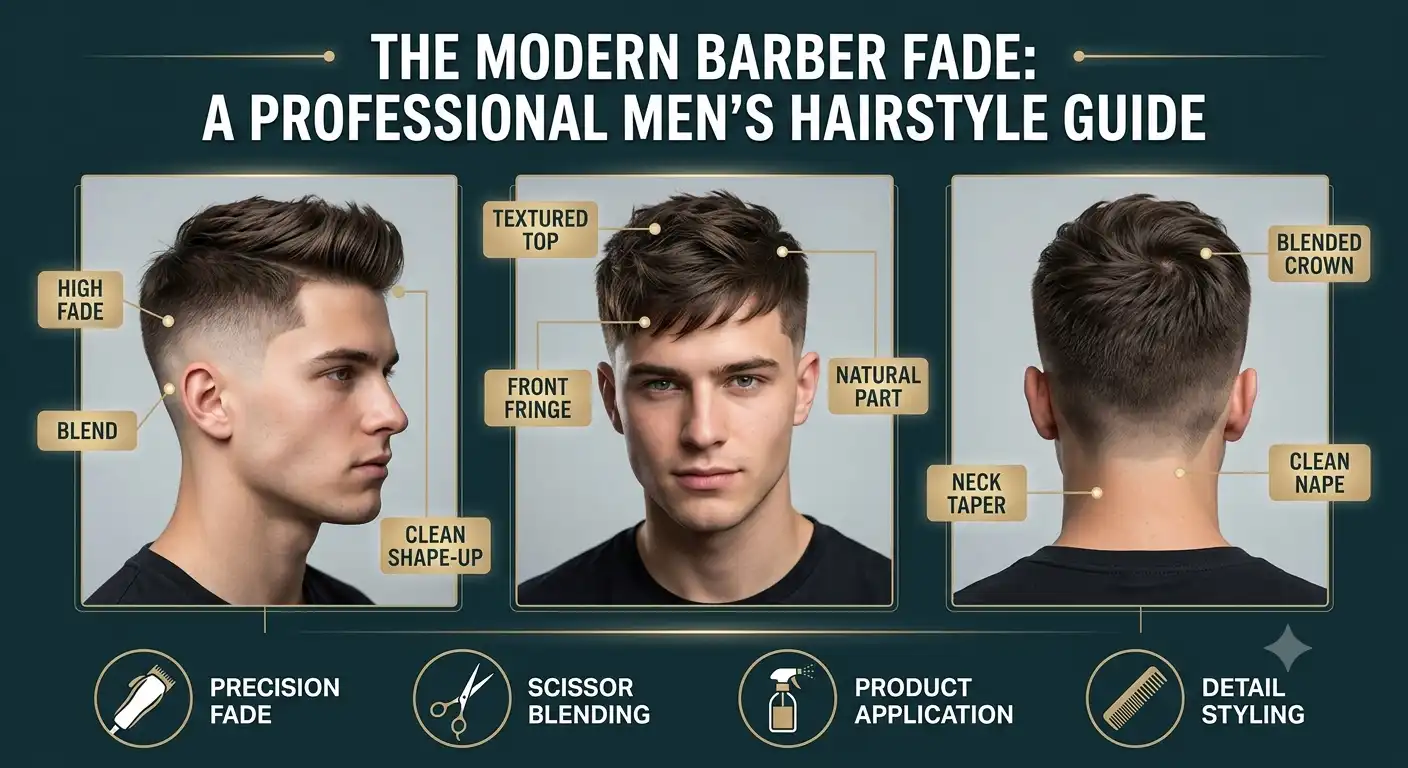
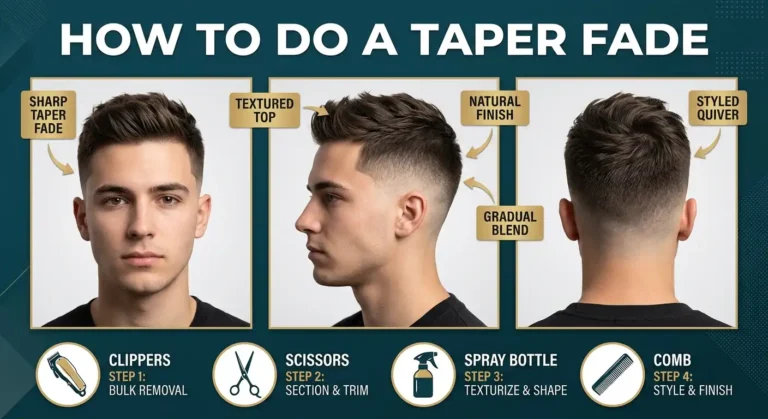
Getting a clean barber cut fade is one of the most effective ways to upgrade your personal style, providing a sharp contrast that flatters almost every head shape and hair texture. A barber cut fade is a precision haircut technique where hair at the sides and back is blended progressively shorter from top to bottom, creating a smooth, seamless gradient down to the skin or natural hairline.
Whether you prefer a subtle low taper or a high-contrast bald fade, mastering this style requires understanding fade heights, guard numbers, and exact barber phrasing.
Quick Key Takeaways / Overview Table
Before exploring all 50 variations, here is a quick overview of the 5 most requested fade styles in barbershops today:
| Fade Style | Fade Height | Transition Point | Best Face Shape | Maintenance Interval |
|---|---|---|---|---|
| Low Skin Fade | Low (1 inch above ear) | Blends into skin right near lower hairline | Oval, Square, Heart | 2–3 Weeks |
| Mid Drop Fade | Medium (Temple level) | Curves downward behind ear to nape | Round, Oval | 2–3 Weeks |
| High Taper Fade | High (2–3 inches above ear) | Tapers rapidly near upper crown | Round, Oval, Diamond | 1–2 Weeks |
| Temple Fade (Temp) | Localized | Blends out strictly at temples and nape | Square, Oblong | 2–3 Weeks |
| Burst Fade | Curved around ear | Forms a circular gradient around ears | Heart, Oval, Triangular | 2–3 Weeks |
How to Ask Your Barber: Master Script & Phrasing about Barber Cut Fade
Walking into a shop without clear terminology often leads to miscommunication. Use this exact copy-paste barber script during your consultation to guarantee you get the exact cut you want:
Master Barber Script:
“I’m looking for a [Fade Height: Low / Mid / High] [Fade Type: Skin / Taper / Drop / Burst] fade. On the sides, start down to a [Guard Number: #0 / #0.5 / #1] at the bottom and blend up into a [#2 / #3] near the ridge. On top, leave roughly [Length in inches] of length, keeping it [Textured / Slicked Back / Blunt Cropped]. Please keep the neckline [Squared / Rounded / Natural Tapered].”
4 Variation-Specific Add-Ons
- For a Textured French Crop: “Keep the fringe straight across with light point-cutting on top for heavy piecey texture.”
- For a Beard Blend: “Please taper the sideburns down so the fade seamlessly connects into my beard line.”
- For Extra Top Volume: “Use clipper-over-comb on the transition zone so the top keeps maximum density without bulk.”
- For a Sharp Edge Up: “Finish with a clean line-up along the front temples without pushing my natural hairline back.”
50 Distinct Barber Cut Fade Styles (Categorized Core Gallery)
Below are 50 distinct fade style variations, organized into 6 core aesthetic categories. Each entry outlines exact guard specs, facial compatibility, and product recommendations.
Category 1: Low Fade Cut Variations & Classic Blends
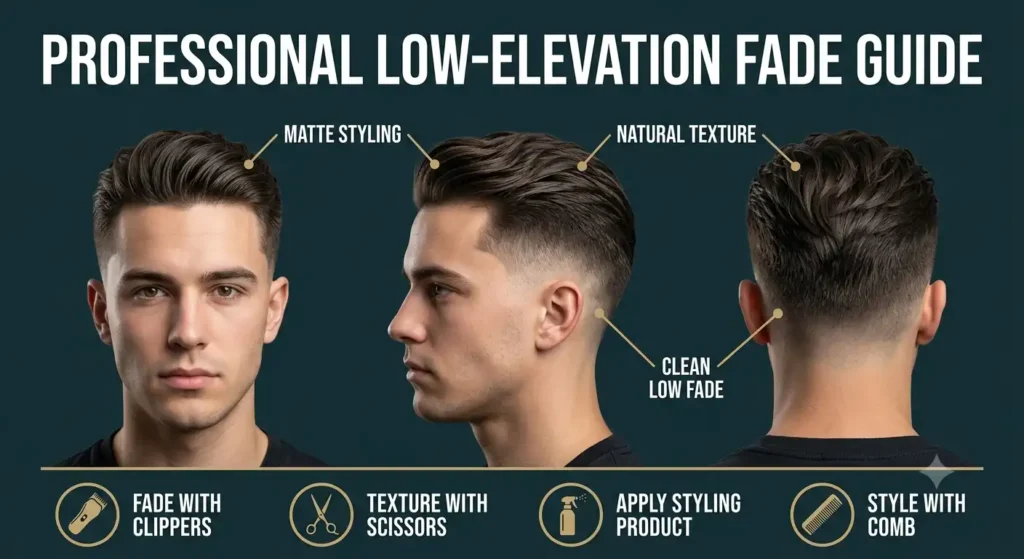
1. Low Skin Fade Crop
Starting roughly one inch above the ear, this cut transitions from bare scalp up to a short, textured crop. Guard sizes begin at #0 at the bottom and blend into a #2 near the parietal ridge. The subtle elevation creates an approachable profile suitable for professional settings.
- Best Face Shape: Oval, Square, Heart
- Styling Product: Matte Texture Clay
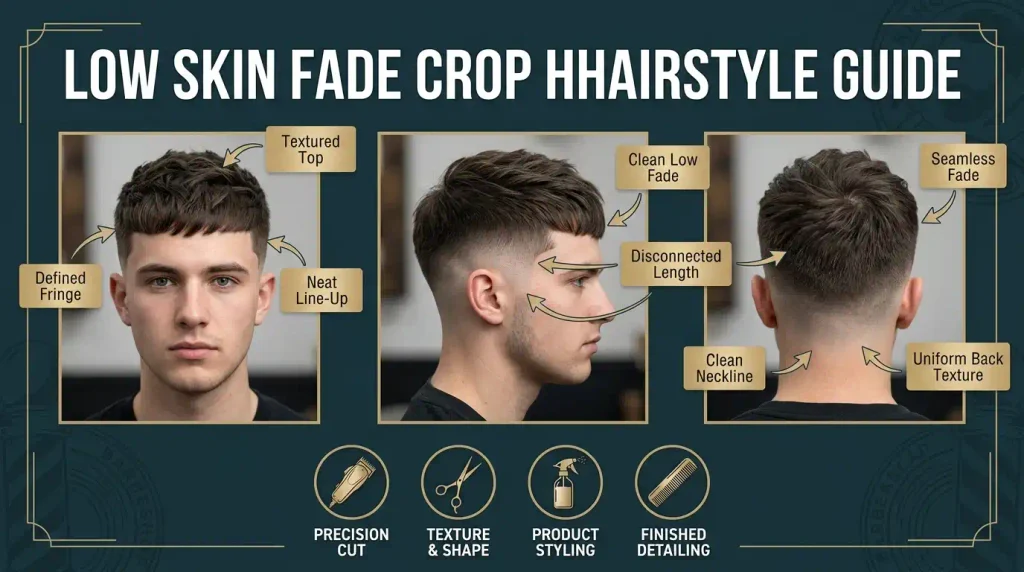
2. Low Cut Caesar Fade
Combining a traditional straight-cut blunt fringe with a low skin gradient, this look retains historical structure while staying modern. The sides taper from #0.5 up to a #3 top. It keeps natural density at the crown while cleaning up edges around the ears.
- Best Face Shape: Long, Oval, Angular
- Styling Product: Lightweight Styling Cream
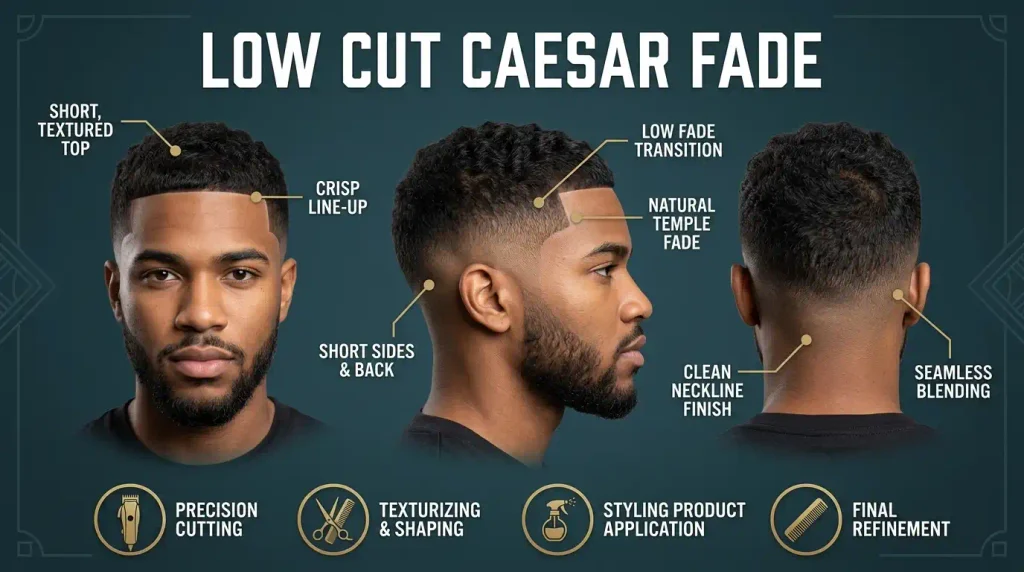
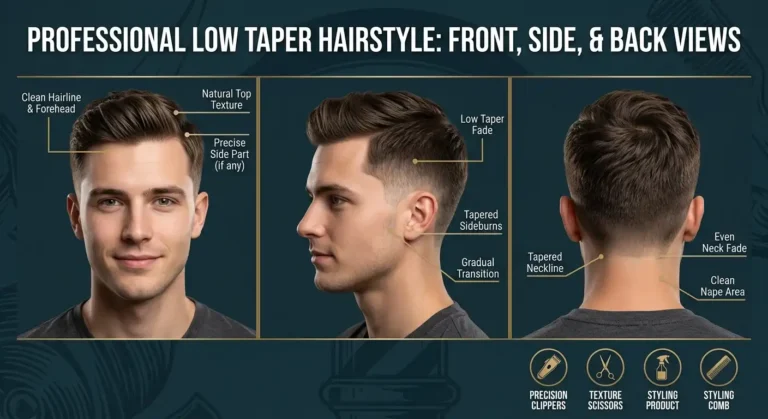
3. Subtle Low Taper Fade
Rather than taking the entire side down to skin, this refined variation only fades the hair around the sideburns and lower nape. The bulk of the sides stays around a #2 guard. It offers an elegant option for conservative office environments.
- Best Face Shape: Oblong, Square, Diamond
- Styling Product: Medium-Hold Pomade
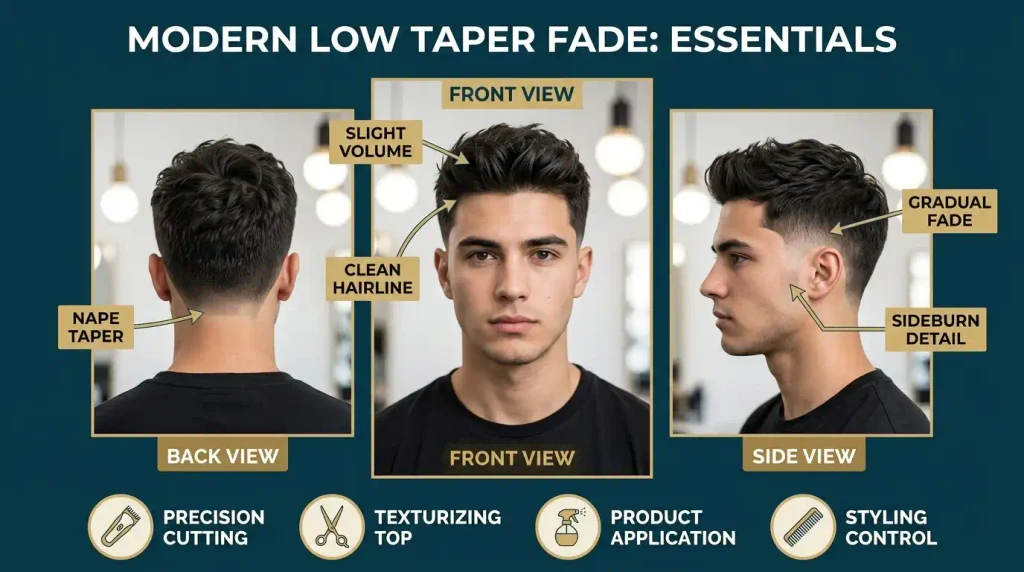
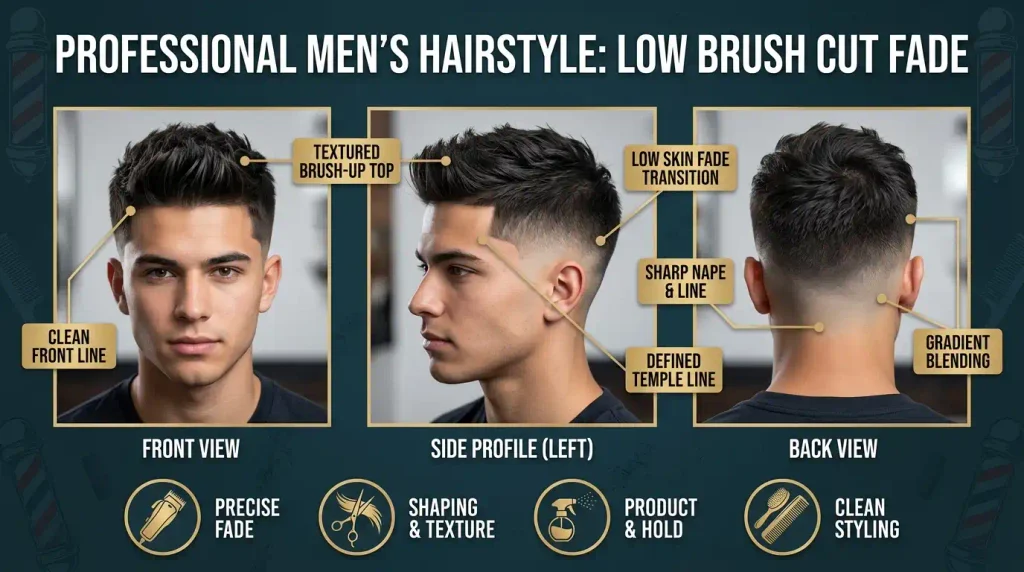
4. Low Brush Cut Fade
Featuring short, upright hair across the entire top, this style blends seamlessly into a low taper starting right above the ears. A #4 guard is used on top, fading down through #2 to #0.5 at the base. It requires zero daily styling effort while looking polished.
- Best Face Shape: Oval, Round
- Styling Product: Sea Salt Spray or Dry Texture Powder
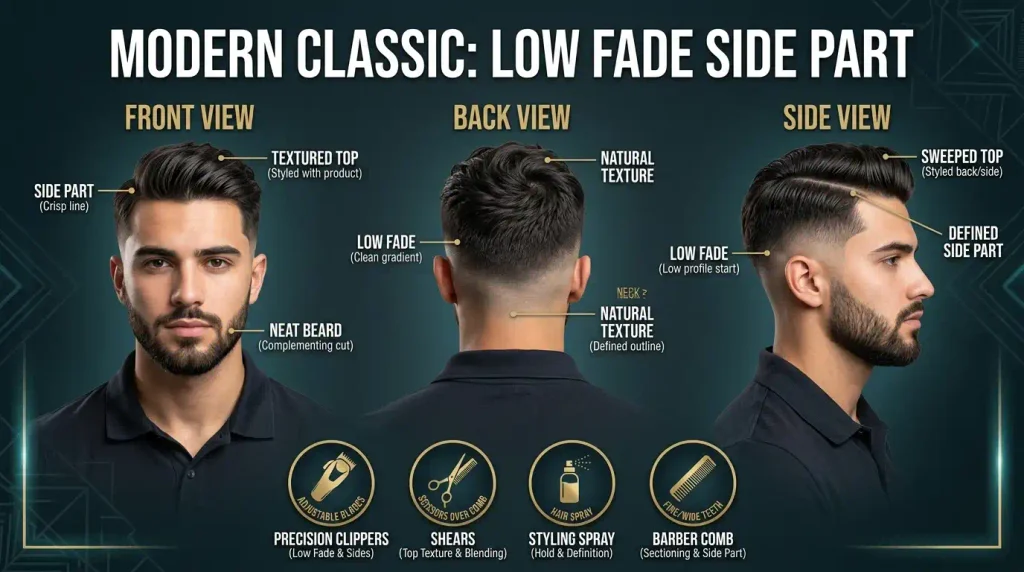
5. Low Fade Side Part
A classic gentleman’s silhouette enhanced by a clean, low skin transition. The top is parted neatly to one side with 2–3 inches of combable length. The lower taper keeps side bulk minimal without exposing too much scalp.
- Best Face Shape: Executive Square, Oval
- Styling Product: High-Shine Water-Based Pomade
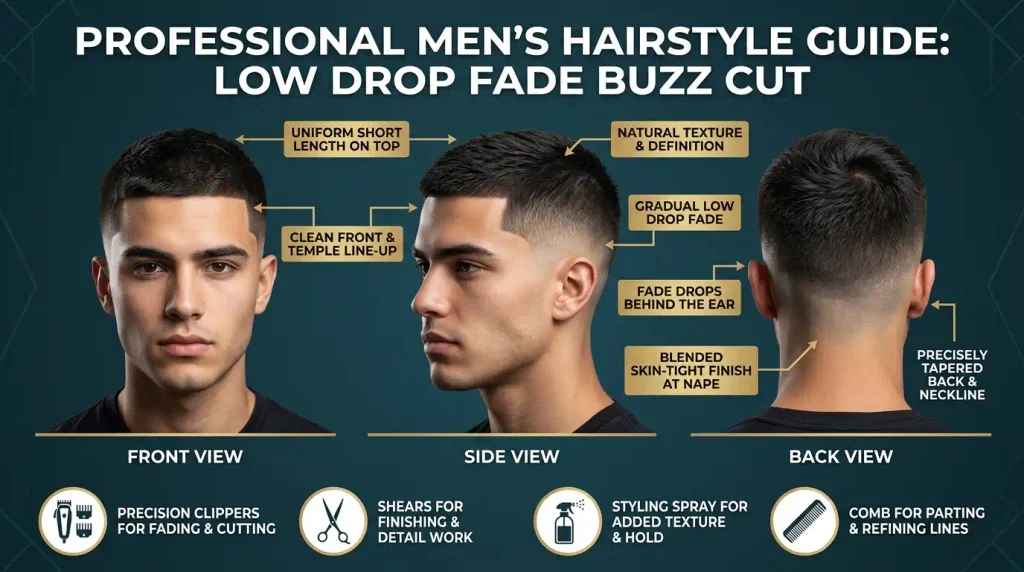
6. Low Drop Fade Buzz Cut
Equipped with a uniform #3 buzz on top, the fade line drops sharply behind the ear toward the nape of the neck. The curved gradient accents the skull shape while maintaining an athletic, low-maintenance profile.
- Best Face Shape: Oval, Chiseled Jawlines
- Styling Product: None (Scalp Moisturizer with SPF)
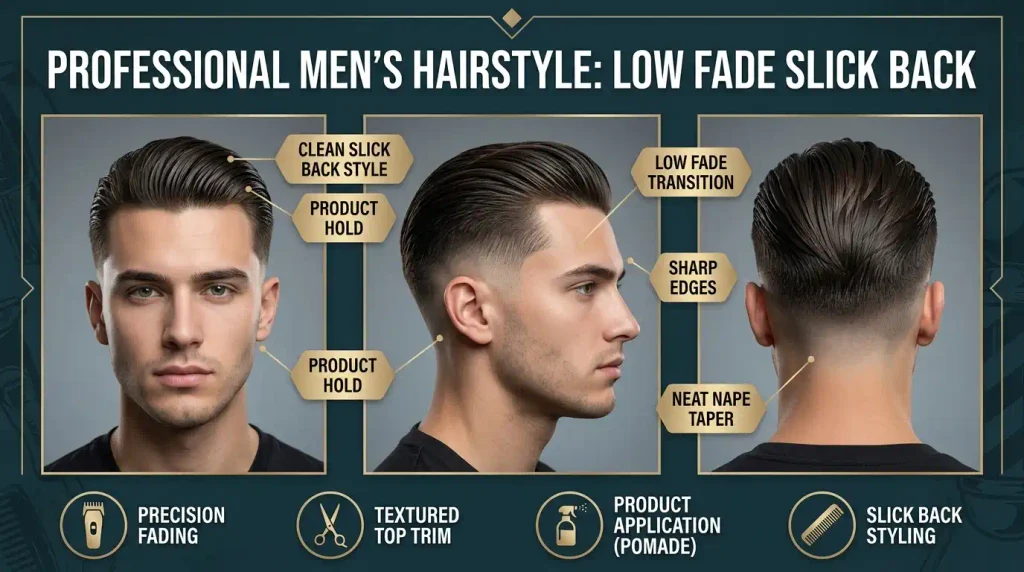
7. Low Fade Slick Back
Ideal for men with longer top length (3–5 inches), this style sweeps hair directly back over a subtle low taper. Guard work on the lower temples keeps hair tight around ears while preserving bulk toward the upper crown for smooth control.
- Best Face Shape: Oval, Heart, Square
- Styling Product: Firm-Hold Matte Paste
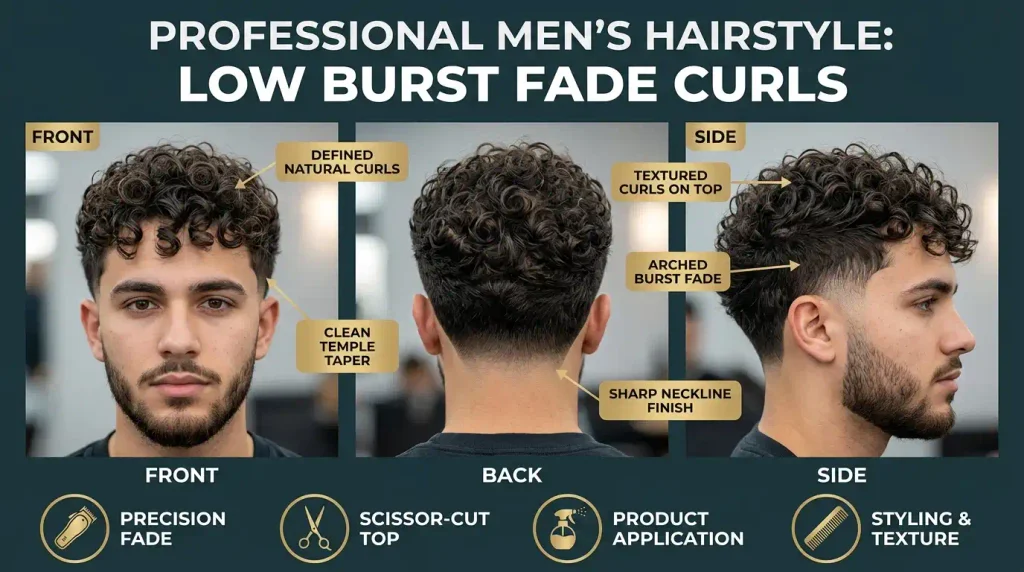
8. Low Burst Fade Curls
A semi-circular fade wraps around the ear, isolating natural curl texture on top and along the crown. The fade drops down to bare skin right behind the earlobe while keeping natural bulk elsewhere.
- Best Face Shape: Diamond, Oval
- Styling Product: Curl Enhancing Cream
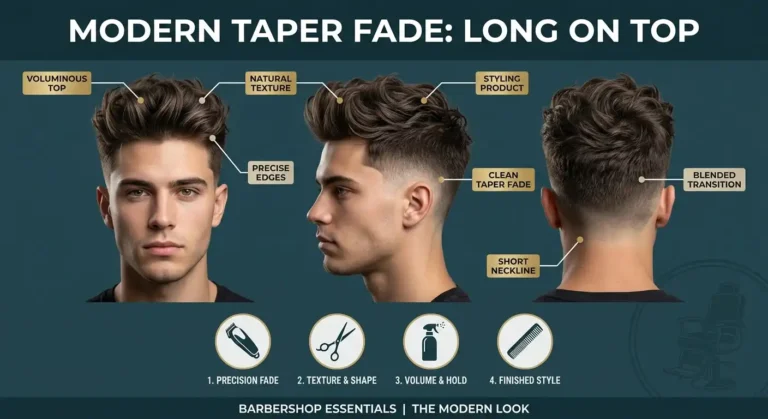
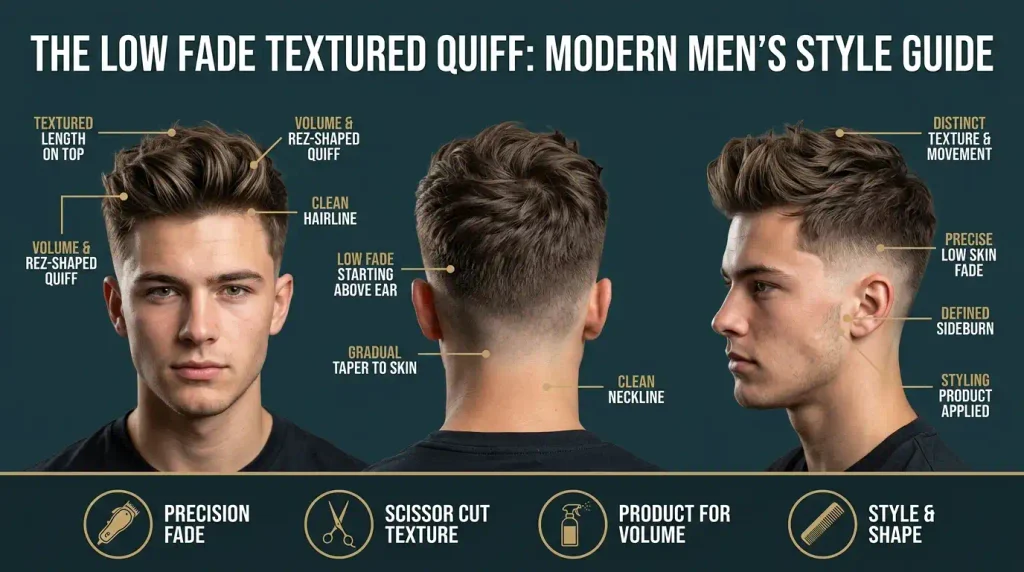
9. Low Fade Textured Quiff
By styling the front fringe upward and slightly backward, this cut creates height without requiring high-contrast sides. The low fade provides a subtle shadow transition from #0.5 to #3, emphasizing top texture.
- Best Face Shape: Round, Oval, Short
- Styling Product: Volumizing Texture Powder
Category 2: Mid Fade Hair Cut & Modern Cropped Styles
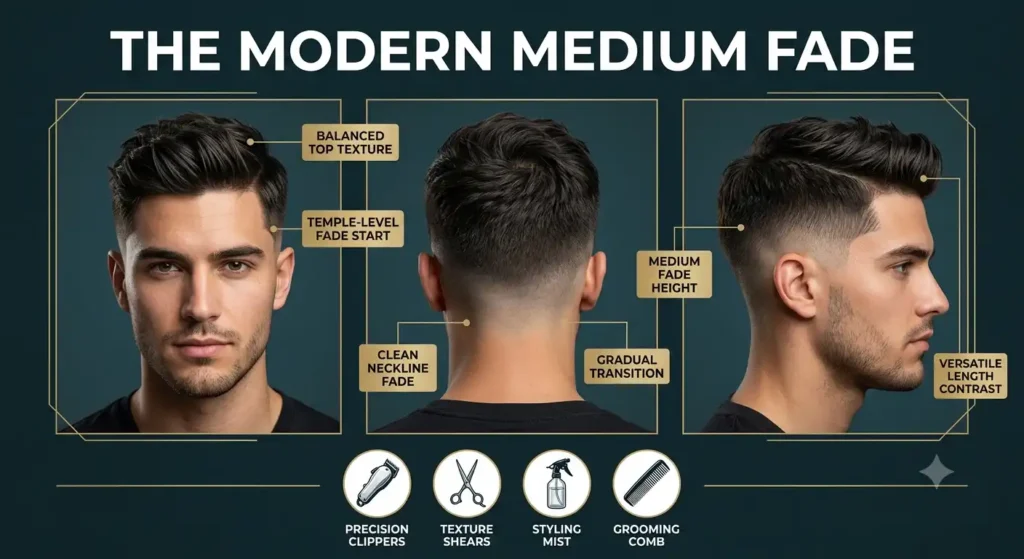
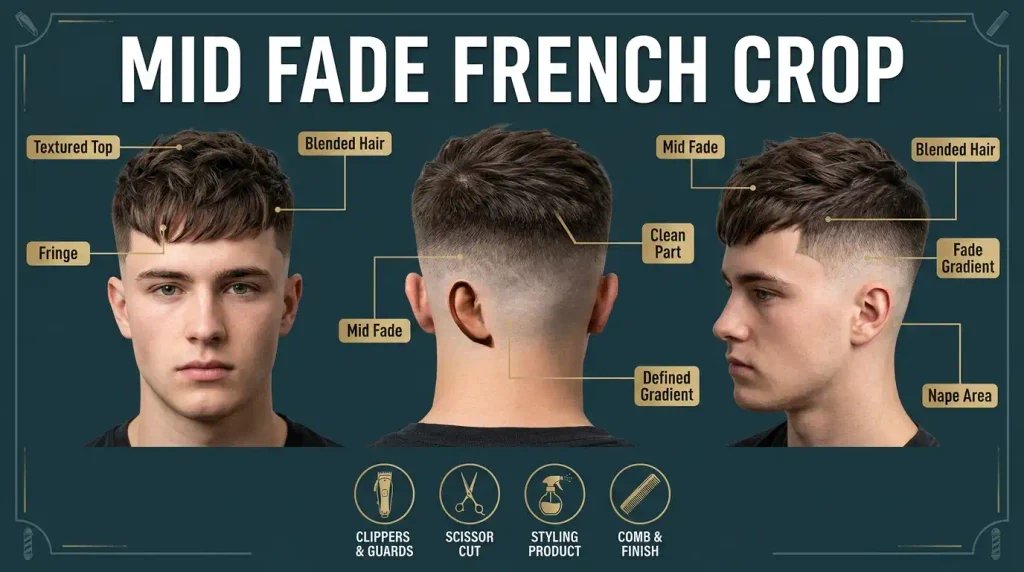
10. Mid Fade French Crop
Positioned right at temple height, this mid gradient balances heavy texture on top with clean, tapered sides. The fringe is cut straight or lightly jagged, making it an excellent choice for men covering a high forehead.
- Best Face Shape: Oval, Heart, Long
- Styling Product: Matte Clay
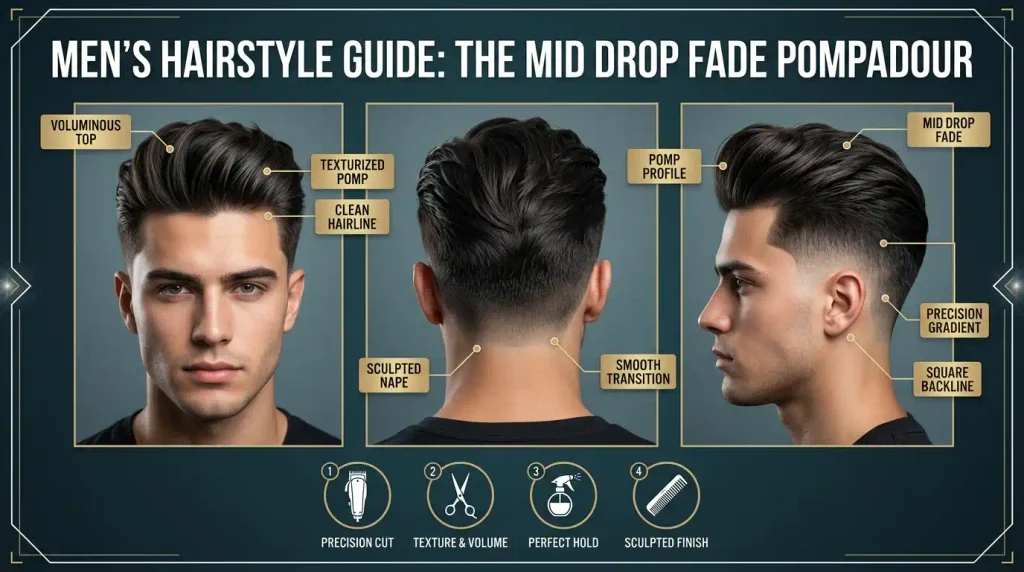
11. Mid Drop Fade Pompadour
Sweeping upward and back into a classic pompadour, the top transitions into sides that drop low around the occipital bone. Using guards #0 to #3, this cut creates strong visual lift while maintaining clean edges.
- Best Face Shape: Round, Square
- Styling Product: Strong-Hold Pomade
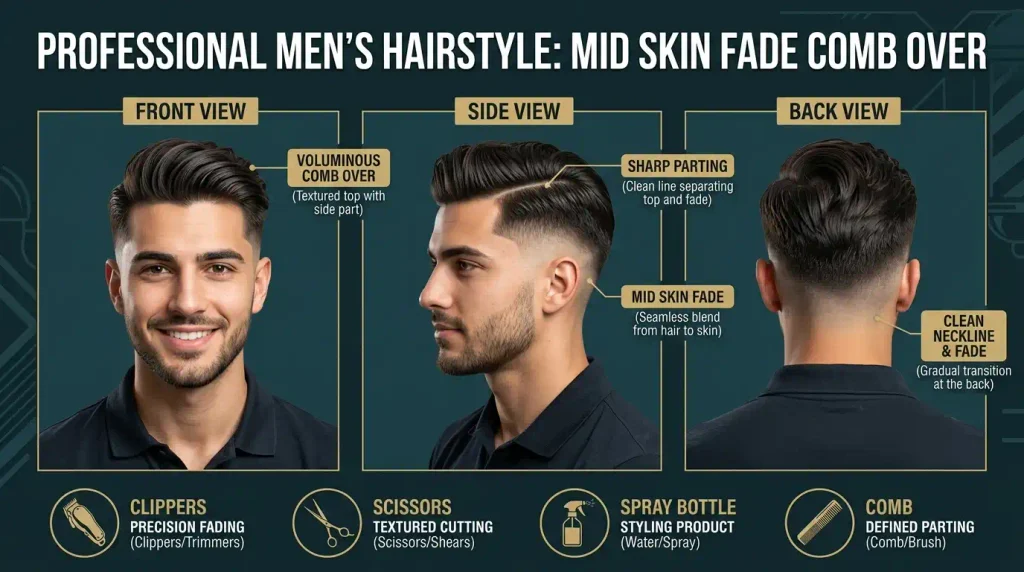
12. Mid Skin Fade Comb Over
A modern side-swept look where the hard or natural part meets a skin-tight mid transition. The gradient starts halfway up the head, exposing clean skin while keeping enough length on top to comb flat or add volume.
- Best Face Shape: Oval, Square
- Styling Product: Gloss/Satin Finish Paste
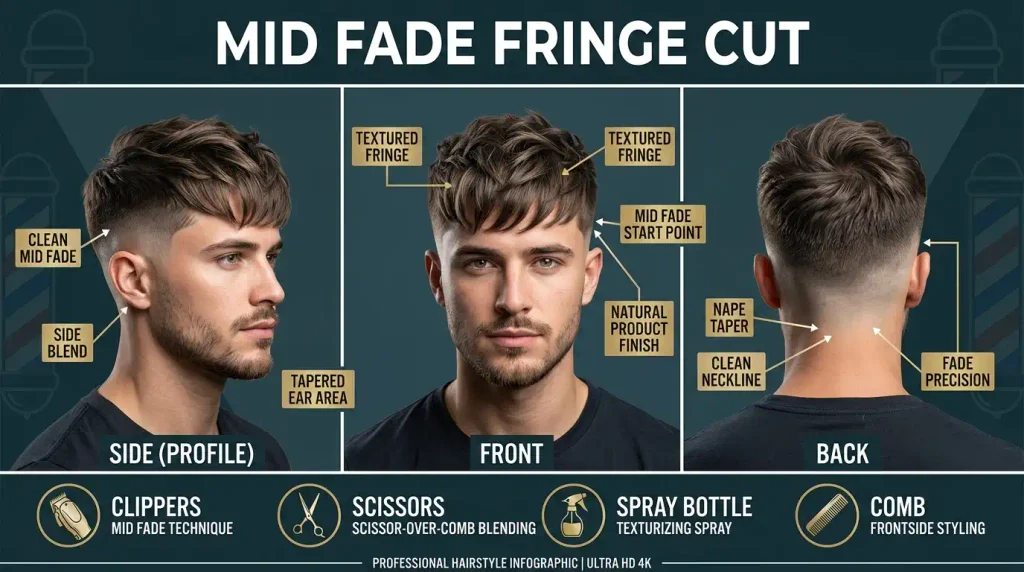
13. Mid Fade Fringe Cut
Allowing natural forward movement, the top hair falls softly across the forehead while the sides are blended from a #0.5 guard at mid-temple level. It balances casual, relaxed texture with crisp perimeter lines.
- Best Face Shape: Angular, Oval, Diamond
- Styling Product: Sea Salt Spray
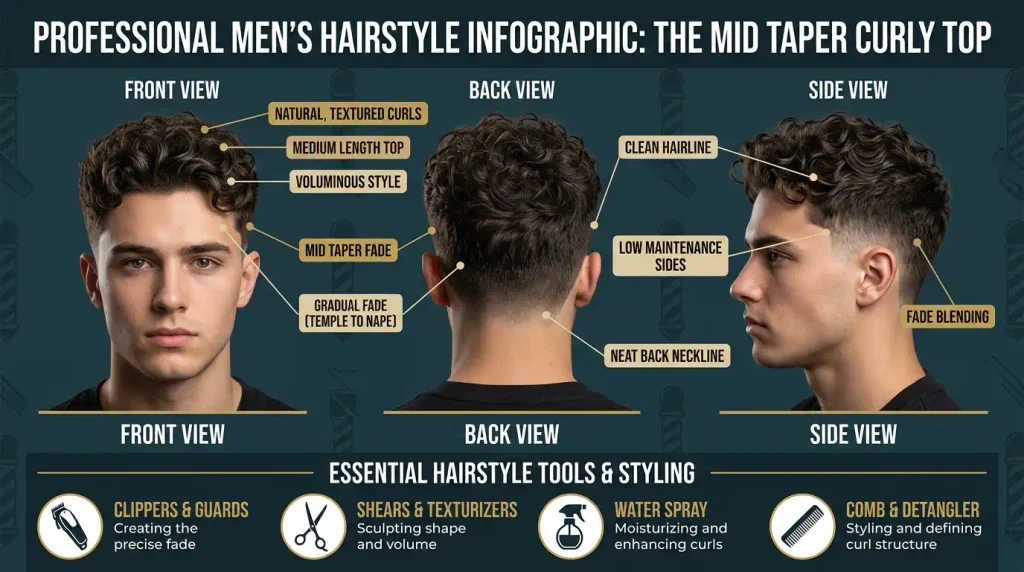
14. Mid Taper Curly Top
Designed specifically for tight coils or natural waves, this style tapers the temple and nape area from a mid-level baseline while leaving generous volume on top. It highlights natural curl pattern without unruly side growth.
- Best Face Shape: Round, Oval
- Styling Product: Leave-In Conditioner / Curl Cream
15. Mid Fade Square Cut Haircut
Featuring a boxy, structured top profile, this haircut uses precise clipper-over-comb work along the parietal ridge to create a square silhouette before tapering down from mid-temple height.
- Best Face Shape: Round, Oval (adds masculine angles)
- Styling Product: Firm Hold Matte Clay
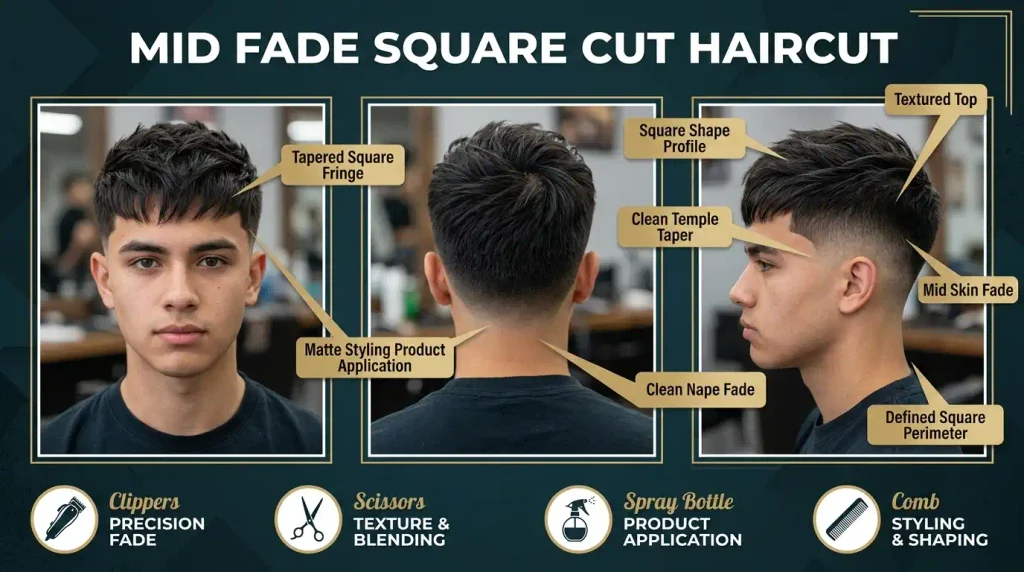
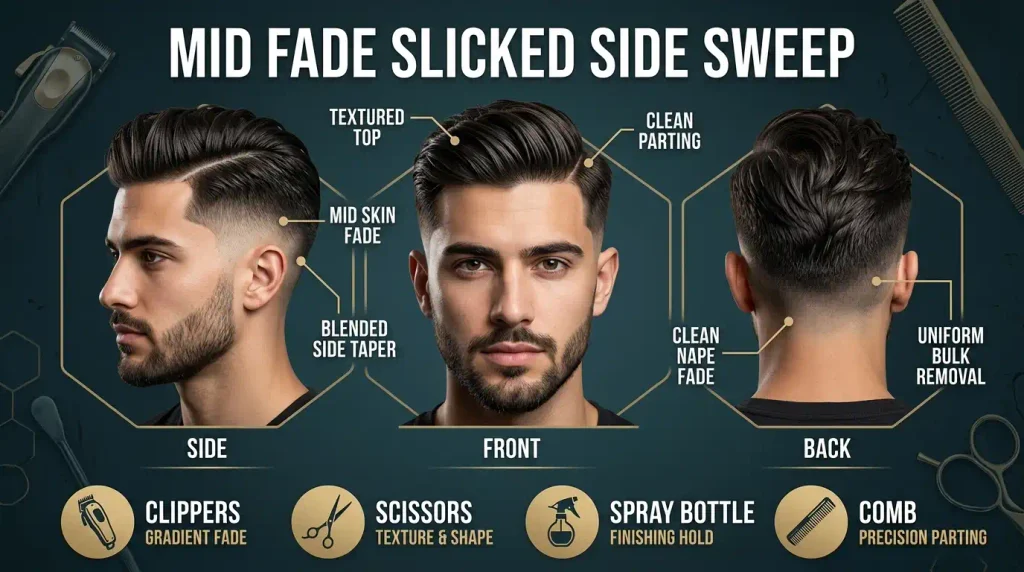
16. Mid Fade Slicked Side Sweep
Hair on top is blown dry and combed diagonally across the scalp. The mid fade keeps the overall shape streamlined, preventing side bulge as top hair grows longer.
- Best Face Shape: Heart, Oval
- Styling Product: Medium-Shine Styling Cream
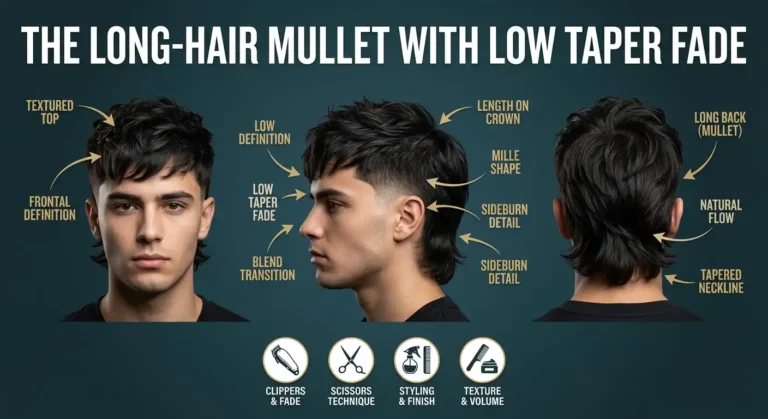
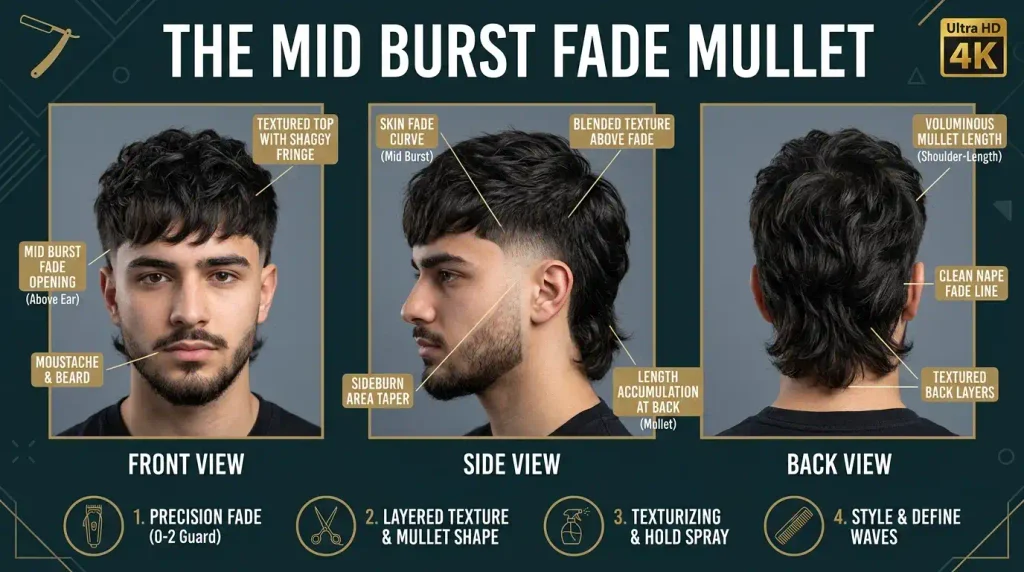
17. Mid Burst Fade Mullet
Blending modern fade techniques with retro shapes, this cut features a curved burst fade at the mid-temple while preserving length through the back and crown.
- Best Face Shape: Diamond, Oval
- Styling Product: Texturizing Sea Salt Spray
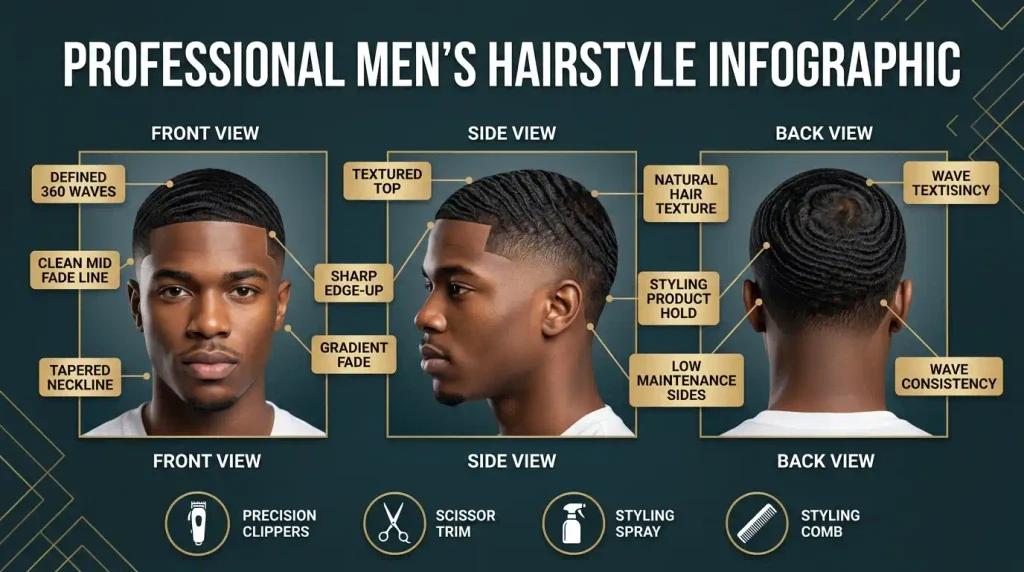
18. Mid Fade Deep Waves
Tailored for 360 or 180 wave patterns, a mid skin gradient offers high-contrast framing around the temples and neck while keeping wave structure fully intact on top.
- Best Face Shape: Oval, Square
- Styling Product: Wave Butter & Pomade
Category 3: High Hair Cut Fade Styles & High-Contrast Cuts
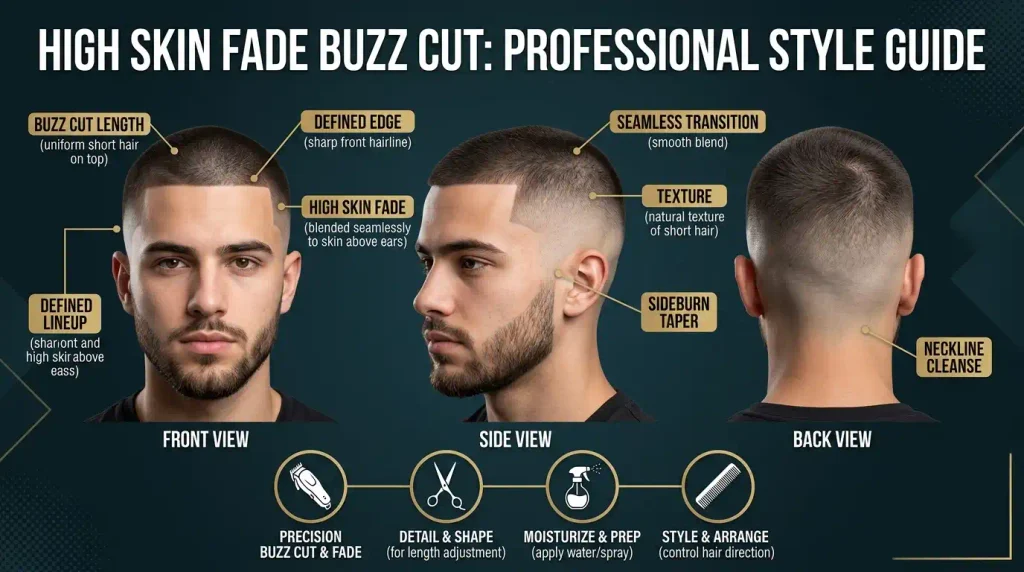
19. High Skin Fade Buzz Cut
An ultra-clean, minimal style featuring a uniform #2 guard on top paired with a high skin fade that reaches near the crown. Ideal for warm climates or athletes seeking maximum convenience.
- Best Face Shape: Chiseled Oval, Square
- Styling Product: Scalp Balm with Sunscreen
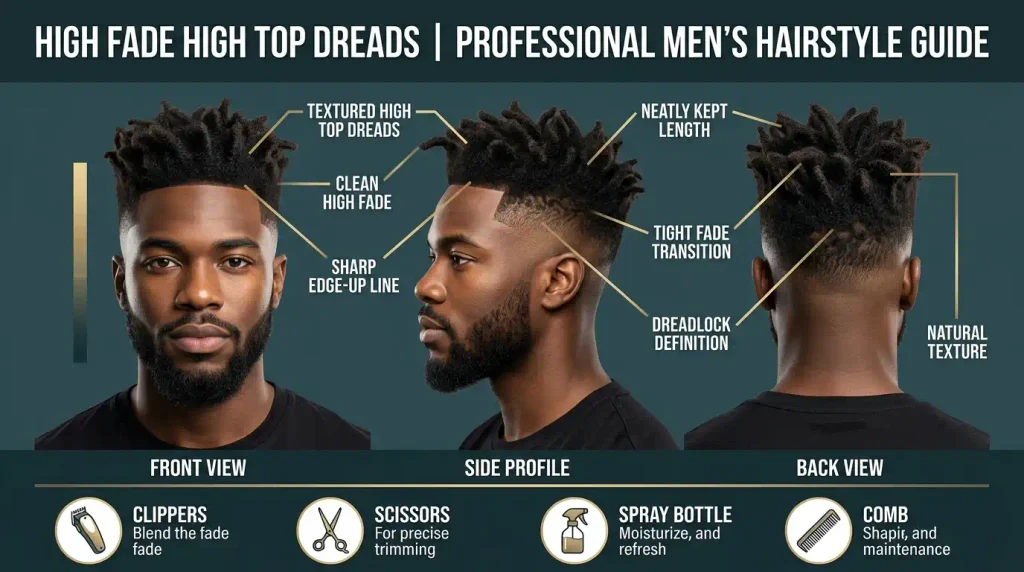
20. High Fade High Top Dreads
Short dreads or twists stacked high on the crown, contrasted by skin-tight sides running up to the upper parietal zone. Guard work transitions rapidly from bare skin to long top hair.
- Best Face Shape: Round, Oval
- Styling Product: Natural Hair Oil / Loc Cream
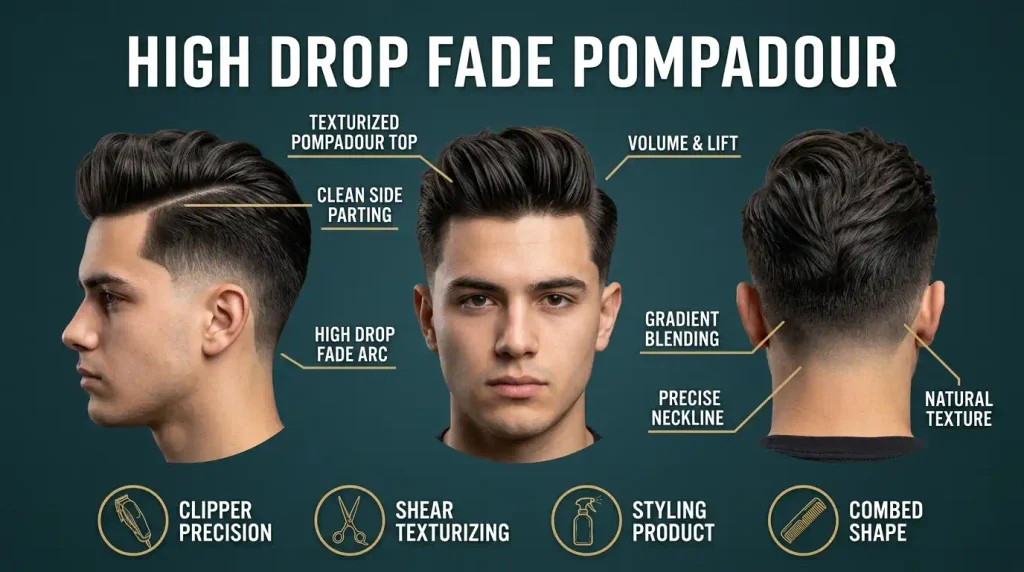
21. High Drop Fade Pompadour
Elevating the traditional pomp, this variation lifts the fade line high at the front temples before swooping down steeply toward the lower nape, creating dramatic architectural angles.
- Best Face Shape: Round, Square
- Styling Product: High-Hold Volumizing Pomade
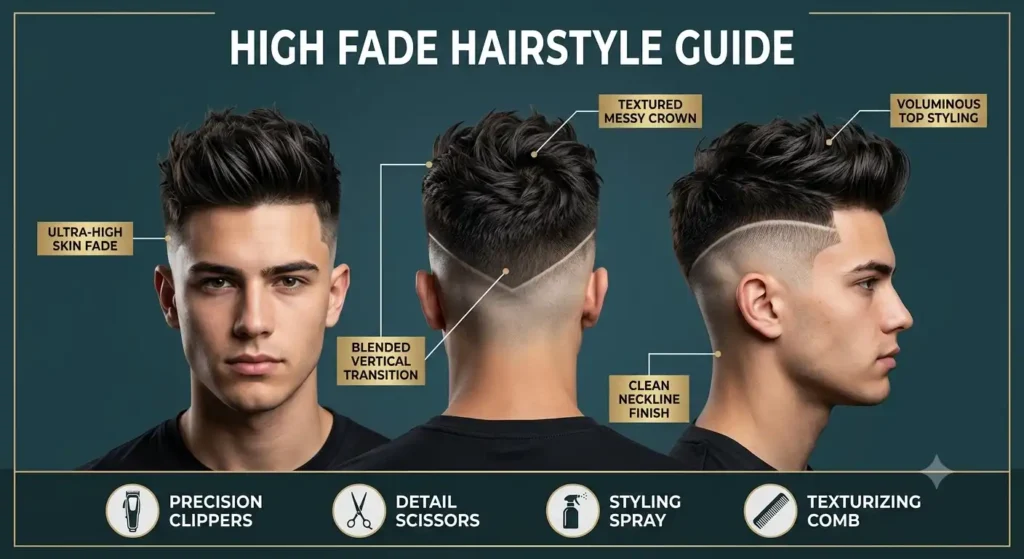
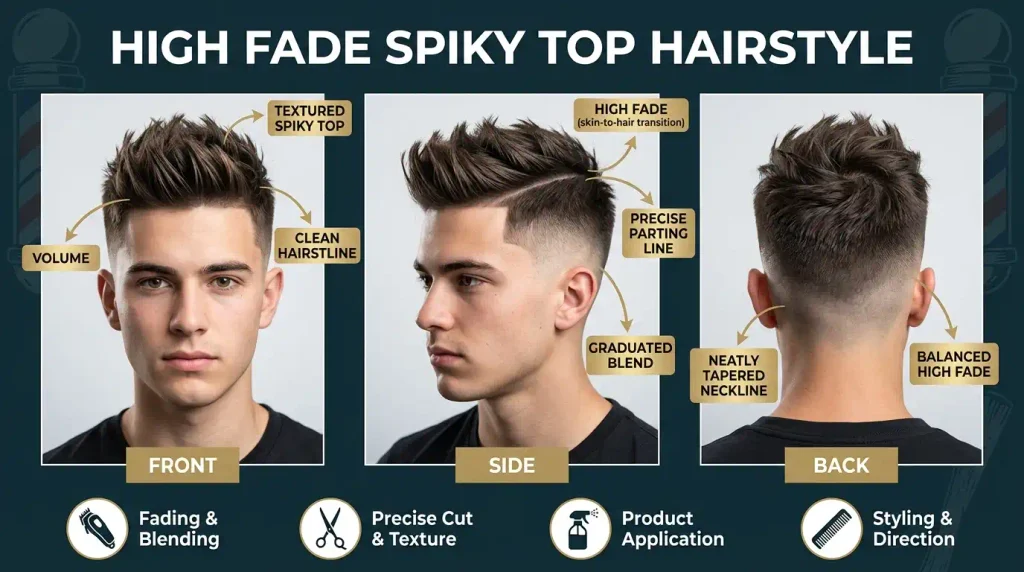
22. High Fade Spiky Top
Short, pieced-out top length (1.5–2 inches) styled straight up, supported by high faded sides starting at #0. The high elevation creates immediate vertical height.
- Best Face Shape: Round, Oval
- Styling Product: Firm Matte Wax
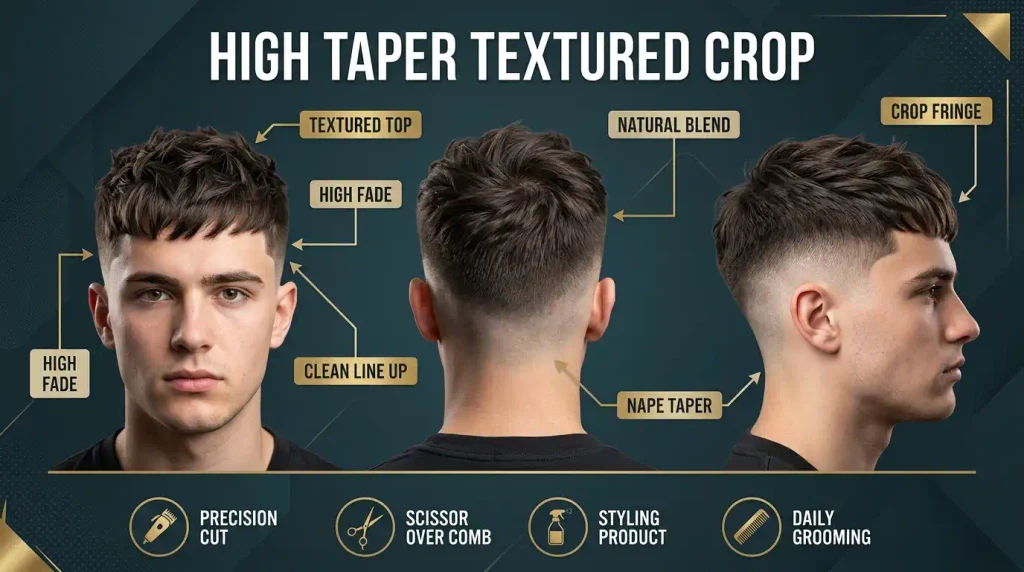
23. High Taper Textured Crop
A heavily texturized top cut with point-cutting scissors, set against high tapered sides that start fading near the upper temples. It creates a bold, edgy silhouette.
- Best Face Shape: Oval, Heart
- Styling Product: Styling Powder
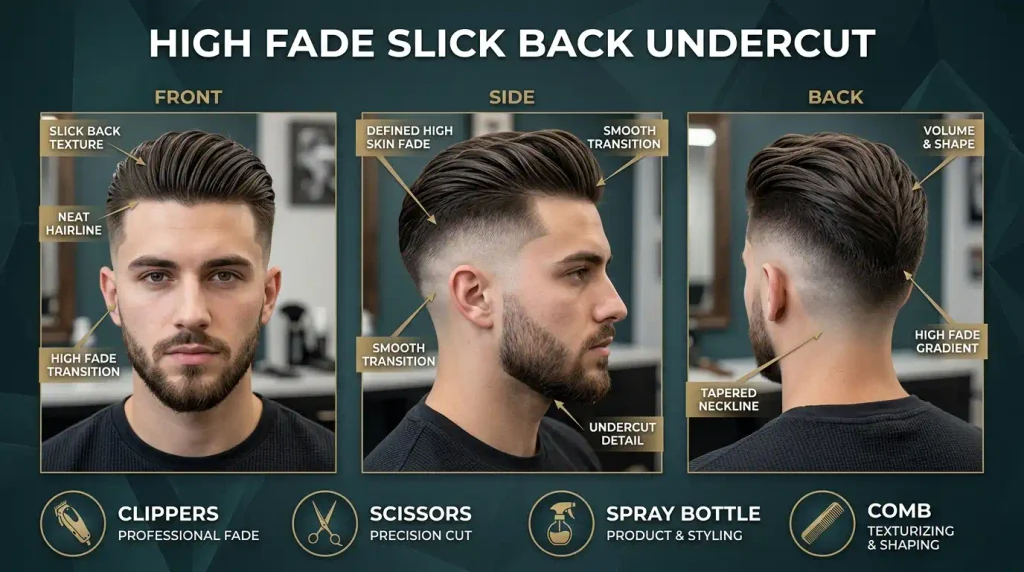
24. High Fade Slick Back Undercut
Disconnected appearance where high faded sides meet long back-swept top hair without soft blending along the ridge line. The dramatic contrast highlights facial structure.
- Best Face Shape: Oval, Square
- Styling Product: Matte Pomade
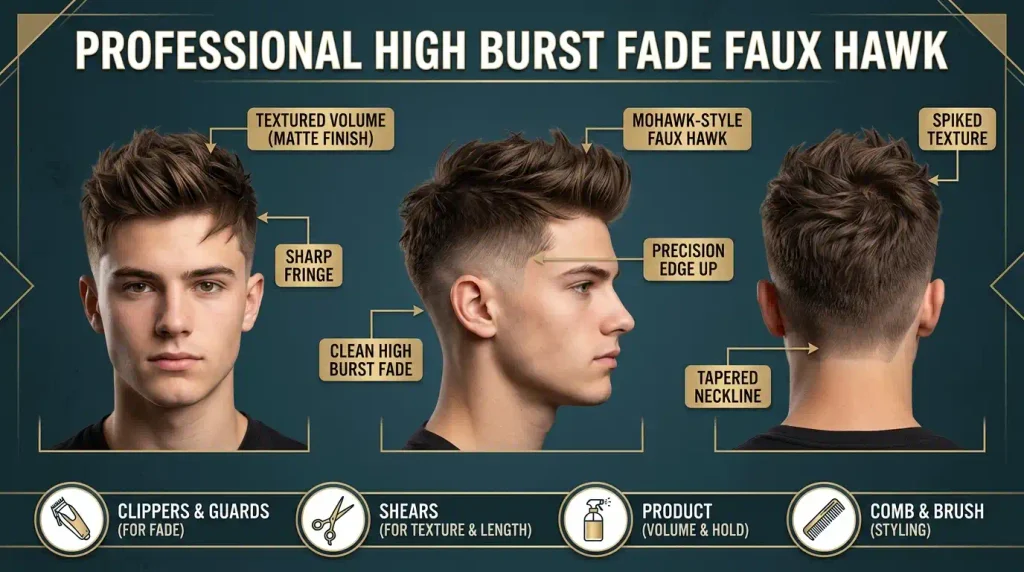
25. High Burst Fade Faux Hawk
Hair along the center line from front to crown is styled inward and upward. High burst fades on both sides create a clean, modern alternative to a traditional mohawk.
- Best Face Shape: Round, Oval
- Styling Product: Strong-Hold Molding Clay
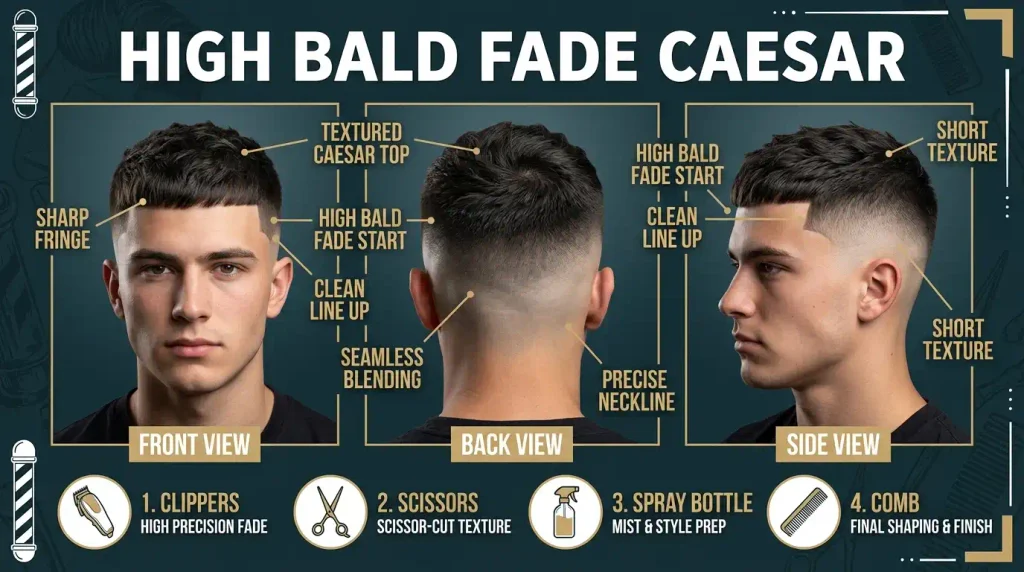
26. High Bald Fade Caesar
A short forward-brushed top with a horizontal fringe, paired with a high bald fade that strips hair down to bare skin high above the ears.
- Best Face Shape: Oval, Angular
- Styling Product: Light Paste
Category 4: Precision Taper Cut & Temple Fade Styles
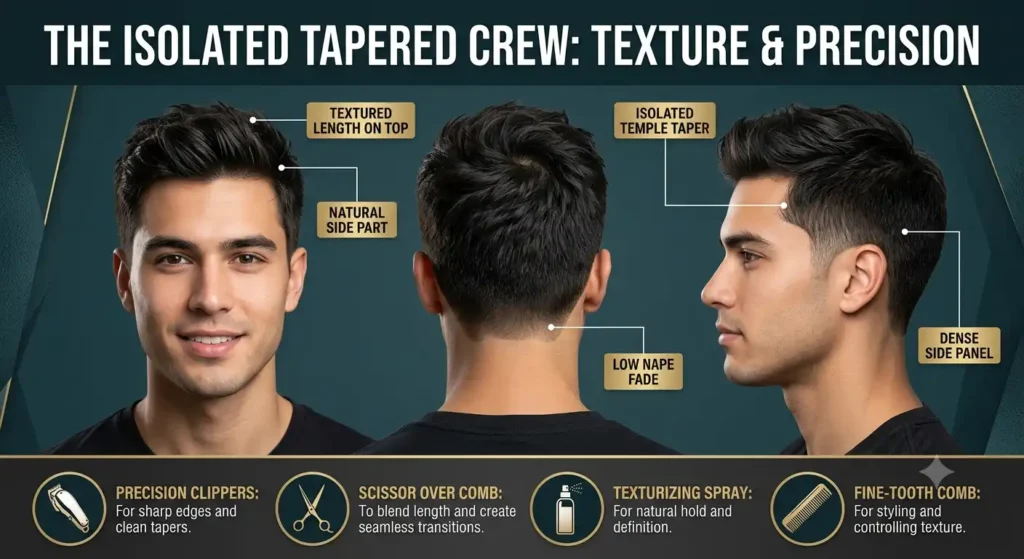
27. Classic Temple Fade (Temp Fade)
Fading hair strictly at the temple points right in front of the ear, this cut keeps the surrounding sides intact at a longer length. It creates a sharp, tailored framing around the face.
- Best Face Shape: Square, Oblong, Oval
- Styling Product: Natural Hair Cream
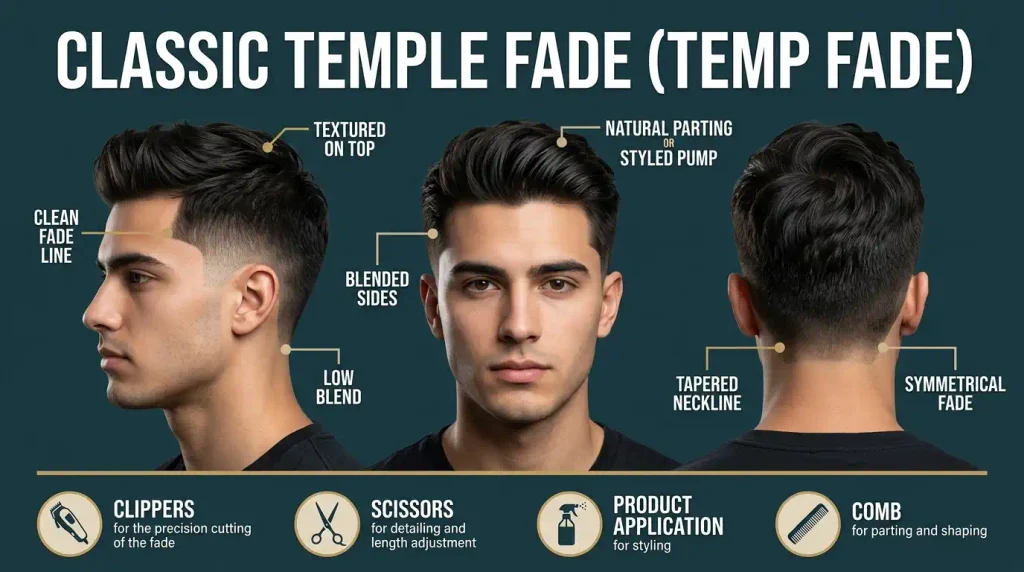
28. Low Taper Cut Blowout
Popularized for its voluminous top and flared crown, hair is blown dry outward while sideburns and nape are tapered down to skin with a fine detail trimmer.
- Best Face Shape: Oval, Diamond
- Styling Product: Volumizing Mousse & Blow Dryer
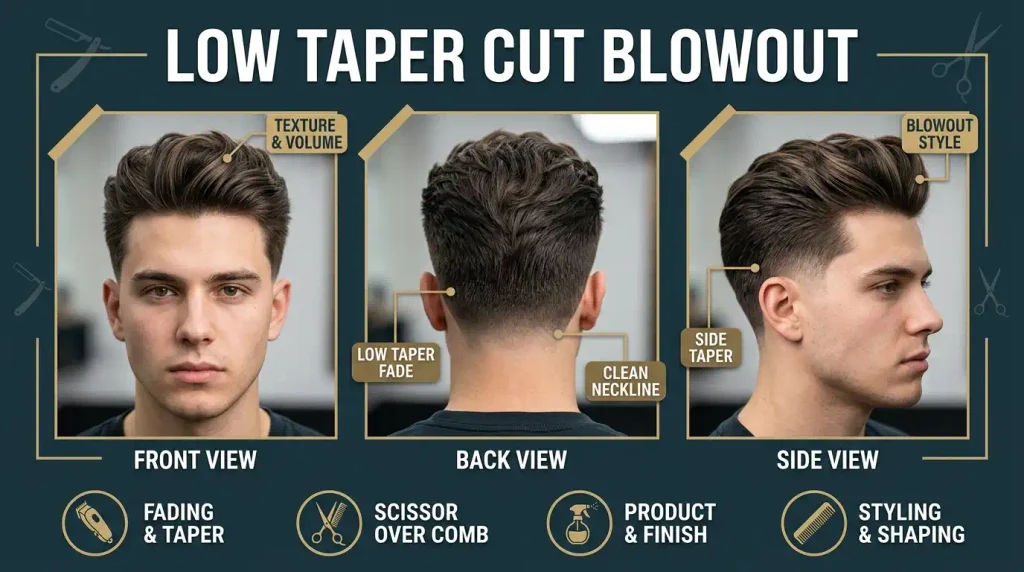
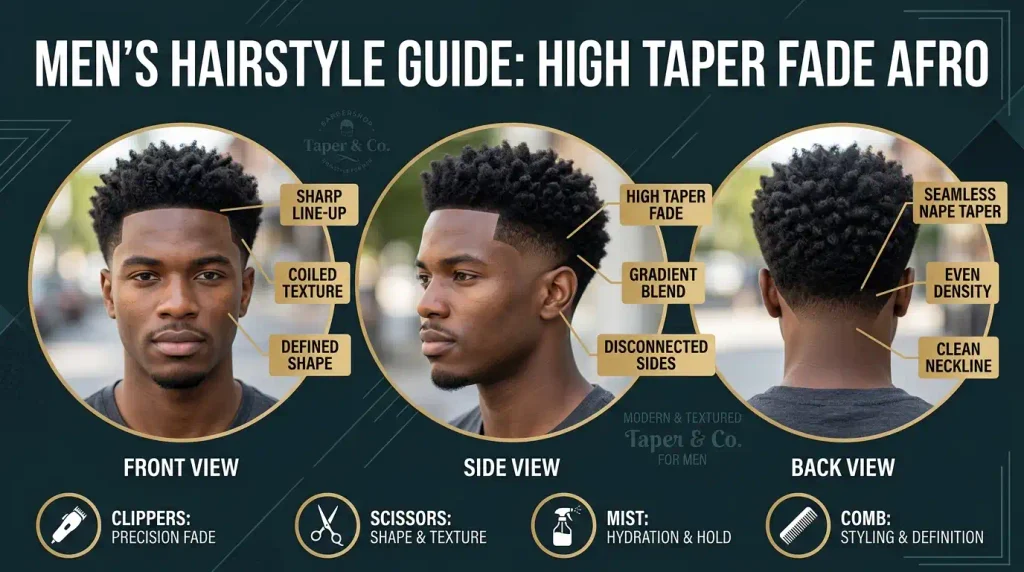
29. High Taper Fade Afro
Emphasizing natural volume, the afro top transitions into high-tapered temples and a high nape taper, maintaining full afro density around the back mid-section.
- Best Face Shape: Oval, Heart
- Styling Product: Shea Butter / Leave-In Moisture
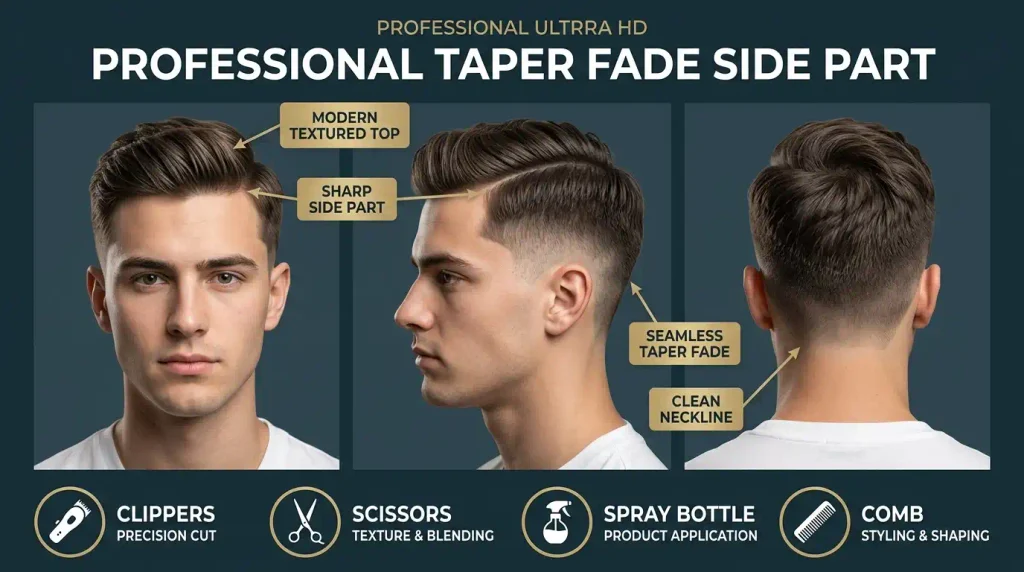
30. Taper Fade Side Part
Combining traditional comb-over elegance with localized temple/nape fading. The sides remain dense enough to display natural hair texture while edges stay razor-sharp.
- Best Face Shape: Professional Oval, Square
- Styling Product: Medium Shine Gel Wax
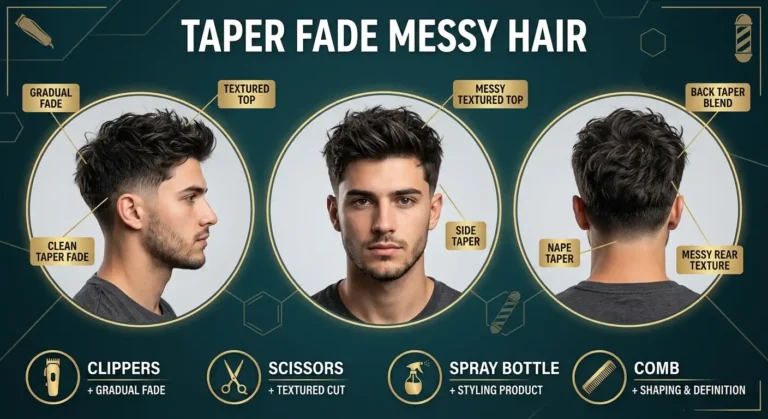
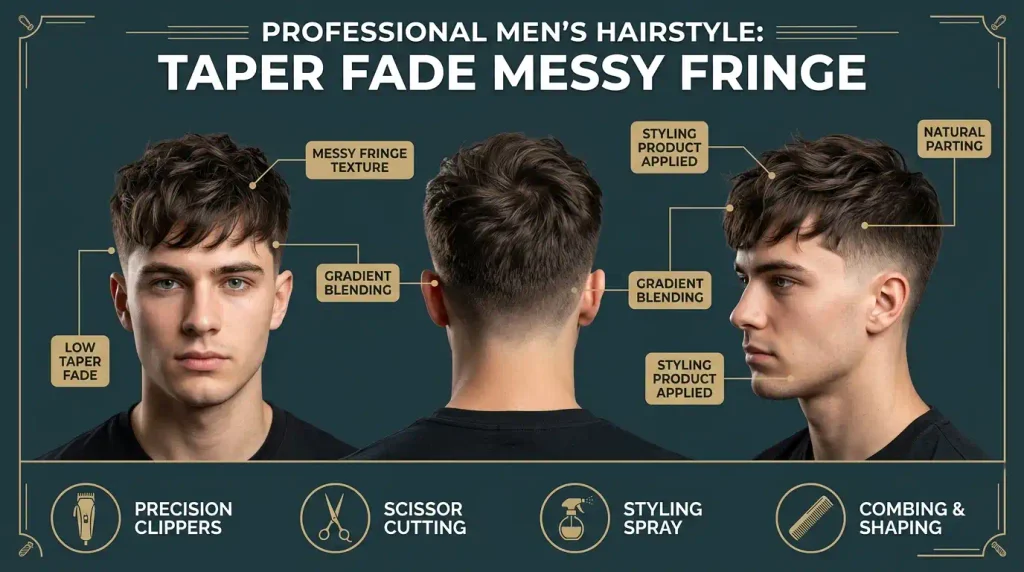
31. Taper Fade Messy Fringe
Allowing tousled top hair to hang naturally over the forehead, this style cleans up perimeter edges using a subtle taper at the sideburns and neck.
- Best Face Shape: Long, Oval, Heart
- Styling Product: Sea Salt Spray + Matte Paste
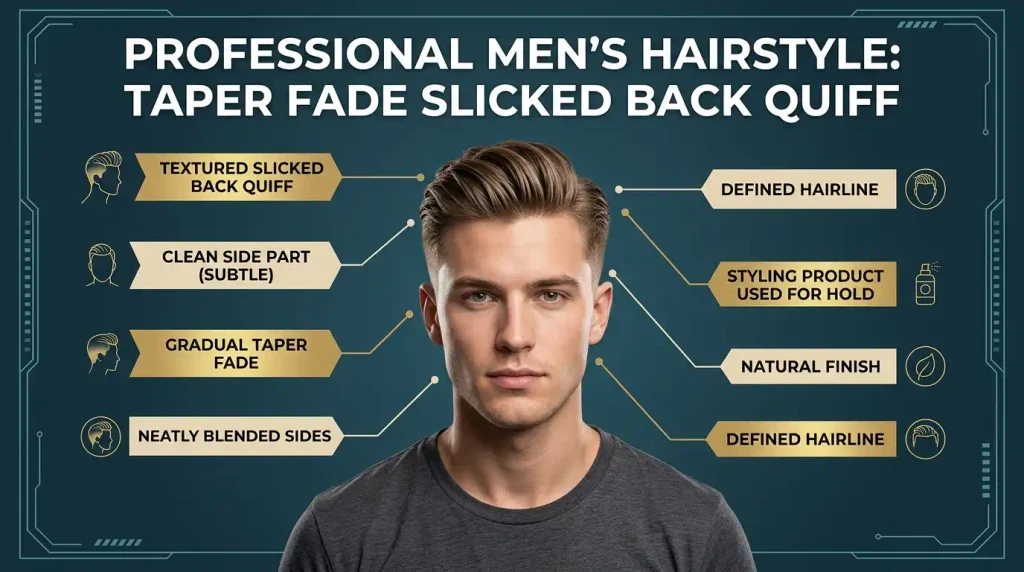
32. Taper Fade Slicked Back Quiff
Sweeping top hair back with high lift while keeping sideburns and nape closely tapered to skin. The main sides retain a #3 or #4 guard length for subtle depth.
- Best Face Shape: Round, Oval
- Styling Product: Clay Pomade
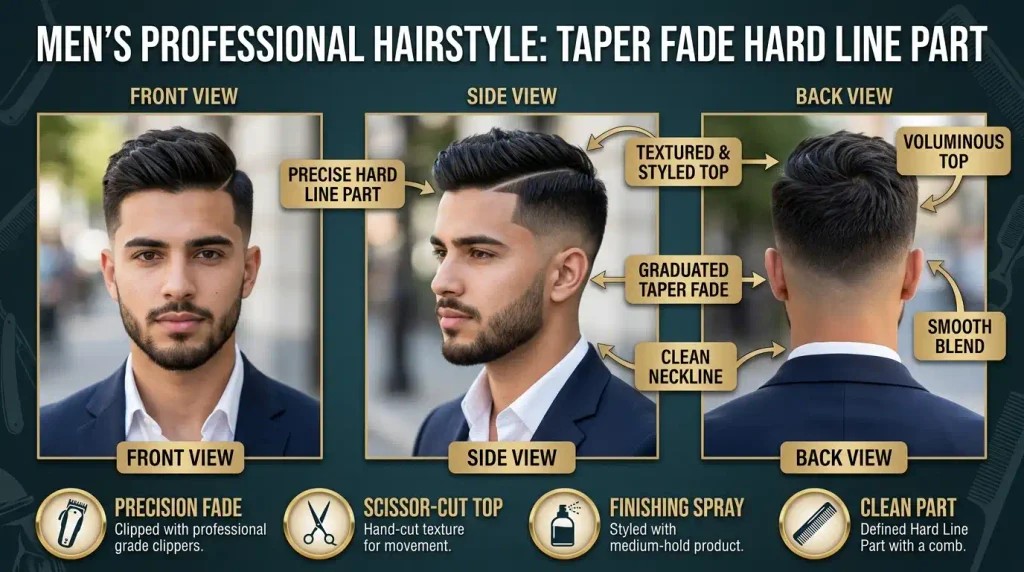
33. Taper Fade Hard Line Part
A sharp line is shaved into the natural parting zone using a razor, complemented by precise temple and nape skin tapers for defined contrast.
- Best Face Shape: Square, Oval
- Styling Product: Firm Hold Water Pomade
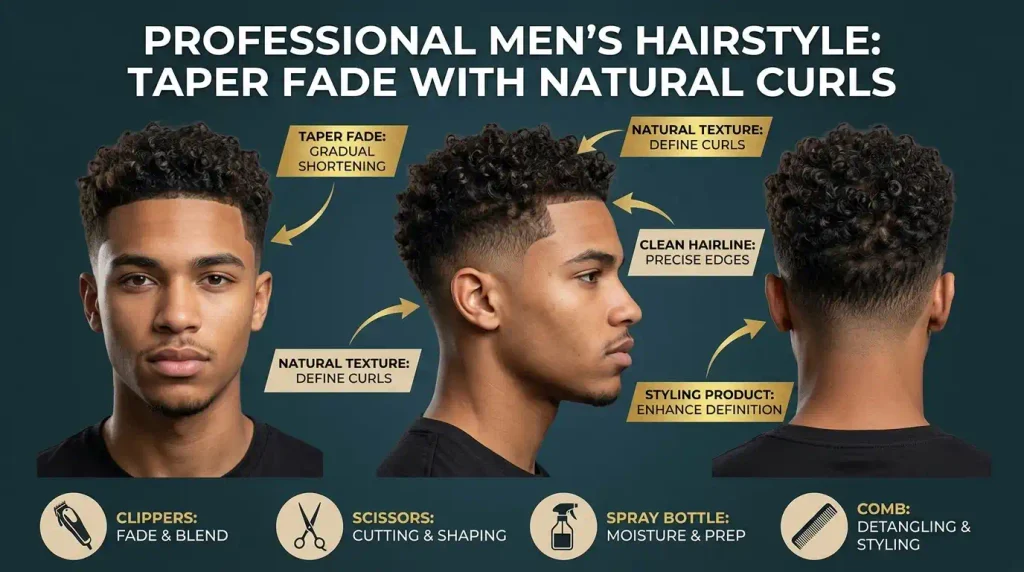
34. Taper Fade Natural Curls
Loose curls are left uninhibited on top and sides, with only the perimeter temple points and bottom hairline tapered down to skin.
- Best Face Shape: Oval, Diamond
- Styling Product: Curl Hydration Gel
Category 5: Dynamic Drop & Barbers Fade Cut Variations
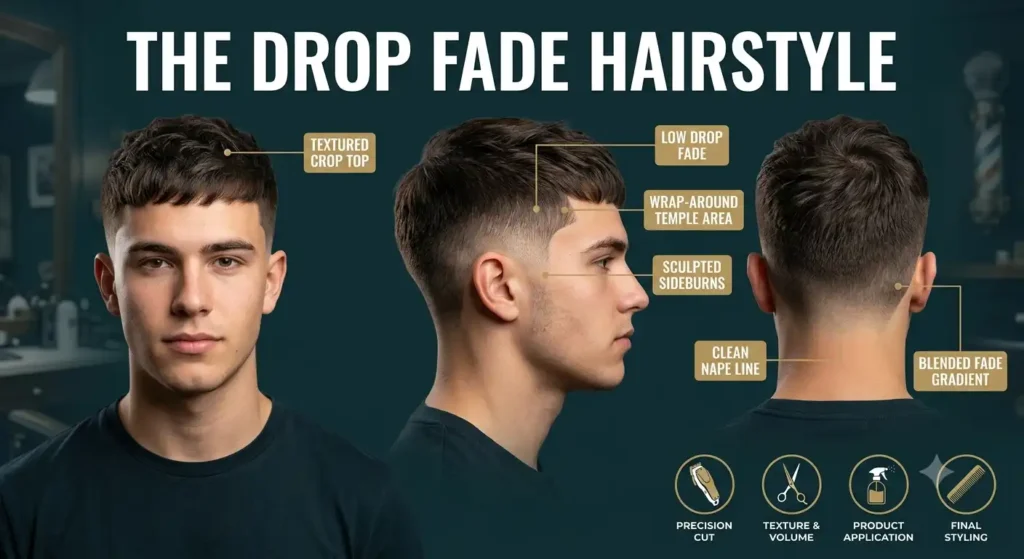
35. Burst Fade Afro Sponge Top
Coiled afro texture defined using a twist sponge on top, paired with a distinct circular burst fade wrapping around both ears.
- Best Face Shape: Oval, Square
- Styling Product: Curl Sponge & Locking Gel
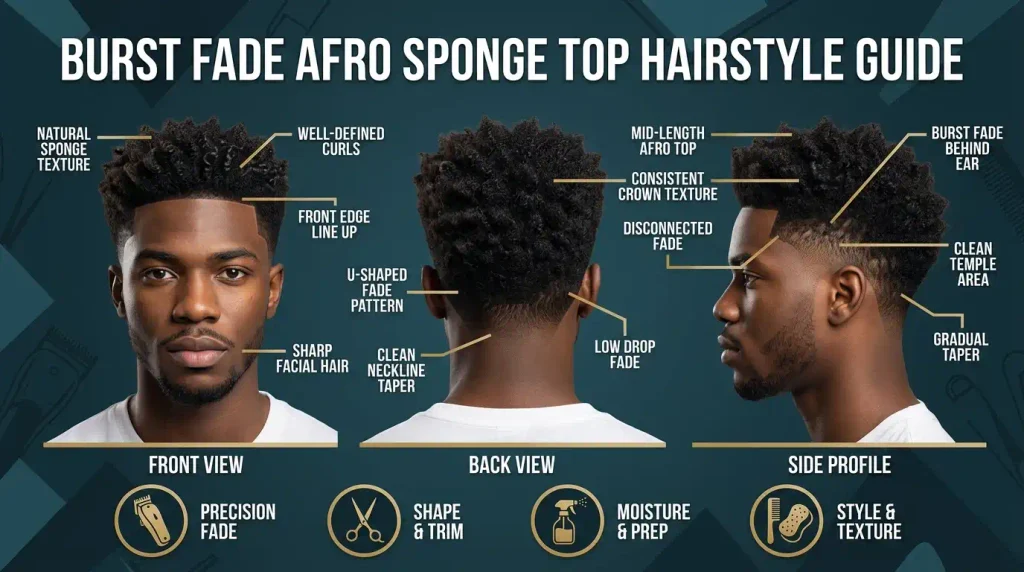
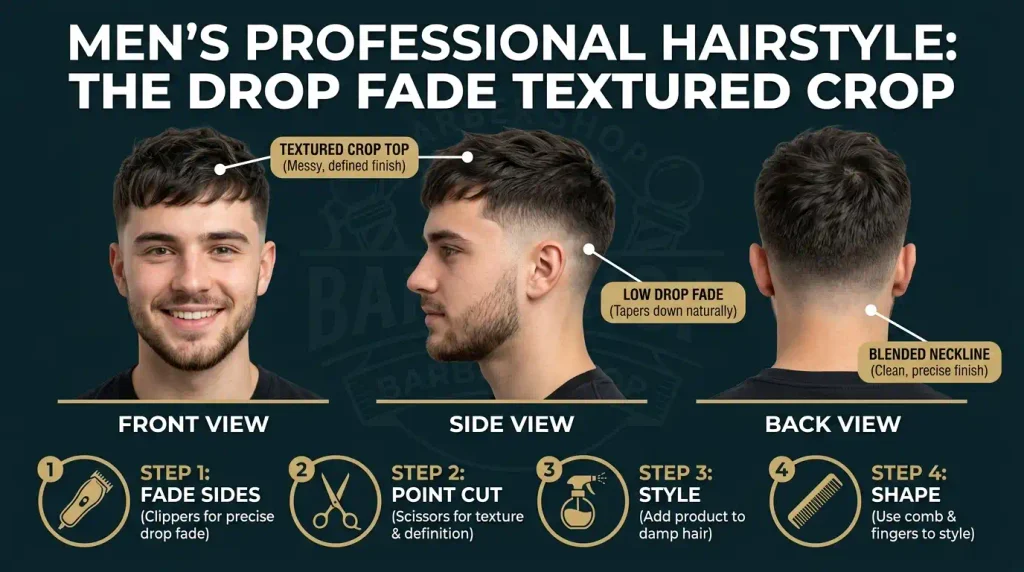
36. Drop Fade Textured Crop
Forward-swept textured top ending in a straight fringe, framed by a fade line that drops low behind the ears to hug the lower occipital bone.
- Best Face Shape: Oval, Round
- Styling Product: Matte Clay
37. Burst Fade Straight Hair Mohawk
Straight hair styled into a central ridge, supported by curved burst fades on both sides that leave maximum length on the nape and crown.
- Best Face Shape: Oval, Round
- Styling Product: Hard Holding Gel / Paste
38. Drop Fade Slicked Back Undercut
Long top hair pulled straight back over a drop fade that dips significantly lower at the rear, preserving a seamless blend along the lower neck line.
- Best Face Shape: Oval, Heart
- Styling Product: Matte Pomade
39. Burst Fade Mullet Modern Mix
Featuring a short crop front, curved burst fades around the ears, and extended length down the neck for a contemporary takes on classic shapes.
- Best Face Shape: Angular, Diamond
- Styling Product: Texturizing Powder
40. Drop Fade Buzz Cut with Line Up
A uniform short buzz paired with a drop fade and crisp edge-up along the front hairline, offering high structure with zero styling hassle.
- Best Face Shape: Oval, Chiseled
- Styling Product: Scalp Oil
41. Burst Fade Curly High Top
Natural high-top volume with circular burst fades clearing hair around the ears down to skin, creating distinct architectural contrast.
- Best Face Shape: Round, Oval
- Styling Product: Moisture Cream
42. Drop Fade Quiff Blend
Brushed-up front hair meeting a smooth drop fade transition that slopes gracefully around the head for a balanced profile from every angle.
- Best Face Shape: Oval, Square
- Styling Product: Volumizing Paste
Category 6: Specialized, Textured & Buzz Variations
43. Square Cut Haircut with Skin Fade
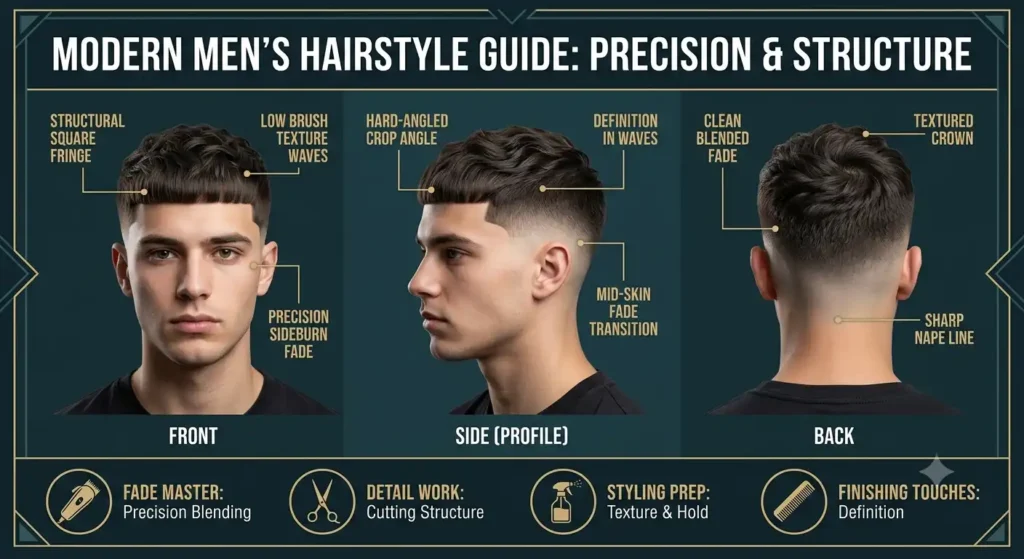
Using clipper-over-comb to square off the upper side panels, this cut eliminates rounded head contours before dropping into a sharp skin fade.
- Best Face Shape: Round, Oval (creates masculine angles)
- Styling Product: High-Hold Matte Clay
44. Low Brush Cut with Temple Taper
Short, uniform brush length across the entire crown (#3 or #4 guard), finished with subtle temple and nape tapers for a clean perimeter.
- Best Face Shape: Oval, Square
- Styling Product: Wave Pomade / Soft Bristle Brush
45. Flat Top High Fade
A classic vertical structure where top hair is cut completely flat horizontally, paired with a high bald fade running directly into the upper ridge.
- Best Face Shape: Round, Square
- Styling Product: Hard Hold Hair Wax / Spray
46. Buzz Cut Mid Bald Fade
An athletic #1 or #2 buzz on top blending down into a mid skin fade. Ideal for low-maintenance daily routines.
- Best Face Shape: Oval, Angular
- Styling Product: Moisturizing Aftershave Balm
47. Afro High Fade with Surgical Part
High afro density on top paired with high-faded sides, accented by a clean razor line etched diagonally across the temple or side transition.
- Best Face Shape: Round, Oval
- Styling Product: Natural Hair Oil
48. Disconnected Fade Crop
A choppy textured top that sits directly over a skin fade without a gradual transition zone, creating a modern, high-contrast look.
- Best Face Shape: Oval, Angular
- Styling Product: Dry Texture Dust
49. Waves Cut Low Skin Fade
Deep 360 wave formation maintained on top, bounded by a low skin fade that cleans up around the ears without disrupting wave patterns.
- Best Face Shape: Oval, Square
- Styling Product: Wave Pomade & Durag Routine
50. Edgar Cut Low Fade
A sharp, blunt front fringe cut straight across the forehead, paired with a low skin fade around the sides and back for high visual impact.
- Best Face Shape: Oval, Long, Angular
- Styling Product: Matte Pomade
Fade Comparison Matrix
| Fade Style | Elevation Baseline | Guard Range | Best For | Maintenance |
|---|---|---|---|---|
| Low Fade | ~1 Inch above ear | #0 (or Foil Shaver) to #2 | Conservative / Business | 2–3 Weeks |
| Mid Fade | Temple level | #0 to #3 | Maximum Versatility | 2–3 Weeks |
| High Fade | 2–3 Inches above ear | #0 to #4 | Bold Contrast & Height | 1–2 Weeks |
| Taper Fade | Temples & Nape only | #0 to #3 | Subtle Perimeter Polish | 2–4 Weeks |
| Drop Fade | Slopes down at nape | #0 to #3 | Skull Shape Alignment | 2–3 Weeks |
| Burst Fade | Circle around ear | #0 to #2 | Curly & Mohawk Combos | 2–3 Weeks |
Who It Suits: Hair Types, Textures & Lifestyles
Fades adapt seamlessly across every hair profile when chosen correctly:
- Straight Hair: Thrives with textured crops, quiffs, and comb-overs. Requires texturizing products (clays, sea salt spray) to avoid flat appearance.
- Wavy Hair: Excellent for mid drop fades and low tapers. Natural movement adds soft contrast against skin-tight sides.
- Curly & Coiled Hair: Ideal for burst fades, temp tapers, and high tops. Fading eliminates unmanageable bulk on the sides while highlighting volume on top.
- Fine or Thinning Hair: High skin fades reduce contrast between sparse areas and dense sides, making top hair appear thicker.
Step-by-Step Tutorial: How Barbers Cut a Precision Fade
Understanding the technical process behind a fade helps you communicate better with your barber:
Essential Professional Tools
- Adjustable Clipper (e.g., Wahl Magic Clip, BaBylissPRO FX)
- Foil Shaver or Straight Razor (for skin baldness)
- Guard Attachments (#0.5 through #4)
- Detail Trimmer (for sharp line-ups)
- Barber Comb (for clipper-over-comb blending)
The Barbering Process
- Establishing the Guideline: The barber uses a trimmer or open clipper to set the lowest line where the fade begins.
- Debulking the Upper Sides: Using a higher guard (#3 or #4), the upper bulk is removed up to the parietal ridge.
- Blending Bottom-Up: Moving from closed lever (#0) to open lever (#0.5), and then through guards #1, #1.5, and #2, the barber uses a “flick-out” wrist motion to blend each section into the one above it.
- Clipper-Over-Comb Transition: Softens the boundary between the faded sides and top length.
- Line-Up & Detail Work: Trimmers crisp up sideburns, temple points, and necklines, finished with a foil shaver along the bottom for skin smoothness.
Styling Products Chemistry & Selection Guide
Selecting the correct product depends entirely on your desired finish and top hair texture:
- Matte Texture Clay (Bentonite / Kaolin Clay): Adds structure, gritty grip, and zero shine. Best for French crops, messy quiffs, and textured forward fringes.
- Sea Salt Spray: Pre-styling spray that adds volume and light grip when blow-dried into damp hair. Great for straight or fine textures.
- Curl Enhancing Cream: Hydrates coiled hair, reducing frizz while defining individual curl groups.
- Water-Based Pomade: Provides high shine and slick control without greasy buildup. Easily washes out with water. Perfect for slick backs and traditional side parts.
- Styling Powder (Silica Silylate): Absorbs oil and provides instant root lift with a dry, weightless finish. Best for high-contrast crops and spiky cuts.
Step-by-Step Upkeep & Maintenance Guide
Keep your cut looking sharp between shop visits with this routine:
- Schedule Regular Trims: Plan visits every 2 weeks for high skin fades, or 3 weeks for subtle tapers.
- Cleanse & Hydrate: Wash hair 2–3 times per week with a sulfate-free shampoo. Daily washing strips natural oils, drying out scalp skin exposed by the fade.
- Maintain Necklines: Use a detail trimmer at home to clean lower neck stubble between barber visits, sticking strictly below your natural blend line.
- Scalp Protection: Apply a light, non-greasy moisturizer or SPF balm to exposed scalp areas during summer months.
Common Mistakes to Avoid
- Choosing the Wrong Fade Height for Your Head Shape: High fades elongate round faces positively, but can make long or oblong faces look overly narrow.
- Neglecting Top-to-Side Proportions: Taking the fade too high on thin top hair exposes scalp, making top hair appear sparse.
- Using Heavy Grease on Thin Hair: Heavy waxes or traditional oil pomades weigh down top hair, flattening texture.
- Fading Too High on a Receding Hairline: A high skin fade right at the temple can highlight temple recession—opt for a low taper or mid fade instead.
Frequently Asked Questions
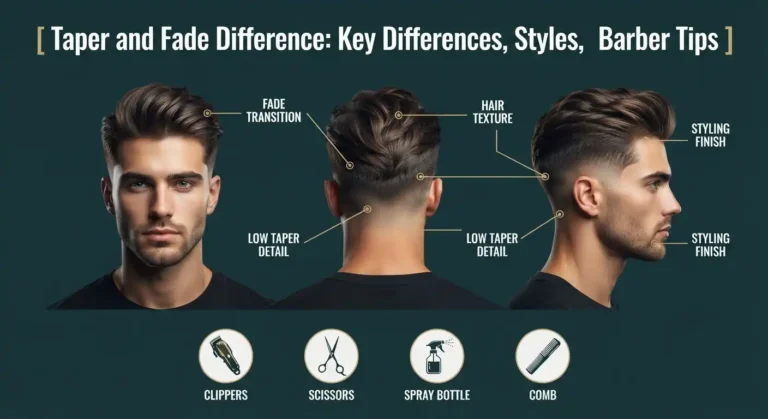
1. What is the difference between a fade cut and a taper cut?
A fade blends hair all the way down to the skin around the entire circumference of the head. A taper cut gradually shortens hair but usually leaves a natural hairline intact, fading only at localized points like the sideburns and nape.
2. How long does a low skin fade last before needing a touch-up?
A skin fade looks freshest during the first 7–10 days. By week 2 or 3, stubble growth blends the skin area back into hair, requiring a barber visit to restore maximum sharpness.
3. Which style entry from your list works best for thin or fine hair?
Style #1 (Low Skin Fade Crop) and Style #23 (High Taper Textured Crop) work exceptionally well. Texturizing the top with matte clay creates fuller density while short faded sides draw visual focus away from sparse top areas.
4. What guard size starts a skin fade?
A skin fade starts with a #0 guard (clipper lever closed), a detail trimmer, or a zero-gap foil shaver to remove hair down to bare scalp level.
5. Can I combine a square cut haircut with a fade?
Yes, as seen in Style #45 and Style #15, barbers use clipper-over-comb techniques to build a square outer silhouette on top while running a skin fade along the lower sides.
6. Is a drop fade suitable for round face shapes?
Yes. As outlined in Style #11 and Style #36, the downward arc of a drop fade elongates the profile from the back, adding balanced angles to round facial features.
Conclusion
The barber cut fade remains an enduring classic because it provides limitless versatility across hair textures, face shapes, and personal preferences. Whether you choose a conservative low taper or a high-contrast skin fade, clear communication with your barber using guard specifics and proper styling products ensures a sharp finish every time.
To explore complementary grooming techniques, check out our companion guide on fade hairstyles.
Name: Ryan Cole
Role: Lead Grooming Editor, TaperHaircutGuide.com
Bio angle: Men’s grooming/style content researcher — 4+ years covering barbering trends, hairstyling terminology, and men’s style content for US audience. Cross-checks every guide with practicing barbers before publishing.