65 Taper Back Head Designs for Men: Ultimate Haircut Design Guide

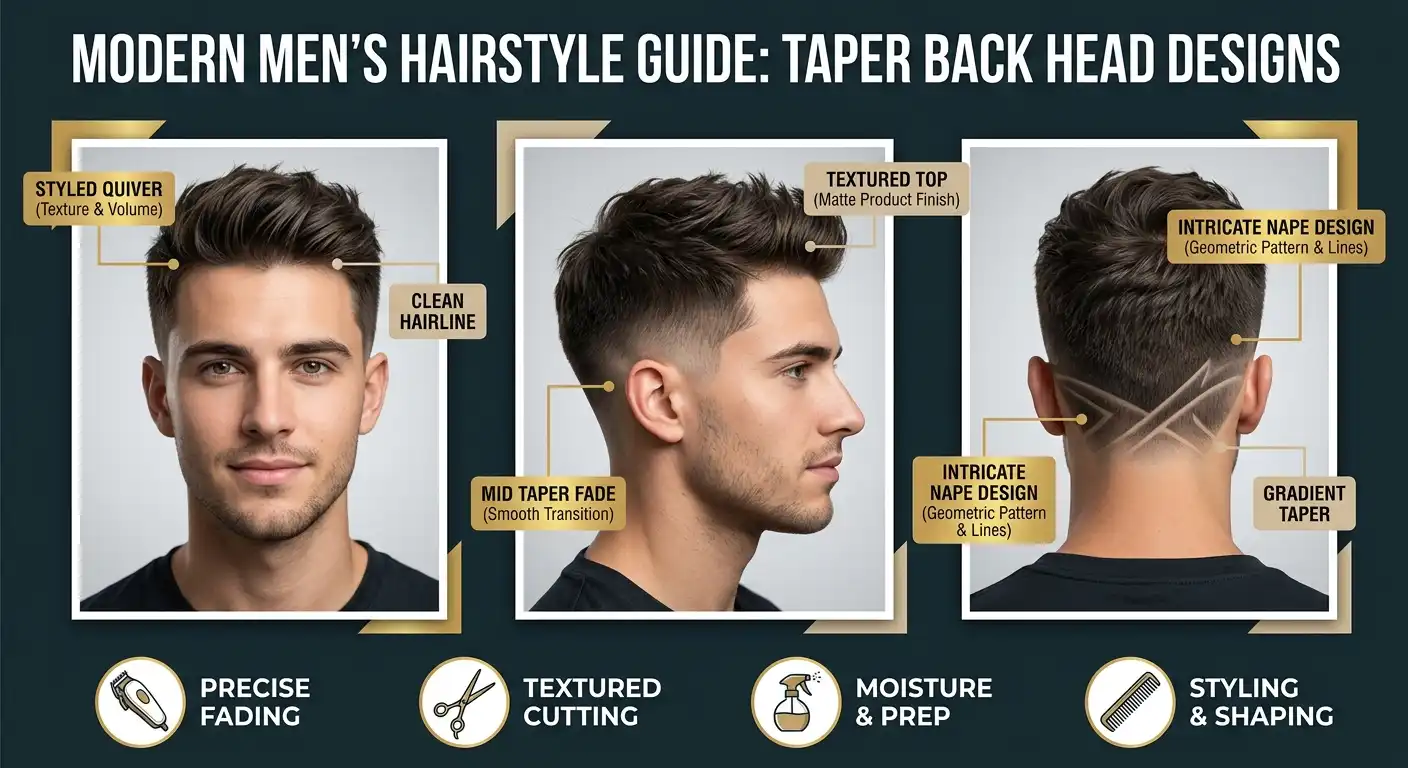
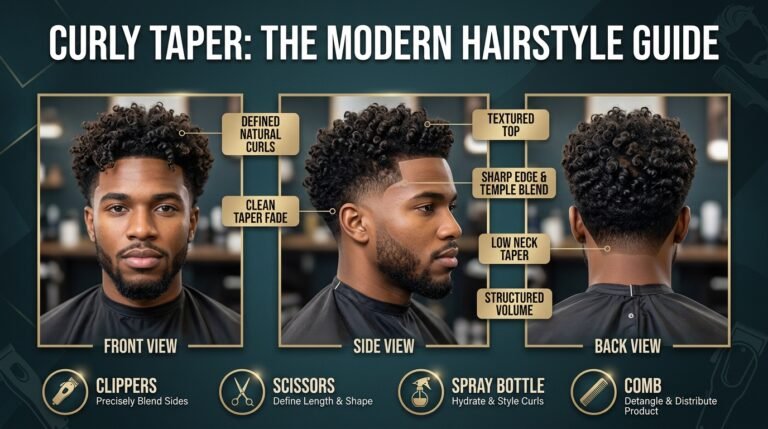
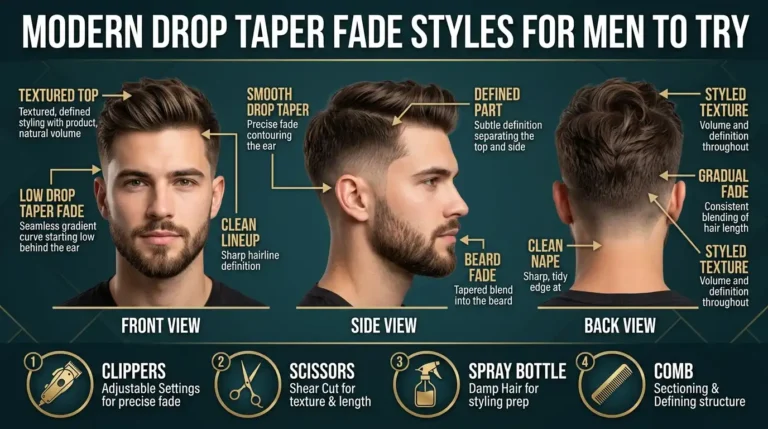
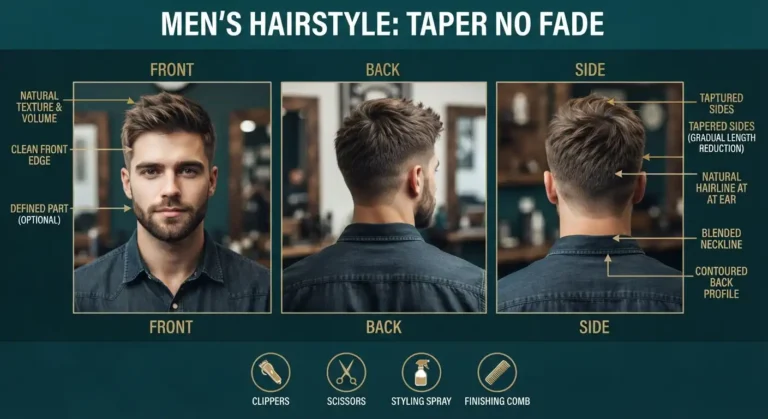
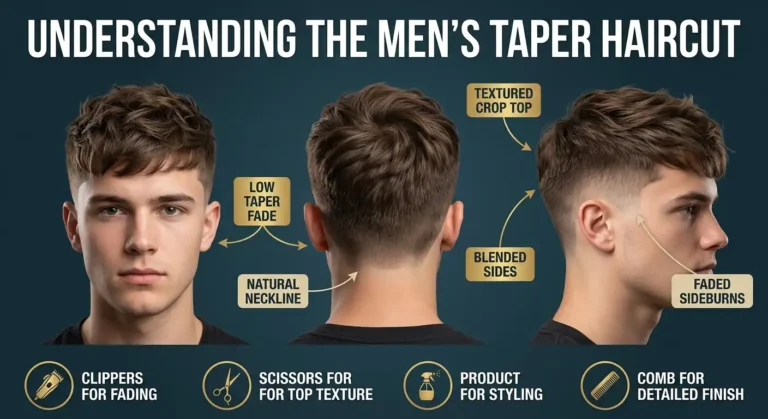
Taper back head designs adds clean carved detail to the tapered area around the nape. You can choose a simple line, geometric shape, curve, symbol, or freestyle pattern. The right choice depends on your hair texture, face shape, top length, taper height, and how bold you want the finished haircut to look.
If you want a design that looks sharp from behind without changing your whole haircut, the ideas below give you plenty of options to show your barber.
65 Taper Back Head Designs Ideas
1. Single Nape Line
A single clean line across the lower nape is one of the easiest ways to add detail without making the haircut look busy. It works with straight, wavy, curly, and coily hair because the design stays simple. Oval and square faces can carry the look naturally. Keep the top textured or neatly brushed so the line remains the main detail. Ask your barber to follow the natural curve of your head instead of forcing the line perfectly straight.
Best for: First-time designs, all hair types
Styling: Matte paste or natural cream

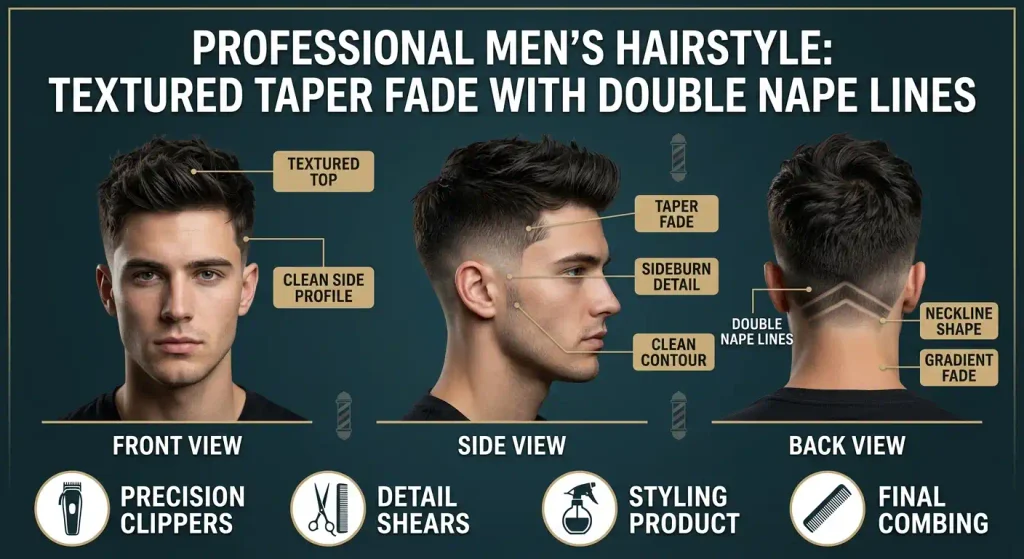
2. Double Nape Lines
Two parallel lines create more definition while keeping the overall haircut clean. The lines can sit close together or have a little more space between them. Straight and wavy hair make the spacing easy to see, while thick hair creates stronger contrast around the pattern. This option suits men who want something noticeable from behind without choosing a large geometric shape.
Best for: Straight, wavy, thick hair
Styling: Light clay with natural texture
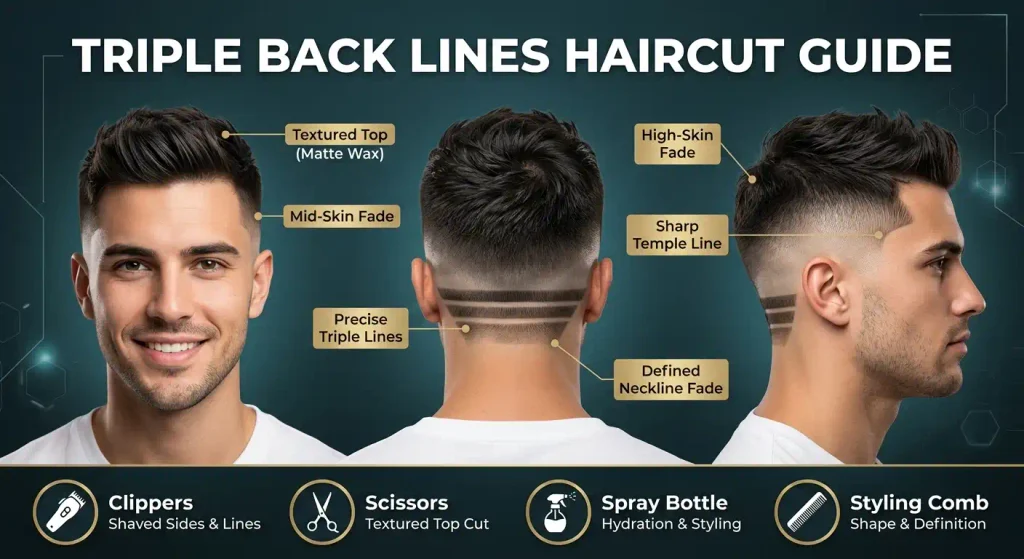
3. Triple Back Lines
Three narrow lines add a sporty, structured feel to a low taper. Keep them short enough to stay inside the tapered area rather than cutting deeply into the fuller hair above it. This design pairs well with a crop, crew cut, buzz cut, or textured top. Because the pattern contains several lines, spacing matters more than complexity.
Best for: Short and medium-length tops
Styling: Matte clay
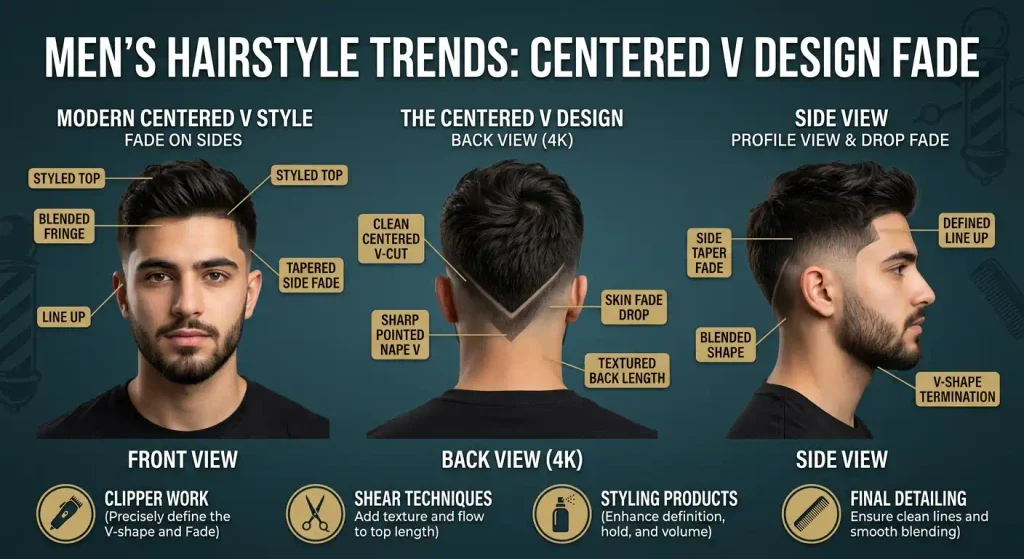
4. Centered V Design
A V shape naturally draws attention toward the center of the nape. It can work particularly well when the neckline already has a soft V shape. Men with round or broader face shapes may like the directional effect, while oval faces can wear it easily. Keep the V symmetrical and avoid making the point too deep into the neckline.
Best for: Straight, thick, wavy hair
Styling: Natural finish
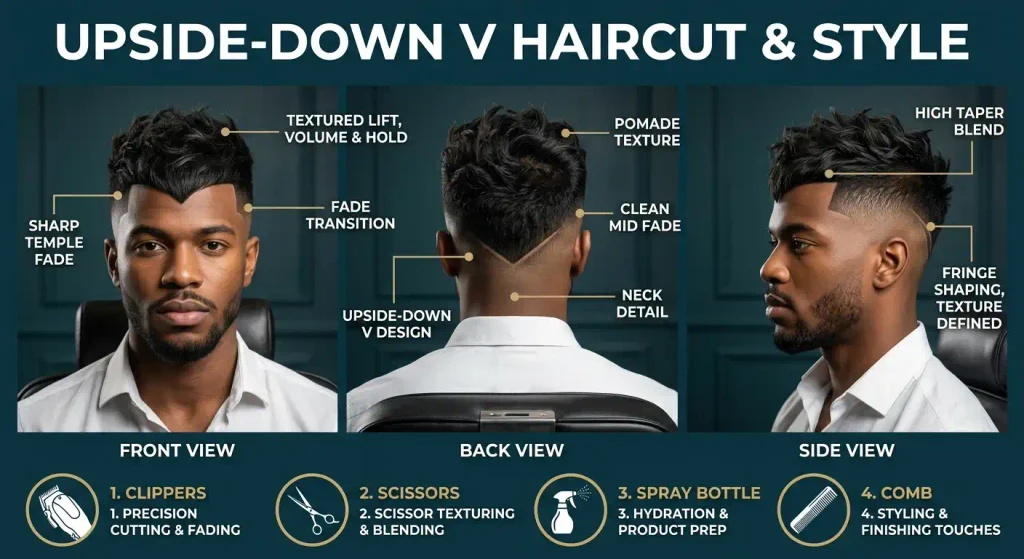
5. Upside-Down V
An inverted V gives the back of the haircut a wider visual shape. The two diagonal lines can be short and subtle or extended slightly into the taper. It works nicely with a clean low taper back design because the pattern follows the shape of the haircut instead of fighting it. A simple top keeps the overall look balanced.
Best for: Oval, square, diamond faces
Styling: Matte paste
6. Back Zigzag
A sharp zigzag creates instant movement at the nape. Each angle should be clean and evenly spaced so the design does not look uneven as it grows out. Thick, dark hair often gives strong contrast around the carved area. Pair it with a textured crop or short fringe when you want the back detail to feel like part of the entire haircut.
Best for: Thick, dark hair
Styling: Textured matte finish
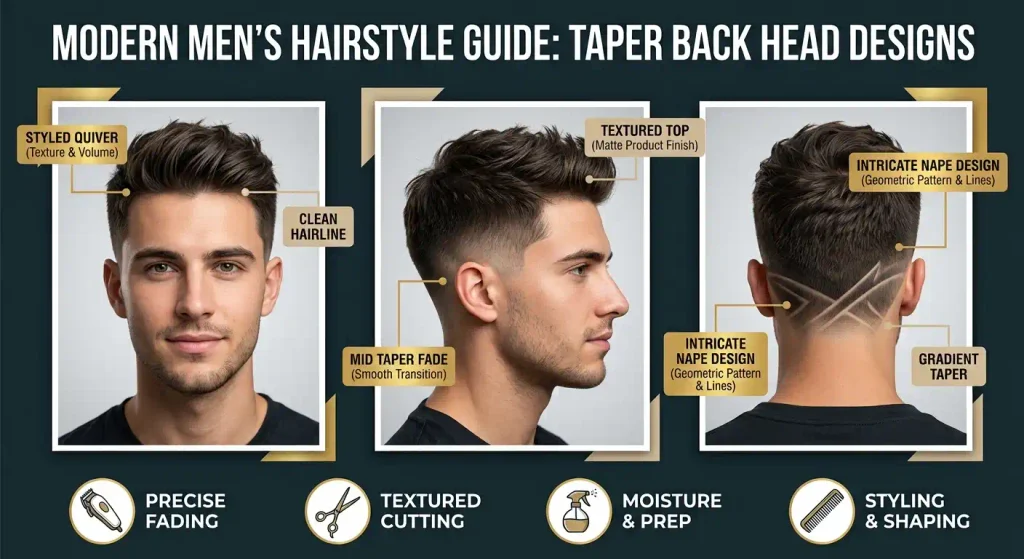
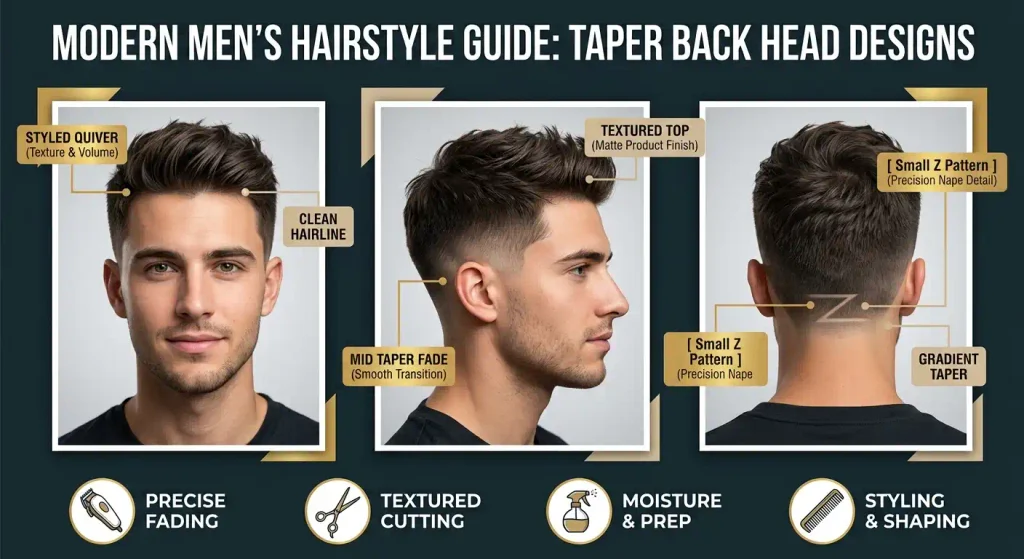
7. Small Z Pattern
Instead of a wide zigzag, a small Z keeps the design compact. Place it in the center of the nape and leave enough surrounding hair for contrast. This works well for teenagers, students, and men who want a design that is visible but not oversized. The top can remain natural, messy, or lightly styled.
Best for: First-timers and younger men
Styling: Light styling cream
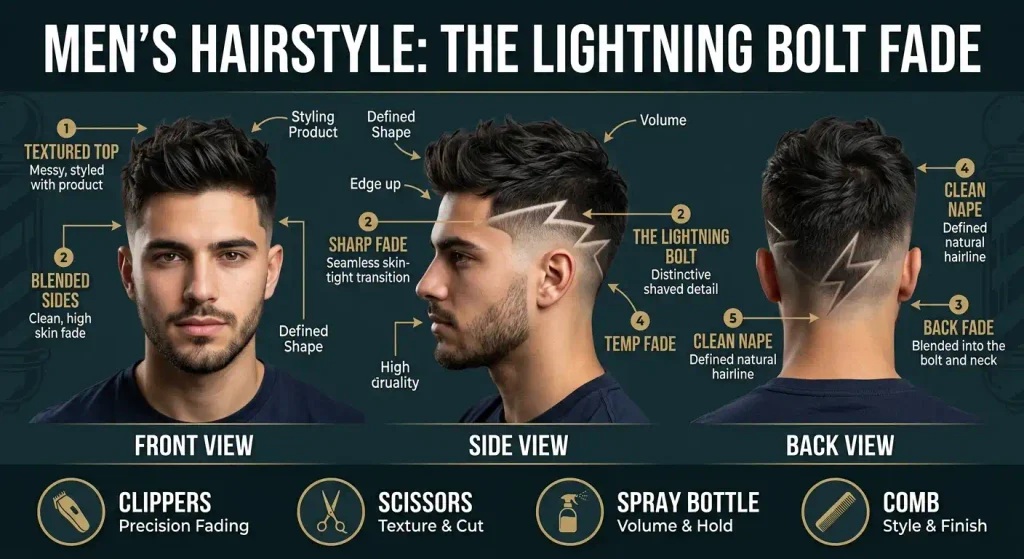
8. Lightning Bolt
A lightning bolt gives the taper a stronger street-style feel. The angled sections need clean corners, so a reference photo is helpful. Keep the bolt centered if you want a balanced look, or place it slightly to one side for a more artistic finish. Thick hair generally provides a clear background for the design.
Best for: Thick, dark, curly hair
Styling: Matte clay
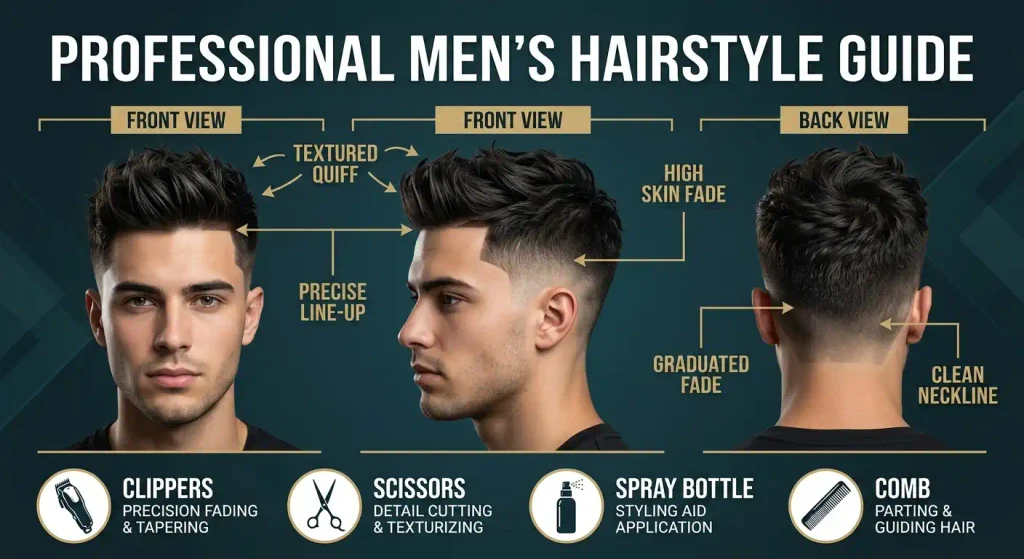
9. Arrow Point
An arrow pointing downward creates a simple directional detail at the nape. It works especially well with a short top because the back remains visually clean. You can use a single outline or two lines to make the arrow more visible. Square and oval face shapes suit the structured appearance.
Best for: Short hair, straight hair
Styling: Natural or matte
10. Diamond Nape
A small diamond gives the haircut a geometric center point. It should be positioned carefully so its sides look balanced from directly behind. This design suits men who like clean shapes rather than freehand curves. Keep the surrounding taper low enough that the diamond remains visible without taking over the whole back.
Best for: Straight and thick hair
Styling: Matte finish
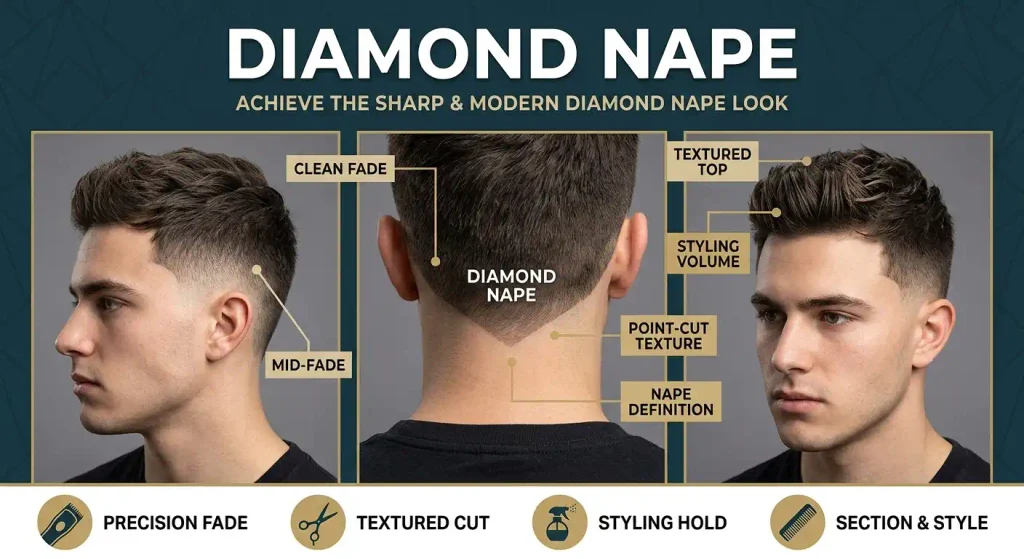
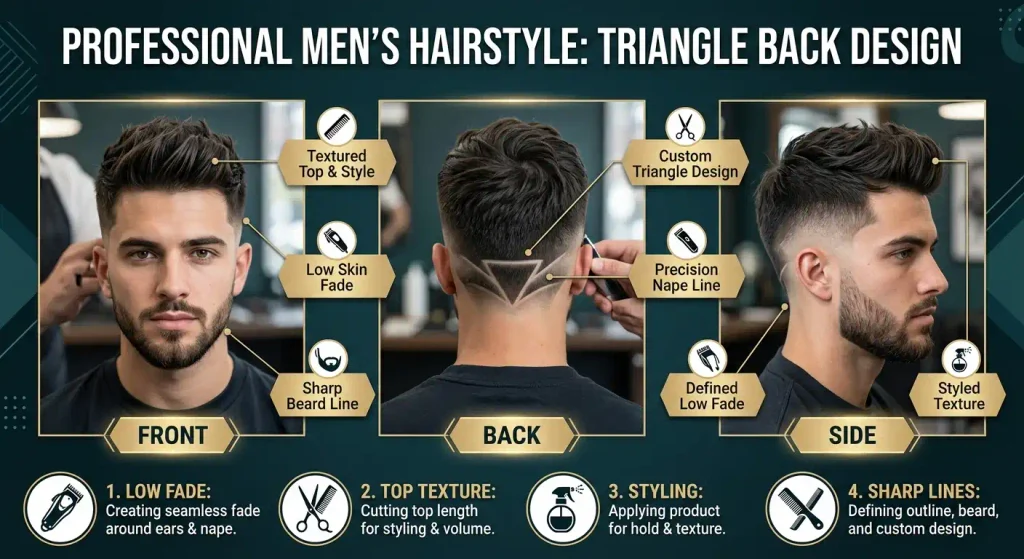
11. Triangle Back Design
A triangle is a simple geometric alternative to the diamond. A narrow triangle can make the nape look longer, while a wider shape creates more visual weight. This is a useful haircut design taper for men who want something structured without a complicated pattern.
Best for: Short, medium, thick hair
Styling: Light clay
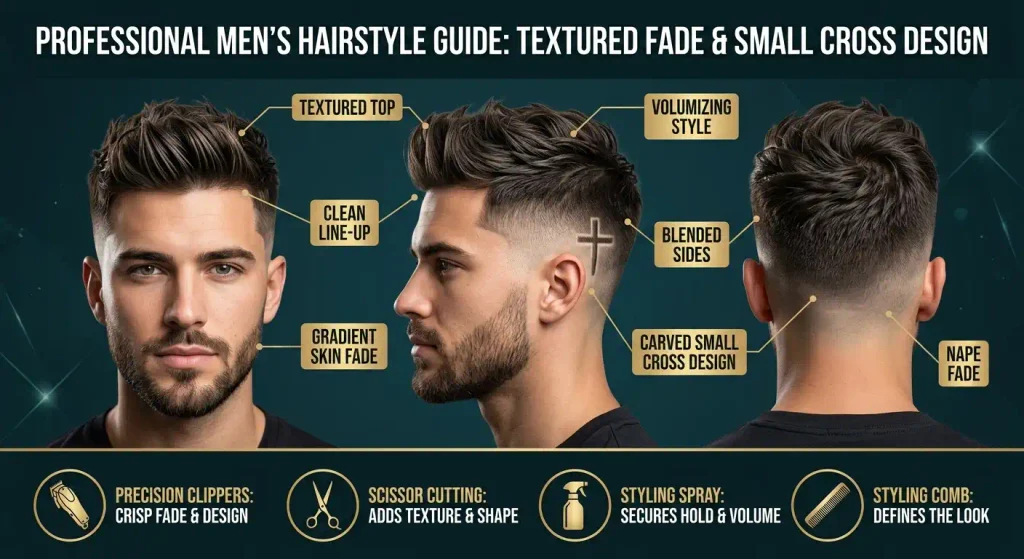
12. Small Cross Design
A centered cross adds a recognizable shape without requiring a large shaved area. Keep the arms even and avoid placing the design too close to the neckline edge. The style works well with a clean low taper and a simple top, especially when you want the back detail to stand alone.
Best for: Straight and fine hair
Styling: Natural finish
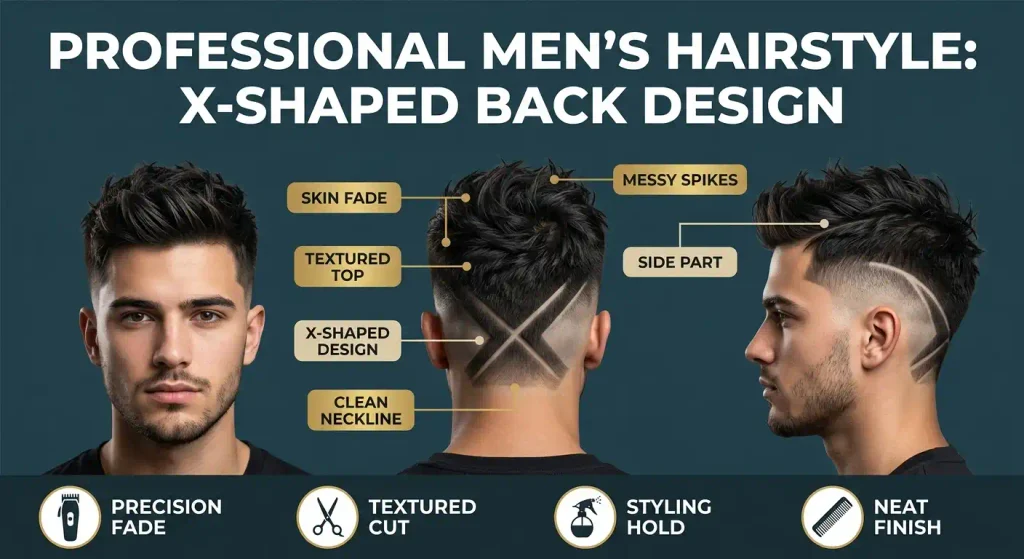
13. X-Shaped Back Design
An X gives a stronger geometric appearance than a simple cross. Two diagonal lines meet in the center and can remain thin for a subtle look. It works with many top styles because the design occupies only the lower back area. Ask the barber to check both sides before finishing the second diagonal.
Best for: Straight, wavy, thick hair
Styling: Matte paste
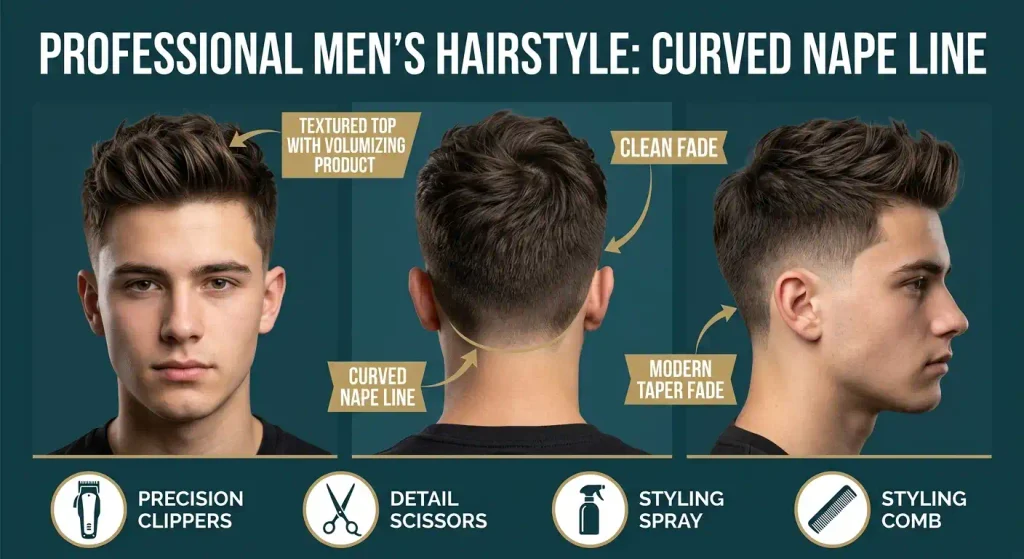
14. Curved Nape Line
A curved line follows the natural shape of the neckline instead of cutting across it. This creates a softer result and can look especially good on wavy or curly hair. It is also easier to blend visually with a natural neckline than a very rigid geometric design.
Best for: Wavy and curly hair
Styling: Curl cream or light cream
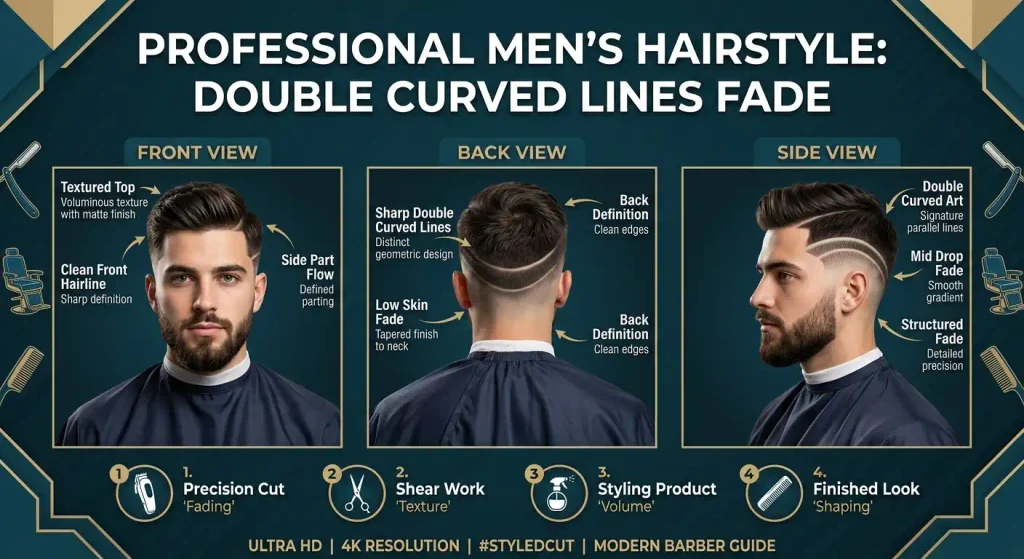
15. Double Curved Lines
Two flowing curves create movement while staying more subtle than a large freestyle design. The lines can mirror each other or follow the same direction. Keep the top fairly natural so the back remains visually connected to the haircut instead of looking like a separate graphic.
Best for: Wavy, curly, textured hair
Styling: Curl-enhancing cream
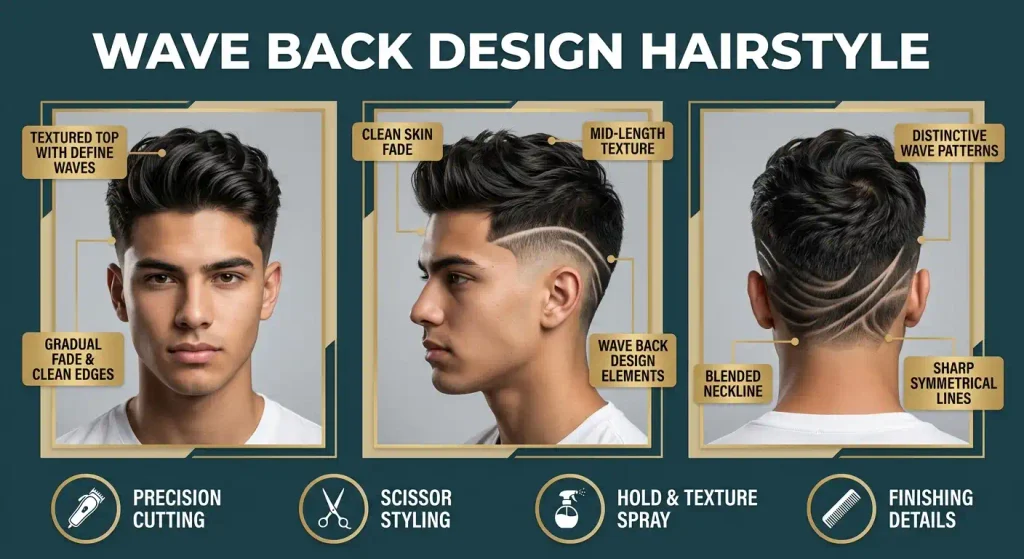
16. Wave Back Design
A wave pattern uses curved lines that move across the nape. It works naturally with wavy or curly tops because the design repeats the hair’s movement. Keep the curves smooth rather than overly detailed. A low taper back design gives the pattern enough contrast while keeping the haircut wearable.
Best for: Wavy and curly hair
Styling: Curl cream
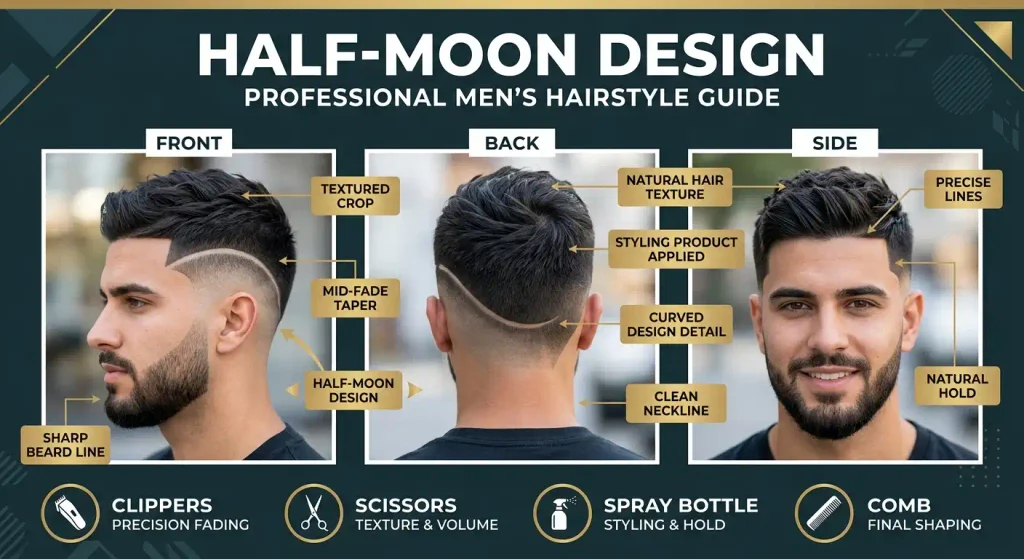
17. Half-Moon Design
A half-moon shape creates a rounded focal point at the back. It is cleaner than a complex symbol and can be adjusted to suit the shape of the nape. Keep the opening of the half-moon facing upward for a balanced appearance, or ask your barber about reversing it for a different effect.
Best for: Oval and square faces
Styling: Matte cream
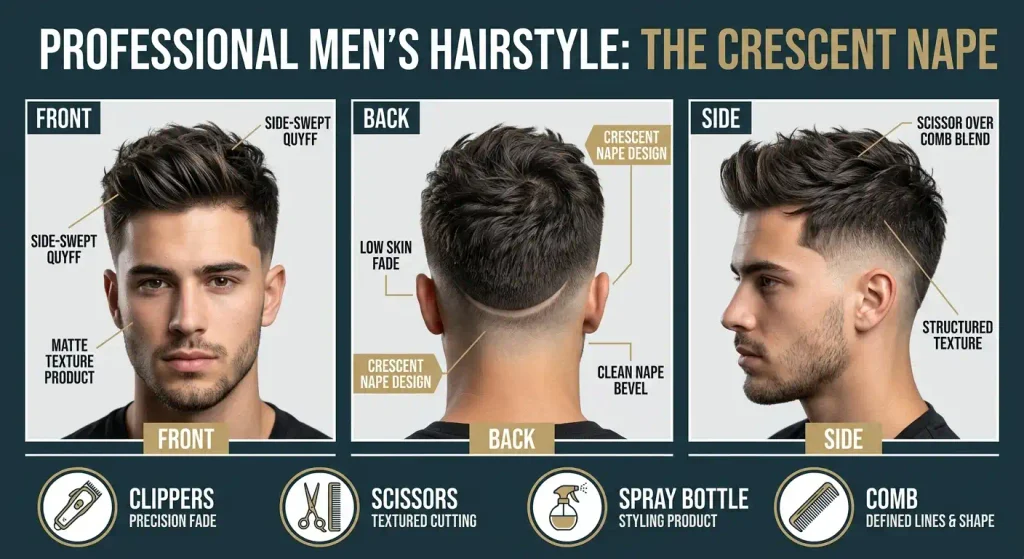
18. Crescent Nape
The crescent is a curved, compact option that looks more artistic than a straight line. It works particularly well when the haircut already has rounded edges. Fine hair can wear this design because it does not depend on a large pattern to create impact.
Best for: Fine, straight, wavy hair
Styling: Lightweight product
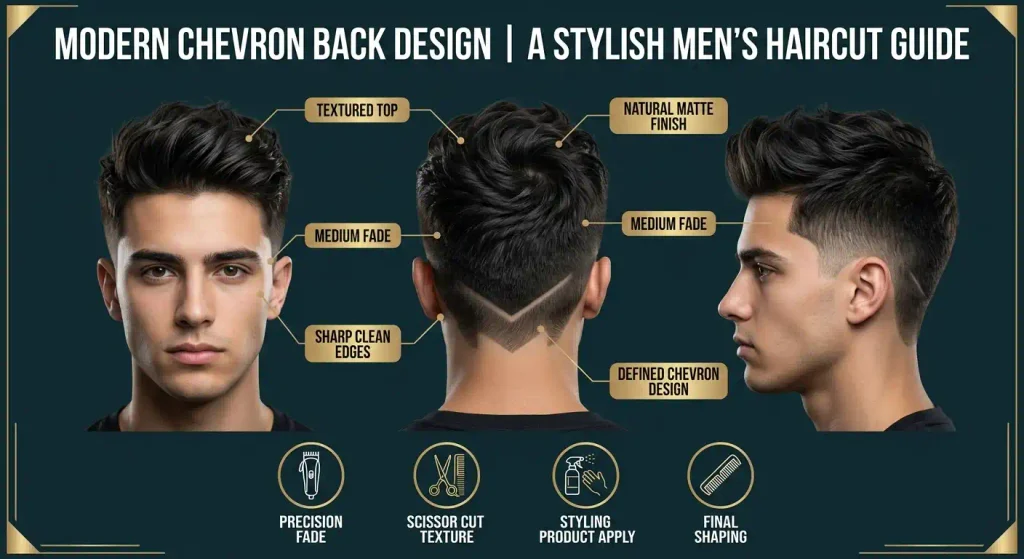
19. Chevron Back Design
A chevron uses two angled lines meeting toward the center. It creates a strong visual frame around the nape without requiring a full geometric panel. Pair it with a low taper and a textured top for a modern result. Keep the angles consistent on both sides.
Best for: Thick and straight hair
Styling: Matte clay
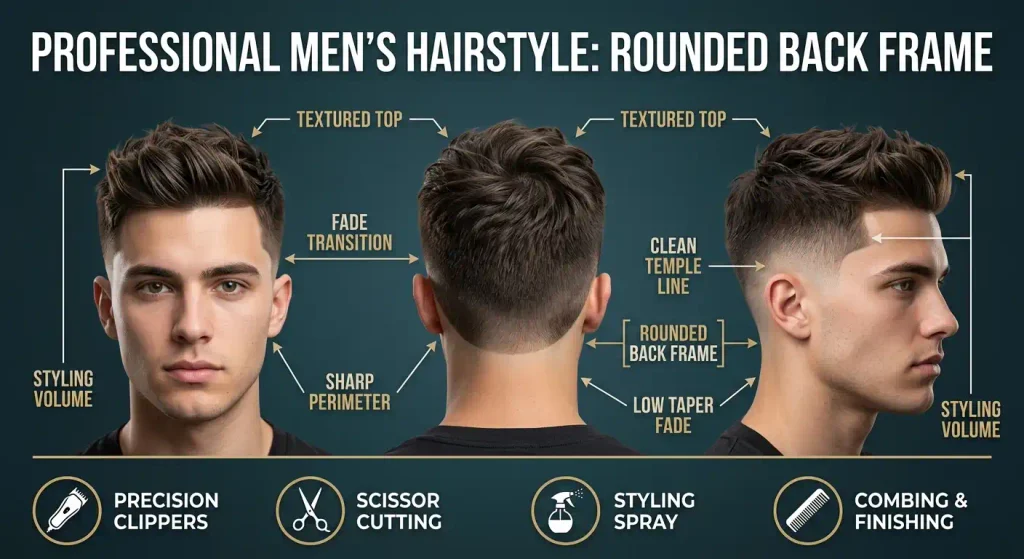
20. Rounded Back Frame
A rounded frame follows the outer shape of the nape. Instead of one central symbol, the design creates a border around the lower tapered section. It can work well for men who want a design that blends into the haircut instead of sitting like a separate graphic.
Best for: Curly, coily, wavy hair
Styling: Natural texture
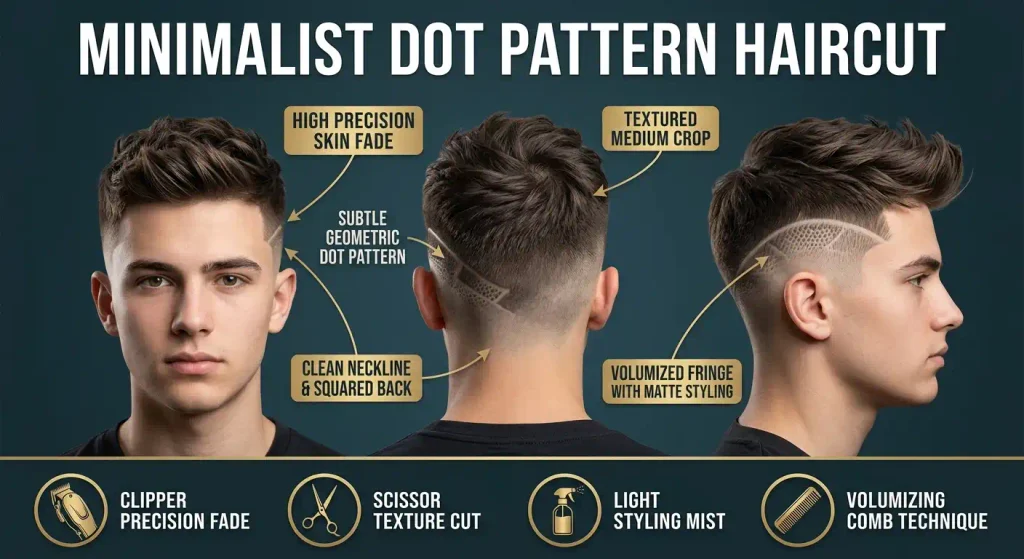
21. Minimalist Dot Pattern
Small dots can be placed in a simple row, triangle, or cluster. This is a subtle choice for someone who wants something different from lines. Because the pattern is small, the barber needs good control and clean spacing. Keep the rest of the haircut simple to let the dots remain visible.
Best for: Fine and straight hair
Styling: Light paste
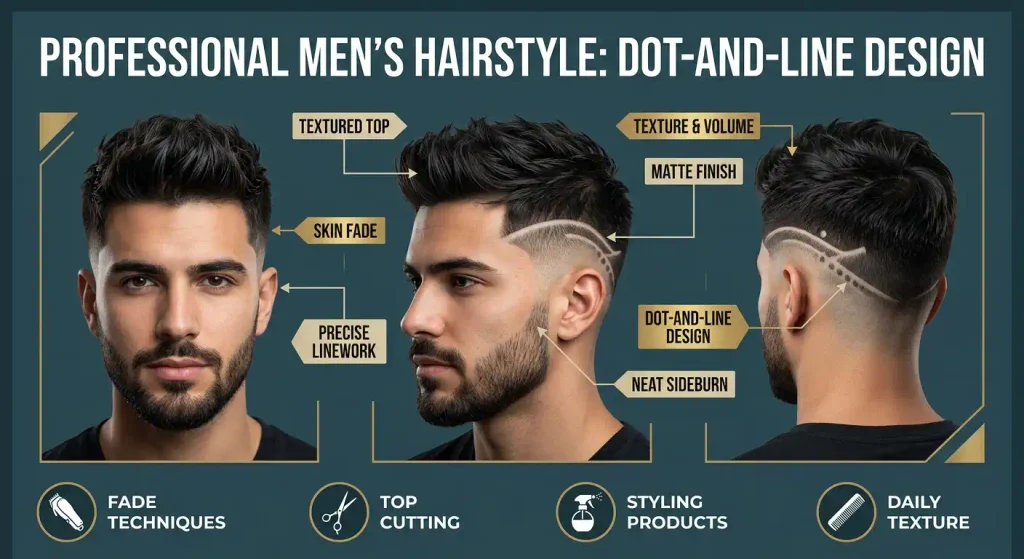
22. Dot-and-Line Design
Combining small dots with one clean line creates a modern graphic look. The line provides structure while the dots add detail. This is better suited to a barber comfortable with small design work because uneven spacing can change the appearance quickly.
Best for: Straight and thick hair
Styling: Matte finish
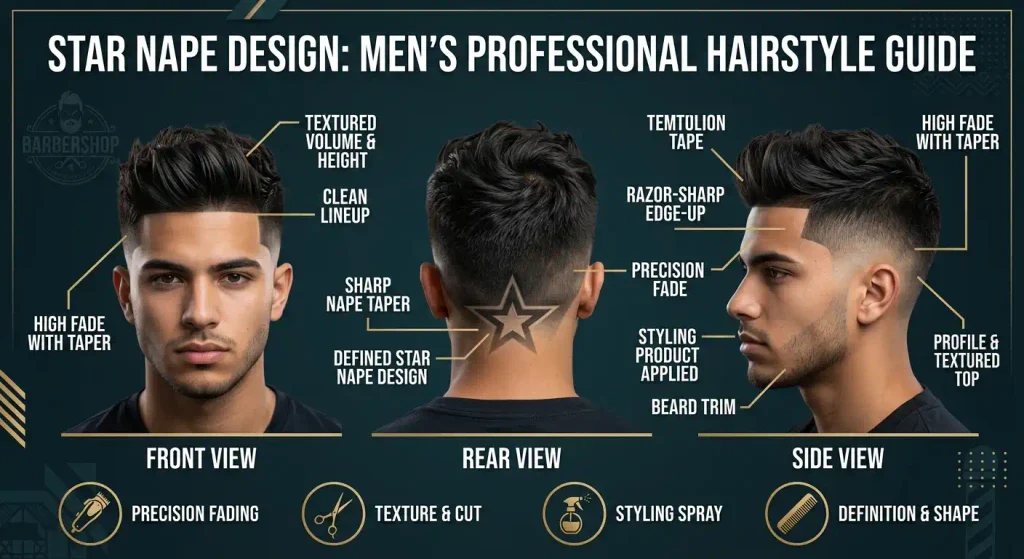
23. Star Nape Design
A small star creates a recognizable focal point at the center of the back. It can be outlined with thin lines or made more visible by leaving a stronger contrast around it. Keep the star modest if you wear the haircut in professional settings.
Best for: Short tops and thick hair
Styling: Natural finish
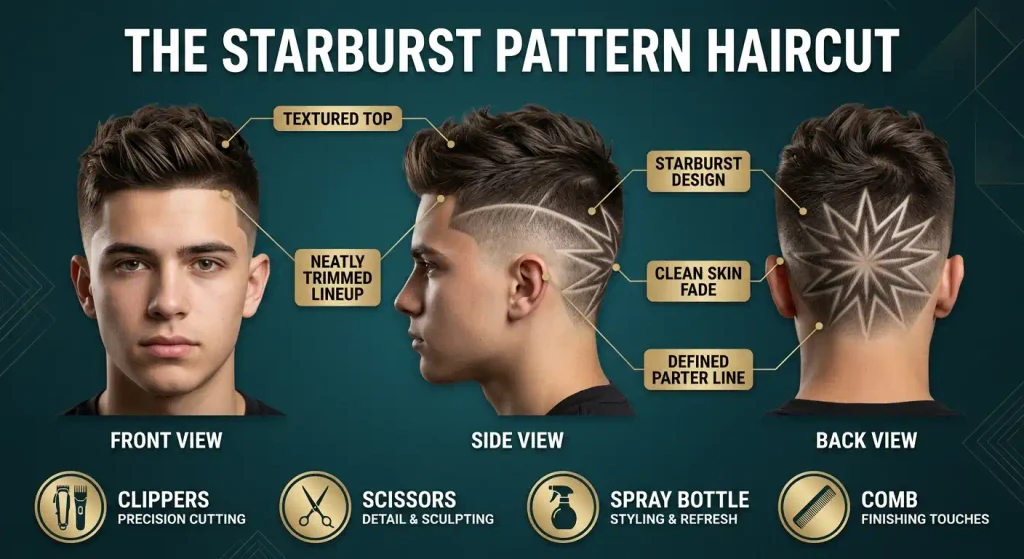
24. Starburst Pattern
A starburst uses several lines spreading from one center point. It has more visual energy than a simple star and requires careful symmetry. Show your barber a rear-view reference because the exact number and direction of rays can change the final look.
Best for: Thick, dark hair
Styling: Matte clay
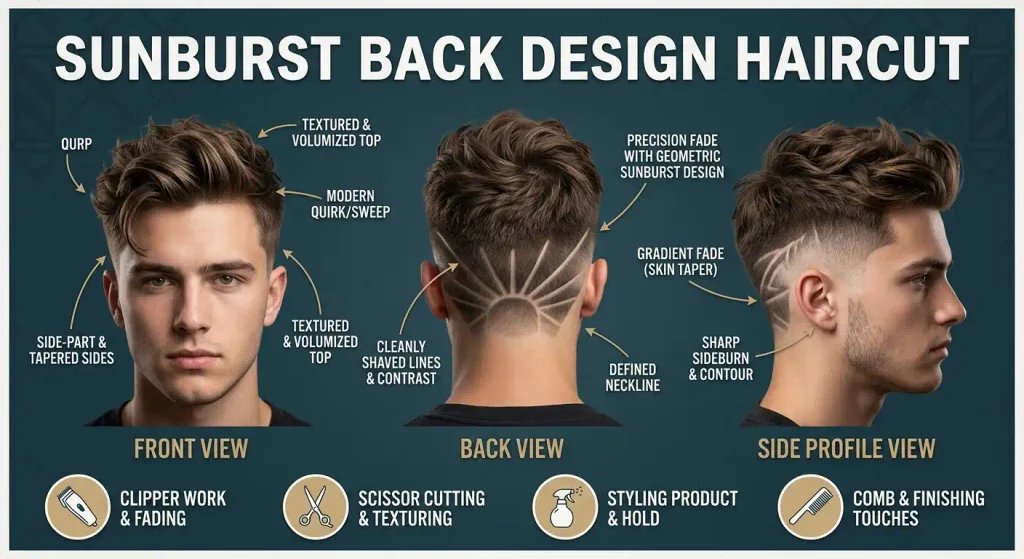
25. Sunburst Back Design
The sunburst uses curved or straight rays around a central point. It gives a softer alternative to sharp geometric patterns. A natural textured top can balance the graphic detail, while a buzz cut makes the design more prominent.
Best for: Thick and coily hair
Styling: Texture cream
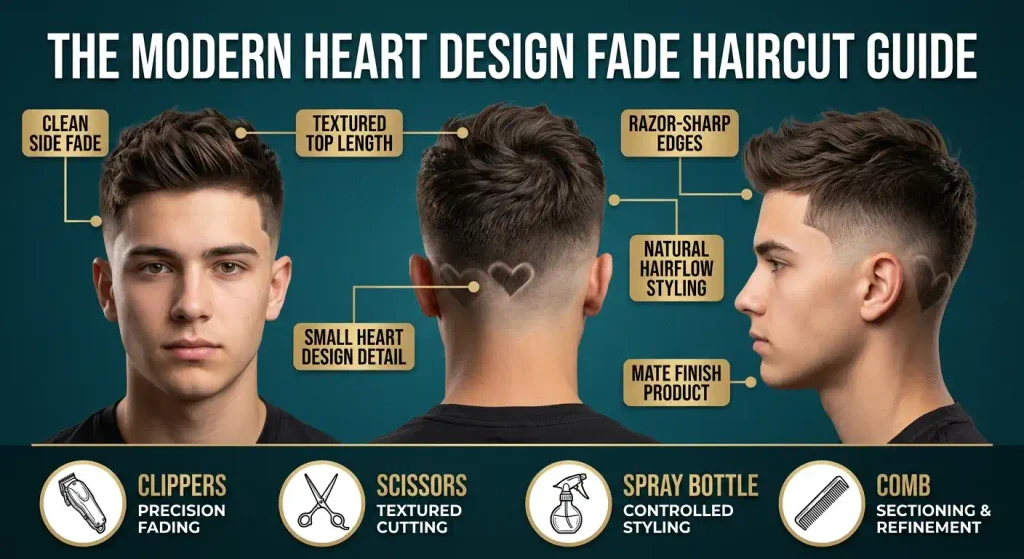
26. Small Heart Design
A small heart at the nape gives the haircut a playful personal touch. Keep the shape compact and centered so it does not compete with the top. It can work well for younger men or anyone who wants a less traditional pattern.
Best for: Straight, wavy, curly hair
Styling: Light cream
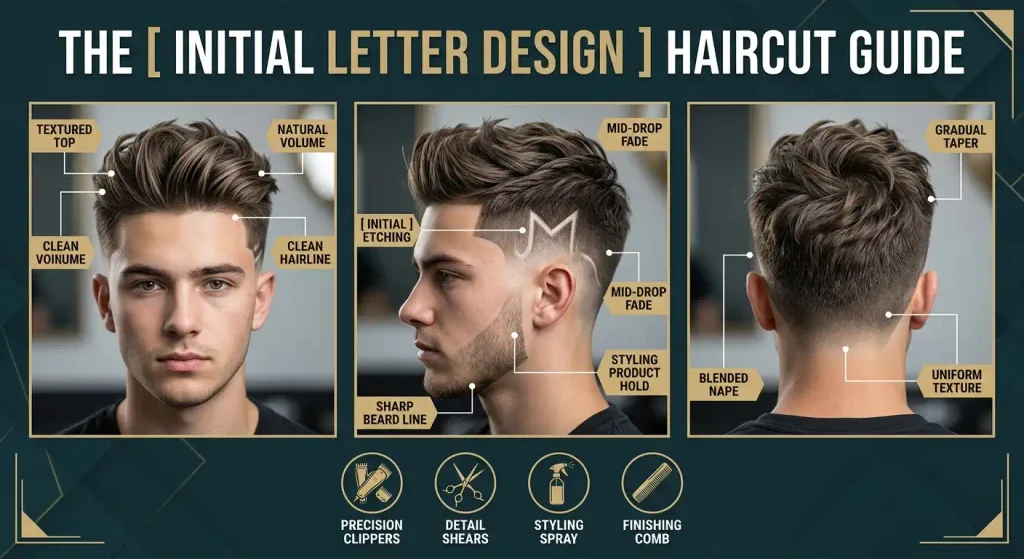
27. Initial Letter Design
Your initial can turn the haircut into a personal design. A single block letter is easier to keep clean than a detailed script. Choose a letter with a simple shape and show the barber the exact font or reference you want before the cut begins.
Best for: Personal statement styles
Styling: Matte finish
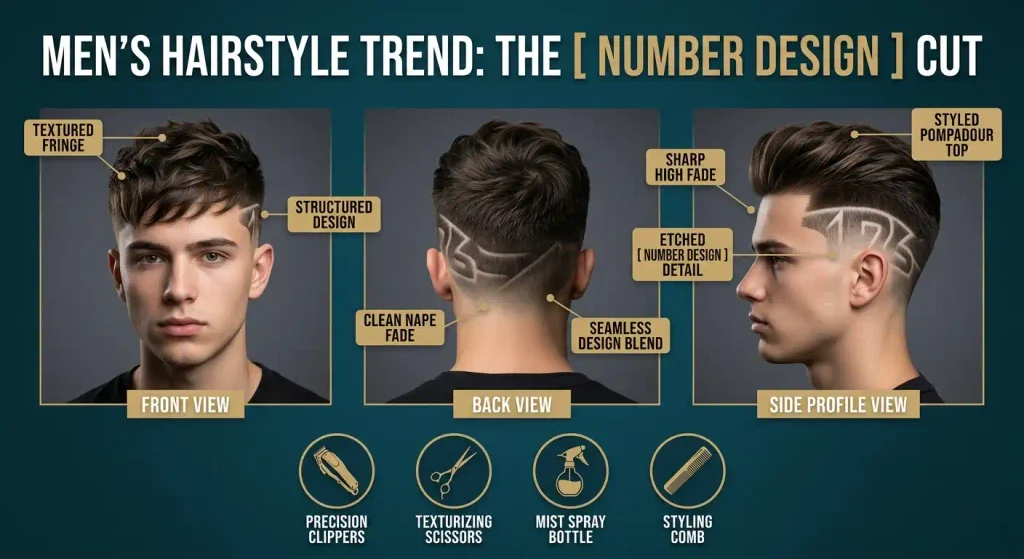
28. Number Design
A single number can represent a favorite number, sports number, or personal detail. Keep the characters large enough to remain readable but small enough to fit inside the tapered area. This option works best when the barber has experience with lettering.
Best for: Teens, athletes, custom looks
Styling: Natural texture
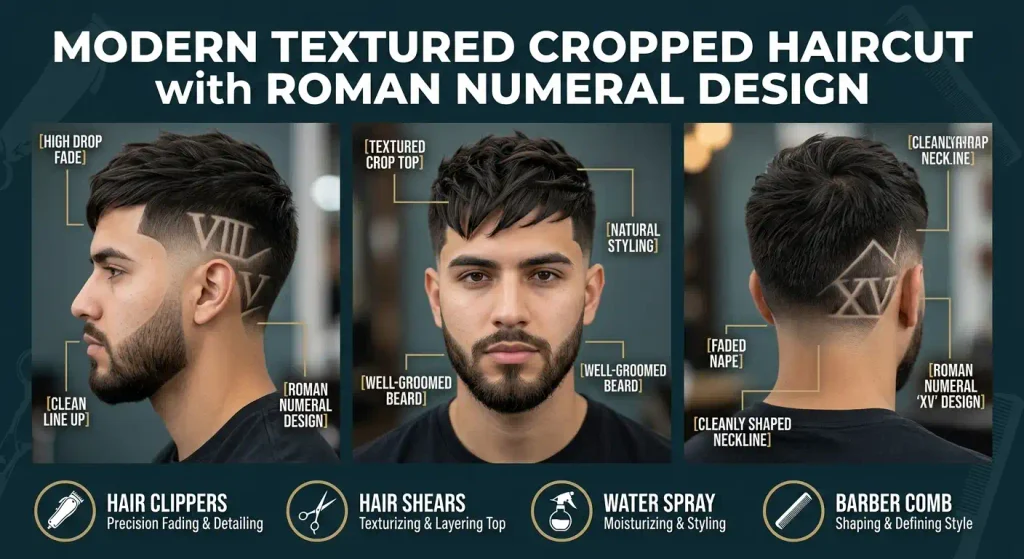
29. Roman Numeral Design
Roman numerals create a more decorative look than standard numbers. A short sequence can sit across the lower nape while the taper remains simple around it. The key is legibility, so bring an image showing the exact characters and spacing.
Best for: Thick and straight hair
Styling: Matte paste
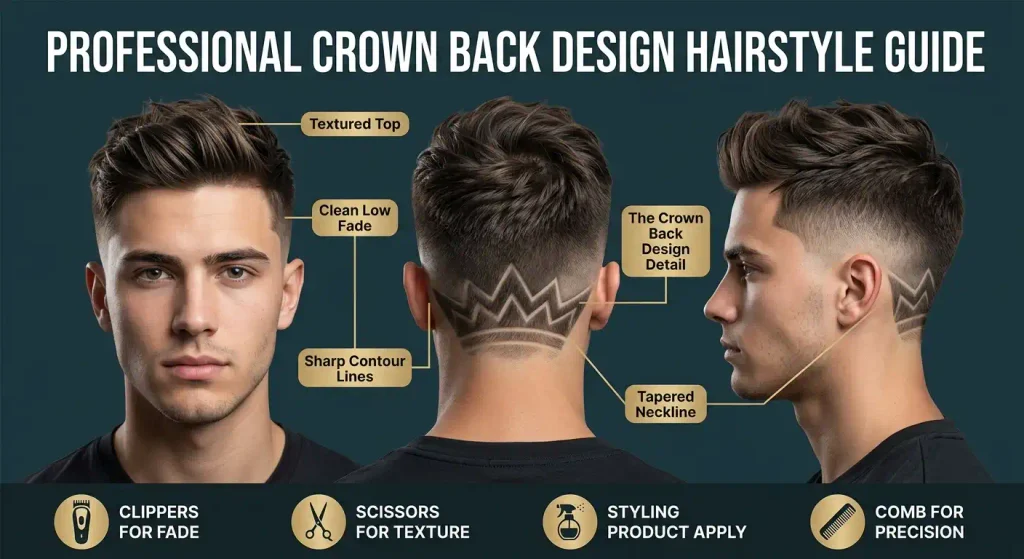
30. Crown Back Design
A small crown gives the haircut a playful statement without requiring a large pattern. Keep the crown simple with a few defined points. It pairs nicely with a clean top because the design already supplies enough visual interest at the back.
Best for: Short and medium hair
Styling: Light clay
31. Crown and Line Combo
A crown combined with one or two short lines gives the design more structure. Keep the crown centered and use the lines as a frame. This works especially well when the taper is low and the top has moderate length.
Best for: Thick, straight, wavy hair
Styling: Matte clay
32. Sword-Inspired Line
A slim sword-inspired pattern uses a central line with short diagonal details. It gives a graphic look without covering much of the nape. Because the design is narrow, it can work on smaller areas where a large pattern would feel crowded.
Best for: Short hair and smaller napes
Styling: Natural finish
33. Tribal-Inspired Curve
A tribal-inspired pattern can use bold curves and pointed ends rather than small details. Keep the design simple and custom rather than copying a culturally specific symbol without understanding it. A skilled barber can adapt the flow to the natural shape of your head.
Best for: Thick and coily hair
Styling: Matte or natural
34. Abstract Freestyle Back Design
Freestyle work lets the barber create curves, lines, and shapes that fit your head rather than following a fixed symbol. It is one of the most flexible forms of hair design taper. Give the barber room to adapt the pattern to your hair density and taper.
Best for: Thick and textured hair
Styling: Natural texture
35. Two-Tone Visual Design
Instead of relying on one pattern, this idea uses different lengths around the same design to create contrast. The barber can leave some areas slightly fuller while detailing others. It works best when the design remains simple enough to be understood from several angles.
Best for: Thick, dark hair
Styling: Matte clay
36. Low Taper Back Design with Textured Crop
A textured crop gives the back design a clean supporting role. Keep the taper low around the neckline and leave the top choppy and natural. The contrast between messy texture above and precise detail below creates a balanced modern haircut.
Best for: Straight and wavy hair
Styling: Matte paste
37. Low Taper Back Design with French Crop
The French crop keeps the front controlled while allowing the nape design to provide the personality. A small line, V, or geometric shape works particularly well. This combination is easy to style because the top needs little movement.
Best for: Straight, thick, fine hair
Styling: Matte clay
38. Back Design with Buzz Cut
A buzz cut creates a very simple canvas, making the back design highly visible. Choose one clear pattern rather than several competing shapes. This is a strong option when you want the design to be the main feature of the haircut.
Best for: Short, dense hair
Styling: Minimal product
39. Back Design with Crew Cut
The crew cut leaves more shape on top than a buzz cut while keeping the sides controlled. A small geometric pattern or single line can add personality without making the haircut feel extreme. It also works well for active lifestyles.
Best for: Straight, wavy, thick hair
Styling: Matte paste
40. Back Design with Slicked Top
A slicked top creates a polished contrast with a sharp back detail. Keep the design compact so the overall haircut remains refined. A comb and medium-to-strong hold product can control the top while the nape provides the modern detail.
Best for: Straight and thick hair
Styling: Pomade
41. Back Design with Side Part
A side part gives the haircut a classic structure while the nape design adds a modern twist. Choose a small line or geometric shape rather than a large freestyle pattern. This makes the cut easier to wear in work and formal settings.
Best for: Straight and wavy hair
Styling: Pomade or styling cream
42. Back Design with Quiff
A quiff creates volume on top while the taper and design keep the lower haircut controlled. A small arrow, V, or double line works well because it echoes the clean direction of the quiff. Use a blow dryer if your hair needs help holding volume.
Best for: Thick and medium-density hair
Styling: Volumizing cream and paste
43. Back Design with Messy Top
A messy top creates a relaxed contrast with a precise nape pattern. Choose a simple design because the textured top already has movement. This combination suits casual lifestyles and does not require a highly polished finish.
Best for: Wavy, straight, textured hair
Styling: Matte paste
44. Back Design with Curly Top
Curly hair provides natural volume while the tapered back creates a clean frame. A curved line, small V, or simple geometric shape can complement the curls without competing with them. Avoid overly detailed designs if the curl pattern extends heavily into the taper.
Best for: Curly and coily hair
Styling: Curl cream
45. Back Design with Blowout
A blowout keeps volume high above the taper, giving the nape plenty of contrast. A lightning bolt or curved design can add extra movement. Keep the design low so the fuller sides and top remain the main silhouette.
Best for: Thick and wavy hair
Styling: Blow dryer and light styling cream
46. Back Design for Fine Hair
Fine hair needs a design that does not remove too much density. A single line, small V, or small geometric shape is usually easier to balance than a large pattern. Keep the taper controlled and avoid carving too much area from the remaining hair.
Best for: Fine and straight hair
Styling: Lightweight matte product
47. Back Design for Thick Hair
Thick hair gives the barber more visual contrast between the carved section and surrounding hair. You can handle stronger geometric shapes, wider lines, and more visible patterns. A textured top keeps the overall cut from feeling too heavy.
Best for: Thick, dense hair
Styling: Matte clay
48. Back Design for Straight Hair
Straight hair shows clean lines very clearly. That makes simple geometric patterns, parallel lines, and lettering strong choices. Keep the design aligned with the head shape because straight hair can make uneven placement easier to notice.
Best for: Straight hair
Styling: Clay or paste
49. Back Design for Wavy Hair
Wavy hair adds natural movement around a carved design. Curved lines and wave patterns can echo that texture, while a simple geometric shape creates contrast. Avoid filling the nape with too many details if your natural waves already create a busy silhouette.
Best for: Wavy hair
Styling: Light curl cream
50. Back Design for Coily Hair
Coily hair can provide strong contrast around detailed taper work. Geometric shapes, stars, arrows, and clean lines can stand out clearly when the design is placed correctly. The barber should account for the natural density and shrinkage of the hair when deciding placement.
Best for: Coily and dense hair
Styling: Curl moisturizer or cream
51. Simple Design Taper
A simple design taper focuses on one small detail rather than a full pattern. A single line or small V keeps the haircut easy to wear while still adding something different. This is a useful starting point if you have never tried shaved design work before.
Best for: Beginners and professional settings
Styling: Natural finish
52. L Design Taper
An L-shaped design uses one vertical and one horizontal line to create a compact corner. It works well in a narrow section of the nape and can be kept subtle. Ask your barber to adjust the length of each section to match the curve of your head.
Best for: Straight and thick hair
Styling: Matte paste
53. L Design with Double Line
Adding a second parallel line gives the L pattern more depth. Keep the two lines evenly spaced and avoid making the design too large. This is a clean option for someone searching for an l design taper with a little more detail.
Best for: Short and medium tops
Styling: Matte clay
54. Back Design Taper with Beard
A back design can be paired with a clean beard taper so the entire haircut has a consistent level of detail. Keep the nape pattern relatively simple if the beard already has strong lines. This creates balance rather than placing every design element in one area.
Best for: Bearded men
Styling: Beard balm plus matte hair product
55. Taper Back Design with Hard Part
A hard part adds a strong line to the side while the back carries a second detail. Keep both designs visually related, such as pairing a side line with a back line or V. Avoid combining too many unrelated patterns.
Best for: Straight and thick hair
Styling: Pomade
56. Low Taper Back Designs with Edgar
An Edgar’s straight fringe creates a sharp front while a small back design adds detail from behind. A zigzag, star, or double line can work well. Because the Edgar already has strong edges, keep the back pattern clean rather than overly decorative.
Best for: Straight, thick, textured hair
Styling: Matte clay
57. Low Taper Back Designs with Fringe
A natural fringe keeps the front relaxed while the back remains detailed. Curved lines, a small arrow, or a single nape line can balance the softer front. This combination works especially well when you do not want a highly polished haircut.
Best for: Wavy and straight hair
Styling: Texture powder or matte paste
58. Geometric Back Panel
A geometric panel combines several simple shapes into one defined section. A diamond surrounded by short lines can create a stronger graphic appearance. This requires careful symmetry, so choose a barber who is comfortable with detailed design work.
Best for: Thick and dark hair
Styling: Matte finish
59. Double-Slash Back Design
Two diagonal slashes give the nape a fast, athletic appearance. The lines can be parallel or slightly angled in different directions. Keep the rest of the haircut clean so the simple design remains visible.
Best for: Short, straight, thick hair
Styling: Light matte product
60. Three-Direction Line Design
Three lines moving in different directions create a modern abstract pattern. The design should still have a clear center so it does not look random. This works best when the barber maps the design before cutting it into the taper.
Best for: Thick and textured hair
Styling: Matte clay
61. Mirror-Image Back Design
A mirror-image pattern uses matching shapes on both sides of the nape. Symmetry becomes the main feature, so the barber should check the design from directly behind before finalizing it. Simple curves or diagonal lines work better than tiny details.
Best for: Straight and wavy hair
Styling: Natural finish
62. Offset Side Nape Design
Instead of centering the design, move it slightly toward one side. This creates an asymmetrical look without requiring a complicated pattern. A single curve or lightning-inspired line works particularly well with this approach.
Best for: Medium and thick hair
Styling: Matte paste
63. Nape-to-Side Connector
A single design line can begin at the back and continue slightly toward one side. This makes the haircut look connected from different angles. Keep the line controlled and avoid taking it too high unless you specifically want a larger design.
Best for: Straight and wavy hair
Styling: Matte clay
64. Natural Neckline with Design
Keep the neckline natural while placing a small design above it. This gives the haircut a softer lower edge and prevents the pattern from becoming the entire neckline. It is useful for men who like a less artificial finish.
Best for: Wavy, curly, and thick hair
Styling: Natural texture
65. Custom Signature Back Design
A custom signature design combines your preferred line, shape, or symbol with the natural structure of your head. Rather than copying a gallery image exactly, ask the barber to adapt the design to your hair density, neckline, and taper height. This creates a more personal result while keeping the haircut practical.
Best for: Men wanting a one-off design
Styling: Match the top to your normal routine
Quick Comparison: Back Design Taper Options
| Design Type | Typical Taper Area | Design Feel | Hair Types | Styling Level |
| Single line | Low nape | Minimal | All | Easy |
| Double lines | Low nape | Sporty | Straight, wavy | Easy |
| V shape | Lower back | Structured | Most types | Easy |
| Zigzag | Lower back | Bold | Thick, dark | Medium |
| Diamond | Nape center | Geometric | Straight, thick | Medium |
| Wave | Nape | Soft | Wavy, curly | Easy |
| Star | Nape center | Graphic | Thick, dark | Medium |
| Lightning bolt | Nape | Energetic | Thick, textured | Medium |
| Letter | Nape | Personal | Dense hair | Medium |
| Freestyle | Back taper zone | Artistic | Thick, textured | Advanced |
| Geometric panel | Back/nape | Detailed | Dense hair | Advanced |
| Connector line | Nape to side | Modern | Straight, wavy | Medium |
Guard choice varies by the barber, hair density, desired contrast, and how close you want the taper. The important part is agreeing on the taper height and design placement, rather than asking for a guard number alone.
Why a Taper Back Design Works
A back design gives you detail without requiring a dramatic change to the top of your haircut. The taper keeps the neckline and lower sides controlled, while the carved pattern adds a focal point.
The approach also gives you flexibility. A simple line can work for a professional setting, while a geometric or freestyle design can create a stronger street-style appearance.
Your hair texture matters too. Straight hair shows crisp lines clearly. Wavy hair works nicely with flowing patterns. Curly and coily hair can create strong contrast around the shorter design area.
How to Style the Haircut
- Start with clean, slightly damp hair.
Remove excess water with a towel without rubbing the hair aggressively. - Choose the product for your top.
Use matte clay or paste for texture, pomade for a polished style, or curl cream for curls. - Build the top first.
Shape the fringe, crop, quiff, curls, or part before worrying about the back. - Keep the design area natural.
You do not need heavy product around the shaved pattern. - Check the back with a mirror.
A second mirror can help you see whether loose hairs or uneven edges need attention. - Avoid excessive brushing over the design.
The design is created through the cut, not by styling product.
How to Ask Your Barber for a Taper Back Design
The safest approach is to show a rear-view reference photo and then explain the taper height.
You can say:
“I want a low taper around the neckline and sideburns. Keep the top length I have now, and put this design in the lower back area. Please keep the design centered and clean.”
Then add the detail you want:
- For a simple design: “Keep it subtle with one clean line.”
- For a geometric design: “I want the shape symmetrical and centered on the nape.”
- For a low taper: “Keep the taper low and do not take the blend too high.”
- For a bold design: “Make the pattern clear, but keep it inside the tapered area.”
Step-by-Step Tutorial of the Cut
A professional barber should handle the actual cutting and design work, especially for geometric or freestyle patterns.
Step 1: Choose the Design
Decide whether you want a line, curve, symbol, geometric shape, lettering, or freestyle pattern.
Step 2: Decide the Taper Height
For a low taper, keep the blend concentrated around the lower sideburn and neckline area. A higher taper creates a larger canvas but changes the overall haircut.
Step 3: Establish the Blend
The taper should be blended before the design is detailed. This allows the barber to see exactly where the short contrast sits.
Step 4: Map the Design
The barber should check the center of the nape and consider the natural curve of the head. Symmetrical designs need extra checking at this stage.
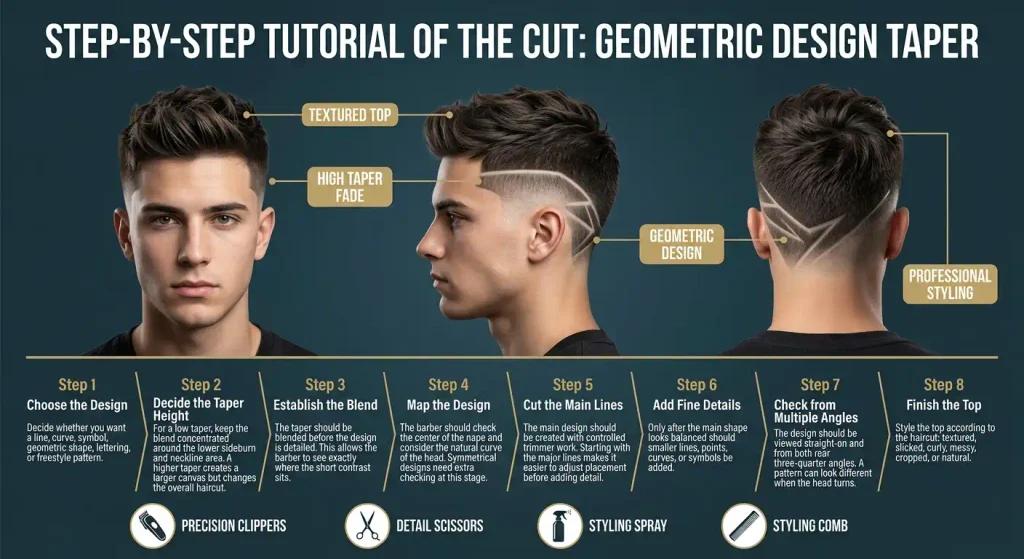
Step 5: Cut the Main Lines
The main design should be created with controlled trimmer work. Starting with the major lines makes it easier to adjust placement before adding detail.
Step 6: Add Fine Details
Only after the main shape looks balanced should smaller lines, points, curves, or symbols be added.
Step 7: Check from Multiple Angles
The design should be viewed straight-on and from both rear three-quarter angles. A pattern can look different when the head turns.
Step 8: Finish the Top
Style the top according to the haircut: textured, slicked, curly, messy, cropped, or natural.
Best Styling Products
The best product depends more on the top haircut and hair texture than on the carved design itself.
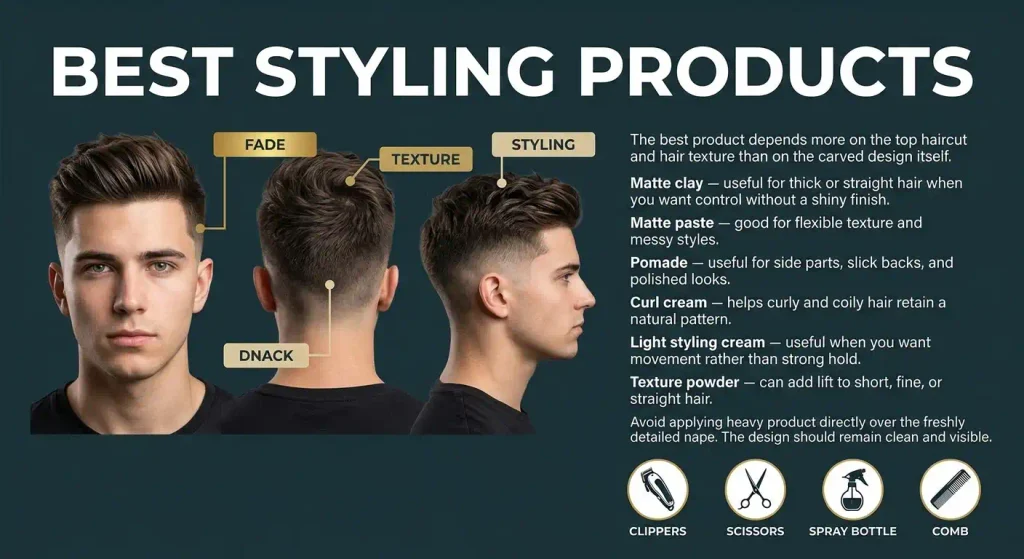
- Matte clay — useful for thick or straight hair when you want control without a shiny finish.
- Matte paste — good for flexible texture and messy styles.
- Pomade — useful for side parts, slick backs, and polished looks.
- Curl cream — helps curly and coily hair retain a natural pattern.
- Light styling cream — useful when you want movement rather than strong hold.
- Texture powder — can add lift to short, fine, or straight hair.
Avoid applying heavy product directly over the freshly detailed nape. The design should remain clean and visible.
Common Mistakes to Avoid
1. Choosing a Design Before Choosing the Taper
A design needs the right amount of short hair around it. Decide the taper height first.
2. Using Only a Front Photo
A front-view photo cannot show exactly how the back design sits. Bring a clear rear-view reference.
3. Making the Pattern Too Large
A large design can overwhelm a small nape. Let your barber adapt the size to your head.
4. Ignoring Head Shape
The back of every head is different. The occipital area and neckline can change how a straight line or geometric shape appears.
5. Adding Too Many Details
More lines do not always make a better design. A clean simple pattern can remain easier to read as it grows out.
6. Going Too High with a Low Taper
If the blend climbs too far, the haircut may no longer give you the low-taper appearance you expected.
7. Choosing a Complex Design Without a Reference
Freestyle work is flexible, but specific symbols and lettering need visual references.
8. Trying to Cut the Back Yourself
The back of the head is difficult to see and control. Design work also requires symmetry and steady trimmer control.
Best Hair Types & Face Shapes
Straight Hair
Straight hair is a strong match for crisp lines, diamonds, triangles, and lettering because the design is easy to see. Keep the pattern simple if your hair is fine.
Wavy Hair
Wavy hair pairs naturally with curves and wave designs. A textured top can soften the strong contrast created by a geometric back detail.
Curly Hair
Curly hair works well with bold shapes because the surrounding texture creates contrast. Avoid extremely fine patterns if the curls cover the design area.
Coily Hair
Dense coily hair can support strong geometric patterns, stars, arrows, and bold lines. The barber should consider natural shrinkage before deciding the final placement.
Oval Face
Most back designs can work with an oval face. Focus more on your hair density, neckline, and desired level of detail.
Round Face
Directional designs such as V shapes, arrows, and angled lines can add a more structured visual element to the back.
Square Face
Square faces pair naturally with straight lines and geometric designs. A simple symmetrical pattern keeps the look clean.
Oblong or Long Face
A wider horizontal design can help add visual width to the back. Avoid making every line strongly vertical if you want a broader appearance.
Diamond Face
Curved and balanced designs can work well. Keep the pattern proportional to the taper rather than making it excessively large.
Maintenance & Upkeep
A carved design normally loses its crisp appearance as new hair grows into the shaved lines. How quickly that happens varies by individual hair growth, design complexity, and how short the design was cut.
Simple lines are easier to refresh than detailed patterns. If you want the design to remain sharp, discuss a cleanup schedule with your barber based on how quickly your neckline grows.
At home:
- Wash according to your hair type.
- Keep the top moisturized if it is curly or coily.
- Avoid repeatedly shaving over the design yourself.
- Use a mirror when checking the neckline.
- Do not judge the haircut only from the front.
- Bring the original reference when requesting a repeat appointment.
Frequently Asked Questions
What is a taper back design?
A taper back design combines a tapered neckline or back area with a shaved or carved line, shape, symbol, or pattern. The taper creates the short canvas that makes the design visible.
What is the best low taper back design for beginners?
A single nape line, double line, small V, or small curved design is a practical starting point. These options give you visible detail without requiring a large or complicated pattern.
Is the zigzag design good for thick hair?
Yes. Thick hair can provide strong contrast around the carved pattern. A zigzag works especially well when the taper remains low and the top has enough density to balance the design.
How does Style 24, the starburst pattern, differ from a normal star?
The starburst uses multiple lines radiating from a center point, while the standard star is a simpler enclosed shape. The starburst therefore creates more visual movement and usually needs more precise barber work.
Does an L design taper work on short hair?
Yes. The L shape can be kept compact enough for short hair. It works best when the barber places both lines inside the tapered section rather than extending them too high.
Are back designs suitable for professional haircuts?
They can be, depending on the workplace and the size of the design. A small single line, subtle curve, or compact geometric pattern is less noticeable than a large freestyle design.
How often should a back design be cleaned up?
There is no single schedule that works for everyone. Ask your barber to judge the timing based on your growth rate and how crisp you want the design to remain. Simple designs are usually easier to maintain than detailed ones.
Can curly hair have a taper design on the back?
Yes. Curly and coily textures can work very well with back designs. Bold lines, geometric shapes, and curved patterns are usually easier to see than very fine details when surrounding hair has strong texture.
Conclusion
The right back taper design should match more than a photo. Think about your hair texture, top length, taper height, face shape, workplace, and how much upkeep you want.
For a first design, start with a simple line, V, curve, or small geometric shape. If you want something more personal, consider lettering, a symbol, or a custom freestyle pattern.
The best result comes from bringing a clear back-view reference and telling your barber exactly where you want the design to sit.
Name: Ryan Cole
Role: Lead Grooming Editor, TaperHaircutGuide.com
Bio angle: Men’s grooming/style content researcher — 4+ years covering barbering trends, hairstyling terminology, and men’s style content for US audience. Cross-checks every guide with practicing barbers before publishing.