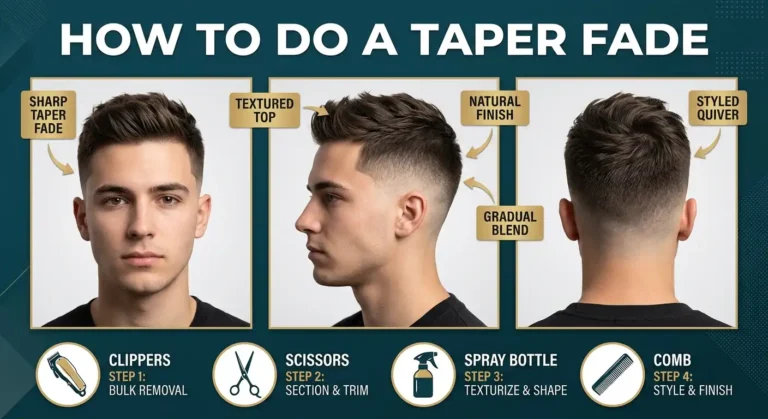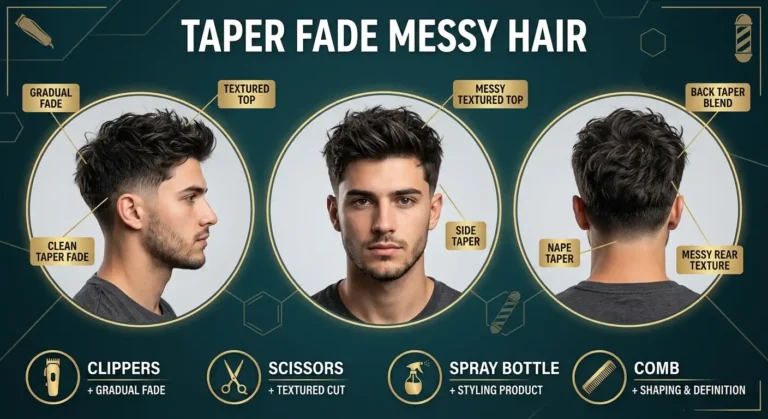
48 Bold Mullet Haircut Long Hair Low Taper Fade Looks to Try

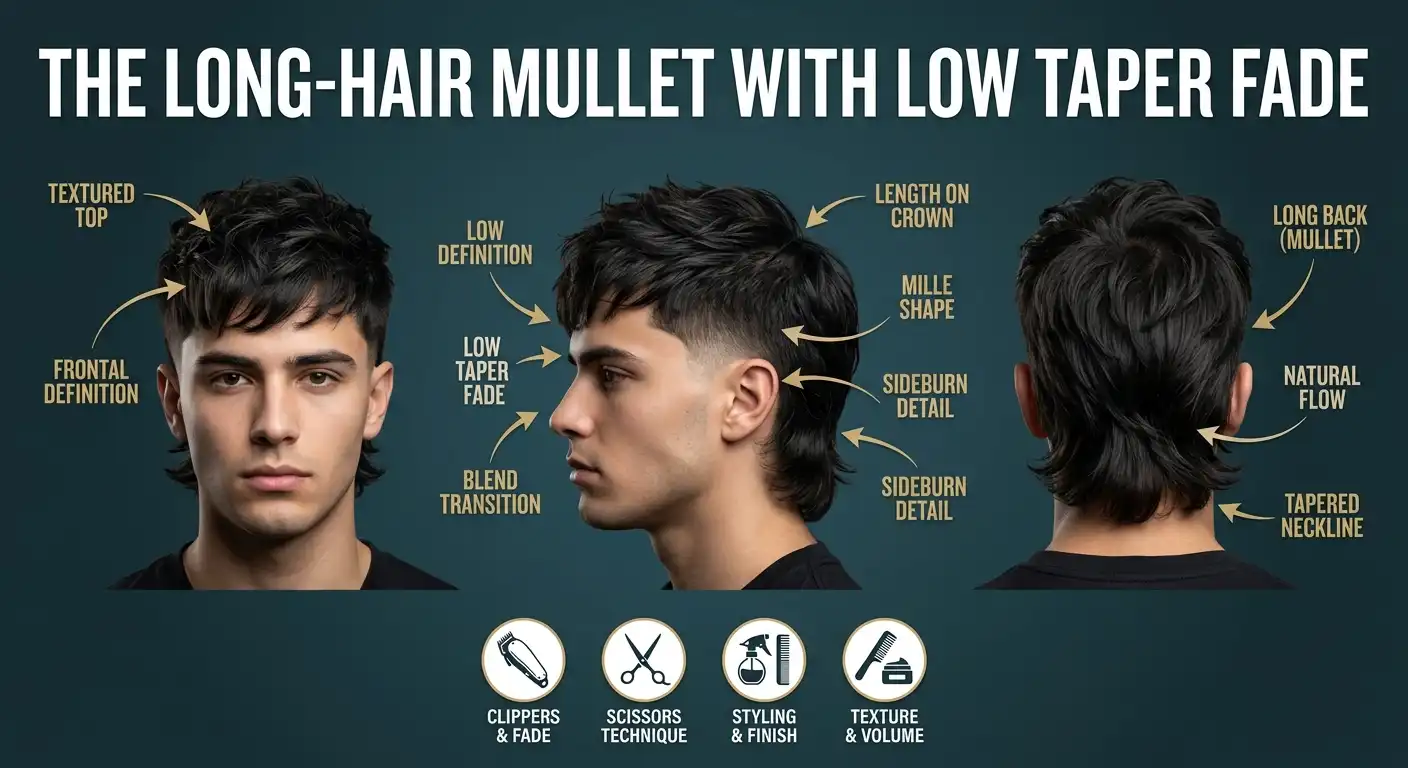
If you’ve been scrolling barbershop photos for hours and still can’t land on one look, you’re not alone. A mullet haircut long hair low taper fade keeps the sides clean and close to the skin while letting the top and back grow out into real length and movement. It works on almost any hair type, it grows out gracefully, and it reads as sharp rather than sloppy — which is exactly why it’s become one of the most requested cuts in the shop this year.
Below you’ll find 48 ways to wear it, a comparison chart, styling steps, exact words to use with your barber, product picks, common mistakes, and a maintenance plan so the cut still looks right six weeks from now.
48 Mullet Haircut Long Hair Low Taper Fade Ideas
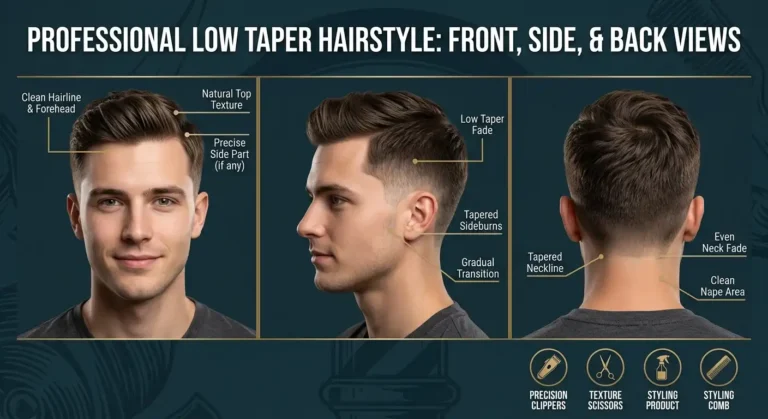
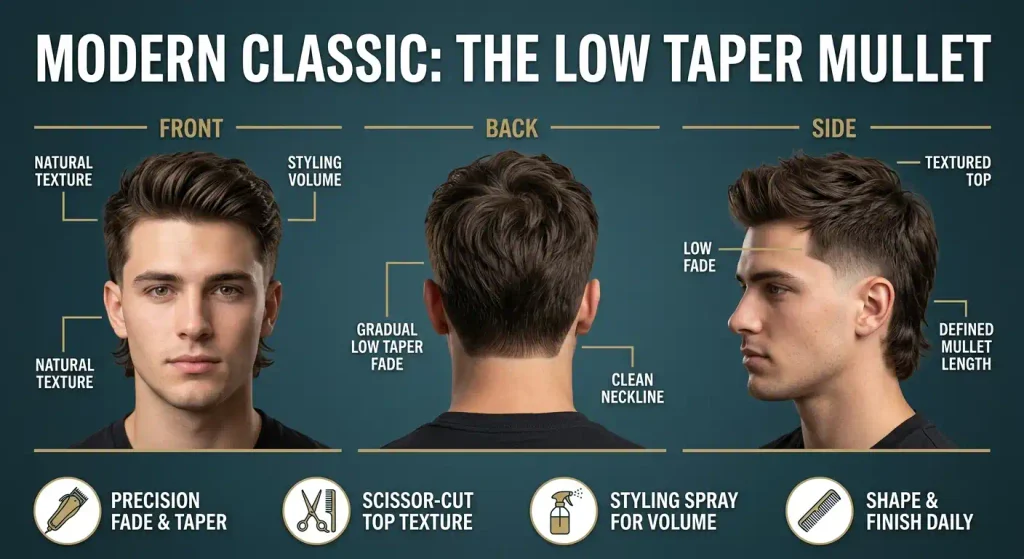
1. Classic Low Taper Mullet
The original template: sides fade low and tight near the ear, the top stays a couple of inches long, and the back grows out past the collar. It suits straight or slightly wavy hair and an oval or square face best. Style it by combing the top back and letting the back fall naturally with a light pomade.
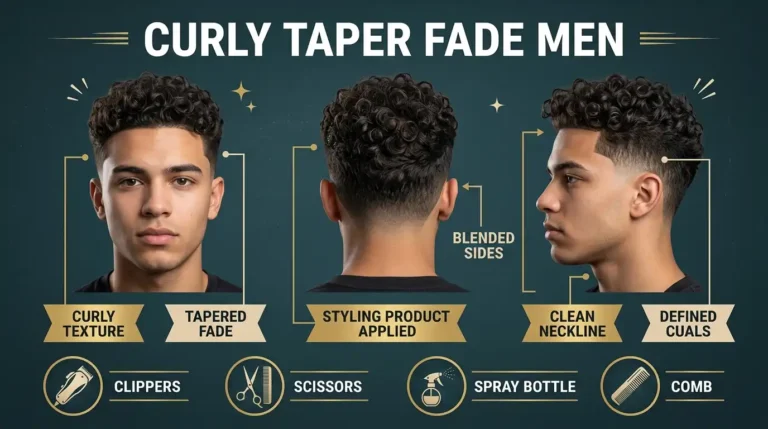
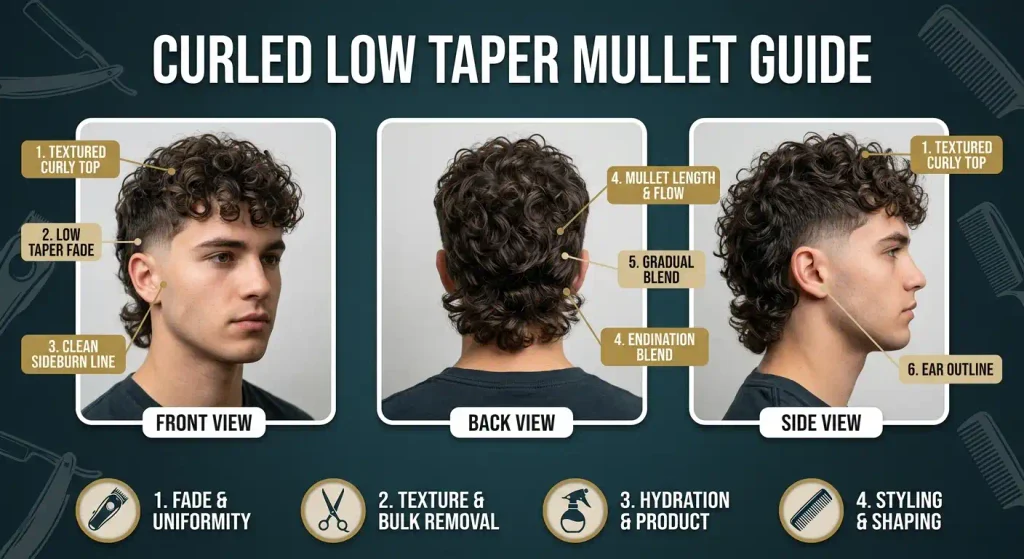
2. Curly Low Taper Mullet
Natural curls take over the top and back while the low taper keeps the sides quiet. Round or heart-shaped faces balance out nicely against the curl volume. Scrunch in a curl cream on damp hair and let it air-dry or diffuse on low heat so the curl pattern stays defined instead of frizzy.
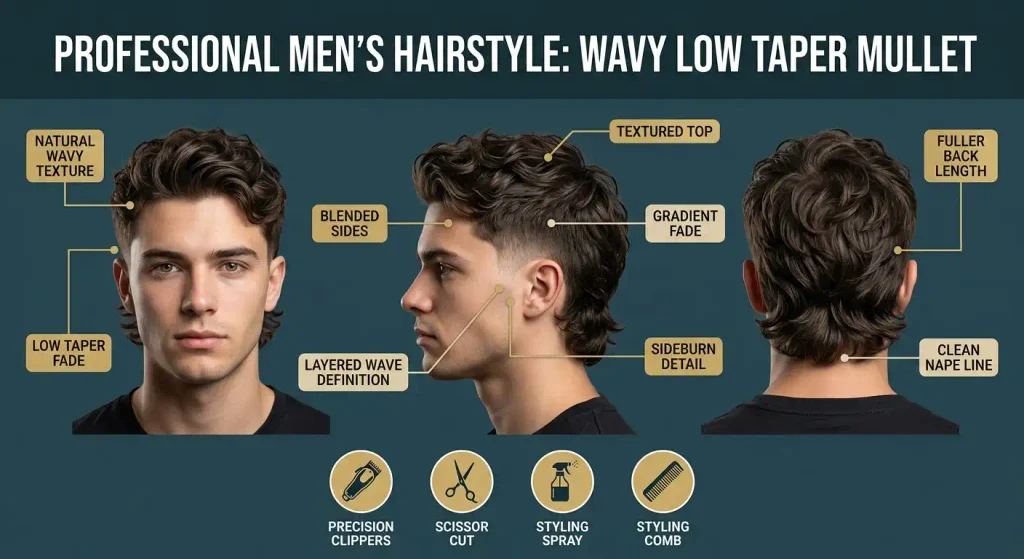
3. Wavy Low Taper Mullet
Loose waves flow from crown to nape without much effort, which makes this a low-fuss option for wavy hair. It flatters oval and diamond faces. A sea salt spray on damp hair, scrunched and air-dried, brings out texture without any heat tools.
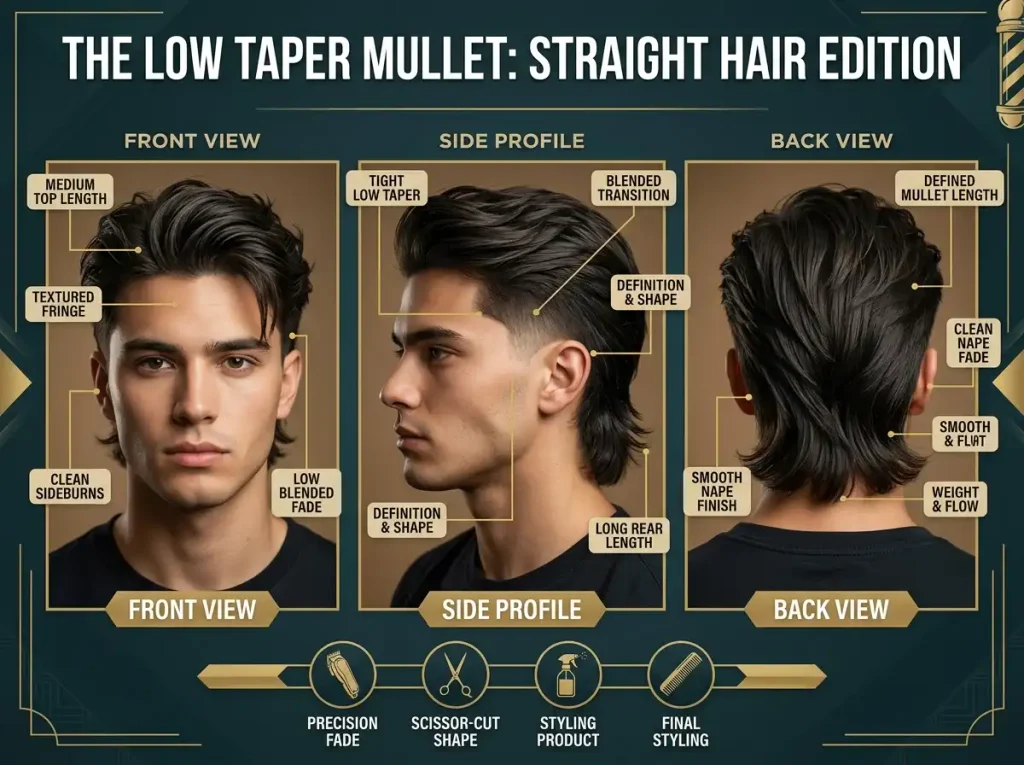
4. Straight Hair Low Taper Mullet
Straight strands give this version a sleek, almost architectural line from the fade up into the length. Square and oblong faces suit it well. A round brush blowout with light cream keeps flyaways down while the ends stay soft.
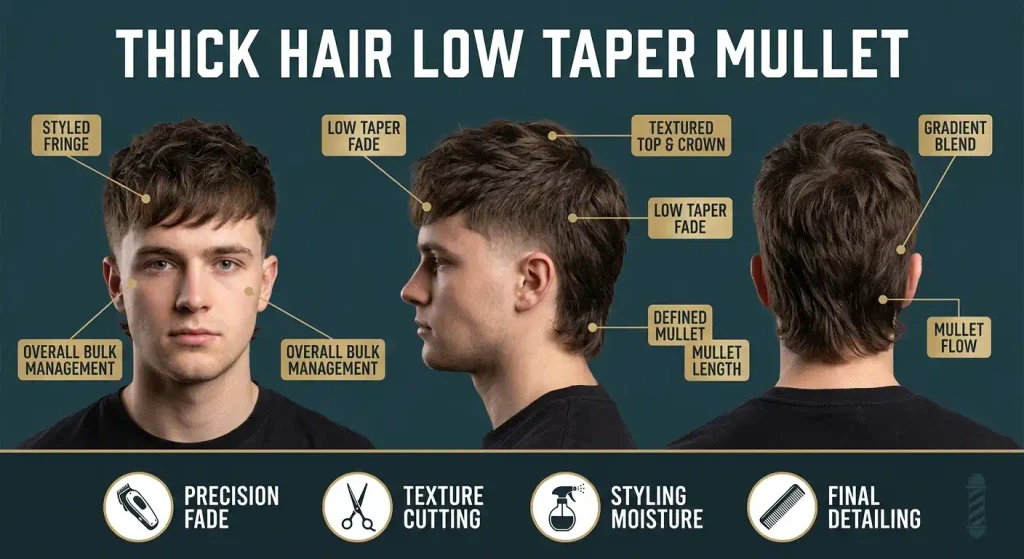
5. Thick Hair Low Taper Mullet
Thick hair holds shape on its own, so the top can sit fuller without looking flat. Best for round or square faces that can handle extra volume up top. A texture paste worked through damp hair controls bulk while keeping movement.
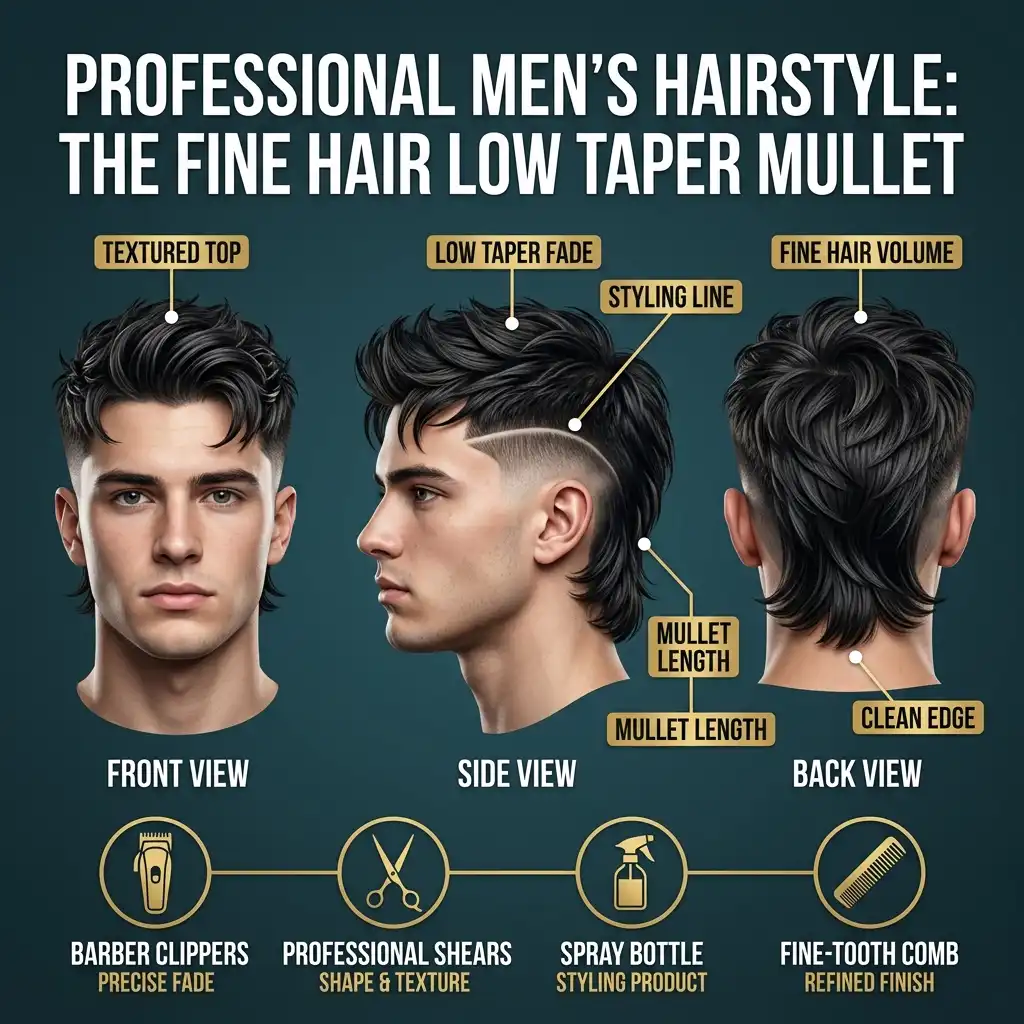
6. Fine Hair Low Taper Mullet
Layers are cut shorter through the crown here to fake density, since fine hair falls flat without help. Oval and heart faces do well with the lighter finish. Blow-dry upside down first, then finish with a lightweight volumizing spray.
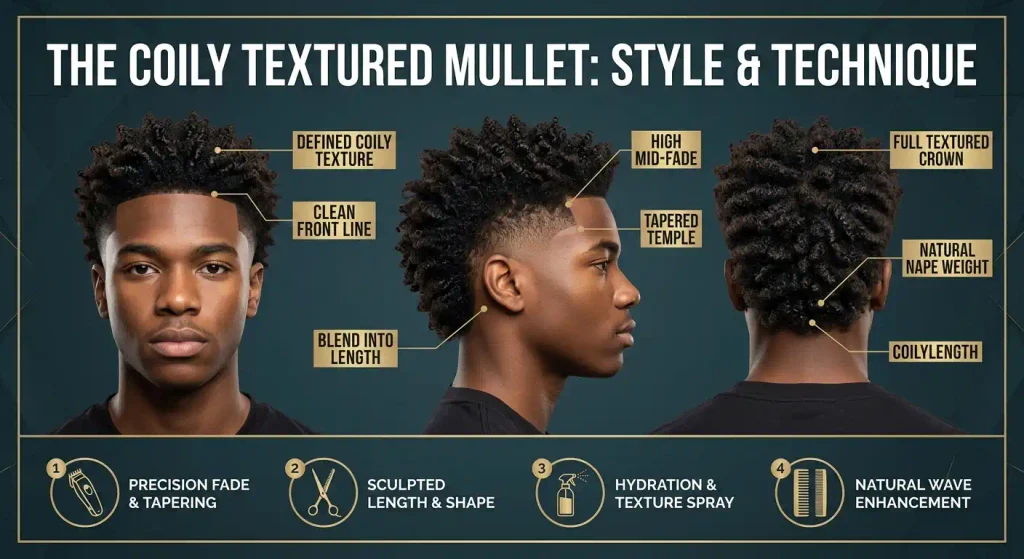
7. Coily & Textured Mullet
Built for coily or highly textured hair, the top is shaped into a rounded, defined form while the low taper keeps the perimeter sharp. Works across most face shapes since the coil pattern adds its own balance. A leave-in cream and twist-out method keeps definition without shrinkage.
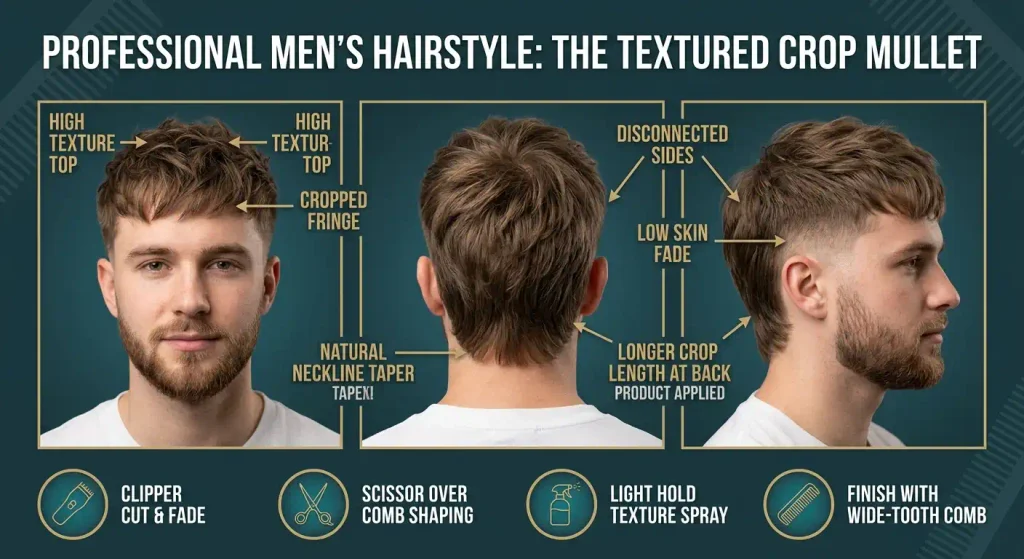
8. Textured Crop Mullet
Short, choppy pieces sit forward on top instead of sweeping back, giving a modern crop feel that still flows into mullet length at the back. Suits straight or wavy hair and most face shapes. Finger-style with a matte clay for separation.
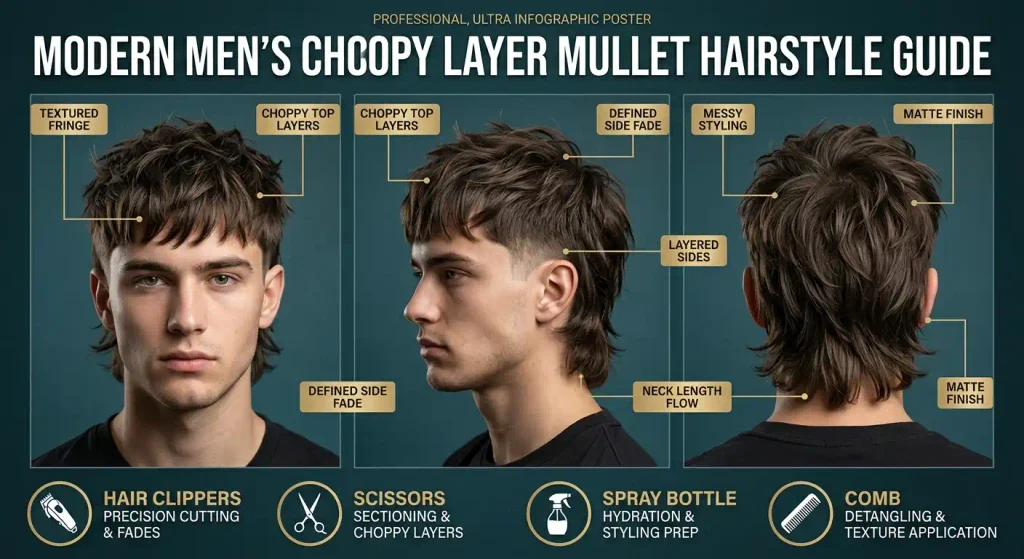
9. Choppy Layer Mullet
Heavy, uneven layering throughout the top and back creates a deliberately messy silhouette. Great for thick or wavy hair on round faces that want more angles. Rough-dry with fingers and a light paste rather than a comb.
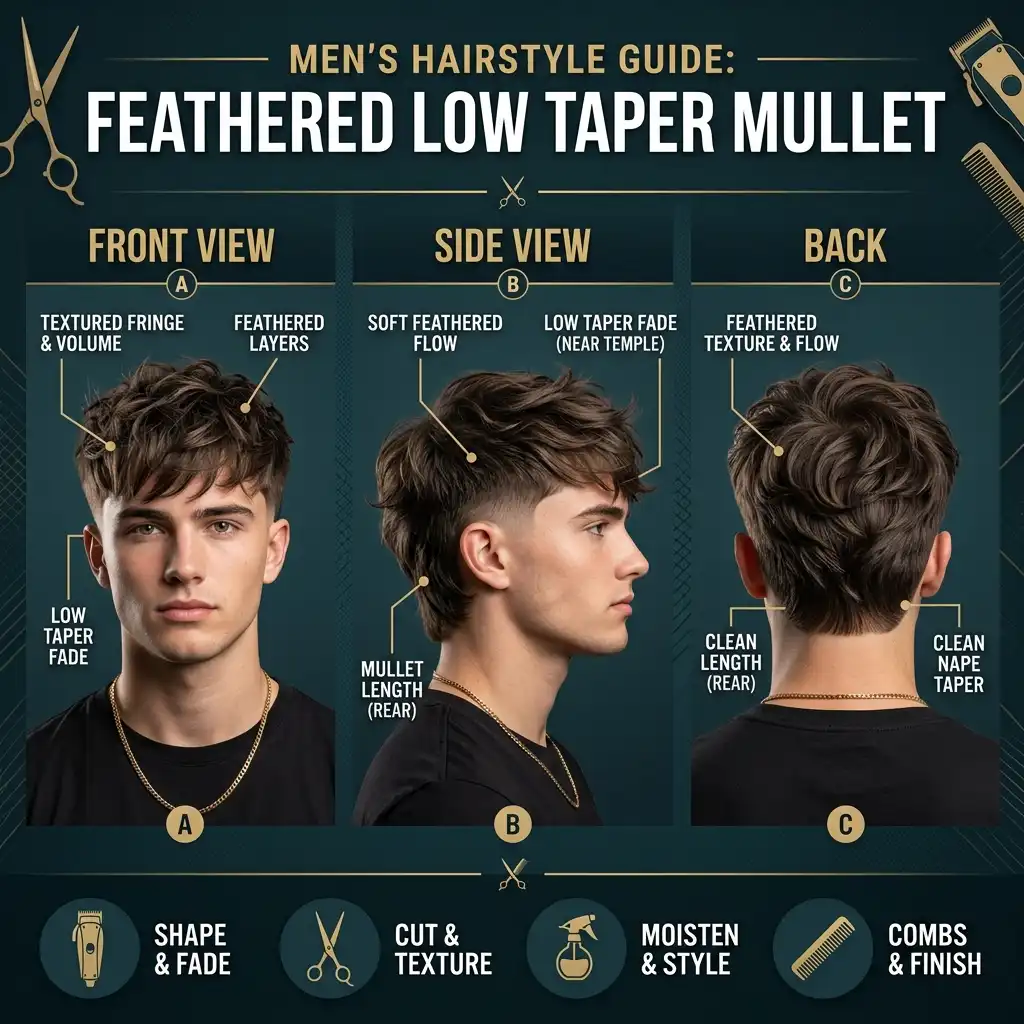
10. Feathered Low Taper Mullet
Ends are cut and blown out to flick slightly outward, a nod to the ’70s feathered look. Best on straight to wavy hair with an oval face. A round brush and light-hold spray hold the flick without stiffness.
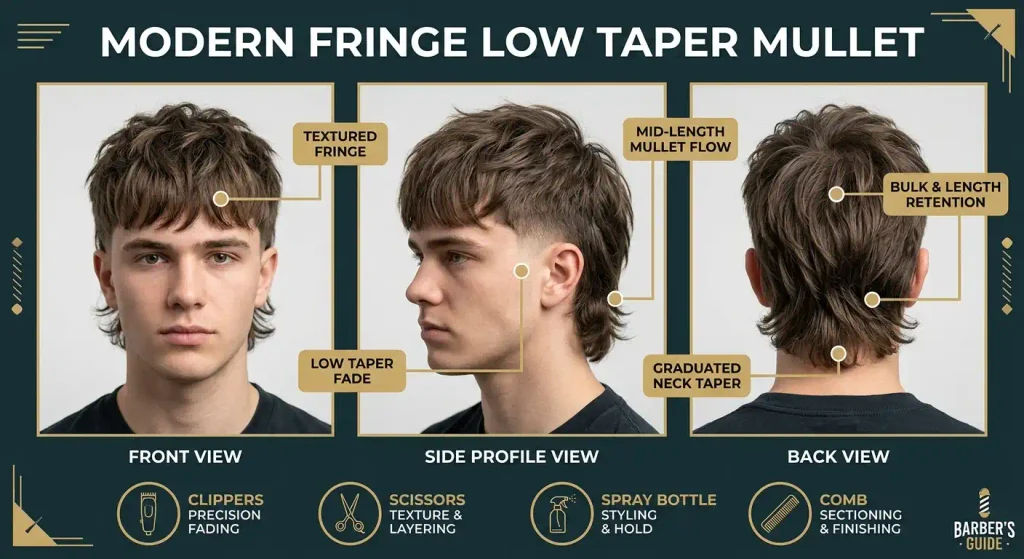
11. Fringe Low Taper Mullet
A full fringe sits across the forehead while the back carries the mullet length. Suits straight or wavy hair and rounder faces that want to soften a wide forehead. Blow-dry the fringe forward and set with a light cream.
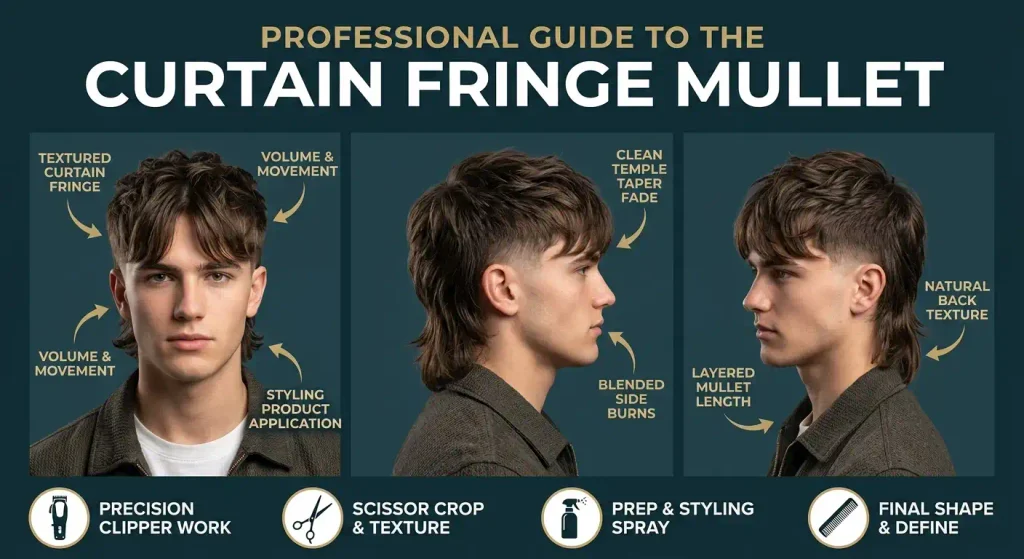
12. Curtain Fringe Mullet
The front splits into two soft pieces framing the face, curtain-style, while the crown and back stay long. Works well on oval and square faces with straight or wavy hair. Blow-dry each side outward from the middle part with a paddle brush.
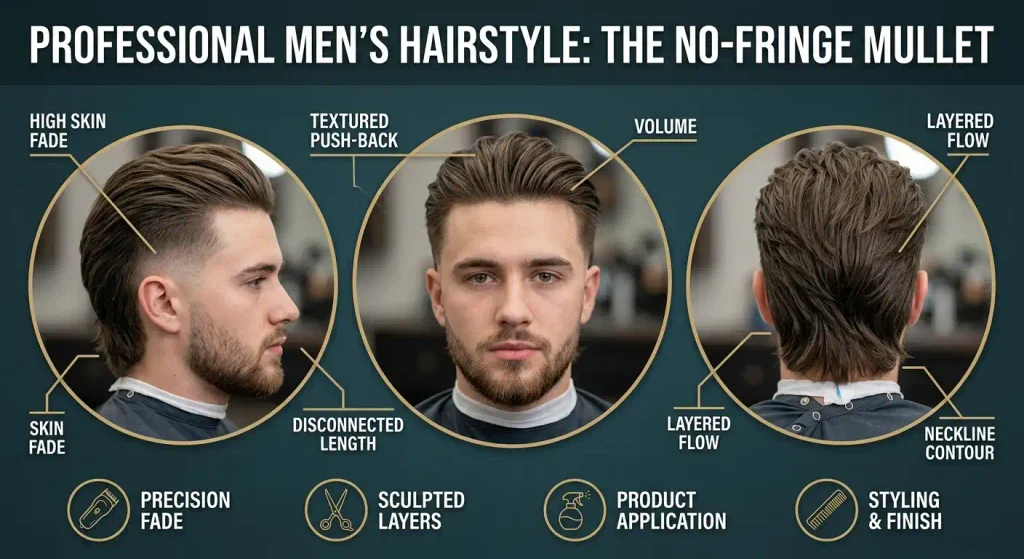
13. Pushed-Back No-Fringe Mullet
Every strand up top gets combed straight back off the face, leaving nothing forward. Suits any face shape with a strong hairline. A stronger-hold pomade or gel keeps the swept-back shape through a full day.
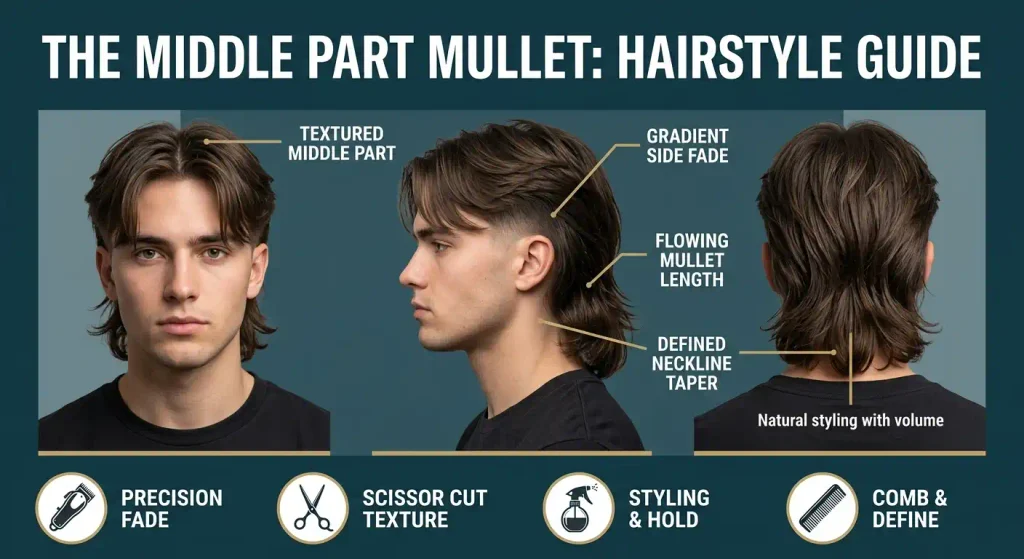
14. Middle Part Mullet
A clean center part divides the top into two even sections, a look that pairs naturally with straight or wavy hair. Best for oval and long faces. Comb from the part outward and finish with a light-hold cream.
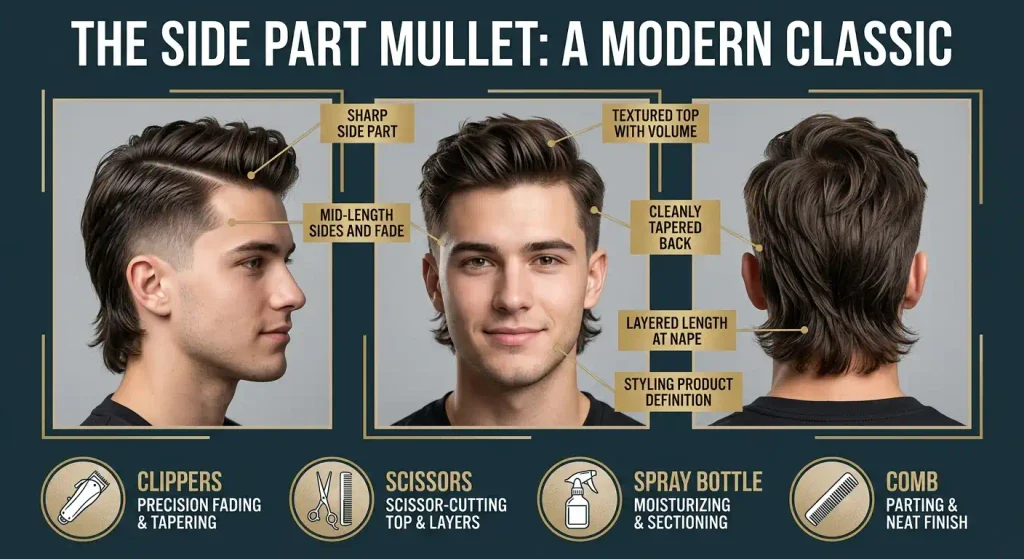
15. Side Part Mullet
A defined side part adds a sharper, slightly dressier edge to the same low taper base. Works for most hair types and square or round faces. Comb the part in while damp, then blow-dry in the direction of the part.
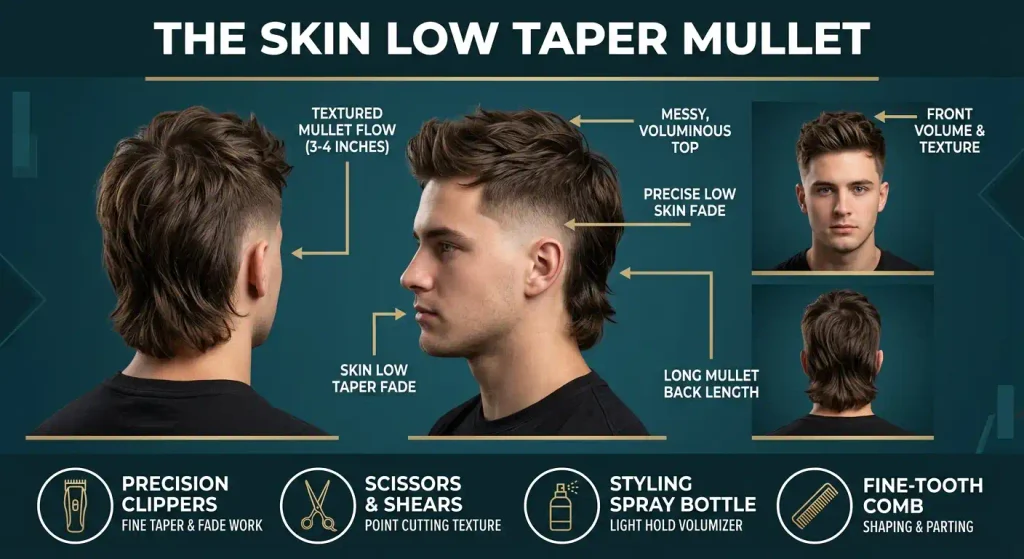
16. Skin Low Taper Mullet
The fade drops all the way to skin at its lowest point before blending up into the low taper, giving sharper contrast against the length on top. Best on straight hair for crisp lines. Needs more frequent barber visits to keep the skin section clean.
17. Low Burst Fade Mullet
Instead of a straight fade line, the taper curves around the ear in a burst pattern. Pairs especially well with curly or coily hair and adds an athletic edge. Works on most face shapes. Style the top loose to let the burst shape show.
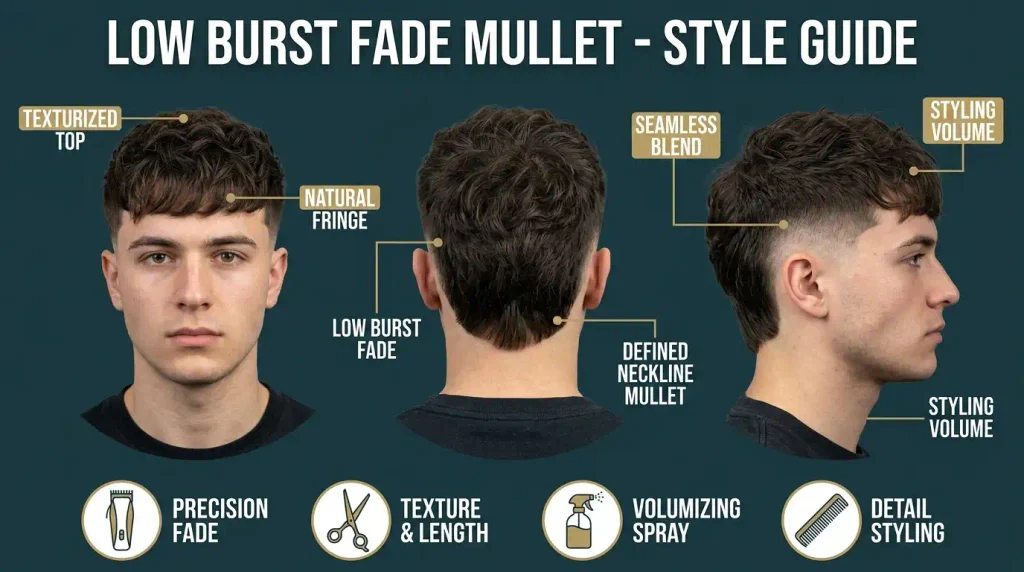
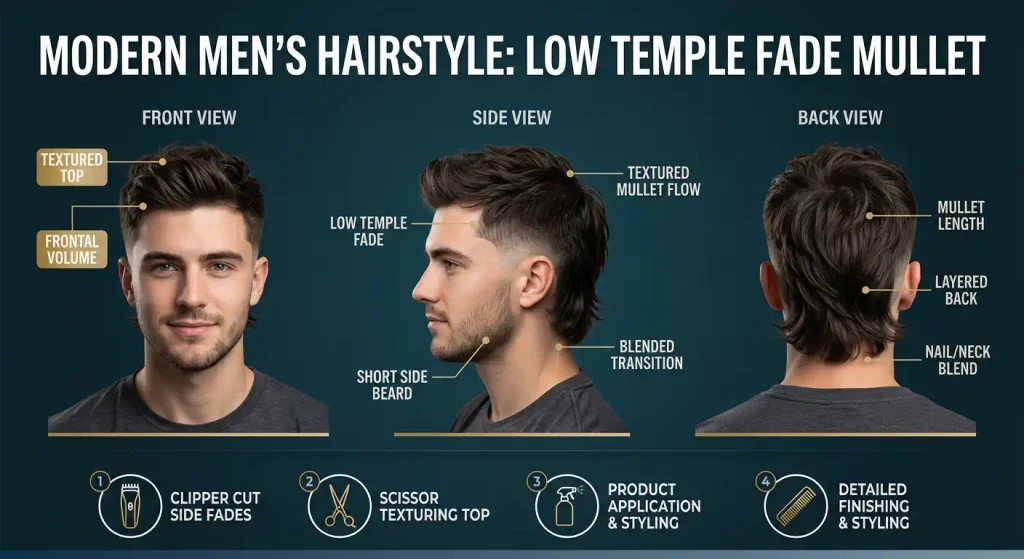
18. Low Temple Fade Mullet
The fade is concentrated around the temple area only, leaving more length lower on the sides than a full taper. Good for guys easing into a taper for the first time. Suits square and oval faces. Low upkeep between visits.
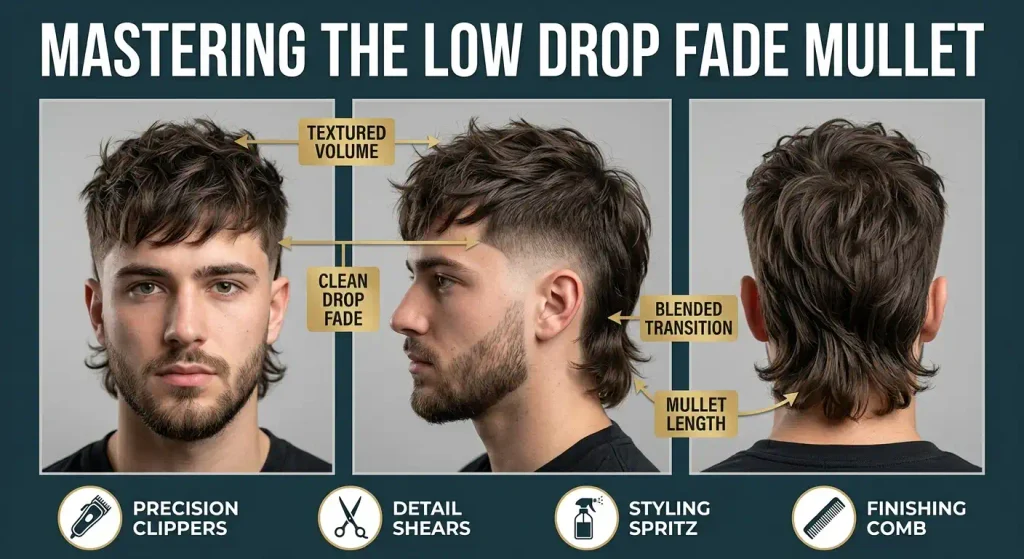
19. Low Drop Fade Mullet
The fade line drops lower behind the ear than at the front, following the skull’s curve. Flatters round faces by adding length visually. Works with straight or wavy hair. A skilled barber is worth seeking out for this one, since the drop line takes precision.
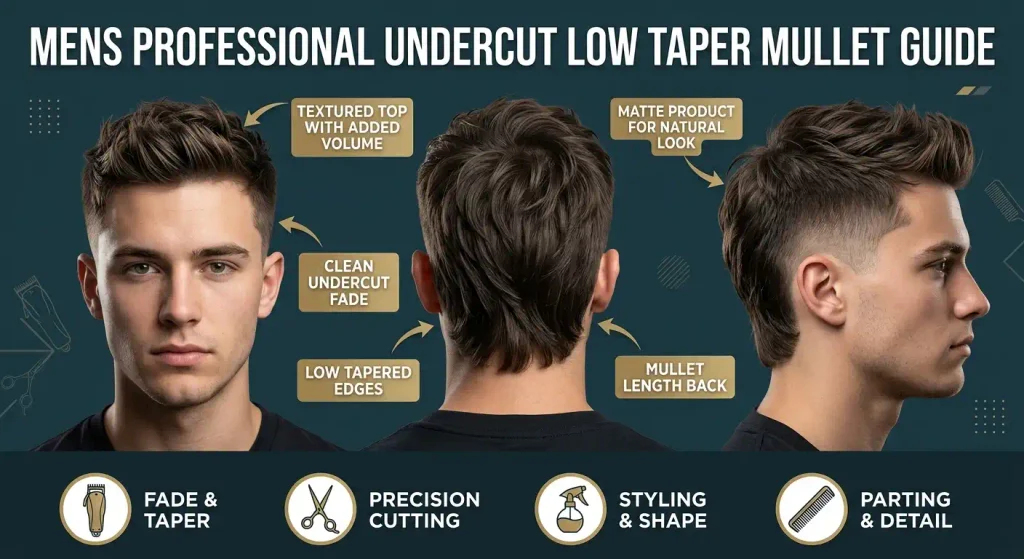
20. Undercut Low Taper Mullet
A disconnected undercut sits underneath the low taper, hidden until the top is pushed back or up. Suits straight hair and square faces best. Style the top swept back or up to reveal the undercut, or forward to hide it entirely.
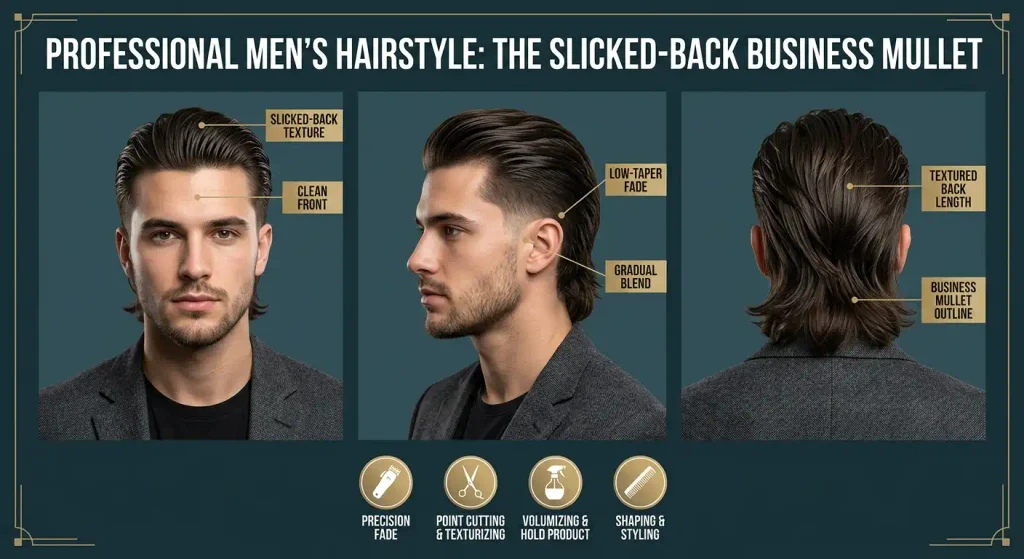
21. Slicked-Back Business Mullet
The top is grown out and combed straight back with a strong-hold pomade for a polished, boardroom-ready finish, while the low taper and back length keep the mullet identity intact. Works on oval and square faces with straight or thick hair.
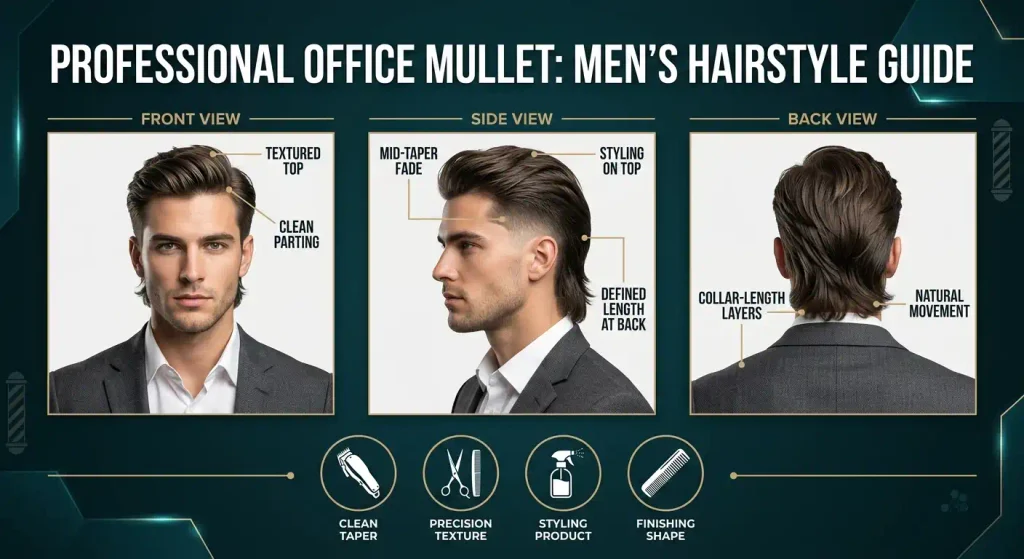
22. Professional Office Mullet
A more restrained take with a shorter back and subtler taper, built for workplaces that want tidy over dramatic. Suits any hair type and most face shapes. A light cream keeps it neat without shine.
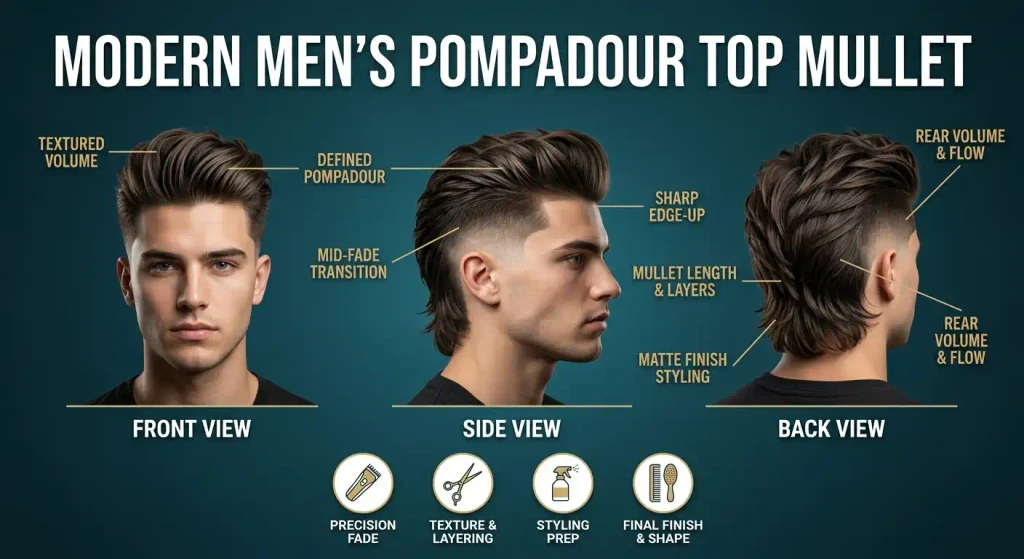
23. Pompadour Top Mullet
Extra height and volume up front, brushed up and back, contrast against the low taper sides and mullet length behind. Best for thick or wavy hair and oval faces. Blow-dry upward at the root, then set with a firm-hold pomade.
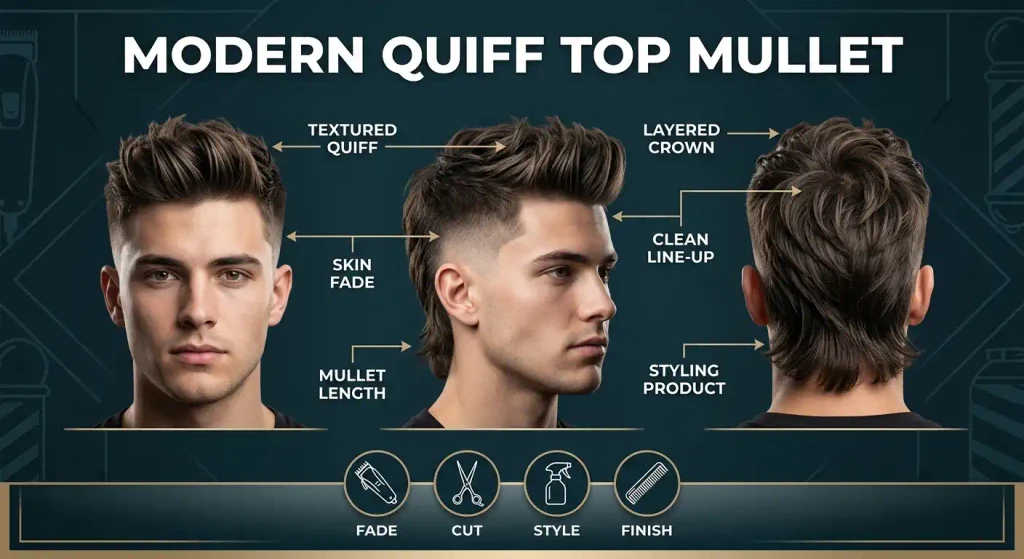
24. Quiff Top Mullet
A shorter, more relaxed cousin of the pompadour — swept up and slightly back rather than piled high. Works on most hair types and square or oval faces. Blow-dry with a light lift, then finish with matte paste for texture.
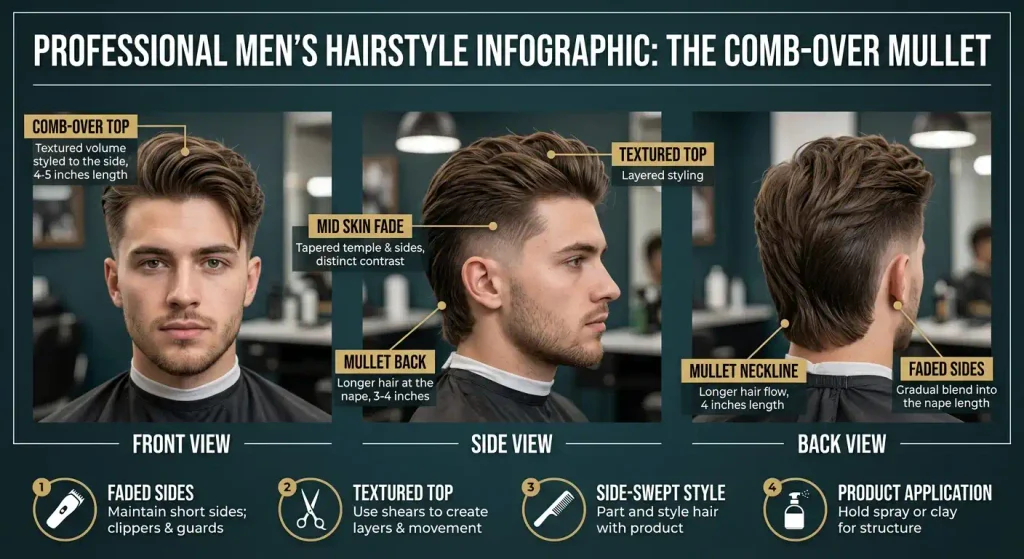
25. Comb-Over Mullet
The top is combed to one side over a defined part, with the low taper doing the heavy lifting for contrast. Suits straight and wavy hair on oval and round faces. Comb into place while damp and lock with a light-hold spray.
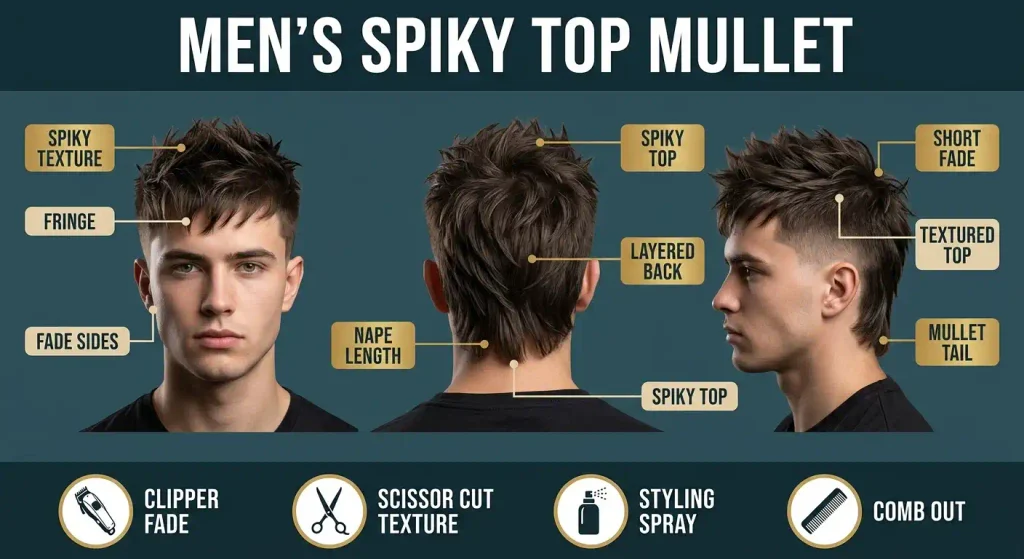
26. Spiky Top Mullet
Shorter pieces on top are worked into defined spikes using a strong wax, while the back stays in classic mullet length. Fits straight or coarse hair and most face shapes. Apply wax to dry hair and pinch pieces upward.
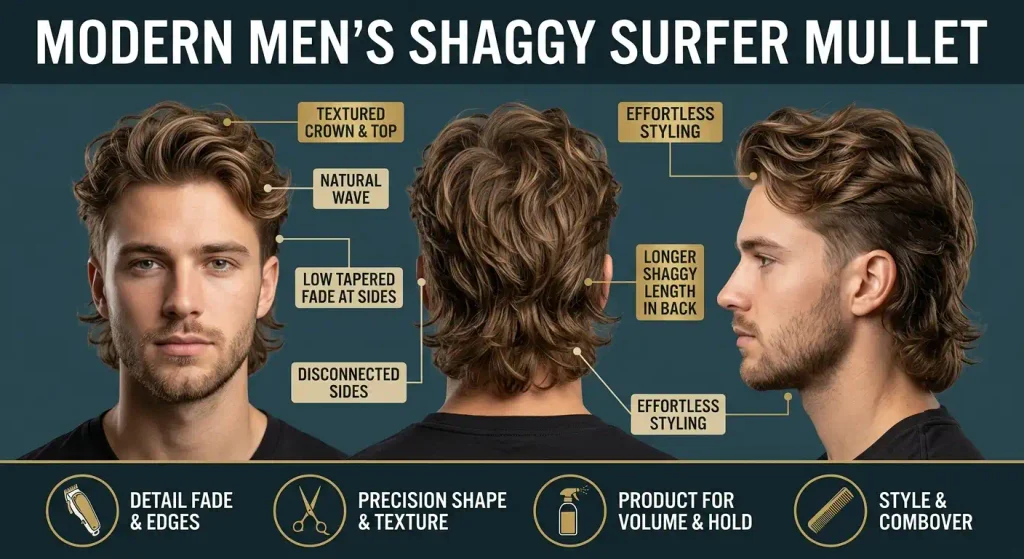
27. Shaggy Surfer Mullet
The lowest-effort option on this list: layers left uneven, dried naturally or with sea salt spray, no real part or direction required. Great for wavy or fine hair on oval faces. Reapply salt spray to refresh texture between washes.
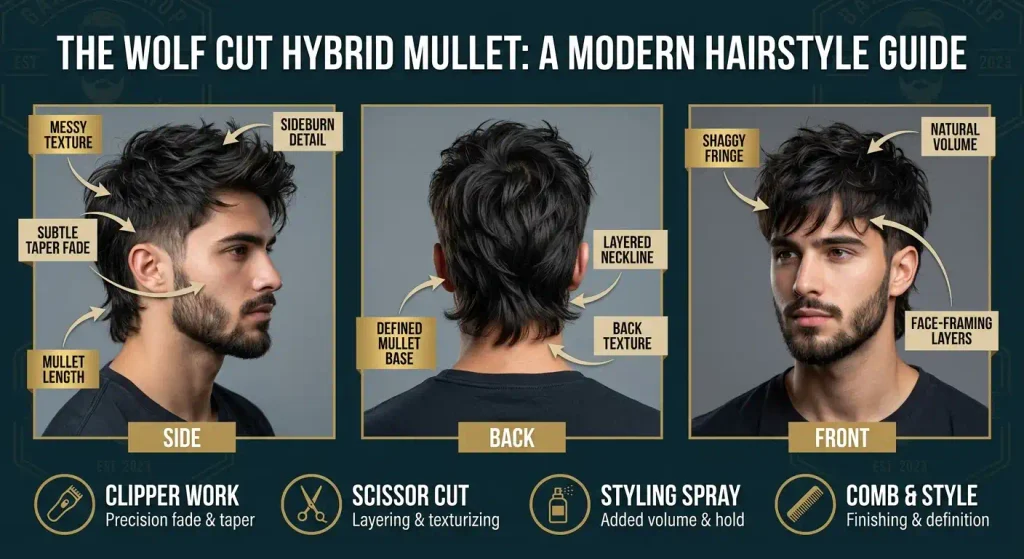
28. Wolf Cut Hybrid Mullet
Heavy layering and volume through the crown blur the line between a mullet and a shag, while the fade stays low underneath. Especially strong on wavy or curly hair since the layers amplify natural texture. Works on round and oval faces.
29. Modern Shag Mullet
Similar to the wolf cut but with softer, less choppy layering throughout for a smoother silhouette. Suits fine to medium hair and oval faces. Diffuse dry with a texturizing spray for lift without heaviness.
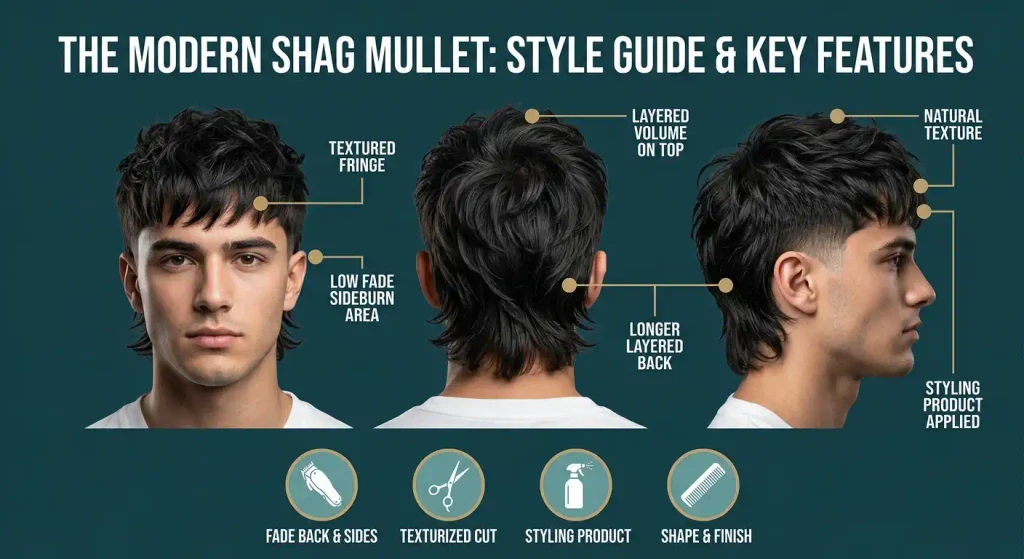
30. Mohawk Mullet
The sides taper all the way down while the center strip is left noticeably fuller than the rest of the top, creating a subtle mohawk shape that flows into the mullet back. Bold pick for straight or thick hair and square faces.
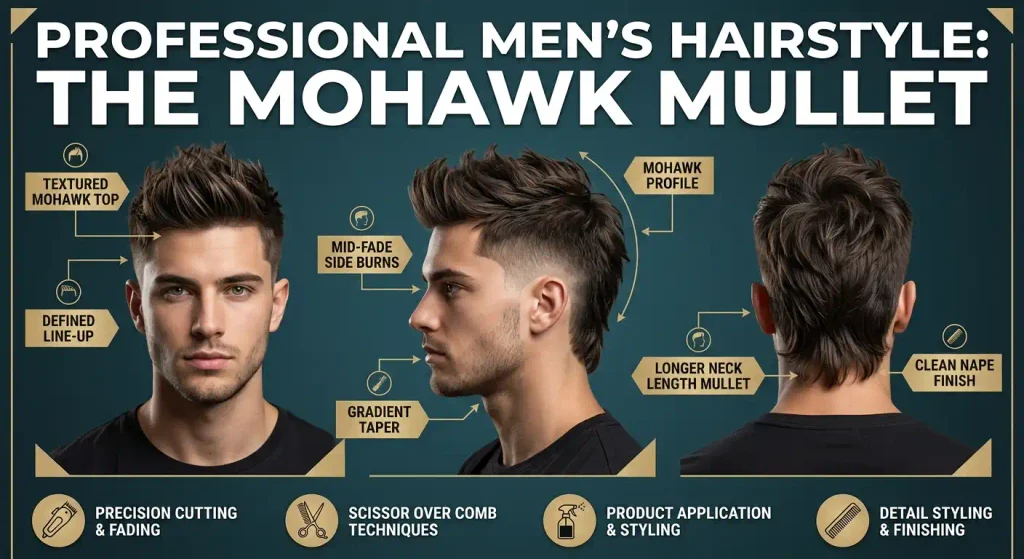
31. Two-Block Mullet
A K-pop-influenced shape where the top sits noticeably longer and fuller than the closely tapered sides, creating a visible “block” break rather than a gradual blend. Works on straight hair and oval faces. Style the top forward or swept to one side.
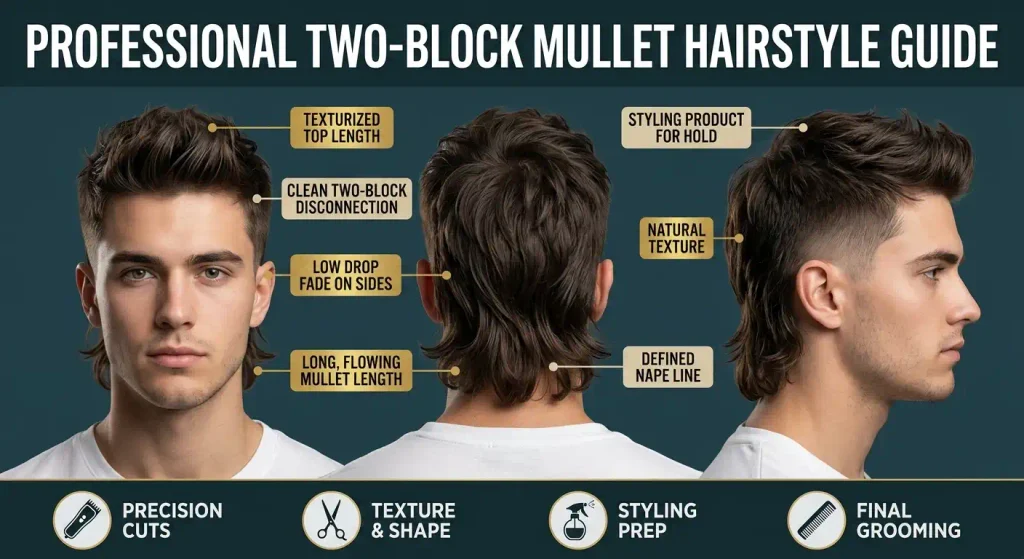
32. Disconnected Undercut Mullet
Instead of a gradual taper, the sides are cut short with a hard, visible line separating them from the longer top and back. Suits straight or wavy hair on square faces that want maximum contrast. Low daily styling effort once cut.
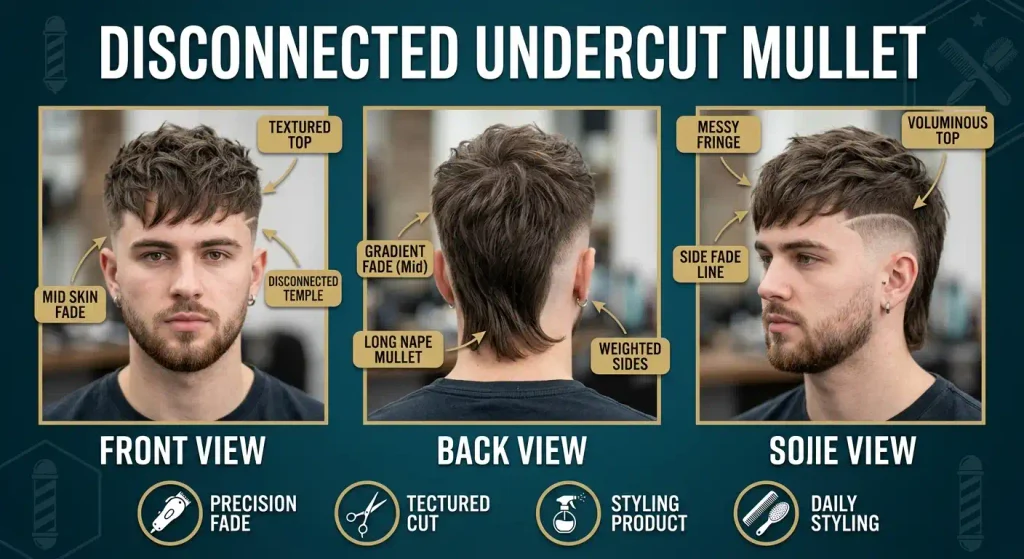
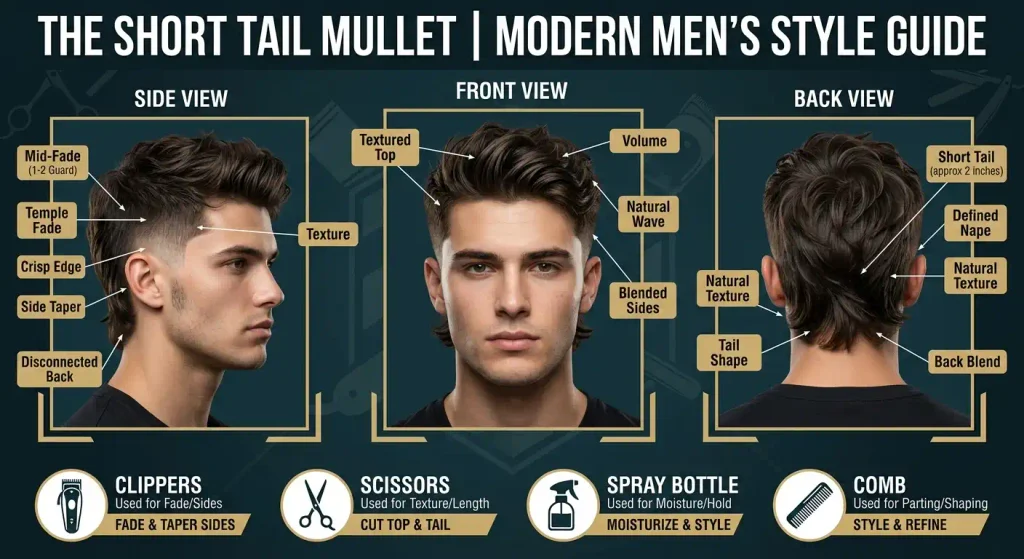
33. Short Tail Mullet
The back length is trimmed to just past the collar, a subtler entry point for guys who aren’t ready to commit to serious length. Fits any hair type and face shape. Barely needs styling beyond a comb-through.
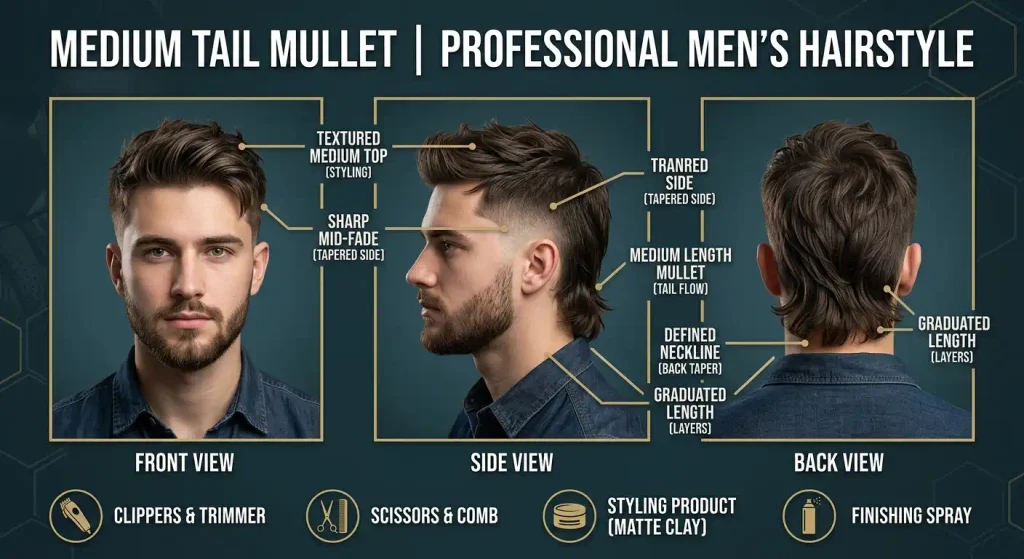
34. Medium Tail Mullet
A middle-ground length that reaches mid-neck, balancing visible mullet shape with everyday practicality. Suits straight, wavy, or curly hair and most face shapes. A light cream keeps the tail from splitting into separate pieces.
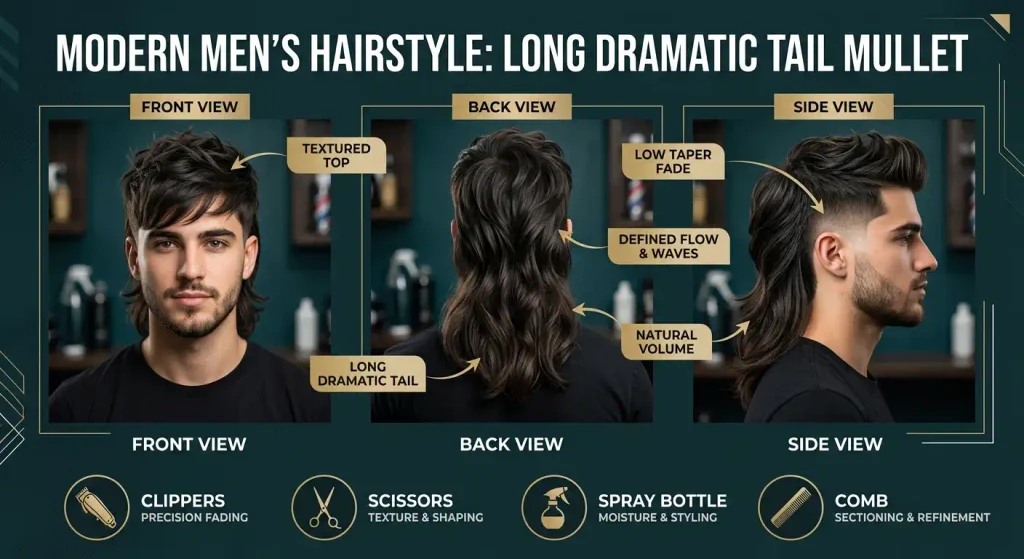
35. Long Dramatic Tail Mullet
Back length is grown well past the shoulders for a statement-level mullet, while the low taper keeps the sides from feeling heavy. Best for straight or wavy hair on oval and long faces. Requires more frequent conditioning to manage the extra length.
36. Extra-Long Rocker Mullet
Pushes length even further for a rock-star silhouette, often paired with a fuller, less structured top. Suits thick, straight, or wavy hair and most face shapes. Regular deep conditioning keeps the ends from looking worn.
37. Receding Hairline Mullet
The top is kept shorter near the hairline and layered back from there, drawing attention away from a receding front and toward the fade and length. Works with most hair types. A barber consult on placement matters more than styling here.
38. Thinning Crown Mullet
Layers are cut to add visual density right at the crown, while the low taper and back length distract from thinner areas. Suits fine to medium hair on any face shape. A root-lifting spray adds extra help.
39. Gray & Silver Fox Mullet
Natural gray or silver hair is left untouched or lightly toned, letting the color itself become the statement against a crisp low taper. Works on any face shape. A purple or silver shampoo keeps brassiness from creeping in.
40. Bleached Platinum Mullet
Hair is lifted to a pale blonde or platinum shade for maximum contrast against dark, faded sides. Best on straight or wavy hair and any face shape confident enough to stand out. Needs a bond-repair treatment and toning shampoo to stay healthy.
41. Color Highlight Mullet
Subtle highlights or balayage are woven through the top and back to add dimension without a full bleach job. Suits any hair type and face shape. A color-safe shampoo and occasional gloss treatment protect the tone.
42. Redhead Mullet
Natural or dyed red hair paired with a low taper reads warm and bold at the same time. Works especially well with fair or warm skin tones and any face shape. A color-depositing conditioner keeps red tones vibrant between salon visits.
43. Sleek Straight Mullet
Fine, dead-straight hair is left completely natural with no added texture, letting the clean lines of the low taper and the length do all the talking. Suits oval and square faces. A flat iron on cool hair locks the sleek finish.
44. Kids & Teen Mullet
A shorter, easier-to-manage version with a gentler taper and less dramatic back length, built for growing hair and school dress codes. Fits any hair type and face shape. Wash-and-go styling with a light cream is usually all it needs.
45. Mature Men’s Mullet
A refined take with a shorter tail and softer taper that reads more distinguished than dramatic, suited to hair that’s changed texture or thinned with age. Works on any face shape. A lightweight styling cream avoids weighing down finer strands.
46. Beard-Paired Mullet
The mullet is cut to balance visually with a full or medium beard, often with slightly more length up top to match the beard’s volume. Suits square and oval faces. Beard oil and a matching top-styling product keep both looking intentional.
47. Retro Throwback Mullet
Leans into the ’80s original with fuller volume, a rounder shape, and less blending between the fade and length than modern versions use. Best on thick or wavy hair and square faces. A volumizing mousse recreates the era-accurate lift.
48. Women’s Shullet
The women’s version of the low taper fade mullet — shorter, shaped sides and a taper that blends into longer, often layered length on top and back. Works across straight, wavy, and curly hair and most face shapes. Styles the same as the men’s cut, from slicked back to air-dried texture.
This Style vs. Other Taper/Fade Options
| Style | Fade/Taper Height | Guard Range | Best Face Shapes | Styling Difference |
| Classic Low Taper Mullet | Just above the ear | #2–#4 blending to skin | Oval, square | Comb back, light pomade |
| Curly Low Taper Mullet | Just above the ear | #2–#4 | Round, heart | Curl cream, diffuse or air-dry |
| Skin Low Taper Mullet | To skin, low on the head | #0 to skin | Oval, square | Needs frequent touch-ups |
| Low Burst Fade Mullet | Curved around the ear | #1–#3 | Most shapes | Loose top to show the curve |
| Professional Office Mullet | Just above the ear, tighter overall | #2–#3 | Most shapes | Light cream, minimal volume |
| Wolf Cut Hybrid Mullet | Just above the ear | #2–#4 | Round, oval | Texturizing spray, no smoothing |
| Long Dramatic Tail Mullet | Just above the ear | #2–#4 | Oval, long | Extra conditioning for length |
| Women’s Shullet | Just above the ear | #2–#4 | Most shapes | Same range as men’s, shaped ends |
Why This Style Works / Who It Suits
The low taper fade mullet earns its popularity because the fade does the hard work of looking barbered while the length up top and in back stays entirely flexible. Someone with straight, fine hair can wear a short, tidy tail. Someone with thick curls can let the same base grow into a much bigger shape. That range is rare in a single haircut.
It also suits guys who don’t want to commit to a bold statement cut but still want more than a standard short-back-and-sides. Because the taper stays low and close to the hairline, it reads as clean in professional settings, then the length in back gives it personality everywhere else. Round and oval faces tend to have the easiest time with it, though square and long faces can wear specific variations (temple fades, curtain fringes, feathered ends) that were built with them in mind.
How to Style It
- Wash and towel-dry. Get hair to damp, not soaking — most products work better on damp hair than dripping wet hair.
- Apply your product. Cream or curl cream for texture and softness, clay or paste for hold and matte finish, pomade for shine and control.
- Rough-dry the top. Use a blow dryer on medium heat, lifting at the roots with your fingers or a brush if you want volume.
- Shape the length. Comb or finger-style the back and top into your chosen direction — back, forward, to the side, or left loose.
- Set with a light-hold spray if needed. Only necessary for styles meant to hold a specific shape through the day.
- Check the fade line. A quick pass with a comb along the taper keeps the transition looking sharp, not grown-out.
How to Ask Your Barber for This Cut
Walking in with the right words saves you from a fade that’s too aggressive or a mullet that’s barely there. Use this as your base request:
“I’d like a low taper fade — keep it soft and close to the hairline, blending up from around a #2 or #3. Leave the top and back long enough to grow into a mullet shape, and don’t take too much off the length in back.”
Add one of these depending on the variation you want:
- For a skin fade base: “Take the very bottom of the taper down to skin, but keep the blend gradual, not a hard line.”
- For a curly or textured version: “Keep the length up top a bit fuller since I want the curl pattern to show — don’t thin it out too much.”
- For a subtler, work-friendly look: “Keep the back shorter, just past the collar, and keep the overall taper tighter so it reads neat.”
- For a burst fade: “Curve the fade around my ear instead of a straight line up the side.”
Step-by-Step Tutorial of a Low Taper Fade Mullet
- Consultation and sectioning. The barber assesses hair type, growth pattern, and face shape, then sections the top, sides, and back.
- Cut the length on top and back first. Working from longer to shorter avoids taking off too much before the fade is even started.
- Establish the guide line. A guard is chosen for where the taper will start, usually around the natural low point above the ear.
- Blend the taper. Clippers move upward in overlapping passes, gradually shortening the guard size to create a smooth transition rather than a visible line.
- Detail the edges. A trimmer or razor cleans up the hairline, sideburns, and neckline for sharp edges.
- Blend the top into the taper. Scissor-over-comb or clipper-over-comb work connects the longer top hair to the faded sides without a harsh break.
- Shape the back. The back is layered or left blunt depending on the desired mullet shape, then checked against the front for balance.
- Style and final check. The barber styles the finished cut and checks the fade, length, and symmetry from multiple angles before you leave the chair.
Best Styling Products for a Low Taper Fade Mullet
- Texturizing sea salt spray — builds natural-looking wave and grit, especially good for wavy or shaggy styles.
- Matte clay or paste — strong hold with no shine, ideal for textured crops, spiky tops, and choppy layers.
- Curl-defining cream — controls frizz and enhances curl pattern for curly or coily variations.
- Pomade (light or firm hold) — best for slicked-back, comb-over, and business-leaning looks.
- Volumizing mousse or root spray — adds lift for fine hair or thinning crowns.
- Heat protectant spray — a must before any blow-drying or flat-ironing, especially on color-treated hair.
- Color-safe or purple/silver shampoo — keeps bleached, highlighted, or gray hair from turning brassy.
- Lightweight leave-in conditioner — helps manage the extra length in longer-tail variations.
Common Mistakes to Avoid with a Low Taper Fade Mullet
- Skipping regular trims. The taper grows out faster than the length on top, so waiting too long between visits blurs the whole shape.
- Using too much product on fine hair. Heavy pomades and creams weigh fine strands down and flatten volume fast.
- Going in without reference photos. “Just do a mullet” leaves too much room for interpretation — bring a photo close to what you want.
- Ignoring face shape when picking a fringe style. A heavy fringe on an already round face can shorten it further than intended.
- Letting the fade grow out unevenly. A soft taper still needs upkeep — it doesn’t stay sharp forever on its own.
- Overwashing. Washing daily strips natural oils that help texture and curl definition hold their shape.
Best Hair Types & Face Shapes
Straight hair takes the cut in almost any direction — sleek, slicked back, or textured with product — and shows the fade line the most clearly.
Wavy hair needs the least effort, since the natural wave pattern does most of the styling work with just a spray and air-dry.
Curly and coily hair benefit from keeping more length up top so the curl pattern has room to show rather than getting cut into a shape that fights the natural texture.
Fine hair does best with shorter layers through the crown and lightweight products, since heavier creams and long, weighty ends flatten it fast.
Round faces generally look best with more height on top and a tighter taper on the sides, avoiding heavy fringes that add width.
Square faces can handle almost any variation, including sharper disconnected or two-block styles that play up strong jaw structure.
Oval faces are the most flexible of all and suit nearly every style on this list without much adjustment.
Long faces benefit from styles with more width or volume at the sides — like the wolf cut hybrid or a fuller retro throwback — rather than styles that add extra height.
Maintenance & Upkeep
The taper needs attention more often than the length does. Most guys keep the fade sharp with a trim every 2 to 4 weeks, while the length on top and in back can go 8 to 12 weeks or longer between real cuts, depending on how fast you want it to grow.
At home, wash 2 to 3 times a week rather than daily to protect natural texture, and follow with a conditioner suited to your hair type — lightweight for fine hair, richer for thick or curly hair. Trim split ends on longer tails every couple of months to keep the length looking healthy instead of stringy. If you color or bleach any part of the style, a toning or color-safe shampoo once or twice a week helps the shade hold between salon visits.
FAQ
How long does hair need to be to start a low taper fade mullet? Most barbers can work with hair around 3 to 4 inches on top and back, though shorter hair can still be shaped into a starter version like the Short Tail Mullet (#33) while the rest grows in.
Does a low taper fade mullet suit thin hair? Yes, especially variations built for it, like the Fine Hair Low Taper Mullet (#6) or Thinning Crown Mullet (#38), which use shorter crown layers and lightweight products to fake density.
How often should I get the fade touched up? Every 2 to 4 weeks keeps the taper sharp, since it grows out faster and more visibly than the longer top and back sections.
Can I get a low taper fade mullet with curly hair? Definitely — the Curly Low Taper Mullet (#2) and Coily & Textured Mullet (#7) are both built specifically to let natural curl pattern show instead of fighting it.
Is this haircut professional enough for an office job? Several variations, including the Professional Office Mullet (#22) and Slicked-Back Business Mullet (#21), are designed with workplace settings in mind, keeping the taper tighter and the back shorter.
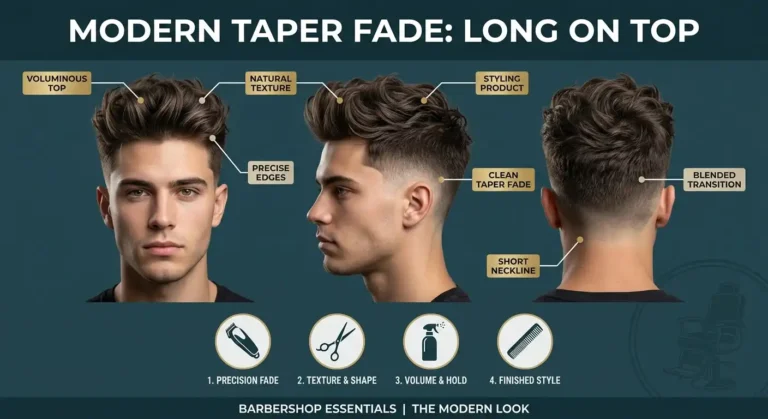
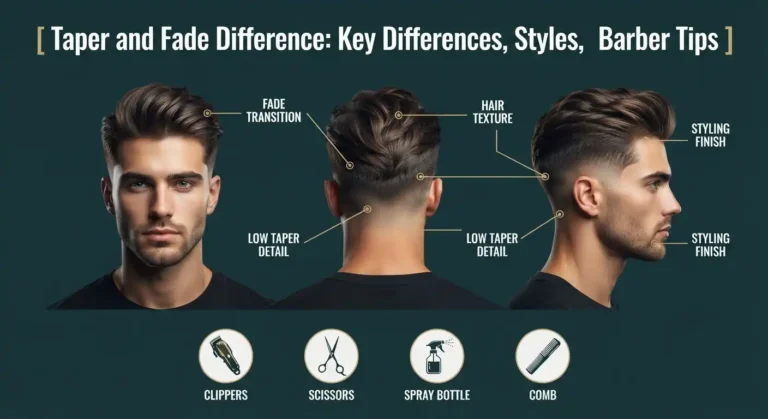
What’s the difference between a taper and a fade? A taper gradually shortens hair without necessarily going to skin, while a fade blends down to skin at some point. A low taper fade mullet typically blends toward skin low on the head, near the ear, rather than higher up.
Will this haircut work with a receding hairline? Yes — the Receding Hairline Mullet (#37) shifts the styling focus toward the fade and length rather than the front hairline, which can help minimize how noticeable the recession looks.
Can women get this haircut too? Yes, it’s often called a shullet on women, styled the same way as the men’s version — see the Women’s Shullet (#48) for the general shape and styling notes.
Final Thoughts
A mullet haircut long hair low taper fade combo gives you a lot of room to make the cut your own, whether that means a subtle office-ready version or a full rocker-length statement.
Start with the base request above, pick the variation from this list that matches your hair type and face shape, and keep up with regular taper trims so it stays sharp as the length grows.
Name: Ryan Cole
Role: Lead Grooming Editor, TaperHaircutGuide.com
Bio angle: Men’s grooming/style content researcher — 4+ years covering barbering trends, hairstyling terminology, and men’s style content for US audience. Cross-checks every guide with practicing barbers before publishing.