How to Do a Taper Fade for Beginners: The Complete Guide (30 Style Ideas)

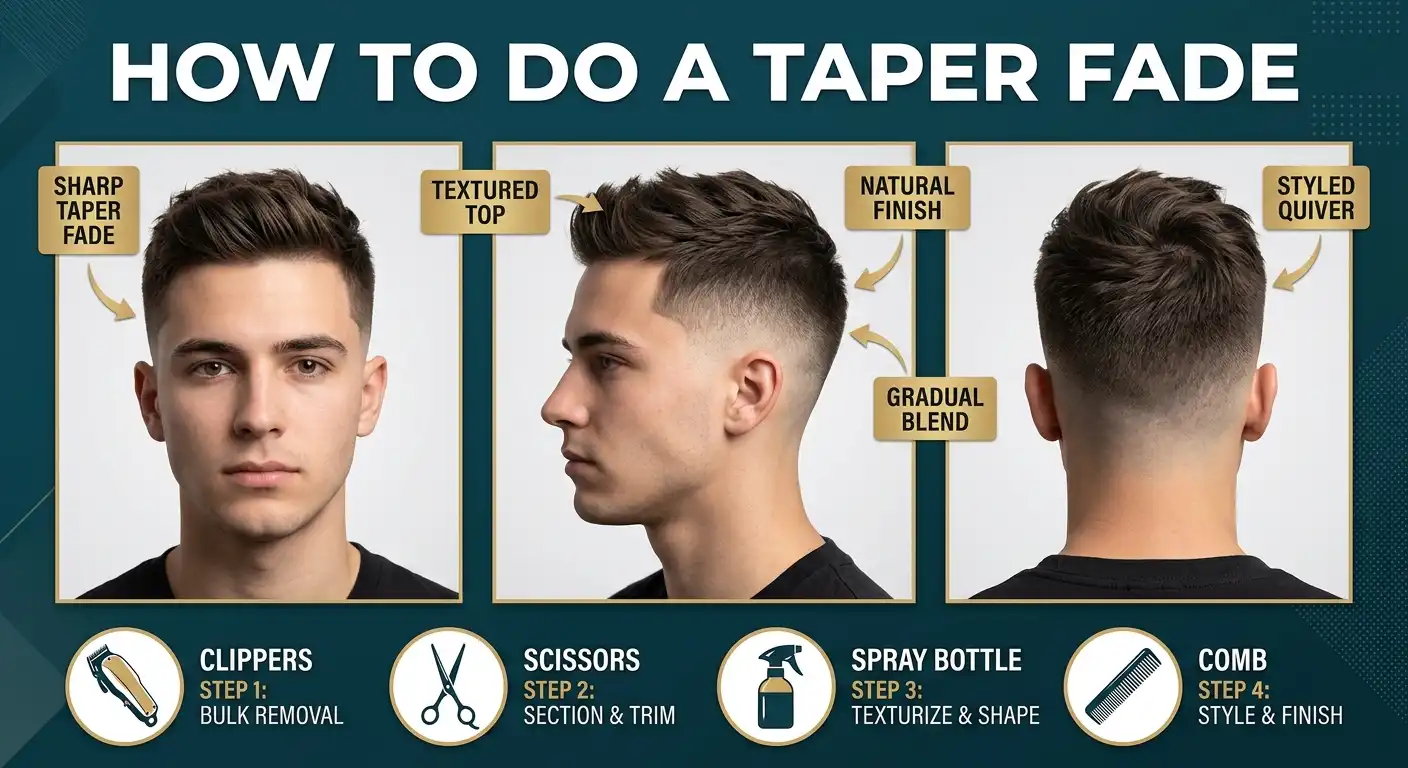
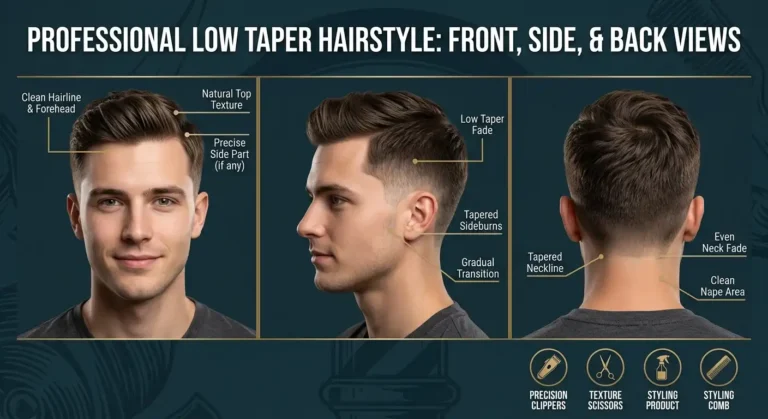
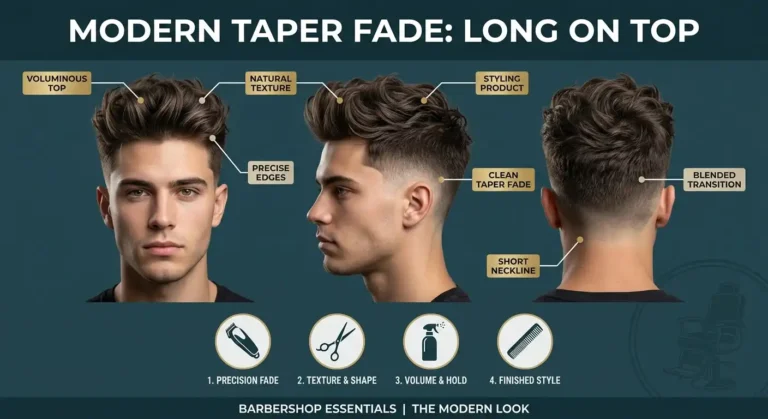
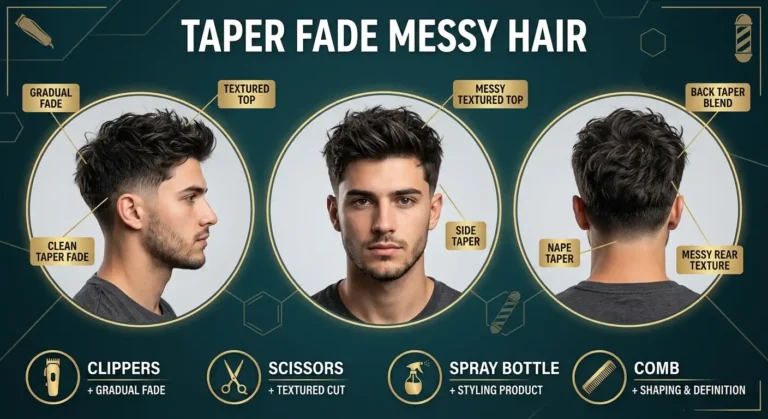
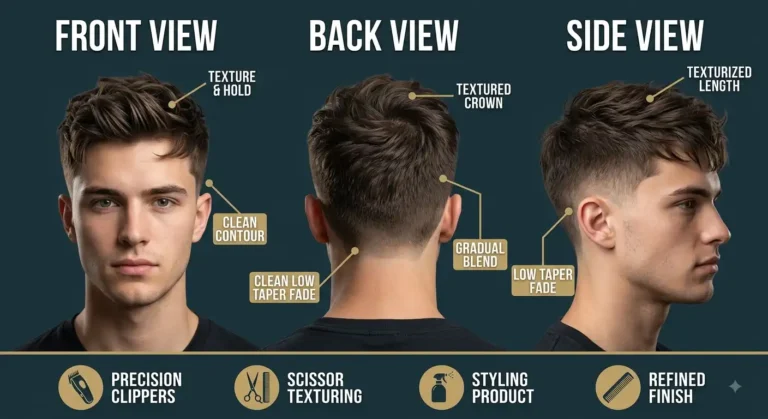
Learning how to do a taper fade starts with understanding what the cut actually is: hair that gradually shortens from long on top to short at the sides and back, blending into the skin or a close guard length with no harsh lines. It’s the most requested men’s haircut in most barbershops because it works on almost any hair type, face shape, and lifestyle.
This guide walks you through 30 style variations, the exact words to use with your barber, tools for cutting it yourself, and a full maintenance routine so the cut stays sharp between visits.
Quick Key Takeaways
| Style | Guard Range | Best For | Trim Frequency |
| Classic Low Taper Fade | #1–#3 | Round or oval faces, first-timers | 3–4 weeks |
| Mid Taper Fade | #1–#4 | Most face shapes, everyday versatility | 2–3 weeks |
| Skin Taper Fade | #0–#3 | Oval or diamond faces, low-maintenance top | 2–3 weeks |
| Curly Taper Fade | #1–#4 (sides), scissor top | Curly or coily hair | 3–4 weeks |
| Burst Taper Fade | #1–#3 | Diamond or angular faces | 2–3 weeks |
30 Taper Fade Styles to Show Your Barber
Barbers group taper fades into a handful of families based on where the fade starts and what happens on top. Below are 30 distinct variations, organized into six categories so you can find the right starting point for your hair type and face shape.
Low Taper Fades (Classic & Everyday)
A low taper keeps the shortest section close to the ears, so the change in length is subtle even up close.
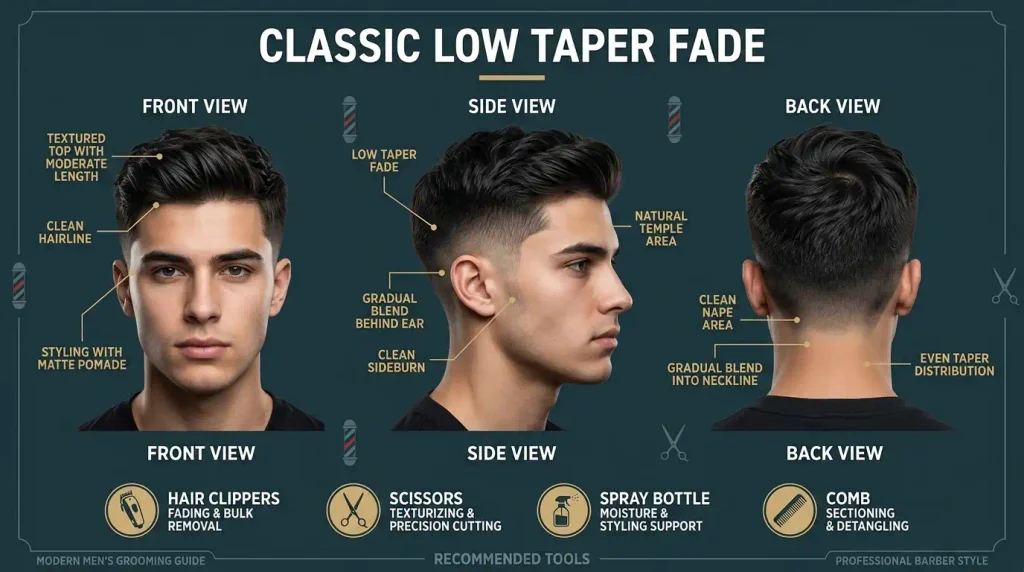
1. Classic Low Taper Fade
Sides fade from a #2 on top of the fade zone down to a #1 or skin right above the ear, leaving the crown untouched. Round and oval faces suit this best because the low contrast doesn’t add extra width. Light pomade keeps the top controlled without weighing it down.
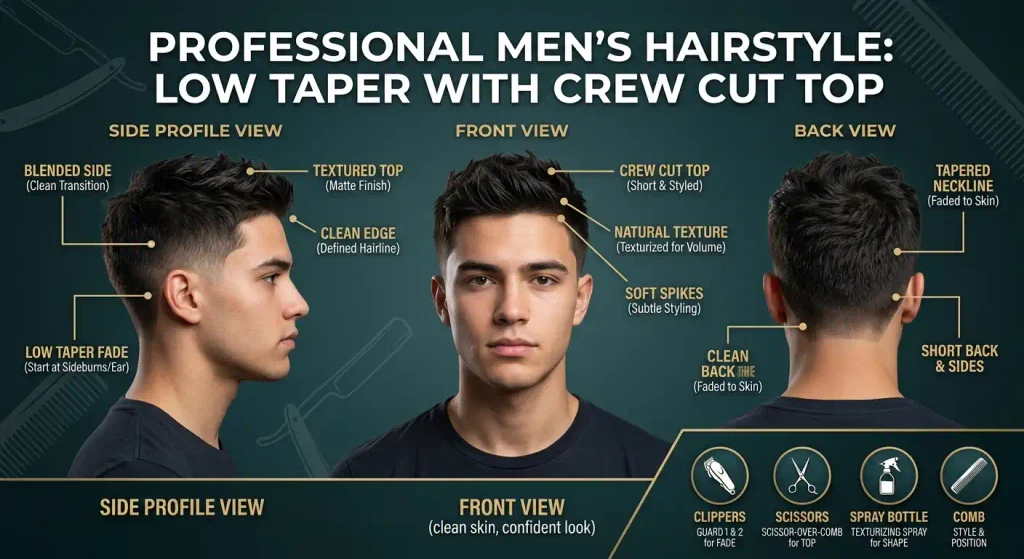
2. Low Taper With Crew Cut Top
A short, uniform #3 crop sits on top while the fade stays tight around the ears. Thick, straight hair holds this shape well without flattening. Matte clay adds texture while keeping the crop from looking greasy.
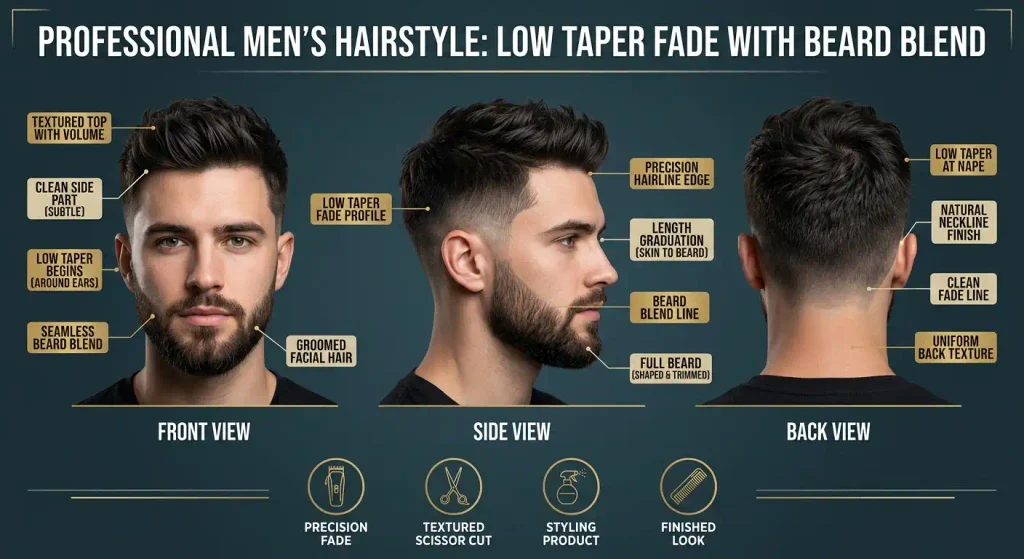
3. Low Taper Fade With Beard Blend
The fade line curves down and connects directly into a trimmed beard, so there’s no visible gap along the jaw. Square and rectangular faces benefit from the extra definition this adds. A light pomade on top pairs with beard balm to keep both sections neat.
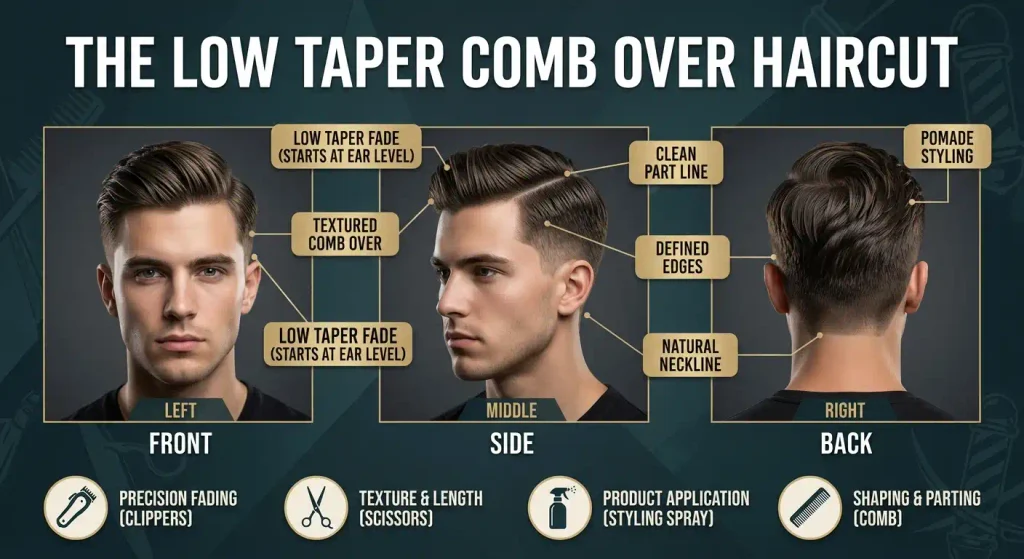
4. Low Taper Comb Over
Longer hair on top gets swept to one side over a low, subtle fade. Oval and heart-shaped faces work well with the asymmetry. Firm-hold pomade or a light gel holds the sweep through the day.
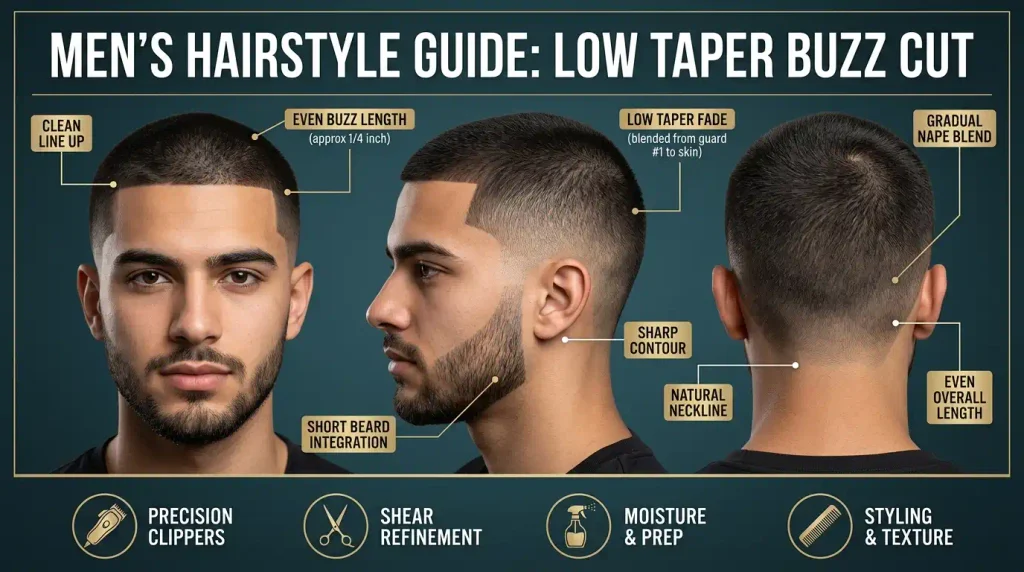
5. Low Taper Buzz Cut
An even #3 or #4 all over the top blends straight into a low #1 fade with almost no drop-off. Round faces looking for a low-key cut without added width should start here. This one needs little to no product, just a touch of matte spray if shine is a concern.
Mid Taper Fades (Balanced Versatility)
Starting the fade halfway up the side gives more visible contrast without going as bold as a high fade.
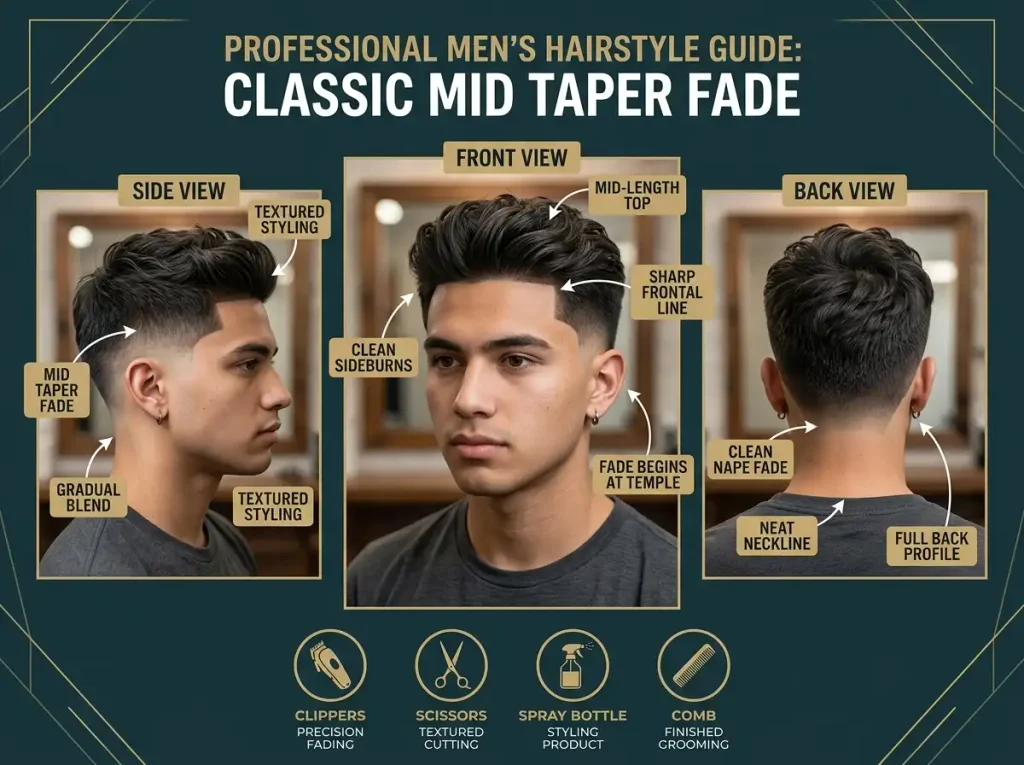
6. Classic Mid Taper Fade
The fade begins around the middle of the side, giving noticeable but not extreme contrast against the top. Nearly every face shape handles this ratio well, which is why barbers default to it when a client just says “give me a taper.” Medium-hold clay is the standard finish here.
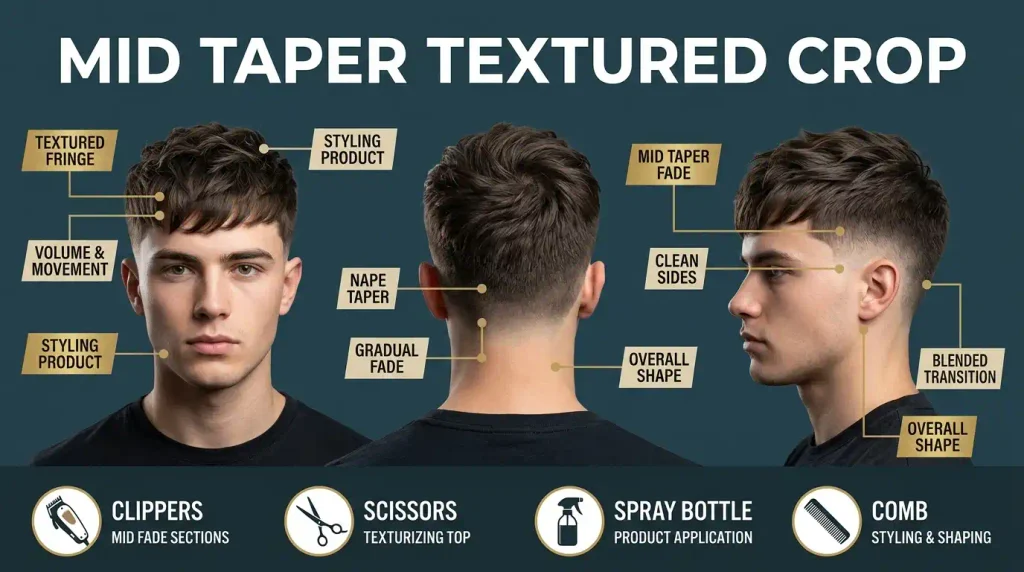
7. Mid Taper Textured Crop
Choppy, piece-y texture on top sits above a mid fade for a lived-in look. Square faces get some softness from the broken-up top. Texture paste worked through damp hair brings out the choppy pieces.
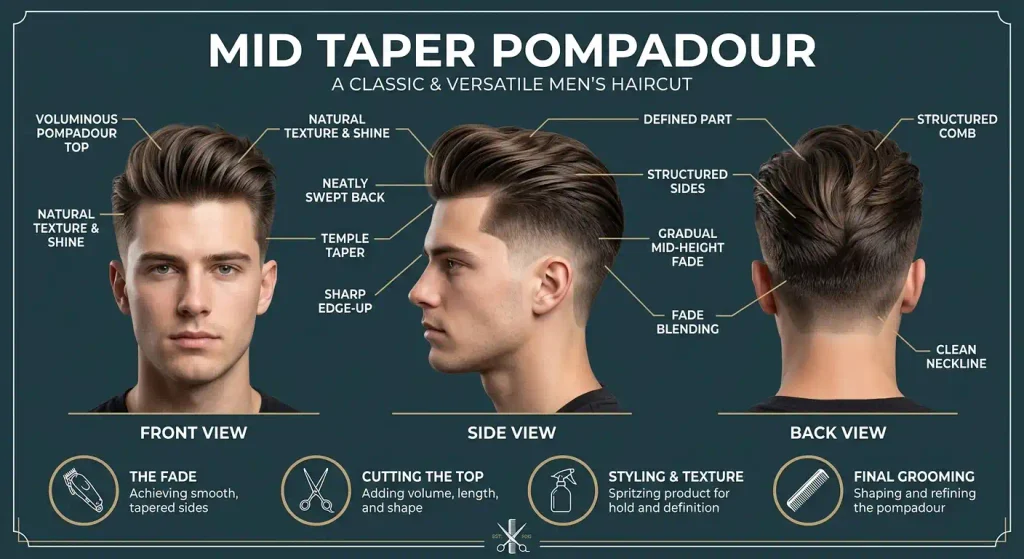
8. Mid Taper Pompadour
Volume is built up and swept back off the forehead, contrasting with the tighter mid fade underneath. Oval and diamond faces carry the height especially well. A strong-hold pomade with some shine holds the sweep in place all day.
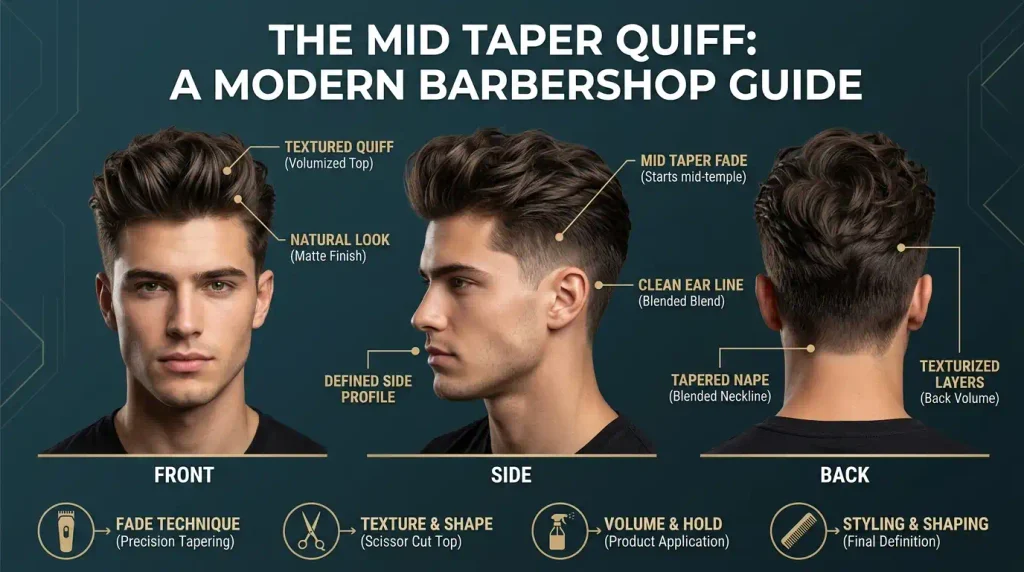
9. Mid Taper Quiff
The front section lifts and pushes slightly forward instead of straight back, adding height above the forehead. Round faces benefit from the extra vertical line. Matte paste gives grip without the glossy finish of a pompadour.
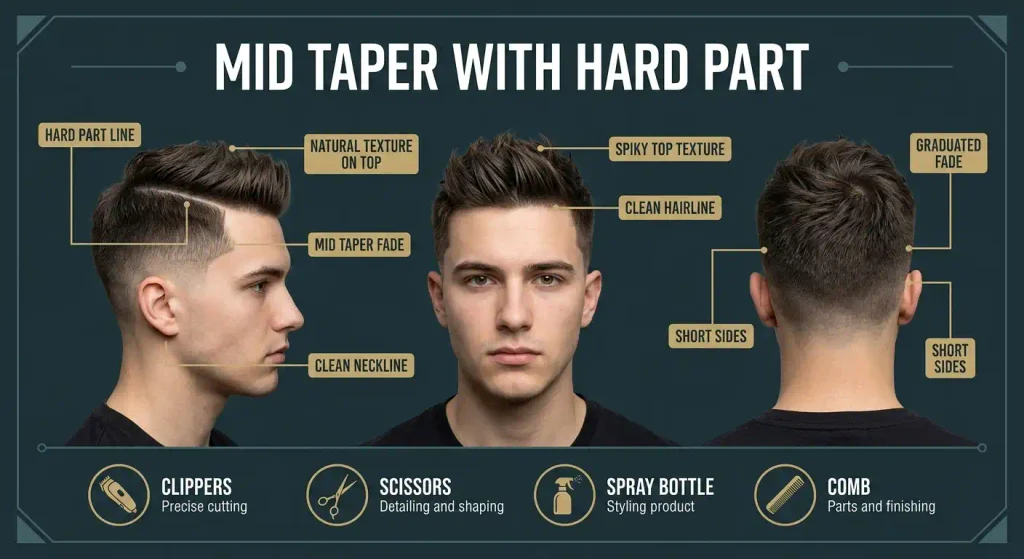
10. Mid Taper With Hard Part
A razor-thin shaved line marks a side part above the mid fade, giving the whole cut a crisp edge. Straight or wavy hair holds the part line best. Light gel keeps the part visible without stiffening the rest of the top.
High & Skin Taper Fades (Bold Contrast)
Moving the fade line up toward the temple creates the sharpest possible contrast with the top.
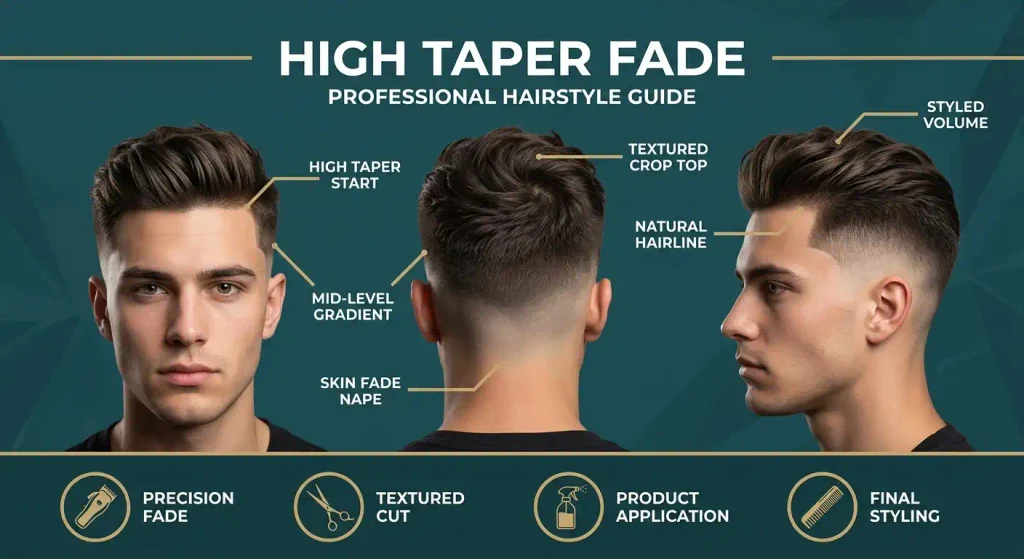
11. High Taper Fade
The fade starts near the temple, so the drop from long to short is much more dramatic than a low or mid version. Strong jawlines and square faces stand out even more with this much contrast. Firm clay is needed to control the longer top against the short sides.
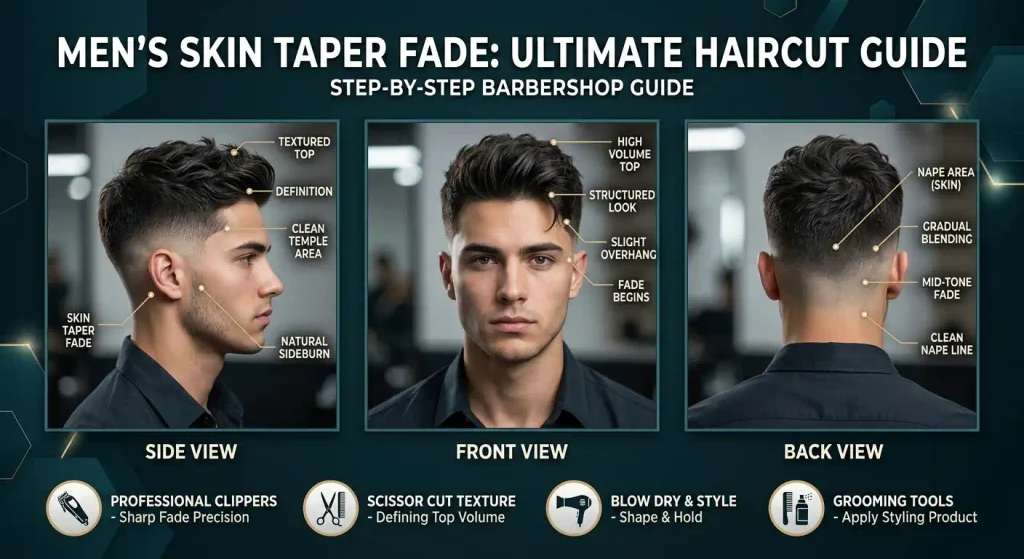
12. Skin Taper Fade
Also called a bald taper, this version fades all the way to bare skin at the bottom instead of stopping at a short guard length. Oval and diamond faces look especially clean with this option. It looks sharpest right after a cut, so it suits guys who don’t mind trimming every couple of weeks.
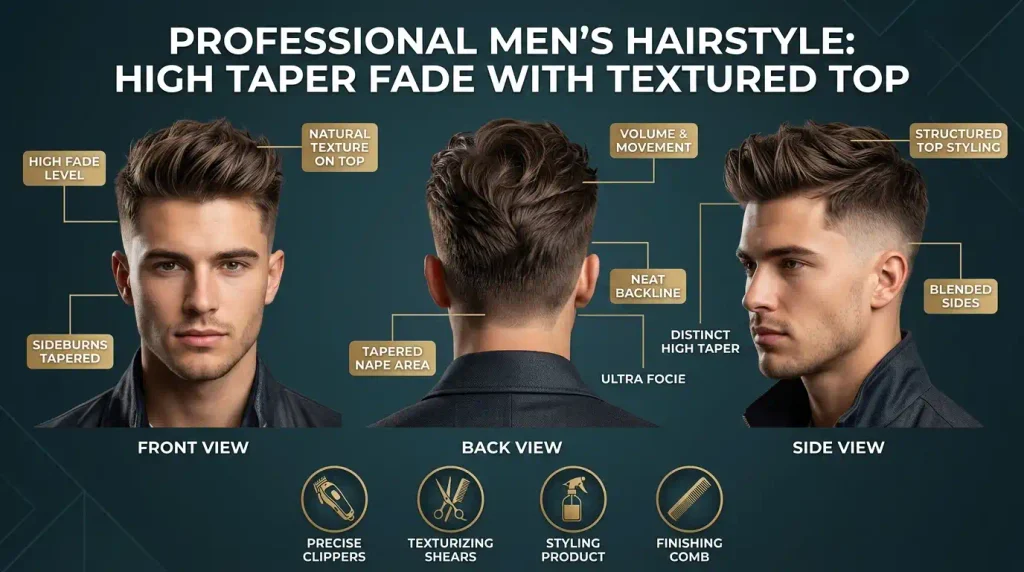
13. High Taper Fade With Textured Top
Spiky, disconnected texture sits on top of a high fade for a more aggressive finish. Angular face shapes match the boldness of this combination. Fiber paste separates the pieces without making them feel crunchy.
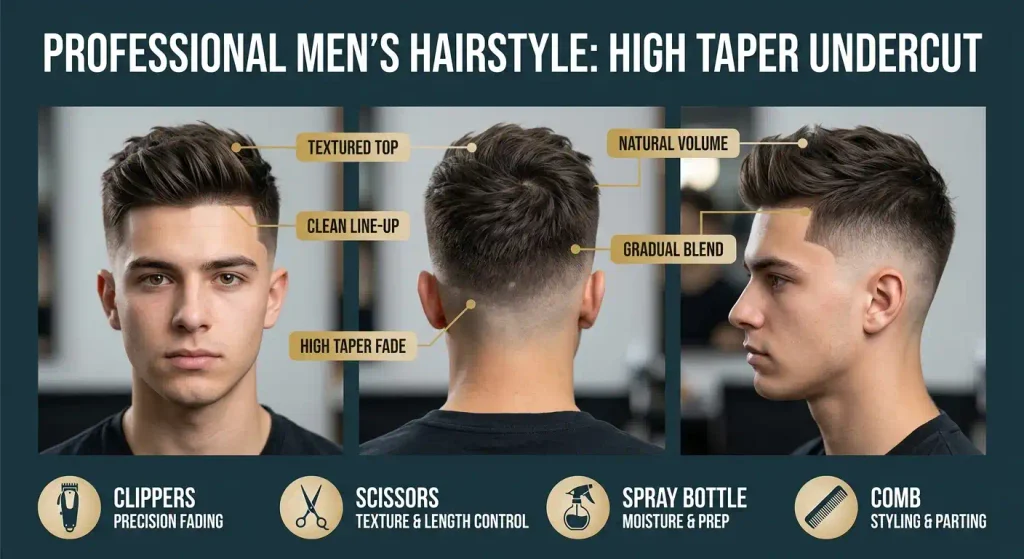
14. High Taper Undercut
A visibly disconnected line separates the longer top from the short, high sides underneath. Oval faces handle the sharp break the best. Strong pomade is needed since the top is usually long enough to slick back or push to one side.
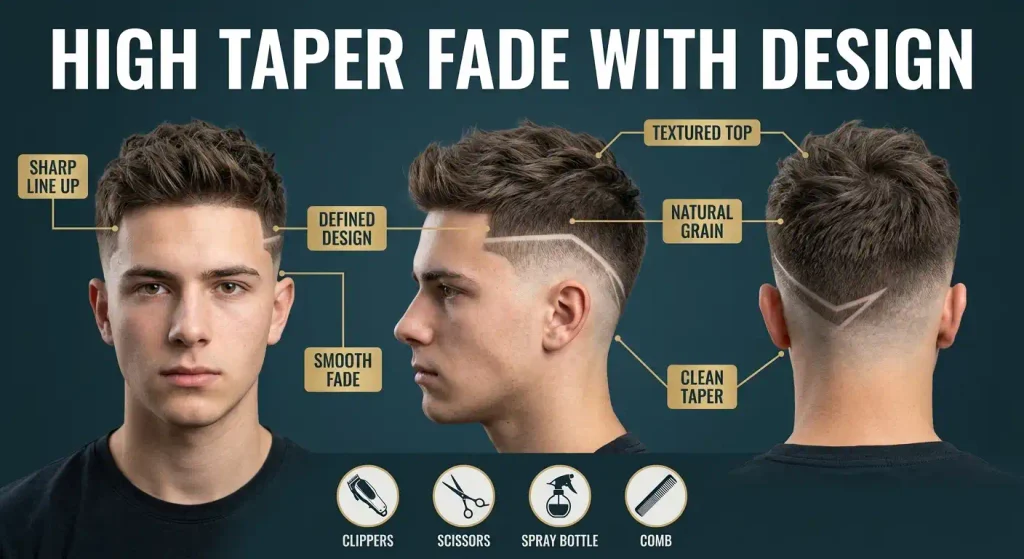
15. High Taper Fade With Design
A thin razor line or geometric part gets shaved into the fade zone near the temple for extra detail. Round and square faces looking for something distinctive often go this route. Light gel keeps the design crisp between trims.
Textured & Curly Top Taper Fades
These options leave more of the natural texture on top instead of cutting it down flat.
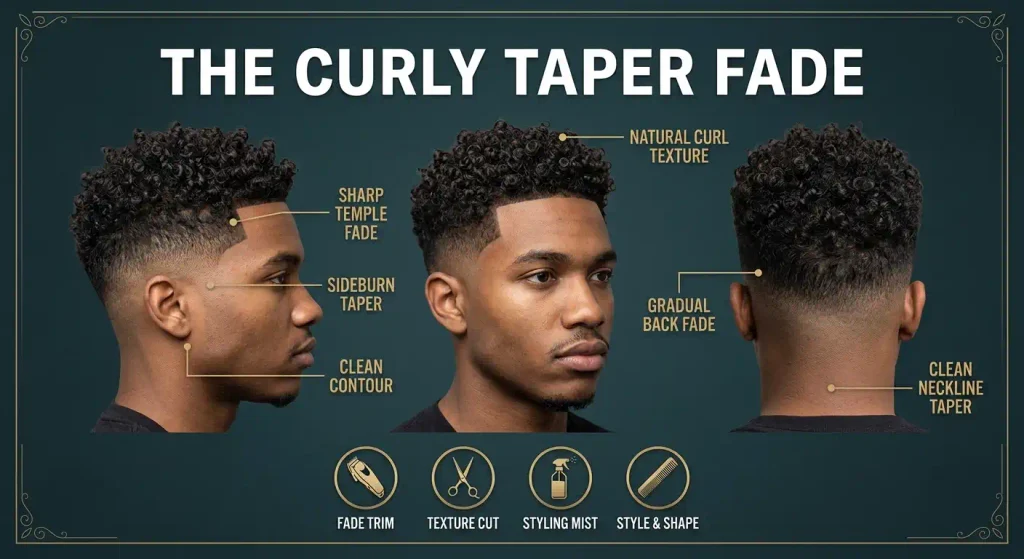
16. Curly Taper Fade
Natural curls stay at a longer length on top, cut with scissors instead of clippers, while the sides taper down. Oval and round faces suit the volume curls naturally add. Curl cream defines the pattern without drying it out.
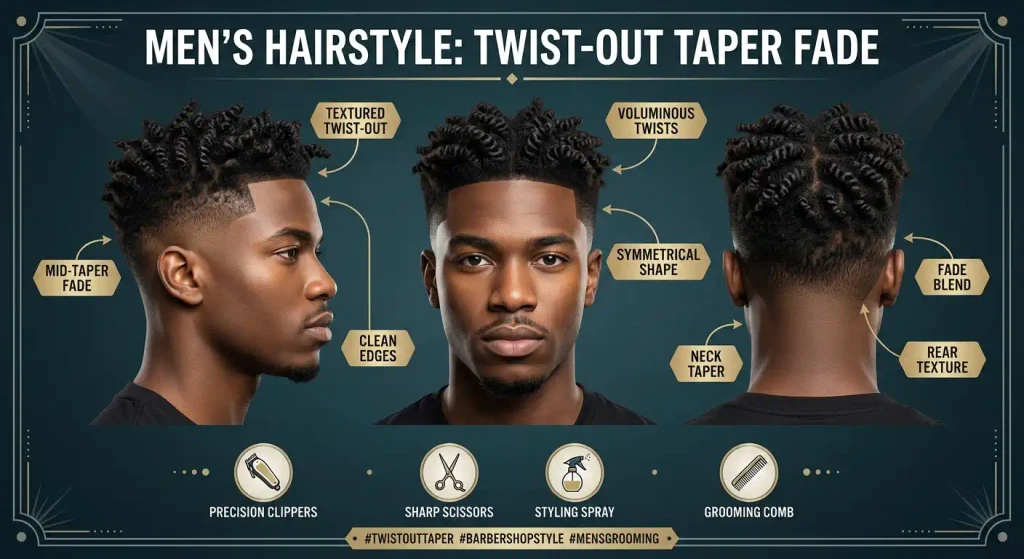
17. Twist-Out Taper Fade
Defined two-strand twists sit on top above tapered, tightly faded sides. This works best on 4A–4C coily hair. A twist cream followed by a light oil keeps the twists moisturized between styling sessions.
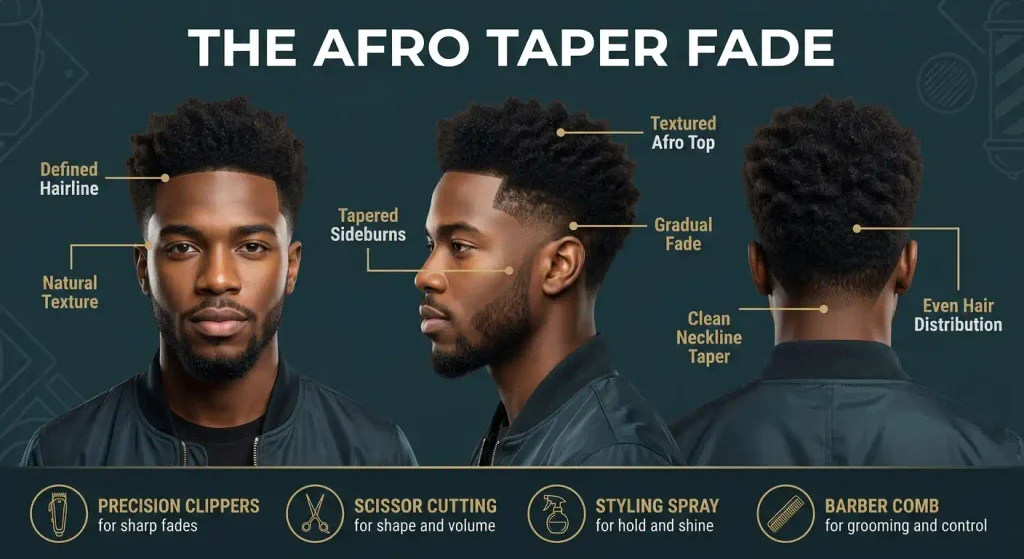
18. Afro Taper Fade
A rounded, natural afro shape is left full on top while the sides and back are tapered down close. Round and oval faces balance well against the volume on top. Leave-in conditioner plus a light hold cream keeps the shape without stiffness.
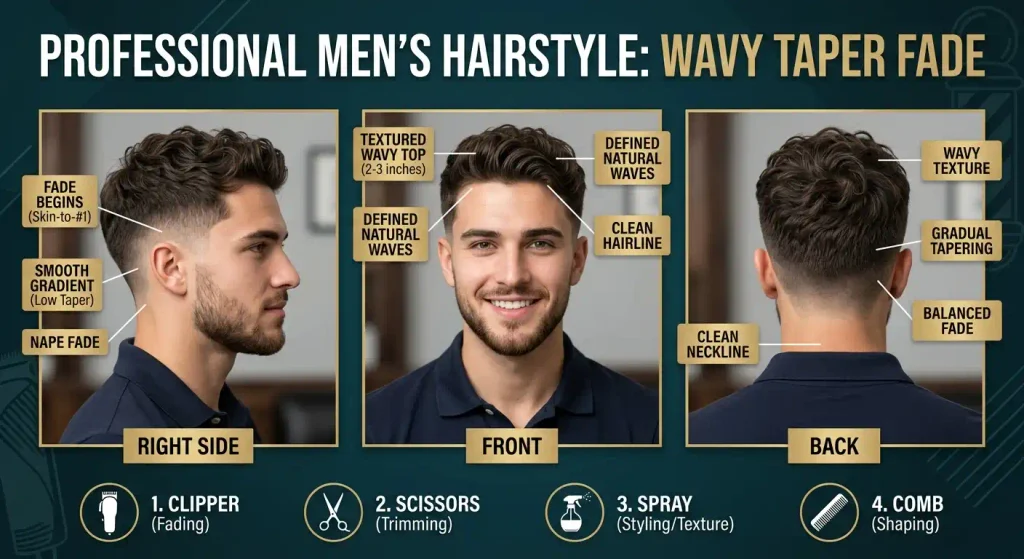
19. Wavy Taper Fade
Natural waves are brushed and allowed to show their pattern on top, sitting above tapered sides. This suits 2A–2C wavy textures particularly well. Sea salt spray enhances the wave pattern without extra weight.
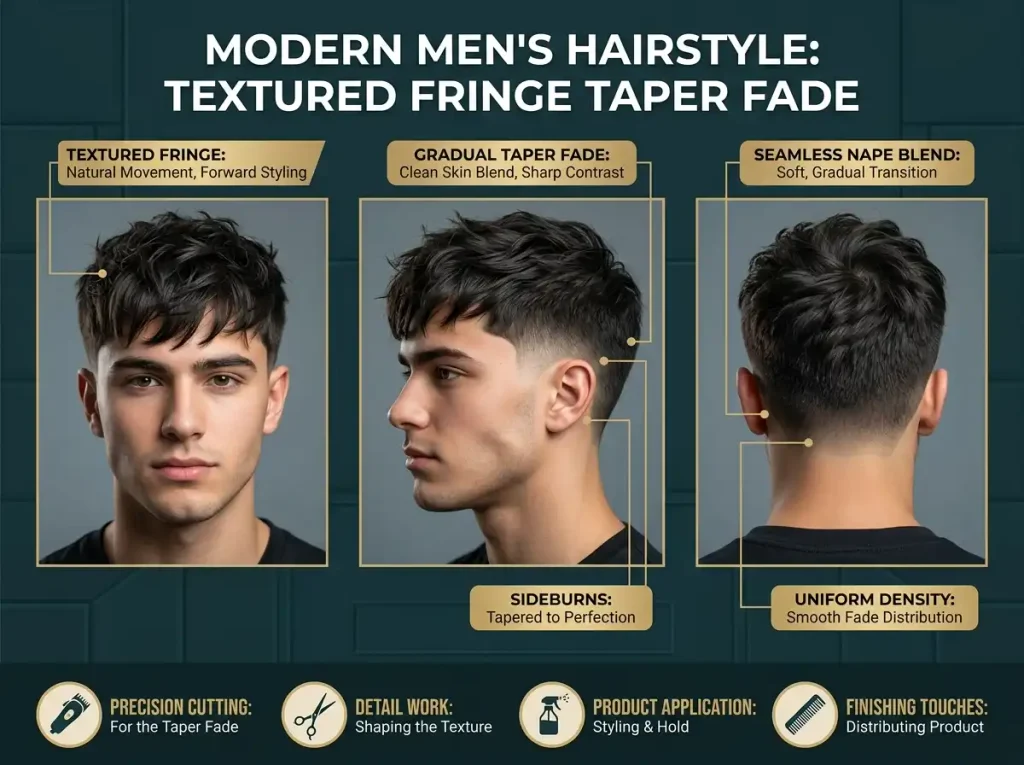
20. Textured Fringe Taper Fade
A choppy fringe falls forward over the forehead while the sides taper down underneath. Square and heart-shaped faces get a softer frame from the fringe. Matte clay separates the ends for a piece-y finish.
Design, Part & Burst Details
These variations change the shape of the fade line itself rather than the length on top.
21. Burst Taper Fade
Instead of a straight fade line, the taper curves around and behind the ear like a burst of light. Diamond and other angular faces benefit from the softened line. Light pomade is enough since the focus is on the fade shape, not the top.
22. Drop Taper Fade
The fade line dips lower behind the ear rather than staying level all the way around. Round faces get a subtle elongating effect from the drop. Medium clay works for most top lengths paired with this fade shape.
23. Temple Taper Fade
Fading is concentrated just at the temples while the rest of the side keeps more length. This is a common choice for guys managing a receding hairline. Light matte cream keeps the top natural-looking without drawing attention to the hairline.
24. Taper Fade With Side Part
A deep, defined side part is combed and set above a clean taper, giving a more formal finish. Oval faces and professional settings both suit this pairing. Firm pomade with a comb keeps the part locked in place.
25. Taper Fade Mohawk
A narrow strip of hair is left longer down the center while everything on either side tapers and fades away. Oval and square faces can handle this bolder statement. Strong-hold gel is necessary to keep the center strip standing.
Taper Fades by Hair Type & Lifestyle
Some taper fades are chosen less for the fade shape and more for how well they fit a specific hair type or daily routine.
26. Business Taper Fade
A conservative low-to-mid fade pairs with a neatly combed top for a look that reads professional in any office. Nearly every face shape can wear this without adjustment. Classic pomade with a light shine finishes it off.
27. Thick Hair Taper Fade
Heavier thinning shears work through the top to remove bulk while the sides taper down to manage the overall volume. Thick, straight or wavy hair needs this thinning step to avoid looking bulky. Light clay keeps the reduced weight from getting greasy.
28. Fine Hair Taper Fade
A shorter top with light layering creates the illusion of extra density above tapered sides. Fine or thin hair benefits most from this trick, since longer lengths tend to look flat. Volumizing sea salt spray adds texture without weighing hair down.
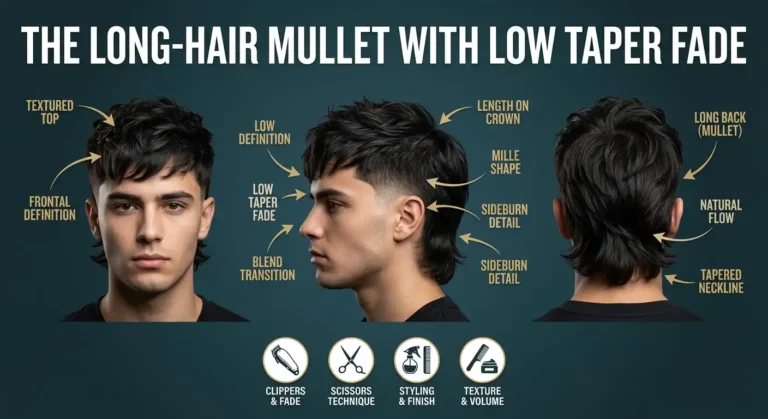
29. Taper Fade Mullet
The back is left noticeably longer while a tapered fade wraps around the sides and temples, with a shorter top. Oval and square faces suit the retro contrast well. Light texture spray keeps the back section from looking stringy.
30. Grey Taper Fade
A short, low-to-mid fade is cut to let natural grey and salt-and-pepper tones show evenly across the head instead of patching. This works on nearly any face shape and is popular with mature clients. Light matte pomade adds texture without the shine that can make grey hair look thin.
How to Ask Your Barber for a Taper Fade
Use this as your default script, then swap in details from whichever style above you picked.
“I’d like a taper fade — [low/mid/high] on the sides, fading from a #3 down to a #1 near the ears, and I’d like to keep [length] on top. Please don’t go shorter than a #2 anywhere on the sides without checking with me first.”
Add-ons depending on the style:
- Beard blend: “Please connect the fade line into my beard so there’s no gap.”
- Curly or coily top: “Cut the top with scissors, not clippers, and don’t over-thin it.”
- Design or hard part: “Add a shaved line at [temple/side part] once the fade is blended.”
- Skin taper: “Take the bottom of the fade all the way down to skin, not just a short guard.”
Taper Fade vs. Other Fade and Taper Options
| Style | Fade Height | Guard Range | Best Face Shapes | Styling Difference |
| Taper Fade | Starts low–high, blends into skin or a low guard | #0–#4 | Most shapes, adjustable | Gradual blend with no visible line |
| Skin Fade | Usually starts higher, always ends at bare skin | #0–#4 | Oval, diamond | Sharper contrast than a taper |
| Undercut | Clipper-cut sides with a hard disconnect from the top | #0–#2 (sides) | Oval, square | Visible line instead of a blend |
| Traditional Taper (no fade) | Gradual length change, never reaches skin | #2–#4 | Rectangular, long faces | Softest transition, least maintenance |
| Crew Cut | Short, even length with a light taper at the edges | #3–#4 | Round, oval | Minimal contrast, low upkeep |
Why the Taper Fade Works
A taper fade earns its popularity because it adapts instead of forcing one look. The gradual blend flatters almost any face shape by controlling how much width or height the sides add. It also works across hair types — straight, wavy, curly, or coily — since the fade only changes the sides and back, leaving the top free to be styled however that hair type looks best.
Guys with active routines like it because the shorter sides need less daily upkeep than a fuller cut, while the longer top still gives styling options for work or weekends.
How to Style a Taper Fade
- Start with slightly damp hair, not soaking wet, for better product distribution.
- Apply a small amount of your chosen product (pomade, clay, or cream) and work it through the top first.
- Use a comb or your fingers to build the shape you want — swept back, forward, or textured.
- Blow-dry on a low setting while shaping if you want extra hold or volume.
- Touch up the sides with a light pass of a beard trimmer between barber visits to keep the fade sharp.
Step-by-Step Tutorial for a DIY Taper Fade
Cutting your own taper haircut at home is possible with practice, but it’s easiest with a helper and a set of mirrors for the back.
Tools you’ll need:
- Clippers with adjustable taper lever
- Guard set (#0 through #4, minimum)
- Trimmer for edges and the neckline
- Wide-tooth comb and a fine comb
- Cutting cape or an old towel
- Clipper oil
- Two mirrors (wall-mounted and handheld) if cutting your own hair
Steps:
- Section the hair and comb it in the direction it naturally falls.
- Start with the largest guard (#3 or #4) on top and work down to establish a baseline length.
- Switch to a #2 guard on the sides, starting about an inch above the ear, and clipper-over-comb blend upward into the longer top.
- Drop to a #1 guard for the lowest inch of the fade near the hairline.
- Use the trimmer without a guard to clean the neckline and around the ears.
- Go back over the blend zone with a #2 guard in short upward strokes to soften any visible lines, using point cutting on stubborn ridges.
- Comb the top forward and check for evenness before a final trim of any stray hairs.
Best Styling Products for a Taper Fade
Matte clay is a wax-and-clay blend that dries down without shine, giving strong hold for textured or cropped tops — good for thick or coarse hair that needs control.
Sea salt spray works by drawing out moisture as it dries, which roughens the hair’s texture and adds grip. It’s best on wavy or fine hair that needs volume without added weight.
Curl cream combines moisturizing agents with a light hold polymer to define curls or coils without the crunch that gels can leave behind, making it the go-to for curly and twist-out tops.
Best Hair Types and Face Shapes for a Taper Fade
- Straight hair: Holds clean, sharp fade lines well; benefits from a matte product to avoid looking flat.
- Wavy hair: Naturally blends into the fade zone, so sea salt spray or a light cream is usually enough.
- Curly or coily hair: Best paired with a scissor-cut top rather than clippers, using curl cream or twist cream to hold the pattern.
- Oval faces: Suit almost every variation on this list, from low to high fades.
- Round faces: Look best with added height (quiff, pompadour) and lower fades that avoid extra width.
- Square faces: Balance well with textured or fringe tops that soften strong jawlines.
- Diamond faces: Burst and skin fades complement angular cheekbones especially well.
Taper Fade Maintenance Guide
- Book your first touch-up at 2–4 weeks, depending on how high the fade starts — high and skin fades grow out faster than low ones.
- Ask for a “fade refresh” rather than a full cut if the top length is still where you want it; this keeps the blend sharp without shortening the top again.
- Trim the neckline and around the ears yourself with a trimmer every 7–10 days between barber visits to keep the edges clean.
- Wash with a gentle shampoo two to three times a week rather than daily, since over-washing can dry out shorter hair on the sides.
- Apply a light oil or leave-in product to the sides if they start to feel dry, especially with skin or high fades.
Common Mistakes to Avoid With a Taper Fade
- Asking for “just a fade” without specifying low, mid, or high, which leaves too much room for interpretation.
- Waiting too long between trims on a high or skin fade, which lets the blend grow out unevenly.
- Skipping the beard blend conversation if you have facial hair, leaving a visible gap along the jaw.
- Using too much product on curly or coily tops, which can weigh down the natural pattern.
- Not bringing a reference photo to a new barber, especially for design or burst variations.
- Cutting DIY sides too short too early instead of working down through guard sizes gradually.
FAQ: How to Do a Taper Fade for Beginners
How long should I wait before my first trim after a taper fade? Most people need a touch-up every 2–4 weeks. High and skin taper fades (like #12) grow out faster and may need attention closer to the two-week mark.
Can I get a taper fade with curly hair? Yes. A Curly Taper Fade (#16) or Twist-Out Taper Fade (#17) keeps clippers off the top entirely, using scissors instead so the natural pattern stays intact.
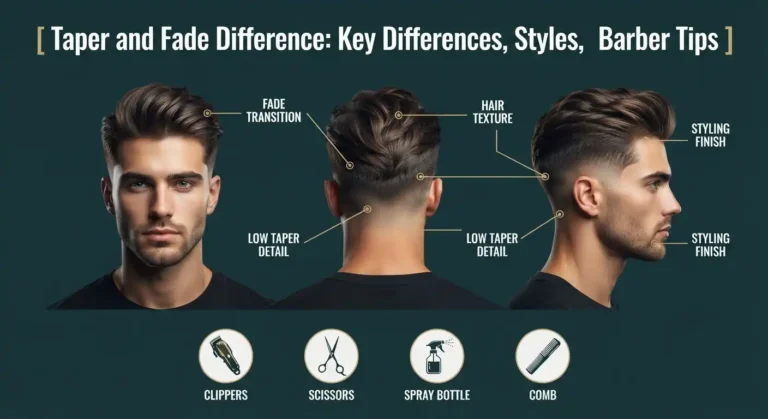
What’s the difference between a taper and a fade? A taper changes length gradually and never reaches bare skin, while a fade — including a taper fade — blends down to a very short guard or skin at the bottom.
How much does a taper fade cost? Pricing varies by region and barber experience, generally falling in line with a standard men’s haircut plus a small premium for the blending work involved.
Can I ask for a taper fade with a design? Yes, most barbers can add a razor line or part design once the fade itself is blended — see the High Taper Fade With Design (#15) for an example.
Is a taper fade good for a receding hairline? A Temple Taper Fade (#23), which concentrates fading at the temples, is often recommended because it draws less attention to a receding hairline than a fuller taper would.
How do I describe a taper fade to a new barber? Use the script above, naming the fade height, the guard numbers you want, and how much length to leave on top, and bring a photo if you can.
Do I need a beard trim with a taper fade? Not always, but if you have facial hair, mentioning a beard blend (see #3) keeps the fade line and beard edge connected instead of leaving a gap.
Conclusion
A taper fade stays popular because it flexes to fit almost any hair type, face shape, and maintenance schedule, from a low, barely-there blend to a bold skin fade with a design cut in. Pick a starting point from the 30 styles above, use the barber script to communicate exactly what you want, and stick to a 2–4 week trim schedule to keep the blend looking sharp.
For more on choosing a fade by face shape, see our related guide on low taper with design.
Name: Ryan Cole
Role: Lead Grooming Editor, TaperHaircutGuide.com
Bio angle: Men’s grooming/style content researcher — 4+ years covering barbering trends, hairstyling terminology, and men’s style content for US audience. Cross-checks every guide with practicing barbers before publishing.