Low Taper Short Hair: 60 Modern Styles, Barber Guide & Styling Tips

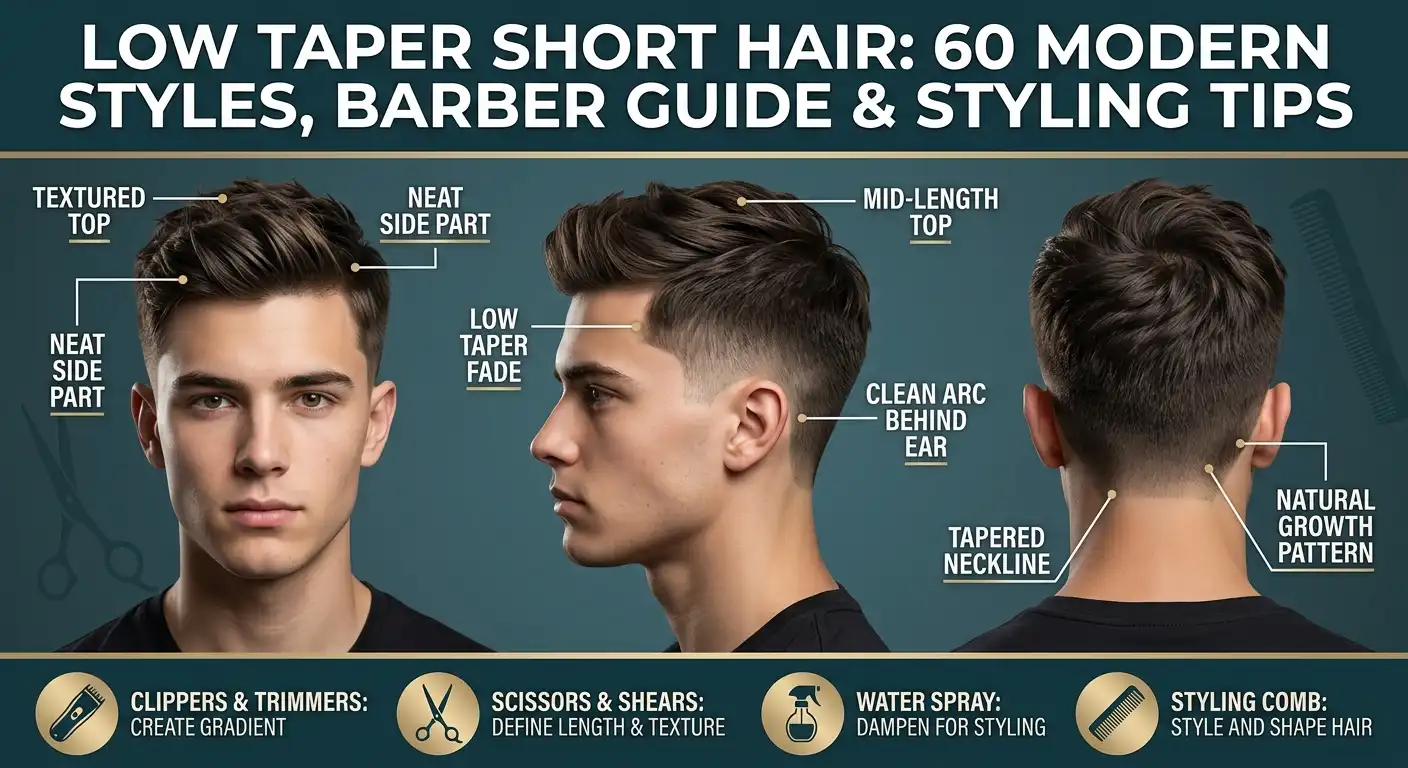
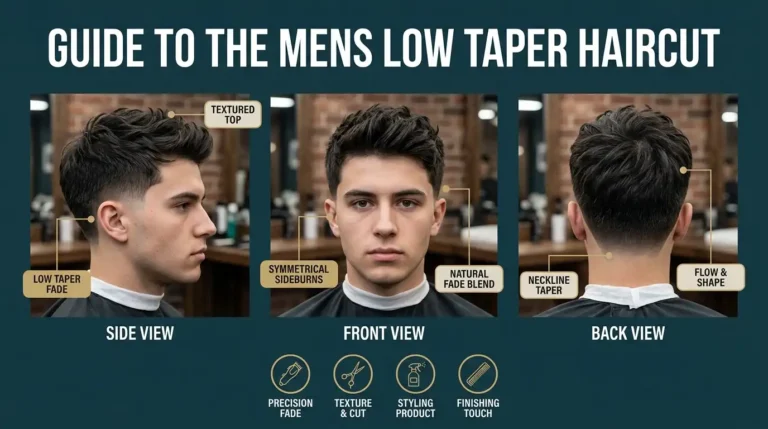
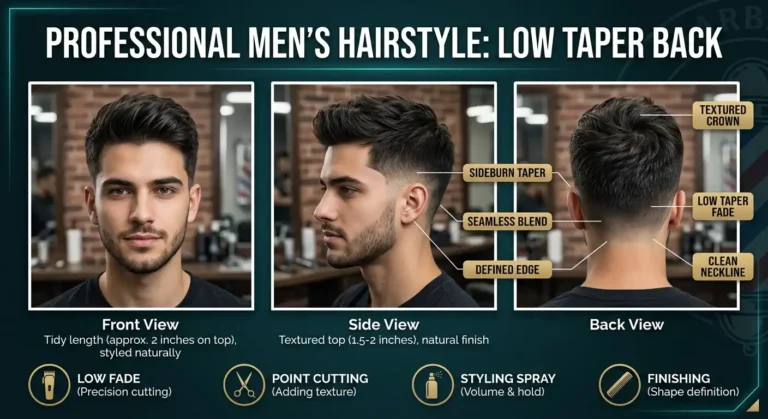
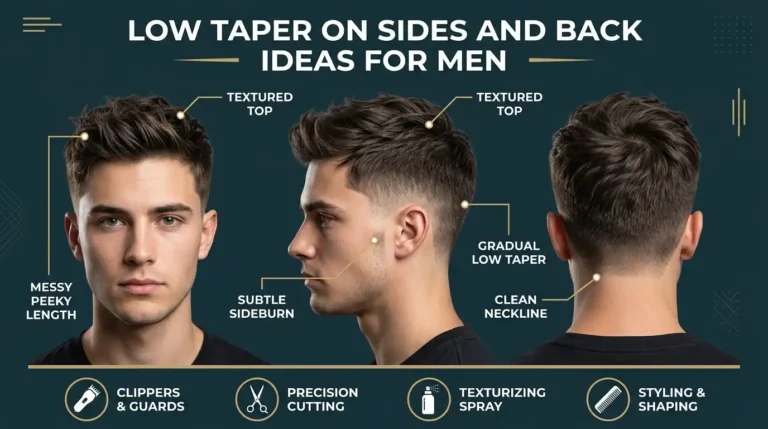
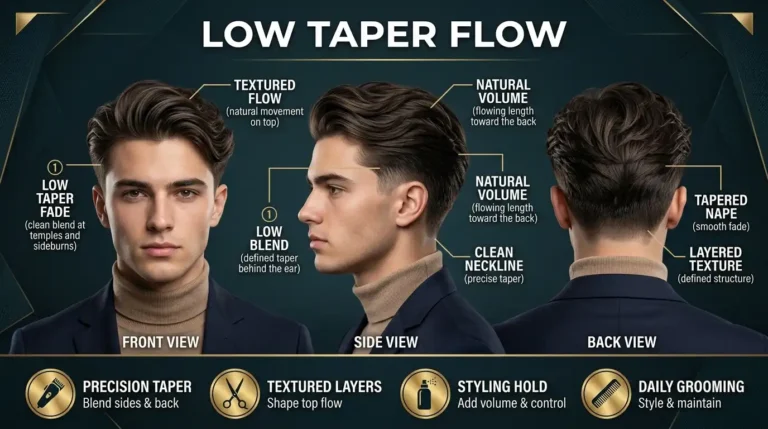
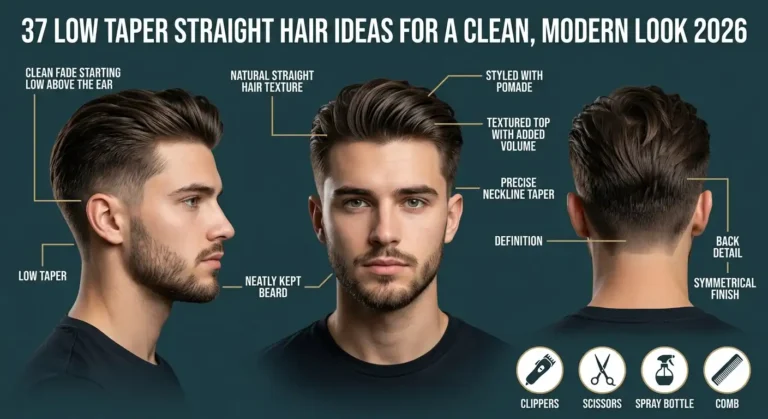
A low taper short haircut keeps the hair short on top while gradually reducing the sides around the temples, ears, and neckline. Unlike a high fade, the taper stays low, so you keep more natural weight on the upper sides.
That makes the cut clean, easy to wear, and flexible with straight, wavy, curly, or coily hair. Below are 60 distinct variations, followed by barber instructions, guard guidance, styling advice, face-shape recommendations, and maintenance tips.
Quick Overview: 5 Strong Starting Options
| Style | Top | Best Hair Type | Best Face Shapes | Styling |
| Textured Crop | Short textured | Straight/Wavy | Oval, Square | Matte clay |
| Short Curly Taper | Short curls | Curly | Oval, Square | Curl cream |
| Buzz Taper | #1–#2 | Straight/Coarse | Oval, Square | Minimal |
| Short Edgar | Short with fringe | Straight/Thick | Oval, Round | Matte paste |
| Crew Cut | Short graduated top | Most types | Oval, Diamond | Light cream |
60 Low Taper Short Hair Ideas
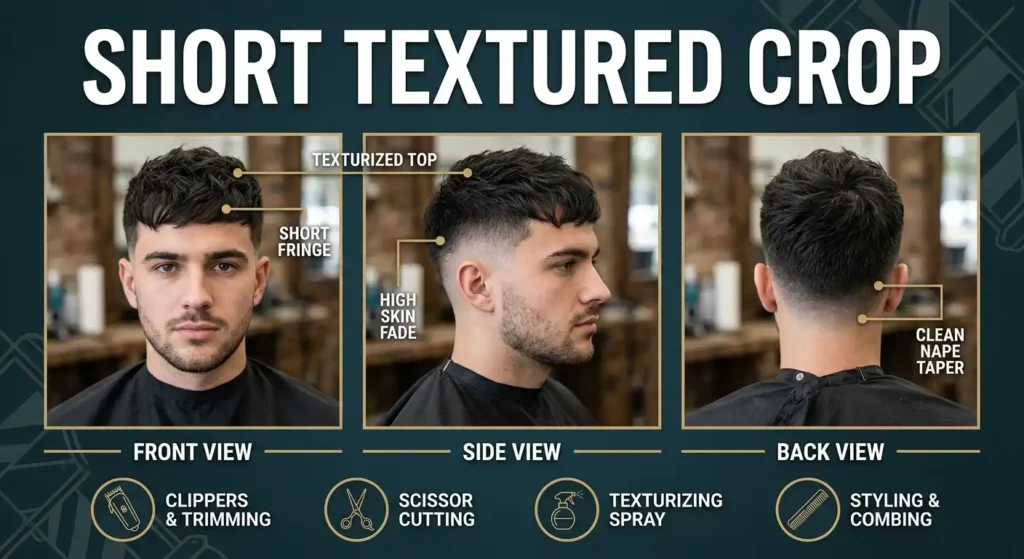
Short Textured Crop
A short textured crop keeps the top compact while point cutting creates small pieces of texture instead of a flat surface. Ask for a low taper around the ears and neckline, using a #0 or #1 at the lowest section and blending upward into the longer top.
Oval and square faces suit this balanced shape especially well. Straight and slightly wavy hair usually gives the cleanest texture. Work a small amount of matte clay through dry hair and push the fringe slightly forward.
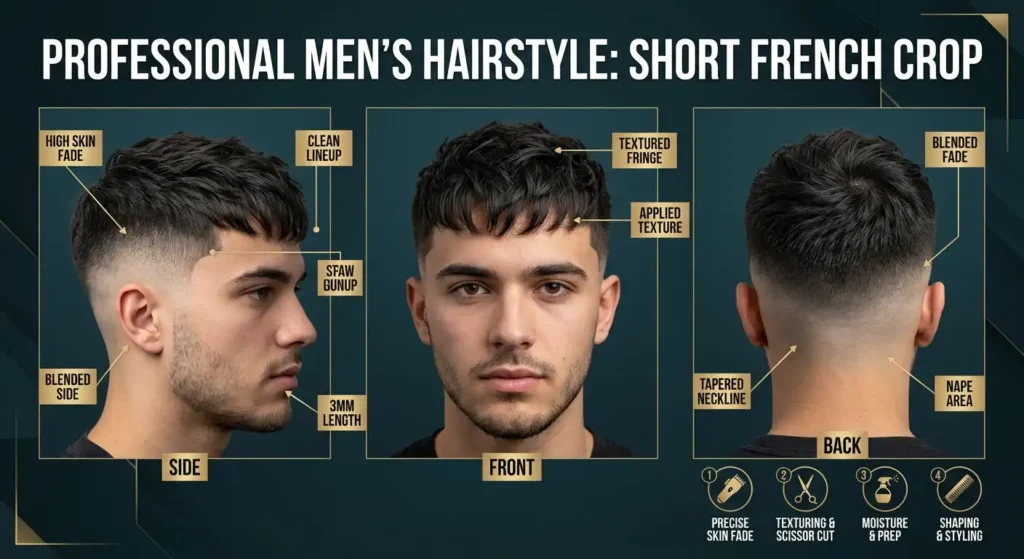
Short French Crop
The French crop gives the short taper a sharper front by keeping the fringe relatively straight and controlled. The top can sit around a #3 or #4 while the sides gradually tighten near the ears. This works well for straight, thick hair and can visually shorten a longer forehead.
Point cutting keeps the fringe from looking too heavy. A matte paste provides control without making the front look greasy. Keep the taper low so the haircut remains balanced rather than becoming a strong fade.
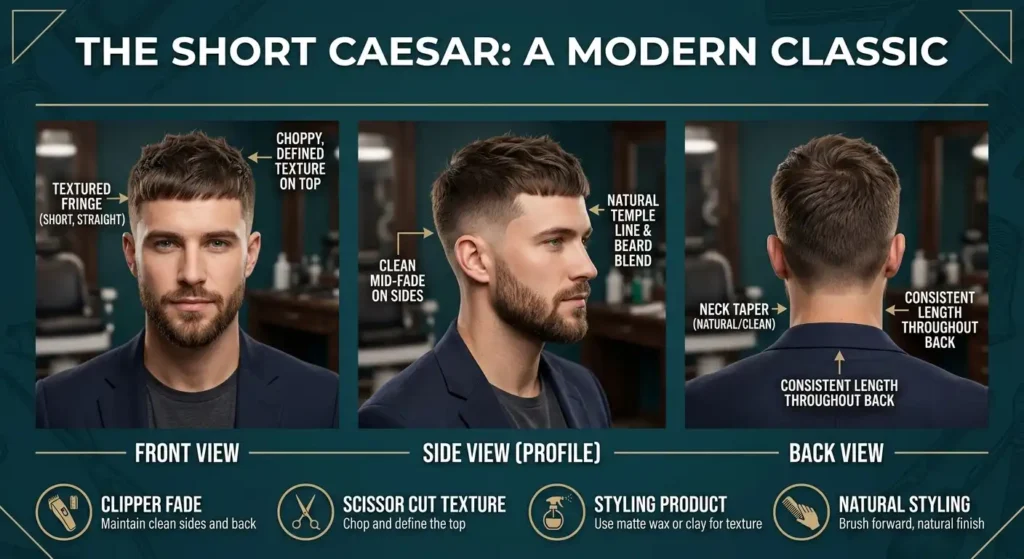
Short Caesar
A short Caesar uses a compact top with a small forward fringe. Instead of creating height, the haircut keeps the silhouette close to the head. A low taper around the temples and nape adds definition without removing too much side weight. It suits oval, round, and slightly longer faces because the horizontal fringe can make the face appear more balanced. Straight or dense hair is easiest to manage. Use a light matte cream, then comb or finger the top forward while keeping the fringe natural.
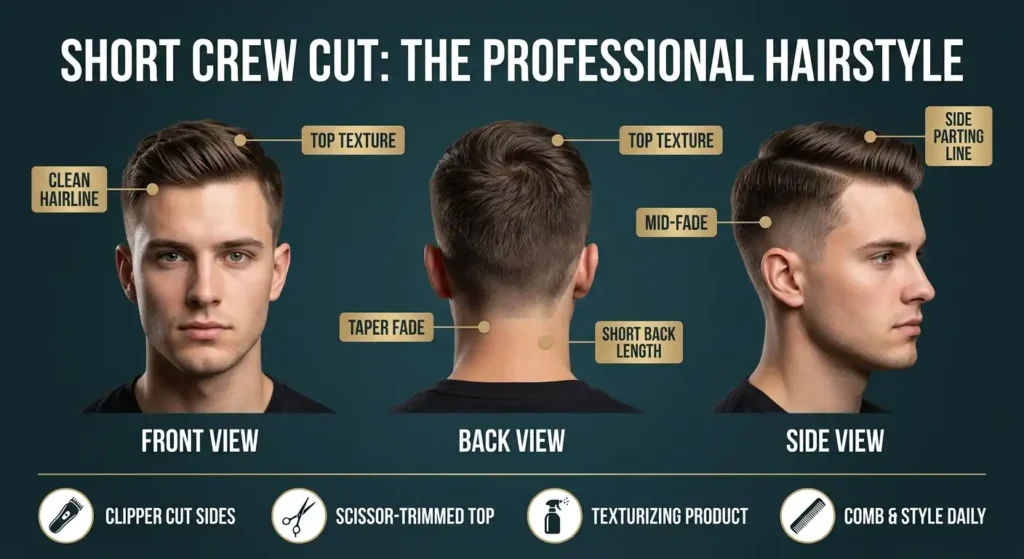
Short Crew Cut
The crew cut gives you a clean top with slightly more length toward the front and less toward the crown. Pairing it with a low taper creates a professional outline without making the sides look overly bare. A #3 or #4 can work across much of the top, with scissors used to refine the front. Oval, square, and diamond faces are strong matches. A lightweight styling cream is enough for most hair types. For extra texture, ask your barber for subtle point cutting rather than heavy thinning.
Short Ivy League
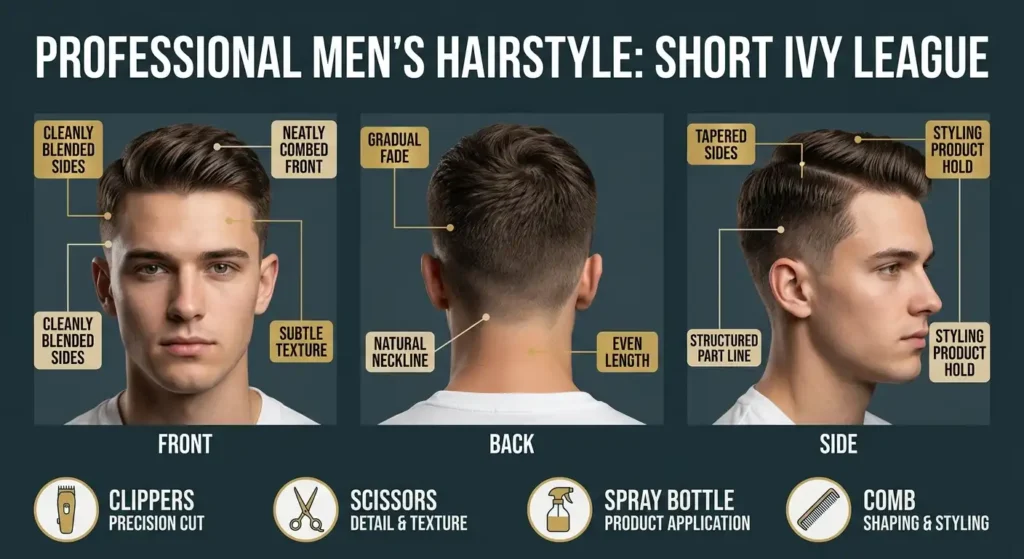
A short Ivy League keeps more control at the front than a traditional crew cut while remaining compact. The top can stay around #4 with scissors refining the front and side direction. The low taper keeps the ears and neckline clean but leaves enough side weight for a classic shape. This version works particularly well with straight or lightly wavy hair. Oval, square, and diamond faces benefit from the slightly longer front. A small amount of matte pomade can create a neat side sweep without excessive shine.
Short Side Part
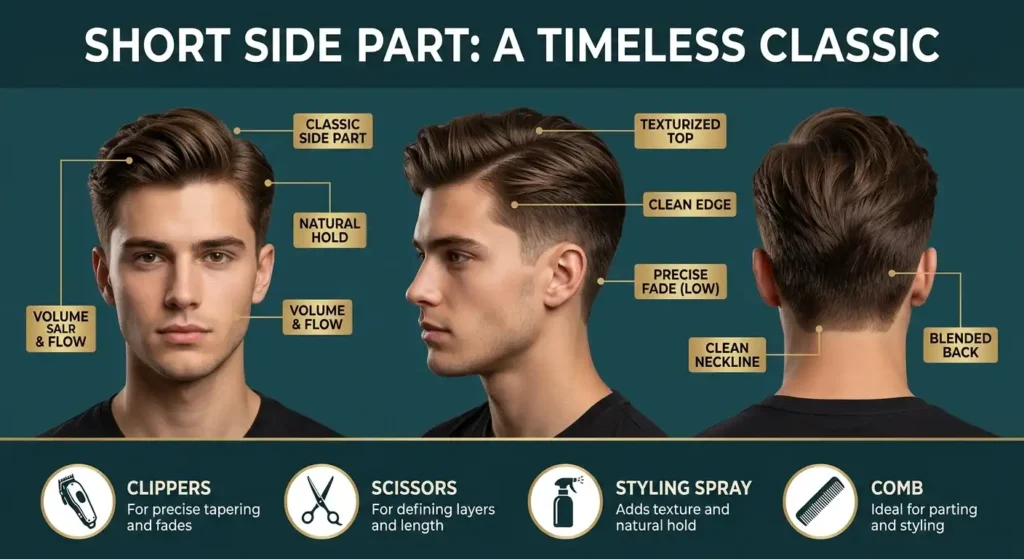
The short side part introduces a clear direction without requiring a hard shaved line. Keep the top around #3–#4 and allow enough length at the front to move toward one side. The low taper should remain soft around the temple so the part stays the main feature. Straight and thick hair handles this look easily. Oval and square faces are natural matches, while round faces can benefit from a little extra height. Use matte pomade or styling cream and comb the top into place.
Short Hard Part
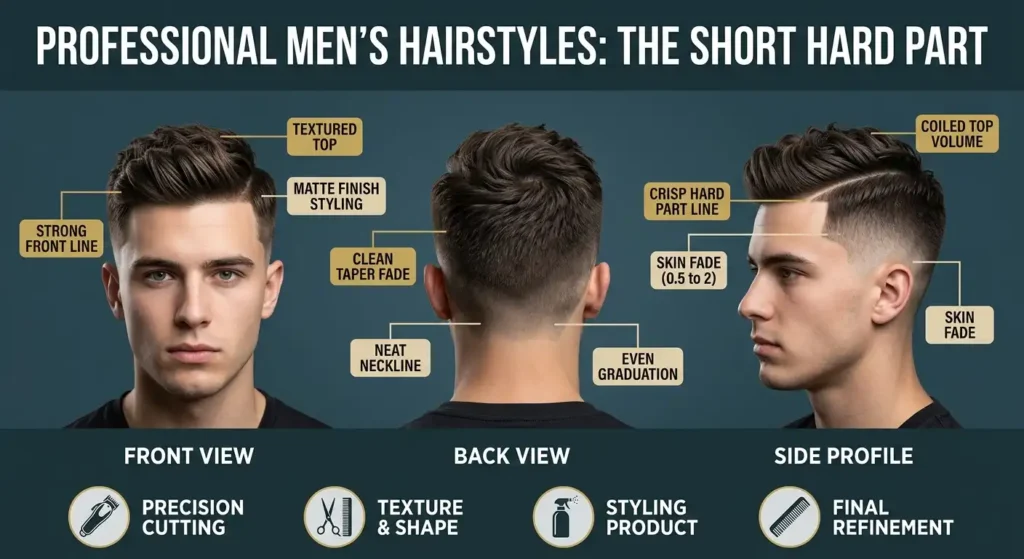
A hard part creates a defined shaved line between the top and side. Because the haircut is already short, the line becomes a strong visual detail. Keep the low taper controlled around the ears and neckline, with a #3 or #4 top depending on density. This style suits straight, thick hair particularly well and works with oval, square, or diamond faces. Ask the barber to keep the part subtle if you want a professional result. Matte pomade gives definition without making the hair look overly wet.
Short Messy Top
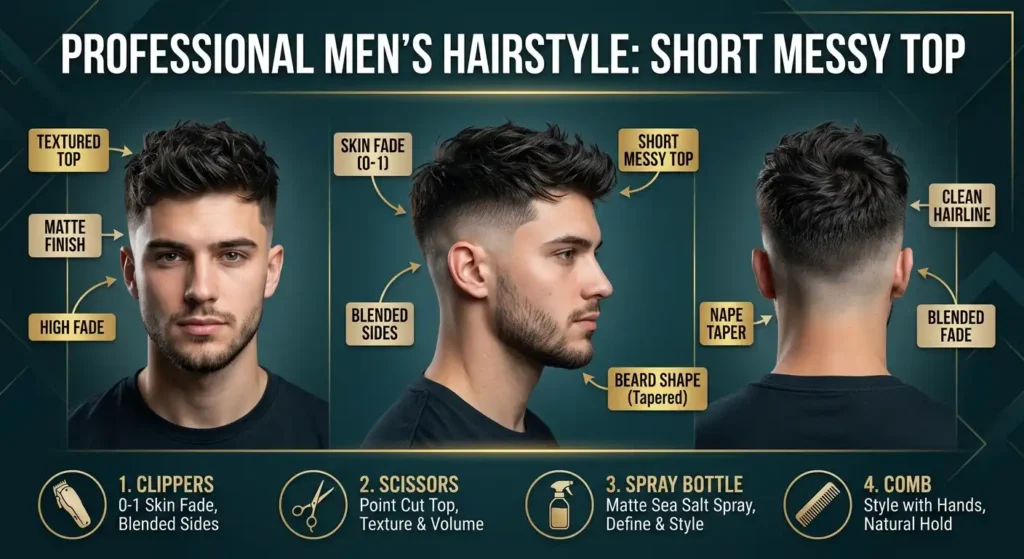
A messy short top adds movement to an otherwise clean taper. The barber can keep the top around #3–#4 and use point cutting to create uneven texture rather than a uniform finish. The low taper provides contrast around the lower sides without taking the haircut too high. Slightly thick or wavy hair works especially well. Oval, square, and round faces can all carry this shape. Rub a small amount of matte clay between your palms, then use your fingers to create loose, irregular texture.
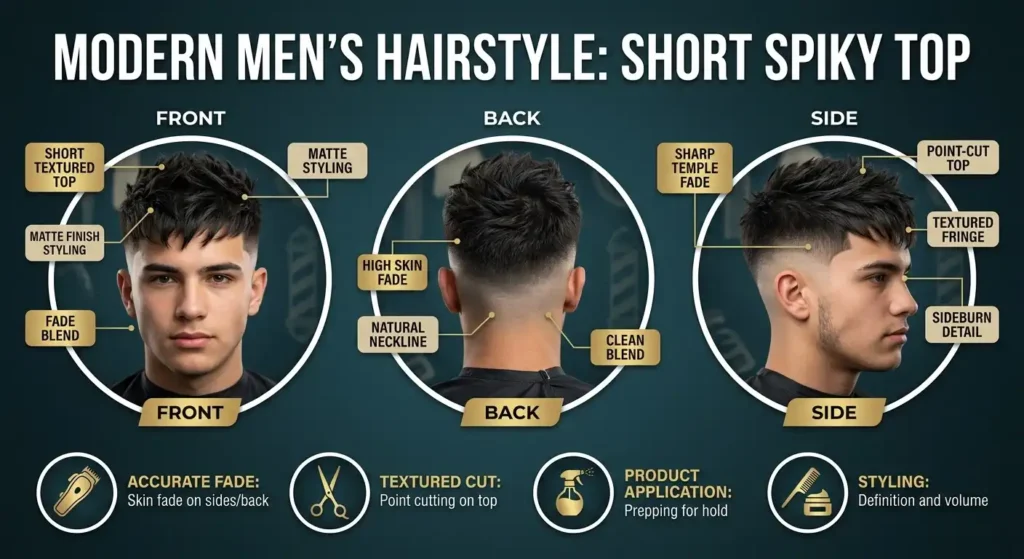
Short Spiky Top
Short spikes work best when the hair has enough density to stand slightly away from the scalp. A #3–#4 top can be point cut to create separation, while the low taper cleans the perimeter. This style suits square and oval faces because the added vertical texture can strengthen the overall shape. Straight, coarse, and thick hair usually needs less product. Use a firm matte clay and pinch small sections upward. Avoid creating identical spikes across the whole head because irregular texture looks more natural.
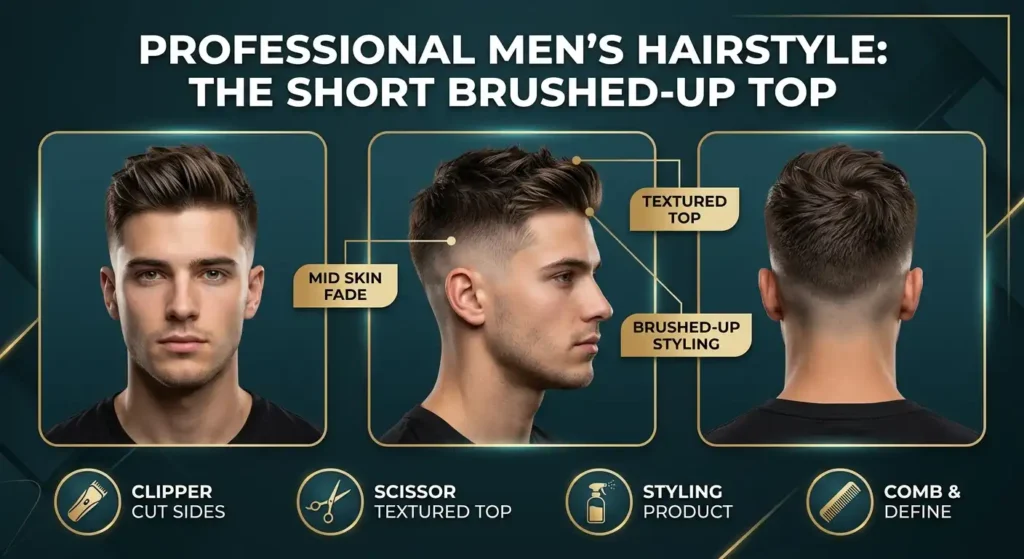
Short Brushed-Up Top
A brushed-up finish adds controlled height while keeping the haircut short. Leave slightly more length toward the front, then taper the sides low with a #0–#2 progression around the ears and neckline. Oval and rectangular faces benefit from this vertical direction, while very long faces may look better with less height. Straight and wavy hair both work. Apply a light styling cream or matte paste to damp hair and direct the front upward and slightly backward. Finish with fingers rather than a perfectly smooth comb.
Short Quiff
The short quiff uses a compact front that rises slightly before falling backward. The low taper keeps the lower sides tidy while preserving a natural transition into the top. Ask for a #3 or #4 through the shorter areas, with scissors shaping the front. Oval and square faces are particularly compatible. Straight and wavy hair can both hold this style, although thick hair gives stronger volume. Blow-dry the front upward while using your fingers to guide it, then finish with a small amount of matte paste.
Short Faux Hawk
A short faux hawk keeps the center slightly longer than the sides without creating a dramatic mohawk. The low taper concentrates the shortest area near the temples, ears, and nape, leaving the upper sides connected. This is useful for thick, straight, or wavy hair. Square and oval faces can handle the stronger center line well. Ask for point cutting through the top to make the shape flexible. Matte clay or fiber gives enough grip to push the center upward and inward without making it stiff.
Short Comb Over
The short comb over is a conservative option with a modern perimeter. Keep the top around #3–#4, leaving enough length to sweep across the head. The low taper should be blended gently so the side remains connected to the top. It suits straight and fine-to-medium hair particularly well. Oval, square, and diamond faces work naturally with the directional shape. A lightweight matte pomade adds control while keeping some movement. Use a comb for a neat finish or fingers for a softer everyday version.
Short Slick Back
A short slick back needs slightly more length than a buzz or Caesar, but it can still remain compact. Keep the taper low and blend the sides with guards around #0, #1, and #2 before connecting into the top. Oval and square faces are strong matches because the backward direction exposes the face. Straight and thick hair is easiest to manage. Apply a small amount of styling cream or matte pomade to damp hair and comb backward. Avoid excessive shine if you want a modern rather than retro finish.
Short Brush Forward
Instead of sweeping sideways, the brush-forward style directs the top toward the forehead while maintaining a clean, compact shape. A #3–#4 top can be softened with point cutting. The low taper around the ears keeps the perimeter sharp without creating a high contrast fade. Straight and slightly wavy textures respond well to this design. Round and oval faces can benefit from the forward direction. Use a light matte cream and brush the top forward, then separate a few pieces with your fingers for a natural finish.
Short Textured Fringe
A textured fringe combines a compact top with a broken, irregular front edge. Ask your barber to use point cutting rather than creating a heavy straight line. The low taper can begin around the temple and narrow toward the neckline with #0–#2 guards. This style works well on straight and wavy hair and can balance oval or longer faces. Matte clay is the easiest finishing product. Push the fringe forward while damp, then pinch a few sections apart once dry to keep the front from looking flat.
Short French Fringe
The French fringe is cleaner and more controlled than a heavily textured fringe. Keep the top short and the front slightly longer, then create a neat forward edge. A low taper keeps the sides and neckline polished. Straight, dense hair is ideal, although wavy hair can create a softer version. Oval and square faces tend to suit the strong horizontal line. Use matte paste to control flyaways and preserve texture. Tell your barber not to raise the taper too far above the natural temple area.
Short Disconnected Crop
A disconnected crop creates a noticeable difference between the top and the tapered sides. The top remains short but carries enough weight to stand apart from the lower section. The low taper prevents the sides from becoming too aggressive. Thick, straight hair makes the separation easiest to maintain. Square and oval faces can carry the stronger contrast. A matte clay gives texture and keeps the top from collapsing. Ask for a controlled disconnection rather than a harsh shaved gap if you want a wearable everyday version.
Short Military Crop
The military crop keeps the top compact and functional, with minimal styling required. A #2 or #3 can create the top while the low taper cleans the perimeter. The result is especially useful for active lifestyles, hot climates, and men who prefer a simple routine. Square and oval faces generally suit the structured silhouette. Coarse, straight, and dense hair can look particularly sharp. Product is optional. If you want more definition, use a tiny amount of matte clay and brush the top forward.
Short Regulation Cut
A regulation-inspired cut keeps the top short but leaves more controlled length on one side for direction. The low taper modernizes the traditional military shape around the ears and neckline. Straight and thick hair handles the style well. Oval, square, and diamond faces are good candidates. Ask for a #3 or #4 on the main top area, with scissors shaping the front and side. A light pomade or cream keeps the sweep controlled without turning the haircut into a glossy formal style.
Short Taper with Natural Texture
This version lets your natural hair pattern become the main feature. Rather than forcing the top into a specific direction, the barber keeps the texture intact and cleans the lower perimeter with a low taper. Guard work around #0–#2 can create a smooth transition. The style suits nearly any texture when the top length matches the hair’s natural behavior. Oval and square faces are especially versatile. Use a lightweight matte cream for straight hair or curl cream for textured hair.
Short Taper with Line-Up
A clean line-up adds definition around the forehead and temples while the taper remains low. This is particularly effective when the natural hairline is strong and fairly even. The top can be kept at #2–#4 depending on density. Straight, coarse, and curly hair can all work with this approach. Square and oval faces usually suit the sharper geometry. Ask the barber to preserve your natural hairline instead of forcing an artificial shape. A light matte product keeps the top neat while the line-up provides the structure.
Short Taper with Beard Blend
Connecting the haircut to a short beard creates a continuous transition around the sideburn area. The scalp taper stays low while the barber gradually blends the sideburn into the facial hair. This is useful for men with medium or full beard density. Square and oval faces often benefit from the connected outline. Keep the top short with a #3 or #4 for an easy routine. Beard balm can control facial hair, while a matte hair product keeps the scalp finish natural.
Short Taper with Clean Neckline
A clean neckline changes the appearance of a short haircut more than many people expect. Keep the taper low and finish the nape with a crisp but natural outline rather than allowing stray hairs to spread downward. A #0–#2 blend works well around the lower section. This version suits most hair types and face shapes. It is especially useful for men who want a tidy professional appearance. Use little or no product on the top if your natural texture already gives enough shape.
Short Taper with Natural Neckline
The natural-neckline version is softer and usually grows out more gracefully than a sharply boxed finish. The barber gradually reduces the hair with guards and follows the natural nape rather than carving a strong horizontal line. It works across straight, wavy, curly, and coily textures. Oval, square, and round faces can all wear it. A low-shine cream provides simple control. Choose this option if you prefer a haircut that still looks natural several weeks after the barber visit.
Short Taper with Soft Temple
A soft temple keeps the taper subtle around the sideburn instead of creating a very exposed skin area. The barber can move through #0, #1, and #2 guards gradually while leaving the upper temple fuller. This is a strong choice for professional settings and conservative grooming. Fine, straight, and medium-density hair can benefit because the transition does not exaggerate thin areas. Oval and diamond faces work well. A lightweight styling cream gives enough control without adding visible buildup.
Short Taper with Skin Detail
For a sharper result, the lowest part of the taper can approach the skin around the temple and neckline. The transition should still remain low rather than climbing toward the middle of the head. A #0 or trimmer can establish the shortest point before blending into #1 and #2. Thick and coarse hair shows this contrast clearly. Square and oval faces handle the sharper perimeter well. Matte clay adds separation to the top without competing with the clean taper.
Short Taper with Shadow Finish
A shadow finish avoids taking the lowest section completely to bare skin. The barber can blend from a #1 or #1.5 into #2 and the longer upper side. This creates a softer visual transition and can be useful when you want less contrast. Fine or thinning side hair may look more natural with this approach. Oval, square, and longer faces can all suit it. Use a lightweight matte cream so the top remains full-looking rather than weighed down.
Low Taper Short Hair for Different Textures
Low Taper Short Curls
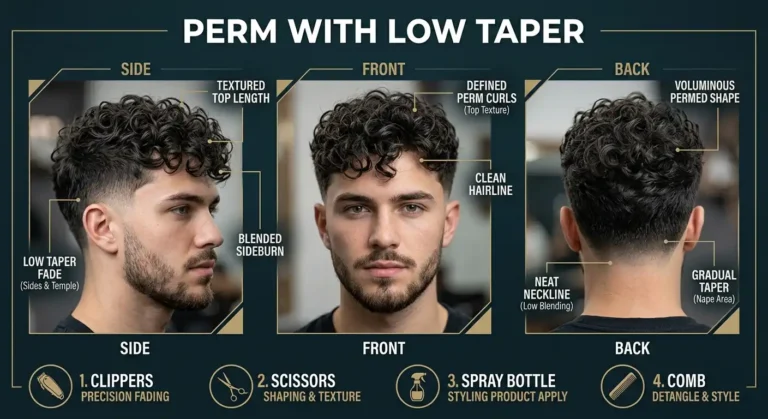
Short curls can retain their natural pattern while the low taper cleans the edges. The top should not be cut too aggressively because curls contract after drying. A #0–#2 taper around the lower sides gives a clear outline without removing the curl character. Oval and square faces are particularly versatile with this shape. Apply curl cream to damp hair, distribute it evenly, and let the curls settle naturally. Ask the barber to judge the top after considering shrinkage rather than cutting purely from its wet length.
Short Coils with Low Taper
Coily hair can create a strong contrast against a clean low taper. Keep enough length on top to show the coil pattern while reducing the sides around the ears and neckline. A low taper with #0–#2 guard work creates definition without removing the entire side profile. Square, oval, and round faces can work well. Use a moisturizing curl cream or light leave-in product to maintain softness. The key is keeping the taper low so the natural volume remains the dominant feature.
Short Wavy Taper
Wavy hair gives a short taper movement without requiring a large amount of length. Keep the top around #3–#4 or slightly longer if the wave needs room to form. The low taper removes bulk around the lower sides while preserving the wave above. Oval and rectangular faces can benefit from the natural horizontal movement. Sea salt spray can add texture, while matte cream provides control. Avoid over-combing the top because brushing out the wave can make the haircut look flatter.
Short Straight Taper
Straight hair shows the taper transition clearly, making clean blending especially important. A #3–#4 top works for a short, practical version, while point cutting can add movement. The low taper should transition gradually through smaller guards rather than leaving visible steps. Almost any face shape can wear this cut with minor changes to top length. Matte clay suits thick straight hair, while lighter cream is better for fine hair. Keep the front slightly higher if you want to add visual length to the face.
Short Thick Hair Taper
Thick hair gives you plenty of material for texture, but removing too much weight can make the top expand. Ask the barber to use point cutting and controlled bulk removal rather than aggressively thinning everything. A low taper through #0–#2 keeps the perimeter clean. Square and oval faces suit the dense silhouette well. Matte clay is useful because it separates thick strands without creating heavy shine. Keep the top slightly longer if your hair tends to stand outward when cut very short.
Short Fine Hair Taper
Fine hair benefits from a taper that does not expose too much scalp. A shadow-style blend using #1–#2 can maintain a fuller visual transition, while the top stays around #3–#4. Avoid excessive thinning shears because removing too much density can make the hair appear weaker. Oval and diamond faces can work especially well with a little texture at the front. Use lightweight styling powder or matte cream sparingly. The goal is lift and separation, not a heavy layer of product.
Short Coarse Hair Taper
Coarse hair holds shape well, so the barber can create a strong compact top with a clean taper. A #2–#4 top can be softened with point cutting to prevent a rigid finish. The sides can graduate through #0, #1, and #2 around the lower taper. Square and oval faces handle the structured shape particularly well. Matte clay or fiber offers enough grip for coarse strands. If the hair grows outward, leave slightly more length at the top and remove bulk strategically with scissors.
Short Mixed-Texture Taper
Some men have different textures across the top, such as straighter hair at the front and waves or curls near the crown. A low taper provides a consistent perimeter while allowing the top to behave naturally. Guard work around #0–#2 can keep the sides clean. Oval and square faces are easy matches. Choose a flexible cream rather than a rigid gel so different textures can move together. Your barber should follow the growth pattern instead of forcing every section into identical lengths.
Short Receding-Hairline Taper
A short taper can work well with a receding hairline when the top is shaped around the natural hairline rather than trying to hide it with excessive length. A #2–#4 top with subtle texture can create a deliberate look. Keep the taper low and avoid taking the temples unnecessarily high. Oval and square faces can handle a compact crop especially well. Matte clay can add texture without making the hairline shiny. Ask the barber to preserve the natural recession rather than cutting a new artificial edge.
Short Textured Taper for Thin Density
When density is low, the best result often comes from simplicity. Keep the top short enough to sit naturally, perhaps around #3–#4, and use a soft low taper rather than a dramatic skin fade. This keeps the side transition from looking overly exposed. Oval and diamond faces suit the compact shape. Lightweight matte products can add separation without weighing the hair down. Avoid wet-look pomades because shine can make the scalp more visible. A clean, textured finish usually looks more intentional.
Modern Short Taper Combinations
Short Edgar
The short Edgar combines a compact top with a defined forward fringe and a low taper around the sides. Keep the front strong but not excessively long, then use point cutting to prevent the top from becoming a solid block. The style works especially well with straight, thick hair and suits oval or round faces. A low taper through #0–#2 keeps the lower perimeter sharp. Use matte paste to control the fringe. Ask the barber to preserve the natural forehead line rather than forcing a perfectly artificial edge.
Textured Edgar
The textured Edgar keeps the recognizable forward front but breaks up the top with point cutting. This makes the haircut less rigid than a traditional blunt Edgar. Thick straight or slightly wavy hair gives the best texture. A low taper keeps the sides clean while preserving the strong upper shape. Round and oval faces often work well with the horizontal fringe. Matte clay is a good finishing choice because it separates pieces without adding shine. The front should remain visually defined even when the texture is irregular.
Curly Edgar
A curly Edgar replaces the straight fringe with short curls that fall naturally toward the forehead. The low taper gives the curly top a clean perimeter while preserving volume above. Curly and coily hair can both work, although the barber should account for shrinkage before deciding the top length. Oval and square faces are strong matches. Curl cream defines the pattern while keeping it soft. Ask for the taper around the ears and neckline to remain low so the natural curl volume remains the main feature.
Edgar with Line-Up
Adding a line-up gives the Edgar a sharper geometric finish. The top stays short and forward while the barber carefully defines the forehead and temples. A low taper through #0–#2 creates contrast without moving the fade too high. Straight, thick hair makes the clean geometry easiest to maintain. Square and oval faces suit the stronger angles. Use matte paste on the top and keep the line-up clean between visits with professional touch-ups rather than repeatedly carving deeper into the hairline.
Short Caesar Edgar
This hybrid sits between a Caesar and Edgar. The top remains short and forward, but the fringe is less extreme than a full Edgar. The low taper adds modern structure around the sides. Straight and dense hair works particularly well, although a slightly wavy version can look softer. Round and oval faces benefit from the horizontal front. Use matte clay and finger-comb the top forward. Ask your barber for a short fringe that follows your natural hairline instead of forcing a perfectly straight edge.
Short Crop with Beard
Pairing a textured short crop with a beard gives the haircut more visual weight below the face. Keep the top compact with point-cut texture and taper the sides low. The beard can remain short or medium, with the sideburn blended into the scalp taper. Square, oval, and diamond faces work well. Matte clay keeps the scalp hair natural while beard balm controls facial hair. Tell the barber to blend the sideburn gradually rather than creating a sudden transition between the haircut and beard.
Short Crop with Design Line
A single shaved design line adds personality without changing the basic haircut. Keep the top textured and short, then place the line near the low taper where it can follow the natural shape of the temple. Straight and thick hair gives strong contrast. Oval and square faces suit the geometric detail. Matte clay works for the top. Keep the design simple if you need the haircut to remain suitable for work. Because the line grows out quickly, it usually needs refreshing more often than the main cut.
Short Taper with Double Line
Two narrow lines create more visual impact than a single design without requiring a complex pattern. The lines should follow the temple area and remain separate enough to stay visible as they grow. Keep the top around #3–#4 and the taper low. Thick, straight hair offers the clearest contrast. Square and oval faces can handle the stronger detail. Use matte paste for the top and leave the design itself product-free so the lines remain visually clean.
Short Taper with Curved Design
A curved design follows the natural contour of the head and feels softer than straight geometric lines. Place it within or just above the low taper so it does not dominate the haircut. A compact #3–#4 top works well. Straight and wavy textures provide clear visibility for the design. Oval and round faces can benefit from the curved movement. Use matte cream or clay on the top. Ask your barber to keep the curve simple and balanced rather than adding several competing shapes.
Short Taper with Temple Part
A small temple part combines a side direction with the clean perimeter of a low taper. The top can stay around #3–#4, while the part is lightly defined rather than deeply shaved. Straight and thick hair is easiest to style. Oval, square, and diamond faces work naturally with the side movement. Matte pomade offers control without excessive shine. This is a useful option when you want a modern haircut that still feels appropriate for school, work, or formal occasions.
Short Taper with Textured Crown
This version places the visual focus toward the crown rather than the fringe. The barber keeps the top short but uses point cutting to separate the crown and create movement. The low taper keeps the lower perimeter neat. Thick, wavy, or coarse hair can show the texture especially well. Oval and square faces suit the balanced shape. Use matte clay and work it into the crown with your fingertips. Avoid pressing the crown flat with a comb because the texture is the main feature.
Short Taper with Tousled Top
A tousled top looks intentionally imperfect while the low taper keeps the haircut controlled around the edges. Leave enough top length for movement, then use point cutting to remove a uniform appearance. Wavy and thick straight hair are excellent matches. Oval and square faces can carry the texture easily. Matte clay or fiber creates separation. Work the product through dry hair and move the strands in different directions rather than forming a fixed hairstyle. The contrast between messy top and clean perimeter creates the appeal.
Short Taper with Mini Pompadour
The mini pompadour uses a small amount of front height without becoming a full classic pompadour. Keep the top short-to-medium and taper the sides low through #0–#2. Straight and thick hair is ideal because it naturally supports the front. Oval and square faces are especially suitable. Use a light blow-dry to direct the front upward and backward, followed by matte pomade. Keep the volume controlled. Too much height can overpower a short haircut and change the balance of the face.
Short Taper with Mini Quiff
A mini quiff is a softer alternative to the pompadour. The front rises slightly while the rest of the top stays compact. The low taper keeps the sides clean without exposing too much scalp. Straight, wavy, and medium-thick hair can work. Oval, square, and diamond faces suit the shape well. Apply styling cream to damp hair and blow-dry the front upward with your fingers. A small amount of matte paste can finish the shape without making the top look stiff.
Short Taper with Side Sweep
The side sweep keeps the haircut relaxed rather than sharply parted. Leave the front long enough to move sideways and use point cutting for natural separation. A low taper through #0–#2 cleans the perimeter. Straight and wavy hair can both carry the look. Oval and rectangular faces often benefit from the diagonal direction. Matte cream is enough for most hair types. Brush the front sideways while damp, then loosen the shape with your fingers once dry.
Short Taper with Angular Fringe
An angular fringe cuts across the forehead on a slight diagonal rather than using a straight horizontal line. This creates movement and can help break up a rounder facial appearance. Keep the top short and textured, with a low taper around the perimeter. Straight and dense hair is easiest to shape. Round and oval faces can benefit from the diagonal edge. Matte paste provides control. Tell your barber which side you want the fringe to angle toward so the cut follows your preferred direction.
Short Taper with Rounded Fringe
A rounded fringe follows the natural curve of the forehead and creates a softer alternative to a blunt fringe. The top remains compact while the low taper provides structure around the sides. Straight, wavy, and curly hair can all work if the fringe is cut for the texture. Oval and square faces are versatile choices. Use lightweight cream for straight hair or curl cream for textured hair. The barber should avoid making the fringe too heavy, especially when the hair is thick.
Short Taper with Natural Curl Top
Natural curls can be kept compact while the lower sides are cleaned with a low taper. Instead of creating a uniform top, let the curls determine the final texture. A #0–#2 taper around the ears and neckline creates contrast without removing the curl pattern. Oval, square, and round faces can all work. Curl cream or a light leave-in conditioner helps maintain definition. Ask the barber to avoid brushing the curls dry during the haircut because that can distort their natural pattern.
Short Taper with Tight Curl Crop
A tight curl crop uses shorter curls across the top, creating a compact rounded texture. The low taper sharpens the outline around the ears and nape. Curly and coily hair can both work, provided enough length remains for the curl pattern to form. Square and oval faces are particularly adaptable. Use curl cream and lightly scrunch the hair after applying it. The barber should taper the lower perimeter carefully because taking the blend too high can remove the balanced shape of the crop.
Short Taper with Coily Top
A short coily top creates strong texture while the taper keeps the edges controlled. Keep the top long enough to show the coil pattern and use #0–#2 around the lower sides. Square, oval, and round faces can all suit the shape. A moisturizing styling cream helps reduce dryness and supports definition. Avoid excessive brushing because it can disturb the coil pattern. Ask your barber to keep the transition low and clean around the ears while preserving the natural density above.
Short Taper with Afro Texture
A compact afro-textured top can be paired with a low taper without removing the distinctive volume. The barber cleans the temples, sideburns, ears, and neckline while leaving the upper shape fuller. Guard work around #0–#2 creates the perimeter transition. Oval, square, and round faces can work depending on the top’s width. Use a moisturizing curl cream or light leave-in product. Regular shaping helps the silhouette stay intentional while allowing the natural texture to remain the central feature.
Short Taper with Finger Waves
Finger-wave texture creates a more deliberate pattern on a short top. The low taper keeps the perimeter clean while the upper hair carries the wave design. This requires enough length and texture to form the pattern, so it is not suited to every head of hair. Oval and square faces can work well. Use a wave-forming product suited to your hair type and follow the natural growth direction. This is a detail-heavy style, so barber skill and consistent maintenance matter.
Short Taper with Wet-Look Top
A wet-look top adds shine to an otherwise clean low taper. Keep the top short enough to remain controlled, around #3–#4 or slightly longer depending on the desired direction. Straight and wavy hair works best because the product can create a smooth surface. Oval and square faces suit the classic shape. Use a small amount of pomade or styling gel and distribute it evenly. Avoid overloading the hair, as excessive product can make a short top look greasy rather than intentionally glossy.
Short Taper with Matte Finish
A matte finish keeps the haircut modern and understated. The top can be textured with point cutting while the low taper creates a clean perimeter. Straight, wavy, and thick hair all respond well to matte products. Oval, square, and diamond faces can wear the shape easily. Matte clay or fiber provides grip without visible shine. Apply the product after the hair is mostly dry and work it from the back toward the front. Use less product around the hairline to avoid buildup.
Short Taper with Natural Finish
For the lowest-maintenance version, keep the top short and let its natural direction define the style. The barber focuses on clean blending around the ears and neckline rather than creating a complicated top shape. #2–#4 can work depending on hair density. Every major hair texture can adapt to this approach. Oval and square faces are particularly easy to balance. Product is optional, although a small amount of lightweight cream can control flyaways. This is one of the easiest versions to maintain between barber visits.
Short Taper with Brush Cut
A brush cut keeps the top compact and slightly upright, creating a neat rectangular texture. The barber can use a #2–#4 depending on the desired height and density, then blend the sides low. Coarse and thick straight hair is especially suitable. Square and oval faces work well because the shape follows the head closely. Matte clay gives light structure. Ask for the top to be shaped so it follows your growth pattern rather than being forced into an unnaturally vertical position.
Short Taper with Low Volume
Low volume means the top remains deliberately close to the head instead of being lifted. This makes the haircut useful for men who want a polished style with almost no daily styling. A #2–#4 top and low taper create a compact silhouette. Straight, fine, and medium-density hair can work especially well. Oval and round faces benefit from the simple shape. Use lightweight cream if needed. Avoid heavy waxes because they can make a low-volume top look flat and oily.
Short Taper with High Texture
High texture adds separation to a short top while the taper remains conservative. The barber can use point cutting to create small pieces that catch light and create movement. Thick, straight, and wavy hair are strong candidates. Square, oval, and diamond faces suit the sharper texture. Matte clay or fiber works best because it provides grip without shine. Tell your barber to remove weight selectively rather than heavily thinning the entire top. The goal is visible texture without making the hair look sparse.
Short Taper with Scissor Texture
A scissor-textured top looks softer than a fully clippered top. The barber can establish the main length with scissors, then use point cutting to create movement while maintaining natural weight. The sides transition into the low taper with guards around #0–#2. Straight and wavy hair are especially suitable. Oval and square faces work well. Matte cream or clay gives flexible control. This is a good choice if you want the haircut to look less uniform and more naturally shaped.
Short Taper with Clipper Texture
Clipper texture gives a more uniform, precise finish than scissors. The barber can use different guards to establish short sections and then refine the transition with clipper-over-comb. A #2–#4 top can remain compact while the lower sides move through #0–#2. Straight and coarse hair shows the result clearly. Square and oval faces suit the structured shape. Matte paste keeps the top controlled. Ask your barber to avoid creating visible steps between guard lengths.
Short Taper with Clipper-Over-Comb Finish
Clipper-over-comb is useful when the barber needs to remove bulk while keeping a smooth transition. The technique can connect the tapered sides to a slightly longer top without leaving a harsh shelf. It works particularly well on thick or coarse hair. Keep the top around #3–#4 and the low taper around #0–#2. Square, oval, and diamond faces can wear this shape. A small amount of matte clay finishes the top. The technique depends heavily on barber control, so choose an experienced barber.
Short Taper with Point-Cut Top
Point cutting creates small, irregular ends that make a short top look less blocky. It is useful for textured crops, messy tops, and compact quiffs. The low taper remains low around the ears and neckline, often progressing from #0 to #1 and #2. Thick straight or wavy hair benefits most. Oval and square faces suit the textured silhouette. Matte clay gives the best separation. Ask for controlled point cutting rather than aggressive thinning if you want the top to retain density.
Short Taper with Soft Fade Transition
A soft transition keeps the taper visible but avoids a stark skin contrast. The barber can blend from #0.5 or #1 through #2 and into the longer upper side. This creates a polished look that grows out naturally. Fine, straight, and medium-density hair can benefit from the softer approach. Oval, square, and diamond faces are versatile. Matte cream provides a subtle finish. This is a strong choice if you like the appearance of a fade but do not want a dramatic skin-level effect.
Short Taper with Clean Temple
The clean-temple version focuses attention on the area immediately around the sideburn and temple. The taper stays low and controlled, with the barber using #0–#2 guards to create the transition. The top can remain a simple #3–#4 textured finish. Straight, curly, and coarse hair can all work. Oval and square faces are particularly adaptable. Use a matte styling product that matches your texture. Ask for a natural temple shape rather than an exaggerated squared-off corner.
Short Taper with Clean Sideburn
A carefully blended sideburn can make a short haircut look much more finished. The barber gradually reduces the sideburn into the low taper rather than cutting it off abruptly. Keep the top around #3–#4 for a balanced profile. This works with straight, wavy, curly, and coily hair. Oval and square faces are easy matches. Beard wearers can ask for the sideburn to connect gradually into the beard. Use beard balm separately from scalp styling product to keep each area controlled.
Short Taper with Athletic Finish
The athletic version is designed around simplicity. Keep the top short enough that sweat, helmets, exercise, and outdoor activity do not require constant restyling. A #2–#4 top with a low taper around #0–#2 gives a clean outline. Straight, coarse, and curly hair can all adapt. Square and oval faces suit the compact silhouette. Product is optional. If needed, use a lightweight matte cream after washing and allow the natural texture to provide the rest of the shape.
Short Taper with Professional Finish
A professional finish keeps the taper subtle and the top controlled. Avoid dramatic designs, exposed skin extending too high, or extreme texture. A #3–#4 top with a soft #1–#2 transition provides a neat appearance without looking overly styled. Straight and wavy hair work especially well. Oval, square, and diamond faces are versatile choices. Matte pomade or light styling cream offers enough control. Ask the barber for a natural neckline and a low taper that remains conservative around the temples.
Short Taper with Minimal-Styling Finish
For men who do not want a daily styling routine, keep the top short and compatible with its natural growth direction. A #2–#4 top can work depending on density, while the taper keeps the edges clean. Coarse, straight, curly, and wavy textures can all be adapted. Oval and square faces are particularly easy to balance. Product is optional. If your hair needs control, use a lightweight cream rather than a strong wax. The best low-maintenance haircut is one that works with your natural texture.
Master Barber Phrasing: How to Ask for the Cut
Do not simply say, “Give me a short taper.” Tell your barber where you want the taper, how short you want the top, and how you want the neckline finished.
Copy and paste this script:
“I want a low taper around the temples, sideburns, ears, and neckline. Keep the taper low and do not take it up into the middle of the sides. Start the shortest area around a #0 or #1, blend gradually through #2, and connect it smoothly into the top. Keep the top short around a #3 or #4, with light point cutting for texture. Keep my natural hairline and finish the neckline naturally.”
Variation Add-On: Textured Crop
“Keep the front slightly forward and textured. Use point cutting rather than making the fringe one solid line.”
Variation Add-On: Short Edgar
“Keep the front strong and forward, but follow my natural hairline. Keep the taper low and clean around the temples.”
Variation Add-On: Short Curls
“Keep enough length on top for my curls to form naturally. Please account for shrinkage and do not brush the curls flat.”
Variation Add-On: Professional Finish
“Keep the taper soft rather than taking it completely to skin, and use a natural neckline without a hard design.”
This Style vs. Other Taper and Fade Options
| Cut | Taper/Fade Height | Typical Shortest Area | Visual Effect | Best Use |
| Low taper | Low | #1–#2 | Subtle | Everyday |
| Low taper fade | Low | #0–#1 | Sharper | Modern |
| Mid taper | Mid | #0–#1 | Stronger | Fashion |
| High fade | High | #0–#1 | High contrast | Bold |
| Low skin fade | Low | Skin/#0 | Very sharp | High contrast |
| Buzz taper | Low | #0–#2 | Minimal | Active lifestyle |
| Scissor taper | Low | Scissor-short | Natural | Classic |
The main difference is placement. A low taper keeps the shortest work concentrated near the lower sides, ears, temples, and neckline. A higher fade removes more hair farther up the head and therefore changes the overall silhouette more dramatically.
Why This Haircut Works
The appeal comes from balance. You get a clean perimeter without sacrificing all the natural weight above it. That means the same basic taper can support a crop, curls, crew cut, Edgar, side sweep, or textured top.
It also works across different lifestyles. Someone who wants almost no styling can choose a #2–#3 top. Someone who wants texture can keep more length and use point cutting.
The low placement is also useful when you want a haircut that looks neat without appearing overly aggressive. For professional environments, a soft taper and natural neckline can be more appropriate than a high skin fade.
How to Style Short Hair with a Low Taper
- Start with clean hair. Wash according to your scalp and hair type rather than following a rigid daily schedule.
- Remove excess water gently. Pat with a towel instead of aggressively rubbing the hair.
- Choose the product by texture. Use matte clay for thick straight hair, lightweight cream for fine hair, sea salt spray for waves, or curl cream for curls.
- Direct the top. Push a crop forward, sweep a side part sideways, or lift a quiff upward.
- Use a blow-dryer if needed. Warm air can help set direction; finish with cooler air if comfortable.
- Add texture with your fingers. Avoid over-combing if you want a natural finish.
- Keep product away from the taper when possible. The clean sides do not need heavy styling product.
Step-by-Step Barbering Tutorial
Tools Required
- Professional hair clippers
- #0 or no-guard clipper setting
- #1 guard
- #2 guard
- #3 guard
- #4 guard
- Trimmer for detailing
- Barber comb
- Scissors
- Point-cutting scissors or standard barber scissors
- Clipper-over-comb technique
- Neck duster
- Spray bottle
- Styling product
- Hand mirror for the final check
Cutting Sequence
- Consultation: Confirm top length, taper height, temple shape, sideburn finish, and neckline.
- Establish the top: Use the chosen #3 or #4 length, or scissors if more shape is required.
- Set the lower taper: Begin around the ears, temples, and neckline using the shortest appropriate setting.
- Create the first transition: Move into the #1 guard while keeping the blend low.
- Build the middle section: Use the #2 guard to connect the lower taper toward the upper sides.
- Connect the top: Use a #3 or #4, or clipper-over-comb, to remove any visible shelf.
- Refine the shape: Check both sides for balance and follow the natural growth pattern.
- Texture the top: Use point cutting where separation or movement is needed.
- Detail the perimeter: Clean the temples, around the ears, and neckline with a trimmer.
- Final inspection: Check the haircut from the front, both sides, and back before styling.
Best Styling Product Chemistry
Matte Clay
Matte clay is useful for short, straight, thick, or coarse hair. Clay-based formulas generally provide grip and a dry-looking finish. They are especially useful for textured crops, messy tops, short quiffs, and brushed-up styles.
Use less product on fine hair because heavy clay can flatten it.
Sea Salt Spray
Sea salt spray is better suited to wavy or slightly textured hair. It adds grip and encourages a more separated, beach-like texture. It can work under a matte cream or clay when additional control is needed.
Do not rely on salt spray alone if your hair is very dry or fragile.
Curl Cream
Curl cream is designed for curly and coily textures that need moisture, definition, and flexible control. It works well with short curls, curly Edgar styles, and natural textured tops.
Apply it to damp hair and encourage the existing curl pattern rather than forcing a new direction.
Matte Paste
Matte paste sits between a light cream and stronger clay in many styling routines. It works well for side parts, French crops, fringes, and short textured styles where some flexibility is useful.
Lightweight Styling Cream
Cream is a good choice for men who want control without a stiff finish. It suits professional short styles, natural finishes, fine hair, and lightly wavy textures.
Best Hair Types and Face Shapes
Straight Hair
Straight hair gives the cleanest visibility to taper lines and works with almost every short variation. Textured crops, side parts, crew cuts, Edgar styles, and quiffs are all strong choices.
Wavy Hair
Waves add movement without requiring much styling. Keep enough length on top for the wave to appear, then let the low taper handle the lower sides.
Curly Hair
Curly hair should be cut with shrinkage in mind. Keep the top long enough for the curl pattern to remain visible and use the taper to frame it.
Coily Hair
Coily hair creates strong natural texture. A low taper can sharpen the perimeter while keeping the upper volume intact.
Oval Face
Oval faces are highly adaptable. You can choose crops, curls, side parts, quiffs, or very short tops without needing major correction.
Square Face
Square faces usually work well with structured cuts such as crew cuts, textured crops, Edgar styles, and compact quiffs.
Round Face
A little height or vertical texture can help create a longer visual impression. Short quiffs, brushed-up tops, and textured crops are useful choices.
Long or Rectangular Face
Avoid excessive height if your face is already long. A forward fringe, Caesar, French crop, or lower-volume textured top can create better balance.
Diamond Face
A controlled side sweep, crew cut, textured crop, or short quiff can work well. Avoid removing too much side weight if the cheekbones are already prominent.
Step-by-Step Maintenance Guide
Every Few Days
Keep the scalp clean according to your hair type. Curly and coily hair may need a different washing routine from fine straight hair. Use conditioner when appropriate and avoid aggressive towel drying.
Every 2–4 Weeks
Most sharp low tapers look best when refreshed within roughly two to four weeks, depending on how quickly your hair grows and how crisp you want the perimeter. Skin-level detailing usually becomes noticeable sooner than a soft taper.
Between Barber Visits
Do not repeatedly shave the taper higher at home. Small mistakes around the temple can change the entire shape. If necessary, keep only obvious stray hairs around the neckline under control and leave the main blend to your barber.
At the Barber
Show your previous haircut or reference photos. Tell the barber what you liked and what you want changed. If the previous taper grew out well, keeping the same height and neckline can make future appointments more predictable.
Common Mistakes to Avoid
Taking the Taper Too High
The biggest mistake is turning a low taper into a mid or high fade. Tell the barber clearly that the blend must stay low.
Using the Same Guard Everywhere
Different guard lengths are needed to create a smooth transition. A good taper is not simply one short guard applied around the sides.
Removing Too Much Top Length
Short hair can become difficult to style if the barber takes the top shorter than your natural texture allows. Discuss the desired top length before the clippers start.
Over-Thinning Thick Hair
Aggressive thinning can remove useful density and create an uneven appearance. Point cutting and selective bulk removal are often better options.
Ignoring Hair Growth Direction
A style that fights your natural growth pattern may look good immediately after the haircut but become difficult to manage later.
Making the Hairline Artificial
A sharp line-up can look clean, but forcing the hairline into a shape it does not naturally follow can create an unnatural result as it grows.
Using Too Much Product
Short hair needs less product than long hair. Heavy wax, gel, or clay can make the top look greasy or compressed.
Choosing a Style Without Considering Face Shape
The taper itself is only part of the haircut. The top, fringe, height, and direction should also support your facial proportions.
Frequently Asked Questions
What is the best short style with a low taper?
A textured crop is one of the safest starting points because it works with many hair types and needs little styling. A crew cut is even simpler, while a short Edgar gives a stronger fashion-focused appearance.
Can short hair have a low taper?
Yes. The top can be cut with #1–#4 guards or scissors while the taper is kept around the temples, ears, and neckline. The top length and taper height are separate decisions.
Is a short Edgar good with a low taper?
Yes. A short Edgar works particularly well when the top remains compact and the front follows the natural hairline. A low taper adds contrast without taking the sides too high.
Can curly hair get a low taper?
Absolutely. Short curls can look especially clean with a low taper because the sides become controlled while the curl pattern remains visible on top. Allow for shrinkage when choosing the top length.
What guard should I ask for on the sides?
There is no single correct guard. A barber may use a #0 or #1 at the lowest section, then move through #1 and #2 to connect with longer hair. The exact sequence depends on your hair density and desired contrast.
Is a low taper better than a fade for short hair?
Neither is automatically better. A low taper keeps more natural weight and usually gives a softer result. A low fade removes more hair and creates stronger contrast. Choose based on the silhouette you want.
How often should I maintain a short taper?
A practical maintenance window is about two to four weeks for a consistently clean appearance. A softer taper can be allowed to grow longer, while a skin-level finish usually needs earlier attention.
Which short style is best for curly hair?
The Short Curly Taper, Tight Curl Crop, Curly Edgar, and Natural Curl Top are strong options. The best choice depends on curl pattern, density, face shape, and how much top length you want to maintain.
Can a low taper work with thinning hair?
Yes, but the top and side transition should be chosen carefully. A softer shadow taper can avoid exposing too much scalp, while a short textured top can make the haircut look intentional without requiring heavy styling.
Should the neckline be natural or squared?
A natural neckline usually grows out more softly, while a squared neckline creates a sharper initial finish. For low-maintenance grooming, a natural finish is often easier to live with.
Final Thoughts
A short top with a low taper gives you one of the most flexible foundations in men’s grooming. The main decision is not simply how short you want the sides. Think about the top texture, fringe direction, face shape, hair density, neckline, and how much daily styling you are willing to do.
For the easiest everyday result, start with a short textured crop, crew cut, natural texture top, or simple taper. If you want more personality, consider a short Edgar, curls, a side part, a design line, or a textured quiff.
Before your next appointment, show your barber a clear reference and use guard numbers to explain the desired length. A low taper should stay low, the blend should be smooth, and the top should work with your natural hair rather than against it.
For more men’s haircut guides, continue with the relevant low taper fade curly hair black.
Name: Ryan Cole
Role: Lead Grooming Editor, TaperHaircutGuide.com
Bio angle: Men’s grooming/style content researcher — 4+ years covering barbering trends, hairstyling terminology, and men’s style content for US audience. Cross-checks every guide with practicing barbers before publishing.