Taper Men: 66 Best Taper Men Haircut Styles, Fades & Combos (2026 Guide)

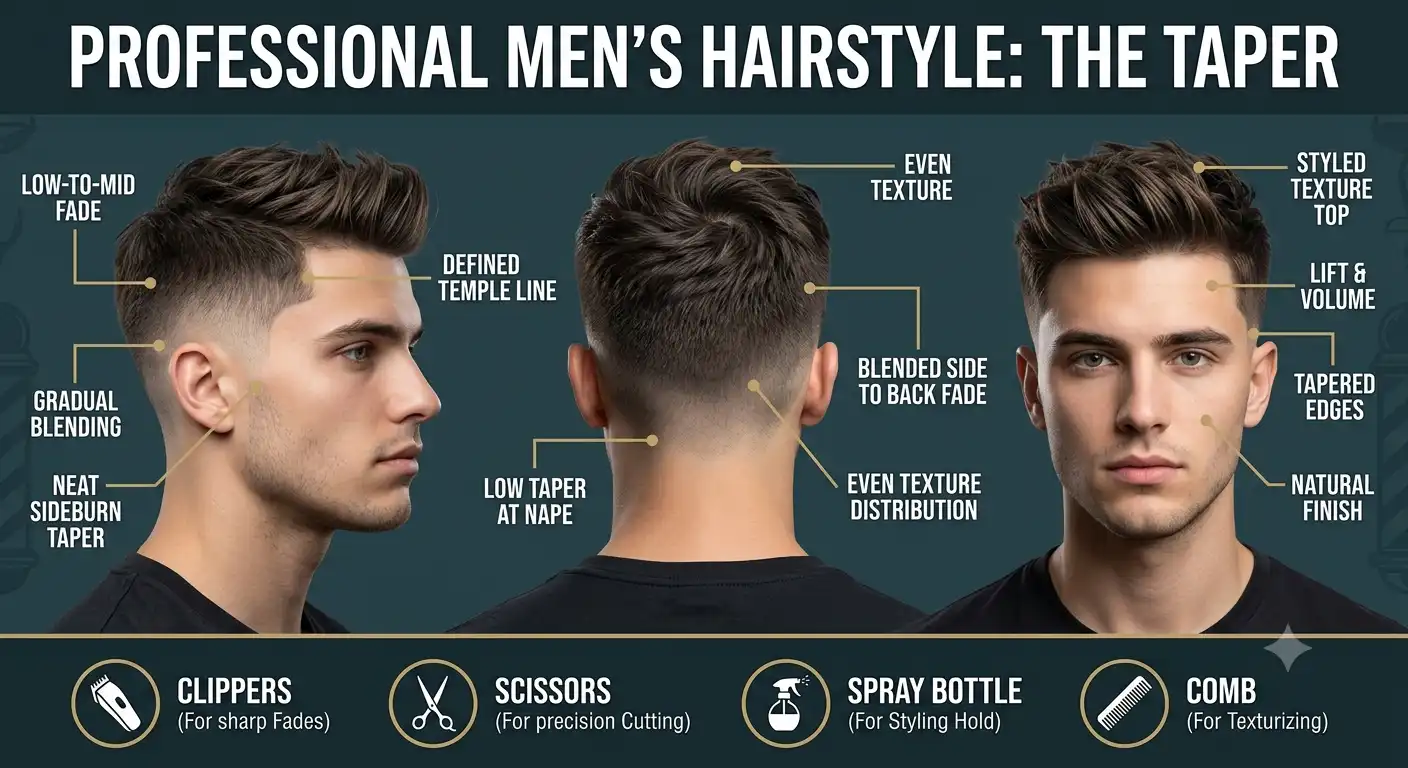
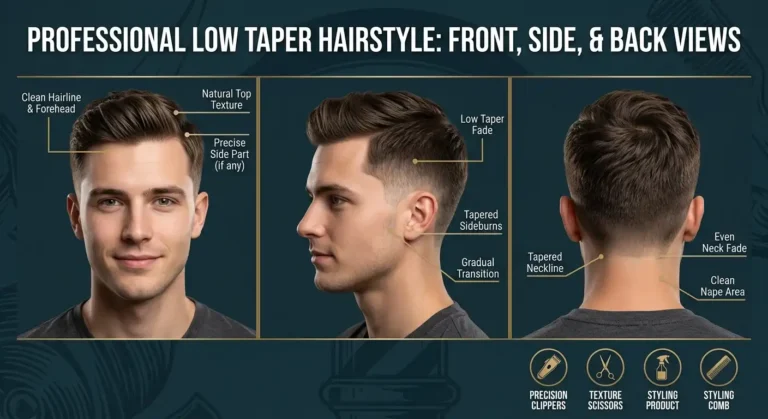
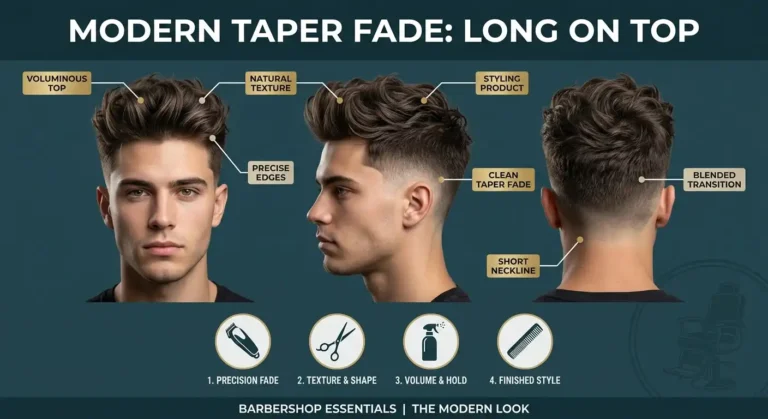
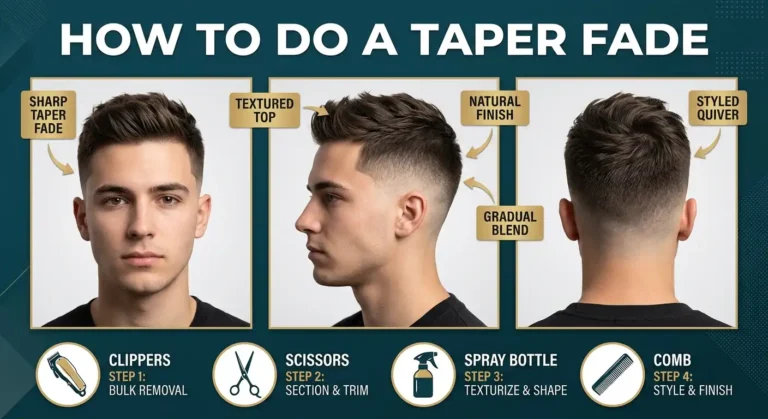
A taper men haircut gradually shortens the hair from the crown down to the neckline and around the ears, blending one length smoothly into the next without a hard line. It’s the most flexible base in barbering — you can keep it short and tight, leave the top long and messy, or pair it with a fade, a design, or a curly crop.
Because the blend does the heavy lifting, a taper suits almost any face shape, hair texture, and lifestyle, which is exactly why it keeps showing up on working professionals, students, and creatives alike.
Quick Key Takeaways
| Style | Guard Range | Best For | Maintenance |
| Classic Taper | #2–#4 | Oval, square faces | Every 3–4 weeks |
| Low Taper Fade | #0–#2 | Round, oblong faces | Every 2–3 weeks |
| Textured Crop Taper | #2–#3 | Straight, wavy hair | Every 3–4 weeks |
| Curly Top Taper | #1–#3 | Curly, coily hair | Every 4–5 weeks |
| Taper Mullet | #2–#4 | Long-hair guys wanting low upkeep | Every 5–6 weeks |
How to Ask Your Barber for a Taper Men Haircut Styles
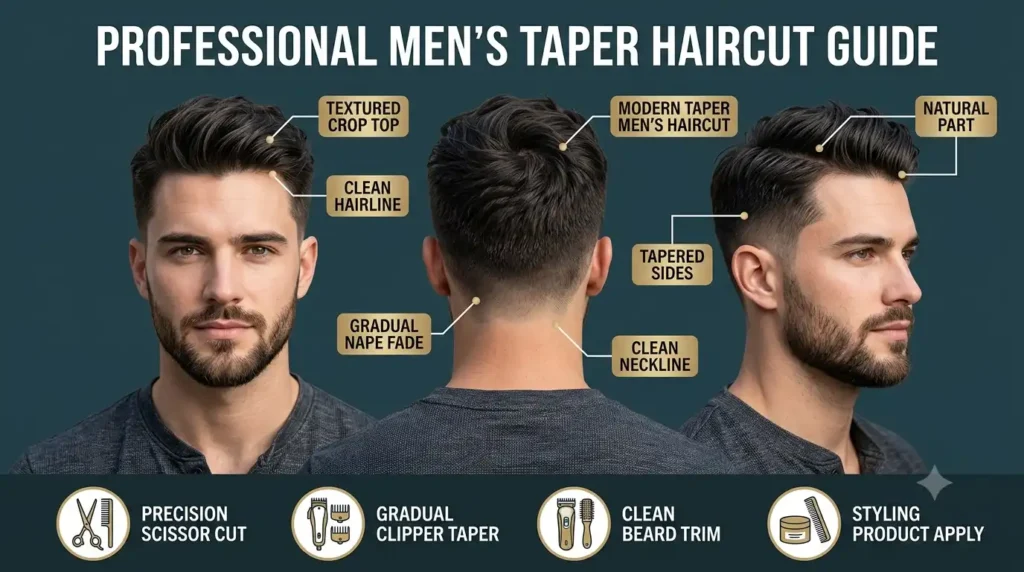
Copy-paste script: “I’d like a taper — guard [number] on the sides blending into [length] on top, tapered neckline, no hard fade lines.” Add these depending on the look you want:
- For a fade instead of a soft blend: “Take the sides down to skin at the bottom, then taper up.”
- For curly or coily hair: “Keep enough length on top for the curl pattern to show, taper the sides only.”
- For a messy top: “Point-cut the top so it sits textured, not blunt.”
- For a business look: “Keep it conservative — no disconnection, tight taper only.”
1. Classic & Professional Taper Men Haircut Styles
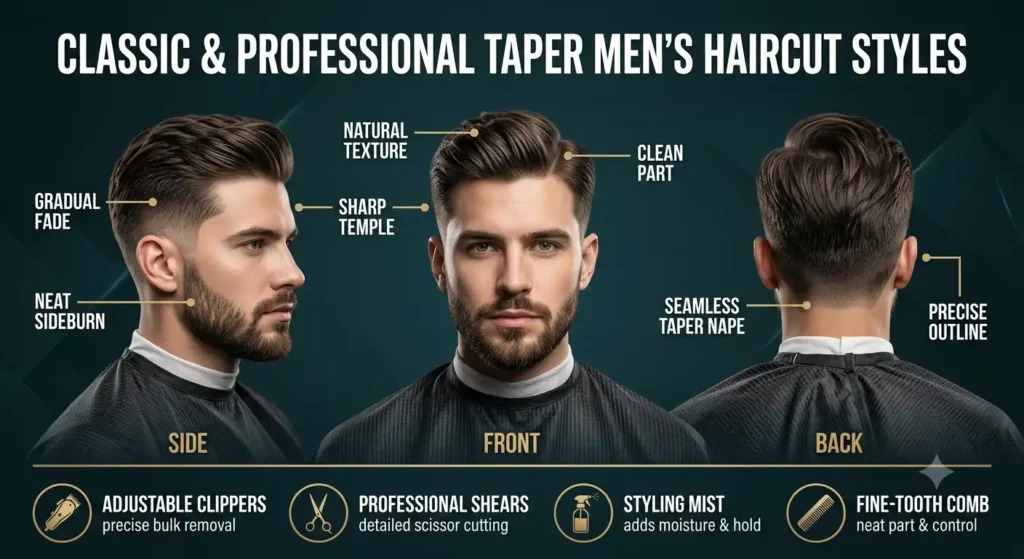
Classic Taper
Even, all-over blending from a #3 or #4 on top down to a #1 near the hairline gives this cut its timeless shape. It flatters oval and square faces and needs almost no daily styling beyond a comb-through.
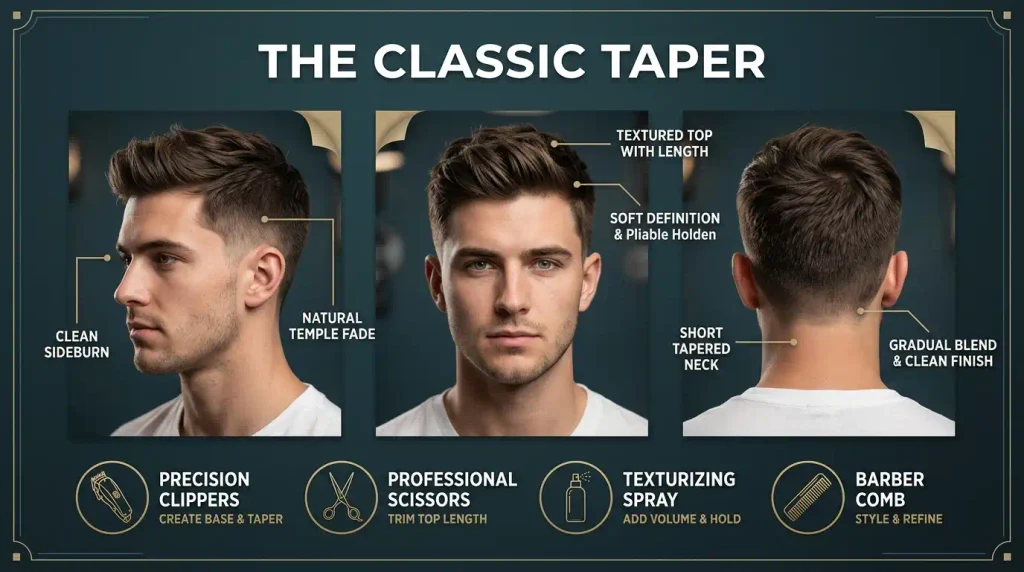
Business Taper
Kept tight at a #2 guard with a natural side part, this version reads corporate without looking stiff. Straight and wavy hair holds the part cleanest; a light pomade keeps flyaways down through a full workday.
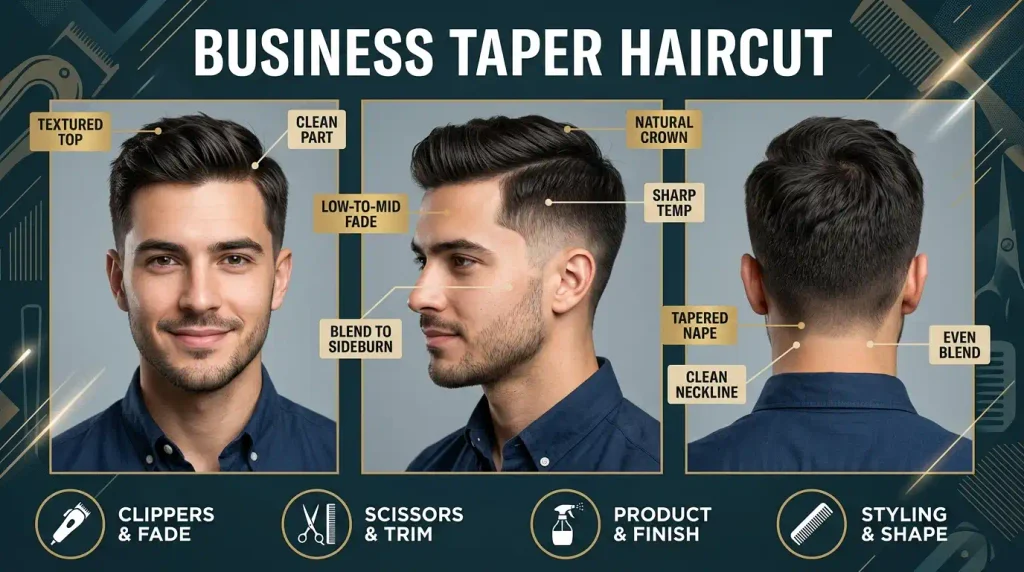
Ivy League Taper
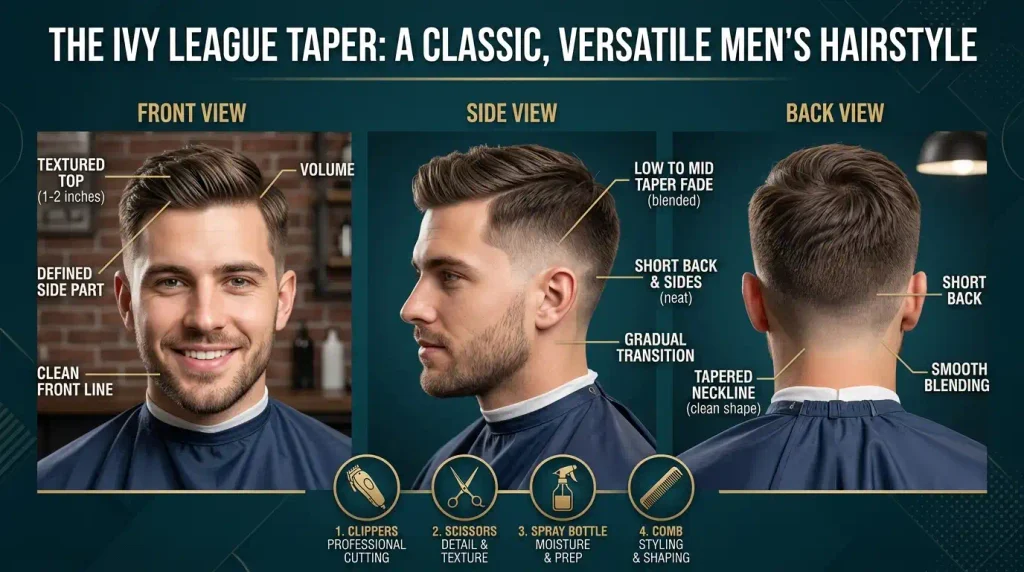
Slightly longer on top than a standard business cut, the Ivy League taper leaves enough length to comb forward or back. Square and diamond faces benefit from the added top volume balancing a narrower jaw.
Caesar Taper
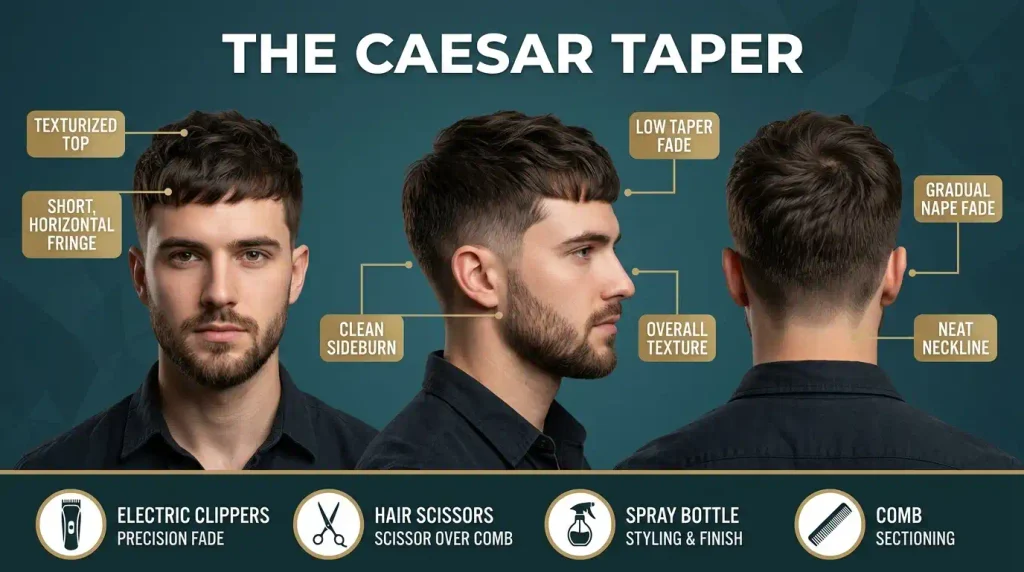
A short, horizontal fringe sits over a tight taper on the sides, giving a low-maintenance, slightly retro look. Round faces gain definition from the straight fringe line, and a matte cream keeps it from looking greasy.
Side Part Taper
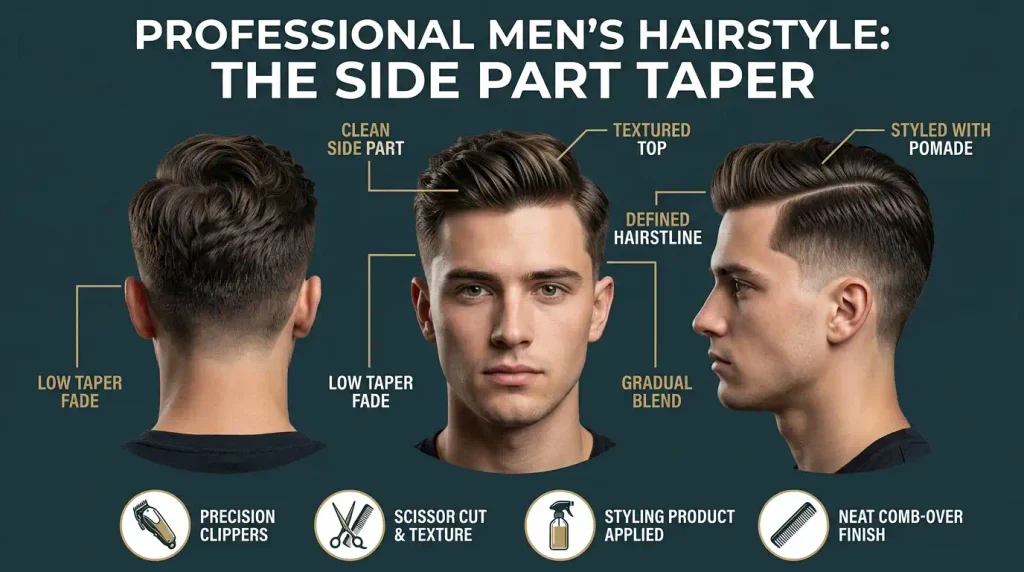
A defined part carved with a comb and finished with pomade turns a simple taper into a sharp, dressed-up option. Oblong faces suit this well since the horizontal part breaks up length.
Comb-Over Taper
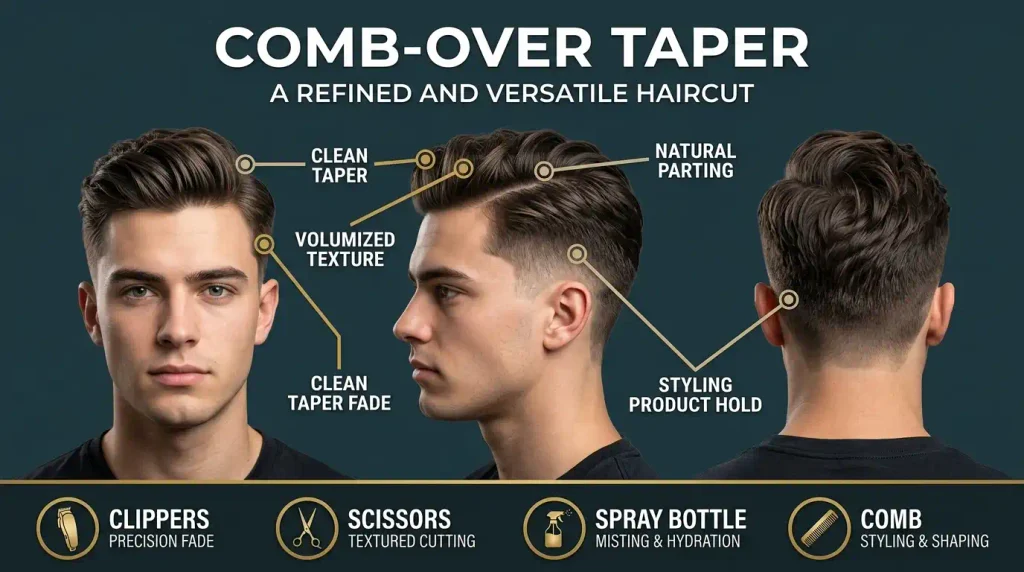
Longer top hair is combed across and over a tapered side, creating contrast between smooth top and blended sides. Fine, straight hair holds the sweep best with a light-hold gel.
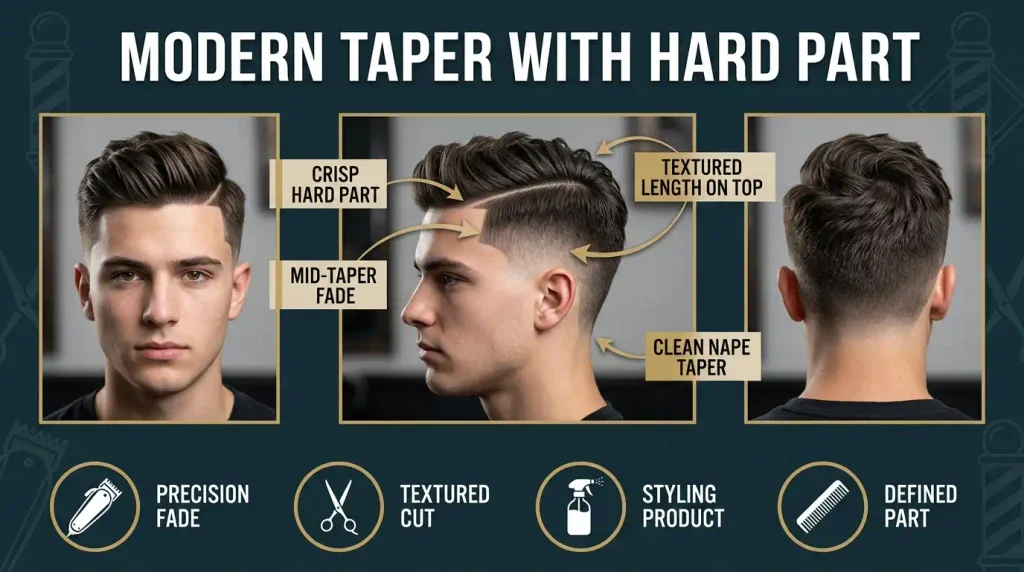
Taper with Hard Part
A shaved line separates the taper from the top section, adding a graphic edge to an otherwise conservative cut. Works on nearly every face shape and pairs well with short or medium top lengths.
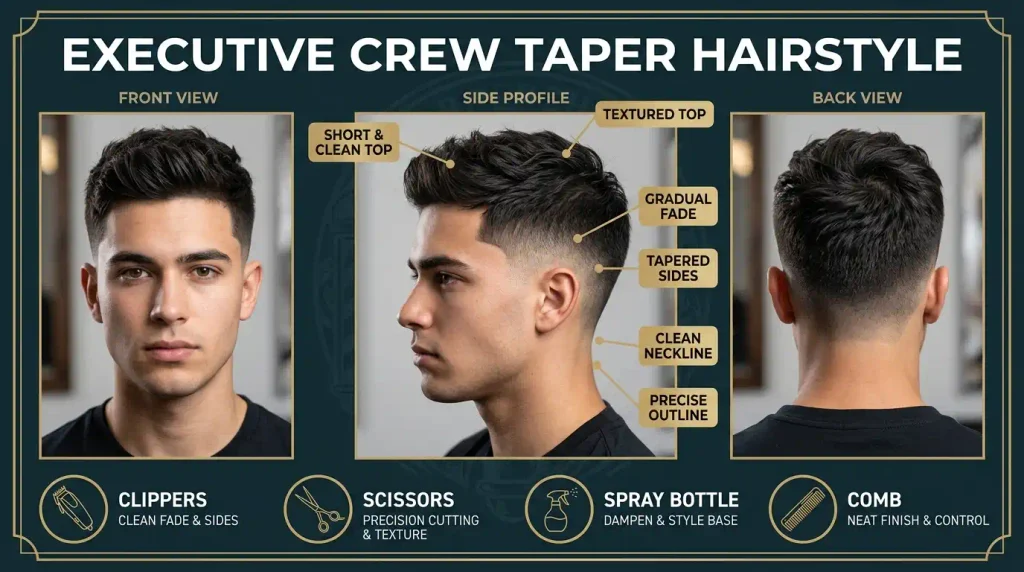
Executive Crew Taper
A crew cut top — short, upright, brush-like — tapers into the sides at a #2 or #3. Heart and triangle faces get a nice, balanced silhouette from the compact top.
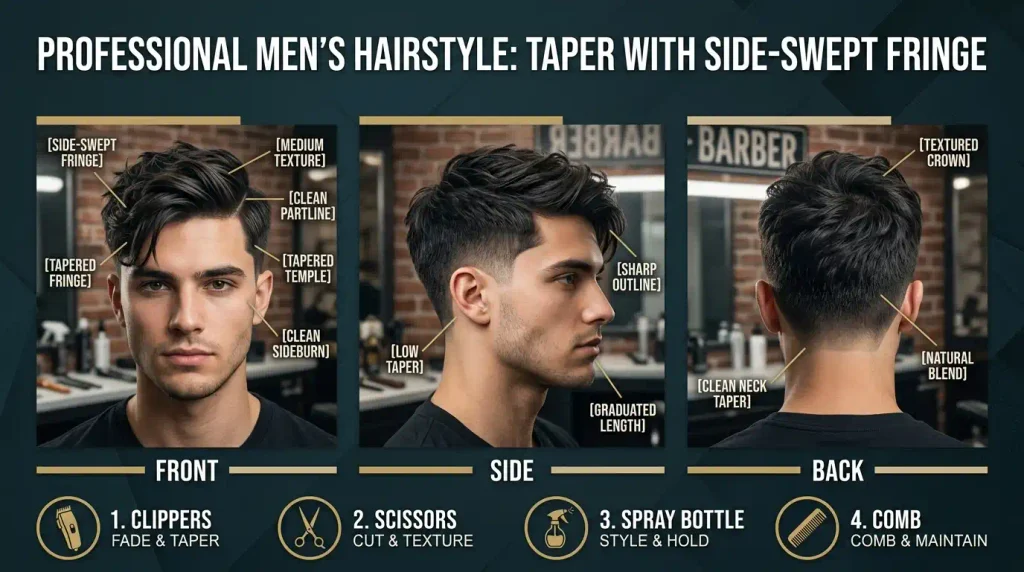
Taper with Side-Swept Fringe
The front section is left a bit longer and swept to one side, softening a taper that would otherwise look plain. Wavy hair naturally holds the sweep with just a dab of clay.
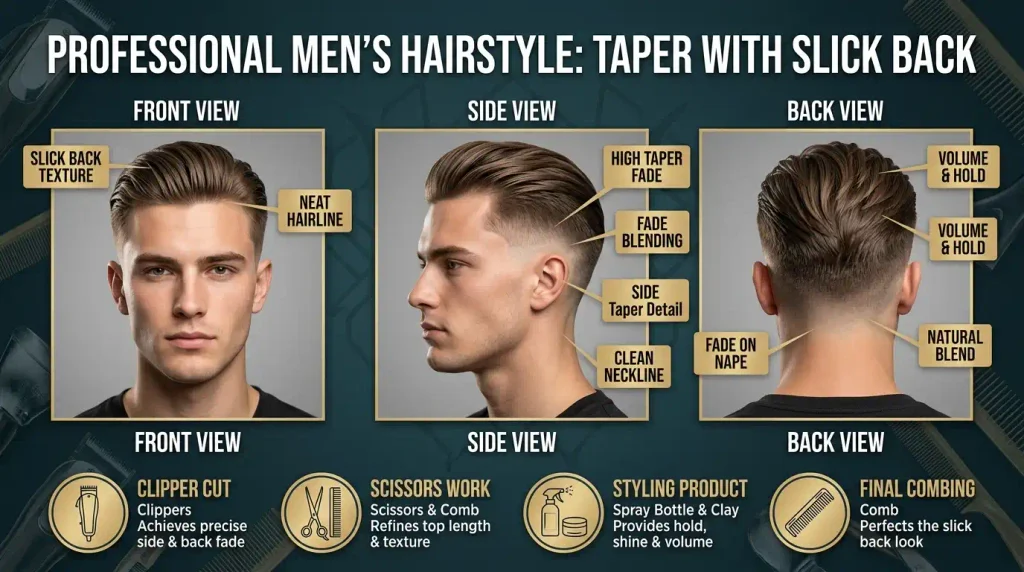
Taper with Slick Back
Top hair is grown out enough to slick straight back with a strong-hold pomade, tapering cleanly into the sides. Oval and square faces carry this polished look particularly well.
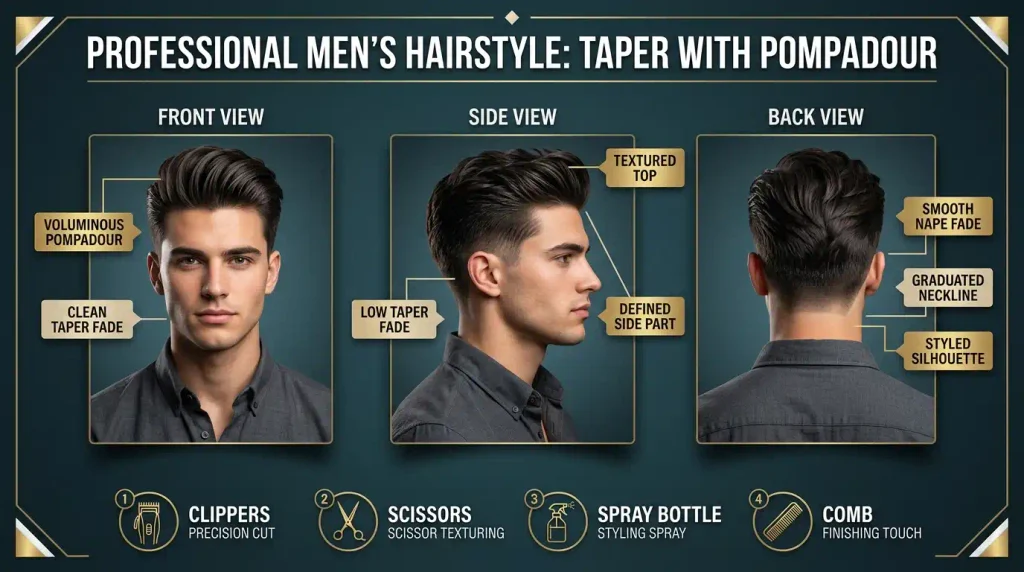
Taper with Pompadour
A raised, swept-back front section sits above a tapered side, giving height without the bulk of a full pompadour fade. Round faces benefit most from the added vertical lift.
2. Textured & Messy Taper Men Haircut Styles
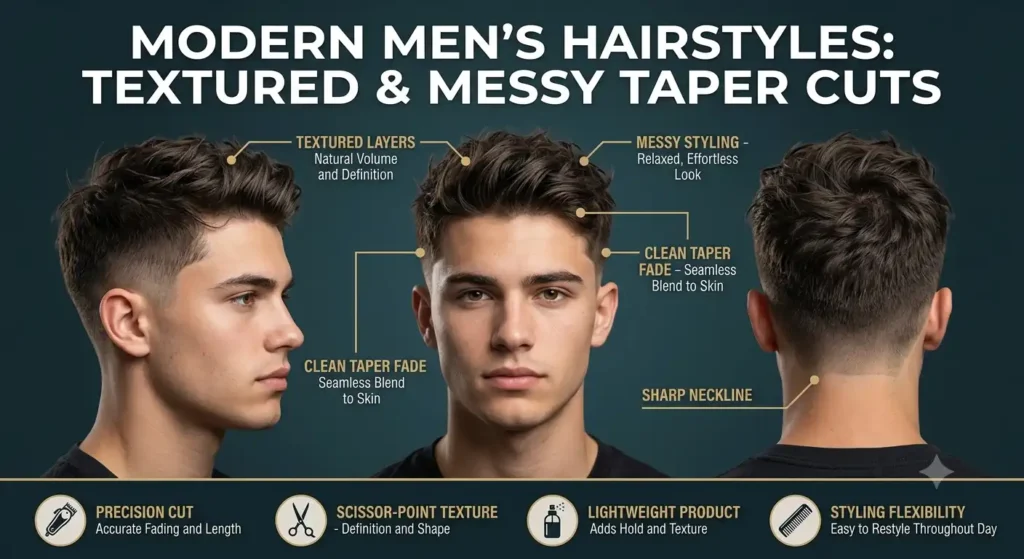
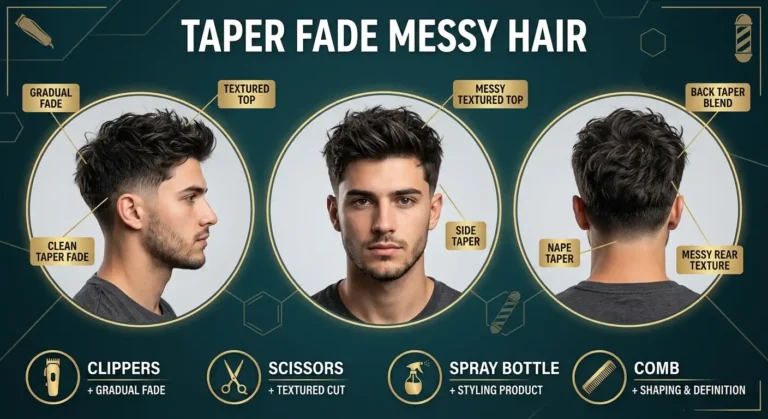
Messy Taper
Point-cut, uneven top lengths sit above a soft taper for a lived-in, effortless finish. Thick, straight hair textures easily with a matte paste worked in with fingertips, not a comb.
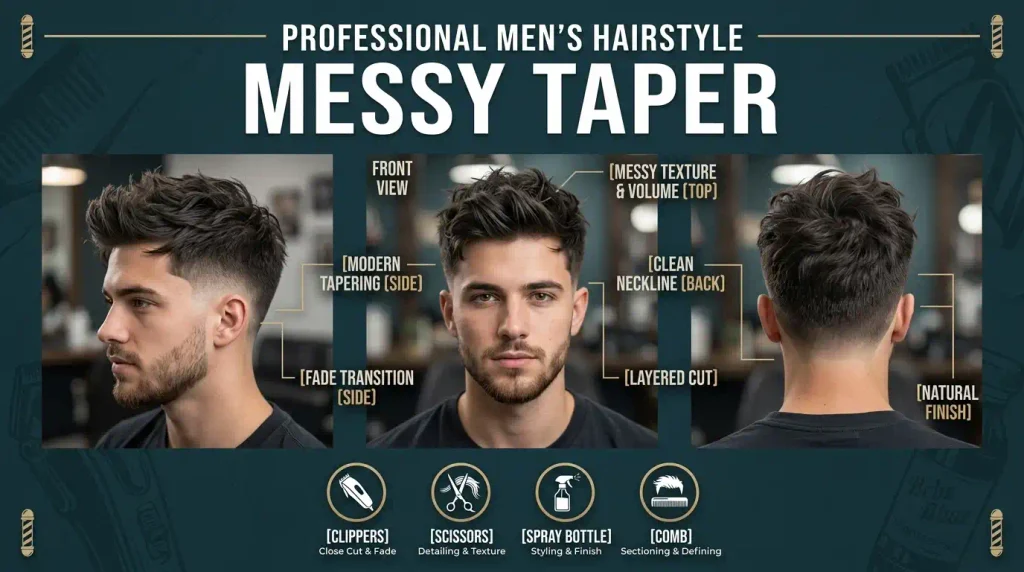
Textured Crop Taper
Short, choppy layers on top — think French crop influence — pair with a tapered side for a modern, low-fuss shape. Square and oval faces suit the compact silhouette well.
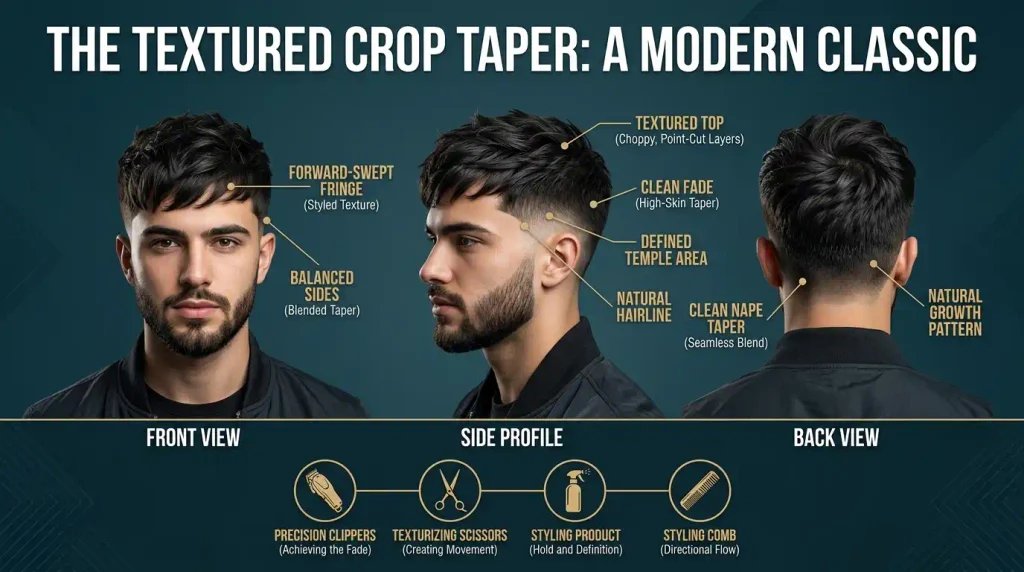
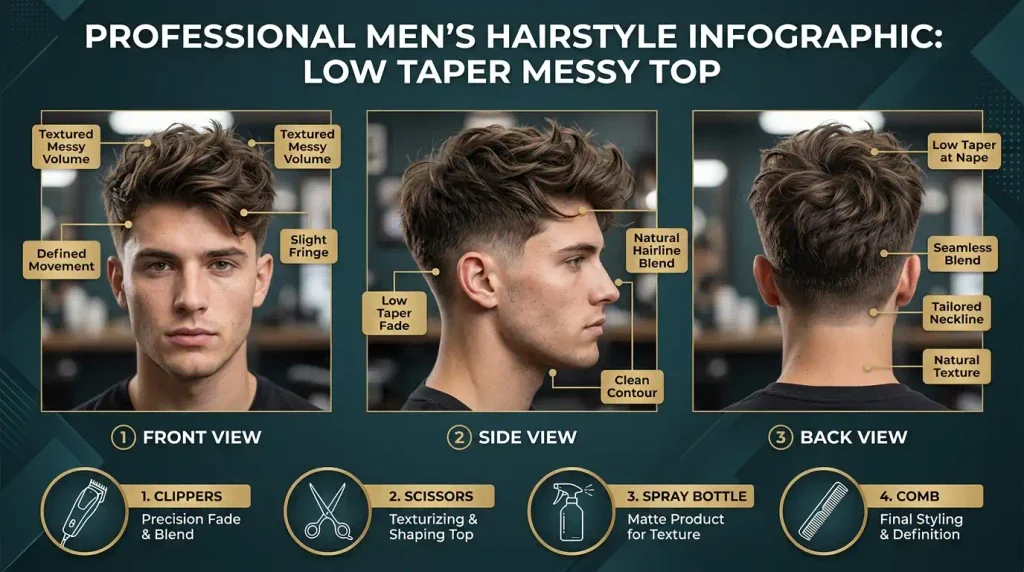
Low Taper Messy Top
Keeping the taper subtle and low on the sides puts all the attention on a tousled, textured crown. Wavy and curly hair adds natural movement here without extra product.
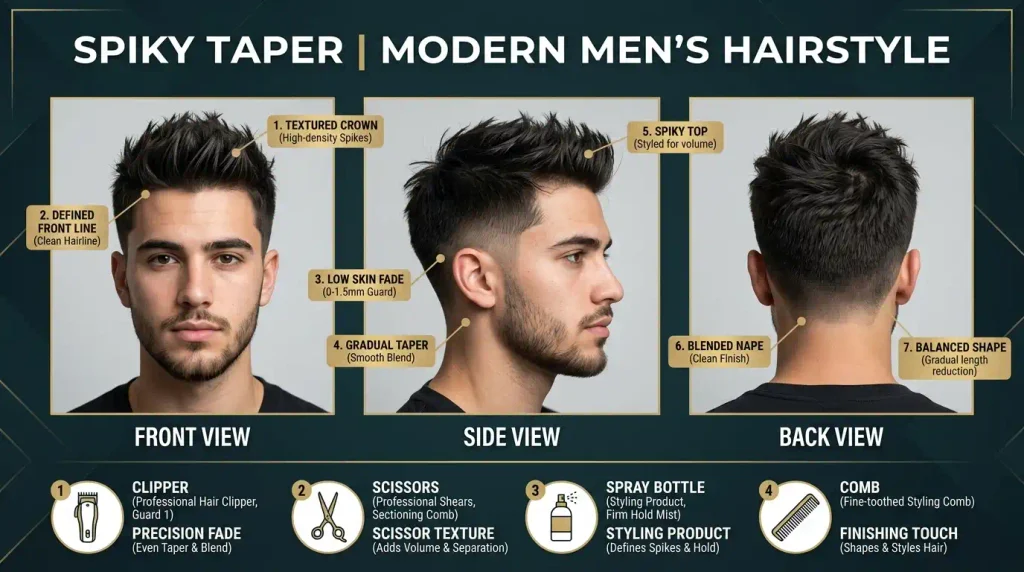
Spiky Taper
Short top pieces are worked upward into soft spikes using a fiber paste, sitting above a clean taper. Diamond and heart faces gain balance from the vertical texture.
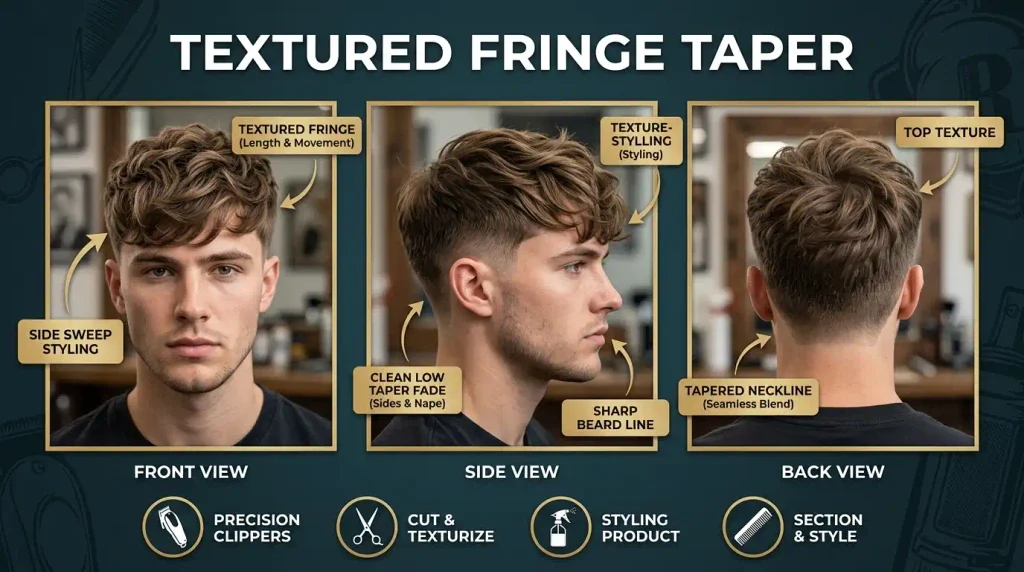
Textured Fringe Taper
A choppy fringe falls forward over the brow, contrasting with tightly tapered sides underneath. Straight hair with some natural texture responds best to a light sea salt spray.
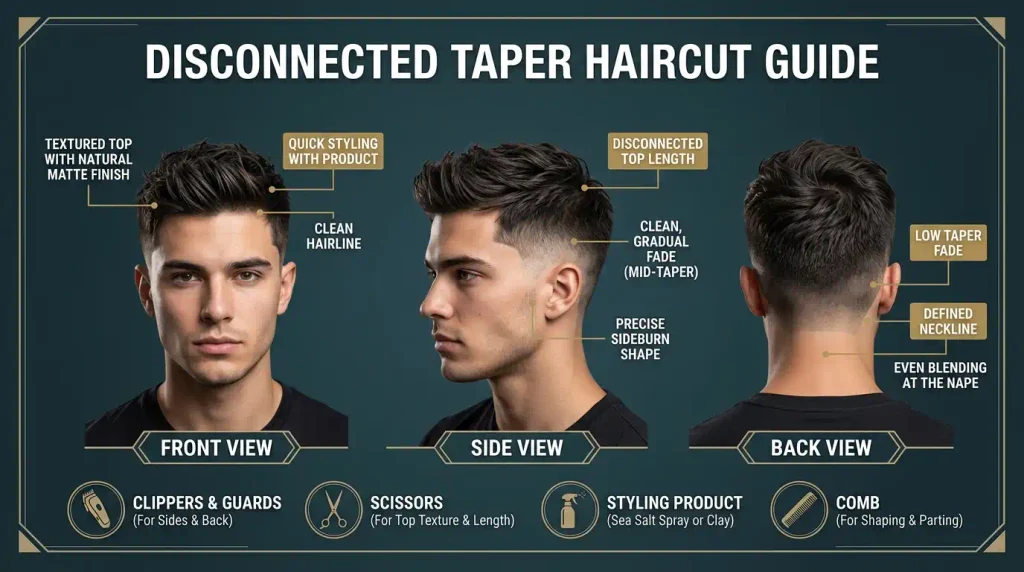
Disconnected Taper
Rather than blending smoothly, the top is cut noticeably longer than the sides for a bold contrast, then the sides taper down cleanly. Any face shape can wear this, though oblong faces should keep top volume moderate.
Choppy Textured Taper
Heavy texturizing shears create irregular, jagged top pieces above a mid taper, giving a deliberately undone look. Thick straight or wavy hair holds the choppiness longest.
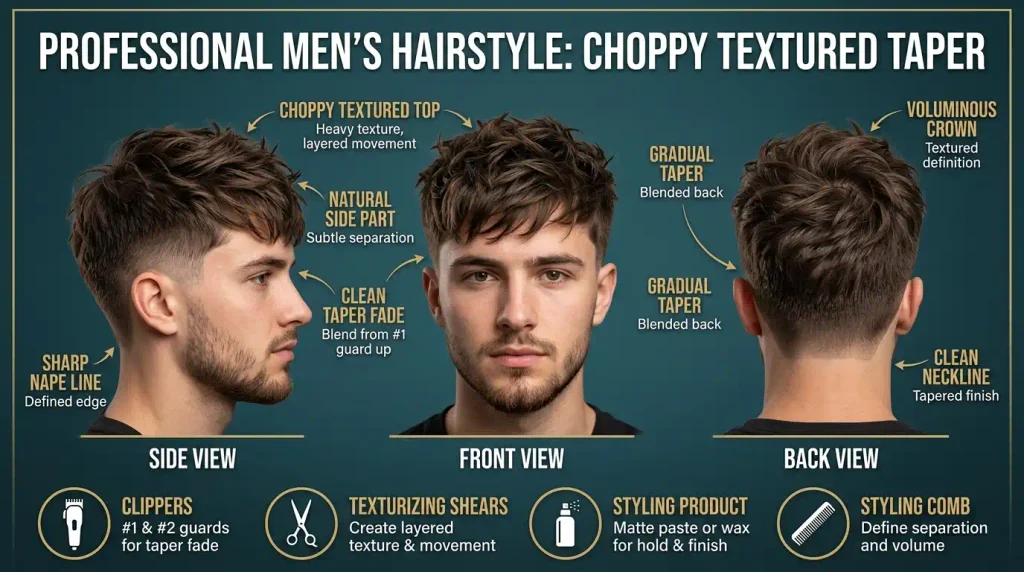
Taper with Textured Quiff
A short quiff is pushed up and slightly forward, textured at the tips, and tapered into the sides. Round faces get useful height and length from this shape.
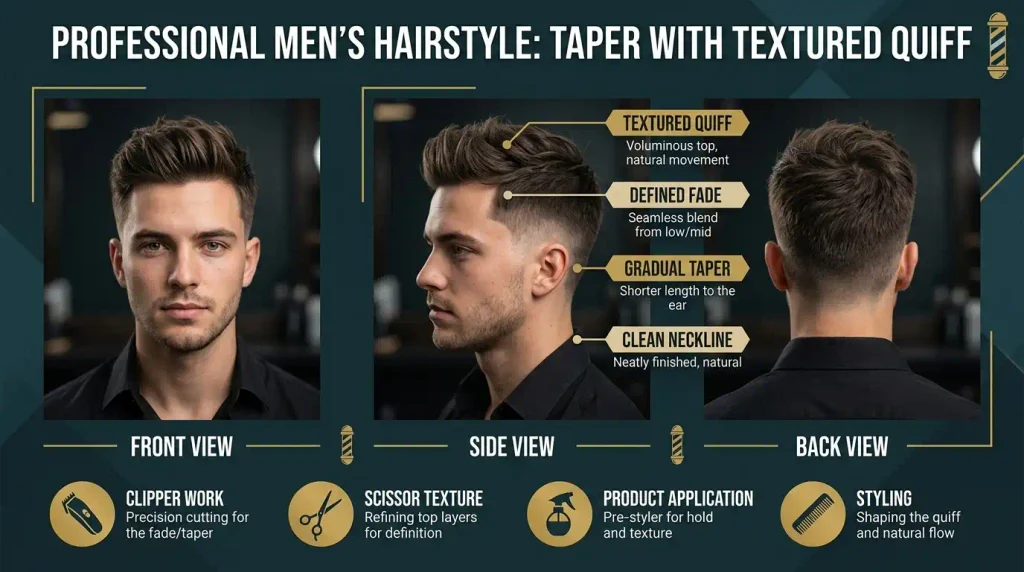
Matte Textured Taper
Using a matte clay instead of a shine product keeps this taper looking dry and natural rather than styled. Works across most hair types, especially medium-thickness straight hair.
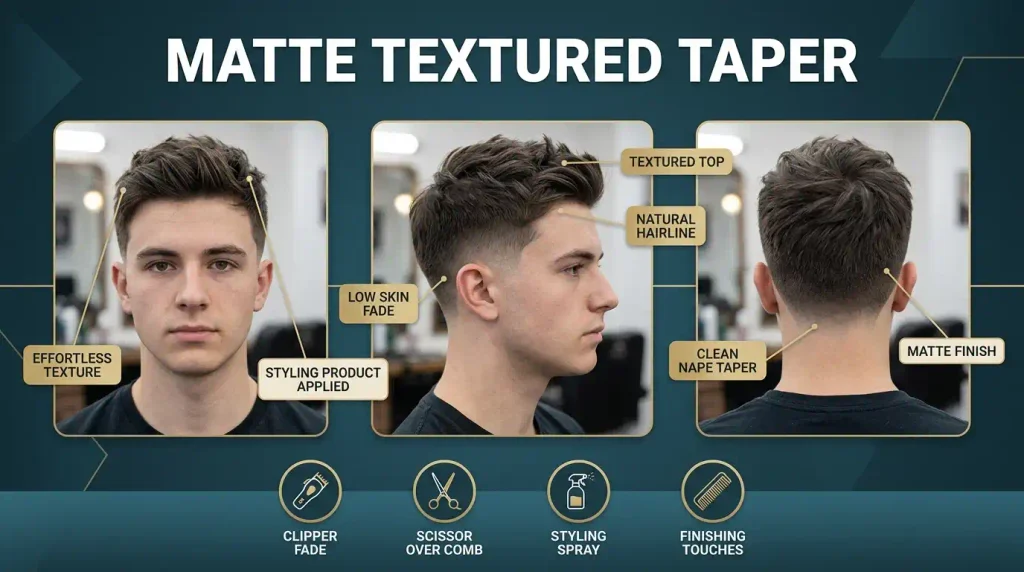
Taper with Piecey Top
Individual strands are separated with a strong paste for a defined, piece-by-piece finish over a tight taper. Square faces suit the graphic, structured top.
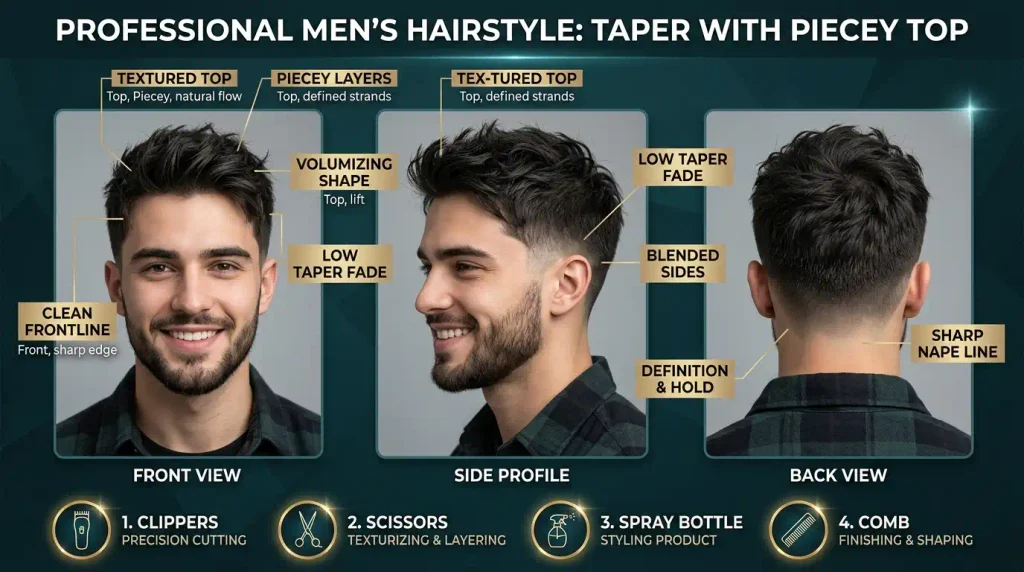
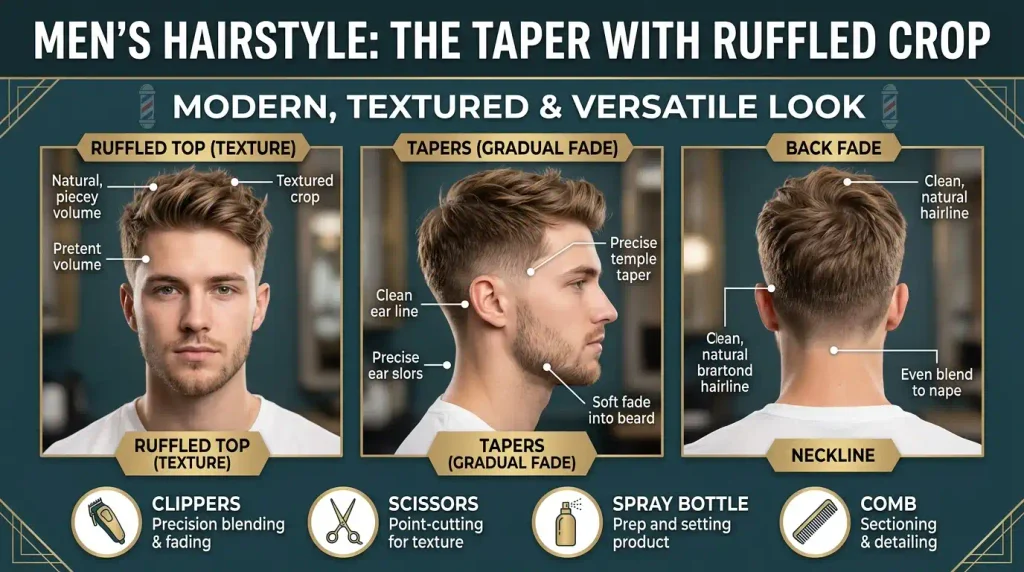
Taper with Ruffled Crop
Hair on top is scrunched by hand while damp for a ruffled, unstructured crop above a soft taper. Curly and wavy hair achieves this texture with the least effort.
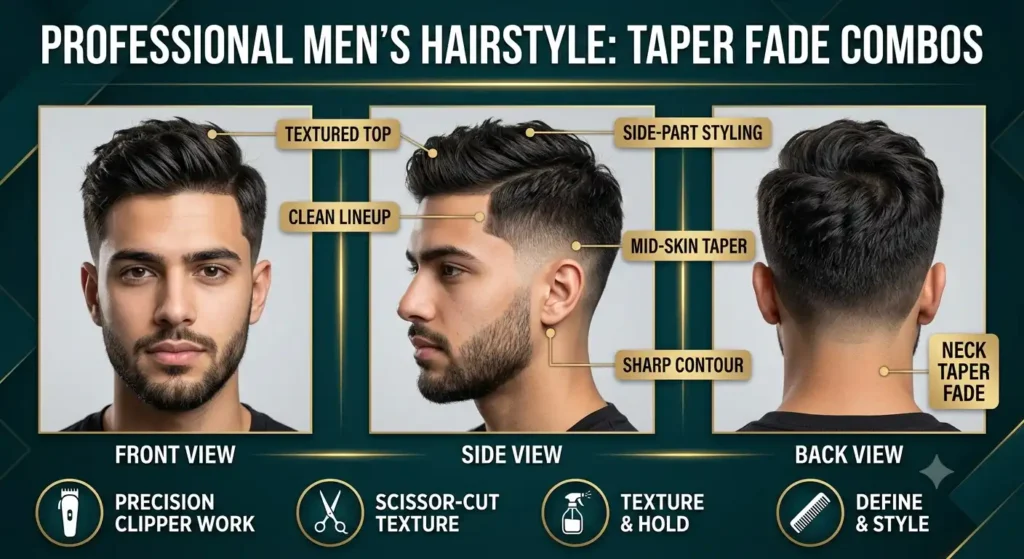
3. Taper Men Fade Combos
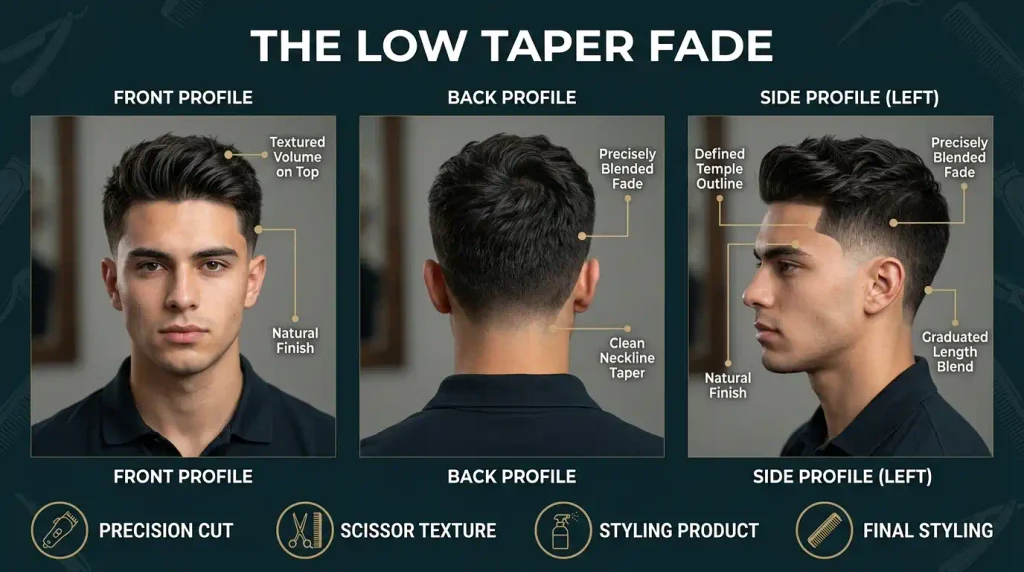
Low Taper Fade
The fade starts just above the ear and stays subtle, blending into the taper above it. This is the most versatile and workplace-friendly fade option, suiting nearly every face shape.
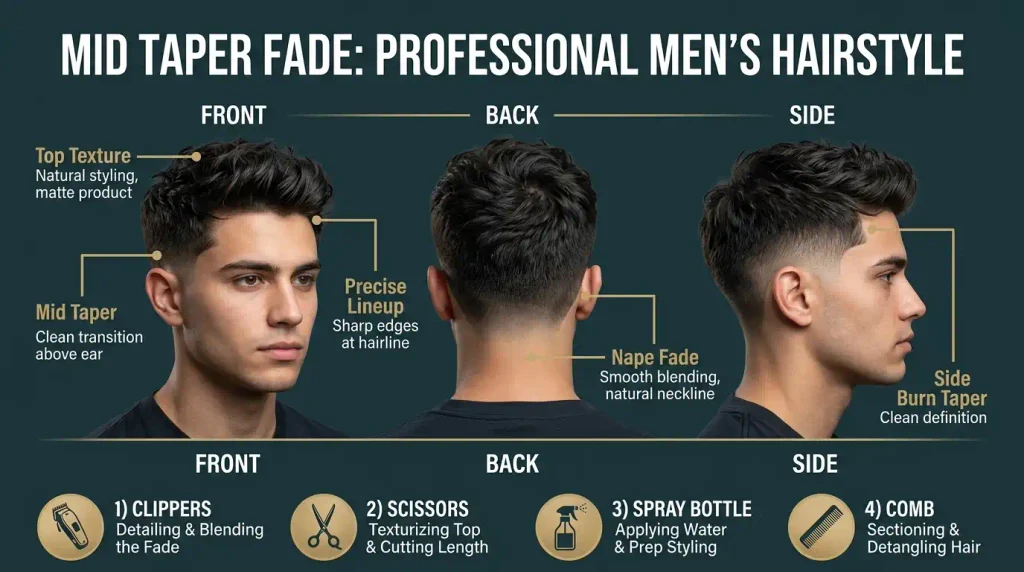
Mid Taper Fade
Starting around the temple, a mid fade creates more visible contrast than a low fade while staying shorter than a high fade. Oval and square faces handle the added contrast well.
High Taper Fade
The fade begins near the top of the head, leaving a sharper, more dramatic drop before the taper takes over. Round faces gain length illusion from the higher fade line.
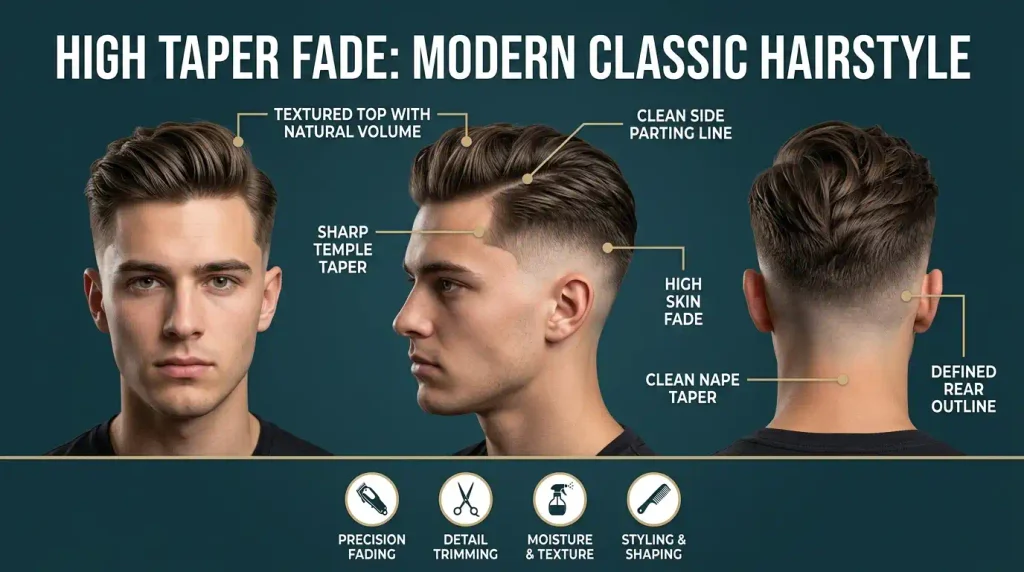
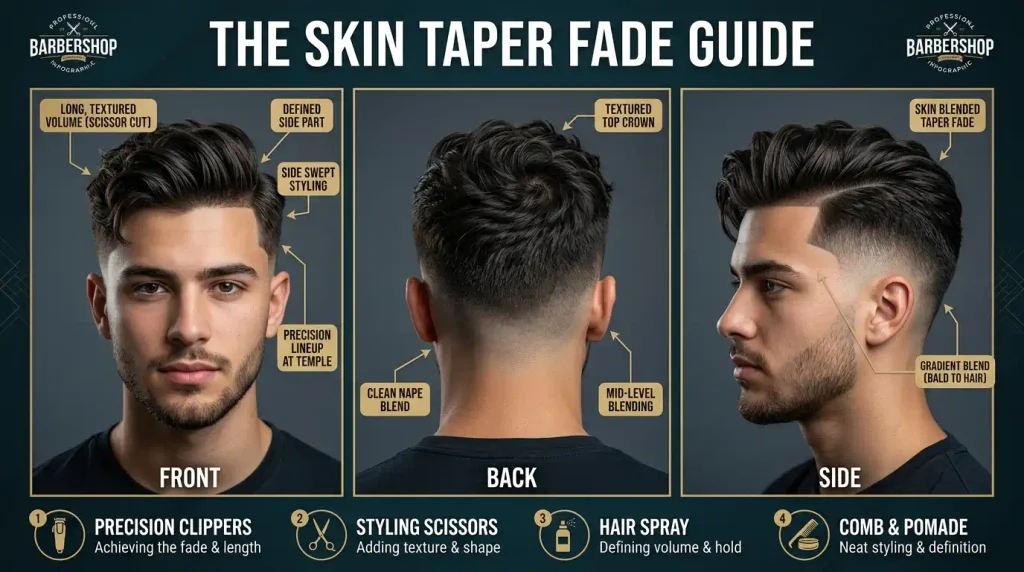
Skin Taper Fade
The fade drops all the way to bare skin at the bottom before tapering up into longer hair. This needs the most frequent barber visits — every two to three weeks — to keep the skin line crisp.
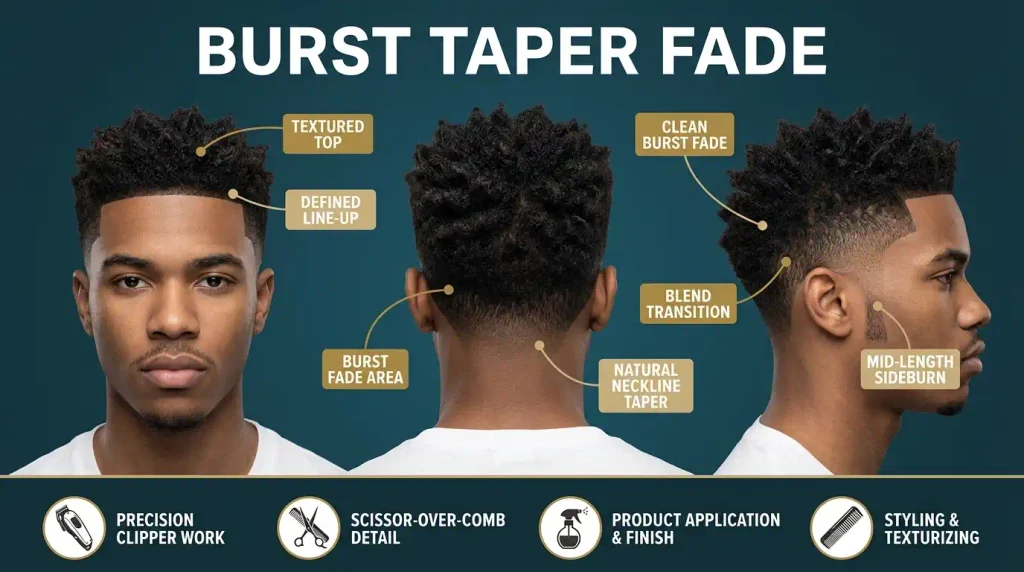
Burst Taper Fade
The fade curves around the ear in a semi-circle rather than running in a straight line, tapering the rest of the head normally. Works especially well with longer top styles like a mullet or shag.
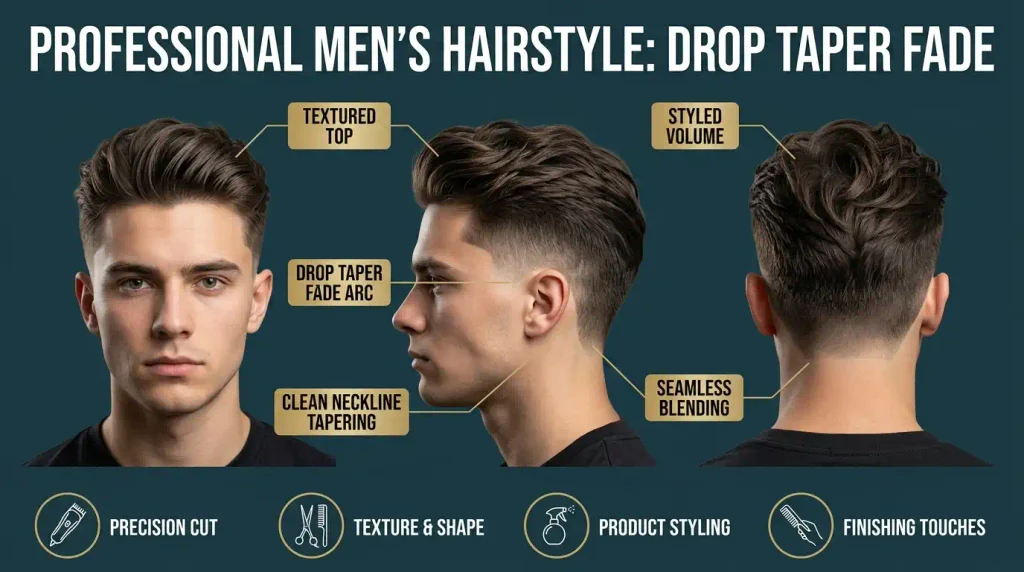
Drop Taper Fade
The fade line dips lower behind the ear and at the back of the head, following the skull’s natural curve. Oblong faces benefit from the way it shortens the visual length of the head.
Taper Men Fade with Undercut
A disconnected undercut sits beneath a longer top, with the fade blending the shaved sides into a taper near the crown. Thick hair handles the length contrast most naturally.
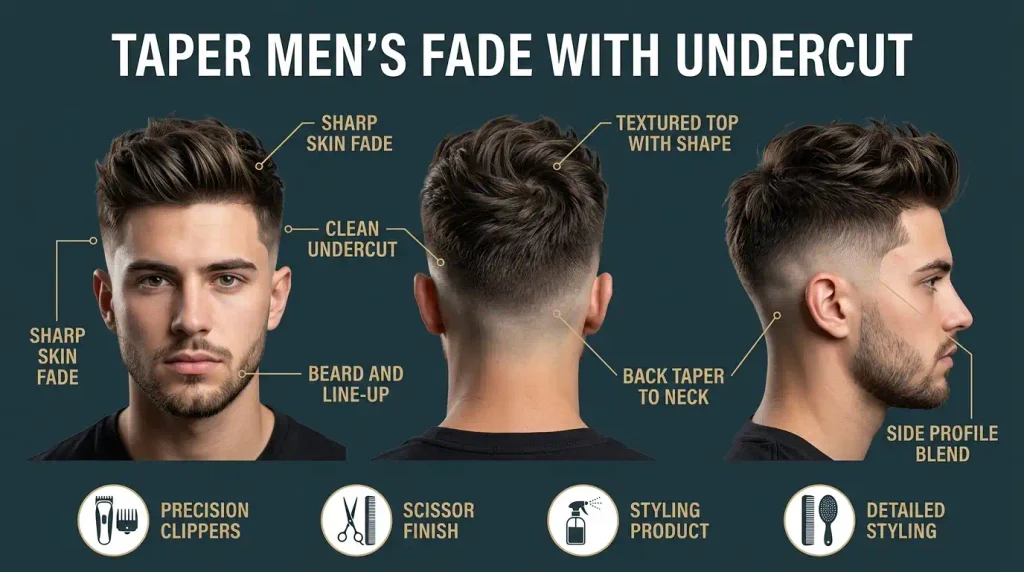
Taper Fade with Line Up
A crisp, straight line traces the front hairline and temples, sharpening an otherwise soft taper fade. Popular with coily and curly hair types for definition around the edges.
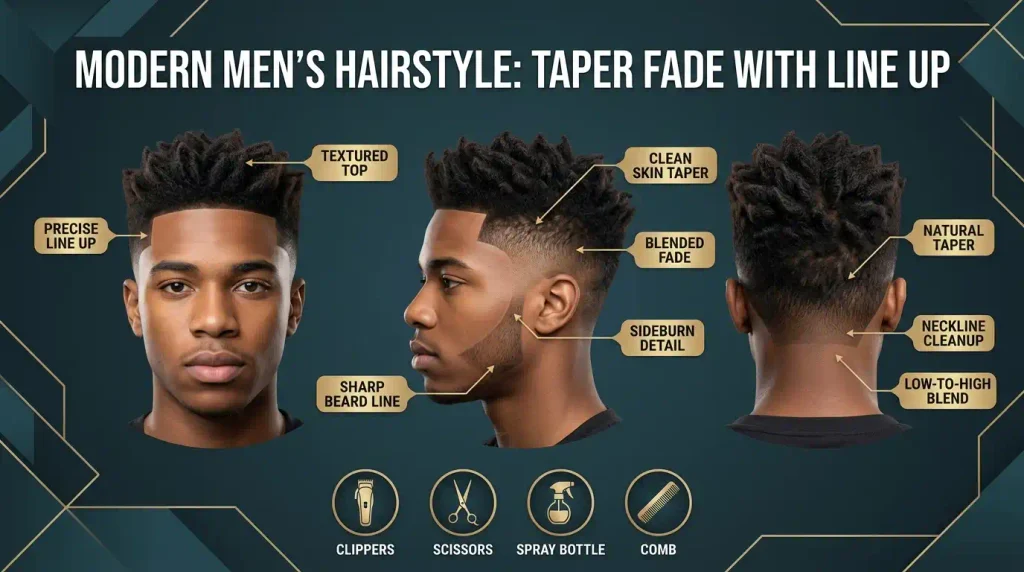
Temple Taper Fade
The fade is concentrated tightly around the temples while the rest of the head keeps a longer taper. Heart-shaped faces benefit from the narrower temple area this creates.
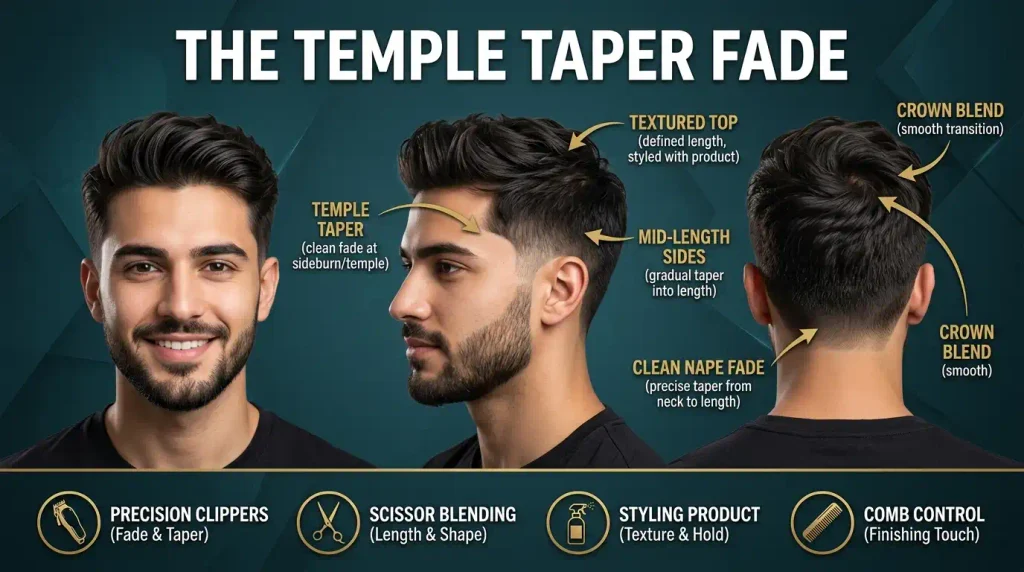
V-Shape Taper Fade
The neckline is cut into a subtle V rather than a straight or rounded edge, adding a small design detail to a standard taper fade. Works on any face shape as a finishing touch.
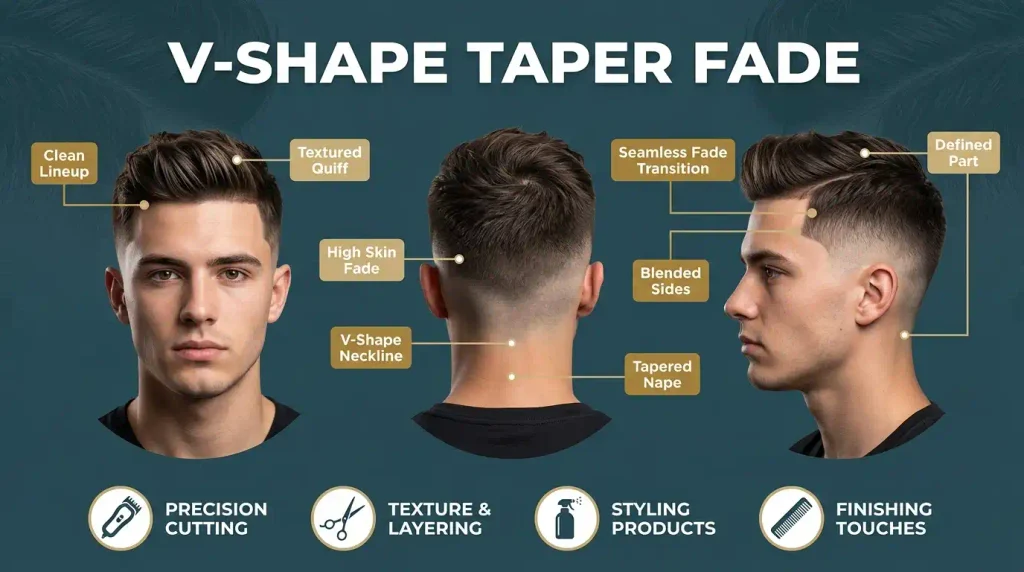
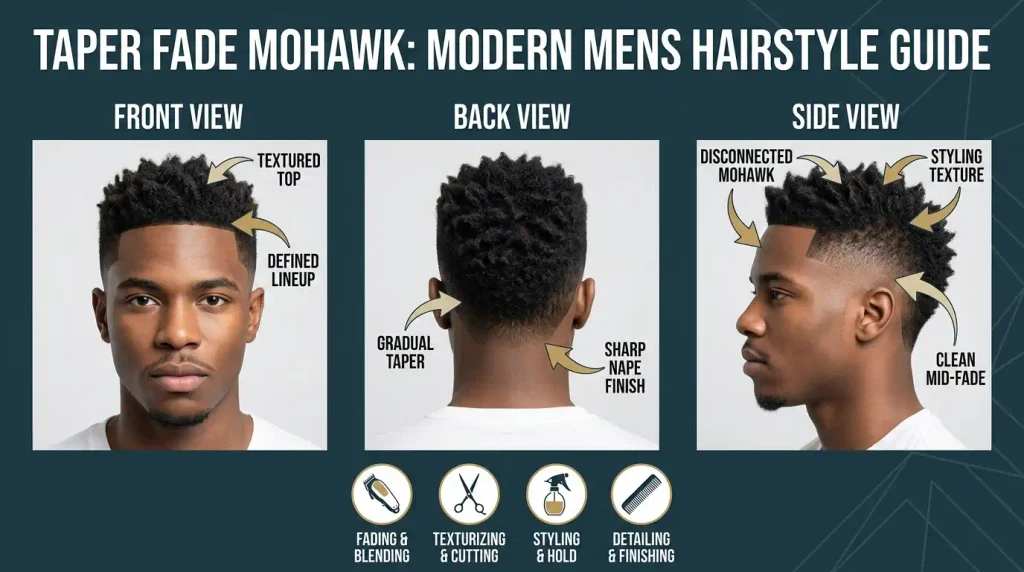
Taper Fade Mohawk
Both sides fade down to skin or near-skin, leaving a raised strip of longer hair down the center that tapers slightly at the edges. Square and diamond faces suit the bold central line.
4. Curly & Wavy Hair Taper Men Haircut Styles
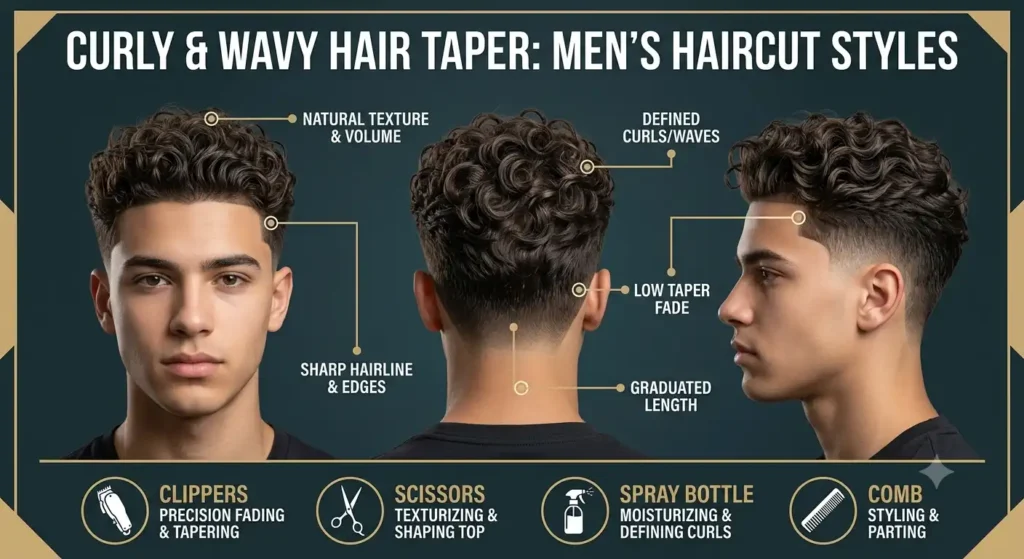
Curly Top Taper
Natural curls are left long enough to spring and show shape, while the sides taper down to a #2 or #3. A curl cream applied to damp hair keeps definition without weighing curls down.
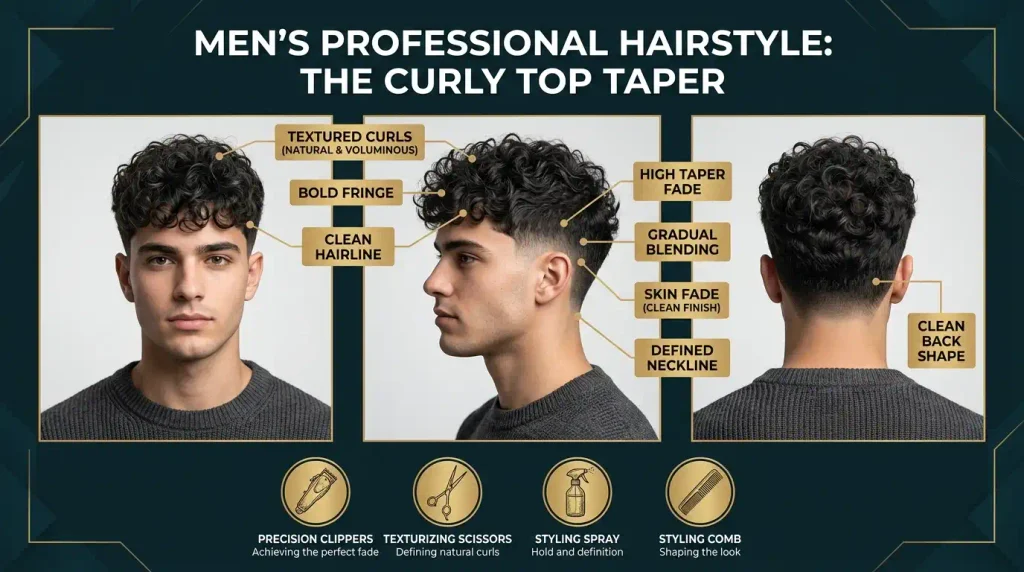
Wavy Taper
Loose waves on top catch light nicely above a mid taper, giving texture without much daily effort. A light sea salt spray enhances the natural wave pattern.
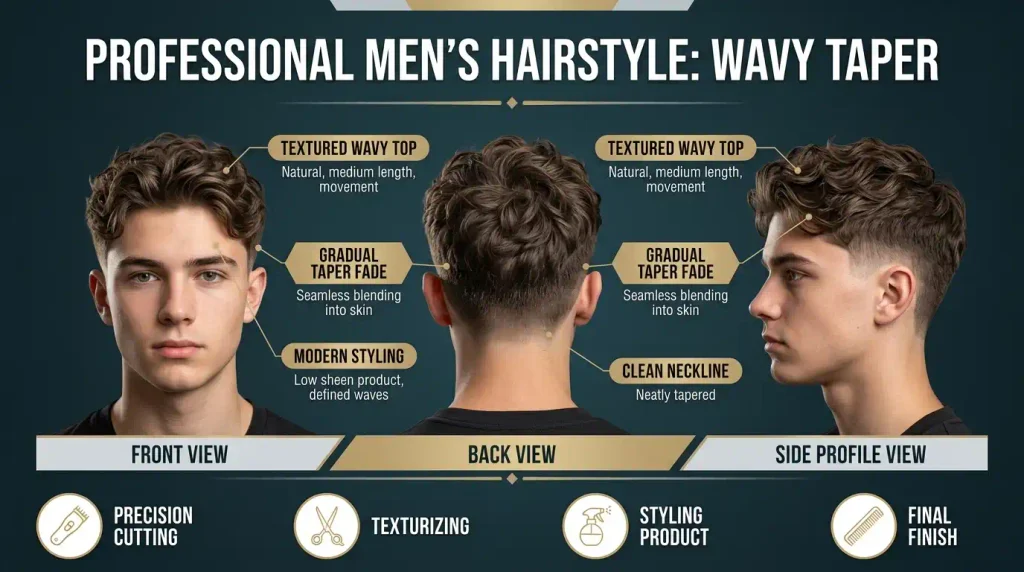
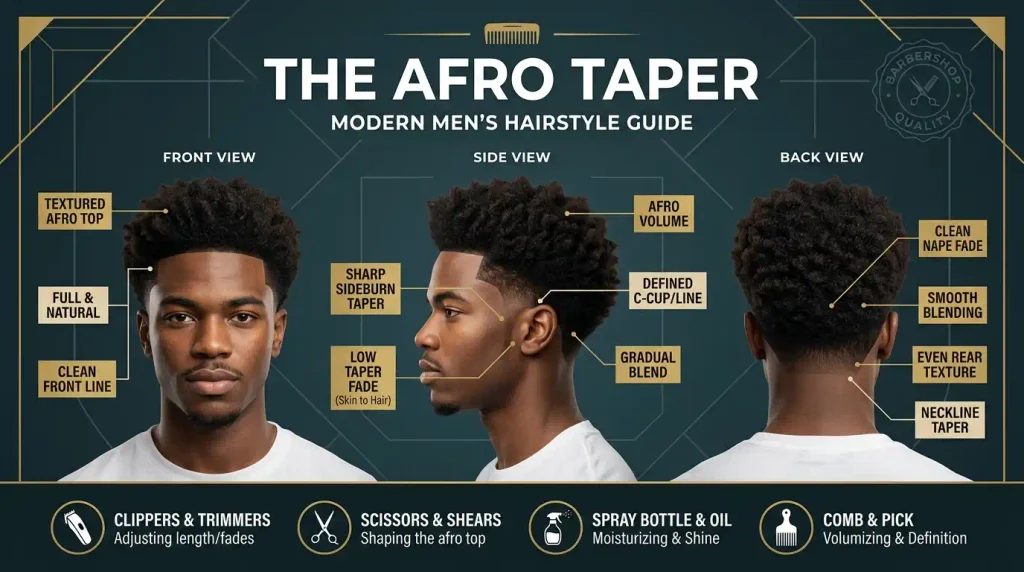
Afro Taper
The top is left in its natural, voluminous state while the sides and back taper down for a cleaner overall shape. Curl-specific moisturizing cream keeps the top hydrated and defined.
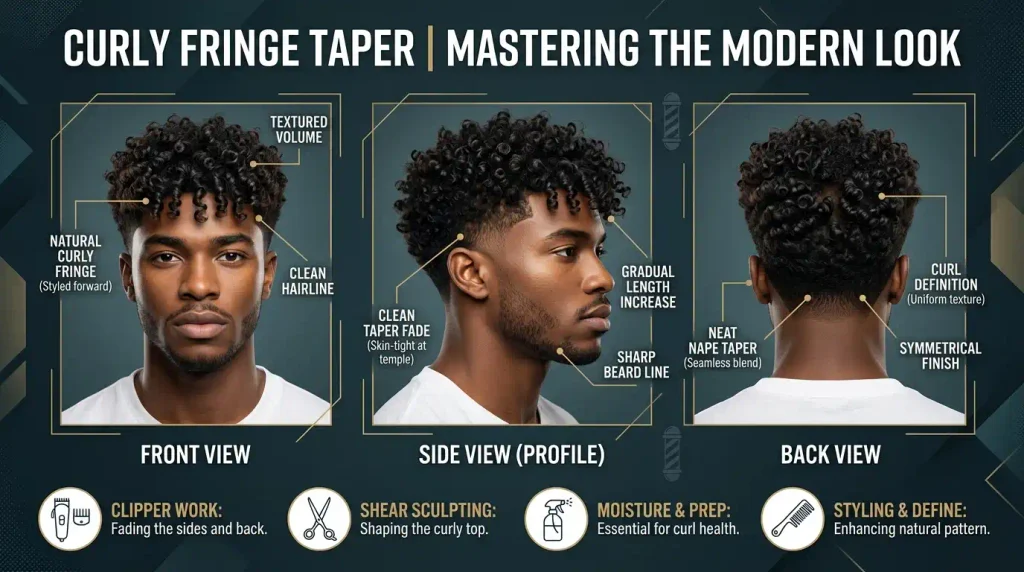
Curly Fringe Taper
Curls are allowed to fall forward over the forehead as a soft fringe, with a tighter taper underneath. Diamond faces get a nice frame from the forward curl movement.
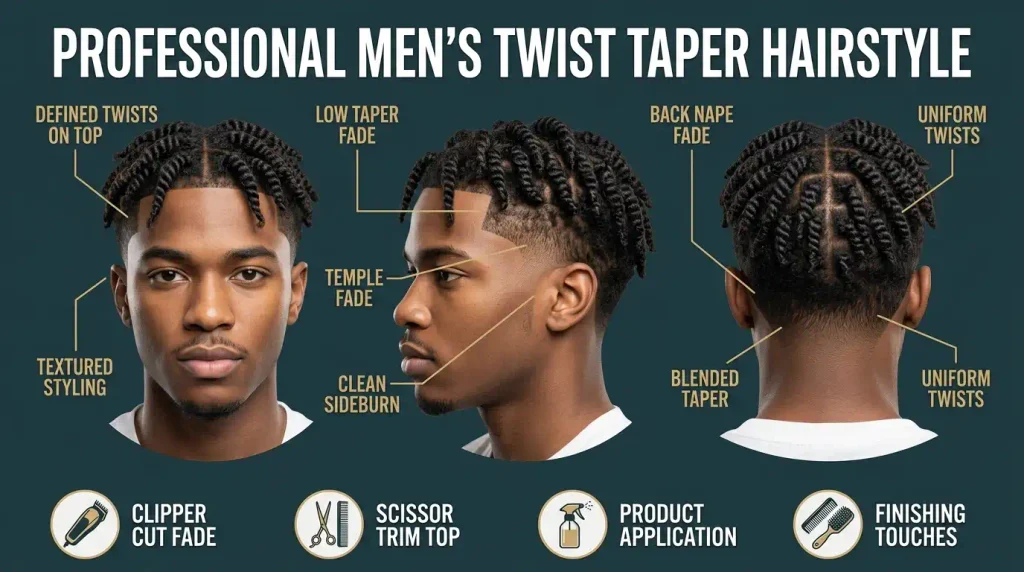
Twist Taper
Two-strand twists sit on top of a tapered side, offering a protective, low-manipulation style with real longevity between visits. Coily hair holds twists cleanest with a light twisting cream.
Curly Taper with Fade
Combining tight, defined curls on top with a fade on the sides creates strong contrast between texture and skin. Oval and round faces both wear this combination well.
Loose Curl Taper
Softer, looser curls are left longer on top and tapered gently at the sides for a relaxed finish. Works particularly well with fine to medium curly hair that holds shape lightly.
Coily Taper
Tightly coiled hair is kept at a moderate length on top for volume, while the perimeter tapers for a neat edge. A leave-in cream prevents dryness at the ends.
Wavy Quiff Taper
Waves are pushed up and back into a soft quiff shape above a low taper. A matte paste gives hold without flattening the natural texture.
Curly Taper Mohawk
Curls are concentrated in a central strip while the sides taper down close, giving natural texture a bold silhouette. Best suited to thicker curl patterns that hold volume upright.
Curly Taper with Beard
Pairing a curly top taper with a full, groomed beard balances the head and jawline together. Long faces benefit from the added width the beard provides.
5. Long Top Taper Men Haircut Styles
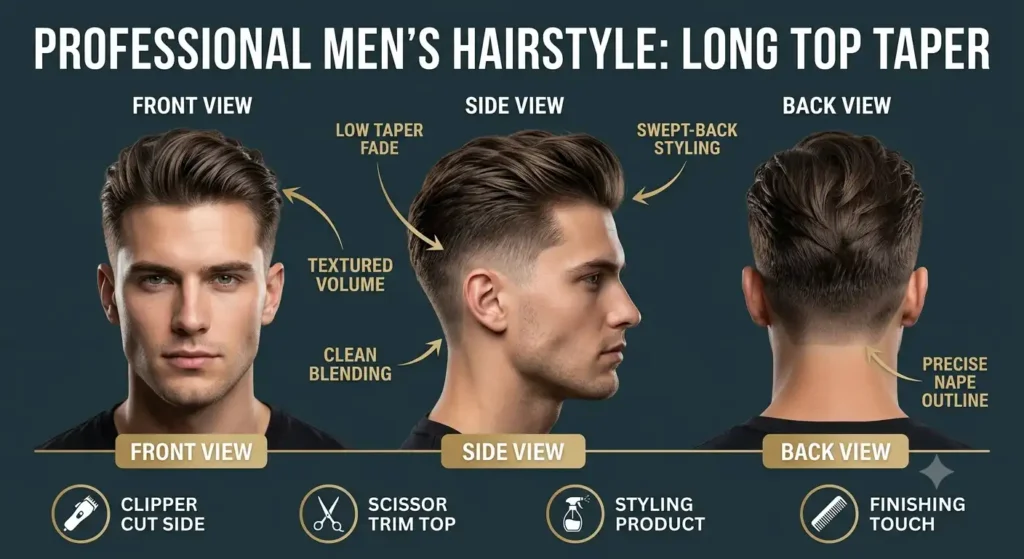
Long Taper
Top length is grown out to several inches while the sides stay tapered at a #3 or #4, keeping the cut from looking unkempt. Straight and wavy hair suits the longer length best for easy combing.
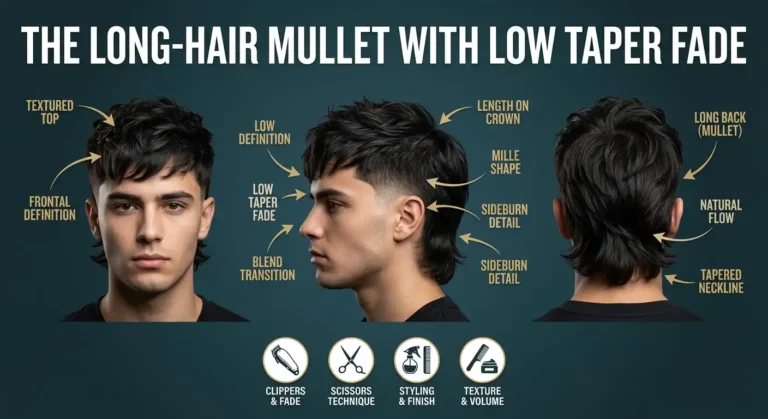
Taper Mullet
Length is kept at the back and tapered shorter at the sides and front, giving the mullet a cleaner, more modern edge. This is one of the lowest-maintenance long-top options available.
Long Fringe Taper
An extended fringe falls over the brow, sometimes past the eyebrows, above tapered sides. Works well for men who want to change their part or sweep direction regularly.
Man Bun Taper
Enough length is kept on top to tie back into a small bun, with the sides tapered tightly for contrast. Thick, straight, or wavy hair ties back most securely.
Long Taper with Slick Back
Longer top hair is combed straight back with a strong pomade over a tapered side, creating an elongated, polished profile. Oval faces suit the streamlined shape especially well.
Long Taper with Side Part
A deep side part organizes longer top hair while the sides stay neatly tapered underneath. Works for most face shapes and transitions well from casual to formal.
Shag Taper
Heavily layered, feathered top pieces frame the face above a soft taper, borrowing from the classic shag silhouette. Wavy hair with natural movement fits the shag layers most naturally.
Long Layered Taper
Multiple layers are cut through the top to reduce bulk and add movement, while the perimeter tapers down cleanly. Thick hair benefits most from the weight removal.
Long Taper with Undercut
A shaved or heavily tapered undercut sits beneath a long top section, creating dramatic contrast when the top is pushed back or to the side. Square faces handle the strong contrast well.
Long Top Short Sides Taper
A straightforward split between long top and short, tightly tapered sides — no fade, no design, just clean contrast. This is a safe, versatile choice for almost any hair type.
Long Curly Taper
Curls are grown out well past the standard curly top length, kept loose and full, while the sides taper close. Regular deep conditioning keeps longer curls from tangling or frizzing.
6. Bold & Edgy Taper Men Haircut Styles
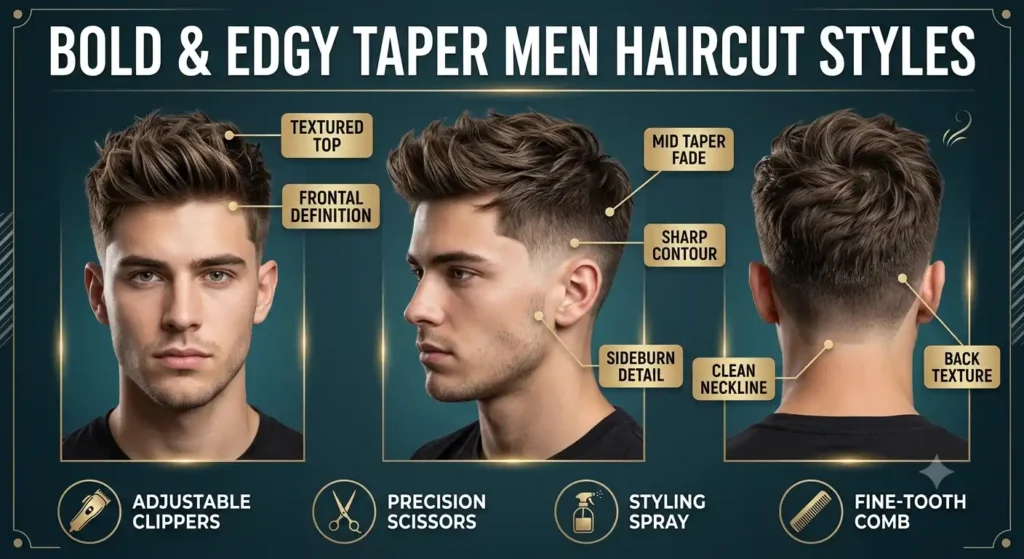
Faux Hawk Taper
Top hair is styled upward into a mohawk shape without shaving the sides completely, tapering instead of fading to skin. A strong-hold wax keeps the raised center in place all day.
Mohawk Taper Men
Sides are tapered down tight while a defined strip on top is left longer and styled upward. Works best on thicker hair that can hold vertical height.
Taper with Hair Design
A barber razors a pattern, line, or shape into the tapered side for a personalized, statement detail. Any face shape can carry a design since it sits within the existing taper.
Taper with Shaved Line
A single shaved line runs through the taper, usually near the temple, adding a graphic accent without a full design. Popular with shorter tapers where the line stays visible.
Two-Tone Taper
Color contrast — bleached tips, a dyed section, or a two-tone part — is layered over a standard taper shape for extra visual impact. Straight hair shows color blocking most clearly.
Taper with Undercut Design
Beyond a simple undercut, this version adds a shape or pattern within the shaved section itself, visible when the top is pushed back. Best suited to men comfortable with frequent touch-ups.
Taper with Zigzag Part
Instead of a straight side part, a zigzag line is shaved or combed in for a distinctive, non-traditional finish. Works on medium-length tops with enough hair to hold the shape.
Punk Taper
Short, spiked, or deliberately messy top styling sits above an aggressive, high taper for a rebellious edge. Fiber-based pastes give the firmest hold for spiked sections.
Taper with Bold Fade Lines
Multiple visible fade lines are cut into the sides rather than one smooth blend, creating a striped, layered effect. This detail-heavy option needs the most frequent maintenance to stay sharp.
Taper with Spiked Crown
Only the crown area is styled into short spikes while the rest of the top stays flatter, tapering into the sides as usual. A pea-sized amount of gel is enough to hold the crown spikes.
Taper with Asymmetric Cut
One side is left noticeably longer than the other above a taper, creating an intentionally unbalanced silhouette. Best attempted with a barber experienced in asymmetric cutting, since it grows out quickly.
This Style vs. Other Taper/Fade Options
| Style | Fade/Taper Height | Guard Range | Best Face Shapes | Styling Difference |
| Classic Taper | None — soft blend | #2–#4 | Oval, square | Minimal daily styling |
| Low Taper Fade | Above ear | #0–#2 | Most shapes | Light texture product |
| Skin Taper Fade | To bare skin | #0 to skin | Round, oblong | Frequent touch-ups |
| Textured Crop Taper | None — soft blend | #2–#3 | Oval, square | Matte paste, finger-styled |
| Curly Top Taper | None — soft blend | #1–#3 | Round, oval | Curl cream on damp hair |
| Taper Mullet | None — soft blend | #2–#4 | Oblong, oval | Air-dry or light spray |
Why a Taper Works, and Who It Suits
A taper’s biggest advantage is the absence of a hard line — hair blends gradually, so there’s no awkward growing-out stage the way there is with a skin fade. It works across straight, wavy, curly, and coily textures, and adapts to short, medium, or long top lengths without losing its shape. Men who don’t want a barbershop visit every two weeks tend to gravitate toward tapers specifically because the grow-out looks intentional rather than sloppy.
How to Style a Taper
- Start with towel-dried, not soaking wet, hair.
- Apply a small, coin-sized amount of product suited to your top length — cream for short, paste or clay for texture, pomade for slick styles.
- Work the product through with fingers first to distribute evenly, then use a comb only for parts or slick-backs.
- Shape the top in the direction you want — forward, back, or textured up — while the product is still workable.
- Let it set for a minute before adjusting; avoid restyling once it’s dry, which can look flat.
Step-by-Step Tutorial for a Taper Haircut
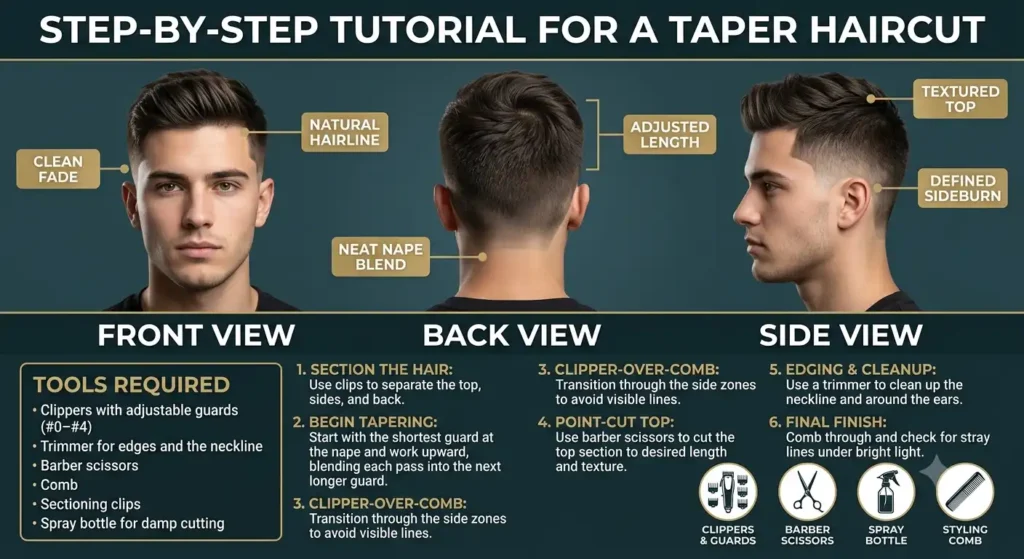
Tools required: clippers with adjustable guards (#0–#4), a trimmer for edges and the neckline, barber scissors, a comb, sectioning clips, and a spray bottle for damp cutting.
- Section the hair into top, sides, and back using clips.
- Start with the shortest guard at the nape and work upward, blending each pass into the next longer guard.
- Use clipper-over-comb technique through the transition zones to avoid visible lines.
- Point-cut or scissor-cut the top section to the desired length and texture.
- Clean up the neckline and around the ears with a trimmer.
- Comb through and check for stray blend lines under bright light before finishing.
Best Styling Products for a Taper
- Matte clay: best for textured, messy, or piecey tops that need a natural, non-shiny finish.
- Sea salt spray: ideal for wavy or straight hair that needs light texture without heavy hold.
- Curl cream: essential for curly and coily tops to define curl pattern and reduce frizz.
- Strong-hold pomade: the go-to for slick-backs, side parts, and pompadour-style tapers.
Best Hair Types & Face Shapes for a Taper
Straight hair holds crisp lines well, making it suited to classic, business, and slick-back tapers. Wavy hair adds natural texture that works with messy or textured variations without extra effort. Curly and coily hair benefits from tapers that keep more length on top, since shorter curly cuts can lose their defined shape. On face shapes, round faces generally suit higher fades or added top height, oblong faces do well with lower fades and horizontal parts, and oval or square faces have the most flexibility across nearly every taper style listed above.
Step-by-Step Maintenance Guide
- Book a trim every two to four weeks depending on fade height — skin fades need the shortest window, soft tapers the longest.
- Wash two to three times a week with a sulfate-free shampoo to avoid drying out the scalp along the tapered sides.
- Condition regularly if the top is grown out or curly, since taper sides are cut too short to need it.
- Apply styling product to damp, not wet, hair for the most even distribution.
- Between barber visits, use a trimmer at home only on the neckline if it starts looking uneven — leave the blend itself to a professional.
Common Mistakes to Avoid with a Taper
- Asking for a “taper” when you actually want a skin fade, which leads to a result that doesn’t match expectations.
- Letting too much time pass between trims, which causes the blend to grow out unevenly rather than softly.
- Overusing heavy, shiny products on textured or messy variations, which flattens the texture you’re trying to create.
- Skipping face-shape guidance and picking a style purely from a photo without checking if the proportions suit your face.
- Applying product to fully dry hair, which distributes unevenly and can leave visible clumps.
FAQ
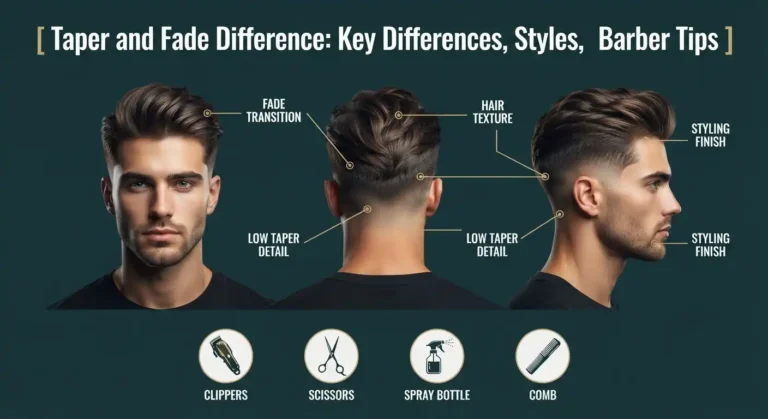
What’s the difference between a taper and a fade? A taper blends hair gradually and never necessarily reaches bare skin, while a fade — including options like the Skin Taper Fade above — can drop all the way down to the scalp for a sharper contrast.
How often do I need to get a taper trimmed? Most tapers hold their shape for three to four weeks, though higher-contrast options like the High Taper Fade or Skin Taper Fade need touch-ups every two to three weeks.
Can I get a taper with curly hair? Yes — styles like the Curly Top Taper and Afro Taper are built specifically around keeping enough length on top for natural curl pattern to show.
Is a taper good for a professional workplace? Conservative options such as the Classic Taper, Business Taper, and Ivy League Taper are all common choices in formal or corporate settings.
What should I say to my barber if I only want a subtle change? Ask for a low taper with a soft blend and no visible fade lines, which keeps the change understated compared to something like the Skin Taper Fade.
Do tapers work with long hair? Yes — the Long Top Tapers section above, including the Taper Mullet and Long Taper with Slick Back, shows how a taper can support significant top length while keeping the sides tidy.
What guard number should I ask for? It depends on the style: a #3 or #4 gives a soft, classic taper, while a #0 to #1 near the hairline creates more visible contrast, as seen in the fade-focused entries above.
Can a taper include a design or shaved line? Yes — the Taper with Hair Design and Taper with Shaved Line both add a personalized detail within a standard taper shape.
Conclusion
A taper haircut earns its long-running popularity by being genuinely adaptable — the same core technique supports a conservative business look, a bold shaved design, a curly natural style, or a long mullet, all without a hard fade line to grow out awkwardly.
Whichever of the 66 styles above catches your eye, walk in with the guard numbers and phrasing from this guide so your barber knows exactly what you’re picturing. For more on how tapers pair with beard styling, see our related grooming guide: middle part with taper
Name: Ryan Cole
Role: Lead Grooming Editor, TaperHaircutGuide.com
Bio angle: Men’s grooming/style content researcher — 4+ years covering barbering trends, hairstyling terminology, and men’s style content for US audience. Cross-checks every guide with practicing barbers before publishing.