What Does Taper Mean? A Complete Guide to Taper Haircuts

Introduction
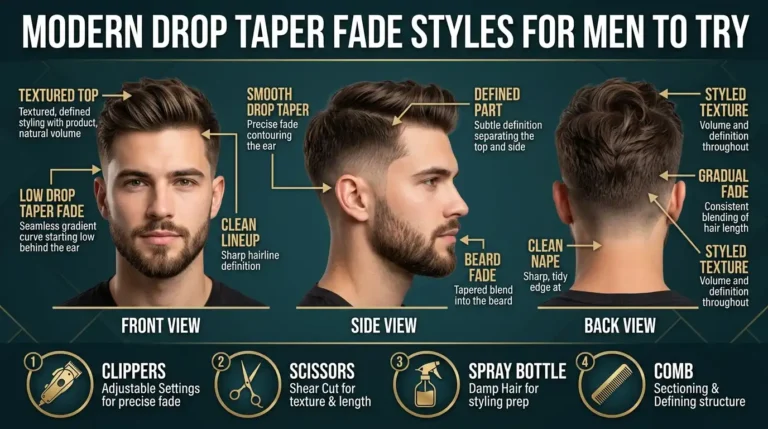
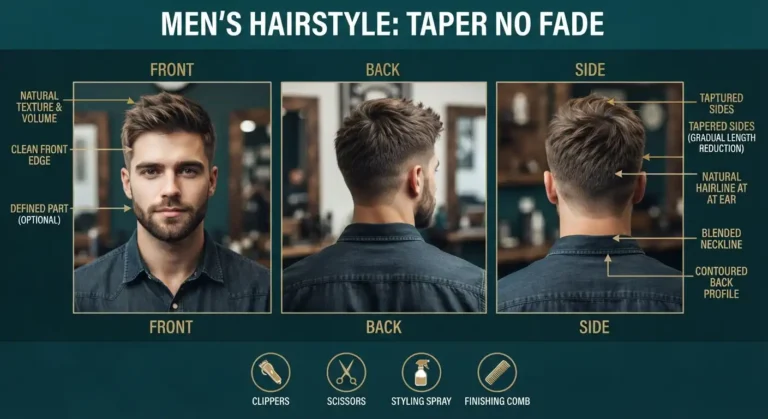
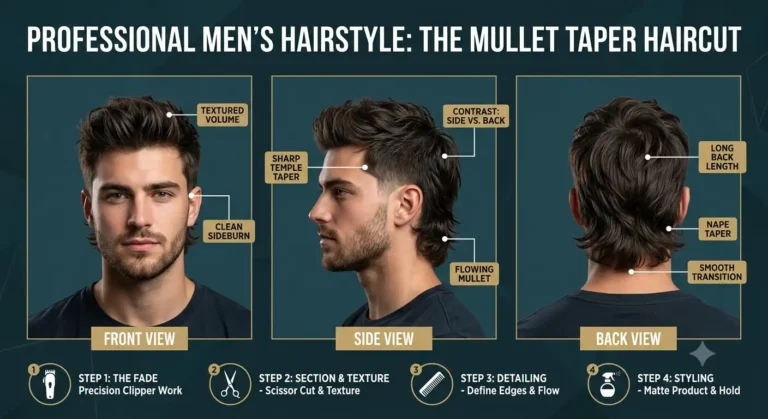
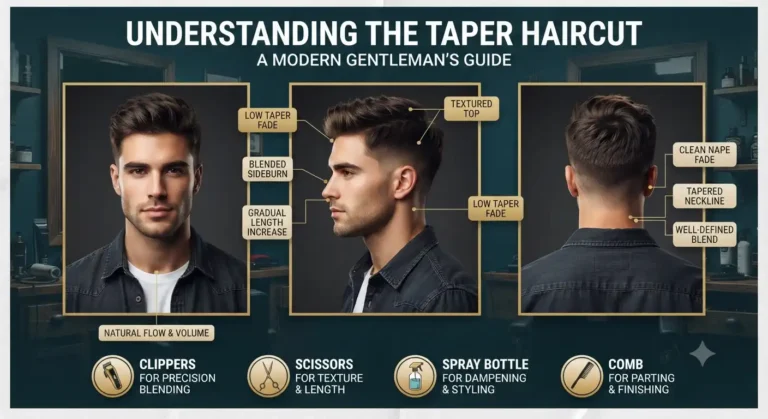
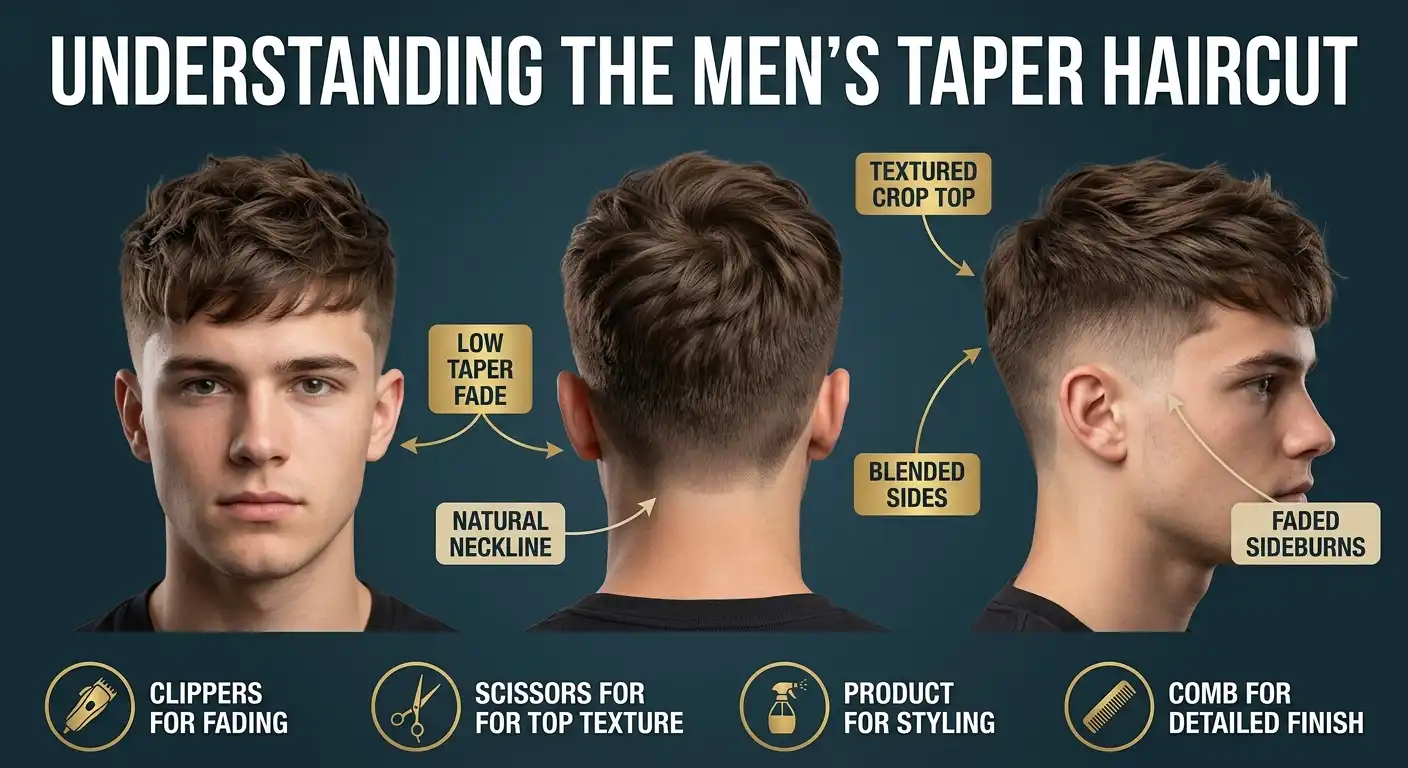
If your barber says “taper” and you are not sure what that means, you are not alone. What does taper mean? In a haircut, it means the hair gradually becomes shorter as it approaches an edge such as the sideburns, around the ears, or the neckline. A traditional taper usually keeps some visible hair at the shortest point instead of taking the area completely down to bare skin.
The important point is that taper describes how the length changes, not one fixed hairstyle. You can combine a taper with a side part, textured crop, quiff, curls, waves, a pompadour, or longer hair on top.
This guide explains the terminology, taper variations, guard numbers, taper versus fade, barber communication, styling, hair types, face shapes, and maintenance.
Quick Overview
| Option | Where the taper appears | Shortest area | Overall effect |
| Temple taper | Temples and sideburns | Usually short, not necessarily skin | Subtle and modern |
| Nape taper | Neckline | Short visible hair | Clean from the back |
| Low taper | Low around ears and neckline | Short guard or close stubble | Conservative |
| Mid taper | Higher around temples and nape | Short guard or stubble | More noticeable |
| High taper | Higher on the sides and back | Very short near edges | Stronger contrast |
| Taper fade | Tapered area may reach skin | Can reach skin | Sharper and more dramatic |
Terminology varies between barbers and regions, so describing the desired shortest length and showing a reference photo is often more reliable than saying only “taper.”
24 Taper Haircut Styles and Combinations
Because this search query has definitional intent rather than true gallery intent, the following section focuses on useful, genuinely different combinations instead of padding the article with dozens of near-identical haircut names.
Subtle and Classic Tapers
1. Classic Neck Taper
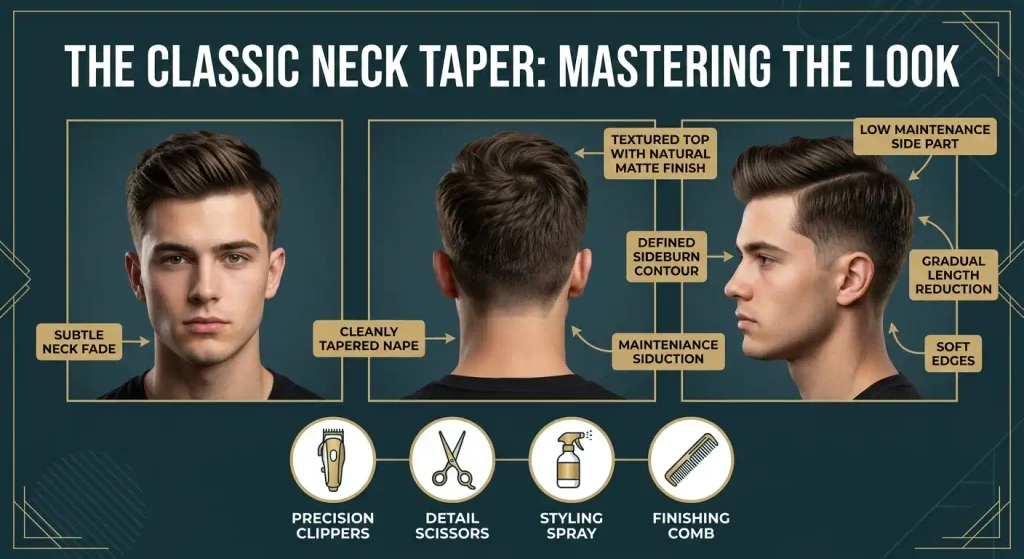
A classic neck taper keeps most of the sides relatively full while gradually reducing the hair toward the neckline. The barber may use guards such as #2, #1, or shorter lengths near the bottom, depending on the desired finish. It works especially well with straight, wavy, or medium-density hair. Oval and rectangular faces can carry this shape easily. Keep the top natural and use a light styling cream if you want movement without a hard, shiny finish.
2. Sideburn Taper
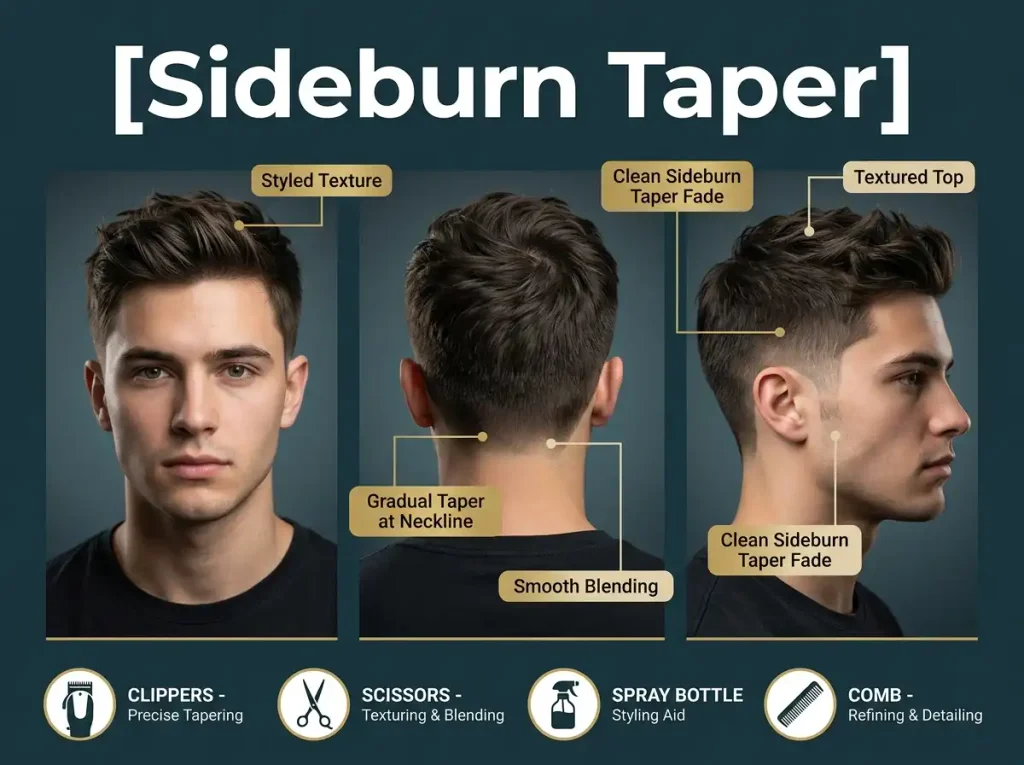
Here the taper focuses on the sideburn area rather than dramatically changing the entire side of the haircut. The barber gradually reduces the sideburn into the surrounding hair, often using a combination of trimmer work and clipper guards. It suits men who want a neat appearance while keeping substantial length on the sides. A sideburn taper pairs naturally with side parts, comb-overs, short textured styles, and medium-length hair.
3. Temple Taper
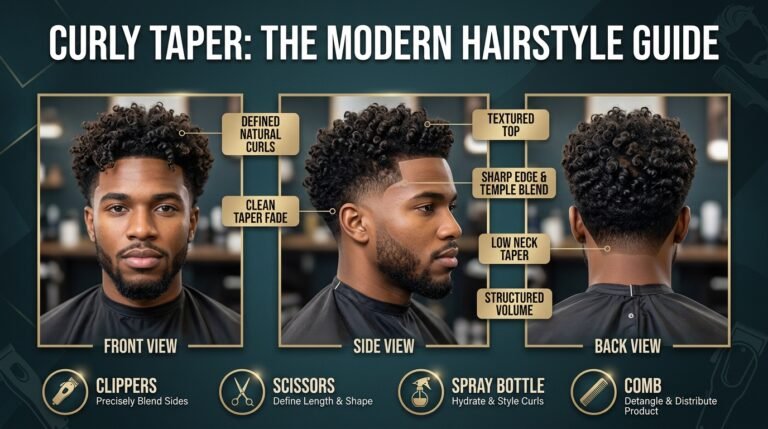
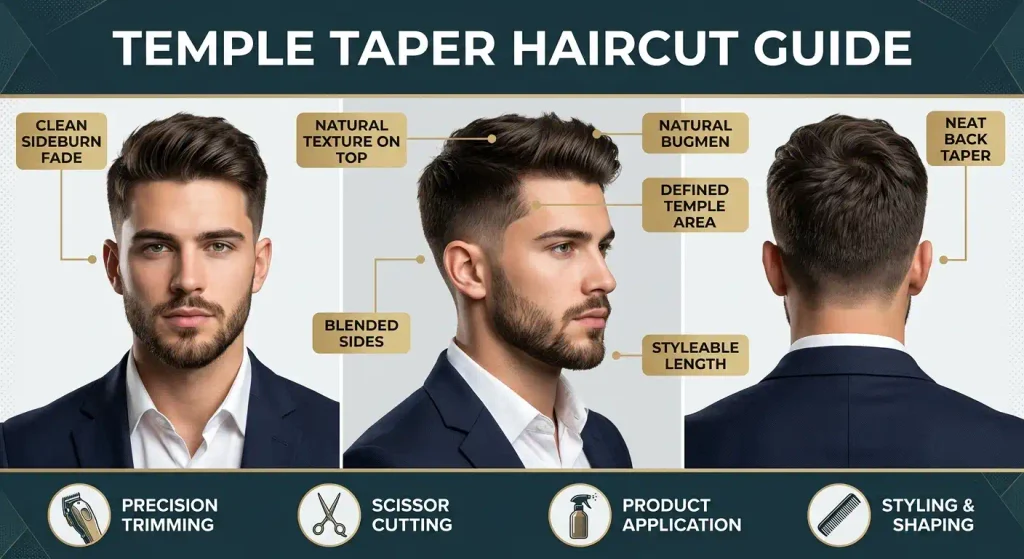
A temple taper cleans the hair around the temple and sideburn while leaving much of the side intact. It is a useful choice when you want a noticeable edge cleanup without committing to a broad fade. Curly and coily hair can show the shape particularly well because the temple area creates a clean frame around the face. Use curl cream or a light leave-in product when the top needs definition.
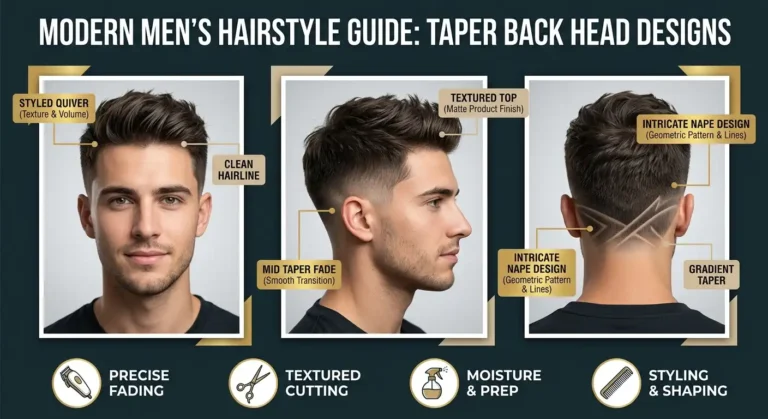
4. Nape-Only Taper
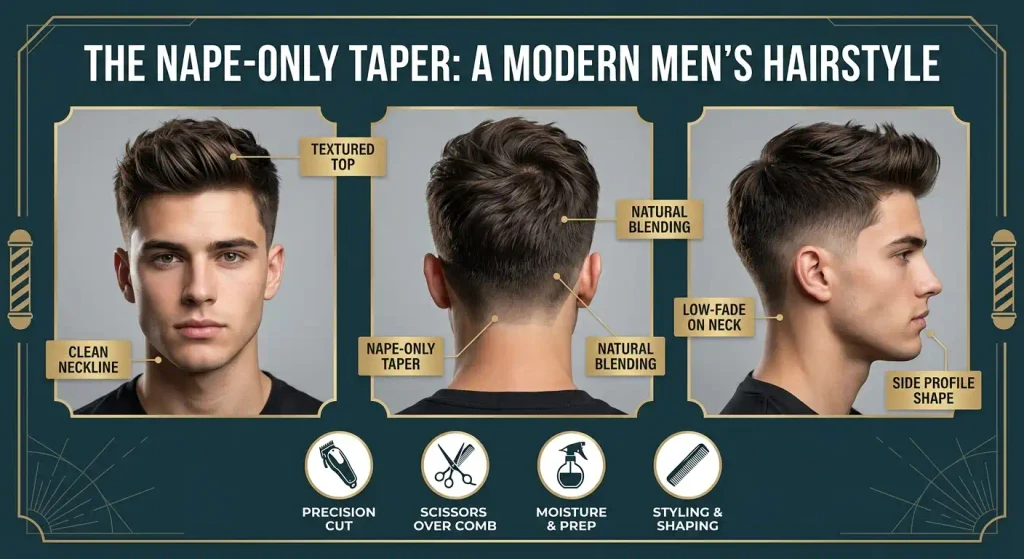
This version concentrates the graduation at the back neckline. The sides can remain longer, making the haircut look almost unchanged from the front while appearing cleaner from behind. It works well with longer hairstyles, classic scissor cuts, and business-friendly looks. Ask the barber to preserve the bulk above the neckline and gradually reduce only the lower section. A light styling cream keeps the longer hair controlled.
Low Taper Variations
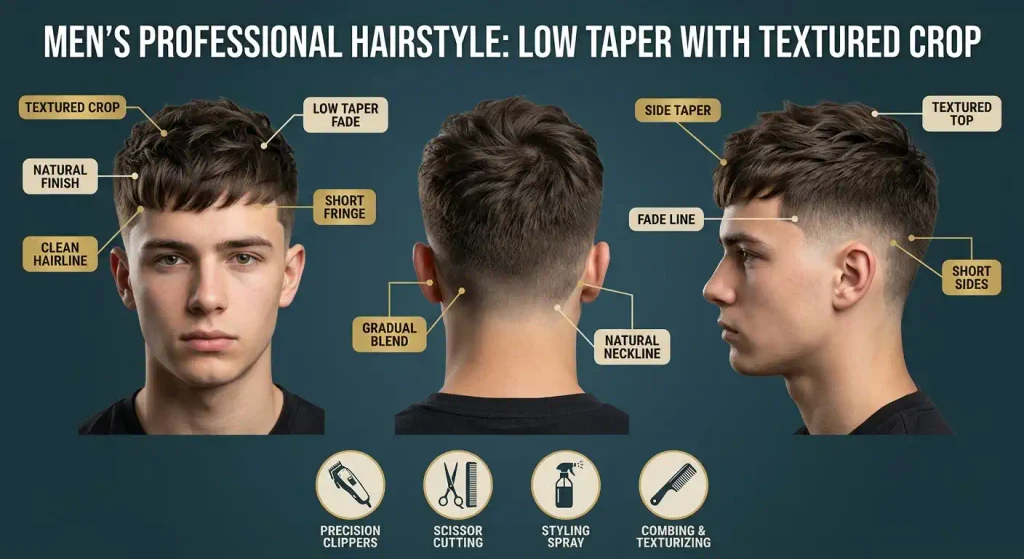
5. Low Taper With Textured Crop
A textured crop combined with a low taper gives you short, controlled sides without removing too much hair around the head. The top is cut with texture, often using point cutting to create separation. It suits straight and slightly wavy hair especially well. A matte clay can add definition without making the crop look greasy. Rounder faces may benefit from keeping some height and texture on top.
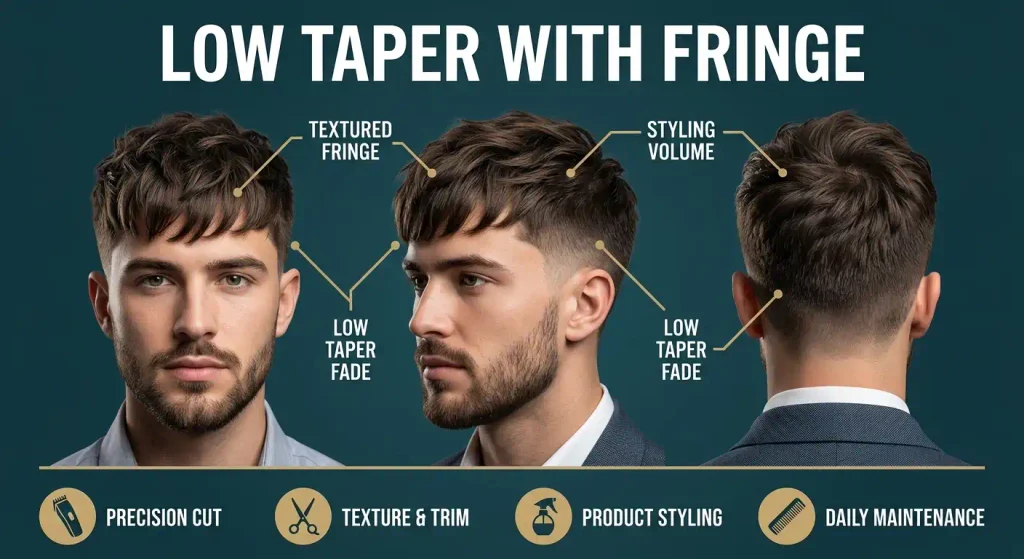
6. Low Taper With Fringe
The low taper cleans the temples and neckline while the fringe remains the main feature. The top can be blunt, textured, broken up, or softly swept forward. Straight and wavy hair are easy matches, while curly hair can create a more natural fringe shape. A small amount of matte cream or clay can control flyaways. Tell the barber exactly how much length you want retained in the fringe.
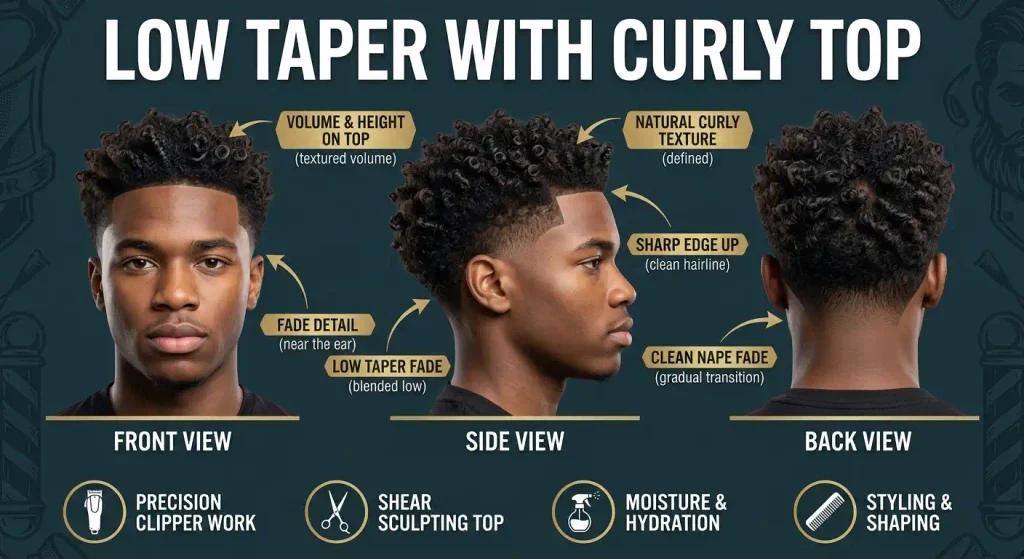
7. Low Taper With Curly Top
Curly hair benefits from keeping its natural volume while the edges receive controlled tapering. The barber works around the temples, ears, and neckline rather than removing the bulk from the entire side. Oval, round, and square faces can all work with this combination when the curl volume is balanced properly. Curl cream is usually more useful than heavy wax because it supports definition without flattening the curls.
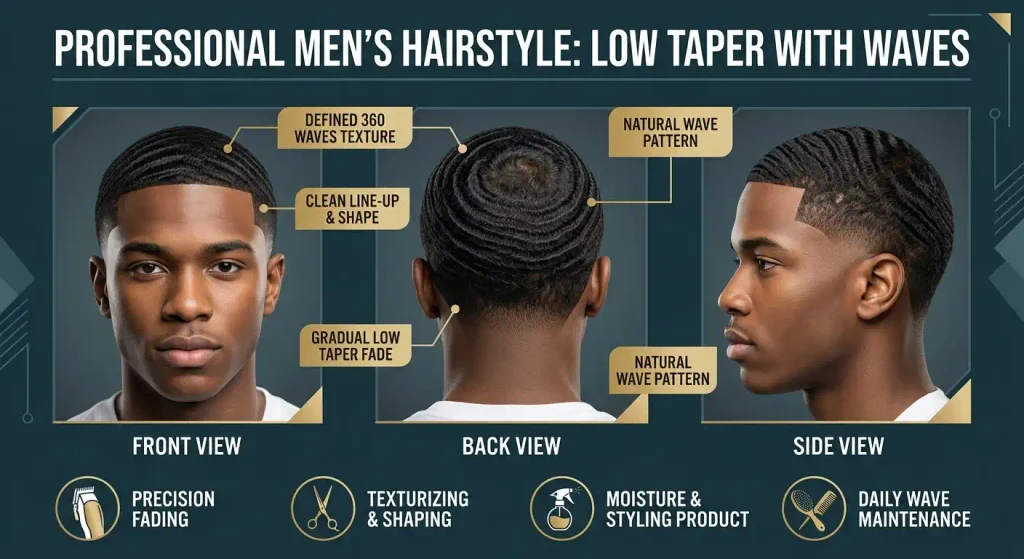
8. Low Taper With Waves
A low taper can frame waves without destroying the overall pattern. The sides remain long enough to connect naturally with the top, while the neckline and temple areas receive a gradual reduction. This is useful for men who want a clean outline but still want their wave pattern to remain the focus. A light moisturizing product can help control dryness, while excessive heavy product may make the hair look greasy.
Medium and Higher Taper Combinations
9. Mid Taper With Quiff
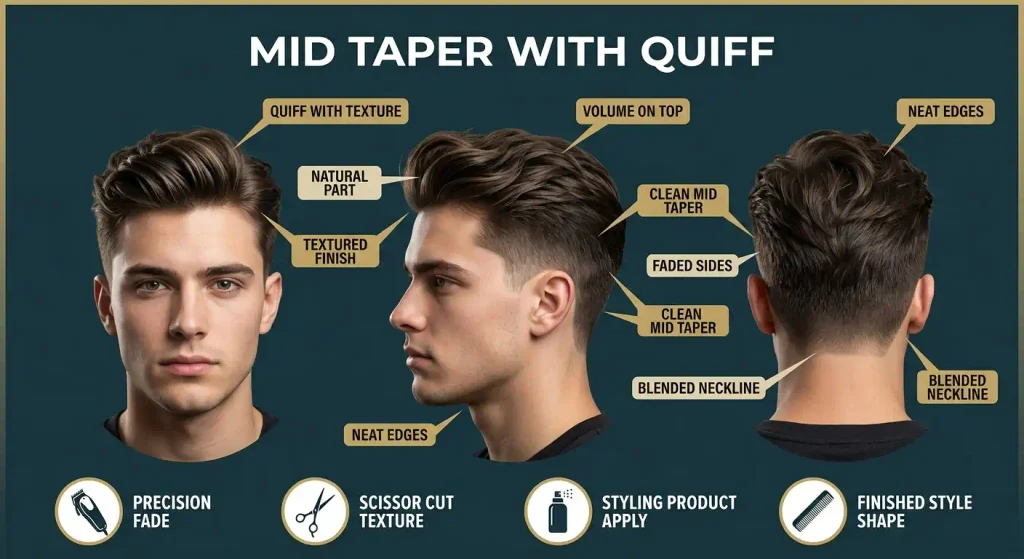
A mid taper creates more separation than a subtle neckline taper while leaving enough length on top for a quiff. The barber can blend the sides upward with guards such as #1 and #2 before transitioning into longer hair. The quiff adds vertical height, which can help balance round or shorter-looking face shapes. Use a blow dryer and a light styling product to direct the front upward and back.
10. Mid Taper With Side Part
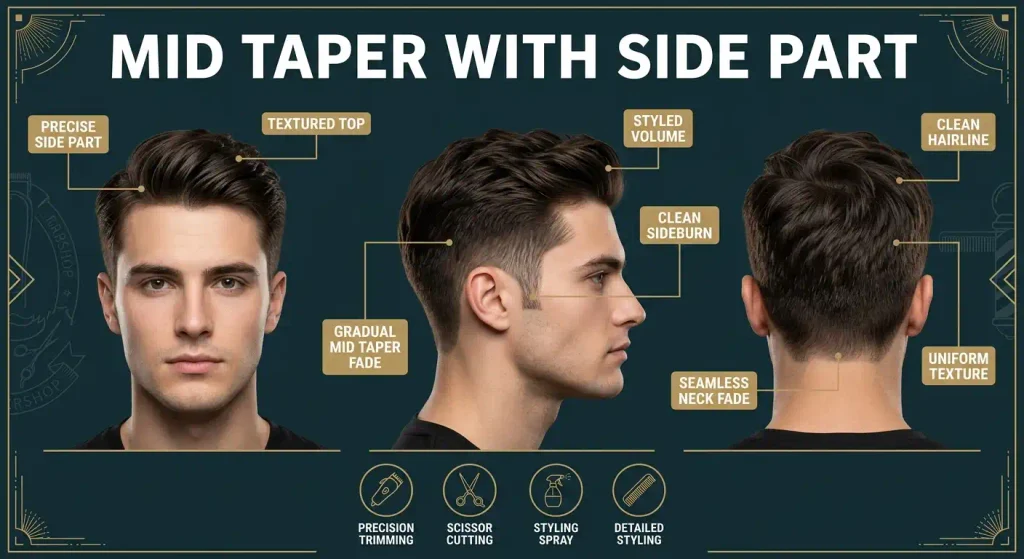
This combination blends traditional barbering with a cleaner modern outline. The taper reduces bulk around the sides and neckline while the top retains enough length for a defined part. Straight and slightly wavy hair are particularly easy to manage. Ask for a natural or hard part depending on your preference. A medium-hold pomade works when you want control and shine; matte paste gives a softer finish.
11. Mid Taper With Slick Back
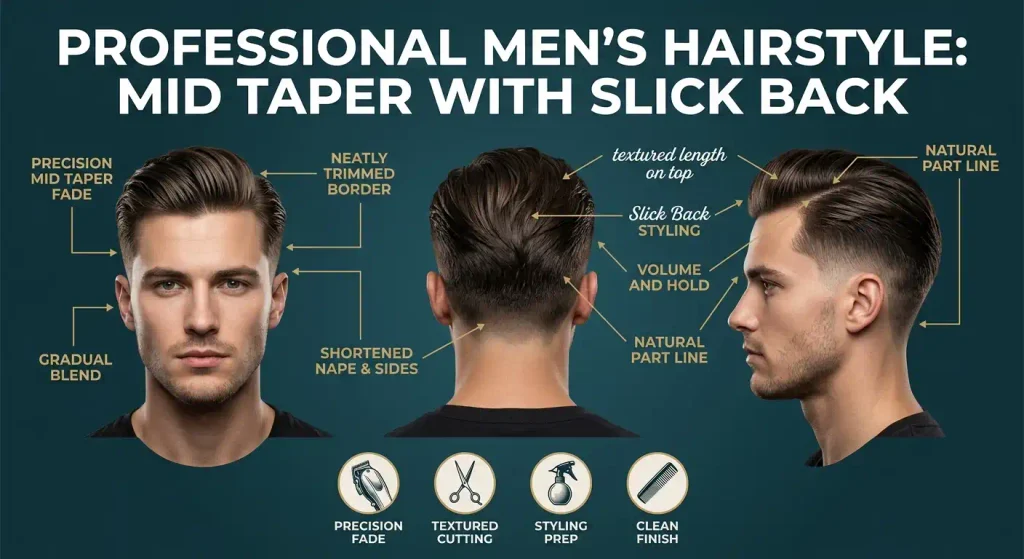
The slick back puts most of the attention on the top, while the taper keeps the perimeter tidy. Medium-density straight or wavy hair usually handles this combination well. The barber should avoid taking the taper so high that it removes the visual connection between the top and sides. Apply product through damp hair, then comb backward. A water-based pomade provides stronger control than a lightweight cream.
12. High Taper With Textured Top
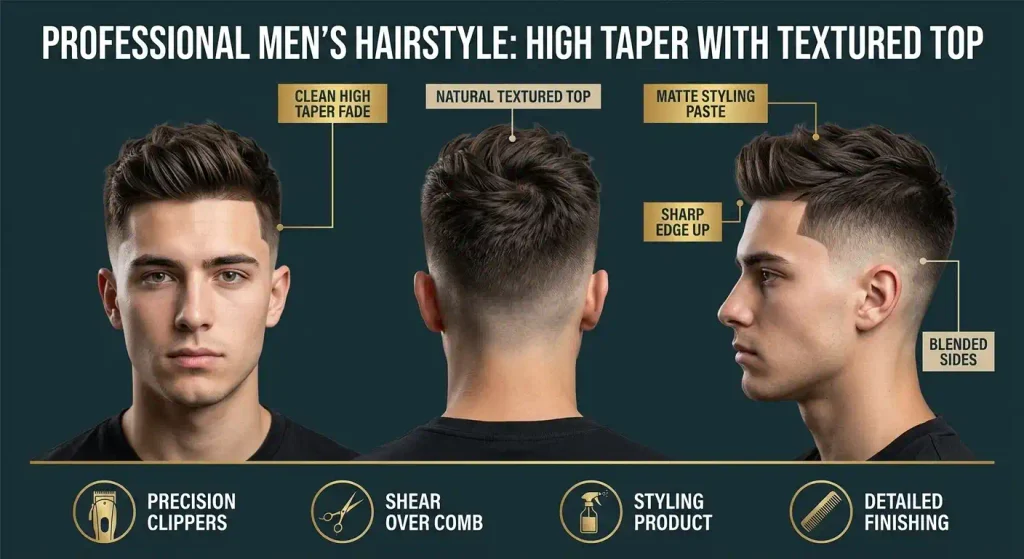
A higher taper creates a stronger change in length around the upper sides while leaving the top as the main styling area. It can work well with thick straight or wavy hair because reducing side bulk makes the top look more intentional. Texture on top prevents the haircut from appearing too flat. Matte clay or texture paste is a good choice for a dry, separated finish.
Tapers for Texture and Hair Type
13. Taper for Straight Hair
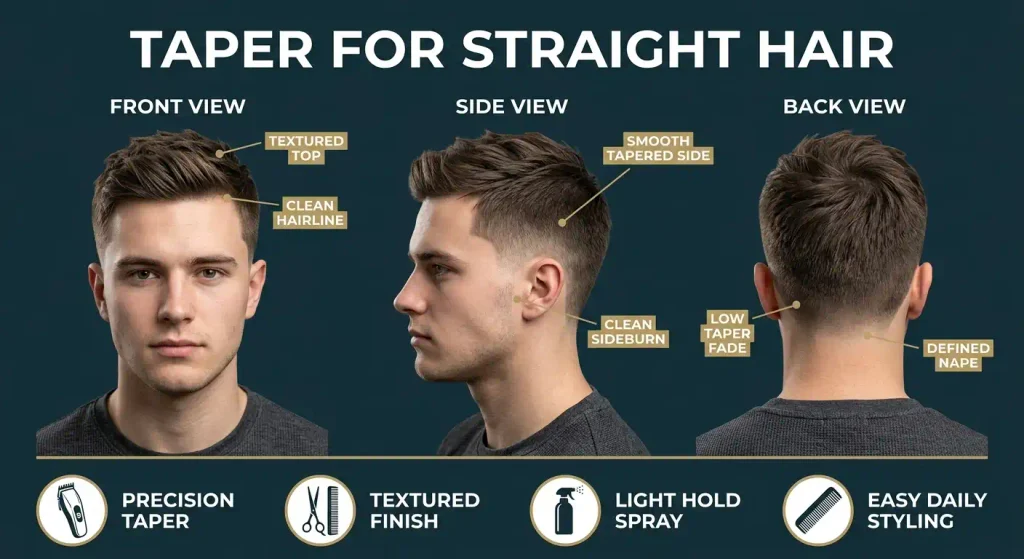
Straight hair shows graduation clearly, so blending quality matters. A #1 or #2 can form part of the lower transition, with longer guards or scissor work used as the barber moves upward. The top can remain classic or receive texture. This option suits nearly every face shape because the top can be adjusted to compensate for face proportions. Matte paste is useful for a natural finish.
14. Taper for Wavy Hair
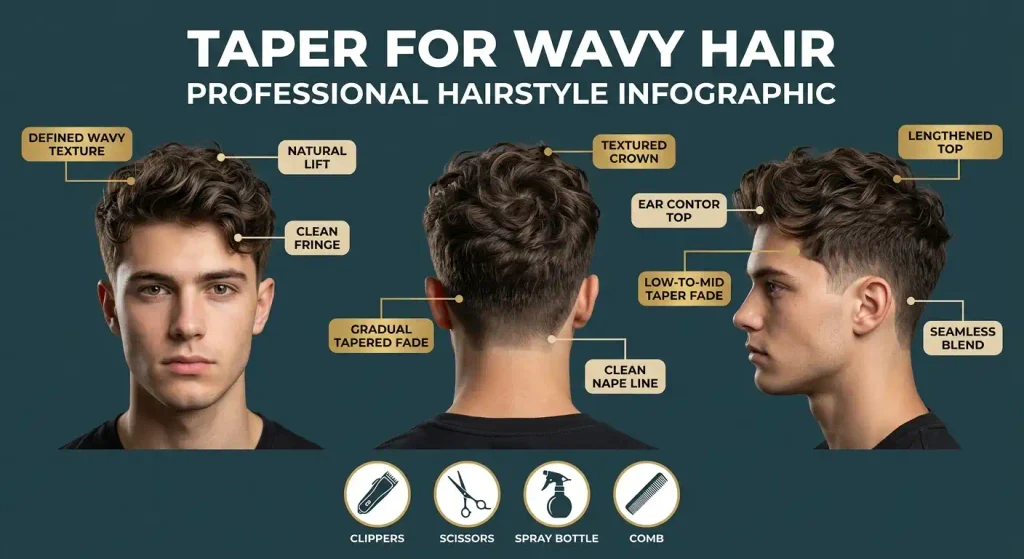
Wavy hair creates a softer connection between the tapered sides and longer top. Rather than removing all the natural weight, the barber can use the taper to control the perimeter while preserving movement. A scissor-over-comb technique may help refine the transition above the clipper work. Sea salt spray can enhance natural texture, while a light cream keeps the waves controlled.
15. Taper for Curly Hair
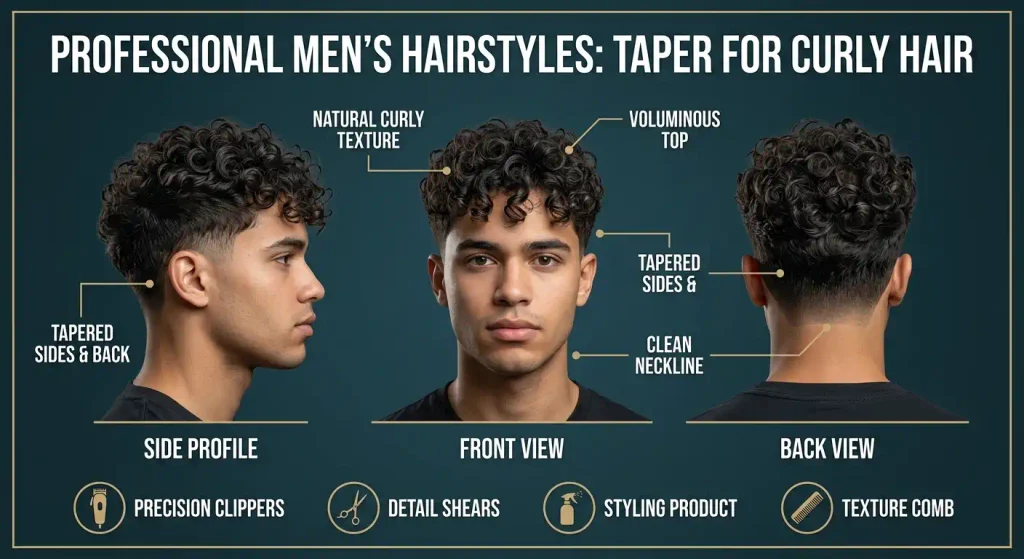
Curly hair needs room to maintain its pattern. A good taper concentrates the shortest work around the edges and avoids unnecessarily cutting into the curl mass. The barber may use clippers around the perimeter and scissors to refine the longer areas. Square, oval, and round faces can all work with this approach. Curl cream is generally better suited than a stiff wax for preserving curl definition.
16. Taper for Coily Hair
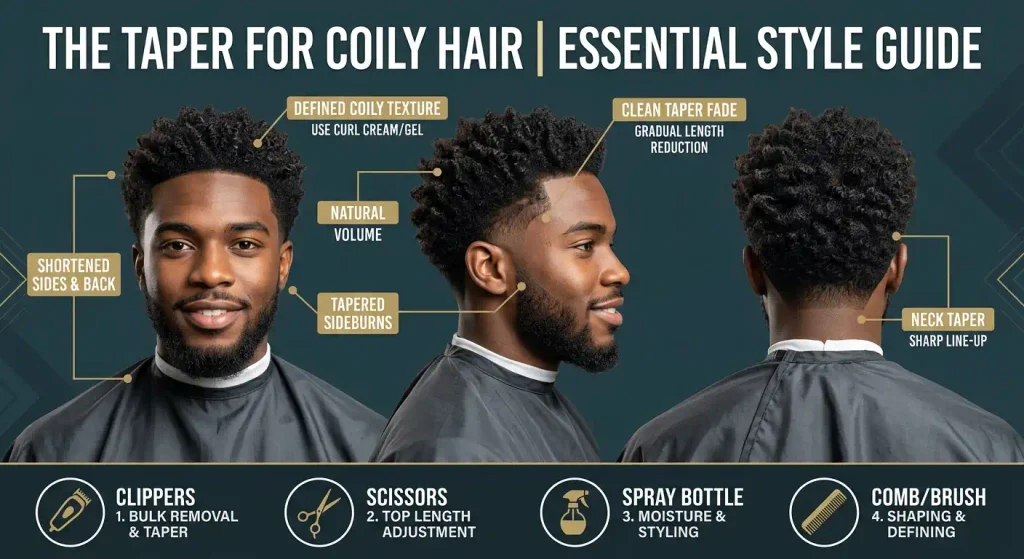
Coily hair can create a strong contrast between a clean perimeter and textured length. The barber should account for shrinkage and natural growth direction before deciding where the graduation should sit. Temple, sideburn, and neckline tapering can create a sharp outline without changing the entire silhouette. A leave-in conditioner or curl-defining product can help maintain moisture and shape between cuts.
Tapers With Popular Top Styles
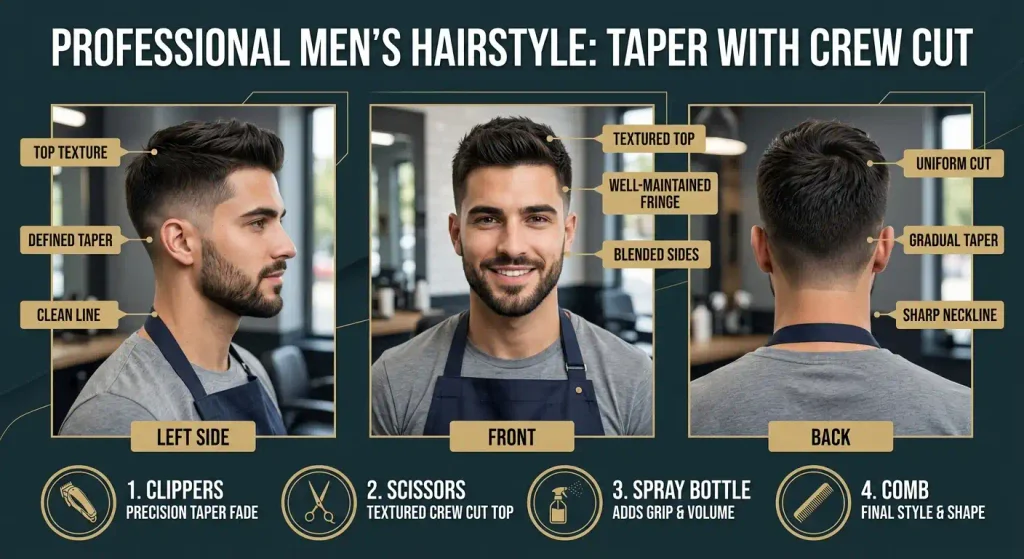
17. Taper With Crew Cut
A crew cut already has a compact silhouette, so a subtle taper can sharpen the edges without making the haircut look overly disconnected. The barber can use shorter guards around the neckline and sideburns while leaving the top slightly longer. This combination is practical for men who prefer low-maintenance grooming. A small amount of matte paste is optional because the cut can often look good without much styling.
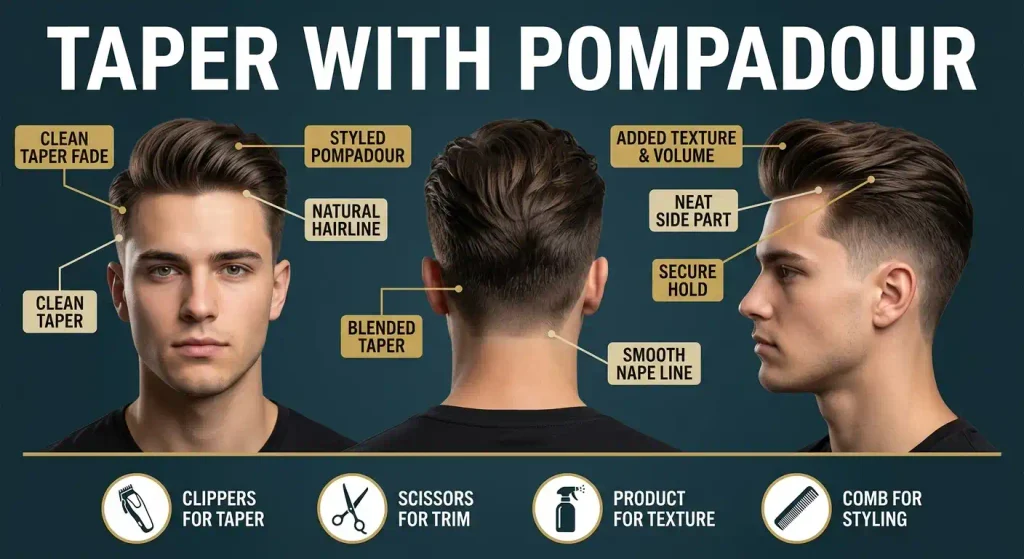
18. Taper With Pompadour
The pompadour needs enough length and volume on top to create its characteristic sweep. A taper keeps the sides controlled without automatically turning the entire side into a skin fade. This makes the look more traditional. It works best when the hair has enough density to support volume. Blow-dry the front upward and backward, then use pomade or a styling cream depending on the desired shine.
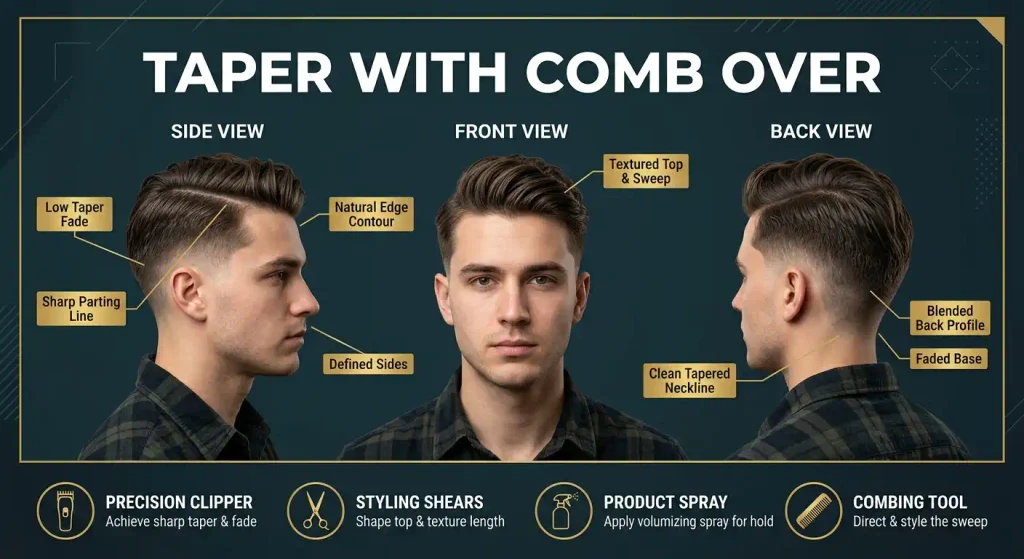
19. Taper With Comb Over
A comb-over can range from conservative to modern depending on the length and texture. The taper gives the sides a cleaner perimeter while leaving the top long enough to direct across. Straight hair makes the part easy to control, while wavy hair can give the style more texture. Use a comb for a polished finish or your fingers for a less formal appearance.
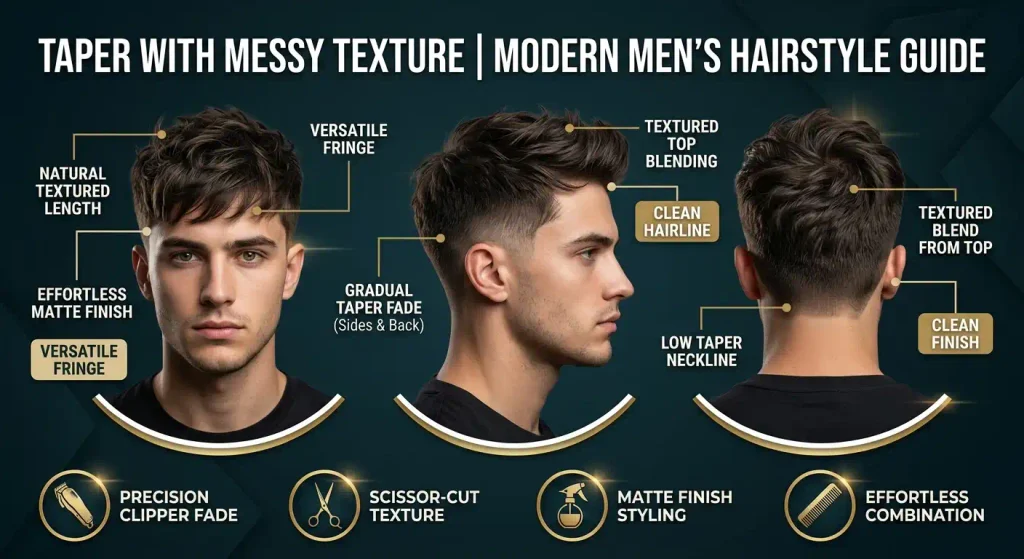
20. Taper With Messy Texture
For a relaxed haircut, the taper can stay clean while the top remains intentionally loose. Point cutting can add movement to the longer section, and the barber can use clipper-over-comb to control bulk where needed. This combination is useful for men who dislike a heavily styled appearance. Work a small amount of matte clay through dry hair and twist selected sections with your fingers.
Modern and Distinctive Taper Looks
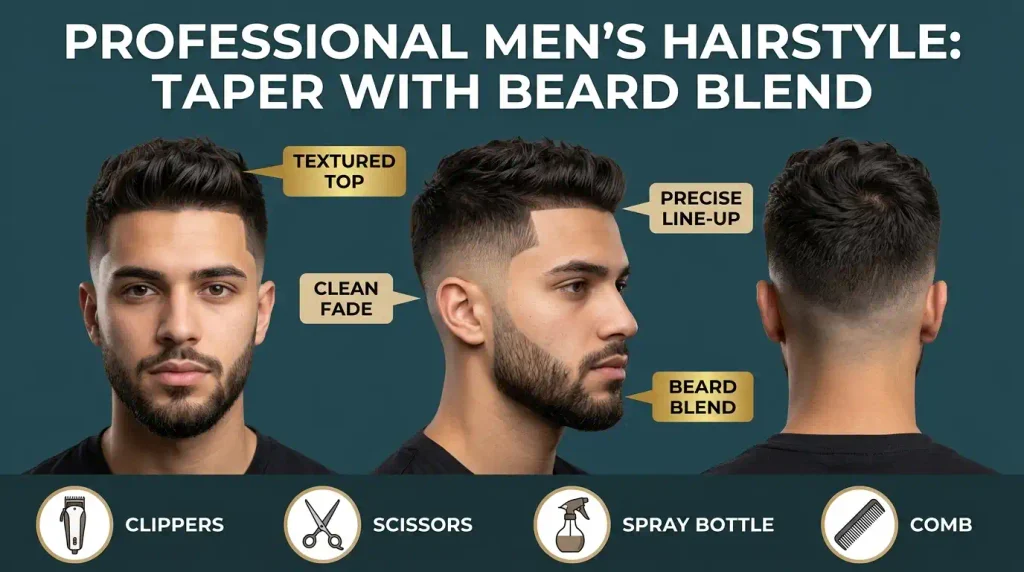
21. Taper With Beard Blend
A taper can transition into a beard area around the sideburn rather than ending as a separate block. The barber gradually reduces the hair so the haircut and beard appear connected. This is particularly useful for men with medium or full facial hair. The exact blend should match the beard’s density. A beard balm can control stray hairs while a matte product keeps the head hair natural.
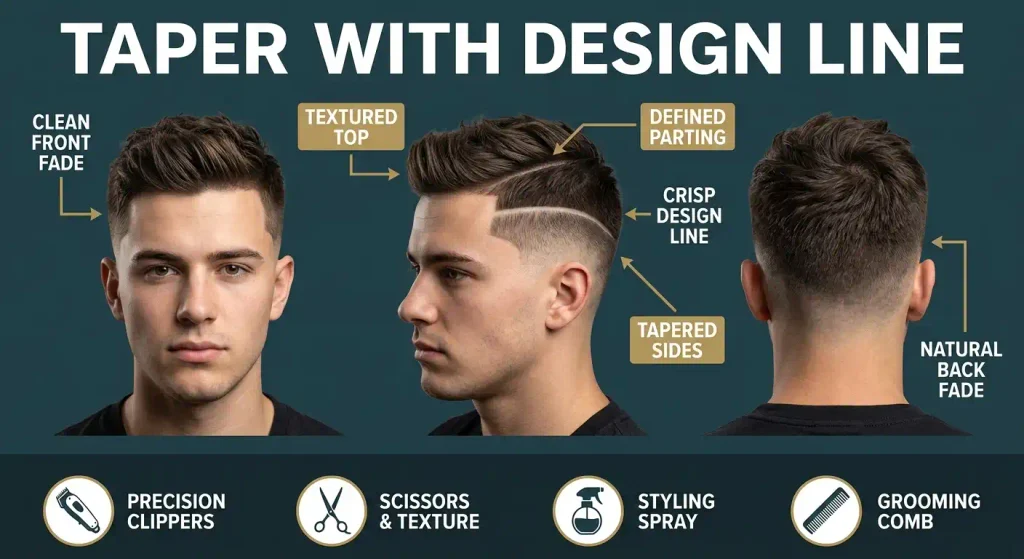
22. Taper With Design Line
A design line can be added to a tapered haircut for a more expressive look. The taper controls the surrounding area while the shaved line creates a deliberate visual detail. Because the design grows out faster than the main haircut, it needs more frequent attention if you want it sharp. Keep the top simple if you want the line to remain the main feature.
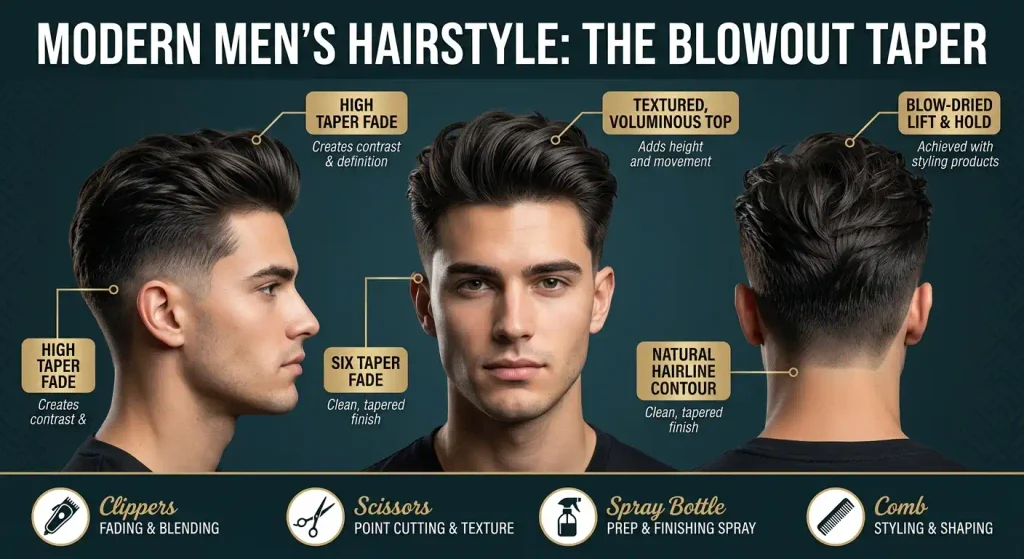
23. Blowout Taper
A blowout taper keeps more visual fullness toward the upper sides and back while the perimeter is gradually cleaned up. The result is fuller and more expressive than a conservative taper. It can work especially well with wavy, curly, or thick hair. Styling usually involves directing the hair outward and upward with a blow dryer. A lightweight cream or curl product can maintain movement without making the hair stiff.
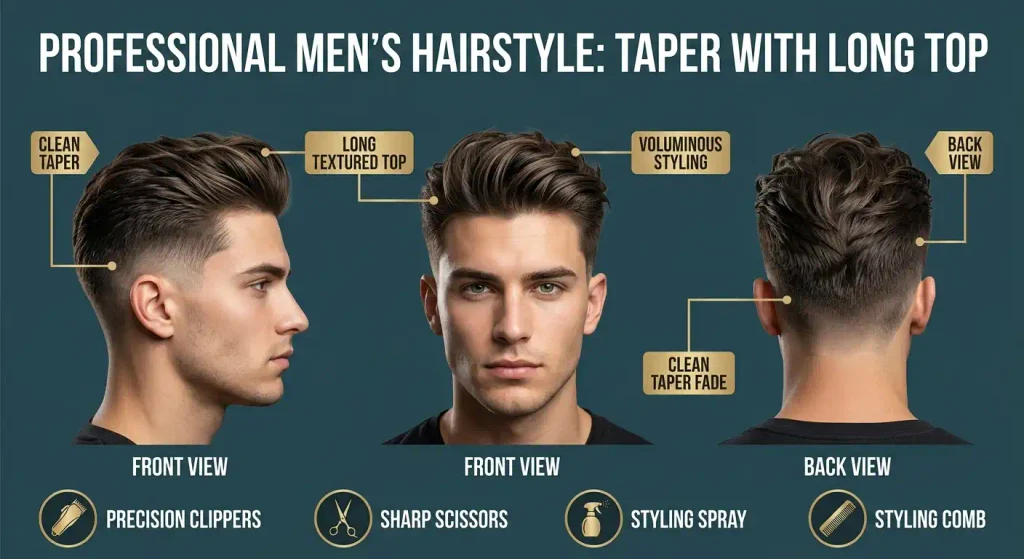
24. Taper With Long Top
A longer top creates a strong contrast without requiring a full fade. The sides and neckline receive controlled tapering, while the top can remain several inches long depending on the chosen hairstyle. This is flexible enough for a slick back, middle part, textured flow, or messy finish. It suits men who want a clean perimeter but do not want to sacrifice top length.
What Does It Mean to Taper Hair?
To taper hair means to gradually reduce its length toward a specific edge or area. The change should look controlled rather than like a sudden step from long hair to very short hair.
For example, a barber might leave more length higher on the side, then move through shorter clipper settings as they approach the ear. The same principle can be applied around the neckline.
The important distinction is that a taper is about graduation. It is not automatically a particular guard number.
What Does Tapered Mean in Haircuts?
When a barber calls hair “tapered,” they usually mean the hair has been gradually reduced toward an edge.
The word can describe:
- Tapered sideburns
- A tapered neckline
- Tapered temples
- A low taper
- A mid taper
- A high taper
- A taper used with longer hair on top
A tapered haircut therefore does not have one universal length. The exact result depends on where the taper begins, how short it becomes, and how much hair remains above it.
What’s a Fade?
A fade is also a gradual transition between hair lengths, but modern barber terminology commonly uses the word for a blend that becomes extremely short, often down to skin at its lowest point.
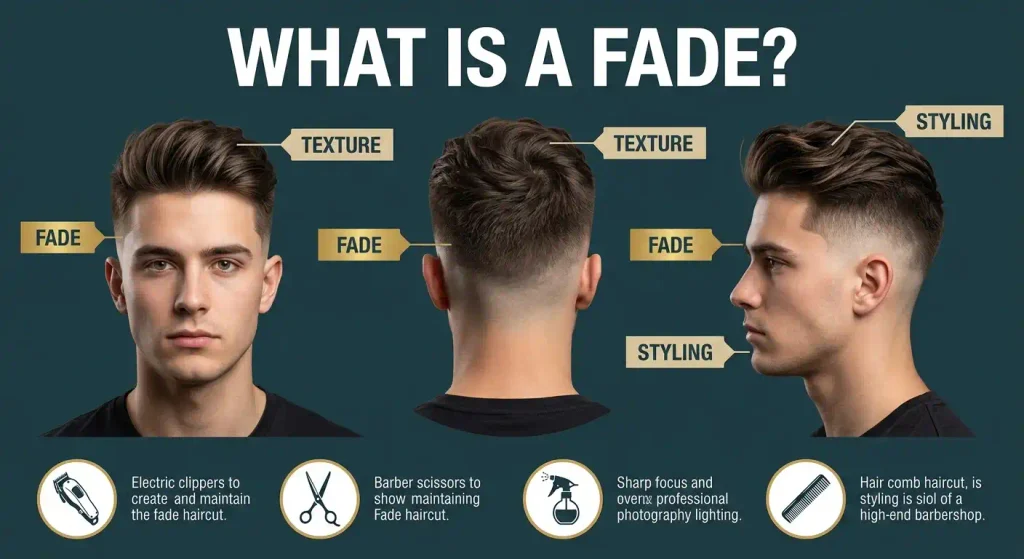
A skin fade removes the hair at the bottom to the skin, then blends upward into longer hair. A taper generally concentrates the graduation around the perimeter and can leave visible hair at the shortest point.
There is some variation in how barbers use the words “taper,” “fade,” and “taper fade.” That is why a clear description is safer than relying on terminology alone.
Taper vs Fade: The Key Difference
| Feature | Taper | Fade |
| Main idea | Gradual reduction | Gradual reduction |
| Typical location | Edges, temples, sideburns, neckline | Larger area of sides/back |
| Shortest point | Often leaves visible hair | Can reach bare skin |
| Visual impact | Subtle to moderate | Moderate to dramatic |
| Top length | Highly flexible | Highly flexible |
| Maintenance | Usually easier to grow out | Often needs more frequent cleanup |
| Best for | Classic and versatile looks | Sharper, higher-contrast looks |
The terms are not perfectly standardized. Some shops use “taper fade” for a style that combines a perimeter taper with a very short or skin-level finish.
Taper Guard Numbers Explained
Guard numbers help describe the approximate length left by a clipper, but the exact result depends on the clipper, blade position, lever setting, hair texture, and barber technique.
| Guard | General result | Common use |
| No guard / #0 area | Extremely close | Detail and very short transitions |
| #1 | Very short | Lower part of a close taper |
| #2 | Short | Building the next transition |
| #3 | Short-medium | Blending into fuller sides |
| #4 | Medium clipper length | Keeping more visible side length |
A barber does not simply move from #1 to #2 to #3 in a rigid sequence. Lever adjustments, clipper-over-comb, blending techniques, and the client’s hair density all affect the finished transition.
Master Barber Phrasing: How to Ask for a Taper
If you want a traditional taper rather than a broad skin fade, say:
“Keep the length on top and most of the sides. I want the temples, around the ears, and neckline gradually tapered. Keep the shortest area around a #1 or #2 rather than taking it to bare skin. Blend it smoothly into the longer hair, and keep the top length as it is.”
Then add one of these details:
- For a subtle result: “Keep the taper low and don’t take the blend high.”
- For more contrast: “You can take the taper slightly higher around the temples.”
- For longer hair: “Preserve the bulk on the sides and only clean the perimeter.”
- For a skin finish: “I want the lowest part taken to skin, so make it a fade rather than a traditional taper.”
A photo is still useful because terminology can vary between barbers. A good reference should show the front, side, and back whenever possible.
Why Taper Haircuts Style Works
The main advantage of tapering is control without removing unnecessary hair.
A taper can:
- Clean the neckline.
- Sharpen the sideburns.
- Reduce unwanted bulk.
- Frame the face.
- Keep more length than many fades.
- Work with short or long top styles.
- Transition naturally as the haircut grows.
- Fit both casual and professional settings.
It is especially useful if you want your haircut to look neat without having very short sides across the entire head.
Best Hair Types and Face Shapes
Straight Hair
Straight hair shows the taper clearly. A textured top, side part, slick back, or crop can all work well.
Wavy Hair
Wavy hair creates a softer transition. Keep enough length above the taper so the natural wave does not become disconnected.
Curly Hair
A low taper around the temples and neckline can frame curls while preserving their volume.
Coily Hair
The clean perimeter creates strong definition while allowing the natural texture to remain the main feature.
Round Face
A little extra height on top can make the face appear longer. Avoid removing too much visual height from the top.
Square Face
Most taper variations work well because the natural jaw and facial structure already provide strong definition.
Oval Face
An oval face offers considerable flexibility. Low, medium, and higher taper placements can all work when balanced with the top.
Long Face
Avoid excessive height on top if it makes the face look longer. Keeping more side volume can create better proportion.
How to Style a Taper Haircut
1. Start with the right hair condition
Begin with clean, towel-dried hair. Do not soak the hair with excessive water if you need volume or texture.
2. Choose the product for your texture
Straight hair may need matte paste or clay. Wavy hair can benefit from sea salt spray or light cream. Curly hair generally responds better to curl cream.
3. Set the direction
Use your fingers or a comb to establish the shape you want. A side part needs more controlled direction, while a messy crop can be shaped mainly with the fingers.
4. Add controlled texture
For a natural style, use small amounts of product and build gradually. Heavy product can flatten fine hair and make textured styles look greasy.
5. Finish the perimeter
The taper itself should already provide the clean outline. Avoid trying to recreate the barber’s blend at home with clippers unless you have experience.
Step-by-Step Barbering Tutorial: Taper Haircuts
A professional taper is a precision haircut. The exact sequence varies with the barber’s preferred technique, head shape, density, and desired finish.
Tools Required
- Professional hair clippers
- Adjustable clipper
- Guards #1, #2, #3, and #4
- Trimmer
- Barber comb
- Cutting shears
- Neck brush
- Spray bottle
- Cape and protective drape
- Hair dryer
- Styling comb
General Cutting Process
- Consultation: Confirm the desired taper height, shortest length, top length, and neckline.
- Prepare the hair: Clean and section the hair as needed.
- Establish the top: Remove or preserve top length according to the selected hairstyle.
- Set the perimeter: Establish the basic shape around the ears, temples, and neckline.
- Create the first short section: Use the selected low guard or trimmer setting.
- Build the graduation: Work upward through longer settings such as #1, #2, #3, and #4 as appropriate.
- Blend the transition: Use the clipper lever, clipper-over-comb, or other blending techniques to remove visible lines.
- Refine with scissors: Scissor-over-comb can help connect the clipper work to longer hair.
- Detail the edges: Clean the sideburns, around-ear area, and neckline.
- Point cut when needed: Point cutting can add texture and soften the ends on the top or longer sections.
- Style and inspect: Dry and style the hair so the barber can check the finished shape from multiple angles.
Professional barbering standards also recognize clipper-and-comb or shear-and-comb work for creating tapered areas around the nape and ears.
Best Styling Product Chemistry
Matte Clay
Matte clay usually gives a dry-looking finish with strong control. It is useful for textured crops, messy styles, and thicker straight hair. Use a small amount first and add more only if necessary.
Sea Salt Spray
Sea salt spray adds texture and can make straight or wavy hair feel fuller and more separated. It works particularly well with messy tops, waves, and loose textured styles.
Curl Cream
Curl cream is designed to support curl definition while reducing unwanted frizz. It makes more sense for curly and coily hair than a heavy wax designed for straight-hair styling.
Pomade
Pomade is useful for classic styles such as side parts, slick backs, and pompadours. Depending on the formula, it can create anything from a natural finish to noticeable shine.
Maintenance and Upkeep Guide
A taper grows out gradually, but the perimeter eventually loses its clean shape.
For many men, a 2–4 week cleanup window is practical, depending on how quickly the hair grows and how sharp they want the taper to remain.
After the Haircut
- Wash according to your scalp and hair needs.
- Avoid using more product than necessary.
- Keep the neckline and sideburn area clean.
- Use conditioner when your hair needs additional moisture.
- Protect curls and waves from excessive drying.
- Do not repeatedly trim the taper yourself without knowing the blend.
Between Barber Visits
If the top still looks good but the neckline and sideburns become untidy, ask your barber whether a simple cleanup is enough instead of removing more length from the entire haircut.
Common Mistakes to Avoid
Mistake 1: Saying Only “Give Me a Taper”
The word can mean different things to different barbers. State where you want the taper and how short you want the lowest section.
Mistake 2: Confusing a Taper With a Skin Fade
If you want visible hair at the bottom, say so. If you want the area completely bare, specifically request a skin finish.
Mistake 3: Ignoring the Top
The taper does not determine the top hairstyle. Tell the barber whether you want a crop, quiff, side part, curls, slick back, or another shape.
Mistake 4: Choosing a Guard Without Explaining the Result
A #1 means little if you do not explain where you want it used. Guard numbers should support the haircut description, not replace it.
Mistake 5: Taking the Taper Too High
If your goal is a subtle cleanup, a high taper may remove more side hair than you expected.
Mistake 6: Using Too Much Styling Product
More product does not automatically create a better hairstyle. Start with a small amount and build control gradually.
Frequently Asked Questions
What does taper mean in a haircut?
It means the hair gradually becomes shorter toward a specific edge, such as the temples, sideburns, ears, or neckline. A traditional taper usually retains some visible hair at its shortest point.
What does it mean to taper hair?
It means reducing the hair length progressively rather than creating one abrupt change. A barber can taper only a small area or use tapering as part of a larger haircut.
Is a taper the same as a fade?
Not exactly. Both use graduated blending, but a traditional taper usually focuses on the perimeter and can leave visible hair at the bottom. A fade commonly extends farther into the sides and may reach bare skin.
What is the difference between a low taper and a high taper?
A low taper keeps the graduation close to the natural edges, especially around the ears and neckline. A high taper moves the transition higher and creates more visible change in the sides.
Does a taper have to use a #1 guard?
No. A taper does not have one mandatory guard number. A barber may use different guards, lever positions, trimmers, scissors, or clipper-over-comb depending on the desired result.
Is a low taper good for curly hair?
Yes. A low taper can clean the temples and neckline while leaving the main curl volume intact. The low taper with curly top is particularly useful when you want definition without removing too much hair.
Can I get a taper with a side part?
Yes. A mid taper with side part is a classic combination. Keeping enough length on top allows the barber to create a natural or defined part while the taper controls the perimeter.
How often should I get a taper cleaned up?
Many men find a 2–4 week maintenance window practical. Faster-growing hair or a preference for very sharp edges may require more frequent visits.
Conclusion
A taper is best understood as a gradual reduction in hair length, usually concentrated around areas such as the temples, sideburns, ears, and neckline. It is not one fixed haircut and does not require one specific guard number.
The biggest choice is how subtle or pronounced you want the graduation to be. If you want more length and a natural finish, a classic or low taper may be the better option. If you want stronger contrast and a very short finish, a fade may make more sense.
Before your next appointment, tell your barber where you want the taper, how short you want the lowest section, how much length to keep on top, and whether you want skin showing. A reference photo can remove even more uncertainty.
For related grooming guidance, explore our low taper fade white boy.
Name: Ryan Cole
Role: Lead Grooming Editor, TaperHaircutGuide.com
Bio angle: Men’s grooming/style content researcher — 4+ years covering barbering trends, hairstyling terminology, and men’s style content for US audience. Cross-checks every guide with practicing barbers before publishing.