50 Low Taper Fade Curly Hair Black Styles: The Ultimate Guide

Introduction
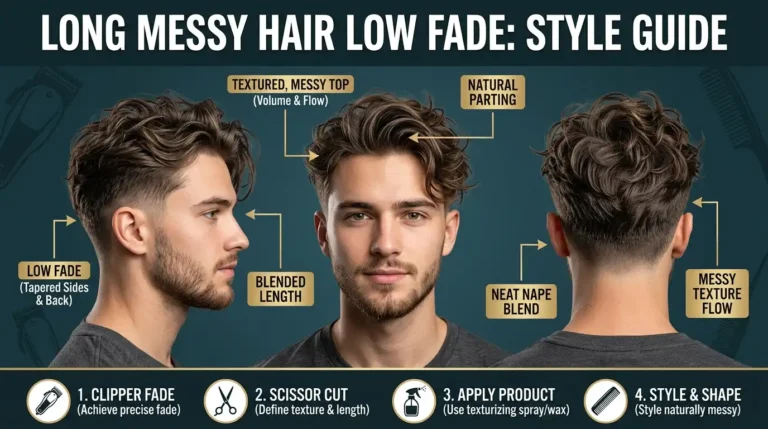
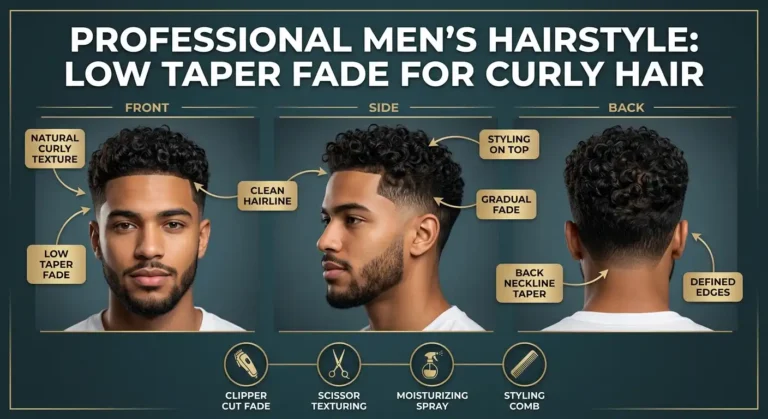
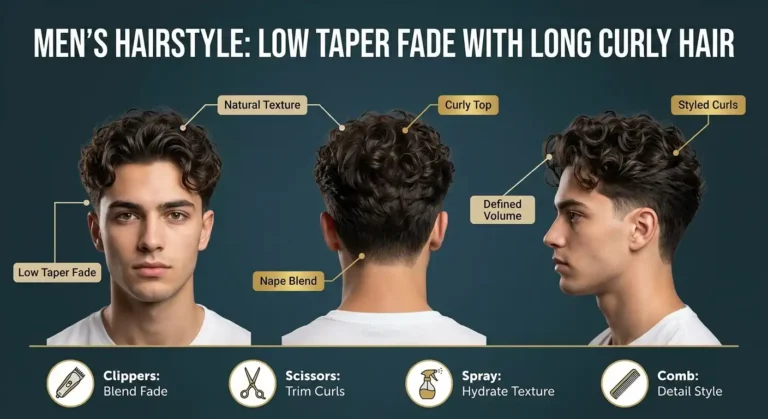
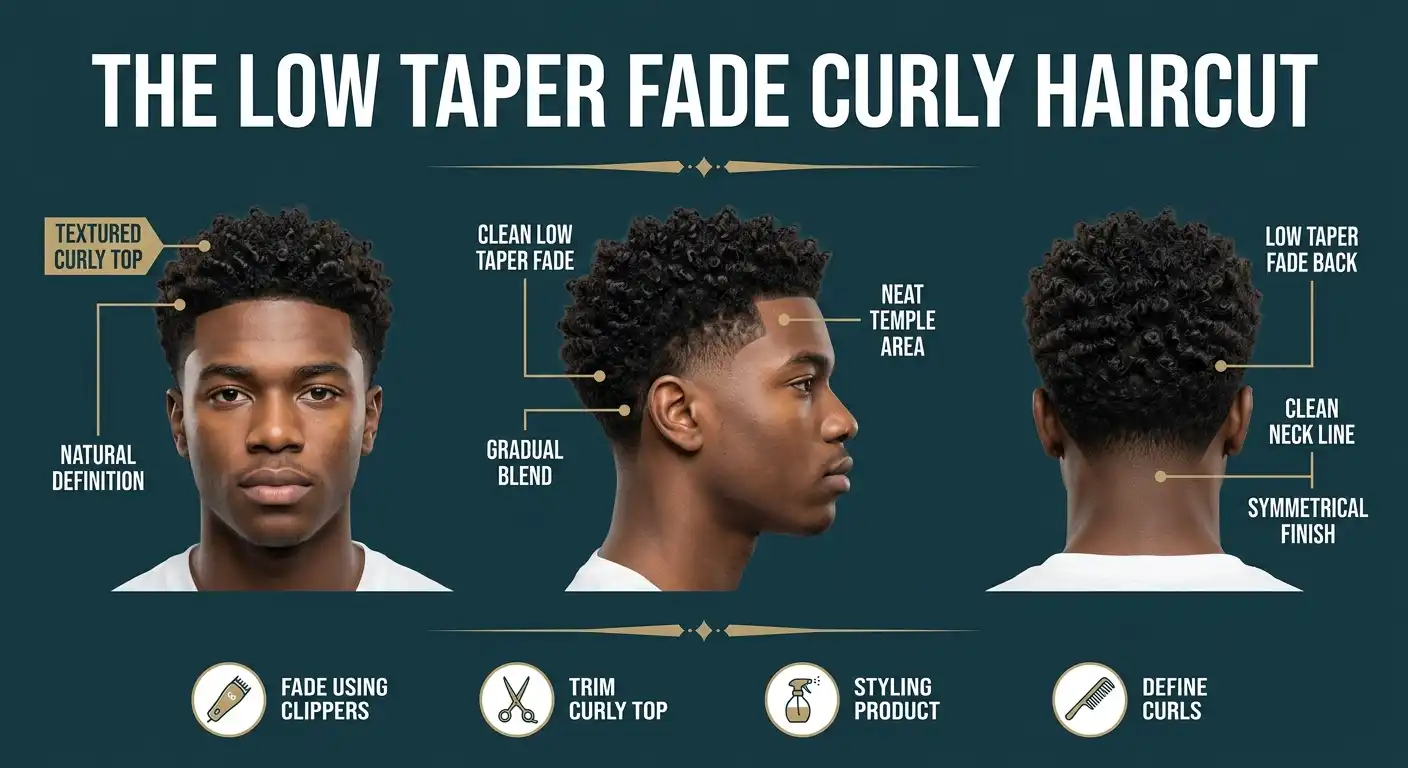
Low taper fade curly hair black styles combine natural curls or coils with a clean taper around the temples, sideburns, and neckline. The top stays textured, while the lower edges gradually become shorter for a neat finish.
For Black men, the cut can work with 3C curls, 4A coils, 4B texture, 4C coils, sponge curls, twists, afros, and short textured tops. The best version depends on curl pattern, density, face shape, hairline, and how much contrast you want.
If you want inspiration before visiting your barber, the 50 ideas below cover short curls, coils, afro shapes, line-ups, fringe, twists, color, beards, and more.
Quick Overview: 5 Strong Starting Options
| Style | Best For | Top Texture | Overall Feel |
| Classic Natural Curls | Most face shapes | 3C–4A curls | Clean and natural |
| Sponge Curls | Round or oval faces | 4A–4B coils | Defined and youthful |
| Curly Afro Taper | Oval, square | 4A–4C | Bold and natural |
| Curly Fringe | Longer foreheads | 3C–4A | Modern and relaxed |
| Taper With Line-Up | Most face shapes | 3C–4C | Sharp and polished |
50 Best Low Taper Fade Curly Hair Ideas for Black Men
Classic Natural Curl Styles
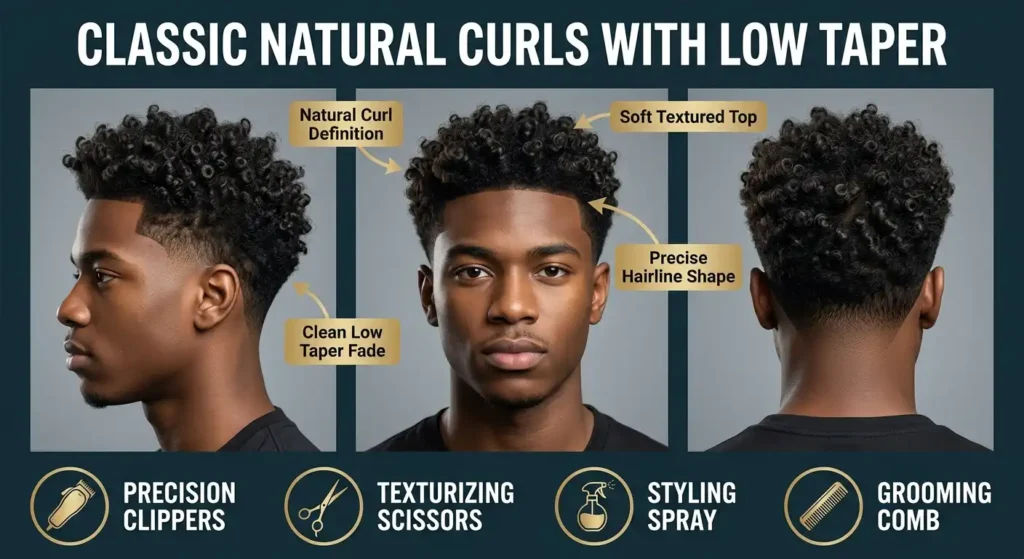
1. Classic Natural Curls With Low Taper
Natural curls remain the main feature while the taper cleans the temples and neckline. Ask for a soft transition using roughly #3 or #2 into #1 and then a close finish around the lowest edge. Oval and square faces suit this balanced shape especially well. Use curl cream on damp hair, then let the curls dry without excessive brushing. This is one of the easiest versions to maintain because the top does not need a complicated shape.
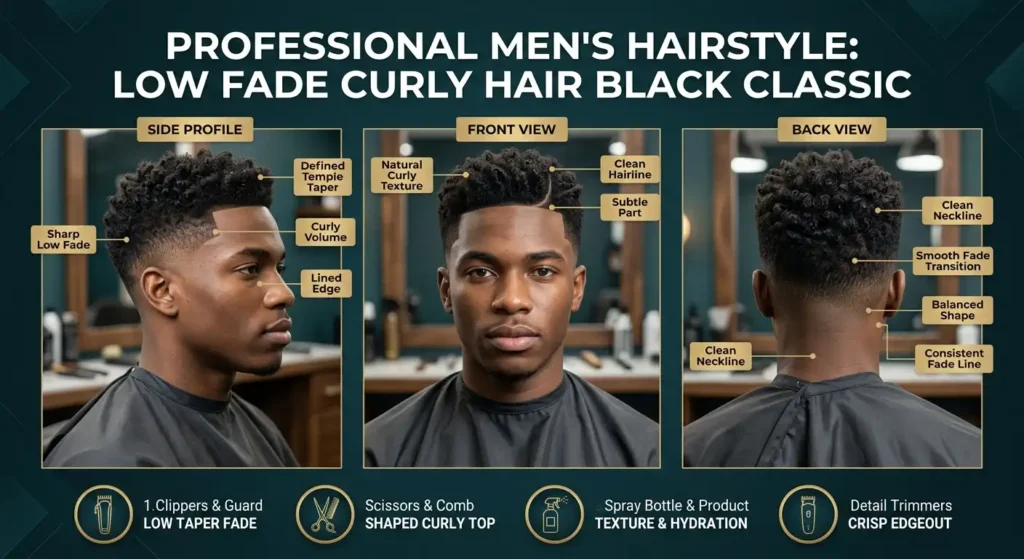
2. Low Fade Curly Hair Black Classic
A slightly tighter fade creates more contrast while preserving curly volume above it. The barber can blend from #2 into #1 and finish the lowest section close to the skin. This works especially well when the curls are dense and naturally springy. Round faces can benefit from moderate height on top. A lightweight curl cream keeps the texture soft, while a small amount of gel can improve definition without making the curls stiff.
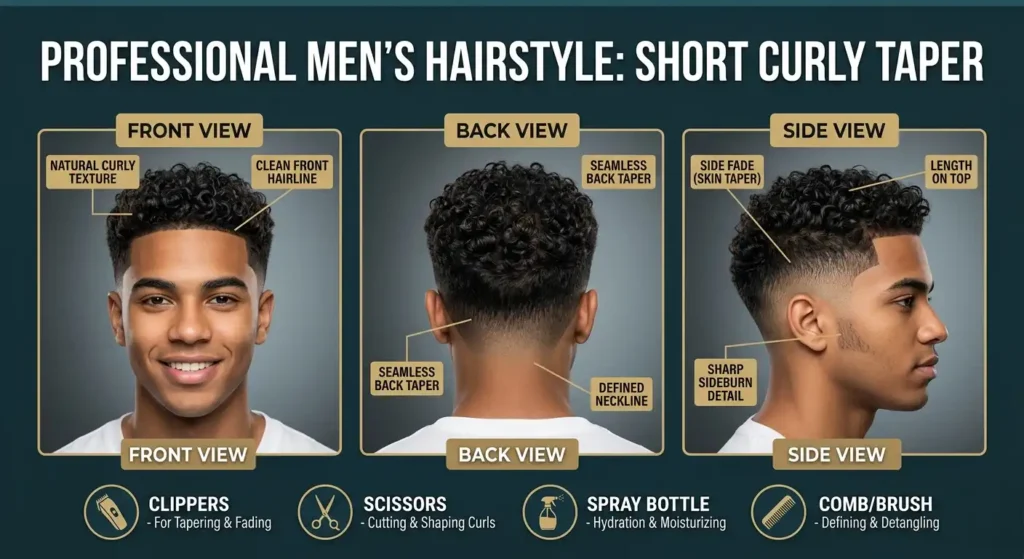
3. Short Curly Taper
Short curls give you a neat silhouette with very little daily styling. Keep enough length on top to show the natural pattern, while the sides transition through #3, #2, #1, and a close trimmer finish. This works particularly well for men who want a practical school, work, or everyday haircut. A leave-in conditioner can prevent the short curls from looking dry. For the cleanest result, ask your barber not to take the taper too high.
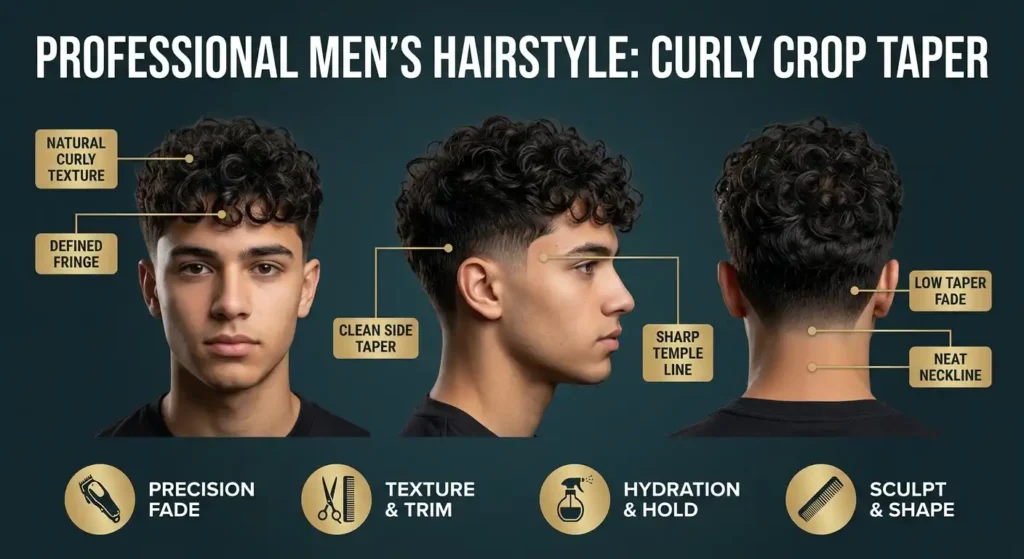
4. Curly Crop Taper
The curly crop keeps the top compact and textured rather than tall. A low taper around the ears and nape creates definition without removing the fullness that makes curly hair interesting. This shape can suit oval, diamond, and round faces. Ask for subtle point cutting through the top instead of aggressive thinning. Style with curl cream and use your fingers to direct the front slightly forward. The result looks structured without appearing overly groomed.
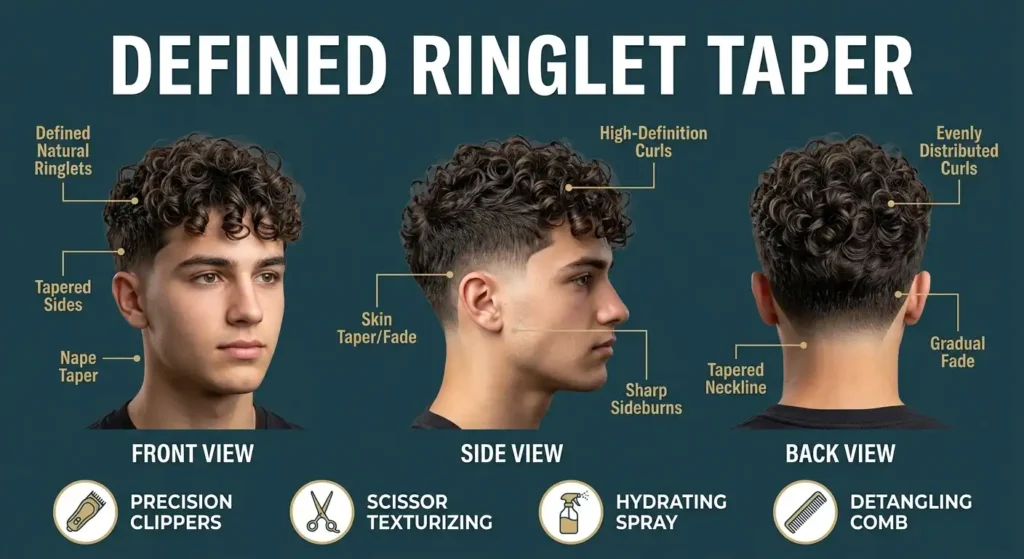
5. Defined Ringlet Taper
For naturally defined curls, the goal is to protect the curl pattern rather than cut too much into it. Keep the taper low and use scissors or point cutting to shape the top. This variation suits oval and heart-shaped faces particularly well. Apply curl cream while the hair is damp and separate larger curl groups with your fingers. Avoid repeatedly brushing dry curls because that can break up definition and create unwanted frizz.
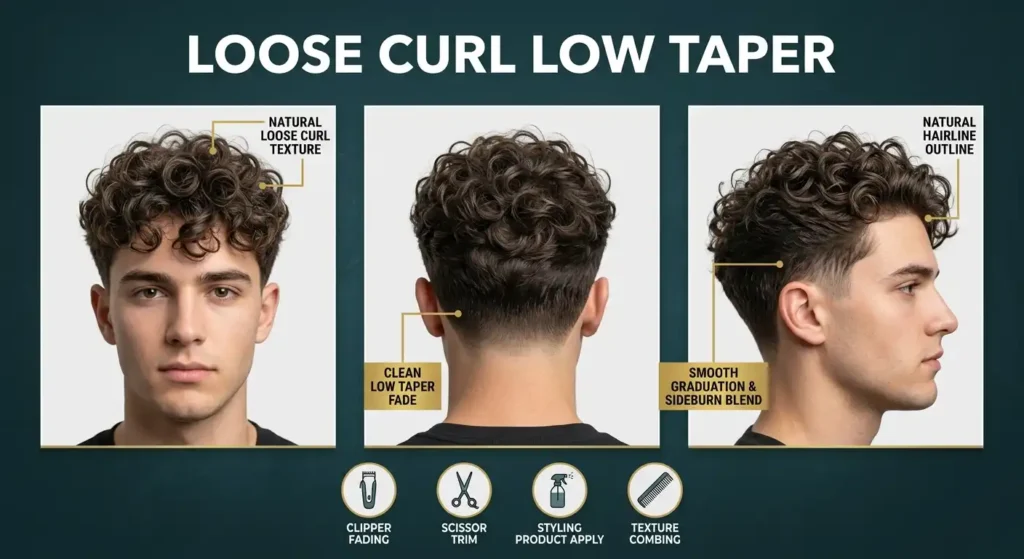
6. Loose Curl Low Taper
Looser curls can be left slightly longer so they move naturally around the crown. The barber should keep the taper concentrated near the temples and neckline instead of creating a broad fade. This makes the haircut suitable for men who want a softer appearance. Oval and rectangular faces work well with this shape. Sea salt spray can add texture, while a small amount of curl cream helps control dryness and keeps the curls from becoming too fluffy.
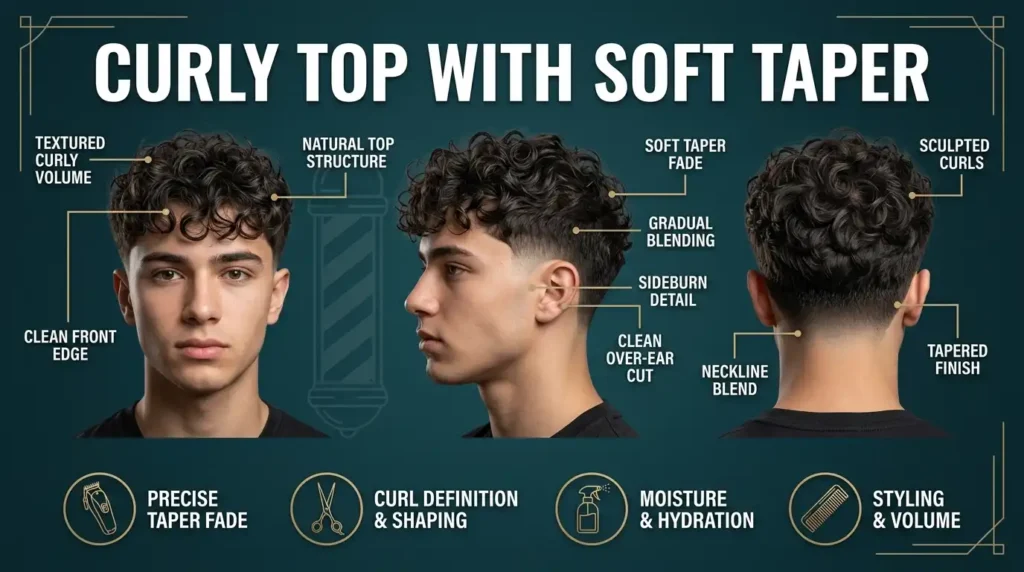
7. Curly Top With Soft Taper
A soft taper is ideal when you want the haircut to look natural as it grows out. The barber can begin with a #3 or #2 and gradually work toward #1 and the trimmer around the lowest areas. Keep the top relatively full. This suits almost any face shape because the height can be adjusted. Use a light curl cream rather than heavy wax. The goal is movement, not a stiff, molded finish.
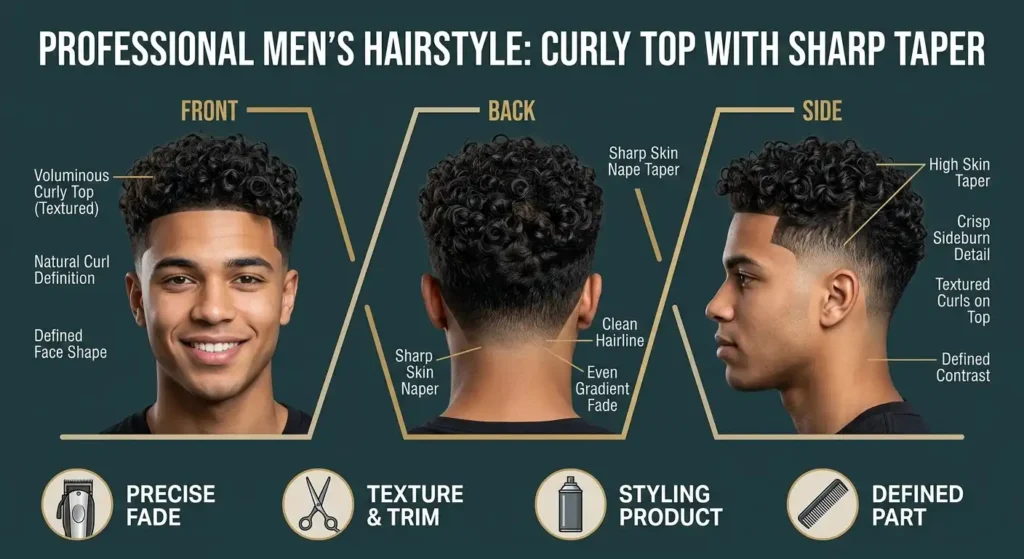
8. Curly Top With Sharp Taper
Here the contrast is stronger: the curls remain full while the taper has a cleaner, tighter finish. A #2-to-#1 progression with a close bottom edge gives the temples and nape a crisp appearance. Square and oval faces can carry the stronger contrast easily. A line-up can be added if the natural hairline supports it. For styling, use curl cream first and a light gel only where additional hold is needed.
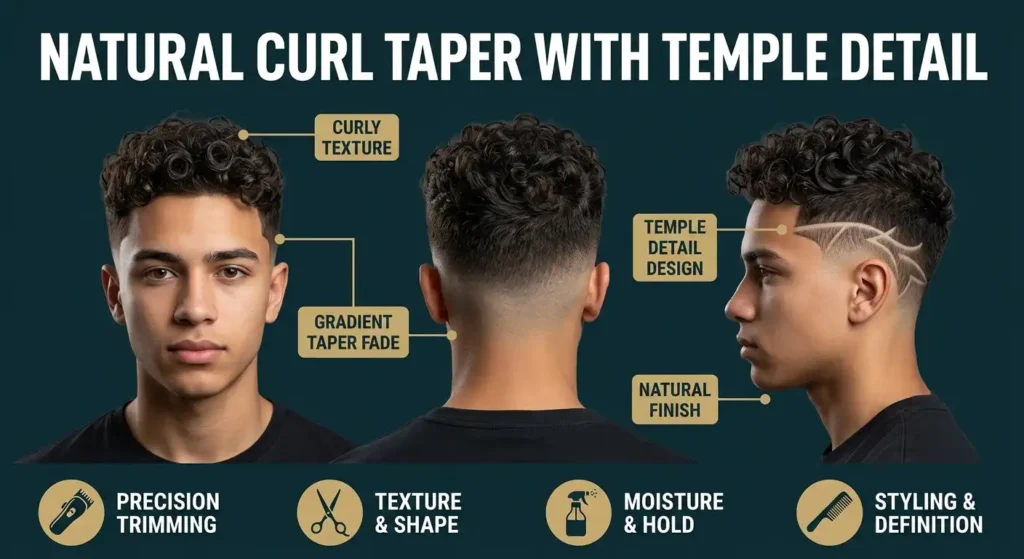
9. Natural Curl Taper With Temple Detail
This variation concentrates extra attention around the temples. The barber keeps the fade narrow, then carefully cleans the temple corners without removing too much surrounding hair. It works well for men who want a subtle haircut that still looks detailed from the front. Round and oval faces benefit from the added structure. Keep the curls natural rather than over-styled. A lightweight leave-in product is enough for most curl patterns.
Afro, Coil and Textured Styles
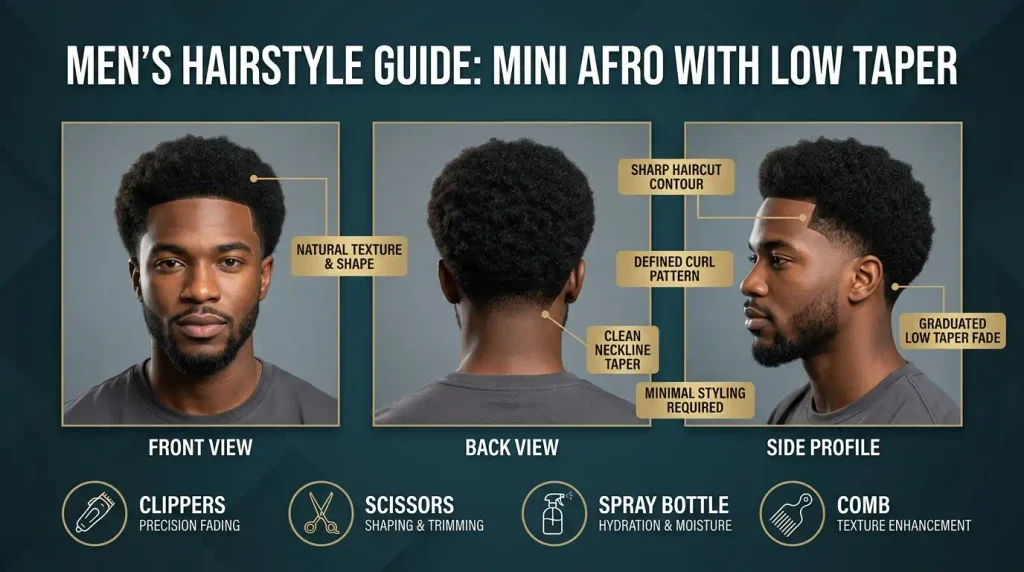
10. Mini Afro With Low Taper
A compact afro creates a strong rounded shape while the low taper cleans the lower sides. It is especially effective with dense 4A–4C texture. The barber can shape the afro with scissors or controlled clipper work, then use #2 or #1 guards for the lower taper. Oval and square faces handle the volume well. Keep the hair moisturized with leave-in conditioner and use a wide-tooth pick when shaping instead of repeatedly brushing.
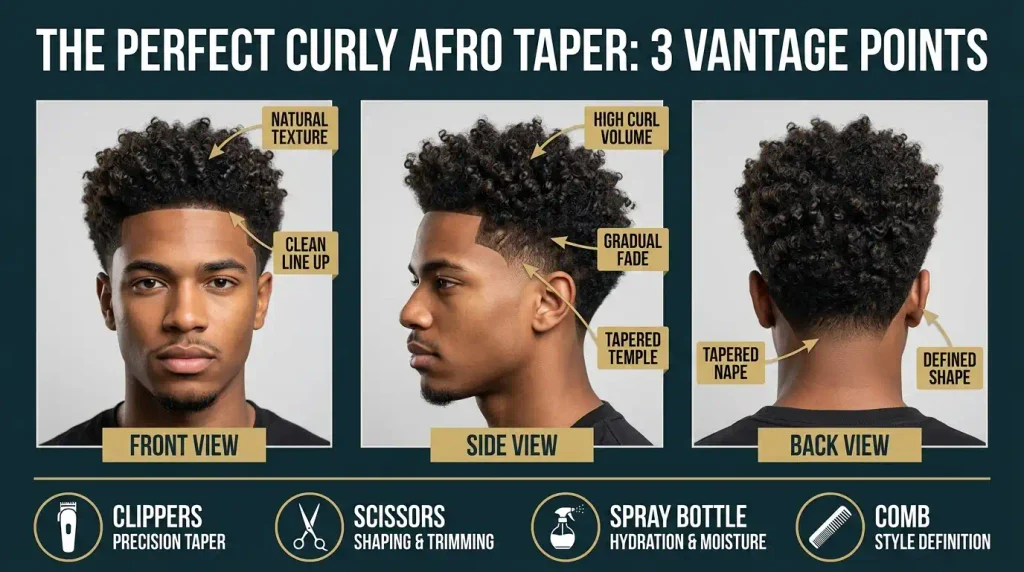
11. Curly Afro Taper
Let the afro remain fuller on top and slightly rounded at the sides. The taper should stay low enough that the natural afro shape remains visible. This creates a strong contrast without turning the haircut into a high fade. It suits oval, square, and diamond faces. A moisturizing cream followed by a light styling butter can help maintain softness. Avoid cutting too much from the sides if your goal is a fuller afro silhouette.
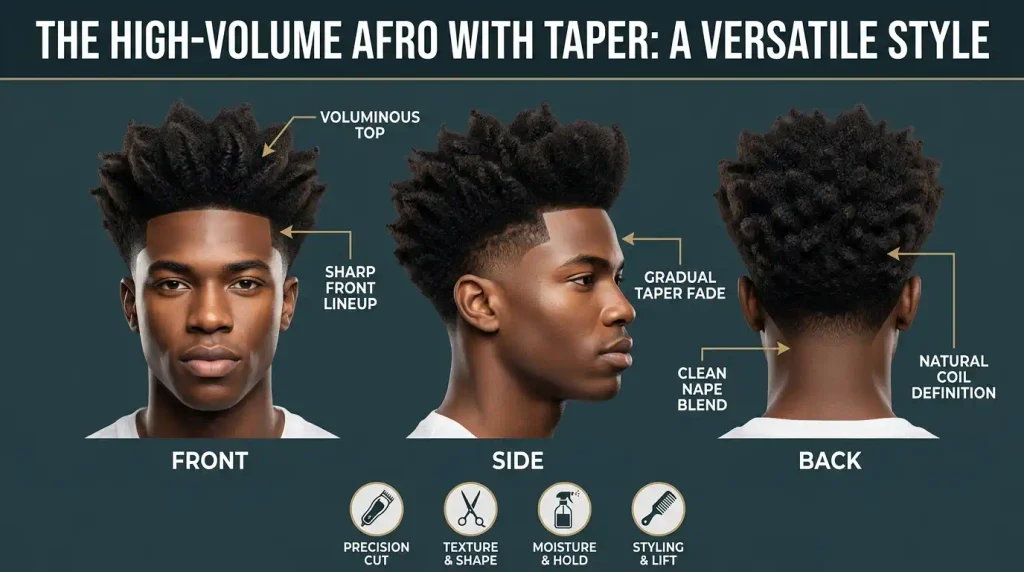
12. High-Volume Afro With Taper
More height gives this style a powerful silhouette. The barber should preserve the upper volume while tightening only the lower sideburn and neckline areas. This works best when the hair has strong density and coils that hold their shape. Oval and rectangular faces can benefit from the added width and height. Use a leave-in conditioner and a pick to shape the afro. The taper should remain secondary to the natural top.
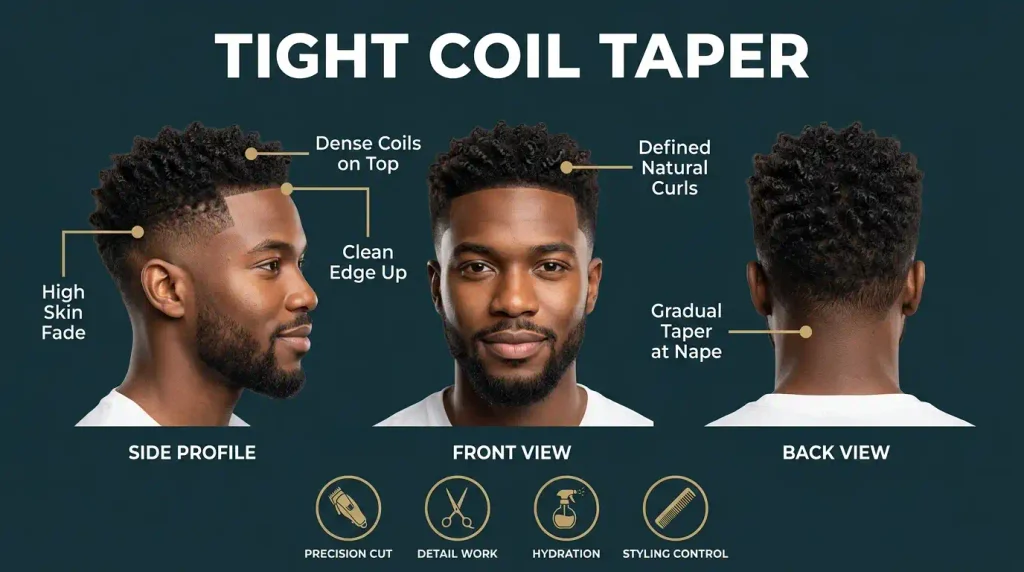
13. Tight Coil Taper
Tight coils can create a highly textured top even when the overall haircut is short. A controlled low taper through #2, #1, and the trimmer creates a clean perimeter. This style suits men who want low daily styling effort. Round and oval faces often work particularly well with a compact top. Use a moisturizing leave-in and curl-enhancing cream. Avoid excessive manipulation, especially when the hair is dry.
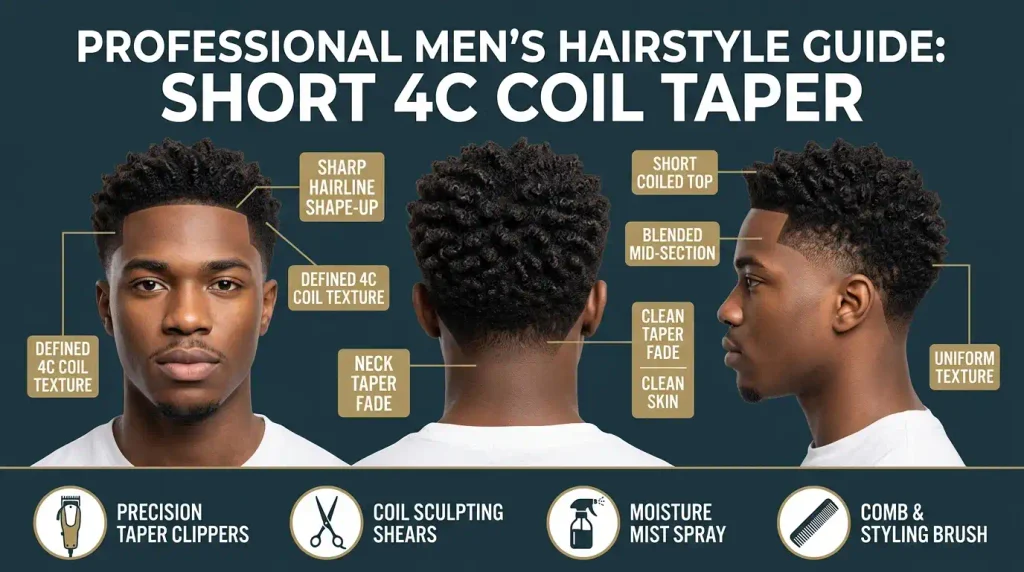
14. Short 4C Coil Taper
A short 4C coil taper focuses on shape rather than curl length. Keep enough top length for the coils to remain visible, then clean the temples and neckline with a gradual taper. Square, oval, and diamond faces can all work with this compact shape. Ask your barber to respect your natural hairline instead of forcing an artificial edge. A leave-in conditioner or curl cream can improve softness and definition.
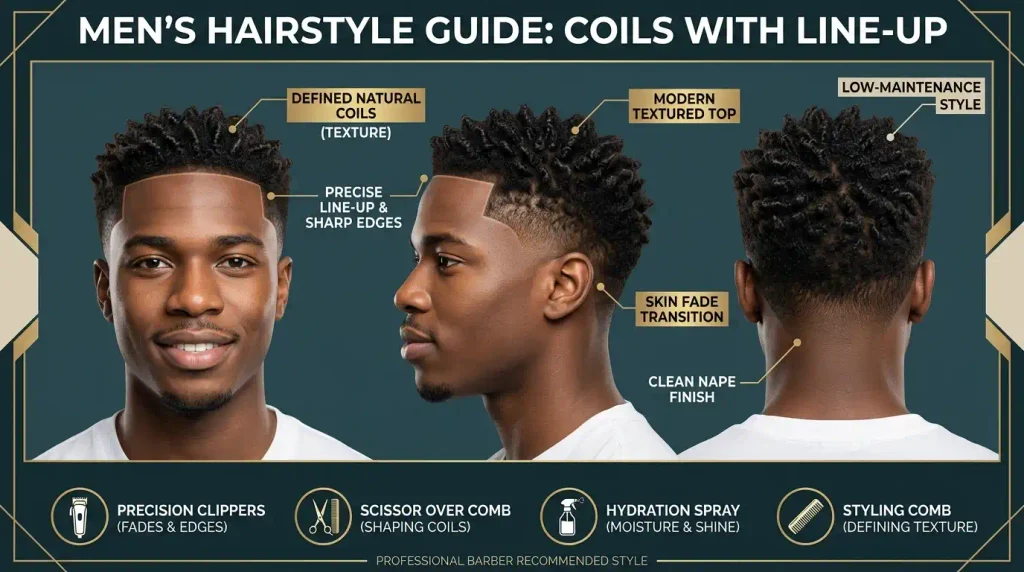
15. Coils With Line-Up
Add a clean line-up to a short coil top for a more polished finish. The barber should create the edge along the natural hairline while tapering the temples into the sideburn area. This combination works especially well with dense 4A–4C texture. Oval and square faces are easy matches. Keep styling simple with a curl cream or leave-in conditioner. The line-up is the detail that makes this haircut look especially crisp.
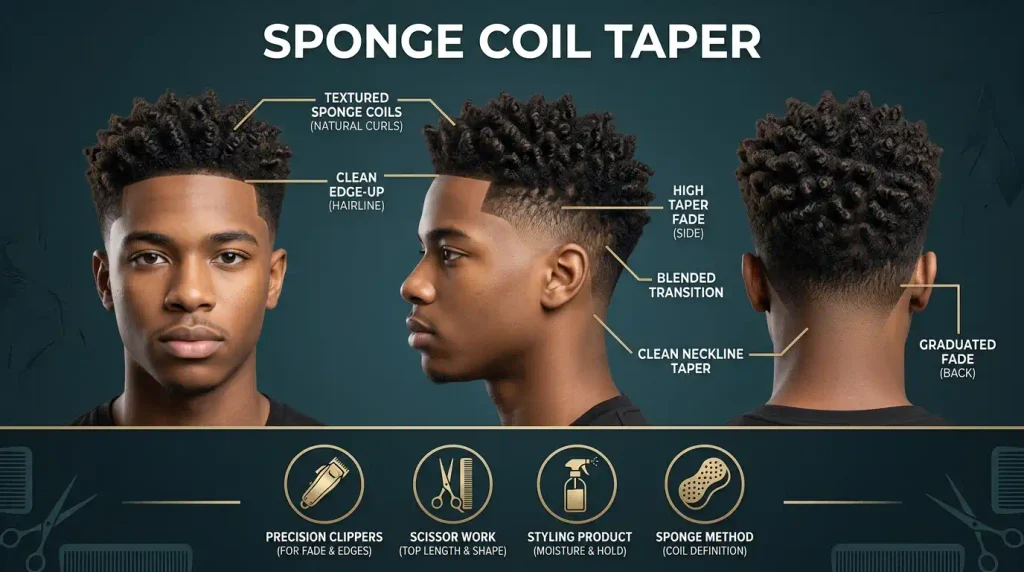
16. Sponge Coil Taper
Sponge curls create small, repeated coils across the top while the low taper frames the sides. This is a strong choice for short to medium afro-textured hair. A curl sponge should be used gently on damp, conditioned hair rather than aggressively rubbing dry hair. Round and oval faces usually suit the textured volume. Ask for a low taper with the sides left full enough to connect naturally into the sponge curls.
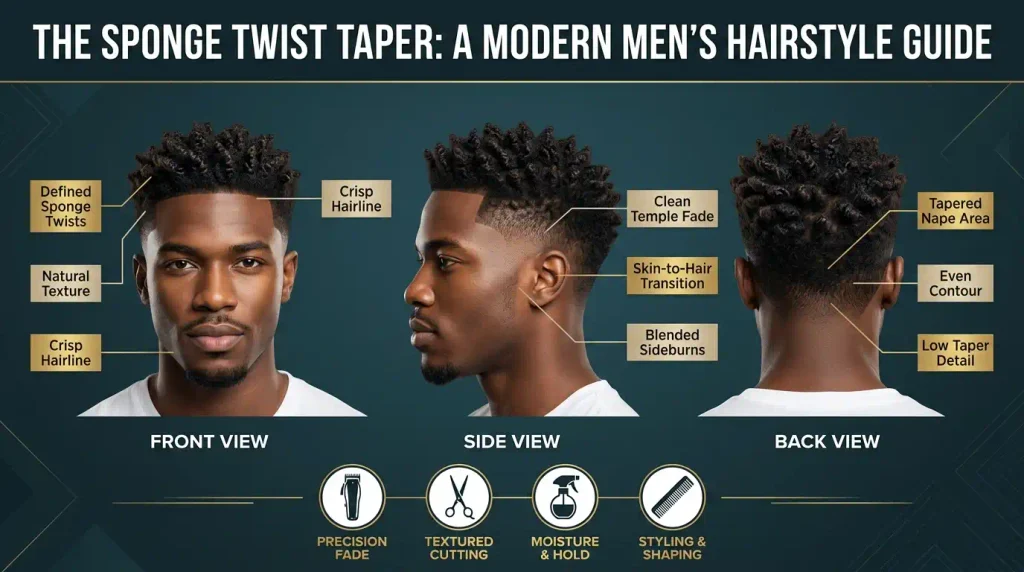
17. Sponge Twist Taper
Instead of tight individual coils, use a sponge to create slightly larger twists or textured sections. The taper stays low around the ears and neckline, keeping the upper texture dominant. This works well with 4A–4B hair and can suit round, oval, or square faces. Apply a light curl or twist cream before styling. Avoid excessive pressure with the sponge because rough manipulation can create unnecessary tangling and breakage.
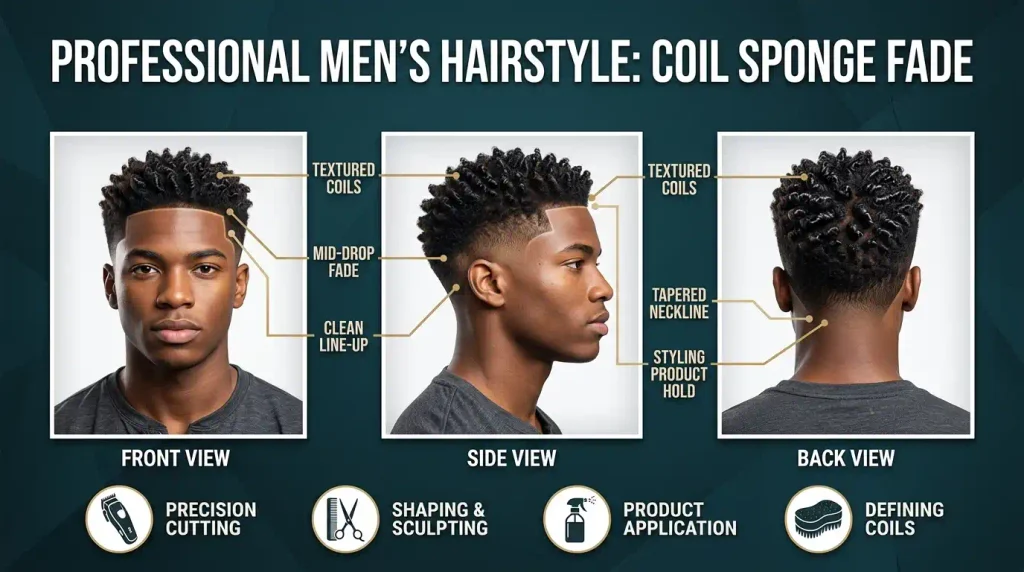
18. Coil Sponge Fade
A tighter fade version gives the sponge texture more visual contrast. The barber can move from #2 into #1 and finish close around the lowest edge. This option suits men who prefer a cleaner perimeter with strong texture above. Oval and round faces work particularly well. Use a light styling cream and sponge in one consistent direction. Keep the top balanced rather than creating a very high crown unless your face shape supports it.
Line-Up, Beard and Detail Styles
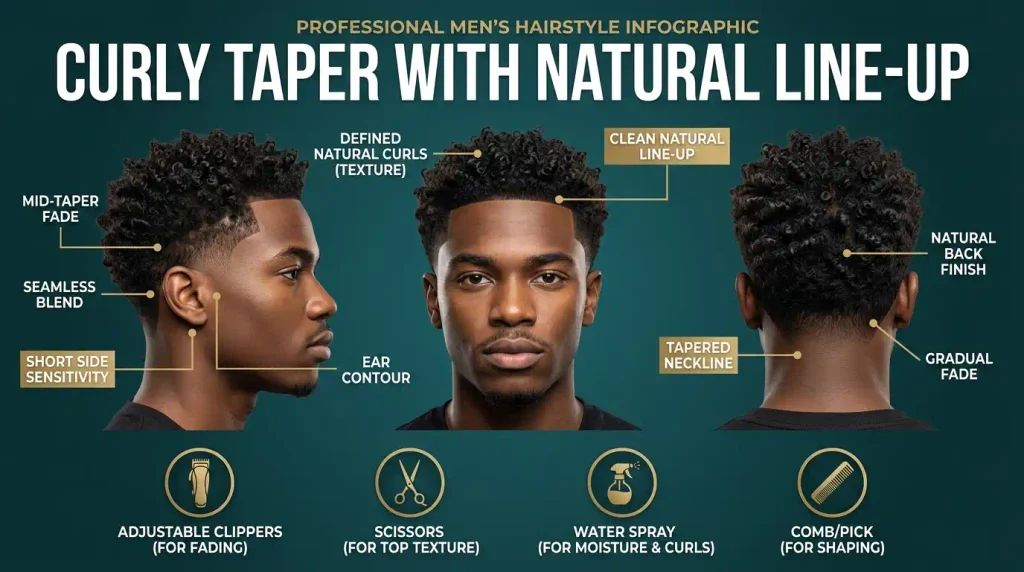
19. Curly Taper With Natural Line-Up
A natural line-up follows your existing hairline instead of creating exaggerated corners. This is often the safest option when preserving the front hairline is important. Keep the taper low and let the curls provide most of the visual interest. It works with 3C through 4C textures and suits most face shapes. A light curl cream keeps the top soft, while the clean front edge supplies the polished finish.
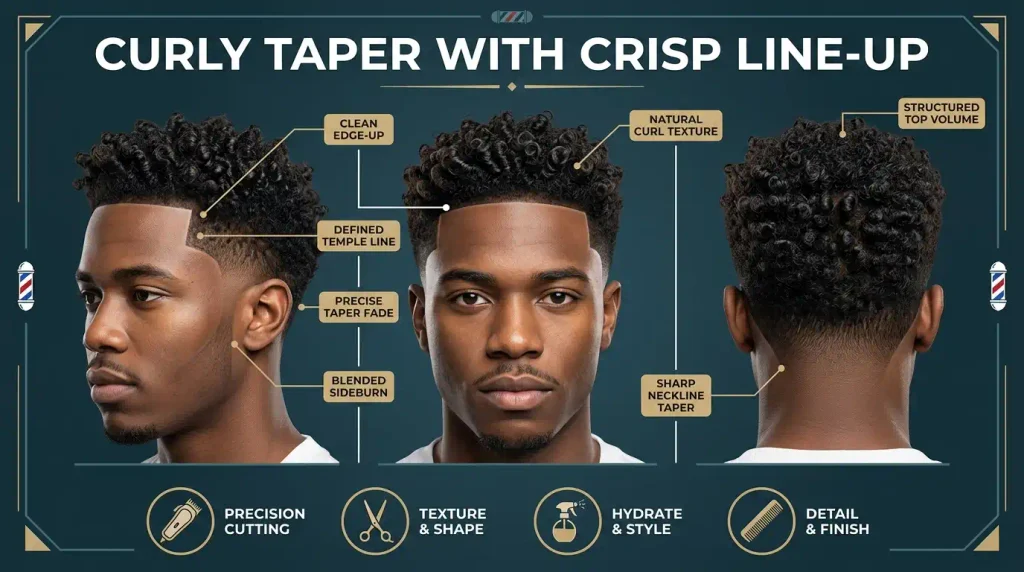
20. Curly Taper With Crisp Line-Up
For a stronger barbered appearance, use a crisp line-up along the forehead and temples. The taper should blend smoothly into the line rather than creating an isolated block. This style looks particularly good with short curls and dense coils. Square and oval faces are natural matches. Ask your barber to avoid pushing the hairline backward simply to make the edge look straighter. Use curl cream on the top and keep the front clean.
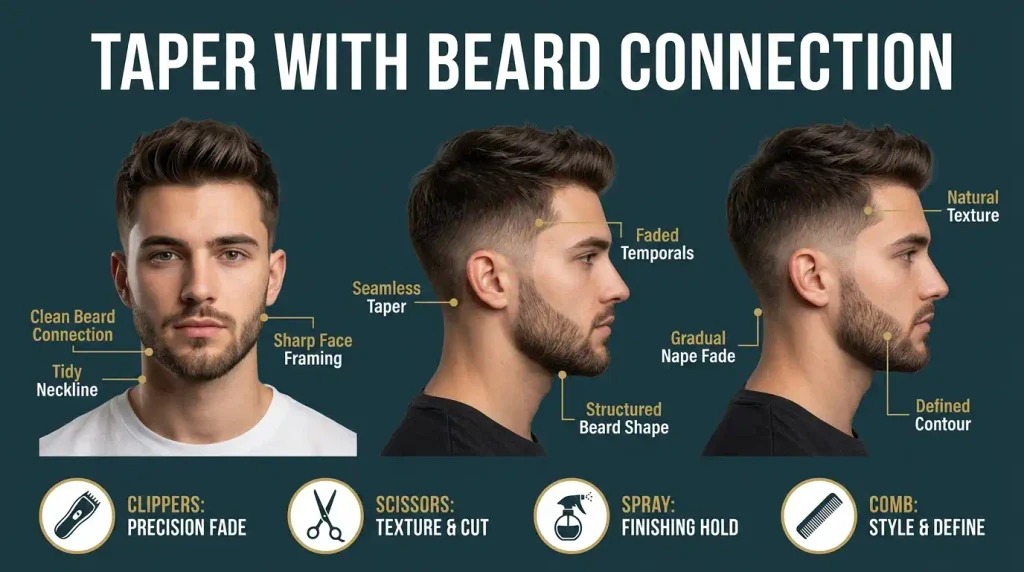
21. Taper With Beard Connection
A beard-connected taper creates a continuous transition from the temple into facial hair. The barber should consider the beard density before deciding how tight the sideburn area should become. This style works with short stubble through fuller beards. Oval and square faces can handle stronger beard contrast. Use beard balm or oil separately from your curl product. The hair taper and beard should look like one planned shape, not two unrelated fades.
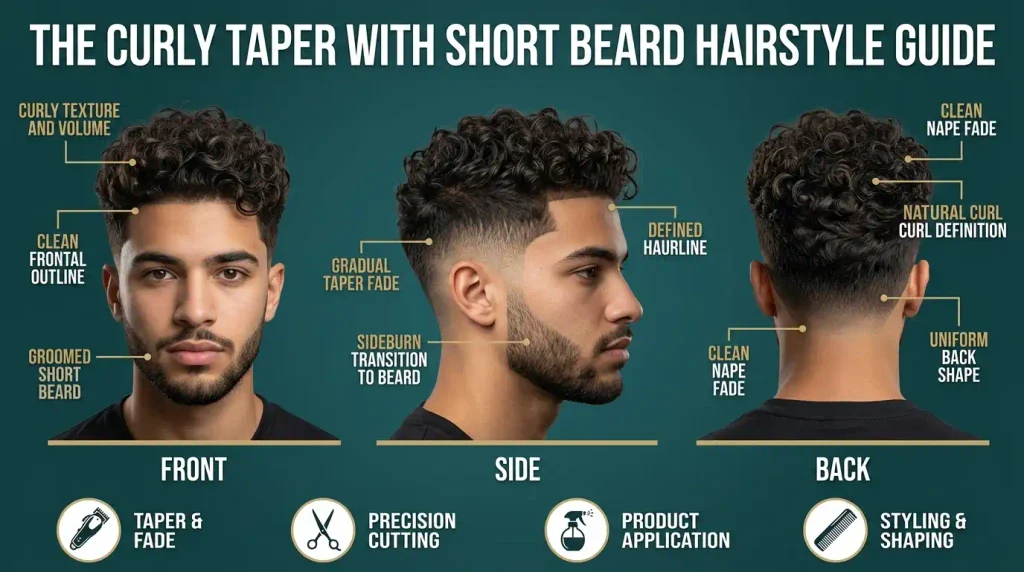
22. Curly Taper With Short Beard
A short beard keeps the haircut balanced without dominating the curls. Ask for a low taper that blends naturally into the sideburn and beard area. This works especially well with medium-density curly tops. Oval, round, and square faces can all suit the combination. Use curl cream on the hair and a light beard conditioner on facial hair. Keep the beard neckline clean because it affects the overall sharpness of the haircut.
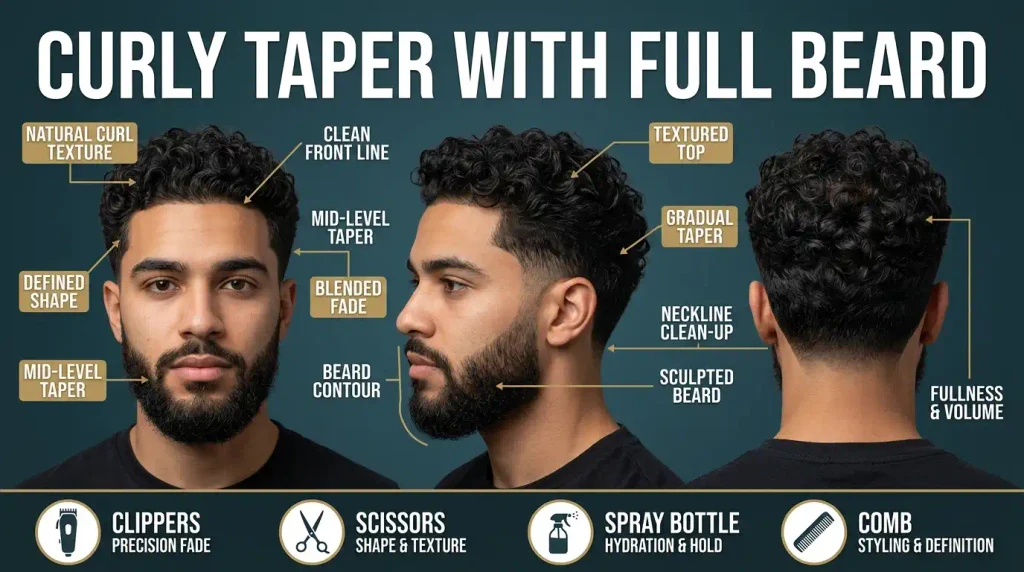
23. Curly Taper With Full Beard
A fuller beard creates a stronger lower frame around the face. The barber should avoid making the temple fade too high, or the connection between hair and beard can look disconnected. This combination suits oval and rectangular faces particularly well. Keep the curls moderately full to balance the beard. Use a moisturizing curl product on top and beard balm below. Regular shaping helps the haircut remain intentional as both areas grow.
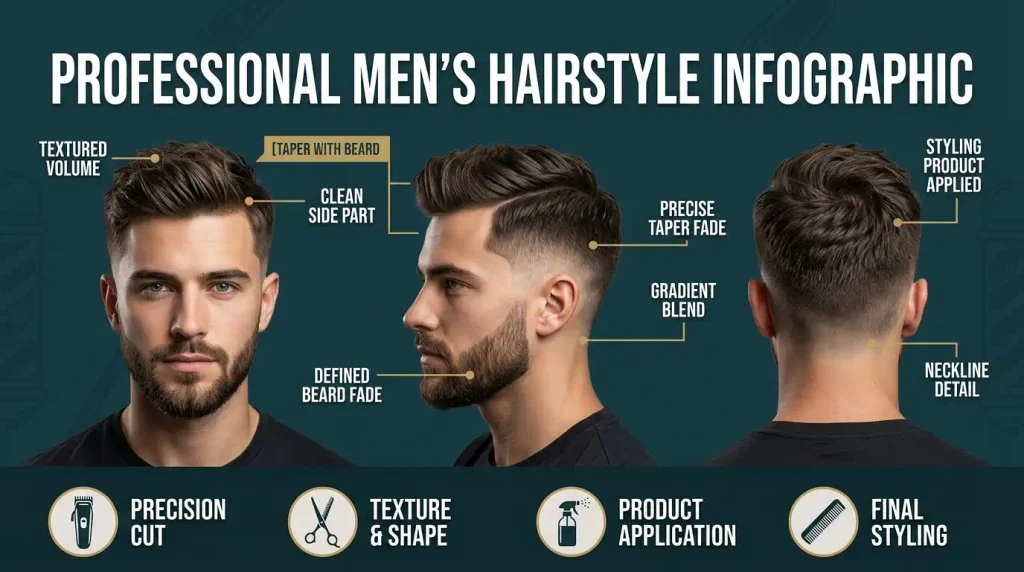
24. Taper With Beard Fade
A beard fade can mirror the graduation used in the haircut. The temple area starts tight, then the beard gradually gains length toward the jaw. This creates a clean visual flow. It suits men with medium or thick facial hair. Square and diamond faces can benefit from the structured sides. Ask your barber to coordinate the hair taper and beard fade instead of treating them as separate services.
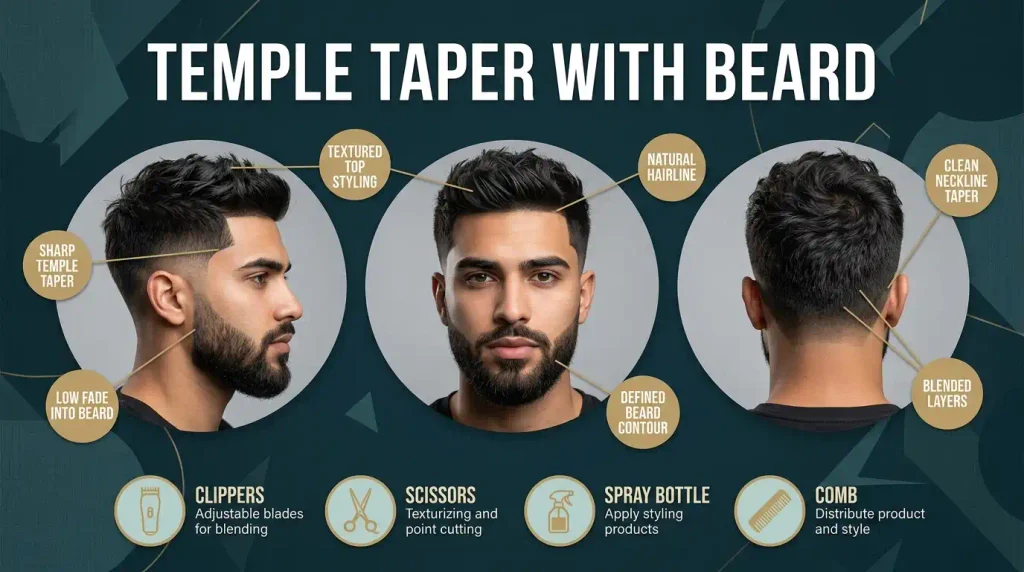
25. Temple Taper With Beard
This is a softer option for men who want their beard to remain full. Only the temple and immediate sideburn area receive strong tapering, while most of the beard stays intact. The result is less dramatic than a full hair-and-beard fade. It works well with dense curls and almost any face shape. Use a curl cream on top and beard conditioner below. The contrast comes from the clean temple rather than shaved sides.
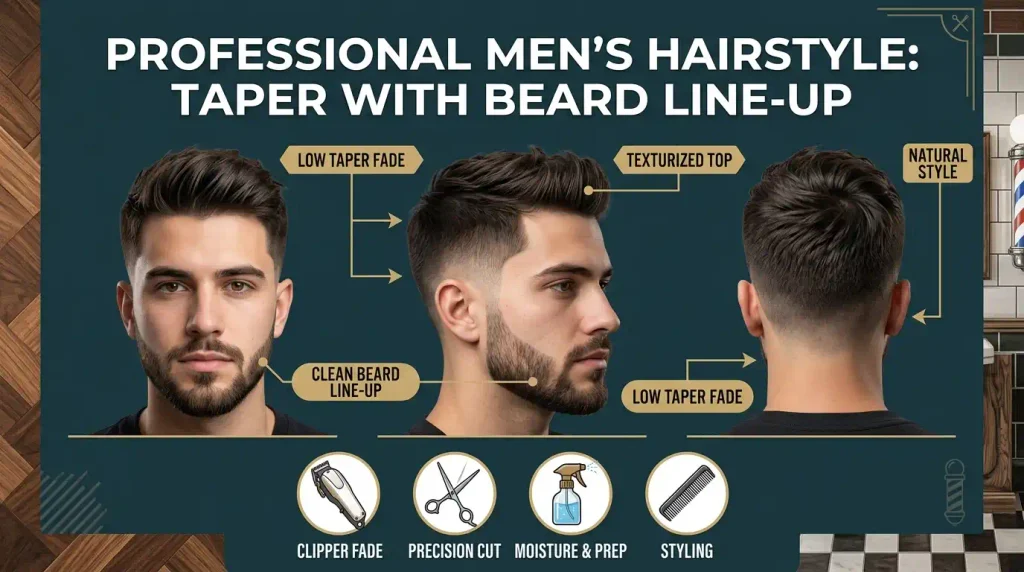
26. Taper With Beard Line-Up
Pair a natural curly top with a carefully shaped beard line. The haircut itself stays relatively simple, allowing the beard outline to provide extra definition. This works well for square, oval, and diamond faces. Ask the barber to keep both hairline and beard line natural rather than excessively squared. A curl cream can maintain the top, while beard balm helps keep facial hair controlled.
Fringe, Front and Shape Variations
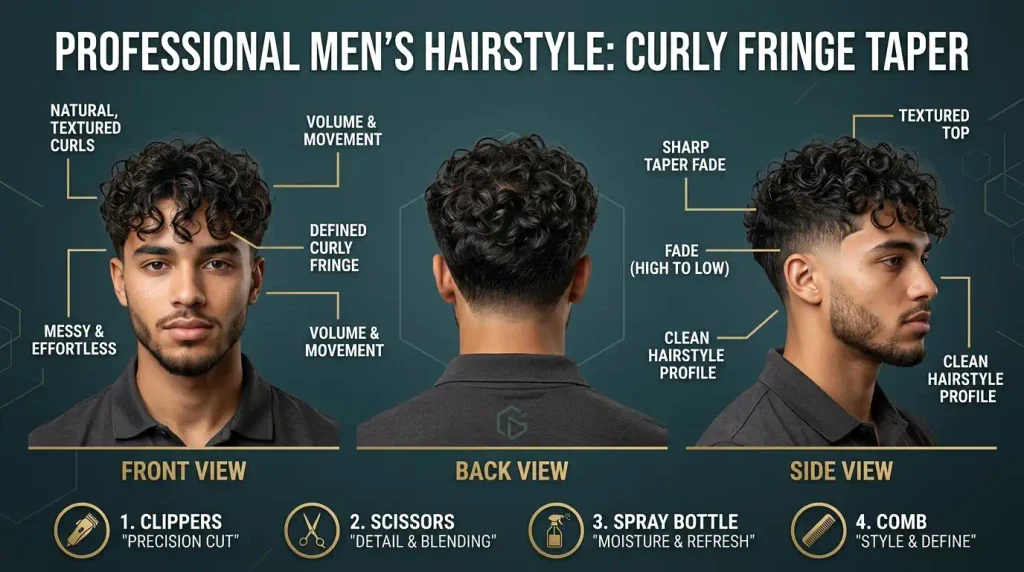
27. Curly Fringe Taper
Let the front curls fall toward the forehead while the taper keeps the sides clean. The fringe can be short and textured or longer and more relaxed depending on curl shrinkage. This option is useful for men who want less exposed forehead. Round and oval faces often work well with a controlled fringe. Use curl cream and finger-shape the front. Avoid brushing the fringe once it has dried.
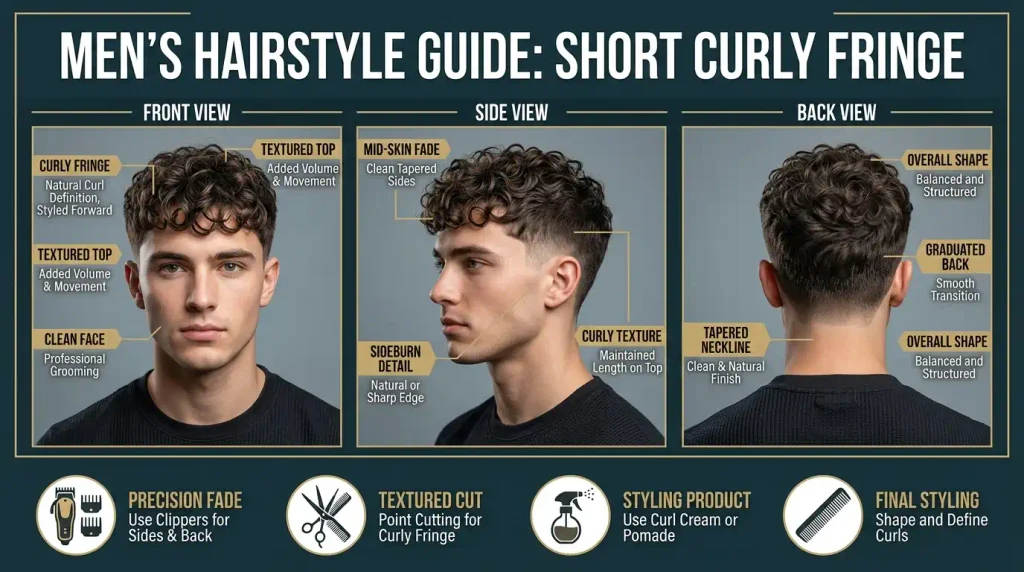
28. Short Curly Fringe
A short fringe sits close to the forehead and creates a compact, modern silhouette. Keep the taper low so the front remains the focus. This is a practical option for dense curls that naturally spring upward. Oval and longer face shapes can benefit from the reduced forehead exposure. Use a small amount of curl cream and let the texture form naturally. Point cutting can help the barber prevent the fringe from looking too blunt.
29. Textured Curly Fringe
Add point cutting through the front to create separated curl movement instead of a solid fringe. The taper remains low and subtle around the sides. This works especially well for 3C–4A curls with enough length to move forward. Oval and diamond faces are good matches. A lightweight styling cream gives enough control without flattening the curl pattern. Ask the barber to preserve individual curl groups rather than thinning the entire front.
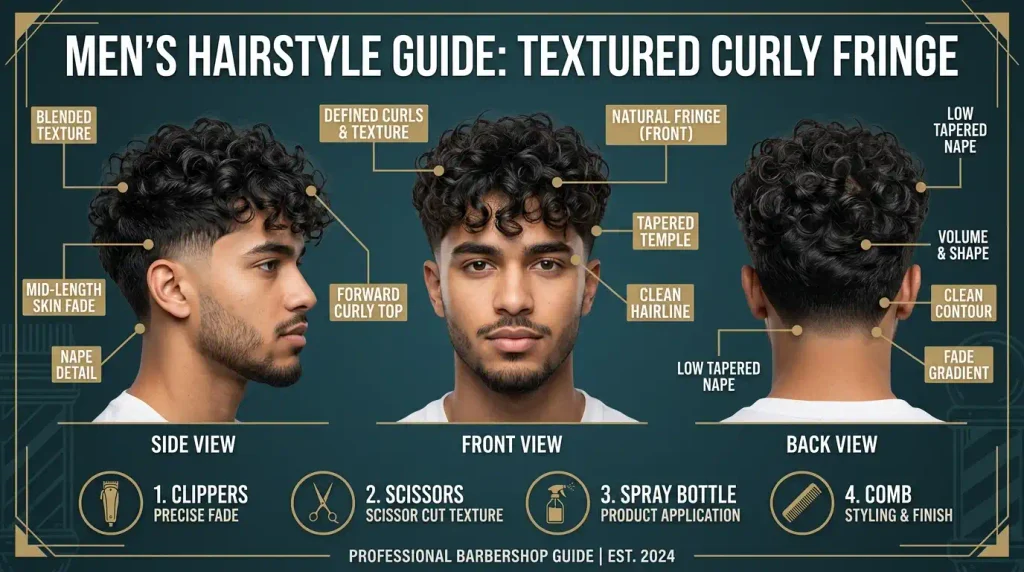
30. Curly Forward Top
Instead of a defined fringe, direct the entire top forward for a fuller front profile. The taper cleans the lower sides while the upper curls create the shape. This works well for medium-length curls and dense coils. Round faces can benefit from some vertical lift rather than excessive width. Use curl cream on damp hair and shape forward with your fingers. Keep the taper low to preserve the strong textured silhouette.
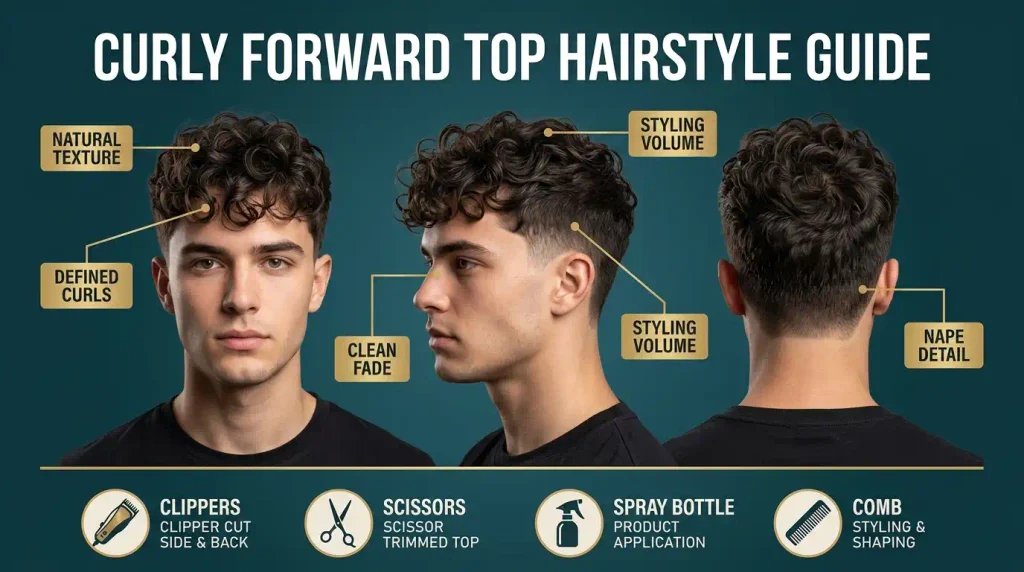
31. Curly Quiff Taper
A curly quiff adds controlled height at the front while the low taper keeps the sides neat. Leave more length at the front than at the crown so the hair can lift naturally. Oval and rectangular faces often suit this shape. Use curl cream followed by a small amount of lightweight styling product. A diffuser can help preserve the curl pattern while adding lift. Avoid heavy wax that can collapse the curls.
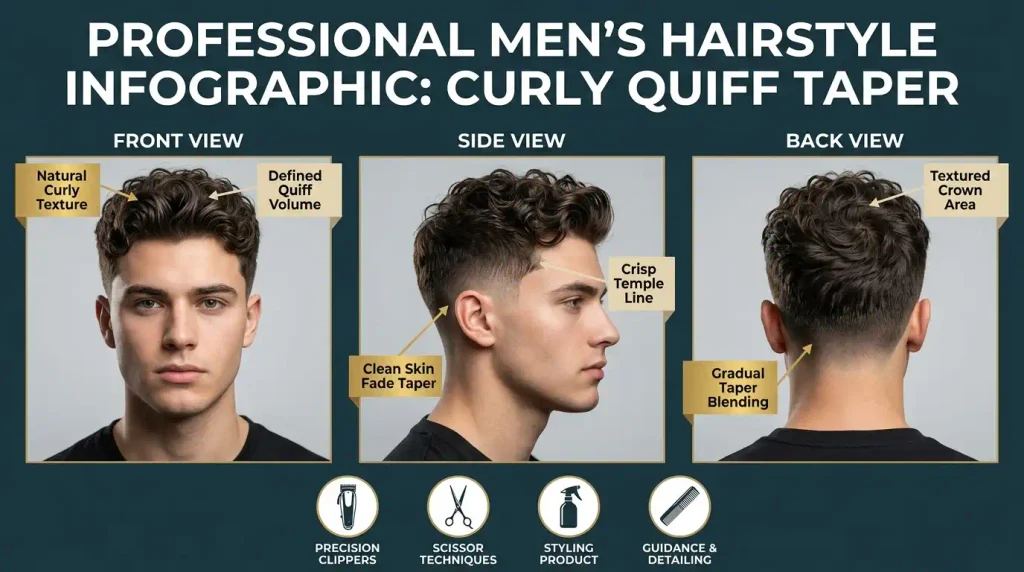
32. Curly Top With Side Sweep
Sweep the curls slightly to one side rather than creating a hard part. The result feels more relaxed than a traditional side-part haircut. It suits medium-density curls with natural directional growth. Oval and square faces are particularly easy matches. Apply styling cream to damp hair and guide the front with your fingers. Ask your barber to keep enough top length for the curls to move instead of cutting them into a rigid shape.
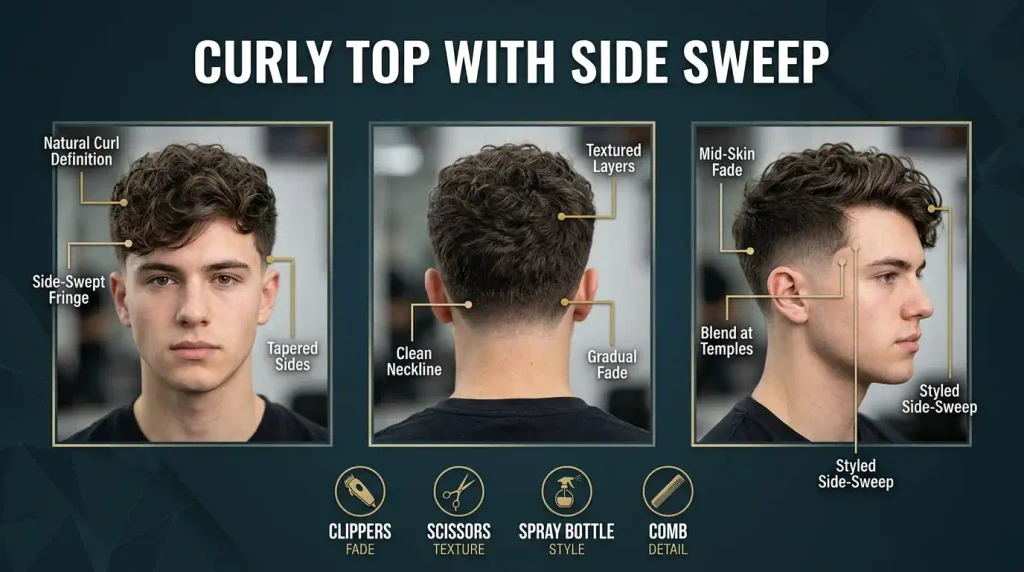
33. Curly Side Part Taper
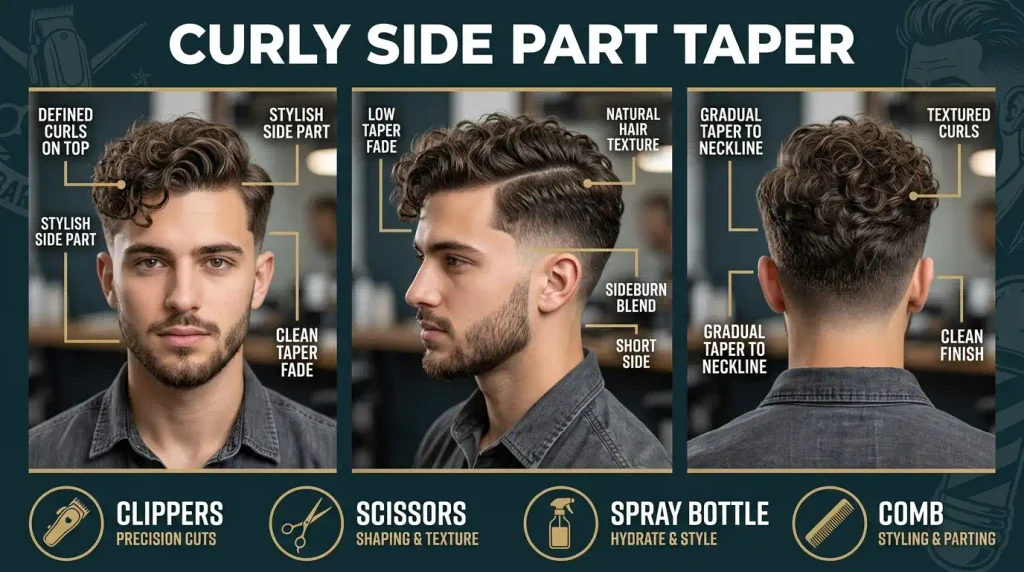
A defined side part creates structure within a curly top. The barber can establish the part naturally or add a subtle shaved line. Keep the taper low so the part remains the main detail. This works especially well with 3C–4A curls. Oval and square faces suit the traditional proportions. Use a light pomade or curl cream near the part, but avoid coating the entire top with heavy product.
34. Curly Comb-Over Taper
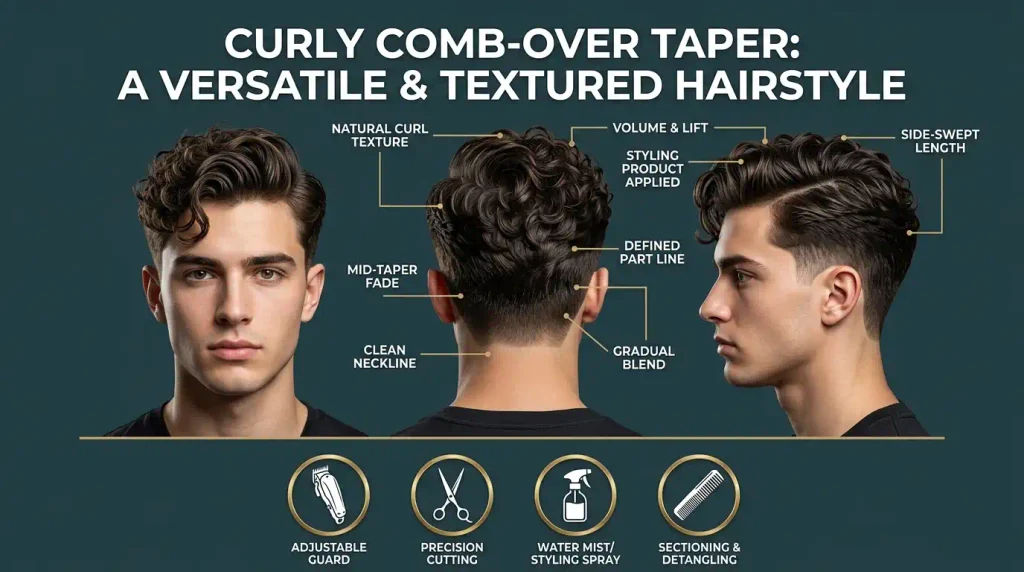
This variation uses longer curls on one side and a controlled sweep across the top. It is more polished than a completely natural curl shape. The taper can stay around #2 and #1 before reaching the close edge. Oval and rectangular faces often benefit from the side movement. Use a light cream with flexible hold. A comb should guide the direction while fingers preserve the natural curl texture.
35. Curly Mohawk Taper
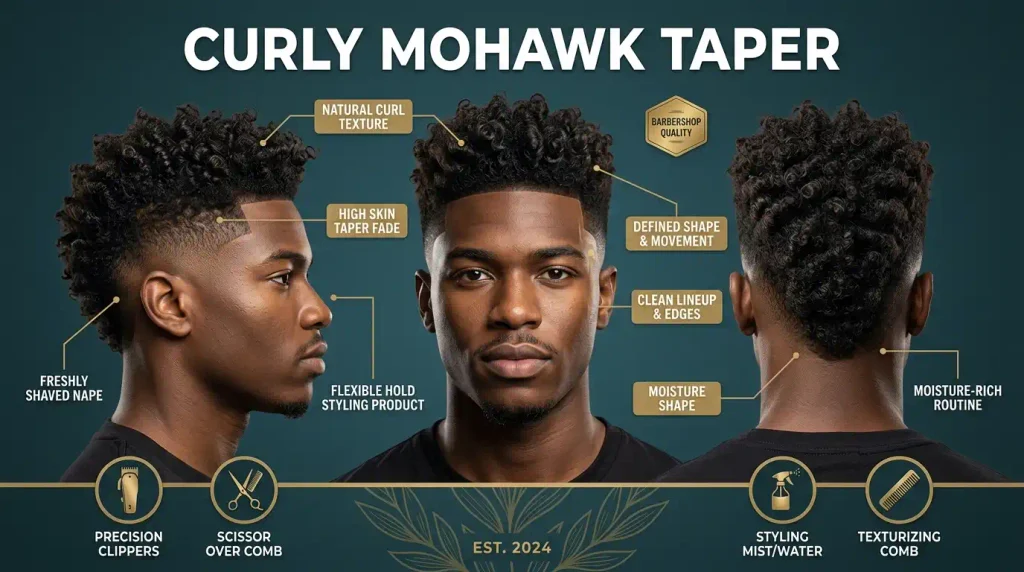
Keep the central curly section longer while reducing the sides with a low taper-inspired shape. The result is more expressive than a classic taper while remaining wearable. Dense curls and coils hold this shape especially well. Diamond and round faces can work with the added central height. Use curl cream and a diffuser to enhance the center. Ask your barber to keep the transition controlled rather than taking the sides immediately to skin.
Bold Texture and Creative Styles
36. Curly Faux Hawk Taper
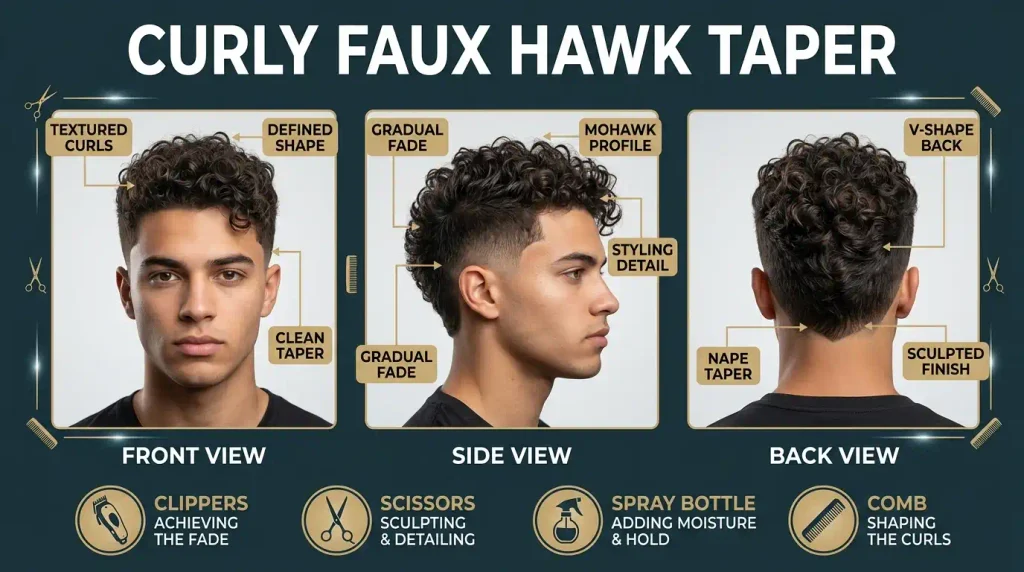
The faux hawk creates central height without fully disconnecting the sides. Keep the taper low and leave more length through the middle of the top. This works particularly well with dense 3C–4B texture. Round and square faces can benefit from the vertical shape. Apply curl cream, then use your fingers to push the center upward. A light styling clay can provide extra hold if the curls are difficult to control.
37. Curly Blowout Taper
A blowout version expands the curls outward and upward while the taper keeps the lower perimeter clean. It works best when the hair has enough length and density to create volume. Oval, square, and diamond faces can carry the shape well. Use a diffuser or controlled blow-drying technique rather than blasting the curls with high heat. Curl cream helps maintain definition while allowing the blowout to remain soft.
38. Rounded Curly Blowout
The rounded blowout focuses on a smooth, balanced silhouette rather than extreme height. The taper stays close to the ears and neckline, allowing the upper curls to form the main shape. This is particularly useful for dense coils that naturally expand. Oval and rectangular faces suit the rounded profile. Use leave-in conditioner followed by curl cream. Ask your barber to shape the top while considering how much the curls shrink when dry.
39. Curly High-Top Taper
Leave the top significantly longer than the lower sides to create a high-top effect. The taper should remain low so the sides do not compete with the elevated curls. This works best with dense coils and strong natural volume. Oval and diamond faces are good candidates. A moisturizing cream keeps the top manageable. Regular shaping is important because uneven growth can quickly change the high-top silhouette.
40. Curly Flat-Top Taper
A curly flat-top combines controlled height with a more squared upper shape. The barber uses clipper work and scissors to establish the top plane while preserving enough texture to show the curls. It suits dense hair and stronger face shapes such as square or oval. Use a lightweight cream to control loose strands. This is a shape-driven cut, so choose a barber comfortable with both textured hair and precise geometry.
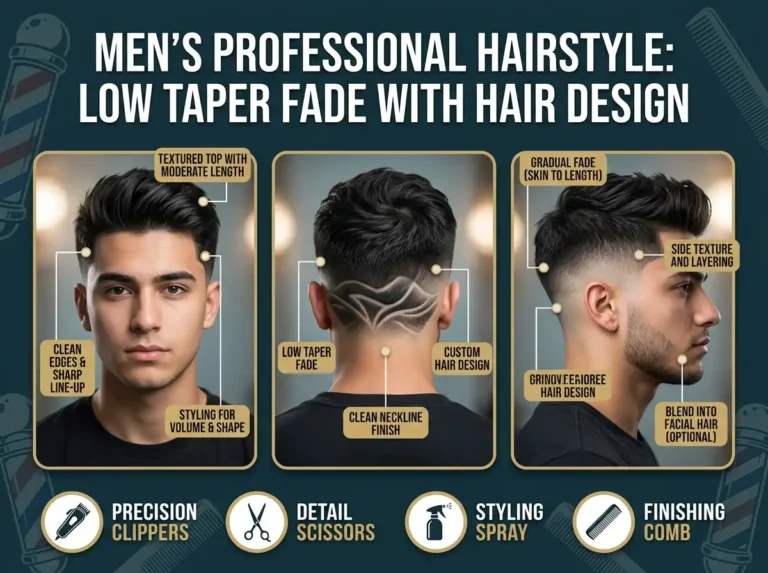
41. Curly Design Taper
Add a simple shaved design near one temple or behind the ear while keeping the main taper low. A single line can provide enough detail without overwhelming the curls. This works with short to medium curly tops. Round and oval faces can carry the extra visual detail easily. Keep styling simple with curl cream. Because designs grow out quickly, expect to refresh the line more often than the main haircut.
42. Double-Line Taper
Two clean shaved lines create more visual contrast around the taper area. Keep the lines short and placed where they complement the natural temple shape. This style works best with short curls or sponge texture because the design remains visible. Square and oval faces are strong matches. Use a light curl product on top. Tell the barber exactly where you want the lines so they do not interfere with your natural hairline.
43. Subtle Blonde Curl Taper
Lightened curls can create contrast without changing the haircut itself. Keep the taper natural and use subtle color mainly through selected curls on top. This works best when the hair is healthy enough for chemical processing. Oval and square faces suit the balanced shape. Use products designed for color-treated curls and prioritize conditioning. Color should be handled by a qualified professional because excessive lightening can weaken textured hair.
44. Honey-Brown Curl Taper
Warm brown highlights give dense curls extra depth while keeping the overall look understated. The taper can remain classic, allowing the color to become the main variation. This works particularly well on medium to longer curls. Oval, diamond, and square faces can all carry it. Use moisturizing and color-safe products after processing. Ask the colorist to place highlights selectively rather than applying an even block of color.
45. Curly Taper With Part Design
Combine a traditional side part with a short design line for extra definition. The taper remains low while the curls stay full. This is a good choice when you want something creative but still recognizable as a classic haircut. Oval and square faces work well. Use curl cream on top and keep the part clean. Because the design is temporary, plan a refresh when the line begins losing its shape.
Twists, Protective Texture and Modern Combinations
46. Two-Strand Twist Taper
Two-strand twists create a structured texture above a clean low taper. Leave enough length for the twists to form properly, then keep the lower sides neat. This works especially well with 3C–4C textures. Oval and square faces suit the balanced shape. Use a lightweight twist product and keep the scalp moisturized. When the twists begin to loosen, remove or refresh them gently rather than pulling at the roots.
47. Short Twist Taper
Short twists provide texture without the visual weight of longer twists. The barber should shape the top carefully and keep the taper concentrated around the lower perimeter. This works well for men who want a textured protective-style option without a large amount of length. Round and oval faces can suit the compact shape. Use a light twist cream and avoid excessive daily manipulation.
48. Twist-Out Taper
A twist-out leaves the curls or coils separated after twists are removed. The result has more volume and irregular texture than the original twists. Keep the taper low so the top remains the focus. This works well for 4A–4C hair and suits oval, square, and diamond faces. Use leave-in conditioner and a curl cream to define the released texture. Avoid brushing the finished twist-out dry.
49. Braided Top With Low Taper
Short braids or cornrows can be combined with a clean taper around the temples and neckline. The top pattern becomes the main design while the taper gives the haircut a finished border. This works with medium to longer textured hair. Face shape matters less because the braid direction can be adjusted. Use a light scalp moisturizer and avoid overly tight braids that place unnecessary tension on the hairline.
50. Locs With Low Taper
Short or medium locs can be paired with a low taper to clean the temples, sideburns, and nape while keeping the locs intact. The taper should not climb too high into the loc area. This works well with oval, square, and diamond faces. Keep locs moisturized according to your normal routine and ask the barber to protect their shape. The goal is a clean perimeter without sacrificing the identity of the loc style.
Master Barber Phrasing: How to Ask for the Cut
Use this copy-paste script:
“I want a low taper around my temples, sideburns, and neckline. Keep the taper low and leave the upper sides and back full enough to blend into my natural curls. Start the blend around #3 or #2, work gradually through #1, and finish the lowest edge close without pushing the taper too high. Keep my natural hairline and shape the curls based on how they sit when dry.”
Then add one of these:
- For coils: “Keep enough length on top for my coils to show. I want the taper to frame them, not remove the texture.”
- For a line-up: “Clean my natural hairline, but do not push the corners back.”
- For a fringe: “Leave the front longer so my curls can fall forward.”
- For a beard: “Blend the taper naturally into my beard and keep the transition smooth.”
If you want a skin finish, say so clearly. A true skin fade and a shadow taper are not the same result.
This Style vs. Other Taper and Fade Options
| Haircut | Fade/Taper Height | Typical Guard Range | Best Face Shapes | Main Styling Difference |
| Low taper | Very low | #3 to #0/close | Most | Keeps maximum side fullness |
| Low fade | Low | #2 to #0 | Oval, square | More visible fading |
| Mid fade | Medium | #2 to #0 | Oval, square | Stronger side contrast |
| High fade | High | #1 to #0 | Oval, diamond | Removes more side volume |
| Low skin fade | Low | #2 to skin | Oval, square | Strong skin-to-curl contrast |
| Temple fade | Temple-focused | #2 to close | Round, oval | Frames the forehead |
| Burst fade | Around ear | #2 to close | Oval, diamond | Curved, dramatic shape |
| Taper with line-up | Low | #3 to close | Most | Sharp hairline emphasis |
Why This Style Works for Black Curly Hair
The biggest advantage is control without sacrificing texture. A low taper removes visual bulk around the lowest parts of the haircut while allowing curls, coils, twists, or an afro shape to remain dominant.
It also gives you flexibility. The same basic taper can support a short coil top, sponge curls, a curly fringe, afro volume, twists, a beard, or a more formal side-swept finish.
For dense 4A–4C hair, the barber should pay attention to shrinkage. Hair that looks short when dry can have much more actual length when stretched. Cutting purely by appearance without understanding shrinkage can change the final shape.
Best Hair Types and Face Shapes
3C and 4A Curls
These patterns offer enough definition to create visible individual curls. Medium length gives the most styling flexibility, while shorter versions need less daily work.
4B and 4C Coils
Short tapers, sponge coils, mini afros, twists, and compact textured tops are strong options. Moisture and gentle handling matter more than heavy styling.
Oval Face
Almost every variation can work. You can choose the amount of top height based mainly on personal preference.
Round Face
Moderate height and controlled side width can create a longer-looking profile. Avoid adding unnecessary bulk directly at the widest part of the head.
Square Face
A clean taper and textured top work naturally with a strong jaw. A line-up can emphasize the angular structure.
Diamond Face
A little fullness through the top and controlled sides can balance the cheekbones. Curly fringe and textured tops are useful options.
Long or Rectangular Face
Avoid excessive height if you do not want to make the face appear longer. A fuller curly top with moderate height can create better visual balance.
How to Style the Hair
- Start with clean, damp hair rather than soaking-wet hair.
- Apply a leave-in conditioner if your curls need extra moisture.
- Work a suitable curl cream through the top using your fingers.
- Scrunch or finger-coil sections that need more definition.
- Use a diffuser on a gentle setting if you want faster drying and added volume.
- Once dry, avoid repeatedly brushing the curls.
- Refresh flattened sections with a little water and a small amount of styling product.
- Keep the taper and line-up clean between full cuts when necessary.
Step-by-Step Barbering Tutorial
This haircut is best handled by an experienced barber, especially when working with dense coils or a precise natural hairline.
Tools Required
- Professional clipper
- Adjustable clipper lever
- #0 or close-cut blade
- #1 guard
- #2 guard
- #3 guard
- #4 guard when extra blending length is required
- Detail trimmer
- Clipper-over-comb
- Barber comb
- Hair scissors
- Point-cutting scissors or suitable texturizing tools
- Sectioning clips
- Neck duster
- Disinfectant suitable for barber tools
Cutting Process
- Assess the natural shape. Check curl pattern, density, hairline, temples, crown, and shrinkage.
- Establish the taper area. Keep the guideline low around the temples, sideburns, and neckline.
- Build the lower transition. Use the close blade or trimmer, then gradually work upward.
- Blend upward. Move through #1, #2, and #3 guards as needed instead of removing too much side bulk.
- Use clipper-over-comb. This is useful when the upper sides need controlled blending without creating a harsh fade.
- Shape the top. Use scissors and controlled point cutting where needed.
- Respect the curl pattern. Avoid aggressive thinning that can disrupt the way curls group together.
- Detail the edges. Follow the natural hairline rather than forcing artificial corners.
- Check the cut dry. Curly hair can change shape considerably as it dries and contracts.
- Finish the style. Apply the appropriate curl product and assess the final balance.
Best Styling Products and Their Chemistry
Curl Cream
Curl creams generally combine conditioning ingredients with light styling polymers. They are useful when you want definition, softness, and movement without a hard cast.
Matte Clay
Matte clay is better for shape and hold than pure curl definition. It can work for a curly quiff, forward top, or controlled textured style, but too much can make curls feel heavy.
Sea Salt Spray
Sea salt sprays add texture and grip. They can help looser curls or a blowout-style top, but textured hair that already feels dry may need conditioning support first.
Leave-In Conditioner
Leave-ins help improve softness and manageability. They are especially useful when coils feel dry or difficult to separate.
Light Gel
A light gel can provide stronger curl definition and reduce frizz. Use enough to support the pattern without creating a stiff, crunchy finish.
Styling Combination
For many curly styles, a simple combination works well: leave-in conditioner for moisture + curl cream for definition + optional light gel for hold.
Maintenance Guide
A low taper usually looks freshest when the taper is refreshed about every 2–4 weeks, depending on how quickly your hair grows and how sharp you want the edges.
If you have a line-up or shaved design, those details may need attention sooner because small amounts of growth are more visible.
The curly top does not always need to be cut every time the taper is refreshed. You can ask the barber to clean the taper while preserving the length and shape of the curls.
At home:
- Moisturize according to your hair’s needs.
- Avoid excessive dry brushing.
- Sleep with suitable hair protection if it helps preserve your texture.
- Use a wide-tooth pick or fingers for afro shapes.
- Clean styling buildup regularly.
- Do not repeatedly pull or twist dry hair.
- Protect the hairline by avoiding overly tight styles.
Common Mistakes to Avoid
Taking the Taper Too High
A taper should remain low. Taking it too high can turn the intended haircut into a much stronger fade.
Ignoring Shrinkage
Curly and coily hair can appear significantly shorter after drying. Your barber should understand how your texture contracts.
Pushing Back the Hairline
Do not sacrifice the natural hairline just to create perfectly straight corners.
Over-Thinning the Curls
Aggressive thinning can disrupt curl groups and make the top behave differently.
Using Too Much Product
Heavy product can flatten curls and create buildup. Start light and add more only when necessary.
Brushing Dry Curls
Dry brushing can break curl definition and increase frizz. Use fingers or suitable tools when the hair is damp.
Choosing a Fade Instead of a Taper
If you want to keep most of the side volume, make that clear to your barber. A low fade removes more side hair than a conservative taper.
Copying a Photo Without Considering Texture
A reference photo shows shape, but your curl pattern, density, hairline, and face shape determine how that shape will actually look on you.
Frequently Asked Questions
1. Is a low taper good for Black curly hair?
Yes. It works especially well when you want to preserve curls, coils, afro volume, twists, or other textured styles while keeping the temples, sideburns, and neckline clean.
2. What is the difference between a low fade and a low taper for curly hair?
A low taper generally concentrates the shortening around the temples, sideburns, and neckline. A low fade usually removes more hair from the lower sides and creates a more visible gradient.
3. Which of the 50 styles is easiest to maintain?
The Classic Natural Curls With Low Taper and Short Curly Taper are among the easiest. They do not depend on a complicated design or high-volume shape.
4. Is the Sponge Coil Taper good for 4B or 4C hair?
It can work well when the hair has enough length for the sponge technique and the scalp and hair are handled gently. Moisture and limited manipulation are important.
5. Which style is best if I want a line-up?
The Curly Taper With Natural Line-Up is the safer choice when you want definition without making the hairline look overly artificial. The Curly Taper With Crisp Line-Up creates a stronger finish.
6. Can I combine a curly taper with a beard?
Absolutely. The Taper With Beard Connection, Curly Taper With Short Beard, and Taper With Beard Fade all create different levels of connection between the haircut and facial hair.
7. What should I ask my barber for if I have tight coils?
Ask for a low taper that stays around the temples, sideburns, and neckline, with the top preserved. Tell the barber whether you want coils, sponge curls, an afro, twists, or another specific top shape.
8. How often should I refresh the taper?
For most men, roughly every 2–4 weeks is a practical range. A line-up or design may need earlier attention if you want it extremely sharp.
Conclusion
A good curly taper is not about removing as much hair as possible. The best result comes from balancing the natural texture on top with a controlled lower perimeter.
Whether you prefer short coils, sponge curls, a mini afro, curly fringe, twists, a beard connection, or a more creative design, the low placement gives you room to keep your natural texture visible.
Before sitting in the barber chair, choose the top shape first. Then tell your barber how low you want the taper, which guard range you prefer, whether you want a line-up, and how you want your beard or facial hair connected.
For more men’s haircut inspiration, explore our low taper in the back.
Name: Ryan Cole
Role: Lead Grooming Editor, TaperHaircutGuide.com
Bio angle: Men’s grooming/style content researcher — 4+ years covering barbering trends, hairstyling terminology, and men’s style content for US audience. Cross-checks every guide with practicing barbers before publishing.