60 Best Low Tapered Fade Haircuts & Styles Worth Getting

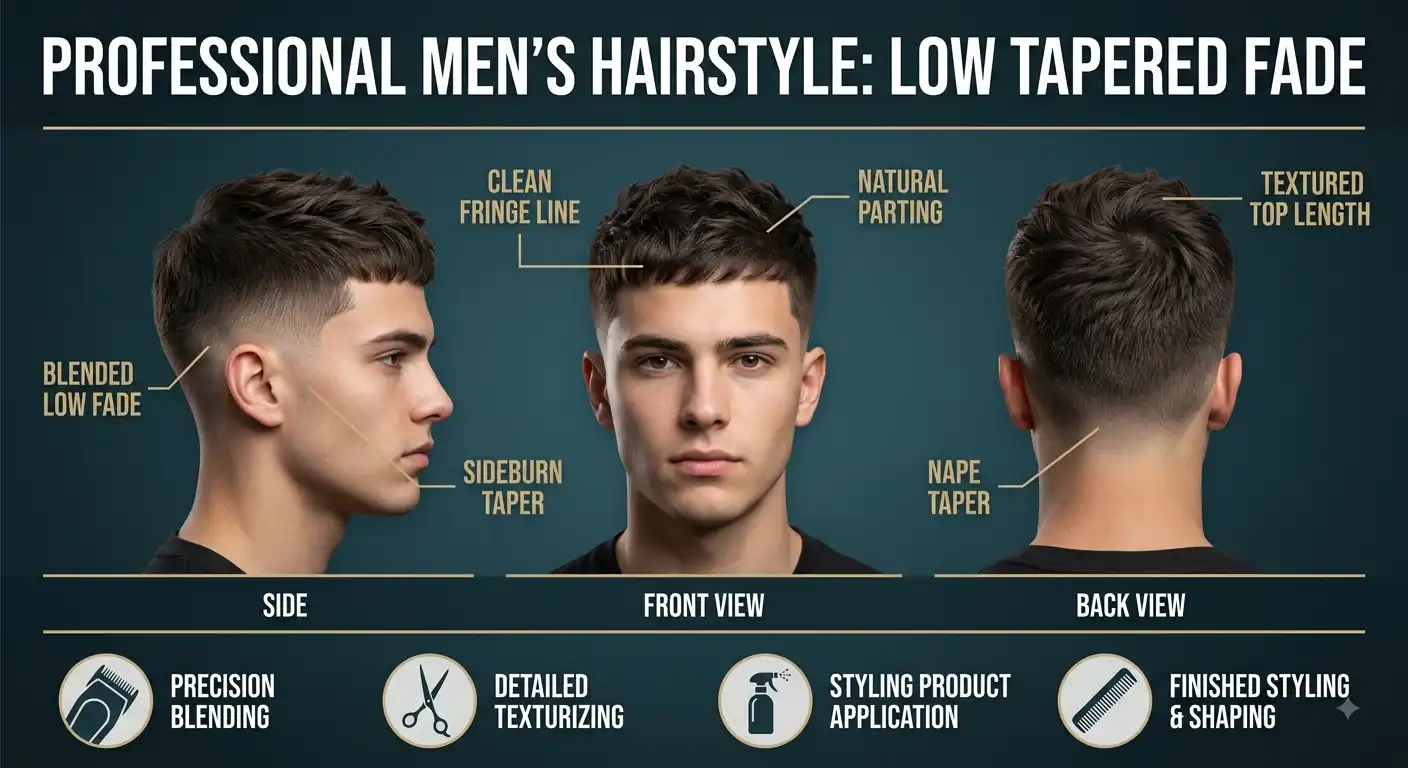
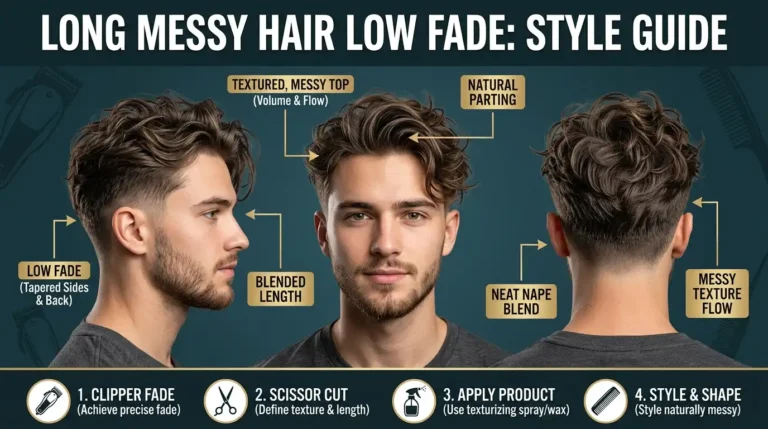
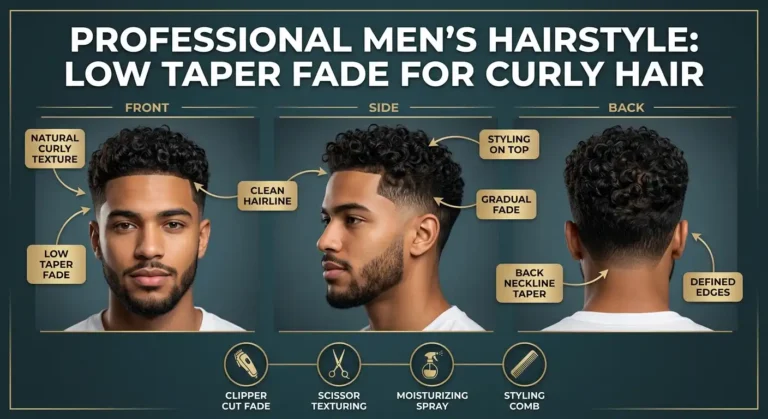
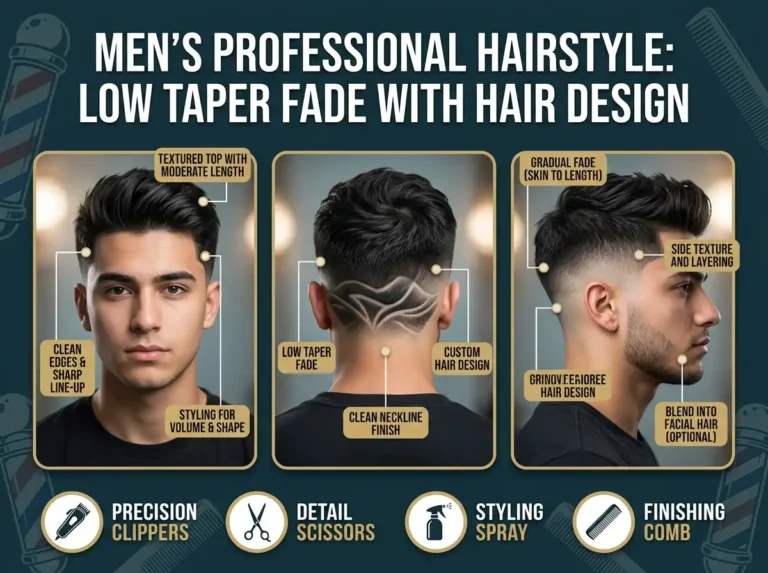
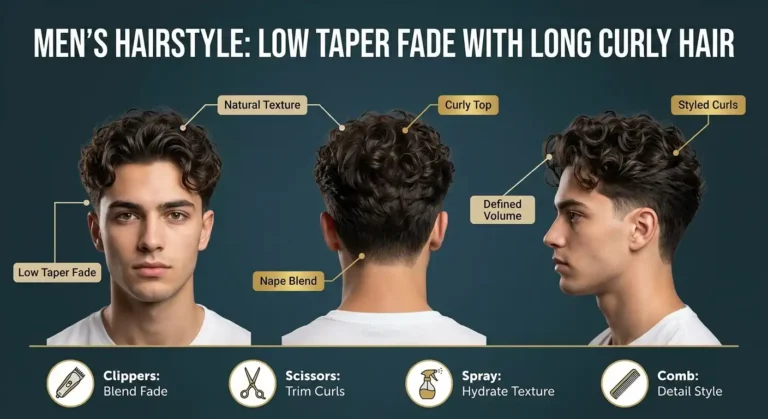
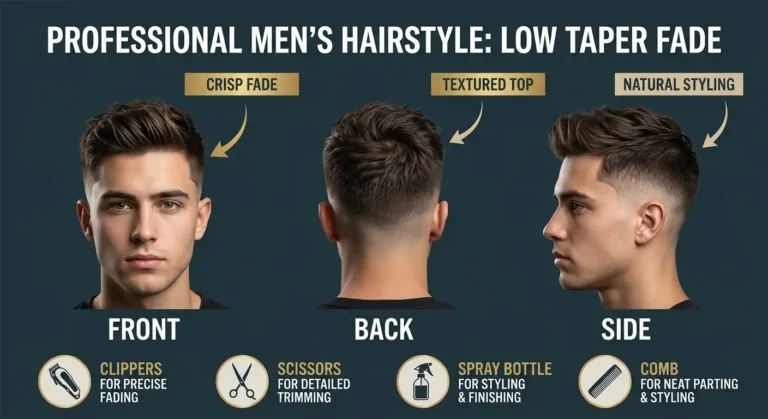
A low tapered fade is a precision grooming technique where hair length decreases gradually right at the lowest edge of the sideburns and the nape of the neck. Unlike a full high fade that circles the entire head, this refined style concentrates weight reduction solely at the perimeter.
This leaves maximum bulk intact around the ears and crown, creating a clean, professional outline while offering unmatched versatility for modern gentlemen seeking a sharp, low-maintenance look.
Quick Key Takeaways: Top 5 Low Tapered Fade Styles at a Glance
| Style Name | Blend Height | Guard Range | Best Face Shape | Primary Advantage |
|---|---|---|---|---|
| Low Tapered Fade Classic Comb Over | Lower nape & sideburns | #1 to #3 guard | Oval, Square | Professional, office-ready partition that grows out neatly. |
| Low Tapered Fade Textured Crop | Bottom half-inch | #0.5 to #2 guard | Round, Oval | Sharp contrast while maintaining natural forward crown volume. |
| Low Tapered Fade Slick Back | Temple & nape base | #1 to #4 guard | Rectangle, Oval | Mature, sleek profile with preserved side density. |
| Low Tapered Fade Afro Curls | Temple perimeter | #0 to #1 guard | Oval, Round | Sharpens facial framing without sacrificing crown coil volume. |
| Low Tapered Fade Buzz Cut | Base of sideburns | #0.5 to #3 guard | Diamond, Square | Elevates a basic military cut into a tailored modern staple. |
Low Tapered Fade Classic & Executive Styles
This core category focuses on low-placement fades where length reduction is strictly restricted to the bottom edge of the sideburns and the base of the neck. It maintains complete density around the ears, making it an exceptional option for conservative environments and everyday elegance.
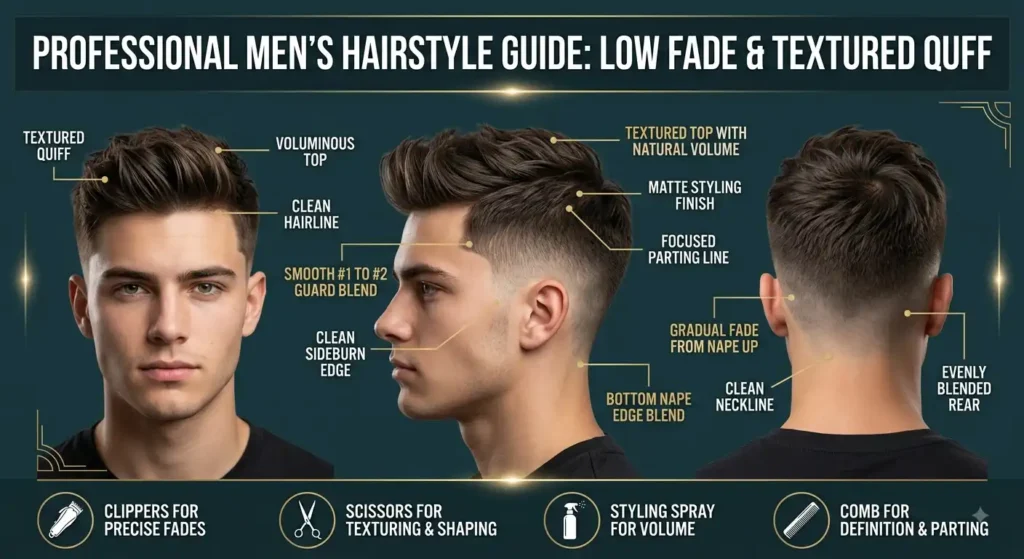
1. Low Tapered Fade Executive Side Part
Focusing the blend strictly on the bottom half-inch of the sideburns and neckline, this style preserves maximum density around the ears. Barbers use a #1.5 guard at the edges, blending quickly up into a #3 guard on the sides. Oval and heart-shaped faces benefit greatly from this soft silhouette. Work a dime-sized amount of low-shine styling cream through damp hair for a clean finish.
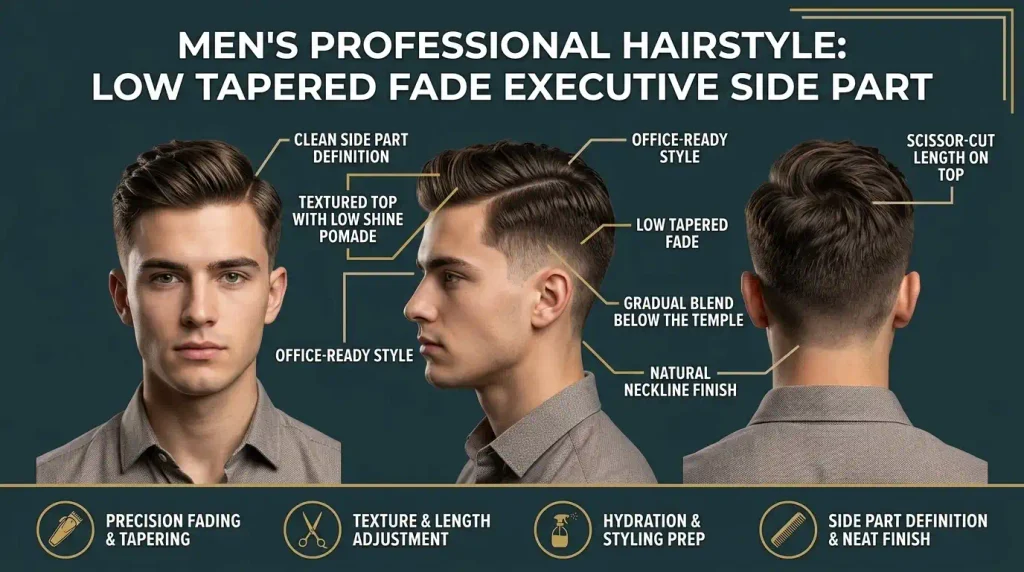
2. Low Tapered Fade Gentleman Comb Over
Exposing the skin only at the absolute bottom corner of the sideburns and nape, this cut gives a razor-sharp edge without stripping side bulk. The transition moves from a #0 open clipper lever to a #2 guard within an inch of space. Men with square or angular jawlines find this style highlights their structure. A matte clay applied at the roots provides excellent control.
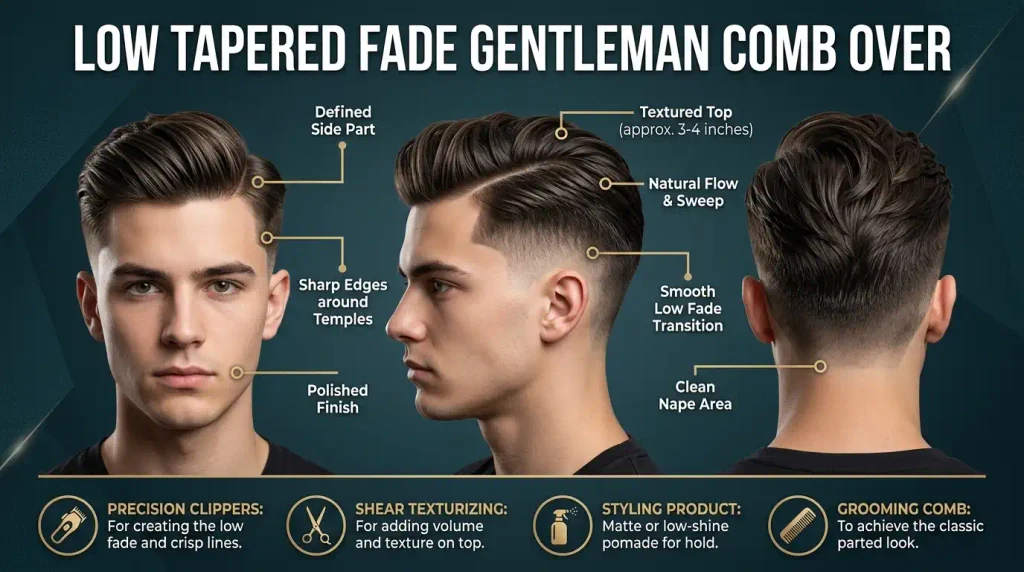
3. Low Tapered Fade Business Professional
Short forward-swept top layers pair naturally with subtle lower edge blending in this modern variation. The barber uses point-cutting on top to create choppy movement while maintaining a clean #1 guard edge along the hairline. Round face shapes gain balanced structure from the added top volume and blunt fringe. Use a dusting of texturizing powder to lift individual strands.
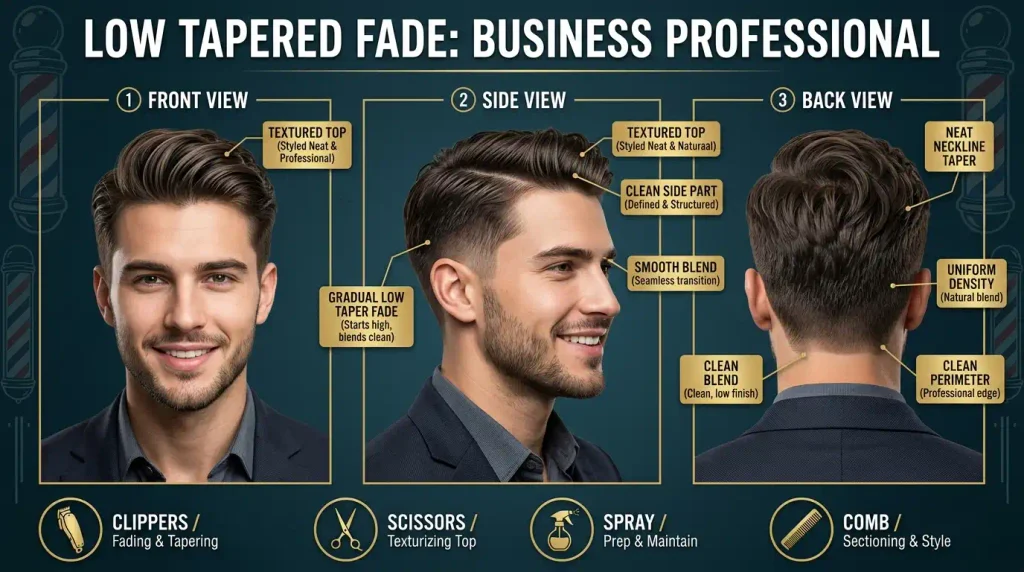
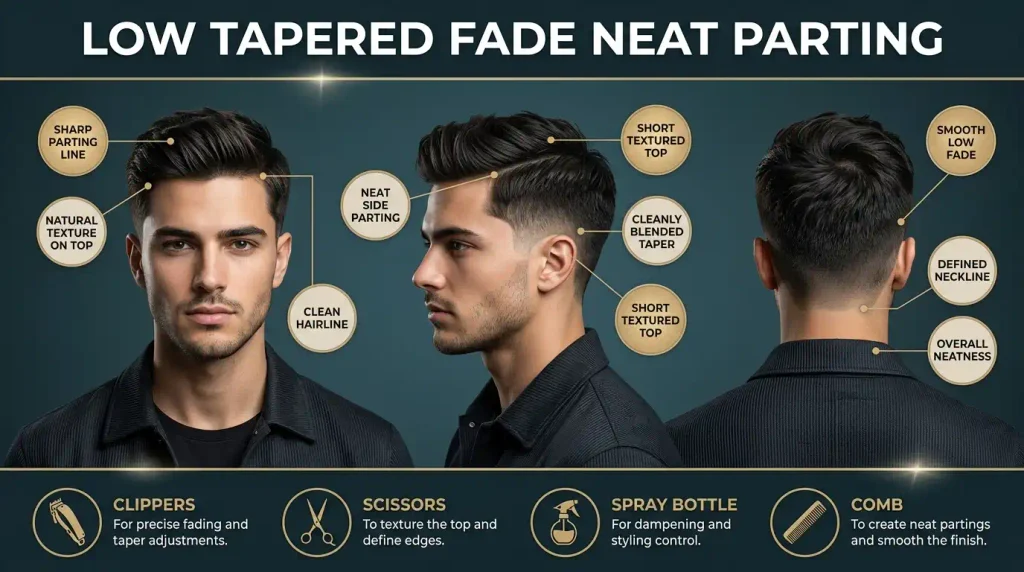
4. Low Tapered Fade Neat Parting
Neat traditional partitioning meets modern edge control in this office-ready option. The side part is carved using scissors over comb while the sideburns receive a gentle #1 to #2 guard blend. Square and oval face shapes achieve an executive profile with these balanced proportions. Apply a light-hold, medium-shine pomade using a fine-tooth comb to establish a crisp, straight part line.
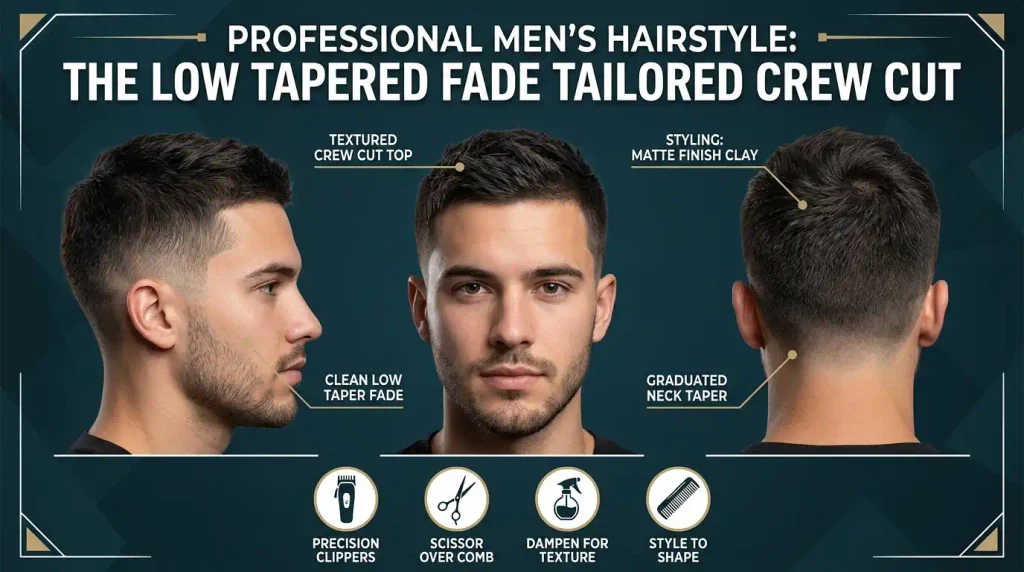
5. Low Tapered Fade Tailored Crew Cut
Combining a uniform #3 or #4 guard length on top with micro-tapering along the hairline elevates a basic crew into a tailored style. The barber tapers the temples and nape down to a #0.5 guard, making the jawline look noticeably firmer. Diamond and oval face shapes suit this low-maintenance look best. No heavy styling products are needed, though a drop of natural hair oil keeps the scalp hydrated.
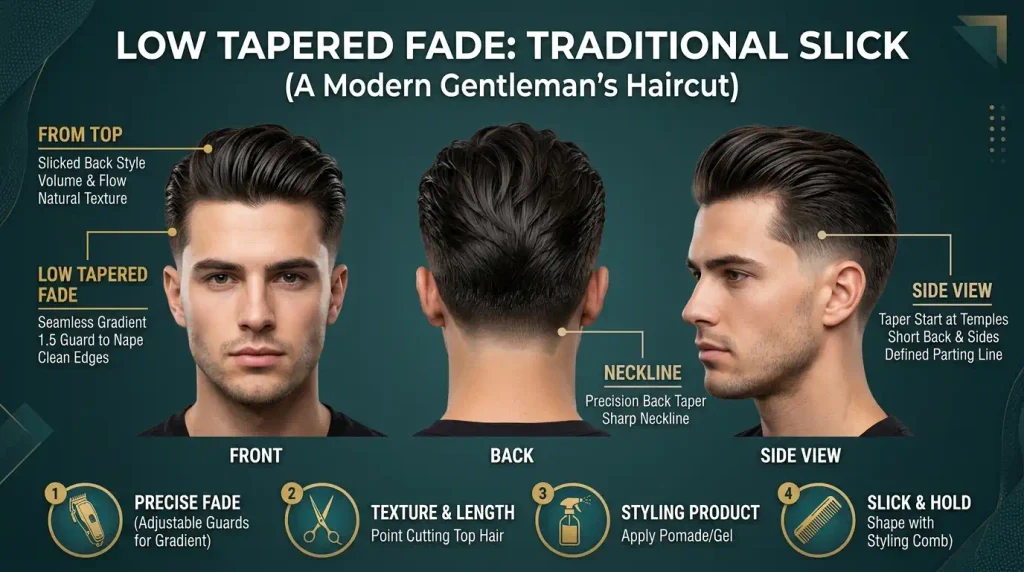
6. Low Tapered Fade Traditional Slick
Sweeping medium-length top hair back over a low-blended perimeter creates a sleek, mature profile. The barber tapers the sideburns with a #1 guard while retaining enough length on top to comb straight back toward the crown. Rectangle and oval face shapes benefit from the softened length. A water-based firm pomade holds the top hair flat without stiffness throughout the day.
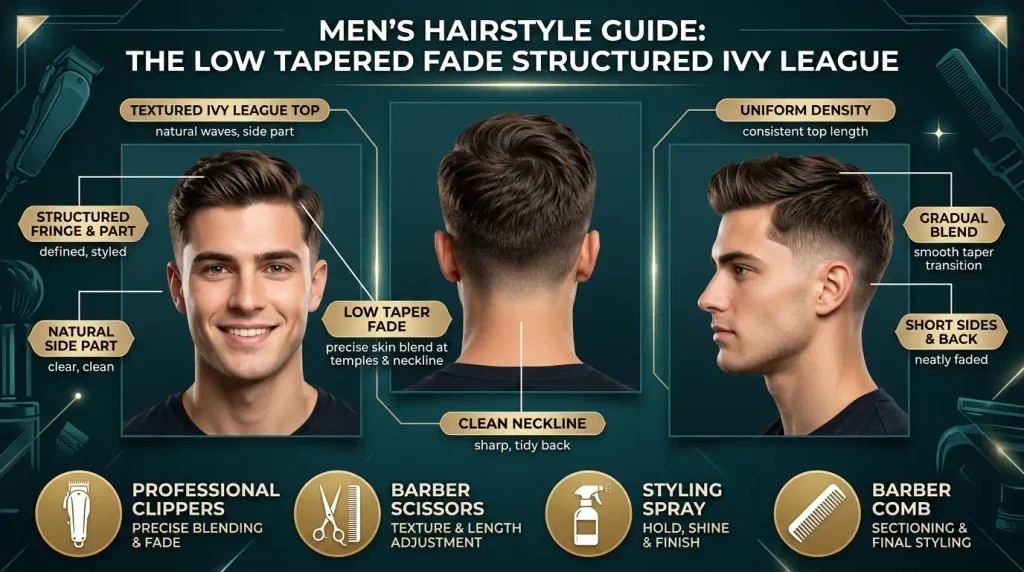
7. Low Tapered Fade Structured Ivy League
Allowing the top hair to fall forward into a natural, messy fringe softens strong forehead features. The barber leaves 3 to 4 inches on top while tapering the neckline and sideburns down to a #1 guard. Heart and oval face shapes find this style balances wider foreheads naturally. Apply sea salt spray to wet hair and blow-dry forward on medium heat for natural texture.
8. Low Tapered Fade Classic Quiff
Adding vertical lift at the front hairline gives this style dynamic height while keeping the sides neat. The barber blends the lower perimeter from a #1 to a #3 guard while layering the top for upward control. Oval and round face shapes gain vertical length, creating a leaner appearance. Use a round brush while blow-drying, then lock the shape in with matte styling paste.
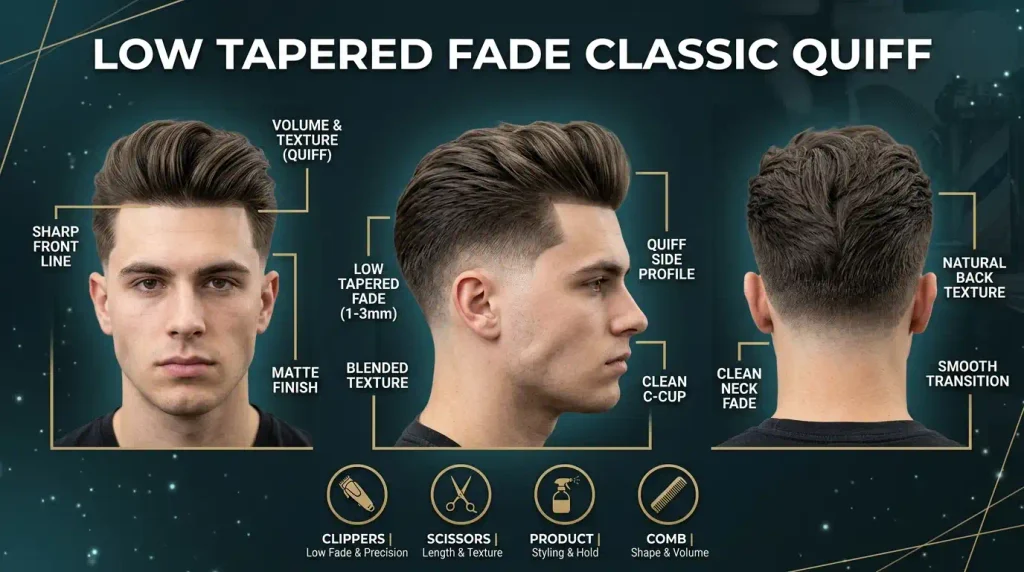
9. Low Tapered Fade Modern Gentleman
Featuring a blunt-cut straight fringe across the forehead, this style relies on tight lower edge blending for contrast. The sideburns and nape drop smoothly from a #2 guard to a #0.5 lever. Men with long or oval face shapes benefit from the horizontal fringe line shortening facial length. A pliable matte paste worked into dry hair highlights the textured crop top.
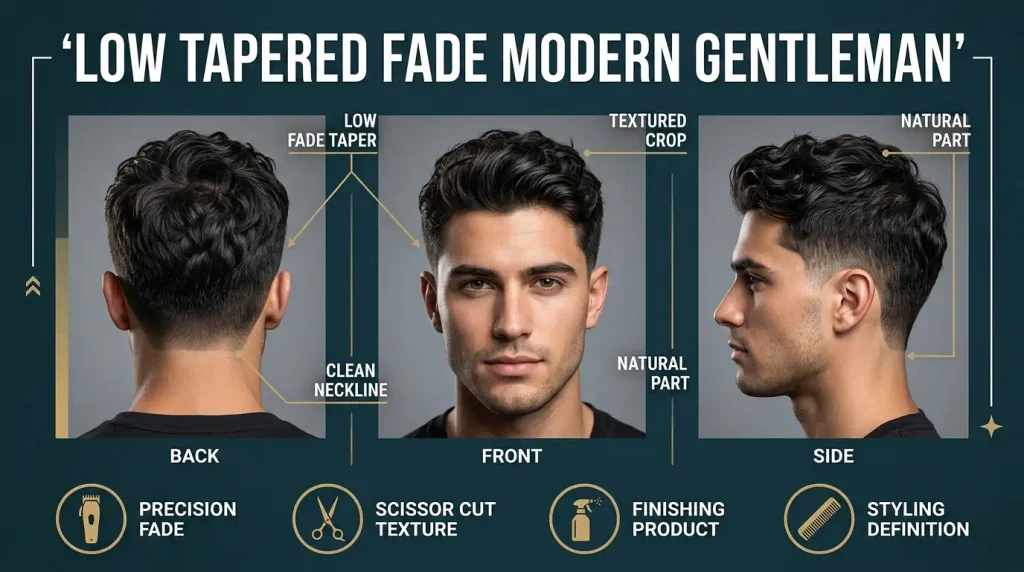
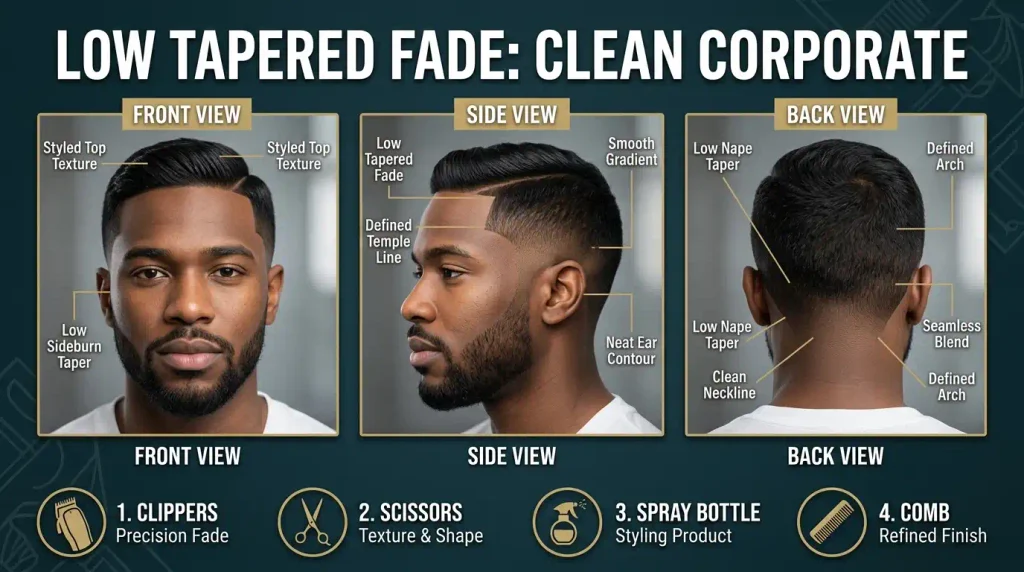
10. Low Tapered Fade Clean Corporate
Sweeping top bulk neatly to one side while maintaining full density around the ears defines this timeless cut. The barber crafts a seamless transition from a #1 guard at the lowest edge to a #4 guard near the parietal ridge. Square face shapes match this symmetrical structure perfectly. Styling requires a water-soluble gel-pomade applied to damp hair and set with a pocket comb.
Low Tapered Fade Textured & Crop Variations
Textured and cropped variations emphasize movement, choppy layering, and organic separation. These cuts work exceptionally well for men seeking a modern, youthful aesthetic that requires minimal daily effort to maintain.
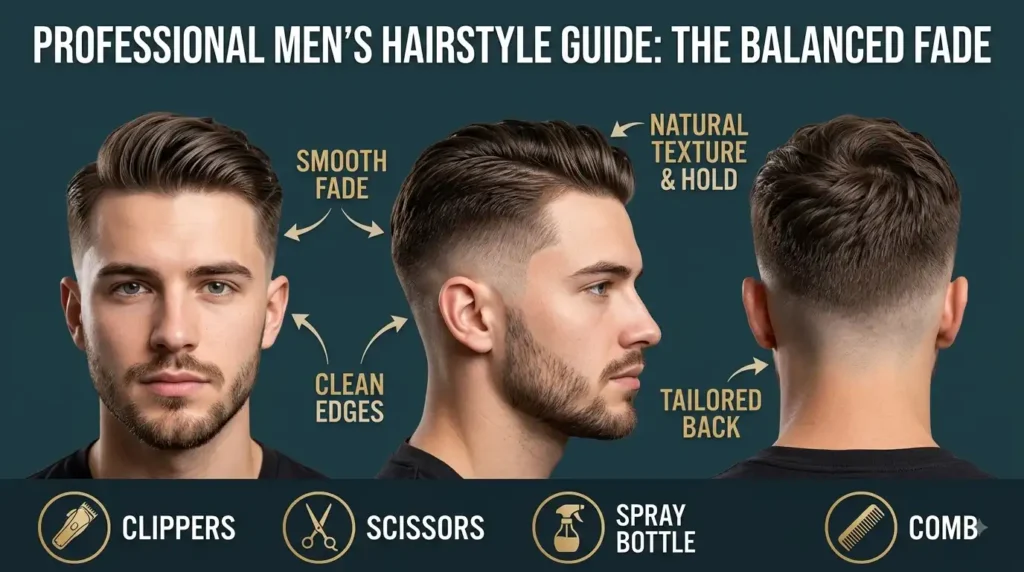
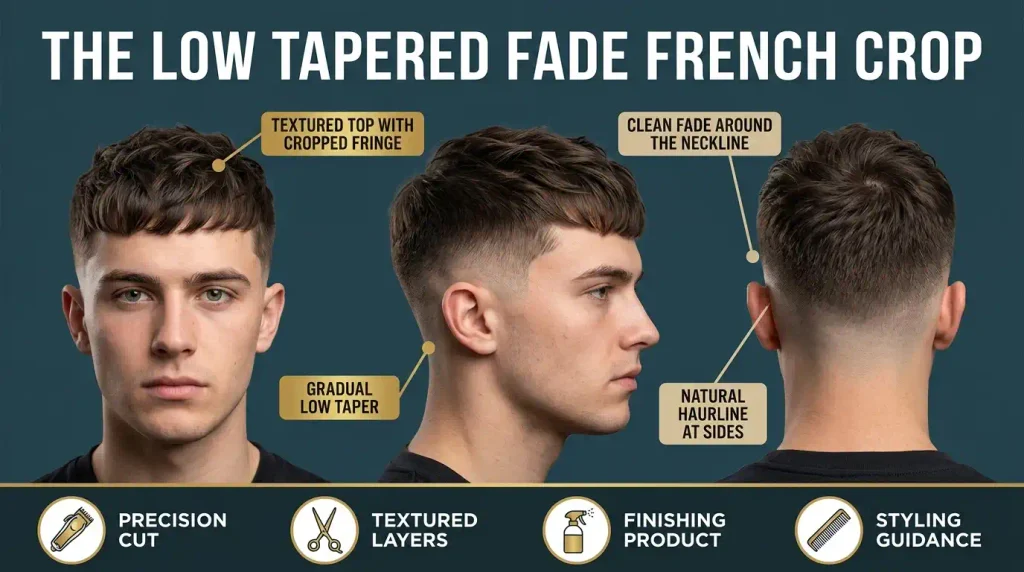
11. Low Tapered Fade French Crop
Elevating top hair into a high, sweeping roll, this cut uses a low-level taper to remove bulk above the ears. The barber blends from a #0.5 guard at the temple line up into a #3 guard near the crown. Round and square face shapes gain flattering vertical symmetry. Work a strong-hold pomade into damp hair, using a vent brush to roll the front upward and back.
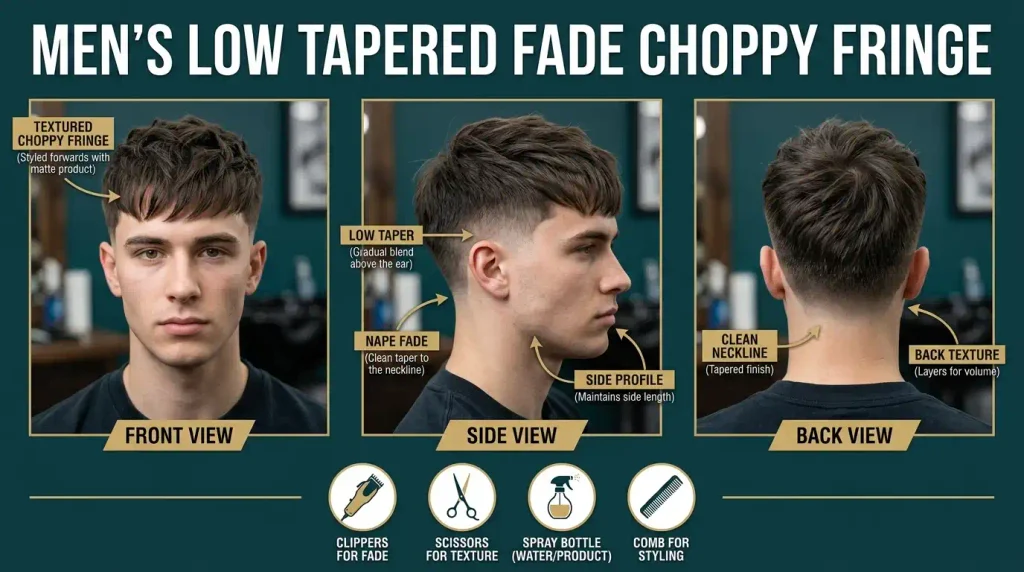
12. Low Tapered Fade Choppy Fringe
Choppy, textured crown layers are paired with a clean low-taper starting right at the lower ear line. A #1 guard is used at the center of the taper, moving up to scissor-blended sides. Oval and athletic facial structures suit this sporty cut. Rub a dime-sized amount of matte styling clay between palms and distribute evenly through dry hair.
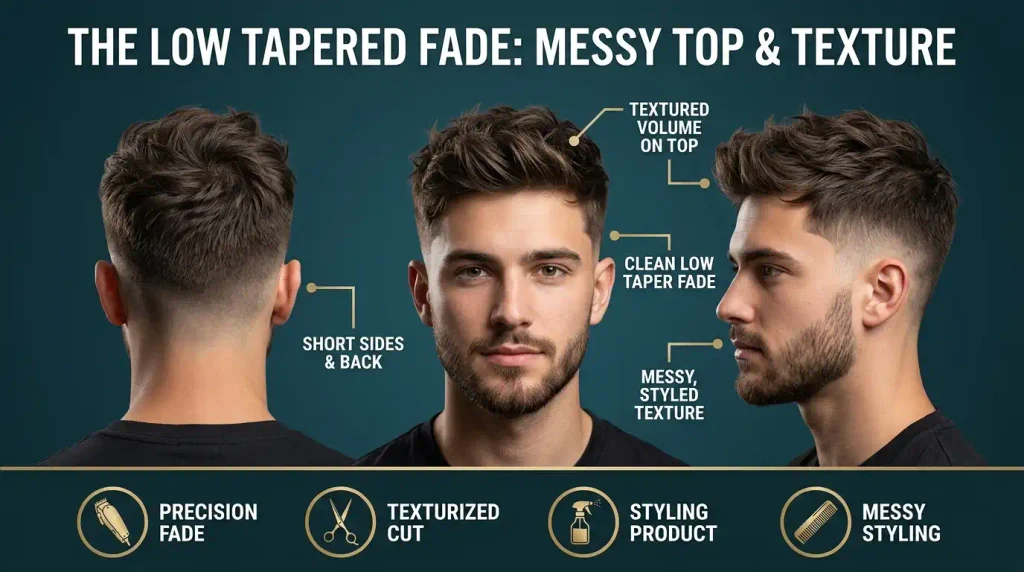
13. Low Tapered Fade Messy Top
Directing top length toward the center spine creates an edgy silhouette supported by neat low-blended sides. The barber blends the sideburns and nape from a #0 skin level up to a #2 guard. Oval and triangular face shapes benefit from the centralized volume. Apply a high-hold styling gel or firm wax, pinching sections together along the center line.
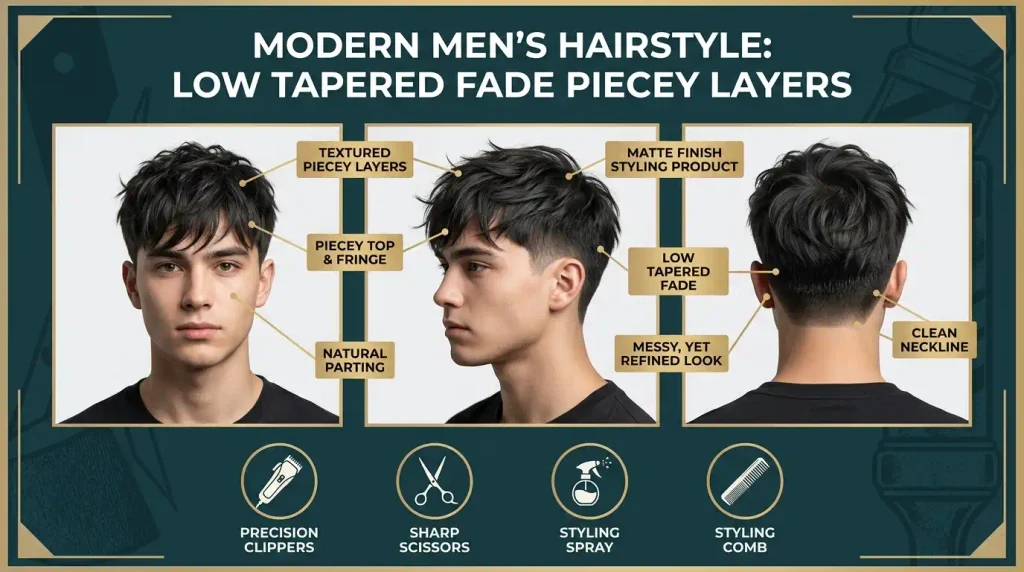
14. Low Tapered Fade Piecey Layers
Enhancing natural texture patterns, this style maintains deep crown depth while cleaning up the hairline edges. A low taper removes sideburn bulk using a #0.5 guard while preserving top length for movement. Square and oval face shapes look particularly sharp with this defined style. Apply a light styling paste and tousle upward with fingers.
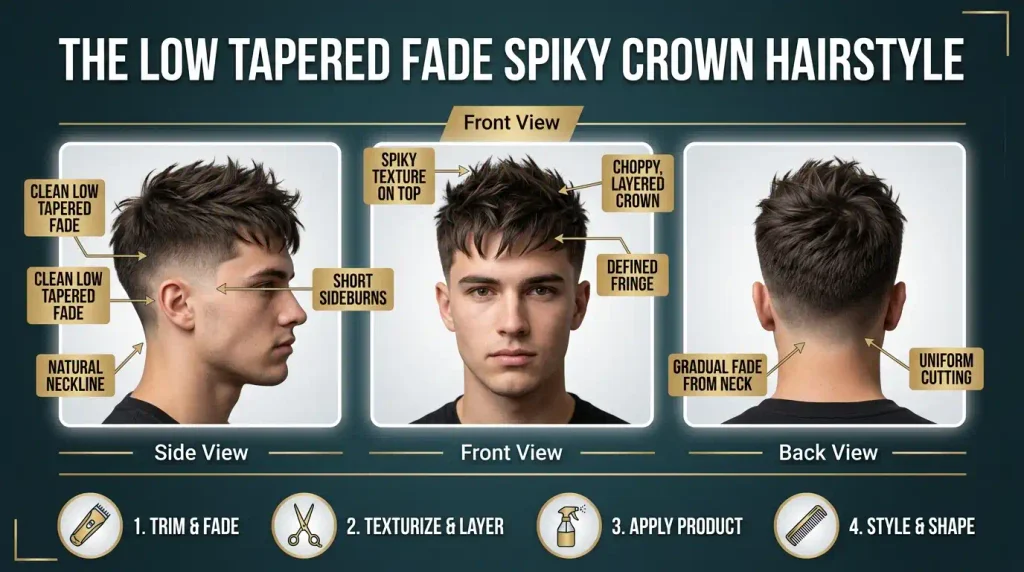
15. Low Tapered Fade Spiky Crown
Adding a modern twist to traditional styling, this option features a clean low-taper on the sides with a spiky top. Barbers use a #1 guard at the base, stepping up to a #3 guard before point-cutting the top. Square and rectangle face shapes look polished in this cut. Use a medium-shine pomade and fingers to set the spikes.
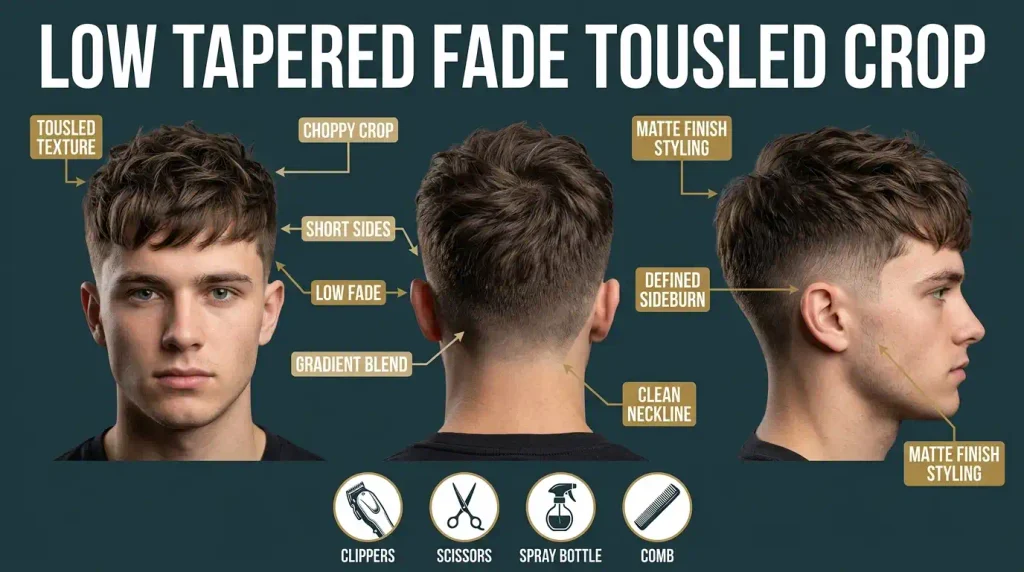
16. Low Tapered Fade Tousled Crop
Tousled, casual top texture gets an instant upgrade from clean low-level edge work. The barber point-cuts the top to roughly 2 inches while tapering the sideburns down to a #1 guard. Round face shapes gain definition from the unstructured top spikes. Distribute a lightweight texturizing fiber through dry hair, pulling sections upward randomly.
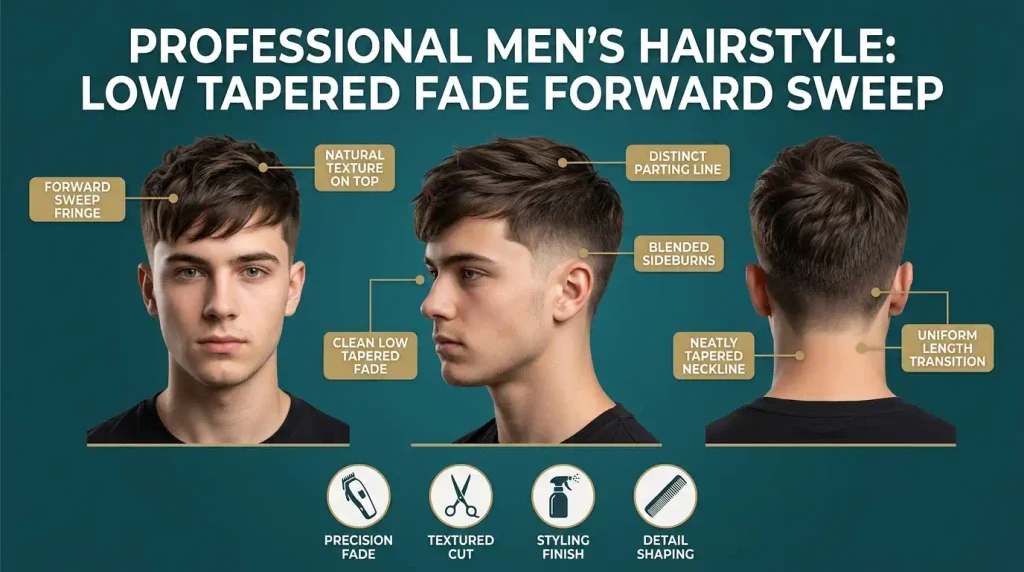
17. Low Tapered Fade Forward Sweep
Pushing the front hairline directly forward creates a fresh appearance supported by clean edges. The barber tapers the lower half of the sides with a #1 guard while leaving 3 inches on top. Heart and oval face shapes achieve a well-balanced frame. Blow-dry the front fringe downward with a brush and apply matte clay for all-day hold.
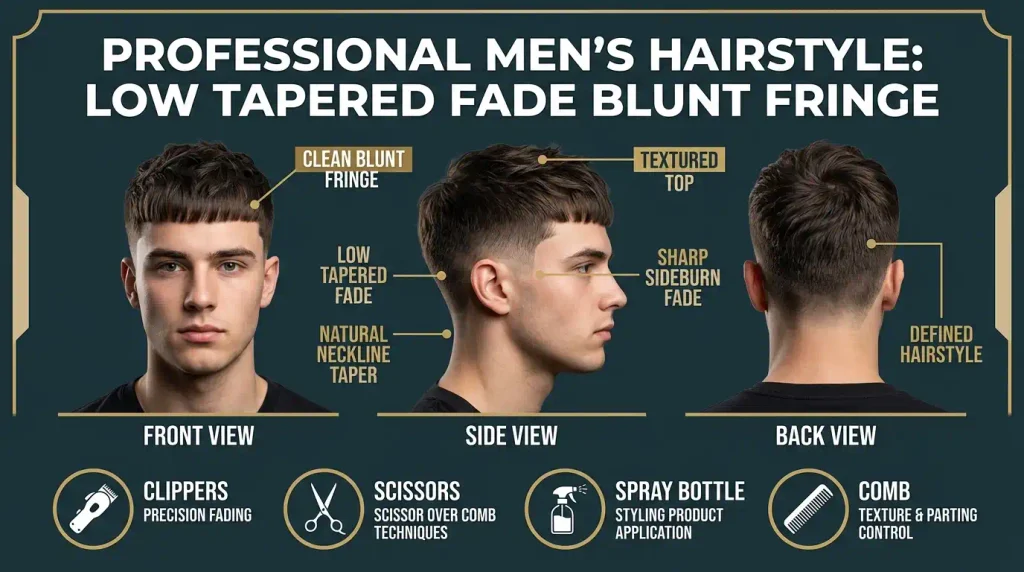
18. Low Tapered Fade Blunt Fringe
A short crop length on top meets precise low-level edge blending for an effortless finish. Barbers taper the temples and nape using a #1.5 guard up into a #3 top. Oval and square faces fit this refined, minimal style effortlessly. Smooth a small amount of light grooming cream over top for a clean, natural finish.
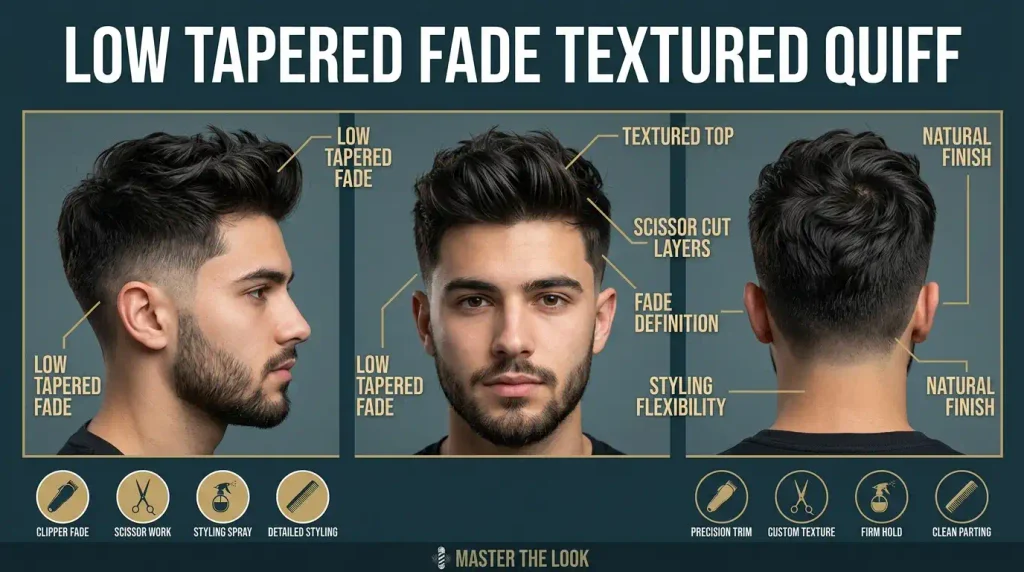
19. Low Tapered Fade Textured Quiff
Combining dense top volume with clean low-tapered edges produces a balanced profile. The barber uses scissor-over-comb techniques to connect a #2 low taper to 4 inches of layered top bulk. Oval and diamond face shapes gain strong structure. Pre-style with sea salt spray before blow-drying, finishing with a matte styling paste.
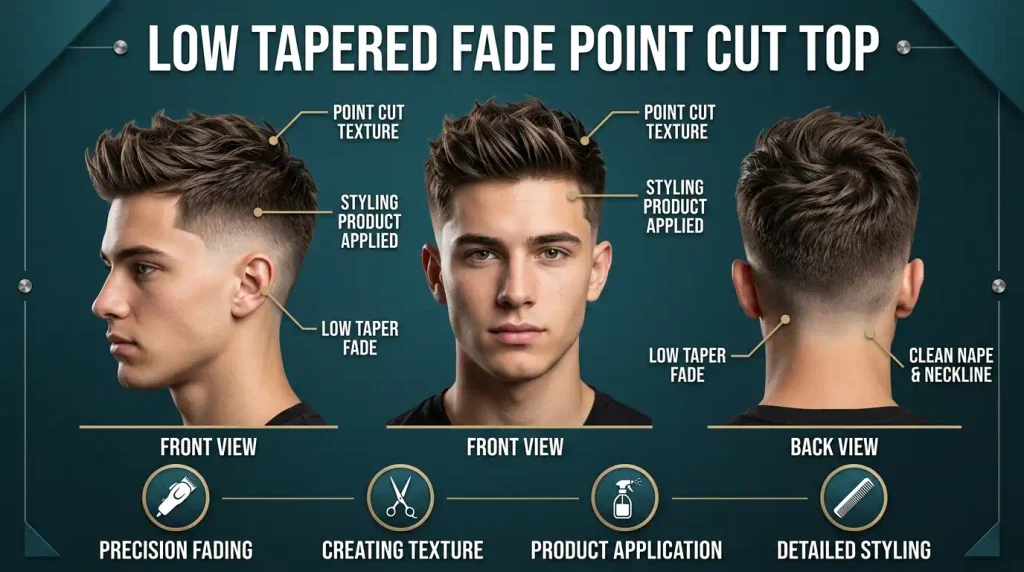
20. Low Tapered Fade Point Cut Top
Creating a rounded aesthetic on top supported by a crisp low-level drop taper. The barber uses a #1 guard to shape the transition behind the ear. Oval and square face shapes stand out with this voluminous look. Apply styling cream to damp hair and blow-dry upward.
Low Tapered Fade Curly & Coily Hair Styles
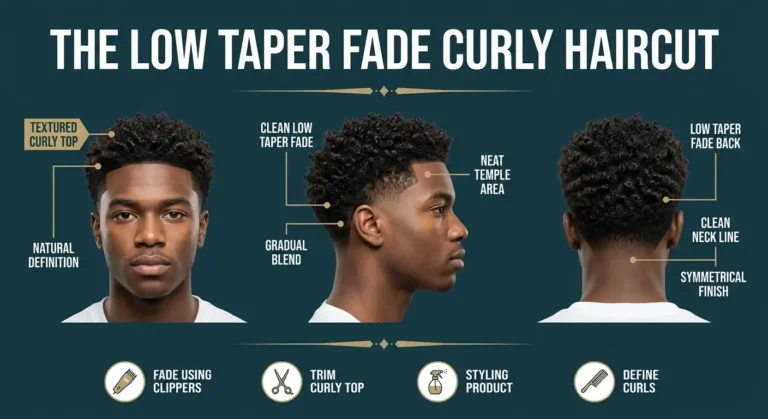
Designed specifically for textured, curly, and coily hair types, these styles celebrate natural volume while maintaining clean, sharp perimeter framing around the temples and neck.
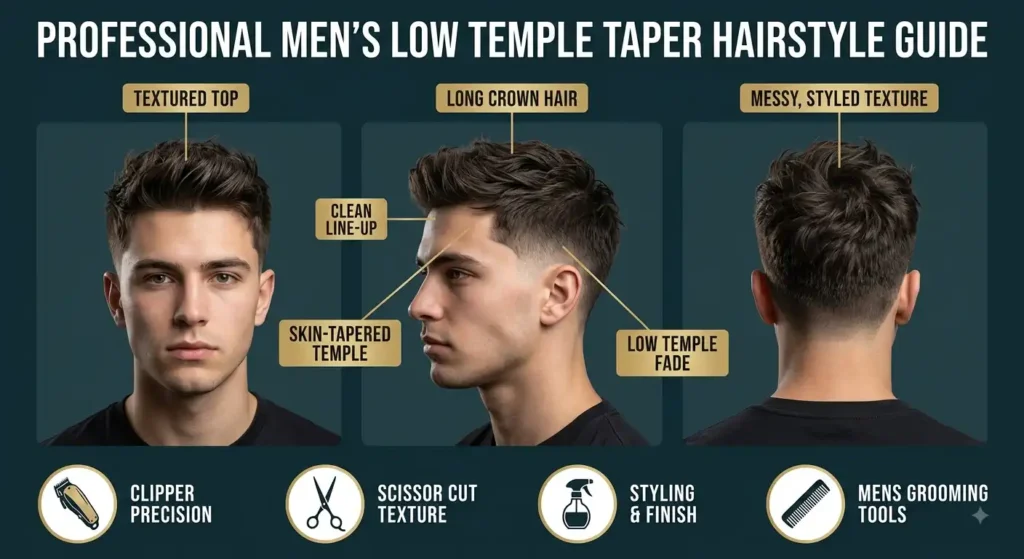
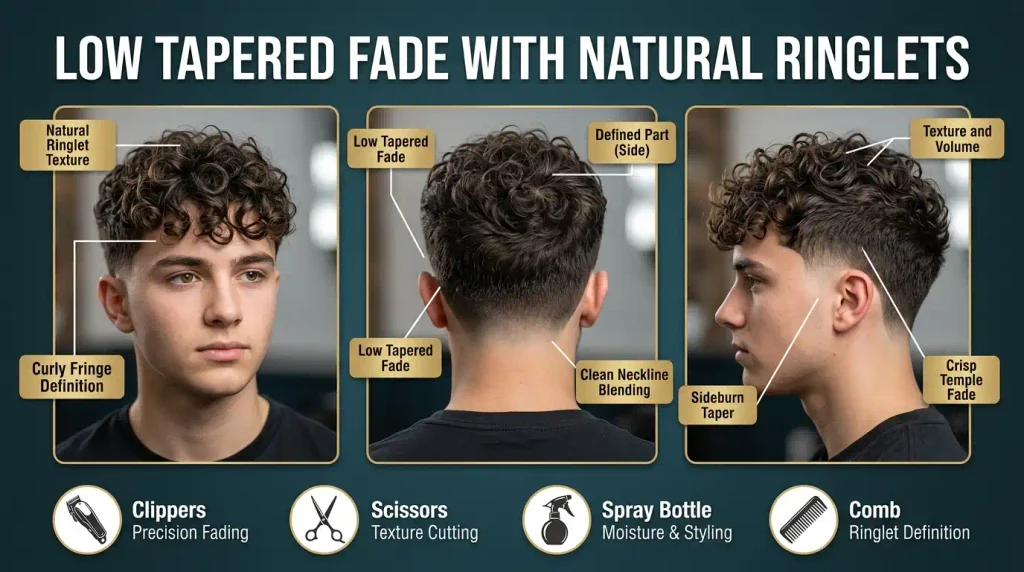
21. Low Tapered Fade Natural Ringlets
Rounding the taper line in a circular pattern behind the ear provides an artistic edge. The barber drops the blend down to a #0 skin guard around the ear lobe. Diamond and triangle face shapes benefit from the curved volume distribution. Work a matte paste through the top hair to separate individual strands.
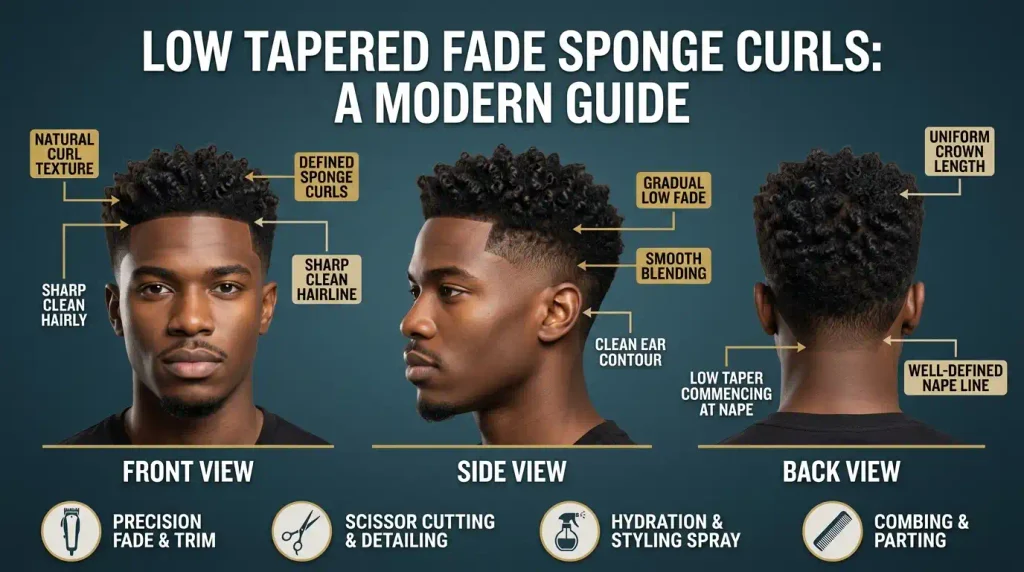
22. Low Tapered Fade Sponge Curls
Preserving heavy crown and top density while carving away the temples and nape creates a striking silhouette. The barber shapes the sideburns down to a #1 guard while keeping the natural curl pattern intact. Oval and round face shapes achieve great vertical balance with this cut. Apply a lightweight leave-in conditioner and pick out the curls for maximum volume.
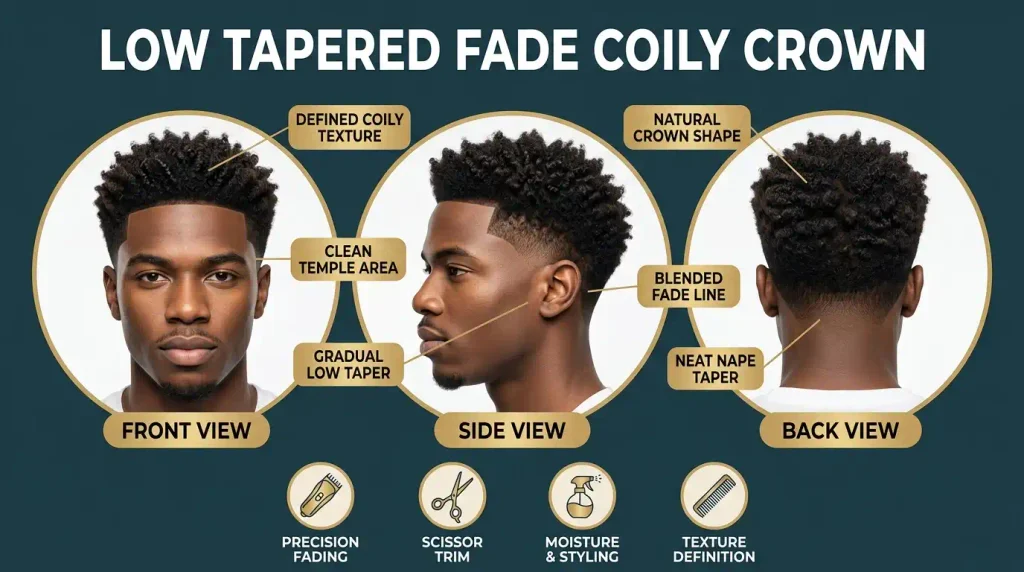
23. Low Tapered Fade Coily Crown
Keeping locs or coils clean at the roots while allowing full length to drape naturally from the crown. The barber tapers the temples closely using a #0.5 guard, preventing bulk buildup near the ears. Long and oval face shapes wear this distinctive look exceptionally well. Massage natural scalp oil into the exposed skin to prevent dryness.
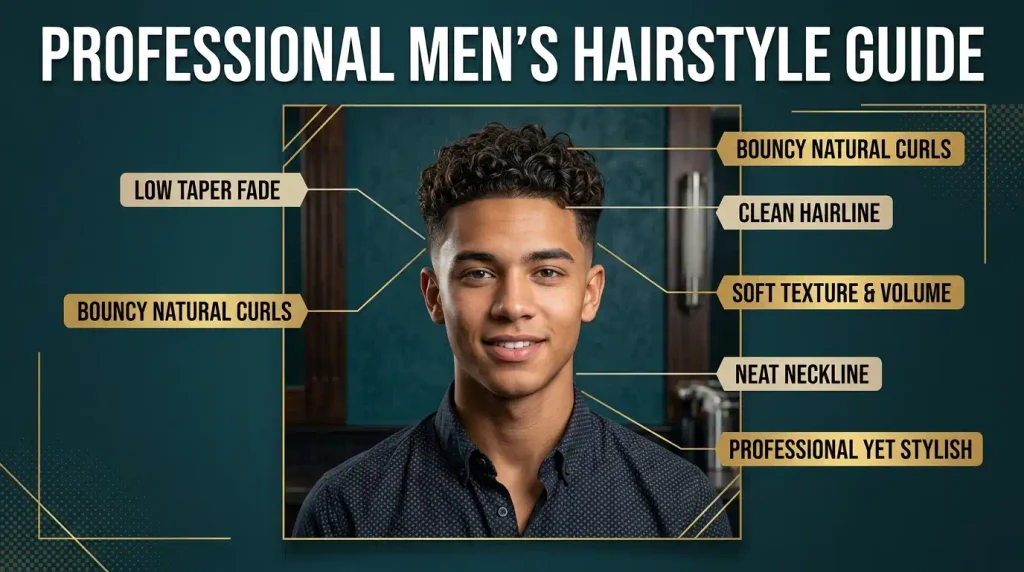
24. Low Tapered Fade Bouncy Curls
Managing thick curls by tapering the lower sides and back down to a #1 guard for clean contrast. The barber leaves 4 to 5 inches of tight ringlets on top. Round and square face shapes look sharper with the compressed sides. Distribute curl cream through damp hair and scrunch gently to define bounce.
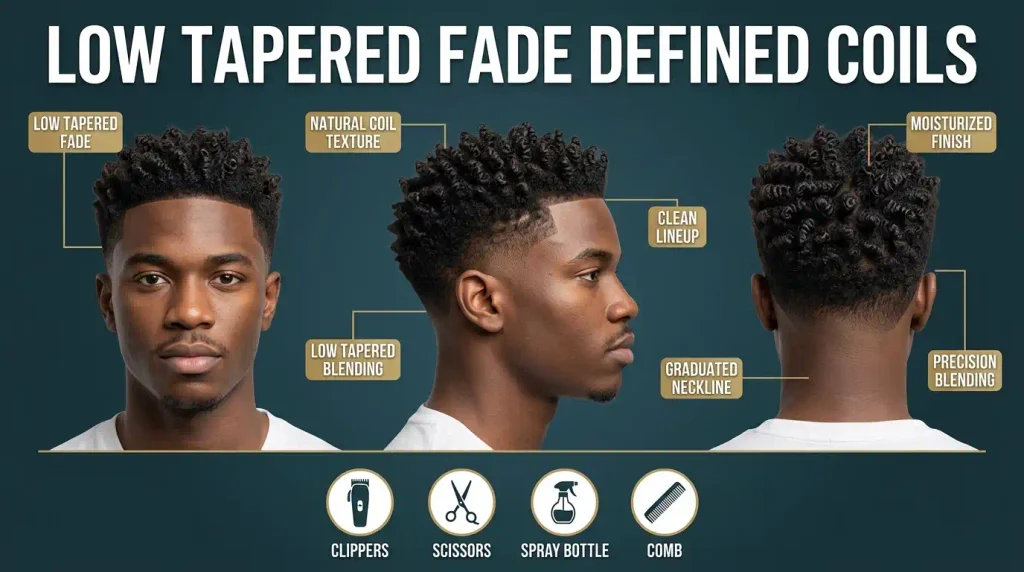
25. Low Tapered Fade Defined Coils
Etching a sharp, razor-cut line directly into a low temple taper adds an aggressive, structured finish. The barber uses a trimmer to carve a clean line above a #1 guard transition. Square and rectangular face shapes match this masculine aesthetic. Apply firm-hold gel to lock the top into position without slipping.
26. Low Tapered Fade Loose Waves
Disconnecting the low taper slightly from a long top produces a bold finish. The barber uses a #0 skin setting at the temples. Oval and heart-shaped faces manage this striking silhouette easily. Rub water-based pomade through damp hair and sweep straight backward.
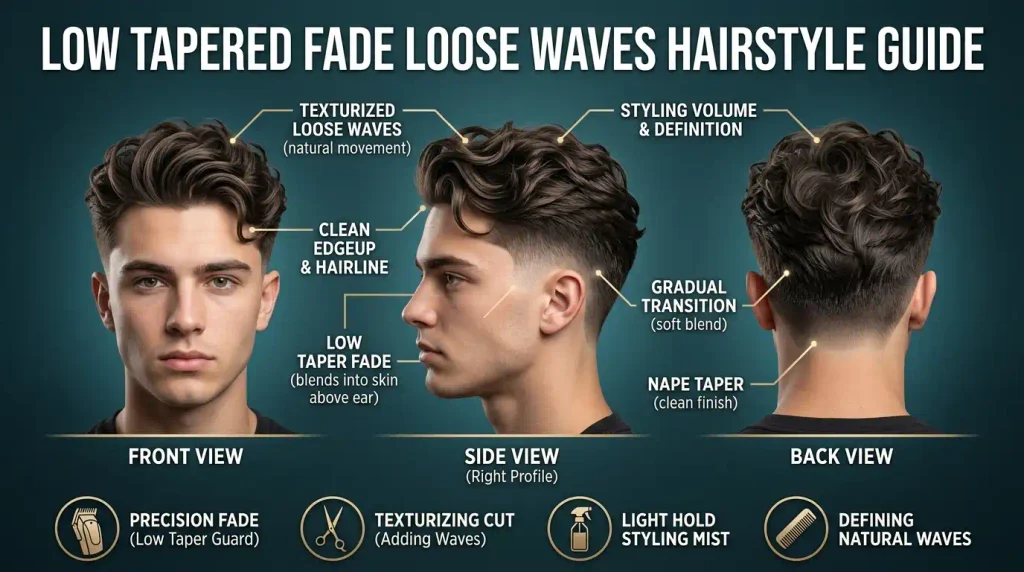
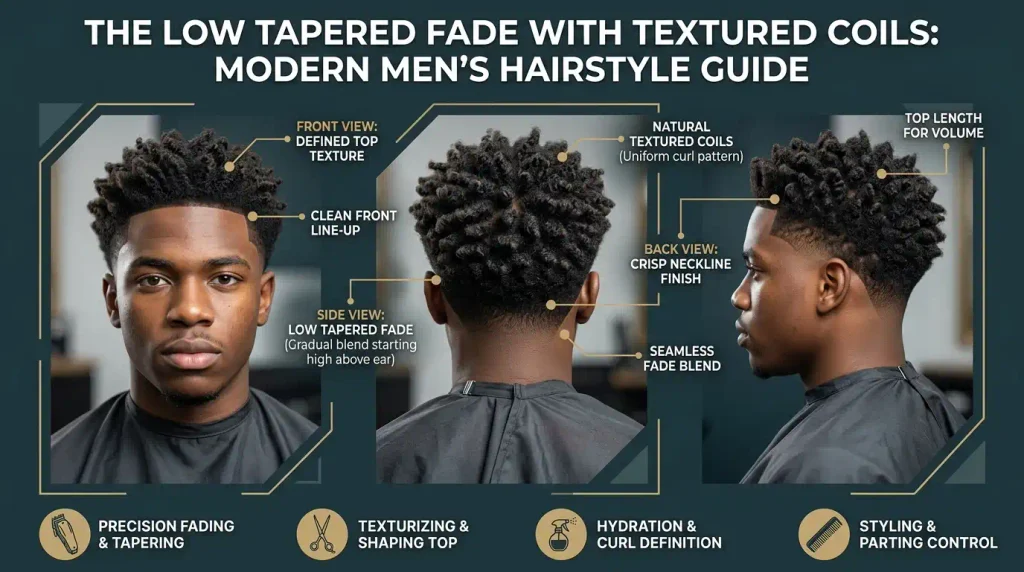
27. Low Tapered Fade Textured Coils
A heavily textured forward fringe meets an abrupt low temple fade for a striking look. The barber uses thinning shears to reduce weight across the crown. Round face shapes gain excellent angular structure. Apply texturizing powder directly to dry hair roots for instant lift.
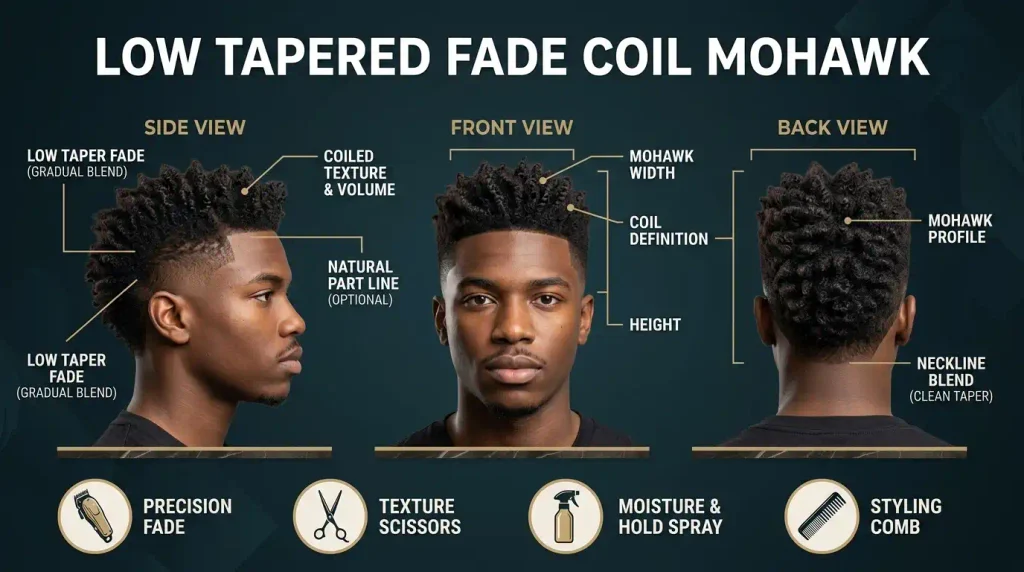
28. Low Tapered Fade Coil Mohawk
Pulling central hair into a vertical ridge supported by extreme low temple tapering creates an edgy vibe. The barber tapers down to bare skin around the ears. Triangle and oval face shapes pull off this daring style seamlessly. Work high-hold styling glue through damp hair and sculpt upward.
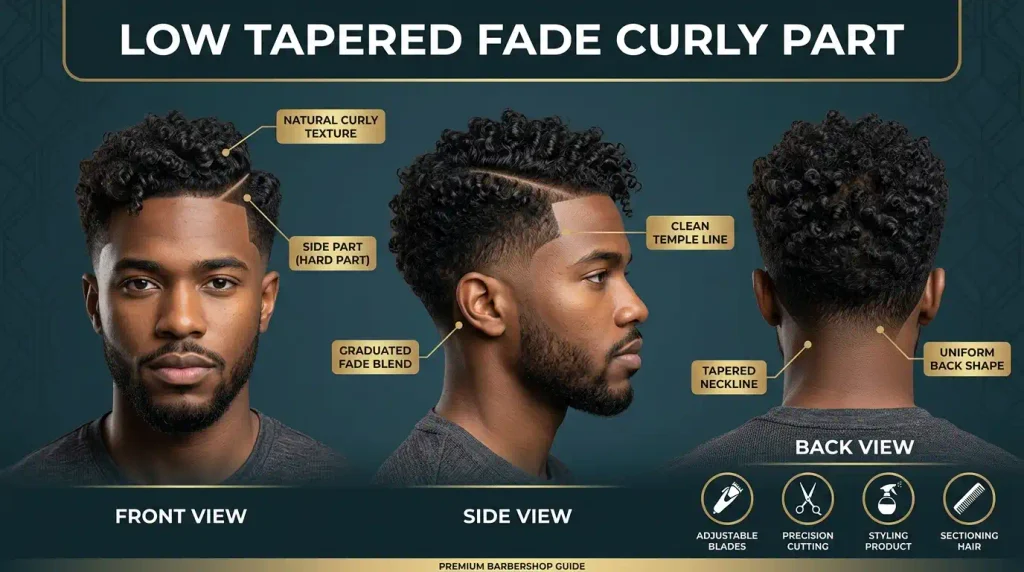
29. Low Tapered Fade Curly Part
A sweeping top section paired with a low temple taper provides a clean, dramatic edge. The barber trims the sides with a #1 guard up to the temple line. Square face shapes look exceptionally sharp with this layout. Comb damp hair firmly to one side using a medium-shine pomade.
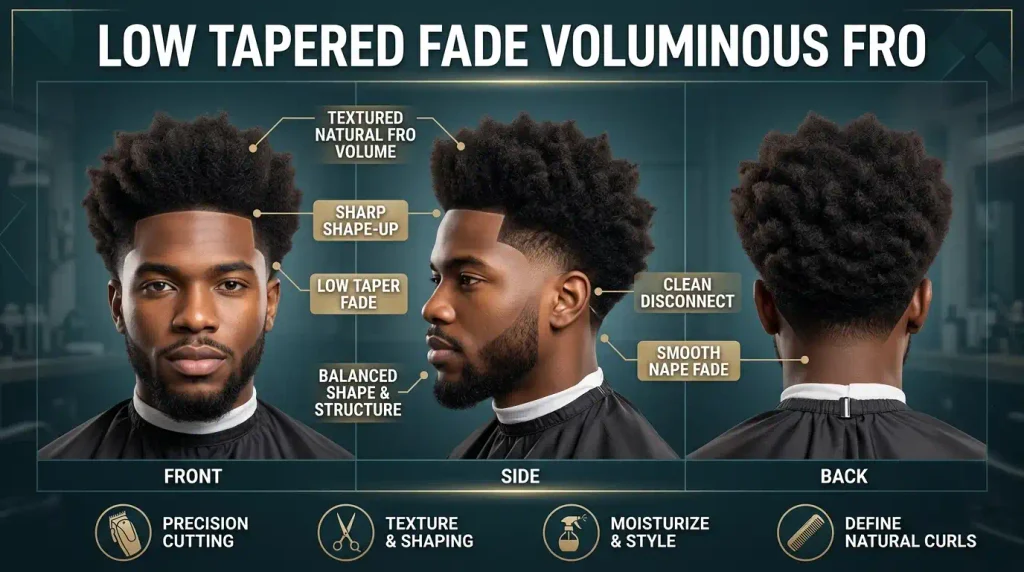
30. Low Tapered Fade Voluminous Fro
Elevating the front hair into a towering shape supported by low side tapering creates maximum visual drama. The barber blends from a #0.5 guard at the temples. Round face shapes benefit from the added vertical height. Blow-dry the front section upward over a round brush before locking with spray.
Low Tapered Fade Buzz Cut & Minimalist Looks
Minimalist cuts strip away unnecessary length while relying on crisp edge work and subtle temple fading to create a clean, sharp appearance that requires virtually zero morning styling.
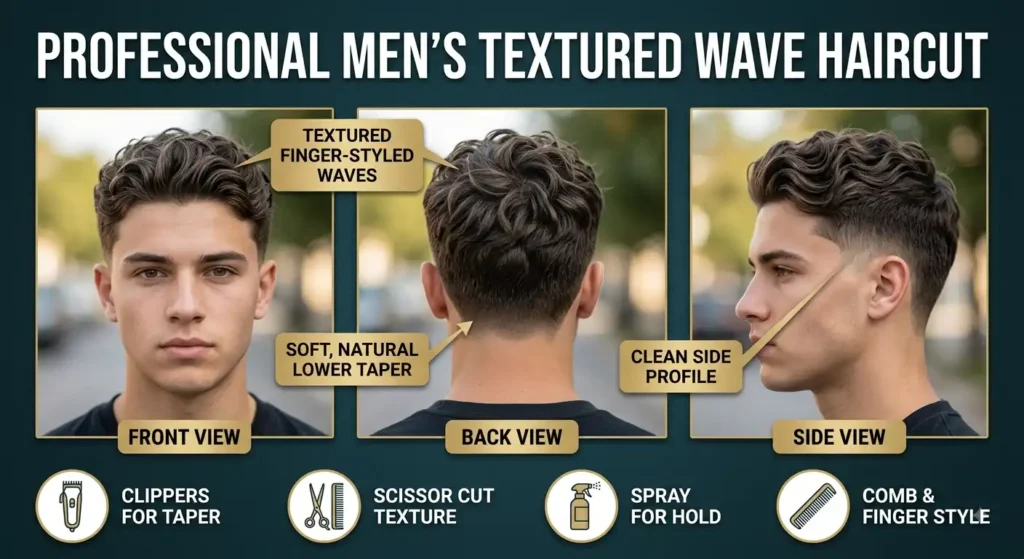
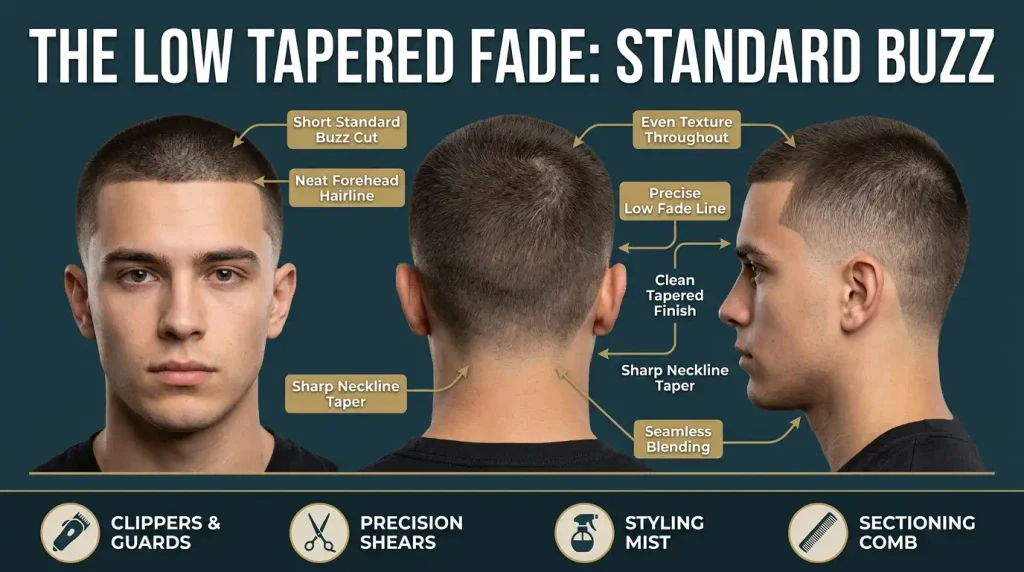
31. Low Tapered Fade Standard Buzz
Allowing medium-length hair to sweep backward naturally while keeping the sideburns and nape neat. The barber point-cuts the sides to remove bulk without creating a harsh line. Oval and rectangle face shapes look fantastic with this flowing aesthetic. Mist sea salt spray over damp hair and scrunch while air drying.
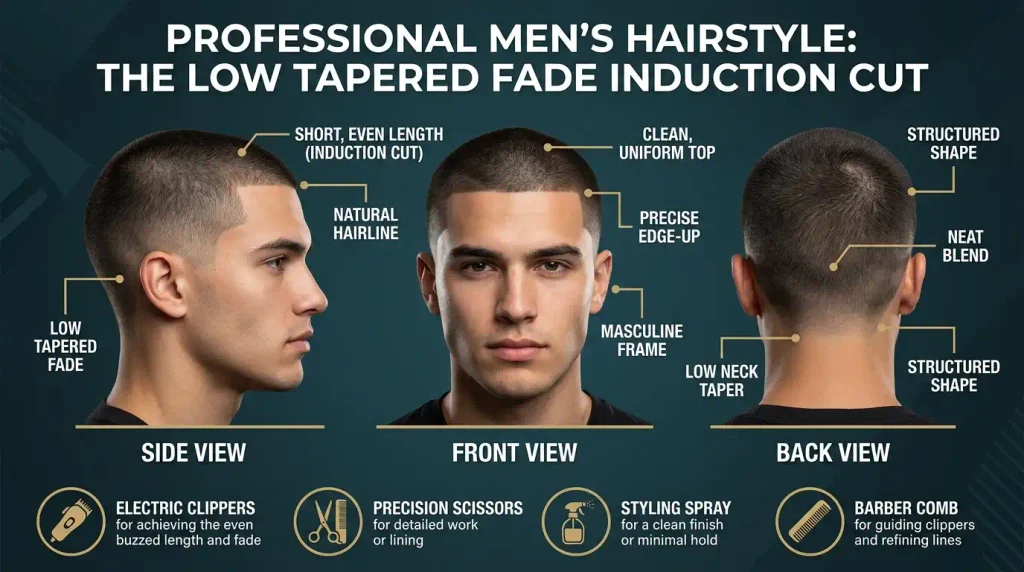
32. Low Tapered Fade Induction Cut
Embracing natural texture with a subtle #1 guard taper along the lower edge. The barber leaves minimal length across the top. Round face shapes gain character from the relaxed styling. Work sea salt paste through dry hair for a chalky, matte finish.
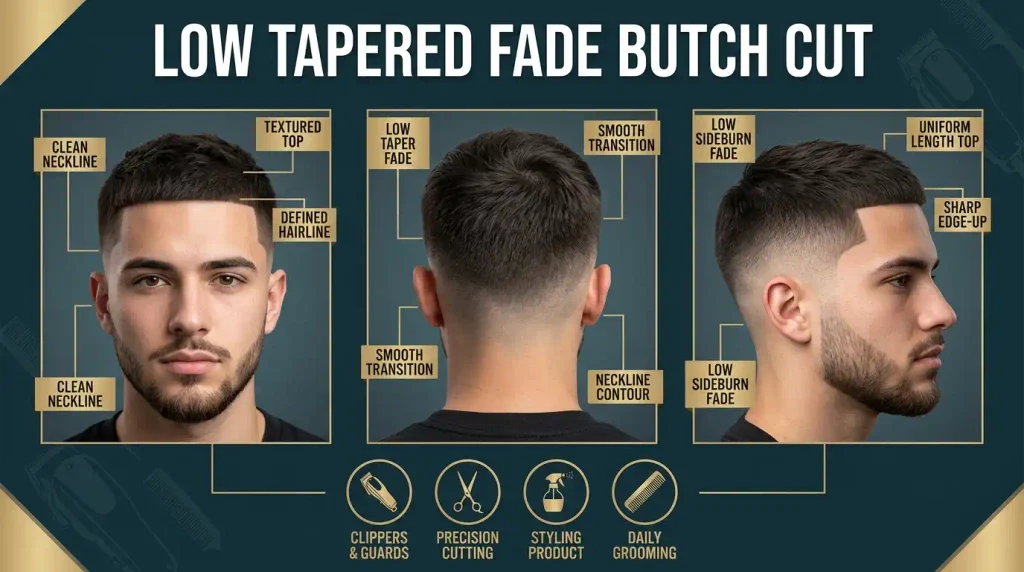
33. Low Tapered Fade Butch Cut
Highlighting neat proportions with structured layers and a clean lower temple blend. The barber uses a #2 guard to keep the sides soft. Oval and square face shapes achieve great balance with this movement. Apply a lightweight grooming cream to damp hair.
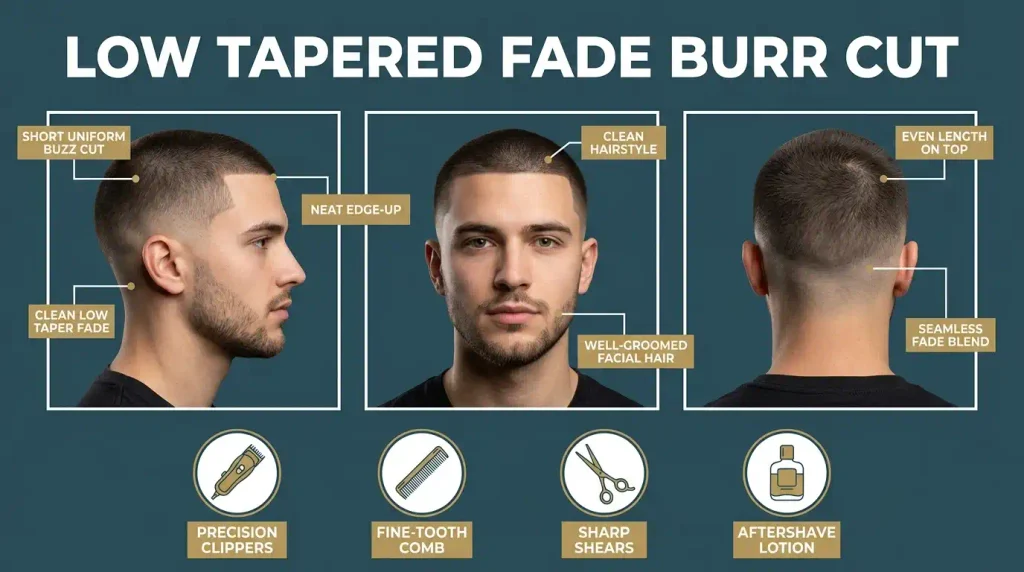
34. Low Tapered Fade Burr Cut
Brushing hair straight with an ultra-short top keeps this style soft and touchable. The barber tapers the nape with a #1 guard. Heart and oval face shapes suit this relaxed approach. Use a dime-sized amount of hair oil to maintain scalp hydration.
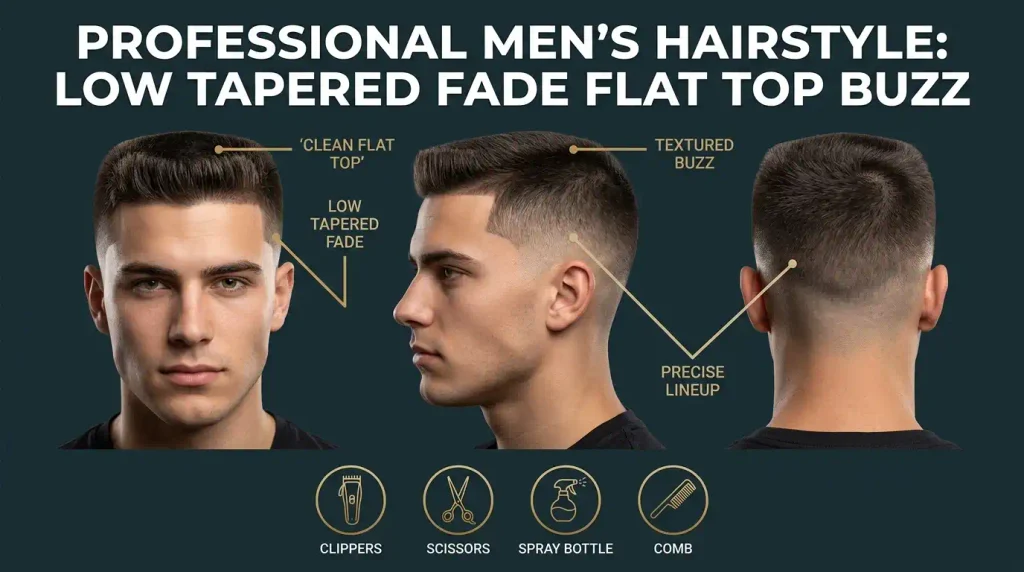
35. Low Tapered Fade Flat Top Buzz
Parting medium-length hair down the middle to frame the face while keeping the ears uncovered. The barber uses scissor trimming along the lower sideburns. Oval and long face shapes benefit from the framing effect. Blow-dry hair outward away from the face using a paddle brush.
36. Low Tapered Fade Military Style
Embracing short layers throughout the top and back while keeping the absolute neckline clean. The barber uses precise clipper techniques for an effortless finish. Square and round face shapes soften under the structured layers. Apply lightweight styling milk to finish.
37. Low Tapered Fade Crew Taper
A relaxed, short top paired with a soft #2 guard taper at the sideburns. The barber leaves enough length in front for natural upward movement. Oval and round face shapes wear this versatile look daily. Work matte styling paste through dry hair.
38. Low Tapered Fade Minimalist Crop
Keeping the crown completely unstructured while cleaning up the perimeter with a #1 guard. The barber adds internal layers to reduce thickness. Diamond and square face shapes look great with this playful texture. Rub texturizing clay between palms and tousle.
39. Low Tapered Fade Short Side Sweep
Sweeping top hair loosely to one side without a harsh part line. The barber maintains a soft #1.5 guard taper at the temples. Oval and heart-shaped faces match this easygoing aesthetic. Apply a light-hold styling paste and guide hair sideways.
40. Low Tapered Fade Clean Minimalist
Focusing on internal movement and weight removal while keeping the baseline neat. The barber tapers the nape down to a #1 guard. All face shapes suit this universal, adaptable cut. Work a small dab of matte cream through damp hair for definition.
Low Tapered Fade Flow & Natural Movement Styles
Flowing styles celebrate relaxed movement, longer top sections, and natural texture, making them ideal for individuals who want an effortless, laid-back appearance without sacrificing professional neatness.
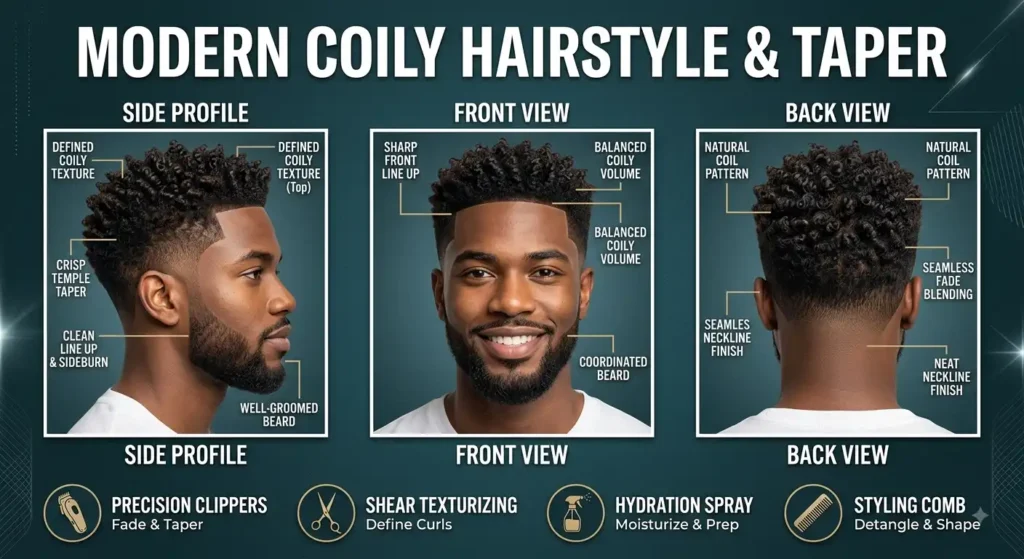
41. Low Tapered Fade Surfer Flow
Allowing tight coils or waves to grow naturally on top while tapering the sideburns down to a #1 guard. The barber shapes the perimeter neatly. Oval and round face shapes achieve great structure with this volume. Apply hydrating curl activator cream to damp hair and shake out.
42. Low Tapered Fade Layered Flow
Using a styling tool on top to create movement, paired with a curved low taper behind the ear. The barber drops the blend to skin level. Square and oval face shapes pop with this dynamic contrast. Work a moisture-rich styling gel through hair.
43. Low Tapered Fade Medium Flow
Keeping dense layers concentrated on the crown while cleaning up the bottom half-inch of the neck. The barber uses a #0.5 guard at the edges. Diamond and oval face shapes benefit from the restrained side bulk. Massage leave-in conditioner into the hair daily.
44. Low Tapered Fade Shoulder Length Flow
Draping locks from the crown with a precision-tapered temple and neckline. The barber trims stray hairs using a #1 guard. Long and oval face shapes wear this look with effortless authority. Apply lightweight locking serum to root new growth.
45. Low Tapered Fade Wavy Flow
Showcasing natural waves on top supported by a clean low-level taper fade. The barber uses a #1 guard on the sides. Round and square face shapes look slimmer with this silhouette. Work defining styling cream through wet hair.
46. Low Tapered Fade Shaggy Flow
Combining a precise forehead and temple line-up with a soft taper at the nape. The barber keeps the top dense and rounded. Oval and rectangular face shapes gain sharp framing. Use an edge trimmer for weekly touch-ups between cuts.
47. Low Tapered Fade Casual Flow
Merging natural movement with a clean temple taper for a polished finish. The barber uses a #0.5 guard at the sideburns. Square and oval face shapes look exceptionally sharp here. Brush daily with styling cream.
48. Low Tapered Fade Curly Flow
Lifting tight hair high on the crown with an aggressive temple taper underneath. The barber blends from skin to a #2 guard. Round face shapes gain vital vertical height. Apply rich hair butter to keep coarse strands soft.
49. Low Tapered Fade Messy Flow
Allowing hair to tumble forward over the forehead while tapering the sides cleanly. The barber leaves 3 inches of front length. Heart and oval face shapes balance out nicely. Scrunch lightweight styling foam into damp strands.
50. Low Tapered Fade Natural Taper
Centering the hair into a natural shape supported by clean side tapers. The barber blends down to a #1 guard. Oval and triangular face shapes pull off this bold cut effortlessly. Shape hair upward using a wide-tooth comb.
Low Tapered Fade Modern Avant-Garde & Statement Cuts
Avant-garde and statement styles push the boundaries of traditional barbering, incorporating bold geometric lines, sharp disconnections, and high-contrast fades for individuals who want to stand out.
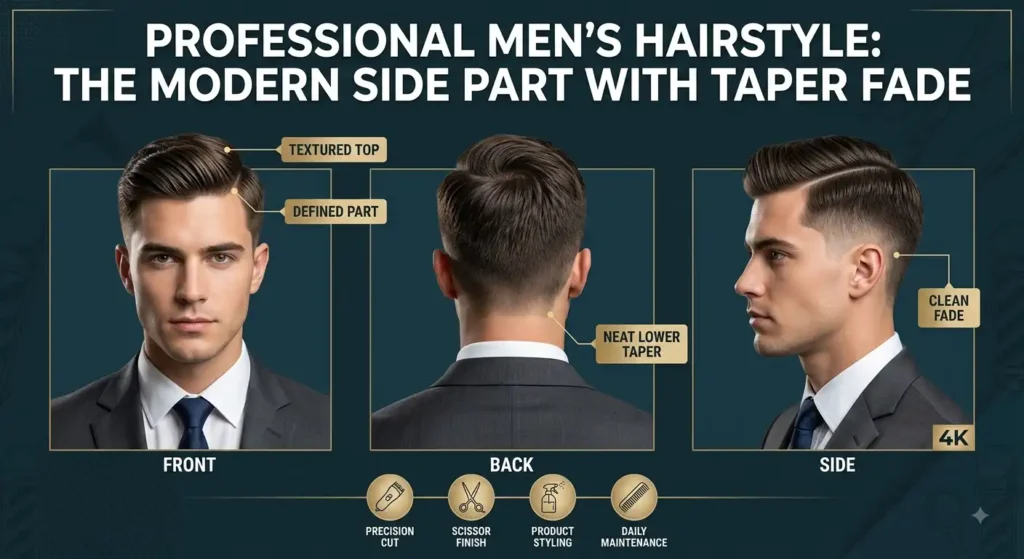
51. Low Tapered Fade Hard Part Statement
A sharp, traditional side part paired with a conservative low taper at the sideburns and nape. The barber uses scissor-over-comb techniques. Square and oval face shapes achieve an authoritative profile. Apply medium-shine pomade and comb neatly into place.
52. Low Tapered Fade Geometric Line
Keeping length uniform across the top with only the slightest taper at the extreme hairline. The barber uses a #2 guard at the bottom edge. All face shapes suit this universally acceptable cut. Work lightweight grooming cream through dry hair.
53. Low Tapered Fade Disconnected Edge
Sweeping top hair smoothly to one side over a clean #1.5 guard lower taper. The barber ensures a crisp part line. Rectangle and square face shapes look exceptionally polished. Use a water-based pomade and a fine-tooth comb.
54. Low Tapered Fade High Contrast
Brushed-back top layers meeting a neat, low-profile temple taper. The barber keeps the sides flat and close. Oval and round face shapes benefit from the sleek silhouette. Apply firm-hold styling gel to damp hair and brush back.
55. Low Tapered Fade Artistic Razor Line
A short, tapered crew cut with enough length in front to sweep to the side. The barber tapers the edges with a #1 guard. Oval and square faces look clean and timeless. Smooth a dab of light styling paste over top.
56. Low Tapered Fade Bold Pompadour
A modest, refined pompadour supported by a clean low-level taper. The barber blends from a #1.5 guard. Round and heart-shaped faces gain flattering vertical balance. Blow-dry the front upward and finish with molding clay.
57. Low Tapered Fade Angular Cut
An angular top paired with a precise low taper. The barber uses specialized shears to carve sharp corner angles. Square face shapes match this striking geometry. Apply high-hold clay to lock the angles in place.
58. Low Tapered Fade Crown Burst
A subtle sunburst accent wrapping behind the ear combined with a low neck taper. The barber blends smoothly from a #0.5 guard. Oval and diamond face shapes wear this dynamic cut well. Distribute matte paste evenly through the crown.
59. Low Tapered Fade Structured Mohawk
A narrow strip of vertical hair supported by clean low side tapers. The barber uses a #1 guard on the perimeter. Triangle and oval face shapes achieve great balance. Sculpt upward with strong styling glue.
60. Low Tapered Fade Ultimate Statement
A fusion of heavy crown volume and pristine low perimeter fading. The barber crafts an immaculate transition from skin to a #2 guard. All face shapes benefit from this masterclass in modern barbering. Finish with light styling spray for all-day hold.
Master Barber Phrasing: How to Ask Your Barber
Walking into a barbershop without the right terminology often leads to a cut that is either too short or unevenly blended. To ensure you walk out with the exact look you want, use this master copy-paste script:
“I want a clean low tapered fade. Keep the overall length on top at [insert length, e.g., 2 to 3 inches] with textured weight. Taper the sideburns and the back nape starting with a [insert guard, e.g., #1 guard] down to skin at the very edge. Please do not touch the arch behind my ears—keep the natural perimeter bulk intact so it sits full.”
Variation-Specific Barber Add-ons:
- For a Subtle Finish: “Keep the blend strictly restricted to the lowest half-inch of my sideburns and neckline using a #1.5 guard.”
- For a Sharp Skin Contrast: “Foil-shave the very bottom of the nape and sideburns to zero skin, then blend smoothly up into a #2 guard.”
- For Textured Tops: “Point-cut the hair on top to remove weight and add piecey texture, keeping the front hairline natural.”
- For Beard Integration: “Fade the sideburns down into my beard line, creating a seamless connection between my haircut and cheek line.”
This Style vs. Other Taper/Fade Options Comparison Matrix
| Style Name | Fade Height | Guard Range | Best Face Shape | Primary Styling Difference |
|---|---|---|---|---|
| Low Tapered Fade | Lower nape & sideburns | #1 to #3 guard | Oval, Square, Heart | Keeps ear and temple bulk intact for a subtle finish. |
| Mid Taper Fade | Mid-ear level | #0.5 to #2 guard | Round, Oval | Creates balanced contrast right above the ears. |
| High Taper Fade | Temple height | #0 to #1.5 guard | Round, Diamond | High temple contrast that adds vertical height. |
| Burst Taper Fade | Curved around ear | #0 skin to #2 guard | Triangle, Oval | Sunburst shape expanding outward behind the ear lobe. |
| Mid Skin Fade | Mid-head wrap-around | #0 skin to #3 guard | All shapes | Removes all side weight completely around the head. |
Why This Style Works & Who It Suits
This haircut bridges the gap between traditional scissor cuts and modern skin fades. Because it preserves natural weight behind the ears and around the crown, it flatters nearly every hair density and head shape without exposing the scalp completely. Straight, wavy, and curly hair types all adapt effortlessly to this geometry, making it a reliable choice for professional and casual settings alike.
How to Style a Low Tapered Fade
Achieving salon-quality results at home requires a simple, repeatable routine. Follow these steps daily for optimal hold and finish:
- Prep and Dampen: Start with towel-dried hair after a shower, ensuring hair is damp but not dripping wet.
- Apply Product: Rub a dime-sized amount of your preferred styling product (matte clay, paste, or cream) evenly between your palms.
- Distribute Root to Tip: Work your hands through the hair starting from the back, ensuring product reaches the roots for structural support.
- Shape and Direct: Use your fingers or a comb to direct the top hair into your desired position (back, side, or upward).
- Set with Air or Heat: Blow-dry on medium heat if you need extra volume, or let air dry for a natural texture.
Step-by-Step Tutorial & Tools Required
If you are maintaining your cut at home or working with styling tools, having the right equipment is essential for professional execution.
Tools Required:
- Professional hair clippers with guards #0 through #4
- T-blade trimmer for edge-ups and necklines
- Barber cutting shears and thinning shears
- Sectioning clips and a wide-tooth comb
- Handheld mirror for checking the back taper
Step-by-Step Cutting Guide:
- Establish the Top Length: Comb top hair upward and trim to your desired length using shears or clipper-over-comb.
- Determine Taper Height: Set your low taper boundaries strictly at the sideburn base and nape.
- Clear the Baseline: Use a #1 or #0 guard at the lowest edge of the sideburns and neckline.
- Blend the Transition: Step up guard sizes sequentially (#1 to #2 to #3) as you move slightly upward toward the parietal ridge.
- Clean the Edges: Use your T-blade trimmer to crisp up the sideburn tips and the bottom neckline.
Best Styling Products Chemistry
Understanding what goes into your hair helps you choose the right product for your specific hair type and desired finish.
- Matte Clay: Contains bentonite or kaolin clay, which absorbs natural oils, provides a strong hold, and leaves zero shine. Best for thick or textured cuts.
- Sea Salt Spray: Formulated with magnesium sulfate and minerals, it replicates beach-water texture, adding natural grit and volume before blow-drying.
- Curl Cream: Infused with natural oils and humectants (like shea butter or glycerin), it hydrates coarse coils and defines ringlets without crunchiness.
- Water-Based Pomade: Uses water-soluble polymers to deliver firm hold and high shine that washes out effortlessly with plain water.
Best Hair Types & Face Shapes
- Oval Faces: Can wear virtually any low tapered fade variation, from executive side parts to textured crops.
- Round Faces: Benefit most from cuts that add vertical height on top while slimming the sides.
- Square Faces: Look great with low tapers that soften sharp jawlines while maintaining natural structure.
- Thick & Curly Hair: Thrives under this cut because weight is removed from the temples and neck, preventing a mushroom effect.
Step-by-Step Barbering & Upkeep Maintenance Guide
Maintaining a crisp taper requires consistent upkeep between professional barbershop visits.
- Trim Frequency: Visit your barber every 2 to 4 weeks to keep the sideburns and neckline looking sharp.
- At-Home Edge Cleanup: Use a personal trimmer every week to clear stray hairs sprouting below your natural neckline.
- Scalp and Hair Health: Wash hair a few times a week with sulfate-free shampoo to preserve natural oils, supplementing with daily conditioner.
Common Mistakes to Avoid with a Low Tapered Fade
- Taking the Fade Too High Accidentally: Always confirm with your barber whether you want a low or mid taper before they start cutting.
- Overloading on Heavy Products: Using too much heavy pomade or gel causes hair to clump and look greasy instead of textured.
- Neglecting the Neckline: Allowing the back nape to grow unchecked ruins the clean silhouette of the cut within days.
- Skipping Conditioner: Stripping natural moisture leads to brittle hair that resists styling creams and clays.
Frequently Asked Questions
1. What is the difference between a low tapered fade and a standard fade?
A low tapered fade restricts length reduction strictly to the sideburns and neckline, keeping hair bulk around the ears. A standard fade wraps entirely around the head, removing weight all the way around the perimeter.
2. How often should I get my low tapered fade maintained?
To keep the edges looking razor-sharp, plan a barber visit every 2 to 4 weeks depending on how fast your hair grows.
3. Can I get a low tapered fade if I have curly hair?
Yes, this cut looks fantastic on curly hair because it controls side bulk while letting your natural ringlets shine on top, much like style #24 (Low Tapered Fade Bouncy Curls).
4. What product works best for a low tapered fade textured crop?
A lightweight matte clay or texturizing powder works best to provide separation and hold without flattening fine hair.
5. Does a low tapered fade suit a round face shape?
Yes, when paired with volume on top, it creates balanced proportions that flatter round facial structures.
6. Is it hard to style a low tapered fade at home?
Not at all. Most variations require less than five minutes with a dab of matte paste or sea salt spray.
7. Should I ask for skin at the bottom of my low tapered fade?
That depends on preference. You can request a seamless guard blend down to #1, or ask for a skin taper if you prefer a razor-sharp finish at the absolute edge, similar to style #2 (Low Tapered Fade Gentleman Comb Over).
Conclusion
Upgrading your look with a low tapered fade gives you the ultimate balance of professional polish and modern style. Whether you prefer a subtle low transition or a high-contrast finish, communicating clearly with your barber using the right terminology ensures you get exactly what you want. Explore our recommended grooming products and bookmark this guide for your next barbershop visit. Ready for your next style? Check out our guide on classic taper men’s haircut
Name: Ryan Cole
Role: Lead Grooming Editor, TaperHaircutGuide.com
Bio angle: Men’s grooming/style content researcher — 4+ years covering barbering trends, hairstyling terminology, and men’s style content for US audience. Cross-checks every guide with practicing barbers before publishing.